

- Industry Size (2026)
- USD 189.8 Mn
- Forecast (2036)
- USD 318.7 Mn
- CAGR (2026 to 2036)
- 5.3%
Demand for Gluten Free Prepared Food in South Korea Forecast and Outlook 2026 to 2036
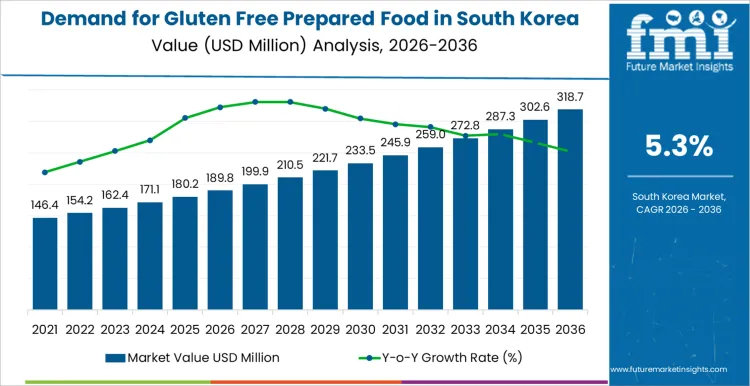
Revenue from gluten free prepared food sales in South Korea is anticipated to reach USD 189.8 million in 2026. Expenditure on this health-centric dietary segment is set to cross USD 318.7 million by 2036, expanding at a compound annual growth rate of 5.3%. South Korean consumers are increasingly adopting Western dietary habits, leading to higher consumption of wheat-based products, yet simultaneously awareness regarding gluten sensitivity is rising. Many individuals are self-diagnosing digestive issues, prompting a shift towards rice-based alternatives which align with traditional Korean cuisine.
Urban professionals seeking convenient yet healthy meal options are driving demand for ready-to-eat solutions that promise "free-from" attributes. Demographics play a role as younger generations prioritize wellness trends and clean labels, scrutinizing ingredient lists for allergens. This shift necessitates that food manufacturers innovate rapidly to provide safe, tasty, and convenient options that fit into the fast-paced lifestyle of modern Korean society.
Government agencies such as the Ministry of Food and Drug Safety are enforcing stricter labeling standards to protect consumers with allergies. Policymakers are encouraging clear distinction between "gluten-free" and "low-gluten" products to prevent misleading claims. Support for the domestic rice industry is also a factor, as authorities promote rice flour as a viable substitute for imported wheat, offering subsidies to processors utilizing local grains.
Public health campaigns focus on reducing digestive disorders, indirectly boosting the profile of gluten-free diets. Food safety regulations are evolving to align with international standards, compelling local producers to upgrade their manufacturing facilities to prevent cross-contamination. Consequently, a safer and more transparent food supply chain is emerging, fostering trust among health-conscious buyers and ensuring that compliant products are readily available on retail shelves.
Quick Stats for Demand for Gluten Free Prepared Food in South Korea
- Demand for Gluten Free Prepared Food in South Korea Value (2026): USD 189.8 million
- Demand for Gluten Free Prepared Food in South Korea Forecast Value (2036): USD 318.7 million
- Demand for Gluten Free Prepared Food in South Korea Forecast CAGR: 5.3%
- Leading Product Type Segment for Gluten Free Prepared Food Industry in South Korea: Drinks (43.0%)
- Leading Sales Channel Segment for Gluten Free Prepared Food Industry in South Korea: Supermarket (57.9%)
- Key Growth Regions for Gluten Free Prepared Food Industry in South Korea: Jeju, South Gyeongsang, South Jeolla, North Jeolla
- Gluten Free Prepared Food Industry in South Korea Key Players: Ener-G Foods, Inc., General Mills Inc., Enjoy Life Foods, Udi's Healthy Foods, LLC, B&G Foods, Inc
Innovation in food processing is allowing for the creation of gluten free pizza crust and bakery items that mimic the texture of wheat-based counterparts without the grittiness often associated with rice flour. Technologies involving hydrocolloids and enzymes are improving the mouthfeel of gluten free products significantly. Integration of ancient grains like quinoa and amaranth into frozen cooked ready meals is enhancing the nutritional profile of these convenience foods.
Consumers are also seeing a rise in better for you snacks that utilize alternative flours. Digital platforms are playing a crucial role, with apps helping users scan barcodes to verify gluten content instantly, ensuring safety for celiac patients. Such technological advancements are crucial for retaining consumers who might otherwise find exclusion diets restrictive or unpalatable.
Demand for Gluten Free Prepared Food in South Korea Key Takeaways
South Korea's dietary landscape is witnessing a subtle but steady transformation driven by health wellness trends and digestive health concerns. Drinks, including functional beverages and gluten-free alcoholic options, hold the largest portion of consumption, reflecting a preference for liquid nutrition and safe social drinking. Supermarkets remain the primary distribution point, providing broad access to imported and domestic brands. Regional growth is robust in tourist-heavy areas where international dietary requests are common. Competitive dynamics are led by global specialty brands partnering with local distributors to penetrate the retail network. Ultimately, the sector is evolving from a niche allergy-driven category to a broader lifestyle choice for health-conscious Koreans.
| Metric | Value |
|---|---|
| Industry Size (2026) | USD 189.8 million |
| Industry Value (2036) | USD 318.7 million |
| CAGR (2026 to 2036) | 5.3% |
What Consumer Trends Are Fueling Gluten Free Adoption?
Rising prevalence of self-reported gluten sensitivity acts as a primary catalyst for product procurement. Consumers are increasingly linking wheat consumption to lethargy and bloating, prompting a switch to gluten free food alternatives. Popularity of K-pop idols and influencers promoting low-carb or rice-based diets influences younger demographics to explore grain-free options. Demand for gluten free oats is rising as a healthy breakfast alternative. Convenience stores are stocking more frozen food items labeled as gluten-free to cater to single-person households. This convergence of celebrity influence, health awareness, and convenience-seeking behavior ensures consistent interest in prepared foods that exclude gluten-containing ingredients.
How is the Sector Structured Across Key Segments?
Structure of this domain is categorized by product type and sales channel, reflecting consumer purchasing habits and product preferences. Product segmentation distinguishes between beverages, bakery items, and ready-to-eat meals. Sales channel classification highlights the dominance of physical retail over specialty stores. Understanding this segmentation helps manufacturers tailor their supply chains; for instance, ensuring cold chain integrity for frozen ready meals style products entering the Korean retail space. This division underscores the diverse nature of the gluten-free category, which spans from daily staples like bread to indulgent treats and functional drinks.
Why Does the Drinks Category Maintain Dominance?
Drinks command a 43.0% share of the industry. This dominance stems from the high consumption of functional beverages, rice wines, and gluten-free beers in South Korea. Consumers often overlook liquid sources of gluten, but growing awareness is driving demand for certified safe beverages. Gluten free soup and liquid broths also fall into liquid-adjacent categories where hidden gluten is a concern. Manufacturers are reformulating popular drinks to ensure they are free from barley or wheat residues. High turnover rate of single-serve beverages in convenience stores further supports this segment's volume. Consequently, the beverage category remains the entry point for many consumers adopting a gluten-avoidant lifestyle.
How are Supermarkets Contributing to Sector Growth?
Supermarkets account for 57.9% of the sales channel share. Large retail chains like E-Mart, Lotte Mart, and Homeplus act as the primary discovery platforms for new dietary products. Extensive shelf space allows for dedicated "health food" sections where gluten-free items are aggregated for easy navigation. United states frozen food brands often launch their gluten-free lines exclusively through these major retailers to gain immediate national coverage. Shoppers prefer supermarkets for their ability to read labels physically and compare prices. Promotional activities and tasting events in these stores significantly boost trial rates. Therefore, supermarkets serve as the critical infrastructure connecting niche gluten-free producers with the mass consumer base.
Will the Expansion of Bakery Options Redefine Future Sales?
Usage of alternative flours in baking is gaining traction as consumers refuse to compromise on taste. Bakeries are experimenting with gluten free flours made from almond, coconut, and rice to create premium pastries. Frozen food demand analysis suggests a growing appetite for frozen gluten-free doughs and breads that can be baked at home. This trend challenges the dominance of wheat-based artisanal bakeries. South Korea's robust cafe culture is also adapting, with more coffee shops offering gluten-free accompaniments. Innovations in texturizers are reducing the crumbliness of these products, making them indistinguishable from traditional items. As quality improves, the bakery segment is poised to capture a larger share of the health-conscious breakfast and snack budget.
How Do Supply Chain Constraints Impact Availability?
Dependence on imported gluten-free ingredients poses a challenge for local manufacturers. Sourcing certified gluten-free oats or specialty starches often requires complex logistics. Fluctuations in global grain prices can impact the final cost of these premium products. Manufacturers are mitigating these risks by increasing the use of domestic rice flour, supported by government incentives. Strict cross-contamination protocols in factories add another layer of operational complexity. Ensuring a dedicated supply chain that is completely free of wheat traces is essential for maintaining certification. Success in managing these supply chain nuances is critical for brands aiming to build long-term trust with celiac and sensitive consumers.
Is the Trend Towards Clean Label Affecting Demand?
Consumers are demanding transparency not just in gluten content but in all additives. "Free-from" claims are often bundled with requests for no artificial preservatives or colors. This pushes manufacturers to formulate gluten free prepared food style products that are both gluten-free and clean label. Balancing shelf life with natural ingredients remains a technical hurdle. However, products that successfully combine these attributes command a premium price. Shoppers are increasingly educated about reading labels, and any perception of "ultra-processed" ingredients can deter purchases. Therefore, the drive towards simple, recognizable ingredients is reshaping product development strategies across the sector.
How is the Dietary Landscape Evolving Across South Korea's Regions?
Regional consumption patterns reflect the distribution of urban health trends and tourism influence. Metropolitan areas drive innovation and high-volume procurement of imported gluten-free goods, while tourist hubs cater to international palates. Government support for regional rice processing centers is decentralizing production.
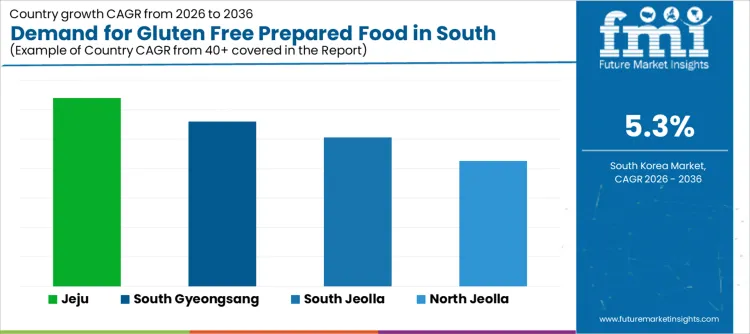
|
Region |
CAGR (2026 to 2036) |
|
Jeju |
6.4% |
|
South Gyeongsang |
5.6% |
|
South Jeolla |
5.1% |
|
North Jeolla |
4.3% |
Why is the Tourism Sector in Jeju Driving Rapid Growth?
Adoption of specialty diets in Jeju is projected to expand at a CAGR of 6.4%. As a major tourist destination, Jeju hosts millions of international visitors annually, many of whom require specific dietary accommodations. Hotels and resorts are expanding their menus to include gluten-free options to cater to this diverse clientele. Local agriculture on the island produces unique ingredients like buckwheat, which is naturally gluten-free and is being utilized in regional snacks. Health and wellness retreats located in Jeju are promoting detox diets that often exclude gluten, further driving local demand. This unique combination of tourism and local agricultural innovation creates a robust environment for the growth of the free-from food sector.
How is Industrial Demographics in South Gyeongsang Influencing Sales?
Sales of prepared foods in South Gyeongsang are likely to reach a CAGR of 5.6%. This region hosts significant industrial zones where workers require convenient, healthy meal solutions. Corporate cafeterias in large shipyards and factories are beginning to offer diverse menu options, including allergen-free meals, to support worker health. Retailers in these industrial cities are stocking more japan gluten free prepared food style convenience items. Increasing expatriate populations working in engineering and manufacturing sectors also contribute to the demand for international dietary standards. Economic stability in the region supports the purchasing power required for these slightly premium food products.
What Specific Factors Drive Demand in South Jeolla?
Expansion in South Jeolla is anticipated to rise at a CAGR of 5.1%. South Jeolla is a key agricultural hub, particularly for rice production. Farmers and local cooperatives are investing in processing facilities to produce high-quality rice flour and noodles as value-added products. Regional government initiatives are promoting these local gluten-free alternatives to boost the rural economy. Food festivals in the region are increasingly highlighting traditional Korean foods that are naturally gluten-free, raising consumer awareness. Focus on leveraging local crops to meet modern dietary trends ensures a steady supply of raw materials and finished goods within the province.
Why is North Jeolla Modernizing its Food Processing?
Deployment of food technologies in North Jeolla is expected to increase at a CAGR of 4.3%. The National Food Cluster in Iksan is a center for food innovation, attracting companies developing specialized health foods. Research institutes here are working on improving the texture and nutritional value of gluten-free baked goods. Startups focused on gluten free prepared food niche are establishing production lines in this cluster. Educational programs for local food producers are helping them transition to allergen-free manufacturing processes. While growth is moderate, the concentration of technical expertise ensures that North Jeolla plays a vital role in product development and standardization for the national sector.
What Strategic Initiatives Define Industry Leadership?
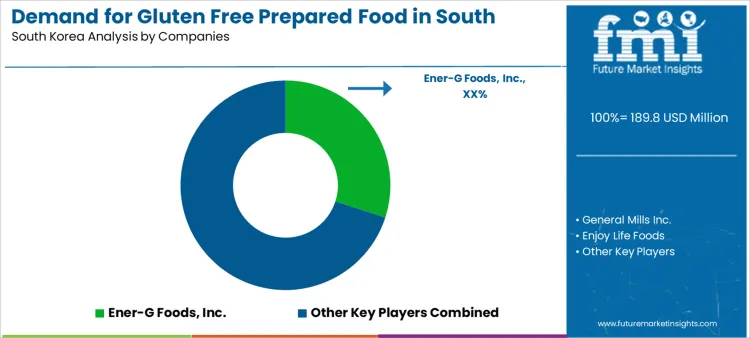
Ener-G Foods, Inc. commands a dominant position with a 30.0% share, leveraging its long-standing reputation for allergy-friendly products. Strategy focuses on strict safety protocols and a dedicated facility to ensure zero cross-contamination. Ener-G invests in educating healthcare professionals about the benefits of their products for celiac patients. Competitors like General Mills and Enjoy Life Foods differentiate through taste and variety, making gluten-free eating feel less restrictive. Strategic partnerships with major Korean retail chains ensure their products are prominent in the dedicated health food aisles.
How Are Global Players Adapting to Local Needs?
International firms are customizing their flavors to suit the Korean palate. Incorporating ingredients like kimchi, sesame, and red bean into gluten-free snacks makes them more appealing to local consumers. Providing clear labeling in Korean that highlights "rice-based" or "digestive-friendly" attributes is essential. Companies like Udi's and B&G Foods are also exploring local manufacturing partnerships to reduce logistics costs and ensure freshness. Collaborating with online influencers and dietitians helps global brands build credibility and reach the younger, health-conscious demographic effectively.
Key Companies
- Ener-G Foods, Inc.
- General Mills Inc.
- Enjoy Life Foods
- Udi's Healthy Foods, LLC
- B&G Foods, Inc
Scope of Report
| Items | Values |
|---|---|
| Quantitative Units | USD Million |
| Product Type | Drinks, Bakery Products, Ready to Eat Products, Bread and Rolls, Pasta |
| Sales Channel | Supermarket, Grocery Store, Health or Natural Food Store, Drug Store |
| Regions Covered | Jeju, South Gyeongsang, South Jeolla, North Jeolla |
| Key Companies Profiled | Ener-G Foods, General Mills, Enjoy Life, Udi's, B&G Foods |
Demand for Gluten Free Prepared Food in South Korea by Segments
By Product Type
- Drinks
- Bakery Products
- Ready to Eat Products
- Bread and Rolls
- Pasta
By Sales Channel
- Supermarket
- Grocery Store
- Health or Natural Food Store
- Drug Store
Bibliography
- Ministry of Food and Drug Safety. (2024, July 24). Food labeling standards: Food, etc. labeling standards (MFDS Notice No. 2024-41). Ministry of Food and Drug Safety, Republic of Korea.
- Ministry of Food and Drug Safety. (2024, December 30). Administrative notice on proposed partial amendment to food, etc. labeling standards (MFDS Public Notice No. 2024-604). Ministry of Food and Drug Safety, Republic of Korea.
- Statistics Korea. (2025, December 16). 2024 mining and manufacturing survey results: Preliminary summary including food manufacturing shipment value and value added. Statistics Korea, Republic of Korea.
- Korea Agro-Fisheries and Food Trade Corporation. (2024). Food expenditure trends and 2024 Q4 outlook, including household processed food consumption expenditure analysis. Korea Agro-Fisheries and Food Trade Corporation, Republic of Korea.
- Statistics Korea. (2025, January 22). Food grain consumption survey results for 2024, including rice consumption trends for establishments and processed food manufacturers. Statistics Korea, Republic of Korea.
Frequently Asked Questions
How big is the demand for Gluten Free Prepared Food in South Korea in 2026?
The demand for Gluten Free Prepared Food in South Korea is estimated to be valued at USD 189.8 million in 2026.
What will be the size of Gluten Free Prepared Food in South Korea in 2036?
The industry size for the Gluten Free Prepared Food in South Korea is projected to reach USD 318.7 million by 2036.
How much will be the demand for Gluten Free Prepared Food in South Korea growth between 2026 and 2036?
The demand for Gluten Free Prepared Food in South Korea is expected to grow at a 5.3% CAGR between 2026 and 2036.
What are the key product types in the Gluten Free Prepared Food in South Korea?
The key product types in Gluten Free Prepared Food in South Korea are Drinks and Bakery Products.
Which sales channel segment is expected to contribute significant share in the Gluten Free Prepared Food in South Korea in 2026?
By sales channel, Supermarket segment is expected to command 57.9% share in the Gluten Free Prepared Food in South Korea in 2026.
Preview the report firsthand - request a free sample
Get SampleGet the brochure for pricing and purchase details.
Get PDFTable of Content
- Executive Summary
- South Korea Market Outlook
- Demand-side Trends
- Supply-side Trends
- Technology Roadmap Analysis
- Analysis and Recommendations
- Market Overview
- Market Coverage / Taxonomy
- Market Definition / Scope / Limitations
- Market Background
- Market Dynamics
- Drivers
- Restraints
- Opportunity
- Trends
- Scenario Forecast
- Demand in Optimistic Scenario
- Demand in Likely Scenario
- Demand in Conservative Scenario
- Opportunity Map Analysis
- Product Life Cycle Analysis
- Supply Chain Analysis
- Investment Feasibility Matrix
- Value Chain Analysis
- PESTLE and Porter’s Analysis
- Regulatory Landscape
- Regional Parent Market Outlook
- Production and Consumption Statistics
- Import and Export Statistics
- Market Dynamics
- South Korea Market Analysis 2021 to 2025 and Forecast, 2026 to 2036
- Historical Market Size Value (USD Million) Analysis, 2021 to 2025
- Current and Future Market Size Value (USD Million) Projections, 2026 to 2036
- Y-o-Y Growth Trend Analysis
- Absolute $ Opportunity Analysis
- South Korea Market Pricing Analysis 2021 to 2025 and Forecast 2026 to 2036
- South Korea Market Analysis 2021 to 2025 and Forecast 2026 to 2036, By Product Type
- Introduction / Key Findings
- Historical Market Size Value (USD Million) Analysis By Product Type , 2021 to 2025
- Current and Future Market Size Value (USD Million) Analysis and Forecast By Product Type , 2026 to 2036
- Drinks
- Bakery Products
- Ready to Eat Products
- Bread and Rolls
- Pasta
- Drinks
- Y-o-Y Growth Trend Analysis By Product Type , 2021 to 2025
- Absolute $ Opportunity Analysis By Product Type , 2026 to 2036
- South Korea Market Analysis 2021 to 2025 and Forecast 2026 to 2036, By Sales Channel
- Introduction / Key Findings
- Historical Market Size Value (USD Million) Analysis By Sales Channel, 2021 to 2025
- Current and Future Market Size Value (USD Million) Analysis and Forecast By Sales Channel, 2026 to 2036
- Supermarket
- Grocery Store
- Health or Natural Food Store
- Drug Store
- Supermarket
- Y-o-Y Growth Trend Analysis By Sales Channel, 2021 to 2025
- Absolute $ Opportunity Analysis By Sales Channel, 2026 to 2036
- Market Structure Analysis
- Competition Dashboard
- Competition Benchmarking
- Market Share Analysis of Top Players
- By Regional
- By Product Type
- By Sales Channel
- Competition Analysis
- Competition Deep Dive
- Ener-G Foods, Inc.
- Overview
- Product Portfolio
- Profitability by Market Segments (Product/Age /Sales Channel/Region)
- Sales Footprint
- Strategy Overview
- Marketing Strategy
- Product Strategy
- Channel Strategy
- General Mills Inc.
- Enjoy Life Foods
- Udi's Healthy Foods, LLC
- B&G Foods, Inc
- Ener-G Foods, Inc.
- Competition Deep Dive
- Assumptions & Acronyms Used
- Research Methodology


