

- Industry Size (2026)
- USD 403.2 Mn
- Forecast (2036)
- USD 579 Mn
- CAGR (2026 to 2036)
- 3.7%
Demand for Glass Cosmetic Bottles in United Kingdom Forecast and Outlook 2026 to 2036
The glass cosmetic bottles market in the United Kingdom is expected to reach USD 579 million by 2036, growing at a CAGR of 3.7% from USD 403.2 million in 2026. Procurement priorities will be shaped by the need for high-quality, sustainable packaging, which drives demand for glass as a preferred material. Vendor lock-in may affect the flexibility of suppliers, creating switching costs that influence buyer decisions. Risk aversion among buyers will lead to a preference for established suppliers with proven reliability and stable pricing structures. As a result, procurement teams are likely to prioritize long-term partnerships with suppliers who can guarantee consistent quality and delivery. Cost-benefit analyses will be central to decision-making, with buyers weighing switching costs against potential benefits from alternative suppliers. In this context, market outcomes will be influenced by a careful balance between cost control and the desire for reliable, sustainable solutions.
Quick Stats for the Demand for Glass Cosmetic Bottles in United Kingdom:
- Glass Cosmetic Bottles in United Kingdom Value (2026): USD 403.2 million
- Glass Cosmetic Bottles in United Kingdom Forecast Value (2036): USD 579.0 million
- Glass Cosmetic Bottles in United Kingdom Global Forecast CAGR (2026 to 2036): 3.7%
- Glass Cosmetic Bottles in United Kingdom Leading Segment: Borosilicate glass (55% share)
- Key Growth Regions of Glass Cosmetic Bottles in United Kingdom: England
- Top Players of Glass Cosmetic Bottles in United Kingdom: Gerresheimer, Verescence, Stoelzle Glass Group, Vidrala
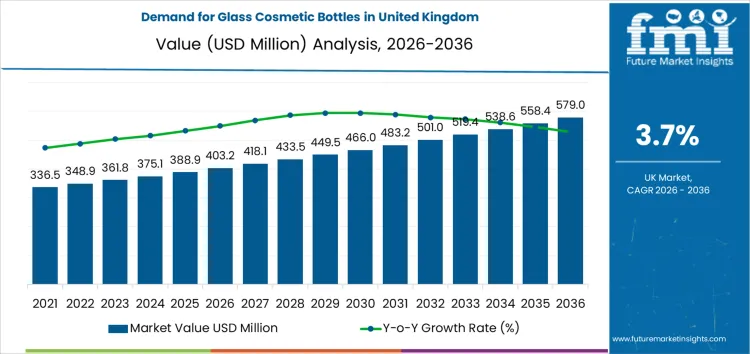
What is the Growth Forecast for Glass Cosmetic Bottles in United Kingdom through 2036?
The growth forecast for glass cosmetic bottles in the United Kingdom through 2036 reflects a moderate yet stable increase. The compound annual growth rate (CAGR) is expected to remain steady as demand rises for premium packaging solutions in the cosmetics and personal care industry. As more brands shift to sustainable packaging options, the adoption of glass is anticipated to grow further. This trend is expected to be supported by advancements in manufacturing techniques, which have made glass packaging more cost-effective and versatile.
Over the forecast period, the increasing consumer preference for luxury and organic skincare products is expected to sustain the demand for high-quality glass bottles. The ability of glass packaging to offer both aesthetic appeal and product preservation benefits will continue to drive its popularity in the cosmetics market.
Key Takeaways for Demand for Glass Cosmetic Bottles in United Kingdom
| Metric | Value |
|---|---|
| Industry Sales Value (2026) | USD 403.2 million |
| Industry Forecast Value (2036) | USD 579 million |
| Industry Forecast CAGR (2026 to 2036) | 3.7% |
Why is Demand for Glass Cosmetic Bottles in United Kingdom Growing?
Demand for glass cosmetic bottles in the United Kingdom has expanded as beauty and personal care product makers increasingly opt for glass packaging. Historically, plastic and other materials dominated cosmetic packaging due to lower costs and ease of manufacture. Over recent years, however, UK cosmetic brands and retailers have shifted toward glass due to its recyclability and ability to preserve product quality. Glass packaging is seen as more premium, with its resistance to chemical interaction with the contents of the bottle being a key benefit. This shift is further supported by consumer preference for sustainable and eco-friendly packaging solutions. The growing focus on sustainability and circular economy principles has also contributed to the rise of glass cosmetic bottles, aligning with the trend toward reducing plastic waste.
Looking ahead, the demand for glass cosmetic bottles in the United Kingdom is expected to continue to grow. Increased consumer interest in high-quality, recyclable packaging and a push for sustainable practices in the beauty industry will drive this trend. Glass packaging offers an environmentally responsible alternative to single-use plastics, making it an appealing choice for brands seeking to meet consumer expectations for eco-friendly products. With growing regulatory pressure to reduce plastic usage and improve recycling, the popularity of glass bottles in the cosmetics sector is likely to rise. Innovation in glass manufacturing techniques, including lighter designs and enhanced aesthetics, will support the continued growth of the market.
What Are the Key Segments in the Demand for Glass Cosmetic Bottles in the United Kingdom?
Demand for glass cosmetic bottles in the United Kingdom is driven by end-use industry and material type. Skincare leads the end-use industry segment with a 40.6% share, while borosilicate glass dominates material type at 55%. The analysis includes the contributions from other segments like perfumes, makeup, and alternative materials like recycled glass. These factors influence trends across England, Scotland, Wales, and Northern Ireland, shaping the market's future trajectory.
What Is the End-Use Industry Segment of Demand for Glass Cosmetic Bottles in the United Kingdom?
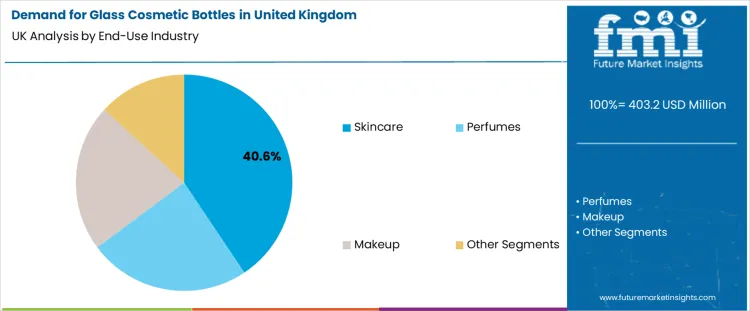
The end-use industry segment for glass cosmetic bottles in the United Kingdom reveals the distribution of demand across skincare, perfumes, makeup, and other segments. Skincare holds the largest share with 40.6%, as the demand for high-quality, aesthetically pleasing packaging for skincare products increases. Skincare brands, especially in England and Wales, prefer glass bottles for their premium feel, stability, and brand appeal. Perfumes follow as the second-largest category, with a significant share driven by luxury and high-end fragrance brands. Glass bottles in the perfume industry are often valued for their ability to preserve the integrity of fragrance while offering an upscale appearance. In contrast, the makeup segment represents a smaller share, but demand for high-flint glass is growing due to its clarity and resistance to chemical interactions, especially in foundations and lip gloss containers. Other segments, including niche products, use recycled glass as an environmentally sustainable packaging solution. This trend is gradually rising, driven by consumer demand for eco-friendly options. Market patterns indicate that regions with higher concentrations of cosmetic production facilities, particularly in larger cities, have a more substantial impact on overall market activity. In general, the demand for glass bottles in the cosmetics industry is closely tied to product type and consumer preferences, with skincare and perfumes leading the way in terms of volume and revenue.
What Is the Material Type Segment of Demand for Glass Cosmetic Bottles in the United Kingdom?
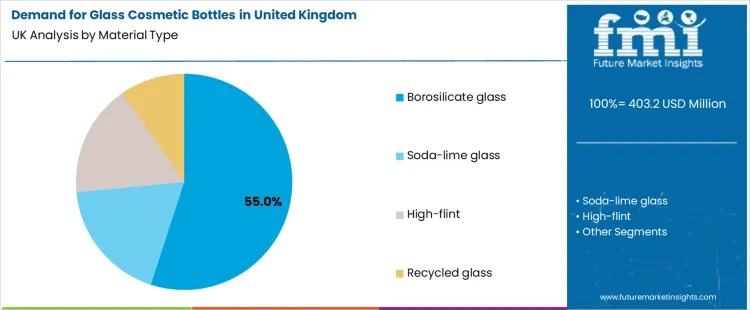
The material type segment for glass cosmetic bottles in the United Kingdom is primarily dominated by borosilicate glass, which captures 55% of the market share. Borosilicate glass is favored for its durability, thermal resistance, and ability to maintain product integrity over time. In skincare applications, borosilicate glass is often used for serums, lotions, and creams because of its resistance to temperature fluctuations during production and distribution. The material’s inherent qualities also make it suitable for high-end products, contributing to its popularity across various cosmetic sectors. Soda-lime glass, though in second place, plays a significant role in the production of bottles for perfumes. The material is favored for its clarity, ease of shaping, and cost-efficiency, making it ideal for large production runs of fragrance packaging. High-flint glass, which is prized for its clarity and purity, is increasingly used in makeup packaging, particularly for products requiring a higher degree of glass transparency and a luxury feel. Meanwhile, recycled glass is emerging as a sustainable alternative, though it still represents a smaller share. Its use is mainly found in eco-conscious brands looking to reduce their environmental impact. Across all regions, borosilicate glass continues to dominate due to its performance characteristics, even as other materials contribute to the broader packaging mix.
What is the Demand for Glass Cosmetic Bottles in the United Kingdom?
Demand for glass cosmetic bottles in the United Kingdom is part of the broader glass packaging sector, encompassing cosmetics, personal care, perfumery, beverages, and pharmaceuticals. Glass packaging demand in the UK is expected to grow steadily, driven by preferences for recyclable and inert materials that preserve product integrity and appeal to eco-conscious consumers. Market forecasts indicate moderate growth in the use of glass in beauty and skincare packaging, aligning with European trends where glass cosmetic bottles are gaining popularity due to sustainability initiatives and premium positioning by beauty brands.
What are the Key Drivers for Glass Cosmetic Bottle Demand in the United Kingdom?
Several factors support the demand for glass cosmetic bottles in the United Kingdom. Consumer preference for recyclable packaging that protects formulation quality influences purchase decisions across skincare, fragrance, and luxury beauty segments. Sustainability considerations play a significant role, as glass is infinitely recyclable and retains its quality over time, supported by established bottle recycling infrastructure across the UK. The movement towards premiumisation in cosmetics, where aesthetics and material quality are valued, also increases the appeal of glass bottles. Growth in the cosmetics packaging market, fueled by increased consumer spending on personal care products, supports glass adoption.
What are the Restraints on Glass Cosmetic Bottle Demand in the United Kingdom?
Despite the positive market conditions, certain restraints affect demand for glass cosmetic bottles in the United Kingdom. Glass packaging involves higher production costs compared to plastic alternatives, which may deter cost-sensitive brands. The fragility of glass can lead to increased handling and transportation costs due to the risk of breakage during distribution. Regulatory standards for packaging materials can also add to the compliance burden for manufacturers using glass. Competition from lightweight and lower-cost packaging options, such as plastic and metal, continues to influence material choices in some product segments.
What are the Key Trends in Glass Cosmetic Bottle Demand in the United Kingdom?
Key trends in the demand for glass cosmetic bottles in the United Kingdom include an increased emphasis on sustainability, with both brands and consumers prioritizing recyclable packaging in alignment with environmental goals. Glass bottles are increasingly used for luxury and premium products where material quality and visual appeal are integral to brand identity. Innovation in glass manufacturing, such as lightweight designs and custom bottle shapes, is gaining traction to enhance product differentiation. The shift towards premium skincare and personal care products, where glass bottles are favored for both functional and aesthetic purposes, also contributes to the growing demand for glass packaging.
What is the Country-Wise Demand for Glass Cosmetic Bottles in the United Kingdom?
The country-wise demand for glass cosmetic bottles in the United Kingdom reflects varying levels of adoption across its regions. England leads the market, driven by its robust cosmetics and personal care sectors, where high-quality and sustainable packaging solutions are in demand. Scotland, Wales, and Northern Ireland exhibit moderate growth, with consumer preferences for eco-friendly and premium packaging options gradually increasing. The shift towards sustainability, coupled with the ongoing growth in the beauty and skincare markets, is expected to drive demand in all regions. While England remains the dominant market, Scotland, Wales, and Northern Ireland are seeing steady growth in glass cosmetic bottle adoption.
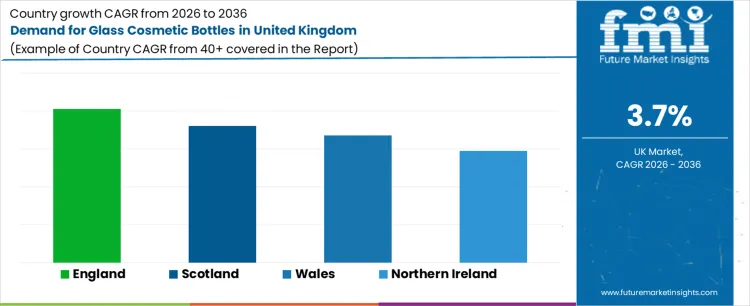
| Country | CAGR (2026 to 2036) |
|---|---|
| England | 4.1% |
| Scotland | 3.6% |
| Wales | 3.4% |
| Northern Ireland | 2.9% |
What Drives the Demand for Glass Cosmetic Bottles in England?
The demand for glass cosmetic bottles in England is projected to grow at a CAGR of 4.1% from 2026 to 2036. England’s market remains the largest, driven by the substantial growth of the cosmetics and personal care industries. The increasing preference for eco-friendly packaging and the rise of premium beauty products are key factors contributing to this demand. Consumer trends favoring high-end, recyclable, and sustainable packaging solutions are shaping the market landscape. The growing commitment to environmental responsibility and the cosmetics industry's shift toward more sustainable packaging options further support this trend, ensuring that England remains the dominant market for glass cosmetic bottles.
What is Fueling the Demand for Glass Cosmetic Bottles in Scotland?
Scotland’s demand for glass cosmetic bottles is projected to grow at a CAGR of 3.6% from 2026 to 2036. The Scottish market, while smaller compared to England, is steadily adopting glass packaging solutions as part of the broader trend toward sustainability. With increasing consumer demand for premium cosmetic products and eco-conscious packaging, the use of glass bottles is becoming more prevalent in the cosmetics sector. Local beauty and skincare brands in Scotland are embracing glass packaging as a way to appeal to environmentally aware consumers. This growing shift towards glass packaging, coupled with the emphasis on reducing plastic use, is expected to drive continued market growth.
What Are the Growth Drivers for Glass Cosmetic Bottles in Wales?
In Wales, the demand for glass cosmetic bottles is expected to grow at a CAGR of 3.4% through 2036. The market in Wales is shaped by similar factors as those in England and Scotland, with rising consumer preferences for premium, eco-friendly packaging solutions. Wales is witnessing gradual but steady adoption of glass cosmetic bottles as more beauty and skincare brands shift towards sustainable packaging options. As environmental awareness continues to rise, Welsh consumers are increasingly opting for products packaged in recyclable materials like glass. This trend, along with the growing focus on sustainability within the beauty industry, is anticipated to continue fueling the demand for glass cosmetic bottles in Wales.
What is the Outlook for Glass Cosmetic Bottles Demand in Northern Ireland?
Northern Ireland's demand for glass cosmetic bottles is forecasted to grow at a CAGR of 2.9% through 2036. The market in Northern Ireland is the smallest in the United Kingdom but is experiencing gradual growth, primarily driven by the demand for eco-friendly and premium packaging in the cosmetics industry. Although the uptake of glass bottles in Northern Ireland has been slower than in other regions, consumer preferences are shifting towards environmentally responsible packaging solutions. As sustainability becomes an increasing priority for both consumers and brands, the demand for glass cosmetic bottles in Northern Ireland is expected to rise steadily in the coming years.
What is the Competitive Landscape for Demand for Glass Cosmetic Bottles in the United Kingdom?
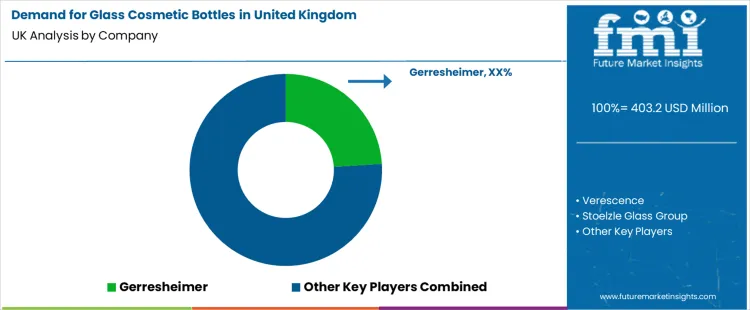
Demand for glass cosmetic bottles in the United Kingdom is defined by activity among key producers and converters. Gerresheimer is positioned as a leading supplier, with orders supported by a network focused on quality glass and finishing options. Production output is guided by specification requirements from premium skincare and fragrance brands. Technical brochures are supplied to buyers, highlighting bottle dimensions, wall thickness, and compatibility with closure systems. Verescence competes through specialised colour and shape offerings that are favoured in luxury segments. Product documentation is provided to procurement teams, outlining tolerances, tested sealing performance, and available surface treatments. Stoelzle Glass Group participates with glass packaging that is promoted through detailed literature. Features such as clarity grades, chemical resistance, and fill line suitability are catalogued. Sales engineering support is referenced in brochures, describing validation support that can be requested by contract fillers. Vidrala’s presence in the United Kingdom is enabled through regional supply agreements with converters and distributors. Printed materials provided to clients include technical sheets that describe weight options, recycled content percentages, and logistical specifications for pallet configurations.
Demand patterns are shaped by requirements from cosmetic formulators and brand owners operating within the UK. Orders are influenced by seasonal launches, regulatory compliance checks, and inventory planning cycles that are communicated by purchasing departments. Selection criteria are often described in tender documents that refer back to supplier brochures with specification tables and finishing galleries. Lead times are monitored closely, with supply chain resilience noted in client evaluations. Procurement decisions are informed by documented quality standards and documented testing results that are supplied by each company. Glass cosmetic bottles are marketed through channels where specification catalogs and sampling kits are distributed to decision makers. Requests for quotes are processed through formal channels, where documented product attributes and service terms are recorded and evaluated.
Key Players of the Demand for Glass Cosmetic Bottles in United Kingdom
- Gerresheimer
- Verescence
- Stoelzle Glass Group
- Vidrala
Scope of the Report
| Items | Values |
|---|---|
| Quantitative Units (2026) | USD Million |
| End-Use Industry | Skincare, Perfumes, Makeup, Other Segments |
| Material Type | Borosilicate Glass, Soda-Lime Glass, High-Flint, Recycled Glass |
| Companies | Gerresheimer, Verescence, Stoelzle Glass Group, Vidrala |
| Regions Covered | United Kingdom |
| Countries Covered | England, Scotland, Wales, Northern Ireland |
| Additional Attributes | Dollar by sales by end-use industry, material type, and region. Includes market trends towards sustainability, packaging innovation, and the role of glass in the cosmetic packaging sector. |
Demand for Glass Cosmetic Bottles in United Kingdom
End-Use Industry
- Skincare
- Perfumes
- Makeup
- Other Segments
Material Type
- Borosilicate glass
- Soda-lime glass
- High-flint
- Recycled glass
Countries
- England
- Scotland
- Wales
- Northern Ireland
Bibliography
- Gerresheimer AG. Product Portfolio & Sustainability Reports. Gerresheimer Publications, 2022–2024.
- Verescence. Glass for Beauty: Technical Product Sheets & Sustainability Roadmap. Verescence Corporate Documents, 2023.
- Stoelzle Glass Group. Cosmetic Packaging Product Catalog & Technical Specifications. Stoelzle Reports, 2022–2024.
- Vidrala. Annual Report & Packaging Glass Market Insights. Vidrala Corporate Publications, 2023.
- UK Government – Department for Environment, Food & Rural Affairs (DEFRA). Packaging Waste Regulations and Recycling Standards. UK Government Publications, 2022–2024.
- European Commission. EU Packaging and Packaging Waste Directive: Glass Requirements. EU Legislation Archive, updated 2023.
Frequently Asked Questions
How big is the demand for glass cosmetic bottles in United Kingdom in 2026?
The demand for glass cosmetic bottles in United Kingdom is estimated to be valued at USD 403.2 million in 2026.
What will be the size of glass cosmetic bottles in United Kingdom in 2036?
The market size for the glass cosmetic bottles in United Kingdom is projected to reach USD 579.0 million by 2036.
How much will be the demand for glass cosmetic bottles in United Kingdom growth between 2026 and 2036?
The demand for glass cosmetic bottles in United Kingdom is expected to grow at a 3.7% CAGR between 2026 and 2036.
What are the key product types in the glass cosmetic bottles in United Kingdom?
The key product types in glass cosmetic bottles in United Kingdom are skincare, perfumes, makeup and other segments.
Which material type segment is expected to contribute significant share in the glass cosmetic bottles in United Kingdom in 2026?
In terms of material type , borosilicate glass segment is expected to command 55.0% share in the glass cosmetic bottles in United Kingdom in 2026.
Preview the report firsthand - request a free sample
Get SampleGet the brochure for pricing and purchase details.
Get PDFTable of Content
- Executive Summary
- UK Market Outlook
- Demand-side Trends
- Supply-side Trends
- Technology Roadmap Analysis
- Analysis and Recommendations
- Market Overview
- Market Coverage / Taxonomy
- Market Definition / Scope / Limitations
- Market Background
- Market Dynamics
- Drivers
- Restraints
- Opportunity
- Trends
- Scenario Forecast
- Demand in Optimistic Scenario
- Demand in Likely Scenario
- Demand in Conservative Scenario
- Opportunity Map Analysis
- Product Life Cycle Analysis
- Supply Chain Analysis
- Investment Feasibility Matrix
- Value Chain Analysis
- PESTLE and Porter’s Analysis
- Regulatory Landscape
- Regional Parent Market Outlook
- Production and Consumption Statistics
- Import and Export Statistics
- Market Dynamics
- UK Market Analysis 2021 to 2025 and Forecast, 2026 to 2036
- Historical Market Size Value (USD Million) Analysis, 2021 to 2025
- Current and Future Market Size Value (USD Million) Projections, 2026 to 2036
- Y-o-Y Growth Trend Analysis
- Absolute $ Opportunity Analysis
- UK Market Pricing Analysis 2021 to 2025 and Forecast 2026 to 2036
- UK Market Analysis 2021 to 2025 and Forecast 2026 to 2036, By End-Use Industry
- Introduction / Key Findings
- Historical Market Size Value (USD Million) Analysis By End-Use Industry , 2021 to 2025
- Current and Future Market Size Value (USD Million) Analysis and Forecast By End-Use Industry , 2026 to 2036
- Skincare
- Perfumes
- Makeup
- Other Segments
- Skincare
- Y-o-Y Growth Trend Analysis By End-Use Industry , 2021 to 2025
- Absolute $ Opportunity Analysis By End-Use Industry , 2026 to 2036
- UK Market Analysis 2021 to 2025 and Forecast 2026 to 2036, By Material Type
- Introduction / Key Findings
- Historical Market Size Value (USD Million) Analysis By Material Type, 2021 to 2025
- Current and Future Market Size Value (USD Million) Analysis and Forecast By Material Type, 2026 to 2036
- Borosilicate glass
- Soda-lime glass
- High-flint
- Recycled glass
- Borosilicate glass
- Y-o-Y Growth Trend Analysis By Material Type, 2021 to 2025
- Absolute $ Opportunity Analysis By Material Type, 2026 to 2036
- Market Structure Analysis
- Competition Dashboard
- Competition Benchmarking
- Market Share Analysis of Top Players
- By Regional
- By End-Use Industry
- By Material Type
- Competition Analysis
- Competition Deep Dive
- Gerresheimer
- Overview
- Product Portfolio
- Profitability by Market Segments (Product/Age /Sales Channel/Region)
- Sales Footprint
- Strategy Overview
- Marketing Strategy
- Product Strategy
- Channel Strategy
- Verescence
- Stoelzle Glass Group
- Vidrala
- Gerresheimer
- Competition Deep Dive
- Assumptions & Acronyms Used
- Research Methodology


