

- Industry Size (2026)
- USD 929.8 Mn
- Forecast (2036)
- USD 1616.1 Mn
- CAGR (2026 to 2036)
- 5.7%
Demand for Jellies and Gummies in United Kingdom Forecast and Outlook 2026 to 2036
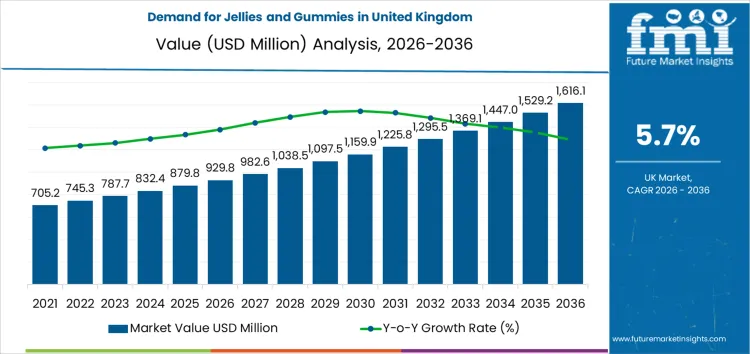
The jellies and gummies market in the United Kingdom is projected to grow from USD 929.8 million in 2026 to USD 1,616.1 million by 2036, at a CAGR of 5.7%. Commercial realities within this market present a mix of challenges and opportunities. Pricing discipline will be critical, as fluctuations in raw material costs and shifting consumer preferences could pressure margins. Buyer leverage is expected to increase as larger distributors demand better terms, creating downward pressure on prices for suppliers. Volume predictability remains a concern, as seasonal demand and varying consumer tastes complicate forecasting. Companies will need to manage production capacity efficiently to avoid overproduction or shortages. Supplier relationships will be tested as buyers seek value through competitive pricing, demanding both consistency and quality in the face of rising input costs. For businesses, navigating these dynamics will require strategic flexibility, operational efficiency, and careful management of supply chain risks.
Quick Stats for the Demand for Jellies and Gummies in United Kingdom
- Jellies and Gummies in United Kingdom Value (2026): USD 929.8 million
- Jellies and Gummies in United Kingdom Forecast Value (2036): USD 1,616.1 million
- Jellies and Gummies in United Kingdom Global Forecast CAGR (2026 to 2036): 5.7%
- Jellies and Gummies in United Kingdom Leading Segment: Traditional Jellies and Gummies (60% share)
- Key Growth Regions of Jellies and Gummies in United Kingdom: England
- Top Players of Jellies and Gummies in United Kingdom: HARIBO GmbH & Co. KG, Jelly Belly Candy Company, Mars Inc., Mondelz Global LLC, Perfetti Van Melle Group B.V.
What is the Growth Forecast for Jellies and Gummies in United Kingdom through 2036?
The demand for jellies and gummies in the United Kingdom is expected to increase from USD 929.8 million in 2026 to USD 1,616.1 million by 2036, reflecting a compound annual growth rate (CAGR) of 5.7%. Between 2026 and 2031, the market will experience steady growth, with values increasing from USD 929.8 million to USD 1,225.8 million. From 2031 to 2036, the demand will continue to rise, reaching USD 1,616.1 million by the end of the forecast period.
The elasticity of growth versus macroeconomic indicators suggests that while the demand for jellies and gummies will continue to grow, it may be influenced by broader economic factors such as disposable income, consumer confidence, and changes in health-related spending. In periods of economic growth, increased consumer spending on premium and functional products is likely to boost the market. Conversely, economic downturns may cause temporary slowdowns, as consumers shift toward more affordable snack options. Given the growing trend toward health-consciousness and convenience, the market for jellies and gummies is expected to remain resilient even in less favorable economic conditions.
Key Takeaways for Demand for Jellies and Gummies in United Kingdom
| Metric | Value |
|---|---|
| Industry Sales Value (2026) | USD 929.8 million |
| Industry Forecast Value (2036) | USD 1,616.1 million |
| Industry Forecast CAGR (2026 to 2036) | 5.7% |
Why is Demand for Jellies and Gummies in United Kingdom Growing?
Demand for jellies and gummies in the United Kingdom has increased from historical levels as consumption patterns in confectionery and snacking evolved. Historically, these products were staples in traditional sweet categories with stable demand driven by children’s snacks and impulse purchases. The confectionery sector in the UK saw diversification in product formats and flavour profiles. Manufacturers expanded offerings to include fruit-flavoured gummies, sugar-reduced jellies, and texture-enhanced variants that appealed to a wider age range. Retailers responded by allocating greater shelf space to these products, reflecting their performance across convenience, grocery, and discount channels. A sustained presence of branded and own-label jellies and gummies in promotions contributed to steady sales volumes. Production and distribution networks adapted to shifts in demand, ensuring consistent stock levels through seasonal peaks such as holidays and celebrations. This historical expansion in supply and variety supported broader consumer exposure and familiarity, which in turn encouraged incremental uptake across demographic groups.
Demand for jellies and gummies in the United Kingdom is expected to continue rising as product innovation and consumer preferences shape purchase decisions. Growth will be supported by new formulations that address health and lifestyle considerations, including reduced sugar content and inclusion of functional ingredients such as vitamins and plant-based extracts. Retailers are likely to feature a wider range of formats that cater to on-the-go consumption and snacking occasions beyond traditional confectionery aisles. Increased interest in novel flavours, textures, and premium segments may attract adult consumers alongside younger buyers. Broader trends in convenience snacking and varied retail channels will sustain demand for these products across multiple market segments. Continued attention to packaging and portion options could further influence consumer uptake in the UK.
What Are the Key Segments in the Demand for Jellies and Gummies in the United Kingdom?
Demand for jellies and gummies in the United Kingdom is driven by ingredient type and product type. Fruits lead the ingredient type segment with 55%, while traditional jellies and gummies dominate the product type segment at 60%. Other ingredients such as vegetables, liqueur, flowers and herbs, as well as functional jellies and gummies, also contribute to the market. These segments reflect the growing interest in both conventional and functional candy products, with evolving consumer preferences toward natural ingredients and health-conscious formulations.
What Is the Ingredient Type Segment of Demand for Jellies and Gummies in the United Kingdom?

The ingredient type segment for jellies and gummies in the United Kingdom is primarily led by fruits, which account for 55% of the market share. Fruit-based jellies and gummies are highly popular due to their natural flavors and wide consumer appeal. They are commonly made using fruit juices or purees, providing a sweet, tangy taste that resonates with a broad audience, including both children and adults. The use of fruit ingredients also taps into the growing trend of consumers seeking natural, plant-based options in their snacks and sweets. Fruit-based jellies and gummies are available in a variety of flavors, from citrus to berry, and are frequently marketed as being rich in vitamins and antioxidants. Vegetables, though a smaller segment, are gaining traction, particularly with health-conscious consumers. Vegetable-based jellies and gummies are seen as a way to provide more nutritious options in the confectionery market, with flavors like carrot or beetroot appealing to consumers seeking functional ingredients. Other ingredients, such as flowers and herbs, are used to create more unique and niche products. These jellies and gummies offer exotic flavors and are often marketed as premium products with added wellness benefits, such as relaxation or digestive support. The increasing demand for plant-based and functional ingredients continues to drive the use of both traditional fruit-based and more innovative vegetable and herb-based ingredients, contributing to the overall growth of the market.
What Is the Product Type Segment of Demand for Jellies and Gummies in the United Kingdom?
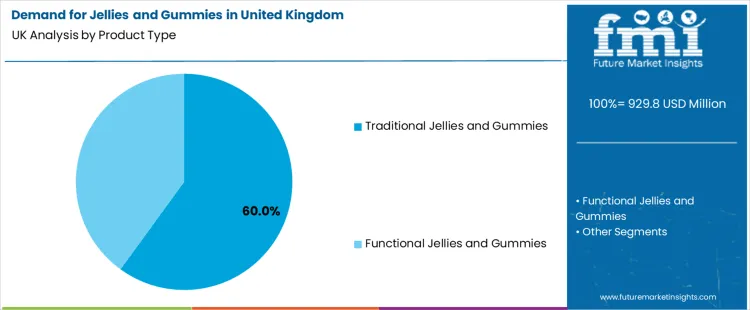
The product type segment for jellies and gummies in the United Kingdom is predominantly led by traditional jellies and gummies, which account for 60% of the market share. Traditional jellies and gummies are the classic confectionery products made primarily from sugar, gelatin, and fruit juice or flavoring. They are popular for their chewy texture, bright colors, and wide range of flavors, making them a staple in the snack and candy industry. The demand for traditional jellies and gummies remains high due to their established presence in the market and their strong appeal to both children and adults. These products continue to be a dominant choice for consumers looking for sweet, indulgent treats. Functional jellies and gummies follow, though their market share is smaller. These products are formulated to offer additional health benefits beyond basic nutrition, often incorporating ingredients such as vitamins, minerals, probiotics, and herbal extracts. Functional gummies, such as those marketed for immunity support, sleep aid, or digestive health, have gained popularity as consumers seek convenient, enjoyable ways to enhance their daily wellness routines. The growing demand for functional jellies and gummies reflects a broader trend toward health-conscious snacking, with these products being positioned as both a treat and a supplement. As the market for functional food products expands, the demand for functional jellies and gummies is expected to continue to grow, with traditional products maintaining their dominant share due to their broad consumer appeal.
What is the Demand for Jellies and Gummies in the United Kingdom?
Demand for jellies and gummies in the United Kingdom remains robust across confectionery, snack, and health supplement segments. Consumption patterns reflect retail sales in supermarkets, convenience stores, and online channels. Jellies and gummies are used in impulse confectionery, children’s treats, and increasingly in vitamin and nutraceutical formats. Purchase volumes are influenced by pricing, seasonal peaks such as holidays, and new product introductions that target flavour and texture preferences. Category demand is also linked to broader sweets consumption trends and marketing initiatives by leading confectionery brands.
What are the Key Drivers for Jellies and Gummies Demand in the United Kingdom?
Several factors drive demand for jellies and gummies in the United Kingdom. Consumer preference for convenient, on-the-go snacks and sweet treats supports category sales. Flavour innovation, including fruit blends and novel tastes, attracts repeat purchases and expands appeal across age groups. Retail merchandising and promotional activity in high-traffic channels increase visibility and trial. Health-oriented product positioning, such as vitamin-fortified gummies, stimulates uptake among adults seeking functional benefits. Brand loyalty and established confectionery consumption habits also sustain baseline demand for gummy bears, jelly sweets, and specialised formats sold throughout the year.
What are the Restraints on Jellies and Gummies Demand in the United Kingdom?
Despite steady category engagement, demand for jellies and gummies in the United Kingdom faces restraints. Public health emphasis on sugar reduction and nutritional guidelines influences consumer choices away from high-sugar candies, limiting growth in traditional formats. Retailer sugar-reduction commitments may reduce shelf space or reformulate products to meet voluntary targets. Price sensitivity in value-focused shopper segments can restrict premium pricing for specialty or fortified gummy products. Competition from alternative snacks perceived as healthier, including fruit snacks and protein bars, may divert spending. Regulatory labelling requirements for sugar content and ingredient declarations add complexity for manufacturers.
What are the Key Trends in Jellies and Gummies Demand in the United Kingdom?
Key trends shaping demand for jellies and gummies in the United Kingdom include diversification of product formats, with sugar-reduced and naturally coloured options gaining presence on shelves. Growth in functional gummies fortified with vitamins, minerals, and botanicals reflects consumer interest in combined indulgence and health benefits. Flavour trends lean toward exotic fruit profiles and novel combinations that differentiate offerings in a crowded confectionery market. Online grocery and direct-to-consumer channels support niche and artisanal gummy brands. Packaging innovations that improve convenience and portion control are increasingly featured, responding to consumer expectations for usability and transparency in ingredient sourcing.
What is the Country-Wise Demand for Jellies and Gummies in the United Kingdom?
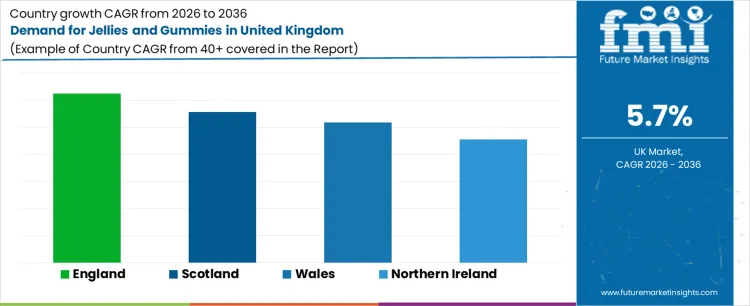
The country-wise demand for jellies and gummies in the United Kingdom shows distinct trends across its regions. England leads the market, driven by its large confectionery and snack industries, where jellies and gummies are popular as both stand-alone treats and as ingredients in other food products. Scotland, Wales, and Northern Ireland follow with steady demand growth, supported by rising consumer interest in convenient, fun, and flavored snacks. The increasing popularity of functional gummies, such as those with added health benefits like vitamins and minerals, is further driving the demand across all regions. England remains the dominant market, but growth is anticipated in all areas as consumers continue to seek novel, enjoyable snack options.
| Country | CAGR (2026 to 2036) |
|---|---|
| England | 6.3% |
| Scotland | 5.6% |
| Wales | 5.2% |
| Northern Ireland | 4.5% |
What is Driving the Demand for Jellies and Gummies in England?
The demand for jellies and gummies in England is projected to grow at a CAGR of 6.3% from 2026 to 2036. England's large confectionery market, which includes both traditional candy and functional snack products, is the primary driver of this demand. Jellies and gummies are widely consumed as standalone treats and in innovative forms, such as vitamin-enriched gummies, which are increasingly popular among health-conscious consumers. The growing trend of snacking and the rising demand for convenient, fun, and indulgent food options are also fueling the adoption of jellies and gummies in the UK. The expansion of sugar-free, organic, and plant-based gummy products is further contributing to the market’s growth. England's large retail sector, alongside increasing consumer awareness of functional food products, ensures continued demand for jellies and gummies, making it the largest market in the UK.
How is the Demand for Jellies and Gummies Performing in Scotland?
In Scotland, the demand for jellies and gummies is expected to grow at a CAGR of 5.6% from 2026 to 2036. The Scottish market is seeing a growing preference for both traditional gummy treats and functional gummies, such as those containing added vitamins or minerals. The increasing trend of health-conscious snacking is driving the demand for sugar-free and nutrient-enriched gummies. Scotland’s confectionery sector, which has witnessed a shift toward more natural and innovative snack options, is contributing to the rising popularity of jellies and gummies. With consumers seeking both enjoyment and added health benefits from their snacks, Scottish companies are expanding their product offerings to include functional gummies in a variety of flavors and forms. This trend, coupled with the expanding retail and e-commerce distribution networks, ensures steady demand growth for jellies and gummies in Scotland.
What Are the Growth Drivers for Jellies and Gummies in Wales?
The demand for jellies and gummies in Wales is projected to grow at a CAGR of 5.2% through 2036. Similar to other regions, the increasing consumer focus on health and convenience is driving the adoption of gummies, particularly those with added health benefits such as vitamins, minerals, and collagen. The Welsh market is also seeing growth in the demand for sugar-free and plant-based gummy options, as consumers become more conscious of their dietary choices. The rising popularity of functional foods in Wales, especially among younger and health-conscious demographics, is supporting the demand for jellies and gummies as both indulgent and beneficial snack options. As the confectionery sector continues to innovate, offering a range of flavors and health-focused varieties, Wales is expected to see steady growth in the consumption of jellies and gummies.
What is the Outlook for Jellies and Gummies Demand in Northern Ireland?
Northern Ireland’s demand for jellies and gummies is expected to grow at a CAGR of 4.5% from 2026 to 2036. While Northern Ireland represents the smallest market compared to other parts of the United Kingdom, the demand is steadily increasing. The rise in health-conscious snacking and the growing popularity of functional gummies, such as those with added vitamins or antioxidants, is driving this demand. Northern Ireland’s confectionery sector is gradually expanding, with more companies offering a variety of gummy products aimed at health-conscious consumers. The demand for sugar-free, organic, and plant-based gummies is particularly strong in the region, as consumers continue to seek better alternatives to traditional sugary snacks. Although the market size remains smaller, the steady adoption of jellies and gummies in Northern Ireland’s snack industry suggests a positive growth outlook for the next decade.
What is the Competitive Landscape for Demand for Jellies and Gummies in the United Kingdom?
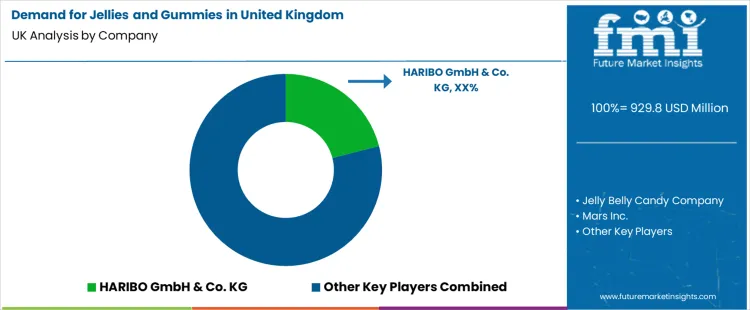
Demand for jellies and gummies in the United Kingdom is shaped by retail sales, seasonal peaks, and consumer preferences for confectionery formats. The category is positioned within impulse purchases at supermarkets, convenience channels, and online grocery platforms where documented sales data supports planning. HARIBO GmbH & Co. KG is identified as a leading supplier, with product brochures that outline range breadth, ingredient specifications, and packaging formats. These materials are referenced by category buyers to align product attributes with shelf space requirements and promotional plans. Jelly Belly Candy Company competes with assortments that are described in technical literature listing flavor profiles and certified production standards. Retail and foodservice buyers examine documented attributes such as weight variants, flavor intensity, and certification status before selecting products. Mars Inc.’s offerings are supported by specification sheets that detail sweetness profiles, shelf life values, and handling instructions used by procurement teams when evaluating supply agreements. Mondelz Global LLC supplies gummies and fruit jellies with packaging sizes, ingredient lists, and quality benchmarks that assist category managers in assortment planning. Perfetti Van Melle Group B.V.’s documentation includes graded product lines with recorded sensory profiles and recommended merchandising configurations for retail displays.
Procurement activity in the United Kingdom is guided by demand forecasts and sales trends that reflect consumer behaviour in confectionery segments. Buyers compare performance data and supply terms from these companies during tender and negotiation phases. Lead times and distribution capabilities appear in official brochures and are used by supply planners to synchronize inventory with promotional calendars. Quality assurance notes and compliance with food safety standards are evaluated to ensure alignment with retailer requirements. Technical teams review ingredient specifications to ensure compatibility with regional labeling frameworks and nutritional disclosure mandates. Demand patterns respond to planned product launches, seasonal peaks such as holidays, and promotional initiatives that are informed by market insights. Competitive activity is grounded in product attributes, supply commitments, and performance values provided by each supplier, forming the basis for selection decisions in the United Kingdom jellies and gummies category.
Key Players of the Demand for Jellies and Gummies in United Kingdom
- HARIBO GmbH & Co. KG
- Jelly Belly Candy Company
- Mars Inc.
- Mondelz Global LLC
- Perfetti Van Melle Group B.V.
Scope of the Report
| Items | Values |
|---|---|
| Quantitative Units (2026) | USD Million |
| Ingredient Type | Fruits, Vegetables, Liqueur, Flowers and Herbs, Others |
| Product Type | Functional Jellies and Gummies, Traditional Jellies and Gummies |
| End Users | <14-year-olds, 14-30 year-olds, >30 year-olds |
| Distribution Channel | Departmental Store-Based, Non-Store-Based |
| Companies | HARIBO GmbH & Co. KG, Jelly Belly Candy Company, Mars Inc., Mondelz Global LLC, Perfetti Van Melle Group B.V. |
| Regions Covered | United Kingdom |
| Countries Covered | England, Scotland, Wales, Northern Ireland |
| Additional Attributes | Dollar by sales by ingredient type, product type, end users, and distribution channel. Includes market trends towards health-conscious formulations, flavor innovation, and the role of jellies and gummies in the snacking and functional food sectors. |
Demand for Jellies and Gummies in United Kingdom
Ingredient Type
- Fruits
- Vegetables
- Liqueur
- Flowers and Herbs
- Others
Product Type
- Functional Jellies and Gummies
- Traditional Jellies and Gummies
End Users
- <14-year-olds
- 14-30 year-olds
- 30 year-olds
Distribution Channel
- Departmental Store-Based
- Non-Store-Based
Countries
- England
- Scotland
- Wales
- Northern Ireland
Bibliography
- National Institutes of Health. (2023). Enhancing reproducibility through rigor and transparency. National Institutes of Health.
- NC3Rs. (2023). The ARRIVE guidelines 2.0: Essential 10 and recommended set. National Centre for the Replacement, Refinement & Reduction of Animals in Research.
- Organisation for Economic Co-operation and Development. (2023). OECD principles of good laboratory practice (GLP).
- World Organisation for Animal Health. (2024). Terrestrial animal health code: Animal welfare. WOAH.
- National Center for Biotechnology Information. (2023). Machine learning in behavioral neuroscience: Methods and reproducibility considerations. National Library of Medicine.
- Society for Neuroscience. (2023). Best practices for data sharing and reproducibility in neuroscience research. Society for Neuroscience.
- European Bioinformatics Institute. (2023). FAIR principles and research data management. EMBL-EBI.
Frequently Asked Questions
How big is the demand for jellies and gummies in United Kingdom in 2026?
The demand for jellies and gummies in United Kingdom is estimated to be valued at USD 929.8 million in 2026.
What will be the size of jellies and gummies in United Kingdom in 2036?
The market size for the jellies and gummies in United Kingdom is projected to reach USD 1,616.1 million by 2036.
How much will be the demand for jellies and gummies in United Kingdom growth between 2026 and 2036?
The demand for jellies and gummies in United Kingdom is expected to grow at a 5.7% CAGR between 2026 and 2036.
What are the key product types in the jellies and gummies in United Kingdom?
The key product types in jellies and gummies in United Kingdom are fruits, vegetables, liqueur, flowers and herbs and others.
Which product type segment is expected to contribute significant share in the jellies and gummies in United Kingdom in 2026?
In terms of product type, traditional jellies and gummies segment is expected to command 60.0% share in the jellies and gummies in United Kingdom in 2026.
Preview the report firsthand - request a free sample
Get SampleGet the brochure for pricing and purchase details.
Get PDFTable of Content
- Executive Summary
- UK Market Outlook
- Demand-side Trends
- Supply-side Trends
- Technology Roadmap Analysis
- Analysis and Recommendations
- Market Overview
- Market Coverage / Taxonomy
- Market Definition / Scope / Limitations
- Market Background
- Market Dynamics
- Drivers
- Restraints
- Opportunity
- Trends
- Scenario Forecast
- Demand in Optimistic Scenario
- Demand in Likely Scenario
- Demand in Conservative Scenario
- Opportunity Map Analysis
- Product Life Cycle Analysis
- Supply Chain Analysis
- Investment Feasibility Matrix
- Value Chain Analysis
- PESTLE and Porter’s Analysis
- Regulatory Landscape
- Regional Parent Market Outlook
- Production and Consumption Statistics
- Import and Export Statistics
- Market Dynamics
- UK Market Analysis 2021 to 2025 and Forecast, 2026 to 2036
- Historical Market Size Value (USD Million) Analysis, 2021 to 2025
- Current and Future Market Size Value (USD Million) Projections, 2026 to 2036
- Y-o-Y Growth Trend Analysis
- Absolute $ Opportunity Analysis
- UK Market Pricing Analysis 2021 to 2025 and Forecast 2026 to 2036
- UK Market Analysis 2021 to 2025 and Forecast 2026 to 2036, By Ingredient Type
- Introduction / Key Findings
- Historical Market Size Value (USD Million) Analysis By Ingredient Type , 2021 to 2025
- Current and Future Market Size Value (USD Million) Analysis and Forecast By Ingredient Type , 2026 to 2036
- Fruits
- Vegetables
- Liqueur
- Flowers and Herbs
- Others
- Fruits
- Y-o-Y Growth Trend Analysis By Ingredient Type , 2021 to 2025
- Absolute $ Opportunity Analysis By Ingredient Type , 2026 to 2036
- UK Market Analysis 2021 to 2025 and Forecast 2026 to 2036, By Product Type
- Introduction / Key Findings
- Historical Market Size Value (USD Million) Analysis By Product Type, 2021 to 2025
- Current and Future Market Size Value (USD Million) Analysis and Forecast By Product Type, 2026 to 2036
- Traditional Jellies and Gummies
- Functional Jellies and Gummies
- Traditional Jellies and Gummies
- Y-o-Y Growth Trend Analysis By Product Type, 2021 to 2025
- Absolute $ Opportunity Analysis By Product Type, 2026 to 2036
- UK Market Analysis 2021 to 2025 and Forecast 2026 to 2036, By End Users
- Introduction / Key Findings
- Historical Market Size Value (USD Million) Analysis By End Users, 2021 to 2025
- Current and Future Market Size Value (USD Million) Analysis and Forecast By End Users, 2026 to 2036
- <14-year-olds
- 14-30 year-olds
- >30 year-olds
- <14-year-olds
- Y-o-Y Growth Trend Analysis By End Users, 2021 to 2025
- Absolute $ Opportunity Analysis By End Users, 2026 to 2036
- UK Market Analysis 2021 to 2025 and Forecast 2026 to 2036, By Distribution Channel
- Introduction / Key Findings
- Historical Market Size Value (USD Million) Analysis By Distribution Channel, 2021 to 2025
- Current and Future Market Size Value (USD Million) Analysis and Forecast By Distribution Channel, 2026 to 2036
- Departmental Store-Based
- Non-Store-Based
- Departmental Store-Based
- Y-o-Y Growth Trend Analysis By Distribution Channel, 2021 to 2025
- Absolute $ Opportunity Analysis By Distribution Channel, 2026 to 2036
- Market Structure Analysis
- Competition Dashboard
- Competition Benchmarking
- Market Share Analysis of Top Players
- By Regional
- By Ingredient Type
- By Product Type
- By End Users
- By Distribution Channel
- Competition Analysis
- Competition Deep Dive
- HARIBO GmbH & Co. KG
- Overview
- Product Portfolio
- Profitability by Market Segments (Product/Age /Sales Channel/Region)
- Sales Footprint
- Strategy Overview
- Marketing Strategy
- Product Strategy
- Channel Strategy
- Jelly Belly Candy Company
- Mars Inc.
- Mondelz Global LLC
- Perfetti Van Melle Group B.V.
- HARIBO GmbH & Co. KG
- Competition Deep Dive
- Assumptions & Acronyms Used
- Research Methodology


