

- Market Size (2026)
- USD 220.5 Mn
- Forecast (2036)
- USD 411.9 Mn
- CAGR (2026 to 2036)
- 6.4%
How big is USA prenatal vitamin supplements Market in 2026?
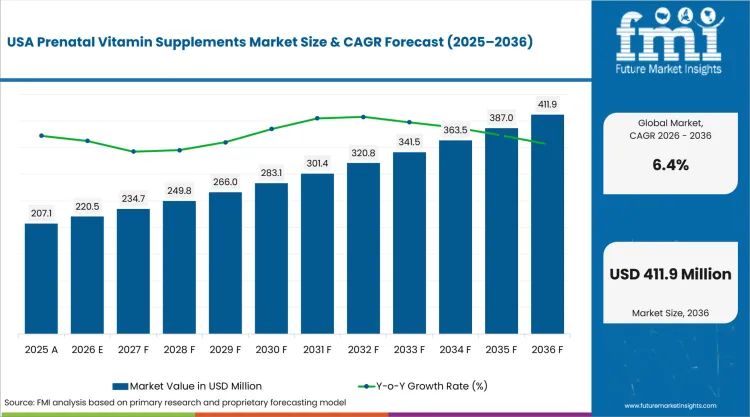
USD 220.5 million in 2026 and USD 411.9 million by 2036 at a 6.4% CAGR.
Demand for prenatal vitamin supplements in USA is projected to increase valuation from USD 220.5 million in 2026 to USD 411.9 million by 2036 at 6.4% CAGR. Consumption often begins before formal prenatal care because nutritional requirements change during preconception and early pregnancy. Supplements are commonly used to support intake of key nutrients during a period when many pregnancies have not yet entered routine clinical monitoring. NIH Office of Dietary Supplements data updated in April 2025 show 83.8% of pregnant women aged 20 to 40 had dietary iron intake below the Estimated Average Requirement. The documented nutrient gap keeps prenatal supplements tied to dose coverage, and daily tolerability determines whether users can maintain the intended serving pattern.
Country guidance changes how the same nutrient need becomes demand because national advice controls dose communication and consumer interpretation. Japan's July 2026 guidance cites the 2025 Dietary Reference Intakes and recommends 400 micrograms of supplemental folic acid for women planning pregnancy or in early pregnancy. For maternal nutrition ingredients, the commercial route depends on label clarity and country-specific dose communication before equivalent formulations can convert into repeat sales.
Key Takeaways
- Pregnancy-specific nutrient guidance gives prenatal supplements a defined purchase window that begins before conception and continues through pregnancy.
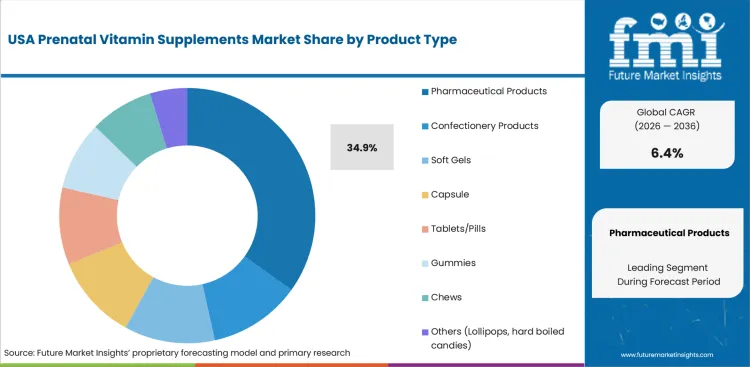
- Based on product type, pharmaceutical products are projected to account for 34.9% in 2026 due to dose-led positioning and clinician involvement.
- By sales channel, over the counter supplements are estimated to hold 39.0% in 2026 owing to direct pharmacy and retail access.
- Formula variability and gastrointestinal tolerance can weaken repeat use because a convenient dosage form may omit nutrients expected during prenatal care.
- Some of the key players in this market include Glanbia plc, Cargill, Incorporated, Associated British Foods plc, International Flavors & Fragrances Inc., Kerry Group plc, dsm-firmenich, Bunge Global SA, and Darling Ingredients Inc.
Analyst Perspective
"Prenatal supplement economics improve if a formulation delivers the intended nutrient profile without turning daily use into a swallowing or tolerance problem. Brands should evaluate pill burden and dose transparency separately because postpartum health supplements and postnatal health supplements follow different life-stage demand patterns."
- Nandini Roy Choudhury Principal Consultant, Future Market Insights
How is the USA prenatal vitamin supplements market segmented?
The USA prenatal vitamin supplements market is segmented by product type, sales channel and region.
Product type covers pharmaceutical products, confectionery products, soft gels, capsules, tablets or pills, gummies, chews and other formats such as lollipops or hard-boiled candies. Sales channel includes over the counter supplements, online sales, drug stores and pharmacies, health and wellness stores, third-party or mass merchandisers, hypermarkets or supermarkets, company websites and convenience stores. The defined scope separates prenatal sales from European postnatal supplements because use after birth belongs to a different life-stage market.
What makes pharmaceutical products central to the product type category?
Pharmaceutical products suit prenatal use because manufacturers must fit several nutrients into one daily serving with clear dose amounts. In March 2026, dsm-firmenich completed a USD 10 million upgrade to its Schenectady premix site for dietary supplements and infant formula. The added USA capacity expands multinutrient premix production before prenatal manufacturers prepare finished supplement doses.
- In 2026, pharmaceutical products are expected to lead product type with 34.9% share because dose-led positioning fits clinician-guided selection.
- Dose-led positioning does not remove serving-size friction because iron can make a complete prenatal formulation harder to swallow or tolerate.
Why do over the counter supplements lead the sales channel category?
Over the counter purchasing lets consumers begin prenatal supplementation before an appointment and change formats without a prescription. CDC guidance updated in June 2026 recommends 400 micrograms daily and directs consumers to check folic-acid labels before purchase. The instruction makes label accuracy central to self-directed purchasing through pharmacies and mass-retail channels.
- By sales channel, over the counter supplements are forecast to represent 39.0% in 2026 driven by immediate pharmacy and retail access.
- Retail access shifts label interpretation to consumers because folic acid form and serving instructions must be understood before repeat use.
What are the drivers, restraints and opportunities in the USA prenatal vitamin supplements market?
Pregnancy-specific nutrient guidance widens the purchase window, formulation variability can interrupt adherence and easier dosage forms offer room for differentiated products.
- Driver: Preconception folic-acid guidance gives prenatal brands a purchase window before pregnancy is clinically confirmed and extends the period for repeat supplementation.
- Restraint: Uneven nutrient coverage and gastrointestinal tolerance force consumers to trade dosage-form convenience against iron or calcium inclusion during daily use.
- Opportunity: Concentrated ingredients and palatable dosage formats can reduce swallowing burden without weakening documented nutrient delivery or serving instructions.
Preconception guidance widens the purchasing window
Preconception guidance expands the purchasing window because folic acid is most relevant during the earliest weeks of fetal development. CDC stated in May 2025 that about half of US pregnancies are unintended and recommends 400 micrograms of folic acid daily for women capable of pregnancy. The early timing gives prenatal brands a defined reason to reach consumers before obstetric care begins instead of relying on general wellness positioning.
Formula variability raises the cost of daily adherence
The main restraint appears after category entry because users balance nutrient completeness against nausea and dosage-form preference during routine daily supplementation. NIH data updated in April 2025 show iron in 89% of 188 prenatal supplements, whereas gummy formulations often contained no iron. Switching toward gummy supplement formats can ease swallowing, but the change can also alter the nutrient profile unintentionally.
Format engineering gives brands a practical differentiation route
Consumers who struggle with large tablets still need formats that preserve the nutrients named in pregnancy guidance and fit daily routines. Pharmavite opened a 225,000-square-foot Ohio facility in May 2025 that expanded vitamin gummy production and created a dedicated gummy innovation center. The additional gummy capacity gives pregnancy care products more format flexibility if brands preserve dose transparency and documented nutrient delivery.
Who are the notable companies in the USA prenatal vitamin supplements market?
Glanbia plc, Cargill, Incorporated, Associated British Foods plc, International Flavors & Fragrances Inc., Kerry Group plc, dsm-firmenich, Bunge Global SA, and Darling Ingredients Inc. are the notable companies serving this market.
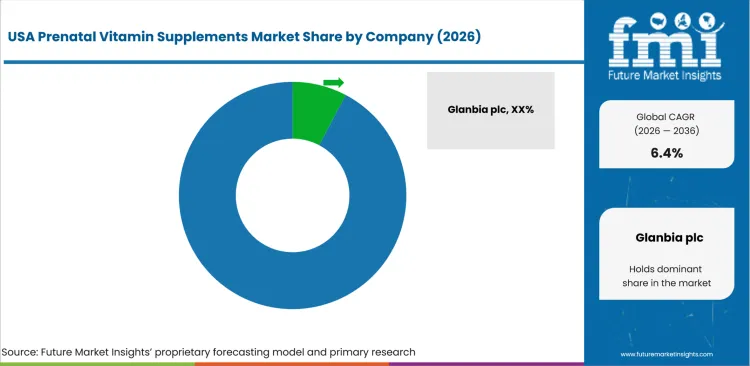
The profiled register concentrates on companies that influence prenatal formulation through premixes, oral-dosage systems or qualified functional ingredients. Entry barriers depend on documented nutrient handling and manufacturability, whereas broader ingredient groups require supplement-specific evidence before their capabilities fit the defined market boundary.
- Glanbia plc and dsm-firmenich carry verified multinutrient premix platforms that extend beyond individual vitamin or mineral ingredients.
- International Flavors & Fragrances Inc., Kerry Group plc and Associated British Foods plc participate through oral-dosage materials and formulation inputs.
- Cargill, Incorporated, Bunge Global SA and Darling Ingredients Inc. contribute narrower functional ingredients that need supplement-specific qualification for prenatal formulations.
Competitive Benchmarking: USA prenatal vitamin supplements Market
| Company | Prenatal Nutrient & Premix Depth | Delivery-Format Enablement | Maternal-Health Evidence | Geographic Reach |
|---|---|---|---|---|
| Glanbia plc | High | High | Medium | Americas, Europe and Asia-Pacific |
| Cargill, Incorporated | Medium | High | Low | North America, Europe, Asia-Pacific and Latin America |
| Associated British Foods plc | Medium | High | Low | North America, Europe and Asia-Pacific |
| International Flavors & Fragrances Inc. | Medium | High | High | North America, Europe and Asia-Pacific |
| Kerry Group plc | Medium | High | Medium | Americas, Europe and Asia-Pacific |
| dsm-firmenich | High | High | High | Global |
| Bunge Global SA | Low | Medium | Low | Americas, Europe and Asia |
| Darling Ingredients Inc. | Low | High | Low | Americas, Europe and Asia-Pacific |
High prenatal nutrient and premix depth requires a multinutrient premix platform with direct vitamin and mineral supplement coverage. Medium applies to companies with several supplement ingredients but no comparable premix breadth, whereas Low records one verified ingredient route. High delivery-format enablement requires at least three documented oral dosage or formulation routes, with Medium requiring two routes and Low one. High maternal-health evidence requires direct pregnancy or maternal programs, whereas Medium covers women's health or early-life evidence and Low broader supplement evidence.
Key Developments in the USA prenatal vitamin supplements Market
- In August 2025, Glanbia plc acquired Sweetmix to extend its Health & Nutrition nutritional premix and ingredient platform in Brazil.
- In March 2026, dsm-firmenich launched ModulaSENSE Bitter to extend taste-modulation tools for oral dosage formulations that face adherence problems.
- In February 2026, Associated British Foods plc subsidiary SPI Pharma entered a global distribution partnership with Anek Prayog for Lubripharm Pro.
Key Players in the USA prenatal vitamin supplements Market
Premix and Maternal-Nutrition Platforms
- Glanbia plc
- dsm-firmenich
- International Flavors & Fragrances Inc.
Supplement Formulation and Delivery Systems
- Associated British Foods plc
- Kerry Group plc
Functional Ingredient Platforms
- Cargill, Incorporated
- Bunge Global SA
- Darling Ingredients Inc.
USA prenatal vitamin supplements Market - Report Scope
| Coverage field | Report scope |
|---|---|
| Market breakdown | By product type, sales channel and region. |
| Quantitative Units | USD million. |
| Market Definition | Revenue includes prenatal vitamin supplement sales positioned for preconception and pregnancy use across the listed product forms and sales channels. It excludes general adult multivitamins not positioned as prenatal products, fortified staple foods, infant nutrition, clinical services, and downstream products in which prenatal nutrients are only an input. |
| Regions Covered | North America |
| Countries Covered | USA |
| Key Companies Profiled | Glanbia plc, Cargill, Incorporated, Associated British Foods plc, International Flavors & Fragrances Inc., Kerry Group plc, dsm-firmenich, Bunge Global SA, Darling Ingredients Inc. |
| Forecast Period | 2026 to 2036. |
| Approach | Primary and secondary research with market triangulation. |
USA prenatal vitamin supplements Market - Research Methodology
| Method | Approach |
|---|---|
| Primary Research | FMI analysts gathered input from manufacturers, service providers, technology developers, distributors, end users, procurement teams, and subject-matter experts. Interviews examined purchasing decisions, product or service evaluation, adoption barriers, approval requirements, pricing considerations, and expectations for technical or commercial support. Respondents were also asked what evidence is required before a trial, pilot, or initial order develops into regular purchasing. |
| Desk Research | Desk research covered government statistics, regulatory publications, trade data, industry associations, technical literature, standards, company filings, product information, and official corporate announcements. Sources were reviewed for relevance, publication date, geographic coverage, and consistency with the defined market scope. Claims relating to performance, applications, approvals, capacity, investment, and commercial activity were retained only when supported by credible public evidence. |
| Market Sizing and Forecasting | The market model combined the baseline value with historical performance, segment structure, pricing and volume indicators, adoption levels, company participation, and country-level demand conditions. Forecast assumptions considered economic activity, investment trends, regulatory developments, technology adoption, purchasing cycles, supply availability, and barriers to wider market use. Segment and regional estimates were reconciled before the final market total was calculated. |
| Data Validation | Estimates were checked against multiple independent indicators, including public data, company activity, trade patterns, industry developments, and findings from primary interviews. Validation also tested whether products, services, applications, and company revenues fell within the defined market boundaries. Adjacent categories, unsupported claims, overlapping revenues, and activities without direct market relevance were excluded to reduce double counting and maintain consistency across segments and countries. |
USA prenatal vitamin supplements Market by Segments
USA prenatal vitamin supplements Market segmented by Product Type:
- Pharmaceutical Products
- Confectionery Products
- Soft Gels
- Capsule
- Tablets/Pills
- Gummies
- Chews
- Others (Lollipops, hard boiled candies)
USA prenatal vitamin supplements Market segmented by Sales Channel:
- Over the Counter Supplements (OTC)
- Online
- Drug Stores and Pharmacies
- Health and wellness Stores
- 3rd party / Mass Merchandiser
- Hypermarkets/Supermarkets
- Company Website
- Convenience Stores
Research Sources and Bibliography
- National Institutes of Health, Office of Dietary Supplements. (2025, April 3). Dietary Supplements and Life Stages: Pregnancy - Health Professional Fact Sheet.
- Centers for Disease Control and Prevention. (2026, June 2). Folic Acid: Sources and Recommended Intake.
- Centers for Disease Control and Prevention. (2025, May 20). About Folic Acid.
- German Federal Institute for Risk Assessment. (2026, February 18). Folic acid and co.: Do pregnant women need to supplement their diet?.
- Ministry of Health, Labour and Welfare, Japan. (2026, July 15). Folic acid and supplements: Effect on reducing the risk of neural tube defects.
- Korea Disease Control and Prevention Agency. (2026, May 11). Dietary nutrition for pregnant women.
- Ministry of Health, Republic of Indonesia. (2026, August 18). Perangi Stunting, Kemenkes Gandeng Jerman Amankan Pasokan Suplemen Ibu Hamil Produksi Lokal.
- dsm-firmenich. (2026, March 11). A new standard for premix excellence: dsm-firmenich completes $10m upgrade on Schenectady (USA) site.
- Pharmavite. (2025, May 8). Pharmavite, Maker of Nature Made Vitamins, Opens $250 Million Production Facility in New Albany, Ohio.
- Glanbia plc. (2026, March). Glanbia FY 2025 Results.
- Bayer. (2025, October 7). One A Day® Unveils Bold New Brand Identity and Platform: “The ONE for you”.
- SPI Pharma. (2026, February 17). Global Launch of Lubripharm™ Pro: SPI and Anek Prayog Form Strategic Partnership.
- ABF Ingredients. (2026, April 29). ABF Ingredients announces Eau Claire, Wisconsin for North American Expansion.
- International Flavors & Fragrances Inc. (2025, April 8). Low Nitrite METHOCEL HPMC for Nitrosamine Mitigation.
- dsm-firmenich. (2026, June 26). Co-creating clinical excellence in dietary supplements.
- Darling Ingredients Inc. (2026, June 3). Darling Ingredients' health brand Rousselot receives USA patent for Nextida® GC, the first collagen peptide composition supporting blood glucose regulation.
- Church & Dwight Co., Inc. (2026, January). Church & Dwight Reports Q4 2025 and 2025 Results and Provides 2026 Outlook.
- Pharmavite. (2025, June 17). MegaFood® Expands Product Lineup with Science-Backed Ingredients to Support Consumers' Whole-Body Wellness.
- dsm-firmenich. (2026, March 19). dsm-firmenich launches ModulaSENSE® Bitter - a novel taste modulation technology to enhance drug palatability.
This Report Answers
- How large is the USA prenatal vitamin supplements market in 2026 and what is its 2036 forecast value?
- What CAGR is projected for the USA prenatal vitamin supplements market between 2026 and 2036?
- Why do pharmaceutical products hold the largest authorised product type share in 2026?
- Why do over the counter supplements hold the largest authorised sales channel share in 2026?
- Which profiled countries record the fastest CAGRs during the forecast period?
- How do local maternal-nutrition programs change commercial entry conditions by country?
- Which formulation constraints most directly affect repeat prenatal supplement use?
- Which companies are active in premixes, dosage-form systems and functional supplement ingredients?
- What recent company developments are changing manufacturing capacity, formulation tools and portfolio ownership?
Frequently Asked Questions
How big is the USA prenatal vitamin supplements market in 2026?
The USA prenatal vitamin supplements market is valued at USD 220.5 million in 2026 and is projected to reach USD 411.9 million by 2036. Growth follows pregnancy-specific nutrient guidance and repeat supplementation before conception and through routine daily use during pregnancy.
What is the CAGR of the USA prenatal vitamin supplements market from 2026 to 2036?
The USA prenatal vitamin supplements market is projected to grow at a CAGR of 6.4% between 2026 and 2036. Expansion is supported by preconception folic-acid guidance and broad nationwide retail access to prenatal formulations.
Which product type leads the USA prenatal vitamin supplements market?
The pharmaceutical products segment is expected to hold 34.9% of the USA prenatal vitamin supplements market in 2026, attributable to dose clarity and clinician involvement. Premix systems also support controlled multinutrient delivery for formulations that require several nutrients within a documented daily serving.
Which sales channel leads the USA prenatal vitamin supplements market?
The over-the-counter supplements segment is expected to hold 39.0% of the USA prenatal vitamin supplements market in 2026, driven by direct pharmacy and retail access. Consumers can begin supplementation before a formal prenatal visit and change formats without a prescription transaction.
Which companies are active in the USA prenatal vitamin supplements market?
Key companies operating in the market include Glanbia plc, Cargill, Incorporated, Associated British Foods plc, International Flavors & Fragrances Inc., Kerry Group plc, dsm-firmenich, Bunge Global SA, and Darling Ingredients Inc. Their verified roles cover premixes, oral-dosage systems and functional ingredients used before finished prenatal manufacturing.
Preview the report firsthand - request a free sample
Get SampleGet the brochure for pricing and purchase details.
Get PDFTable of Content
- Key Takeaways
- Market Size and CAGR
- Top Growth Driver
- Fastest Growing Segment
- Leading Region
- Key Companies
- Emerging Opportunities
- Executive Summary
- USA Market Outlook
- Demand-side Trends
- Supply-side Trends
- Technology Roadmap Analysis
- Analysis and Recommendations
- Analyst Perspective (What is happening? Why now? What should investors know?)
- Key Questions Answered
- How large is the market?
- What is the CAGR?
- What are key trends?
- Which region dominates?
- Who are the leaders?
- Market Overview
- Market Coverage / Taxonomy
- Market Definition / Scope / Limitations
- Research Methodology
- Chapter Orientation
- Analytical Lens and Working Hypotheses
- Market Structure, Signals, and Trend Drivers
- Benchmarking and Cross-market Comparability
- Market Sizing, Forecasting, and Opportunity Mapping
- Research Design and Evidence Framework
- Desk Research Programme (Secondary Evidence)
- Expert Input and Fieldwork (Primary Evidence)
- Tooling, Models, and Reference Databases
- Data Engineering and Model Build
- Quality Assurance and Audit Trail
- Market Background
- Market Dynamics (Drivers, Restraints, Opportunity, Trends)
- Scenario Forecast (Optimistic, Likely, Conservative)
- Impact Analysis
- AI Impact
- Sustainability Impact
- Regulatory Impact
- Technology Impact
- Consumer / Buyer Analysis
- Purchase Drivers
- Adoption Barriers
- Buyer Journey
- Opportunity Map Analysis
- Product Life Cycle Analysis
- Supply Chain Analysis
- Investment Feasibility Matrix
- Value Chain Analysis
- PESTLE and Porter's Analysis
- Regulatory Landscape
- Regional Parent Market Outlook
- Production and Consumption Statistics
- Import and Export Statistics
- USA Market Analysis and Forecast, 2021 to 2036
- Historical Market Size Value (USD Million) Analysis, 2021 to 2025
- Current and Future Market Size Value (USD Million) Projections, 2026 to 2036
- Y-o-Y Growth Trend Analysis
- Absolute $ Opportunity Analysis
- USA Market Pricing Analysis, 2021 to 2036
- USA Market Analysis and Forecast, By Product Type, 2021 to 2036
- Introduction / Key Findings
- Historical Market Size Value (USD Million) Analysis By Product Type, 2021 to 2025
- Current and Future Market Size Value (USD Million) Analysis and Forecast By Product Type, 2026 to 2036
- Pharmaceutical Products
- Confectionery Products
- Soft Gels
- Capsule
- Tablets/Pills
- Gummies
- Chews
- Others (Lollipops, hard boiled candies)
- Pharmaceutical Products
- Y-o-Y Growth Trend Analysis By Product Type, 2021 to 2025
- Absolute $ Opportunity Analysis By Product Type, 2026 to 2036
- USA Market Analysis and Forecast, By Sales Channel, 2021 to 2036
- Introduction / Key Findings
- Historical Market Size Value (USD Million) Analysis By Sales Channel, 2021 to 2025
- Current and Future Market Size Value (USD Million) Analysis and Forecast By Sales Channel, 2026 to 2036
- Over the Counter Supplements (OTC)
- Online
- Drug Stores and Pharmacies
- Health and wellness Stores
- 3rd party / Mass Merchandiser
- Hypermarkets/Supermarkets
- Company Website
- Convenience Stores
- Over the Counter Supplements (OTC)
- Y-o-Y Growth Trend Analysis By Sales Channel, 2021 to 2025
- Absolute $ Opportunity Analysis By Sales Channel, 2026 to 2036
- Market Structure Analysis
- Competition Dashboard
- Competition Benchmarking
- Market Share Analysis of Top Players
- By Regional
- By Product Type
- By Sales Channel
- Emerging Startups
- Innovation Benchmarking
- Competition Analysis
- Competition Deep Dive
- Glanbia plc
- Overview
- Product Portfolio
- Profitability by Market Segments
- Sales Footprint
- Strategy Overview
- Marketing Strategy
- Product Strategy
- Channel Strategy
- Cargill, Incorporated
- Associated British Foods plc
- International Flavors & Fragrances Inc.
- Kerry Group plc
- DSM-Firmenich
- Bunge Limited
- Darling Ingredients Inc.
- Glanbia plc
- Case Studies
- Success Stories
- Recent Developments
- Competition Deep Dive
- Assumptions & Acronyms Used


