


- High-end prenatal vitamins are increasing their market share because pregnant women today value ingredient quality, clear labeling, and specialty ingredients above generic multivitamins.
- Products enriched with DHA, choline, methylfolate, and clinically distinguished ingredients enjoy higher price power than regular prenatal vitamins.
- Certainty, doctor endorsement, third-party testing, and clean labels are now key factors in buying premium prenatal vitamins.
- The greatest premium opportunities lie in specialty maternal nutrition products, premium consumer brands, and clinically distinct formulations.
- Premiumness becomes irrelevant where products are not nutritionally different from others or depend entirely on brand positioning.
- The greatest fallacy about premium prenatal vitamins is that their success is driven by high prices. Consumers pay more because they are convinced that a product offers superior benefits to themselves and their babies.
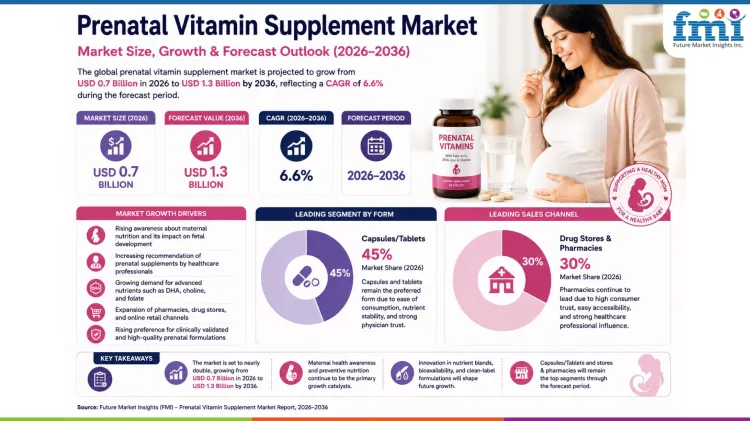
The global Prenatal Vitamin Supplements Market is undergoing a significant transformation. Historically, prenatal vitamins were viewed as standardized nutritional products designed to provide basic supplementation during pregnancy. Most products competed primarily on physician recommendation, retail availability, and affordability rather than formulation sophistication.
The situation has dramatically changed over time. Women in today’s world know more about the products used during pregnancy and participate more in decision-making regarding their health. Thanks to various sources of digital health-related information, participation in prenatal wellness groups, better-trained doctors, and research into maternal nutrition, women buy prenatal supplements very carefully, considering different parameters. Instead of purchasing any random prenatal supplement from the pharmacy, consumers analyze its components and effectiveness.
This shift mirrors developments occurring throughout the Women's Health Supplement Market, where female consumers increasingly seek targeted solutions that address specific life stages rather than broad wellness objectives. Pregnancy represents one of the most important categories within this trend because mothers often perceive prenatal nutrition as directly connected to maternal well-being and fetal development.
For this reason, premium prenatal vitamins are becoming more prominent. But what will have the most significant premiums are not always the most expensive. What has the premiums are the products that have managed to create a value proposition by successfully combining innovation, trust, convenience, and transparency.
Why Premium Pricing Is No Longer About Branding
One of the major shifts happening in the field of prenatal vitamins is the diminishing role played by brands in determining the value of high-end vitamins.
Brands have traditionally had an upper hand because of customer awareness as well as physician knowledge about them. This meant that products could be marketed at premium prices regardless of the differences between them. However, modern consumers are now demanding proof of the additional nutrition offered by these vitamins.
This reflects broader developments across the Dietary Supplement Market, where consumers are becoming more educated and more analytical in their purchasing decisions. Ingredient sourcing, nutrient bioavailability, manufacturing quality, dosage forms, and clinical support increasingly influence consumer choices.
Thus, premium pricing can only be substantiated by means of formulation. It is very difficult for products formulated with general nutrient mixes to sustain their premiums. On the other hand, premium prices can be maintained by supplements formulated with advanced forms of nutrients or with additional elements required during pregnancy.
This shift signifies a move towards formulation-based premiums.
Ingredient Quality Is Driving Premium Growth
Ingredient quality is one of the most significant contributors to premium positioning for prenatal vitamins.
More and more people are concerned not just about what goes into the formula, but how. For example, folate is an excellent illustration. While folic acid is the classic ingredient used for generations in prenatal vitamins, today many high-end formulations use methylfolate instead as an improvement over the traditional option.
It is important here not the understanding of scientific specifics, but rather the recognition of it as being a more advanced product. And this factor alone is quite enough to position the product at a premium level.
There are some other elements, like, for example, DHA. As women understand how essential DHA is for a baby during the pregnancy period, formulations with the latter tend to have better positioning when incorporated in the prenatal product itself rather than as an add-on.
Another example of ingredient positioning is choline. With an increase in understanding how important choline can be during pregnancy, more and more manufacturers include it in their prenatal formulations.
This ingredient-focused competition reflects developments across the broader Food Supplement Ingredients Market, where innovation increasingly determines product differentiation. In prenatal vitamins, the premium is increasingly created by what is inside the bottle rather than what is printed on the label.
Trust Has Become a Commercial Advantage
No other type of nutritional supplements requires trust as much as prenatal nutrition does.
Pregnancy is one of the most delicate periods in anyone’s life, which means that the decision-making process in terms of purchase will likely be accompanied by certain reservations. This, in turn, means that trust could become one of the key advantages for businesses. Third-party validation, manufacturer certification, endorsement from doctors, transparent ingredient sourcing and quality management processes can help boost the premium perception of products.
This dynamic is influencing the broader Nutraceuticals Market, where preventive health products increasingly compete on credibility as much as functionality. Prenatal vitamins occupy an especially important position within this trend because consumers often perceive them as directly linked to maternal and fetal outcomes.
Premium products thus spend a lot on clinical validation, manufacturing processes, educational information, and working with healthcare professionals. This helps to enhance consumer confidence in them, thus premium pricing.
Consumers aren’t paying premium prices for the vitamins themselves. They are paying premium prices for peace of mind.
Clean Label Positioning Is Supporting Premiumization
An additional factor behind premium product growth involves the use of clean labels.
Consumers are becoming more interested in analyzing labels on products and how those products were made before purchasing. Issues like artificial coloring and additives as well as allergens and fillers are becoming of concern to health-conscious consumers.
As a result, there have been chances for companies making products that are certified non-GMO, allergen-sensitive, vegetarian, vegan, or even without artificial substances.
The trend aligns closely with developments occurring throughout the Personalized Nutrition Market, where consumers seek products that align with individual preferences, dietary restrictions, and health objectives. Pregnancy further amplifies these preferences because consumers often become more selective about ingredient quality during this period.
Clean-label positioning is therefore not simply a marketing strategy. It has become an important component of trust-building and premium value creation.
Gummies Are Creating a New Premium Segment
Gummies have brought about an unprecedented level of premium opportunity within the space of prenatal supplements.
Tablets and capsules continue to be critical due to their ability to offer high amounts of nutrients and their conformity with recommendations by doctors. But gummies meet another type of consumer need: convenience and compliance.
The challenges faced by many women during pregnancy including nausea, taste sensitivity, and fatigue with regards to taking pills can make the process difficult.
This trend reflects broader growth within the Gummy Supplements Market, where consumers increasingly favor formats that simplify wellness routines. Gummies allow manufacturers to position prenatal supplementation as more approachable and enjoyable.
Importantly, gummies are not replacing tablets and capsules. Instead, they are creating a parallel premium segment based on convenience, taste, and adherence.
Maternal Nutrition Is Expanding Beyond Pregnancy
The expansion of what maternal nutrition entails is another point which drives the rise of premium offerings.
Consumers recognize that maternal well-being is not limited to just one phase, but is a process that can encompass preconception, pregnancy, and post-pregnancy as well. This allows manufacturers to expand their offerings into complete maternal wellness packages instead of isolated prenatal formulations.
The Fertility Supplements Market provides one example of this trend. Many consumers begin supplementation before pregnancy, creating opportunities for brands to establish relationships earlier in the maternal health journey.
Similarly, the Postpartum Health Supplements Market is expanding as consumers seek nutritional support after childbirth. Recovery, breastfeeding, energy support, and long-term maternal wellness all contribute to continued demand.
Manufacturers capable of supporting consumers across these stages may be better positioned to build long-term loyalty and defend premium pricing.
Where Premium Pricing Is Strongest
Premium pricing will be most effective for products that feature clear differentiation.
These include such things as the inclusion of methylfolate, DHA, choline, vitamin D optimization, better tolerated forms of iron, clean label messaging, third party testing, and physician-based claims. It will be easier to sell premium pricing to consumers if they are able to recognize certain benefits for pregnancy-related outcomes.
There will be strong opportunities for premium pricing among products sold direct-to-consumer, specialty wellness retailers, and within a maternal health ecosystem.
Products that have been marketed as being part of a greater maternal wellness program tend to have the potential for stronger premium pricing.
Where Premium Pricing Becomes Vulnerable
Positioning at a premium becomes tougher if differentiation isn't strong.
If products with similar nutrient compositions are offered at lower costs, they could be subjected to price competition.
Consumers can grow more sensitive about pricing if they see little differentiation among their competitors' products.
The retail pharmacy setting makes this task even harder since products are presented side by side and thus are ripe for comparison.
If a product relies only on its design, marketing campaigns, or health claims for distinction, it will be increasingly tough to command a premium price point.
The Biggest Misconception
Misconception about prenatal vitamins is that consumers are inclined to spend money when pregnant.
In actuality, expectant mothers are quite mindful regarding their expenses. They just perceive their value differently from other product segments.
Premium pricing occurs only if consumers believe that higher value exists in terms of better-quality ingredients, increased trust, safety, tolerance, and good results for maternal health.
Without these factors, premium pricing would be hard to justify.
Premium prenatal vitamins sell well not because of their price but owing to their reliability.
Bottom Line
High-end prenatal vitamins are now getting a boost from a paradigm shift in consumer behavior. Pregnant women have started looking for supplements that provide high-quality nutrition, high levels of transparency about ingredients, a “clean” label, and reliable quality assurance.
Features such as DHA, choline, methyl folate, doctor recommendations, third-party testing, and maternal health positioning will become even more vital in establishing the price premium. Simultaneously, customers expect to receive a sense of added value from a higher price point.
The winners in the coming years in the Prenatal Vitamin Supplements Market might not end up being the priciest options. These winners will be the players who successfully blend science and trust into highly relevant products.

