


- Private label prenatal vitamins are becoming more popular because of increased efforts by retailers to expand their health and wellness offerings as well as cost-efficient ways for moms to meet their nutritional needs.
- Most private label prenatal vitamins are competing based on basic nutritional value, thereby putting pricing pressure on branded prenatal vitamins.
- Top end brands continue to benefit from innovations within ingredients, trust from doctors, clinical positioning, and differentiation in their product offerings.
- DHA, choline, methylfolate, clean label marketing, and nutrient delivery technologies can prove tough to match for most private label brands.
- Financial instability and increasing costs of health care are driving some consumers to consider more affordable prenatal vitamins.
- The biggest myth associated with private label prenatal vitamins is that they will replace branded vitamins.
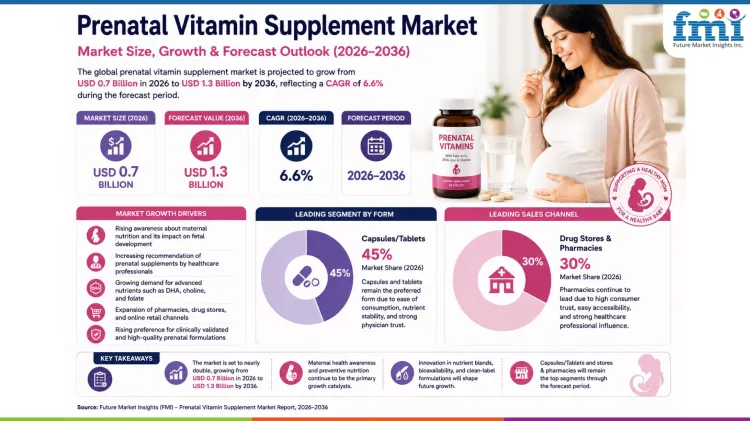
The global Prenatal Vitamin Supplements Market is entering a new competitive phase. For years, branded prenatal vitamins benefited from strong physician recommendations, established reputations, and limited competition from retailer-owned alternatives. Prenatal nutrition was traditionally seen as an area where national brand names enjoyed definite advantages.
However, this is not the case anymore, with private label products getting more advanced than ever before. In particular, retail stores have been making serious strides towards health and wellness categories, offering high-quality products that build strong consumer trust. Consequently, today, store-branded prenatal vitamins start to attract consumer attention.
This shift mirrors developments occurring across the broader Dietary Supplements Market, where private-label products have steadily increased their presence. Increased efficiencies in manufacturing, distribution, and brand trust have allowed private labeling to offer more competition than was possible earlier generations ago.
This has created an environment in which makers of prenatal vitamins need to prove themselves beyond just being known brands.
Why Private Label Is Gaining Momentum
The trend towards private labeling has not been driven by consumers losing faith in mainstream brands; rather, it stems from changes in consumer behavior patterns and an increasing level of trust in retailer-branded supplements.
Modern-day consumers have begun paying closer attention to labels, dosages, and the overall content of the items they intend to buy. In most instances, it appears that nutrients found in private-label prenatal supplements tend to be fairly similar to their branded counterparts. Thus, price may become a determining factor when there is no apparent difference between products.
There are other reasons why some people opt for private-label products. First, pregnancy comes along with various financial burdens including additional medical costs and expenses associated with preparing for having a baby.
This trend aligns with broader developments in the Women's Health Supplement Market, where affordability is becoming an increasingly important purchasing consideration. While quality remains critical, consumers are also looking for products that fit within evolving household budgets.
Private-label brands benefit because they can often offer lower prices while leveraging retailer trust and shelf visibility.
Basic Formulations Are Most Vulnerable to Private Label Competition
All prenatal vitamins do not have the same amount of competition.
The greatest competition is faced by prenatal vitamins which consist of standard nutrients with little distinction. If a prenatal vitamin contains mainly the common nutrients that are readily available, then consumers might not see enough justification for paying more.
For a long time, there was much competition among prenatal vitamins on the basis of the presence of folic acid, iron, calcium, and multivitamin nutrition. These nutrients are still very important; however, they do not offer much distinction anymore.
This dynamic is influencing the broader Food Supplement Ingredients Market, where ingredient innovation increasingly determines competitive advantage. Products that rely on commodity nutrient blends often face greater pricing pressure because consumers can more easily compare alternatives.
As private-label manufacturers improve formulation quality, the competitive challenge for basic prenatal products is likely to intensify.
Ingredient Innovation Continues to Protect Premium Brands
Even with the emergence of growth in private label products, there remain many benefits associated with premium prenatal brands.
The best form of defense is ingredient differentiation. Ingredients like DHA, choline, methylfolate, superior forms of iron, or even clinically differentiated nutrient mixes can generate unique value propositions which will be harder for private labels to compete against.
People who study up on their own regarding maternal nutrition will typically search for these ingredients as being essential parts of prenatal care regimens.
This reflects broader innovation trends occurring within the Nutraceuticals Market, where companies increasingly compete through formulation sophistication rather than simple nutrient inclusion.
Premium brands that invest continually in ingredient innovation will be able to differentiate themselves from cheaper competitors. In numerous instances, consumers are willing to spend extra for something that is perceived to give better assistance when pregnant.
Trust Remains One of the Strongest Competitive Barriers
One of the key issues limiting the growth of private-label prenatal vitamins is trust.
There are no other times in an individual’s life when he/she becomes more sensitive than during pregnancy. Supplements for mother’s and baby’s health have certain emotional value which is unique to these products.
Thus, physicians’ recommendations, third party certification, openness in science, and brands’ reputation remain significant for customers.
This trend aligns closely with developments throughout the Maternal Health Market, where trust often outweighs purely economic considerations. Consumers may be willing to switch grocery brands or household products, but many remain cautious when evaluating products linked directly to pregnancy outcomes.
For premium prenatal brands, years of trust accumulation, health practitioner relationships, and investments in education pay off.
While private-label goods may be able to compete based on value, trust-based competition is a much longer process.
Direct-to-Consumer Brands Face a Different Challenge
The private label challenge does not affect all players equally in the industry.
National brands oriented toward the retail space may be more likely to come up against competition because private label items can be found side by side with their offerings on pharmacy and retail store shelves. Direct-to-consumer brands, on the other hand, function quite differently.
A large number of DTC prenatals rely on education, personalization, subscription, and other tactics besides shelf competition.
This reflects broader developments within the Personalized Nutrition Market, where consumers increasingly value tailored experiences rather than standardized products.
As a result, private-label competition may have less impact on brands that successfully position themselves as comprehensive maternal wellness solutions rather than supplement manufacturers alone.
Gummies Are Creating Another Layer of Competition
Format innovation is adding complexity to the competitive landscape.
The growth of the Gummy Supplements Market has created new opportunities for both premium and private-label manufacturers. Gummies appeal to consumers seeking convenience, improved taste, and easier compliance during pregnancy.
The trend toward private label retailers developing their own gummy prenatal supplements has enabled them to be able to take part in a rapidly growing supplement form. Nonetheless, high-end brands still benefit from the use of high-quality ingredients, taste formulations, and more optimal nutrients, which make up for this challenge.
In other words, while gummies increase competition, they also open doors for differentiation.
The winning formula does not lie solely in the form itself but rather in its effectiveness.
Private Label Growth Does Not Mean Brand Decline
One of the most popular misconceptions in relation to private label extensions is that branded products will always lose out.
However, category growth can often make room for multiple winners at once. On one hand, there may be consumers interested in value-added private label offerings, whereas premium offerings will continue satisfying consumers seeking trust, advanced formulations, or specific nutrition.
This dynamic is typical for healthcare categories. As markets become more mature, differentiation becomes a better strategy than replacement, because not all consumers are interested in the same value propositions. The prenatal market is following the same logic.
The Biggest Misconception
By far the greatest misunderstanding is the idea that private label vitamins for pregnant women will take over from branded products. The assumption underestimates consumer buying patterns.
Consumers view pregnancy vitamin supplements as distinct from other consumer items because of their perceived impact on the health of the mother and baby. This can mean that brand trust, physician advice, high-quality formulations, and unique ingredients will still play significant roles.
A move towards private labels is inevitable, especially amongst budget-conscious consumers. Nonetheless, premium-branded products which keep innovating and creating brand loyalty won’t vanish.
Bottom Line
Pregnancy multivitamin private-label products are gaining increasing importance owing to improvements in product quality, enhanced consumer confidence, and increased health & wellness offerings by retailers.
Basic pregnancy multivitamins are most vulnerable due to increasing comparisons based on price when nutritional differences become negligible. Nevertheless, premium brands maintain their strengths in terms of innovations in ingredients, doctor recommendations, clinical validity, and unique maternal nutrition approaches.
The evolution of the Prenatal Vitamin Supplement Market will not result in one victor emerging. Rather, it will favor both value-focused private-label products and premium brands that can offer nutritional and emotional value.
Manufacturers that recognize where consumers make compromises in purchasing decisions and where they do not will be the ones that stand a better chance at defending market share.

