


Returnable Transport Packaging Market : Global Industry Analysis 2016 - 2025 and Opportunity Assessment 2026 - 2036
Returnable Transport Packaging Market is segmented by Material (Plastic, Metal, Paper, Wood), End Use (Chemical, Building and Construction, Food and Beverages, Retail, Industrial, Logistics), Product Type (IBC, Pallets, Plastic Crates, Layer Pads, Drums, Dunnage Bags), and Region. Forecast for 2026 to 2036.
Historical Data Covered: 2016 - 2025 | Base Year: 2025 | Estimated Year: 2026 | Forecast Period: 2026 - 2036
Returnable Transport Packaging Market Size, Market Forecast and Outlook By FMI
The returnable transport packaging market was valued at USD 31.1 billion in 2025. The market is set to reach USD 32.6 billion by 2026-end and grow at a CAGR of 4.9% between 2026-2036 to reach USD 52.6 billion by 2036. Plastic will dominate with a 67.7% share, while Chemical will lead with a 19.3% share.
Summary of the Returnable Transport Packaging Market
- Demand and Growth Drivers
- Growing end use application demand and infrastructure investment are expected to support sustained market expansion during the forecast period.
- Regulatory compliance requirements and quality standards tightening are likely to favor established manufacturers with comprehensive certification portfolios.
- Regional manufacturing capacity expansion is expected to create localized supply capabilities and reduce logistics cost exposure.
- Product and Segment View
- Plastic is likely to account for 67.7% of the material in 2026, supported by growing end use demand and application expansion.
- Chemical is expected to hold 19.3% of the end use segment, reflecting growing end use demand and application expansion.
- Additional segmentation reflects diversified demand patterns across application categories and geographic markets.
- Geography and Competitive Outlook
- India is likely to remain a leading market with a projected CAGR of 6.8%, supported by established end use demand and favorable policy frameworks.
- China is expected to follow at 6.2%, reflecting growing adoption and expanding market infrastructure.
- Companies with integrated product portfolios and multi-regional distribution presence are likely to strengthen their competitive positions during the forecast period.
- Analyst Opinion
- Nandini Roy Choudhury, Principal Consultant at FMI says, 'Companies that combine cost efficiency with technical differentiation and multi-regional manufacturing presence are likely to capture structural growth opportunities over the forecast period.'
- The returnable transport packaging market is transitioning toward higher value applications, with demand increasingly shaped by quality specifications, compliance requirements, and supply chain reliability.
- Adoption is supported by expanding end use applications, infrastructure investment, and regulatory standards tightening across major markets.
- Competitive dynamics increasingly favor companies with integrated manufacturing capabilities, diversified customer bases, and strong certification portfolios.
- Demand is further supported by the growing focus on sustainability, operational efficiency, and localized supply chain resilience.
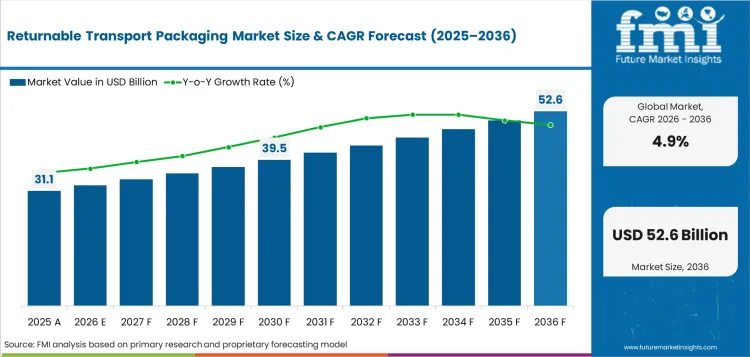
Returnable Transport Packaging Market Definition
The returnable transport packaging market encompasses products, components, and systems used across industrial, commercial, and institutional applications. The market covers manufactured goods distributed through direct supply, distributors, and retail channels across all major geographic regions.
Returnable Transport Packaging Market Inclusions
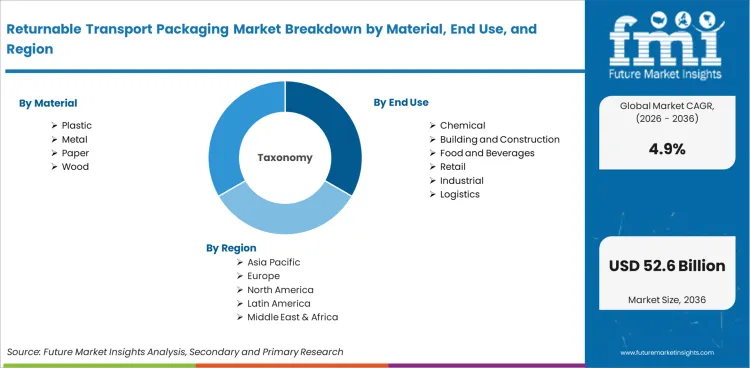
Market scope encompasses all commercially traded returnable transport packaging products categorized by Material (Plastic, Metal, Paper, Wood); End Use (Chemical, Building and Construction, Food and Beverages, Retail, Industrial, Logistics); Product Type (IBC, Pallets, Plastic Crates, Layer Pads, Drums, Dunnage Bags); Packaging System (Reusable Packaging Systems, Pooling Systems); Load Capacity (Light Duty, Medium Duty, Heavy Duty). The revenue forecast spans 2026 to 2036.
Returnable Transport Packaging Market Exclusions
The scope does not include raw materials sold without processing, products manufactured exclusively for internal use without commercial distribution, or components integrated into finished goods without separate commercial identity.
Returnable Transport Packaging Market Research Methodology
- Primary Research: FMI analysts conducted interviews with manufacturers, distributors, end users, and industry procurement specialists across key markets.
- Desk Research: Combined data from industry association reports, trade databases, regulatory filings, and manufacturer disclosures.
- Market Sizing and Forecasting: Bottom up aggregation across material, end use, product type, packaging system, load capacity segments with regional adoption curves.
- Data Validation: Cross-checked quarterly against production data, trade statistics, and manufacturer revenue disclosures.
Why is the Returnable Transport Packaging Market Growing?
- Rising end-use demand and growing application requirements in traditional and new industrial segments propel the market growth.
- Regulatory standards and compliance requirements are becoming more stringent, leading to structured procurement demand that is benefiting established manufacturers.
- India at 6.8% is the leader of growth with expanding industrial activity and favourable infrastructure investment.
Competitive landscape is shaped by demand concentration across end use applications. Most of the revenue is derived from the largest application segments, leading to dependence on certain industrial cycles. Firms that diversify across applications and end use sectors show greater stability of revenues. To position oneself in the market, it is vital to know the buying patterns, contract structures and specification requirements in each end use segment.
Pricing dynamics are influenced by raw material costs, processing complexity and competitive intensity. Low-cost producers pressuring commodity grade products on margin. Specialty and custom products maintain pricing power through technical differentiation. Pass through of costs varies by market position and customer concentration. Companies with strong cost management capabilities and value-added product portfolios have healthier margin profiles.
Operational risk from supply chain dependencies. Concentration in the sourcing of raw materials, relationships with suppliers who are single source and constraints in logistics affect continuity of production. Companies with diversified supplier networks, strategic inventory management and regional manufacturing have greater supply resilience. In addition, regulatory requirements related to material sourcing, safety standards, and environmental compliance further complicate supply chain management.
Market Segmentation Analysis
- Plastic holds 67.7% of the material, reflecting established demand patterns across major markets.
- Chemical accounts for 19.3% of the end use segment, supported by growing end use demand and application expansion.
- Additional segments reflect broadening demand across application categories.
The returnable transport packaging market is segmented by material, end use, product type, packaging system, load capacity. Each segment reflects distinct demand drivers, end use requirements, and competitive dynamics that shape procurement patterns and growth trajectories.
Insights into the Plastic Material Segment
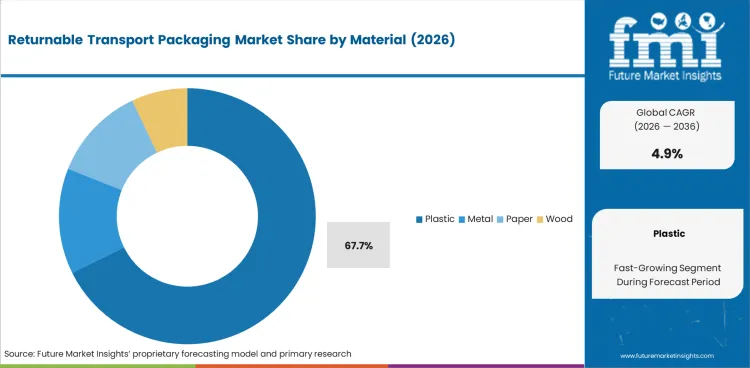
In 2026, Plastic is expected to account for 67.7% of the material segment. Demand is shaped by growing end use demand and application expansion. Other material categories include Metal, Paper, Wood, each addressing distinct application requirements.
Within this segment, sub-categories such as High-Density Polyethylene HDPE, Durable Containers, Chemical Resistant Packaging represent specialized application areas. These sub-segments reflect the depth of product differentiation and the range of technical requirements across end use applications.
Insights into the Chemical End Use Segment
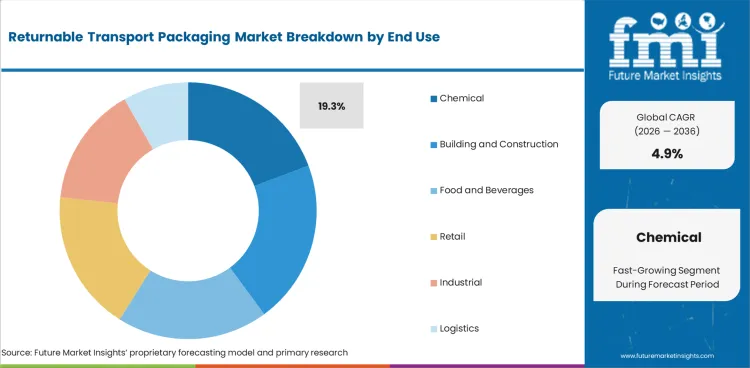
In 2026, Chemical is expected to account for 19.3% of the end use segment. Demand is shaped by growing end use demand and application expansion. Other end use categories include Building and Construction, Food and Beverages, Retail, Industrial, Logistics, each addressing distinct application requirements.
Within this segment, sub-categories such as Bulk Chemical Handling, Hazardous Material Storage, Liquid Transport represent specialized application areas. These sub-segments reflect the depth of product differentiation and the range of technical requirements across end use applications.
Returnable Transport Packaging Market Drivers, Restraints, and Opportunities
- end Use Demand Expansion is creating sustained demand for returnable transport packaging products across established markets.
- raw Material Sourcing and Cost Pressure constrains adoption in price sensitive segments, limiting near-term growth in emerging markets.
- regional Manufacturing Capacity Expansion is expected to create incremental demand channels over the forecast period.
The returnable transport packaging market growth trajectory reflects the balance between demand expansion, cost pressures, and structural market shifts. Adoption is shaped by regulatory requirements, end use specifications, and competitive dynamics across the value chain.
End Use Demand Expansion
Demand is shaped by growing application requirements across established and emerging end use industries. Volume growth reflects infrastructure investment, manufacturing modernization, and expanding industrial activity.
Regulatory Compliance and Standards Tightening
Growth reflects tightening quality standards, environmental regulations, and safety certification requirements. Compliance driven procurement favors established manufacturers with comprehensive certification portfolios.
Raw Material Sourcing and Cost Pressure
Supply is constrained by raw material concentration and cost volatility. Companies with diversified sourcing strategies and vertical integration manage margin pressure more effectively than those dependent on spot market procurement.
Regional Manufacturing Capacity Expansion
Investment in regional manufacturing capacity creates localized supply capabilities and reduces logistics cost exposure. Markets with growing domestic production capacity offer structural advantages for local and regional suppliers.
Analysis of Returnable Transport Packaging Market By Key Countries
.webp "Top Country Growth Comparison Returnable Transport Packaging Market Cagr (2026 2036)")
| Country | CAGR |
|---|---|
| India | 6.8% |
| China | 6.2% |
| Brazil | 4.7% |
| USA | 4.5% |
| Argentina | 4.1% |
| Canada | 3.9% |
| Germany | 2.6% |
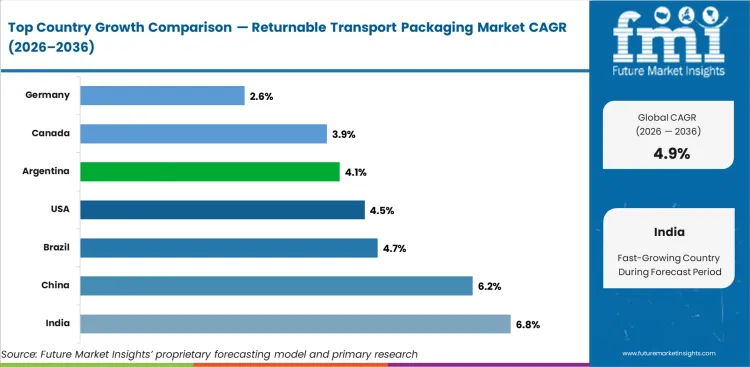
- India at 6.8% reflects expanding adoption and growing market infrastructure.
- China at 6.2% reflects large production base, urbanization, and growing quality standards.
- Brazil at 4.7% reflects expanding adoption and growing market infrastructure.
- USA at 4.5% reflects established demand infrastructure and favorable policy frameworks.
The global returnable transport packaging market is expected to grow at a rate of 4.9% per year from 2026 to 2036. The study covers more than 30 countries, and the main markets are listed below.
Demand Outlook for Returnable Transport Packaging Market in India
India is projected to grow at 6.8% through 2036. Growth is shaped by expanding end use demand, infrastructure investment, and policy driven adoption.
- Expanding end use applications support sustained demand growth.
- Infrastructure investment creates capacity for market expansion.
- Policy frameworks support adoption and compliance driven procurement.
Future Outlook for Returnable Transport Packaging Market in China
China is projected to grow at 6.2% through 2036. Growth is shaped by expanding end use demand, infrastructure investment, and policy driven adoption.
- Expanding end use applications support sustained demand growth.
- Infrastructure investment creates capacity for market expansion.
- Policy frameworks support adoption and compliance driven procurement.
Opportunity Analysis of Returnable Transport Packaging Market in Brazil
Brazil is projected to grow at 4.7% through 2036. Growth is shaped by expanding end use demand, infrastructure investment, and policy driven adoption.
- Expanding end use applications support sustained demand growth.
- Infrastructure investment creates capacity for market expansion.
- Policy frameworks support adoption and compliance driven procurement.
In-depth Analysis of Returnable Transport Packaging Market in the United States
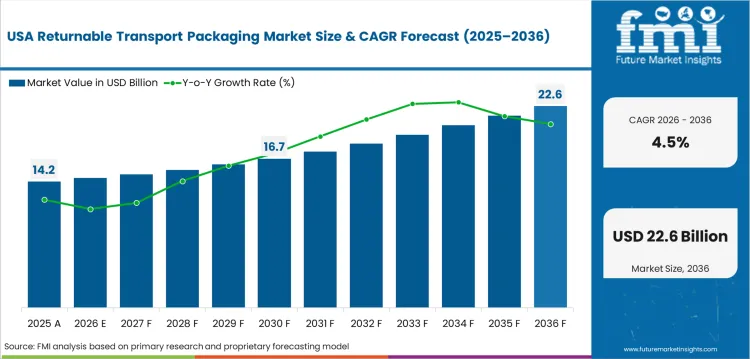
USA is projected to grow at 4.5% through 2036. Growth is shaped by expanding end use demand, infrastructure investment, and policy driven adoption.
- Expanding end use applications support sustained demand growth.
- Infrastructure investment creates capacity for market expansion.
- Policy frameworks support adoption and compliance driven procurement.
Sales Analysis of Returnable Transport Packaging Market in Argentina
Argentina is projected to grow at 4.1% through 2036. Growth is shaped by expanding end use demand, infrastructure investment, and policy driven adoption.
- Expanding end use applications support sustained demand growth.
- Infrastructure investment creates capacity for market expansion.
- Policy frameworks support adoption and compliance driven procurement.
Competitive Landscape and Strategic Positioning
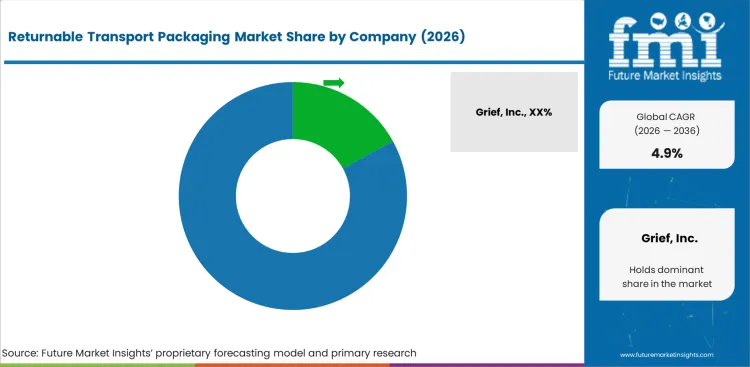
- Grief, Inc. sustains its dominant position via integrated product capabilities and established distribution relationships across major markets.
- Brambles Limited and Mauser Packaging Solutions have diversified product portfolios comprising of established and emerging product categories.
- New entrants are focusing on niche applications and differentiated product formulations to gain market share.
Grief, Inc. is a leader with its integrated manufacturing capabilities and established procurement relationships with major end users. The company’s product portfolio covers several segments offering cross selling opportunities and customer retention benefits.
Brambles differentiates itself through its range of products and geographic reach. Mauser Packaging Solutions is focused on technology differentiation and specialized applications. Both companies have existing distribution networks and customer relationships in key markets.
Barriers to entry include the need for regulatory approval, the scale of manufacturing, existing supply chain relationships and customer switching costs. Top priorities for leading companies include cost optimization, geographic expansion, product portfolio diversification and strategic partnerships.
Key Companies in the Returnable Transport Packaging Market
Key global companies leading the returnable transport packaging market include:
- Grief, Inc., Brambles Limited, Mauser Packaging Solutions, Schoeller Allibert Services B.V. maintain strong manufacturing infrastructure, established end user relationships, and broad product portfolios.
- DS Smith Plc, Time Technoplast Ltd., Berry Global, Inc. have established positions through specialized product capabilities and regional distribution networks.
- Cordstrap B.V., Schuetz GmbH & Co. KGaA., Supreme Industries Limited, PalletOne, Inc, Balmer Lawrie & Co. Ltd., Craemer Holding GmbH, Cabka Group GmbH, Bulk Lift International, Inc, Thielmann US LLC, TranPak, Inc, Rehrig Pacific Company, Inc, Myers Industries, Inc., Snyder Industries, Inc. are establishing market presence through differentiated product formulations and targeted application focus, demonstrating potential for future market leadership.
Competitive Benchmarking: Returnable Transport Packaging Market
| Company | Product Range | Manufacturing Scale | Customer Access | Geographic Footprint |
|---|---|---|---|---|
| Grief, Inc. | High | High | Strong | Global |
| Brambles Limited | High | Medium | Strong | Global |
| Mauser Packaging Solutions | Medium | High | Moderate | Regional |
| Schoeller Allibert Services B.V. | High | Medium | Strong | Global |
| DS Smith Plc | Medium | High | Moderate | Regional |
| Time Technoplast Ltd. | High | Medium | Moderate | Regional |
| Berry Global, Inc. | Medium | High | Low | Regional |
| Cordstrap B.V. | Low | High | Low | Regional |
| Schuetz GmbH & Co. KGaA. | Medium | Medium | Low | Regional |
| Supreme Industries Limited | Low | Low | Low | Regional |
Source: Future Market Insights competitive analysis, 2026.
Key Developments in Returnable Transport Packaging Market
- Main applications include logistics for industrial and consumer goods, with a strong uptake in e‑commerce, automotive, food & beverage and retail where reusable crates, bins and pallets are replacing single‑use packaging.
- The Asia Pacific is the largest regional market, attributed to rapid industrialization and growth of e-commerce. Europe and North America are growing due to regulatory pressure on packaging waste and adoption of smart, modular RTP solutions.
Key Players in the Returnable Transport Packaging Market
Major Global Players
- Grief, Inc.
- Brambles Limited
- Mauser Packaging Solutions
- Schoeller Allibert Services B.V.
- DS Smith Plc
- Time Technoplast Ltd.
- Berry Global, Inc.
Emerging Players/Startups
- Cordstrap B.V.
- Schuetz GmbH & Co. KGaA.
- Supreme Industries Limited
- PalletOne, Inc
- Balmer Lawrie & Co. Ltd.
- Craemer Holding GmbH
- Cabka Group GmbH
- Bulk Lift International, Inc
- Thielmann US LLC
- TranPak, Inc
- Rehrig Pacific Company, Inc
- Myers Industries, Inc.
- Snyder Industries, Inc.
Report Scope and Coverage
| Parameter | Details |
|---|---|
| Quantitative Units | USD 32.62 billion to USD 52.64 billion, at a CAGR of 4.9% |
| Market Definition | The returnable transport packaging market encompasses manufactured products and components for returnable transport packaging applications. |
| Regions Covered | North America, Latin America, Europe, East Asia, South Asia and Pacific, Middle East and Africa |
| Countries Covered | India, China, Brazil, USA, Argentina, Canada, Germany, 30 plus countries |
| Key Companies Profiled | Grief, Inc., Brambles Limited, Mauser Packaging Solutions, Schoeller Allibert Services B.V., DS Smith Plc, Time Technoplast Ltd., Berry Global, Inc., Cordstrap B.V., Schuetz GmbH & Co. KGaA., Supreme Industries Limited, PalletOne, Inc, Balmer Lawrie & Co. Ltd., Craemer Holding GmbH, Cabka Group GmbH, Bulk Lift International, Inc, Thielmann US LLC, TranPak, Inc, Rehrig Pacific Company, Inc, Myers Industries, Inc., Snyder Industries, Inc. |
| Forecast Period | 2026 to 2036 |
| Approach | Hybrid bottom-up and top-down methodology starting with verified transaction data, projecting adoption velocity across segments and regions. |
Market Segmentation Analysis
Returnable Transport Packaging Market Segmented by Material:
- Plastic
- High Density Polyethylene HDPE
- Durable Containers
- Chemical Resistant Packaging
- Polypropylene PP
- Lightweight Containers
- Reusable Crates
- High Density Polyethylene HDPE
- Metal
- Steel
- Heavy Duty Containers
- Industrial Applications
- Aluminum
- Lightweight Metal Packaging
- Corrosion Resistant
- Steel
- Paper
- Corrugated Paper
- Layer Pads
- Lightweight Protection
- Kraft Paper
- Industrial Packaging
- Eco-Friendly Solutions
- Corrugated Paper
- Wood
- Solid Wood
- Pallets
- Heavy Load Handling
- Engineered Wood
- Composite Pallets
- Reusable Platforms
- Solid Wood
Returnable Transport Packaging Market Segmented by End Use:
- Chemical
- Bulk Chemical Handling
- Hazardous Material Storage
- Liquid Transport
- Specialty Chemicals
- Drum Packaging
- Intermediate Bulk Containers
- Bulk Chemical Handling
- Building and Construction
- Material Handling
- Cement and Aggregates
- Construction Components
- On-Site Logistics
- Reusable Packaging Systems
- Transport Protection
- Material Handling
- Food and Beverages
- Food Processing
- Ingredient Handling
- Cold Chain Logistics
- Beverage Industry
- Bottle Transport
- Crate Systems
- Food Processing
- Retail
- Store Logistics
- Shelf Replenishment
- Inventory Handling
- E-Commerce
- Return Logistics
- Reusable Packaging
- Store Logistics
- Industrial
- Manufacturing
- Component Handling
- Work-In-Progress Storage
- Automotive
- Parts Transportation
- Assembly Line Logistics
- Manufacturing
- Logistics
- Warehousing
- Storage Systems
- Material Movement
- Transportation
- Returnable Packaging Cycles
- Supply Chain Optimization
- Warehousing
Returnable Transport Packaging Market Segmented by Product Type:
- IBC
- Intermediate Bulk Containers
- Liquid Storage
- Chemical Transport
- Foldable IBC
- Space Saving Design
- Reusable Systems
- Intermediate Bulk Containers
- Pallets
- Plastic Pallets
- Lightweight and Durable
- Hygienic Applications
- Wooden Pallets
- Heavy Load Capacity
- Cost Effective
- Plastic Pallets
- Plastic Crates
- Stackable Crates
- Space Efficient Storage
- Return Logistics
- Foldable Crates
- Collapsible Design
- Transport Efficiency
- Stackable Crates
- Layer Pads
- Corrugated Pads
- Load Stabilization
- Stacking Support
- Plastic Pads
- Reusable Layers
- Moisture Resistance
- Corrugated Pads
- Drums
- Steel Drums
- Hazardous Material Storage
- Industrial Liquids
- Plastic Drums
- Lightweight Storage
- Chemical Resistance
- Steel Drums
- Dunnage Bags
- Inflatable Bags
- Load Securing
- Shock Absorption
- Paper Dunnage Bags
- Eco-Friendly Options
- Void Filling
- Inflatable Bags
Returnable Transport Packaging Market Segmented by Packaging System:
- Reusable Packaging Systems
-
- Closed Loop Systems
- High Return Cycles
-
- Pooling Systems
-
- Shared Packaging
- Rental Models
-
Returnable Transport Packaging Market Segmented by Load Capacity:
- Light Duty
-
- Below 500 kg
- Retail Applications
-
- Medium Duty
-
- 500 to 1500 kg
- Industrial Use
-
- Heavy Duty
-
- Above 1500 kg
- Bulk Transport
-
Returnable Transport Packaging Market by Region:
- North America
- USA
- Canada
- Mexico
- Latin America
- Brazil
- Chile
- Rest of Latin America
- Western Europe
- Germany
- UK
- Italy
- Spain
- France
- Nordic
- BENELUX
- Rest of Western Europe
- Eastern Europe
- Russia
- Poland
- Hungary
- Balkan & Baltic
- Rest of Eastern Europe
- East Asia
- China
- Japan
- South Korea
- South Asia and Pacific
- India
- ASEAN
- Australia & New Zealand
- Rest of South Asia and Pacific
- Middle East & Africa
- Kingdom of Saudi Arabia
- Other GCC Countries
- Turkiye
- South Africa
- Other African Union
- Rest of Middle East & Africa
Research Sources and Bibliography
- 1. World Bank. (2025). World Development Indicators: Industrial Production Data. World Bank.
- 2. United Nations Industrial Development Organization. (2025). UNIDO Industrial Statistics Database. UNIDO.
- 3. International Organization for Standardization. (2025). ISO Industry Standards Registry. ISO.
- 4. Organisation for Economic Co-operation and Development. (2025). OECD Structural Analysis Statistics. OECD.
- 5. World Trade Organization. (2025). WTO Trade Statistics Review. WTO.
This bibliography is provided for reader reference.
This Report Addresses
- Estimating the size of the market and revenue from 2026 to 2036.
- Segmentation by material, end use, product type, packaging system, load capacity.
- Insights across more than 30 country markets.
- Analysis of competitive landscape and strategic positioning.
- Assessment of market drivers, restraints, and growth opportunities.
- Investment opportunity identification across segments and regions.
- Supply chain and procurement pattern analysis.
- Delivery of data in PDF and Excel formats.
Frequently Asked Questions
What is the global market demand for Returnable Transport Packaging Market in 2026?
In 2026, the global returnable transport packaging market is expected to be worth USD 32.62 billion.
How big will the Returnable Transport Packaging Market be in 2036?
By 2036, the returnable transport packaging market is expected to be worth USD 52.64 billion.
How much is demand for Returnable Transport Packaging Market expected to grow between 2026 and 2036?
Between 2026 and 2036, the demand for returnable transport packaging market is expected to grow at a CAGR of 4.9%.
Which Material is likely to lead the Returnable Transport Packaging Market globally by 2026?
Plastic is expected to account for 67.7% of the material in 2026, reflecting growing end use demand and application expansion.
What is causing demand to rise in India in the Returnable Transport Packaging Market?
India is projected to grow at 6.8% per year through 2036, supported by expanding market infrastructure and growing adoption.
What is causing demand to rise in China in the Returnable Transport Packaging Market?
China is projected to grow at 6.2% per year through 2036, supported by growing market demand and infrastructure investment.
What does this report mean by 'Returnable Transport Packaging Market definition'?
The returnable transport packaging market includes manufactured products and components for returnable transport packaging applications across all major segments and regions.
How does FMI make the Returnable Transport Packaging Market forecast and validate it?
Forecasting models use a hybrid bottom-up and top-down approach, starting with verified transaction data and checking it against production data and trade statistics.
Table of Content
- Executive Summary
- Global Market Outlook
- Demand-side Trends
- Supply-side Trends
- Technology Roadmap Analysis
- Analysis and Recommendations
- Market Overview
- Market Coverage / Taxonomy
- Market Definition / Scope / Limitations
- Research Methodology
- Chapter Orientation
- Analytical Lens and Working Hypotheses
- Market Structure, Signals, and Trend Drivers
- Benchmarking and Cross-market Comparability
- Market Sizing, Forecasting, and Opportunity Mapping
- Research Design and Evidence Framework
- Desk Research Programme (Secondary Evidence)
- Company Annual and Sustainability Reports
- Peer-reviewed Journals and Academic Literature
- Corporate Websites, Product Literature, and Technical Notes
- Earnings Decks and Investor Briefings
- Statutory Filings and Regulatory Disclosures
- Technical White Papers and Standards Notes
- Trade Journals, Industry Magazines, and Analyst Briefs
- Conference Proceedings, Webinars, and Seminar Materials
- Government Statistics Portals and Public Data Releases
- Press Releases and Reputable Media Coverage
- Specialist Newsletters and Curated Briefings
- Sector Databases and Reference Repositories
- FMI Internal Proprietary Databases and Historical Market Datasets
- Subscription Datasets and Paid Sources
- Social Channels, Communities, and Digital Listening Inputs
- Additional Desk Sources
- Expert Input and Fieldwork (Primary Evidence)
- Primary Modes
- Qualitative Interviews and Expert Elicitation
- Quantitative Surveys and Structured Data Capture
- Blended Approach
- Why Primary Evidence is Used
- Field Techniques
- Interviews
- Surveys
- Focus Groups
- Observational and In-context Research
- Social and Community Interactions
- Stakeholder Universe Engaged
- C-suite Leaders
- Board Members
- Presidents and Vice Presidents
- R&D and Innovation Heads
- Technical Specialists
- Domain Subject-matter Experts
- Scientists
- Physicians and Other Healthcare Professionals
- Governance, Ethics, and Data Stewardship
- Research Ethics
- Data Integrity and Handling
- Primary Modes
- Tooling, Models, and Reference Databases
- Desk Research Programme (Secondary Evidence)
- Data Engineering and Model Build
- Data Acquisition and Ingestion
- Cleaning, Normalisation, and Verification
- Synthesis, Triangulation, and Analysis
- Quality Assurance and Audit Trail
- Market Background
- Market Dynamics
- Drivers
- Restraints
- Opportunity
- Trends
- Scenario Forecast
- Demand in Optimistic Scenario
- Demand in Likely Scenario
- Demand in Conservative Scenario
- Opportunity Map Analysis
- Product Life Cycle Analysis
- Supply Chain Analysis
- Investment Feasibility Matrix
- Value Chain Analysis
- PESTLE and Porter’s Analysis
- Regulatory Landscape
- Regional Parent Market Outlook
- Production and Consumption Statistics
- Import and Export Statistics
- Market Dynamics
- Global Market Analysis 2021 to 2025 and Forecast, 2026 to 2036
- Historical Market Size Value (USD Million) Analysis, 2021 to 2025
- Current and Future Market Size Value (USD Million) Projections, 2026 to 2036
- Y-o-Y Growth Trend Analysis
- Absolute $ Opportunity Analysis
- Global Market Pricing Analysis 2021 to 2025 and Forecast 2026 to 2036
- Global Market Analysis 2021 to 2025 and Forecast 2026 to 2036, By Material
- Introduction / Key Findings
- Historical Market Size Value (USD Million) Analysis By Material , 2021 to 2025
- Current and Future Market Size Value (USD Million) Analysis and Forecast By Material , 2026 to 2036
- Plastic
- High Density Polyethylene HDPE
- Durable Containers
- Chemical Resistant Packaging
- Polypropylene PP
- Lightweight Containers
- Reusable Crates
- Metal
- Steel
- Heavy Duty Containers
- Industrial Applications
- Aluminum
- Lightweight Metal Packaging
- Paper
- Corrugated Paper
- Layer Pads
- Lightweight Protection
- Kraft Paper
- Industrial Packaging
- Wood
- Solid Wood
- Pallets
- Heavy Load Handling
- Engineered Wood
- Composite Pallets
- Plastic
- Y-o-Y Growth Trend Analysis By Material , 2021 to 2025
- Absolute $ Opportunity Analysis By Material , 2026 to 2036
- Global Market Analysis 2021 to 2025 and Forecast 2026 to 2036, By End Use
- Introduction / Key Findings
- Historical Market Size Value (USD Million) Analysis By End Use, 2021 to 2025
- Current and Future Market Size Value (USD Million) Analysis and Forecast By End Use, 2026 to 2036
- Chemical
- Bulk Chemical Handling
- Hazardous Material Storage
- Liquid Transport
- Specialty Chemicals
- Drum Packaging
- Intermediate Bulk Containers
- Building and Construction
- Material Handling
- Cement and Aggregates
- Construction Components
- On-Site Logistics
- Reusable Packaging Systems
- Food and Beverages
- Food Processing
- Ingredient Handling
- Cold Chain Logistics
- Beverage Industry
- Bottle Transport
- Retail
- Store Logistics
- Shelf Replenishment
- Inventory Handling
- E-Commerce
- Return Logistics
- Industrial
- Manufacturing
- Component Handling
- Work-In-Progress Storage
- Automotive
- Parts Transportation
- Logistics
- Warehousing
- Storage Systems
- Material Movement
- Transportation
- Returnable Packaging Cycles
- Chemical
- Y-o-Y Growth Trend Analysis By End Use, 2021 to 2025
- Absolute $ Opportunity Analysis By End Use, 2026 to 2036
- Global Market Analysis 2021 to 2025 and Forecast 2026 to 2036, By Product Type
- Introduction / Key Findings
- Historical Market Size Value (USD Million) Analysis By Product Type, 2021 to 2025
- Current and Future Market Size Value (USD Million) Analysis and Forecast By Product Type, 2026 to 2036
- IBC
- Intermediate Bulk Containers
- Liquid Storage
- Chemical Transport
- Foldable IBC
- Space Saving Design
- Reusable Systems
- Pallets
- Plastic Pallets
- Lightweight and Durable
- Hygienic Applications
- Wooden Pallets
- Heavy Load Capacity
- Plastic Crates
- Stackable Crates
- Space Efficient Storage
- Return Logistics
- Foldable Crates
- Collapsible Design
- Layer Pads
- Corrugated Pads
- Load Stabilization
- Stacking Support
- Plastic Pads
- Reusable Layers
- Drums
- Steel Drums
- Hazardous Material Storage
- Industrial Liquids
- Plastic Drums
- Lightweight Storage
- Dunnage Bags
- Inflatable Bags
- Load Securing
- Shock Absorption
- Paper Dunnage Bags
- Eco-Friendly Options
- IBC
- Y-o-Y Growth Trend Analysis By Product Type, 2021 to 2025
- Absolute $ Opportunity Analysis By Product Type, 2026 to 2036
- Global Market Analysis 2021 to 2025 and Forecast 2026 to 2036, By Packaging System
- Introduction / Key Findings
- Historical Market Size Value (USD Million) Analysis By Packaging System, 2021 to 2025
- Current and Future Market Size Value (USD Million) Analysis and Forecast By Packaging System, 2026 to 2036
- Reusable Packaging Systems
- Closed Loop Systems
- High Return Cycles
- Pooling Systems
- Shared Packaging
- Rental Models
- Reusable Packaging Systems
- Y-o-Y Growth Trend Analysis By Packaging System, 2021 to 2025
- Absolute $ Opportunity Analysis By Packaging System, 2026 to 2036
- Global Market Analysis 2021 to 2025 and Forecast 2026 to 2036, By Load Capacity
- Introduction / Key Findings
- Historical Market Size Value (USD Million) Analysis By Load Capacity, 2021 to 2025
- Current and Future Market Size Value (USD Million) Analysis and Forecast By Load Capacity, 2026 to 2036
- Light Duty
- Below 500 kg
- Retail Applications
- Medium Duty
- 500 to 1500 kg
- Industrial Use
- Heavy Duty
- Above 1500 kg
- Bulk Transport
- Light Duty
- Y-o-Y Growth Trend Analysis By Load Capacity, 2021 to 2025
- Absolute $ Opportunity Analysis By Load Capacity, 2026 to 2036
- Global Market Analysis 2021 to 2025 and Forecast 2026 to 2036, By Region
- Introduction
- Historical Market Size Value (USD Million) Analysis By Region, 2021 to 2025
- Current Market Size Value (USD Million) Analysis and Forecast By Region, 2026 to 2036
- North America
- Latin America
- Western Europe
- Eastern Europe
- East Asia
- South Asia and Pacific
- Middle East & Africa
- Market Attractiveness Analysis By Region
- North America Market Analysis 2021 to 2025 and Forecast 2026 to 2036, By Country
- Historical Market Size Value (USD Million) Trend Analysis By Market Taxonomy, 2021 to 2025
- Market Size Value (USD Million) Forecast By Market Taxonomy, 2026 to 2036
- By Country
- USA
- Canada
- Mexico
- By Material
- By End Use
- By Product Type
- By Packaging System
- By Load Capacity
- By Country
- Market Attractiveness Analysis
- By Country
- By Material
- By End Use
- By Product Type
- By Packaging System
- By Load Capacity
- Key Takeaways
- Latin America Market Analysis 2021 to 2025 and Forecast 2026 to 2036, By Country
- Historical Market Size Value (USD Million) Trend Analysis By Market Taxonomy, 2021 to 2025
- Market Size Value (USD Million) Forecast By Market Taxonomy, 2026 to 2036
- By Country
- Brazil
- Chile
- Rest of Latin America
- By Material
- By End Use
- By Product Type
- By Packaging System
- By Load Capacity
- By Country
- Market Attractiveness Analysis
- By Country
- By Material
- By End Use
- By Product Type
- By Packaging System
- By Load Capacity
- Key Takeaways
- Western Europe Market Analysis 2021 to 2025 and Forecast 2026 to 2036, By Country
- Historical Market Size Value (USD Million) Trend Analysis By Market Taxonomy, 2021 to 2025
- Market Size Value (USD Million) Forecast By Market Taxonomy, 2026 to 2036
- By Country
- Germany
- UK
- Italy
- Spain
- France
- Nordic
- BENELUX
- Rest of Western Europe
- By Material
- By End Use
- By Product Type
- By Packaging System
- By Load Capacity
- By Country
- Market Attractiveness Analysis
- By Country
- By Material
- By End Use
- By Product Type
- By Packaging System
- By Load Capacity
- Key Takeaways
- Eastern Europe Market Analysis 2021 to 2025 and Forecast 2026 to 2036, By Country
- Historical Market Size Value (USD Million) Trend Analysis By Market Taxonomy, 2021 to 2025
- Market Size Value (USD Million) Forecast By Market Taxonomy, 2026 to 2036
- By Country
- Russia
- Poland
- Hungary
- Balkan & Baltic
- Rest of Eastern Europe
- By Material
- By End Use
- By Product Type
- By Packaging System
- By Load Capacity
- By Country
- Market Attractiveness Analysis
- By Country
- By Material
- By End Use
- By Product Type
- By Packaging System
- By Load Capacity
- Key Takeaways
- East Asia Market Analysis 2021 to 2025 and Forecast 2026 to 2036, By Country
- Historical Market Size Value (USD Million) Trend Analysis By Market Taxonomy, 2021 to 2025
- Market Size Value (USD Million) Forecast By Market Taxonomy, 2026 to 2036
- By Country
- China
- Japan
- South Korea
- By Material
- By End Use
- By Product Type
- By Packaging System
- By Load Capacity
- By Country
- Market Attractiveness Analysis
- By Country
- By Material
- By End Use
- By Product Type
- By Packaging System
- By Load Capacity
- Key Takeaways
- South Asia and Pacific Market Analysis 2021 to 2025 and Forecast 2026 to 2036, By Country
- Historical Market Size Value (USD Million) Trend Analysis By Market Taxonomy, 2021 to 2025
- Market Size Value (USD Million) Forecast By Market Taxonomy, 2026 to 2036
- By Country
- India
- ASEAN
- Australia & New Zealand
- Rest of South Asia and Pacific
- By Material
- By End Use
- By Product Type
- By Packaging System
- By Load Capacity
- By Country
- Market Attractiveness Analysis
- By Country
- By Material
- By End Use
- By Product Type
- By Packaging System
- By Load Capacity
- Key Takeaways
- Middle East & Africa Market Analysis 2021 to 2025 and Forecast 2026 to 2036, By Country
- Historical Market Size Value (USD Million) Trend Analysis By Market Taxonomy, 2021 to 2025
- Market Size Value (USD Million) Forecast By Market Taxonomy, 2026 to 2036
- By Country
- Kingdom of Saudi Arabia
- Other GCC Countries
- Turkiye
- South Africa
- Other African Union
- Rest of Middle East & Africa
- By Material
- By End Use
- By Product Type
- By Packaging System
- By Load Capacity
- By Country
- Market Attractiveness Analysis
- By Country
- By Material
- By End Use
- By Product Type
- By Packaging System
- By Load Capacity
- Key Takeaways
- Key Countries Market Analysis
- USA
- Pricing Analysis
- Market Share Analysis, 2025
- By Material
- By End Use
- By Product Type
- By Packaging System
- By Load Capacity
- Canada
- Pricing Analysis
- Market Share Analysis, 2025
- By Material
- By End Use
- By Product Type
- By Packaging System
- By Load Capacity
- Mexico
- Pricing Analysis
- Market Share Analysis, 2025
- By Material
- By End Use
- By Product Type
- By Packaging System
- By Load Capacity
- Brazil
- Pricing Analysis
- Market Share Analysis, 2025
- By Material
- By End Use
- By Product Type
- By Packaging System
- By Load Capacity
- Chile
- Pricing Analysis
- Market Share Analysis, 2025
- By Material
- By End Use
- By Product Type
- By Packaging System
- By Load Capacity
- Germany
- Pricing Analysis
- Market Share Analysis, 2025
- By Material
- By End Use
- By Product Type
- By Packaging System
- By Load Capacity
- UK
- Pricing Analysis
- Market Share Analysis, 2025
- By Material
- By End Use
- By Product Type
- By Packaging System
- By Load Capacity
- Italy
- Pricing Analysis
- Market Share Analysis, 2025
- By Material
- By End Use
- By Product Type
- By Packaging System
- By Load Capacity
- Spain
- Pricing Analysis
- Market Share Analysis, 2025
- By Material
- By End Use
- By Product Type
- By Packaging System
- By Load Capacity
- France
- Pricing Analysis
- Market Share Analysis, 2025
- By Material
- By End Use
- By Product Type
- By Packaging System
- By Load Capacity
- India
- Pricing Analysis
- Market Share Analysis, 2025
- By Material
- By End Use
- By Product Type
- By Packaging System
- By Load Capacity
- ASEAN
- Pricing Analysis
- Market Share Analysis, 2025
- By Material
- By End Use
- By Product Type
- By Packaging System
- By Load Capacity
- Australia & New Zealand
- Pricing Analysis
- Market Share Analysis, 2025
- By Material
- By End Use
- By Product Type
- By Packaging System
- By Load Capacity
- China
- Pricing Analysis
- Market Share Analysis, 2025
- By Material
- By End Use
- By Product Type
- By Packaging System
- By Load Capacity
- Japan
- Pricing Analysis
- Market Share Analysis, 2025
- By Material
- By End Use
- By Product Type
- By Packaging System
- By Load Capacity
- South Korea
- Pricing Analysis
- Market Share Analysis, 2025
- By Material
- By End Use
- By Product Type
- By Packaging System
- By Load Capacity
- Russia
- Pricing Analysis
- Market Share Analysis, 2025
- By Material
- By End Use
- By Product Type
- By Packaging System
- By Load Capacity
- Poland
- Pricing Analysis
- Market Share Analysis, 2025
- By Material
- By End Use
- By Product Type
- By Packaging System
- By Load Capacity
- Hungary
- Pricing Analysis
- Market Share Analysis, 2025
- By Material
- By End Use
- By Product Type
- By Packaging System
- By Load Capacity
- Kingdom of Saudi Arabia
- Pricing Analysis
- Market Share Analysis, 2025
- By Material
- By End Use
- By Product Type
- By Packaging System
- By Load Capacity
- Turkiye
- Pricing Analysis
- Market Share Analysis, 2025
- By Material
- By End Use
- By Product Type
- By Packaging System
- By Load Capacity
- South Africa
- Pricing Analysis
- Market Share Analysis, 2025
- By Material
- By End Use
- By Product Type
- By Packaging System
- By Load Capacity
- USA
- Market Structure Analysis
- Competition Dashboard
- Competition Benchmarking
- Market Share Analysis of Top Players
- By Regional
- By Material
- By End Use
- By Product Type
- By Packaging System
- By Load Capacity
- Competition Analysis
- Competition Deep Dive
- Grief, Inc.
- Overview
- Product Portfolio
- Profitability by Market Segments (Product/Age /Sales Channel/Region)
- Sales Footprint
- Strategy Overview
- Marketing Strategy
- Product Strategy
- Channel Strategy
- Brambles Limited
- Mauser Packaging Solutions
- Schoeller Allibert Services B.V.
- DS Smith Plc
- Time Technoplast Ltd.
- Berry Global, Inc.
- Cordstrap B.V.
- Schuetz GmbH & Co. KGaA.
- Supreme Industries Limited
- PalletOne, Inc
- Balmer Lawrie & Co. Ltd.
- Craemer Holding GmbH
- Cabka Group GmbH
- Bulk Lift International, Inc
- Thielmann US LLC
- TranPak, Inc
- Rehrig Pacific Company, Inc
- Myers Industries, Inc.
- Snyder Industries, Inc.
- Grief, Inc.
- Competition Deep Dive
- Assumptions & Acronyms Used
List of Tables
- Table 1: Global Market Value (USD Million) Forecast by Region, 2021 to 2036
- Table 2: Global Market Value (USD Million) Forecast by Material , 2021 to 2036
- Table 3: Global Market Value (USD Million) Forecast by End Use, 2021 to 2036
- Table 4: Global Market Value (USD Million) Forecast by Product Type, 2021 to 2036
- Table 5: Global Market Value (USD Million) Forecast by Packaging System, 2021 to 2036
- Table 6: Global Market Value (USD Million) Forecast by Load Capacity, 2021 to 2036
- Table 7: North America Market Value (USD Million) Forecast by Country, 2021 to 2036
- Table 8: North America Market Value (USD Million) Forecast by Material , 2021 to 2036
- Table 9: North America Market Value (USD Million) Forecast by End Use, 2021 to 2036
- Table 10: North America Market Value (USD Million) Forecast by Product Type, 2021 to 2036
- Table 11: North America Market Value (USD Million) Forecast by Packaging System, 2021 to 2036
- Table 12: North America Market Value (USD Million) Forecast by Load Capacity, 2021 to 2036
- Table 13: Latin America Market Value (USD Million) Forecast by Country, 2021 to 2036
- Table 14: Latin America Market Value (USD Million) Forecast by Material , 2021 to 2036
- Table 15: Latin America Market Value (USD Million) Forecast by End Use, 2021 to 2036
- Table 16: Latin America Market Value (USD Million) Forecast by Product Type, 2021 to 2036
- Table 17: Latin America Market Value (USD Million) Forecast by Packaging System, 2021 to 2036
- Table 18: Latin America Market Value (USD Million) Forecast by Load Capacity, 2021 to 2036
- Table 19: Western Europe Market Value (USD Million) Forecast by Country, 2021 to 2036
- Table 20: Western Europe Market Value (USD Million) Forecast by Material , 2021 to 2036
- Table 21: Western Europe Market Value (USD Million) Forecast by End Use, 2021 to 2036
- Table 22: Western Europe Market Value (USD Million) Forecast by Product Type, 2021 to 2036
- Table 23: Western Europe Market Value (USD Million) Forecast by Packaging System, 2021 to 2036
- Table 24: Western Europe Market Value (USD Million) Forecast by Load Capacity, 2021 to 2036
- Table 25: Eastern Europe Market Value (USD Million) Forecast by Country, 2021 to 2036
- Table 26: Eastern Europe Market Value (USD Million) Forecast by Material , 2021 to 2036
- Table 27: Eastern Europe Market Value (USD Million) Forecast by End Use, 2021 to 2036
- Table 28: Eastern Europe Market Value (USD Million) Forecast by Product Type, 2021 to 2036
- Table 29: Eastern Europe Market Value (USD Million) Forecast by Packaging System, 2021 to 2036
- Table 30: Eastern Europe Market Value (USD Million) Forecast by Load Capacity, 2021 to 2036
- Table 31: East Asia Market Value (USD Million) Forecast by Country, 2021 to 2036
- Table 32: East Asia Market Value (USD Million) Forecast by Material , 2021 to 2036
- Table 33: East Asia Market Value (USD Million) Forecast by End Use, 2021 to 2036
- Table 34: East Asia Market Value (USD Million) Forecast by Product Type, 2021 to 2036
- Table 35: East Asia Market Value (USD Million) Forecast by Packaging System, 2021 to 2036
- Table 36: East Asia Market Value (USD Million) Forecast by Load Capacity, 2021 to 2036
- Table 37: South Asia and Pacific Market Value (USD Million) Forecast by Country, 2021 to 2036
- Table 38: South Asia and Pacific Market Value (USD Million) Forecast by Material , 2021 to 2036
- Table 39: South Asia and Pacific Market Value (USD Million) Forecast by End Use, 2021 to 2036
- Table 40: South Asia and Pacific Market Value (USD Million) Forecast by Product Type, 2021 to 2036
- Table 41: South Asia and Pacific Market Value (USD Million) Forecast by Packaging System, 2021 to 2036
- Table 42: South Asia and Pacific Market Value (USD Million) Forecast by Load Capacity, 2021 to 2036
- Table 43: Middle East & Africa Market Value (USD Million) Forecast by Country, 2021 to 2036
- Table 44: Middle East & Africa Market Value (USD Million) Forecast by Material , 2021 to 2036
- Table 45: Middle East & Africa Market Value (USD Million) Forecast by End Use, 2021 to 2036
- Table 46: Middle East & Africa Market Value (USD Million) Forecast by Product Type, 2021 to 2036
- Table 47: Middle East & Africa Market Value (USD Million) Forecast by Packaging System, 2021 to 2036
- Table 48: Middle East & Africa Market Value (USD Million) Forecast by Load Capacity, 2021 to 2036
List of Figures
- Figure 1: Global Market Pricing Analysis
- Figure 2: Global Market Value (USD Million) Forecast 2021-2036
- Figure 3: Global Market Value Share and BPS Analysis by Material , 2026 and 2036
- Figure 4: Global Market Y-o-Y Growth Comparison by Material , 2026-2036
- Figure 5: Global Market Attractiveness Analysis by Material
- Figure 6: Global Market Value Share and BPS Analysis by End Use, 2026 and 2036
- Figure 7: Global Market Y-o-Y Growth Comparison by End Use, 2026-2036
- Figure 8: Global Market Attractiveness Analysis by End Use
- Figure 9: Global Market Value Share and BPS Analysis by Product Type, 2026 and 2036
- Figure 10: Global Market Y-o-Y Growth Comparison by Product Type, 2026-2036
- Figure 11: Global Market Attractiveness Analysis by Product Type
- Figure 12: Global Market Value Share and BPS Analysis by Packaging System, 2026 and 2036
- Figure 13: Global Market Y-o-Y Growth Comparison by Packaging System, 2026-2036
- Figure 14: Global Market Attractiveness Analysis by Packaging System
- Figure 15: Global Market Value Share and BPS Analysis by Load Capacity, 2026 and 2036
- Figure 16: Global Market Y-o-Y Growth Comparison by Load Capacity, 2026-2036
- Figure 17: Global Market Attractiveness Analysis by Load Capacity
- Figure 18: Global Market Value (USD Million) Share and BPS Analysis by Region, 2026 and 2036
- Figure 19: Global Market Y-o-Y Growth Comparison by Region, 2026-2036
- Figure 20: Global Market Attractiveness Analysis by Region
- Figure 21: North America Market Incremental Dollar Opportunity, 2026-2036
- Figure 22: Latin America Market Incremental Dollar Opportunity, 2026-2036
- Figure 23: Western Europe Market Incremental Dollar Opportunity, 2026-2036
- Figure 24: Eastern Europe Market Incremental Dollar Opportunity, 2026-2036
- Figure 25: East Asia Market Incremental Dollar Opportunity, 2026-2036
- Figure 26: South Asia and Pacific Market Incremental Dollar Opportunity, 2026-2036
- Figure 27: Middle East & Africa Market Incremental Dollar Opportunity, 2026-2036
- Figure 28: North America Market Value Share and BPS Analysis by Country, 2026 and 2036
- Figure 29: North America Market Value Share and BPS Analysis by Material , 2026 and 2036
- Figure 30: North America Market Y-o-Y Growth Comparison by Material , 2026-2036
- Figure 31: North America Market Attractiveness Analysis by Material
- Figure 32: North America Market Value Share and BPS Analysis by End Use, 2026 and 2036
- Figure 33: North America Market Y-o-Y Growth Comparison by End Use, 2026-2036
- Figure 34: North America Market Attractiveness Analysis by End Use
- Figure 35: North America Market Value Share and BPS Analysis by Product Type, 2026 and 2036
- Figure 36: North America Market Y-o-Y Growth Comparison by Product Type, 2026-2036
- Figure 37: North America Market Attractiveness Analysis by Product Type
- Figure 38: North America Market Value Share and BPS Analysis by Packaging System, 2026 and 2036
- Figure 39: North America Market Y-o-Y Growth Comparison by Packaging System, 2026-2036
- Figure 40: North America Market Attractiveness Analysis by Packaging System
- Figure 41: North America Market Value Share and BPS Analysis by Load Capacity, 2026 and 2036
- Figure 42: North America Market Y-o-Y Growth Comparison by Load Capacity, 2026-2036
- Figure 43: North America Market Attractiveness Analysis by Load Capacity
- Figure 44: Latin America Market Value Share and BPS Analysis by Country, 2026 and 2036
- Figure 45: Latin America Market Value Share and BPS Analysis by Material , 2026 and 2036
- Figure 46: Latin America Market Y-o-Y Growth Comparison by Material , 2026-2036
- Figure 47: Latin America Market Attractiveness Analysis by Material
- Figure 48: Latin America Market Value Share and BPS Analysis by End Use, 2026 and 2036
- Figure 49: Latin America Market Y-o-Y Growth Comparison by End Use, 2026-2036
- Figure 50: Latin America Market Attractiveness Analysis by End Use
- Figure 51: Latin America Market Value Share and BPS Analysis by Product Type, 2026 and 2036
- Figure 52: Latin America Market Y-o-Y Growth Comparison by Product Type, 2026-2036
- Figure 53: Latin America Market Attractiveness Analysis by Product Type
- Figure 54: Latin America Market Value Share and BPS Analysis by Packaging System, 2026 and 2036
- Figure 55: Latin America Market Y-o-Y Growth Comparison by Packaging System, 2026-2036
- Figure 56: Latin America Market Attractiveness Analysis by Packaging System
- Figure 57: Latin America Market Value Share and BPS Analysis by Load Capacity, 2026 and 2036
- Figure 58: Latin America Market Y-o-Y Growth Comparison by Load Capacity, 2026-2036
- Figure 59: Latin America Market Attractiveness Analysis by Load Capacity
- Figure 60: Western Europe Market Value Share and BPS Analysis by Country, 2026 and 2036
- Figure 61: Western Europe Market Value Share and BPS Analysis by Material , 2026 and 2036
- Figure 62: Western Europe Market Y-o-Y Growth Comparison by Material , 2026-2036
- Figure 63: Western Europe Market Attractiveness Analysis by Material
- Figure 64: Western Europe Market Value Share and BPS Analysis by End Use, 2026 and 2036
- Figure 65: Western Europe Market Y-o-Y Growth Comparison by End Use, 2026-2036
- Figure 66: Western Europe Market Attractiveness Analysis by End Use
- Figure 67: Western Europe Market Value Share and BPS Analysis by Product Type, 2026 and 2036
- Figure 68: Western Europe Market Y-o-Y Growth Comparison by Product Type, 2026-2036
- Figure 69: Western Europe Market Attractiveness Analysis by Product Type
- Figure 70: Western Europe Market Value Share and BPS Analysis by Packaging System, 2026 and 2036
- Figure 71: Western Europe Market Y-o-Y Growth Comparison by Packaging System, 2026-2036
- Figure 72: Western Europe Market Attractiveness Analysis by Packaging System
- Figure 73: Western Europe Market Value Share and BPS Analysis by Load Capacity, 2026 and 2036
- Figure 74: Western Europe Market Y-o-Y Growth Comparison by Load Capacity, 2026-2036
- Figure 75: Western Europe Market Attractiveness Analysis by Load Capacity
- Figure 76: Eastern Europe Market Value Share and BPS Analysis by Country, 2026 and 2036
- Figure 77: Eastern Europe Market Value Share and BPS Analysis by Material , 2026 and 2036
- Figure 78: Eastern Europe Market Y-o-Y Growth Comparison by Material , 2026-2036
- Figure 79: Eastern Europe Market Attractiveness Analysis by Material
- Figure 80: Eastern Europe Market Value Share and BPS Analysis by End Use, 2026 and 2036
- Figure 81: Eastern Europe Market Y-o-Y Growth Comparison by End Use, 2026-2036
- Figure 82: Eastern Europe Market Attractiveness Analysis by End Use
- Figure 83: Eastern Europe Market Value Share and BPS Analysis by Product Type, 2026 and 2036
- Figure 84: Eastern Europe Market Y-o-Y Growth Comparison by Product Type, 2026-2036
- Figure 85: Eastern Europe Market Attractiveness Analysis by Product Type
- Figure 86: Eastern Europe Market Value Share and BPS Analysis by Packaging System, 2026 and 2036
- Figure 87: Eastern Europe Market Y-o-Y Growth Comparison by Packaging System, 2026-2036
- Figure 88: Eastern Europe Market Attractiveness Analysis by Packaging System
- Figure 89: Eastern Europe Market Value Share and BPS Analysis by Load Capacity, 2026 and 2036
- Figure 90: Eastern Europe Market Y-o-Y Growth Comparison by Load Capacity, 2026-2036
- Figure 91: Eastern Europe Market Attractiveness Analysis by Load Capacity
- Figure 92: East Asia Market Value Share and BPS Analysis by Country, 2026 and 2036
- Figure 93: East Asia Market Value Share and BPS Analysis by Material , 2026 and 2036
- Figure 94: East Asia Market Y-o-Y Growth Comparison by Material , 2026-2036
- Figure 95: East Asia Market Attractiveness Analysis by Material
- Figure 96: East Asia Market Value Share and BPS Analysis by End Use, 2026 and 2036
- Figure 97: East Asia Market Y-o-Y Growth Comparison by End Use, 2026-2036
- Figure 98: East Asia Market Attractiveness Analysis by End Use
- Figure 99: East Asia Market Value Share and BPS Analysis by Product Type, 2026 and 2036
- Figure 100: East Asia Market Y-o-Y Growth Comparison by Product Type, 2026-2036
- Figure 101: East Asia Market Attractiveness Analysis by Product Type
- Figure 102: East Asia Market Value Share and BPS Analysis by Packaging System, 2026 and 2036
- Figure 103: East Asia Market Y-o-Y Growth Comparison by Packaging System, 2026-2036
- Figure 104: East Asia Market Attractiveness Analysis by Packaging System
- Figure 105: East Asia Market Value Share and BPS Analysis by Load Capacity, 2026 and 2036
- Figure 106: East Asia Market Y-o-Y Growth Comparison by Load Capacity, 2026-2036
- Figure 107: East Asia Market Attractiveness Analysis by Load Capacity
- Figure 108: South Asia and Pacific Market Value Share and BPS Analysis by Country, 2026 and 2036
- Figure 109: South Asia and Pacific Market Value Share and BPS Analysis by Material , 2026 and 2036
- Figure 110: South Asia and Pacific Market Y-o-Y Growth Comparison by Material , 2026-2036
- Figure 111: South Asia and Pacific Market Attractiveness Analysis by Material
- Figure 112: South Asia and Pacific Market Value Share and BPS Analysis by End Use, 2026 and 2036
- Figure 113: South Asia and Pacific Market Y-o-Y Growth Comparison by End Use, 2026-2036
- Figure 114: South Asia and Pacific Market Attractiveness Analysis by End Use
- Figure 115: South Asia and Pacific Market Value Share and BPS Analysis by Product Type, 2026 and 2036
- Figure 116: South Asia and Pacific Market Y-o-Y Growth Comparison by Product Type, 2026-2036
- Figure 117: South Asia and Pacific Market Attractiveness Analysis by Product Type
- Figure 118: South Asia and Pacific Market Value Share and BPS Analysis by Packaging System, 2026 and 2036
- Figure 119: South Asia and Pacific Market Y-o-Y Growth Comparison by Packaging System, 2026-2036
- Figure 120: South Asia and Pacific Market Attractiveness Analysis by Packaging System
- Figure 121: South Asia and Pacific Market Value Share and BPS Analysis by Load Capacity, 2026 and 2036
- Figure 122: South Asia and Pacific Market Y-o-Y Growth Comparison by Load Capacity, 2026-2036
- Figure 123: South Asia and Pacific Market Attractiveness Analysis by Load Capacity
- Figure 124: Middle East & Africa Market Value Share and BPS Analysis by Country, 2026 and 2036
- Figure 125: Middle East & Africa Market Value Share and BPS Analysis by Material , 2026 and 2036
- Figure 126: Middle East & Africa Market Y-o-Y Growth Comparison by Material , 2026-2036
- Figure 127: Middle East & Africa Market Attractiveness Analysis by Material
- Figure 128: Middle East & Africa Market Value Share and BPS Analysis by End Use, 2026 and 2036
- Figure 129: Middle East & Africa Market Y-o-Y Growth Comparison by End Use, 2026-2036
- Figure 130: Middle East & Africa Market Attractiveness Analysis by End Use
- Figure 131: Middle East & Africa Market Value Share and BPS Analysis by Product Type, 2026 and 2036
- Figure 132: Middle East & Africa Market Y-o-Y Growth Comparison by Product Type, 2026-2036
- Figure 133: Middle East & Africa Market Attractiveness Analysis by Product Type
- Figure 134: Middle East & Africa Market Value Share and BPS Analysis by Packaging System, 2026 and 2036
- Figure 135: Middle East & Africa Market Y-o-Y Growth Comparison by Packaging System, 2026-2036
- Figure 136: Middle East & Africa Market Attractiveness Analysis by Packaging System
- Figure 137: Middle East & Africa Market Value Share and BPS Analysis by Load Capacity, 2026 and 2036
- Figure 138: Middle East & Africa Market Y-o-Y Growth Comparison by Load Capacity, 2026-2036
- Figure 139: Middle East & Africa Market Attractiveness Analysis by Load Capacity
- Figure 140: Global Market - Tier Structure Analysis
- Figure 141: Global Market - Company Share Analysis


