

- Industry Size (2026)
- USD 1.6 Bn
- Forecast (2036)
- USD 5 Bn
- CAGR (2026 to 2036)
- 12%
Automated Office Smart Shading Systems Market Forecast and Outlook 2026 to 2036
The automated office smart shading systems market is projected to reach USD 5 billion by 2036, growing at a CAGR of 12% from its 2026 value of USD 1.6 billion. Market performance will be shaped by concentrated production, with a limited number of manufacturers controlling critical components and system integration. Regional manufacturing control will remain uneven, as electronics, motors, and control software are sourced from different geographies with varying cost structures. This fragmentation introduces dependencies that complicate lead times and inventory planning. Supply reliability will be tested by exposure to component shortages, logistics disruptions, and regulatory variation across regions. Many buyers will favor suppliers with vertically coordinated operations, even at higher unit costs, to reduce execution risk. Production scalability will remain constrained by skilled labor availability and certification requirements. These structural limits place emphasis on operational discipline rather than rapid expansion. Vendors that manage supplier relationships tightly and regionalize production selectively will sustain performance more consistently over the forecast period.
Quick Stats for the Automated Office Smart Shading Systems Market
- Automated Office Smart Shading Systems Market Value (2026): USD 1.6 billion
- Automated Office Smart Shading Systems Market Forecast Value (2036): USD 5 billion
- Automated Office Smart Shading Systems Market Global Forecast CAGR (2026-2036): 12%
- Automated Office Smart Shading Systems Market Leading Segment: Commercial Offices (51%)
- Key Growth Regions in Automated Office Smart Shading Systems Market: India
- Top Players in Automated Office Smart Shading Systems Market: Somfy Group, Hunter Douglas, Lutron Electronics, Crestron Electronics, ABB Smart Building Systems
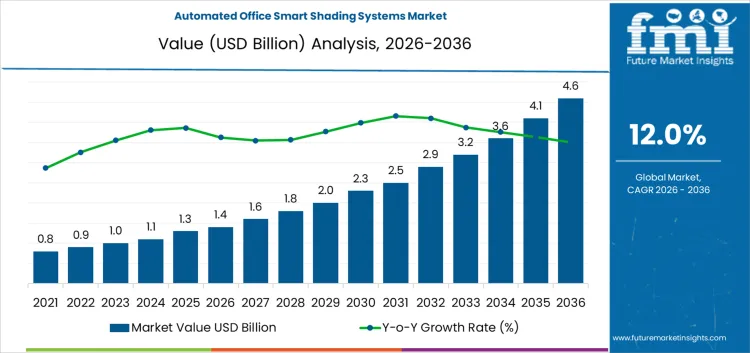
What is the 5-Year Growth Block Analysis for the Automated Office Smart Shading Systems Market through 2036?
The 5-year growth block analysis of the automated office smart shading systems market reveals a consistent expansion, with particular acceleration in the later years of the forecast period. The market will start with gradual growth, rising from USD 1.6 billion in 2026 to USD 2 billion in 2028, driven by increasing interest in smart building technologies and energy efficiency solutions. This early phase reflects the adoption of automated shading systems in commercial office spaces, where energy conservation and comfort are becoming more integral.
A stronger growth phase is expected from 2028 to 2030, with the market increasing from USD 2 billion in 2028 to USD 2.5 billion in 2030, as the technology becomes more widely integrated into new office buildings and retrofit projects. By 2036, the market will reach USD 5 billion, reflecting significant growth from 2030 to 2036. This acceleration in the second half of the forecast period will be driven by both the continued demand for energy-efficient office solutions and the widespread implementation of smart building technologies, further propelling the market to new heights.
Automated Office Smart Shading Systems Market Key Takeaways
| Metric | Value |
|---|---|
| Industry Sales Value (2026) | USD 1.6 billion |
| Industry Forecast Value (2036) | USD 5 billion |
| Industry Forecast CAGR (2026-2036) | 12% |
What Is Driving the Automated Office Smart Shading Systems Market?
Historically, the automated office smart shading systems market evolved from conventional manual blinds and shades that provided basic glare control and privacy in commercial buildings. Traditional shading relied on occupants or facility staff to adjust slats or draw curtains, which often resulted in inconsistent daylight management, uneven interior comfort, and higher cooling loads due to solar heat gain. Early motorized shading solutions addressed convenience but lacked system intelligence and integration with building controls. As commercial buildings adopted building management systems (BMS) and energy efficient HVAC strategies, interest grew in shading technologies that could operate in response to environmental conditions and occupancy patterns. Initial uptake of automated shading was concentrated in high end office spaces and green building pilot projects, where facility managers sought to demonstrate advanced comfort and performance outcomes. These early implementations provided data on reduced glare complaints, improved occupant satisfaction, and modest energy savings by shading façades during peak sun exposure. Integration challenges with diverse architectural configurations informed product refinement and helped shape requirements for adaptable, sensor driven shading solutions tailored to modern office environments.
Future demand for automated office smart shading systems is expected to be shaped by expanding emphasis on workplace wellbeing, building energy efficiency standards, and the integration of intelligent building technologies. Growth will be influenced by increased deployment of Internet of Things (IoT) sensors, occupancy detection, and daylight harvesting controls that enable shading systems to operate dynamically, reducing reliance on manual adjustments. Automated shading can contribute to lower HVAC energy consumption by minimizing excessive solar heat gain and reducing artificial lighting loads through better daylight utilization. Demand will also be driven by corporate real estate strategies that focus on creating healthier indoor environments, with smart shading enhancing visual comfort and supporting circadian lighting considerations. Advances in predictive control algorithms that use weather forecasts and occupant behaviour patterns will further optimize performance. Barriers include upfront installation and integration costs, variability in building management platforms that complicate interoperability, and the need for skilled commissioning to ensure systems perform as intended. Long term market expansion will depend on measurable energy savings, increased adoption of green building certifications that recognize dynamic shading, and alignment with broader smart building and workplace experience objectives.
What are the Key Segments in the Automated Office Smart Shading Systems Market?
The Automated Office Smart Shading Systems market is segmented into product types and end users. Product types include motorized roller shades, smart Venetian blinds, automated draperies, integrated smart film systems, and others, with motorized roller shades leading the market at 39%. End-user segments consist of commercial offices, co-working spaces, hospitality & service offices, and government & public buildings, with commercial offices representing the largest share at 51%. The market is driven by the increasing demand for energy-efficient, convenient, and customizable shading solutions for office environments. Automated smart shading systems are gaining popularity due to their ability to control natural light, enhance comfort, and reduce energy consumption. Key regions driving growth in the market include North America, Europe, and Asia Pacific, where smart building technologies and sustainable design practices are becoming more prevalent.
What is Driving Growth in the Motorized Roller Shades Segment?
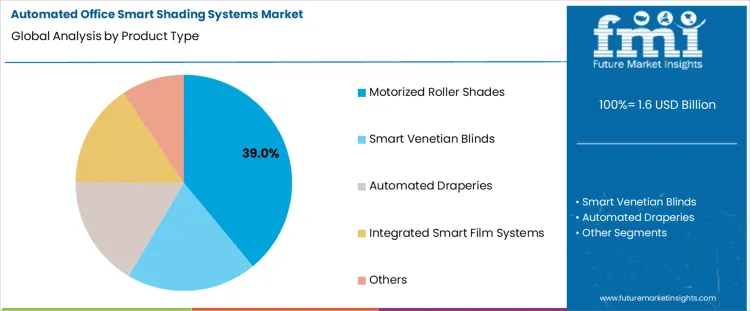
Motorized roller shades lead the product type segment in the Automated Office Smart Shading Systems market, accounting for 39% of the market share. The growth of this segment is primarily driven by the increasing demand for convenience, energy efficiency, and aesthetics in modern office environments. Motorized roller shades offer precise control over natural light, which is particularly valuable in commercial offices and co-working spaces, where employees and tenants seek a comfortable working environment with optimal light levels. These shading systems can be easily integrated into building automation systems, allowing users to adjust light levels based on time of day, occupancy, or external weather conditions, contributing to energy savings and reduced cooling or heating costs. Furthermore, motorized roller shades are low-maintenance and offer a sleek, modern appearance, making them a popular choice for office spaces looking to upgrade their interiors. As sustainability and smart building technologies become more prominent, the demand for automated shading solutions like motorized roller shades is expected to grow, particularly in regions such as North America and Europe, where energy efficiency is a key focus in office building design.
What is Driving the Demand for Commercial Offices in the Automated Office Smart Shading Systems Market?
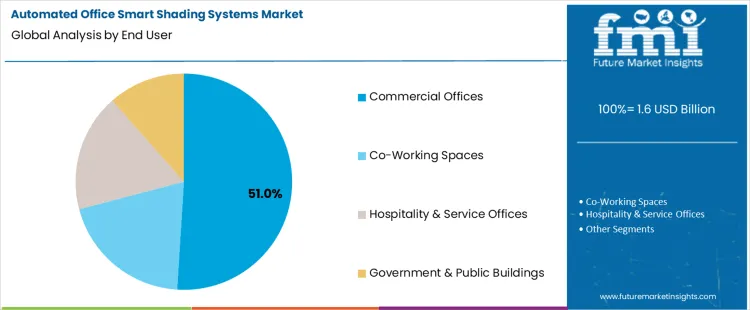
Commercial offices are the largest end-user segment in the Automated Office Smart Shading Systems market, holding 51% of the market share. This growth is driven by the increasing need for energy-efficient and environmentally friendly solutions in modern office buildings. As commercial offices prioritize comfort, productivity, and cost-efficiency, automated smart shading systems have become a crucial part of office design. These systems allow for precise control over natural light, helping to reduce glare, improve temperature regulation, and enhance the overall work environment. Additionally, automated shading systems contribute to energy savings by reducing reliance on artificial lighting and HVAC systems, making them an attractive investment for businesses seeking to lower operational costs. The rising adoption of smart building technologies and the emphasis on sustainability in office environments are further fueling the demand for smart shading systems in commercial offices. As commercial real estate owners and tenants increasingly prioritize green building certifications, such as LEED, the adoption of automated office shading systems is expected to continue to grow, particularly in regions like North America and Europe, where energy regulations and sustainability goals are driving the market.
What are the Key Dynamics in the Automated Office Smart Shading Systems Market?
The automated office smart shading systems market is experiencing growth as businesses and commercial buildings seek innovative solutions to enhance energy efficiency, comfort, and productivity. These systems, which include motorized blinds, shades, and smart windows, are integrated with sensors, AI, and smart controls to automatically adjust the shading based on factors such as time of day, sunlight intensity, and indoor temperature. The key dynamics driving the market include growing energy conservation efforts, the increasing demand for intelligent building solutions, and the adoption of smart office technologies that prioritize comfort and operational efficiency. Additionally, stricter energy regulations and sustainability targets are encouraging businesses to invest in automated shading systems to reduce heating and cooling costs. As smart office environments become more common, automated shading systems are playing a crucial role in enhancing occupant well-being while also lowering energy consumption.
What are the Key Drivers of Growth in the Automated Office Smart Shading Systems Market?
The growth of the automated office smart shading systems market is driven by several factors. One of the primary drivers is the increasing demand for energy-efficient solutions in commercial buildings. Automated shading systems help to reduce heating, cooling, and lighting costs by dynamically adjusting the amount of sunlight entering a space, which optimizes energy use. The integration of these systems with smart building technologies, such as building management systems (BMS) and IoT platforms, further enhances their efficiency and appeal. Another key driver is the growing emphasis on sustainability and green building certifications, such as LEED, which encourage the adoption of energy-saving technologies like automated shading. Additionally, the rise of smart offices, which prioritize comfort, productivity, and the integration of advanced technology, is fueling demand for automated shading systems. As commercial properties increasingly focus on providing a healthier and more comfortable work environment, automated shading is seen as a vital component in achieving these objectives. Lastly, the increasing use of natural light, which has been linked to improved employee well-being and productivity, is contributing to the growing interest in automated shading solutions that allow for better light control.
What are the Key Restraints in the Automated Office Smart Shading Systems Market?
Despite the growing demand, the automated office smart shading systems market faces several challenges. One of the key restraints is the high initial cost of installing automated shading systems, which may deter businesses from adopting these solutions, especially in smaller commercial spaces or regions with budget constraints. While these systems can lead to long-term savings in energy costs, the upfront investment in the technology, including hardware, sensors, and installation, can be a significant barrier. Another challenge is the complexity of integrating automated shading systems with existing building infrastructure. In older office buildings, retrofitting these systems can be costly and disruptive. Additionally, issues related to system maintenance, repair, and compatibility with other smart building technologies can also pose challenges. The lack of standardization in smart shading systems, with various manufacturers offering different platforms and interfaces, could limit the market's growth and make it more difficult for businesses to choose and implement solutions. Finally, the consumer education barrier remains, as many businesses may not fully understand the benefits or features of automated shading systems, hindering broader adoption.
What are the Key Trends in the Automated Office Smart Shading Systems Market?
Several key trends are shaping the automated office smart shading systems market. One major trend is the increasing integration of AI and machine learning into smart shading systems. These technologies allow shading systems to learn from user preferences, adapt to changing environmental conditions, and optimize energy savings without manual intervention. Another trend is the growing demand for smart, connected building solutions, with automated shading systems being integrated into building management systems (BMS) and other smart devices for better control and data analytics. As part of the broader trend toward sustainability, automated shading is being seen as a key enabler of green building initiatives, helping commercial properties achieve energy efficiency and lower environmental impact. Moreover, the development of user-friendly interfaces, such as mobile apps and voice control through smart assistants like Alexa or Google Assistant, is making automated shading systems more accessible and appealing to businesses. The trend towards customizable and aesthetically appealing designs is also gaining momentum, with companies focusing on providing shading solutions that integrate seamlessly with modern office interiors. Finally, the rise of remote work and hybrid office models is influencing demand for smarter, more flexible shading solutions that can improve the overall work environment and support employee well-being.
What is the Country-Wise Analysis of the Automated Office Smart Shading Systems Market?
The automated office smart shading systems market is growing as businesses and organizations increasingly seek energy-efficient, customizable, and aesthetically pleasing solutions for managing natural light and temperature in office environments. These smart shading systems, which can be controlled via apps or integrated with building management systems, offer benefits such as improved energy efficiency, enhanced comfort, and better productivity for office workers. The market is being driven by the adoption of smart building technologies, sustainability initiatives, and the growing demand for office spaces that provide both convenience and energy conservation. Key markets, including the USA, China, Germany, Japan, and India, are seeing growth as commercial buildings continue to embrace these advanced technologies.
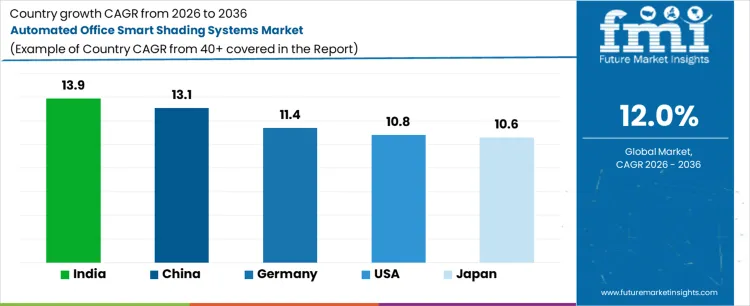
| Country | CAGR (%) |
|---|---|
| USA | 10.8 |
| China | 13.1 |
| Germany | 11.4 |
| Japan | 10.6 |
| India | 13.9 |
What is Driving the Growth of the Automated Office Smart Shading Systems Market in the USA?
The automated office smart shading systems market in the USA is growing at a CAGR of 10.8%. This growth is largely driven by the increasing demand for energy-efficient solutions in commercial buildings. Smart shading systems help reduce cooling costs and energy consumption by automatically adjusting window coverings based on sunlight and temperature. The USA's commitment to sustainability and green building standards, such as LEED certification, is accelerating the adoption of automated shading solutions. Additionally, the growing trend of smart buildings, with integrated technologies that enhance building efficiency, is further fueling demand for automated office smart shading systems. As commercial properties prioritize sustainability and energy savings, these smart systems are becoming an essential feature in modern office spaces.
How is the Automated Office Smart Shading Systems Market Performing in China?
China’s automated office smart shading systems market is growing at a CAGR of 13.1%. China’s rapid urbanization, along with its emphasis on green building standards and energy efficiency, is driving the demand for smart shading solutions. With a large and growing number of office buildings, particularly in metropolitan areas, there is a rising need for automated systems that help optimize natural light and improve energy efficiency. The Chinese government’s increasing focus on sustainability and the promotion of energy-saving technologies in commercial real estate are contributing to the growth of this market. As the adoption of smart buildings increases and the demand for better environmental performance in office spaces rises, the market for automated office smart shading systems in China is expected to expand rapidly.
What Factors are Shaping the Automated Office Smart Shading Systems Market in Germany?
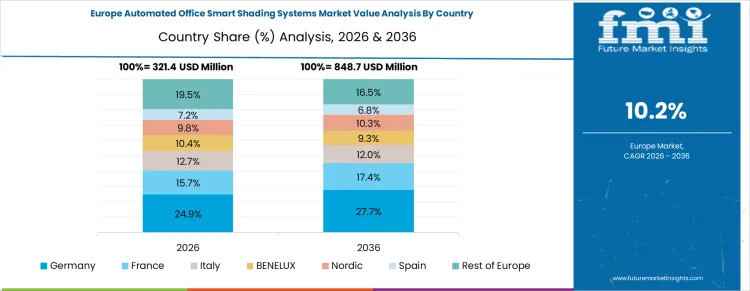
Germany’s automated office smart shading systems market is growing at a CAGR of 11.4%. Germany has long been a leader in energy efficiency and sustainability, and the demand for automated shading systems is rising as part of broader efforts to reduce energy consumption in commercial buildings. The country’s green building initiatives, combined with its commitment to energy-efficient technologies, are driving the adoption of smart shading solutions in office spaces. Automated shading systems not only help conserve energy but also improve occupant comfort by regulating indoor lighting and temperature. As the demand for sustainable building practices increases and the market for smart office technologies expands, the adoption of automated office smart shading systems in Germany is expected to grow steadily.
How is the Automated Office Smart Shading Systems Market Performing in Japan?
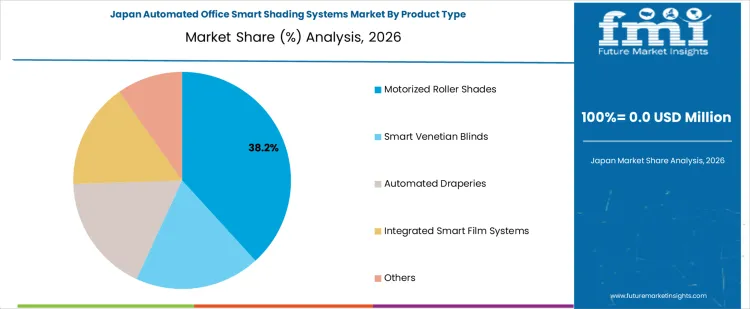
Japan’s automated office smart shading systems market is growing at a CAGR of 10.6%. Japan’s highly developed urban centers and the increasing focus on sustainable, energy-efficient building technologies are driving the market for smart shading systems. The country’s commitment to reducing energy consumption and improving indoor comfort in office spaces is leading to the widespread adoption of automated shading systems. With growing concerns about energy efficiency and a strong push for smart building technologies, Japan’s commercial real estate sector is increasingly turning to automated office smart shading systems. The demand for these systems is expected to continue rising as Japan’s focus on green technologies and energy conservation in buildings intensifies.
What is Contributing to the Growth of the Automated Office Smart Shading Systems Market in India?
India’s automated office smart shading systems market is growing at a CAGR of 13.9%, the highest among the countries analyzed. India’s rapid urbanization, expanding commercial real estate sector, and increasing emphasis on energy efficiency are key factors driving the demand for automated shading solutions. As businesses in India focus on reducing operational costs and improving workplace comfort, the adoption of smart shading systems that regulate light and temperature in office buildings is becoming more widespread. India’s growing commitment to sustainability, energy conservation, and the development of smart cities is further accelerating the adoption of automated office smart shading systems. As the market for smart buildings in India expands, the demand for these energy-efficient technologies is expected to continue its upward trajectory.
What is the Competitive Landscape for the Automated Office Smart Shading Systems Market?
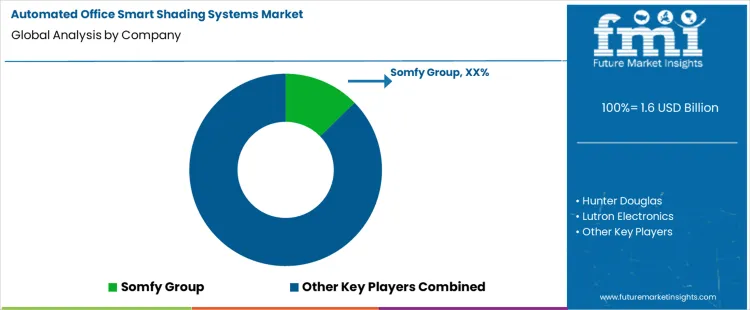
The automated office smart shading systems market is expanding as demand for energy-efficient and customizable building solutions grows. Somfy Group is the market leader, offering advanced motorized shading systems that integrate with building automation systems, providing precise control over light and temperature to enhance energy efficiency and occupant comfort. Somfy’s innovative solutions are highly valued in commercial office spaces for their ease of integration and user-friendly features. Hunter Douglas also plays a significant role, with its smart shading solutions that combine high-performance fabrics with motorized systems, offering energy-saving benefits and advanced control options. Lutron Electronics is a key competitor, offering a range of smart shading products that can be integrated into wider smart building ecosystems, with a focus on improving building energy management and optimizing natural light usage. Crestron Electronics provides automated shading systems designed for easy integration with other smart building systems, emphasizing scalability and centralized control for commercial applications. ABB Smart Building Systems focuses on providing smart shading solutions that are compatible with its broader building automation systems, enabling seamless operation and efficiency improvements across various commercial and office settings. These companies are at the forefront of driving the development of automated shading systems, catering to the increasing demand for smart building solutions in the office space.
To remain competitive in the automated office smart shading systems market, companies focus on continuous innovation, system integration, and energy efficiency. Somfy Group continues to advance its product offerings with solutions that integrate seamlessly into existing building management systems, focusing on enhancing energy savings and user control. Hunter Douglas is improving its smart shading systems by expanding product variety and introducing more customization options to meet diverse client needs. Lutron Electronics is advancing its shading solutions by enhancing connectivity with other smart building technologies, offering better control and improving overall energy management. Crestron Electronics is emphasizing the scalability of its automated shading systems, making them suitable for a wide range of commercial office environments. ABB Smart Building Systems focuses on enhancing the integration of smart shading with other building technologies to improve operational efficiency. These strategies, along with increasing adoption of smart office solutions, position these companies as leaders in the growing market for automated office smart shading systems.
Key Players of the Automated Office Smart Shading Systems Market
- Somfy Group
- Hunter Douglas
- Lutron Electronics
- Crestron Electronics
- ABB Smart Building Systems
- Others
Scope of the Report
| Items | Values |
|---|---|
| Quantitative Units (2026) | USD Billion |
| Product Type | Motorized Roller Shades, Smart Venetian Blinds, Automated Draperies, Integrated Smart Film Systems, Others |
| Technology | IoT-Enabled Control, Sensor-Based Automation, AI-Driven Smart Scheduling, Voice & App Control Integration |
| End User | Commercial Offices, Co-Working Spaces, Hospitality & Service Offices, Government & Public Buildings, Others |
| Companies | Somfy Group, Hunter Douglas, Lutron Electronics, Crestron Electronics, ABB Smart Building Systems, Others |
| Regions Covered | North America, Latin America, Western Europe, Eastern Europe, South Asia and Pacific, East Asia, Middle East & Africa |
| Countries Covered | United States, Canada, Mexico, Brazil, Argentina, Germany, France, United Kingdom, Italy, Spain, Netherlands, China, India, Japan, South Korea, ANZ, GCC Countries, South Africa |
| Additional Attributes | Dollar by sales by product type, technology, end user, and region. Includes market trends towards energy efficiency, smart building integration, automation features, and the role of automated shading systems in enhancing office environments. |
Automated Office Smart Shading Systems Market Segmentation
Product Type:
- Motorized Roller Shades
- Smart Venetian Blinds
- Automated Draperies
- Integrated Smart Film Systems
- Others
Technology:
- IoT-Enabled Control
- Sensor-Based Automation
- AI-Driven Smart Scheduling
- Voice & App Control Integration
- Others
End User:
- Commercial Offices
- Co-Working Spaces
- Hospitality & Service Offices
- Government & Public Buildings
- Others
Region:
- Asia Pacific
- China
- Japan
- India
- Australia & New Zealand
- ASEAN
- Rest of Asia Pacific
- Europe
- Germany
- United Kingdom
- France
- Italy
- Spain
- Nordic
- BENELUX
- Rest of Europe
- North America
- United States
- Canada
- Mexico
- Latin America
- Brazil
- Argentina
- Rest of Latin America
- Middle East & Africa
- Kingdom of Saudi Arabia
- Other GCC Countries
- South Africa
- Rest of Middle East & Africa
Bibliography
- Somfy Group. (2023). Automated Shading Solutions: Enhancing Building Efficiency and Comfort with Smart Systems. Somfy Group Reports.
- Hunter Douglas. (2023). Smart Shading Technologies: Integration of Energy-Efficient Solutions in Commercial Offices. Hunter Douglas Insights.
- Lutron Electronics. (2023). Intelligent Shading Systems for Modern Office Environments: The Role of Automation in Energy Management. Lutron Electronics Reports.
- Crestron Electronics. (2023). Automation in Office Shading: Seamless Integration for Modern Workspaces. Crestron Electronics Publications.
- ABB Smart Building Systems. (2023). Smart Shading and Building Efficiency: The Future of Office Automation. ABB Reports.
Frequently Asked Questions
How big is the automated office smart shading systems market in 2026?
The global automated office smart shading systems market is estimated to be valued at USD 1.6 billion in 2026.
What will be the size of automated office smart shading systems market in 2036?
The market size for the automated office smart shading systems market is projected to reach USD 5.0 billion by 2036.
How much will be the automated office smart shading systems market growth between 2026 and 2036?
The automated office smart shading systems market is expected to grow at a 12.0% CAGR between 2026 and 2036.
What are the key product types in the automated office smart shading systems market?
The key product types in automated office smart shading systems market are motorized roller shades, smart venetian blinds, automated draperies, integrated smart film systems and others.
Which technology segment to contribute significant share in the automated office smart shading systems market in 2026?
In terms of technology, iot-enabled control segment to command 36.0% share in the automated office smart shading systems market in 2026.
Preview the report firsthand - request a free sample
Get SampleGet the brochure for pricing and purchase details.
Get PDFTable of Content
- Executive Summary
- Global Market Outlook
- Demand-side Trends
- Supply-side Trends
- Technology Roadmap Analysis
- Analysis and Recommendations
- Market Overview
- Market Coverage / Taxonomy
- Market Definition / Scope / Limitations
- Market Background
- Market Dynamics
- Drivers
- Restraints
- Opportunity
- Trends
- Scenario Forecast
- Demand in Optimistic Scenario
- Demand in Likely Scenario
- Demand in Conservative Scenario
- Opportunity Map Analysis
- Product Life Cycle Analysis
- Supply Chain Analysis
- Investment Feasibility Matrix
- Value Chain Analysis
- PESTLE and Porter’s Analysis
- Regulatory Landscape
- Regional Parent Market Outlook
- Production and Consumption Statistics
- Import and Export Statistics
- Market Dynamics
- Global Market Analysis 2021 to 2025 and Forecast, 2026 to 2036
- Historical Market Size Value (USD Million) Analysis, 2021 to 2025
- Current and Future Market Size Value (USD Million) Projections, 2026 to 2036
- Y-o-Y Growth Trend Analysis
- Absolute $ Opportunity Analysis
- Global Market Pricing Analysis 2021 to 2025 and Forecast 2026 to 2036
- Global Market Analysis 2021 to 2025 and Forecast 2026 to 2036, By Product Type
- Introduction / Key Findings
- Historical Market Size Value (USD Million) Analysis By Product Type , 2021 to 2025
- Current and Future Market Size Value (USD Million) Analysis and Forecast By Product Type , 2026 to 2036
- Motorized Roller Shades
- Smart Venetian Blinds
- Automated Draperies
- Integrated Smart Film Systems
- Others
- Motorized Roller Shades
- Y-o-Y Growth Trend Analysis By Product Type , 2021 to 2025
- Absolute $ Opportunity Analysis By Product Type , 2026 to 2036
- Global Market Analysis 2021 to 2025 and Forecast 2026 to 2036, By Technology
- Introduction / Key Findings
- Historical Market Size Value (USD Million) Analysis By Technology, 2021 to 2025
- Current and Future Market Size Value (USD Million) Analysis and Forecast By Technology, 2026 to 2036
- IoT-Enabled Control
- Sensor-Based Automation
- AI-Driven Smart Scheduling
- Voice & App Control Integration
- Others
- IoT-Enabled Control
- Y-o-Y Growth Trend Analysis By Technology, 2021 to 2025
- Absolute $ Opportunity Analysis By Technology, 2026 to 2036
- Global Market Analysis 2021 to 2025 and Forecast 2026 to 2036, By End User
- Introduction / Key Findings
- Historical Market Size Value (USD Million) Analysis By End User, 2021 to 2025
- Current and Future Market Size Value (USD Million) Analysis and Forecast By End User, 2026 to 2036
- Commercial Offices
- Co-Working Spaces
- Hospitality & Service Offices
- Government & Public Buildings
- Commercial Offices
- Y-o-Y Growth Trend Analysis By End User, 2021 to 2025
- Absolute $ Opportunity Analysis By End User, 2026 to 2036
- Global Market Analysis 2021 to 2025 and Forecast 2026 to 2036, By Region
- Introduction
- Historical Market Size Value (USD Million) Analysis By Region, 2021 to 2025
- Current Market Size Value (USD Million) Analysis and Forecast By Region, 2026 to 2036
- North America
- Latin America
- Western Europe
- Eastern Europe
- East Asia
- South Asia and Pacific
- Middle East & Africa
- Market Attractiveness Analysis By Region
- North America Market Analysis 2021 to 2025 and Forecast 2026 to 2036, By Country
- Historical Market Size Value (USD Million) Trend Analysis By Market Taxonomy, 2021 to 2025
- Market Size Value (USD Million) Forecast By Market Taxonomy, 2026 to 2036
- By Country
- USA
- Canada
- Mexico
- By Product Type
- By Technology
- By End User
- By Country
- Market Attractiveness Analysis
- By Country
- By Product Type
- By Technology
- By End User
- Key Takeaways
- Latin America Market Analysis 2021 to 2025 and Forecast 2026 to 2036, By Country
- Historical Market Size Value (USD Million) Trend Analysis By Market Taxonomy, 2021 to 2025
- Market Size Value (USD Million) Forecast By Market Taxonomy, 2026 to 2036
- By Country
- Brazil
- Chile
- Rest of Latin America
- By Product Type
- By Technology
- By End User
- By Country
- Market Attractiveness Analysis
- By Country
- By Product Type
- By Technology
- By End User
- Key Takeaways
- Western Europe Market Analysis 2021 to 2025 and Forecast 2026 to 2036, By Country
- Historical Market Size Value (USD Million) Trend Analysis By Market Taxonomy, 2021 to 2025
- Market Size Value (USD Million) Forecast By Market Taxonomy, 2026 to 2036
- By Country
- Germany
- UK
- Italy
- Spain
- France
- Nordic
- BENELUX
- Rest of Western Europe
- By Product Type
- By Technology
- By End User
- By Country
- Market Attractiveness Analysis
- By Country
- By Product Type
- By Technology
- By End User
- Key Takeaways
- Eastern Europe Market Analysis 2021 to 2025 and Forecast 2026 to 2036, By Country
- Historical Market Size Value (USD Million) Trend Analysis By Market Taxonomy, 2021 to 2025
- Market Size Value (USD Million) Forecast By Market Taxonomy, 2026 to 2036
- By Country
- Russia
- Poland
- Hungary
- Balkan & Baltic
- Rest of Eastern Europe
- By Product Type
- By Technology
- By End User
- By Country
- Market Attractiveness Analysis
- By Country
- By Product Type
- By Technology
- By End User
- Key Takeaways
- East Asia Market Analysis 2021 to 2025 and Forecast 2026 to 2036, By Country
- Historical Market Size Value (USD Million) Trend Analysis By Market Taxonomy, 2021 to 2025
- Market Size Value (USD Million) Forecast By Market Taxonomy, 2026 to 2036
- By Country
- China
- Japan
- South Korea
- By Product Type
- By Technology
- By End User
- By Country
- Market Attractiveness Analysis
- By Country
- By Product Type
- By Technology
- By End User
- Key Takeaways
- South Asia and Pacific Market Analysis 2021 to 2025 and Forecast 2026 to 2036, By Country
- Historical Market Size Value (USD Million) Trend Analysis By Market Taxonomy, 2021 to 2025
- Market Size Value (USD Million) Forecast By Market Taxonomy, 2026 to 2036
- By Country
- India
- ASEAN
- Australia & New Zealand
- Rest of South Asia and Pacific
- By Product Type
- By Technology
- By End User
- By Country
- Market Attractiveness Analysis
- By Country
- By Product Type
- By Technology
- By End User
- Key Takeaways
- Middle East & Africa Market Analysis 2021 to 2025 and Forecast 2026 to 2036, By Country
- Historical Market Size Value (USD Million) Trend Analysis By Market Taxonomy, 2021 to 2025
- Market Size Value (USD Million) Forecast By Market Taxonomy, 2026 to 2036
- By Country
- Kingdom of Saudi Arabia
- Other GCC Countries
- Turkiye
- South Africa
- Other African Union
- Rest of Middle East & Africa
- By Product Type
- By Technology
- By End User
- By Country
- Market Attractiveness Analysis
- By Country
- By Product Type
- By Technology
- By End User
- Key Takeaways
- Key Countries Market Analysis
- USA
- Pricing Analysis
- Market Share Analysis, 2025
- By Product Type
- By Technology
- By End User
- Canada
- Pricing Analysis
- Market Share Analysis, 2025
- By Product Type
- By Technology
- By End User
- Mexico
- Pricing Analysis
- Market Share Analysis, 2025
- By Product Type
- By Technology
- By End User
- Brazil
- Pricing Analysis
- Market Share Analysis, 2025
- By Product Type
- By Technology
- By End User
- Chile
- Pricing Analysis
- Market Share Analysis, 2025
- By Product Type
- By Technology
- By End User
- Germany
- Pricing Analysis
- Market Share Analysis, 2025
- By Product Type
- By Technology
- By End User
- UK
- Pricing Analysis
- Market Share Analysis, 2025
- By Product Type
- By Technology
- By End User
- Italy
- Pricing Analysis
- Market Share Analysis, 2025
- By Product Type
- By Technology
- By End User
- Spain
- Pricing Analysis
- Market Share Analysis, 2025
- By Product Type
- By Technology
- By End User
- France
- Pricing Analysis
- Market Share Analysis, 2025
- By Product Type
- By Technology
- By End User
- India
- Pricing Analysis
- Market Share Analysis, 2025
- By Product Type
- By Technology
- By End User
- ASEAN
- Pricing Analysis
- Market Share Analysis, 2025
- By Product Type
- By Technology
- By End User
- Australia & New Zealand
- Pricing Analysis
- Market Share Analysis, 2025
- By Product Type
- By Technology
- By End User
- China
- Pricing Analysis
- Market Share Analysis, 2025
- By Product Type
- By Technology
- By End User
- Japan
- Pricing Analysis
- Market Share Analysis, 2025
- By Product Type
- By Technology
- By End User
- South Korea
- Pricing Analysis
- Market Share Analysis, 2025
- By Product Type
- By Technology
- By End User
- Russia
- Pricing Analysis
- Market Share Analysis, 2025
- By Product Type
- By Technology
- By End User
- Poland
- Pricing Analysis
- Market Share Analysis, 2025
- By Product Type
- By Technology
- By End User
- Hungary
- Pricing Analysis
- Market Share Analysis, 2025
- By Product Type
- By Technology
- By End User
- Kingdom of Saudi Arabia
- Pricing Analysis
- Market Share Analysis, 2025
- By Product Type
- By Technology
- By End User
- Turkiye
- Pricing Analysis
- Market Share Analysis, 2025
- By Product Type
- By Technology
- By End User
- South Africa
- Pricing Analysis
- Market Share Analysis, 2025
- By Product Type
- By Technology
- By End User
- USA
- Market Structure Analysis
- Competition Dashboard
- Competition Benchmarking
- Market Share Analysis of Top Players
- By Regional
- By Product Type
- By Technology
- By End User
- Competition Analysis
- Competition Deep Dive
- Somfy Group
- Overview
- Product Portfolio
- Profitability by Market Segments (Product/Age /Sales Channel/Region)
- Sales Footprint
- Strategy Overview
- Marketing Strategy
- Product Strategy
- Channel Strategy
- Hunter Douglas
- Lutron Electronics
- Crestron Electronics
- ABB Smart Building Systems
- Others
- Somfy Group
- Competition Deep Dive
- Assumptions & Acronyms Used
- Research Methodology


