

- Industry Size (2026)
- USD 893.4 Mn
- Forecast (2036)
- USD 1469.2 Mn
- CAGR (2026 to 2036)
- 5.1%
B20-B30 Biodiesel Fuel Injection Components Market Forecast and Outlook 2026 to 2036
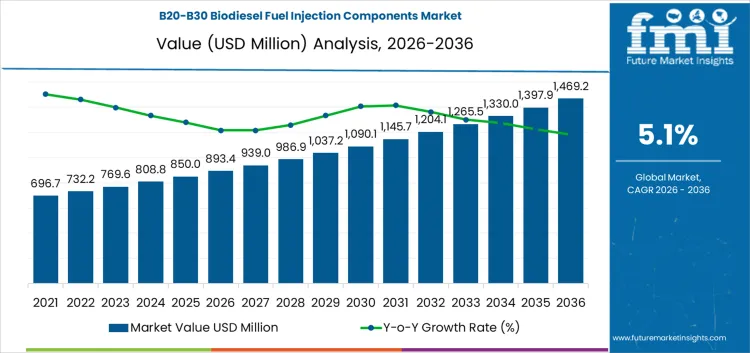
The B20-B30 Biodiesel Fuel Injection Components Market is valued at USD 893.4 million in 2026 and is projected to reach USD 1,469.2 million by 2036, reflecting a CAGR of 5.1%. Market performance is driven by concentration in biodiesel-compatible engine programs and fleet adoption of B20-B30 blends. End-use dependency on commercial vehicles, light trucks, and industrial applications shapes production schedules and supply chain management. Volume stability is affected by biodiesel availability, regional regulatory compliance, and OEM integration timelines. Suppliers offering validated, corrosion-resistant components capture predictable revenue, while smaller operators face variability in adoption and limited bargaining leverage.
Revenue concentration is influenced by alignment with high-volume engine programs and adherence to emissions and durability standards. Adoption varies geographically according to biodiesel infrastructure and fleet penetration. Margin concentration favors operators providing certified, multi-platform components with technical support. Fragmentation persists in aftermarket and regional suppliers, whereas established players capture concentrated value through integration with fleet programs, platform standardization, and validated operational performance rather than sheer output volume.
Quick Stats of the B20-B30 Biodiesel Fuel Injection Components Market
- B20-B30 Biodiesel Fuel Injection Components Market Value (2026): USD 893.4 million
- B20-B30 Biodiesel Fuel Injection Components Forecast Value (2036): USD 1,469.2 million
- B20-B30 Biodiesel Fuel Injection Components Forecast CAGR 2026 to 2036: 5.1%
- B20-B30 Biodiesel Fuel Injection Components Leading Component: Injectors
- B20-B30 Biodiesel Fuel Injection Components Leading Application: On-Road Heavy-Duty Vehicles
- B20-B30 Biodiesel Fuel Injection Components Key Growth Regions: China, Brazil, USA, UK, Japan
- B20-B30 Biodiesel Fuel Injection Components Top Players: Bosch, Denso, Cummins, Delphi (BorgWarner), Stanadyne, Weifu High-Technology, Mahle, Parker Hannifin, Rheinmetall, Continental
What is the Growth Forecast for B20-B30 Biodiesel Fuel Injection Components Market through 2036?
Between 2026 and 2031, the B20-B30 biodiesel fuel injection components market is projected to grow from USD 893.4 million to USD 1,090 million, generating an absolute increase of USD 196.6 million. Volume contributes approximately 67% of growth, driven by adoption of injectors, pumps, seals, and fuel lines across on-road heavy-duty, off-highway, and marine/stationary applications using B20 and B30 blends. Price growth accounts for 33%, supported by premium materials, blend compatibility enhancements, and OEM line-fit programs. Value capture favors suppliers providing validated, durable components and integration with OEM and aftermarket channels.
From 2031 to 2036, the market is expected to expand from USD 1,090 million to USD 1,469.2 million, adding USD 381.4 million. Volume remains the dominant driver, contributing roughly 65% of growth due to wider adoption of biodiesel-capable engines, increased fleet penetration, and retrofit programs. Price growth represents 35%, supported by advanced materials, component durability, and system optimization. Competitive advantage favors suppliers with proven biodiesel-compatible technology, OEM partnerships, and scalable manufacturing. Leading companies include Bosch, Denso, Cummins, Delphi (BorgWarner), Stanadyne, Weifu High-Technology, Mahle, Parker Hannifin, Rheinmetall, and Continental.
B20-B30 Biodiesel Fuel Injection Components Market Key Takeaways
| Metric | Value |
|---|---|
| Market Value (2026) | USD 893.4 million |
| Forecast Value (2036) | USD 1,469.2 million |
| Forecast CAGR 2026 to 2036 | 5.10% |
What Is Driving Demand for B20-B30 Biodiesel Fuel Injection Components?
B20-B30 biodiesel fuel injection components are increasingly adopted to support engines operating on 20-30% biodiesel blends, enabling reduced emissions and compliance with renewable fuel mandates. Historically, conventional fuel injection systems were optimized for petroleum diesel, resulting in material degradation, injector fouling, and seal failure when exposed to biodiesel blends. Modern components use chemically resistant materials, reinforced seals, and precision-engineered injectors and pumps to maintain reliable fuel delivery and engine performance. OEMs, engine manufacturers, and fleet operators prioritize compatibility, durability, and regulatory compliance. Early adoption focused on fleet vehicles and pilot programs in regions with biodiesel incentives, while current demand spans commercial trucks, buses, and industrial engines responding to global emission reduction targets.
Government policies, renewable fuel standards, and growing biodiesel production are shaping the market for B20-B30 fuel injection components. Compared with conventional diesel systems, modern designs emphasize chemical resistance, high-pressure performance, and integration with electronic engine controls for accurate fuel metering. Cost structures are influenced by material selection, manufacturing precision, and testing, concentrating margins among suppliers capable of providing certified, reliable components. Fleet operators adopt these components to maintain engine efficiency, reduce maintenance costs, and comply with emission regulations. By 2036, B20-B30 biodiesel fuel injection components are expected to become standard in commercial and industrial diesel engines, supporting the transition toward renewable fuel adoption and sustainable transport.
What Factors Are Shaping the Demand for B20-B30 Biodiesel Fuel Injection Components in Terms of Component Type and Application?
The demand for B20-B30 biodiesel fuel injection components is segmented by component type and application. Component types include injectors, pumps and seals, lines and rails, and other system elements. Application areas cover on-road heavy-duty vehicles, off-highway machinery, marine and stationary engines, and other uses. Adoption is influenced by biodiesel compatibility, operational efficiency, and regulatory compliance. Uptake is driven by emission reduction, fuel system reliability, and durability under high-pressure operation. Component and application selection depends on engine type, fuel composition, and maintenance requirements, ensuring precise fuel delivery, optimized combustion, and long-term performance across commercial, industrial, and marine engines.
Why Are Injectors Leading the Component Segment in B20-B30 Biodiesel Fuel Injection Systems?
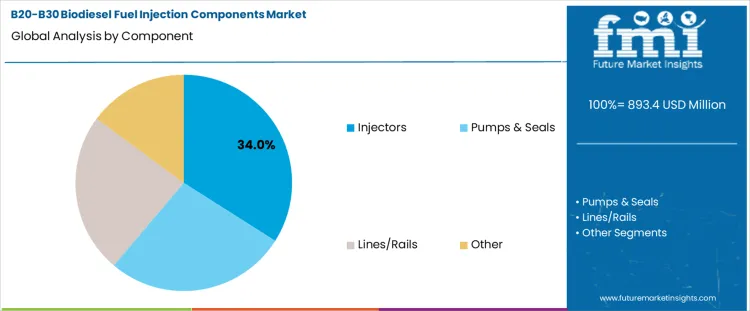
Injectors account for approximately 34% of total component segment demand, making them the leading category. These components regulate biodiesel flow into combustion chambers, ensuring precise atomization, optimal combustion, and reduced deposits. Adoption is reinforced by compatibility with biodiesel blends, resistance to chemical degradation, and durability under high temperatures and pressures. Manufacturers implement injectors across heavy-duty, off-highway, and marine applications to maintain engine efficiency and emission compliance. Maintenance routines include monitoring injector flow, nozzle condition, and sealing integrity to ensure consistent operation. The segment leads because injectors provide critical fuel delivery performance, durability, and reliability in biodiesel engine systems.
Operational factors further support adoption. Injectors must withstand chemical exposure, vibration, and thermal cycling while maintaining flow precision. Integration with engine control units ensures accurate injection timing, efficient combustion, and reduced emissions. The segment leads because injectors deliver measurable operational benefits, enhance fuel system longevity, and ensure safe, reliable performance across biodiesel-powered vehicles and machinery.
Why Are On-Road Heavy-Duty Vehicles Representing the Largest Application Segment in B20-B30 Biodiesel Fuel Injection Components?
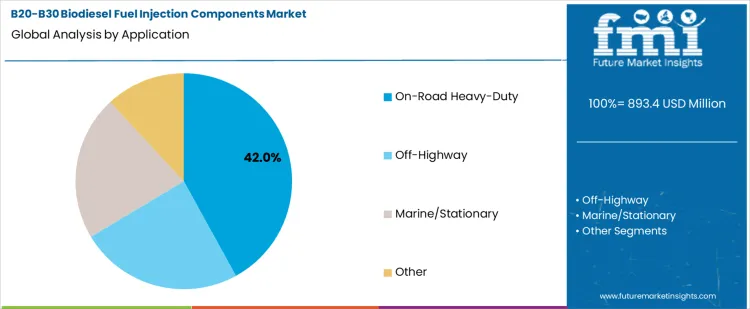
On-road heavy-duty vehicles account for approximately 42% of total application segment demand, making them the largest category. These vehicles require high-capacity engines capable of operating efficiently on B20-B30 biodiesel blends. Adoption is driven by fuel cost savings, emissions reduction, and regulatory incentives. Components are designed to withstand continuous high-pressure operation and ensure precise fuel delivery for long-haul transport fleets. Maintenance programs monitor component integrity, flow accuracy, and system reliability to minimize downtime.
Operational considerations influence adoption. Fuel injection systems must maintain performance under high load, variable temperatures, and prolonged operating hours. Components are calibrated to ensure consistent combustion, efficient fuel utilization, and emission compliance. On-road heavy-duty vehicles lead because they offer the largest operational benefit from biodiesel fuel injection components, supporting sustainability, reliability, and optimized engine performance across commercial fleets.
How Are B20-B30 Biodiesel Fuel Injection Components Supporting Engine Performance?
B20-B30 biodiesel fuel injection components are increasingly adopted in light-duty vehicles, commercial trucks, and industrial diesel engines to enable operation on 20-30% biodiesel blends while maintaining fuel efficiency and emission compliance. Adoption is strongest in regions with established biodiesel production, blending mandates, and supportive regulatory frameworks. Components are selected for material compatibility, corrosion resistance, and injector precision under variable fuel properties. Growth is driven by emission regulations, renewable fuel targets, and engine durability. Investment focuses on long-term component reliability, integration with engine management systems, and adherence to safety and performance standards. OEMs prioritize solutions that sustain performance while enabling compliance with regional biodiesel mandates.
Why Are Renewable Fuel Policies and Emission Standards Driving Demand?
Demand is influenced by national and regional mandates requiring biodiesel blending in diesel fuel. Manufacturers adopt B20-B30-compatible components to ensure engine reliability, prevent corrosion, and meet emission reduction targets. Components capable of withstanding variable fuel quality and maintaining precise fuel delivery gain preference. Adoption is concentrated in regions with high diesel consumption and active renewable fuel programs. Regulatory compliance and operational reliability drive procurement rather than cost. Suppliers delivering validated, durable, and compatible components gain advantage among OEMs and fuel system integrators.
What Factors Limit Wider Adoption of B20-B30 Fuel Injection Components?
High manufacturing costs, material durability concerns, and precision engineering requirements restrict adoption. Biodiesel variability, including oxidation and viscosity differences, can impact injector and pump performance. Integration with existing engine control systems requires technical expertise. Certification and regional regulatory approval timelines may delay deployment. Smaller fleets or manufacturers may struggle with implementation due to cost and infrastructure limitations. These factors concentrate early adoption among well-funded OEMs, commercial fleet operators, and regions with mature biodiesel infrastructure and technical capability.
How Are Technological Advances and Collaboration Shaping Market Growth?
Developments include corrosion-resistant injectors, high-precision fuel pumps, and fuel rails designed for biodiesel blends. Collaboration between component manufacturers, OEMs, and biodiesel producers ensures real-world performance validation, regulatory compliance, and integration with engine systems. Pilot testing evaluates durability, flow consistency, and chemical compatibility before large-scale deployment. Quality monitoring, batch traceability, and standardized processes maintain reliability. Focus is on operational performance, emissions compliance, and component longevity rather than cost or volume. Collaborative initiatives enable broader adoption of B20-B30 fuel injection components while supporting renewable fuel targets and regional emission standards.
What is the Demand for B20-B30 Biodiesel Fuel Injection Components by Country?
| Country | CAGR (%) |
|---|---|
| USA | 4.9% |
| Japan | 4.1% |
| China | 6.6% |
| UK | 4.7% |
| Brazil | 6.3% |
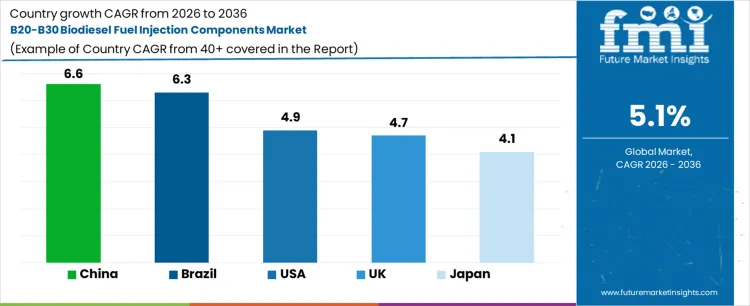
Demand for B20-B30 biodiesel fuel injection components is rising as vehicle manufacturers and fleet operators integrate biodiesel-compatible systems to reduce carbon emissions and comply with renewable fuel mandates. China leads with a 6.6% CAGR, driven by strong adoption of biodiesel in commercial fleets and government incentives promoting renewable fuel use. Brazil follows at 6.3%, supported by extensive biodiesel infrastructure and high domestic ethanol and biodiesel vehicle penetration. The USA grows at 4.9%, shaped by gradual adoption in public transport and heavy-duty vehicles. The UK records 4.7% growth, driven by compliance with emission standards and increasing renewable fuel usage. Japan shows 4.1% CAGR, reflecting moderate integration of biodiesel systems and limited market size for high biodiesel blends.
How Is the United States Experiencing Growth in the B20-B30 Biodiesel Fuel Injection Components Market?
United States is experiencing growth at a CAGR of 4.9%, supported by increasing adoption of B20-B30 biodiesel blends in commercial and passenger diesel vehicles to reduce carbon emissions and improve engine efficiency. Automotive OEMs and suppliers are producing fuel injection components designed for high biodiesel compatibility, corrosion resistance, and precise fuel delivery. Demand is concentrated in automotive manufacturing hubs, engine assembly plants, and service centers. Investments focus on injector durability, material compatibility, and operational precision rather than fleet expansion. Growth reflects regulatory incentives, gradual adoption of biodiesel fuels, and the shift toward renewable fuel sources in commercial and light-duty vehicle fleets.
- Biodiesel vehicle adoption drives growth.
- Fuel injection components ensure precision with B20-B30 blends.
- Automotive hubs and assembly plants concentrate demand.
- Injector durability and material compatibility guide investment.
How Is Japan Witnessing Moderate Adoption with Biodiesel Programs?
Japan is witnessing growth at a CAGR of 4.1%, supported by adoption of B20-B30 fuel injection components in passenger and commercial diesel engines to improve fuel efficiency and reduce emissions. OEMs and suppliers are deploying injectors, fuel rails, and pumps designed for biodiesel resistance, consistent fuel delivery, and long-term durability. Demand is concentrated in automotive manufacturing clusters, engine assembly plants, and pilot projects. Investments prioritize material compatibility, operational reliability, and precision rather than fleet expansion. Growth reflects gradual adoption of biodiesel technologies, regulatory support, and integration of renewable fuels in domestic vehicle fleets.
- Biodiesel adoption drives market growth.
- Fuel components ensure reliable operation with B20-B30 fuels.
- Automotive clusters and assembly plants concentrate demand.
- Material compatibility and operational reliability guide investment.
How Is China Experiencing Rapid Growth with Biodiesel-Compatible Engines?
China is experiencing growth at a CAGR of 6.6%, fueled by the adoption of B20-B30 biodiesel fuel injection components in passenger and commercial diesel vehicles to improve engine efficiency and reduce environmental impact. OEMs and suppliers are producing components capable of handling higher biodiesel content while ensuring precise fuel delivery and long-term durability. Demand is concentrated in automotive manufacturing hubs, engine assembly centers, and research or pilot programs. Investments focus on material resilience, injector precision, and system reliability rather than large-scale fleet deployment. Growth reflects government support for renewable fuels, industrial adoption, and rising production of diesel vehicles compatible with biodiesel blends.
- Biodiesel-compatible engines drive adoption.
- Fuel components optimize fuel delivery with B20-B30 blends.
- Automotive hubs and pilot programs concentrate demand.
- Material resilience and injector precision guide investment.
How Is the United Kingdom Growing Through Renewable Fuel Initiatives?
United Kingdom is growing at a CAGR of 4.7%, supported by adoption of B20-B30 biodiesel fuel injection components to enhance diesel engine performance and reduce emissions. Automotive OEMs and suppliers are deploying injectors, pumps, and fuel rails designed for high biodiesel compatibility, precision fuel delivery, and material durability. Demand is concentrated in automotive manufacturing hubs, engine assembly plants, and pilot projects. Investments prioritize component reliability, material resistance, and operational precision rather than fleet-scale expansion. Growth reflects gradual integration of renewable fuels, regulatory compliance, and increasing awareness of biodiesel applications in commercial and passenger vehicles.
- Renewable fuel adoption drives growth.
- Fuel components ensure precise fuel delivery with biodiesel blends.
- Automotive hubs and assembly plants concentrate demand.
- Component reliability and material resistance guide investment.
How Is Brazil Experiencing Rapid Growth with Biodiesel Vehicle Adoption?
Brazil is experiencing growth at a CAGR of 6.3%, fueled by widespread adoption of B20-B30 biodiesel in commercial and passenger vehicles to reduce emissions and enhance engine performance. OEMs and suppliers are providing fuel injection components designed for biodiesel resistance, precise fuel delivery, and durability under high ethanol content and variable conditions. Demand is concentrated in automotive manufacturing hubs, engine assembly plants, and aftermarket service centers. Investments focus on injector precision, material compatibility, and operational reliability rather than fleet expansion. Growth reflects high domestic adoption of biodiesel fuels, government incentives, and renewable energy initiatives supporting low-emission vehicle technologies.
- Biodiesel adoption drives market growth.
- Fuel components ensure precision and durability with B20-B30 blends.
- Automotive hubs and assembly plants concentrate demand.
- Injector precision and material compatibility guide investment.
Who Competes in the B20-B30 Biodiesel Fuel Injection Components Market and What Defines Their Capabilities?
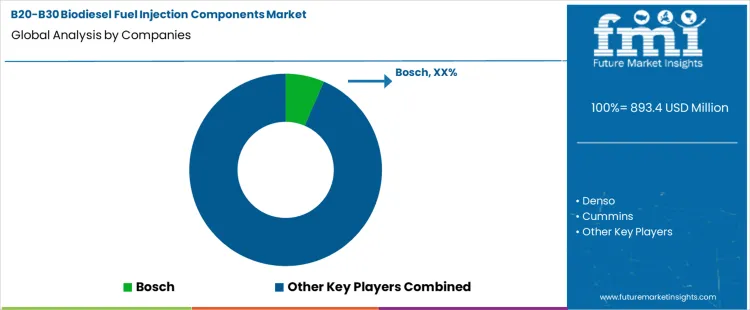
Competition in the B20-B30 Biodiesel Fuel Injection Components Market reflects differences in materials engineering, pressure control precision, and compatibility with biodiesel blends that present higher viscosity and solvent effects. Bosch supplies injection pumps and nozzles engineered to sustain consistent fuel delivery under biodiesel conditions tailored for varied engine platforms. Denso develops components designed to manage thermal shifts and maintain seal integrity with blended fuels. Cummins positions injection modules within integrated powertrain systems that align performance with emission requirements across heavy duty segments. Delphi (BorgWarner) focuses on high precision metering solutions calibrated for stability with biofuel blends. Stanadyne delivers fuel pumps engineered for durability across extended duty cycles.
Competition continues through materials selection, filtration design, and system validation protocols that address biodiesel’s unique chemical interactions with elastomers and metals. Weifu High Technology provides cost effective high pressure components with regional manufacturing scale. Mahle supplies engineered pump and filter assemblies designed for consistent flow and contaminant control. Parker Hannifin contributes precision fluid connectors and control valves that resist solvent effects in blended fuels. Rheinmetall develops robust fuel system parts for commercial and military engines. Continental offers adaptable delivery modules that align with biodiesel compatibility standards. Competitive differences emerge from qualification testing data for biodiesel service, long term component resilience, and integration with engine management systems tuned for alternative fuel performance.
Key Players in the B20-B30 Biodiesel Fuel Injection Components Market
- Bosch
- Denso
- Cummins
- Delphi (BorgWarner)
- Stanadyne
- Weifu High-Technology
- Mahle
- Parker Hannifin
- Rheinmetall
- Continental
Scope of the Report
| Items | Values |
|---|---|
| Quantitative Units (2026) | USD million |
| Component | Injectors, Pumps & Seals, Lines and Rails, Other |
| Application | On-Road Heavy-Duty, Off-Highway, Marine and Stationary, Other |
| Blend/Spec | B20, B30, Variable Blend Systems, Other |
| Sales Channel | OEM Line-Fit, Service/Replacement, Retrofit, Other |
| Region | Asia Pacific, Europe, North America, Latin America, Middle East & Africa |
| Key Countries Covered | China, Japan, South Korea, India, Australia & New Zealand, Germany, United Kingdom, France, Italy, Spain, Nordic, BENELUX, United States, Canada, Mexico, Brazil, Chile, Kingdom of Saudi Arabia, Other GCC Countries, Turkey, South Africa, Other African Union |
| Key Companies Profiled | Bosch, Denso, Cummins, Delphi (BorgWarner), Stanadyne, Weifu High-Technology, Mahle, Parker Hannifin, Rheinmetall, Continental |
| Additional Attributes | Dollar sales by component, application, and blend; fleet adoption vs retrofit penetration; material and seal performance for biodiesel blends; regulatory compliance; forecast CAGR and regional growth projections |
B20-B30 Biodiesel Fuel Injection Components Market Segmentation
Component:
- Injectors
- Pumps & Seals
- Lines and Rails
- Other
Application:
- On-Road Heavy-Duty
- Off-Highway
- Marine and Stationary
- Other
Blend/Spec:
- B20
- B30
- Variable Blend Systems
- Other
Sales Channel:
- OEM Line-Fit
- Service/Replacement
- Retrofit
- Other
Region:
- Asia Pacific
- China
- Japan
- South Korea
- India
- Australia & New Zealand
- ASEAN
- Rest of Asia Pacific
- Europe
- Germany
- United Kingdom
- France
- Italy
- Spain
- Nordic
- BENELUX
- Rest of Europe
- North America
- United States
- Canada
- Mexico
- Latin America
- Brazil
- Chile
- Rest of Latin America
- Middle East & Africa
- Kingdom of Saudi Arabia
- Other GCC Countries
- Turkey
- South Africa
- Other African Union
- Rest of Middle East & Africa
Biblography
- U.S. Department of Energy (DOE) / Alternative Fuels Data Center. (2023). Biodiesel Fuel Basics. Washington, D.C.: DOE Office of Energy Efficiency & Renewable Energy.
- European Commission (EC). (2023). Renewable Energy Directive (RED II) — Sustainability Criteria and Biodiesel Blending Framework. Brussels: Directorate-General for Energy.
- ASTM D7467-23. (2023). Standard Specification for Diesel Fuel Oil, Biodiesel Blend (B6 to B20). ASTM International, West Conshohocken, PA.
- Bosch Mobility Solutions. (2023). Technical Bulletin: Fuel Injection Systems for Biodiesel Blends B20–B30 — Material Compatibility and Performance Validation. Stuttgart, Germany.
- National Biodiesel Board (NBB). (2023). Biodiesel Use and Emission Reduction Assessment. Jefferson City, MO.
- Future Market Insights. (2026). B20–B30 Biodiesel Fuel Injection Components Market Size and Share Forecast Outlook 2026–2036. Industry dataset and model update, January 2026.
Frequently Asked Questions
How big is the b20-b30 biodiesel fuel injection components market in 2026?
The global b20-b30 biodiesel fuel injection components market is estimated to be valued at USD 893.4 million in 2026.
What will be the size of b20-b30 biodiesel fuel injection components market in 2036?
The market size for the b20-b30 biodiesel fuel injection components market is projected to reach USD 1,469.2 million by 2036.
How much will be the b20-b30 biodiesel fuel injection components market growth between 2026 and 2036?
The b20-b30 biodiesel fuel injection components market is expected to grow at a 5.1% CAGR between 2026 and 2036.
What are the key product types in the b20-b30 biodiesel fuel injection components market?
The key product types in b20-b30 biodiesel fuel injection components market are injectors, pumps & seals, lines/rails and other.
Which application segment to contribute significant share in the b20-b30 biodiesel fuel injection components market in 2026?
In terms of application, on-road heavy-duty segment to command 42.0% share in the b20-b30 biodiesel fuel injection components market in 2026.
Preview the report firsthand - request a free sample
Get SampleGet the brochure for pricing and purchase details.
Get PDFTable of Content
- Executive Summary
- Global Market Outlook
- Demand-side Trends
- Supply-side Trends
- Technology Roadmap Analysis
- Analysis and Recommendations
- Market Overview
- Market Coverage / Taxonomy
- Market Definition / Scope / Limitations
- Market Background
- Market Dynamics
- Drivers
- Restraints
- Opportunity
- Trends
- Scenario Forecast
- Demand in Optimistic Scenario
- Demand in Likely Scenario
- Demand in Conservative Scenario
- Opportunity Map Analysis
- Product Life Cycle Analysis
- Supply Chain Analysis
- Investment Feasibility Matrix
- Value Chain Analysis
- PESTLE and Porter’s Analysis
- Regulatory Landscape
- Regional Parent Market Outlook
- Production and Consumption Statistics
- Import and Export Statistics
- Market Dynamics
- Global Market Analysis 2021 to 2025 and Forecast, 2026 to 2036
- Historical Market Size Value (USD Million) Analysis, 2021 to 2025
- Current and Future Market Size Value (USD Million) Projections, 2026 to 2036
- Y-o-Y Growth Trend Analysis
- Absolute $ Opportunity Analysis
- Global Market Pricing Analysis 2021 to 2025 and Forecast 2026 to 2036
- Global Market Analysis 2021 to 2025 and Forecast 2026 to 2036, By Component
- Introduction / Key Findings
- Historical Market Size Value (USD Million) Analysis By Component , 2021 to 2025
- Current and Future Market Size Value (USD Million) Analysis and Forecast By Component , 2026 to 2036
- Injectors
- Pumps & Seals
- Lines/Rails
- Other
- Injectors
- Y-o-Y Growth Trend Analysis By Component , 2021 to 2025
- Absolute $ Opportunity Analysis By Component , 2026 to 2036
- Global Market Analysis 2021 to 2025 and Forecast 2026 to 2036, By Application
- Introduction / Key Findings
- Historical Market Size Value (USD Million) Analysis By Application, 2021 to 2025
- Current and Future Market Size Value (USD Million) Analysis and Forecast By Application, 2026 to 2036
- On-Road Heavy-Duty
- Off-Highway
- Marine/Stationary
- Other
- On-Road Heavy-Duty
- Y-o-Y Growth Trend Analysis By Application, 2021 to 2025
- Absolute $ Opportunity Analysis By Application, 2026 to 2036
- Global Market Analysis 2021 to 2025 and Forecast 2026 to 2036, By Blend/Spec
- Introduction / Key Findings
- Historical Market Size Value (USD Million) Analysis By Blend/Spec, 2021 to 2025
- Current and Future Market Size Value (USD Million) Analysis and Forecast By Blend/Spec, 2026 to 2036
- B20
- B30
- Variable Blend Systems
- Other
- B20
- Y-o-Y Growth Trend Analysis By Blend/Spec, 2021 to 2025
- Absolute $ Opportunity Analysis By Blend/Spec, 2026 to 2036
- Global Market Analysis 2021 to 2025 and Forecast 2026 to 2036, By Sales Channel
- Introduction / Key Findings
- Historical Market Size Value (USD Million) Analysis By Sales Channel, 2021 to 2025
- Current and Future Market Size Value (USD Million) Analysis and Forecast By Sales Channel, 2026 to 2036
- OEM Line-Fit
- Service/Replacement
- Retrofit
- Other
- OEM Line-Fit
- Y-o-Y Growth Trend Analysis By Sales Channel, 2021 to 2025
- Absolute $ Opportunity Analysis By Sales Channel, 2026 to 2036
- Global Market Analysis 2021 to 2025 and Forecast 2026 to 2036, By Region
- Introduction
- Historical Market Size Value (USD Million) Analysis By Region, 2021 to 2025
- Current Market Size Value (USD Million) Analysis and Forecast By Region, 2026 to 2036
- North America
- Latin America
- Western Europe
- Eastern Europe
- East Asia
- South Asia and Pacific
- Middle East & Africa
- Market Attractiveness Analysis By Region
- North America Market Analysis 2021 to 2025 and Forecast 2026 to 2036, By Country
- Historical Market Size Value (USD Million) Trend Analysis By Market Taxonomy, 2021 to 2025
- Market Size Value (USD Million) Forecast By Market Taxonomy, 2026 to 2036
- By Country
- USA
- Canada
- Mexico
- By Component
- By Application
- By Blend/Spec
- By Sales Channel
- By Country
- Market Attractiveness Analysis
- By Country
- By Component
- By Application
- By Blend/Spec
- By Sales Channel
- Key Takeaways
- Latin America Market Analysis 2021 to 2025 and Forecast 2026 to 2036, By Country
- Historical Market Size Value (USD Million) Trend Analysis By Market Taxonomy, 2021 to 2025
- Market Size Value (USD Million) Forecast By Market Taxonomy, 2026 to 2036
- By Country
- Brazil
- Chile
- Rest of Latin America
- By Component
- By Application
- By Blend/Spec
- By Sales Channel
- By Country
- Market Attractiveness Analysis
- By Country
- By Component
- By Application
- By Blend/Spec
- By Sales Channel
- Key Takeaways
- Western Europe Market Analysis 2021 to 2025 and Forecast 2026 to 2036, By Country
- Historical Market Size Value (USD Million) Trend Analysis By Market Taxonomy, 2021 to 2025
- Market Size Value (USD Million) Forecast By Market Taxonomy, 2026 to 2036
- By Country
- Germany
- UK
- Italy
- Spain
- France
- Nordic
- BENELUX
- Rest of Western Europe
- By Component
- By Application
- By Blend/Spec
- By Sales Channel
- By Country
- Market Attractiveness Analysis
- By Country
- By Component
- By Application
- By Blend/Spec
- By Sales Channel
- Key Takeaways
- Eastern Europe Market Analysis 2021 to 2025 and Forecast 2026 to 2036, By Country
- Historical Market Size Value (USD Million) Trend Analysis By Market Taxonomy, 2021 to 2025
- Market Size Value (USD Million) Forecast By Market Taxonomy, 2026 to 2036
- By Country
- Russia
- Poland
- Hungary
- Balkan & Baltic
- Rest of Eastern Europe
- By Component
- By Application
- By Blend/Spec
- By Sales Channel
- By Country
- Market Attractiveness Analysis
- By Country
- By Component
- By Application
- By Blend/Spec
- By Sales Channel
- Key Takeaways
- East Asia Market Analysis 2021 to 2025 and Forecast 2026 to 2036, By Country
- Historical Market Size Value (USD Million) Trend Analysis By Market Taxonomy, 2021 to 2025
- Market Size Value (USD Million) Forecast By Market Taxonomy, 2026 to 2036
- By Country
- China
- Japan
- South Korea
- By Component
- By Application
- By Blend/Spec
- By Sales Channel
- By Country
- Market Attractiveness Analysis
- By Country
- By Component
- By Application
- By Blend/Spec
- By Sales Channel
- Key Takeaways
- South Asia and Pacific Market Analysis 2021 to 2025 and Forecast 2026 to 2036, By Country
- Historical Market Size Value (USD Million) Trend Analysis By Market Taxonomy, 2021 to 2025
- Market Size Value (USD Million) Forecast By Market Taxonomy, 2026 to 2036
- By Country
- India
- ASEAN
- Australia & New Zealand
- Rest of South Asia and Pacific
- By Component
- By Application
- By Blend/Spec
- By Sales Channel
- By Country
- Market Attractiveness Analysis
- By Country
- By Component
- By Application
- By Blend/Spec
- By Sales Channel
- Key Takeaways
- Middle East & Africa Market Analysis 2021 to 2025 and Forecast 2026 to 2036, By Country
- Historical Market Size Value (USD Million) Trend Analysis By Market Taxonomy, 2021 to 2025
- Market Size Value (USD Million) Forecast By Market Taxonomy, 2026 to 2036
- By Country
- Kingdom of Saudi Arabia
- Other GCC Countries
- Turkiye
- South Africa
- Other African Union
- Rest of Middle East & Africa
- By Component
- By Application
- By Blend/Spec
- By Sales Channel
- By Country
- Market Attractiveness Analysis
- By Country
- By Component
- By Application
- By Blend/Spec
- By Sales Channel
- Key Takeaways
- Key Countries Market Analysis
- USA
- Pricing Analysis
- Market Share Analysis, 2025
- By Component
- By Application
- By Blend/Spec
- By Sales Channel
- Canada
- Pricing Analysis
- Market Share Analysis, 2025
- By Component
- By Application
- By Blend/Spec
- By Sales Channel
- Mexico
- Pricing Analysis
- Market Share Analysis, 2025
- By Component
- By Application
- By Blend/Spec
- By Sales Channel
- Brazil
- Pricing Analysis
- Market Share Analysis, 2025
- By Component
- By Application
- By Blend/Spec
- By Sales Channel
- Chile
- Pricing Analysis
- Market Share Analysis, 2025
- By Component
- By Application
- By Blend/Spec
- By Sales Channel
- Germany
- Pricing Analysis
- Market Share Analysis, 2025
- By Component
- By Application
- By Blend/Spec
- By Sales Channel
- UK
- Pricing Analysis
- Market Share Analysis, 2025
- By Component
- By Application
- By Blend/Spec
- By Sales Channel
- Italy
- Pricing Analysis
- Market Share Analysis, 2025
- By Component
- By Application
- By Blend/Spec
- By Sales Channel
- Spain
- Pricing Analysis
- Market Share Analysis, 2025
- By Component
- By Application
- By Blend/Spec
- By Sales Channel
- France
- Pricing Analysis
- Market Share Analysis, 2025
- By Component
- By Application
- By Blend/Spec
- By Sales Channel
- India
- Pricing Analysis
- Market Share Analysis, 2025
- By Component
- By Application
- By Blend/Spec
- By Sales Channel
- ASEAN
- Pricing Analysis
- Market Share Analysis, 2025
- By Component
- By Application
- By Blend/Spec
- By Sales Channel
- Australia & New Zealand
- Pricing Analysis
- Market Share Analysis, 2025
- By Component
- By Application
- By Blend/Spec
- By Sales Channel
- China
- Pricing Analysis
- Market Share Analysis, 2025
- By Component
- By Application
- By Blend/Spec
- By Sales Channel
- Japan
- Pricing Analysis
- Market Share Analysis, 2025
- By Component
- By Application
- By Blend/Spec
- By Sales Channel
- South Korea
- Pricing Analysis
- Market Share Analysis, 2025
- By Component
- By Application
- By Blend/Spec
- By Sales Channel
- Russia
- Pricing Analysis
- Market Share Analysis, 2025
- By Component
- By Application
- By Blend/Spec
- By Sales Channel
- Poland
- Pricing Analysis
- Market Share Analysis, 2025
- By Component
- By Application
- By Blend/Spec
- By Sales Channel
- Hungary
- Pricing Analysis
- Market Share Analysis, 2025
- By Component
- By Application
- By Blend/Spec
- By Sales Channel
- Kingdom of Saudi Arabia
- Pricing Analysis
- Market Share Analysis, 2025
- By Component
- By Application
- By Blend/Spec
- By Sales Channel
- Turkiye
- Pricing Analysis
- Market Share Analysis, 2025
- By Component
- By Application
- By Blend/Spec
- By Sales Channel
- South Africa
- Pricing Analysis
- Market Share Analysis, 2025
- By Component
- By Application
- By Blend/Spec
- By Sales Channel
- USA
- Market Structure Analysis
- Competition Dashboard
- Competition Benchmarking
- Market Share Analysis of Top Players
- By Regional
- By Component
- By Application
- By Blend/Spec
- By Sales Channel
- Competition Analysis
- Competition Deep Dive
- Bosch
- Overview
- Product Portfolio
- Profitability by Market Segments (Product/Age /Sales Channel/Region)
- Sales Footprint
- Strategy Overview
- Marketing Strategy
- Product Strategy
- Channel Strategy
- Denso
- Cummins
- Delphi (BorgWarner)
- Stanadyne
- Weifu High-Technology
- Mahle
- Parker Hannifin
- Rheinmetall
- Continental
- Bosch
- Competition Deep Dive
- Assumptions & Acronyms Used
- Research Methodology


