

- Industry Size (2026)
- USD 1.5 Bn
- Forecast (2036)
- USD 3.0 Bn
- CAGR (2026 to 2036)
- 7.30%
Children Appetite Stimulant Market Forecast and Outlook 2026 to 2036
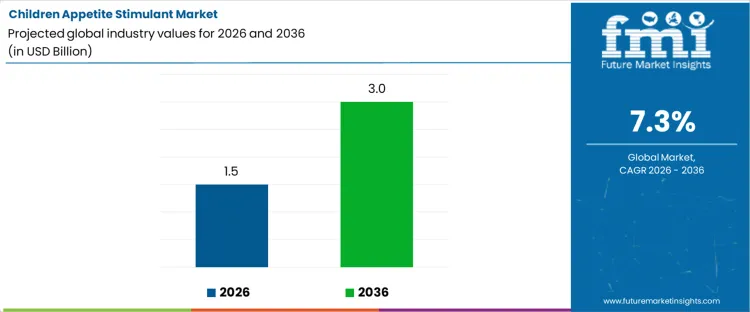
The children appetite stimulant market is projected to reach USD 1.5 billion in 2026 and is projected to reach USD 3.0 billion by 2036, expanding at a CAGR of 7.3% over the forecast period. From 2026 to 2036, market performance is conditioned by how tightly production and distribution are controlled across syrups, drops, and tablet formats, where formulation consistency and excipient sourcing directly influence supply reliability. Manufacturing is often concentrated among a limited set of pediatric-capable plants with validated processes for taste masking, dose uniformity, and quality documentation, creating dependency on a narrow supplier base for key intermediates and packaging components.
Regional manufacturing control is also reflected in the availability of compliant sweeteners, flavor systems, and stability-tested APIs, with disruptions in these inputs translating into delayed batches and uneven pharmacy replenishment. Greater exposure is carried by brands relying on outsourced production networks, where lead times are sensitive to capacity allocation and regulatory inspection outcomes. As retail pharmacies dominate access, inventory discipline and distributor fill rates become decisive, rewarding producers that can sustain consistent output under variable demand and compliance requirements.
Quick Stats for Children Appetite Stimulant Market
- Children Appetite Stimulant Market Value (2026): USD 1.5 Billion
- Children Appetite Stimulant Market Forecast Value (2036): USD 3.0 Billion
- Children Appetite Stimulant Market Forecast CAGR 2026 to 2036: 7.30%
- Leading Formulation in Children Appetite Stimulant Market: Syrups
- Leading Distribution Channel in Children Appetite Stimulant Market: Retail Pharmacies
- Key Growth Regions in Children Appetite Stimulant Market: Asia Pacific, Latin America, Middle East & Africa
- Top Key Players in Children Appetite Stimulant Market: Abbott, Haleon, Sanofi, Pfizer, Johnson & Johnson, Bayer, GSK, Reckitt, Perrigo, Viatris
Children Appetite Stimulant Market Key Takeaways
| Metric | Value |
|---|---|
| Industry Value (2026) | USD 1.5 Billion |
| Forecast Value (2036) | USD 3.0 Billion |
| Forecast CAGR 2026 to 2036 | 7.30% |
How Is the Global Children Appetite Stimulant Market Advancing?
The global children appetite stimulant market is advancing steadily, driven by increasing awareness of pediatric nutritional deficiencies and growth-related concerns. Appetite stimulants for children are commonly used to support weight gain and nutritional intake in cases of poor appetite associated with medical conditions, recovery phases, or developmental challenges. These products are widely prescribed and recommended across pediatric clinics, hospitals, and home care settings.
A key driver supporting market growth is the rising prevalence of feeding difficulties and undernutrition among children, particularly in early developmental stages. Healthcare providers increasingly emphasize early nutritional intervention to support healthy growth patterns, cognitive development, and immune function. Appetite stimulants are used as part of broader nutritional management strategies, often in combination with dietary supplements and clinical monitoring.
Advancements in formulation and product delivery are further strengthening market adoption. Improved palatability, age-appropriate dosing, and safer ingredient profiles are enhancing caregiver acceptance and treatment compliance. In addition, expanding availability through pharmacies, hospitals, and online healthcare platforms is improving market accessibility. As pediatric healthcare continues to focus on improving nutritional outcomes and growth monitoring, the children appetite stimulant market is expected to experience stable growth over the forecast period.
What Is the Segment-Wise Overview of the Children Appetite Stimulant Market?
The children appetite stimulant market is shaped by formulation preferences and accessible distribution channels. Syrups lead the formulation segment with a 46% share, as they are easier for children to consume, allow flexible dosing, and are better suited for younger age groups who may have difficulty swallowing solid dosage forms. Syrups are commonly prescribed for managing poor appetite linked to growth concerns or temporary illness. On the distribution side, retail pharmacies account for 54% of demand, driven by their widespread availability, pharmacist guidance, and convenience for parents seeking quick access to pediatric medications. Retail outlets also support prescription refills and over-the-counter appetite stimulants.
Why Do Syrups Lead the Children Appetite Stimulant Market?
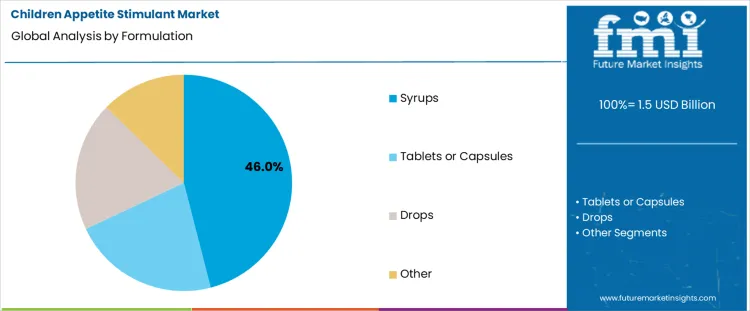
Syrups account for 46% of the children appetite stimulant market due to their high acceptance among pediatric patients and ease of administration. Liquid formulations are particularly suitable for younger children who have difficulty swallowing tablets or capsules. Syrups allow flexible and accurate dose adjustment based on age, weight, and clinical requirement, which is critical in pediatric care. They are often flavored to improve palatability, increasing compliance during longer treatment durations. Syrup-based appetite stimulants are commonly prescribed for children experiencing reduced appetite due to illness, nutritional deficiencies, or developmental concerns. Their fast absorption and ease of mixing with food or beverages further support adoption. As caregivers and physicians prioritize child-friendly, non-invasive dosage forms, syrups continue to dominate formulation preferences.
Why Do Retail Pharmacies Dominate Distribution in the Children Appetite Stimulant Market?
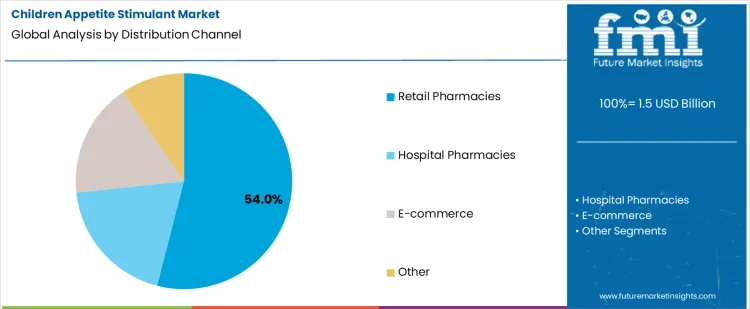
Retail pharmacies represent 54% of distribution channel demand, making them the primary access point in the children appetite stimulant market. Parents rely heavily on local pharmacies for quick availability, pharmacist consultation, and guidance on pediatric dosing. Retail pharmacies stock both prescription-based and over-the-counter appetite stimulants, allowing flexibility based on medical advice or caregiver preference. Their widespread geographic presence ensures easy access, particularly for repeat purchases and short-term treatment needs. Pharmacist interaction also builds trust, especially when administering supplements or appetite enhancers to children. Compared to hospital pharmacies or online channels, retail outlets offer faster fulfillment and personalized support. As pediatric appetite concerns are often addressed in outpatient settings, retail pharmacies remain the dominant distribution channel.
What Are the Key Dynamics for the Children Appetite Stimulant Market?
Appetite stimulants are therapeutics used to support increased food intake and weight gain in children with clinical indications such as failure to thrive, chronic illnesses, and eating aversions. Key market dynamics include rising pediatric healthcare utilization, greater awareness of the long-term consequences of malnutrition, and expanding availability of appetite-enhancing formulations approved for pediatric use. Caregivers and clinicians are increasingly focused on interventions that support healthy growth trajectories, particularly in early childhood. The development of products with improved safety profiles and tailored pediatric dosing is enhancing acceptance among healthcare providers. Public health initiatives aimed at addressing childhood undernutrition and feeding challenges further influence demand.
Why Is the Children Appetite Stimulant Market Growing?
The children appetite stimulant market is growing as healthcare systems and caregivers prioritize early intervention for children at risk of impaired growth due to inadequate appetite. Increased screening for nutritional deficiencies and growth monitoring in pediatric populations supports earlier identification of appetite-related concerns. Innovations in pharmacological and nutraceutical appetite stimulants that offer better tolerability and child-friendly formulations are encouraging clinical adoption. Rising prevalence of pediatric chronic conditions, such as cystic fibrosis, cancer, gastrointestinal disorders, and neurologic impairments, which can suppress appetite, also contributes to demand. Educational programs promoting childhood nutrition, coupled with broader access to pediatric care, enable timely treatment. Growing research on pediatric appetite regulation and bodyweight management provides evidence that supports expanded use of appetite stimulants within pediatric clinical practice.
How Are the Key Drivers Shaping the Children Appetite Stimulant Market?
Key drivers shaping the children appetite stimulant market include enhanced focus on addressing childhood malnutrition and improving clinical outcomes by ensuring adequate nutrition. Healthcare professionals increasingly recognize appetite stimulation as a component of comprehensive nutritional care plans for medically indicated children. Advances in formulation science are enabling development of safer, age-appropriate products with defined dosing regimens that align with pediatric physiology. Integration of appetite assessment into routine pediatric health checkups and growth tracking protocols further supports early therapeutic intervention. Awareness campaigns by pediatric associations and nutrition experts highlight the importance of addressing appetite issues promptly, influencing caregiver and clinician behavior.
What Is the Growth Outlook for the Children Appetite Stimulant Market by Country?
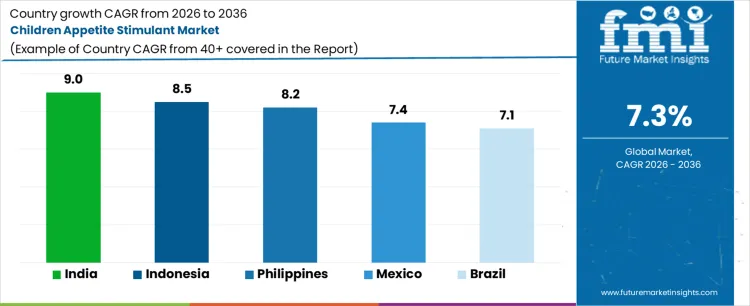
| Country | CAGR (%) |
|---|---|
| India | 9.0% |
| Indonesia | 8.5% |
| Philippines | 8.2% |
| Mexico | 7.4% |
| Brazil | 7.1% |
The children appetite stimulant market is expanding steadily across emerging economies as awareness of pediatric nutrition and growth monitoring increases. India leads with a 9.0% CAGR, driven by high prevalence of nutrition-related concerns and expanding pediatric care access. Indonesia (8.5%) and the Philippines (8.2%) follow, supported by public health initiatives and rising caregiver awareness. Mexico grows at 7.4%, benefiting from improved healthcare coverage and pharmacy access, while Brazil expands at 7.1%, driven by steady demand for pediatric nutrition support. As parents increasingly prioritize healthy growth and recovery in children, demand for appetite stimulant products is expected to rise across these regions.
What Is Driving the Growth of the Children Appetite Stimulant Market in India?
The children appetite stimulant market in India is growing at a CAGR of 9.0%, driven by rising concerns around childhood nutrition, underweight prevalence, and micronutrient deficiencies. Pediatricians frequently recommend appetite stimulants as supportive therapy for children experiencing poor appetite due to illness, malnutrition, or growth delays. Increasing awareness among parents regarding early nutritional intervention is supporting market expansion. Growth of private pediatric clinics, hospitals, and organized pharmacy chains is improving product availability. In addition, wider use of liquid formulations and syrups designed for easy pediatric consumption is encouraging adoption. Rising disposable incomes and increasing spending on child health supplements further support demand. Government programs focused on child nutrition and growth monitoring are indirectly strengthening market awareness. As parents prioritize healthy weight gain and balanced nutrition, demand for children appetite stimulant products in India is expected to grow steadily.
How Is the Children Appetite Stimulant Market Expanding in Indonesia?
The children appetite stimulant market in Indonesia is expanding at a CAGR of 8.5%, supported by a growing focus on child nutrition and public health improvement. Malnutrition and appetite-related growth concerns remain key challenges in certain regions, driving demand for appetite-enhancing pediatric products. Increasing access to primary healthcare centers and pediatric services is improving diagnosis and treatment of feeding-related issues. Parents are increasingly turning to appetite stimulants to support recovery from illness and improve dietary intake. Availability of herbal-based and vitamin-enriched formulations aligns well with local consumer preferences. Expansion of pharmacy networks and over-the-counter availability further supports adoption. Public health initiatives and nutrition education programs are also improving awareness among caregivers. As Indonesia continues to strengthen child healthcare access and nutrition standards, demand for children appetite stimulants is expected to rise consistently.
What Is Supporting Growth of the Children Appetite Stimulant Market in the Philippines?
The children appetite stimulant market in the Philippines is growing at a CAGR of 8.2%, driven by increasing attention to childhood nutrition and growth development. Pediatric appetite loss linked to infections, poor dietary habits, and recovery phases is commonly addressed using appetite stimulant syrups and supplements. Growing awareness among parents and caregivers about the importance of adequate calorie intake is encouraging product adoption. Expansion of pediatric clinics and retail pharmacy chains is improving accessibility across urban and semi-urban areas. Liquid formulations with added vitamins and minerals are particularly popular due to ease of administration. In addition, increased exposure to nutrition education through healthcare providers and community programs is supporting demand. As healthcare access improves and parents become more proactive about child growth, the appetite stimulant market in the Philippines is expected to grow steadily.
How Is the Children Appetite Stimulant Market Developing in Mexico?
The children appetite stimulant market in Mexico is expanding at a CAGR of 7.4%, supported by steady demand for pediatric nutrition support products. Appetite stimulants are commonly used to address poor eating habits, illness-related appetite loss, and growth concerns in children. Expansion of public healthcare coverage and pediatric outpatient services is increasing product utilization. Parents are increasingly aware of the role of nutrition in early childhood development, supporting adoption of appetite-enhancing supplements. Growth of pharmacy chains and improved distribution in urban regions are enhancing product accessibility. In addition, increasing preference for vitamin-based and mild herbal formulations is influencing product demand. While affordability remains important, availability of low-cost pediatric syrups supports broader adoption. As child nutrition awareness continues to rise, demand for children appetite stimulants in Mexico is expected to grow steadily.
How Is the Children Appetite Stimulant Market Expanding in Brazil?
The children appetite stimulant market in Brazil is growing at a CAGR of 7.1%, driven by increasing focus on pediatric nutrition and preventive healthcare. Appetite stimulants are often recommended to support children experiencing poor appetite due to illness, recovery periods, or nutritional deficiencies. Expansion of public healthcare programs and pediatric services is improving access to these products. Parents and caregivers are increasingly attentive to growth milestones, encouraging use of appetite-supporting supplements. Availability of flavored syrups and multivitamin-enriched formulations supports acceptance among children. Growth of private pharmacies and improved healthcare access in smaller cities further support market expansion. As Brazil continues to strengthen child healthcare delivery and nutrition awareness, demand for children appetite stimulant products is expected to increase at a stable pace.
How Are Companies Competing in the Children Appetite Stimulant Market?
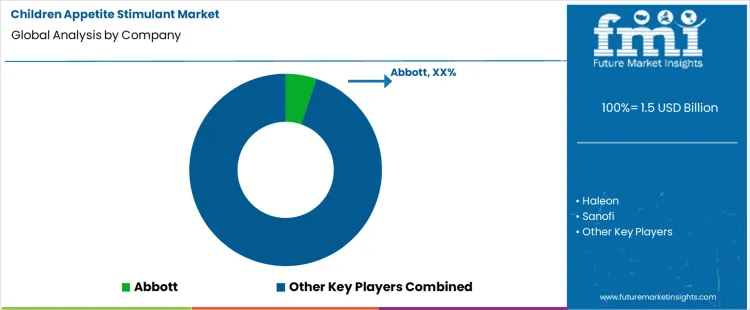
Competition in the children appetite stimulant market is driven by clinical trust, safety perception, formulation acceptability, and regulatory positioning for pediatric use. Products in this category range from prescription-based therapies to OTC nutritional and vitamin formulations designed to support appetite and weight gain in children. Companies differentiate by emphasizing gentle mechanisms of action, evidence-backed formulations, palatability, and age-appropriate dosing, while aligning closely with pediatric guidelines and parental expectations.
Abbott, Haleon, Sanofi, Pfizer, Johnson & Johnson, and Bayer compete through strong pediatric brands and broad healthcare portfolios. Abbott positions primarily through nutrition-focused products and supplements that support appetite and growth, often integrated with pediatric nutritional guidance. Haleon and Johnson & Johnson emphasize OTC formulations with established consumer trust, focusing on mild appetite support combined with vitamins or digestive health benefits. Sanofi and Pfizer leverage pharmaceutical expertise to address medically indicated appetite stimulation, highlighting clinical validation, safety monitoring, and physician-led prescribing where applicable. Bayer competes through pediatric-friendly formulations and trusted child health brands that prioritize ease of administration.
GSK, Reckitt, Perrigo, and Viatris compete through portfolio breadth, accessibility, and regional market strength. GSK and Reckitt emphasize consumer health solutions that support overall child wellness, often positioning appetite support within broader digestive or immune health categories. Perrigo and Viatris compete by offering cost-effective generic or private-label options that improve accessibility while meeting regulatory standards. Across the market, competitive advantage is shaped by safety credibility, formulation taste and ease of use, regulatory clarity, physician and caregiver trust, and the ability to position appetite stimulants as part of a holistic pediatric nutrition and growth strategy.
Key Players in Children Appetite Stimulant Market
- Abbott
- Haleon
- Sanofi
- Pfizer
- Johnson & Johnson
- Bayer
- GSK
- Reckitt
- Perrigo
- Viatris
Scope of Report
| Attributes | Description |
|---|---|
| Quantitative Unit (2026) | USD Billion |
| Formulation | Syrups, Tablets or Capsules, Drops, Other |
| Distribution Channel | Retail Pharmacies, Hospital Pharmacies, E-Commerce, Other |
| Regions Covered | Asia Pacific, Europe, North America, Latin America, Middle East & Africa |
| Countries Covered | China, Japan, South Korea, India, Australia & New Zealand, ASEAN, Rest of Asia Pacific, Germany, United Kingdom, France, Italy, Spain, Nordic, BENELUX, Rest of Europe, United States, Canada, Mexico, Brazil, Chile, Rest of Latin America, Kingdom of Saudi Arabia, Other GCC Countries, Turkey, South Africa, Other African Union, Rest of Middle East & Africa |
| Key Companies Profiled |
Abbott, Haleon, Sanofi, Pfizer, Johnson & Johnson, Bayer, GSK, Reckitt, Perrigo,Viatris |
| Additional Attributes | Dollar sales by formulation and distribution channel; regional market size and forecast analysis; growth outlook across major regions; adoption trends for pediatric appetite stimulant products; assessment of prescribing practices, caregiver preferences, and demand patterns across retail, hospital, and online pharmacy channels. |
Children Appetite Stimulant Market by Key Segments
By Formulation:
- Syrups
- Tablets or Capsules
- Drops
- Other
By Distribution Channel:
- Retail Pharmacies
- Hospital Pharmacies
- E-commerce
- Other
By Region:
- Asia Pacific
- China
- Japan
- South Korea
- India
- Australia & New Zealand
- ASEAN
- Rest of Asia Pacific
- Europe
- Germany
- United Kingdom
- France
- Italy
- Spain
- Nordic
- BENELUX
- Rest of Europe
- North America
- United States
- Canada
- Mexico
- Latin America
- Brazil
- Chile
- Rest of Latin America
- Middle East & Africa
- Kingdom of Saudi Arabia
- Other GCC Countries
- Turkey
- South Africa
- Other African Union
- Rest of Middle East & Africa
Bibliography
- World Health Organization. (2023). Guideline on the prevention and management of wasting and nutritional oedema (acute malnutrition) in infants and children. World Health Organization.
- UNICEF. (2023). Improving child nutrition: The achievable imperative for global progress. United Nations Children’s Fund.
- Abbott Laboratories. (2024). Pediatric nutrition and growth support products: Clinical nutrition portfolio overview. Abbott.
- Haleon plc. (2024). Consumer health solutions for children: Digestive health and nutritional support. Haleon.
- Sanofi. (2024). Pediatric care and therapeutic solutions for growth and nutrition support. Sanofi.
- Johnson & Johnson. (2024). Children’s health and nutrition: Consumer healthcare portfolio overview. Johnson & Johnson.
Frequently Asked Questions
How big is the children appetite stimulant market in 2026?
The global children appetite stimulant market is estimated to be valued at USD 1.5 billion in 2026.
What will be the size of children appetite stimulant market in 2036?
The market size for the children appetite stimulant market is projected to reach USD 3.0 billion by 2036.
How much will be the children appetite stimulant market growth between 2026 and 2036?
The children appetite stimulant market is expected to grow at a 7.3% CAGR between 2026 and 2036.
What are the key product types in the children appetite stimulant market?
The key product types in children appetite stimulant market are syrups, tablets or capsules, drops and other.
Which distribution channel segment to contribute significant share in the children appetite stimulant market in 2026?
In terms of distribution channel, retail pharmacies segment to command 54.0% share in the children appetite stimulant market in 2026.
Preview the report firsthand - request a free sample
Get SampleGet the brochure for pricing and purchase details.
Get PDFTable of Content
- Executive Summary
- Global Market Outlook
- Demand-side Trends
- Supply-side Trends
- Technology Roadmap Analysis
- Analysis and Recommendations
- Market Overview
- Market Coverage / Taxonomy
- Market Definition / Scope / Limitations
- Market Background
- Market Dynamics
- Drivers
- Restraints
- Opportunity
- Trends
- Scenario Forecast
- Demand in Optimistic Scenario
- Demand in Likely Scenario
- Demand in Conservative Scenario
- Opportunity Map Analysis
- Product Life Cycle Analysis
- Supply Chain Analysis
- Investment Feasibility Matrix
- Value Chain Analysis
- PESTLE and Porter’s Analysis
- Regulatory Landscape
- Regional Parent Market Outlook
- Production and Consumption Statistics
- Import and Export Statistics
- Market Dynamics
- Global Market Analysis 2021 to 2025 and Forecast, 2026 to 2036
- Historical Market Size Value (USD Million) Analysis, 2021 to 2025
- Current and Future Market Size Value (USD Million) Projections, 2026 to 2036
- Y-o-Y Growth Trend Analysis
- Absolute $ Opportunity Analysis
- Global Market Pricing Analysis 2021 to 2025 and Forecast 2026 to 2036
- Global Market Analysis 2021 to 2025 and Forecast 2026 to 2036, By Formulation
- Introduction / Key Findings
- Historical Market Size Value (USD Million) Analysis By Formulation , 2021 to 2025
- Current and Future Market Size Value (USD Million) Analysis and Forecast By Formulation , 2026 to 2036
- Syrups
- Tablets or Capsules
- Drops
- Other
- Syrups
- Y-o-Y Growth Trend Analysis By Formulation , 2021 to 2025
- Absolute $ Opportunity Analysis By Formulation , 2026 to 2036
- Global Market Analysis 2021 to 2025 and Forecast 2026 to 2036, By Distribution Channel
- Introduction / Key Findings
- Historical Market Size Value (USD Million) Analysis By Distribution Channel, 2021 to 2025
- Current and Future Market Size Value (USD Million) Analysis and Forecast By Distribution Channel, 2026 to 2036
- Retail Pharmacies
- Hospital Pharmacies
- E-commerce
- Other
- Retail Pharmacies
- Y-o-Y Growth Trend Analysis By Distribution Channel, 2021 to 2025
- Absolute $ Opportunity Analysis By Distribution Channel, 2026 to 2036
- Global Market Analysis 2021 to 2025 and Forecast 2026 to 2036, By Region
- Introduction
- Historical Market Size Value (USD Million) Analysis By Region, 2021 to 2025
- Current Market Size Value (USD Million) Analysis and Forecast By Region, 2026 to 2036
- North America
- Latin America
- Western Europe
- Eastern Europe
- East Asia
- South Asia and Pacific
- Middle East & Africa
- Market Attractiveness Analysis By Region
- North America Market Analysis 2021 to 2025 and Forecast 2026 to 2036, By Country
- Historical Market Size Value (USD Million) Trend Analysis By Market Taxonomy, 2021 to 2025
- Market Size Value (USD Million) Forecast By Market Taxonomy, 2026 to 2036
- By Country
- USA
- Canada
- Mexico
- By Formulation
- By Distribution Channel
- By Country
- Market Attractiveness Analysis
- By Country
- By Formulation
- By Distribution Channel
- Key Takeaways
- Latin America Market Analysis 2021 to 2025 and Forecast 2026 to 2036, By Country
- Historical Market Size Value (USD Million) Trend Analysis By Market Taxonomy, 2021 to 2025
- Market Size Value (USD Million) Forecast By Market Taxonomy, 2026 to 2036
- By Country
- Brazil
- Chile
- Rest of Latin America
- By Formulation
- By Distribution Channel
- By Country
- Market Attractiveness Analysis
- By Country
- By Formulation
- By Distribution Channel
- Key Takeaways
- Western Europe Market Analysis 2021 to 2025 and Forecast 2026 to 2036, By Country
- Historical Market Size Value (USD Million) Trend Analysis By Market Taxonomy, 2021 to 2025
- Market Size Value (USD Million) Forecast By Market Taxonomy, 2026 to 2036
- By Country
- Germany
- UK
- Italy
- Spain
- France
- Nordic
- BENELUX
- Rest of Western Europe
- By Formulation
- By Distribution Channel
- By Country
- Market Attractiveness Analysis
- By Country
- By Formulation
- By Distribution Channel
- Key Takeaways
- Eastern Europe Market Analysis 2021 to 2025 and Forecast 2026 to 2036, By Country
- Historical Market Size Value (USD Million) Trend Analysis By Market Taxonomy, 2021 to 2025
- Market Size Value (USD Million) Forecast By Market Taxonomy, 2026 to 2036
- By Country
- Russia
- Poland
- Hungary
- Balkan & Baltic
- Rest of Eastern Europe
- By Formulation
- By Distribution Channel
- By Country
- Market Attractiveness Analysis
- By Country
- By Formulation
- By Distribution Channel
- Key Takeaways
- East Asia Market Analysis 2021 to 2025 and Forecast 2026 to 2036, By Country
- Historical Market Size Value (USD Million) Trend Analysis By Market Taxonomy, 2021 to 2025
- Market Size Value (USD Million) Forecast By Market Taxonomy, 2026 to 2036
- By Country
- China
- Japan
- South Korea
- By Formulation
- By Distribution Channel
- By Country
- Market Attractiveness Analysis
- By Country
- By Formulation
- By Distribution Channel
- Key Takeaways
- South Asia and Pacific Market Analysis 2021 to 2025 and Forecast 2026 to 2036, By Country
- Historical Market Size Value (USD Million) Trend Analysis By Market Taxonomy, 2021 to 2025
- Market Size Value (USD Million) Forecast By Market Taxonomy, 2026 to 2036
- By Country
- India
- ASEAN
- Australia & New Zealand
- Rest of South Asia and Pacific
- By Formulation
- By Distribution Channel
- By Country
- Market Attractiveness Analysis
- By Country
- By Formulation
- By Distribution Channel
- Key Takeaways
- Middle East & Africa Market Analysis 2021 to 2025 and Forecast 2026 to 2036, By Country
- Historical Market Size Value (USD Million) Trend Analysis By Market Taxonomy, 2021 to 2025
- Market Size Value (USD Million) Forecast By Market Taxonomy, 2026 to 2036
- By Country
- Kingdom of Saudi Arabia
- Other GCC Countries
- Turkiye
- South Africa
- Other African Union
- Rest of Middle East & Africa
- By Formulation
- By Distribution Channel
- By Country
- Market Attractiveness Analysis
- By Country
- By Formulation
- By Distribution Channel
- Key Takeaways
- Key Countries Market Analysis
- USA
- Pricing Analysis
- Market Share Analysis, 2025
- By Formulation
- By Distribution Channel
- Canada
- Pricing Analysis
- Market Share Analysis, 2025
- By Formulation
- By Distribution Channel
- Mexico
- Pricing Analysis
- Market Share Analysis, 2025
- By Formulation
- By Distribution Channel
- Brazil
- Pricing Analysis
- Market Share Analysis, 2025
- By Formulation
- By Distribution Channel
- Chile
- Pricing Analysis
- Market Share Analysis, 2025
- By Formulation
- By Distribution Channel
- Germany
- Pricing Analysis
- Market Share Analysis, 2025
- By Formulation
- By Distribution Channel
- UK
- Pricing Analysis
- Market Share Analysis, 2025
- By Formulation
- By Distribution Channel
- Italy
- Pricing Analysis
- Market Share Analysis, 2025
- By Formulation
- By Distribution Channel
- Spain
- Pricing Analysis
- Market Share Analysis, 2025
- By Formulation
- By Distribution Channel
- France
- Pricing Analysis
- Market Share Analysis, 2025
- By Formulation
- By Distribution Channel
- India
- Pricing Analysis
- Market Share Analysis, 2025
- By Formulation
- By Distribution Channel
- ASEAN
- Pricing Analysis
- Market Share Analysis, 2025
- By Formulation
- By Distribution Channel
- Australia & New Zealand
- Pricing Analysis
- Market Share Analysis, 2025
- By Formulation
- By Distribution Channel
- China
- Pricing Analysis
- Market Share Analysis, 2025
- By Formulation
- By Distribution Channel
- Japan
- Pricing Analysis
- Market Share Analysis, 2025
- By Formulation
- By Distribution Channel
- South Korea
- Pricing Analysis
- Market Share Analysis, 2025
- By Formulation
- By Distribution Channel
- Russia
- Pricing Analysis
- Market Share Analysis, 2025
- By Formulation
- By Distribution Channel
- Poland
- Pricing Analysis
- Market Share Analysis, 2025
- By Formulation
- By Distribution Channel
- Hungary
- Pricing Analysis
- Market Share Analysis, 2025
- By Formulation
- By Distribution Channel
- Kingdom of Saudi Arabia
- Pricing Analysis
- Market Share Analysis, 2025
- By Formulation
- By Distribution Channel
- Turkiye
- Pricing Analysis
- Market Share Analysis, 2025
- By Formulation
- By Distribution Channel
- South Africa
- Pricing Analysis
- Market Share Analysis, 2025
- By Formulation
- By Distribution Channel
- USA
- Market Structure Analysis
- Competition Dashboard
- Competition Benchmarking
- Market Share Analysis of Top Players
- By Regional
- By Formulation
- By Distribution Channel
- Competition Analysis
- Competition Deep Dive
- Abbott
- Overview
- Product Portfolio
- Profitability by Market Segments (Product/Age /Sales Channel/Region)
- Sales Footprint
- Strategy Overview
- Marketing Strategy
- Product Strategy
- Channel Strategy
- Haleon
- Sanofi
- Pfizer
- Johnson & Johnson
- Bayer
- GSK
- Reckitt
- Perrigo
- Viatris
- Abbott
- Competition Deep Dive
- Assumptions & Acronyms Used
- Research Methodology


