

- Market Size (2026)
- USD 1.8 Bn
- Forecast (2036)
- USD 5.3 Bn
- CAGR (2026 to 2036)
- 11.5%
How big is the Cholangiosarcoma Market in 2026?
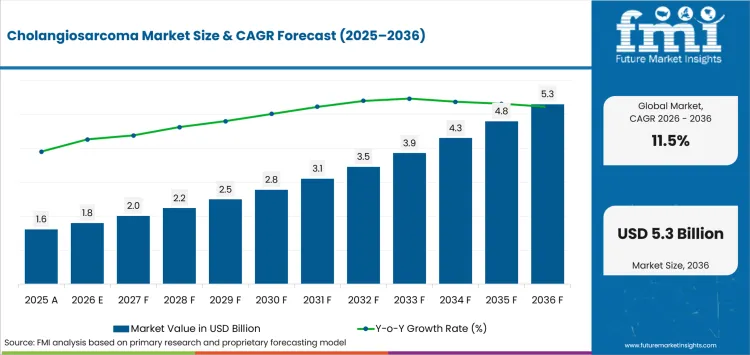
USD 1.8 billion in 2026 and USD 5.3 billion by 2036 at an 11.5% CAGR.
Sales in the cholangiosarcoma market are projected to increase at 11.5% CAGR through 2036 and rise from USD 1.8 billion to USD 5.3 billion. The USD 3.48 billion increase reflects greater use of biliary tract therapies and hospital-administered regimens across specialist oncology pathways.
Treatment planning begins with tumor location because anatomy determines resectability and specialist referral across the biliary tract. National Cancer Institute guidance updated in March 2025 assigns approximately 50% of cases to the perihilar region and 40% to the distal region. The remaining 10% are intrahepatic tumors that require location-specific staging and coordinated molecular diagnostics during treatment selection.
Key Takeaways of Cholangiosarcoma Market
- Commercial demand rises as oncology centers connect disease staging with molecular testing and treatment access across complex bile duct cancer pathways.
- Targeted therapy is projected to represent 39.0% by treatment type in 2026 due to biomarker-linked treatment selection.
- Advanced cholangiosarcoma is estimated to account for 43.0% of application demand in 2026 as unresectable disease requires continued systemic care.
- Hospitals are forecast to capture 42.0% of end user demand in 2026 owing to integrated diagnostics and multidisciplinary treatment services.
- Rare actionable alterations and continuing evidence requirements can delay reimbursement despite regulatory approval establishing a defined clinical route.
- Incyte Corporation, Servier Pharmaceuticals LLC, Taiho Pharmaceutical Co., Ltd., AstraZeneca PLC, Merck & Co., Inc., F. Hoffmann-La Roche Ltd., Jazz Pharmaceuticals plc and Partner Therapeutics, Inc. hold significant positions.
Analyst Perspective
"Cholangiosarcoma competition depends on how reliably a specialist center converts a small tissue sample into an authorized treatment decision. Therapy companies gain an advantage through clear biomarker requirements, workable laboratory routes and reimbursement evidence that supports treatment as clinical condition narrows the available sequence."
- Anurag Sharma, Principal Consultant, Future Market Insights
How is the Cholangiosarcoma Market segmented?
The cholangiosarcoma industry is segmented by treatment type, application, end user, distribution channel, drug class and region.
The cholangiosarcoma market is segmented by treatment type, application, end user, distribution channel, drug class and region. Treatment type covers targeted therapy, chemotherapy, immunotherapy and surgical treatment, while application includes advanced, metastatic, early-stage and recurrent disease. End users include hospitals, cancer centers, specialty clinics and academic institutes, while distribution channels cover hospital, retail, specialty and online pharmacies. Drug classes include targeted therapies, cytotoxic chemotherapy, immune checkpoint inhibitors and anti-angiogenic agents across the assessed treatment routes.
Why does Targeted Therapy lead demand within the treatment type category?
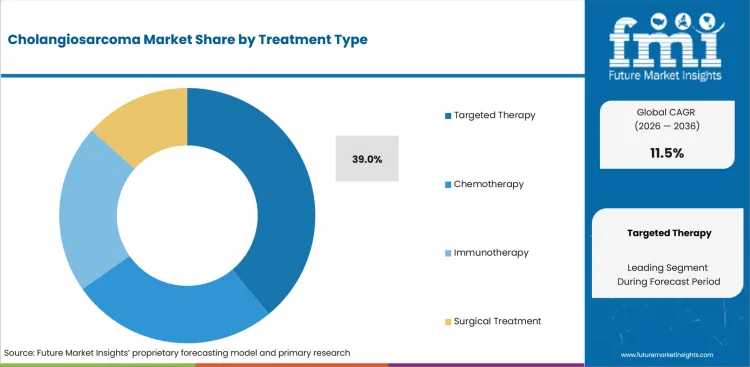
Targeted therapy connects FGFR2, IDH1, HER2 or NRG1 results with medicines selected for a defined patient group. Tissue quality and companion diagnostics determine whether specialists can confirm eligibility as disease progression narrows later options.
- Targeted therapy is set to lead the treatment type category with 39.0% share in 2026 due to biomarker-defined pathways that concentrate treatment spending within eligible patient groups.
- A further testing-dependent route entered specialist care in November 2024 as the FDA approved zanidatamab for previously treated advanced HER2-positive biliary tract cancer. The decision raised the commercial value of laboratories returning validated results during second-line treatment selection.
Why does Advanced Cholangiosarcoma lead the application category?
Advanced cholangiosarcoma concentrates treatment demand because complete resection is unavailable for many locally extensive tumors. Accurate staging and tissue diagnostics guide systemic therapy through prolonged specialist care and regular multidisciplinary review across hospital oncology pathways.
- By application, advanced cholangiosarcoma is estimated to hold 43.0% in 2026 owing to continued systemic treatment across unresectable disease and extended specialist follow-up.
- Surgical limits sustain systemic treatment relevance because the National Cancer Institute reports that most bile duct tumors cannot be removed completely. Metastatic and recurrent disease therefore sustain later treatment lines, although prior exposure and declining performance status narrow available sequencing choices.
Why do Hospitals lead the end user category?
Hospitals combine pathology review with infusion services and hepatobiliary surgery inside coordinated oncology programs managing complex advanced disease nationwide. Multidisciplinary teams use oncology molecular testing to connect confirmed alterations with authorization and supervised administration.
- The end user category is forecast to be led by hospitals at 42.0% share in 2026 due to integrated diagnostics and supervised systemic treatment.
- Cancer centers provide similar specialist depth through focused oncology services and dedicated testing programs for complex cases. Community clinics depend on referral networks and external laboratories, which can extend the interval between biopsy review and treatment authorization.
Why do Hospital Pharmacies lead the distribution channel category?
Hospital pharmacies coordinate chemotherapy preparation with specialist oral medicines across inpatient and outpatient oncology services. Institutional formularies align treatment authorization with dose monitoring and supportive care throughout multi-drug combination regimens across hospital-led treatment pathways.
- In 2026, hospital pharmacies are expected to lead the distribution channel category with 44.0% share because regimen preparation and specialist authorization remain institutionally managed.
- Specialty pharmacies support oral targeted products through refill coordination and patient assistance across extended treatment courses. Hospital teams retain initiation and laboratory monitoring for checkpoint inhibitor access that requires dose management throughout scheduled oncology visits for complex regimens.
What are the drivers, restraints and opportunities in the Cholangiosarcoma Market?
Biomarker-linked approvals strengthen treatment selection while rare eligible populations and evidence duties restrict consistent access across national care systems.
- Driver: Approved biomarker-linked treatments make molecular testing a required step within several advanced disease pathways.
- Restraint: Small mutation-defined populations limit comparative evidence and complicate reimbursement decisions across national oncology systems.
- Opportunity: Earlier profiling and well-designed combination trials can improve treatment sequencing across specialist centers with validated testing capacity.
Treatment selection increasingly depends on diagnostic routes that connect tumor biology with an authorized medicine. Servier listed an active first-line study of ivosidenib with durvalumab and chemotherapy for IDH1-mutated disease during 2026. The program tests whether IDH1 selection can enter personalized medicine planning without weakening evidence expectations for established regimens.
Small mutation-defined cohorts make direct comparative trials difficult across rare treatment pathways and national reimbursement systems. The FDA accelerated approval register requires a randomized confirmatory study for zanidatamab by September 2029. Payers therefore assess current access alongside unresolved comparative evidence that can affect coverage timing and eligible treatment lines.
Earlier profiling during initial specialist assessment can reduce missed eligibility across several actionable alterations and treatment lines. The FDA authorized the PATHWAY HER2 assay for biliary tract cancer eligibility in November 2024. A standardized IHC route supports next-generation cancer diagnostics and confirms eligibility during second-line treatment decisions.
Which country CAGRs are profiled in the Cholangiosarcoma Market?
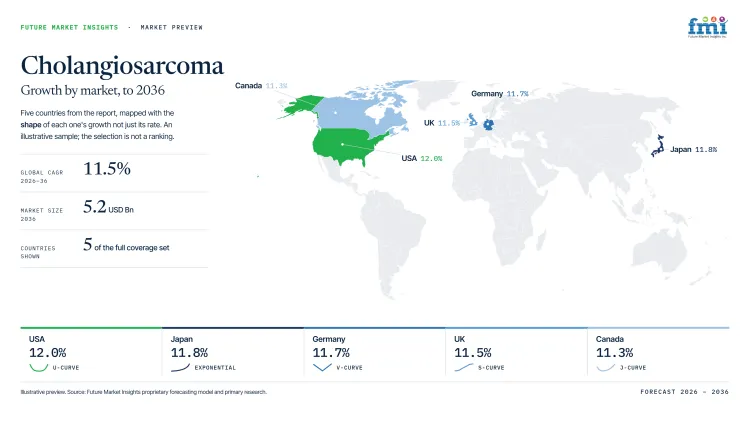
| Country | CAGR |
|---|---|
| USA | 12.0% |
| Japan | 11.8% |
| Germany | 11.7% |
| UK | 11.5% |
| Canada | 11.3% |
How do country-level CAGRs compare in the Cholangiosarcoma Market?
The CAGRs span 0.7 percentage point from 12.0% in the USA to 11.3% in Canada. Forecast pace reflects differences in testing access and reimbursement implementation rather than current treatment volume or national market size.
- The USA exceeds Japan by 0.2 percentage point as broader testing access supports more differentiated treatment pathways across specialist centers.
- Japan and Germany are separated by 0.1 percentage point despite different medicine review and referral systems.
- Germany exceeds the UK by 0.2 percentage point as national benefit assessment places greater emphasis on comparative evidence.
- The UK matches the global 11.5% CAGR through nationally defined treatment routes and coordinated reimbursement guidance.
- Canada remains 0.2 percentage point below the UK as provincial funding decisions shape implementation across public drug plans.
Comparable CAGRs can produce different entry conditions across national regulatory systems and specialist oncology networks. The full report covers North America, Latin America, Europe, East Asia, South Asia and Pacific, and Middle East and Africa.
Country-wise Analysis
- United States oncology networks combine broad molecular testing with hepatobiliary specialists and hospital pharmacies that coordinate biopsy review and supervised administration across regional cancer centers serving complex advanced cases and community referral routes. Cholangiosarcoma treatment sales in the USA are forecast to expand at 12.0% CAGR by 2036, supported by established referral capacity and several regulator-defined treatment routes using hospital purchasing and specialty pharmacy support. The FDA approved pembrolizumab with gemcitabine and cisplatin in October 2023 for unresectable or metastatic biliary tract cancer, although payer authorization and testing requirements can delay treatment beyond major specialist centers and increase travel for patients outside metropolitan networks.
- Japan combines metropolitan cancer centers with national medicine review routes and hospital laboratories that coordinate mutation testing across specialist biliary tract services serving regional referral hospitals and geographically concentrated patients nationally. In June 2025 the health ministry estimated no more than 1,220 patients had IDH1-mutated unresectable biliary tract cancer through these concentrated referral pathways and hospital purchasing systems. Japan's cholangiosarcoma outlook is anticipated to advance at 11.8% CAGR over the assessment period, reinforced by centralized review and hospital purchasing that connect molecular findings with specialist treatment decisions despite local dossier requirements and limited testing capacity outside major cities.
- Germany combines university oncology centers with regional molecular laboratories and formal benefit assessment following European authorization for newly approved cancer medicines entering specialist reimbursement pathways and statutory insurance negotiations. Germany is estimated to post 11.7% CAGR over the forecast period, shaped by specialist treatment capacity and structured national review across federal hospital networks serving small mutation-defined groups and outpatient treatment planning. The G-BA opened its zanidatamab benefit assessment in May 2026 for previously treated HER2-positive biliary carcinoma, although comparative evidence requirements and negotiated reimbursement can narrow access across eligible populations and delay uptake beyond major university centers for geographically dispersed patients.
- United Kingdom hepatobiliary services connect molecular testing with nationally defined NHS treatment routes and regional referral networks that direct eligible patients toward major cancer centers and commissioned genomic laboratories within national commissioning arrangements. Adoption of cholangiosarcoma treatment in the United Kingdom is estimated to expand at 11.5% CAGR through 2036, supported by centralized guidance that reduces uncertainty for specialist prescribers and hospital pharmacy teams. NICE recommended zanidatamab in May 2026 for HER2-positive advanced biliary tract cancer following systemic treatment, although testing capacity and referral timing can delay access outside large oncology centers and require patients to travel for specialist review.
- Canada combines national health technology assessment with provincial drug plans and regional laboratories that implement oncology reimbursement across separate public systems with different funding timelines and service distances under regionally managed cancer programs nationwide. The Canada cholangiosarcoma sector is projected to record 11.3% CAGR during the assessment period, influenced by defined assessment criteria and specialist testing across provincial oncology networks serving urban and remote populations. Canada's Drug Agency posted its final pemigatinib recommendation in May 2025 with clinical conditions, although provincial funding decisions and uneven laboratory access can delay consistent availability and extend referral routes beyond major cancer centers.
Who are the notable companies in the Cholangiosarcoma Market?
Incyte Corporation, Servier Pharmaceuticals LLC, Taiho Pharmaceutical Co., Ltd., AstraZeneca PLC, Merck & Co., Inc., F. Hoffmann-La Roche Ltd., Jazz Pharmaceuticals plc and Partner Therapeutics, Inc. serve this market.
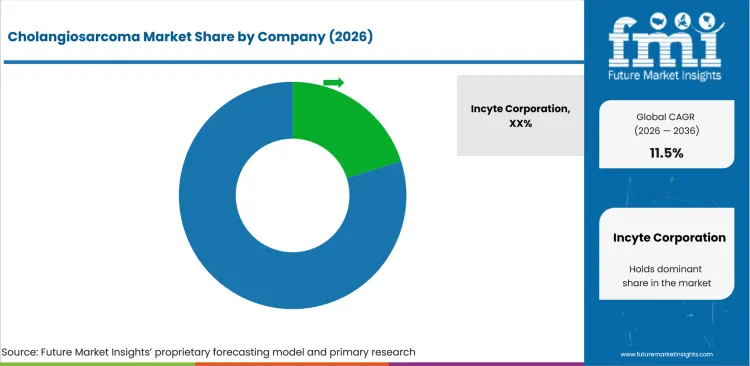
Competition is divided between biomarker-selected second-line therapies and checkpoint combinations used in first-line advanced disease. Entry requires an exact indication with reliable testing access and reimbursement support through specialist oncology systems. Broad oncology scale alone does not establish a defensible cholangiocarcinoma therapeutics position within this narrow treatment field.
- Incyte Corporation, Servier Pharmaceuticals LLC, Taiho Pharmaceutical Co., Ltd., Jazz Pharmaceuticals plc and Partner Therapeutics, Inc. hold direct biomarker-linked treatment positions.
- AstraZeneca PLC and Merck & Co., Inc. support first-line systemic treatment through approved checkpoint combinations for advanced biliary tract cancer.
- F. Hoffmann-La Roche Ltd. supports biomarker selection through an FDA-authorized HER2 assay used in biliary tract cancer. The diagnostic route connects validated pathology criteria with access to cancer biological therapies for eligible patients.
Competitive Benchmarking: Cholangiosarcoma Market
| Company | Exact-Market Commercial Status | Biomarker Selection | Systemic Combination Position | Geographic Reach |
|---|---|---|---|---|
| Incyte Corporation | High | High | Low | Multi-region |
| Servier Pharmaceuticals LLC | High | High | Medium | United States and Europe |
| Taiho Pharmaceutical Co., Ltd. | High | High | Low | Multi-region |
| AstraZeneca PLC | High | Low | High | Global |
| Merck & Co., Inc. | High | Low | High | Global |
| F. Hoffmann-La Roche Ltd. | Medium | High | Low | Multi-region |
| Jazz Pharmaceuticals plc | High | High | Low | Multi-region |
| Partner Therapeutics, Inc. | Medium | High | Low | United States |
Key Developments in the Cholangiosarcoma Market
- In July 2025, Jazz Pharmaceuticals received European Commission conditional marketing authorization for Ziihera in previously treated HER2-positive advanced biliary tract cancer. The decision extended a testing-dependent treatment route across European specialist centers and linked commercial access to continued confirmatory evidence.
- In April 2026, Compass Therapeutics reported Phase 2/3 results for tovecimig with paclitaxel in second-line biliary tract cancer. The company reported median progression-free survival of 4.7 months versus 2.6 months and planned discussions supporting a biologics application.
- In July 2026, Molecular Partners reported nine active recruiting sites for its Phase 2 TACTIC study of MP0317 with first-line chemoimmunotherapy. The program adds tumor-localized immune activation to an established regimen without treating early clinical activity as commercial adoption.
Key Players in the Cholangiosarcoma Market
Biomarker-Linked Therapy Companies
- Incyte Corporation
- Servier Pharmaceuticals LLC
- Taiho Pharmaceutical Co., Ltd.
First-Line Immunotherapy Companies
- AstraZeneca PLC
- Merck & Co., Inc.
Diagnostic and Biomarker-Selected Therapy Companies
- F. Hoffmann-La Roche Ltd.
- Jazz Pharmaceuticals plc
- Partner Therapeutics, Inc.
Cholangiosarcoma Market - Report Scope
| Coverage field | Report scope |
|---|---|
| Market breakdown | By treatment type, application, end user, distribution channel, drug class and region. |
| Quantitative Units | Revenue in USD billion and CAGR in %. |
| Market Definition | Commercially supplied therapies and care pathways for cholangiosarcoma across defined treatment, application, end user, distribution and drug class categories. |
| Regions Covered | North America, Latin America, Europe, East Asia, South Asia and Pacific, and Middle East and Africa. |
| Countries Covered | USA, Japan, Germany, UK, Canada, and 20+ countries included in the full report. |
| Key Companies Profiled | Incyte Corporation, Servier Pharmaceuticals LLC, Taiho Pharmaceutical Co., Ltd., AstraZeneca PLC, Merck & Co., Inc., F. Hoffmann-La Roche Ltd., Jazz Pharmaceuticals plc and Partner Therapeutics, Inc. |
| Forecast Period | 2026 to 2036. |
| Approach | Primary and secondary research with market triangulation. |
Cholangiosarcoma Market - Research Methodology
| Method | Approach |
|---|---|
| Primary Research | FMI analysts gathered input from manufacturers, service providers, technology developers, distributors, end users, procurement teams, and subject-matter experts. Interviews examined purchasing decisions, product or service evaluation, adoption barriers, approval requirements, pricing considerations, and expectations for technical or commercial support. Respondents were also asked what evidence is required before a trial, pilot, or initial order develops into regular purchasing. |
| Desk Research | Desk research covered government statistics, regulatory publications, trade data, industry associations, technical literature, standards, company filings, product information, and official corporate announcements. Sources were reviewed for relevance, publication date, geographic coverage, and consistency with the defined market scope. Claims relating to performance, applications, approvals, capacity, investment, and commercial activity were retained only when supported by credible public evidence. |
| Market Sizing and Forecasting | The market model combined the baseline value with historical performance, segment structure, pricing and volume indicators, adoption levels, company participation, and country-level demand conditions. Forecast assumptions considered economic activity, investment trends, regulatory developments, technology adoption, purchasing cycles, supply availability, and barriers to wider market use. Segment and regional estimates were reconciled before the final market total was calculated. |
| Data Validation | Estimates were checked against multiple independent indicators, including public data, company activity, trade patterns, industry developments, and findings from primary interviews. Validation also tested whether products, services, applications, and company revenues fell within the defined market boundaries. Adjacent categories, unsupported claims, overlapping revenues, and activities without direct market relevance were excluded to reduce double counting and maintain consistency across segments and countries. |
Cholangiosarcoma Market by Segments
Cholangiosarcoma Market segmented by Treatment Type:
- Targeted Therapy
- FGFR Inhibitors
- IDH1 Inhibitors
- Chemotherapy
- Gemcitabine-Based Chemotherapy
- Cisplatin-Based Chemotherapy
- Immunotherapy
- PD-1 Inhibitors
- PD-L1 Inhibitors
- Surgical Treatment
- Tumor Resection
- Liver Transplantation
Cholangiosarcoma Market segmented by Application:
- Advanced Cholangiosarcoma
- Locally Advanced Disease
- Unresectable Disease
- Metastatic Cholangiosarcoma
- Liver Metastases
- Distant Metastases
- Early-Stage Cholangiosarcoma
- Resectable Tumors
- Postoperative Management
- Recurrent Cholangiosarcoma
- Local Recurrence
- Systemic Recurrence
Cholangiosarcoma Market segmented by End User:
- Hospitals
- Tertiary Care Hospitals
- Cancer Specialty Hospitals
- Cancer Centers
- Comprehensive Cancer Centers
- Ambulatory Cancer Centers
- Specialty Clinics
- Oncology Clinics
- Gastroenterology Clinics
- Academic & Research Institutes
- University Hospitals
- Cancer Research Institutes
Cholangiosarcoma Market segmented by Distribution Channel:
- Hospital Pharmacies
- Inpatient Pharmacies
- Outpatient Hospital Pharmacies
- Retail Pharmacies
- Chain Pharmacies
- Independent Pharmacies
- Specialty Pharmacies
- Oncology Specialty Pharmacies
- Biologic Therapy Pharmacies
- Online Pharmacies
- E-Pharmacy Platforms
- Home Delivery Services
Cholangiosarcoma Market segmented by Drug Class:
- Targeted Therapies
- FGFR Inhibitors
- IDH1 Inhibitors
- Cytotoxic Chemotherapy
- Antimetabolites
- Platinum-Based Agents
- Immune Checkpoint Inhibitors
- PD-1 Inhibitors
- PD-L1 Inhibitors
- Anti-Angiogenic Agents
- VEGF Inhibitors
- Multikinase Inhibitors
Cholangiosarcoma Market by Region:
- North America
- United States
- Canada
- Mexico
- Latin America
- Brazil
- Chile
- Rest of Latin America
- Western Europe
- Germany
- United Kingdom
- Italy
- Spain
- France
- Nordics
- Benelux
- Rest of Western Europe
- Eastern Europe
- Russia
- Poland
- Hungary
- Balkan and Baltic States
- Rest of Eastern Europe
- East Asia
- China
- Japan
- South Korea
- South Asia and Pacific
- India
- ASEAN
- Australia and New Zealand
- Rest of South Asia and Pacific
- Middle East and Africa
- Kingdom of Saudi Arabia
- Other GCC Countries
- Türkiye
- South Africa
- Other African Union Countries
- Rest of Middle East and Africa
Research Sources and Bibliography
- PDQ Adult Treatment Editorial Board. (2025, March 28). Bile Duct Cancer (Cholangiocarcinoma) Treatment (PDQ®)-Health Professional Version.
- USA Food and Drug Administration. (2024, November 20). Premarket Approval (PMA).
- USA Food and Drug Administration. (2026). Ongoing | Cancer Accelerated Approvals.
- Servier. (2026). Ivosidenib Plus Durvalumab and Gemcitabine/Cisplatin as First-Line Therapy in Participants With Locally Advanced or Metastatic Cholangiocarcinoma With an IDH1 Mutation.
- USA Food and Drug Administration. (2024, November 20). FDA Grants Accelerated Approval to Zanidatamab-hrii for Previously Treated Unresectable or Metastatic HER2-positive Biliary Tract Cancer.
- Ministry of Health, Labour and Welfare. (2025, June 6).
- Gemeinsamer Bundesausschuss. (2026, May 15). Nutzenbewertungsverfahren zum Wirkstoff Zanidatamab (Biliäres Karzinom, HER2+ (IHC3+), vorbehandelt).
- National Institute for Health and Care Excellence. (2026, May 7). Zanidatamab for Treating HER2-positive Advanced Biliary Tract Cancer After 1 or More Lines of Systemic Treatment.
- Canada’s Drug Agency. (2025, May 22). Pemigatinib.
- USA Food and Drug Administration. (2022). Oncology Regulatory Review.
- USA Food and Drug Administration. (2023, October 31). FDA Approves Pembrolizumab with Chemotherapy for Biliary Tract Cancer.
- Partner Therapeutics. (2026, May 11). Partner Therapeutics Announces FDA Approval of BIZENGRI® (Zenocutuzumab-zbco) for NRG1 Fusion-Positive Cholangiocarcinoma Following Receipt of FDA Commissioner’s National Priority Voucher.
- Jazz Pharmaceuticals plc. (2025, July 1). Jazz Pharmaceuticals Receives European Commission Marketing Authorization for Ziihera® (Zanidatamab) for the Treatment of Advanced HER2-Positive Biliary Tract Cancer.
- Compass Therapeutics, Inc. (2026, April 27). Tovecimig Demonstrates Statistically Significant Benefit in COMPANION-002 Randomized Phase 2/3 Study in Patients with Biliary Tract Cancer.
- Molecular Partners AG. (2026, July 16). Molecular Partners Announces Clinical Progress in Phase 2 TACTIC Combination Trial of MP0317 for Patients with Cholangiocarcinoma.
- USA Food and Drug Administration. (2025, June 11). Premarket Approval (PMA).
- Incyte. (2026, April 28). Incyte Reports First Quarter 2026 Financial Results and Provides Business Updates.
- European Medicines Agency. (2026, February 25). Tibsovo.
- Taiho Pharmaceutical Co., Ltd. (2023, August 30). Taiho Pharmaceutical Announces the Launch of FGFR Inhibitor LYTGOBI® Tablets 4mg in Japan.
This Report Answers
- How large is the Cholangiosarcoma Market in 2026 and 2036?
- What CAGR is projected for the Cholangiosarcoma Market through 2036?
- Why does targeted therapy hold the largest treatment type share in 2026?
- Why does advanced cholangiosarcoma concentrate application demand?
- Why do hospitals and hospital pharmacies hold the largest channel shares?
- How do growth rates differ across the five profiled countries?
- Which companies hold direct treatment or diagnostic positions?
- Which evidence and access constraints restrict biomarker-linked treatment adoption?
Frequently Asked Questions
How big is the Cholangiosarcoma Market in 2026?
The Cholangiosarcoma Market is valued at USD 1.8 billion in 2026 and is projected to reach USD 5.3 billion by 2036. Growth is driven by increasing adoption of biomarker-based therapies and expanding access to specialized oncology care.
What is the CAGR of the Cholangiosarcoma Market from 2026 to 2036?
The Cholangiosarcoma Market is expected to grow at a CAGR of 11.5% between 2026 and 2036. Greater use of molecular testing and targeted treatment approaches is supporting market expansion despite the disease's relatively small patient population.
Which application accounts for 43.0% of the Cholangiosarcoma Market in 2026?
The advanced cholangiosarcoma segment is expected to hold 43.0% of the market in 2026. High demand for systemic therapies and biomarker-guided treatments continues to drive growth in this application area.
Which distribution channel accounts for 44.0% of the Cholangiosarcoma Market in 2026?
The hospital pharmacy segment is expected to capture 44.0% of the market in 2026. Its dominance is supported by the growing use of specialized oncology drugs that require coordinated dispensing, monitoring, and patient management.
Which companies are active in the Cholangiosarcoma Market?
Some companies hold direct treatment or diagnostic positions across specialist pathways in the Cholangiosarcoma Market. Incyte, Servier, Taiho, AstraZeneca, Merck, Roche, Jazz Pharmaceuticals and Partner Therapeutics cover biomarker-linked or checkpoint routes requiring exact-market evidence and specialist access across major countries.
Preview the report firsthand - request a free sample
Get SampleGet the brochure for pricing and purchase details.
Get PDFTable of Content
- Key Takeaways
- Market Size and CAGR
- Top Growth Driver
- Fastest Growing Segment
- Leading Region
- Key Companies
- Emerging Opportunities
- Executive Summary
- Global Market Outlook
- Demand-side Trends
- Supply-side Trends
- Technology Roadmap Analysis
- Analysis and Recommendations
- Analyst Perspective (What is happening? Why now? What should investors know?)
- Key Questions Answered
- How large is the market?
- What is the CAGR?
- What are key trends?
- Which region dominates?
- Who are the leaders?
- Market Overview
- Market Coverage / Taxonomy
- Market Definition / Scope / Limitations
- Research Methodology
- Chapter Orientation
- Analytical Lens and Working Hypotheses
- Market Structure, Signals, and Trend Drivers
- Benchmarking and Cross-market Comparability
- Market Sizing, Forecasting, and Opportunity Mapping
- Research Design and Evidence Framework
- Desk Research Programme (Secondary Evidence)
- Expert Input and Fieldwork (Primary Evidence)
- Tooling, Models, and Reference Databases
- Data Engineering and Model Build
- Quality Assurance and Audit Trail
- Market Background
- Market Dynamics (Drivers, Restraints, Opportunity, Trends)
- Scenario Forecast (Optimistic, Likely, Conservative)
- Impact Analysis
- AI Impact
- Sustainability Impact
- Regulatory Impact
- Technology Impact
- Consumer / Buyer Analysis
- Purchase Drivers
- Adoption Barriers
- Buyer Journey
- Opportunity Map Analysis
- Product Life Cycle Analysis
- Supply Chain Analysis
- Investment Feasibility Matrix
- Value Chain Analysis
- PESTLE and Porter's Analysis
- Regulatory Landscape
- Regional Parent Market Outlook
- Production and Consumption Statistics
- Import and Export Statistics
- Global Market Analysis and Forecast, 2021 to 2036
- Historical Market Size Value (USD Billion) Analysis, 2021 to 2025
- Current and Future Market Size Value (USD Billion) Projections, 2026 to 2036
- Y-o-Y Growth Trend Analysis
- Absolute $ Opportunity Analysis
- Global Market Pricing Analysis, 2021 to 2036
- Global Market Analysis and Forecast, By Treatment Type, 2021 to 2036
- Introduction / Key Findings
- Historical Market Size Value (USD Billion) Analysis By Treatment Type, 2021 to 2025
- Current and Future Market Size Value (USD Billion) Analysis and Forecast By Treatment Type, 2026 to 2036
- Targeted Therapy
- FGFR Inhibitors
- IDH1 Inhibitors
- Chemotherapy
- Gemcitabine-Based Chemotherapy
- Cisplatin-Based Chemotherapy
- Immunotherapy
- PD-1 Inhibitors
- PD-L1 Inhibitors
- Surgical Treatment
- Tumor Resection
- Liver Transplantation
- Targeted Therapy
- Y-o-Y Growth Trend Analysis By Treatment Type, 2021 to 2025
- Absolute $ Opportunity Analysis By Treatment Type, 2026 to 2036
- Global Market Analysis and Forecast, By Application, 2021 to 2036
- Introduction / Key Findings
- Historical Market Size Value (USD Billion) Analysis By Application, 2021 to 2025
- Current and Future Market Size Value (USD Billion) Analysis and Forecast By Application, 2026 to 2036
- Advanced Cholangiosarcoma
- Locally Advanced Disease
- Unresectable Disease
- Metastatic Cholangiosarcoma
- Liver Metastases
- Distant Metastases
- Early-Stage Cholangiosarcoma
- Resectable Tumors
- Postoperative Management
- Recurrent Cholangiosarcoma
- Local Recurrence
- Systemic Recurrence
- Advanced Cholangiosarcoma
- Y-o-Y Growth Trend Analysis By Application, 2021 to 2025
- Absolute $ Opportunity Analysis By Application, 2026 to 2036
- Global Market Analysis and Forecast, By End User, 2021 to 2036
- Introduction / Key Findings
- Historical Market Size Value (USD Billion) Analysis By End User, 2021 to 2025
- Current and Future Market Size Value (USD Billion) Analysis and Forecast By End User, 2026 to 2036
- Hospitals
- Tertiary Care Hospitals
- Cancer Specialty Hospitals
- Cancer Centers
- Comprehensive Cancer Centers
- Ambulatory Cancer Centers
- Specialty Clinics
- Oncology Clinics
- Gastroenterology Clinics
- Academic & Research Institutes
- University Hospitals
- Cancer Research Institutes
- Hospitals
- Y-o-Y Growth Trend Analysis By End User, 2021 to 2025
- Absolute $ Opportunity Analysis By End User, 2026 to 2036
- Global Market Analysis and Forecast, By Distribution Channel, 2021 to 2036
- Introduction / Key Findings
- Historical Market Size Value (USD Billion) Analysis By Distribution Channel, 2021 to 2025
- Current and Future Market Size Value (USD Billion) Analysis and Forecast By Distribution Channel, 2026 to 2036
- Hospital Pharmacies
- Inpatient Pharmacies
- Outpatient Hospital Pharmacies
- Retail Pharmacies
- Chain Pharmacies
- Independent Pharmacies
- Specialty Pharmacies
- Oncology Specialty Pharmacies
- Biologic Therapy Pharmacies
- Online Pharmacies
- E-Pharmacy Platforms
- Home Delivery Services
- Hospital Pharmacies
- Y-o-Y Growth Trend Analysis By Distribution Channel, 2021 to 2025
- Absolute $ Opportunity Analysis By Distribution Channel, 2026 to 2036
- Global Market Analysis and Forecast, By Drug Class, 2021 to 2036
- Introduction / Key Findings
- Historical Market Size Value (USD Billion) Analysis By Drug Class, 2021 to 2025
- Current and Future Market Size Value (USD Billion) Analysis and Forecast By Drug Class, 2026 to 2036
- Targeted Therapies
- FGFR Inhibitors
- IDH1 Inhibitors
- Cytotoxic Chemotherapy
- Antimetabolites
- Platinum-Based Agents
- Immune Checkpoint Inhibitors
- PD-1 Inhibitors
- PD-L1 Inhibitors
- Anti-Angiogenic Agents
- VEGF Inhibitors
- Multikinase Inhibitors
- Targeted Therapies
- Y-o-Y Growth Trend Analysis By Drug Class, 2021 to 2025
- Absolute $ Opportunity Analysis By Drug Class, 2026 to 2036
- Global Market Analysis and Forecast, By Region, 2021 to 2036
- Introduction
- Historical Market Size Value (USD Billion) Analysis By Region, 2021 to 2025
- Current Market Size Value (USD Billion) Analysis and Forecast By Region, 2026 to 2036
- North America
- Latin America
- Western Europe
- Eastern Europe
- East Asia
- South Asia and Pacific
- Middle East & Africa
- Market Attractiveness Analysis By Region
- North America Market Analysis and Forecast, By Country, 2021 to 2036
- Historical Market Size Value (USD Billion) Trend Analysis By Market Taxonomy, 2021 to 2025
- Market Size Value (USD Billion) Forecast By Market Taxonomy, 2026 to 2036
- By Country
- USA
- Canada
- By Treatment Type
- By Application
- By End User
- By Distribution Channel
- By Drug Class
- By Country
- Market Attractiveness Analysis
- By Country
- By Treatment Type
- By Application
- By End User
- By Distribution Channel
- By Drug Class
- Key Takeaways
- Latin America Market Analysis and Forecast, By Country
- Historical Market Size Value (USD Billion) Trend Analysis By Market Taxonomy, 2021 to 2025
- Market Size Value (USD Billion) Forecast By Market Taxonomy, 2026 to 2036
- By Country
- Brazil
- Mexico
- Chile
- Rest of Latin America
- By Treatment Type
- By Application
- By End User
- By Distribution Channel
- By Drug Class
- By Country
- Market Attractiveness Analysis
- By Country
- By Treatment Type
- By Application
- By End User
- By Distribution Channel
- By Drug Class
- Key Takeaways
- Western Europe Market Analysis and Forecast, By Country
- Historical Market Size Value (USD Billion) Trend Analysis By Market Taxonomy, 2021 to 2025
- Market Size Value (USD Billion) Forecast By Market Taxonomy, 2026 to 2036
- By Country
- Germany
- UK
- Italy
- Spain
- France
- Nordic
- BENELUX
- Rest of Western Europe
- By Treatment Type
- By Application
- By End User
- By Distribution Channel
- By Drug Class
- By Country
- Market Attractiveness Analysis
- By Country
- By Treatment Type
- By Application
- By End User
- By Distribution Channel
- By Drug Class
- Key Takeaways
- Eastern Europe Market Analysis and Forecast, By Country
- Historical Market Size Value (USD Billion) Trend Analysis By Market Taxonomy, 2021 to 2025
- Market Size Value (USD Billion) Forecast By Market Taxonomy, 2026 to 2036
- By Country
- Russia
- Poland
- Hungary
- Balkan & Baltic
- Rest of Eastern Europe
- By Treatment Type
- By Application
- By End User
- By Distribution Channel
- By Drug Class
- By Country
- Market Attractiveness Analysis
- By Country
- By Treatment Type
- By Application
- By End User
- By Distribution Channel
- By Drug Class
- Key Takeaways
- East Asia Market Analysis and Forecast, By Country
- Historical Market Size Value (USD Billion) Trend Analysis By Market Taxonomy, 2021 to 2025
- Market Size Value (USD Billion) Forecast By Market Taxonomy, 2026 to 2036
- By Country
- China
- Japan
- South Korea
- By Treatment Type
- By Application
- By End User
- By Distribution Channel
- By Drug Class
- By Country
- Market Attractiveness Analysis
- By Country
- By Treatment Type
- By Application
- By End User
- By Distribution Channel
- By Drug Class
- Key Takeaways
- South Asia and Pacific Market Analysis and Forecast, By Country
- Historical Market Size Value (USD Billion) Trend Analysis By Market Taxonomy, 2021 to 2025
- Market Size Value (USD Billion) Forecast By Market Taxonomy, 2026 to 2036
- By Country
- India
- ASEAN
- Australia & New Zealand
- Rest of South Asia and Pacific
- By Treatment Type
- By Application
- By End User
- By Distribution Channel
- By Drug Class
- By Country
- Market Attractiveness Analysis
- By Country
- By Treatment Type
- By Application
- By End User
- By Distribution Channel
- By Drug Class
- Key Takeaways
- Middle East & Africa Market Analysis and Forecast, By Country
- Historical Market Size Value (USD Billion) Trend Analysis By Market Taxonomy, 2021 to 2025
- Market Size Value (USD Billion) Forecast By Market Taxonomy, 2026 to 2036
- By Country
- Kingdom of Saudi Arabia
- Other GCC Countries
- Türkiye
- South Africa
- Other African Union
- Rest of Middle East & Africa
- By Treatment Type
- By Application
- By End User
- By Distribution Channel
- By Drug Class
- By Country
- Market Attractiveness Analysis
- By Country
- By Treatment Type
- By Application
- By End User
- By Distribution Channel
- By Drug Class
- Key Takeaways
- Key Countries Market Analysis
- USA
- Pricing Analysis
- Market Share Analysis, 2025
- By Treatment Type
- By Application
- By End User
- By Distribution Channel
- By Drug Class
- Canada
- Pricing Analysis
- Market Share Analysis, 2025
- By Treatment Type
- By Application
- By End User
- By Distribution Channel
- By Drug Class
- Mexico
- Pricing Analysis
- Market Share Analysis, 2025
- By Treatment Type
- By Application
- By End User
- By Distribution Channel
- By Drug Class
- Brazil
- Pricing Analysis
- Market Share Analysis, 2025
- By Treatment Type
- By Application
- By End User
- By Distribution Channel
- By Drug Class
- Chile
- Pricing Analysis
- Market Share Analysis, 2025
- By Treatment Type
- By Application
- By End User
- By Distribution Channel
- By Drug Class
- Germany
- Pricing Analysis
- Market Share Analysis, 2025
- By Treatment Type
- By Application
- By End User
- By Distribution Channel
- By Drug Class
- UK
- Pricing Analysis
- Market Share Analysis, 2025
- By Treatment Type
- By Application
- By End User
- By Distribution Channel
- By Drug Class
- Italy
- Pricing Analysis
- Market Share Analysis, 2025
- By Treatment Type
- By Application
- By End User
- By Distribution Channel
- By Drug Class
- Spain
- Pricing Analysis
- Market Share Analysis, 2025
- By Treatment Type
- By Application
- By End User
- By Distribution Channel
- By Drug Class
- France
- Pricing Analysis
- Market Share Analysis, 2025
- By Treatment Type
- By Application
- By End User
- By Distribution Channel
- By Drug Class
- India
- Pricing Analysis
- Market Share Analysis, 2025
- By Treatment Type
- By Application
- By End User
- By Distribution Channel
- By Drug Class
- ASEAN
- Pricing Analysis
- Market Share Analysis, 2025
- By Treatment Type
- By Application
- By End User
- By Distribution Channel
- By Drug Class
- Australia & New Zealand
- Pricing Analysis
- Market Share Analysis, 2025
- By Treatment Type
- By Application
- By End User
- By Distribution Channel
- By Drug Class
- China
- Pricing Analysis
- Market Share Analysis, 2025
- By Treatment Type
- By Application
- By End User
- By Distribution Channel
- By Drug Class
- Japan
- Pricing Analysis
- Market Share Analysis, 2025
- By Treatment Type
- By Application
- By End User
- By Distribution Channel
- By Drug Class
- South Korea
- Pricing Analysis
- Market Share Analysis, 2025
- By Treatment Type
- By Application
- By End User
- By Distribution Channel
- By Drug Class
- Russia
- Pricing Analysis
- Market Share Analysis, 2025
- By Treatment Type
- By Application
- By End User
- By Distribution Channel
- By Drug Class
- Poland
- Pricing Analysis
- Market Share Analysis, 2025
- By Treatment Type
- By Application
- By End User
- By Distribution Channel
- By Drug Class
- Hungary
- Pricing Analysis
- Market Share Analysis, 2025
- By Treatment Type
- By Application
- By End User
- By Distribution Channel
- By Drug Class
- Kingdom of Saudi Arabia
- Pricing Analysis
- Market Share Analysis, 2025
- By Treatment Type
- By Application
- By End User
- By Distribution Channel
- By Drug Class
- Türkiye
- Pricing Analysis
- Market Share Analysis, 2025
- By Treatment Type
- By Application
- By End User
- By Distribution Channel
- By Drug Class
- South Africa
- Pricing Analysis
- Market Share Analysis, 2025
- By Treatment Type
- By Application
- By End User
- By Distribution Channel
- By Drug Class
- USA
- Market Structure Analysis
- Competition Dashboard
- Competition Benchmarking
- Market Share Analysis of Top Players
- By Regional
- By Treatment Type
- By Application
- By End User
- By Distribution Channel
- By Drug Class
- Emerging Startups
- Innovation Benchmarking
- Competition Analysis
- Competition Deep Dive
- Incyte Corporation
- Overview
- Product Portfolio
- Profitability by Market Segments
- Sales Footprint
- Strategy Overview
- Marketing Strategy
- Product Strategy
- Channel Strategy
- Merck & Co., Inc.
- AstraZeneca PLC
- F. Hoffmann-La Roche Ltd.
- Eli Lilly and Company
- Bristol Myers Squibb
- Servier Pharmaceuticals LLC
- Novartis AG
- Taiho Pharmaceutical Co., Ltd.
- BeiGene Ltd.
- Incyte Corporation
- Case Studies
- Success Stories
- Recent Developments
- Competition Deep Dive
- Assumptions & Acronyms Used


