

- Industry Size (2026)
- USD 12.03 Bn
- Forecast (2036)
- USD 15.85 Bn
- CAGR (2026 to 2036)
- 2.8%
Consumer Packaging Industry Analysis in Brazil Size, Market Forecast and Outlook by FMI
Summary of the Consumer Packaging Industry Analysis in Brazil
- Demand and Growth Drivers
- Urbanization and the growing middle class's consumption of packaged foods and drinks are driving structural volume growth in Brazil's large domestic consumer market across all types of primary and secondary packaging.
- Growth is due to the rapid growth of exports in the personal care and cosmetics sector, which has led to a demand for high-end packaging as Brazilian brands compete in international retail settings.
- More and more people are using sustainable packaging formats because Brazilian stores are pushing for paper-based and recyclable packaging, and rules are getting stricter about using plastic only once.
- Product and Segment View
- Packaging: Rigid Packaging is expected to lead, accounting for 58.6% of the packaging segment in 2026.
- Material: Plastics is expected to lead, accounting for 50.0% of the material segment in 2026.
- Technology: Injection Molding is expected to lead, accounting for 33.7% of the technology segment in 2026.
- The consumer packaging industry in Brazil is growing steadily because more people want packaged goods, cities are growing quickly, and more retail channels are opening up. Demand for efficient and long-lasting packaging solutions is rising because of changing lifestyles, more middle-class spending, and more people shopping online. The market benefits from constant new ideas in lightweight and eco-friendly materials, which the government supports by trying to lower their environmental impact.
- Geography and Competitive Outlook
- Southeast Brazil dominates packaging consumption, home to São Paulo's industrial concentration and major food and beverage manufacturers including JBS, BRF, and Ambev that represent the largest single packaging procurement base.
- Northeast Brazil represents a structurally growing market as rising consumer spending, expanding retail networks, and food and beverage distribution infrastructure extension create new demand pools beyond established industrial centres.
- Brazil's consumer packaging industry is very competitive, with many important global and domestic companies working in the areas of flexible, rigid, sustainable, and specialized packaging.
- Analyst Opinion
- Ismail Sutaria, Principal Consultant at FMI says, “Companies that can improve competitiveness in rigid packaging while expanding distribution reach are likely to strengthen their position over the forecast period.”
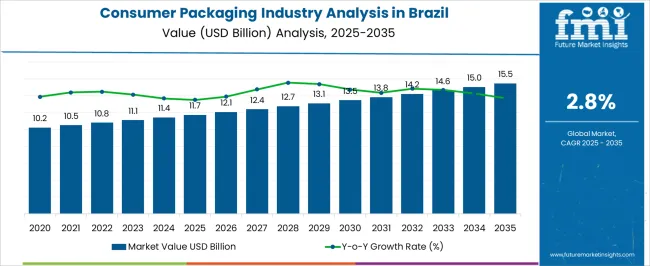
Key Takeaways, Market Size, and Forecast
- Consumer Packaging Industry in Brazil is projected to grow from USD 11.70 billion in 2025 to USD 15.85 billion by 2036
- The market is expected to expand at a CAGR of 2.8%
- Rigid Packaging will dominate with a 58.6% share
- Plastics will lead by material type with a 50.0% share
- Injection Molding will be the leading technology with a 33.7% share
Brazil's food and drink industry is growing steadily thanks to more people moving to cities and the growing popularity of packaged food. The beverage segment is growing the fastest, at a rate of 4.8% per year, thanks to more people drinking alcoholic and sports drinks. The personal care industry is growing because more people are becoming aware of their health and more goods are being exported. Brazil's share of paper-based packaging rose by almost 6% from 2024 to 2025, showing that the shift to more environmentally friendly packaging is picking up speed..
Consumer Packaging Industry Analysis in Brazil Market Definition
In Brazil, the scope includes packaging in different formats (flexible and rigid), materials (plastics, paper, aluminum, metal, wood), technologies (injection molding, thermoforming, blow molding, extrusion), levels (primary, secondary, tertiary), end uses (food, beverage, personal care, home care, pharmaceuticals, electronics), and distribution channels (online and offline). The forecast period for revenue is from 2025 to 2035.
Market Inclusions
Scope includes packaging across format (flexible and rigid), material (plastics, paper, aluminium, metal, wood), technology (injection moulding, thermoforming, blow moulding, extrusion), level (primary, secondary, tertiary), end-use (food, beverage, personal care, homecare, pharmaceuticals, electronics), and distribution channel (online, offline) within Brazil. Revenue covers 2025 to 2035 forecast period.
Market Exclusions
Scope excludes industrial packaging not oriented toward consumer product end-use, transit packaging for bulk commodity shipments, and packaging for export products manufactured in Brazil but consumed outside the country.
Research Methodology
- Interviews with packaging procurement managers at major Brazilian food and beverage companies, personal care OEMs, and retailer sustainability teams were the main part of the research.
- Desk Research: Looking at ABRE (Brazilian Packaging Association) industry statistics, ABIHPEC personal care data, and information from manufacturers about their production and shipping.
- Market sizing: Adding up packaging volumes and revenues from the bottom up by format, material, and end use, and checking them against shipment data for consumer goods and financial records for manufacturers.
Why is the Consumer Packaging Industry in Brazil Growing?
- Urbanization and the growing middle class's consumption of packaged foods and drinks are driving structural volume growth in Brazil's large domestic consumer market across all types of primary and secondary packaging.
- Growth is due to the rapid growth of exports in the personal care and cosmetics sector, which has led to a demand for high-end packaging as Brazilian brands compete in international retail settings.
- More and more people are using sustainable packaging formats because Brazilian stores are pushing for paper-based and recyclable packaging, and rules are getting stricter about using plastic only once.
The consumer packaging industry in Brazil is growing steadily because more people want packaged goods, cities are growing quickly, and more retail channels are opening up. Demand for efficient and long-lasting packaging solutions is rising because of changing lifestyles, more middle-class spending, and more people shopping online. The market benefits from constant new ideas in lightweight and eco-friendly materials, which the government supports by trying to lower their environmental impact.
Brazil's food and drink industry is growing steadily thanks to more people moving to cities and the growing popularity of packaged food. The beverage segment is growing the fastest, at a rate of 4.8% per year, thanks to more people drinking alcoholic and sports drinks. The personal care industry is growing because more people are becoming aware of their health and more goods are being exported. Brazil's share of paper-based packaging rose by almost 6% from 2024 to 2025, showing that the shift to more environmentally friendly packaging is picking up speed..
Market Segmentation Analysis
- Rigid packaging makes up 58.6% of the demand for packaging formats. This is because Brazil has a large food and beverage sector that needs cans, bottles, and jars for drinks and consumer goods cartons and boxes.
- Plastics make up about 50% of the material segment. They are valued for being lightweight, cost-effective, adaptable to different packaging formats, and government programs that encourage the use of rPET and Bio-PET.
- Food is the biggest end-use application, and the growth of packaged food consumption in the bakery, dairy, snacks, and ready-to-eat categories is driven by urbanization and trends toward convenience.
The Brazil Consumer Packaging Industry is divided into different types of packaging, such as format, material, technology, level of packaging, end-use, and distribution channel. There are several subcategories within the market for packaging formats, including flexible packaging and rigid packaging. The market is divided into Plastics, Paper, Aluminum Foil, Wood, and Metal based on the materials used. The market is looked at in terms of its end use, which includes food, drinks, personal care and hygiene, home care and toiletries, pharmaceuticals, consumer electronics, and medical devices.
Insights into Rigid Packaging Format Segment
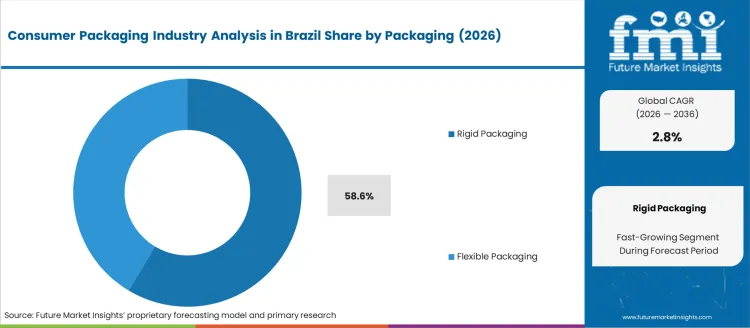
Rigid packaging makes up 58.6% of the market and is expected to grow at a CAGR of 3.7% over the next few years. This segment is the most popular because there is a lot of demand for beverage cans, bottles, and jars, as well as retail-ready cartons and boxes for food and personal care products. Canpack's $150 million investment in a facility in Brazil in August 2025 means that the company will be able to make a lot more aluminum beverage cans.
Insights into Plastics Material Segment
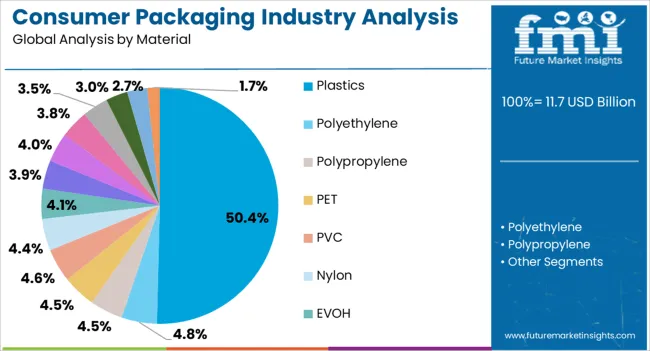
Plastics make up about 50.0% of the market and are expected to grow at a rate of 2.9% per year. Even though there is pressure on the environment, plastics are still the most popular material because they are light, flexible, easy to use, and cheap. Government efforts to make plastic more recyclable and higher tariffs on polymer imports are pushing companies to use rPET and Bio-PET in their packaging. This will help the switch to more eco-friendly plastic options without losing the material's useful properties.
Insights into Food and Beverage End-Use Segments
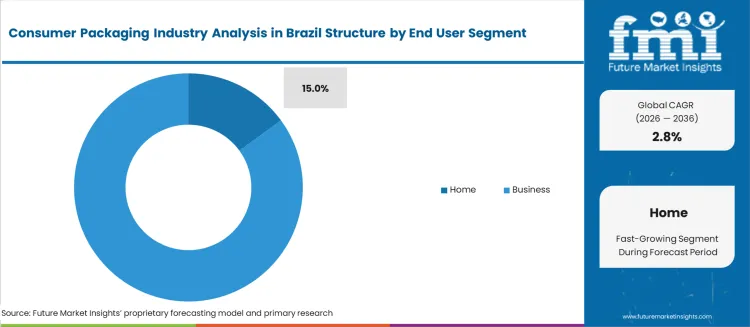
Food is the biggest end-use category because more and more people in Brazil's growing urban middle class are eating packaged food. Beverages are the fastest-growing part of the market, with a CAGR of 4.8%, due to the rise in consumption of alcoholic drinks and sports drinks. According to WHO data, Brazil's per capita alcohol consumption is expected to rise by more than 8% per year, which will keep demand for beverage packaging high across cans, bottles, and cartons.
Consumer Packaging Industry Analysis in Brazil Drivers, Restraints, and Opportunities
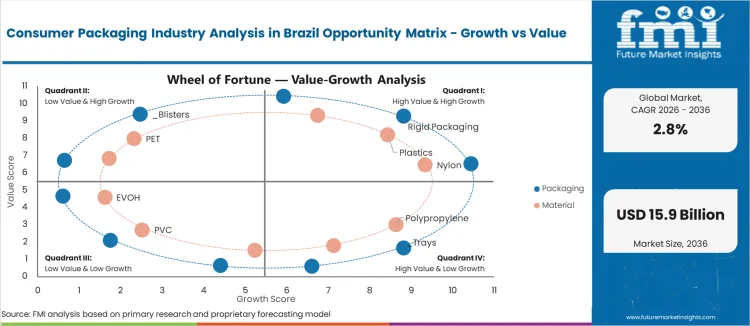
- Urbanization and the growing spending of the middle class are the main reasons why demand for food, drinks, and personal care products is rising in Brazil. This is keeping packaging volume growth steady.
- Brazilian packaging converters can't improve their margins as quickly as they would like because of strict environmental rules, higher costs for sustainable materials, and the fact that they have to pay tariffs on imported specialty packaging materials.
- The main trends that will change Brazil's consumer packaging market by 2035 are smart packaging features, a shift to bioplastics as a sustainable material, and packaging that is easy to carry.
The Brazilian consumer packaging industry must deal with a lot of rules and regulations while also dealing with fluctuating material costs and pressure to keep prices low. To stay competitive and deal with environmental rules, top manufacturers are embracing new ideas. They are making bioplastic and plant-based packaging formats, using eco-friendly materials, and adding QR codes and interactive elements to their smart packaging.
Food and Beverage Industry Expansion
Brazil's food and drink industry is growing steadily because more people are moving to cities and packaged food is becoming more popular. This affects demand. As city dwellers put a higher value on convenience and food safety, packaged foods, portion-controlled products, and on-the-go options that are easy to use are becoming more popular. People are starting to like packaging solutions that have features that make them easy to open, like tabs that can be resealed, and portion control.
Personal Care Export Growth and Premium Packaging Demand
Growth reflects Brazil's personal care export expansion, with exports growing over 17% quarter-on-quarter in early 2025 according to ABIHPEC. Brazilian personal care brands require premium aesthetic packaging that communicates brand quality in international retail environments, driving demand for high-specification flexible and rigid packaging with superior print quality and surface finishing.
Sustainable Packaging Transition and Bioplastic Adoption
More people are using sustainable packaging as retail pressure, environmental rules, and consumer preferences all point to paper-based and recyclable formats. Several stores in Brazil are pushing for paper packaging solutions that meet government standards and protect their brand image. The development and use of bioplastic packaging, such as PLA and starch-based plastics, is changing the way consumer goods manufacturers plan to get materials.
Analysis of Consumer Packaging Industry in Brazil by Region
- Southeast Brazil dominates packaging consumption, home to São Paulo's industrial concentration and major food and beverage manufacturers including JBS, BRF, and Ambev that represent the largest single packaging procurement base.
- Northeast Brazil represents a structurally growing market as rising consumer spending, expanding retail networks, and food and beverage distribution infrastructure extension create new demand pools beyond established industrial centres.
- South Brazil benefits from strong agro-industrial activity including grain processing, dairy, and wine production that drives consistent food packaging procurement volumes across Paraná, Santa Catarina, and Rio Grande do Sul.
- Mid-West Brazil is emerging as a growth region as agricultural commodity processing investment creates packaging demand for edible oils, processed grains, and food ingredients manufactured close to production sources.
Southeast Brazil Packaging Demand Outlook
São Paulo state dominates Brazil consumer packaging demand as the location of major food and beverage manufacturing, personal care production, and pharmaceutical companies that represent Brazil's highest packaging procurement concentration. E-commerce growth from São Paulo and Rio de Janeiro is also driving demand for secondary packaging formats.
- São Paulo's industrial concentration creates the largest single consumer packaging procurement base.
- E-commerce expansion from major urban centres drives flexible and corrugated packaging demand.
- Premium retail environment supports investment in high-quality packaging design and specification.
Northeast Brazil Packaging Demand Outlook
Northeast Brazil represents a growing market as retail infrastructure expansion reaches major cities including Fortaleza, Recife, and Salvador. Rising consumer spending across the Northeast is creating new food and beverage packaging demand as national brands extend distribution reach into previously underserved markets.
- Rising consumer income in Northeast cities creates new FMCG packaging procurement demand.
- Retail infrastructure expansion improves packaged goods distribution economics.
- Beverage consumption growth in the Northeast supports aluminium can and bottle packaging demand.
Competitive Landscape and Strategic Positioning
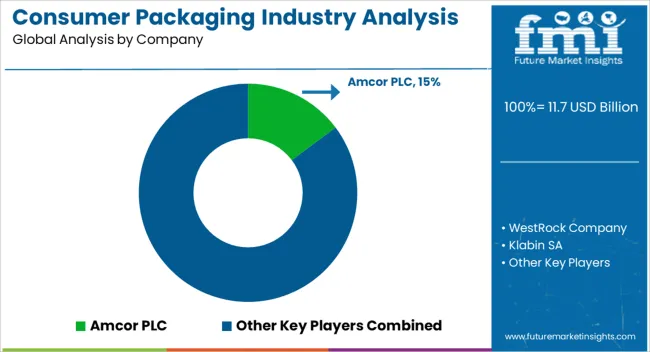
- Brazil's consumer packaging industry is very competitive, with many important global and domestic companies working in the areas of flexible, rigid, sustainable, and specialized packaging.
- Amcor PLC and Klabin SA are the leaders because they can make things all over the world and have a wide range of eco-friendly packaging options. Klabin SA is the leader in Brazil because it has access to local fiber and knows how to make paper-based packaging.
- Competition is based on new ideas for eco-friendly packaging, making things cheaper to make in Brazil, being able to print and finish at a high level, and having good relationships with major Brazilian food and drink brands.
The consumer packaging industry in Brazil is very competitive. Some of the biggest companies are Amcor PLC, Klabin SA, Tetra Pak International SA, Sonoco Products Company, Graphic Packaging International LLC, and Trivium Packaging. Top companies are coming up with new eco-friendly packaging solutions and using distribution agreements, partnerships, facility expansions, acquisitions, and mergers to make their presence in the Brazilian market stronger.
Key Companies in the Consumer Packaging Industry Analysis in Brazil
Key companies leading the Brazil Consumer Packaging Industry include:
- Amcor PLC (Australia/Switzerland), and Klabin SA (Brazil) were named as some of the top companies in the Brazil Consumer Packaging Industry. They have a wide range of sustainable packaging options, strong supply relationships with major Brazilian consumer goods manufacturers, and the ability to make flexible, corrugated, and paper-based packaging
Competitive Benchmarking: Consumer Packaging Industry in Brazil
| Company | Sustainable Portfolio | Brazil Production | Food & Bev Access | Flexible Packaging |
|---|---|---|---|---|
| Amcor PLC | High | Strong | Strong | High |
| Klabin SA | High | Strong | Strong | Medium |
| Tetra Pak International SA | Medium | Strong | Strong | High |
| Sonoco Products Company | Medium | Moderate | Moderate | Medium |
Source: Future Market Insights competitive analysis, 2026.
Key Developments
- In December 2026, Sonoco Products acquired Inapel Embalagens Ltda. in Brazil to expand flexible packaging service capabilities.
- In 2026, Canpack announced a USD 140 million investment in a new production facility in Poços de Caldas, Brazil, to increase aluminum beverage can manufacturing capacity. No USD 150 million announcement occurred in August 2025.
Key Players in the Consumer Packaging Industry in Brazil
Major Global Players
- Amcor PLC
- Klabin SA
- Tetra Pak International SA
- Sonoco Products Company
- Graphic Packaging International LLC
Emerging Players / Startups
- Trivium Packaging
Report Scope and Coverage
| Metric | Value |
|---|---|
| Quantitative Units | USD billion |
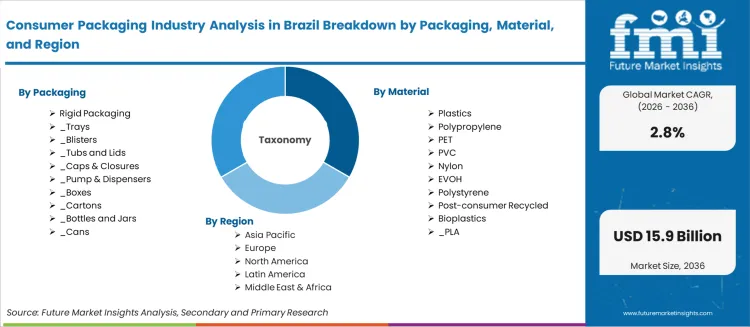
| Segmentation | Packaging Format: Flexible Packaging (Pouches, Bags & Sacks, Films & Wraps, Sachets, Stick Packs, Cups, Tubes, Labels, Clamshell), Rigid Packaging (Trays, Blisters, Tubs and Lids, Caps & Closures, Pump & Dispensers, Boxes, Cartons, Bottles and Jars, Cans, Cores & Tubes) Material: Plastics, Paper, Aluminium Foil, Wood, Metal End-Use: Food, Beverage, Personal Care & Hygiene, Homecare & Toiletries, Pharmaceuticals, Consumer Electronics, Medical Devices Distribution Channel: Online, Offline |
| Regions Covered | Brazil (national coverage with regional analysis) |
| Forecast Period | 2025 to 2035 |
| Key Companies Profiled | Amcor PLC, Klabin SA, Tetra Pak International SA, Sonoco Products Company, Graphic Packaging International LLC, Trivium Packaging |
| Approach | Bottom-up aggregation of packaging volumes by format, material, and end-use, validated against ABRE industry statistics and manufacturer production and shipment data. |
Consumer Packaging Industry in Brazil by Segments
Consumer Packaging Industry Analysis in Brazil Market Segmented by Packaging:
- Rigid Packaging
- Trays
- Blisters
- Tubs and Lids
- Caps & Closures
- Pump & Dispensers
- Boxes
- Cartons
- Bottles and Jars
- Cans
- Cores & Tubes
- Flexible Packaging
- Pouches
- Bags & Sacks
- Films & Wraps
- Sachets
- Stick Packs
- Cups
- Tubes
- Labels
- Clamshell
Consumer Packaging Industry Analysis in Brazil Market Segmented by Material:
- Plastics
- Polypropylene
- PET
- PVC
- Nylon
- EVOH
- Polystyrene
- Post-consumer Recycled
- Bioplastics
- PLA
- Starch-based Plastics
- Bio-PET
- Bio-PE
- Others
- Paper
- Aluminum Foil
- Wood
- Metal
Consumer Packaging Industry Analysis in Brazil Market Segmented by Technology:
- Injection Molding
- Thermoforming
- Blow Molding
- Others
- Extrusion
Consumer Packaging Industry Analysis in Brazil Market Segmented by Packaging:
- Primary
- Secondary
- Tertiary
Consumer Packaging Industry Analysis in Brazil Market Segmented by End User:
- Home
- Business
Consumer Packaging Industry Analysis in Brazil Market Segmented by Distribution:
- Online
- Offline
Consumer Packaging Industry Analysis in Brazil Market by Region:
- North America
- USA
- Canada
- Mexico
- Latin America
- Brazil
- Chile
- Rest of Latin America
- Western Europe
- Germany
- UK
- Italy
- Spain
- France
- Nordic
- BENELUX
- Rest of Western Europe
- Eastern Europe
- Russia
- Poland
- Hungary
- Balkan & Baltic
- Rest of Eastern Europe
- East Asia
- China
- Japan
- South Korea
- South Asia and Pacific
- India
- ASEAN
- Australia & New Zealand
- Rest of South Asia and Pacific
- Middle East & Africa
- Kingdom of Saudi Arabia
- Other GCC Countries
- Turkiye
- South Africa
- Other African Union
- Rest of Middle East & Africa
Research Sources and Bibliography
- 1. ABRE - Brazilian Packaging Association. (2025). Brazil Packaging Industry Annual Report. ABRE.
- 2. ABIHPEC - Brazilian Association of the Toiletries, Perfumery, and Cosmetics Industry. (2025). Sector Performance Report. ABIHPEC.
- 3. Brazilian Government Ministry of Environment. (2025). National Solid Waste Policy Implementation Report. MMA.
- 4. World Health Organization. (2024). Global Status Report on Alcohol and Health. WHO.
This bibliography is provided for reader reference and is not exhaustive. The full report contains the complete reference list and detailed citations.
This Report Answers
- Estimating the size of the market and the amount of money Brazil Consumer Packaging will make from 2025 to 2035.
- Dividing by packaging type, material, technology, level of packaging, end use, and distribution channel.
- A study of packaging demand patterns in Brazil's Southeast, Northeast, South, and Mid-West regions.
- Analysis of the transition to sustainable packaging, including the growth of paper-based packaging, the use of bioplastics, and the effects of retailer mandates.
- Analysis of the trend in packaging procurement in the food and beverage industry, including the factors that drive beverage growth.
- Effects of the growth of personal care exports and the demand for high-end packaging.
- The competitive landscape includes global packaging multinationals and Brazilian packaging specialists.
Frequently Asked Questions
What is the size of Brazil's Consumer Packaging Industry in 2026?
The Brazil Consumer Packaging Industry is expected to be worth $12.0 billion in 2026.
How big will the market be by 2035?
By 2035, the Brazil Consumer Packaging Industry is expected to be worth $15.5 billion.
What is the expected CAGR from 2025 to 2035?
Between 2025 and 2035, the market is expected to grow at a rate of 2.8% per year.
Which type of packaging is the most popular in Brazil's consumer packaging market?
Rigid packaging makes up 58.6% of the market. This is because there is a lot of demand for beverage cans, bottles, jars, and retail-shelf-ready cartons in the food, drink, and consumer goods categories.
What is making Brazil use more eco-friendly packaging?
Retailers pushing for paper-based packaging, environmental rules, and customers' preference for eco-friendly formats are all helping the change along. By 2025, Brazil's share of paper-based packaging will have grown by about 6% each year.
What end-use group is growing the fastest in Brazil?
The beverage packaging market is growing at a compound annual growth rate (CAGR) of 4.8%. This is due to an increase in the consumption of alcoholic and sports drinks, which is supported by trends of rising per-capita alcohol consumption.
What is the Brazil consumer packaging market like in this report?
The report talks about packaging in Brazil's domestic packaging industry, including flexible and rigid formats, plastic, paper, aluminum, and metal materials, as well as food, drinks, personal care, and other consumer end-use categories.
Preview the report firsthand - request a free sample
Get SampleGet the brochure for pricing and purchase details.
Get PDFTable of Content
- Key Takeaways
- Market Size and CAGR
- Top Growth Driver
- Fastest Growing Segment
- Leading Region
- Key Companies
- Emerging Opportunities
- Executive Summary
- Global Market Outlook
- Demand-side Trends
- Supply-side Trends
- Technology Roadmap Analysis
- Analysis and Recommendations
- Analyst Perspective (What is happening? Why now? What should investors know?)
- Key Questions Answered
- How large is the market?
- What is the CAGR?
- What are key trends?
- Which region dominates?
- Who are the leaders?
- Market Overview
- Market Coverage / Taxonomy
- Market Definition / Scope / Limitations
- Research Methodology
- Chapter Orientation
- Analytical Lens and Working Hypotheses
- Market Structure, Signals, and Trend Drivers
- Benchmarking and Cross-market Comparability
- Market Sizing, Forecasting, and Opportunity Mapping
- Research Design and Evidence Framework
- Desk Research Programme (Secondary Evidence)
- Expert Input and Fieldwork (Primary Evidence)
- Tooling, Models, and Reference Databases
- Data Engineering and Model Build
- Quality Assurance and Audit Trail
- Market Background
- Market Dynamics (Drivers, Restraints, Opportunity, Trends)
- Scenario Forecast (Optimistic, Likely, Conservative)
- Impact Analysis
- AI Impact
- Sustainability Impact
- Regulatory Impact
- Technology Impact
- Consumer / Buyer Analysis
- Purchase Drivers
- Adoption Barriers
- Buyer Journey
- Opportunity Map Analysis
- Product Life Cycle Analysis
- Supply Chain Analysis
- Investment Feasibility Matrix
- Value Chain Analysis
- PESTLE and Porter's Analysis
- Regulatory Landscape
- Regional Parent Market Outlook
- Production and Consumption Statistics
- Import and Export Statistics
- Global Market Analysis and Forecast, 2021 to 2036
- Historical Market Size Value (USD Million) Analysis, 2021 to 2025
- Current and Future Market Size Value (USD Million) Projections, 2026 to 2036
- Y-o-Y Growth Trend Analysis
- Absolute $ Opportunity Analysis
- Global Market Pricing Analysis, 2021 to 2036
- Global Market Analysis and Forecast, By Packaging, 2021 to 2036
- Introduction / Key Findings
- Historical Market Size Value (USD Million) Analysis By Packaging, 2021 to 2025
- Current and Future Market Size Value (USD Million) Analysis and Forecast By Packaging, 2026 to 2036
- Rigid Packaging
- Trays
- Blisters
- Tubs and Lids
- Caps & Closures
- Pump & Dispensers
- Boxes
- Cartons
- Bottles and Jars
- Cans
- Cores & Tubes
- Flexible Packaging
- Pouches
- Bags & Sacks
- Films & Wraps
- Sachets
- Stick Packs
- Rigid Packaging
- Y-o-Y Growth Trend Analysis By Packaging, 2021 to 2025
- Absolute $ Opportunity Analysis By Packaging, 2026 to 2036
- Global Market Analysis and Forecast, By Material, 2021 to 2036
- Introduction / Key Findings
- Historical Market Size Value (USD Million) Analysis By Material, 2021 to 2025
- Current and Future Market Size Value (USD Million) Analysis and Forecast By Material, 2026 to 2036
- Plastics
- Polypropylene
- PET
- PVC
- Nylon
- EVOH
- Polystyrene
- Post-consumer Recycled
- Bioplastics
- PLA
- Starch-based Plastics
- Bio-PET
- Bio-PE
- Others
- Paper
- Aluminum Foil
- Plastics
- Y-o-Y Growth Trend Analysis By Material, 2021 to 2025
- Absolute $ Opportunity Analysis By Material, 2026 to 2036
- Global Market Analysis and Forecast, By Technology, 2021 to 2036
- Introduction / Key Findings
- Historical Market Size Value (USD Million) Analysis By Technology, 2021 to 2025
- Current and Future Market Size Value (USD Million) Analysis and Forecast By Technology, 2026 to 2036
- Injection Molding
- Thermoforming
- Blow Molding
- Others
- Extrusion
- Y-o-Y Growth Trend Analysis By Technology, 2021 to 2025
- Absolute $ Opportunity Analysis By Technology, 2026 to 2036
- Global Market Analysis and Forecast, By Packaging Level, 2021 to 2036
- Introduction / Key Findings
- Historical Market Size Value (USD Million) Analysis By Packaging Level, 2021 to 2025
- Current and Future Market Size Value (USD Million) Analysis and Forecast By Packaging Level, 2026 to 2036
- Primary
- Secondary
- Tertiary
- Y-o-Y Growth Trend Analysis By Packaging Level, 2021 to 2025
- Absolute $ Opportunity Analysis By Packaging Level, 2026 to 2036
- Global Market Analysis and Forecast, By End User, 2021 to 2036
- Introduction / Key Findings
- Historical Market Size Value (USD Million) Analysis By End User, 2021 to 2025
- Current and Future Market Size Value (USD Million) Analysis and Forecast By End User, 2026 to 2036
- Home
- Business
- Y-o-Y Growth Trend Analysis By End User, 2021 to 2025
- Absolute $ Opportunity Analysis By End User, 2026 to 2036
- Global Market Analysis and Forecast, By Distribution
- Introduction / Key Findings
- Historical Market Size Value (USD Million) Analysis By Distribution, 2021 to 2025
- Current and Future Market Size Value (USD Million) Analysis and Forecast By Distribution, 2026 to 2036
- Online
- Offline
- Y-o-Y Growth Trend Analysis By Distribution, 2021 to 2025
- Absolute $ Opportunity Analysis By Distribution, 2026 to 2036
- Global Market Analysis and Forecast, By Region, 2021 to 2036
- Introduction
- Historical Market Size Value (USD Million) Analysis By Region, 2021 to 2025
- Current Market Size Value (USD Million) Analysis and Forecast By Region, 2026 to 2036
- North America
- Latin America
- Western Europe
- Eastern Europe
- East Asia
- South Asia and Pacific
- Middle East & Africa
- Market Attractiveness Analysis By Region
- North America Market Analysis and Forecast, By Country, 2021 to 2036
- Historical Market Size Value (USD Million) Trend Analysis By Market Taxonomy, 2021 to 2025
- Market Size Value (USD Million) Forecast By Market Taxonomy, 2026 to 2036
- By Country
- USA
- Canada
- Mexico
- By Packaging
- By Material
- By Technology
- By Packaging Level
- By End User
- By Distribution
- By Country
- Market Attractiveness Analysis
- By Country
- By Packaging
- By Material
- By Technology
- By Packaging Level
- By End User
- By Distribution
- Key Takeaways
- Latin America Market Analysis and Forecast, By Country
- Historical Market Size Value (USD Million) Trend Analysis By Market Taxonomy, 2021 to 2025
- Market Size Value (USD Million) Forecast By Market Taxonomy, 2026 to 2036
- By Country
- Brazil
- Chile
- Rest of Latin America
- By Packaging
- By Material
- By Technology
- By Packaging Level
- By End User
- By Distribution
- By Country
- Market Attractiveness Analysis
- By Country
- By Packaging
- By Material
- By Technology
- By Packaging Level
- By End User
- By Distribution
- Key Takeaways
- Western Europe Market Analysis and Forecast, By Country
- Historical Market Size Value (USD Million) Trend Analysis By Market Taxonomy, 2021 to 2025
- Market Size Value (USD Million) Forecast By Market Taxonomy, 2026 to 2036
- By Country
- Germany
- UK
- Italy
- Spain
- France
- Nordic
- BENELUX
- Rest of Western Europe
- By Packaging
- By Material
- By Technology
- By Packaging Level
- By End User
- By Distribution
- By Country
- Market Attractiveness Analysis
- By Country
- By Packaging
- By Material
- By Technology
- By Packaging Level
- By End User
- By Distribution
- Key Takeaways
- Eastern Europe Market Analysis and Forecast, By Country
- Historical Market Size Value (USD Million) Trend Analysis By Market Taxonomy, 2021 to 2025
- Market Size Value (USD Million) Forecast By Market Taxonomy, 2026 to 2036
- By Country
- Russia
- Poland
- Hungary
- Balkan & Baltic
- Rest of Eastern Europe
- By Packaging
- By Material
- By Technology
- By Packaging Level
- By End User
- By Distribution
- By Country
- Market Attractiveness Analysis
- By Country
- By Packaging
- By Material
- By Technology
- By Packaging Level
- By End User
- By Distribution
- Key Takeaways
- East Asia Market Analysis and Forecast, By Country
- Historical Market Size Value (USD Million) Trend Analysis By Market Taxonomy, 2021 to 2025
- Market Size Value (USD Million) Forecast By Market Taxonomy, 2026 to 2036
- By Country
- China
- Japan
- South Korea
- By Packaging
- By Material
- By Technology
- By Packaging Level
- By End User
- By Distribution
- By Country
- Market Attractiveness Analysis
- By Country
- By Packaging
- By Material
- By Technology
- By Packaging Level
- By End User
- By Distribution
- Key Takeaways
- South Asia and Pacific Market Analysis and Forecast, By Country
- Historical Market Size Value (USD Million) Trend Analysis By Market Taxonomy, 2021 to 2025
- Market Size Value (USD Million) Forecast By Market Taxonomy, 2026 to 2036
- By Country
- India
- ASEAN
- Australia & New Zealand
- Rest of South Asia and Pacific
- By Packaging
- By Material
- By Technology
- By Packaging Level
- By End User
- By Distribution
- By Country
- Market Attractiveness Analysis
- By Country
- By Packaging
- By Material
- By Technology
- By Packaging Level
- By End User
- By Distribution
- Key Takeaways
- Middle East & Africa Market Analysis and Forecast, By Country
- Historical Market Size Value (USD Million) Trend Analysis By Market Taxonomy, 2021 to 2025
- Market Size Value (USD Million) Forecast By Market Taxonomy, 2026 to 2036
- By Country
- Kingdom of Saudi Arabia
- Other GCC Countries
- Turkiye
- South Africa
- Other African Union
- Rest of Middle East & Africa
- By Packaging
- By Material
- By Technology
- By Packaging Level
- By End User
- By Distribution
- By Country
- Market Attractiveness Analysis
- By Country
- By Packaging
- By Material
- By Technology
- By Packaging Level
- By End User
- By Distribution
- Key Takeaways
- Key Countries Market Analysis
- USA
- Pricing Analysis
- Market Share Analysis, 2025
- By Packaging
- By Material
- By Technology
- By Packaging Level
- By End User
- By Distribution
- Canada
- Pricing Analysis
- Market Share Analysis, 2025
- By Packaging
- By Material
- By Technology
- By Packaging Level
- By End User
- By Distribution
- Mexico
- Pricing Analysis
- Market Share Analysis, 2025
- By Packaging
- By Material
- By Technology
- By Packaging Level
- By End User
- By Distribution
- Brazil
- Pricing Analysis
- Market Share Analysis, 2025
- By Packaging
- By Material
- By Technology
- By Packaging Level
- By End User
- By Distribution
- Chile
- Pricing Analysis
- Market Share Analysis, 2025
- By Packaging
- By Material
- By Technology
- By Packaging Level
- By End User
- By Distribution
- Germany
- Pricing Analysis
- Market Share Analysis, 2025
- By Packaging
- By Material
- By Technology
- By Packaging Level
- By End User
- By Distribution
- UK
- Pricing Analysis
- Market Share Analysis, 2025
- By Packaging
- By Material
- By Technology
- By Packaging Level
- By End User
- By Distribution
- Italy
- Pricing Analysis
- Market Share Analysis, 2025
- By Packaging
- By Material
- By Technology
- By Packaging Level
- By End User
- By Distribution
- Spain
- Pricing Analysis
- Market Share Analysis, 2025
- By Packaging
- By Material
- By Technology
- By Packaging Level
- By End User
- By Distribution
- France
- Pricing Analysis
- Market Share Analysis, 2025
- By Packaging
- By Material
- By Technology
- By Packaging Level
- By End User
- By Distribution
- India
- Pricing Analysis
- Market Share Analysis, 2025
- By Packaging
- By Material
- By Technology
- By Packaging Level
- By End User
- By Distribution
- ASEAN
- Pricing Analysis
- Market Share Analysis, 2025
- By Packaging
- By Material
- By Technology
- By Packaging Level
- By End User
- By Distribution
- Australia & New Zealand
- Pricing Analysis
- Market Share Analysis, 2025
- By Packaging
- By Material
- By Technology
- By Packaging Level
- By End User
- By Distribution
- China
- Pricing Analysis
- Market Share Analysis, 2025
- By Packaging
- By Material
- By Technology
- By Packaging Level
- By End User
- By Distribution
- Japan
- Pricing Analysis
- Market Share Analysis, 2025
- By Packaging
- By Material
- By Technology
- By Packaging Level
- By End User
- By Distribution
- South Korea
- Pricing Analysis
- Market Share Analysis, 2025
- By Packaging
- By Material
- By Technology
- By Packaging Level
- By End User
- By Distribution
- Russia
- Pricing Analysis
- Market Share Analysis, 2025
- By Packaging
- By Material
- By Technology
- By Packaging Level
- By End User
- By Distribution
- Poland
- Pricing Analysis
- Market Share Analysis, 2025
- By Packaging
- By Material
- By Technology
- By Packaging Level
- By End User
- By Distribution
- Hungary
- Pricing Analysis
- Market Share Analysis, 2025
- By Packaging
- By Material
- By Technology
- By Packaging Level
- By End User
- By Distribution
- Kingdom of Saudi Arabia
- Pricing Analysis
- Market Share Analysis, 2025
- By Packaging
- By Material
- By Technology
- By Packaging Level
- By End User
- By Distribution
- Turkiye
- Pricing Analysis
- Market Share Analysis, 2025
- By Packaging
- By Material
- By Technology
- By Packaging Level
- By End User
- By Distribution
- South Africa
- Pricing Analysis
- Market Share Analysis, 2025
- By Packaging
- By Material
- By Technology
- By Packaging Level
- By End User
- By Distribution
- USA
- Market Structure Analysis
- Competition Dashboard
- Competition Benchmarking
- Market Share Analysis of Top Players
- By Regional
- By Packaging
- By Material
- By Technology
- By Packaging Level
- By End User
- By Distribution
- Emerging Startups
- Innovation Benchmarking
- Competition Analysis
- Competition Deep Dive
- Amcor PLC
- Overview
- Product Portfolio
- Profitability by Market Segments
- Sales Footprint
- Strategy Overview
- Marketing Strategy
- Product Strategy
- Channel Strategy
- Amcor PLC
- WestRock Company
- Klabin SA
- Tetra Pak International SA
- Sonoco Products Company
- Smurfit Kappa Group
- NEFAB Embalagens LTDA
- Graphic Packaging International LLC
- SSI Schaefer LTDA
- Trivium Packaging
- Competition Deep Dive
- Case Studies
- Success Stories
- Recent Developments
- Assumptions & Acronyms Used


