

- Industry Size (2026)
- USD 62.79 Bn
- Forecast (2036)
- USD 109.30 Bn
- CAGR (2026 to 2036)
- 5.7%
Consumer Packaging Industry Analysis in India Size, Market Forecast and Outlook by FMI
Consumer packaging demand in India is projected to grow from USD 62.8 billion in 2026 to USD 109.3 billion by 2036. Emerald Packaging's new Southern California flexible packaging facility is an indirect signal for India's consumer packaging industry. The development is outside India. Its relevance comes from the direction of global converter investment. Packaging suppliers are adding flexible packaging capacity that can support faster printing cycles and shorter order runs.
Indian consumer packaging buyers face similar needs as more brands shift toward smaller packs and faster design refreshes. The facility shows how converters are trying to win demand through service speed rather than capacity alone. For Indian packaging companies the lesson is practical. Buyers will increasingly expect faster artwork changes and tighter supply assurance. This can influence investment in digital workflows and regional finishing capacity. The near term impact on India is limited because the asset serves a USA supply chain. The second order impact is still useful for strategy. It shows that flexible packaging competitiveness is moving toward responsiveness and reliable execution. Indian converters that improve turnaround times can be better placed with food and consumer goods customers.
Summary of the Consumer Packaging Industry Analysis in India
- Demand and Growth Drivers
- Demand is shaped by the growing middle class in India and the shift from unpackaged to processed and convenience food formats. This is because more people are moving to cities and eating packaged foods and drinks.
- Growth is due to the growth of e-commerce, which has created long-lasting demand for secondary and transit packaging. India's online retail platforms are generating packaging volumes in the electronics, clothing, and grocery categories.
- Sustainable packaging formats are becoming more popular as the Plastic Waste Management Rules are enforced, and major brands promise to make their products recyclable. This leads to more investment in material transition across the packaging supply chain.
- Product and Segment View
- Packaging: Flexible is expected to lead, accounting for 64.3% of the packaging segment in 2026.
- Material: Plastics is expected to lead, accounting for 52.4% of the material segment in 2026.
- Technology: Injection Molding is expected to lead, accounting for 35.7% of the technology segment in 2026.
- The consumer packaging industry in India is growing quickly because more people are moving to cities, more people are making more money, and organized retail and e-commerce are growing. People want packaging that is convenient, clean, and environmentally friendly, which drives demand for new and better packaging solutions. The market is moving toward materials that are flexible and lightweight, which lowers logistics costs while keeping safety and durability.
- Geography and Competitive Outlook
- China has the highest growth rates in global packaging demand, but India has the most structurally significant growth opportunity for large economies, with a 5.7% CAGR. This is because of its size, speed of urbanization, and government support.
- The fastest-growing application categories are beverage end-use (7.8% CAGR) and homecare (7.6% CAGR). This is because of India's young population and the rise in personal care consumption and export growth.
- India's consumer packaging industry is very competitive. Global multinationals and strong domestic champions compete in the areas of flexible, rigid, and sustainable packaging.
- Analyst Opinion
- Ismail Sutaria, Principal Consultant at FMI says, “Companies that can navigate the evolving consumer packaging industry analysis in india landscape - essel propak makes laminated tube packaging for personal care and oral care products - are likely to strengthen their position over the forecast period.”
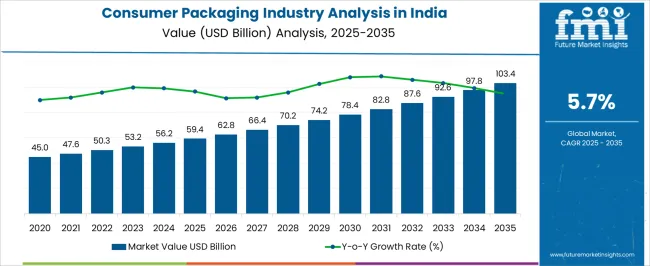
Key Takeaways, Market Size, and Forecast
- The consumer packaging industry in India is projected to grow from USD 62.8 billion in 2026 to USD 109.3 billion by 2036, at a CAGR of 5.7%.
- The consumer packaging industry in India was valued at USD 59.4 billion in 2025.
- By 2036, the consumer packaging industry in India is expected to be worth USD 109.3 billion.
- From 2026 to 2036, the market is projected to expand at a CAGR of 5.7%.
- The market is projected to create an incremental opportunity of USD 49.9 billion between 2026 and 2036.
- In 2026, flexible packaging is expected to account for 64.3% of the packaging segment.
Investing in new printing and forming technologies makes packaging look better and more appealing on store shelves. Government programs that encourage less waste and more recyclable packaging affect the types of materials that are chosen. The industry is expected to keep growing quickly because there is a lot of demand in the food, personal care, and pharmaceutical sectors. This is due to new technology-driven packaging and a focus on sustainability.
Consumer Packaging Industry Analysis in India Definition
The Consumer Packaging Industry in India encompasses packaging solutions for consumer goods across food, beverage, personal care, homecare, pharmaceutical, consumer electronics, and medical device end-use categories including flexible formats (pouches, bags, sachets, films, tubes) and rigid formats (bottles, jars, cartons, cans, trays) across plastic, paper, aluminium, metal, and wood materials.
Market Inclusions
Scope includes all packaging across format (flexible and rigid), material (plastics, paper, aluminium, metal, wood), technology (injection moulding, thermoforming, blow moulding, extrusion), level (primary, secondary, tertiary), and end-use categories within India. Revenue covers 2025 to 2035 forecast period.
Market Exclusions
Scope excludes industrial packaging for non-consumer applications, bulk commodity transit packaging, and packaging for Indian-manufactured exports consumed outside India.
Research Methodology
- Primary Research: Interviews with packaging procurement managers at big Indian FMCG companies, personal care OEMs, and drug companies.
- Desk Research: Looking at statistics from the ABRE India equivalent industry, the India Brand Equity Foundation, and the ABIHPEC personal care export disclosures.
- Market sizing: Adding up packaging volumes and revenues from the bottom up by format, material, and end use, and checking against shipment data for consumer goods and financial records for manufacturers.
Why is the Consumer Packaging Industry Analysis in India Growing?
- Demand is shaped by the growing middle class in India and the shift from unpackaged to processed and convenience food formats. This is because more people are moving to cities and eating packaged foods and drinks.
- Growth is due to the growth of e-commerce, which has created long-lasting demand for secondary and transit packaging. India's online retail platforms are generating packaging volumes in the electronics, clothing, and grocery categories.
- Sustainable packaging formats are becoming more popular as the Plastic Waste Management Rules are enforced, and major brands promise to make their products recyclable. This leads to more investment in material transition across the packaging supply chain.
The consumer packaging industry in India is growing quickly because more people are moving to cities, more people are making more money, and organized retail and e-commerce are growing. People want packaging that is convenient, clean, and environmentally friendly, which drives demand for new and better packaging solutions. The market is moving toward materials that are flexible and lightweight, which lowers logistics costs while keeping safety and durability.
Investing in new printing and forming technologies makes packaging look better and more appealing on store shelves. Government programs that encourage less waste and more recyclable packaging affect the types of materials that are chosen. The industry is expected to keep growing quickly because there is a lot of demand in the food, personal care, and pharmaceutical sectors. This is due to new technology-driven packaging and a focus on sustainability.
Market Segmentation Analysis
- Flexible packaging makes up 64.3% of the format demand. It is valued for being lightweight, taking up less space during distribution, and working with high-speed filling lines across India's FMCG manufacturing base.
- Plastics make up more than 55% of the demand for materials. India Plastics Pac has promised to use only reusable, recyclable, or compostable plastic packaging by 2035, which speeds up the use of bioplastics and rPET.
- Beverages are the fastest-growing end-use, with a 7.8% CAGR. This is due to the growth of the youth population, rising discretionary income, and the expansion of the cold chain, which makes it possible to distribute chilled drinks to Tier 2 and 3 markets.
The India Consumer Packaging Industry is divided into groups based on the type of packaging, the material used, the technology used, the level of packaging, the end use, and the channel of distribution. The market is divided into two types of packaging: flexible and rigid. The market is divided into Plastics, Paper, Aluminum Foil, Wood, and Metal based on the material.
Insights into Flexible Packaging Segment
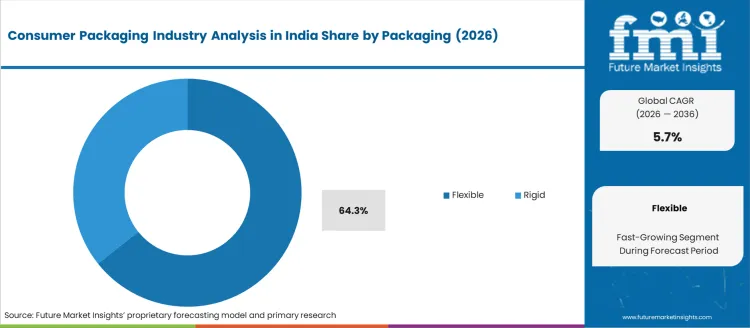
In 2025, flexible packaging will make up 64.3% of the market. Pouches, sachets, and films are widely used in the food, personal care, and pharmaceutical industries because they are light, easy to ship, and can be printed with brand names. Flexible multilayer films that protect product quality during shipping to markets all over the world are very important for India's spices and condiments, dairy, and snack categories.
Insights into Plastics Material Segment
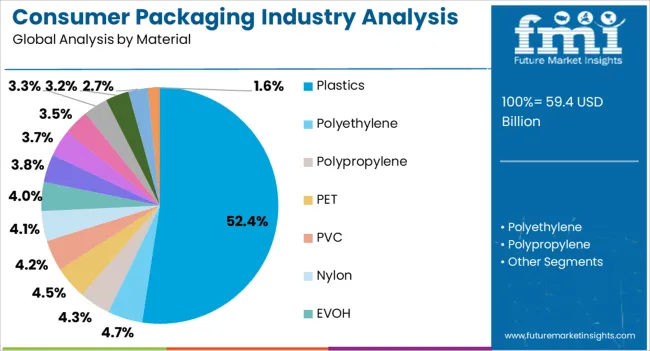
More than 52% of the market is made up of plastics. Even though the Plastic Waste Management Rules put pressure on the industry, plastics are still the most popular material because they are light, flexible, and cheap. The government's efforts to make recycling easier and the high import tariffs on polymer are pushing the use of rPET and Bio-PET. This supports a shift to more environmentally friendly plastics without losing the benefits of using them for high-volume packaging.
Insights into Beverage End-Use Segment
At a CAGR of 7.8%, beverages are the end-use that is growing the fastest. More young people are drinking alcohol and sports drinks, and the cold-chain infrastructure is growing to reach Tier 2 and 3 cities. This is causing the demand for beverage cans, PET bottles, and aseptic cartons to grow faster than the market average.
Consumer Packaging Industry Analysis in India Drivers, Restraints, and Opportunities
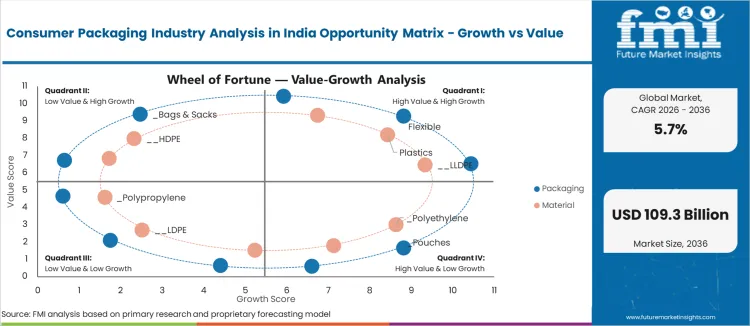
- The main things that are driving demand and causing packaging volume to grow steadily across India's food, personal care, and pharmaceutical categories are urbanization, the growth of e-commerce, and compliance with plastic regulations.
- Stringent plastic rules, fluctuating raw material costs, and a fragmented packaging manufacturing base make it hard for smaller converters to improve their margins and make the transition to more sustainable practices.
- India's packaging industry will be shaped by smart packaging with QR codes and RFID, the use of bioplastics, the customization of packaging for different cultures and regions, and the investment in high-end design.
India's growing food and drink industry is driving steady growth in packaging thanks to urbanization and government policies that help. The rise of e-commerce makes it easier for people to buy things, which in turn increases the demand for packaging. Indian manufacturers who want to be on international retail shelves are seeing a rise in demand for premium packaging because of higher sales of pharmaceutical packaging and higher export requirements for personal care products.
Food and Beverage Industry Expansion
Urbanization and the growing popularity of packaged foods are driving India's food and drink industry growth, which affects demand. Packaging-grade paper now makes up more than half of all paper made in the United States. This shows that demand is changing. Food that is ready to eat, snacks, and convenience formats need new packaging that keeps them fresh longer and meets the needs of modern retail displays.
E-Commerce and Digital Retail Growth
Growth is due to India's e-commerce boom, which has led to a rise in demand for packaging in electronics, clothing, and groceries. Online stores like Flipkart, Amazon India, Meesho and Swiggy buy a lot of packaging. The specifications for secondary and transit packaging are based on the need to reduce damage during last-mile delivery.
Sustainable Packaging Transition
As the rules for managing plastic waste get stricter for single-use plastic applications, more people are using sustainable packaging. In June 2025, Dabur India recycled and processed 35,000 MT of plastic waste from consumers so that it could be used again for packaging. MNCs like Coca-Cola and PepsiCo promised to use only recyclable packaging in India. This made it easier for recyclable film and fiber-based alternatives to become more popular.
Analysis of Consumer Packaging Industry Analysis in India by Key Countries
| Country | CAGR (2025–2035) |
|---|---|
| India (National) | 5.7% |
| Beverages end-use | 7.8% |
| Homecare & Toiletries | 7.6% |
| Plastics material | 5.8% |
| Paper material | 5.1% |
- China has the highest growth rates in global packaging demand, but India has the most structurally significant growth opportunity for large economies, with a 5.7% CAGR. This is because of its size, speed of urbanization, and government support.
- The fastest-growing application categories are beverage end-use (7.8% CAGR) and homecare (7.6% CAGR). This is because of India's young population and the rise in personal care consumption and export growth.
- Flexible packaging makes up 64.3% of the market because it fits with India's FMCG distribution economics. Lightweight, portable packaging formats make it easy to deliver goods to markets that are far away and have poor infrastructure.
- As major brands make promises and the government sets rules, the shift toward recyclable and bioplastic plastics is speeding up. These changes will need to be made by 2025–2030.
South India Packaging Demand Outlook
South India, led by Tamil Nadu, Telangana, and Karnataka, hosts significant FMCG manufacturing concentration with companies like Aachi Masala Foods incorporating regional cultural packaging design. Pharmaceutical manufacturing in Hyderabad's Genome Valley creates specialist packaging demand for blister, bottle, and pouch formats meeting international quality standards.
- South India FMCG manufacturing base creates large-scale flexible packaging procurement volumes
- Pharmaceutical cluster in Hyderabad requires premium packaging meeting FDA and EU regulatory specifications
- Personal care and cosmetics export growth from Chennai and Bangalore drives premium packaging investment.
North India Packaging Demand Outlook
North India, centered on Delhi NCR and Punjab's food processing belt, represents the largest single packaging procurement region driven by food, beverage, and consumer goods manufacturing concentration. E-commerce fulfilment hubs in Delhi NCR and Gurgaon generate large secondary packaging volumes for national distribution.
- Delhi NCR's e-commerce fulfilment centres generate high-volume secondary packaging procurement
- Punjab's food processing belt drives flexible packaging demand for grain, dairy, and spice categories
- Large consumer goods manufacturing base creates consistent primary packaging volume demand.
Competitive Landscape and Strategic Positioning
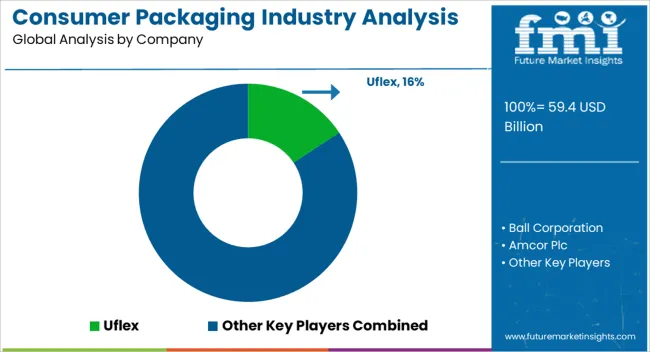
- India's consumer packaging industry is very competitive. Global multinationals and strong domestic champions compete in the areas of flexible, rigid, and sustainable packaging.
- Uflex is the best domestic manufacturer because it makes a wide range of multilayer flexible films and is always coming up with new ideas that are good for the environment, like fully recyclable BOPP/PE spout pouches that were announced in February 2025.
- The main areas of competition are developing new sustainable materials, improving the technical performance of flexible films, meeting pharmaceutical-grade quality standards, and making e-commerce transit packaging last longer.
There are both strong global multinationals and strong domestic champions in the Indian consumer packaging industry. Uflex is the leader in flexible packaging in India thanks to its expertise in making multilayer film and its commitment to sustainability. Ball Corporation make metal packaging, like cans for drinks. Amcor Plc's purchase of Phoenix Flexibles India in February 2025 will help the company make more environmentally friendly flexible packaging. Huhtamaki Oyj makes flexible and fiber-based packaging for food service and fast-moving consumer goods.
Essel Propak makes laminated tube packaging for personal care and oral care products. Avery Dennison makes materials for labeling and packaging.
Key Companies in the Consumer Packaging Industry Analysis in India
Key companies leading the Consumer Packaging Industry in India include:
- Uflex (India), Amcor Plc (Australia/Switzerland), and Huhtamaki Oyj (Finland) were named as some of the best companies in the India Consumer Packaging Industry. They make a wide range of flexible packaging, have factories in India, and their product lines include multilayer films, sustainable laminates, and food-grade packaging solutions that serve India's FMCG and pharmaceutical sectors.
- Ball Corporation (USA), and Essel Propak (India) are all leaders in the metal and specialty packaging categories. They make precise containers and tubes for beverage makers and personal care brands.
Competitive Benchmarking: Consumer Packaging Industry Analysis in India
| Company | Flexible Packaging | Sustainable Portfolio | India Manufacturing | Pharma Capability |
|---|---|---|---|---|
| Uflex | High | High | Strong | Medium |
| Amcor Plc | High | High | Strong | High |
| Huhtamaki Oyj | High | High | Moderate | Medium |
| Essel Propak | Medium | Medium | Strong | High |
| ITC Limited | Medium | High | Strong | Low |
Source: Future Market Insights competitive analysis, 2026.
Key Developments
- In December 2022, Uflex Ltd launched a fully recyclable spout pouch made of BOPP/PE films for ITC's Kissan Chotu Pack.
- In August 2023, Amcor PLC agreed to acquire Phoenix Flexibles India, a Gujarat-based flexible packaging maker; the deal closed in September 2023.
- In February 2022, Tetra Pak introduced Tetra Pak Reflect, its first India-made holographic carton packaging, in collaboration with Warana Dairy for 1-litre ghee packs.
Key Players in the Consumer Packaging Industry Analysis in India
Major Global Players
- Uflex
- Ball Corporation
- Amcor Plc
- Huhtamaki Oyj
- Essel Propak
- Avery Dennison
Report Scope and Coverage
| Metric | Value |
|---|---|
| Quantitative Units | USD billion |
| Segmentation | Packaging Format: Flexible Packaging, Rigid Packaging Material: Plastics, Paper, Aluminium Foil, Wood, Metal Technology: Injection Molding, Thermoforming, Blow Molding, Extrusion, Others Level: Primary, Secondary, Tertiary End-Use: Food, Beverage, Personal Care & Hygiene, Homecare & Toiletries, Pharmaceuticals, Consumer Electronics, Medical Devices |
| Distribution Channel | Online, Offline |
| Regions Covered | India (national) |
| Forecast Period | 2025 to 2035 |
| Key Companies Profiled | Uflex, Ball Corporation, Amcor Plc, Huhtamaki Oyj, Essel Propak, Avery Dennison |
| Approach | Bottom-up aggregation of packaging volumes and revenues by format, material, and end-use, validated against India consumer goods shipment data and manufacturer financial records. |
Consumer Packaging Industry Analysis in India by Segments
Consumer Packaging Industry Analysis in India Market Segmented by Packaging:
- Flexible
- Pouches
- Bags & Sacks
- Films & Wraps
- Sachets
- Stick Packs
- Cups
- Tubes
- Labels
- Clamshell
- Rigid
- Trays
- Blisters
- Tubs and Lids
- Caps & Closures
- Pump & Dispensers
- Boxes
- Cartons
- Bottles and Jars
- Cans
- Cores & Tubes
Consumer Packaging Industry Analysis in India Market Segmented by Material:
- Plastics
- Polyethylene
- HDPE
- LDPE
- LLDPE
- Polypropylene
- PET
- PVC
- Nylon
- EVOH
- Polystyrene
- Post-consumer Recycled
- Bioplastics
- PLA
- Starch-based Plastics
- Bio-PET
- Bio-PE
- Others
- Polyethylene
- Paper
- Aluminum Foil
- Wood
- Metal
- Aluminum
- Tin
- Steel
Consumer Packaging Industry Analysis in India Market Segmented by Technology:
- Injection Molding
- Thermoforming
- Blow Molding
- Others
- Extrusion
Consumer Packaging Industry Analysis in India Market Segmented by Level:
- Primary
- Secondary
- Tertiary
Consumer Packaging Industry Analysis in India Market Segmented by Distribution:
- Online
- Offline
Consumer Packaging Industry Analysis in India Market by Region:
- North America
- USA
- Canada
- Mexico
- Latin America
- Brazil
- Chile
- Rest of Latin America
- Western Europe
- Germany
- UK
- Italy
- Spain
- France
- Nordic
- BENELUX
- Rest of Western Europe
- Eastern Europe
- Russia
- Poland
- Hungary
- Balkan & Baltic
- Rest of Eastern Europe
- East Asia
- China
- Japan
- South Korea
- South Asia and Pacific
- India
- ASEAN
- Australia & New Zealand
- Rest of South Asia and Pacific
- Middle East & Africa
- Kingdom of Saudi Arabia
- Other GCC Countries
- Turkiye
- South Africa
- Other African Union
- Rest of Middle East & Africa
Research Sources and Bibliography
- India Brand Equity Foundation. (2025). India Packaging Industry Overview. IBEF.
- Ministry of Environment, Forest and Climate Change India. (2025). Plastic Waste Management Rules Update. MoEFCC.
- ABIHPEC. (2025). India Personal Care Industry Export Performance Report. ABIHPEC.
This bibliography is provided for reader reference and is not exhaustive. The full report contains the complete reference list and detailed citations.
This Report Answers
- Market sizing and revenue forecasting for India Consumer Packaging from 2025 to 2035.
- Segmentation by packaging format, material, technology, level, end-use, and distribution channel.
- Regional analysis covering North, South, West, East, and Central India packaging demand patterns.
- Sustainable packaging transition analysis including bioplastic adoption, recyclable film development, and Plastic Waste Management Rules impact.
- Food, beverage, and personal care sector packaging procurement trend analysis.
- E-commerce transit packaging requirements and last-mile delivery specification analysis.
- Competitive landscape covering global multinationals and India domestic packaging champions.
Frequently Asked Questions
How big will the Consumer Packaging Industry in India be in 2026?
The India Consumer Packaging Industry is expected to be worth $62.8 billion in 2026.
How big will the market be in 2035?
By 2035, the India Consumer Packaging Industry is expected to be worth $103.4 billion.
What will the CAGR be from 2025 to 2035?
The market is expected to grow at a rate of 5.7% per year from 2025 to 2035.
Which type of packaging is the most popular in India's consumer packaging market?
Flexible packaging makes up 64.3% of India's FMCG distribution network. It's popular because it's light, works well as a barrier, and can be printed with a brand name.
What part of the end-use market is growing the fastest in India?
Beverages grow at a CAGR of 7.8%, thanks to young people drinking more alcoholic and sports drinks and the growth of cold-chain distribution infrastructure.
What is making people in India use eco-friendly packaging?
The three main things that are pushing for a switch to sustainable packaging materials are the enforcement of the Plastic Waste Management Rules, the big MNCs' promises to recycle more, and Dabur India's use of post-consumer recycled plastic.
What are the main features of India's consumer packaging market in this report?
The report talks about packaging in India for food, drinks, personal care, pharmaceuticals, and other consumer goods. It covers both flexible and rigid formats, as well as plastic, paper, aluminum, and metal materials.
Preview the report firsthand - request a free sample
Get SampleGet the brochure for pricing and purchase details.
Get PDFTable of Content
- Key Takeaways
- Market Size and CAGR
- Top Growth Driver
- Fastest Growing Segment
- Leading Region
- Key Companies
- Emerging Opportunities
- Executive Summary
- Global Market Outlook
- Demand-side Trends
- Supply-side Trends
- Technology Roadmap Analysis
- Analysis and Recommendations
- Analyst Perspective (What is happening? Why now? What should investors know?)
- Key Questions Answered
- How large is the market?
- What is the CAGR?
- What are key trends?
- Which region dominates?
- Who are the leaders?
- Market Overview
- Market Coverage / Taxonomy
- Market Definition / Scope / Limitations
- Research Methodology
- Chapter Orientation
- Analytical Lens and Working Hypotheses
- Market Structure, Signals, and Trend Drivers
- Benchmarking and Cross-market Comparability
- Market Sizing, Forecasting, and Opportunity Mapping
- Research Design and Evidence Framework
- Desk Research Programme (Secondary Evidence)
- Expert Input and Fieldwork (Primary Evidence)
- Tooling, Models, and Reference Databases
- Data Engineering and Model Build
- Quality Assurance and Audit Trail
- Market Background
- Market Dynamics (Drivers, Restraints, Opportunity, Trends)
- Scenario Forecast (Optimistic, Likely, Conservative)
- Impact Analysis
- AI Impact
- Sustainability Impact
- Regulatory Impact
- Technology Impact
- Consumer / Buyer Analysis
- Purchase Drivers
- Adoption Barriers
- Buyer Journey
- Opportunity Map Analysis
- Product Life Cycle Analysis
- Supply Chain Analysis
- Investment Feasibility Matrix
- Value Chain Analysis
- PESTLE and Porter's Analysis
- Regulatory Landscape
- Regional Parent Market Outlook
- Production and Consumption Statistics
- Import and Export Statistics
- Global Market Analysis and Forecast, 2021 to 2036
- Historical Market Size Value (USD Million) Analysis, 2021 to 2025
- Current and Future Market Size Value (USD Million) Projections, 2026 to 2036
- Y-o-Y Growth Trend Analysis
- Absolute $ Opportunity Analysis
- Global Market Pricing Analysis, 2021 to 2036
- Global Market Analysis and Forecast, By Packaging, 2021 to 2036
- Introduction / Key Findings
- Historical Market Size Value (USD Million) Analysis By Packaging, 2021 to 2025
- Current and Future Market Size Value (USD Million) Analysis and Forecast By Packaging, 2026 to 2036
- Flexible
- Pouches
- Bags & Sacks
- Films & Wraps
- Sachets
- Stick Packs
- Cups
- Tubes
- Labels
- Clamshell
- Rigid
- Trays
- Blisters
- Tubs and Lids
- Caps & Closures
- Pump & Dispensers
- Flexible
- Y-o-Y Growth Trend Analysis By Packaging, 2021 to 2025
- Absolute $ Opportunity Analysis By Packaging, 2026 to 2036
- Global Market Analysis and Forecast, By Material, 2021 to 2036
- Introduction / Key Findings
- Historical Market Size Value (USD Million) Analysis By Material, 2021 to 2025
- Current and Future Market Size Value (USD Million) Analysis and Forecast By Material, 2026 to 2036
- Plastics
- Polyethylene
- HDPE
- LDPE
- LLDPE
- Polypropylene
- PET
- PVC
- Nylon
- EVOH
- Polystyrene
- Paper
- Aluminum Foil
- Wood
- Metal
- Aluminum
- Tin
- Steel
- Plastics
- Y-o-Y Growth Trend Analysis By Material, 2021 to 2025
- Absolute $ Opportunity Analysis By Material, 2026 to 2036
- Global Market Analysis and Forecast, By Technology, 2021 to 2036
- Introduction / Key Findings
- Historical Market Size Value (USD Million) Analysis By Technology, 2021 to 2025
- Current and Future Market Size Value (USD Million) Analysis and Forecast By Technology, 2026 to 2036
- Injection Molding
- Thermoforming
- Blow Molding
- Others
- Extrusion
- Y-o-Y Growth Trend Analysis By Technology, 2021 to 2025
- Absolute $ Opportunity Analysis By Technology, 2026 to 2036
- Global Market Analysis and Forecast, By Level, 2021 to 2036
- Introduction / Key Findings
- Historical Market Size Value (USD Million) Analysis By Level, 2021 to 2025
- Current and Future Market Size Value (USD Million) Analysis and Forecast By Level, 2026 to 2036
- Primary
- Secondary
- Tertiary
- Y-o-Y Growth Trend Analysis By Level, 2021 to 2025
- Absolute $ Opportunity Analysis By Level, 2026 to 2036
- Global Market Analysis and Forecast, By Distribution, 2021 to 2036
- Introduction / Key Findings
- Historical Market Size Value (USD Million) Analysis By Distribution, 2021 to 2025
- Current and Future Market Size Value (USD Million) Analysis and Forecast By Distribution, 2026 to 2036
- Online
- Offline
- Y-o-Y Growth Trend Analysis By Distribution, 2021 to 2025
- Absolute $ Opportunity Analysis By Distribution, 2026 to 2036
- Global Market Analysis and Forecast, By Region, 2021 to 2036
- Introduction
- Historical Market Size Value (USD Million) Analysis By Region, 2021 to 2025
- Current Market Size Value (USD Million) Analysis and Forecast By Region, 2026 to 2036
- North America
- Latin America
- Western Europe
- Eastern Europe
- East Asia
- South Asia and Pacific
- Middle East & Africa
- Market Attractiveness Analysis By Region
- North America Market Analysis and Forecast, By Country, 2021 to 2036
- Historical Market Size Value (USD Million) Trend Analysis By Market Taxonomy, 2021 to 2025
- Market Size Value (USD Million) Forecast By Market Taxonomy, 2026 to 2036
- By Country
- USA
- Canada
- Mexico
- By Packaging
- By Material
- By Technology
- By Level
- By Distribution
- By Country
- Market Attractiveness Analysis
- By Country
- By Packaging
- By Material
- By Technology
- By Level
- By Distribution
- Key Takeaways
- Latin America Market Analysis and Forecast, By Country
- Historical Market Size Value (USD Million) Trend Analysis By Market Taxonomy, 2021 to 2025
- Market Size Value (USD Million) Forecast By Market Taxonomy, 2026 to 2036
- By Country
- Brazil
- Chile
- Rest of Latin America
- By Packaging
- By Material
- By Technology
- By Level
- By Distribution
- By Country
- Market Attractiveness Analysis
- By Country
- By Packaging
- By Material
- By Technology
- By Level
- By Distribution
- Key Takeaways
- Western Europe Market Analysis and Forecast, By Country
- Historical Market Size Value (USD Million) Trend Analysis By Market Taxonomy, 2021 to 2025
- Market Size Value (USD Million) Forecast By Market Taxonomy, 2026 to 2036
- By Country
- Germany
- UK
- Italy
- Spain
- France
- Nordic
- BENELUX
- Rest of Western Europe
- By Packaging
- By Material
- By Technology
- By Level
- By Distribution
- By Country
- Market Attractiveness Analysis
- By Country
- By Packaging
- By Material
- By Technology
- By Level
- By Distribution
- Key Takeaways
- Eastern Europe Market Analysis and Forecast, By Country
- Historical Market Size Value (USD Million) Trend Analysis By Market Taxonomy, 2021 to 2025
- Market Size Value (USD Million) Forecast By Market Taxonomy, 2026 to 2036
- By Country
- Russia
- Poland
- Hungary
- Balkan & Baltic
- Rest of Eastern Europe
- By Packaging
- By Material
- By Technology
- By Level
- By Distribution
- By Country
- Market Attractiveness Analysis
- By Country
- By Packaging
- By Material
- By Technology
- By Level
- By Distribution
- Key Takeaways
- East Asia Market Analysis and Forecast, By Country
- Historical Market Size Value (USD Million) Trend Analysis By Market Taxonomy, 2021 to 2025
- Market Size Value (USD Million) Forecast By Market Taxonomy, 2026 to 2036
- By Country
- China
- Japan
- South Korea
- By Packaging
- By Material
- By Technology
- By Level
- By Distribution
- By Country
- Market Attractiveness Analysis
- By Country
- By Packaging
- By Material
- By Technology
- By Level
- By Distribution
- Key Takeaways
- South Asia and Pacific Market Analysis and Forecast, By Country
- Historical Market Size Value (USD Million) Trend Analysis By Market Taxonomy, 2021 to 2025
- Market Size Value (USD Million) Forecast By Market Taxonomy, 2026 to 2036
- By Country
- India
- ASEAN
- Australia & New Zealand
- Rest of South Asia and Pacific
- By Packaging
- By Material
- By Technology
- By Level
- By Distribution
- By Country
- Market Attractiveness Analysis
- By Country
- By Packaging
- By Material
- By Technology
- By Level
- By Distribution
- Key Takeaways
- Middle East & Africa Market Analysis and Forecast, By Country
- Historical Market Size Value (USD Million) Trend Analysis By Market Taxonomy, 2021 to 2025
- Market Size Value (USD Million) Forecast By Market Taxonomy, 2026 to 2036
- By Country
- Kingdom of Saudi Arabia
- Other GCC Countries
- Turkiye
- South Africa
- Other African Union
- Rest of Middle East & Africa
- By Packaging
- By Material
- By Technology
- By Level
- By Distribution
- By Country
- Market Attractiveness Analysis
- By Country
- By Packaging
- By Material
- By Technology
- By Level
- By Distribution
- Key Takeaways
- Key Countries Market Analysis
- USA
- Pricing Analysis
- Market Share Analysis, 2025
- By Packaging
- By Material
- By Technology
- By Level
- By Distribution
- Canada
- Pricing Analysis
- Market Share Analysis, 2025
- By Packaging
- By Material
- By Technology
- By Level
- By Distribution
- Mexico
- Pricing Analysis
- Market Share Analysis, 2025
- By Packaging
- By Material
- By Technology
- By Level
- By Distribution
- Brazil
- Pricing Analysis
- Market Share Analysis, 2025
- By Packaging
- By Material
- By Technology
- By Level
- By Distribution
- Chile
- Pricing Analysis
- Market Share Analysis, 2025
- By Packaging
- By Material
- By Technology
- By Level
- By Distribution
- Germany
- Pricing Analysis
- Market Share Analysis, 2025
- By Packaging
- By Material
- By Technology
- By Level
- By Distribution
- UK
- Pricing Analysis
- Market Share Analysis, 2025
- By Packaging
- By Material
- By Technology
- By Level
- By Distribution
- Italy
- Pricing Analysis
- Market Share Analysis, 2025
- By Packaging
- By Material
- By Technology
- By Level
- By Distribution
- Spain
- Pricing Analysis
- Market Share Analysis, 2025
- By Packaging
- By Material
- By Technology
- By Level
- By Distribution
- France
- Pricing Analysis
- Market Share Analysis, 2025
- By Packaging
- By Material
- By Technology
- By Level
- By Distribution
- India
- Pricing Analysis
- Market Share Analysis, 2025
- By Packaging
- By Material
- By Technology
- By Level
- By Distribution
- ASEAN
- Pricing Analysis
- Market Share Analysis, 2025
- By Packaging
- By Material
- By Technology
- By Level
- By Distribution
- Australia & New Zealand
- Pricing Analysis
- Market Share Analysis, 2025
- By Packaging
- By Material
- By Technology
- By Level
- By Distribution
- China
- Pricing Analysis
- Market Share Analysis, 2025
- By Packaging
- By Material
- By Technology
- By Level
- By Distribution
- Japan
- Pricing Analysis
- Market Share Analysis, 2025
- By Packaging
- By Material
- By Technology
- By Level
- By Distribution
- South Korea
- Pricing Analysis
- Market Share Analysis, 2025
- By Packaging
- By Material
- By Technology
- By Level
- By Distribution
- Russia
- Pricing Analysis
- Market Share Analysis, 2025
- By Packaging
- By Material
- By Technology
- By Level
- By Distribution
- Poland
- Pricing Analysis
- Market Share Analysis, 2025
- By Packaging
- By Material
- By Technology
- By Level
- By Distribution
- Hungary
- Pricing Analysis
- Market Share Analysis, 2025
- By Packaging
- By Material
- By Technology
- By Level
- By Distribution
- Kingdom of Saudi Arabia
- Pricing Analysis
- Market Share Analysis, 2025
- By Packaging
- By Material
- By Technology
- By Level
- By Distribution
- Turkiye
- Pricing Analysis
- Market Share Analysis, 2025
- By Packaging
- By Material
- By Technology
- By Level
- By Distribution
- South Africa
- Pricing Analysis
- Market Share Analysis, 2025
- By Packaging
- By Material
- By Technology
- By Level
- By Distribution
- USA
- Market Structure Analysis
- Competition Dashboard
- Competition Benchmarking
- Market Share Analysis of Top Players
- By Regional
- By Packaging
- By Material
- By Technology
- By Level
- By Distribution
- Emerging Startups
- Innovation Benchmarking
- Competition Analysis
- Competition Deep Dive
- Uflex
- Overview
- Product Portfolio
- Profitability by Market Segments
- Sales Footprint
- Strategy Overview
- Marketing Strategy
- Product Strategy
- Channel Strategy
- Uflex
- Ball Corporation
- Amcor Plc
- Huhtamaki Oyj
- Essel Propak
- Crown Holdings
- Avery Dennison
- Oji Holdings
- ITC Limited
- 3M Company
- Competition Deep Dive
- Case Studies
- Success Stories
- Recent Developments
- Assumptions & Acronyms Used


