

- Industry Size (2026)
- USD 4.2 Bn
- Forecast (2036)
- USD 11.8 Bn
- CAGR (2026 to 2036)
- 10.9%
Crunch Boosters Market Size, Market Forecast and Outlook By FMI
In 2025, the crunch boosters market was valued at USD 3.8 billion. Based on Future Market Insights’ analysis, demand is estimated to grow to USD 4.2 billion in 2026 and USD 11.8 billion by 2036. FMI projects a CAGR of 10.9% during the forecast period.
Procurement specification shifts are accelerating this trajectory, particularly in the United States, where food-away-from-home spending hit 58.9% of total food expenditures in 2024 [1]. As operators face labor shortages, they are replacing back-of-house preparation of croutons or fried onions with pre-packed, shelf-stable engineered toppings that ensure consistency. This move from scratch-cooking to "open-and-pour" solutions reduces operational complexity while satisfying the consumer demand for multisensory eating experiences.
Christian Friedrich, Product R&D Chef at Fresh Express, highlights the consumer mindset driving this category: "When it comes to meal planning, consumers value convenience, flavor, and choice, and they're looking for foods that meet these preferences." [9] This indicates that crunch boosters are no longer just garnishes but integral components of the chilled processed food solution architecture, where texture serves as a primary driver of purchase intent for pre-packaged kits and foodservice bowls.
Summary of Crunch Boosters
- Crunch Boosters Market Definition
- The industry covers shelf-stable, texture-adding toppings like fried alliums and grain clusters used to enhance meals.
- Demand Drivers in the Market
- Rising demand for "restaurant-quality" textures in home meals.
- Need for labor-saving, consistent garnishes in foodservice.
- Growth of salad kits and prepared bowls requiring separate crunchy components.
- Key Segments Analyzed in the FMI Report
- Fried alliums and seasoned blends dominate product types.
- Foodservice menu add-ons and salad kits are primary applications.
- High-growth Asia Pacific versus premiumized North American and European markets.
- Analyst Opinion at FMI
- Nandini Roy Choudhury, Principal Consultant for Food & Beverage, opines, "In the competitive ready-meal sector, texture is the new flavor. Our findings indicate that brands integrating separate crunch sachets into wet meals see higher repeat purchase rates, as it solves the 'soggy' problem that has historically plagued the category."
- Strategic Implications/Executive Takeaways
- Invest in moisture-resistant barrier coatings to extend crunch duration.
- Develop "fusion" flavor profiles (e.g., chili-lime, soy-ginger) for toppings.
- Partner directly with salad kit manufacturers for sachet inclusion.
- Methodology
- Validated through first-hand corporate production and capacity data.
- Zero reliance on speculative third-party market research reports.
- Based on verifiable industrial benchmarks and verified sources.
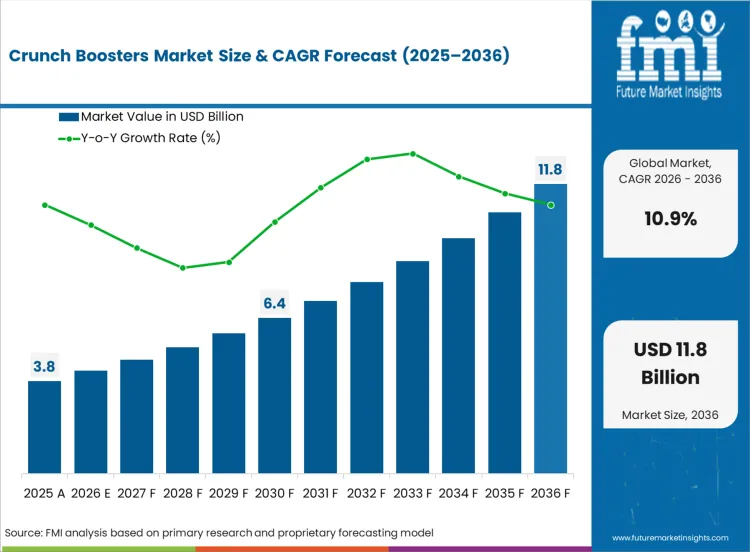
Growth is distributed across key consumption hubs, with China (14.2%), Japan (13.6%), the United States (11.8%), the United Kingdom (10.9%), and Germany (9.8%) leading adoption. In Asia Pacific, demand is fueled by the modernization of traditional catering, while Western markets prioritize convenient, premiumized salad and bowl toppings to compete with fast-casual standards.
Crunch Boosters Market Definition
The crunch boosters market comprises the production and trade of shelf-stable, texture-enhancing food toppings designed to be added to meals immediately before consumption. These include fried onion, garlic, jalapenos, seasoned grain clusters, extruded crispy noodles, and seed blends. The market focuses on engineered inclusions that maintain crunch integrity in high-moisture environments like salads, soups, and dressed bowls.
Crunch Boosters Market Inclusions
This report covers a comprehensive analysis of ambient toppings used in both foodservice and retail channels. It includes specific product categories such as fried alliums (onions, shallots), seasoned croutons, wonton strips, crispy tortilla strips, and puffed ancient grains (quinoa, amaranth). The scope extends to sachets found in salad kits, bulk foodservice packs for back-of-house assembly, and retail shakers sold directly to consumers for home use.
Crunch Boosters Market Exclusions
The scope excludes fresh produce garnishes (raw chopped onions, fresh herbs) that do not offer shelf-stable crunch. It also omits standard snack foods (potato chips, pretzels) unless they are specifically formulated, packaged, and marketed as meal toppers or ingredients. Wet toppings such as sauces, salsas, and glazes are strictly excluded, as the analysis focuses solely on dry, texture-providing inclusions.
Crunch Boosters Market Research Methodology
- Primary Research: Interviews with ingredient manufacturers, foodservice R&D chefs, procurement managers at QSR chains, and retail buyers for salad kits.
- Desk Research: Analysis of foodservice menu trends, retail scanner data for salad accompaniments, and import/export data for fried vegetable products.
- Market-Sizing and Forecasting: A demand-side model based on salad kit volume, foodservice bowl sales, and ready-meal production rates.
- Data Validation and Update Cycle: Cross-referencing supplier capacity announcements with downstream consumption data from restaurant associations and retail reports.
Segmental Analysis
Crunch Boosters Market Analysis by Product Type
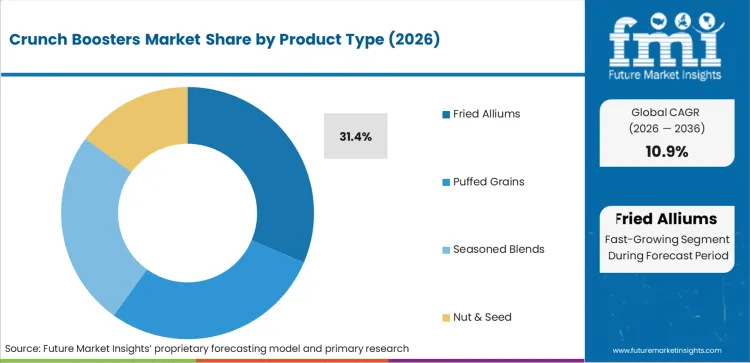
Fried Alliums (onions, garlic, shallots) currently hold a 31.4% share, supported by their universal appeal and cost-effectiveness. The dominance of these segments is reinforced by recent supply side expansions, such as Sugar Foods Corporation securing a 617,000 sq ft facility in Whiteland, Indiana, in December 2025 to boost capacity for such toppings [3]. This scale-up reflects the critical need for high-volume, consistent production of savory inclusions that can be deployed across thousands of restaurant locations or millions of retail units.
- Procurement trigger: Foodservice operators are switching to pre-fried alliums because in-house frying is labor-intensive and inconsistent. This shift allows kitchens to deploy high-impact flavor and texture instantly, as seen with Subway's rollout of SubKrunch™, a first-of-its-kind crispy sandwich topping [4].
- Flavor innovation: Brands are moving beyond plain salted toppings to complex seasoned blends that function as both texture and flavor carriers. This is evident in McCormick's launch of Flavor Maker Seasonings designed specifically to work as finishing toppings for various dishes [8].
- Health positioning: Puffed Grains are the fastest-growing subsegment at 14.7% CAGR as buyers seek "permissible indulgence." Demand accelerates where these toppings replace traditional bread crumbs in premium salad kits, offering a gluten-free or high-protein alternative that appeals to health-conscious consumers.
Crunch Boosters Market Analysis by Format
Seasoned blends are expanding at a 13.2% CAGR, driven by the consumer desire for complex flavor profiles in a single shake. The market is shifting from mono-texture ingredients to "fusion" formats where spice and crunch are delivered simultaneously, eliminating the need for multiple SKUs in the pantry or kitchen.
- Taste engineering: Buyers prioritize toppings that deliver "umami plus crunch" to elevate simple bases like rice bowls or leafy greens. This adoption accelerates as brands launch toppings with embedded seasoning, such as chili-lime or garlic-herb profiles, which increase usage frequency across different meal types.
- Convenience factor: Retailers are dedicating more shelf space to shaker-style seasoned blends that mimic restaurant finishing salts. Growth is anchored in the "home chef" trend, where consumers use these blends to replicate the multisensory experience of dining out without complex preparation [9].
- Cross-category utility: Seasoned formats are increasingly used as toppers for soups and proteins, not just salads. This versatility expands the addressable market for manufacturers, who can market the same SKU for multiple consumption occasions [2].
Crunch Boosters Market Analysis by End Use
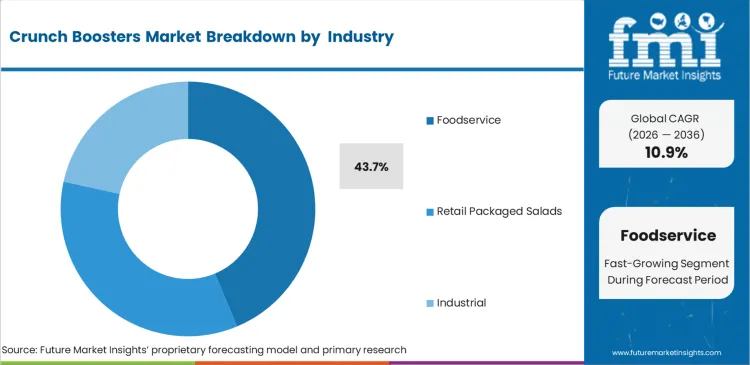
Foodservice leads with a 43.7% share, while Retail Packaged Salads are growing at 15.3% CAGR. The foodservice sector's reliance on these products is structural; with US food-away-from-home spending reaching nearly 60% of total food spend [1], operators require scalable solutions to deliver consistent dining experiences. Conversely, the retail sector is seeing innovation in "topper" sections of supermarkets, where brands engage consumers with diverse flavors and textures.
- Operational efficiency: QSR and fast-casual chains adopt bulk crunch boosters to minimize prep time and food waste. This adoption accelerates as labor markets tighten, forcing kitchens to rely on ready-to-use ingredients that require zero knife work or cooking time.
- Impulse purchasing: Retail end-use is driven by placement in the produce section, adjacent to bagged salads. This cross-merchandising strategy captures shoppers seeking an immediate flavor upgrade for their healthy meal purchases, converting a commodity sale into a value-added basket.
- Industrial integration: Food processing usage is growing as manufacturers of frozen meals seek ways to improve texture. Innovation here focuses on lipid-coated inclusions that can survive freeze-thaw cycles or microwaving, although the primary volume remains in "add-after-heating" formats.
Crunch Boosters Market Drivers, Restraints, and Opportunities
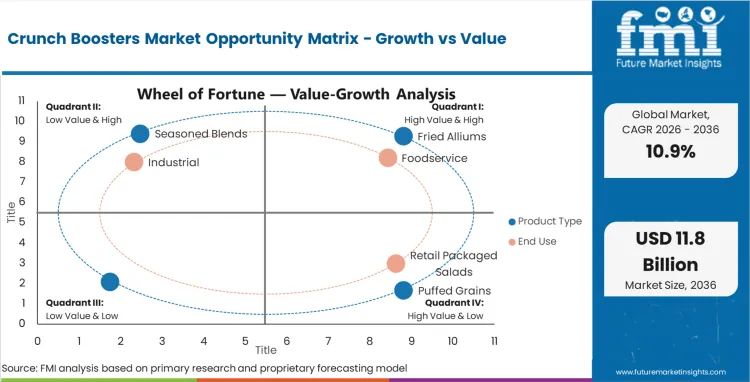
The primary driver for the crunch boosters market is the rapid expansion of the "fast-casual" dining model and its influence on retail products. Consumers accustomed to customizable bowls and salads in restaurants now expect the same textural complexity in grocery options. This mechanism drives procurement teams at retailers to demand salad kits with premium, differentiated toppings rather than generic croutons. The scale of this opportunity is evidenced by the US convenience store sector, where prepared food sales, a key adjacency for these toppings, accounted for over 72% of foodservice revenue in 2024 [2].
A significant restraint is the technical challenge of maintaining crunch integrity in high-moisture environments or throughout the supply chain. If packaging fails or barrier properties are insufficient, the product becomes soggy, leading to immediate consumer rejection and brand damage. Manufacturers mitigate this by investing in expensive high-barrier packaging films and lipid-based coatings, but these solutions add cost. In price-sensitive markets like Germany, where real hospitality turnover declined by 2.1% in 2024, the inability to pass these costs onto the consumer can limit the adoption of premium, high-tech crunchy inclusions [7].
- Global Fusion: Introducing Asian-inspired textures (e.g., crispy wontons, tempura bits) into Western markets offers a path to premiumization. This opportunity is supported by the massive scale of the Chinese catering sector, which surpassed 5 trillion yuan in revenue, creating a rich testbed for texture innovations that can be exported [5].
- Functional Crunch: Formulating toppings with protein fortification or low-sodium profiles addresses health-conscious demographics. Brands can capture this segment by launching lentil-based or seed-based toppers, leveraging the "healthy snacking" trend to enter the meal accompaniment space.
- Cross-Channel Branding: Bringing famous healthy snack chips brands into the foodservice topping aisle creates instant recognition. This strategy leverages existing brand equity to drive trial, as consumers are more likely to trust a familiar snack brand used as a salad topper than an unknown generic ingredient.
Regional Analysis
.webp "Top Country Growth Comparison Crunch Boosters Market Cagr (2026 2036)")
Based on the regional analysis, the Crunch Boosters market is segmented into North America, Latin America, Europe, East Asia, South Asia, Oceania and Middle East & Africa across 40+ countries. The full report also offers market attractiveness analysis based on regional trends.
| Country | CAGR (2026 to 2036) |
|---|---|
| United States | 11.8% |
| Japan | 13.6% |
| China | 14.2% |
| United Kingdom | 10.9% |
| Germany | 9.8% |
Source: Future Market Insights (FMI) analysis, based on proprietary forecasting model and primary research
North America Crunch Boosters Market Analysis
North America dominates the market in terms of value, driven by a mature "salad culture" and a high penetration of processed food kits. The region is characterized by a "green recovery," where consumers are returning to foodservice but demanding higher value for their spending. This dynamic forces operators to innovate with texture to justify price increases.
- United States: Demand for crunch boosters in the United States is set to grow at 11.8% CAGR through 2036, supported by the dominance of food-away-from-home spending which hit 58.9% in 2024 before procurement and budgeting cycles translate into higher deployment volumes [1]. This trajectory is supported by major capacity expansions, such as Sugar Foods' new Indiana facility, which directly addresses the need for scalable topping production [3].
FMI’s report includes a detailed growth analysis for North America. Beyond the US, Canada and Mexico present significant opportunities. In Canada, the focus is on multicultural flavor profiles in retail salad kits, while Mexico offers a growing market for spicy, corn-based toppings in both foodservice and retail savory snacks adjacencies. Operators in these markets should watch for cross-border flavor trends, particularly the migration of spicy profiles into standard meal formats [8].
East Asia Crunch Boosters Market Analysis
East Asia is a high-growth region where traditional culinary practices of adding texture (like tempura flakes or fried shallots) are being industrialized for mass catering. The region's market is shifting from artisanal, back-of-house preparation to standardized, manufactured solutions to meet the needs of chain restaurants and convenience stores.
- China: The China crunch boosters sector is poised to expand at 14.2% CAGR during 2026 to 2036 because the massive catering sector, which exceeded 5 trillion yuan in 2023, is standardizing operations which lifts utilization rates and justifies technology refresh decisions [5]. This rapid growth is creating a demand for bulk, shelf-stable fried toppings that can withstand delivery times without losing texture.
- Japan: Japan is likely to see crunch boosters revenues increase at 13.6% CAGR during 2026 to 2036, given the foodservice sector's 5.2% growth and the resulting push for capacity and workflow upgrades [6]. The high demand is further fueled by the "bento" culture, where ambient, crispy toppings are used to maintain texture in pre-packed meals.
FMI’s report includes a comprehensive assessment of East Asia. South Korea and Taiwan are also key markets to watch. South Korea's vibrant "anju" (food for drinking) culture drives innovation in savory, spicy toppings, while Taiwan's street food influence encourages the use of unique fried textures reminiscent of snack pellets. Suppliers in these markets are increasingly focusing on export-grade packaging to serve the broader Asian diaspora [10].
Europe Crunch Boosters Market Analysis
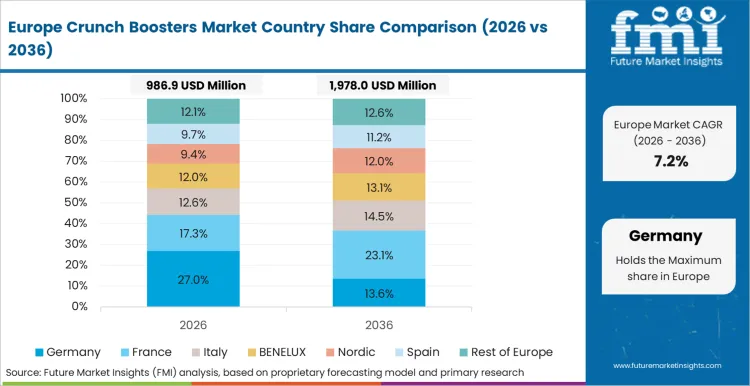
Europe represents a market focused on clean-label and premium ingredients. While volume growth is more moderate compared to Asia, the value per unit is higher due to strict regulations regarding additives and frying oils. The market is driven by the "healthification" of convenience food, where crunch must come from seeds, grains, or non-fried technologies.
- United Kingdom: In the United Kingdom, the crunch boosters market is forecast to advance at 10.9% CAGR through 2036, with growth anchored in the strong out-of-home food spending of £135.6 billion that converts into measurable budget allocation [10]. This spending supports a robust market for "meal deal" salads and wraps that rely on textured inclusions for differentiation.
- Germany: The outlook for crunch boosters in Germany indicates a 9.8% CAGR from 2026 to 2036 as operators seek affordable differentiation amidst a 2.1% decline in real hospitality turnover, strengthening demand from both public programs and private operators [7]. In this cost-conscious environment, cost-effective toppings like fried onions serve as a vital tool for adding value without raising menu prices.
FMI’s report includes detailed insights into the European market. France and Italy offer specific opportunities for gourmet toppings. In France, there is a growing trend for "salad comptoirs" which require high-end, artisanal-style toppings, while Italy remains a strong market for bread-based inclusions like premium croutons, often marketed alongside vegan salad dressing. Suppliers should monitor the regulatory landscape regarding acrylamide and frying fats, which shapes product formulation in these countries [7].
Competitive Aligners for Market Players
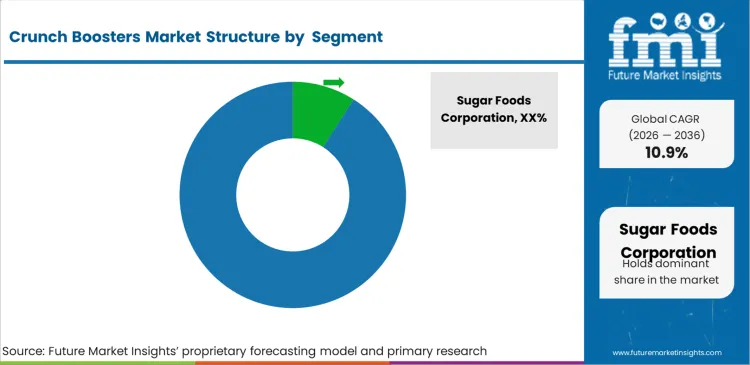
The competitive landscape is bifurcated between large-scale ingredient processors and nimble, flavor-forward specialty brands. Major players like Sugar Foods Corporation are leveraging massive operational footprints, such as their new Indiana plant, to dominate the volume end of the market, supplying huge QSR chains with consistent, low-cost toppings [3]. These entities win on logistics and reliability, ensuring that every salad kit or burger across a national chain delivers the exact same crunch profile.
Conversely, brand-led innovators are using co-branding and unique IP to capture premium segments. Collaborations like the one between Fresh Gourmet and Tajín for seasoned toppings exemplify this strategy, where the "crunch" is a vehicle for a recognizable, high-value flavor brand. This approach allows smaller players to bypass the commodity trap by offering a "branded ingredient" that consumers actively look for on menus or in store aisles.
Regulatory compliance and clean-label trends act as a filter for competition. Suppliers that can deliver "crunch" without partially hydrogenated oils or artificial preservatives gain a strategic advantage in Western markets. The ability to reformulate fried toppings to meet lower saturated fat targets while maintaining shelf life is a key technical barrier that protects advanced manufacturers from low-cost generic competition.
Recent Developments
The report includes full coverage of key trends from competitive benchmarking. Some of the recent developments covered in the reports:
- In December 2025, Sugar Foods Corporation secured a 617,000 sq ft production & distribution facility in Whiteland, Indiana.[3]
- In July 2024, Subway rolled out SubKrunch™, a first-of-its-kind crispy sandwich topping.[4]
Key Players in Crunch Boosters
- Sugar Foods Corporation
- McCormick & Company
- Fresh Gourmet Company
- Kellanova
- General Mills (via foodservice divisions)
- PepsiCo (via snack adjacencies)
- SensoryEffects (Balchem)
- Parker Products
- Wadden Systems
- Pecan Deluxe Candy Company
Scope of the Report
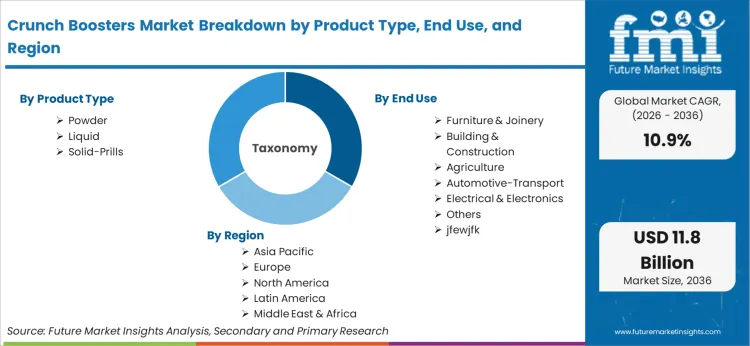
| Metric | Value |
|---|---|
| Quantitative Units | USD 4.2 billion (2026) to USD 11.8 billion (2036), at a CAGR of 10.9% |
| Market Definition | The crunch boosters market comprises the global production and trade of shelf-stable, texture-enhancing food toppings designed to be added to meals immediately before consumption, including fried vegetables, seasoned grains, and seed blends. |
| Product Type Segmentation | Fried Alliums, Puffed Grains, Seasoned Blends, Nut & Seed |
| Format Segmentation | Seasoned Blends, Fried, Baked, Extruded |
| Application Segmentation | Salad Kits, Ready Meals, Foodservice Menu Add-ons, Soup & Bowl Toppers |
| End Use Segmentation | Foodservice, Retail Packaged Salads, Industrial |
| Regions Covered | North America, Latin America, Europe, East Asia, South Asia, Oceania, Middle East and Africa |
| Countries Covered | United States, Canada, Mexico, Brazil, Argentina, Chile, Germany, Italy, France, United Kingdom, Spain, Benelux, Nordics, China, India, Japan, South Korea, Indonesia, Australia, South Africa, Turkey and 40 plus countries |
| Key Companies Profiled | Sugar Foods Corporation, McCormick & Company, Fresh Gourmet Company, Kellanova, General Mills, PepsiCo, SensoryEffects, Parker Products, Wadden Systems, Pecan Deluxe Candy Company |
| Forecast Period | 2026 to 2036 |
| Approach | Hybrid top down and bottom up market modeling validated through primary interviews with resin producers and panel manufacturers, supported by trade data benchmarking and plant level capacity verification |
Crunch Boosters Market Analysis by Segments
Product Type
- Fried Alliums
- Puffed Grains
- Seasoned Blends
- Nut & Seed
Format
- Seasoned Blends
- Fried
- Baked
- Extruded
End Use
- Foodservice
- Retail Packaged Salads
- Industrial
Region
- Asia Pacific
- India
- China
- Japan
- South Korea
- Indonesia
- Australia & New Zealand
- ASEAN
- Rest of Asia Pacific
- Europe
- Germany
- Italy
- France
- United Kingdom
- Spain
- Benelux
- Nordics
- Central & Eastern Europe
- Rest of Europe
- North America
- United States
- Canada
- Mexico
- Latin America
- Brazil
- Argentina
- Chile
- Rest of Latin America
- Middle East & Africa
- Kingdom of Saudi Arabia
- United Arab Emirates
- South Africa
- Turkey
- Rest of Middle East & Africa
Bibliography
- [1] Economic Research Service (USDA). (2025). Food-away-from-home share of total food spending reached 58.9% in 2024.
- [2] Convenience Store News. (2025). Prepared food accounted for 72.6% of convenience store foodservice sales in 2024.
- [3] Sugar Foods Corporation. (2025). Secured a 617,000 sq ft production & distribution facility in Whiteland, Indiana.
- [4] Subway Newsroom. (2024). Rolled out SubKrunch™, a first-of-its-kind crispy sandwich topping.
- [5] Gov.cn / Ministry of Food Processing. (2023). China catering revenue surpassed the 5 trillion yuan milestone.
- [6] Japan HRI Report / FAS USDA. (2024). Japan foodservice market sales estimated to grow at 5.2% in 2024.
- [7] Destatis. (2025). Germany hospitality turnover estimated to decline by 2.1% in real terms in 2024.
- [8] McCormick Group News. (2024). Launched Flavor Maker Seasonings designed to work as toppings.
- [9] Fresh Express. (2024). Launched Hot or Cold Salad and Noodle Meal Kits featuring crispy toppings.
- [10] HKEX News. (2024). UK spending on food & drink eaten out reached £135.6 billion.
This Report Addresses
- Market intelligence to enable structured strategic decision making across mature and emerging resin economies
- Market size estimation and 10 year revenue forecasts from 2026 to 2036, supported by validated capacity and trade benchmarks
- Growth opportunity mapping across powder, liquid, and solid forms with emphasis on ULEF and NAF grade transitions
- Segment and regional revenue forecasts covering building and construction, furniture and joinery, agriculture, automotive, and electrical applications
- Competition strategy assessment including integration models, cost survivability positioning, and compliance capability benchmarking
- Product reformulation and emission compliance tracking including E0, E1, CARB Phase 2, and EPA TSCA Title VI aligned grades
- Regulatory impact analysis covering formaldehyde emission mandates, indoor air quality thresholds, and export driven specification upgrades
- Market report delivery in PDF, Excel, PPT, and interactive dashboard formats for executive and operational use
Frequently Asked Questions
How large is the demand for Crunch Boosters in the global market in 2026?
Demand for Crunch Boosters in the global market is estimated to be valued at USD 4.2 billion in 2026.
What will be the market size of Crunch Boosters in the global market by 2036?
Market size for Crunch Boosters is projected to reach USD 11.8 billion by 2036.
What is the expected demand growth for Crunch Boosters in the global market between 2026 and 2036?
Demand for Crunch Boosters in the global market is expected to grow at a CAGR of 10.9% between 2026 and 2036.
Which Product Type is poised to lead global sales by 2026?
Fried Alliums are expected to lead the global market with a 31.4% share, driven by their widespread adoption in foodservice for burger and salad enhancement.
How significant is the role of Foodservice End Use in driving Crunch Boosters adoption in 2026?
Foodservice represents a critical segment, projected to hold a substantial 43.7% share as operators rely on pre-made toppings to save labor.
What is Driving Demand in the United States?
High food-away-from-home spending and the "snackification" of meals are driving demand for premium texture add-ons in the United States.
What Compliance Standards are Referenced for the United States?
Food safety and clean-label standards regarding artificial additives and trans fats are key benchmarks.
What is the United States Growth Outlook in this Report?
The United States is projected to grow at a CAGR of 11.8% during 2026 to 2036.
Why is Europe described as an Important Regulation Hub in this Report?
Strict regulations on frying oils, acrylamide, and clean-label ingredients drive innovation in non-fried and healthier topping alternatives.
What Type of Demand Dominates in Europe?
Demand for premium, non-GMO, and clean-label toppings dominates regional consumption in Europe.
What is Germany Growth Outlook in this Report?
Germany is projected to expand at a CAGR of 9.8% during 2026 to 2036.
Does the Report Cover Japan in its Regional Analysis?
Japan is included within East Asia under the regional scope of analysis.
What are the Sources referred to for analyzing the Market in Japan?
Foodservice market sales data and consumer spending reports are cited as primary reference sources for Japan.
What is the Main Demand Theme Linked to Japan in Asia Coverage?
Asia Pacific demand is associated with the industrialization of traditional catering and the need for shelf-stable delivery solutions.
Does the Report Cover China in its Regional Analysis?
China is included within East Asia under the regional coverage framework.
What is the Main China Related Demand Theme in Asia Coverage?
Massive scale in the catering sector and the adoption of standardized supply chain solutions drive demand in China.
Which Product Formats are Strategically Important for Asia Pacific Supply Chains?
Bulk, moisture-resistant packaging formats are prioritized to support the high volume of the catering and delivery sectors.
What is Crunch Boosters and What is It Mainly Used For?
Crunch Boosters are shelf-stable food toppings used to add texture and flavor to salads, soups, bowls, and other meals.
What does Crunch Boosters Market Mean in this Report?
Crunch Boosters market refers to the global production, trade, and industrial consumption of engineered crispy food toppings.
What is Included in the Scope of this Crunch Boosters Market Report?
Scope covers shelf-stable toppings like fried alliums and seasoned grains, excluding fresh produce and standard snack chips.
What is Excluded from the Scope of this Report?
Fresh garnishes, wet toppings like sauces, and general snack foods not marketed as toppers are excluded.
What does Market Forecast Mean on this Page?
Market forecast represents a model based projection built on defined assumptions for strategic planning purposes.
How does FMI Build and Validate the Crunch Boosters Market Forecast?
Forecast is developed using hybrid top down and bottom up modeling validated through trade data, capacity checks, and industry review.
What does Zero Reliance on Speculative Third Party Market Research Mean Here?
Primary interviews and verifiable public datasets are used instead of unverified syndicated market estimates.
Preview the report firsthand - request a free sample
Get SampleGet the brochure for pricing and purchase details.
Get PDFTable of Content
- Executive Summary
- Global Market Outlook
- Demand-side Trends
- Supply-side Trends
- Technology Roadmap Analysis
- Analysis and Recommendations
- Market Overview
- Market Coverage / Taxonomy
- Market Definition / Scope / Limitations
- Research Methodology
- Chapter Orientation
- Analytical Lens and Working Hypotheses
- Market Structure, Signals, and Trend Drivers
- Benchmarking and Cross-market Comparability
- Market Sizing, Forecasting, and Opportunity Mapping
- Research Design and Evidence Framework
- Desk Research Programme (Secondary Evidence)
- Company Annual and Sustainability Reports
- Peer-reviewed Journals and Academic Literature
- Corporate Websites, Product Literature, and Technical Notes
- Earnings Decks and Investor Briefings
- Statutory Filings and Regulatory Disclosures
- Technical White Papers and Standards Notes
- Trade Journals, Industry Magazines, and Analyst Briefs
- Conference Proceedings, Webinars, and Seminar Materials
- Government Statistics Portals and Public Data Releases
- Press Releases and Reputable Media Coverage
- Specialist Newsletters and Curated Briefings
- Sector Databases and Reference Repositories
- FMI Internal Proprietary Databases and Historical Market Datasets
- Subscription Datasets and Paid Sources
- Social Channels, Communities, and Digital Listening Inputs
- Additional Desk Sources
- Expert Input and Fieldwork (Primary Evidence)
- Primary Modes
- Qualitative Interviews and Expert Elicitation
- Quantitative Surveys and Structured Data Capture
- Blended Approach
- Why Primary Evidence is Used
- Field Techniques
- Interviews
- Surveys
- Focus Groups
- Observational and In-context Research
- Social and Community Interactions
- Stakeholder Universe Engaged
- C-suite Leaders
- Board Members
- Presidents and Vice Presidents
- R&D and Innovation Heads
- Technical Specialists
- Domain Subject-matter Experts
- Scientists
- Physicians and Other Healthcare Professionals
- Governance, Ethics, and Data Stewardship
- Research Ethics
- Data Integrity and Handling
- Primary Modes
- Tooling, Models, and Reference Databases
- Desk Research Programme (Secondary Evidence)
- Data Engineering and Model Build
- Data Acquisition and Ingestion
- Cleaning, Normalisation, and Verification
- Synthesis, Triangulation, and Analysis
- Quality Assurance and Audit Trail
- Market Background
- Market Dynamics
- Drivers
- Restraints
- Opportunity
- Trends
- Scenario Forecast
- Demand in Optimistic Scenario
- Demand in Likely Scenario
- Demand in Conservative Scenario
- Opportunity Map Analysis
- Product Life Cycle Analysis
- Supply Chain Analysis
- Investment Feasibility Matrix
- Value Chain Analysis
- PESTLE and Porter’s Analysis
- Regulatory Landscape
- Regional Parent Market Outlook
- Production and Consumption Statistics
- Import and Export Statistics
- Market Dynamics
- Global Market Analysis 2021 to 2025 and Forecast, 2026 to 2036
- Historical Market Size Value (USD Million) Analysis, 2021 to 2025
- Current and Future Market Size Value (USD Million) Projections, 2026 to 2036
- Y-o-Y Growth Trend Analysis
- Absolute $ Opportunity Analysis
- Global Market Pricing Analysis 2021 to 2025 and Forecast 2026 to 2036
- Global Market Analysis 2021 to 2025 and Forecast 2026 to 2036, By Product Type
- Introduction / Key Findings
- Historical Market Size Value (USD Million) Analysis By Product Type , 2021 to 2025
- Current and Future Market Size Value (USD Million) Analysis and Forecast By Product Type , 2026 to 2036
- Fried Alliums
- Puffed Grains
- Seasoned Blends
- Nut & Seed
- Fried Alliums
- Y-o-Y Growth Trend Analysis By Product Type , 2021 to 2025
- Absolute $ Opportunity Analysis By Product Type , 2026 to 2036
- Global Market Analysis 2021 to 2025 and Forecast 2026 to 2036, By End Use
- Introduction / Key Findings
- Historical Market Size Value (USD Million) Analysis By End Use, 2021 to 2025
- Current and Future Market Size Value (USD Million) Analysis and Forecast By End Use, 2026 to 2036
- Foodservice
- Retail Packaged Salads
- Industrial
- Foodservice
- Y-o-Y Growth Trend Analysis By End Use, 2021 to 2025
- Absolute $ Opportunity Analysis By End Use, 2026 to 2036
- Global Market Analysis 2021 to 2025 and Forecast 2026 to 2036, By Region
- Introduction
- Historical Market Size Value (USD Million) Analysis By Region, 2021 to 2025
- Current Market Size Value (USD Million) Analysis and Forecast By Region, 2026 to 2036
- North America
- Latin America
- Western Europe
- Eastern Europe
- East Asia
- South Asia and Pacific
- Middle East & Africa
- Market Attractiveness Analysis By Region
- North America Market Analysis 2021 to 2025 and Forecast 2026 to 2036, By Country
- Historical Market Size Value (USD Million) Trend Analysis By Market Taxonomy, 2021 to 2025
- Market Size Value (USD Million) Forecast By Market Taxonomy, 2026 to 2036
- By Country
- USA
- Canada
- Mexico
- By Product Type
- By End Use
- By Country
- Market Attractiveness Analysis
- By Country
- By Product Type
- By End Use
- Key Takeaways
- Latin America Market Analysis 2021 to 2025 and Forecast 2026 to 2036, By Country
- Historical Market Size Value (USD Million) Trend Analysis By Market Taxonomy, 2021 to 2025
- Market Size Value (USD Million) Forecast By Market Taxonomy, 2026 to 2036
- By Country
- Brazil
- Chile
- Rest of Latin America
- By Product Type
- By End Use
- By Country
- Market Attractiveness Analysis
- By Country
- By Product Type
- By End Use
- Key Takeaways
- Western Europe Market Analysis 2021 to 2025 and Forecast 2026 to 2036, By Country
- Historical Market Size Value (USD Million) Trend Analysis By Market Taxonomy, 2021 to 2025
- Market Size Value (USD Million) Forecast By Market Taxonomy, 2026 to 2036
- By Country
- Germany
- UK
- Italy
- Spain
- France
- Nordic
- BENELUX
- Rest of Western Europe
- By Product Type
- By End Use
- By Country
- Market Attractiveness Analysis
- By Country
- By Product Type
- By End Use
- Key Takeaways
- Eastern Europe Market Analysis 2021 to 2025 and Forecast 2026 to 2036, By Country
- Historical Market Size Value (USD Million) Trend Analysis By Market Taxonomy, 2021 to 2025
- Market Size Value (USD Million) Forecast By Market Taxonomy, 2026 to 2036
- By Country
- Russia
- Poland
- Hungary
- Balkan & Baltic
- Rest of Eastern Europe
- By Product Type
- By End Use
- By Country
- Market Attractiveness Analysis
- By Country
- By Product Type
- By End Use
- Key Takeaways
- East Asia Market Analysis 2021 to 2025 and Forecast 2026 to 2036, By Country
- Historical Market Size Value (USD Million) Trend Analysis By Market Taxonomy, 2021 to 2025
- Market Size Value (USD Million) Forecast By Market Taxonomy, 2026 to 2036
- By Country
- China
- Japan
- South Korea
- By Product Type
- By End Use
- By Country
- Market Attractiveness Analysis
- By Country
- By Product Type
- By End Use
- Key Takeaways
- South Asia and Pacific Market Analysis 2021 to 2025 and Forecast 2026 to 2036, By Country
- Historical Market Size Value (USD Million) Trend Analysis By Market Taxonomy, 2021 to 2025
- Market Size Value (USD Million) Forecast By Market Taxonomy, 2026 to 2036
- By Country
- India
- ASEAN
- Australia & New Zealand
- Rest of South Asia and Pacific
- By Product Type
- By End Use
- By Country
- Market Attractiveness Analysis
- By Country
- By Product Type
- By End Use
- Key Takeaways
- Middle East & Africa Market Analysis 2021 to 2025 and Forecast 2026 to 2036, By Country
- Historical Market Size Value (USD Million) Trend Analysis By Market Taxonomy, 2021 to 2025
- Market Size Value (USD Million) Forecast By Market Taxonomy, 2026 to 2036
- By Country
- Kingdom of Saudi Arabia
- Other GCC Countries
- Turkiye
- South Africa
- Other African Union
- Rest of Middle East & Africa
- By Product Type
- By End Use
- By Country
- Market Attractiveness Analysis
- By Country
- By Product Type
- By End Use
- Key Takeaways
- Key Countries Market Analysis
- USA
- Pricing Analysis
- Market Share Analysis, 2025
- By Product Type
- By End Use
- Canada
- Pricing Analysis
- Market Share Analysis, 2025
- By Product Type
- By End Use
- Mexico
- Pricing Analysis
- Market Share Analysis, 2025
- By Product Type
- By End Use
- Brazil
- Pricing Analysis
- Market Share Analysis, 2025
- By Product Type
- By End Use
- Chile
- Pricing Analysis
- Market Share Analysis, 2025
- By Product Type
- By End Use
- Germany
- Pricing Analysis
- Market Share Analysis, 2025
- By Product Type
- By End Use
- UK
- Pricing Analysis
- Market Share Analysis, 2025
- By Product Type
- By End Use
- Italy
- Pricing Analysis
- Market Share Analysis, 2025
- By Product Type
- By End Use
- Spain
- Pricing Analysis
- Market Share Analysis, 2025
- By Product Type
- By End Use
- France
- Pricing Analysis
- Market Share Analysis, 2025
- By Product Type
- By End Use
- India
- Pricing Analysis
- Market Share Analysis, 2025
- By Product Type
- By End Use
- ASEAN
- Pricing Analysis
- Market Share Analysis, 2025
- By Product Type
- By End Use
- Australia & New Zealand
- Pricing Analysis
- Market Share Analysis, 2025
- By Product Type
- By End Use
- China
- Pricing Analysis
- Market Share Analysis, 2025
- By Product Type
- By End Use
- Japan
- Pricing Analysis
- Market Share Analysis, 2025
- By Product Type
- By End Use
- South Korea
- Pricing Analysis
- Market Share Analysis, 2025
- By Product Type
- By End Use
- Russia
- Pricing Analysis
- Market Share Analysis, 2025
- By Product Type
- By End Use
- Poland
- Pricing Analysis
- Market Share Analysis, 2025
- By Product Type
- By End Use
- Hungary
- Pricing Analysis
- Market Share Analysis, 2025
- By Product Type
- By End Use
- Kingdom of Saudi Arabia
- Pricing Analysis
- Market Share Analysis, 2025
- By Product Type
- By End Use
- Turkiye
- Pricing Analysis
- Market Share Analysis, 2025
- By Product Type
- By End Use
- South Africa
- Pricing Analysis
- Market Share Analysis, 2025
- By Product Type
- By End Use
- USA
- Market Structure Analysis
- Competition Dashboard
- Competition Benchmarking
- Market Share Analysis of Top Players
- By Regional
- By Product Type
- By End Use
- Competition Analysis
- Competition Deep Dive
- Sugar Foods Corporation
- Overview
- Product Portfolio
- Profitability by Market Segments (Product/Age /Sales Channel/Region)
- Sales Footprint
- Strategy Overview
- Marketing Strategy
- Product Strategy
- Channel Strategy
- McCormick & Company
- Fresh Gourmet Company
- Kellanova
- General Mills (via foodservice divisions)
- PepsiCo (via snack adjacencies)
- SensoryEffects (Balchem)
- Sugar Foods Corporation
- Competition Deep Dive
- Assumptions & Acronyms Used


