

- Market Size (2026)
- USD 1.1 Bn
- Forecast (2036)
- USD 3.0 Bn
- CAGR (2026 to 2036)
- 10.4%
Fruit Wine Market Size, Market Forecast and Outlook By FMI
Summary of the Fruit Wine Market
- Demand and Growth Drivers
- Consumer demand for flavored and lower-alcohol wine alternatives is likely to sustain growth of fruit wines across supermarket, specialty, and online retail channels.
- Premiumization of artisanal and small-batch fruit wine production is expected to increase consumer willingness to pay higher price points for craft and heritage fruit wine brands.
- Growth in at-home entertaining and gifting occasions is likely to create incremental demand for fruit wine varieties positioned as unique and conversation-worthy alternatives through 2036.
- Product and Segment View
- Supermarkets & Hypermarkets is likely to account for 41.8% of the platform segment, reflecting sustained demand across primary categories.
- Household Consumption is likely to account for 46.3% of the application segment, reflecting sustained demand across primary categories.
- Berry Wine is likely to account for 38.6% of the fruit type segment, reflecting sustained demand across primary categories.
- Geography and Competitive Outlook
- China is likely to remain a key market at 7.5%, supported by expanding middle-class alcohol consumption.
- South Korea is likely to sustain growth at 7.3%, driven by rapid alternative beverage adoption.
- Companies that combine product breadth with distribution reach and brand positioning are likely to strengthen competitive positioning during the forecast period.
- Analyst Opinion
- Nandini Roy Choudhury, Principal Consultant at FMI says, 'The fruit wine market reflects evolving consumer preferences toward flavored, approachable, and lower-alcohol wine alternatives. Producers that can combine quality fruit sourcing with craft positioning and strong retail or e-commerce distribution are positioned to capture growing consumer spending on alternative wine categories during the forecast period.'
- The fruit wine market is evolving from niche alternative beverage toward a recognized category within the broader wine market.
- Adoption is increasing due to younger consumer preference for flavored, approachable wine options.
- Demand is further supported by craft beverage trends and e-commerce distribution enabling artisan producer market access.
- Producers with quality fruit sourcing, craft positioning, and multi-channel distribution are likely to capture category growth.
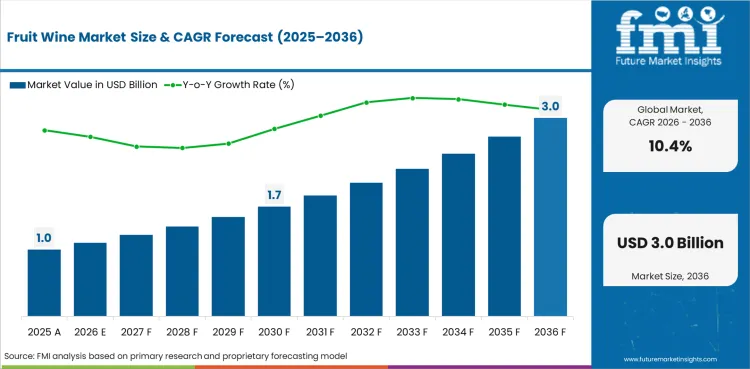
Key Takeaways, Market Size, and Forecast
- The fruit wine market was valued at USD 1.02 billion in 2025 and is expected to reach USD 1.1 billion by the end of 2026.
- The market is projected to grow at a CAGR of 10.4% from 2026 to 2036, reaching USD 3.03 billion by 2036.
- The market is projected to create an incremental opportunity of USD 1.90 billion between 2026 and 2036.
- Supermarkets & hypermarkets are expected to dominate the distribution channel segment with a 41.8% share, supported by strong retail visibility and consumer accessibility.
- In 2026, household consumption is expected to account for 46.3% of the application segment, driven by expanding consumer interest in berry wines and alternative alcoholic beverages with flavor diversity and lower alcohol content appeal.
- China (7.5%) and South Korea (7.3%) are among the fastest-growing markets globally.
Fruit Wine Market Definition
The fruit wine market includes alcoholic wines produced from non-grape fruits including berries, apples, stone fruits, tropical fruits, and other fruit sources, covering still, sparkling, and fortified fruit wine formats for household consumption, hospitality, and gifting applications.
Fruit Wine Market Inclusions
Market scope encompasses all commercially traded fruit wines categorized by fruit type (berry wine, apple wine, tropical fruit wine, stone fruit wine, others), distribution channel (supermarkets and hypermarkets, specialty stores, online retail, hospitality), end use (household consumption, hospitality, gifting), production type (artisanal/craft, commercial), and alcohol content (low-alcohol, standard, fortified). The range of revenue sizes is from 2026 to 2036.
Fruit Wine Market Exclusions
The scope does not include grape wines, fruit-flavored grape wines, fruit ciders classified under the cider category, or non-alcoholic fruit beverages.
Fruit Wine Market Research Methodology
- Primary Research: FMI analysts conducted interviews with manufacturers, end-use procurement teams, and distribution partners across key markets.
- Desk Research: Combined data from industry associations, regulatory filings, trade publications, and manufacturer disclosures.
- Market sizing and forecasting: Bottom-up aggregation across product types, end-use applications, and regional adoption curves, validated against industry benchmarks.
- Data validation: Cross-checked every quarter against production data, trade statistics, and manufacturer-reported figures.
Why is the Fruit Wine Market Growing?
- Consumer interest in flavored wine alternatives and lower-alcohol options is creating sustained demand for fruit wines positioned as accessible and distinctive beverage choices.
- Premiumization of artisanal and craft fruit wine brands is increasing consumer spending on heritage and small-batch production formats.
- China (7.5%) and South Korea (7.3%) lead growth, reflecting expanding alternative alcoholic beverage consumption and growing consumer interest in flavor diversity.
The fruit wine market is expanding at 10.4% CAGR, reflecting consumer demand for flavored alcoholic alternatives, craft beverage trends, and distribution channel expansion. Berry wine accounts for 38.6% of the fruit type segment, reflecting strong consumer preference for blueberry, blackberry, raspberry, and mixed berry wine varieties.
Supermarkets and hypermarkets account for 41.8% of distribution, representing the primary retail channel for consumer fruit wine purchasing. Household consumption accounts for 46.3% of end use, reflecting at-home drinking occasions that favor accessible, approachable wine formats.
E-commerce and direct-to-consumer channels are expanding fruit wine accessibility beyond traditional wine retail. Smaller producers benefit from online distribution that enables national reach without requiring extensive wholesale relationships, supporting craft brand growth and product discovery.
Market Segmentation Analysis
- Supermarkets & Hypermarkets accounts for 41.8% of the platform segment, reflecting consistent demand across primary applications.
- Household Consumption accounts for 46.3% of the application segment, reflecting consistent demand across primary applications.
- Berry Wine accounts for 38.6% of the fruit type segment, reflecting consistent demand across primary applications.
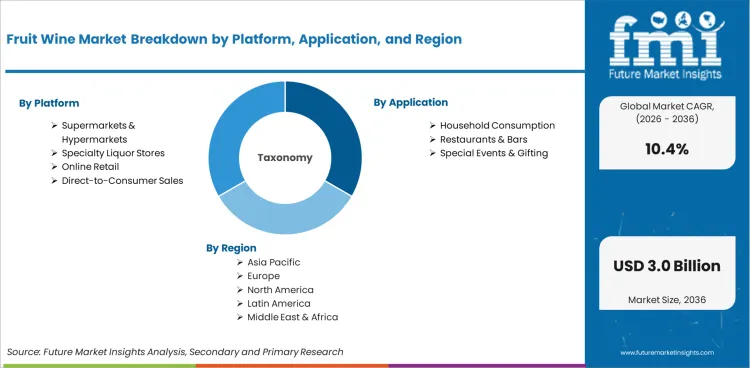
The fruit wine market is segmented by platform, application, fruit type, distribution channel.
Insights into the Supermarkets & Hypermarkets Platform Segment
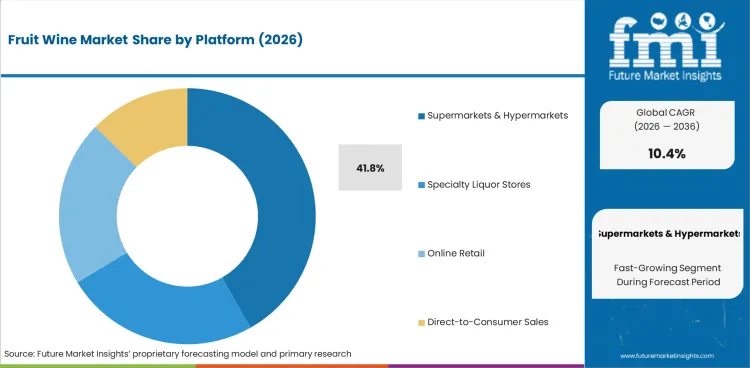
In 2026, supermarkets & hypermarkets is expected to account for 41.8% of the platform segment. Demand reflects consumer preferences and procurement patterns where quality, performance, and value are critical.
Competitive positioning depends on brand strength, product quality, and distribution reach. Companies with established customer relationships and consistent product delivery are likely to maintain share.
Insights into the Household Consumption Application Segment
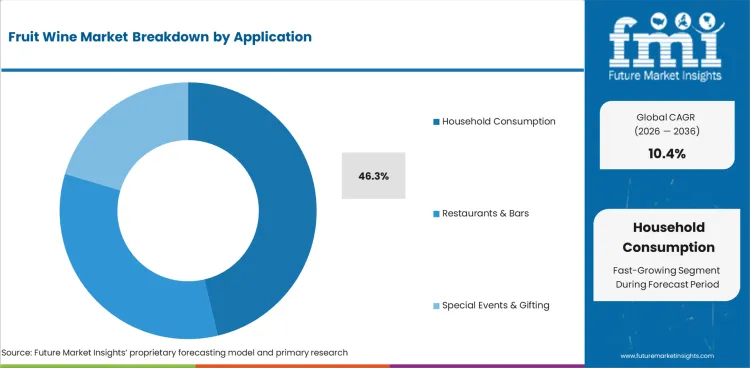
In 2026, household consumption is expected to account for 46.3% of the application segment. Demand reflects consumer preferences and procurement patterns where quality, performance, and value are critical.
Competitive positioning depends on brand strength, product quality, and distribution reach. Companies with established customer relationships and consistent product delivery are likely to maintain share.
Fruit Wine Market Drivers, Restraints, and Opportunities
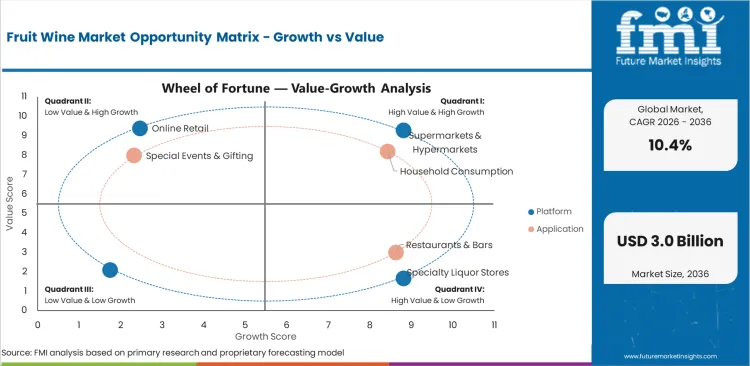
- Consumer demand for flavored wine alternatives and craft beverage experiences is creating sustained growth across fruit wine categories.
- Limited shelf space allocation in traditional wine retail and consumer perception challenges compared to grape wine create distribution and awareness barriers.
- Premiumization and craft positioning are creating higher-margin opportunities for artisanal fruit wine producers with distinctive heritage or production stories.
The fruit wine market reflects evolving consumer beverage preferences, craft production trends, and distribution channel expansion.
Alternative Wine Consumer Demand
Younger consumers seeking flavor variety and lower alcohol content are driving fruit wine adoption. Berry, apple, and tropical fruit wines offer approachable taste profiles that appeal to consumers who find traditional grape wines intimidating or overly tannic.
Shelf Space and Perception Barriers
Traditional wine retailers allocate limited shelf space to fruit wines, and some consumers perceive fruit wines as inferior to grape wines. Education and tasting events help overcome these perception barriers in markets with established wine culture.
Craft and Artisanal Production Growth
Small-batch fruit wine producers with local sourcing and heritage stories command premium pricing and consumer loyalty. Agritourism and winery visits create direct consumer relationships that support brand building.
Analysis of Fruit Wine Market By Key Countries
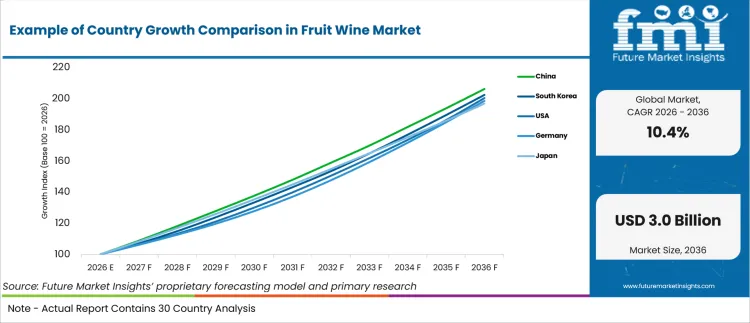
| Country | CAGR |
|---|---|
| China | 7.5% |
| South Korea | 7.3% |
| USA | 7.2% |
| Germany | 7.1% |
| Japan | 7.0% |
| UK | 6.9% |
| Australia | 6.8% |
| France | 6.5% |
| Italy | 6.4% |
| New Zealand | 6.2% |
Source: FMI analysis based on primary research and proprietary forecasting model
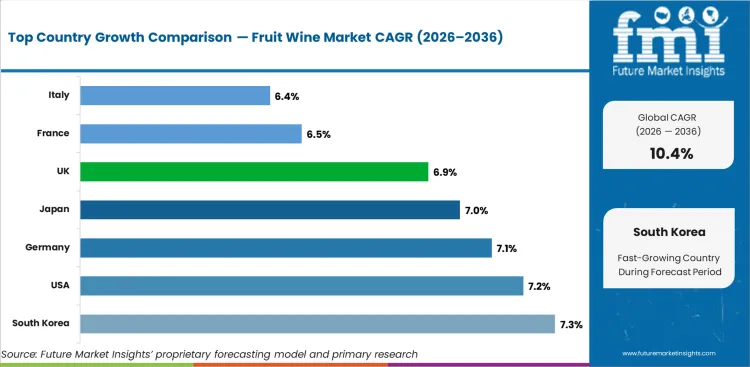
- China leads with 7.5%, supported by expanding middle-class alcohol consumption.
- South Korea at 7.3%, reflecting rapid alternative beverage adoption.
- USA at 7.2%, reflecting large alcoholic beverage market.
The global fruit wine market is expected to grow at a rate of 10.4% per year from 2026 to 2036. The study covers more than 30 countries, and the main markets are listed below.
Demand Outlook for Fruit Wine Market in China
China is expected to grow at 7.5% through 2036, reflecting expanding middle-class alcohol consumption, growing interest in wine alternatives, and rapid e-commerce beverage distribution.
- Middle-class consumption drives wine category growth.
- Interest in alternatives sustains fruit wine demand.
- E-commerce distribution accelerates market reach.
Future Outlook for Fruit Wine Market in South Korea
South Korea is expected to grow at 7.3% through 2036, reflecting rapid alternative beverage adoption, young consumer demand for flavored alcoholic drinks, and expanding retail distribution.
- Alternative beverage adoption accelerates growth.
- Young consumer demand drives flavored wine sales.
- Retail expansion supports distribution.
Opportunity Analysis of Fruit Wine Market in USA
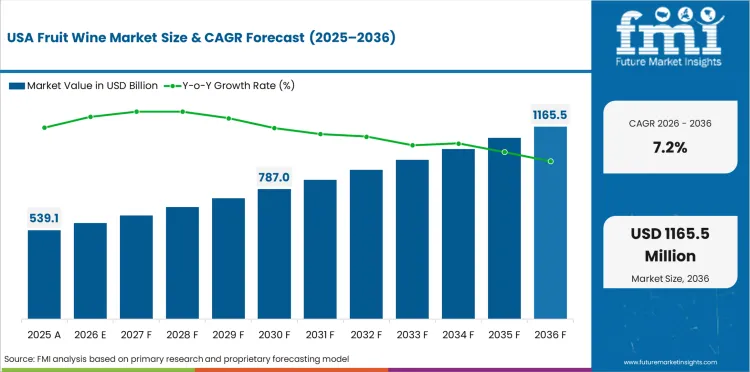
USA is expected to grow at 7.2% through 2036, reflecting large alcoholic beverage market, growing craft beverage interest, and consumer demand for flavor diversity in wine categories.
- Large beverage market sustains fruit wine demand.
- Craft interest drives artisanal brand growth.
- Flavor diversity preferences support category expansion.
In-depth Analysis of Fruit Wine Market in Germany
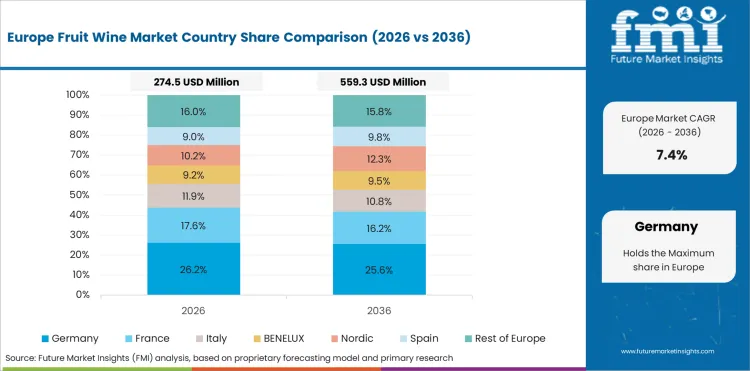
Germany is expected to grow at 7.1% through 2036, reflecting consumer interest in flavored alcoholic beverages, strong retail distribution infrastructure, and growing craft beverage adoption.
- Flavored beverage interest drives fruit wine adoption.
- Retail distribution supports consumer access.
- Craft trends sustain premium product demand.
Sales Analysis of Fruit Wine Market in Japan
Japan is expected to grow at 7.0% through 2036, reflecting growing interest in flavored wines, premium craft beverage culture, and expanding retail and online distribution.
- Flavored wine interest drives adoption.
- Premium craft culture supports higher pricing.
- Distribution expansion enables market access.
Growth Analysis of Fruit Wine Market in UK
UK is expected to grow at 6.9% through 2036, reflecting expanding alternative wine consumption, craft beverage adoption, and growing supermarket distribution of fruit wine products.
- Alternative wine consumption drives adoption.
- Supermarket distribution enables market access.
- Craft beverage trends support premium positioning.
Market Outlook for Fruit Wine Market in Australia
Australia is expected to grow at 6.8% through 2036, reflecting established wine culture, growing interest in craft and alternative wines, and strong domestic fruit production base.
- Wine culture supports fruit wine exploration.
- Domestic fruit production enables local sourcing.
- Craft positioning drives premium demand.
Demand Outlook for Fruit Wine Market in France
France is expected to grow at 6.5% through 2036, reflecting established wine culture exploring fruit wine diversity, artisanal production traditions, and premium craft beverage demand.
- Wine culture exploration supports fruit wine trial.
- Artisanal traditions enable craft positioning.
- Premium beverage demand sustains higher pricing.
Future Outlook for Fruit Wine Market in Italy
Italy is expected to grow at 6.4% through 2036, reflecting artisanal beverage traditions, growing interest in alternative wine formats, and premium food and beverage culture.
- Artisanal traditions support craft fruit wine.
- Alternative wine interest drives category growth.
- Premium food culture sustains beverage spending.
Opportunity Analysis of Fruit Wine Market in New Zealand
New Zealand is expected to grow at 6.2% through 2036, reflecting artisanal beverage production, strong fruit growing regions, and premium craft wine positioning.
- Artisanal production supports heritage branding.
- Fruit growing regions enable quality sourcing.
- Premium positioning sustains craft demand.
Competitive Landscape and Strategic Positioning
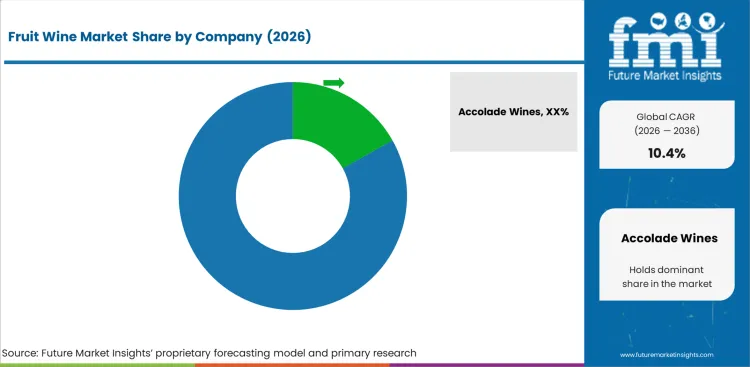
- Accolade Wines and Trinchero Family Estates lead through broad portfolios and established market presence.
- Mid-tier participants compete through regional specialization and targeted product development.
- New entrants focus on differentiated products and specialized market segments.
Accolade Wines holds a strong position through brand strength and market presence. Trinchero Family Estates competes through complementary capabilities.
Field Stone Wines and Lyme Bay Winery maintain positions through specialized offerings.
Barriers include brand establishment, distribution development, production capability, and market access. Strategic priorities include product development, distribution expansion, and brand building.
Key Companies in the Fruit Wine Market
Key global companies leading the fruit wine market include:
- Accolade Wines, Trinchero Family Estates, Field Stone Wines hold leading positions through brand strength and market presence.
- Lyme Bay Winery, Cairn o' Mohr have established positions through specialized capabilities.
- Winery of Good Hope, Aval Cider, Jack Rabbit Vineyards represent emerging participants with growth potential.
Competitive Benchmarking: Fruit Wine Market
| Company | Product Range | Production Quality | Distribution Reach | Brand Heritage |
|---|---|---|---|---|
| Accolade Wines | High | High | High | Global |
| Trinchero Family Estates | High | Medium | High | Global |
| Field Stone Wines | Medium | Medium | Medium | Global |
| Lyme Bay Winery | Medium | Moderate | Medium | Regional |
| Cairn o' Mohr | Moderate | Moderate | Moderate | Regional |
| Wine That's Fruit | Moderate | Low | Moderate | Regional |
| Winery of Good Hope | Low | Low | Low | Niche |
| Aval Cider | Low | Low | Low | Niche |
| Jack Rabbit Vineyards | Low | Low | Low | Niche |
| Fruit Wine Co. | Low | Low | Low | Niche |
Source: Future Market Insights competitive analysis, 2026.
Key Developments in Fruit Wine Market
- In 2025, Lyme Bay Winery expanded its fruit wine collection with new berry and tropical fruit varieties targeting premium supermarket distribution in the UK and Europe.
- In 2025, Trinchero Family Estates launched a craft fruit wine line positioned for the millennial and Gen Z consumer segment through online and specialty retail channels.
Key Players in the Fruit Wine Market
Major Global Players
- Accolade Wines
- Trinchero Family Estates
- Field Stone Wines
- Lyme Bay Winery
- Cairn o' Mohr
- Wine That's Fruit
- Celtic Country Wines
Emerging Players/Startups
- Winery of Good Hope
- Aval Cider
- Jack Rabbit Vineyards
- Fruit Wine Co.
- Hectare's Wine
Report Scope and Coverage
| Metric | Value |
|---|---|
| Quantitative Units | USD 1.13 Billion to USD 3.03 Billion, at a CAGR of 10.4% |
| Market Definition | The fruit wine market encompasses berry, apple, tropical, and stone fruit wines produced from non-grape fruit sources for household consumption, hospitality, and gifting occasions across supermarket, specialty, and online retail channels. |
| Regions Covered | North America, Latin America, Europe, East Asia, South Asia and Pacific, Middle East and Africa |
| Countries Covered | USA, UK, France, Germany, Italy, South Korea, Japan, China, Australia, New Zealand, 30 plus countries |
| Key Companies Profiled | Accolade Wines, Trinchero Family Estates, Field Stone Wines, Lyme Bay Winery, Cairn o' Mohr, Wine That's Fruit, Celtic Country Wines, Bruntys, Wildberry Beverages Pvt. Ltd., Hill Zill Wines Pvt. Ltd. |
| Forecast Period | 2026 to 2036 |
| Approach | Hybrid bottom-up and top-down methodology starting with verified transaction data, projecting adoption velocity across segments and regions. |
Segmentation
Fruit Wine Market Segmented by Platform:
- Supermarkets & Hypermarkets
- Specialty Liquor Stores
- Online Retail
- Direct-to-Consumer Sales
Fruit Wine Market Segmented by Application:
- Household Consumption
- Restaurants & Bars
- Special Events & Gifting
Fruit Wine Market Segmented by Fruit Type:
- Berry Wine
- Apple Wine
- Citrus Wine
- Other Fruit-Based Wines
Fruit Wine Market Segmented by Distribution Channel:
- Supermarkets/Hypermarkets
- Liquor Stores
- Specialty Stores
- Online Retail
- HoReCa
- Others
Fruit Wine Market by Region:
- North America
- USA
- Canada
- Mexico
- Latin America
- Brazil
- Chile
- Rest of Latin America
- Western Europe
- Germany
- UK
- Italy
- Spain
- France
- Nordic
- BENELUX
- Rest of Western Europe
- Eastern Europe
- Russia
- Poland
- Hungary
- Balkan & Baltic
- Rest of Eastern Europe
- East Asia
- China
- Japan
- South Korea
- South Asia and Pacific
- India
- ASEAN
- Australia & New Zealand
- Rest of South Asia and Pacific
- Middle East & Africa
- Kingdom of Saudi Arabia
- Other GCC Countries
- Turkiye
- South Africa
- Other African Union
- Rest of Middle East & Africa
Research Sources and Bibliography
- International Organisation of Vine and Wine. (2025). OIV Global Wine Market Report: Alternative Wine Categories. OIV.
- European Commission. (2024). EU Wine Regulation: Requirements for Fruit Wine Production and Labelling. EC.
- USA Alcohol and Tobacco Tax and Trade Bureau. (2024). TTB Regulations on Fruit Wine Production and Classification. TTB.
- Food and Agriculture Organization. (2025). FAO Global Alcoholic Beverage Market Assessment. FAO.
- World Health Organization. (2024). WHO Global Status Report on Alcohol and Health: Consumption Trends. WHO.
This bibliography is provided for reader reference. The full Future Market Insights report contains the complete reference list with publication dates, URLs, and supporting data for all cited works.
This Report Answers
- Estimating the size of the market and revenue from 2026 to 2036.
- Segmentation analysis across all product, application, and end-use categories.
- Regional insights covering more than 30 markets worldwide.
- Technology and material analysis relevant to market applications.
- Competitive landscape assessment including company benchmarking.
- Identification of investment opportunities across high-growth segments and regions.
- Supply chain analysis and distribution channel assessment.
- Data delivery in PDF and Excel formats.
Frequently Asked Questions
What is the global market demand for Fruit Wine Market in 2026?
In 2026, the global fruit wine market is expected to be worth USD 1.13 billion.
How big will the Fruit Wine Market be in 2036?
By 2036, the fruit wine market is expected to be worth USD 3.03 billion.
How much is demand expected to grow between 2026 and 2036?
Between 2026 and 2036, demand is expected to grow at a CAGR of 10.4%.
Which Application segment is likely to lead globally in 2026?
Household Consumption is expected to account for 46.3% of the application segment in 2026, reflecting strong end-use demand.
What is causing demand to rise in China?
China is expected to grow at 7.5% through 2036, reflecting expanding middle-class alcohol consumption, growing interest in wine alternatives, and rapid e-commerce beverage distribution.
What is causing demand to rise in South Korea?
South Korea is expected to grow at 7.3% through 2036, reflecting rapid alternative beverage adoption, young consumer demand for flavored alcoholic drinks, and expanding retail distribution.
What does this report mean by 'Fruit Wine Market definition'?
The fruit wine market encompasses berry, apple, tropical, and stone fruit wines produced from non-grape fruit sources for household consumption, hospitality, and gifting occasions across supermarket, specialty, and online retail channels.
How does FMI make the forecast and validate it?
Forecasting models use a hybrid bottom-up and top-down approach, starting with verified transaction data and validating against industry statistics and manufacturer disclosures.
Preview the report firsthand - request a free sample
Get SampleGet the brochure for pricing and purchase details.
Get PDFTable of Content
- Executive Summary
- Global Market Outlook
- Demand-side Trends
- Supply-side Trends
- Technology Roadmap Analysis
- Analysis and Recommendations
- Market Overview
- Market Coverage / Taxonomy
- Market Definition / Scope / Limitations
- Research Methodology
- Chapter Orientation
- Analytical Lens and Working Hypotheses
- Market Structure, Signals, and Trend Drivers
- Benchmarking and Cross-market Comparability
- Market Sizing, Forecasting, and Opportunity Mapping
- Research Design and Evidence Framework
- Desk Research Programme (Secondary Evidence)
- Company Annual and Sustainability Reports
- Peer-reviewed Journals and Academic Literature
- Corporate Websites, Product Literature, and Technical Notes
- Earnings Decks and Investor Briefings
- Statutory Filings and Regulatory Disclosures
- Technical White Papers and Standards Notes
- Trade Journals, Industry Magazines, and Analyst Briefs
- Conference Proceedings, Webinars, and Seminar Materials
- Government Statistics Portals and Public Data Releases
- Press Releases and Reputable Media Coverage
- Specialist Newsletters and Curated Briefings
- Sector Databases and Reference Repositories
- FMI Internal Proprietary Databases and Historical Market Datasets
- Subscription Datasets and Paid Sources
- Social Channels, Communities, and Digital Listening Inputs
- Additional Desk Sources
- Expert Input and Fieldwork (Primary Evidence)
- Primary Modes
- Qualitative Interviews and Expert Elicitation
- Quantitative Surveys and Structured Data Capture
- Blended Approach
- Why Primary Evidence is Used
- Field Techniques
- Interviews
- Surveys
- Focus Groups
- Observational and In-context Research
- Social and Community Interactions
- Stakeholder Universe Engaged
- C-suite Leaders
- Board Members
- Presidents and Vice Presidents
- R&D and Innovation Heads
- Technical Specialists
- Domain Subject-matter Experts
- Scientists
- Physicians and Other Healthcare Professionals
- Governance, Ethics, and Data Stewardship
- Research Ethics
- Data Integrity and Handling
- Primary Modes
- Tooling, Models, and Reference Databases
- Desk Research Programme (Secondary Evidence)
- Data Engineering and Model Build
- Data Acquisition and Ingestion
- Cleaning, Normalisation, and Verification
- Synthesis, Triangulation, and Analysis
- Quality Assurance and Audit Trail
- Market Background
- Market Dynamics
- Drivers
- Restraints
- Opportunity
- Trends
- Scenario Forecast
- Demand in Optimistic Scenario
- Demand in Likely Scenario
- Demand in Conservative Scenario
- Opportunity Map Analysis
- Product Life Cycle Analysis
- Supply Chain Analysis
- Investment Feasibility Matrix
- Value Chain Analysis
- PESTLE and Porter’s Analysis
- Regulatory Landscape
- Regional Parent Market Outlook
- Production and Consumption Statistics
- Import and Export Statistics
- Market Dynamics
- Global Market Analysis 2021 to 2025 and Forecast, 2026 to 2036
- Historical Market Size Value (USD Billion) Analysis, 2021 to 2025
- Current and Future Market Size Value (USD Billion) Projections, 2026 to 2036
- Y-o-Y Growth Trend Analysis
- Absolute $ Opportunity Analysis
- Global Market Pricing Analysis 2021 to 2025 and Forecast 2026 to 2036
- Global Market Analysis 2021 to 2025 and Forecast 2026 to 2036, By Platform
- Introduction / Key Findings
- Historical Market Size Value (USD Billion) Analysis By Platform , 2021 to 2025
- Current and Future Market Size Value (USD Billion) Analysis and Forecast By Platform , 2026 to 2036
- Supermarkets & Hypermarkets
- Specialty Liquor Stores
- Online Retail
- Direct-to-Consumer Sales
- Supermarkets & Hypermarkets
- Y-o-Y Growth Trend Analysis By Platform , 2021 to 2025
- Absolute $ Opportunity Analysis By Platform , 2026 to 2036
- Global Market Analysis 2021 to 2025 and Forecast 2026 to 2036, By Application
- Introduction / Key Findings
- Historical Market Size Value (USD Billion) Analysis By Application, 2021 to 2025
- Current and Future Market Size Value (USD Billion) Analysis and Forecast By Application, 2026 to 2036
- Household Consumption
- Restaurants & Bars
- Special Events & Gifting
- Household Consumption
- Y-o-Y Growth Trend Analysis By Application, 2021 to 2025
- Absolute $ Opportunity Analysis By Application, 2026 to 2036
- Global Market Analysis 2021 to 2025 and Forecast 2026 to 2036, By Fruit Type
- Introduction / Key Findings
- Historical Market Size Value (USD Billion) Analysis By Fruit Type, 2021 to 2025
- Current and Future Market Size Value (USD Billion) Analysis and Forecast By Fruit Type, 2026 to 2036
- Berry Wine
- Apple Wine
- Citrus Wine
- Other Fruit-Based Wines
- Berry Wine
- Y-o-Y Growth Trend Analysis By Fruit Type, 2021 to 2025
- Absolute $ Opportunity Analysis By Fruit Type, 2026 to 2036
- Global Market Analysis 2021 to 2025 and Forecast 2026 to 2036, By Distribution Channel
- Introduction / Key Findings
- Historical Market Size Value (USD Billion) Analysis By Distribution Channel, 2021 to 2025
- Current and Future Market Size Value (USD Billion) Analysis and Forecast By Distribution Channel, 2026 to 2036
- Supermarkets/Hypermarkets
- Liquor Stores
- Specialty Stores
- Online Retail
- HoReCa
- Others
- Supermarkets/Hypermarkets
- Y-o-Y Growth Trend Analysis By Distribution Channel, 2021 to 2025
- Absolute $ Opportunity Analysis By Distribution Channel, 2026 to 2036
- Global Market Analysis 2021 to 2025 and Forecast 2026 to 2036, By Region
- Introduction
- Historical Market Size Value (USD Billion) Analysis By Region, 2021 to 2025
- Current Market Size Value (USD Billion) Analysis and Forecast By Region, 2026 to 2036
- North America
- Latin America
- Western Europe
- Eastern Europe
- East Asia
- South Asia and Pacific
- Middle East & Africa
- Market Attractiveness Analysis By Region
- North America Market Analysis 2021 to 2025 and Forecast 2026 to 2036, By Country
- Historical Market Size Value (USD Billion) Trend Analysis By Market Taxonomy, 2021 to 2025
- Market Size Value (USD Billion) Forecast By Market Taxonomy, 2026 to 2036
- By Country
- USA
- Canada
- Mexico
- By Platform
- By Application
- By Fruit Type
- By Distribution Channel
- By Country
- Market Attractiveness Analysis
- By Country
- By Platform
- By Application
- By Fruit Type
- By Distribution Channel
- Key Takeaways
- Latin America Market Analysis 2021 to 2025 and Forecast 2026 to 2036, By Country
- Historical Market Size Value (USD Billion) Trend Analysis By Market Taxonomy, 2021 to 2025
- Market Size Value (USD Billion) Forecast By Market Taxonomy, 2026 to 2036
- By Country
- Brazil
- Chile
- Rest of Latin America
- By Platform
- By Application
- By Fruit Type
- By Distribution Channel
- By Country
- Market Attractiveness Analysis
- By Country
- By Platform
- By Application
- By Fruit Type
- By Distribution Channel
- Key Takeaways
- Western Europe Market Analysis 2021 to 2025 and Forecast 2026 to 2036, By Country
- Historical Market Size Value (USD Billion) Trend Analysis By Market Taxonomy, 2021 to 2025
- Market Size Value (USD Billion) Forecast By Market Taxonomy, 2026 to 2036
- By Country
- Germany
- UK
- Italy
- Spain
- France
- Nordic
- BENELUX
- Rest of Western Europe
- By Platform
- By Application
- By Fruit Type
- By Distribution Channel
- By Country
- Market Attractiveness Analysis
- By Country
- By Platform
- By Application
- By Fruit Type
- By Distribution Channel
- Key Takeaways
- Eastern Europe Market Analysis 2021 to 2025 and Forecast 2026 to 2036, By Country
- Historical Market Size Value (USD Billion) Trend Analysis By Market Taxonomy, 2021 to 2025
- Market Size Value (USD Billion) Forecast By Market Taxonomy, 2026 to 2036
- By Country
- Russia
- Poland
- Hungary
- Balkan & Baltic
- Rest of Eastern Europe
- By Platform
- By Application
- By Fruit Type
- By Distribution Channel
- By Country
- Market Attractiveness Analysis
- By Country
- By Platform
- By Application
- By Fruit Type
- By Distribution Channel
- Key Takeaways
- East Asia Market Analysis 2021 to 2025 and Forecast 2026 to 2036, By Country
- Historical Market Size Value (USD Billion) Trend Analysis By Market Taxonomy, 2021 to 2025
- Market Size Value (USD Billion) Forecast By Market Taxonomy, 2026 to 2036
- By Country
- China
- Japan
- South Korea
- By Platform
- By Application
- By Fruit Type
- By Distribution Channel
- By Country
- Market Attractiveness Analysis
- By Country
- By Platform
- By Application
- By Fruit Type
- By Distribution Channel
- Key Takeaways
- South Asia and Pacific Market Analysis 2021 to 2025 and Forecast 2026 to 2036, By Country
- Historical Market Size Value (USD Billion) Trend Analysis By Market Taxonomy, 2021 to 2025
- Market Size Value (USD Billion) Forecast By Market Taxonomy, 2026 to 2036
- By Country
- India
- ASEAN
- Australia & New Zealand
- Rest of South Asia and Pacific
- By Platform
- By Application
- By Fruit Type
- By Distribution Channel
- By Country
- Market Attractiveness Analysis
- By Country
- By Platform
- By Application
- By Fruit Type
- By Distribution Channel
- Key Takeaways
- Middle East & Africa Market Analysis 2021 to 2025 and Forecast 2026 to 2036, By Country
- Historical Market Size Value (USD Billion) Trend Analysis By Market Taxonomy, 2021 to 2025
- Market Size Value (USD Billion) Forecast By Market Taxonomy, 2026 to 2036
- By Country
- Kingdom of Saudi Arabia
- Other GCC Countries
- Turkiye
- South Africa
- Other African Union
- Rest of Middle East & Africa
- By Platform
- By Application
- By Fruit Type
- By Distribution Channel
- By Country
- Market Attractiveness Analysis
- By Country
- By Platform
- By Application
- By Fruit Type
- By Distribution Channel
- Key Takeaways
- Key Countries Market Analysis
- USA
- Pricing Analysis
- Market Share Analysis, 2025
- By Platform
- By Application
- By Fruit Type
- By Distribution Channel
- Canada
- Pricing Analysis
- Market Share Analysis, 2025
- By Platform
- By Application
- By Fruit Type
- By Distribution Channel
- Mexico
- Pricing Analysis
- Market Share Analysis, 2025
- By Platform
- By Application
- By Fruit Type
- By Distribution Channel
- Brazil
- Pricing Analysis
- Market Share Analysis, 2025
- By Platform
- By Application
- By Fruit Type
- By Distribution Channel
- Chile
- Pricing Analysis
- Market Share Analysis, 2025
- By Platform
- By Application
- By Fruit Type
- By Distribution Channel
- Germany
- Pricing Analysis
- Market Share Analysis, 2025
- By Platform
- By Application
- By Fruit Type
- By Distribution Channel
- UK
- Pricing Analysis
- Market Share Analysis, 2025
- By Platform
- By Application
- By Fruit Type
- By Distribution Channel
- Italy
- Pricing Analysis
- Market Share Analysis, 2025
- By Platform
- By Application
- By Fruit Type
- By Distribution Channel
- Spain
- Pricing Analysis
- Market Share Analysis, 2025
- By Platform
- By Application
- By Fruit Type
- By Distribution Channel
- France
- Pricing Analysis
- Market Share Analysis, 2025
- By Platform
- By Application
- By Fruit Type
- By Distribution Channel
- India
- Pricing Analysis
- Market Share Analysis, 2025
- By Platform
- By Application
- By Fruit Type
- By Distribution Channel
- ASEAN
- Pricing Analysis
- Market Share Analysis, 2025
- By Platform
- By Application
- By Fruit Type
- By Distribution Channel
- Australia & New Zealand
- Pricing Analysis
- Market Share Analysis, 2025
- By Platform
- By Application
- By Fruit Type
- By Distribution Channel
- China
- Pricing Analysis
- Market Share Analysis, 2025
- By Platform
- By Application
- By Fruit Type
- By Distribution Channel
- Japan
- Pricing Analysis
- Market Share Analysis, 2025
- By Platform
- By Application
- By Fruit Type
- By Distribution Channel
- South Korea
- Pricing Analysis
- Market Share Analysis, 2025
- By Platform
- By Application
- By Fruit Type
- By Distribution Channel
- Russia
- Pricing Analysis
- Market Share Analysis, 2025
- By Platform
- By Application
- By Fruit Type
- By Distribution Channel
- Poland
- Pricing Analysis
- Market Share Analysis, 2025
- By Platform
- By Application
- By Fruit Type
- By Distribution Channel
- Hungary
- Pricing Analysis
- Market Share Analysis, 2025
- By Platform
- By Application
- By Fruit Type
- By Distribution Channel
- Kingdom of Saudi Arabia
- Pricing Analysis
- Market Share Analysis, 2025
- By Platform
- By Application
- By Fruit Type
- By Distribution Channel
- Turkiye
- Pricing Analysis
- Market Share Analysis, 2025
- By Platform
- By Application
- By Fruit Type
- By Distribution Channel
- South Africa
- Pricing Analysis
- Market Share Analysis, 2025
- By Platform
- By Application
- By Fruit Type
- By Distribution Channel
- USA
- Market Structure Analysis
- Competition Dashboard
- Competition Benchmarking
- Market Share Analysis of Top Players
- By Regional
- By Platform
- By Application
- By Fruit Type
- By Distribution Channel
- Competition Analysis
- Competition Deep Dive
- Accolade Wines
- Overview
- Product Portfolio
- Profitability by Market Segments (Product/Age /Sales Channel/Region)
- Sales Footprint
- Strategy Overview
- Marketing Strategy
- Product Strategy
- Channel Strategy
- Trinchero Family Estates
- Field Stone Wines
- Lyme Bay Winery
- Cairn o' Mohr
- Accolade Wines
- Wine That's Fruit
- Celtic Country Wines
- Bruntys
- Wildberry Beverages Pvt. Ltd.
- Hill Zill Wines Pvt. Ltd.
- Other Players
- Accolade Wines
- Competition Deep Dive
- Assumptions & Acronyms Used


