

- Market Size (2026)
- USD 1.3 Bn
- Forecast (2036)
- USD 2.2 Bn
- CAGR (2026 to 2036)
- 5.4%
Green-Time Engine Management and Optimization Services Market Size, Market Forecast and Outlook By FMI
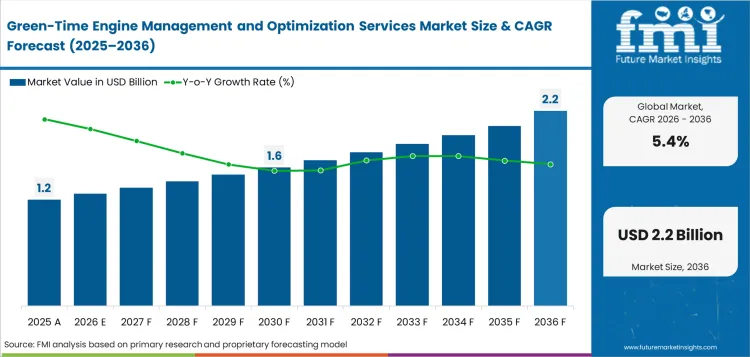
The green-time engine management and optimization services market was valued at USD 1.2 billion in 2025. Industry is projected to reach USD 1.3 billion in 2026 and expand at a CAGR of 5.4% between 2026 and 2036 to reach USD 2.2 billion by 2036. Airlines are estimated to lead with a 52.0% customer type share, and narrowbody aircraft are expected to lead the aircraft platform segment with a 61.0% share.
Summary of the Green-Time Engine Management and Optimization Services Market
- Demand and Growth Drivers
- Engine shop delays support demand for green-time planning as airlines try to use available engine life before overhaul.
- Spare engine costs reinforce outsourced planning as operators need better timing around removals and lease coverage.
- Life-limited part exposure supports service use as engine records decide whether short-term use is financially safe.
- Product and Segment View
- Availability planning is projected to hold 36.0% share of the service type segment in 2026 as operators time spare engine cover before removals.
- Airlines are anticipated to capture 52.0% of the customer type base in 2026, with schedule continuity and engine cost exposure driving service use.
- CFM56 is forecast to hold a strong share of engine family demand as mature narrowbody fleets need remaining-life review.
- Geography and Competitive Outlook
- India is expected to record a CAGR of 7.9% through 2036, supported by local MRO capacity and fleet expansion.
- China is projected to expand at 7.2% CAGR by 2036, as air traffic depth increases engine planning needs.
- Companies combining engine records depth with spare engine access are improving competitive position during the forecast period.
- Analyst Opinion
- Nikhil Kaitwade, Principal Consultant at FMI, says, “Green-time engine planning helps airlines avoid unnecessary shop input through better remaining-life records. Spare engine timing also becomes easier to manage under one service plan. Engine file discipline can reduce reserve waste. Life-limited part knowledge supports stronger removal timing and lease-return decisions.”
- Green-Time Engine Management and Optimization Services Market Value Analysis
- Green-time engine management and optimization services are shifting from informal fleet planning into a structured outsourced service base.
- Spare engine cost exposure and longer maintenance queues are leading airlines toward structured green-time planning services.
- Regulated engine service programs are supporting wider use of commercial aircraft MRO for records review and maintenance planning.
- Service use is strengthened by engine records meeting lease-return and reserve requirements. Accurate files help operators protect schedule plans and avoid early shop input.
Key Takeaways
- The green-time engine management and optimization services market was valued at USD 1.2 billion in 2025.
- By 2036, the green-time engine management and optimization services market is forecast at USD 2.2 billion.
- From 2026 to 2036, the market is projected to expand at a CAGR of 5.4%.
- The market is forecast to create an incremental opportunity of USD 0.9 billion between 2026 and 2036.
- In 2026, airlines are expected to account for 52.0% of customer type demand.
- India at 7.9% CAGR and China at 7.2% CAGR through 2036 are countries with prominent growth prospects.
Airlines need engine-use and fuel-management services because fuel cost, emissions rules and operational variation now intersect on every flight. GE Aerospace’s August 2025 AirAsia agreement shows the service model because Fuel Insight is being used across the fleet to strengthen fuel efficiency strategy. GE also states that the software merges flight data with flight plans and allows review from macro trends to per-flight issues. That gives fuel teams a way to correct behavior rather than only report consumption.
IATA’s Fuel Efficiency Manual adds structure because it guides airlines on reducing fuel use, cost and environmental impact. NAVBLUE’s October 2024 Mission+ DOC Manager supports the same operating discipline because more than 20 launch customers use it for flight-operations documentation control. Brazil’s Fuel of the Future law adds regulatory pressure through a 1% domestic-flight emissions reduction requirement in 2027. Optimization providers with data, procedures and compliance fit are better positioned.
Green-Time Engine Management and Optimization Services Market Definition
Green-time engine management and optimization services include planning work used before full overhaul or lease return. These services assess remaining engine life for airlines and lessors. MRO planning teams use the same review to align removals with shop input. Scope includes availability planning and life limit review. Lease-return planning and retirement timing form separate service areas. New engine sales and full shop overhaul labor are outside the scope.
Green-Time Engine Management and Optimization Services Market Inclusions
Market scope covers all commercially traded green-time engine management and optimization services categorized by service type, including availability planning, life limit planning, lease return planning, reserve planning, and retirement timing, engine family, including CFM56, V2500, LEAP, GTF, Trent, and CF34, customer type, including airlines, lessors, MRO shops, OEM programs, and asset managers, aircraft platform, including narrowbody, widebody, regional jet, turboprop, and freighter, and delivery model, including managed service, advisory service, digital monitoring, brokerage service, and records review. Revenue scope covers 2026 to 2036. Stakeholders include airlines, aircraft engine lessors, MRO service providers, OEM service teams, asset managers, fleet planning teams, engine records specialists, spare engine providers, digital monitoring firms, aviation consultants, regulatory bodies, and maintenance reserve administrators.
Green-Time Engine Management and Optimization Services Market Exclusions
Scope does not include new engine manufacturing, full engine overhaul, standalone parts trading, aircraft leasing without engine planning or airframe maintenance services.
Green-Time Engine Management and Optimization Services Market Research Methodology
- Primary Research: FMI analysts interviewed airline maintenance teams, engine lessors and MRO planning specialists in major aviation markets.
- Desk Research: FMI combined data from aviation traffic records, engine service portfolios and official fleet activity references.
- Market sizing and forecasting: FMI added service use across engine families and customer groups from the bottom up.
- Data validation: FMI cross-checked every three months against airline MRO spend, engine leasing pressure and company service coverage.
Why is the Green-Time Engine Management and Optimization Services Market Growing?
- Airlines are using green-time planning earlier to reduce engine lease exposure before heavy shop visits begin.
- Engine lessors have a larger role as lease-return claims rely on accurate remaining-life and record review.
- Operators are outsourcing engine timing work to teams with stronger life-limited part and records discipline.
Airlines need sharper green-time decisions as engine maintenance delays raise spare engine costs. Increased engine leasing costs could add USD 2.6 billion for airlines as engines spend longer on the ground during maintenance, as per IATA’s October 2025 report. The cost context makes early engine planning useful for airlines seeking to avoid repeat lease expense. Providers with reliable file review help operators align spare coverage with planned removals and flight schedules.
Global engine planning has a large cost base, so small timing gains can protect airline budgets. IATA’s 2024 MCX executive report listed 33,271 aircraft in the global fleet and USD 103.9 billion in airline MRO spend during 2024. The large service base affects demand for air transport MRO and engine life review. Green-time providers gain relevance as airlines need plans suited to fleet age and engine removal windows.
Market Segmentation Analysis
- Availability Planning is estimated to represent 36.0% of the service type segment in 2026 as operators use it to time spare engine coverage before removals.
- CFM56 is projected to hold 34.0% of the engine family mix in 2026, as mature narrowbody fleets need remaining-life review.
- Airlines are anticipated to capture 52.0% of the customer type base as schedule protection makes engine planning a direct operating need.
- Narrowbody Aircraft is forecast to make up 61.0% of the aircraft platform segment in 2026 since short-cycle flying increases removal planning pressure.
- Managed Service is forecast to represent 44.0% of the delivery model segment as operators prefer one partner for records review and spare engine timing.
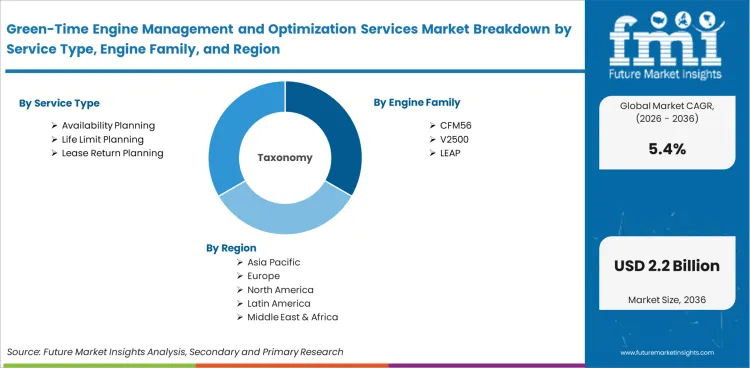
The market for green-time engine management and optimization services is segmented into five primary segment groups based on service type, engine family, customer type, aircraft platform and delivery model. Service type includes availability planning, life limit planning, lease return planning, reserve planning and retirement timing. Engine family includes CFM56, V2500, LEAP, GTF, Trent and CF34. Customer type includes airlines, lessors, MRO shops, OEM programs and asset managers. Aircraft platforms include narrowbody, widebody, regional jet, turboprop and freighter. Delivery model includes managed service, advisory service, digital monitoring, brokerage service and records review.
Insights into the Availability Planning Service Type Segment
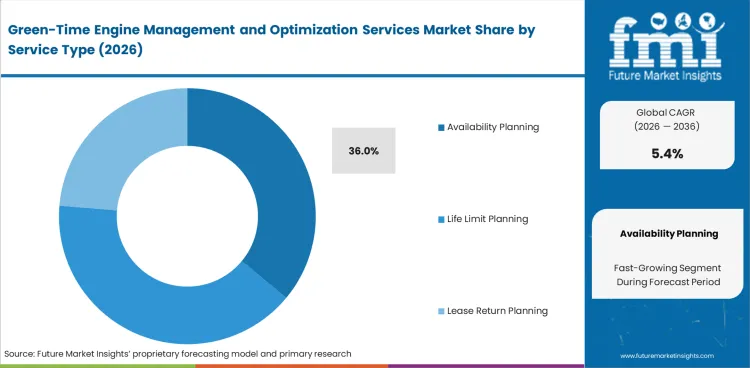
- Availability planning is expected to make up 36.0% of the service type segment in 2026. Operators use availability planning to time spare engine coverage before planned removals and shop input.
- Life limit planning and reserve planning address more detailed cost-control needs. Their value improves as airlines compare remaining cycles with lease terms and maintenance reserve exposure.
Insights into the CFM56 Engine Family Segment
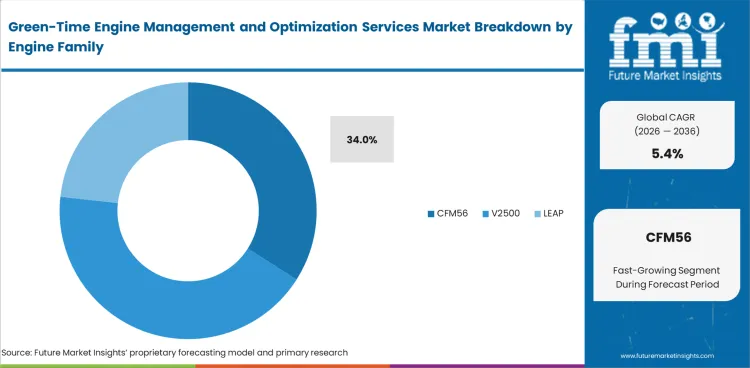
- In 2026, CFM56 is projected to hold 34.0% of the engine family segment. Mature A320ceo and 737NG fleets keep the engine family central to green-time review work.
- V2500 and CF34 programs create selected planning work across older aircraft fleets. Service need is stronger when operators assess remaining cycles before overhaul spending.
Insights into the Airlines Customer Type Segment
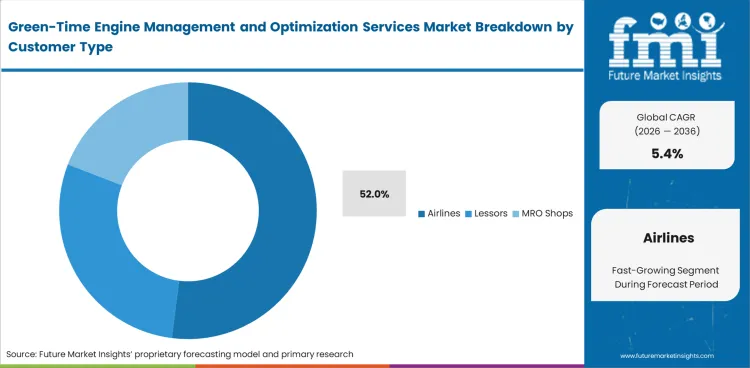
- Airlines are expected to account for 52.0% of the customer type segment in 2026. Daily flying exposure makes engine availability planning central for schedule protection and cost control.
- Lessors use green-time services for lease-return review and asset value protection. Their work focuses on engine records and remaining-life checks.
Insights into the Narrowbody Aircraft Platform Segment
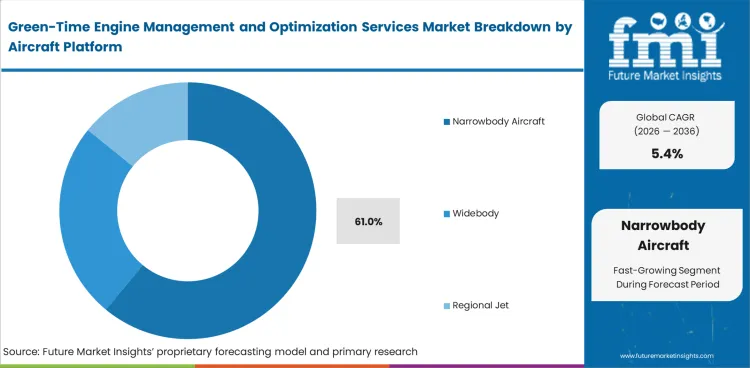
- In 2026, narrowbody aircraft are forecast to represent 61.0% of the aircraft platform segment. Short-cycle operations increase engine removal frequency and raise the need for timing discipline.
- Widebody and regional jet programs use green-time planning in more specific cases. Their review needs often rise around lease return dates and expensive shop visit decisions.
Insights into the Managed Service Delivery Model Segment
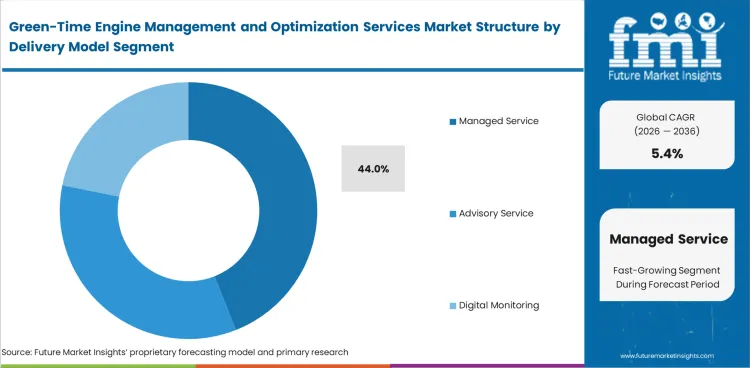
- Managed service is predicted to account for 44.0% of the delivery model segment in 2026. Smaller maintenance teams prefer one partner handling records review and spare engine timing.
- Advisory service and digital monitoring serve operators with internal planning teams. Their role improves when airlines need external checks without handing over full planning control.
Green-Time Engine Management and Optimization Services Market Drivers, Restraints, and Opportunities
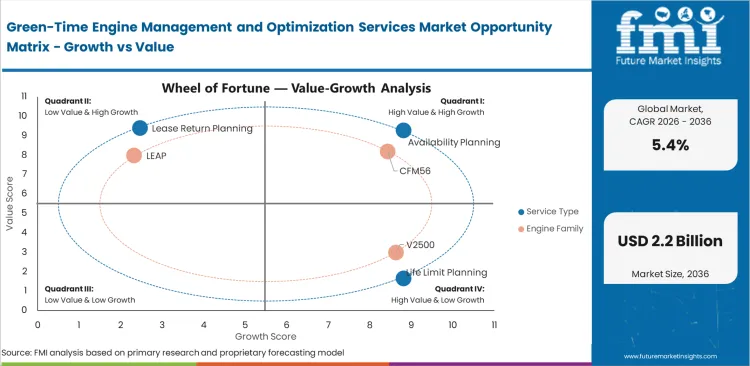
- Engine leasing cost pressure is creating structured demand for green-time planning across mature fleet programs.
- Incomplete records increase pricing pressure for service providers as missing files can reduce engine swap value.
- Digital engine monitoring improves service opportunity through better timing of removals and life-limit review.
Green-time engine management and optimization services demand expands as airlines need remaining-life records and spare engine timing before shop input. Cost pressure and incomplete engine files can slow service adoption across smaller operators with limited planning budgets. Expansion continues through managed planning contracts and digital records review for mature narrowbody engine fleets.
Traffic Recovery Is Lifting Green-Time Premiums
Green-time pricing is shifting from a disposal-value calculation to a capacity-protection calculation. In July 2025, ICAO’s working paper, presented by ACI, estimated global passenger traffic at 9.8 billion in 2025, up 3.7% year over year, after 2024 traffic reached 9.4 billion and a 103% recovery versus 2019. More flying hours consume remaining life faster and reduce the pool of engines with enough time to bridge deferred shop visits. Service providers can position inventory and records validation as operational insurance. Quick-release logistics and engine matching can carry premium pricing. Buyers should secure green time blocks earlier. Seasonal schedule peaks can quickly turn short-term availability into premium lease pricing.
Supply-Chain Delays Are Raising Standby Engine Rates
Green-time engine management prices carry a scarcity premium as airlines need serviceable engines to keep aircraft flying. Unreliable aircraft deliveries and limited MRO slots are making available engine life more valuable for operators. As per IATA’s January 2026 report, 2025 passenger demand rose 5.3% and capacity rose 5.2%, while full-year load factor reached a record 83.6%. Unreliable delivery schedules and engine delays created major pressure on airline cost planning. Maintenance capacity constraints added over US$11 billion in estimated cost increases during 2025. The pressure supports higher pricing for documented remaining life and borescope-ready assets. The same constraint raises the value of fast lease substitution and analytics to identify the cheapest shop-visit timing.
Analysis of Green-Time Engine Management and Optimization Services Market By Key Countries
.webp "Top Country Growth Comparison Green Time Engine Management And Optimization Services Market Cagr (2026 2036)")
| Country | CAGR |
|---|---|
| India | 7.9% |
| China | 7.2% |
| USA | 5.8% |
| Germany | 4.4% |
| UK | 4.1% |
Source: Future Market Insights, 2026.
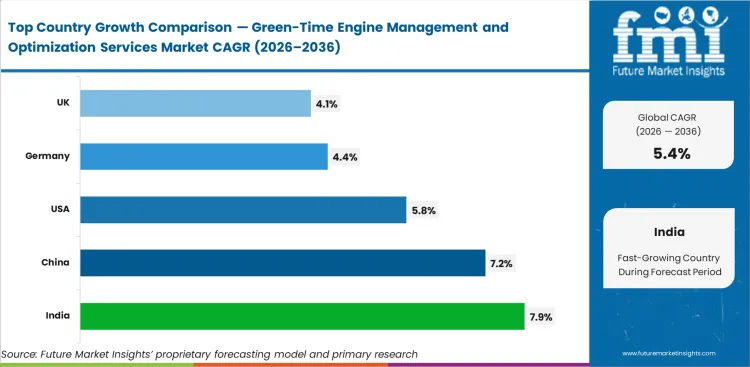
Green-Time Engine Management and Optimization Services Market CAGR Analysis By Country
- India records the fastest country outlook at 7.9% CAGR through 2036, as airline fleet additions and local engine MRO buildout.
- China’s 7.2% CAGR reflects heavy airport activity and a stronger need for spare engine scheduling.
- Mature airline fleets place the USA at 5.8% CAGR, as engine reserve planning affects service use.
- Germany is projected at 4.4% CAGR. The UK reaches 4.1% as established service networks expand at a measured pace.
Demand for green-time engine management and optimization services is forecast to rise at 5.4% CAGR from 2026 to 2036. Country-level analysis covers the major markets contributing to this forecast.
Demand Outlook for Green-Time Engine Management and Optimization Services Market in India
India’s green-time engine management and optimization services industry is projected to record a CAGR of 7.9% through 2036. India’s scheduled and commuter operator fleet increased from 771 aircraft to 834 aircraft during 2024. Fleet expansion raises demand for India’s green-time engine management and optimization services as airlines add narrowbody capacity. Local engine service capability can gain from operators needing credible records before shop input.
- Local fleet expansion backs demand for availability planning and reserve review across narrowbody engine programs.
- Indian operators need engine records discipline as lease-return claims become more relevant for active fleets.
- Local MRO capacity can reduce planning gaps for airlines managing short-term spare engine coverage.
Sales Analysis of Green-Time Engine Management and Optimization Services Market in China
The green-time engine management and optimization services sector in China is expected to expand at a CAGR of 7.2% during the assessment period. China’s commercial airports completed 1.529 billion passenger trips and 12.4475 million aircraft movements in 2025. The large traffic base supports demand for China green-time engine management and optimization services. Service providers benefit from local airlines seeking engine availability and short-cycle planning depth.
- Large airport traffic raises demand for spare engine timing across narrowbody and widebody fleets.
- Chinese airlines need better remaining-life review as domestic and international operations use engine cycles quickly.
- Local maintenance programs can gain from records review services for engine swap timing.
Demand Outlook for Green-Time Engine Management and Optimization Services Market in the United States
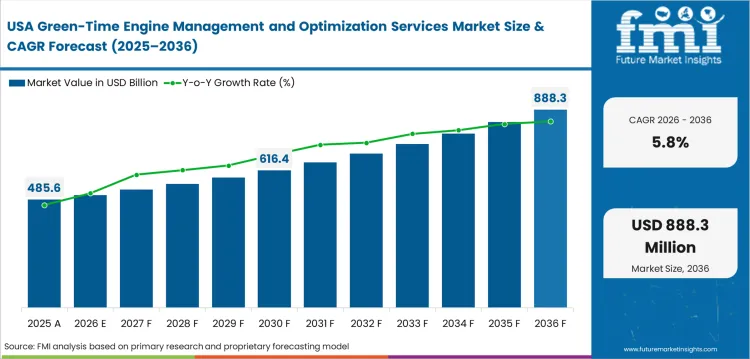
The U.S. green-time engine management and optimization services industry is forecast to grow at a CAGR of 5.8% by 2036. The Federal Aviation Administration forecasts the USA commercial aircraft fleet to increase from 7,387 aircraft in 2024 to 10,607 aircraft in 2045. Airline maintenance teams value partners with engine records knowledge and spare engine planning skill. The fleet outlook supports steady use of U.S. green-time engine management and optimization services.
- Large airline fleets enhance recurring need for engine reserve planning and lease-return review.
- U.S. operators use green-time analysis to decide whether short-life engine use protects schedule economics.
- Engine data depth helps service providers connect maintenance timing with aircraft availability plans.
Opportunity Analysis of Green-Time Engine Management and Optimization Services Market in Germany
The green-time engine management and optimization services segment in Germany is projected to advance at 4.4% CAGR over the forecast period. German main airports counted 207.2 million passengers in 2025, up 3.9% from 2024. Established airline and MRO activity backs demand for Germany green-time engine management and optimization services. Service demand is strongest across mature fleets needing cost-aware engine timing.
- Mature airline operations raise demand for records review and spare engine availability planning.
- High maintenance cost awareness reinforces interest in careful life-limit and reserve timing.
- Engine service depth helps German operators manage shop visit timing with fewer schedule disruptions.
Future Outlook for Green-Time Engine Management and Optimization Services Market in the United Kingdom
The UK green-time engine management and optimization services industry is forecast to post 4.1% CAGR through 2036. UK aviation recorded 302 million passenger journeys in 2025, a record level for the country. The traffic level supports demand for UK green-time engine management and optimization services as airlines manage engine availability. Service providers with fast review cycles can help operators reduce avoidable lease exposure.
- UK airline activity boosts demand for engine swap planning and maintenance reserve review.
- Fleet planning teams need reliable records before deciding whether green-time use is financially safe.
- Digital monitoring can strengthen planning for aviation test equipment used in engine checks.
Competitive Landscape and Strategic Positioning
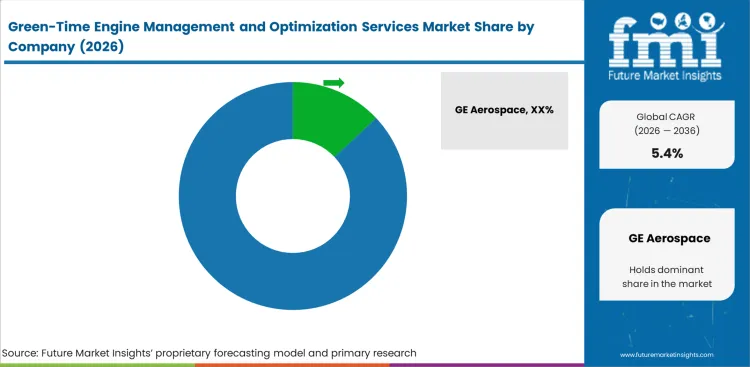
- GE Aerospace holds a strong position through engine service agreements and direct access to program-level records across multiple engine families.
- Pratt & Whitney and Rolls-Royce operate OEM service programs built around engine monitoring and long-term maintenance planning.
- Specialist lessors focus on spare engine access and asset planning for airlines facing delayed shop input.
Competition in green-time engine management is divided between OEM service groups and engine asset specialists. GE Aerospace benefits from integrated engine service programs and records access across mature and new engine platforms. Pratt & Whitney offers EngineWise coverage for GTF fleets, and Rolls-Royce has a strong role through TotalCare structures for widebody engines. Willis Lease Finance and AerCap add spare engine coverage for airlines needing short-term operating relief. Demand connects with commercial aircraft MRO as operators seek better timing around engine removals.
Competition centers on records quality and access to serviceable engines. Incomplete files can weaken engine value and delay lease-return decisions across high-use fleets. Airlines favor partners able to combine availability planning with life-limit review in one service process. Providers with broader engine family coverage and faster planning cycles are better positioned to win repeat work.
Key Companies in the Green-Time Engine Management and Optimization Services Market
Global companies active in the green-time engine management and optimization services market include:
- GE Aerospace and Pratt & Whitney have strong engine service infrastructure for life review and fleet program coverage.
- Rolls-Royce and Lufthansa Technik serve airlines through engine maintenance planning and detailed reporting systems.
- Willis Lease Finance and AerCap hold specialist positions across spare engine leasing and asset timing services.
Competitive Benchmarking: Green-Time Engine Management and Optimization Services Market
| Company | Engine Records Depth | Spare Engine Access | Life-Limit Planning | Geographic Footprint |
|---|---|---|---|---|
| GE Aerospace | High | High | Strong | Global |
| Pratt & Whitney | High | High | Strong | Global |
| Rolls-Royce | High | Medium | Strong | Global |
| Lufthansa Technik | High | Medium | Strong | Global |
| Willis Lease Finance | Medium | High | Strong | Global |
| AerCap | Medium | High | Medium | Global |
| FTAI Aviation | Medium | Medium | Strong | North America, Europe and Middle East |
| StandardAero | Medium | Medium | Medium | North America, Europe and Asia Pacific |
Source: Future Market Insights, 2026.
Key Developments in Green-Time Engine Management and Optimization Services Market
- In June 2025, Pratt & Whitney and Cebu Pacific signed a 12-year EngineWise agreement covering GTF engines ordered for A321neo and A320neo family aircraft.
- In July 2024, Rolls-Royce signed a TotalCare agreement with Vietjet for 40 Trent 7000 engines powering 20 Airbus A330neo aircraft.
- In January 2026, Willis Lease Finance and Blackstone announced an aircraft engine leasing partnership with plans to deploy over USD 1 billion in two years.
Key Players in the Green-Time Engine Management and Optimization Services Market
Major Global Players:
- GE Aerospace
- Pratt & Whitney
- Rolls-Royce
- Lufthansa Technik
- StandardAero
Specialist Players:
- Willis Lease Finance
- AerCap
- FTAI Aviation
Report Scope and Coverage
| Parameter | Details |
|---|---|
| Quantitative Units | USD 1.3 billion to USD 2.2 billion, at a CAGR of 5.4% |
| Market Definition | The green-time engine management and optimization services market encompasses planning services used to assess remaining engine life before overhaul or lease return. |
| Regions Covered | North America, Latin America, Europe, East Asia, South Asia and Pacific, Middle East and Africa |
| Countries Covered | USA, UK, Germany, China, India, Japan, South Korea, and 30 plus countries |
| Key Companies Profiled | GE Aerospace, Pratt & Whitney, Rolls-Royce, Lufthansa Technik, Willis Lease Finance, AerCap, FTAI Aviation, StandardAero |
| Forecast Period | 2026 to 2036 |
| Approach | Hybrid bottom-up and top-down methodology starting with engine service demand and verified aviation activity patterns. |
Source: Future Market Insights, 2026.
Green-Time Engine Management and Optimization Services Market by Segments
Green-Time Engine Management and Optimization Services Market Segmented by Service Type:
- Availability Planning
- Life Limit Planning
- Lease Return Planning
- Reserve Planning
- Retirement Timing
Green-Time Engine Management and Optimization Services Market Segmented by Engine Family:
- CFM56
- V2500
- LEAP
- GTF
- Trent
- CF34
Green-Time Engine Management and Optimization Services Market Segmented by Customer Type:
- Airlines
- Lessors
- MRO Shops
- OEM Programs
- Asset Managers
Green-Time Engine Management and Optimization Services Market Segmented by Aircraft Platform:
- Narrowbody
- Widebody
- Regional Jet
- Turboprop
- Freighter
Green-Time Engine Management and Optimization Services Market Segmented by Delivery Model:
- Managed Service
- Advisory Service
- Digital Monitoring
- Brokerage Service
- Records Review
Green-Time Engine Management and Optimization Services Market by Region:
- North America
- USA
- Canada
- Mexico
- Latin America
- Brazil
- Chile
- Rest of Latin America
- Europe
- Germany
- UK
- Italy
- Spain
- France
- Rest of Europe
- East Asia
- China
- Japan
- South Korea
- South Asia and Pacific
- India
- ASEAN
- Australia & New Zealand
- Rest of South Asia and Pacific
- Middle East and Africa
- Saudi Arabia
- Other GCC Countries
- South Africa
- Rest of Middle East and Africa
Research Sources and Bibliography
- Airports Council International. (2025, July 29). State of the industry and outlook for airport traffic (A42-WP/556 EC/44). International Civil Aviation Organization.
- International Air Transport Association. (2026, January 29). Strong 2025 Passenger Demand Masks Ongoing Capacity Constraints.
- International Air Transport Association. (2025, October 13). Supply chain challenges could cost airlines more than USD 11 billion in 2025. IATA.
- International Air Transport Association. (2026, January). Maintenance Cost data eXchange Executive Report Public Version. IATA.
- Federal Aviation Administration. (2025, June). FAA Aerospace Forecast Fiscal Years 2025-2045. U.S. Department of Transportation.
- Ministry of Civil Aviation. (2025, March). Annual Report Civil Aviation for the year 2024-25. Government of India.
- Civil Aviation Administration of China. (2026, April 3). 2025 national civil transport airport production statistics bulletin released. CAAC.
- Statistisches Bundesamt. (2026, January 29). 3.9% more air passengers in 2025 than in the previous year. Destatis.
- Civil Aviation Authority. (2026, February 24). UK aviation officially breaks records with over 300m passenger journeys in 2025. UK CAA.
- Pratt & Whitney. (2025, June 16). RTX’s Pratt & Whitney and Cebu Pacific sign long-term engine maintenance deal. RTX.
- Rolls-Royce. (2024, July 24). Rolls-Royce and Vietjet sign TotalCare agreement for 40 Trent 7000 engines. Rolls-Royce.
- Willis Lease Finance Corporation and Blackstone Credit & Insurance. (2026, January 5). Willis Lease Finance Corporation announces aircraft engine leasing partnership with Blackstone Credit & Insurance. Blackstone.
This Report Answers
- What is the current and future size of the green-time engine management and optimization services market?
- How fast is the green-time engine management and optimization services market expected to expand between 2026 and 2036?
- Which service type is expected to lead the market by 2026?
- Which customer type segment is expected to account for the most demand by 2026?
- What factors are driving demand for green-time engine management and optimization services globally?
- How are engine leasing costs influencing adoption of outsourced planning services?
- Why are airlines the main demand base for green-time engine planning services?
- How are mature engine families creating demand for specialized remaining-life review?
- Which countries are projected to record faster expansion through 2036?
- What is driving market expansion in India and China?
- Who are the key companies active in the green-time engine management and optimization services market?
- How does FMI estimate and validate the market forecast?
Frequently Asked Questions
What is the global market demand for Green-Time Engine Management and Optimization Services in 2026?
In 2026, the global market for green-time engine management and optimization services is forecast at USD 1.3 billion.
How big will the market for Green-Time Engine Management and Optimization Services be in 2036?
By 2036, the market for green-time engine management and optimization services is forecast at USD 2.2 billion.
How much is demand for Green-Time Engine Management and Optimization Services expected to expand between 2026 and 2036?
Between 2026 and 2036, demand for green-time engine management and optimization services is expected to expand at a CAGR of 5.4%.
Which service type segment is likely to lead globally by 2026?
Availability Planning will make up 36.0% of the service type segment in 2026.
What is causing Green-Time Engine Management and Optimization Services demand to rise in India?
The India green-time engine management and optimization services market is projected to record 7.9% CAGR through 2036, favored by fleet expansion and local MRO capacity.
What is causing Green-Time Engine Management and Optimization Services demand to rise in China?
The China green-time engine management and optimization services market is projected to expand at 7.2% CAGR through 2036, due to air traffic depth and engine planning needs.
What does this report mean by Green-Time Engine Management and Optimization Services Market definition?
The green-time engine management and optimization services market includes planning used to assess remaining engine life before overhaul or lease return.
How does FMI make the Green-Time Engine Management and Optimization Services forecast and check it?
Forecasting models use a hybrid bottom-up and top-down approach, starting with engine service demand and checking it against aviation activity patterns.
Preview the report firsthand - request a free sample
Get SampleGet the brochure for pricing and purchase details.
Get PDFTable of Content
- Key Takeaways
- Market Size and CAGR
- Top Growth Driver
- Fastest Growing Segment
- Leading Region
- Key Companies
- Emerging Opportunities
- Executive Summary
- Global Market Outlook
- Demand-side Trends
- Supply-side Trends
- Technology Roadmap Analysis
- Analysis and Recommendations
- Analyst Perspective (What is happening? Why now? What should investors know?)
- Key Questions Answered
- How large is the market?
- What is the CAGR?
- What are key trends?
- Which region dominates?
- Who are the leaders?
- Market Overview
- Market Coverage / Taxonomy
- Market Definition / Scope / Limitations
- Research Methodology
- Chapter Orientation
- Analytical Lens and Working Hypotheses
- Market Structure, Signals, and Trend Drivers
- Benchmarking and Cross-market Comparability
- Market Sizing, Forecasting, and Opportunity Mapping
- Research Design and Evidence Framework
- Desk Research Programme (Secondary Evidence)
- Expert Input and Fieldwork (Primary Evidence)
- Tooling, Models, and Reference Databases
- Data Engineering and Model Build
- Quality Assurance and Audit Trail
- Market Background
- Market Dynamics (Drivers, Restraints, Opportunity, Trends)
- Scenario Forecast (Optimistic, Likely, Conservative)
- Impact Analysis
- AI Impact
- Sustainability Impact
- Regulatory Impact
- Technology Impact
- Consumer / Buyer Analysis
- Purchase Drivers
- Adoption Barriers
- Buyer Journey
- Opportunity Map Analysis
- Product Life Cycle Analysis
- Supply Chain Analysis
- Investment Feasibility Matrix
- Value Chain Analysis
- PESTLE and Porter's Analysis
- Regulatory Landscape
- Regional Parent Market Outlook
- Production and Consumption Statistics
- Import and Export Statistics
- Global Market Analysis and Forecast, 2021 to 2036
- Historical Market Size Value (USD Billion) Analysis, 2021 to 2025
- Current and Future Market Size Value (USD Billion) Projections, 2026 to 2036
- Y-o-Y Growth Trend Analysis
- Absolute $ Opportunity Analysis
- Global Market Pricing Analysis, 2021 to 2036
- Global Market Analysis and Forecast, By Service Type, 2021 to 2036
- Introduction / Key Findings
- Historical Market Size Value (USD Billion) Analysis By Service Type, 2021 to 2025
- Current and Future Market Size Value (USD Billion) Analysis and Forecast By Service Type, 2026 to 2036
- Availability Planning
- Life Limit Planning
- Lease Return Planning
- Reserve Planning
- Retirement Timing
- Availability Planning
- Y-o-Y Growth Trend Analysis By Service Type, 2021 to 2025
- Absolute $ Opportunity Analysis By Service Type, 2026 to 2036
- Global Market Analysis and Forecast, By Engine Family, 2021 to 2036
- Introduction / Key Findings
- Historical Market Size Value (USD Billion) Analysis By Engine Family, 2021 to 2025
- Current and Future Market Size Value (USD Billion) Analysis and Forecast By Engine Family, 2026 to 2036
- CFM56
- V2500
- LEAP
- GTF
- Trent
- CF34
- CFM56
- Y-o-Y Growth Trend Analysis By Engine Family, 2021 to 2025
- Absolute $ Opportunity Analysis By Engine Family, 2026 to 2036
- Global Market Analysis and Forecast, By Customer Type, 2021 to 2036
- Introduction / Key Findings
- Historical Market Size Value (USD Billion) Analysis By Customer Type, 2021 to 2025
- Current and Future Market Size Value (USD Billion) Analysis and Forecast By Customer Type, 2026 to 2036
- Airlines
- Lessors
- MRO Shops
- OEM Programs
- Asset Managers
- Airlines
- Y-o-Y Growth Trend Analysis By Customer Type, 2021 to 2025
- Absolute $ Opportunity Analysis By Customer Type, 2026 to 2036
- Global Market Analysis and Forecast, By Aircraft Platform, 2021 to 2036
- Introduction / Key Findings
- Historical Market Size Value (USD Billion) Analysis By Aircraft Platform, 2021 to 2025
- Current and Future Market Size Value (USD Billion) Analysis and Forecast By Aircraft Platform, 2026 to 2036
- Narrowbody
- Widebody
- Regional Jet
- Turboprop
- Freighter
- Narrowbody
- Y-o-Y Growth Trend Analysis By Aircraft Platform, 2021 to 2025
- Absolute $ Opportunity Analysis By Aircraft Platform, 2026 to 2036
- Global Market Analysis and Forecast, By Delivery Model, 2021 to 2036
- Introduction / Key Findings
- Historical Market Size Value (USD Billion) Analysis By Delivery Model, 2021 to 2025
- Current and Future Market Size Value (USD Billion) Analysis and Forecast By Delivery Model, 2026 to 2036
- Managed Service
- Advisory Service
- Digital Monitoring
- Brokerage Service
- Records Review
- Managed Service
- Y-o-Y Growth Trend Analysis By Delivery Model, 2021 to 2025
- Absolute $ Opportunity Analysis By Delivery Model, 2026 to 2036
- Global Market Analysis and Forecast, By Region, 2021 to 2036
- Introduction
- Historical Market Size Value (USD Billion) Analysis By Region, 2021 to 2025
- Current Market Size Value (USD Billion) Analysis and Forecast By Region, 2026 to 2036
- North America
- Latin America
- Western Europe
- Eastern Europe
- East Asia
- South Asia and Pacific
- Middle East & Africa
- Market Attractiveness Analysis By Region
- North America Market Analysis and Forecast, By Country, 2021 to 2036
- Historical Market Size Value (USD Billion) Trend Analysis By Market Taxonomy, 2021 to 2025
- Market Size Value (USD Billion) Forecast By Market Taxonomy, 2026 to 2036
- By Country
- USA
- Canada
- By Service Type
- By Engine Family
- By Customer Type
- By Aircraft Platform
- By Delivery Model
- By Country
- Market Attractiveness Analysis
- By Country
- By Service Type
- By Engine Family
- By Customer Type
- By Aircraft Platform
- By Delivery Model
- Key Takeaways
- Latin America Market Analysis and Forecast, By Country
- Historical Market Size Value (USD Billion) Trend Analysis By Market Taxonomy, 2021 to 2025
- Market Size Value (USD Billion) Forecast By Market Taxonomy, 2026 to 2036
- By Country
- Brazil
- Mexico
- Chile
- Rest of Latin America
- By Service Type
- By Engine Family
- By Customer Type
- By Aircraft Platform
- By Delivery Model
- By Country
- Market Attractiveness Analysis
- By Country
- By Service Type
- By Engine Family
- By Customer Type
- By Aircraft Platform
- By Delivery Model
- Key Takeaways
- Western Europe Market Analysis and Forecast, By Country
- Historical Market Size Value (USD Billion) Trend Analysis By Market Taxonomy, 2021 to 2025
- Market Size Value (USD Billion) Forecast By Market Taxonomy, 2026 to 2036
- By Country
- Germany
- UK
- Italy
- Spain
- France
- Nordic
- BENELUX
- Rest of Western Europe
- By Service Type
- By Engine Family
- By Customer Type
- By Aircraft Platform
- By Delivery Model
- By Country
- Market Attractiveness Analysis
- By Country
- By Service Type
- By Engine Family
- By Customer Type
- By Aircraft Platform
- By Delivery Model
- Key Takeaways
- Eastern Europe Market Analysis and Forecast, By Country
- Historical Market Size Value (USD Billion) Trend Analysis By Market Taxonomy, 2021 to 2025
- Market Size Value (USD Billion) Forecast By Market Taxonomy, 2026 to 2036
- By Country
- Russia
- Poland
- Hungary
- Balkan & Baltic
- Rest of Eastern Europe
- By Service Type
- By Engine Family
- By Customer Type
- By Aircraft Platform
- By Delivery Model
- By Country
- Market Attractiveness Analysis
- By Country
- By Service Type
- By Engine Family
- By Customer Type
- By Aircraft Platform
- By Delivery Model
- Key Takeaways
- East Asia Market Analysis and Forecast, By Country
- Historical Market Size Value (USD Billion) Trend Analysis By Market Taxonomy, 2021 to 2025
- Market Size Value (USD Billion) Forecast By Market Taxonomy, 2026 to 2036
- By Country
- China
- Japan
- South Korea
- By Service Type
- By Engine Family
- By Customer Type
- By Aircraft Platform
- By Delivery Model
- By Country
- Market Attractiveness Analysis
- By Country
- By Service Type
- By Engine Family
- By Customer Type
- By Aircraft Platform
- By Delivery Model
- Key Takeaways
- South Asia and Pacific Market Analysis and Forecast, By Country
- Historical Market Size Value (USD Billion) Trend Analysis By Market Taxonomy, 2021 to 2025
- Market Size Value (USD Billion) Forecast By Market Taxonomy, 2026 to 2036
- By Country
- India
- ASEAN
- Australia & New Zealand
- Rest of South Asia and Pacific
- By Service Type
- By Engine Family
- By Customer Type
- By Aircraft Platform
- By Delivery Model
- By Country
- Market Attractiveness Analysis
- By Country
- By Service Type
- By Engine Family
- By Customer Type
- By Aircraft Platform
- By Delivery Model
- Key Takeaways
- Middle East & Africa Market Analysis and Forecast, By Country
- Historical Market Size Value (USD Billion) Trend Analysis By Market Taxonomy, 2021 to 2025
- Market Size Value (USD Billion) Forecast By Market Taxonomy, 2026 to 2036
- By Country
- Kingdom of Saudi Arabia
- Other GCC Countries
- Türkiye
- South Africa
- Other African Union
- Rest of Middle East & Africa
- By Service Type
- By Engine Family
- By Customer Type
- By Aircraft Platform
- By Delivery Model
- By Country
- Market Attractiveness Analysis
- By Country
- By Service Type
- By Engine Family
- By Customer Type
- By Aircraft Platform
- By Delivery Model
- Key Takeaways
- Key Countries Market Analysis
- USA
- Pricing Analysis
- Market Share Analysis, 2025
- By Service Type
- By Engine Family
- By Customer Type
- By Aircraft Platform
- By Delivery Model
- Canada
- Pricing Analysis
- Market Share Analysis, 2025
- By Service Type
- By Engine Family
- By Customer Type
- By Aircraft Platform
- By Delivery Model
- Mexico
- Pricing Analysis
- Market Share Analysis, 2025
- By Service Type
- By Engine Family
- By Customer Type
- By Aircraft Platform
- By Delivery Model
- Brazil
- Pricing Analysis
- Market Share Analysis, 2025
- By Service Type
- By Engine Family
- By Customer Type
- By Aircraft Platform
- By Delivery Model
- Chile
- Pricing Analysis
- Market Share Analysis, 2025
- By Service Type
- By Engine Family
- By Customer Type
- By Aircraft Platform
- By Delivery Model
- Germany
- Pricing Analysis
- Market Share Analysis, 2025
- By Service Type
- By Engine Family
- By Customer Type
- By Aircraft Platform
- By Delivery Model
- UK
- Pricing Analysis
- Market Share Analysis, 2025
- By Service Type
- By Engine Family
- By Customer Type
- By Aircraft Platform
- By Delivery Model
- Italy
- Pricing Analysis
- Market Share Analysis, 2025
- By Service Type
- By Engine Family
- By Customer Type
- By Aircraft Platform
- By Delivery Model
- Spain
- Pricing Analysis
- Market Share Analysis, 2025
- By Service Type
- By Engine Family
- By Customer Type
- By Aircraft Platform
- By Delivery Model
- France
- Pricing Analysis
- Market Share Analysis, 2025
- By Service Type
- By Engine Family
- By Customer Type
- By Aircraft Platform
- By Delivery Model
- India
- Pricing Analysis
- Market Share Analysis, 2025
- By Service Type
- By Engine Family
- By Customer Type
- By Aircraft Platform
- By Delivery Model
- ASEAN
- Pricing Analysis
- Market Share Analysis, 2025
- By Service Type
- By Engine Family
- By Customer Type
- By Aircraft Platform
- By Delivery Model
- Australia & New Zealand
- Pricing Analysis
- Market Share Analysis, 2025
- By Service Type
- By Engine Family
- By Customer Type
- By Aircraft Platform
- By Delivery Model
- China
- Pricing Analysis
- Market Share Analysis, 2025
- By Service Type
- By Engine Family
- By Customer Type
- By Aircraft Platform
- By Delivery Model
- Japan
- Pricing Analysis
- Market Share Analysis, 2025
- By Service Type
- By Engine Family
- By Customer Type
- By Aircraft Platform
- By Delivery Model
- South Korea
- Pricing Analysis
- Market Share Analysis, 2025
- By Service Type
- By Engine Family
- By Customer Type
- By Aircraft Platform
- By Delivery Model
- Russia
- Pricing Analysis
- Market Share Analysis, 2025
- By Service Type
- By Engine Family
- By Customer Type
- By Aircraft Platform
- By Delivery Model
- Poland
- Pricing Analysis
- Market Share Analysis, 2025
- By Service Type
- By Engine Family
- By Customer Type
- By Aircraft Platform
- By Delivery Model
- Hungary
- Pricing Analysis
- Market Share Analysis, 2025
- By Service Type
- By Engine Family
- By Customer Type
- By Aircraft Platform
- By Delivery Model
- Kingdom of Saudi Arabia
- Pricing Analysis
- Market Share Analysis, 2025
- By Service Type
- By Engine Family
- By Customer Type
- By Aircraft Platform
- By Delivery Model
- Türkiye
- Pricing Analysis
- Market Share Analysis, 2025
- By Service Type
- By Engine Family
- By Customer Type
- By Aircraft Platform
- By Delivery Model
- South Africa
- Pricing Analysis
- Market Share Analysis, 2025
- By Service Type
- By Engine Family
- By Customer Type
- By Aircraft Platform
- By Delivery Model
- USA
- Market Structure Analysis
- Competition Dashboard
- Competition Benchmarking
- Market Share Analysis of Top Players
- By Regional
- By Service Type
- By Engine Family
- By Customer Type
- By Aircraft Platform
- By Delivery Model
- Emerging Startups
- Innovation Benchmarking
- Competition Analysis
- Competition Deep Dive
- GE Aerospace
- Overview
- Product Portfolio
- Profitability by Market Segments
- Sales Footprint
- Strategy Overview
- Marketing Strategy
- Product Strategy
- Channel Strategy
- Pratt & Whitney
- Rolls-Royce
- Lufthansa Technik
- StandardAero
- GE Aerospace
- Case Studies
- Success Stories
- Recent Developments
- Competition Deep Dive
- Assumptions & Acronyms Used


