

- Market Size (2026)
- USD 3.9 Bn
- Forecast (2036)
- USD 6.4 Bn
- CAGR (2026 to 2036)
- 5.1%
Low-Friction Wheel Bearings for Fuel-Efficient Vehicles Market Size, Market Forecast and Outlook By FMI
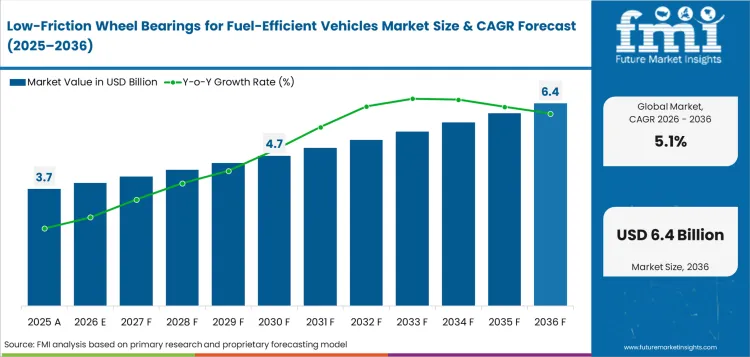
Low-friction wheel bearings for fuel-efficient vehicles market was valued at USD 3.7 billion in 2025 and is estimated at USD 3.9 billion in 2026. Industry value is projected to reach USD 6.4 billion by 2036 at 5.1% CAGR during the forecast period. OEM fitment is expected to lead sales channel demand with 72.0% share. Passenger cars are forecast to account for 61.0% of vehicle type demand in 2026.
Summary of the Low-Friction Wheel Bearings for Fuel-Efficient Vehicles Market
- Demand and Growth Drivers
- Fuel economy rules are pushing automakers to check every part that creates drag. Wheel bearings are getting more attention because they rotate whenever the vehicle moves.
- EV range planning is creating more demand for low-drag hub units. Heavier battery vehicles need bearings that manage load without adding extra resistance.
- Aftermarket demand is supported by sealed hub replacement needs. Repair shops prefer parts that reduce noise and fit without complex work.
- Product and Segment View
- Ball hub units are preferred in many passenger cars because they support smooth rotation and compact wheel-end design.
- Low-torque seals are important because seal contact can create drag during driving. Better seal design must still protect the bearing from water and dirt.
- Generation 3 hub units are gaining use in newer platforms because integrated designs support easier installation and better preload control.
- Geography and Competitive Outlook
- China and India are important because EV production and local sourcing are expanding. Suppliers need cost-ready designs that can fit high-volume vehicle programs.
- Germany and Japan focus more on validated bearing performance. Automakers in these countries often need longer testing before approving a wheel-end part.
- Competition depends on low torque, seal durability and OEM approval. Suppliers with clear test data and stable local supply will have stronger access.
- Analyst Opinion
- Nikhil Kaitwade, Principal Consultant for Automotive at FMI, says, “Low-friction wheel bearings are becoming a quiet efficiency decision for automakers. Fuel savings from one wheel end can look small on its own. A full vehicle platform changes the economics. Suppliers proving low torque with water resistance and load capacity will earn better access to new passenger car and EV programs.”
- Low-Friction Wheel Bearings for Fuel-Efficient Vehicles Market Value Analysis
- The low-friction wheel bearings for fuel-efficient vehicles market is moving from standard wheel-end replacement toward efficiency-focused hub design.
- Market value is supported by automakers that need lower drag to improve fuel economy and EV range.
- Product value is rising as low-torque seals and better grease systems reduce friction without weakening bearing life.
- OEM fitment creates the main value pool because bearing torque targets must be approved before a vehicle platform is launched.
- Aftermarket demand adds steady value as repair channels need sealed hub assemblies that reduce noise and support simple replacement.
Key Takeaways, Market Size, and Forecast
- Low-friction wheel bearings for fuel-efficient vehicles market stood at USD 3.7 billion in 2025.
- By 2036, industry revenue is projected to reach USD 6.4 billion.
- Market value is projected to rise at 5.1% CAGR during the forecast period.
- Industry revenue is projected to add USD 2.5 billion in incremental opportunity from 2026 to 2036.
- OEM fitment is expected to hold 72.0% share in 2026 as automakers specify bearing torque before platform release.
- Passenger cars are expected to represent 61.0% of vehicle type demand in 2026 as shared platforms support repeat low-drag hub use.
- India at 6.5% CAGR and China at 6.2% CAGR are expected to record stronger country movement by 2036.
Fuel economy compliance is turning wheel-bearing friction into a sourcing item across passenger cars and light trucks. In June 2024, NHTSA stated that fuel economy will rise 2% per year for passenger cars from MY 2027 to 2031 and reach about 50.4 mpg by MY 2031. OEMs need low-loss bearing packages that support compliance without changing the full vehicle platform. NSK moved the market toward seal-led friction control in September 2024 by releasing a low-friction hub unit bearing with a 40% friction cut and contact lips reduced from 3 to 1. The product targets EVs and addresses muddy-water resistance, so suppliers must prove durability with friction savings. JTEKT’s HUB-LFT data gives the next proof point with 65% lower friction loss and a 7 km BEV range benefit for C and D segment vehicles. OEMs will favor bearing makers that connect low torque to range data and real exposure testing. Schaeffler’s TriFinity adds a load-side angle because its 3-row wheel bearing is built for EV axle weight and torque. Three-row designs give suppliers a path to sell efficiency with higher load support.
Low-Friction Wheel Bearings for Fuel-Efficient Vehicles Market Definition
Low-friction wheel bearings for fuel-efficient vehicles are bearing assemblies designed to reduce drag at the wheel end. These bearings help wheels rotate with less resistance, which can support better fuel economy in conventional vehicles and better range in electric vehicles. Product design usually focuses on low-torque seals, improved grease, and better preload control. These features reduce energy loss while keeping the bearing stable during daily driving.
Low-Friction Wheel Bearings for Fuel-Efficient Vehicles Market Inclusions
Market scope covers low-friction wheel bearing assemblies categorized by bearing type, including ball hub units, tapered roller hubs, sensor hubs, and hybrid ceramic hubs. Vehicle coverage includes passenger cars, light commercial vehicles, and heavy commercial vehicles. Design coverage includes generation 1 units, generation 2 units, and generation 3 units. Friction technology includes low-torque seals, low-viscosity grease, optimized preload, and ceramic balls. Sales channel coverage includes OEM fitment and aftermarket replacement. The scope includes wheel-end bearing systems used in fuel-efficient internal combustion vehicles, hybrid vehicles, and electric vehicles where lower drag supports fuel economy or driving range. It also includes hub units designed to reduce rotational resistance while maintaining load capacity, water protection, and long service life. Revenue scope covers 2026 to 2036. Key stakeholders include wheel bearing manufacturers, hub unit suppliers, automakers, tier-1 component suppliers, aftermarket distributors, repair workshops, electric vehicle manufacturers, bearing material suppliers, seal suppliers, grease formulators, testing service providers, and vehicle efficiency regulators.
Low-Friction Wheel Bearings for Fuel-Efficient Vehicles Market Exclusions
Scope excludes engine bearings and transmission-only bearings unless supplied as wheel-end assemblies. Tire systems and brake rotors are excluded unless bundled with an integrated hub unit. General suspension parts are excluded unless the bearing assembly is included.
Low-Friction Wheel Bearings for Fuel-Efficient Vehicles Market Research Methodology
- Primary Research: FMI analysts reviewed bearing suppliers and automotive wheel-end specification needs across major production countries.
- Desk Research: Public data from energy agencies and vehicle regulators was used for market checks.
- Market Sizing and Forecasting: Market size was estimated from light vehicle output and hub bearing fitment.
- Data Validation: Forecast checks compared EV sales and fuel economy rules across major bearing markets.
Why is the Low-Friction Wheel Bearings for Fuel-Efficient Vehicles Market Growing?
- Fuel economy rules are pushing automakers to reduce small energy losses in wheel-end parts. Low-friction bearings support that need without changing the full vehicle layout.
- EV range targets are making bearing drag more important. A lower-drag hub unit can support range improvement when used across all four wheels.
- Sealed hub replacement demand supports the aftermarket. Repair shops prefer ready-fit assemblies that reduce noise and lower service risk.
Wheel-end efficiency is becoming a practical design focus for automakers. Bearings sit close to the tire and rotate every time the vehicle moves. Any drag at that point can reduce fuel economy or EV range. Low-friction wheel bearings help cut that loss through better seal design and grease selection. Suppliers need to prove that lower drag does not reduce bearing life. That makes test data important in both OEM fitment and replacement sales.
EV platforms are adding more pressure on bearing design. Battery weight increases wheel-end load, so bearings must handle weight and reduce drag at the same time. IEA reported nearly 22.0 million electric cars produced globally in 2025. Higher EV output gives suppliers a wider route to sell low-drag hub units. The main opportunity sits with bearings that control friction without creating heat or noise problems.
Market Segmentation Analysis
- In 2026, ball hub units are expected to hold 52.0% share due to compact design and lower rolling resistance.
- Passenger cars are forecast to account for 61.0% share in 2026 since shared platforms support repeat low-drag hub use.
- In 2026, generation 3 hub units are expected to hold 48.0% share with integrated flange design and better preload control.
- Low-torque seals are anticipated to represent 44.0% share in 2026 because seal contact directly affects wheel-end drag.
- In 2026, OEM fitment is expected to hold 72.0% share since torque targets need approval before vehicle launch.
The market is divided into five primary segment groups based on bearing type and vehicle type. Design generation, friction technology and sales channel complete the structure. Bearing type covers ball hub units and tapered roller hubs. Sensor hubs and hybrid ceramic hubs complete the group. Vehicle type covers passenger cars and light commercial vehicles. Heavy commercial vehicles complete the vehicle scope. Design generation covers generation 1 units and generation 2 units. Generation 3 units form the higher-spec design group. Friction technology covers low-torque seals and low-viscosity grease. Optimized preload and ceramic balls complete the friction technology scope. Sales channel covers OEM fitment and aftermarket replacement.
Insights into Low-Friction Wheel Bearings for Fuel-Efficient Vehicles Market by Bearing Type
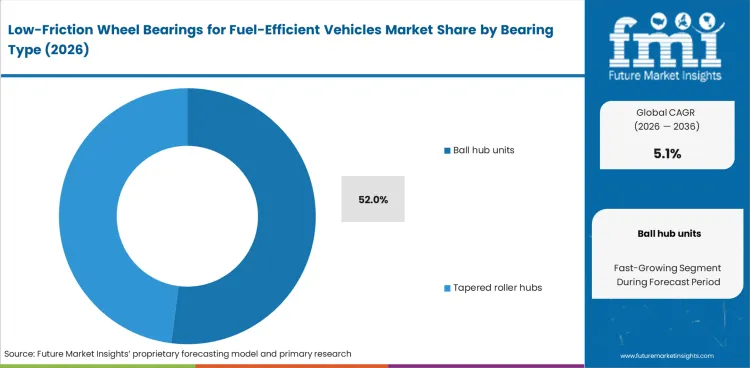
- Ball hub units are expected to hold 52.0% share in 2026 as compact design reduces drag and suits high-volume passenger cars.
- Tapered roller hubs support heavier vehicle loads, but ball hub units stay preferred for fuel-saving platforms needing smoother rotation.
Insights into Low-friction Wheel Bearings for Fuel-efficient Vehicles Market by Vehicle Type
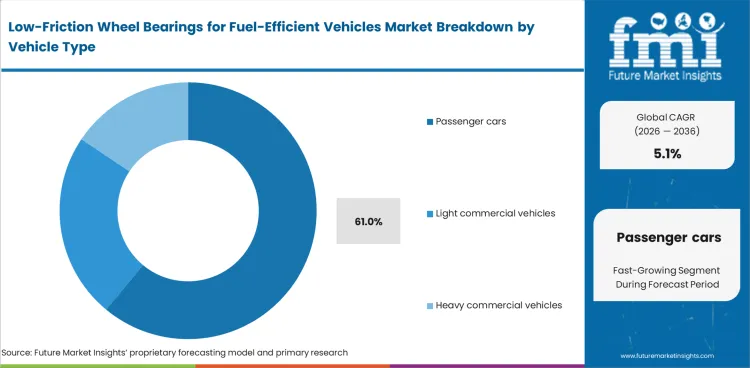
- Passenger cars are forecast to account for 61.0% share in 2026 with shared vehicle platforms supporting wider use of low-drag hub units.
- Light commercial vehicles need stronger bearings for payload changes, so suppliers must balance lower friction with longer service life.
Insights into Low-friction Wheel Bearings for Fuel-efficient Vehicles Market by Design Generation
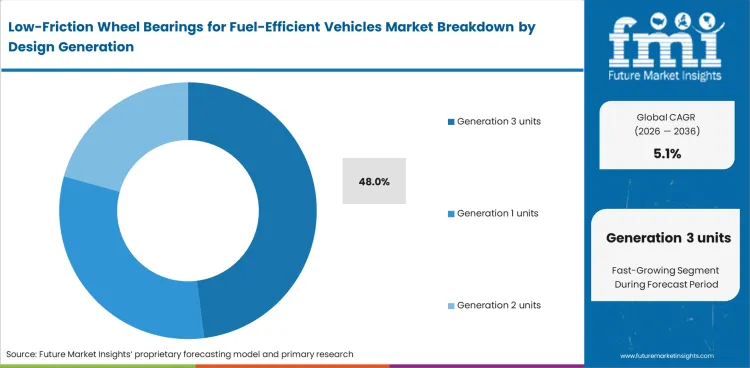
- Integrated flange design makes generation 3 hub units easier to install, with the segment expected to hold 48.0% share in 2026.
- Generation 2 units serve cost-sensitive platforms, but generation 3 designs fit newer vehicles needing better preload control.
Insights into Low-friction Wheel Bearings for fuel-efficient Vehicles Market by Friction Technology
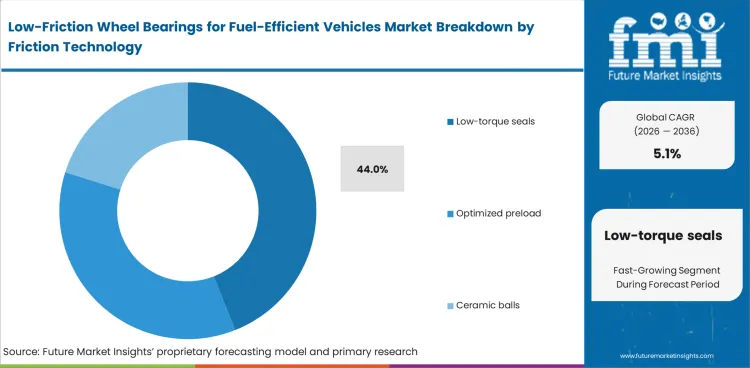
- Low-torque seals are anticipated to represent 44.0% share in 2026 as seal contact directly affects wheel-end drag during driving.
- Low-viscosity grease supports smoother rotation, but seal design has stronger influence on real-road friction and water protection.
Insights into Low-Friction Wheel Bearings for Fuel-Efficient Vehicles Market by Sales Channel
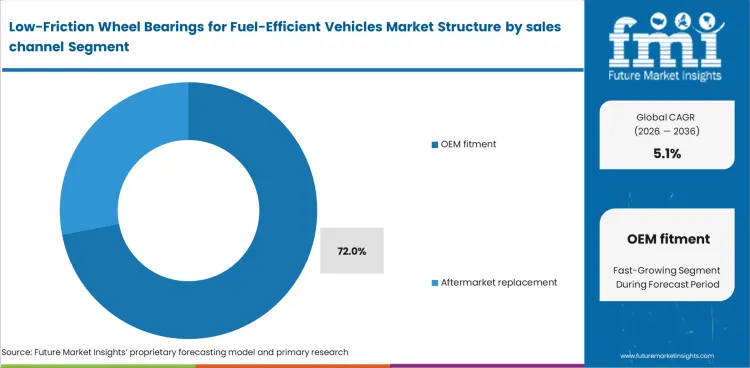
OEM fitment is expected to hold 72.0% share in 2026 as automakers validate torque with water ingress and durability before bearing designs enter vehicle platforms.
Aftermarket replacement demand comes from hub noise and wear. Repair distributors need part coverage and simple installation guidance for sealed units.
Low-Friction Wheel Bearings for Fuel-Efficient Vehicles Market Drivers, Restraints, and Opportunities
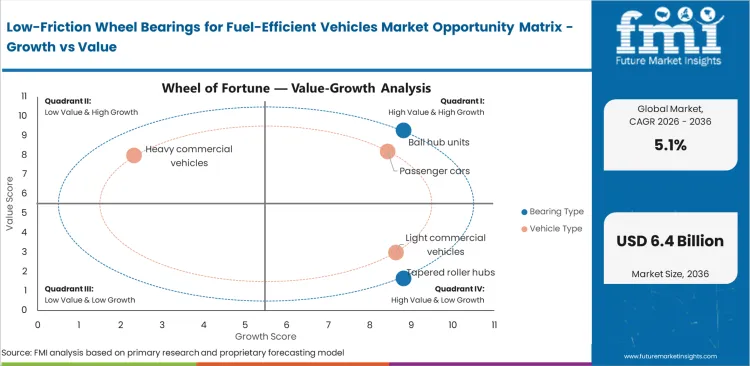
- Fuel economy compliance supports demand for low-drag hub units as automakers search for small efficiency benefits across the vehicle.
- Seal durability can slow adoption because lower friction must not weaken protection against water and road grit.
- EV range needs create a premium space for bearings with tested torque cuts and long-life performance.
Low-Torque Seals Reduce Energy Loss
Seal design is one of the most important parts of low-friction wheel bearing development. A seal must protect the bearing from water and dirt. It must also create less drag during rotation. NTN Corporation stated in May 2024 that its Low Friction Hub Bearing V reduced rotational friction by up to 64.0% against conventional products. The result supports fuel-efficient vehicles because lower wheel-end drag can reduce energy loss during daily driving.
Fuel Economy Rules Raise Supplier Pressure
Fuel economy compliance gives automakers a clear reason to examine wheel-end friction. The USA Department of Transportation stated in June 2024 that its final rule would raise average light-duty fuel economy to about 50.4 mpg by model year 2031. Bearings are not the only answer to compliance. They still matter because lower drag can support the full vehicle efficiency target. Suppliers with clear torque data will be better placed during platform sourcing.
Contamination Protection Limits Torque Cuts
Lower friction cannot come at the cost of field reliability. Wheel bearings face rain and road salt during normal vehicle use. NSK Ltd. said in September 2024 that its low-friction hub unit bearing uses a new seal and keeps muddy water resistance. The product reduces friction by 40.0% as compared to the conventional bearing. Automakers will accept lower drag only when the bearing keeps durability under real driving conditions.
Analysis of Low-Friction Wheel Bearings for Fuel-Efficient Vehicles Market by Key Countries
.webp "Top Country Growth Comparison Low Friction Wheel Bearings For Fuel Efficient Vehicles Market Cagr (2026 2036)")
| Country | CAGR |
|---|---|
| United States | 4.7% |
| China | 6.2% |
| India | 6.5% |
| Germany | 5.2% |
| Japan | 4.6% |
| South Korea | 5.4% |
| Mexico | 5.8% |
Source: Future Market Insights, 2026.
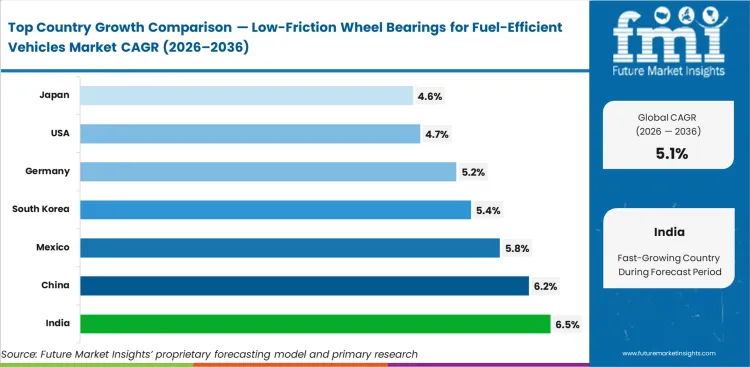
Low-Friction Wheel Bearings for Fuel-Efficient Vehicles Market CAGR Analysis by Country
- India is expected to record 6.5% CAGR by 2036 as EV programs and local sourcing support low-drag hub use.
- During the forecast period, China is forecast to advance at 6.2% CAGR as high EV output increases demand for range-supporting parts.
- Mexico is expected to expand at 5.8% CAGR by 2036 as North American vehicle production keeps wheel-end sourcing active.
- South Korea is forecast at 5.4% CAGR as domestic EV makers need bearings with lower drag and better axle-load control.
- By 2036, Germany is expected to rise at 5.2% CAGR as premium vehicle engineering favors validated low-friction designs.
- United States demand is expected to move at 4.7% CAGR as fuel economy rules and pickup electrification shape supplier qualification.
- Japan is forecast at 4.6% CAGR by 2036 as hybrid platforms and bearing engineering depth support steady specification demand.
- During the forecast period, global demand is forecast to rise at 5.1% CAGR as vehicle makers focus on wheel-end efficiency.
Demand Outlook for Low-Friction Wheel Bearings for Fuel-Efficient Vehicles Market in the United States
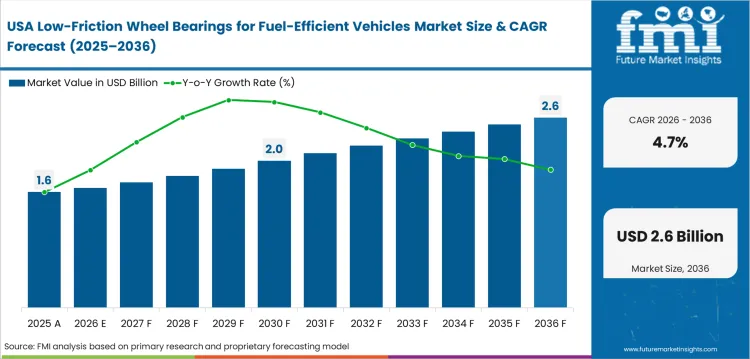
Argonne National Laboratory recorded about 1.5 million plug-in electric vehicle sales in 2025. That scale gives bearing suppliers a stronger reason to target low-drag hub units for heavier electrified platforms. Automakers need bearings that reduce drag without raising noise or service risk. The market in the United States is expected to expand at 4.7% CAGR through 2036 as fuel economy compliance keeps wheel-end efficiency under review. Sourcing decisions will favor torque proof and broad fitment coverage.
- OEM programs need hub units with stable torque under changing load conditions.
- Pickup and SUV platforms need stronger bearing designs as curb weight stays high.
- Repair channels need accurate fitment coverage for sealed hub assemblies used in high-mileage vehicles.
Sales Analysis of Low-Friction Wheel Bearings for Fuel-Efficient Vehicles Market in China
China is forecast to advance at 6.2% CAGR by 2036 as EV output creates a large need for efficient wheel-end parts. IEA reported over 13.0 million electric car sales in China during 2025. That sales scale makes bearing drag a real range issue across many platforms. Local supply also matters because vehicle programs refresh quickly in China. Bearing makers with proven seal design and fast engineering support are likely to hold better access.
- EV platforms need hub units that support higher weight and steady torque control.
- Local component makers can respond faster to platform changes and cost targets.
- Premium vehicle programs create room for validated seals and sensor-ready hub units.
Demand Outlook for Low-Friction Wheel Bearings for Fuel-Efficient Vehicles Market in India
Government data stated that 22.12 lakh EVs were sold under the PM E-DRIVE scheme by 27 January 2026. Small cars and two-wheelers keep price pressure high in India. Low-friction bearings must offer clear efficiency benefit without pushing costs too far. India is expected to record 6.5% CAGR by 2036 as local vehicle production and EV support programs expand demand for efficient components. Localized designs with dependable service life will be preferred.
- Local vehicle programs need cost-efficient hub units with clear fuel economy benefit.
- Electric two-wheeler and small car makers need bearings with lower drag and stable service life.
- Aftermarket distributors need dependable sealed assemblies as vehicle use expands in urban areas.
Opportunity Analysis of Low-Friction Wheel Bearings for Fuel-Efficient Vehicles Market in Germany
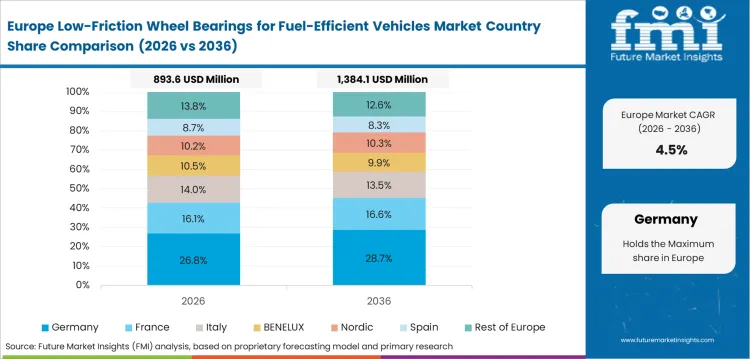
Germany’s vehicle industry is expected to rise at 5.2% CAGR during the forecast period as premium vehicle programs keep efficiency targets high. ACEA reported 43.2% higher German battery-electric registrations in 2025. Higher electrified vehicle demand increases the need for bearings that handle weight with lower drag. German automakers usually expect long validation work before design approval. Companies with strong test data will have better access to platform programs.
- Premium platforms need bearing designs that balance stiffness and low friction.
- Hybrid and EV programs create demand for validated seals and better preload control.
- Supplier access depends on test depth and documentation before platform release.
Future Outlook for Low-Friction Wheel Bearings for Fuel-Efficient Vehicles Market in Japan
Japan is forecast at 4.6% CAGR by 2036 as hybrid vehicles and precision bearing design support steady specification demand. The USA International Trade Administration reported 59,736 new EVs sold in Japan during 2024. EV share stood at 1.35% of new vehicle sales. That mix keeps hybrid and fuel-saving ICE platforms important for low-friction bearing suppliers. Japanese suppliers will rely on seal design and long validation records.
- Hybrid vehicle programs need low-drag bearings that support fuel economy improvement.
- Domestic bearing makers rely on platform familiarity and long testing records.
- Replacement channels value low-noise hub units that match original equipment quality.
Demand Outlook for Low-Friction Wheel Bearings for Fuel-Efficient Vehicles Market in South Korea
South Korea’s market is expected to move ahead at 5.4% CAGR through 2036 as domestic automakers expand electrified platforms. The USA International Trade Administration stated in July 2025 that EV share in South Korea was expected to reach 20.0% of total vehicle sales by the end of 2025. Higher EV mix raises the value of wheel bearings that control drag under heavier axle loads. Component makers need to match export platform needs and local cost targets.
- Export platforms need low-friction hub units that meet global fuel economy rules.
- Automakers need bearings that handle battery weight without raising road noise.
- Aftermarket channels need reliable replacements for premium and mass-market electrified vehicles.
Sales Outlook for Low-Friction Wheel Bearings for Fuel-Efficient Vehicles Market in Mexico
INEGI reported 343,520 light vehicles produced in Mexico during 2026. The same source recorded 310,205 light vehicle exports in that month. Mexico is expected to expand at 5.8% CAGR by 2036 as vehicle assembly supports North American wheel-end sourcing. Assembly scale keeps hub bearing sourcing close to OEM planning. Regional production and stable delivery will be important for shared vehicle platforms.
- North American platforms need hub units qualified across shared vehicle programs.
- Export-focused assembly raises demand for suppliers with predictable delivery.
- Replacement demand rises as vehicle use expands and sealed hub units need service.
Competitive Landscape and Strategic Positioning
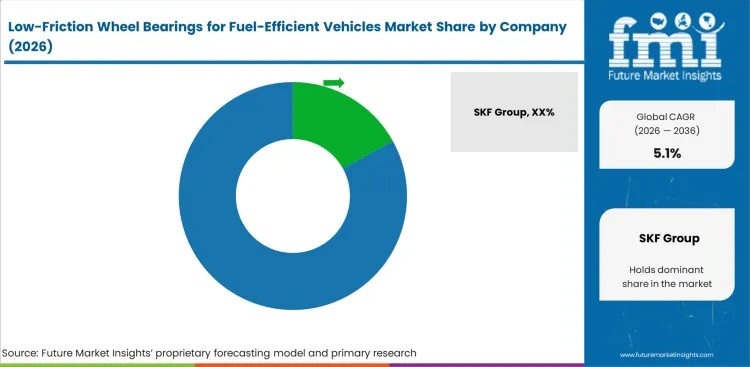
- Competition is based on lower friction and longer bearing life because automakers need efficiency gains without higher failure risk.
- Suppliers need repeatable test data for seal durability and low torque before OEMs approve hub bearing programs.
- Wheel-end specialists get better access when hub units combine bearing design with sensor-ready and flange-integrated support.
- New entrants face high approval barriers because OEMs need validation data and local supply support along with stable field performance.
Competition in low-friction wheel bearings is centered on lower torque and longer service life. Suppliers must reduce drag without weakening seal protection or load capacity. NTN stated that the series reduces rotational friction of tires during driving. The development is relevant because automakers need wheel-end parts that cut energy loss without changing the axle layout. Suppliers with proven low-friction hub designs can access fuel-efficient vehicle and EV programs more easily.
Heavy SUVs and EV platforms create a different test for suppliers. Lower friction must work with higher load and long service needs. NSK in the Japan Mobility Show 2025 stated that the product uses low-friction seals and low-friction grease while keeping reliability in harsh conditions. The development fits this market because heavier fuel-efficient vehicles need bearings that lower drag without raising failure risk. Suppliers with seal design depth and grease know-how will hold stronger positions in high-load vehicle programs.
Key Companies in the Low-Friction Wheel Bearings for Fuel-Efficient Vehicles Market
- Global Wheel-End Specialists: SKF Group and Schaeffler AG hold strong positions through hub units and OEM access.
- Japanese Bearing Leaders: NSK Ltd. and NTN Corporation rely on low-torque seals and grease systems. JTEKT Corporation adds hub bearing engineering depth.
- North American and Regional Suppliers: The Timken Company and ILJIN Group support wheel-end demand through tapered roller expertise and hub assembly supply.
Competitive Benchmarking: Low-Friction Wheel Bearings for Fuel-Efficient Vehicles Market
| Company | Low-Torque Seal Depth | Hub Unit Integration | OEM Validation Support | Geographic Footprint |
|---|---|---|---|---|
| SKF Group | High | High | High | Global with European strength |
| Schaeffler AG | High | High | High | Global with German engineering depth |
| NSK Ltd. | High | Medium | High | Japan-centered global network |
| NTN Corporation | High | High | Medium | Japan-centered global network |
| JTEKT Corporation | Medium | High | Medium | Asia and North America centered |
| The Timken Company | Medium | Medium | Medium | North America centered |
| ILJIN Group | Medium | High | Medium | Asia centered hub unit supply |
Source: Future Market Insights competitive analysis, 2026.
Key Developments in Low-Friction Wheel Bearings for Fuel-Efficient Vehicles Market
- In May 2025, NTN Corporation announced that it would exhibit its Low Friction Hub Bearing series at Automotive Engineering Exposition 2025 Yokohama.
- In October 2025, NSK Ltd. announced its Japan Mobility Show 2025 exhibit lineup, including an Ultra-Low Friction T-HUB Unit Bearing.
Key Players in the Low-Friction Wheel Bearings for Fuel-Efficient Vehicles Market
Major Global Players
- SKF Group
- Schaeffler AG
- NSK Ltd.
- NTN Corporation
- JTEKT Corporation
Specialist and Regional Players
- The Timken Company
- ILJIN Group
- GMB Corporation
Report Scope and Coverage
| Parameter | Details |
|---|---|
| Quantitative Units | USD 3.9 billion to USD 6.4 billion at 5.1% CAGR |
| Market Definition | Low-friction wheel hub bearings used in fuel-efficient, hybrid, and electric vehicles to reduce wheel-end drag |
| Segments Covered | Bearing type, vehicle type, design generation, friction technology, sales channel, and region |
| Bearing Type | Ball hub units, tapered roller hubs, sensor hubs, and hybrid ceramic hubs |
| Vehicle Type | Passenger cars, light commercial vehicles, and heavy commercial vehicles |
| Design Generation | Generation 1 units, generation 2 units, and generation 3 units |
| Friction Technology | Low-torque seals, low-viscosity grease, optimized preload, and ceramic balls |
| Sales Channel | OEM fitment and aftermarket replacement |
| Regions Covered | North America, Latin America, Western Europe, Eastern Europe, East Asia, South Asia and Pacific, Middle East and Africa |
| Countries Covered | United States, China, India, Germany, Japan, South Korea, Mexico, and more than 30 countries |
| Key Companies Profiled | SKF Group, Schaeffler AG, NSK Ltd., NTN Corporation, JTEKT Corporation, The Timken Company, ILJIN Group, and GMB Corporation |
| Forecast Period | 2026 to 2036 |
| Approach | Hybrid bottom-up and top-down method using vehicle production, EV sales, hub bearing fitment, replacement demand, and supplier activity |
Source: Future Market Insights, 2026.
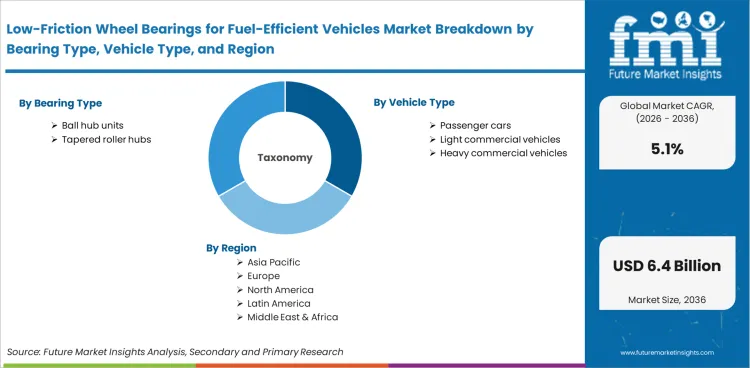
Low-Friction Wheel Bearings for Fuel-Efficient Vehicles Market Breakdown by Bearing Type, Vehicle Type, Design Generation, Friction Technology, Sales Channel, and Region
Low-Friction Wheel Bearings for Fuel-Efficient Vehicles Market Segmented by Bearing Type:
- Ball hub units
- Tapered roller hubs
- Sensor hubs
- Hybrid ceramic hubs
Low-Friction Wheel Bearings for Fuel-Efficient Vehicles Market Segmented by Vehicle Type:
- Passenger cars
- Light commercial vehicles
- Heavy commercial vehicles
Low-Friction Wheel Bearings for Fuel-Efficient Vehicles Market Segmented by Design Generation:
- Generation 1 units
- Generation 2 units
- Generation 3 units
Low-Friction Wheel Bearings for Fuel-Efficient Vehicles Market Segmented by Friction Technology:
- Low-torque seals
- Low-viscosity grease
- Optimized preload
- Ceramic balls
Low-Friction Wheel Bearings for Fuel-Efficient Vehicles Market Segmented by Sales Channel:
- OEM fitment
- Aftermarket replacement
Low-Friction Wheel Bearings for Fuel-Efficient Vehicles Market Segmented by Region:
- North America
- United States
- Canada
- Mexico
- Latin America
- Brazil
- Chile
- Rest of Latin America
- Western Europe
- Germany
- United Kingdom
- France
- Italy
- Spain
- Nordic
- BENELUX
- Rest of Western Europe
- Eastern Europe
- Poland
- Hungary
- Czech Republic
- Rest of Eastern Europe
- East Asia
- China
- Japan
- South Korea
- South Asia and Pacific
- India
- ASEAN
- Australia and New Zealand
- Rest of South Asia and Pacific
- Middle East and Africa
- Kingdom of Saudi Arabia
- Other GCC Countries
- Turkiye
- South Africa
- Rest of Middle East and Africa
Research Sources and Bibliography
- National Highway Traffic Safety Administration. (2024, June 7). New fuel economy standards for MY 2027-2031. USA Department of Transportation.
- NSK Ltd. (2024, September 18). NSK announces new and improved low-friction hub unit bearing. NSK Global.
- JTEKT Corporation. (2026). The 3rd generation ball hub units. Koyo.
- Schaeffler AG. (2024, July 31). Schaeffler TriFinity™ wheel bearing nominated for the Automechanika Frankfurt 2024 Innovation Award. Schaeffler Group.
- International Energy Agency. (2026, May). Global EV Outlook 2026: Manufacturing and trade. International Energy Agency.
- NTN Corporation. (2024, May 16). NTN expands “Low Friction Hub Bearing” series. NTN Global.
- Argonne National Laboratory. (2026). Light duty electric drive vehicles monthly sales updates. Argonne National Laboratory.
- International Energy Agency. (2026, May). Global EV Outlook 2026: Trends in electric cars. International Energy Agency.
- Press Information Bureau, Government of India. (2026, February 3). PM e-DRIVE Scheme. Ministry of Heavy Industries.
- European Automobile Manufacturers’ Association. (2026, January 27). New car registrations: +1.8% in 2025; battery-electric 17.4% market share. ACEA.
- International Trade Administration. (2025, November 20). Japan-Automotive. USA Department of Commerce.
- International Trade Administration. (2025, July 21). South Korea electric vehicles EV market. USA Department of Commerce.
- Instituto Nacional de Estadística y Geografía. (2026). Administrative record of the light vehicle automotive industry: March 2026 results. INEGI.
- NTN Corporation. (2025, May 13). NTN exhibits at “Automotive Engineering Exposition 2025 Yokohama”. NTN Global.
- NSK Ltd. (2025, October 7). NSK welcomes visitors to the Japan Mobility Show 2025. NSK Global.
This Report Answers
- What is the low-friction wheel bearings for fuel-efficient vehicles market size in 2026?
- What value is expected for the low-friction wheel bearings for fuel-efficient vehicles market by 2036?
- Which bearing type is expected to hold a leading share in 2026?
- Which vehicle type is forecast to create the strongest volume pull for low-friction wheel bearings?
- Which countries are expected to record stronger CAGR by 2036?
- How do low-torque seals affect fuel efficiency and EV range?
- Which companies are active and verified in low-friction wheel bearing supply?
Frequently Asked Questions
How large is the low-friction wheel bearings for fuel-efficient vehicles market in 2026?
Low-friction wheel bearings for fuel-efficient vehicles demand is estimated at USD 3.9 billion in 2026 with OEM fitment as the main route.
What is the expected low-friction wheel bearings for fuel-efficient vehicles market value by 2036?
Industry revenue is projected to reach USD 6.4 billion by 2036 as EV range and fuel economy targets increase bearing specification pressure.
What CAGR is expected for the low-friction wheel bearings for fuel-efficient vehicles market?
Demand is projected to rise at 5.1% CAGR from 2026 to 2036 with stronger movement in India and China.
Which bearing type leads the low-friction wheel bearings for fuel-efficient vehicles market?
Ball hub units are expected to hold 52.0% share in 2026 as compact geometry supports lower drag and broad passenger car use.
Which vehicle type creates the main demand for low-friction wheel bearings?
Passenger cars are forecast to account for 61.0% share in 2026 as common platforms support repeat use of low-drag hub units.
Why are low-torque seals important in this market?
Low-torque seals cut drag at the wheel end and protect bearings from water or road dirt during daily driving conditions.
Which are the key players in this market?
SKF Group and Schaeffler AG are active relevant suppliers. NSK Ltd. and NTN Corporation fit the same scope. JTEKT Corporation and Timken fit current market scope. ILJIN Group fits current hub bearing supply scope.
Preview the report firsthand - request a free sample
Get SampleGet the brochure for pricing and purchase details.
Get PDFTable of Content
- Executive Summary
- Global Market Outlook
- Demand-side Trends
- Supply-side Trends
- Technology Roadmap Analysis
- Analysis and Recommendations
- Market Overview
- Market Coverage / Taxonomy
- Market Definition / Scope / Limitations
- Research Methodology
- Chapter Orientation
- Analytical Lens and Working Hypotheses
- Market Structure, Signals, and Trend Drivers
- Benchmarking and Cross-market Comparability
- Market Sizing, Forecasting, and Opportunity Mapping
- Research Design and Evidence Framework
- Desk Research Programme (Secondary Evidence)
- Company Annual and Sustainability Reports
- Peer-reviewed Journals and Academic Literature
- Corporate Websites, Product Literature, and Technical Notes
- Earnings Decks and Investor Briefings
- Statutory Filings and Regulatory Disclosures
- Technical White Papers and Standards Notes
- Trade Journals, Industry Magazines, and Analyst Briefs
- Conference Proceedings, Webinars, and Seminar Materials
- Government Statistics Portals and Public Data Releases
- Press Releases and Reputable Media Coverage
- Specialist Newsletters and Curated Briefings
- Sector Databases and Reference Repositories
- FMI Internal Proprietary Databases and Historical Market Datasets
- Subscription Datasets and Paid Sources
- Social Channels, Communities, and Digital Listening Inputs
- Additional Desk Sources
- Expert Input and Fieldwork (Primary Evidence)
- Primary Modes
- Qualitative Interviews and Expert Elicitation
- Quantitative Surveys and Structured Data Capture
- Blended Approach
- Why Primary Evidence is Used
- Field Techniques
- Interviews
- Surveys
- Focus Groups
- Observational and In-context Research
- Social and Community Interactions
- Stakeholder Universe Engaged
- C-suite Leaders
- Board Members
- Presidents and Vice Presidents
- R&D and Innovation Heads
- Technical Specialists
- Domain Subject-matter Experts
- Scientists
- Physicians and Other Healthcare Professionals
- Governance, Ethics, and Data Stewardship
- Research Ethics
- Data Integrity and Handling
- Primary Modes
- Tooling, Models, and Reference Databases
- Desk Research Programme (Secondary Evidence)
- Data Engineering and Model Build
- Data Acquisition and Ingestion
- Cleaning, Normalisation, and Verification
- Synthesis, Triangulation, and Analysis
- Quality Assurance and Audit Trail
- Market Background
- Market Dynamics
- Drivers
- Restraints
- Opportunity
- Trends
- Scenario Forecast
- Demand in Optimistic Scenario
- Demand in Likely Scenario
- Demand in Conservative Scenario
- Opportunity Map Analysis
- Product Life Cycle Analysis
- Supply Chain Analysis
- Investment Feasibility Matrix
- Value Chain Analysis
- PESTLE and Porter’s Analysis
- Regulatory Landscape
- Regional Parent Market Outlook
- Production and Consumption Statistics
- Import and Export Statistics
- Market Dynamics
- Global Market Analysis 2021 to 2025 and Forecast, 2026 to 2036
- Historical Market Size Value (USD Million) Analysis, 2021 to 2025
- Current and Future Market Size Value (USD Million) Projections, 2026 to 2036
- Y-o-Y Growth Trend Analysis
- Absolute $ Opportunity Analysis
- Global Market Pricing Analysis 2021 to 2025 and Forecast 2026 to 2036
- Global Market Analysis 2021 to 2025 and Forecast 2026 to 2036, By Bearing Type
- Introduction / Key Findings
- Historical Market Size Value (USD Million) Analysis By Bearing Type , 2021 to 2025
- Current and Future Market Size Value (USD Million) Analysis and Forecast By Bearing Type , 2026 to 2036
- Ball hub units
- Tapered roller hubs
- Ball hub units
- Y-o-Y Growth Trend Analysis By Bearing Type , 2021 to 2025
- Absolute $ Opportunity Analysis By Bearing Type , 2026 to 2036
- Global Market Analysis 2021 to 2025 and Forecast 2026 to 2036, By Vehicle Type
- Introduction / Key Findings
- Historical Market Size Value (USD Million) Analysis By Vehicle Type, 2021 to 2025
- Current and Future Market Size Value (USD Million) Analysis and Forecast By Vehicle Type, 2026 to 2036
- Passenger cars
- Light commercial vehicles
- Heavy commercial vehicles
- Passenger cars
- Y-o-Y Growth Trend Analysis By Vehicle Type, 2021 to 2025
- Absolute $ Opportunity Analysis By Vehicle Type, 2026 to 2036
- Global Market Analysis 2021 to 2025 and Forecast 2026 to 2036, By Design Generation
- Introduction / Key Findings
- Historical Market Size Value (USD Million) Analysis By Design Generation, 2021 to 2025
- Current and Future Market Size Value (USD Million) Analysis and Forecast By Design Generation, 2026 to 2036
- Generation 3 units
- Generation 1 units
- Generation 2 units
- Generation 3 units
- Y-o-Y Growth Trend Analysis By Design Generation, 2021 to 2025
- Absolute $ Opportunity Analysis By Design Generation, 2026 to 2036
- Global Market Analysis 2021 to 2025 and Forecast 2026 to 2036, By Friction Technology
- Introduction / Key Findings
- Historical Market Size Value (USD Million) Analysis By Friction Technology, 2021 to 2025
- Current and Future Market Size Value (USD Million) Analysis and Forecast By Friction Technology, 2026 to 2036
- Low-torque seals
- Optimized preload
- Ceramic balls
- Low-torque seals
- Y-o-Y Growth Trend Analysis By Friction Technology, 2021 to 2025
- Absolute $ Opportunity Analysis By Friction Technology, 2026 to 2036
- Global Market Analysis 2021 to 2025 and Forecast 2026 to 2036, By sales channel
- Introduction / Key Findings
- Historical Market Size Value (USD Million) Analysis By sales channel, 2021 to 2025
- Current and Future Market Size Value (USD Million) Analysis and Forecast By sales channel, 2026 to 2036
- OEM fitment
- Aftermarket replacement
- OEM fitment
- Y-o-Y Growth Trend Analysis By sales channel, 2021 to 2025
- Absolute $ Opportunity Analysis By sales channel, 2026 to 2036
- Global Market Analysis 2021 to 2025 and Forecast 2026 to 2036, By Region
- Introduction
- Historical Market Size Value (USD Million) Analysis By Region, 2021 to 2025
- Current Market Size Value (USD Million) Analysis and Forecast By Region, 2026 to 2036
- North America
- Latin America
- Western Europe
- Eastern Europe
- East Asia
- South Asia and Pacific
- Middle East & Africa
- Market Attractiveness Analysis By Region
- North America Market Analysis 2021 to 2025 and Forecast 2026 to 2036, By Country
- Historical Market Size Value (USD Million) Trend Analysis By Market Taxonomy, 2021 to 2025
- Market Size Value (USD Million) Forecast By Market Taxonomy, 2026 to 2036
- By Country
- USA
- Canada
- Mexico
- By Bearing Type
- By Vehicle Type
- By Design Generation
- By Friction Technology
- By sales channel
- By Country
- Market Attractiveness Analysis
- By Country
- By Bearing Type
- By Vehicle Type
- By Design Generation
- By Friction Technology
- By sales channel
- Key Takeaways
- Latin America Market Analysis 2021 to 2025 and Forecast 2026 to 2036, By Country
- Historical Market Size Value (USD Million) Trend Analysis By Market Taxonomy, 2021 to 2025
- Market Size Value (USD Million) Forecast By Market Taxonomy, 2026 to 2036
- By Country
- Brazil
- Chile
- Rest of Latin America
- By Bearing Type
- By Vehicle Type
- By Design Generation
- By Friction Technology
- By sales channel
- By Country
- Market Attractiveness Analysis
- By Country
- By Bearing Type
- By Vehicle Type
- By Design Generation
- By Friction Technology
- By sales channel
- Key Takeaways
- Western Europe Market Analysis 2021 to 2025 and Forecast 2026 to 2036, By Country
- Historical Market Size Value (USD Million) Trend Analysis By Market Taxonomy, 2021 to 2025
- Market Size Value (USD Million) Forecast By Market Taxonomy, 2026 to 2036
- By Country
- Germany
- UK
- Italy
- Spain
- France
- Nordic
- BENELUX
- Rest of Western Europe
- By Bearing Type
- By Vehicle Type
- By Design Generation
- By Friction Technology
- By sales channel
- By Country
- Market Attractiveness Analysis
- By Country
- By Bearing Type
- By Vehicle Type
- By Design Generation
- By Friction Technology
- By sales channel
- Key Takeaways
- Eastern Europe Market Analysis 2021 to 2025 and Forecast 2026 to 2036, By Country
- Historical Market Size Value (USD Million) Trend Analysis By Market Taxonomy, 2021 to 2025
- Market Size Value (USD Million) Forecast By Market Taxonomy, 2026 to 2036
- By Country
- Russia
- Poland
- Hungary
- Balkan & Baltic
- Rest of Eastern Europe
- By Bearing Type
- By Vehicle Type
- By Design Generation
- By Friction Technology
- By sales channel
- By Country
- Market Attractiveness Analysis
- By Country
- By Bearing Type
- By Vehicle Type
- By Design Generation
- By Friction Technology
- By sales channel
- Key Takeaways
- East Asia Market Analysis 2021 to 2025 and Forecast 2026 to 2036, By Country
- Historical Market Size Value (USD Million) Trend Analysis By Market Taxonomy, 2021 to 2025
- Market Size Value (USD Million) Forecast By Market Taxonomy, 2026 to 2036
- By Country
- China
- Japan
- South Korea
- By Bearing Type
- By Vehicle Type
- By Design Generation
- By Friction Technology
- By sales channel
- By Country
- Market Attractiveness Analysis
- By Country
- By Bearing Type
- By Vehicle Type
- By Design Generation
- By Friction Technology
- By sales channel
- Key Takeaways
- South Asia and Pacific Market Analysis 2021 to 2025 and Forecast 2026 to 2036, By Country
- Historical Market Size Value (USD Million) Trend Analysis By Market Taxonomy, 2021 to 2025
- Market Size Value (USD Million) Forecast By Market Taxonomy, 2026 to 2036
- By Country
- India
- ASEAN
- Australia & New Zealand
- Rest of South Asia and Pacific
- By Bearing Type
- By Vehicle Type
- By Design Generation
- By Friction Technology
- By sales channel
- By Country
- Market Attractiveness Analysis
- By Country
- By Bearing Type
- By Vehicle Type
- By Design Generation
- By Friction Technology
- By sales channel
- Key Takeaways
- Middle East & Africa Market Analysis 2021 to 2025 and Forecast 2026 to 2036, By Country
- Historical Market Size Value (USD Million) Trend Analysis By Market Taxonomy, 2021 to 2025
- Market Size Value (USD Million) Forecast By Market Taxonomy, 2026 to 2036
- By Country
- Kingdom of Saudi Arabia
- Other GCC Countries
- Turkiye
- South Africa
- Other African Union
- Rest of Middle East & Africa
- By Bearing Type
- By Vehicle Type
- By Design Generation
- By Friction Technology
- By sales channel
- By Country
- Market Attractiveness Analysis
- By Country
- By Bearing Type
- By Vehicle Type
- By Design Generation
- By Friction Technology
- By sales channel
- Key Takeaways
- Key Countries Market Analysis
- USA
- Pricing Analysis
- Market Share Analysis, 2025
- By Bearing Type
- By Vehicle Type
- By Design Generation
- By Friction Technology
- By sales channel
- Canada
- Pricing Analysis
- Market Share Analysis, 2025
- By Bearing Type
- By Vehicle Type
- By Design Generation
- By Friction Technology
- By sales channel
- Mexico
- Pricing Analysis
- Market Share Analysis, 2025
- By Bearing Type
- By Vehicle Type
- By Design Generation
- By Friction Technology
- By sales channel
- Brazil
- Pricing Analysis
- Market Share Analysis, 2025
- By Bearing Type
- By Vehicle Type
- By Design Generation
- By Friction Technology
- By sales channel
- Chile
- Pricing Analysis
- Market Share Analysis, 2025
- By Bearing Type
- By Vehicle Type
- By Design Generation
- By Friction Technology
- By sales channel
- Germany
- Pricing Analysis
- Market Share Analysis, 2025
- By Bearing Type
- By Vehicle Type
- By Design Generation
- By Friction Technology
- By sales channel
- UK
- Pricing Analysis
- Market Share Analysis, 2025
- By Bearing Type
- By Vehicle Type
- By Design Generation
- By Friction Technology
- By sales channel
- Italy
- Pricing Analysis
- Market Share Analysis, 2025
- By Bearing Type
- By Vehicle Type
- By Design Generation
- By Friction Technology
- By sales channel
- Spain
- Pricing Analysis
- Market Share Analysis, 2025
- By Bearing Type
- By Vehicle Type
- By Design Generation
- By Friction Technology
- By sales channel
- France
- Pricing Analysis
- Market Share Analysis, 2025
- By Bearing Type
- By Vehicle Type
- By Design Generation
- By Friction Technology
- By sales channel
- India
- Pricing Analysis
- Market Share Analysis, 2025
- By Bearing Type
- By Vehicle Type
- By Design Generation
- By Friction Technology
- By sales channel
- ASEAN
- Pricing Analysis
- Market Share Analysis, 2025
- By Bearing Type
- By Vehicle Type
- By Design Generation
- By Friction Technology
- By sales channel
- Australia & New Zealand
- Pricing Analysis
- Market Share Analysis, 2025
- By Bearing Type
- By Vehicle Type
- By Design Generation
- By Friction Technology
- By sales channel
- China
- Pricing Analysis
- Market Share Analysis, 2025
- By Bearing Type
- By Vehicle Type
- By Design Generation
- By Friction Technology
- By sales channel
- Japan
- Pricing Analysis
- Market Share Analysis, 2025
- By Bearing Type
- By Vehicle Type
- By Design Generation
- By Friction Technology
- By sales channel
- South Korea
- Pricing Analysis
- Market Share Analysis, 2025
- By Bearing Type
- By Vehicle Type
- By Design Generation
- By Friction Technology
- By sales channel
- Russia
- Pricing Analysis
- Market Share Analysis, 2025
- By Bearing Type
- By Vehicle Type
- By Design Generation
- By Friction Technology
- By sales channel
- Poland
- Pricing Analysis
- Market Share Analysis, 2025
- By Bearing Type
- By Vehicle Type
- By Design Generation
- By Friction Technology
- By sales channel
- Hungary
- Pricing Analysis
- Market Share Analysis, 2025
- By Bearing Type
- By Vehicle Type
- By Design Generation
- By Friction Technology
- By sales channel
- Kingdom of Saudi Arabia
- Pricing Analysis
- Market Share Analysis, 2025
- By Bearing Type
- By Vehicle Type
- By Design Generation
- By Friction Technology
- By sales channel
- Turkiye
- Pricing Analysis
- Market Share Analysis, 2025
- By Bearing Type
- By Vehicle Type
- By Design Generation
- By Friction Technology
- By sales channel
- South Africa
- Pricing Analysis
- Market Share Analysis, 2025
- By Bearing Type
- By Vehicle Type
- By Design Generation
- By Friction Technology
- By sales channel
- USA
- Market Structure Analysis
- Competition Dashboard
- Competition Benchmarking
- Market Share Analysis of Top Players
- By Regional
- By Bearing Type
- By Vehicle Type
- By Design Generation
- By Friction Technology
- By sales channel
- Competition Analysis
- Competition Deep Dive
- SKF Group
- Overview
- Product Portfolio
- Profitability by Market Segments (Product/Age /Sales Channel/Region)
- Sales Footprint
- Strategy Overview
- Marketing Strategy
- Product Strategy
- Channel Strategy
- Schaeffler AG
- NSK Ltd.
- NTN Corporation
- JTEKT Corporation
- SKF Group
- Competition Deep Dive
- Assumptions & Acronyms Used


