

- Industry Size (2025)
- USD 80.0 Mn
- Forecast (2035)
- USD 164.9 Mn
- CAGR (2025 to 2035)
- 7.5%
N-Butylene Oxide 1,2 Market Size and Share Forecast Outlook 2025 to 2035
The global n‑butylene oxide 1,2 market is valued at USD 80.0 million in 2025 and is projected to reach USD 164.9 million by 2035, expanding at a compound annual growth rate (CAGR) of 7.5%. This growth is underpinned by intensified industrial activity across the oil & gas, textiles, and chemical manufacturing sectors, which drive demand for highly specialized chemical intermediates. The low‑purity (>99%) grade is the dominant product class thanks to its cost‑effectiveness and versatility in industrial applications, while usage as a chemical intermediate leads applications, reflecting its foundational role in manufacturing downstream surfactants, stabilizers, and de‑emulsifiers.
Expansion is fueled by rising global crude‑oil extraction and refining operations, where n‑butylene oxide 1,2 is used to aid demulsification and processing, as well as the expanding volume of textile production in Asia‑Pacific that leverages the compound in non‑ionic surfactant systems. Growth is further stimulated by the growing plastics and polymer sectors, which utilise n‑butylene oxide 1,2 as a fundamental building block. While emerging environmental regulations limiting VOCs (volatile organic compounds) and tightened emission standards pose headwinds, especially in developed markets, ongoing improvements in greener synthesis methods and manufacturing transparency help mitigate these impacts. Key regions such as Asia‑Pacific, North America, and Europe remain significant contributors to growth, driven by regional industrialisation, supportive manufacturing ecosystems, and expanding end‑user sectors.
Quick Stats for N-Butylene Oxide 1,2 Market
- N-Butylene Oxide 1,2 Market Industry Value (2025): USD 80.0 million
- N-Butylene Oxide 1,2 Market Forecast Value (2035): USD 164.9 million
- N-Butylene Oxide 1,2 Market Forecast CAGR: 7.5%
- Leading Segment in N-Butylene Oxide 1,2 Market in 2025: Low Purity (>99%) (58.6%)
- Key Growth Region in N-Butylene Oxide 1,2 Market: North America, Asia-Pacific, Europe
- Top Key Players in N-Butylene Oxide 1,2 Market: Ningbo Inno Pharmche, Leap Labchem Co., Ltd, BASF SE, Santa Cruz BIoTechnology, Inc., Haihang Industry Co., Ltd, Chemos GmbH & Co. KG, Zehao Industry Co., Ltd.
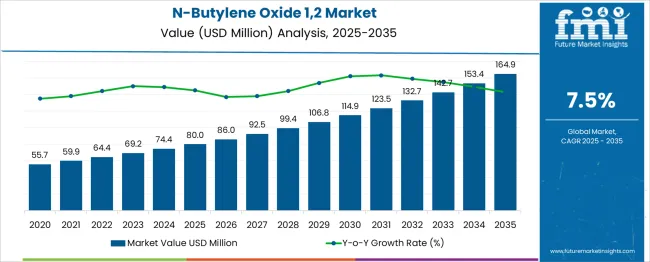
| Metric | Value |
|---|---|
| N-Butylene Oxide 1,2 Market Estimated Value in (2025 E) | USD 80.0 million |
| N-Butylene Oxide 1,2 Market Forecast Value in (2035 F) | USD 164.9 million |
| Forecast CAGR (2025 to 2035) | 7.5% |
Rationale for Segmental Growth in the N-Butylene Oxide 1,2 Market
Insights into the Low‑Purity (>99%) Product Type Segment
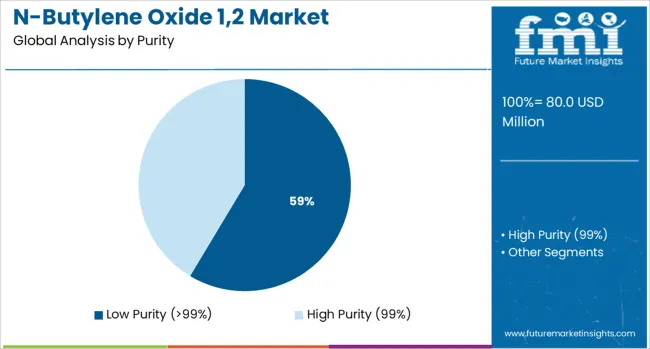
The low‑purity (>99%) grade segment is expected to maintain its lead in 2025, supported by its broad applicability across industrial formulations and cost‑competitive structure. Its dominance is driven by its use in large‑volume sectors, such as textiles, chemicals, and oil & gas, where ultra‑high purity is not essential. Manufacturers favor this grade due to its balanced performance‑to‑cost ratio, enabling widespread usage in surfactants, solvents, and de‑emulsifier systems. Additionally, the growth of textile manufacturing in Asia‑Pacific, the expansion of chemical production in Middle‑East & Africa, and cost‑sensitive demand in emerging economies reinforce the segment’s position as the preferred product class for industrial applications.
Insights into the Chemical Intermediate Application Segment
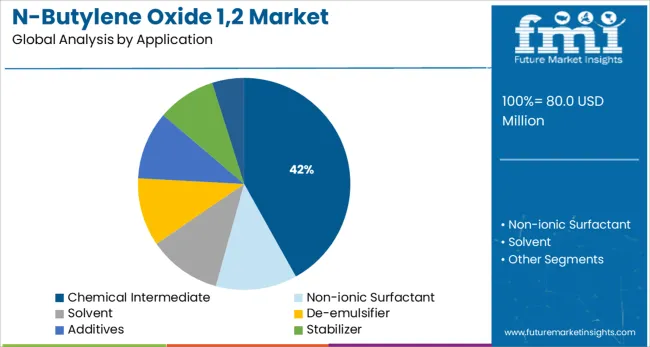
The chemical intermediate application segment is projected to lead usage patterns by 2025, given that n‑butylene oxide 1,2 serves as a key precursor in formulating surfactants, polymer additives, solvents, stabilizers, and defoamers. Its role as a building block in diverse industrial chains, from textiles to plastics to oil‑field chemicals, ensures sustained demand. The segment’s strength is underpinned by robust industrial investment in polymer manufacturing, petrochemical derivatisation, and growth in specialty additives. As manufacturers continue to seek versatile intermediates that enable downstream customization, n‑butylene oxide 1,2’s established role in these production lines secures its leadership among application categories.
What are Leading Opportunities Fueling the Demand for N-Butylene Oxide 1,2 in the Global Growth?
Due to the rapid industrialization and growing usage of oil and gas derivatives such as diesel, gasoline, and liquefied petroleum gas (LPG) among others, there is a swift rise in the consumption of crude oil across the world. Hence, governments in several countries are emphasizing on increasing the production of crude oil to address the surging demand for fuel.
For instance, according to a study by the India Brand Equity Foundation, the Indian Government announced the allocation of around USD 80 billion for drilling over120 exploration wells to double the production of oil & gas in the country by 2025.
As N-butylene oxide 1,2 is extensively used as de-emulsifiers in oil & gas production and refineries facilities for better separation of oil, a multiplicity of such initiatives are expected to augment the demand in the global market.
What are the Major Constraints Faced by the N-Butylene Oxide 1,2 Market?
With growing environmental concerns pertaining to the emission of volatile organic compounds (VOCs) and greenhouse gasses, government and various other regulatory organizations are implementing strict regulations for declining the use of VOCs such as N-butylene oxide 1,2. Imposition of such regulations across North America, Europe, and Asia Pacific in restraining the demand for N-butylene oxide 1,2 in the global market.
What is the Sales Prospect of N-Butylene Oxide 1,2 in the Asia Pacific Excluding Japan Market?
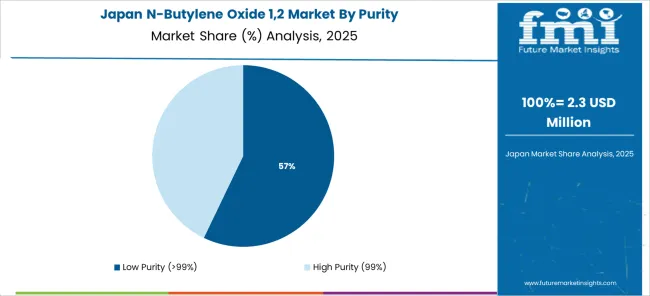
As per a study by FMI, Asia Pacific excluding Japan is projected to exhibit growth at a robust CAGR in the global market for N-butylene oxide 1,2 between 2025 and 2035.
Governments across Asia Pacific countries are focusing on launching various initiatives and favorable policies to assist textile manufacturers in increase their production for rising the overall textile exports. Hence, key industry players are emphasizing on investing for increasing their textile production capacity to get benefited from the favorable policies.
For instance, in 2020, Pallavaa Group, a leading textile manufacturer headquartered in India announced investing around USD 65 Mn for increasing the company’s textile production in Tamil Nadu, India. As N-butylene oxide 1,2 is finding a wide range of usage as a non-ionic surfactant in textiles manufacturing, such developments are estimated to drive the growth in the market.
Why is the Demand for N-Butylene Oxide 1,2 Rising at a Rapid Pace in the North America Market?
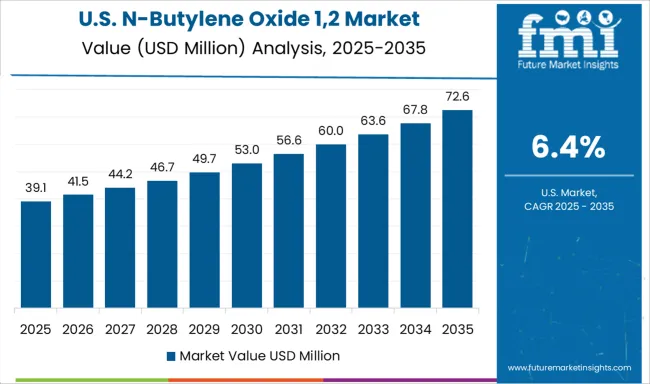
Future Market Insights reveals that North America is expected to emerge as a highly remunerative market for N-butylene oxide 1,2 during the forecast period 2025-2035.
The oil & gas industry is registering robust growth in North America, driven by the accelerating demand for petroleum derivatives due to the increasing vehicular fleet and growing industrialization. Hence, leading industry players are aiming at increasing their petroleum derivative production and refining capacity to meet the growing demand.
For instance, in 2020, Targa Resources Corporation, a USA-based oil & gas company announced developing a new petroleum refinery at Channelview, the USA which can refine nearly 35,000 barrels per day for expanding its refining capacity. A slew of such developments is anticipated to bolster the sales of N-butylene oxide 1,2 in the North America market.
Market Competition
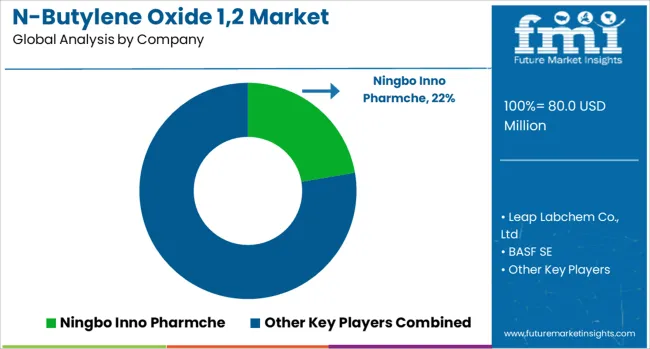
Some of the leading players in the n-butylene oxide 1,2 market are Ningbo Inno Pharmche, Leap Labchem Co., Ltd, BASF SE, Tokyo Chemical Industry Co., Ltd., Santa Cruz BIoTechnology, Inc., Kinbester Co., Ltd., Hangzhou Dayangchem Co. Ltd., DowDupont Inc., Merck KGaA, Haihang Industry Co., Ltd., Chemos GmbH & Co. KG, Zehao Industry Co., Ltd., and others.
The market for is highly competitive, due to large number of participants and increasing adoption of strategies such as collaboration, agreement, and partnership to strengthen the market share.
Report Scope
| Report Attribute | Details |
|---|---|
| Base Year for Estimation | 2024 |
| Historical Data | 2020 to 2024 |
| Forecast Period | 2025 to 2035 |
| Quantitative Units | Revenue in USD Billion, Volume in Kilotons and CAGR from 2025 to 2035 |
| Report Coverage | Revenue Forecast, Volume Forecast, Company Ranking, Competitive Landscape, Growth Factors, Trends and Pricing Analysis |
| Segments Covered | Purity, Application, End Use, Region |
| Countries Covered | North America, Latin America, Western Europe, Eastern Europe, APEJ, Japan, Middle East and Africa |
| Key Companies Profiled | Ningbo Inno Pharmche; Leap Labchem Co., Ltd; BASF SE; Tokyo Chemical Industry Co., Ltd.; Santa Cruz BIoTechnology, Inc.; Kinbester Co., Ltd.; Hangzhou Dayangchem Co. Ltd.; DowDupont Inc.; Merck KGaA; Haihang Industry Co., Ltd.; Chemos GmbH & Co. KG; Zehao Industry Co., Ltd.; Others |
| Customization | Available Upon Request |
Key Segments Profiled in the N-Butylene Oxide 1,2 Market Survey
By Purity:
- Low Purity (>99%)
- High Purity (99%)
By Application:
- Chemical Intermediate
- Non-ionic Surfactant
- Solvent
- De-emulsifier
- Additives
- Stabilizer
- Defoamer
By End Use:
- Fuel & Lubricants
- Textiles
- Oil & Gas
- Chemicals
- Plastic & Polymers
- Others
By Region:
- North America
- Latin America
- Western Europe
- Eastern Europe
- APEJ
- Japan
- Middle East and Africa
Frequently Asked Questions
How big is the n-butylene oxide 1,2 market in 2025?
The global n-butylene oxide 1,2 market is estimated to be valued at USD 80.0 million in 2025.
What will be the size of n-butylene oxide 1,2 market in 2035?
The market size for the n-butylene oxide 1,2 market is projected to reach USD 164.9 million by 2035.
How much will be the n-butylene oxide 1,2 market growth between 2025 and 2035?
The n-butylene oxide 1,2 market is expected to grow at a 7.5% CAGR between 2025 and 2035.
What are the key product types in the n-butylene oxide 1,2 market?
The key product types in n-butylene oxide 1,2 market are low purity (>99%) and high purity (99%).
Which application segment to contribute significant share in the n-butylene oxide 1,2 market in 2025?
In terms of application, chemical intermediate segment to command 41.9% share in the n-butylene oxide 1,2 market in 2025.
Preview the report firsthand - request a free sample
Get SampleGet the brochure for pricing and purchase details.
Get PDFTable of Content
- Executive Summary
- Global Market Outlook
- Demand-side Trends
- Supply-side Trends
- Technology Roadmap Analysis
- Analysis and Recommendations
- Market Overview
- Market Coverage / Taxonomy
- Market Definition / Scope / Limitations
- Market Background
- Market Dynamics
- Drivers
- Restraints
- Opportunity
- Trends
- Scenario Forecast
- Demand in Optimistic Scenario
- Demand in Likely Scenario
- Demand in Conservative Scenario
- Opportunity Map Analysis
- Product Life Cycle Analysis
- Supply Chain Analysis
- Investment Feasibility Matrix
- Value Chain Analysis
- PESTLE and Porter’s Analysis
- Regulatory Landscape
- Regional Parent Market Outlook
- Production and Consumption Statistics
- Import and Export Statistics
- Market Dynamics
- Global Market Analysis 2020 to 2024 and Forecast, 2025 to 2035
- Historical Market Size Value (USD Million) Analysis, 2020 to 2024
- Current and Future Market Size Value (USD Million) Projections, 2025 to 2035
- Y-o-Y Growth Trend Analysis
- Absolute $ Opportunity Analysis
- Global Market Pricing Analysis 2020 to 2024 and Forecast 2025 to 2035
- Global Market Analysis 2020 to 2024 and Forecast 2025 to 2035, By Purity
- Introduction / Key Findings
- Historical Market Size Value (USD Million) Analysis By Purity , 2020 to 2024
- Current and Future Market Size Value (USD Million) Analysis and Forecast By Purity , 2025 to 2035
- Low Purity (>99%)
- High Purity (99%)
- Y-o-Y Growth Trend Analysis By Purity , 2020 to 2024
- Absolute $ Opportunity Analysis By Purity , 2025 to 2035
- Global Market Analysis 2020 to 2024 and Forecast 2025 to 2035, By Application
- Introduction / Key Findings
- Historical Market Size Value (USD Million) Analysis By Application, 2020 to 2024
- Current and Future Market Size Value (USD Million) Analysis and Forecast By Application, 2025 to 2035
- Chemical Intermediate
- Non-ionic Surfactant
- Solvent
- De-emulsifier
- Additives
- Stabilizer
- Defoamer
- Y-o-Y Growth Trend Analysis By Application, 2020 to 2024
- Absolute $ Opportunity Analysis By Application, 2025 to 2035
- Global Market Analysis 2020 to 2024 and Forecast 2025 to 2035, By End Use
- Introduction / Key Findings
- Historical Market Size Value (USD Million) Analysis By End Use, 2020 to 2024
- Current and Future Market Size Value (USD Million) Analysis and Forecast By End Use, 2025 to 2035
- Fuel & Lubricants
- Textiles
- Oil & Gas
- Chemicals
- Plastic & Polymers
- Others
- Y-o-Y Growth Trend Analysis By End Use, 2020 to 2024
- Absolute $ Opportunity Analysis By End Use, 2025 to 2035
- Global Market Analysis 2020 to 2024 and Forecast 2025 to 2035, By Region
- Introduction
- Historical Market Size Value (USD Million) Analysis By Region, 2020 to 2024
- Current Market Size Value (USD Million) Analysis and Forecast By Region, 2025 to 2035
- North America
- Latin America
- Western Europe
- Eastern Europe
- East Asia
- South Asia and Pacific
- Middle East & Africa
- Market Attractiveness Analysis By Region
- North America Market Analysis 2020 to 2024 and Forecast 2025 to 2035, By Country
- Historical Market Size Value (USD Million) Trend Analysis By Market Taxonomy, 2020 to 2024
- Market Size Value (USD Million) Forecast By Market Taxonomy, 2025 to 2035
- By Country
- USA
- Canada
- Mexico
- By Purity
- By Application
- By End Use
- By Country
- Market Attractiveness Analysis
- By Country
- By Purity
- By Application
- By End Use
- Key Takeaways
- Latin America Market Analysis 2020 to 2024 and Forecast 2025 to 2035, By Country
- Historical Market Size Value (USD Million) Trend Analysis By Market Taxonomy, 2020 to 2024
- Market Size Value (USD Million) Forecast By Market Taxonomy, 2025 to 2035
- By Country
- Brazil
- Chile
- Rest of Latin America
- By Purity
- By Application
- By End Use
- By Country
- Market Attractiveness Analysis
- By Country
- By Purity
- By Application
- By End Use
- Key Takeaways
- Western Europe Market Analysis 2020 to 2024 and Forecast 2025 to 2035, By Country
- Historical Market Size Value (USD Million) Trend Analysis By Market Taxonomy, 2020 to 2024
- Market Size Value (USD Million) Forecast By Market Taxonomy, 2025 to 2035
- By Country
- Germany
- UK
- Italy
- Spain
- France
- Nordic
- BENELUX
- Rest of Western Europe
- By Purity
- By Application
- By End Use
- By Country
- Market Attractiveness Analysis
- By Country
- By Purity
- By Application
- By End Use
- Key Takeaways
- Eastern Europe Market Analysis 2020 to 2024 and Forecast 2025 to 2035, By Country
- Historical Market Size Value (USD Million) Trend Analysis By Market Taxonomy, 2020 to 2024
- Market Size Value (USD Million) Forecast By Market Taxonomy, 2025 to 2035
- By Country
- Russia
- Poland
- Hungary
- Balkan & Baltic
- Rest of Eastern Europe
- By Purity
- By Application
- By End Use
- By Country
- Market Attractiveness Analysis
- By Country
- By Purity
- By Application
- By End Use
- Key Takeaways
- East Asia Market Analysis 2020 to 2024 and Forecast 2025 to 2035, By Country
- Historical Market Size Value (USD Million) Trend Analysis By Market Taxonomy, 2020 to 2024
- Market Size Value (USD Million) Forecast By Market Taxonomy, 2025 to 2035
- By Country
- China
- Japan
- South Korea
- By Purity
- By Application
- By End Use
- By Country
- Market Attractiveness Analysis
- By Country
- By Purity
- By Application
- By End Use
- Key Takeaways
- South Asia and Pacific Market Analysis 2020 to 2024 and Forecast 2025 to 2035, By Country
- Historical Market Size Value (USD Million) Trend Analysis By Market Taxonomy, 2020 to 2024
- Market Size Value (USD Million) Forecast By Market Taxonomy, 2025 to 2035
- By Country
- India
- ASEAN
- Australia & New Zealand
- Rest of South Asia and Pacific
- By Purity
- By Application
- By End Use
- By Country
- Market Attractiveness Analysis
- By Country
- By Purity
- By Application
- By End Use
- Key Takeaways
- Middle East & Africa Market Analysis 2020 to 2024 and Forecast 2025 to 2035, By Country
- Historical Market Size Value (USD Million) Trend Analysis By Market Taxonomy, 2020 to 2024
- Market Size Value (USD Million) Forecast By Market Taxonomy, 2025 to 2035
- By Country
- Kingdom of Saudi Arabia
- Other GCC Countries
- Turkiye
- South Africa
- Other African Union
- Rest of Middle East & Africa
- By Purity
- By Application
- By End Use
- By Country
- Market Attractiveness Analysis
- By Country
- By Purity
- By Application
- By End Use
- Key Takeaways
- Key Countries Market Analysis
- USA
- Pricing Analysis
- Market Share Analysis, 2024
- By Purity
- By Application
- By End Use
- Canada
- Pricing Analysis
- Market Share Analysis, 2024
- By Purity
- By Application
- By End Use
- Mexico
- Pricing Analysis
- Market Share Analysis, 2024
- By Purity
- By Application
- By End Use
- Brazil
- Pricing Analysis
- Market Share Analysis, 2024
- By Purity
- By Application
- By End Use
- Chile
- Pricing Analysis
- Market Share Analysis, 2024
- By Purity
- By Application
- By End Use
- Germany
- Pricing Analysis
- Market Share Analysis, 2024
- By Purity
- By Application
- By End Use
- UK
- Pricing Analysis
- Market Share Analysis, 2024
- By Purity
- By Application
- By End Use
- Italy
- Pricing Analysis
- Market Share Analysis, 2024
- By Purity
- By Application
- By End Use
- Spain
- Pricing Analysis
- Market Share Analysis, 2024
- By Purity
- By Application
- By End Use
- France
- Pricing Analysis
- Market Share Analysis, 2024
- By Purity
- By Application
- By End Use
- India
- Pricing Analysis
- Market Share Analysis, 2024
- By Purity
- By Application
- By End Use
- ASEAN
- Pricing Analysis
- Market Share Analysis, 2024
- By Purity
- By Application
- By End Use
- Australia & New Zealand
- Pricing Analysis
- Market Share Analysis, 2024
- By Purity
- By Application
- By End Use
- China
- Pricing Analysis
- Market Share Analysis, 2024
- By Purity
- By Application
- By End Use
- Japan
- Pricing Analysis
- Market Share Analysis, 2024
- By Purity
- By Application
- By End Use
- South Korea
- Pricing Analysis
- Market Share Analysis, 2024
- By Purity
- By Application
- By End Use
- Russia
- Pricing Analysis
- Market Share Analysis, 2024
- By Purity
- By Application
- By End Use
- Poland
- Pricing Analysis
- Market Share Analysis, 2024
- By Purity
- By Application
- By End Use
- Hungary
- Pricing Analysis
- Market Share Analysis, 2024
- By Purity
- By Application
- By End Use
- Kingdom of Saudi Arabia
- Pricing Analysis
- Market Share Analysis, 2024
- By Purity
- By Application
- By End Use
- Turkiye
- Pricing Analysis
- Market Share Analysis, 2024
- By Purity
- By Application
- By End Use
- South Africa
- Pricing Analysis
- Market Share Analysis, 2024
- By Purity
- By Application
- By End Use
- USA
- Market Structure Analysis
- Competition Dashboard
- Competition Benchmarking
- Market Share Analysis of Top Players
- By Regional
- By Purity
- By Application
- By End Use
- Competition Analysis
- Competition Deep Dive
- Ningbo Inno Pharmche
- Overview
- Product Portfolio
- Profitability by Market Segments (Product/Age /Sales Channel/Region)
- Sales Footprint
- Strategy Overview
- Marketing Strategy
- Product Strategy
- Channel Strategy
- Leap Labchem Co., Ltd
- BASF SE
- Santa Cruz Biotechnology, Inc.
- Haihang Industry Co., Ltd
- Chemos GmbH & Co. KG
- Zehao Industry Co., Ltd.
- Ningbo Inno Pharmche
- Competition Deep Dive
- Assumptions & Acronyms Used
- Research Methodology


