

- Industry Size (2026)
- USD 1.4 Bn
- Forecast (2036)
- USD 2.6 Bn
- CAGR (2026 to 2036)
- 6.4%
Non-Fluorinated Agrochemical Jugs Market Size, Market Forecast and Outlook By FMI
The non-fluorinated agrochemical jugs market was valued at USD 1.3 billion in 2025. Industry is expected to cross USD 1.4 billion in 2026 at a CAGR of 6.4% during the forecast. Demand outlook carries the market valuation to USD 2.6 billion through 2036 as multi-layer co-extrusion technology reaches price parity with traditional surface-treated containers. Strict regulatory mandates banning PFAS-leaching plastics from agricultural supply chains force this rapid transition, compelling formulators to overhaul their portfolios completely.
Contract packers relying on traditional fluorine gas treatments to prevent solvent permeation now face a strict regulatory disqualification window they cannot close once government audit protocols take effect. Formulators who delay this packaging migration risk total exclusion from prime commercial distribution networks and devastating financial penalties. These dynamic forces incumbent plastic converters to integrate advanced EVOH and polyamide barrier layers into every new product line, rendering older single-screw blow-molding assets entirely obsolete.
Summary of Non-Fluorinated Agrochemical Jugs Market
- Non-Fluorinated Agrochemical Jugs Market Definition
- The non-fluorinated agrochemical jugs market encompasses rigid plastic containment solutions engineered with alternative barrier technologies, such as co-extruded EVOH, to eliminate reliance on PFAS-generating fluorine treatments. This boundary is structurally defined by strict environmental compliance standards governing the safe transport of volatile agricultural chemicals.
- Demand Drivers in the Market
- Regulatory crackdowns on PFAS contamination force agricultural formulators to immediately transition away from legacy fluorinated containment to avoid severe financial penalties.
- The rising concentration of modern active ingredients compels packaging engineers to specify advanced multi-layer barrier jugs that prevent aggressive solvent permeation.
- Corporate sustainability mandates pressure global chemical distributors to purge environmentally persistent materials from their bulk liquid transport supply chains.
- Key Segments Analyzed in the FMI Report
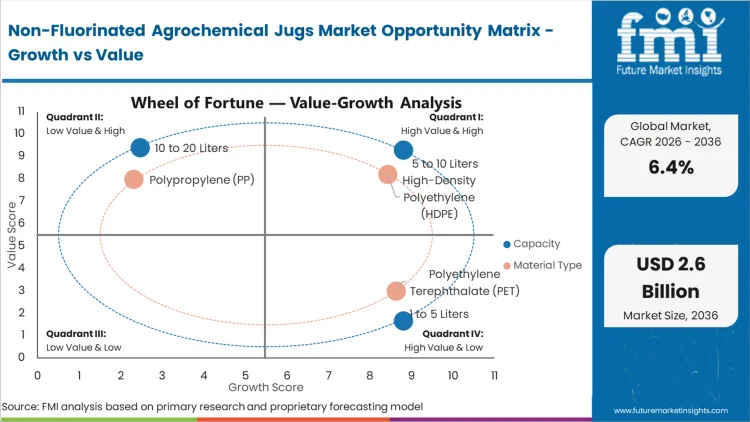
- 5 to 10 Liters: 42.5% share in 2026, reflecting the optimal ergonomic and volumetric requirements for medium-scale commercial farming applications.
- High-Density Polyethylene (HDPE): 55.0% share in 2026, as multi-layer co-extrusion preserves the structural durability of HDPE while integrating necessary non-fluorinated barrier resins.
- China: 8.5% compound growth, driven by aggressive national initiatives to modernize export-oriented pesticide transit solutions infrastructure.
- Analyst Opinion at FMI
- Ismail Sutaria, Principal Consultant for Packaging, opines, “The non-fluorinated agrochemical jug is more than a container, it is the quiet revolution that lets farmers spray with confidence today and hand their children a cleaner soil tomorrow. This is where cutting-edge polymer science meets uncompromising regulatory demands, proving once and for all that true sustainability and maximum crop protection are not opposing forces but the same unstoppable future.”
- Strategic Implications / Executive Takeaways
- Rigid packaging converters must aggressively invest in co-extrusion blow molding machinery to qualify for impending Tier-1 agrochemical supply contracts.
- Agrochemical procurement directors should phase out single-layer treated container dependency and mandate verified non-fluorinated structures in all new hazardous chemical transit specifications.
- Polymer resin suppliers must optimize EVOH and tie-layer formulations to prove structural integrity under extreme agricultural field conditions during the site commissioning phase.
- Methodology
- Primary Research: FMI conducted detailed technical interviews with principal packaging engineers, polymer scientists, and chemical regulatory directors across 40 countries to validate barrier technology adoption timelines.
- Desk Research: Analysts aggregated public standards documentation from environmental protection agencies, corporate packaging launch sheets, and national agricultural compliance programs.
- Market-Sizing and Forecasting: The model applies a bottom-up methodology starting with global installed base metrics for agrochemical containers and projecting the conversion rate to non-fluorinated standards.
- Data Validation and Update Cycle: Segment forecasts undergo cross-validation against quarterly machinery shipment volumes for multi-layer blow molding equipment.
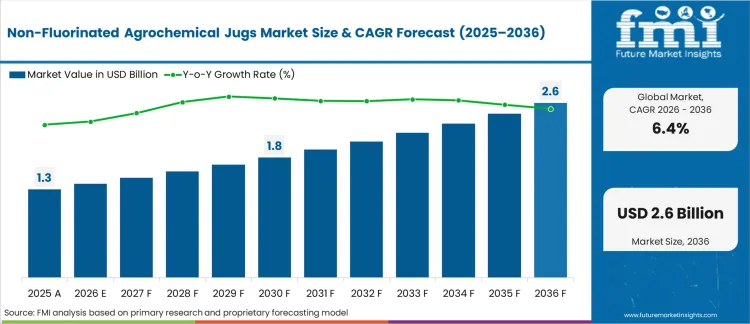
The impending 2027 enforcement deadline for global PFAS restrictions represents the decisive inflection point under which the phase-out of legacy blow-molding assets becomes irreversible. Tier-1 agrochemical manufacturers must secure non-fluorinated barrier packaging supply contracts before this compliance window closes. Facilities completing this transition establish an audit-proof infrastructure capable of supporting highly concentrated next-generation pesticide formulations.
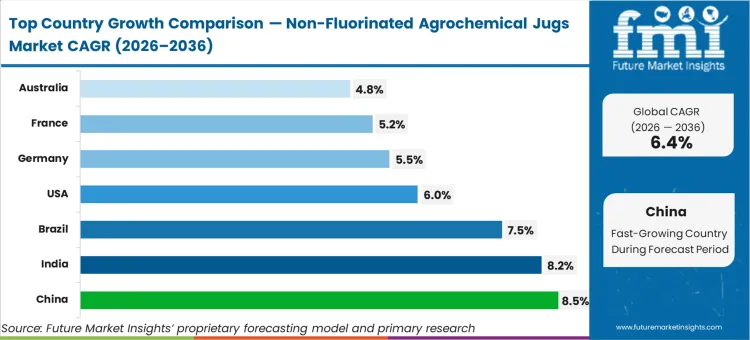
China sets the pace with an 8.5% CAGR, followed closely by India at 8.2% as both nations rapidly upgrade their export packaging bases. Brazil records a 7.5% expansion driven by immense volume requirements from the soybean herbicide sector. The United States advances at a 6.0% rate, strictly enforced by federal chemical audits. Germany tracks a 5.5% expansion while France expands at 5.2%. Australia reaches a 4.8% CAGR trajectory anchored by rigorous environmental protection protocols. This geographic dispersion confirms a universal structural shift away from toxic surface treatments.
Non-Fluorinated Agrochemical Jugs Market Definition
Non-fluorinated agrochemical jugs represent specialized rigid plastic containers engineered without fluorine gas surface treatments to store and transport volatile agricultural chemicals. These vessels utilize advanced co-extrusion technologies, incorporating inner barrier resins like EVOH or polyamides, to prevent solvent permeation and paneling. The structural design explicitly eliminates the risk of per- and polyfluoroalkyl substances (PFAS) leaching into the packaged crop protection products.
Non-Fluorinated Agrochemical Jugs Market Inclusions
The market scope includes multi-layer blow-molded multi-layer HDPE bottles, co-extruded rigid containers featuring integrated barrier resins, and specialized rigid plastic containers utilizing plasma-enhanced alternative coatings. UN-certified rigid jugs explicitly manufactured without fluorination processes for the safe transit of hazardous agricultural liquids fall entirely within these boundaries. Associated non-fluorinated closures and tamper-evident sealing systems engineered for these specific vessels are also incorporated.
Non-Fluorinated Agrochemical Jugs Market Exclusions
Legacy single-layer HDPE jugs treated with fluorine gas post-production are strictly excluded from this valuation. Standard commercial beverage containers, flexible agricultural pouches, and intermediate bulk containers exceeding standard jug capacities fall outside the defined parameters. Metal drums and bare polyethylene containers lacking distinct solvent-barrier properties engineered for crop protection chemicals are explicitly omitted.
Non-Fluorinated Agrochemical Jugs Market Research Methodology
- Primary Research: Analysts engaged with packaging procurement directors at major agrochemical firms, extrusion blow-molding plant managers, and chemical regulatory compliance officers to map the specific decision gates triggering the phase-out of fluorinated containers.
- Desk Research: The data collection phase aggregated compliance roadmaps from the EPA, European Chemicals Agency restriction proposals, and public sustainability reports from leading agricultural conglomerates.
- Market-Sizing and Forecasting: The baseline value derives from a bottom-up aggregation of multi-layer jug production volumes, applying region-specific regulatory enforcement curves to project the future adoption velocity.
- Data Validation and Update Cycle: Projections are rigorously tested against quarterly financial disclosures from dominant specialized rigid plastics converters and resin shipment data for EVOH and tie-layer materials.
Segmental Analysis
Non-Fluorinated Agrochemical Jugs Market Analysis by Capacity
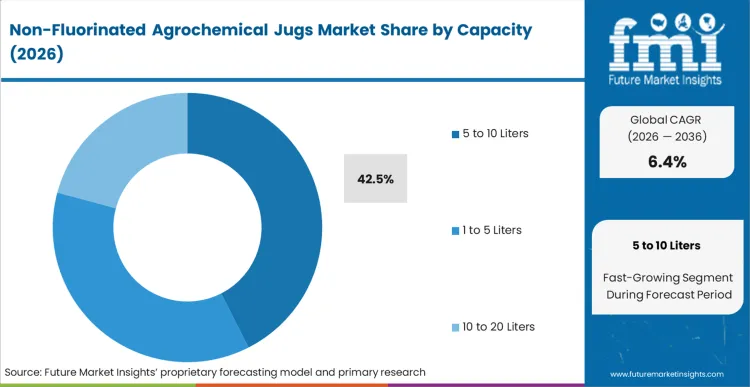
With legacy single-layer containers proving inadequate against aggressive regulatory audits, procurement directors execute full-scale packaging replacement programs. 5 to 10 Liters commands a dominant 42.5% share in 2026, reflecting the absolute requirement for ergonomic handling and precise dosing on commercial farms. Converters deploying advanced blow-molded plastics machinery perfectly optimize this specific volumetric tier. This structural integration eliminates the handling risks associated with oversized drums while minimizing the waste footprint of smaller bottles. FMI analysts opine that packaging engineers specifying this capacity streamline their distribution logistics and significantly reduce overall transport costs. Chemical distributors completing rigorous UN drop-testing protocols guarantee secure transit channels.
- Drop-test Resilience: Advanced co-extruded structures absorb severe kinetic impacts, preventing catastrophic chemical spills during rough agricultural transport.
- Ergonomic Optimization: Integrated molded handles natively support balanced pouring, shifting the physical strain away from the agricultural operator.
- Palletization Efficiency: Engineered rectangular footprints maximize the physical stacking density required for high-volume agrochemical shipping in constrained warehouse environments.
Non-Fluorinated Agrochemical Jugs Market Analysis by Material Type
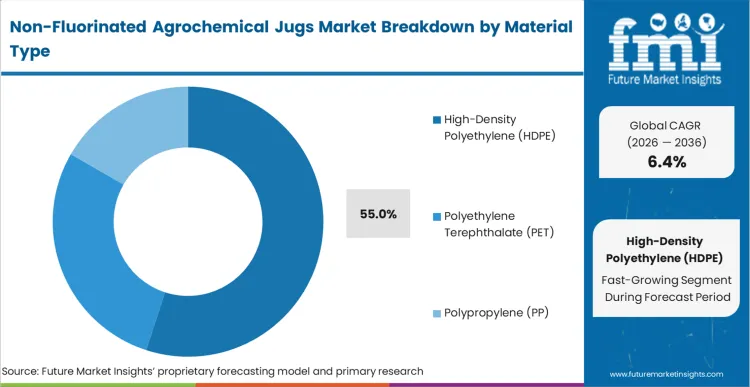
As per FMI's projection, leveraging HDPE's inherent impact resistance alongside an internal EVOH barrier directly enables safe, PFAS-free chemical storage. Polymer scientists must validate permeation metrics during laboratory stress testing to authorize final product sign-off. The integration of advanced tie-layers across disparate polymer types forces extrusion blow molders to rethink traditional single-screw manufacturing setups. Resin suppliers passing strict solvent-compatibility thresholds secure lucrative supply contracts. High-Density Polyethylene (HDPE) emerges as the dominant material foundation, expected to represent 55.0% of total market share in 2026. Modern rigid packaging environments are increasingly built around multi-layer co-extrusion, removing the environmental liabilities caused by traditional fluorine gas surface treatments.
- Tie-layer Adhesion: Critical bonding resins receive guaranteed uniform distribution while standard structural polymers utilize the remaining wall thickness without causing delamination.
- Impact Integrity: Connecting flexible barrier films directly to the rigid HDPE backbone accelerates the extraction of maximum physical toughness for severe field applications.
- Permeation Blocking: Standardized EVOH core layers reduce the solvent weight loss previously observed when aggressive formulations compromised standard untreated polyethylene walls.
Non-Fluorinated Agrochemical Jugs Market Analysis by Application
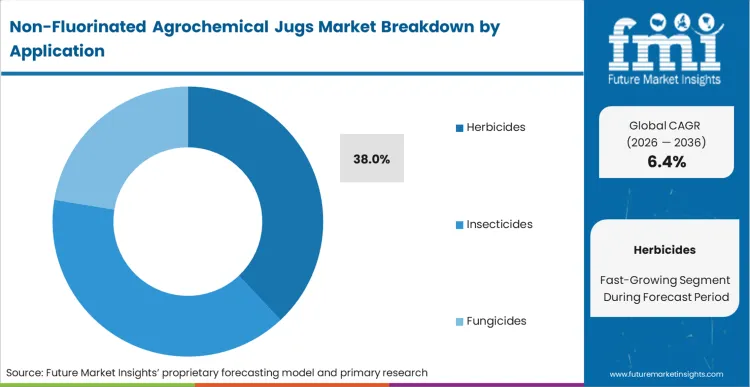
Stringent regulatory thresholds governing highly concentrated weed-control formulas force buyers to act immediately. Herbicides capture 38.0% of the market share in 2026 after authorities explicitly linked legacy fluorinated containers to hazardous PFAS leaching. Formulators incorporating advanced non-fluorinated advanced polyethylene applications guarantee that potent systemic herbicides remain safely contained without degrading the jug walls. Based on FMI's assessment, the convergence of complex solvent blends with stringent environmental oversight amplifies the demand for high-barrier co-extruded links. Chemical engineers failing to demonstrate seamless compatibility with these new barrier structures lose priority status in critical product launch cycles. Contract packers clearing accelerated shelf-life stability tests unlock massive commercial distribution opportunities.
- Solvent Containment: Engineered barrier layers ensure aggressive non-polar solvents bypass the standard polyethylene matrix, delivering absolute containment for concentrated herbicide emulsions.
- Wall Paneling Prevention: Dedicated structural reinforcement permits volatile vapor pressures to fluctuate without causing the physical collapse of the rigid container.
- Chemical Purity: Non-fluorinated internal surfaces empower formulators to source highly sensitive active ingredients without worrying about reactive fluorine contamination.
Non-Fluorinated Agrochemical Jugs Market Analysis by End User
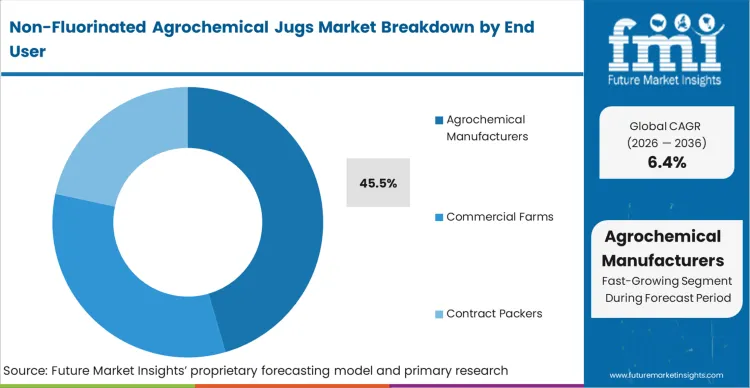
Supply chain directors passing continuous compliance audits guarantee uninterrupted market access. A prior failure in environmental compliance across legacy packaging lines created this segment's immense demand. Agrochemical Manufacturers hold 45.5% of the market share in 2026 by establishing strict, top-down mandates for PFAS-free containment across their entire product portfolios. Procurement teams utilizing these sustainable transit alternatives coordinate complex multi-national product rollouts with unprecedented regulatory confidence. FMI's analysis indicates that precise material traceability enables advanced root-cause analysis when auditors trigger chemical composition reviews. Facilities operating without this documented non-fluorinated architecture face systemic distribution embargoes as regional regulators reject non-compliant inventory.
- Traceability Protocols: Continuous background documentation protocols compensate for the complex multi-layer resin sourcing requirements across hundreds of connected global suppliers.
- Audit Defense: Accurate material composition declarations allow legal teams to reconstruct exact manufacturing parameters across geographically distributed packaging partners.
- Portfolio Conversion: Multiple independent brand managers execute synchronous packaging upgrade commands based on a shared corporate mandate rather than localized cost-saving triggers.
Non-Fluorinated Agrochemical Jugs Market Drivers, Restraints, and Opportunities
The intense regulatory scrutiny surrounding PFAS contamination forces agrochemical packaging procurement directors to extract all fluorinated plastics directly from their supply chains. This structural requirement renders traditional fluorine gas surface treatments entirely obsolete. Formulators upgrading their empty chemical containment portfolios face a strict binary choice between deploying complex multi-layer co-extruded jugs or accepting severe market access bans. Transitioning to a verified non-fluorinated backbone simplifies regulatory compliance and enables direct entry into heavily monitored European and North American markets. Companies that fail to modernize their core containment layers risk devastating product recalls and permanent brand damage.
The intricate multi-layer extrusion machinery required to produce these advanced jugs creates steep capital expenditure curves for traditional blow molders. Designing uniform barrier layers across complex jug geometries demands specialized die-head tuning expertise that most regional converters lack internally. To mitigate this capability gap, packaging plant managers increasingly rely on pre-compounded barrier resins that simplify the extrusion process but inherently carry much higher raw material costs.
Opportunities in the Non-Fluorinated Agrochemical Jugs Market
- Plasma-Enhanced Barrier Coatings: Next-generation coating technology enables converters to apply micro-thin, silicon-based barriers directly inside standard single-layer jugs. This capability allows manufacturers to bypass expensive multi-layer extrusion investments while still achieving strict non-fluorinated compliance.
- Bio-Based Tie Layers: Upgraded agricultural policies permit resin suppliers to deploy renewable bonding agents without impacting critical structural adhesion properties. This integration prevents fossil-derived plastics from monopolizing the sustainable packaging sequence.
- Post-Consumer Recycled Integration: Specialized multi-layer designs require precise core-layer isolation techniques. Advanced blow-molding architectures provide the structural integrity necessary to sandwich recycled resins safely between virgin non-fluorinated layers.
Regional Analysis
Based on the regional analysis, the Non-Fluorinated Agrochemical Jugs market is segmented into North America, Latin America, Europe, East Asia, South Asia, Oceania and Middle East & Africa across 40 plus countries.
.webp "Top Country Growth Comparison Non Fluorinated Agrochemical Jugs Market Cagr (2026 2036)")
| Country | CAGR (2026 to 2036) |
|---|---|
| China | 8.5% |
| India | 8.2% |
| Brazil | 7.5% |
| USA | 6.0% |
| Germany | 5.5% |
| France | 5.2% |
| Australia | 4.8% |
Source: Future Market Insights (FMI) analysis, based on proprietary forecasting model and primary research
Asia Pacific Non-Fluorinated Agrochemical Jugs Market Analysis
Aggressive export-driven regulatory alignment across the Asia Pacific region accelerates the bypass of legacy fluorinated constraints. Packaging procurement directors constructing new agrochemical formulation facilities specify multi-layer barrier technologies in their initial vendor RFQs. In FMI's view, this clean-slate approach eliminates the costly and time-consuming product recall phase that plagues older chemical exporters. By building non-fluorinated compliance natively into the packaging foundation, regional formulators establish highly flexible export portfolios capable of penetrating strict Western markets. The specific regulatory requirements of individual trading partners dictate the precise barrier implementation parameters for these containment technologies.
- China: Massive export modernization anchors China's 8.5% CAGR to 2036. Export directors clearing intense EU chemical residue audits unlock unprecedented access to premium European agricultural markets. China's massive generic pesticide sector deploys highly automated, multi-layer blow molding lines requiring seamless EVOH distribution across complex jug geometries. Greenfield facility architects bypass traditional surface fluorination entirely, specifying native co-extruded smart agriculture logistics solutions for all new international supply contracts. The sheer volume of new packaging construction establishes a massive installed base of compliant infrastructure across the eastern chemical corridor.
- India: Strict domestic mandates in India require immutable safety records for all highly toxic agricultural chemical transit protocols. Process engineers must deploy rigid containers capable of guaranteeing aggressive solvent containment without any structural degradation. The national push toward premium formulated exports triggers a wave of packaging upgrades prioritizing non-fluorinated, multi-layer barrier backbones. Stricter domestic safety enforcement drives an 8.2% CAGR for non-fluorinated agrochemical jugs in India. Converters deploying localized co-extrusion machinery capture dominant market shares from legacy single-layer manufacturers.
- Australia: Australia's rigorous biosecurity and environmental protection framework operates to chemical leaching tolerances that exceed standard global specifications by orders of magnitude. Plant automation leads mandate zero-PFAS architectures to ensure local soil ecosystems remain flawlessly uncontaminated. Australia's non-fluorinated agrochemical jugs market expands at a 4.8% CAGR as this zero-tolerance standard becomes the universal procurement baseline. Supply chain managers validating absolute barrier integrity secure long-term contracts with massive national farming cooperatives. The concentration of massive commercial farming operations necessitates continuous investment in ultra-safe containment backbones to maximize crop yields.
FMI's report includes extensive coverage of the Asia Pacific packaging landscape. It incorporates detailed analysis of Japan, Vietnam, Thailand, and the broader ASEAN region. A primary trend shaping these nations is the rapid localization of barrier resin extrusion, forcing contract packers to deploy multi-layer architectures to satisfy stringent global brand traceability requirements.
North America Non-Fluorinated Agrochemical Jugs Market Analysis
Implementing a standardized, non-fluorinated backbone enables facilities to deploy highly concentrated solvent formulations without compromising container stability. The success of these modernization initiatives depends entirely on the availability of advanced co-extrusion blow molding capacity. Federal environmental mandates across North America target the systematic eradication of PFAS-generating fluorinated packaging from all agricultural supply chains. Regulatory compliance officers leading critical product safety overhauls face strict EPA directives to purge these legacy containers under TSCA enforcement actions. FMI's research confirms that the major agrochemical conglomerates actively drive this consolidation to secure their distribution networks against massive legal liabilities
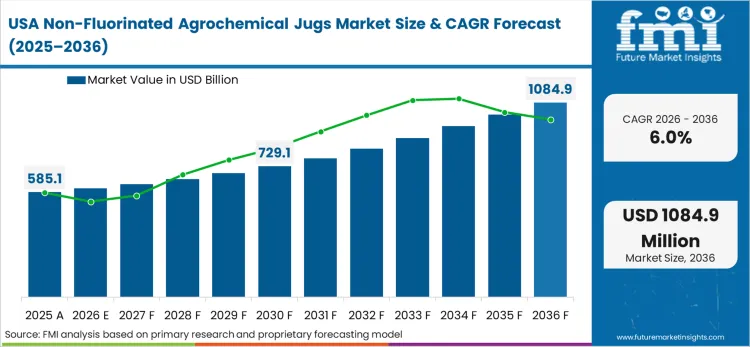
- USA: The United States advances at a 6.0% CAGR as formulators unify their compliant packaging topologies. Procurement directors executing flawless packaging transitions shield their corporate brands from devastating environmental litigation. The United States agricultural chemical sector enforces strict TSCA compliance mandates across its entire multi-tier packaging ecosystem. Packaging specification leads replacing aging fluorinated jugs must deploy co-extruded architectures capable of supporting both real-time drop-test precision and secure solvent containment. Federal environmental initiatives actively penalize the continued usage of vulnerable legacy treatments, forcing a rapid shift to fluorination alternative structures standards. FMI's report includes comprehensive evaluation of the North American chemical packaging sector. It features specific analysis of the Canadian and Mexican agricultural markets. A defining dynamic in these countries involves the integration of cross-border pesticide supply chains, which requires standardized non-fluorinated protocols to coordinate bulk delivery sequences and maintain synchronized regulatory compliance across multiple jurisdictions.
Europe Non-Fluorinated Agrochemical Jugs Market Analysis
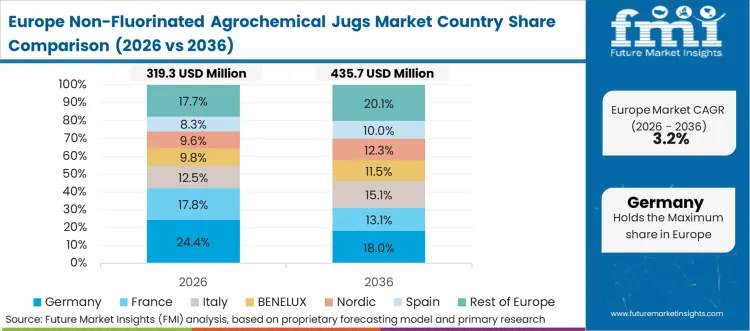
Facility directors recognize that maintaining outdated fluorination standards severely limits their ability to compete in highly regulated European markets. European environmental policy actively penalizes the continued operation of PFAS-linked manufacturing technologies. Packaging engineers redesigning legacy pesticide containment lines must integrate advanced multi-layer barrier data alongside critical supply chain safety metrics. This rigorous compliance requirement forces the rapid adoption of co-extruded EVOH structures to guarantee solvent stability while transmitting heavy regulatory payloads. Upgrading the core blow molding infrastructure provides the necessary physical barrier performance to support advanced sustainable agricultural practices.
- Germany: Germany's rigorous chemical manufacturing supply chain dictates stringent validation criteria for volatile solvent containment on advanced formulation lines. Plant managers must demonstrate flawless execution of non-fluorinated barrier performance before receiving authorization to connect new packaging assets to the main distribution network. The national agrochemical export sector operates under rigorous safety certifications that mandate PFAS-free layers, creating a recurring compliance cycle that accelerates machinery replacement. This systemic regulatory pressure drives a 5.5% CAGR value as the standard proliferates. Compliance officers validating perfect barrier uniformity protect elite corporate sustainability ratings.
- France: France viticulture and broad-acre farming sectors require precise chemical containment data to balance increasingly volatile environmental protection demands. The shift toward zero-residue agriculture forces chemical operators to abandon legacy fluorine treatments in favor of highly resilient, co-extruded jugs. Stringent national environmental pacts anchor France's 5.2% CAGR trajectory to the 2036 horizon. Agricultural cooperative planners deploying advanced crop protection systems mandate containment architectures capable of sub-millimeter barrier consistency across distributed geographic assets. Supply chain engineers deploying fully recyclable barrier structures unlock massive government-backed sustainability incentives.
FMI's report includes thorough investigation of the European industrial packaging framework. The analysis encompasses Italy, Spain, the UK, the Nordics, and the Benelux region. A prevailing structural condition across these nations is the mandatory compliance with strict chemical agency directives, forcing asset owners to specify non-fluorinated containers that can reliably transport hazardous liquids alongside standard agricultural inputs.
Competitive Aligners for Market Players
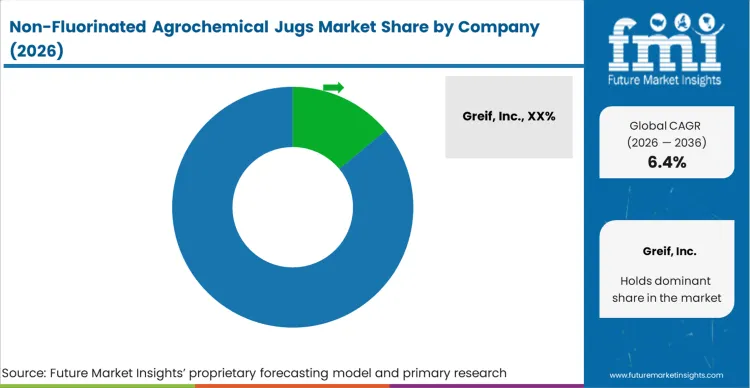
The intense enforcement of PFAS restrictions by global environmental agencies is reshaping how agrochemical formulators evaluate rigid packaging hardware. Instead of accepting traditional fluorine-gas surface treatments, procurement teams now demand certified, multi-layer barrier co-extrusion capabilities in all new container tenders. This shift has raised the capital expenditure bar across the industry, meaning regional converters that continue to rely on single-layer blow molding ecosystems risk being permanently excluded from major supply programs.
Industry leaders have already begun adapting by aggressively expanding their co-extrusion machinery fleets. For example, prominent global packaging converters like Greif, Inc., Mauser Packaging Solutions, and Berry Global Inc. have aligned critical portions of their portfolios with strict non-fluorinated architectures, setting a new competitive baseline for others to follow. Vendors integrating precise EVOH barrier layers directly into the jug walls gain a significant structural advantage over those attempting to formulate alternative spray coatings. This multi-layer approach accelerates compliance migration projects, allowing procurement directors and supply chain leads to prioritize platforms that avoid the legal liabilities associated with PFAS contamination. In contrast, smaller blow molders slow to adopt native co-extruded designs risk losing position during early-stage vendor shortlisting.
Growth of standardized barrier performance testing is disrupting long-established packaging strongholds. With more chemical brands demanding verifiable non-fluorinated compliance, contract packers designing complex liquid formulations can now choose multi-layer jugs from multiple suppliers, whether ALPLA Group, Amcor plc, or specialized niche entrants, without worrying about solvent permeation or container paneling. This expanded flexibility empowers chemical facility owners to optimize their packaging networks for absolute regulatory safety instead of being constrained by outdated surface-treatment dependencies. FMI's research confirms that the ultimate competitive trajectory heavily favors capitalized firms capable of scaling six-layer extrusion technology globally.
Key Players in Non-Fluorinated Agrochemical Jugs Market
- Greif, Inc.
- Mauser Packaging Solutions
- Berry Global Inc.
- Amcor plc
- Silgan Plastics
- ALPLA Group
- Schütz GmbH & Co. KGaA
Scope of the Report
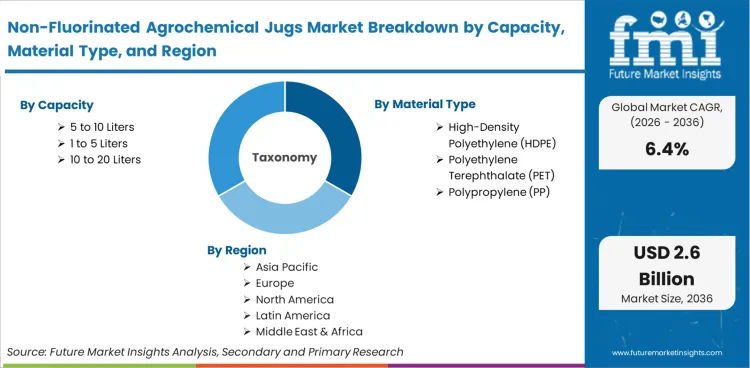
| Metric | Value |
|---|---|
| Quantitative Units | USD 1.4 billion to USD 2.6 billion, at a CAGR of 6.4% |
| Market Definition | Non-fluorinated agrochemical jugs represent specialized rigid plastic containers engineered with advanced co-extrusion technologies, explicitly eliminating PFAS-generating fluorine treatments to safely store volatile agricultural chemicals. |
| Capacity Segmentation | 1 to 5 Liters, 5 to 10 Liters, 10 to 20 Liters, Above 20 Liters |
| Material Type Segmentation | High-Density Polyethylene (HDPE), Polyethylene Terephthalate (PET), Polypropylene (PP), Co-extruded Multilayer Plastics |
| Application Segmentation | Herbicides, Insecticides, Fungicides, Liquid Fertilizers, Others |
| End User Segmentation | Commercial Farms, Contract Packers, Agrochemical Manufacturers, Greenhouses |
| Regions Covered | North America, Latin America, Europe, East Asia, South Asia, Oceania, Middle East & Africa |
| Countries Covered | China, India, Brazil, USA, Germany, France, Australia, and 40 plus countries |
| Key Companies Profiled | Greif, Inc., Mauser Packaging Solutions, Berry Global Inc., Amcor plc, Silgan Plastics, ALPLA Group, Schütz GmbH & Co. KGaA |
| Forecast Period | 2026 to 2036 |
| Approach | FMI analysts interviewed packaging procurement directors and blow-molding plant managers, utilizing global extrusion machinery shipment data as the baseline to project the regulatory-driven adoption velocity of non-fluorinated containers. |
Source: Future Market Insights (FMI) analysis, based on proprietary forecasting model and primary research
Segmental Analysis
Capacity:
- 1 to 5 Liters
- 5 to 10 Liters
- 10 to 20 Liters
- Above 20 Liters
Material Type:
- High-Density Polyethylene (HDPE)
- Polyethylene Terephthalate (PET)
- Polypropylene (PP)
- Co-extruded Multilayer Plastics
Application:
- Herbicides
- Insecticides
- Fungicides
- Liquid Fertilizers
- Others
End User:
- Commercial Farms
- Contract Packers
- Agrochemical Manufacturers
- Greenhouses
Region:
- North America
- USA
- Canada
- Mexico
- Latin America
- Brazil
- Argentina
- Chile
- Rest of Latin America
- Europe
- Germany
- France
- Italy
- Spain
- United Kingdom
- Nordics
- Benelux
- Rest of Europe
- East Asia
- China
- Japan
- South Korea
- South Asia
- India
- Thailand
- Vietnam
- Rest of South Asia
- Oceania
- Australia
- New Zealand
- Middle East & Africa
- South Africa
- GCC Countries
- Rest of MEA
Bibliography
- United States Environmental Protection Agency (EPA). (2024, March 15). Regulatory compliance guidelines for PFAS compounds in rigid plastic containment structures. Office of Chemical Safety and Pollution Prevention.
- European Chemicals Agency (ECHA). (2025, February 10). Draft restriction proposal regarding per- and polyfluoroalkyl substances in industrial packaging. ECHA Publications.
- Flexible Packaging Association. (2024, June 18). State of the rigid and flexible packaging transition in agricultural chemicals. FPA Industry Reports.
- American Chemistry Council (ACC). (2024, September 30). Polyethylene resin innovations for multi-layer chemical containment. ACC Plastics Division.
- Packaging Machinery Manufacturers Institute (PMMI). (2025, February 28). Machinery trends in co-extrusion blow molding for industrial applications. PMMI Intelligence.
- Australian Pesticides and Veterinary Medicines Authority (APVMA). (2024, October 11). Container specifications for volatile agricultural liquids. APVMA Regulatory Guidelines.
This bibliography is provided for reader reference. The full FMI report contains the complete reference list with primary source documentation.
This Report Addresses
- Market intelligence to support strategic decision‑making across global non‑fluorinated agrochemical containment ecosystems, with emphasis on PFAS‑free rigid packaging transitions and multi‑layer barrier adoption
- Market size estimation and 10‑year revenue forecasts from 2026 to 2036, supported by validated multi‑layer jug production volumes, regulatory enforcement curves, and structured primary interviews with packaging procurement directors, blow‑molding plant managers, and chemical compliance officers
- Growth opportunity mapping across capacity tiers, material foundations, and agrochemical application classes, with emphasis on co‑extruded barrier technologies, EVOH integration, and solvent‑resistant structural engineering
- Segment and regional revenue forecasts covering 1-5 L, 5-10 L, 10-20 L, and Above‑20 L formats across North America, Latin America, Europe, East Asia, South Asia, Oceania, and MEA, shaped by PFAS‑restriction frameworks and country‑specific regulatory pressures
- Competitive strategy assessment encompassing barrier‑layer differentiation, co‑extrusion machinery capabilities, regulatory‑aligned product positioning, and converter readiness for Tier‑1 agrochemical supply contracts
- Technology and product‑development tracking including multi‑layer die‑head advancements, plasma‑enhanced barrier coatings, bio‑based tie‑layer innovations, and solvent‑compatibility validation processes
- Market access analysis covering compliance‑driven procurement shifts, audit‑proof packaging mandates, distributor qualification requirements, and migration from fluorinated to certified non‑fluorinated containment architectures
- Multi‑format report delivery in PDF, Excel, PPT, and dashboard‑ready structures for executive strategy development, category planning, regulatory benchmarking, and operational planning
Frequently Asked Questions
How large is the Non-Fluorinated Agrochemical Jugs Market in 2026?
The market is valued at USD 1.4 billion in 2026. This valuation reflects the immediate capital expenditure required by major blow molders to replace obsolete single-layer fluorine treatment infrastructure.
What will the Non-Fluorinated Agrochemical Jugs Market be valued at by 2036?
The market is projected to reach USD 2.6 billion by 2036. Sustained demand for highly concentrated pesticide formulations drives the continuous expansion of robust multi-layer containment architectures.
What CAGR is projected for the Non-Fluorinated Agrochemical Jugs Market from 2026 to 2036?
The market will expand at a CAGR of 6.4% across the forecast period. Strict enforcement of global PFAS regulations sustains this trajectory by effectively outlawing legacy packaging methods.
Which Capacity segment leads the non-fluorinated agrochemical jugs market?
5 to 10 Liters holds a commanding 42.5% share in 2026. This volumetric tier optimizes ergonomic field handling while preventing the logistical complexities associated with oversized industrial drums.
Which Material Type dominates the non-fluorinated transition?
High-Density Polyethylene (HDPE) captures a 55.0% share in 2026. Converters rely on multi-layer co-extrusion to preserve HDPE's unmatched impact resistance while natively embedding essential non-fluorinated barrier resins.
What Application segment holds the largest market share?
Herbicides lead the segment driven by the highly corrosive nature of modern concentrated solvent emulsions. Packaging engineers specifying EVOH barrier layers ensure these aggressive liquids cannot permeate the container walls.
Which End User tier dictates the packaging compliance standards?
Agrochemical Manufacturers command dominant market leverage by establishing top-down corporate mandates. These conglomerates force their entire contract packing networks to adopt verified PFAS-free containers to protect international brand reputation.
Why is 5 to 10 Liters the preferred capacity for commercial farming?
This size provides the perfect balance of concentrated chemical volume and manual maneuverability for tractor-mounted spray operations. It minimizes container waste while eliminating the need for specialized mechanical lifting equipment on the farm.
What structural force renders legacy fluorinated jugs obsolete?
The explicit linkage between fluorine gas surface treatments and hazardous PFAS leaching into agricultural biologicals has triggered massive regulatory crackdowns. Facilities continuing to use these treatments face immediate product confiscations and devastating fines.
What is the main operational challenge for traditional blow molders?
Transitioning from single-layer extrusion to complex six-layer barrier blow molding requires massive capital investment and highly specialized die-head tuning expertise. Converters lacking this technical capability cannot produce uniform barrier walls, leading to catastrophic chemical leaks.
How do plasma-enhanced coatings create new market opportunities?
These advanced micro-coatings provide robust solvent resistance inside standard single-layer HDPE jugs without utilizing fluorine gas. This technology enables mid-sized converters to achieve strict compliance without purchasing expensive co-extrusion machinery fleets.
What supports China's rapid expansion in this packaging sector?
The Chinese generic pesticide sector is rapidly upgrading its export containment architecture to meet strict European residue standards. Greenfield facility architects bypass traditional treatments entirely, mandating native multi-layer infrastructure.
What is the projected growth rate for China through 2036?
China advances at an 8.5% CAGR over the forecast decade. Exporters passing severe EU chemical audits unlock unprecedented access to highly lucrative Western agricultural markets.
Why are environmental audits accelerating growth in the USA?
The United States EPA enforces strict TSCA compliance mandates, actively penalizing the distribution of PFAS-generating fluorinated packaging. Formulators executing immediate packaging transitions shield their corporate brands from devastating environmental litigation.
What is the USA's compound growth rate over the forecast window?
The United States expands at a 6.0% CAGR through 2036. Procurement directors systematically replacing vulnerable legacy jugs drive this continuous infrastructure overhaul.
How does Germany's regulatory framework influence its domestic market?
Germany's rigorous chemical export sector operates under strict safety certifications that mandate unified, non-fluorinated containment layers. Plant managers must validate perfect barrier uniformity to connect new packaging assets to the main distribution network.
What is Germany's compound expansion rate?
Germany tracks a 5.5% CAGR value. Compliance officers prioritizing absolute material traceability sustain this continuous hardware replacement cycle.
What structural condition differentiates India's packaging trajectory from Australia's?
India's growth is propelled by the massive scale-up of domestic generic formulation facilities requiring cost-effective barrier upgrades, whereas Australia's demand is anchored by strict zero-tolerance biosecurity mandates protecting extremely sensitive soil ecosystems.
What is India's growth outlook in this report?
India is projected to expand at an 8.2% CAGR from 2026 to 2036. Local converters deploying specialized co-extrusion machinery capture immense volume from legacy single-layer manufacturers.
What precisely defines a non-fluorinated agrochemical jug?
It is a rigid plastic container engineered specifically without fluorine gas surface treatments, relying instead on integrated barrier resins to safely store hazardous agricultural solvents.
What products are explicitly excluded from this market valuation?
Standard single-layer HDPE jugs treated post-production with fluorine gas, generic commercial beverage containers, and intermediate bulk containers are entirely excluded.
How did FMI validate the growth trajectory for multi-layer containers?
Analysts aggregated global extrusion machinery shipment data and cross-referenced it against regulatory enforcement timelines from major environmental protection agencies.
What is the primary strategic implication for contract packers?
Contract packers must completely phase out legacy single-layer fluorinated dependency to remain relevant in Tier-1 agrochemical supply chains. Failure to secure verifiable multi-layer co-extrusion capabilities guarantees immediate exclusion from future commercial RFPs.
What prevents major formulators from ignoring these packaging upgrades?
Sophisticated chemical testing by environmental regulators can immediately detect PFAS traces leaching from legacy fluorinated walls. This detection triggers mandatory, highly publicized product recalls that destroy brand equity and incur massive financial penalties.
Preview the report firsthand - request a free sample
Get SampleGet the brochure for pricing and purchase details.
Get PDFTable of Content
- Executive Summary
- Global Market Outlook
- Demand-side Trends
- Supply-side Trends
- Technology Roadmap Analysis
- Analysis and Recommendations
- Market Overview
- Market Coverage / Taxonomy
- Market Definition / Scope / Limitations
- Research Methodology
- Chapter Orientation
- Analytical Lens and Working Hypotheses
- Market Structure, Signals, and Trend Drivers
- Benchmarking and Cross-market Comparability
- Market Sizing, Forecasting, and Opportunity Mapping
- Research Design and Evidence Framework
- Desk Research Programme (Secondary Evidence)
- Company Annual and Sustainability Reports
- Peer-reviewed Journals and Academic Literature
- Corporate Websites, Product Literature, and Technical Notes
- Earnings Decks and Investor Briefings
- Statutory Filings and Regulatory Disclosures
- Technical White Papers and Standards Notes
- Trade Journals, Industry Magazines, and Analyst Briefs
- Conference Proceedings, Webinars, and Seminar Materials
- Government Statistics Portals and Public Data Releases
- Press Releases and Reputable Media Coverage
- Specialist Newsletters and Curated Briefings
- Sector Databases and Reference Repositories
- FMI Internal Proprietary Databases and Historical Market Datasets
- Subscription Datasets and Paid Sources
- Social Channels, Communities, and Digital Listening Inputs
- Additional Desk Sources
- Expert Input and Fieldwork (Primary Evidence)
- Primary Modes
- Qualitative Interviews and Expert Elicitation
- Quantitative Surveys and Structured Data Capture
- Blended Approach
- Why Primary Evidence is Used
- Field Techniques
- Interviews
- Surveys
- Focus Groups
- Observational and In-context Research
- Social and Community Interactions
- Stakeholder Universe Engaged
- C-suite Leaders
- Board Members
- Presidents and Vice Presidents
- R&D and Innovation Heads
- Technical Specialists
- Domain Subject-matter Experts
- Scientists
- Physicians and Other Healthcare Professionals
- Governance, Ethics, and Data Stewardship
- Research Ethics
- Data Integrity and Handling
- Primary Modes
- Tooling, Models, and Reference Databases
- Desk Research Programme (Secondary Evidence)
- Data Engineering and Model Build
- Data Acquisition and Ingestion
- Cleaning, Normalisation, and Verification
- Synthesis, Triangulation, and Analysis
- Quality Assurance and Audit Trail
- Market Background
- Market Dynamics
- Drivers
- Restraints
- Opportunity
- Trends
- Scenario Forecast
- Demand in Optimistic Scenario
- Demand in Likely Scenario
- Demand in Conservative Scenario
- Opportunity Map Analysis
- Product Life Cycle Analysis
- Supply Chain Analysis
- Investment Feasibility Matrix
- Value Chain Analysis
- PESTLE and Porter’s Analysis
- Regulatory Landscape
- Regional Parent Market Outlook
- Production and Consumption Statistics
- Import and Export Statistics
- Market Dynamics
- Global Market Analysis 2021 to 2025 and Forecast, 2026 to 2036
- Historical Market Size Value (USD Million) Analysis, 2021 to 2025
- Current and Future Market Size Value (USD Million) Projections, 2026 to 2036
- Y-o-Y Growth Trend Analysis
- Absolute $ Opportunity Analysis
- Global Market Pricing Analysis 2021 to 2025 and Forecast 2026 to 2036
- Global Market Analysis 2021 to 2025 and Forecast 2026 to 2036, By Material Type
- Introduction / Key Findings
- Historical Market Size Value (USD Million) Analysis By Material Type , 2021 to 2025
- Current and Future Market Size Value (USD Million) Analysis and Forecast By Material Type , 2026 to 2036
- Mono-HDPE
- Mono-LLDPE
- Mono-PP
- Mono-HDPE
- Y-o-Y Growth Trend Analysis By Material Type , 2021 to 2025
- Absolute $ Opportunity Analysis By Material Type , 2026 to 2036
- Global Market Analysis 2021 to 2025 and Forecast 2026 to 2036, By Capacity
- Introduction / Key Findings
- Historical Market Size Value (USD Million) Analysis By Capacity, 2021 to 2025
- Current and Future Market Size Value (USD Million) Analysis and Forecast By Capacity, 2026 to 2036
- 5 to 10 Gallons
- Up to 5 Gallons
- Above 10 Gallons
- 5 to 10 Gallons
- Y-o-Y Growth Trend Analysis By Capacity, 2021 to 2025
- Absolute $ Opportunity Analysis By Capacity, 2026 to 2036
- Global Market Analysis 2021 to 2025 and Forecast 2026 to 2036, By End Use
- Introduction / Key Findings
- Historical Market Size Value (USD Million) Analysis By End Use, 2021 to 2025
- Current and Future Market Size Value (USD Million) Analysis and Forecast By End Use, 2026 to 2036
- Chemicals & Solvents
- Paints & Coatings
- Adhesives & Sealants
- Food & Beverage
- Chemicals & Solvents
- Y-o-Y Growth Trend Analysis By End Use, 2021 to 2025
- Absolute $ Opportunity Analysis By End Use, 2026 to 2036
- Global Market Analysis 2021 to 2025 and Forecast 2026 to 2036, By Region
- Introduction
- Historical Market Size Value (USD Million) Analysis By Region, 2021 to 2025
- Current Market Size Value (USD Million) Analysis and Forecast By Region, 2026 to 2036
- North America
- Latin America
- Western Europe
- Eastern Europe
- East Asia
- South Asia and Pacific
- Middle East & Africa
- Market Attractiveness Analysis By Region
- North America Market Analysis 2021 to 2025 and Forecast 2026 to 2036, By Country
- Historical Market Size Value (USD Million) Trend Analysis By Market Taxonomy, 2021 to 2025
- Market Size Value (USD Million) Forecast By Market Taxonomy, 2026 to 2036
- By Country
- USA
- Canada
- Mexico
- By Material Type
- By Capacity
- By End Use
- By Country
- Market Attractiveness Analysis
- By Country
- By Material Type
- By Capacity
- By End Use
- Key Takeaways
- Latin America Market Analysis 2021 to 2025 and Forecast 2026 to 2036, By Country
- Historical Market Size Value (USD Million) Trend Analysis By Market Taxonomy, 2021 to 2025
- Market Size Value (USD Million) Forecast By Market Taxonomy, 2026 to 2036
- By Country
- Brazil
- Chile
- Rest of Latin America
- By Material Type
- By Capacity
- By End Use
- By Country
- Market Attractiveness Analysis
- By Country
- By Material Type
- By Capacity
- By End Use
- Key Takeaways
- Western Europe Market Analysis 2021 to 2025 and Forecast 2026 to 2036, By Country
- Historical Market Size Value (USD Million) Trend Analysis By Market Taxonomy, 2021 to 2025
- Market Size Value (USD Million) Forecast By Market Taxonomy, 2026 to 2036
- By Country
- Germany
- UK
- Italy
- Spain
- France
- Nordic
- BENELUX
- Rest of Western Europe
- By Material Type
- By Capacity
- By End Use
- By Country
- Market Attractiveness Analysis
- By Country
- By Material Type
- By Capacity
- By End Use
- Key Takeaways
- Eastern Europe Market Analysis 2021 to 2025 and Forecast 2026 to 2036, By Country
- Historical Market Size Value (USD Million) Trend Analysis By Market Taxonomy, 2021 to 2025
- Market Size Value (USD Million) Forecast By Market Taxonomy, 2026 to 2036
- By Country
- Russia
- Poland
- Hungary
- Balkan & Baltic
- Rest of Eastern Europe
- By Material Type
- By Capacity
- By End Use
- By Country
- Market Attractiveness Analysis
- By Country
- By Material Type
- By Capacity
- By End Use
- Key Takeaways
- East Asia Market Analysis 2021 to 2025 and Forecast 2026 to 2036, By Country
- Historical Market Size Value (USD Million) Trend Analysis By Market Taxonomy, 2021 to 2025
- Market Size Value (USD Million) Forecast By Market Taxonomy, 2026 to 2036
- By Country
- China
- Japan
- South Korea
- By Material Type
- By Capacity
- By End Use
- By Country
- Market Attractiveness Analysis
- By Country
- By Material Type
- By Capacity
- By End Use
- Key Takeaways
- South Asia and Pacific Market Analysis 2021 to 2025 and Forecast 2026 to 2036, By Country
- Historical Market Size Value (USD Million) Trend Analysis By Market Taxonomy, 2021 to 2025
- Market Size Value (USD Million) Forecast By Market Taxonomy, 2026 to 2036
- By Country
- India
- ASEAN
- Australia & New Zealand
- Rest of South Asia and Pacific
- By Material Type
- By Capacity
- By End Use
- By Country
- Market Attractiveness Analysis
- By Country
- By Material Type
- By Capacity
- By End Use
- Key Takeaways
- Middle East & Africa Market Analysis 2021 to 2025 and Forecast 2026 to 2036, By Country
- Historical Market Size Value (USD Million) Trend Analysis By Market Taxonomy, 2021 to 2025
- Market Size Value (USD Million) Forecast By Market Taxonomy, 2026 to 2036
- By Country
- Kingdom of Saudi Arabia
- Other GCC Countries
- Turkiye
- South Africa
- Other African Union
- Rest of Middle East & Africa
- By Material Type
- By Capacity
- By End Use
- By Country
- Market Attractiveness Analysis
- By Country
- By Material Type
- By Capacity
- By End Use
- Key Takeaways
- Key Countries Market Analysis
- USA
- Pricing Analysis
- Market Share Analysis, 2025
- By Material Type
- By Capacity
- By End Use
- Canada
- Pricing Analysis
- Market Share Analysis, 2025
- By Material Type
- By Capacity
- By End Use
- Mexico
- Pricing Analysis
- Market Share Analysis, 2025
- By Material Type
- By Capacity
- By End Use
- Brazil
- Pricing Analysis
- Market Share Analysis, 2025
- By Material Type
- By Capacity
- By End Use
- Chile
- Pricing Analysis
- Market Share Analysis, 2025
- By Material Type
- By Capacity
- By End Use
- Germany
- Pricing Analysis
- Market Share Analysis, 2025
- By Material Type
- By Capacity
- By End Use
- UK
- Pricing Analysis
- Market Share Analysis, 2025
- By Material Type
- By Capacity
- By End Use
- Italy
- Pricing Analysis
- Market Share Analysis, 2025
- By Material Type
- By Capacity
- By End Use
- Spain
- Pricing Analysis
- Market Share Analysis, 2025
- By Material Type
- By Capacity
- By End Use
- France
- Pricing Analysis
- Market Share Analysis, 2025
- By Material Type
- By Capacity
- By End Use
- India
- Pricing Analysis
- Market Share Analysis, 2025
- By Material Type
- By Capacity
- By End Use
- ASEAN
- Pricing Analysis
- Market Share Analysis, 2025
- By Material Type
- By Capacity
- By End Use
- Australia & New Zealand
- Pricing Analysis
- Market Share Analysis, 2025
- By Material Type
- By Capacity
- By End Use
- China
- Pricing Analysis
- Market Share Analysis, 2025
- By Material Type
- By Capacity
- By End Use
- Japan
- Pricing Analysis
- Market Share Analysis, 2025
- By Material Type
- By Capacity
- By End Use
- South Korea
- Pricing Analysis
- Market Share Analysis, 2025
- By Material Type
- By Capacity
- By End Use
- Russia
- Pricing Analysis
- Market Share Analysis, 2025
- By Material Type
- By Capacity
- By End Use
- Poland
- Pricing Analysis
- Market Share Analysis, 2025
- By Material Type
- By Capacity
- By End Use
- Hungary
- Pricing Analysis
- Market Share Analysis, 2025
- By Material Type
- By Capacity
- By End Use
- Kingdom of Saudi Arabia
- Pricing Analysis
- Market Share Analysis, 2025
- By Material Type
- By Capacity
- By End Use
- Turkiye
- Pricing Analysis
- Market Share Analysis, 2025
- By Material Type
- By Capacity
- By End Use
- South Africa
- Pricing Analysis
- Market Share Analysis, 2025
- By Material Type
- By Capacity
- By End Use
- USA
- Market Structure Analysis
- Competition Dashboard
- Competition Benchmarking
- Market Share Analysis of Top Players
- By Regional
- By Material Type
- By Capacity
- By End Use
- Competition Analysis
- Competition Deep Dive
- Greif Inc.
- Overview
- Product Portfolio
- Profitability by Market Segments (Product/Age /Sales Channel/Region)
- Sales Footprint
- Strategy Overview
- Marketing Strategy
- Product Strategy
- Channel Strategy
- Mauser Packaging Solutions
- Schütz GmbH & Co. KGaA
- CDF Corporation
- ILC Dover
- Vestil Manufacturing
- The Cary Company
- Greif Inc.
- Competition Deep Dive
- Assumptions & Acronyms Used


