

- Industry Size (2026)
- USD 0.8 Bn
- Forecast (2036)
- USD 3.7 Bn
- CAGR (2026 to 2036)
- 16.4%
Decarbonization-Credited Crop Protection Program Market Forecast and Outlook 2026 to 2036
The decarbonization-credited crop protection program market is expanding as agriculture increasingly aligns with carbon reduction goals. The market, valued at USD 0.8 billion in 2026, is expected to grow to USD 3.7 billion by 2036, at a 16.4% CAGR. Verified carbon credit-linked programs lead the market, holding a 38% share. These programs incentivize growers by linking green crop protection practices with carbon credit earnings.
Reduced-dose chemical programs, representing 34% of the market, minimize environmental impact while maintaining pest and disease control efficacy. Other significant segments include scope-3 emissions reduction programs, insetting-based farm credit models, and hybrid offset–insetting programs, which also contribute to the adoption of green farming practices.
Quick Stats for Decarbonization-Credited Crop Protection Program Market
- Decarbonization-Credited Crop Protection Program Market Value (2026): USD 0.8 billion
- Decarbonization-Credited Crop Protection Program Market Forecast Value (2036): USD 3.7 billion
- Decarbonization-Credited Crop Protection Program Market Forecast CAGR: 16.4%
- Leading Program Credit Structure in Decarbonization-Credited Crop Protection Program Market: Verified Carbon Credit–Linked Programs
- Key Growth Regions in Decarbonization-Credited Crop Protection Program Market: North America, Latin America, Asia Pacific, Europe
- Key Players in Decarbonization-Credited Crop Protection Program Market: South Pole, Agoro Carbon Alliance, Boomitra, Regrow Ag, Soil Capital
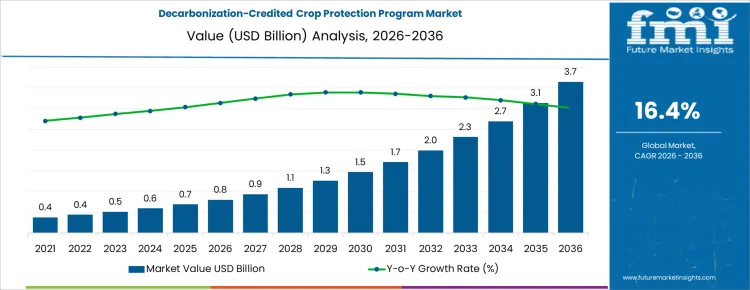
The demand for decarbonization-credited crop protection is rising due to the growing emphasis on climate-smart agriculture. Precision application-optimized programs and bio-chemical integrated programs are gaining popularity, as they integrate low-carbon chemistry with advanced application techniques. Australia, with its focus on green farming practices, leads the market with a 17.6% CAGR, followed by the USA at 17.1% and Brazil at 16.3%. These regions are increasingly adopting programs that reduce carbon emissions while maintaining productivity. Key players in the market, including South Pole, Agoro Carbon Alliance, and Boomitra, offer solutions that combine carbon crediting with crop protection strategies, driving growth.
Decarbonization‑Credited Crop Protection Program Market Key Takeaways
| Metric | Value |
|---|---|
| Industry Value (2026) | USD 0.8 billion |
| Forecast Value (2036) | USD 3.7 billion |
| Forecast CAGR (2026–2036) | 16.4% |
How is the Global Decarbonization‑Credited Crop Protection Program Sector Advancing?
The global decarbonization‑credited crop protection program market is growing as agriculture focuses on reducing greenhouse gas emissions and aligning crop protection practices with carbon reduction goals. These programs bundle crop protection solutions with carbon credits, enabling growers to adopt products and practices that both control pests, diseases, and weeds and generate verified emissions reductions. As consumers, food brands, and regulatory bodies increasingly prioritize climate‑friendly farming systems, crop protection strategies that contribute to decarbonization are gaining traction.
Decarbonization‑credited programs integrate low‑carbon chemistry, optimized application techniques, and precision technologies to minimize carbon footprint while maintaining agronomic performance. By linking these practices with carbon crediting mechanisms, growers can gain economic incentives while demonstrating progress toward durability commitments. Digital monitoring, emissions tracking tools, and third‑party verification support accurate accounting of carbon savings associated with program adoption. This transparency helps build confidence among stakeholders in the environmental value of these solutions.
Challenges such as establishing standardized methodologies for carbon crediting, ensuring consistent measurement of emissions reduction, and educating growers on program participation may influence adoption. Despite these challenges, the drive toward climate‑smart agriculture and incentives for emissions‑reducing practices will continue to propel the decarbonization‑credited crop protection market forward globally.
What is the Segment-Wise Analysis for the Global Decarbonization-Credited Crop Protection Program Market?
The global decarbonization-credited crop protection program market is segmented by program credit structure and crop protection strategy. Verified carbon credit–linked programs lead the market with a 38% share, providing growers with credits tied to the reduction of carbon emissions through green crop protection practices. Other significant credit structures include scope-3 emissions reduction programs, insetting-based farm credit models, and hybrid offset–insetting programs. In terms of crop protection strategies, reduced-dose chemical programs hold the largest share at 34%, followed by bio-chemical integrated programs, precision application-optimized programs, and carbon-neutral active ingredient programs.
How Do Verified Carbon Credit–Linked Programs Lead the Global Decarbonization-Credited Crop Protection Program Market?
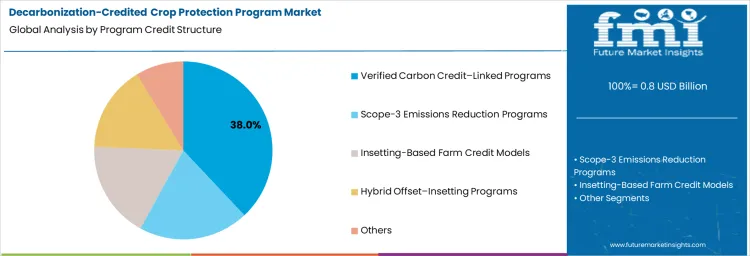
Verified carbon credit–linked programs hold a 38% share in the global decarbonization-credited crop protection program market due to their ability to link carbon reduction efforts directly to financial incentives for farmers. These programs offer carbon credits for reducing emissions through green crop protection strategies, encouraging the adoption of low-emission farming practices. As the agricultural sector faces increasing pressure to reduce its carbon footprint, carbon credit–linked programs provide a valuable way to integrate climate goals with crop protection, making them a dominant choice in the market.
Why Do Reduced-Dose Chemical Programs Hold the Largest Share in the Global Decarbonization-Credited Crop Protection Program Market?
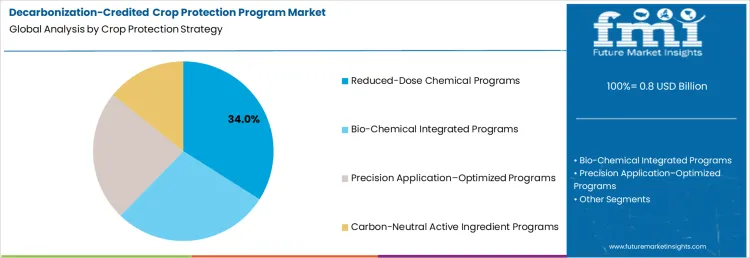
Reduced-dose chemical programs hold the largest share of 34% in the global decarbonization-credited crop protection program market due to their ability to minimize environmental impact while maintaining effective pest and disease management. By reducing the amount of chemicals used, these programs lower greenhouse gas emissions, contributing to decarbonization efforts. Precision application techniques in reduced-dose programs allow farmers to apply chemicals more efficiently, ensuring optimal coverage with minimal waste. As durability and decarbonization goals become increasingly important in agriculture, reduced-dose chemical programs continue to drive market growth.
What are the Key Dynamics for Decarbonization‑Credited Crop Protection Program Market?
The decarbonization‑credited crop protection program market is emerging as agriculture aligns with broader climate objectives. Programs that earn carbon credits incentivize growers to adopt crop protection practices and products that measurably reduce greenhouse gas emissions either by lowering input use, minimizing energy‑intensive production impacts, or enabling reduced tillage and optimized applications. As food companies and governments push toward net‑zero targets, crop protection becomes a key lever in quantifying and claiming on‑farm emission reductions.
Why Are Growers Participating in Decarbonization‑Credited Programs?
Growers are embracing these programs not only for durability leadership, but also for financial benefit, market access, and risk mitigation. By adopting approved low‑carbon crop protection chemistries, precision application systems, or integrated pest management strategies, farmers can generate tradable carbon credits or access premium price contracts. This adds an additional revenue stream or cost offset, while demonstrating climate stewardship to buyers, brands, and regulators that increasingly reward low‑emission agricultural practices.
What Challenges Are Slowing Market Adoption?
Despite strong interest, the market faces important barriers. Standardizing measurement and verification of emissions reductions tied specifically to crop protection practices remains complex, given variability in soils, climates, and farming systems. Some growers hesitate due to uncertainty around credit valuation, reporting burden, and certification costs. Regulatory frameworks for carbon credits also differ widely between countries and markets, complicating participation. Lastly, integration with existing crop programs requires data capture and analytics capabilities that many farms still lack.
What Innovations Are Accelerating Decarbonization‑Credited Crop Protection?
Innovation in this space is data‑centric. AI‑driven decision support systems combine weather, pest, and crop growth models with emissions analytics to prescribe low‑carbon protection plans that still protect yield. New formulations that are lower carbon by design such as bio‑based actives, energy‑efficient manufacturing, or reduced‑application chemistries are being validated in carbon credit frameworks. Digital traceability platforms link inputs and emission impacts to farm records and credit registries, automating verification and unlocking participation at scale. Partnerships between agrochemical developers, carbon markets, and durability platforms are key to expanding accessible, credible program options.
What is the Growth Outlook for the Decarbonization-Credited Crop Protection Program Market by Country?
| Country | CAGR (%) |
|---|---|
| Australia | 17.6% |
| USA | 17.1% |
| Brazil | 16.3% |
| France | 15.8% |
| Canada | 16.0% |
The decarbonization-credited crop protection program market is growing rapidly, with Australia leading at a 17.6% CAGR, driven by the country’s focus on green farming practices and reducing carbon emissions. The USA follows closely with 17.1%, supported by strong agricultural policies promoting carbon reduction and the adoption of eco-friendly farming solutions. Brazil’s market grows at 16.3%, fueled by its large agricultural sector and the increasing emphasis on green crop protection methods. France’s market grows at 15.8%, supported by the country’s commitment to reducing greenhouse gas emissions in agriculture. Canada’s market grows at 16.0%, driven by the country’s agricultural innovation and the push for more green farming practices.
Why is Australia Leading in the Decarbonization-Credited Crop Protection Program Market?
Australia’s decarbonization-credited crop protection program market is growing at 17.6%, driven by the country’s strong emphasis on reducing carbon emissions and improving durability in agriculture. Australian farmers are increasingly adopting crop protection solutions that are recognized for their contribution to decarbonization, aligning with the country’s commitment to meeting climate targets. With a growing focus on minimizing environmental impact while maximizing crop productivity, the demand for decarbonization-credited crop protection programs is rising. Government policies encouraging the use of green and low-carbon technologies in farming are further accelerating the adoption of these programs. As Australia continues to lead in green agriculture, the market for decarbonization-credited crop protection programs is expected to expand steadily.
What is Driving the Growth of the Decarbonization-Credited Crop Protection Program Market in the USA?
The USA’s decarbonization-credited crop protection program market is growing at 17.1%, supported by the increasing need for green farming practices and the government’s focus on reducing agricultural carbon footprints. With the rising pressure to adopt environmentally responsible farming solutions, USA farmers are increasingly turning to decarbonization-credited crop protection programs. These programs provide a way for farmers to reduce their greenhouse gas emissions while maintaining high crop yields and productivity. The push for reducing carbon emissions in the agricultural sector, along with advancements in precision farming technologies, is driving the growth of this market. As the USA works toward achieving its durability goals, the demand for decarbonization-credited crop protection programs is expected to continue growing.
How is the Decarbonization-Credited Crop Protection Program Market Expanding in Brazil?
Brazil’s decarbonization-credited crop protection program market is growing at 16.3%, driven by the country’s large-scale agricultural operations and the need for more green crop protection methods. As one of the world’s largest agricultural producers, Brazil is increasingly adopting crop protection solutions that help reduce carbon emissions and minimize environmental impact. Decarbonization-credited programs offer Brazilian farmers a way to ensure that their practices align with global durability standards while still improving crop yields. With Brazil’s emphasis on responsible farming practices and the increasing importance of environmental regulations, the market for decarbonization-credited crop protection programs is expanding steadily. As the country continues to focus on green agriculture, these programs are expected to play a key role in shaping the future of Brazil’s agricultural sector.
What is Contributing to the Growth of the Decarbonization-Credited Crop Protection Program Market in France?
France’s decarbonization-credited crop protection program market is growing at 15.8%, supported by the country’s commitment to reducing greenhouse gas emissions in agriculture. France has set ambitious climate goals, and agriculture is a key focus area for emission reductions. Decarbonization-credited crop protection programs help French farmers adopt more green farming practices while ensuring that their crop protection methods contribute to carbon footprint reduction. With increasing government regulations and consumer demand for environmentally friendly farming practices, the adoption of decarbonization-credited crop protection solutions is on the rise. As France continues to prioritize durability in its agricultural practices, the market for these programs is expected to continue expanding, ensuring a cleaner and more efficient approach to crop management.
What is Driving the Growth of the Decarbonization-Credited Crop Protection Program Market in Canada?
Canada’s decarbonization-credited crop protection program market is growing at 16.0%, driven by the country’s strong agricultural innovation and growing commitment to green farming. Canadian farmers are increasingly seeking crop protection solutions that help reduce carbon emissions while maintaining crop productivity. With a focus on green farming practices, the demand for decarbonization-credited crop protection programs is rising as farmers look for ways to minimize their environmental impact and achieve climate goals. Canada’s agricultural policies supporting carbon reduction in the farming sector and increasing consumer demand for eco-friendly products are further driving the market growth. As Canada continues to implement more green practices in agriculture, the market for these programs is expected to continue expanding, contributing to a cleaner, more green farming future.
What Defines the Competitive Landscape in the Decarbonization‑Credited Crop Protection Program Market?
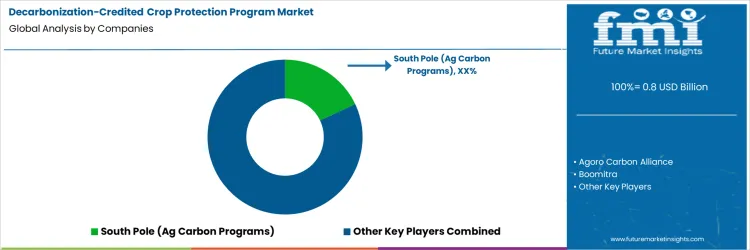
In the decarbonization‑credited crop protection program market South Pole (ag carbon programs), Agoro Carbon Alliance, Boomitra, Regrow Ag (MRV platforms), Soil Capital, and others are positioned with product brochures that emphasize greenhouse gas reduction, measurement, reporting, and verification (MRV) integration, and synergy with crop protection practices. At South Pole offerings are described with carbon credit frameworks that tie reduced emissions and soil carbon gains to specific crop protection decisions. Technical sections illustrate how program adoption supports both yield goals and decarbonization claims. Brochures present clear steps for growers to qualify for credits and connect outcomes to global standards.
Agoro Carbon Alliance materials focus on bundled programs that link integrated crop protection choices with carbon credit revenue streams. Performance summaries and eligibility guidance are included. Messaging is shaped to help advisors and growers align field practices with broader durability commitments. Boomitra literature showcases MRV‑enabled protocols that convert real‑world practices into traceable carbon outcomes. Product briefs emphasize accuracy in data capture and linkage to carbon markets. Regrow Ag brochures present platform‑level insights where crop protection decisions are mapped to measurable carbon and soil health metrics. Usage guides and visual dashboards are used to explain how decarbonization credits accumulate.
Soil Capital collateral is crafted to highlight soil health‑driven approaches that incorporate crop protection sequencing, soil biology, and carbon outcomes. Technical explanations and case summaries are provided to demonstrate measurable benefits. Others in the market are featured with niche programs that align carbon credits with specific regional or crop needs.
Key Players in Decarbonization-Credited Crop Protection Program Market
- South Pole (Ag Carbon Programs)
- Agoro Carbon Alliance
- Boomitra
- Regrow Ag (MRV Platforms)
- Soil Capital
- Others
Scope of Report
| Items | Values |
|---|---|
| Quantitative Units (2026) | USD billion |
| Program Credit Structure | Verified Carbon Credit–Linked Programs, Scope-3 Emissions Reduction Programs, Insetting-Based Farm Credit Models, Hybrid Offset–Insetting Programs |
| Crop Protection Strategy | Reduced-Dose Chemical Programs, Bio-Chemical Integrated Programs, Precision Application–Optimized Programs, Carbon-Neutral Active Ingredient Programs |
| Regions Covered | Asia Pacific, Europe, North America, Latin America, Middle East & Africa |
| Countries Covered | USA, China, Japan, South Korea, India, Australia & New Zealand, ASEAN, Germany, UK, France, Italy, Spain, Nordic, BENELUX, Brazil, Chile, Mexico, Saudi Arabia, Other GCC Countries, Turkey, South Africa, Other African Union |
| Key Companies Profiled | South Pole (Ag Carbon Programs), Agoro Carbon Alliance, Boomitra, Regrow Ag (MRV Platforms), Soil Capital |
| Additional Attributes | Dollar sales by program credit structure, crop protection strategy, and region; regional CAGR and growth outlook; distribution channels including carbon offset specialists, agricultural durability platforms, and agrochemical companies; innovation trends in decarbonization-credited crop protection programs; competitive positioning of global vs regional suppliers. |
Decarbonization-Credited Crop Protection Program Market by Segments
Program Credit Structure:
- Verified Carbon Credit–Linked Programs
- Scope-3 Emissions Reduction Programs
- Insetting-Based Farm Credit Models
- Hybrid Offset–Insetting Programs
- Others
Crop Protection Strategy:
- Reduced-Dose Chemical Programs
- Bio-Chemical Integrated Programs
- Precision Application–Optimized Programs
- Carbon-Neutral Active Ingredient Programs
Region:
- Asia Pacific
- China
- Japan
- South Korea
- India
- Australia & New Zealand
- ASEAN
- Rest of Asia Pacific
- Europe
- Germany
- United Kingdom
- France
- Italy
- Spain
- Nordic
- BENELUX
- Rest of Europe
- North America
- United States
- Canada
- Mexico
- Latin America
- Brazil
- Chile
- Rest of Latin America
- Middle East & Africa
- Kingdom of Saudi Arabia
- Other GCC Countries
- Turkey
- South Africa
- Other African Union
- Rest of Middle East & Africa
Frequently Asked Questions
How big is the decarbonization-credited crop protection program market in 2026?
The global decarbonization-credited crop protection program market is estimated to be valued at USD 0.8 billion in 2026.
What will be the size of decarbonization-credited crop protection program market in 2036?
The market size for the decarbonization-credited crop protection program market is projected to reach USD 3.7 billion by 2036.
How much will be the decarbonization-credited crop protection program market growth between 2026 and 2036?
The decarbonization-credited crop protection program market is expected to grow at a 16.4% CAGR between 2026 and 2036.
What are the key product types in the decarbonization-credited crop protection program market?
The key product types in decarbonization-credited crop protection program market are verified carbon credit–linked programs, scope-3 emissions reduction programs, insetting-based farm credit models, hybrid offset–insetting programs and others.
Which crop protection strategy segment to contribute significant share in the decarbonization-credited crop protection program market in 2026?
In terms of crop protection strategy, reduced-dose chemical programs segment to command 34.0% share in the decarbonization-credited crop protection program market in 2026.
Preview the report firsthand - request a free sample
Get SampleGet the brochure for pricing and purchase details.
Get PDFTable of Content
- Executive Summary
- Global Market Outlook
- Demand-side Trends
- Supply-side Trends
- Technology Roadmap Analysis
- Analysis and Recommendations
- Market Overview
- Market Coverage / Taxonomy
- Market Definition / Scope / Limitations
- Market Background
- Market Dynamics
- Drivers
- Restraints
- Opportunity
- Trends
- Scenario Forecast
- Demand in Optimistic Scenario
- Demand in Likely Scenario
- Demand in Conservative Scenario
- Opportunity Map Analysis
- Product Life Cycle Analysis
- Supply Chain Analysis
- Investment Feasibility Matrix
- Value Chain Analysis
- PESTLE and Porter’s Analysis
- Regulatory Landscape
- Regional Parent Market Outlook
- Production and Consumption Statistics
- Import and Export Statistics
- Market Dynamics
- Global Market Analysis 2021 to 2025 and Forecast, 2026 to 2036
- Historical Market Size Value (USD Billion) Analysis, 2021 to 2025
- Current and Future Market Size Value (USD Billion) Projections, 2026 to 2036
- Y-o-Y Growth Trend Analysis
- Absolute $ Opportunity Analysis
- Global Market Pricing Analysis 2021 to 2025 and Forecast 2026 to 2036
- Global Market Analysis 2021 to 2025 and Forecast 2026 to 2036, By Program Credit Structure
- Introduction / Key Findings
- Historical Market Size Value (USD Billion) Analysis By Program Credit Structure , 2021 to 2025
- Current and Future Market Size Value (USD Billion) Analysis and Forecast By Program Credit Structure , 2026 to 2036
- Verified Carbon Credit–Linked Programs
- Scope-3 Emissions Reduction Programs
- Insetting-Based Farm Credit Models
- Hybrid Offset–Insetting Programs
- Others
- Y-o-Y Growth Trend Analysis By Program Credit Structure , 2021 to 2025
- Absolute $ Opportunity Analysis By Program Credit Structure , 2026 to 2036
- Global Market Analysis 2021 to 2025 and Forecast 2026 to 2036, By Crop Protection Strategy
- Introduction / Key Findings
- Historical Market Size Value (USD Billion) Analysis By Crop Protection Strategy, 2021 to 2025
- Current and Future Market Size Value (USD Billion) Analysis and Forecast By Crop Protection Strategy, 2026 to 2036
- Reduced-Dose Chemical Programs
- Bio-Chemical Integrated Programs
- Precision Application–Optimized Programs
- Carbon-Neutral Active Ingredient Programs
- Y-o-Y Growth Trend Analysis By Crop Protection Strategy, 2021 to 2025
- Absolute $ Opportunity Analysis By Crop Protection Strategy, 2026 to 2036
- Global Market Analysis 2021 to 2025 and Forecast 2026 to 2036, By Region
- Introduction
- Historical Market Size Value (USD Billion) Analysis By Region, 2021 to 2025
- Current Market Size Value (USD Billion) Analysis and Forecast By Region, 2026 to 2036
- North America
- Latin America
- Western Europe
- Eastern Europe
- East Asia
- South Asia and Pacific
- Middle East & Africa
- Market Attractiveness Analysis By Region
- North America Market Analysis 2021 to 2025 and Forecast 2026 to 2036, By Country
- Historical Market Size Value (USD Billion) Trend Analysis By Market Taxonomy, 2021 to 2025
- Market Size Value (USD Billion) Forecast By Market Taxonomy, 2026 to 2036
- By Country
- USA
- Canada
- Mexico
- By Program Credit Structure
- By Crop Protection Strategy
- By Country
- Market Attractiveness Analysis
- By Country
- By Program Credit Structure
- By Crop Protection Strategy
- Key Takeaways
- Latin America Market Analysis 2021 to 2025 and Forecast 2026 to 2036, By Country
- Historical Market Size Value (USD Billion) Trend Analysis By Market Taxonomy, 2021 to 2025
- Market Size Value (USD Billion) Forecast By Market Taxonomy, 2026 to 2036
- By Country
- Brazil
- Chile
- Rest of Latin America
- By Program Credit Structure
- By Crop Protection Strategy
- By Country
- Market Attractiveness Analysis
- By Country
- By Program Credit Structure
- By Crop Protection Strategy
- Key Takeaways
- Western Europe Market Analysis 2021 to 2025 and Forecast 2026 to 2036, By Country
- Historical Market Size Value (USD Billion) Trend Analysis By Market Taxonomy, 2021 to 2025
- Market Size Value (USD Billion) Forecast By Market Taxonomy, 2026 to 2036
- By Country
- Germany
- UK
- Italy
- Spain
- France
- Nordic
- BENELUX
- Rest of Western Europe
- By Program Credit Structure
- By Crop Protection Strategy
- By Country
- Market Attractiveness Analysis
- By Country
- By Program Credit Structure
- By Crop Protection Strategy
- Key Takeaways
- Eastern Europe Market Analysis 2021 to 2025 and Forecast 2026 to 2036, By Country
- Historical Market Size Value (USD Billion) Trend Analysis By Market Taxonomy, 2021 to 2025
- Market Size Value (USD Billion) Forecast By Market Taxonomy, 2026 to 2036
- By Country
- Russia
- Poland
- Hungary
- Balkan & Baltic
- Rest of Eastern Europe
- By Program Credit Structure
- By Crop Protection Strategy
- By Country
- Market Attractiveness Analysis
- By Country
- By Program Credit Structure
- By Crop Protection Strategy
- Key Takeaways
- East Asia Market Analysis 2021 to 2025 and Forecast 2026 to 2036, By Country
- Historical Market Size Value (USD Billion) Trend Analysis By Market Taxonomy, 2021 to 2025
- Market Size Value (USD Billion) Forecast By Market Taxonomy, 2026 to 2036
- By Country
- China
- Japan
- South Korea
- By Program Credit Structure
- By Crop Protection Strategy
- By Country
- Market Attractiveness Analysis
- By Country
- By Program Credit Structure
- By Crop Protection Strategy
- Key Takeaways
- South Asia and Pacific Market Analysis 2021 to 2025 and Forecast 2026 to 2036, By Country
- Historical Market Size Value (USD Billion) Trend Analysis By Market Taxonomy, 2021 to 2025
- Market Size Value (USD Billion) Forecast By Market Taxonomy, 2026 to 2036
- By Country
- India
- ASEAN
- Australia & New Zealand
- Rest of South Asia and Pacific
- By Program Credit Structure
- By Crop Protection Strategy
- By Country
- Market Attractiveness Analysis
- By Country
- By Program Credit Structure
- By Crop Protection Strategy
- Key Takeaways
- Middle East & Africa Market Analysis 2021 to 2025 and Forecast 2026 to 2036, By Country
- Historical Market Size Value (USD Billion) Trend Analysis By Market Taxonomy, 2021 to 2025
- Market Size Value (USD Billion) Forecast By Market Taxonomy, 2026 to 2036
- By Country
- Kingdom of Saudi Arabia
- Other GCC Countries
- Turkiye
- South Africa
- Other African Union
- Rest of Middle East & Africa
- By Program Credit Structure
- By Crop Protection Strategy
- By Country
- Market Attractiveness Analysis
- By Country
- By Program Credit Structure
- By Crop Protection Strategy
- Key Takeaways
- Key Countries Market Analysis
- USA
- Pricing Analysis
- Market Share Analysis, 2025
- By Program Credit Structure
- By Crop Protection Strategy
- Canada
- Pricing Analysis
- Market Share Analysis, 2025
- By Program Credit Structure
- By Crop Protection Strategy
- Mexico
- Pricing Analysis
- Market Share Analysis, 2025
- By Program Credit Structure
- By Crop Protection Strategy
- Brazil
- Pricing Analysis
- Market Share Analysis, 2025
- By Program Credit Structure
- By Crop Protection Strategy
- Chile
- Pricing Analysis
- Market Share Analysis, 2025
- By Program Credit Structure
- By Crop Protection Strategy
- Germany
- Pricing Analysis
- Market Share Analysis, 2025
- By Program Credit Structure
- By Crop Protection Strategy
- UK
- Pricing Analysis
- Market Share Analysis, 2025
- By Program Credit Structure
- By Crop Protection Strategy
- Italy
- Pricing Analysis
- Market Share Analysis, 2025
- By Program Credit Structure
- By Crop Protection Strategy
- Spain
- Pricing Analysis
- Market Share Analysis, 2025
- By Program Credit Structure
- By Crop Protection Strategy
- France
- Pricing Analysis
- Market Share Analysis, 2025
- By Program Credit Structure
- By Crop Protection Strategy
- India
- Pricing Analysis
- Market Share Analysis, 2025
- By Program Credit Structure
- By Crop Protection Strategy
- ASEAN
- Pricing Analysis
- Market Share Analysis, 2025
- By Program Credit Structure
- By Crop Protection Strategy
- Australia & New Zealand
- Pricing Analysis
- Market Share Analysis, 2025
- By Program Credit Structure
- By Crop Protection Strategy
- China
- Pricing Analysis
- Market Share Analysis, 2025
- By Program Credit Structure
- By Crop Protection Strategy
- Japan
- Pricing Analysis
- Market Share Analysis, 2025
- By Program Credit Structure
- By Crop Protection Strategy
- South Korea
- Pricing Analysis
- Market Share Analysis, 2025
- By Program Credit Structure
- By Crop Protection Strategy
- Russia
- Pricing Analysis
- Market Share Analysis, 2025
- By Program Credit Structure
- By Crop Protection Strategy
- Poland
- Pricing Analysis
- Market Share Analysis, 2025
- By Program Credit Structure
- By Crop Protection Strategy
- Hungary
- Pricing Analysis
- Market Share Analysis, 2025
- By Program Credit Structure
- By Crop Protection Strategy
- Kingdom of Saudi Arabia
- Pricing Analysis
- Market Share Analysis, 2025
- By Program Credit Structure
- By Crop Protection Strategy
- Turkiye
- Pricing Analysis
- Market Share Analysis, 2025
- By Program Credit Structure
- By Crop Protection Strategy
- South Africa
- Pricing Analysis
- Market Share Analysis, 2025
- By Program Credit Structure
- By Crop Protection Strategy
- USA
- Market Structure Analysis
- Competition Dashboard
- Competition Benchmarking
- Market Share Analysis of Top Players
- By Regional
- By Program Credit Structure
- By Crop Protection Strategy
- Competition Analysis
- Competition Deep Dive
- South Pole (Ag Carbon Programs)
- Overview
- Product Portfolio
- Profitability by Market Segments (Product/Age /Sales Channel/Region)
- Sales Footprint
- Strategy Overview
- Marketing Strategy
- Product Strategy
- Channel Strategy
- Agoro Carbon Alliance
- Boomitra
- Regrow Ag (MRV Platforms)
- Soil Capital
- Others
- South Pole (Ag Carbon Programs)
- Competition Deep Dive
- Assumptions & Acronyms Used
- Research Methodology


