

- Industry Size (2026):
- USD 1800.0 Mn
- Forecast (2036):
- USD 4460.8 Mn
- CAGR (2026 to 2036)
- 9.5%
Recycling Feedstock Hub Services Market Forecast and Outlook 2026 to 2036
The recycling feedstock hub services market is positioned to advance from USD 1,800.0 million in 2026 to USD 4,460.8 million by 2036, demonstrating a robust 9.5% CAGR throughout the forecast period. Growth reflects how circular economy implementation and extended producer responsibility legislation are demanding sophisticated waste material aggregation, processing, and distribution infrastructure that bridges the gap between waste generation and recycling facility feedstock requirements. Recycling feedstock hub services are engineered for contamination reduction, material quality standardization, and logistics optimization that transforms fragmented waste streams into consistent recycled material inputs that meet the technical specifications required for high-quality recycling operations.
Large-scale waste management operations are implementing automated sorting technologies, quality verification systems, and digital tracking platforms that enable real-time material flow optimization and quality assurance across complex multi-stakeholder recycling networks. Services that can demonstrate contamination control, material traceability, and supply chain transparency while reducing transportation costs and processing complexity are being integrated earlier in circular economy planning processes. As chemical recycling and advanced mechanical recycling technologies expand, hub operators evaluate service models not only on cost efficiency but also on ability to prepare feedstock streams that meet stringent quality specifications, provide consistent supply volumes, and support comprehensive documentation requirements for recycled content verification and regulatory compliance.
Aggregation and sorting hub configurations lead where material consolidation and contamination removal are critical for transforming distributed waste streams into concentrated feedstock supplies suitable for large-scale recycling operations. Pre-processing and densification services dominate applications requiring volume reduction, cleaning, and material preparation that optimize transportation efficiency and recycling facility input specifications. Contract feedstock management systems serve applications demanding supply security, quality guarantees, and long-term material availability that support recycling facility investment decisions and production planning. Digital marketplace platforms are gaining adoption because they enable transparent pricing, quality verification, and logistics coordination that connects waste generators with recycling facilities while optimizing material flows and reducing transaction costs throughout the recycling value chain.
Quick Stats for Recycling Feedstock Hub Services Market
- Recycling Feedstock Hub Services Market Value (2026): USD 1,800.0 million
- Recycling Feedstock Hub Services Market Forecast Value (2036): USD 4,460.8 million
- Recycling Feedstock Hub Services Market Forecast CAGR: 9.5%
- Leading Service Model in Recycling Feedstock Hub Services Market: Urban and metropolitan hubs (44%)
- Key Growth Countries in Recycling Feedstock Hub Services Market: China, Germany, USA, UK, South Korea, Japan
- Key Players in Recycling Feedstock Hub Services Market: Veolia, Suez, Waste Management, Republic Services, Biffa
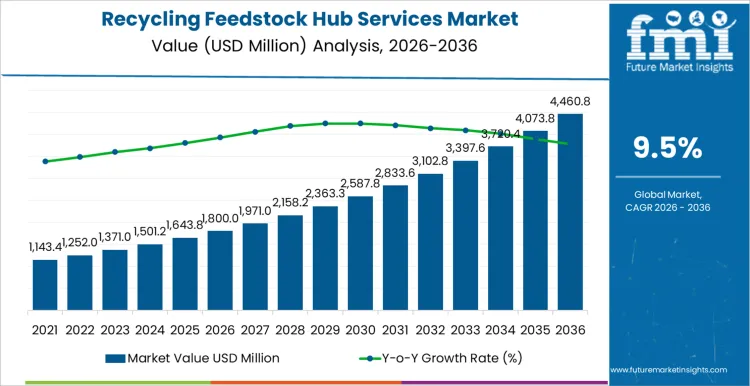
Recycling Feedstock Hub Services Market Key Takeaways
| Metric | Value |
|---|---|
| Market Value (2026) | USD 1,800.0 million |
| Market Forecast Value (2036) | USD 4,460.8 million |
| Forecast CAGR 2026 to 2036 | 9.5% |
How Are Extended Producer Responsibility Frameworks Reshaping Feedstock Hub Infrastructure Requirements?
Extended producer responsibility legislation is driving fundamental changes in recycling feedstock hub service models as regulatory frameworks establish mandatory collection targets, quality standards, and traceability requirements that transform waste management from disposal-focused operations into material recovery and preparation systems. Modern EPR programs require detailed documentation of material flows, contamination rates, and processing efficiency that demands sophisticated hub infrastructure capable of providing comprehensive data collection and reporting throughout the material recovery process. This regulatory environment pushes hub operators toward advanced technologies and service models that can demonstrate measurable recycling performance while maintaining cost structures that support sustainable business operations.
The implementation of producer funding mechanisms for recycling infrastructure creates new business model opportunities for hub operators who can provide certified material processing services that meet regulatory compliance requirements while generating revenue from multiple stakeholder sources. EPR frameworks increasingly require hub operators to achieve specific quality targets and processing efficiency benchmarks that favor advanced sorting technologies, contamination reduction systems, and digital tracking capabilities that provide transparent performance verification. This regulatory evolution benefits hub operators who can invest in comprehensive infrastructure while creating barriers for operators unable to meet enhanced service requirements and quality standards.
How Is the Market Structured Across Service Delivery Models?
The recycling feedstock hub services market demonstrates distinct segmentation patterns based on value-added services and operational capabilities that directly influence customer value propositions and competitive positioning within the recycling ecosystem.
Aggregation and sorting hub services capture 40.0% market share through their essential role in transforming distributed waste streams into concentrated, clean material flows suitable for recycling facility processing. These operations require sophisticated sorting technologies, quality control systems, and logistics coordination that enable efficient material consolidation while maintaining quality standards that support downstream recycling operations.
Pre-processing and densification services achieve 30.0% market adoption through their ability to optimize material characteristics for transportation efficiency and recycling facility input requirements. These services incorporate washing systems, size reduction equipment, and compaction technologies that prepare materials for recycling while reducing logistics costs and improving material handling efficiency.
Several hubs deploy slow speed shredding machines to reduce film volume ahead of densification and improve downstream sort performance. The integration of pre-processing capabilities within hub operations creates value-added service opportunities while optimizing overall system efficiency and material quality for demanding recycling applications.
Which Feedstock Material Category Generates the Highest Hub Demand?
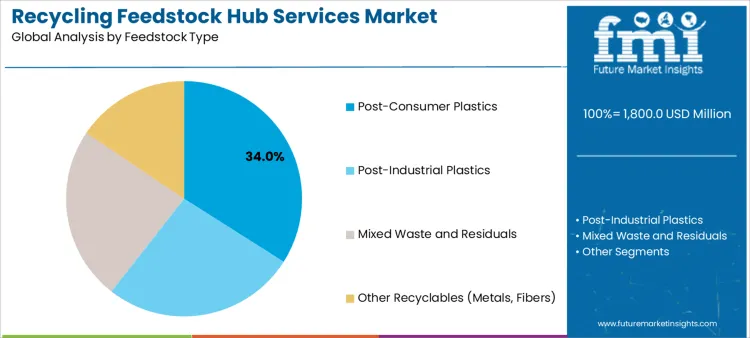
Post-consumer plastics maintain 34.0% market share, establishing household and commercial plastic waste as the primary driver of hub service demand and infrastructure investment. These material streams require sophisticated contamination removal, sorting accuracy, and quality verification that can prepare mixed plastic waste for mechanical and chemical recycling applications. The complexity of post-consumer plastic waste streams drives innovation in sorting technologies and quality assurance systems while creating opportunities for specialized hub services that can achieve high material recovery rates with minimal contamination levels.
Which Customer Segment Leads Hub Service Adoption?
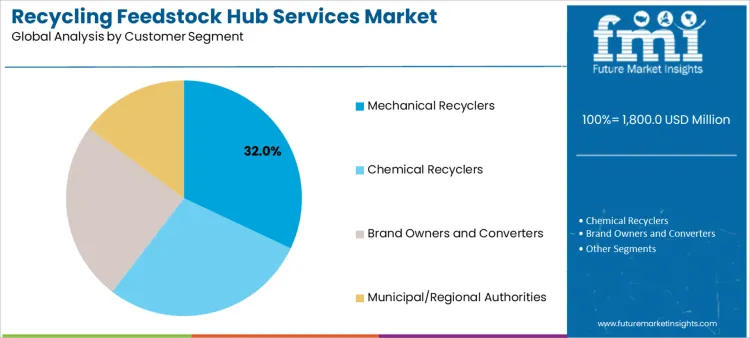
Mechanical recyclers represent 32.0% of hub service demand, reflecting their critical role in converting prepared feedstock into recycled materials for manufacturing applications. These customers require consistent material supply, quality specifications, and delivery reliability that support production planning and quality control in recycling operations. Hub services optimize material preparation for mechanical recycling equipment while reducing contamination risks and supply chain complexity that can affect recycling facility operational efficiency and product quality.
Which Geographic Hub Configuration Drives Market Development?
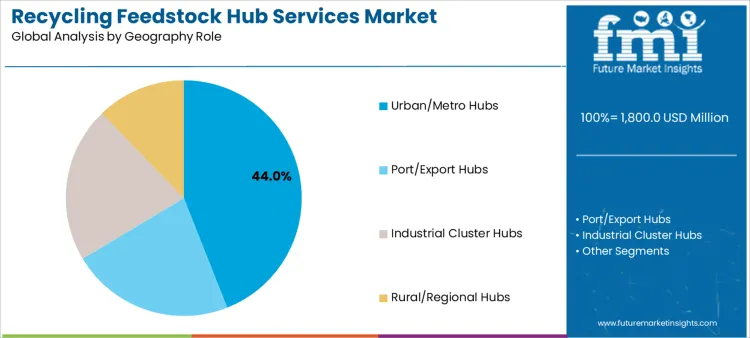
Urban and metropolitan hubs command 44.0% of market positioning, establishing population centers as the primary locations for material aggregation and processing infrastructure. These locations benefit from concentrated waste generation, transportation efficiency, and proximity to recycling facilities while providing access to skilled workforce and advanced infrastructure required for sophisticated hub operations. Urban hub development creates opportunities for integrated waste management systems that optimize material recovery while reducing environmental impact through reduced transportation requirements and improved processing efficiency.
Market Dynamics
How Is Chemical Recycling Technology Advancement Driving Hub Service Innovation?
The rapid development of chemical recycling technologies is creating unprecedented requirements for feedstock preparation services that can deliver material streams meeting stringent quality specifications for molecular recycling processes. Chemical recycling facilities require feedstock with specific contamination limits, moisture content, and material composition that demand sophisticated preparation and quality verification capabilities from hub operators. This technological evolution drives investment in advanced sorting equipment, washing systems, and analytical capabilities that can prepare materials for chemical recycling while providing documentation supporting process optimization and quality control requirements.
The integration of chemical recycling with mechanical recycling creates opportunities for hub operators who can provide flexible material preparation services that optimize feedstock allocation based on material characteristics and market conditions. Hybrid recycling approaches require hub operators to understand both mechanical and chemical recycling requirements while maintaining inventory management and logistics capabilities that support multiple customer segments. This market evolution benefits hub operators who can invest in comprehensive processing capabilities while developing technical expertise across diverse recycling technologies and customer requirements.
What Infrastructure Limitations Constrain Hub Market Expansion?
The primary constraint affecting recycling feedstock hub services centers on the substantial capital investment required for advanced sorting equipment, quality control systems, and logistics infrastructure that can meet the demanding requirements of modern recycling operations while maintaining cost structures that support sustainable business operations. Sophisticated sorting technologies require significant facility space, skilled operators, and maintenance capabilities that create barriers for hub operators in markets with limited infrastructure or technical expertise. These capital requirements can limit market accessibility while creating opportunities for established operators with access to investment capital and technical capabilities.
Transportation infrastructure limitations also constrain hub service expansion in regions where inadequate logistics networks increase material collection and distribution costs while limiting service area coverage and operational efficiency. Hub operators require efficient transportation access for both material collection and processed feedstock delivery that can limit location options and affect service economics. These infrastructure constraints drive consolidation toward established logistics corridors while creating opportunities for hub operators who can optimize transportation efficiency through strategic location selection and logistics coordination.
How Do Circular Economy Investment Programs Create Growth Opportunities?
Government and corporate circular economy investment programs are creating substantial opportunities for recycling feedstock hub operators who can provide services that contribute measurably to waste diversion targets and material recovery objectives established by policy frameworks and corporate sustainability commitments. Public funding programs for recycling infrastructure create opportunities for hub development while reducing capital investment barriers for operators who can demonstrate technical capabilities and service reliability. These programs often include performance requirements and measurement frameworks that benefit hub operators who can provide comprehensive data collection and reporting capabilities.
Corporate circular economy commitments create additional market opportunities as companies establish internal recycling targets and supplier requirements that drive demand for verified recycled content and transparent supply chain management. Brand owners increasingly require supply chain transparency and material traceability that benefits hub operators who can provide comprehensive documentation and digital tracking capabilities. These market trends create premium service opportunities while establishing long-term customer relationships that support hub investment planning and business development strategies.
How Is the Recycling Feedstock Hub Services Market Expected to Evolve Across Major Nations?
The global recycling feedstock hub services market reflects regional variations in regulatory frameworks, waste generation patterns, and recycling infrastructure development that influence market growth opportunities across different economic zones. Leading waste management markets drive innovation in hub service technologies while emerging markets focus on establishing basic infrastructure that can support domestic recycling industry development and material recovery objectives.
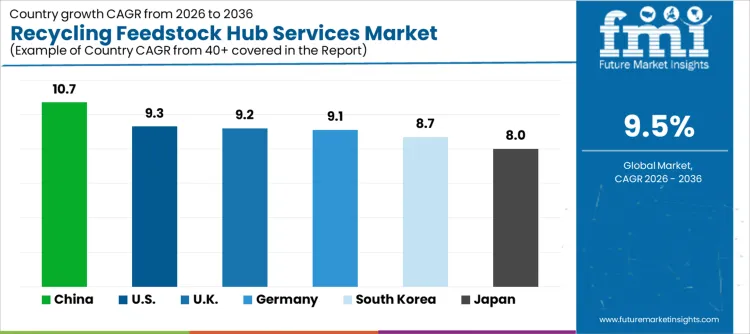
| Country | CAGR (%) |
|---|---|
| China | 10.7% |
| Germany | 9.1% |
| USA | 9.3% |
| Japan | 8.0% |
| South Korea | 8.7% |
| UK | 9.2% |
What Drives China's Market Leadership?
China's recycling feedstock hub services market is projected to achieve the highest growth rate at 10.7% CAGR, driven primarily by massive waste generation volumes and comprehensive government policies promoting circular economy development across industrial sectors. The country's position as the world's largest waste generator creates enormous opportunities for hub service development while fostering innovation in automated sorting technologies and material processing capabilities. Chinese operators are developing integrated hub systems that combine collection, sorting, and pre-processing operations to achieve cost advantages while supporting domestic recycling industry expansion and export market development.
Government initiatives promoting waste reduction and recycling infrastructure development accelerate hub service adoption while creating favorable regulatory conditions for industry investment and technology development. The integration of digital platforms with physical hub operations creates unique opportunities for optimized material flow management and supply chain coordination that benefits both waste generators and recycling facilities. China's manufacturing capacity advantages enable cost-effective hub infrastructure development while supporting technology export opportunities to international markets seeking similar capabilities.
How Is Germany Advancing Circular Economy Excellence?
Demand for recycling feedstock hub services in Germany is estimated to expand at a CAGR of 9.1% reflects the country's leadership in circular economy policy implementation and advanced waste management infrastructure that supports sophisticated hub service operations. German regulatory frameworks establish comprehensive requirements for material recovery and quality standards that drive demand for advanced hub services while providing clear guidelines for investment planning and service development. The emphasis on technical excellence in waste processing creates opportunities for premium hub services that demonstrate superior material recovery rates and quality consistency compared to conventional waste management approaches.
The country's strong waste management infrastructure combined with advanced manufacturing capabilities drives adoption of integrated hub systems that optimize material flow efficiency while supporting automated sorting and processing technologies. German hub operators typically implement comprehensive quality management systems that enable verified performance documentation while supporting customer requirements for supply chain transparency and environmental impact reporting.
Why Is the USA Market Emphasizing Technology Integration?
The United States market experiences 9.3% CAGR growth supported by corporate sustainability initiatives and emerging regulatory frameworks that create demand for advanced hub services while driving investment in domestic recycling infrastructure. State-level recycling legislation and corporate circular economy commitments create substantial market opportunities for hub operators who can provide verified material recovery services while supporting supply chain localization objectives. The emphasis on technology innovation creates opportunities for advanced sorting systems and digital platform integration that optimize hub operations while providing comprehensive data collection and reporting capabilities.
Federal infrastructure investment programs create favorable conditions for hub development while supporting technology advancement and workforce development initiatives that benefit the entire recycling industry. The development of circular economy technologies in the USA creates opportunities for integrated hub systems that combine physical processing with digital marketplace capabilities while providing comprehensive supply chain management services for recycling industry customers.
How Is Japanese Quality Focus Driving Premium Services?
Sales of recycling feedstock hub services in Japan are likely to increase at a CAGR of 8.0% is supported by the country's emphasis on quality excellence and precision in waste management operations that creates demand for the highest-grade hub services available in global markets. Japanese operators maintain strict quality standards that require comprehensive contamination control and material verification while providing detailed documentation supporting recycling facility quality control requirements. This quality focus drives innovation in automated sorting technologies and quality assurance systems that enable superior material recovery performance while maintaining cost effectiveness for volume operations.
The country's leadership in automation technology creates opportunities for hub operators who can implement sophisticated processing systems that optimize material recovery while reducing operational complexity and labor requirements. Japanese recycling technology development emphasizes precision and reliability that influences hub service standards throughout the global recycling industry while fostering innovation in advanced processing capabilities and quality control systems.
What Opportunities Exist in South Korea's Industrial Ecosystem?
The industry for recycling feedstock hub services in South Korea is likely to rise at a CAGR of 8.7% growth is driven by the country's advanced manufacturing capabilities and comprehensive waste management policies that create favorable conditions for hub service market development. Korean operators require hub services that support high-quality material recovery while meeting stringent environmental compliance requirements and cost competitiveness objectives. The integration of advanced automation and digital systems creates demand for hub services with exceptional consistency and reliability that enable optimized material flow management and supply chain coordination.
The country's leadership in electronics manufacturing and advanced materials creates opportunities for specialized hub services that can handle complex waste streams while providing material recovery services for high-value applications. Korean technology companies increasingly emphasize circular design principles that create demand for hub services designed for material recovery optimization while maintaining the quality standards required for demanding manufacturing applications and electronic waste management operations.
What Strategies Help Suppliers Maintain Competitive Position in Recycling Feedstock Hub Services?
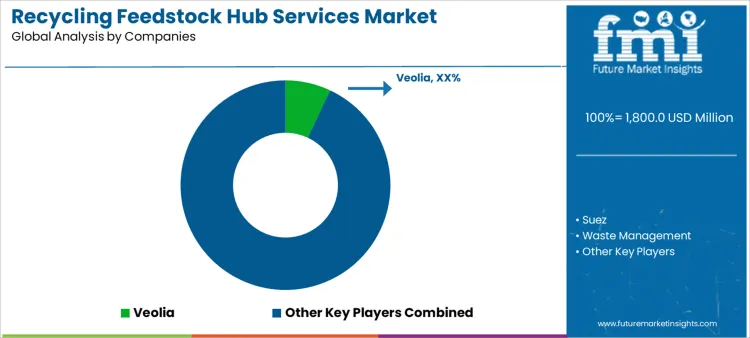
Hub service providers maintain market leadership through comprehensive operational capabilities that encompass material collection, processing, and distribution while providing value-added services including quality verification, supply chain management, and digital tracking that create integrated solutions for recycling industry customers. Market leaders establish competitive advantages through technology integration that optimizes material flow efficiency while providing transparency and documentation supporting customer quality control and regulatory compliance requirements.
Successful hub operators invest in advanced sorting and processing technologies that enable superior material recovery rates while maintaining cost structures that support competitive pricing and sustainable business operations. Investment in automation capabilities and digital platform development allows hub operators to optimize operational efficiency while providing comprehensive data collection and analysis that supports customer decision-making and supply chain optimization. These technological capabilities create differentiation opportunities while enabling premium service positioning that supports long-term customer relationships and market expansion.
Innovation in customer service models enables hub operators to provide integrated solutions that address multiple customer requirements while optimizing material flow efficiency and cost effectiveness. Collaboration with recycling facilities, waste generators, and logistics providers during service development phases allows optimization of hub operations for specific market requirements while ensuring successful integration with existing supply chain operations and customer workflows that support operational efficiency and customer satisfaction objectives.
Key Players in the Recycling Feedstock Hub Services Market
- Veolia
- Suez
- Waste Management
- Republic Services
- Biffa
- Remondis
- PreZero
- Clean Harbors
- Stericycle
- Covanta
Scope of Report
| Items | Values |
|---|---|
| Quantitative Units | USD Million |
| Feedstock Type Segments | Post-Consumer Plastics; Post-Industrial Plastics; Mixed Waste and Residuals; Other Recyclables |
| Service Model Categories | Aggregation and Sorting Hubs; Pre-Processing and Densification; Contract Feedstock Management; Digital Marketplace Services |
| Customer Segment Types | Mechanical Recyclers; Chemical Recyclers; Brand Owners and Converters; Municipal Authorities |
| Geographic Role Types | Urban/Metro Hubs; Port/Export Hubs; Industrial Cluster Hubs; Rural/Regional Hubs |
| Regions Covered | North America, Europe, Asia Pacific, Latin America, Middle East & Africa |
| Key Countries | USA, Germany, China, Japan, South Korea, UK |
| Key Companies Profiled | Veolia, Suez, Waste Management, Republic Services, Biffa, and others |
| Additional Attributes | Dollar sales measured for recycling feedstock hub services including material aggregation, sorting, processing, and distribution, specified by material recovery rates, quality standards, processing capacity, and digital tracking capabilities |
Recycling Feedstock Hub Services Market by Segment
By Feedstock Type:
- Post-Consumer Plastics
- Post-Industrial Plastics
- Mixed Waste and Residuals
- Other Recyclables (Metals, Fibers)
By Service Model:
- Aggregation and Sorting Hubs
- Pre-Processing and Densification
- Contract Feedstock Management
- Digital Marketplace/Traceability Services
By Customer Segment:
- Mechanical Recyclers
- Chemical Recyclers
- Brand Owners and Converters
- Municipal/Regional Authorities
By Geography Role:
- Urban/Metro Hubs
- Port/Export Hubs
- Industrial Cluster Hubs
- Rural/Regional Hubs
Bibliography
- European Commission. (2023). Proposal for a regulation on packaging and packaging waste (PPWR). Publications Office of the European Union.
- Organisation for Economic Co-operation and Development. (2023). Improving plastics management: Trends, policy responses, and the role of material recovery systems. OECD Publishing.
- United Nations Environment Programme. (2023). Turning off the tap: How the world can end plastic pollution and create a circular economy. United Nations.
- European Environment Agency. (2024). Municipal waste management, recycling systems, and material recovery performance in Europe. European Environment Agency.
Frequently Asked Questions
How big is the recycling feedstock hub services market in 2026?
The global recycling feedstock hub services market is estimated to be valued at USD 1,800.0 million in 2026.
What will be the size of recycling feedstock hub services market in 2036?
The market size for the recycling feedstock hub services market is projected to reach USD 4,460.8 million by 2036.
How much will be the recycling feedstock hub services market growth between 2026 and 2036?
The recycling feedstock hub services market is expected to grow at a 9.5% CAGR between 2026 and 2036.
What are the key product types in the recycling feedstock hub services market?
The key product types in recycling feedstock hub services market are post-consumer plastics, post-industrial plastics, mixed waste and residuals and other recyclables (metals, fibers).
Which service model segment to contribute significant share in the recycling feedstock hub services market in 2026?
In terms of service model, aggregation and sorting hubs segment to command 40.0% share in the recycling feedstock hub services market in 2026.
Preview the report firsthand - request a free sample
Get SampleGet the brochure for pricing and purchase details.
Get PDFTable of Content
- Executive Summary
- Global Market Outlook
- Demand-side Trends
- Supply-side Trends
- Technology Roadmap Analysis
- Analysis and Recommendations
- Market Overview
- Market Coverage / Taxonomy
- Market Definition / Scope / Limitations
- Market Background
- Market Dynamics
- Drivers
- Restraints
- Opportunity
- Trends
- Scenario Forecast
- Demand in Optimistic Scenario
- Demand in Likely Scenario
- Demand in Conservative Scenario
- Opportunity Map Analysis
- Product Life Cycle Analysis
- Supply Chain Analysis
- Investment Feasibility Matrix
- Value Chain Analysis
- PESTLE and Porter’s Analysis
- Regulatory Landscape
- Regional Parent Market Outlook
- Production and Consumption Statistics
- Import and Export Statistics
- Market Dynamics
- Global Market Analysis 2021 to 2025 and Forecast, 2026 to 2036
- Historical Market Size Value (USD Million) Analysis, 2021 to 2025
- Current and Future Market Size Value (USD Million) Projections, 2026 to 2036
- Y-o-Y Growth Trend Analysis
- Absolute $ Opportunity Analysis
- Global Market Pricing Analysis 2021 to 2025 and Forecast 2026 to 2036
- Global Market Analysis 2021 to 2025 and Forecast 2026 to 2036, By Feedstock Type
- Introduction / Key Findings
- Historical Market Size Value (USD Million) Analysis By Feedstock Type , 2021 to 2025
- Current and Future Market Size Value (USD Million) Analysis and Forecast By Feedstock Type , 2026 to 2036
- Post-Consumer Plastics
- Post-Industrial Plastics
- Mixed Waste and Residuals
- Other Recyclables (Metals, Fibers)
- Post-Consumer Plastics
- Y-o-Y Growth Trend Analysis By Feedstock Type , 2021 to 2025
- Absolute $ Opportunity Analysis By Feedstock Type , 2026 to 2036
- Global Market Analysis 2021 to 2025 and Forecast 2026 to 2036, By Service Model
- Introduction / Key Findings
- Historical Market Size Value (USD Million) Analysis By Service Model, 2021 to 2025
- Current and Future Market Size Value (USD Million) Analysis and Forecast By Service Model, 2026 to 2036
- Aggregation and Sorting Hubs
- Pre-Processing and Densification
- Contract Feedstock Management
- Digital Marketplace/Traceability Services
- Aggregation and Sorting Hubs
- Y-o-Y Growth Trend Analysis By Service Model, 2021 to 2025
- Absolute $ Opportunity Analysis By Service Model, 2026 to 2036
- Global Market Analysis 2021 to 2025 and Forecast 2026 to 2036, By Customer Segment
- Introduction / Key Findings
- Historical Market Size Value (USD Million) Analysis By Customer Segment, 2021 to 2025
- Current and Future Market Size Value (USD Million) Analysis and Forecast By Customer Segment, 2026 to 2036
- Mechanical Recyclers
- Chemical Recyclers
- Brand Owners and Converters
- Municipal/Regional Authorities
- Mechanical Recyclers
- Y-o-Y Growth Trend Analysis By Customer Segment, 2021 to 2025
- Absolute $ Opportunity Analysis By Customer Segment, 2026 to 2036
- Global Market Analysis 2021 to 2025 and Forecast 2026 to 2036, By Geography Role
- Introduction / Key Findings
- Historical Market Size Value (USD Million) Analysis By Geography Role, 2021 to 2025
- Current and Future Market Size Value (USD Million) Analysis and Forecast By Geography Role, 2026 to 2036
- Urban/Metro Hubs
- Port/Export Hubs
- Industrial Cluster Hubs
- Rural/Regional Hubs
- Urban/Metro Hubs
- Y-o-Y Growth Trend Analysis By Geography Role, 2021 to 2025
- Absolute $ Opportunity Analysis By Geography Role, 2026 to 2036
- Global Market Analysis 2021 to 2025 and Forecast 2026 to 2036, By Region
- Introduction
- Historical Market Size Value (USD Million) Analysis By Region, 2021 to 2025
- Current Market Size Value (USD Million) Analysis and Forecast By Region, 2026 to 2036
- North America
- Latin America
- Western Europe
- Eastern Europe
- East Asia
- South Asia and Pacific
- Middle East & Africa
- Market Attractiveness Analysis By Region
- North America Market Analysis 2021 to 2025 and Forecast 2026 to 2036, By Country
- Historical Market Size Value (USD Million) Trend Analysis By Market Taxonomy, 2021 to 2025
- Market Size Value (USD Million) Forecast By Market Taxonomy, 2026 to 2036
- By Country
- USA
- Canada
- Mexico
- By Feedstock Type
- By Service Model
- By Customer Segment
- By Geography Role
- By Country
- Market Attractiveness Analysis
- By Country
- By Feedstock Type
- By Service Model
- By Customer Segment
- By Geography Role
- Key Takeaways
- Latin America Market Analysis 2021 to 2025 and Forecast 2026 to 2036, By Country
- Historical Market Size Value (USD Million) Trend Analysis By Market Taxonomy, 2021 to 2025
- Market Size Value (USD Million) Forecast By Market Taxonomy, 2026 to 2036
- By Country
- Brazil
- Chile
- Rest of Latin America
- By Feedstock Type
- By Service Model
- By Customer Segment
- By Geography Role
- By Country
- Market Attractiveness Analysis
- By Country
- By Feedstock Type
- By Service Model
- By Customer Segment
- By Geography Role
- Key Takeaways
- Western Europe Market Analysis 2021 to 2025 and Forecast 2026 to 2036, By Country
- Historical Market Size Value (USD Million) Trend Analysis By Market Taxonomy, 2021 to 2025
- Market Size Value (USD Million) Forecast By Market Taxonomy, 2026 to 2036
- By Country
- Germany
- UK
- Italy
- Spain
- France
- Nordic
- BENELUX
- Rest of Western Europe
- By Feedstock Type
- By Service Model
- By Customer Segment
- By Geography Role
- By Country
- Market Attractiveness Analysis
- By Country
- By Feedstock Type
- By Service Model
- By Customer Segment
- By Geography Role
- Key Takeaways
- Eastern Europe Market Analysis 2021 to 2025 and Forecast 2026 to 2036, By Country
- Historical Market Size Value (USD Million) Trend Analysis By Market Taxonomy, 2021 to 2025
- Market Size Value (USD Million) Forecast By Market Taxonomy, 2026 to 2036
- By Country
- Russia
- Poland
- Hungary
- Balkan & Baltic
- Rest of Eastern Europe
- By Feedstock Type
- By Service Model
- By Customer Segment
- By Geography Role
- By Country
- Market Attractiveness Analysis
- By Country
- By Feedstock Type
- By Service Model
- By Customer Segment
- By Geography Role
- Key Takeaways
- East Asia Market Analysis 2021 to 2025 and Forecast 2026 to 2036, By Country
- Historical Market Size Value (USD Million) Trend Analysis By Market Taxonomy, 2021 to 2025
- Market Size Value (USD Million) Forecast By Market Taxonomy, 2026 to 2036
- By Country
- China
- Japan
- South Korea
- By Feedstock Type
- By Service Model
- By Customer Segment
- By Geography Role
- By Country
- Market Attractiveness Analysis
- By Country
- By Feedstock Type
- By Service Model
- By Customer Segment
- By Geography Role
- Key Takeaways
- South Asia and Pacific Market Analysis 2021 to 2025 and Forecast 2026 to 2036, By Country
- Historical Market Size Value (USD Million) Trend Analysis By Market Taxonomy, 2021 to 2025
- Market Size Value (USD Million) Forecast By Market Taxonomy, 2026 to 2036
- By Country
- India
- ASEAN
- Australia & New Zealand
- Rest of South Asia and Pacific
- By Feedstock Type
- By Service Model
- By Customer Segment
- By Geography Role
- By Country
- Market Attractiveness Analysis
- By Country
- By Feedstock Type
- By Service Model
- By Customer Segment
- By Geography Role
- Key Takeaways
- Middle East & Africa Market Analysis 2021 to 2025 and Forecast 2026 to 2036, By Country
- Historical Market Size Value (USD Million) Trend Analysis By Market Taxonomy, 2021 to 2025
- Market Size Value (USD Million) Forecast By Market Taxonomy, 2026 to 2036
- By Country
- Kingdom of Saudi Arabia
- Other GCC Countries
- Turkiye
- South Africa
- Other African Union
- Rest of Middle East & Africa
- By Feedstock Type
- By Service Model
- By Customer Segment
- By Geography Role
- By Country
- Market Attractiveness Analysis
- By Country
- By Feedstock Type
- By Service Model
- By Customer Segment
- By Geography Role
- Key Takeaways
- Key Countries Market Analysis
- USA
- Pricing Analysis
- Market Share Analysis, 2025
- By Feedstock Type
- By Service Model
- By Customer Segment
- By Geography Role
- Canada
- Pricing Analysis
- Market Share Analysis, 2025
- By Feedstock Type
- By Service Model
- By Customer Segment
- By Geography Role
- Mexico
- Pricing Analysis
- Market Share Analysis, 2025
- By Feedstock Type
- By Service Model
- By Customer Segment
- By Geography Role
- Brazil
- Pricing Analysis
- Market Share Analysis, 2025
- By Feedstock Type
- By Service Model
- By Customer Segment
- By Geography Role
- Chile
- Pricing Analysis
- Market Share Analysis, 2025
- By Feedstock Type
- By Service Model
- By Customer Segment
- By Geography Role
- Germany
- Pricing Analysis
- Market Share Analysis, 2025
- By Feedstock Type
- By Service Model
- By Customer Segment
- By Geography Role
- UK
- Pricing Analysis
- Market Share Analysis, 2025
- By Feedstock Type
- By Service Model
- By Customer Segment
- By Geography Role
- Italy
- Pricing Analysis
- Market Share Analysis, 2025
- By Feedstock Type
- By Service Model
- By Customer Segment
- By Geography Role
- Spain
- Pricing Analysis
- Market Share Analysis, 2025
- By Feedstock Type
- By Service Model
- By Customer Segment
- By Geography Role
- France
- Pricing Analysis
- Market Share Analysis, 2025
- By Feedstock Type
- By Service Model
- By Customer Segment
- By Geography Role
- India
- Pricing Analysis
- Market Share Analysis, 2025
- By Feedstock Type
- By Service Model
- By Customer Segment
- By Geography Role
- ASEAN
- Pricing Analysis
- Market Share Analysis, 2025
- By Feedstock Type
- By Service Model
- By Customer Segment
- By Geography Role
- Australia & New Zealand
- Pricing Analysis
- Market Share Analysis, 2025
- By Feedstock Type
- By Service Model
- By Customer Segment
- By Geography Role
- China
- Pricing Analysis
- Market Share Analysis, 2025
- By Feedstock Type
- By Service Model
- By Customer Segment
- By Geography Role
- Japan
- Pricing Analysis
- Market Share Analysis, 2025
- By Feedstock Type
- By Service Model
- By Customer Segment
- By Geography Role
- South Korea
- Pricing Analysis
- Market Share Analysis, 2025
- By Feedstock Type
- By Service Model
- By Customer Segment
- By Geography Role
- Russia
- Pricing Analysis
- Market Share Analysis, 2025
- By Feedstock Type
- By Service Model
- By Customer Segment
- By Geography Role
- Poland
- Pricing Analysis
- Market Share Analysis, 2025
- By Feedstock Type
- By Service Model
- By Customer Segment
- By Geography Role
- Hungary
- Pricing Analysis
- Market Share Analysis, 2025
- By Feedstock Type
- By Service Model
- By Customer Segment
- By Geography Role
- Kingdom of Saudi Arabia
- Pricing Analysis
- Market Share Analysis, 2025
- By Feedstock Type
- By Service Model
- By Customer Segment
- By Geography Role
- Turkiye
- Pricing Analysis
- Market Share Analysis, 2025
- By Feedstock Type
- By Service Model
- By Customer Segment
- By Geography Role
- South Africa
- Pricing Analysis
- Market Share Analysis, 2025
- By Feedstock Type
- By Service Model
- By Customer Segment
- By Geography Role
- USA
- Market Structure Analysis
- Competition Dashboard
- Competition Benchmarking
- Market Share Analysis of Top Players
- By Regional
- By Feedstock Type
- By Service Model
- By Customer Segment
- By Geography Role
- Competition Analysis
- Competition Deep Dive
- Veolia
- Overview
- Product Portfolio
- Profitability by Market Segments (Product/Age /Sales Channel/Region)
- Sales Footprint
- Strategy Overview
- Marketing Strategy
- Product Strategy
- Channel Strategy
- Suez
- Waste Management
- Republic Services
- Biffa
- Remondis
- PreZero
- Veolia
- Competition Deep Dive
- Assumptions & Acronyms Used
- Research Methodology


