

Smart Lock Market Size and Share Forecast Outlook (2025 to 2035)
The smart locks market comprises major corporations like regional leaders and emerging startups creating highly competitive landscape somehow. Major brands control market share yet smaller outfits slowly gain ground via really innovative stuff.
Major companies such as Assa Abloy, Allegion, and Kwikset hold roughly 60% market share largely because of their strong brand reputation and vast distribution networks. These companies specialize in high-end products featuring sophisticated smart lock systems with biometric access and seamless integration.
Regional brands such as Samsung hold nearly 20% of market share due to affordability and ease of use features. These brands deliver smart lock solutions featuring localized functionalities like compatibility with regional platforms at affordable prices. Their adaptability in regional markets has enabled solid footholds overseas somehow and they compete fiercely on a global scale.
Emerging players control the remaining 20% of the market gaining traction with super sleek highly adaptable innovative solutions. These companies frequently prioritize sustainability alongside robust security features and innovative technologies such as cloud-based management.
Smaller brands being newer still manage to capture the attention of consumers via affordable alternatives featuring current smart home trends. Emerging players swiftly gain traction within specialized sectors keeping pace with the rapidly shifting demands of contemporary shopper cohorts pretty rapidly nowadays
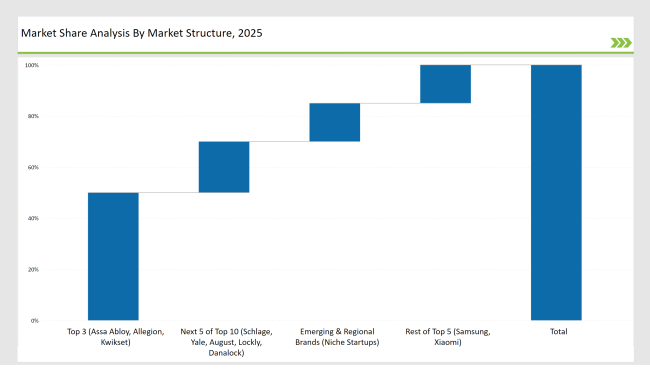
Global Market Share Breakdown by Leading Smart Lock Manufacturers and Solution Providers (2025)
| Market Segment | Industry Share (%) |
|---|---|
| Top 3 (Assa Abloy, Allegion, Kwikset) | 50% |
| Rest of Top 5 (Samsung, Xiaomi) | 15% |
| Next 5 of Top 10 (Schlage, Yale, August, Lockly, Danalock) | 20% |
| Emerging & Regional Brands (Niche Startups) | 15% |
Market Concentration Outlook for 2025 by Connectivity Type, Lock Format, and End Use
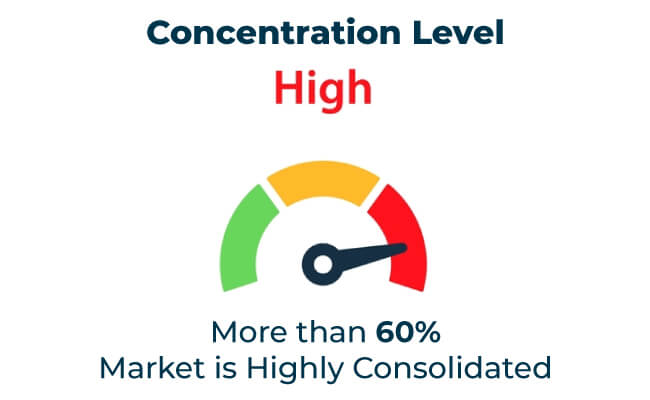
The smart locks market is moderately consolidated. Major global brands such as Assa Abloy, Allegion, and Kwikset dominate premium segments mid-range markets with emerging players serving budget-conscious consumers somehow. Emerging brands redefine market trends with pretty affordable alternatives beneath sleek smart home devices but established brands still dominate.
Market trends feature a rapid shift towards IoT-enabled smart locks with increasing demand for keyless entry systems rising swiftly nowadays. E-commerce platforms play a pivotal role in driving sales via digital marketing online channels making smart lock solutions accessible worldwide rapidly.
Smart Lock Market by Control Interface, Power Source, Installation Type, End Use Application, and Region
Sales Channels
Smart locks sales get heavily influenced by online platforms and brand sites that make up roughly 55% of total sales volume. These channels offer convenience and a broad selection of products that appeal directly to tech-savvy consumers somehow.
Supermarkets and hypermarkets account for 30% of sales as retail locations offer customers an opportunity to experience products firsthand beneath expert guidance from staff. Most sales originate from elsewhere but 15% come from specialty stores and mono-brand outlets that offer bespoke solutions
Product Types
In the smart locks market, deadbolt smart locks account for 40% of the market due to robust security features and relatively easy operation. Locks are usually sold via a direct sales approach providing personalized services and installation on site. Keypad smart locks along with combination locks constitute 35% of the market share striking the balance between convenience security found frequently in mono-brand stores appealing directly to residential customers or commercial ones.
Biometric smart locks dominate roughly 25% of the market share due to advanced security features like fingerprint recognition and facial scanning technology. These smart locks sell via various outlets like supermarkets hypermarkets and online retailers for high-end users seeking enhanced security
Key Companies That Shaped the Year Through Innovation in Biometric and Cloud-Connected Lock Systems
2024 saw significant developments in the smart locks market, as the sector continued to evolve with new technological breakthroughs, rising security concerns, and increased adoption across residential and commercial spaces. Key market players contributed in the following ways:
- August Home: Introduced enhanced security features with integration into home automation systems, focusing on easy installation and user-friendly interfaces.
- Schlage: Improved smart locks with advanced biometric recognition and mobile app functionalities for seamless control and monitoring.
- Yale: Pioneered voice-activated smart locks, offering hands-free access and increased compatibility with smart home ecosystems.
- Kwikset: Developed locks with advanced encryption for heightened security and collaborated with other IoT brands to ensure compatibility.
- ASSA ABLOY: Continued to expand its presence by offering enterprise-level smart lock solutions for commercial applications, integrating access control systems with cloud platforms.
- Emerging Brands: Startups like Level Lock and Ultraloq gained popularity by offering more affordable, feature-packed alternatives to the established brands, catering to both residential and small-business customers.
Forecast Highlights on Touchless Access, App-Based Integration, and Smart Home Expansion
- Smart Home Integration: Growing demand for smart locks that integrate with home automation systems, including smart lighting, alarms, and security cameras.
- Cybersecurity: Rising concerns about data privacy and the integration of stronger encryption protocols in smart locks.
- Keyless Access: Increasing adoption of biometric and keyless entry solutions, including facial recognition and mobile-based authentication.
- Growing E-commerce: Online sales continue to rise, especially as more consumers seek convenient and affordable smart lock options.
- Regional Expansion: Companies are customizing solutions to meet regional security requirements and increasing demand for smart solutions across different geographies.
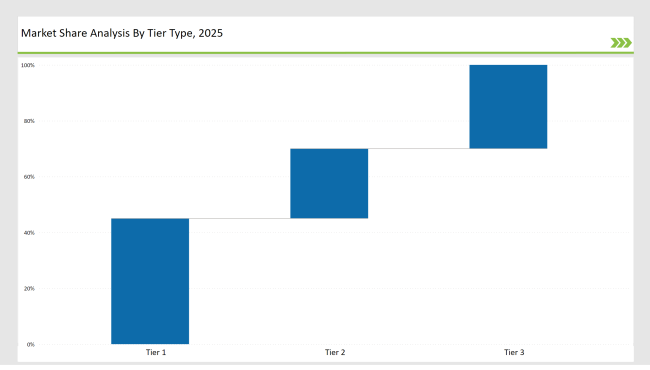
Tier-Wise Company Classification Based on Platform Flexibility, Security Protocols, and Distribution (2025)
| Tier Type | Tier 1 |
|---|---|
| Example of Key Players | August Home, Schlage, Yale, Kwikset |
| Market Share % | 45% |
| Tier Type | Tier 2 |
|---|---|
| Example of Key Players | ASSA ABLOY, Samsung, Nest |
| Market Share % | 25% |
| Tier Type | Tier 1 |
|---|---|
| Example of Key Players | Regional brands, startups |
| Market Share % | 30% |
d
Key Company Initiatives in Multi-Family Housing, Airbnb Integration, and Voice Control Compatibility
| Brand | Key Focus Areas |
|---|---|
| August Home | Integration with smart home ecosystems, user-friendly interfaces, advanced security features |
| Schlage | Biometric recognition, mobile app features, and high-security systems |
| Yale | Voice-activated locks, increased compatibility with smart home devices |
| Kwikset | Enhanced encryption, IoT partnerships for broader compatibility |
| ASSA ABLOY | Commercial and enterprise-level solutions, cloud-based access control |
| Emerging Brands | Affordable smart lock solutions, integrating advanced features for both residential and commercial markets |
Strategic Recommendations for Brands Targeting Residential, Hospitality, and Commercial Sectors
- Focus on Cybersecurity: Given the increasing number of cyber-attacks, ensure strong encryption and multi-factor authentication for users' peace of mind.
- Enhance User Experience: Develop easy-to-install solutions with seamless mobile app integrations and voice-activated access.
- Target Regional Needs: Customize products to address specific regional security needs and consumer preferences.
- Leverage E-commerce: Expand online presence through direct-to-consumer channels and partnerships with home improvement retailers.
- Innovate with Biometric and Voice Technology: Continue exploring biometric and voice recognition systems to provide keyless, frictionless access to users.
Future Roadmap for Smart Locks with Emphasis on Battery Life, Interoperability, and AI Integration
The smart lock industry is set to undergo rapid transformation with a strong focus on cybersecurity, user experience, and smart home integration. Leading players are making heavy investments in R&D to enhance product efficiency and adapt to evolving consumer demands.
The industry is shifting towards digital-first strategies, with brands focusing on e-commerce and DTC channels to expand their reach. The integration of smart locks with other IoT devices will drive innovation, and the trend toward biometric solutions will continue to grow, with an emphasis on improving user convenience and security.
Subscription-based services for smart lock systems are gaining traction, allowing companies to offer maintenance, upgrades, and customer support through a membership model. Influencer marketing, especially on social media platforms, will continue to play a significant role in building brand awareness and consumer trust. Sustainability will also be a driving force, with eco-conscious consumers pushing for the use of recyclable materials and energy-efficient technologies in smart locks.
Top Segments Studied in the Smart Lock Market: Connectivity, Access Method, End Use, Lock Type, and Region
By Sales Channels:
- Online Platforms & Brand Sites
- Supermarkets & Hypermarkets
- Specialty Stores & Mono-Brand Outlets
By Product Types:
- Deadbolt Smart Locks
- Keypad & Combination Smart Locks
- Biometric Smart Locks
Frequently Asked Questions
Which companies hold the largest market share in the smart lock industry?
August Home, Schlage, and Yale collectively dominate the market with 45% share.
What is the market share of regional brands in the smart lock sector?
Regional brands and startups hold approximately 30% of the market by offering affordable, feature-rich alternatives.
How much market share do startups and niche brands hold?
Startups and smaller brands focusing on innovative, affordable solutions account for 30% of the market.
How is market concentration assessed in the smart lock industry for the year 2025?
The market is categorized as high for top players holding over 50%, medium for top 10 brands capturing 40-50%, and low for fragmented market shares below 30%.
Preview the report firsthand - request a free sample
Get SampleGet the brochure for pricing and purchase details.
Get PDFTable of Content
- Executive Summary
- Market Overview
- Competitive Analysis Outlook for 2025
- Segment Analysis
- Who Shaped the Year
- Key Highlights from the Forecast
- Tier-Wise Company Classification
- Key Company Initiatives
- Recommendations for Brands
- Future Roadmap
- FAQs


