

- Market Size (2026)
- USD 1.0 Bn
- Forecast (2036)
- USD 2.1 Bn
- CAGR (2026 to 2036)
- 7.5%
How big is Soft Tissue Sarcoma Market in 2026?
USD 1.0 billion in 2026 and USD 2.1 billion by 2036 at a 7.5% CAGR.
The soft tissue sarcoma market is projected to expand at 7.5% CAGR between 2026 and 2036, rising from USD 1.0 billion to USD 2.1 billion. National Cancer Institute guidance places biopsy planning and pathology review before treatment, which determines companion diagnostics and delivery resources. Patient identification and diagnostic workflow efficiency play an important role in translating clinical demand into treatment volumes. SEER estimates approximately 13,910 new soft tissue cancer cases in the United States during 2026. Eligibility for therapy is further segmented by histological subtype and prior treatment history. Commercial adoption therefore depends on the efficient transfer of tissue samples, pathology results, and molecular findings across referral networks so that eligible patients can progress to diagnostic evaluation and treatment without delays.
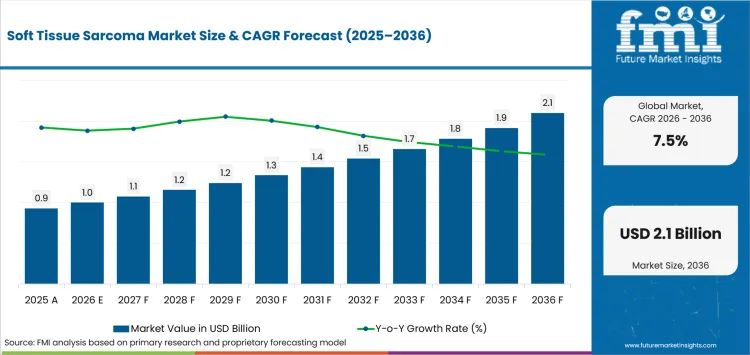
Key Takeaways of Soft Tissue Sarcoma Market
- Subtype-specific approvals increase demand for therapies matched to verified histology and biomarker eligibility at specialist centers.
- Chemotherapy is estimated at 34.0% of treatment demand in 2026 owing to use across several advanced histologies.
- Liposarcoma is forecast at 24.0% by disease type as treatment pathways distinguish differentiated and dedifferentiated forms.
- Intravenous administration is projected at 46.0% in 2026 due to monitored delivery across systemic treatment protocols.
- Rare histologies divide patient volume across stages and eligibility conditions that restrict predictable demand for individual products.
- Johnson & Johnson, Eisai Co., Ltd., Bayer AG, Novartis AG, Merck KGaA, US WorldMeds, PharmaMar S.A. and Adcendo ApS are among key players.
Analyst Perspective
“Soft tissue sarcoma portfolios should be judged by how precisely they connect histology and biomarker eligibility with available treatment. Commercial value depends on reducing referral loss across biopsy and specialist review plus product release and qualified-center scheduling.”
- Anurag Sharma, Principal Consultant for Healthcare, Future Market Insights
How is the Soft Tissue Sarcoma Market segmented?
The Soft Tissue Sarcoma Market is segmented by treatment type, disease type, route of administration, end user, distribution channel and region.
Treatment types include chemotherapy, targeted therapy, radiation therapy and surgery, while disease types cover liposarcoma, leiomyosarcoma, undifferentiated pleomorphic sarcoma and synovial sarcoma. Routes comprise intravenous, oral, intratumoral and other administration, while end users include hospitals, specialty oncology clinics, research institutes and ambulatory surgical centers. Distribution channels include hospital pharmacies, specialty pharmacies and retail pharmacies plus online and direct distribution routes.
Why does chemotherapy lead demand within the treatment type category?
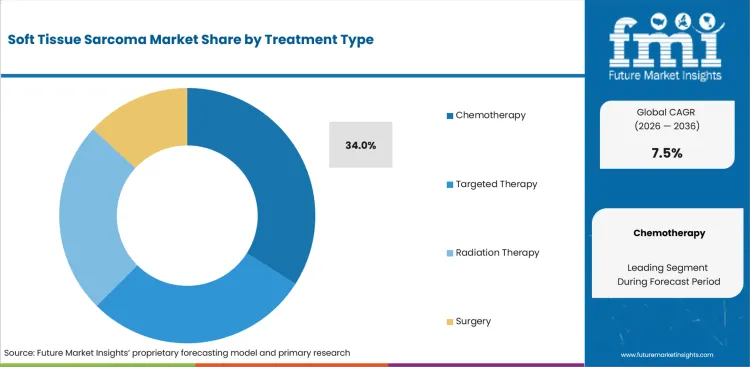
Chemotherapy remains usable across several advanced histologies and perioperative settings without a narrower approved option. Oncology teams assess stage and prior exposure once cancer biopsy and specialist pathology establish the treatment context.
- Based on treatment type, chemotherapy is projected to account for 34.0% in 2026 due to established use across several treatment sequences.
- Targeted medicines serve narrower molecular or histology-defined groups that require testing and indication matching during care. Chemotherapy retains a wider ordering base as hospitals already manage dosing and toxicity plus supportive care across multiple sarcoma pathways.
Why does liposarcoma lead demand within the disease type category?
Liposarcoma forms alter surgical planning and systemic therapy plus surveillance, so personalized medicine separates well-differentiated from dedifferentiated disease before teams compare local treatment and trial referral.
- By disease type, liposarcoma is estimated to hold 24.0% in 2026 owing to established pathways across differentiated and dedifferentiated disease.
- Specialist pathology preserves tissue for subtype confirmation and reduces repeat procedures that delay treatment selection. Reliable classification also identifies the smaller population aligned with each histology-specific product or clinical study.
Why does intravenous administration lead demand within the route category?
Intravenous delivery ties demand to infusion scheduling and pharmacy preparation plus toxicity monitoring across repeated hospital cycles. Engineered cell therapy adds conditioning and chain-of-identity control plus qualified-center requirements for eligible patients receiving treatment.
- In 2026, intravenous administration is expected to lead route of administration with 46.0% share because several systemic protocols require monitored delivery.
- Oral medicines reduce infusion-chair use for selected patients but retain adherence and toxicity-management requirements during treatment. Intravenous products remain necessary for direct dosing control and immediate supportive care plus complex product handling.
Why do hospitals lead demand within the end user category?
Hospitals combine surgery and radiation with pharmacy preparation plus specialist oncology for complex sarcoma cases. Integrated anatomic pathology review supports difficult subtype decisions before systemic therapy and cell treatment or major surgery is scheduled.
- The end-user category is forecast to be led by hospitals at 52.0% share in 2026 due to concentrated multidisciplinary treatment capacity.
- Specialty clinics provide focused review and follow-up but advanced procedures depend on hospital infrastructure alone. Hospital pharmacies coordinate protocol checks and preparation plus monitoring for therapies with narrow handling requirements.
What are the drivers, restraints and opportunities in the Soft Tissue Sarcoma Market?
Subtype-specific approvals support demand. Patient fragmentation and testing requirements constrain access. Coordinated diagnostics and treatment-center coverage improve eligible-patient conversion.
- Driver: Regulatory approvals define treatment routes for specific histologies and biomarkers, raising the commercial value of accurate classification.
- Restraint: Small patient pools divide across subtype and prior therapy plus eligibility conditions that limit predictable demand for each product.
- Opportunity: Manufacturers can improve access by linking diagnostic support with referral pathways and qualified treatment-center coverage.
Biomarker-Defined Approvals Raise Diagnostic Requirements
TECELRA moved from accelerated approval in August 2024 to full FDA approval in June 2026, and eligibility still requires synovial sarcoma histology, prior chemotherapy, specified HLA-A*02 types and MAGE-A4 expression confirmed by companion diagnostics, which makes validated molecular testing a required step before therapy scheduling.
Patient Fragmentation Limits Addressable Volumes
Rare histologies divide limited patient volume across stage and prior treatment, and inadequate tissue or delayed referral can remove suitable patients and weaken order visibility.
Referral Coordination Improves Treatment Conversion
Manufacturers can connect biopsy planning with specialist pathology and cancer tissue diagnostics, giving hospitals earlier notice for testing or manufacturing plus complex scheduling and reducing repeat work.
Which country CAGRs are profiled in the Soft Tissue Sarcoma Market?
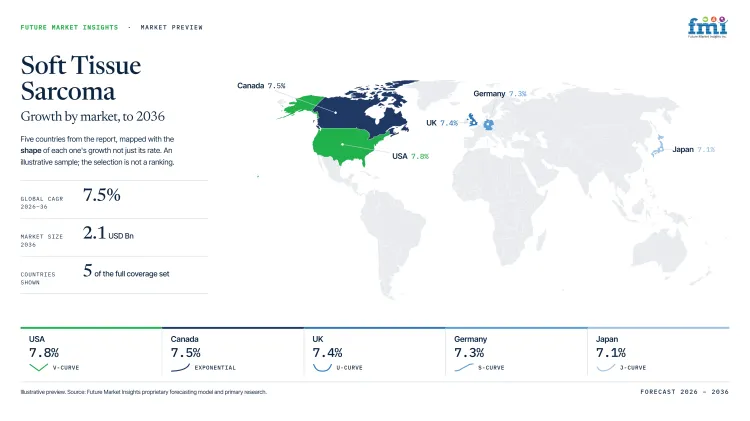
| Country | CAGR |
|---|---|
| South Korea | 8.1% |
| USA | 7.8% |
| Canada | 7.5% |
| UK | 7.4% |
| Germany | 7.3% |
How do country-level CAGRs compare in the Soft Tissue Sarcoma Market?
The five forecasts span 0.8 percentage point between South Korea and Germany, describing growth pace rather than current revenue or specialist capacity.
- South Korea reflects integrated referrals through a dedicated sarcoma center serving pediatric and adult patients.
- The United States combines broad patient identification with regulatory depth and an expanding authorized-center network.
- Canada depends on provincial networks serving small subtype populations across long travel distances between specialist centers.
- The United Kingdom concentrates diagnosis and treatment within specialist services coordinating complex referrals across regional pathways.
- Germany relies on specialist biopsy planning and pathology review across a highly diverse sarcoma subtype base.
Comparable CAGRs reflect different conditions as approval timing and testing access plus center capacity vary across countries.
The full report provides country-level CAGR analysis across North America, Latin America, Europe, East Asia, South Asia and Pacific, and Middle East and Africa.
Country-wise Analysis
- South Korea is expected to rise at an 8.1% CAGR through 2036 because sarcoma patients increasingly move through coordinated specialist pathways. A dedicated sarcoma center links pathology review with multidisciplinary treatment planning, reducing fragmentation between diagnosis and therapy. The center reported 2,756 sarcoma cases among 288,613 cancers in September 2025. Centralized evaluation can improve diagnostic consistency across a complex disease group. Travel requirements outside major treatment corridors nevertheless remain a barrier to follow-up care.
- The United States is expected to maintain 7.8% CAGR over the forecast period, supported by a deep network of specialist providers and advanced therapies. Histology-specific treatments and engineered cell therapies have expanded the range of referral options available to eligible patients. US WorldMeds completed its acquisition of the TECELRA cell therapy portfolio from Adaptimmune on July 31, 2025 and secured full FDA approval for the therapy in June 2026. Broader treatment infrastructure improves access to specialized care, although biomarker requirements continue to narrow the number of patients who qualify for treatment.
- Canada is projected to expand at 7.5% CAGR as provincial oncology systems continue to consolidate expertise in rare cancers. Referral pathways help connect patients with specialist centers despite a geographically dispersed population. The Canadian Cancer Society projects 1,650 soft tissue sarcoma diagnoses and 700 related deaths in Canada during 2026, reflecting the small national patient pool spread across subtypes. Limited patient numbers can make specialist review and clinical-trial recruitment more challenging across individual disease subtypes. Distance remains an important factor in treatment access.
- The United Kingdom is likely to record 7.4% CAGR through 2036 because established referral pathways direct patients toward specialist sarcoma services. These networks combine pathology, surgery, radiation oncology, and systemic treatment within coordinated care models. Cancer Research UK reported that 34% of cases entered care through urgent referral pathways while 17% presented as emergencies in 2019. Earlier referral can improve access to specialist management and influence treatment selection.
- Germany is set to progress at 7.3% CAGR as diagnostic expertise becomes increasingly important across a diverse sarcoma population. Specialist centers coordinate imaging, biopsy planning, and pathology review before treatment decisions are made. DKFZ estimated roughly 4,600 bone and soft tissue sarcoma diagnoses and identifies more than 100 sarcoma subtypes. The complexity of classification increases the value of specialist diagnostic services, although detailed subtype assessment can lengthen the review process before therapy begins.
Who are the notable companies in the Soft Tissue Sarcoma Market?
Johnson & Johnson, Eisai Co., Ltd., Bayer AG, Novartis AG, Merck KGaA, US WorldMeds, PharmaMar S.A. and Adcendo ApS are the notable companies serving this market.
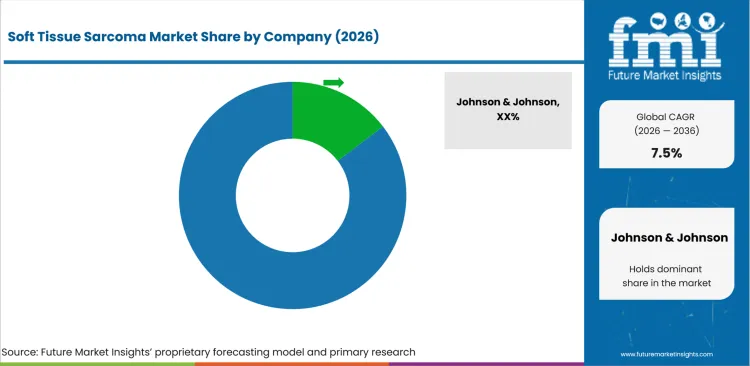
Competition spans systemic therapies and tumor-agnostic products plus cell therapy and antibody-drug conjugates, with precision products requiring cancer diagnostics and manufactured therapies depending on cell therapy manufacturing plus qualified centers.
- Johnson & Johnson, Eisai Co., Ltd., Novartis AG and PharmaMar S.A. maintain marketed systemic therapies with direct soft tissue sarcoma or named-subtype relevance.
- Bayer AG, Merck KGaA and Adcendo ApS compete through tumor-agnostic treatment or active biomarker-directed clinical programs.
- US WorldMeds operates an engineered T-cell portfolio that depends on companion testing and manufacturing coordination plus authorized treatment centers.
Competitive Benchmarking: Soft Tissue Sarcoma Market
| Company | Marketed STS Coverage | Histology or Biomarker Specificity | Delivery Complexity | Geographic Reach |
|---|---|---|---|---|
| Johnson & Johnson | High | High | Medium | Global |
| Eisai Co., Ltd. | High | High | Medium | Global |
| Bayer AG | Medium | High | Low | Global |
| Novartis AG | High | Medium | Low | Global |
| Merck KGaA | Low | Medium | Medium | Global development |
| US WorldMeds | High | High | High | United States |
| PharmaMar S.A. | High | High | Medium | Europe and international markets |
| Adcendo ApS | Low | High | Medium | United States and Europe clinical sites |
Scoring basis: High coverage requires an approved soft tissue sarcoma or named-subtype therapy, whereas Medium covers tumor-agnostic treatment with sarcoma use. Low covers a clinical program without marketed therapy, and specificity reflects histology or biomarker selection. Delivery complexity ranges from oral dispensing to monitored infusion and manufactured-cell coordination, and geographic reach records verified regions.
Key Developments in the Soft Tissue Sarcoma Market
- In June 2026, US WorldMeds received full FDA approval for TECELRA together with an expanded indication covering patients aged 12 years and older, supported by SPEARHEAD-1 results across 137 patients. Prior chemotherapy and biomarker criteria concentrate use within qualified specialist referral and treatment-center pathway networks.
- In May 2026, PharmaMar completed recruitment of 450 patients across more than 90 centers for the Phase III SaLuDo study. The trial compares lurbinectedin plus doxorubicin with doxorubicin in first-line metastatic leiomyosarcoma across international centers.
- In October 2025, Adcendo ApS received FDA Fast Track designation for ADCE-D01 in soft tissue sarcoma. The uPARAP-directed antibody-drug conjugate remains in a Phase I/II trial across US and European sites.
Key Players in the Soft Tissue Sarcoma Market
Established Soft Tissue Sarcoma Therapeutics
- Johnson & Johnson
- Eisai Co., Ltd.
- Novartis AG
- PharmaMar S.A.
Precision and Clinical-Stage Platforms
- Bayer AG
- Merck KGaA
- Adcendo ApS
Engineered Cell Therapy Operator
- US WorldMeds
Soft Tissue Sarcoma Market - Report Scope
| Coverage field | Report scope |
|---|---|
| Market breakdown | By treatment type, disease type, route of administration, end user, distribution channel and region. |
| Quantitative Units | USD billion. |
| Market Definition | Commercial therapies and treatment-delivery pathways used in soft tissue sarcoma care. |
| Regions Covered | North America, Latin America, Europe, East Asia, South Asia and Pacific, and Middle East and Africa. |
| Countries Covered | South Korea, USA, Canada, UK, Germany, and 20+ countries included in the full report. |
| Key Companies Profiled | Johnson & Johnson, Eisai Co., Ltd., Bayer AG, Novartis AG, Merck KGaA, US WorldMeds, PharmaMar S.A. and Adcendo ApS. |
| Forecast Period | 2026 to 2036. |
| Approach | Primary and secondary research with market triangulation. |
Soft Tissue Sarcoma Market - Research Methodology
| Method | Approach |
|---|---|
| Primary Research | FMI analysts gathered input from manufacturers, service providers, technology developers, distributors, end users, procurement teams, and subject-matter experts. Interviews examined purchasing decisions, product or service evaluation, adoption barriers, approval requirements, pricing considerations, and expectations for technical or commercial support. Respondents were also asked what evidence is required before a trial, pilot, or initial order develops into regular purchasing. |
| Desk Research | Desk research covered government statistics, regulatory publications, trade data, industry associations, technical literature, standards, company filings, product information, and official corporate announcements. Sources were reviewed for relevance, publication date, geographic coverage, and consistency with the defined market scope. Claims relating to performance, applications, approvals, capacity, investment, and commercial activity were retained only when supported by credible public evidence. |
| Market Sizing and Forecasting | The market model combined the baseline value with historical performance, segment structure, pricing and volume indicators, adoption levels, company participation, and country-level demand conditions. Forecast assumptions considered economic activity, investment trends, regulatory developments, technology adoption, purchasing cycles, supply availability, and barriers to wider market use. Segment and regional estimates were reconciled before the final market total was calculated. |
| Data Validation | Estimates were checked against multiple independent indicators, including public data, company activity, trade patterns, industry developments, and findings from primary interviews. Validation also tested whether products, services, applications, and company revenues fell within the defined market boundaries. Adjacent categories, unsupported claims, overlapping revenues, and activities without direct market relevance were excluded to reduce double counting and maintain consistency across segments and countries. |
Soft Tissue Sarcoma Market by Segments
Soft Tissue Sarcoma Market segmented by Treatment Type:
- Chemotherapy
- Anthracyclines
- Alkylating Agents
- Targeted Therapy
- Tyrosine Kinase Inhibitors
- mTOR Inhibitors
- Radiation Therapy
- External Beam Radiation Therapy
- Brachytherapy
- Surgery
- Limb-Sparing Surgery
- Wide Local Excision
Soft Tissue Sarcoma Market segmented by Disease Type:
- Liposarcoma
- Well-Differentiated Liposarcoma
- Dedifferentiated Liposarcoma
- Leiomyosarcoma
- Uterine Leiomyosarcoma
- Soft Tissue Leiomyosarcoma
- Undifferentiated Pleomorphic Sarcoma
- Adult-Type UPS
- Pleomorphic Sarcoma
- Synovial Sarcoma
- Monophasic Synovial Sarcoma
- Biphasic Synovial Sarcoma
Soft Tissue Sarcoma Market segmented by Route of Administration:
- Intravenous
- Infusion Therapy
- Intravenous Chemotherapy
- Oral
- Oral Targeted Therapy
- Oral Chemotherapy
- Intratumoral
- Intratumoral Immunotherapy
- Localized Drug Delivery
- Other Routes
- Subcutaneous Administration
- Regional Administration
Soft Tissue Sarcoma Market segmented by End User:
- Hospitals
- Tertiary Care Hospitals
- Cancer Treatment Hospitals
- Specialty Oncology Clinics
- Sarcoma Centers
- Oncology Specialty Clinics
- Academic & Research Institutes
- University Hospitals
- Cancer Research Centers
- Ambulatory Surgical Centers
- Outpatient Surgical Centers
- Day Care Treatment Centers
Soft Tissue Sarcoma Market segmented by Distribution Channel:
- Hospital Pharmacies
- Inpatient Pharmacies
- Hospital Oncology Pharmacies
- Specialty Pharmacies
- Oncology Specialty Pharmacies
- Specialty Drug Providers
- Retail Pharmacies
- Chain Pharmacies
- Independent Pharmacies
- Online & Other Channels
- Online Pharmacies
- Direct Distribution
Soft Tissue Sarcoma Market by Region:
- North America
- United States
- Canada
- Mexico
- Latin America
- Brazil
- Chile
- Rest of Latin America
- Western Europe
- Germany
- United Kingdom
- Italy
- Spain
- France
- Nordics
- Benelux
- Rest of Western Europe
- Eastern Europe
- Russia
- Poland
- Hungary
- Balkan and Baltic States
- Rest of Eastern Europe
- East Asia
- China
- Japan
- South Korea
- South Asia and Pacific
- India
- ASEAN
- Australia and New Zealand
- Rest of South Asia and Pacific
- Middle East and Africa
- Kingdom of Saudi Arabia
- Other GCC Countries
- Türkiye
- South Africa
- Other African Union Countries
- Rest of Middle East and Africa
Research Sources and Bibliography
- National Cancer Institute. (2025, February 21). Soft Tissue Sarcoma Treatment (PDQ®)-Health Professional Version
- Surveillance, Epidemiology, and End Results Program. (2026). Cancer Stat Facts: Soft Tissue including Heart Cancer
- U.S. Food and Drug Administration. (2024, August 2). FDA grants accelerated approval to afamitresgene autoleucel for unresectable or metastatic synovial sarcoma
- National Cancer Center Korea, Korea Central Cancer Registry. (2026). Cancer Statistics in Korea: Incidence, Mortality, Survival, and Prevalence in 2023
- Adaptimmune Therapeutics plc. (2025, August 13).
- Adaptimmune Therapeutics plc. (2025, October 20). Adaptimmune announces delisting from Nasdaq.
- Canadian Cancer Society. (2026, April). Soft tissue sarcoma statistics
- Cancer Research UK. (2026, March). Soft tissue sarcoma statistics
- German Cancer Research Center. (2024, November 8). Sarkome (Weichgewebesarkome, Weichteilsarkome)
- U.S. WorldMeds. (2026, June 22). US WorldMeds receives full USA FDA approval of TECELRA with an expanded indication
- PharmaMar S.A. (2026, May 11). PharmaMar completes patient recruitment for its Phase III leiomyosarcoma study
- Adcendo ApS. (2025, October 9). Adcendo ApS announces FDA Fast Track designation granted to ADCE-D01 for the treatment of soft tissue sarcoma
This bibliography is provided for reader reference and is not exhaustive. The full report contains the complete reference list and detailed citations
This Report Answers
- How large is the market by 2036?
- Which treatment and disease categories shape access?
- Why do intravenous delivery and hospitals retain share?
- How do pathology and biomarkers determine eligibility?
- What limits patient identification across referrals?
- Which companies maintain sarcoma capabilities?
- How should systemic portfolios compare with precision products?
- Which events changed company positioning?
Frequently Asked Questions
How big is the Soft Tissue Sarcoma Market in 2026?
The soft tissue sarcoma market is valued at USD 1.0 billion in 2026 and is forecast to reach USD 2.1 billion by 2036. Growth reflects increasing adoption of subtype-specific treatment pathways, specialist diagnosis, biomarker testing, and coordinated referral networks supporting therapy selection across hospitals and specialized oncology centers.
What is the CAGR of the Soft Tissue Sarcoma Market from 2026 to 2036?
The soft tissue sarcoma market grows at a CAGR of 7.5% between 2026 and 2036, supported by greater use of histology-specific therapies, biomarker-defined treatment pathways, specialist pathology, and advanced treatment options. Improved referral coordination and diagnostic workflows also support patient movement from identification through eligibility assessment and treatment.
Which treatment type leads the Soft Tissue Sarcoma Market?
Chemotherapy accounts for 34.0% of the soft tissue sarcoma market by treatment type in 2026, reflecting its established use across several advanced histologies and treatment sequences. Hospitals maintain established chemotherapy infrastructure, including dosing, toxicity monitoring, supportive care, and pharmacy preparation, supporting its continued role across diverse sarcoma pathways.
How much will the Soft Tissue Sarcoma Market add between 2026 and 2036?
The soft tissue sarcoma market is set to add USD 1.1 billion between 2026 and 2036, increasing from USD 1.0 billion to USD 2.1 billion. Expansion is supported by subtype-specific approvals, precision diagnostics, specialist treatment centers, and broader access to systemic therapies and advanced treatment options across established care pathways.
Who are the leading companies in the Soft Tissue Sarcoma Market?
8 companies serve the soft tissue sarcoma market, including Johnson & Johnson, Eisai Co., Ltd., Bayer AG, Novartis AG, Merck KGaA, US WorldMeds, PharmaMar S.A., and Adcendo ApS, competing across systemic therapies, precision treatments, engineered cell therapy, antibody-drug conjugates, and histology- or biomarker-specific treatment programs.
Preview the report firsthand - request a free sample
Get SampleGet the brochure for pricing and purchase details.
Get PDFTable of Content
- Key Takeaways
- Market Size and CAGR
- Top Growth Driver
- Fastest Growing Segment
- Leading Region
- Key Companies
- Emerging Opportunities
- Executive Summary
- Global Market Outlook
- Demand-side Trends
- Supply-side Trends
- Technology Roadmap Analysis
- Analysis and Recommendations
- Analyst Perspective (What is happening? Why now? What should investors know?)
- Key Questions Answered
- How large is the market?
- What is the CAGR?
- What are key trends?
- Which region dominates?
- Who are the leaders?
- Market Overview
- Market Coverage / Taxonomy
- Market Definition / Scope / Limitations
- Research Methodology
- Chapter Orientation
- Analytical Lens and Working Hypotheses
- Market Structure, Signals, and Trend Drivers
- Benchmarking and Cross-market Comparability
- Market Sizing, Forecasting, and Opportunity Mapping
- Research Design and Evidence Framework
- Desk Research Programme (Secondary Evidence)
- Expert Input and Fieldwork (Primary Evidence)
- Tooling, Models, and Reference Databases
- Data Engineering and Model Build
- Quality Assurance and Audit Trail
- Market Background
- Market Dynamics (Drivers, Restraints, Opportunity, Trends)
- Scenario Forecast (Optimistic, Likely, Conservative)
- Impact Analysis
- AI Impact
- Sustainability Impact
- Regulatory Impact
- Technology Impact
- Consumer / Buyer Analysis
- Purchase Drivers
- Adoption Barriers
- Buyer Journey
- Opportunity Map Analysis
- Product Life Cycle Analysis
- Supply Chain Analysis
- Investment Feasibility Matrix
- Value Chain Analysis
- PESTLE and Porter's Analysis
- Regulatory Landscape
- Regional Parent Market Outlook
- Production and Consumption Statistics
- Import and Export Statistics
- Global Market Analysis and Forecast, 2021 to 2036
- Historical Market Size Value (USD Billion) Analysis, 2021 to 2025
- Current and Future Market Size Value (USD Billion) Projections, 2026 to 2036
- Y-o-Y Growth Trend Analysis
- Absolute $ Opportunity Analysis
- Global Market Pricing Analysis, 2021 to 2036
- Global Market Analysis and Forecast, By Treatment Type, 2021 to 2036
- Introduction / Key Findings
- Historical Market Size Value (USD Billion) Analysis By Treatment Type, 2021 to 2025
- Current and Future Market Size Value (USD Billion) Analysis and Forecast By Treatment Type, 2026 to 2036
- Chemotherapy
- Anthracyclines
- Alkylating Agents
- Targeted Therapy
- Tyrosine Kinase Inhibitors
- MTOR Inhibitors
- Radiation Therapy
- External Beam Radiation Therapy
- Brachytherapy
- Surgery
- Limb-Sparing Surgery
- Wide Local Excision
- Chemotherapy
- Y-o-Y Growth Trend Analysis By Treatment Type, 2021 to 2025
- Absolute $ Opportunity Analysis By Treatment Type, 2026 to 2036
- Global Market Analysis and Forecast, By Disease Type, 2021 to 2036
- Introduction / Key Findings
- Historical Market Size Value (USD Billion) Analysis By Disease Type, 2021 to 2025
- Current and Future Market Size Value (USD Billion) Analysis and Forecast By Disease Type, 2026 to 2036
- Liposarcoma
- Well-Differentiated Liposarcoma
- Dedifferentiated Liposarcoma
- Leiomyosarcoma
- Uterine Leiomyosarcoma
- Soft Tissue Leiomyosarcoma
- Undifferentiated Pleomorphic Sarcoma
- Adult-Type UPS
- Pleomorphic Sarcoma
- Synovial Sarcoma
- Monophasic Synovial Sarcoma
- Biphasic Synovial Sarcoma
- Liposarcoma
- Y-o-Y Growth Trend Analysis By Disease Type, 2021 to 2025
- Absolute $ Opportunity Analysis By Disease Type, 2026 to 2036
- Global Market Analysis and Forecast, By Route of Administration, 2021 to 2036
- Introduction / Key Findings
- Historical Market Size Value (USD Billion) Analysis By Route of Administration, 2021 to 2025
- Current and Future Market Size Value (USD Billion) Analysis and Forecast By Route of Administration, 2026 to 2036
- Intravenous
- Infusion Therapy
- Intravenous Chemotherapy
- Oral
- Oral Targeted Therapy
- Oral Chemotherapy
- Intratumoral
- Intratumoral Immunotherapy
- Localized Drug Delivery
- Other Routes
- Subcutaneous Administration
- Regional Administration
- Intravenous
- Y-o-Y Growth Trend Analysis By Route of Administration, 2021 to 2025
- Absolute $ Opportunity Analysis By Route of Administration, 2026 to 2036
- Global Market Analysis and Forecast, By End User, 2021 to 2036
- Introduction / Key Findings
- Historical Market Size Value (USD Billion) Analysis By End User, 2021 to 2025
- Current and Future Market Size Value (USD Billion) Analysis and Forecast By End User, 2026 to 2036
- Hospitals
- Tertiary Care Hospitals
- Cancer Treatment Hospitals
- Specialty Oncology Clinics
- Sarcoma Centers
- Oncology Specialty Clinics
- Academic & Research Institutes
- University Hospitals
- Cancer Research Centers
- Ambulatory Surgical Centers
- Outpatient Surgical Centers
- Day Care Treatment Centers
- Hospitals
- Y-o-Y Growth Trend Analysis By End User, 2021 to 2025
- Absolute $ Opportunity Analysis By End User, 2026 to 2036
- Global Market Analysis and Forecast, By Distribution Channel, 2021 to 2036
- Introduction / Key Findings
- Historical Market Size Value (USD Billion) Analysis By Distribution Channel, 2021 to 2025
- Current and Future Market Size Value (USD Billion) Analysis and Forecast By Distribution Channel, 2026 to 2036
- Hospital Pharmacies
- Inpatient Pharmacies
- Hospital Oncology Pharmacies
- Specialty Pharmacies
- Oncology Specialty Pharmacies
- Specialty Drug Providers
- Retail Pharmacies
- Chain Pharmacies
- Independent Pharmacies
- Online & Other Channels
- Online Pharmacies
- Direct Distribution
- Hospital Pharmacies
- Y-o-Y Growth Trend Analysis By Distribution Channel, 2021 to 2025
- Absolute $ Opportunity Analysis By Distribution Channel, 2026 to 2036
- Global Market Analysis and Forecast, By Region, 2021 to 2036
- Introduction
- Historical Market Size Value (USD Billion) Analysis By Region, 2021 to 2025
- Current Market Size Value (USD Billion) Analysis and Forecast By Region, 2026 to 2036
- North America
- Latin America
- Western Europe
- Eastern Europe
- East Asia
- South Asia and Pacific
- Middle East & Africa
- Market Attractiveness Analysis By Region
- North America Market Analysis and Forecast, By Country, 2021 to 2036
- Historical Market Size Value (USD Billion) Trend Analysis By Market Taxonomy, 2021 to 2025
- Market Size Value (USD Billion) Forecast By Market Taxonomy, 2026 to 2036
- By Country
- USA
- Canada
- By Treatment Type
- By Disease Type
- By Route of Administration
- By End User
- By Distribution Channel
- By Country
- Market Attractiveness Analysis
- By Country
- By Treatment Type
- By Disease Type
- By Route of Administration
- By End User
- By Distribution Channel
- Key Takeaways
- Latin America Market Analysis and Forecast, By Country
- Historical Market Size Value (USD Billion) Trend Analysis By Market Taxonomy, 2021 to 2025
- Market Size Value (USD Billion) Forecast By Market Taxonomy, 2026 to 2036
- By Country
- Brazil
- Mexico
- Chile
- Rest of Latin America
- By Treatment Type
- By Disease Type
- By Route of Administration
- By End User
- By Distribution Channel
- By Country
- Market Attractiveness Analysis
- By Country
- By Treatment Type
- By Disease Type
- By Route of Administration
- By End User
- By Distribution Channel
- Key Takeaways
- Western Europe Market Analysis and Forecast, By Country
- Historical Market Size Value (USD Billion) Trend Analysis By Market Taxonomy, 2021 to 2025
- Market Size Value (USD Billion) Forecast By Market Taxonomy, 2026 to 2036
- By Country
- Germany
- UK
- Italy
- Spain
- France
- Nordic
- BENELUX
- Rest of Western Europe
- By Treatment Type
- By Disease Type
- By Route of Administration
- By End User
- By Distribution Channel
- By Country
- Market Attractiveness Analysis
- By Country
- By Treatment Type
- By Disease Type
- By Route of Administration
- By End User
- By Distribution Channel
- Key Takeaways
- Eastern Europe Market Analysis and Forecast, By Country
- Historical Market Size Value (USD Billion) Trend Analysis By Market Taxonomy, 2021 to 2025
- Market Size Value (USD Billion) Forecast By Market Taxonomy, 2026 to 2036
- By Country
- Russia
- Poland
- Hungary
- Balkan & Baltic
- Rest of Eastern Europe
- By Treatment Type
- By Disease Type
- By Route of Administration
- By End User
- By Distribution Channel
- By Country
- Market Attractiveness Analysis
- By Country
- By Treatment Type
- By Disease Type
- By Route of Administration
- By End User
- By Distribution Channel
- Key Takeaways
- East Asia Market Analysis and Forecast, By Country
- Historical Market Size Value (USD Billion) Trend Analysis By Market Taxonomy, 2021 to 2025
- Market Size Value (USD Billion) Forecast By Market Taxonomy, 2026 to 2036
- By Country
- China
- Japan
- South Korea
- By Treatment Type
- By Disease Type
- By Route of Administration
- By End User
- By Distribution Channel
- By Country
- Market Attractiveness Analysis
- By Country
- By Treatment Type
- By Disease Type
- By Route of Administration
- By End User
- By Distribution Channel
- Key Takeaways
- South Asia and Pacific Market Analysis and Forecast, By Country
- Historical Market Size Value (USD Billion) Trend Analysis By Market Taxonomy, 2021 to 2025
- Market Size Value (USD Billion) Forecast By Market Taxonomy, 2026 to 2036
- By Country
- India
- ASEAN
- Australia & New Zealand
- Rest of South Asia and Pacific
- By Treatment Type
- By Disease Type
- By Route of Administration
- By End User
- By Distribution Channel
- By Country
- Market Attractiveness Analysis
- By Country
- By Treatment Type
- By Disease Type
- By Route of Administration
- By End User
- By Distribution Channel
- Key Takeaways
- Middle East & Africa Market Analysis and Forecast, By Country
- Historical Market Size Value (USD Billion) Trend Analysis By Market Taxonomy, 2021 to 2025
- Market Size Value (USD Billion) Forecast By Market Taxonomy, 2026 to 2036
- By Country
- Kingdom of Saudi Arabia
- Other GCC Countries
- Türkiye
- South Africa
- Other African Union
- Rest of Middle East & Africa
- By Treatment Type
- By Disease Type
- By Route of Administration
- By End User
- By Distribution Channel
- By Country
- Market Attractiveness Analysis
- By Country
- By Treatment Type
- By Disease Type
- By Route of Administration
- By End User
- By Distribution Channel
- Key Takeaways
- Key Countries Market Analysis
- USA
- Pricing Analysis
- Market Share Analysis, 2025
- By Treatment Type
- By Disease Type
- By Route of Administration
- By End User
- By Distribution Channel
- Canada
- Pricing Analysis
- Market Share Analysis, 2025
- By Treatment Type
- By Disease Type
- By Route of Administration
- By End User
- By Distribution Channel
- Mexico
- Pricing Analysis
- Market Share Analysis, 2025
- By Treatment Type
- By Disease Type
- By Route of Administration
- By End User
- By Distribution Channel
- Brazil
- Pricing Analysis
- Market Share Analysis, 2025
- By Treatment Type
- By Disease Type
- By Route of Administration
- By End User
- By Distribution Channel
- Chile
- Pricing Analysis
- Market Share Analysis, 2025
- By Treatment Type
- By Disease Type
- By Route of Administration
- By End User
- By Distribution Channel
- Germany
- Pricing Analysis
- Market Share Analysis, 2025
- By Treatment Type
- By Disease Type
- By Route of Administration
- By End User
- By Distribution Channel
- UK
- Pricing Analysis
- Market Share Analysis, 2025
- By Treatment Type
- By Disease Type
- By Route of Administration
- By End User
- By Distribution Channel
- Italy
- Pricing Analysis
- Market Share Analysis, 2025
- By Treatment Type
- By Disease Type
- By Route of Administration
- By End User
- By Distribution Channel
- Spain
- Pricing Analysis
- Market Share Analysis, 2025
- By Treatment Type
- By Disease Type
- By Route of Administration
- By End User
- By Distribution Channel
- France
- Pricing Analysis
- Market Share Analysis, 2025
- By Treatment Type
- By Disease Type
- By Route of Administration
- By End User
- By Distribution Channel
- India
- Pricing Analysis
- Market Share Analysis, 2025
- By Treatment Type
- By Disease Type
- By Route of Administration
- By End User
- By Distribution Channel
- ASEAN
- Pricing Analysis
- Market Share Analysis, 2025
- By Treatment Type
- By Disease Type
- By Route of Administration
- By End User
- By Distribution Channel
- Australia & New Zealand
- Pricing Analysis
- Market Share Analysis, 2025
- By Treatment Type
- By Disease Type
- By Route of Administration
- By End User
- By Distribution Channel
- China
- Pricing Analysis
- Market Share Analysis, 2025
- By Treatment Type
- By Disease Type
- By Route of Administration
- By End User
- By Distribution Channel
- Japan
- Pricing Analysis
- Market Share Analysis, 2025
- By Treatment Type
- By Disease Type
- By Route of Administration
- By End User
- By Distribution Channel
- South Korea
- Pricing Analysis
- Market Share Analysis, 2025
- By Treatment Type
- By Disease Type
- By Route of Administration
- By End User
- By Distribution Channel
- Russia
- Pricing Analysis
- Market Share Analysis, 2025
- By Treatment Type
- By Disease Type
- By Route of Administration
- By End User
- By Distribution Channel
- Poland
- Pricing Analysis
- Market Share Analysis, 2025
- By Treatment Type
- By Disease Type
- By Route of Administration
- By End User
- By Distribution Channel
- Hungary
- Pricing Analysis
- Market Share Analysis, 2025
- By Treatment Type
- By Disease Type
- By Route of Administration
- By End User
- By Distribution Channel
- Kingdom of Saudi Arabia
- Pricing Analysis
- Market Share Analysis, 2025
- By Treatment Type
- By Disease Type
- By Route of Administration
- By End User
- By Distribution Channel
- Türkiye
- Pricing Analysis
- Market Share Analysis, 2025
- By Treatment Type
- By Disease Type
- By Route of Administration
- By End User
- By Distribution Channel
- South Africa
- Pricing Analysis
- Market Share Analysis, 2025
- By Treatment Type
- By Disease Type
- By Route of Administration
- By End User
- By Distribution Channel
- USA
- Market Structure Analysis
- Competition Dashboard
- Competition Benchmarking
- Market Share Analysis of Top Players
- By Regional
- By Treatment Type
- By Disease Type
- By Route of Administration
- By End User
- By Distribution Channel
- Emerging Startups
- Innovation Benchmarking
- Competition Analysis
- Competition Deep Dive
- Johnson & Johnson
- Overview
- Product Portfolio
- Profitability by Market Segments
- Sales Footprint
- Strategy Overview
- Marketing Strategy
- Product Strategy
- Channel Strategy
- Pfizer Inc.
- Eisai Co., Ltd.
- Bayer AG
- Novartis AG
- Merck KGaA
- Eli Lilly and Company
- Adaptimmune Therapeutics plc
- Deciphera Pharmaceuticals, Inc.
- PharmaMar S.A.
- Others
- Johnson & Johnson
- Case Studies
- Success Stories
- Recent Developments
- Competition Deep Dive
- Assumptions & Acronyms Used


