

Steel Containers Market Size and Share Forecast Outlook (2025 to 2035)
The steady growth in the industry is due to a growing demand for steel containers from the food and beverage, pharmaceutical, logistics, and hazardous material storage sectors. Steel containers can resist extreme conditions and are long-lasting and environment-friendly. The leading manufacturers invest in eco-friendly solutions, automation, and new materials to remain competitive in the market and to enhance the performance of their products.
Tier 1: The largest players in the market are Greif Inc., Mauser Packaging Solutions, and Schutz GmbH, who together control 40% of the market share with their superior steel processing technology, global distribution network, and constant innovation in their products.
Tier 2: Companies such as Balmer Lawrie, Hoover Ferguson, and Cleveland Steel Container hold 27% of the market. These firms focus on high-quality, customizable steel containers tailored to industrial, chemical, and food packaging applications.
Tier 3: The remaining 33% of the market consists of regional and specialized manufacturers that focus on niche applications such as medical waste disposal, military-grade storage, and bulk transportation. These players emphasize customized solutions and localized distribution strategies.
Vendor Performance in UN-Certified, Returnable, and Custom Steel Container Solutions
Global Market Share by Key Players (2025)
| Category | Market Share (%) |
|---|---|
| Top 3 (Greif Inc., Mauser Packaging Solutions, Schutz GmbH) | 17% |
| Rest of Top 5 (Balmer Lawrie, Hoover Ferguson) | 14% |
| Next 5 of Top 10 (Cleveland Steel Container, Time Technoplast, Transtainer, Thielmann, Snyder Industries) | 9% |
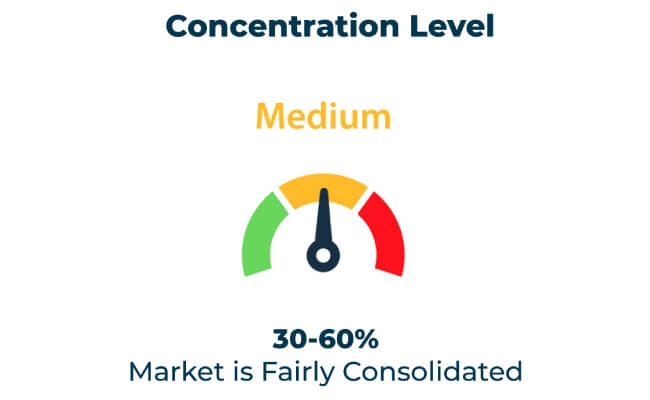
Market Concentration (2025E) Among IBC, Drum, and Box Steel Manufacturers
Segment Analysis by Capacity, Coating, and Closure Type
Driving Success in Key Industries
The steel containers market serves multiple industries requiring strong, secure, and sustainable packaging solutions.
- Logistics & Supply Chain: Essential for secure and reusable packaging for long-distance transportation.
- Food & Beverage: High demand for food-grade, corrosion-resistant steel containers for bulk storage.
- Pharmaceutical & Chemical: Used to safely store and transport sensitive and hazardous materials.
- Industrial & Hazardous Waste Management: Specialized containers for waste disposal and chemical processing.
Vendor-Driven Product Categories
Manufacturers are focusing on product durability, sustainability, and industry-specific compliance requirements.
- Food-Grade Stainless Steel Containers: Used for safe storage and transport of food products.
- Hazardous Material Steel Drums: Designed for chemical, pharmaceutical, and hazardous waste industries.
- Intermediate Bulk Containers (IBCs): Reusable steel containers for bulk transport and industrial use.
- Recyclable & Eco-Friendly Steel Packaging: Supporting global sustainability initiatives.
Who Shaped the Year – Providers Advancing Reusability and Food-Grade Coatings
Increased competition: Advances in automation, use of recycled steel, and more compliance with regulations. Large companies are investing in R&D to develop lightweight, strong, and environment-friendly steel containers.
Year-on-Year Leaders
- Greif Inc.: Expanded its portfolio with reusable, high-durability steel IBCs.
- Mauser Packaging Solutions: Launched a new line of recycled-content steel drums.
- Schutz GmbH: Developed lightweight, corrosion-resistant steel containers for hazardous materials.
- Balmer Lawrie: Strengthened its market presence with eco-friendly steel drum manufacturing.
- Hoover Ferguson: Introduced smart tracking technology in steel container logistics.
Recommendations for Technology Suppliers in Seam Welding, Anti-Corrosion, and Weight Reduction
Technology suppliers should focus on advancing material efficiency, automation in manufacturing, and integrating IoT for smart tracking to remain competitive.
- Sustainability Trends: Develop lightweight, high-strength steel containers using recycled materials.
- Automation & Efficiency: Invest in AI-powered production for precision manufacturing and waste reduction.
- Customization & Scalability: Offer adaptable steel container solutions for diverse industry needs.
- Regional Growth Dynamics: Asia-Pacific is expected to lead demand, while North America and Europe focus on regulatory compliance and sustainability initiatives.
Tier-Wise Vendor Classification (2025) by Container Type and Export Volume
| Tier Type | Example of Key Players |
|---|---|
| Tier 1 | Greif Inc., Mauser Packaging Solutions, Schutz GmbH |
| Tier 2 | Balmer Lawrie, Hoover Ferguson, Cleveland Steel Container |
| Tier 3 | Time Technoplast, Transtainer, Thielmann, Snyder Industries |
Key Company Initiatives in RFID Tracking, Stackability, and Global Supply Chain Integration
Leading manufacturers are focusing on sustainable materials, automated production, and high-performance steel packaging solutions to meet evolving industry needs.
| Manufacturer | Latest Developments |
|---|---|
| Greif Inc. | Launched ultra-durable steel IBCs for bulk transport (March 2024) |
| Mauser Packaging | Developed steel drums with 50% recycled content (August 2023) |
| Schutz GmbH | Introduced corrosion-resistant steel packaging for chemicals (May 2024) |
| Balmer Lawrie | Expanded eco-friendly drum production capacity (November 2023) |
| Hoover Ferguson | Integrated IoT tracking for real-time steel container monitoring (February 2024) |
Vendor Insights on Lifecycle Cost, Reconditioning, and Safety Compliance
The steel containers market is evolving, with companies prioritizing innovation, sustainability, and automation to maintain a competitive edge.
- Greif Inc. leads in ultra-durable, reusable steel containers.
- Mauser Packaging Solutions pioneers recycled-content steel drum technology.
- Schutz GmbH specializes in corrosion-resistant steel storage solutions.
- Balmer Lawrie focuses on sustainable and eco-friendly steel drum manufacturing.
- Hoover Ferguson advances smart tracking solutions for steel container logistics.
Future Roadmap for Modular, Smart-Enabled, and Low-Carbon Steel Containers
Sustenance of sustainability, apt smart packaging solutions, and high-end automation are expected to drive growth in the steel containers market. Business is likely to make use of RFID tracking, lightweight steel alloys, and modular designs when companies face demands from their industries.
Segmentation of the Steel Containers Market by Size, End Use, and Coating Type
By End-User Industries:
- Logistics & Supply Chain
- Food & Beverage
- Pharmaceutical & Chemical
- Industrial & Hazardous Waste Management
By Product Categories:
- Food-Grade Stainless Steel Containers
- Hazardous Material Steel Drums
- Intermediate Bulk Containers (IBCs)
- Recyclable & Eco-Friendly Steel Packaging
Frequently Asked Questions
What industries use steel containers?
Logistics, food & beverage, pharmaceuticals, and hazardous material storage.
Why choose steel containers over plastic or other materials?
Steel offers superior durability, recyclability, and resistance to extreme conditions.
Who are the leading manufacturers in this industry?
Greif Inc., Mauser Packaging Solutions, Schutz GmbH, Balmer Lawrie, and Hoover Ferguson.
What are the latest innovations in steel containers?
Smart tracking technology, corrosion-resistant materials, and recycled steel usage.
How is sustainability impacting the market?
Companies are adopting eco-friendly manufacturing and recyclable steel materials to meet regulations.
Preview the report firsthand - request a free sample
Get SampleGet the brochure for pricing and purchase details.
Get PDFTable of Content
- Executive Summary
- Market Overview
- Vendor Performance
- Market Concentration
- Segment Analysis
- Industry Innovations
- Year-on-Year Leaders
- Recommendations for Technology Suppliers
- Tier-Wise Vendor Classification
- Key Company Initiatives
- Vendor Insights
- Future Roadmap
- FAQs


