

- Industry Size (2026)
- USD 9.5 Bn
- Forecast (2036)
- USD 24.8 Bn
- CAGR (2026 to 2036)
- 10.1%
Medical Tourism Industry in Thailand Size, Market Forecast and Outlook By FMI
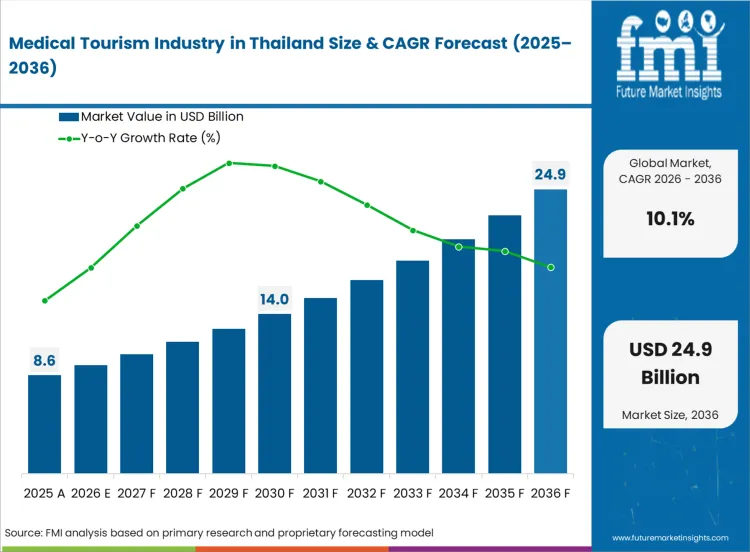
In 2025, medical tourism industry in Thailand generated USD 8.6 billion in valuation, with projections indicating an increase to USD 9.5 billion in 2026 and USD 24.8 billion by 2036, reflecting a compound annual growth rate (CAGR) of 10.1%. Thailand is transitioning from a predominantly cost‑driven destination for elective procedures to a higher‑value healthcare hub focused on complex, high‑acuity treatments.
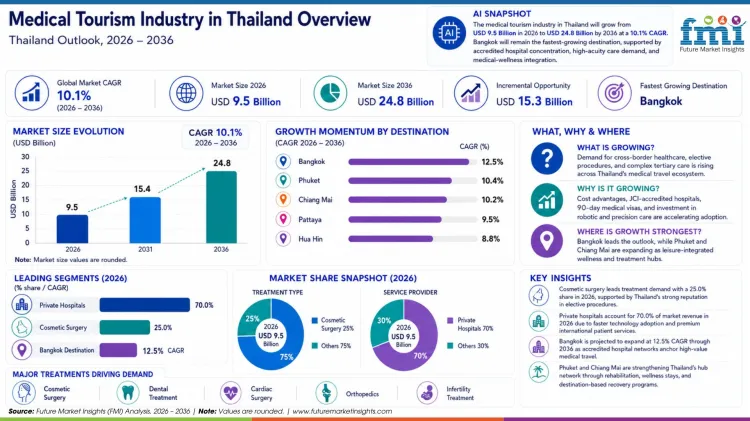
Increasing demand for oncology services, robotic‑assisted surgeries, and other technologically advanced interventions is elevating average revenue per patient and reshaping the sector toward a value‑over‑volume model. Revenue in the medical tourism industry in Thailand is forecast to grow as insurers and government payers prioritize accredited outcomes over baseline cost savings. According to FMI's estimates, this flight to quality is evidenced by BDMS reporting an 11% increase in international patient revenue in 2024, driven by high-complexity cases from Qatar and China [1].
TRIS Rating credit analysts noted in November 2025 regarding the sector's resilience, "We expect strong revenue growth of patients from Europe, the Middle East, Myanmar, China, and other countries to mitigate the negative impact from a near-term decline in Cambodian patient volume." [2] Diversification into Europe and medical tourism in GCC market helps operators hedge against regional geopolitical volatility, ensuring stable utilization rates for high-capex infrastructure.
Summary of Medical Tourism Industry in Thailand
- Medical Tourism Industry in Thailand Definition
- A sector dedicated to providing cross-border healthcare services ranging from elective surgeries to complex medical procedures for international patients.
- Demand Drivers in the Market
- Cost advantages of 40-70% compared to Western healthcare systems drive mass adoption.
- JCI-accredited infrastructure ensures clinical safety comparable to developed nations.
- Government policies like the 90-day medical visa simplify long-term treatment access.
- Key Segments Analyzed in the FMI Report
- Treatment Type: Cosmetic Surgery (25.0% share) and Cardiac Surgery.
- Service Provider: Private Hospitals (70.0% share).
- Geography: Bangkok and Phuket as primary hubs.
- Analyst Opinion at FMI
- Ronak Shah, Associate Vice President for Consumer Product and Travel and Tourism, opines, "In the updated version of the Medical Tourism Industry in Thailand Report for 2026 to 2036, CXOs will find insights into the strategic 'Medical Valley' initiatives in Pattaya that pose a competitive challenge to traditional hubs. Besides this, my findings point at labor shortages in specialized nursing which could restrict capacity expansion despite heavy capital investment."
- Strategic Implications/Executive Takeaways
- Shift focus from volume-based pricing to value-based care packages.
- Invest in robotic and AI-assisted surgical technologies to attract high-acuity patients.
- Prioritize Middle Eastern partnerships to secure government-funded patient referrals.
- Methodology
- Validated through hospital international patient revenue, inbound medical travel flows, facilitator interviews, payer insights, and public healthcare tourism disclosures
- Zero reliance on speculative third-party market research reports.
- Based on verifiable industrial benchmarks and verified sources.
Thailand's medical tourism landscape is segmented into key destinations including Bangkok (12.5% CAGR), Phuket (10.4% CAGR), Chiang Mai (10.2% CAGR), Pattaya (9.5% CAGR), Hua Hin (8.8% CAGR), and Krabi (7.5% CAGR), all supported by government-led infrastructure investments. Aggressive expansion in these zones aims to distribute patient load from the capital to leisure-integrated wellness hubs.
Medical Tourism Industry in Thailand Definition
The industry comprises the provision of medical, surgical, and wellness services to international travelers who visit Thailand specifically for healthcare or combine treatment with leisure. Core activities range from elective cosmetic and dental procedures to complex tertiary care such as cardiac surgery, orthopedics, and fertility treatments delivered by private and public institutions.
Medical Tourism Industry in Thailand Inclusions
The report includes revenue generated from international patients seeking inpatient and outpatient services across JCI-accredited hospitals, specialized clinics, and integrated wellness centers. It covers spending on medical procedures, post-operative care, and hospital-affiliated accommodation, alongside ancillary revenue from wellness tourism activities like medical spas and traditional Thai medicine. It also includes domestic healthcare consumption by Thai nationals if part of an intrabound medical tourism program.
Medical Tourism Industry in Thailand Exclusions
The scope excludes general tourism market spending by non-patient travelers and domestic healthcare consumption by Thai nationals unless part of an intrabound medical tourism program. It also omits revenue from non-medical hospitality sectors such as standard hotels or recreational tours that are not formally bundled with healthcare packages.
Medical Tourism Industry in Thailand Research Methodology
- Primary Research: Interviews were conducted with hospital executives, Ministry of Public Health officials, wellness resort operators, and medical travel facilitators to gauge patient flow dynamics.
- Desk Research: Analysis of annual reports from SET-listed healthcare groups, Tourism Authority of Thailand (TAT) bulletins, and immigration data provided baseline volume metrics.
- Market-Sizing and Forecasting: A bottom-up approach aggregated patient revenue data from major hospital chains, validated against national tourism receipts and medical visa issuance statistics.
- Data Validation and Update Cycle: Forecasts were cross-referenced with capacity expansion plans and government budget allocations for healthcare infrastructure [3].
Segmental Analysis
Medical Tourism Industry in Thailand Analysis by Treatment Type
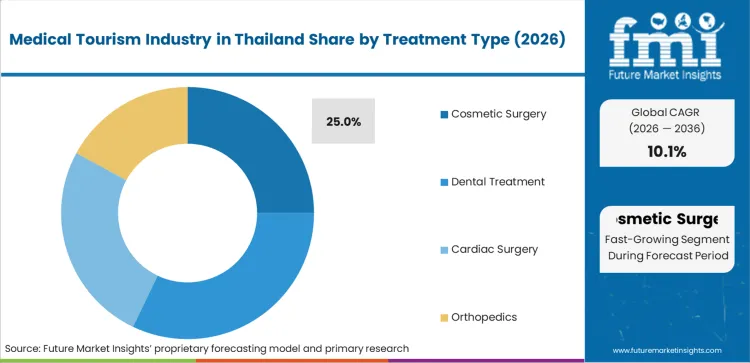
Cosmetic Surgery commands 25% of the market in 2026, serving as the primary volume driver due to Thailand's established reputation for high-quality, low-cost aesthetic procedures. FMI analysts opine that while aesthetics provide the volume baseline, growth is accelerating in higher-value segments like orthopedics and cardiology as hospitals invest in advanced technologies.
- Technology shift: Demand for robotic-assisted surgeries is reinforced by improved clinical precision, as Bumrungrad International Hospital established a robotic surgery center of excellence in March 2025 to deploy da Vinci systems for minimally invasive procedures [4].
- Procurement trigger: Medical tourism patient inflows for cardiac care expand because international insurers increasingly approve lower-cost Thai facilities for bypass and valve replacement surgeries, reducing their long-term claim liabilities.
- Service conversion: Adoption of infertility treatments accelerates where regulatory frameworks are favorable, as clinics package IVF services with wellness recovery stays to attract couples from restrictive jurisdictions like China and Australia.
Medical Tourism Industry in Thailand Analysis by Service Provider
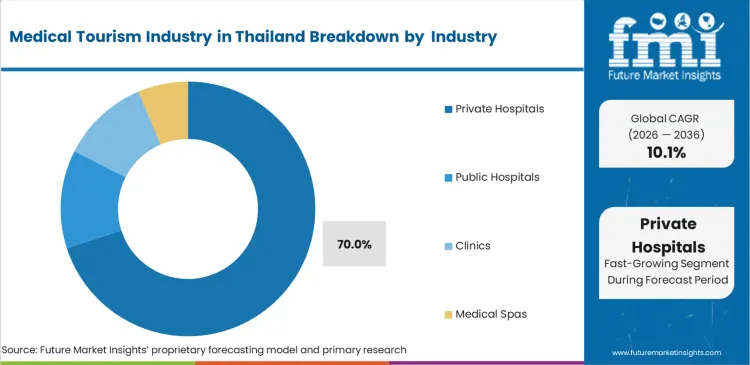
Private Hospitals account for 70% of the total revenue in 2026, leveraging their agility in adopting cutting-edge medical technologies and premium hospitality standards. These institutions aggressively target international markets through representative offices and tailored language services, differentiating themselves from the capacity-constrained public sector.
- Capacity expansion: Growth in private sector dominance is anchored in footprint enlargement, such as BDMS launching the Wellness Clinic Sri panwa in Phuket in March 2025 to capture the luxury rehabilitation segment [5].
- Strategic alignment: United States medical tourism flows to Thai private hospitals increase because facilities like Bangkok Hospital actively market JCI accreditation to American patients seeking affordable alternatives to high-deductible domestic care.
- Market consolidation: Revenue concentration intensifies as BDMS reported a total operating income of Baht 109.4 billion in 2024, capturing an estimated 48% share of the SET-listed private healthcare market [2].
Medical Tourism Industry in Thailand Drivers, Restraints, and Opportunities
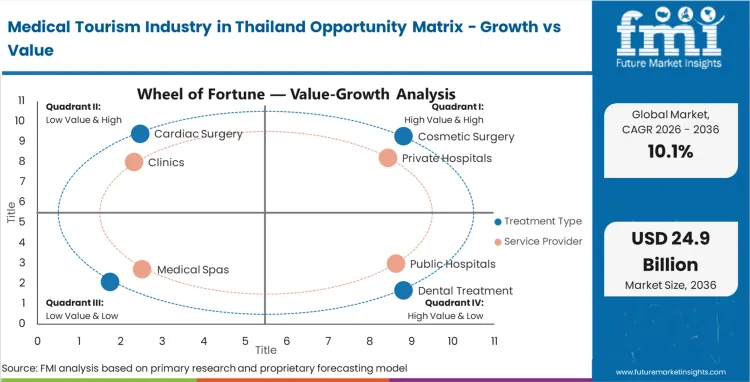
Rising healthcare costs in developed nations act as the primary catalyst for the Thai medical tourism sector, pushing patients to seek affordable yet high-quality alternatives abroad. Patients from the US and Europe face prohibitively expensive procedures and long waiting times, prompting a shift toward Thailand where savings can reach 70% without compromising clinical outcomes. Demand is anchored by the World Bank's 2023 observation that global health-related travel exports have grown by 70%, signaling a robust structural shift in cross-border healthcare consumption [6].
Shortages of specialized medical professionals constitute a significant restraint, limiting the industry's ability to scale high-acuity services at the same pace as infrastructure demand. Highly skilled doctors and nurses are finite resources, and the rapid expansion of private facilities creates intense competition for talent, potentially driving up wage costs and squeezing margins. As per FMI's projection, this bottleneck is partly mitigated by the government's strategic focus, yet the pressure remains acute as hospitals attempt to staff new facilities like the Andaman International Health Center [3].
- Middle East Referral Corridors: Middle Eastern government-funded patient referrals benefit Thai private hospitals. The 2024 revenue growth of 49% in Qatari patients at BDMS reflects strong diplomatic ties and direct flight connectivity, securing a recession-resistant revenue stream [1].
- Wellness Integration: Wellness tourism convergence offers hospitals a pathway to extend patient length of stay. The average length of stay for health tourists increased to 12.5 days in 2024, driven by the integration of medical treatments with recuperative spa and holistic therapies [7].
- Precision Medicine Niche: Genomics and personalized medicine attract high-net-worth medical travelers seeking advanced diagnostics. The National Biobank of Thailand established a bioinformatics database for 50,000 individuals in January 2025, creating a foundation for targeted therapies that differentiate Thailand from regional low-cost competitors [8].
Regional Analysis
.webp "Top Country Growth Comparison Medical Tourism Industry In Thailand Cagr (2026 2036)")
Based on the regional analysis, the medical tourism industry in Thailand is segmented into Central Thailand (Bangkok, Hua Hin), Southern Thailand (Phuket, Krabi), Northern Thailand (Chiang Mai), and Eastern Thailand (Pattaya). The full report also offers market attractiveness analysis based on regional trends.
| Destination | CAGR (2026 to 2036) |
|---|---|
| Bangkok | 12.5% |
| Phuket | 10.4% |
| Chiang Mai | 10.2% |
| Pattaya | 9.5% |
| Hua Hin | 8.8% |
| Krabi | 7.5% |
[Source: Future Market Insights (FMI) analysis]
Thailand Medical Tourism Industry Analysis by Destination
Central Thailand, anchored by Bangkok, remains the primary entry point and center of excellence for tertiary care, handling the highest volume of complex surgical cases. The region's dominance is supported by the concentration of JCI-accredited flagship hospitals and direct air connectivity to major global capitals. According to FMI's estimates, Bangkok's growth is further catalyzed by the BDMS network's ability to capture 48% of listed healthcare revenue, centralizing advanced medical expertise in the capital [2].
- Bangkok: Demand for medical tourism in Bangkok is set to grow at 12.5% CAGR through 2036, supported by high-density hospital infrastructure before procurement and budgeting cycles translate into higher deployment volumes. Growth at this pace reflects the capital's role as a global medical hub, evidenced by BDMS reporting Baht 109.4 billion in operating income in 2024 [1].
- Hua Hin: Hua Hin is expected to record 8.8% CAGR in health tourism demand over 2026 to 2036 as its reputation for geriatric care and wellness retreats strengthens, tightening the link between operational constraints and adoption-led investment. This trajectory aligns with the expansion of thermal spa and wellness facilities that cater to long-stay European retirees.
Southern Thailand Medical Tourism Industry Analysis by Destination
Southern Thailand is rapidly evolving from a leisure destination into a specialized medical-wellness corridor, leveraging its coastal assets to attract post-operative recovery patients. The region attracts premium travelers who combine cosmetic or orthopedic surgeries with luxury rehabilitation packages. Government investment is pivotal here, with a $131 million budget allocated for the Andaman International Health Center in Phuket to elevate local clinical capabilities [3].
- Phuket: Phuket sales in the medical sector are projected to rise at 10.4% CAGR from 2026 to 2036 as the government invests in specialized infrastructure, creating a clearer pathway from policy or spending intent to purchase orders. Momentum at 10.4% CAGR emerges from projects like the BDMS Wellness Clinic Sri panwa launched in March 2025, which targets the high-end luxury wellness market [5].
- Krabi: Growth in medical travel across Krabi is estimated at 7.5% CAGR through 2036, driven by boutique wellness resorts that increase the value of reliability and compliance in buyer criteria. Expansion is supported by increasing international flight connectivity, which the TAT notes now includes over 200 weekly flights from the Middle East to Thailand's key zones [7].
Eastern and Northern Thailand Medical Tourism Industry Analysis by Destination
Eastern Thailand is industrializing its healthcare offering through the Eastern Economic Corridor (EEC), while Northern Thailand focuses on culture-integrated wellness and elderly care. FMI analysts opine that Pattaya is transforming into a 'Medical Valley,' supported by Thammasat University's partnership to establish a digital health hub [8].
- Pattaya: The Pattaya medical sector is poised to expand at 9.5% CAGR during 2026 to 2036 because of the EEC medical hub scheme, which lifts utilization rates and justifies technology refresh decisions. A 9.5% CAGR signals a shift toward digital health, as Thammasat University collaborates with state entities to foster innovation in the region [8].
- Chiang Mai: Chiang Mai is likely to see health tourism revenues increase at 10.2% CAGR during 2026 to 2036, given its appeal for long-stay recuperation and the resulting push for capacity and workflow upgrades. Thailand sustainable tourism initiatives in the north integrate traditional Lanna healing practices with modern diagnostics, attracting a distinct demographic of wellness seekers [9].
FMI’s report includes a comprehensive analysis of destination-specific growth trends across Thailand. Aside from the major hubs, the report identifies opportunities in secondary locations like Koh Samui and Udon Thani, which are emerging as cross-border healthcare centers for patients from neighboring islands and Laos respectively. These areas are seeing increased investment in healthcare video conferencing solutions as the Ministry of Public Health aims to reduce outpatient congestion by 5% through digital health platforms by 2025 [10].
Competitive Aligners for Market Players
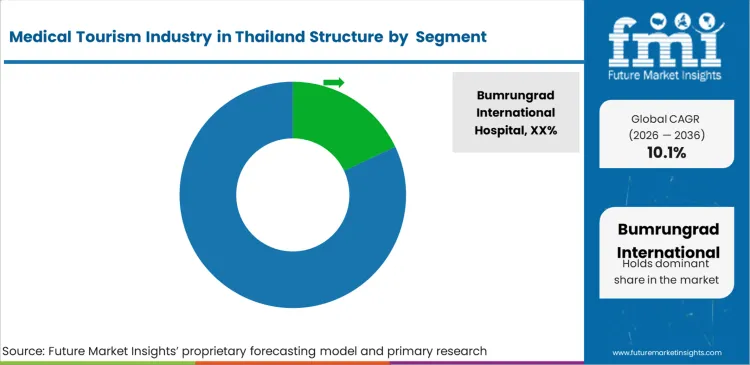
Competition in the Thai medical tourism sector is bifurcated between large hospital conglomerates and specialized boutique clinics, creating a landscape where scale determines the ability to capture high-value international patients. Major players like BDMS and Bumrungrad leverage their financial muscle to invest in expensive robotic surgery systems and genomic labs, creating high barriers to entry for smaller competitors. This technological arms race forces mid-sized hospitals to consolidate or specialize in niche segments like fertility or dentistry to survive.
Accreditation serves as the primary competitive differentiator, with JCI certification acting as a non-negotiable procurement gate for international insurers and government referral programs. Hospitals that secure these credentials can command premium pricing and access exclusive patient pipelines from the Middle East and Europe. Conversely, non-accredited facilities are relegated to the price-sensitive, uninsured traveler segment, where margins are thinner and competition from regional rivals like Malaysia and India medical tourism is fiercest.
Strategic partnerships with governments and facilitators form the third pillar of competitive alignment. Successful operators actively cultivate government-to-government (G2G) relationships, such as the collaboration between Thai private hospitals and the Kuwaiti embassy, to secure guaranteed patient volumes. In June 2024, the Royal Thai Embassy in Kuwait organized a networking event to connect Thai hospitals directly with Kuwaiti investors and tourists, demonstrating how diplomatic channels are utilized to bypass traditional marketing constraints [11].
Recent Developments
The report includes full coverage of key trends from competitive benchmarking. Some of the recent developments covered in the reports:
- In March 2025, BDMS reported an 11% YoY growth in international patient revenue for 2024, driven heavily by increasing numbers of Qatari and Chinese patients [1].
- In January 2025, the Thai Government set a target to transform Phuket into a world-class medical tourism hub with the construction of an international Medical Plaza complex by 2026 [8].
- In March 2025, Bumrungrad International Hospital established a robotic surgery center of excellence introducing the da Vinci system for minimally invasive surgeries across multiple medical disciplines [4].
Key Players in Medical Tourism Industry in Thailand
- Bumrungrad International Hospital
- Bangkok Dusit Medical Services (BDMS)
- Samitivej Hospital
- Phyathai Hospitals
- Yanhee Hospital
Scope of the Report
| Metric | Value |
|---|---|
| Quantitative Units | USD 9.5 billion (2026) to USD 24.8 billion (2036), at a CAGR of 10.1% |
| Market Definition | The industry comprises the provision of medical, surgical, and wellness services to international travelers who visit Thailand specifically for healthcare or combine treatment with leisure. |
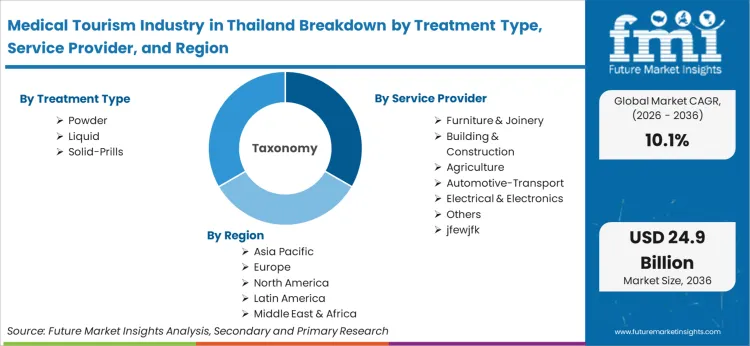
| Treatment Type Segmentation | Cosmetic Surgery, Dental Treatment, Cardiac Surgery, Orthopedics, Infertility Treatment, Others |
| Service Provider Segmentation | Private Hospitals, Public Hospitals, Clinics |
| Application Coverage | Inpatient Services, Outpatient Services, Wellness & Rehabilitation, Health Check-ups |
| Regions Covered | Central Thailand, Southern Thailand, Northern Thailand, Eastern Thailand |
| Countries Covered | Thailand |
| Key Companies Profiled | Bumrungrad International Hospital, Bangkok Dusit Medical Services, Samitivej Hospital, Phyathai Hospitals, Yanhee Hospital |
| Forecast Period | 2026 to 2036 |
| Approach | Hybrid top down and bottom up market modeling, validated through hospital international patient revenue, medical travel flows, facilitator interviews, payer checks, and destination-level capacity review. |
Top Segments Studied in the Thailand Medical Tourism Market by Category
Treatment Type
- Cosmetic Surgery
- Dental Treatment
- Cardiac Surgery
- Orthopedics
- Infertility Treatment
- Others
Service Provider
- Private Hospitals
- Public Hospitals
- Clinics
Region
- Central Thailand
- Bangkok
- Hua Hin
- Southern Thailand
- Phuket
- Krabi
- Northern Thailand
- Chiang Mai
- Eastern Thailand
- Pattaya
Bibliography
- [1] Bangkok Dusit Medical Services (BDMS). (2025). BDMS Newsletter March 2025. BDMS Investor Relations.
- [2] TRIS Rating. (2025). Credit Rating Announcement No. 194/2025. TRIS Rating Co., Ltd.
- [3] Harvard Ash Center. (2024). Thailand Medical Tourism Policy Brief. Harvard Kennedy School.
- [4] Bumrungrad International Hospital. (2025). Annual Report 2024: Robotic Surgery Center Launch. Bumrungrad Corporate Filings.
- [5] Bangkok Hospital. (2025). Thailand Medical, Healthcare and Wellness Tourism. Bangkok Hospital Group.
- [6] World Bank Group. (2025). Global Tourism Watch: Medical Travel Trends. World Bank Documents.
- [7] Stock Exchange of Thailand (SET). (2024). Thailand Emerging as a Leading Medical Hub. SET Opportunity Day.
- [8] Republic of Estonia Ministry of Foreign Affairs. (2025). Thailand Strategy HealthTech 2025. Enterprise Estonia.
- [9] Thai Public Relations Department (PRD). (2024). Chiang Mai Launches Campaign to Promote Health and Wellness Tourism. Government Public Relations Department.
- [10] Thai Public Relations Department (PRD). (2025). Thailand Expands Digital Healthcare to Cut Hospital Crowds. Government Public Relations Department.
- [11] Royal Thai Embassy in Kuwait. (2024). Thailand Medical Networking Event 2024. MFA Thailand.
This Report Addresses
- Strategic investment mapping for foreign hospital groups looking to enter the Thai market.
- Market size estimation and 10 year revenue forecasts from 2026 to 2036, supported by patient volume benchmarks.
- Growth opportunity mapping across cosmetic, cardiac, and orthopedic segments with emphasis on high-margin tertiary care.
- Segment and regional revenue forecasts covering Bangkok, Phuket, and emerging wellness corridors.
- Competition strategy assessment including accreditation leverage, government alliances, and technology adoption.
- Regulatory impact analysis covering medical visa policies and JCI compliance standards.
- Consumer behavior shifts towards value-based care and combined wellness-medical itineraries.
- Technology integration trends including robotic surgery and genomic precision medicine.
- Market report delivery in PDF, Excel, PPT, and interactive dashboard formats for executive and operational use.
Frequently Asked Questions
How large is the demand for medical tourism industry in Thailand in the global market in 2026?
Demand for medical tourism industry in Thailand in the global market is estimated to be valued at USD 9.5 billion in 2026.
What will be the market size of medical tourism industry in Thailand in the global market by 2036?
Market size for medical tourism industry in Thailand is projected to reach USD 24.8 billion by 2036.
What is the expected demand growth for medical tourism industry in Thailand in the global market between 2026 and 2036?
Demand for medical tourism industry in Thailand in the global market is expected to grow at a CAGR of 10.1% between 2026 and 2036.
Which treatment type segment is expected to lead in Thailand’s medical tourism market?
Cosmetic Surgery is expected to be the dominant form, capturing approximately 25.0% of global market share in 2026 due to cost efficiency and surgical expertise.
How significant is the role of Private Hospitals Service Provider in driving medical tourism industry in Thailand adoption in 2026?
Private Hospitals represent a critical segment, projected to hold a substantial 70.0% share of the total market in 2026 as construction activity prioritizes cost-effective materials.
What is Driving medical tourism industry in Thailand Demand in Bangkok?
Replacement demand and transition toward ULEF resins to comply with EPA TSCA Title VI and CARB Phase 2 standards are driving growth.
What Compliance Standards are Referenced for Bangkok?
EPA TSCA Title VI and CARB Phase 2 emission regulations are referenced as key compliance benchmarks.
What is the Bangkok Growth Outlook in this Report?
Bangkok is projected to grow at a CAGR of 12.5% during 2026 to 2036.
Why is Southern Thailand described as a priority region in this Report?
Growth is constrained by elevated compliance costs and increasing penetration of bio based adhesive alternatives in premium applications.
What Type of Demand Dominates in Southern Thailand?
Replacement driven demand for premium grade, high consistency resins dominates regional consumption.
What is Phuket Growth Outlook in this Report?
Phuket is projected to expand at a CAGR of 10.4% during 2026 to 2036.
Does the Report Cover Chiang Mai in its Regional Analysis?
Chiang Mai is included within Northern Thailand under the regional scope of analysis.
What are the Sources referred to for analyzing the Market in Chiang Mai?
Official statistics published by Japan Ministry of Economy, Trade and Industry and chemical industry production bulletins covering thermosetting resin output, capacity utilization, and export trade flows are cited as primary reference sources.
What is the Main Demand Theme Linked to Chiang Mai in Asia Coverage?
Asia Pacific demand is associated with export oriented resin upgrading to satisfy stringent Western indoor air quality regulations.
Does the Report Cover Pattaya in its Regional Analysis?
Pattaya is included within Eastern Thailand under the regional coverage framework.
What is the Main Pattaya Related Demand Theme in Asia Coverage?
Export driven product upgrading to meet North American and European emission standards is emphasized.
Which Product Formats are Strategically Important for Central Thailand Supply Chains?
Powder resins are prioritized due to lower storage risk and reduced logistics constraints across export channels.
What is medical tourism industry in Thailand and What is It Mainly Used For?
Medical tourism is the practice of traveling across international borders to obtain healthcare services, ranging from elective surgeries to complex medical treatments.
What does medical tourism industry in Thailand Market Mean in this Report?
Medical tourism industry in Thailand market refers to global production, trade, and industrial consumption of UF resin in liquid, powder, and modified forms.
What is Included in the Scope of this medical tourism industry in Thailand Market Report?
Scope covers UF resin by form, key applications such as wood adhesives and molding, and end use industries including construction and furniture.
What is Excluded from the Scope of this Report?
Phenol formaldehyde and melamine formaldehyde resins, finished goods, and non industrial uses are excluded unless part of UF hybrid blends.
What does Market Forecast Mean on this Page?
Market forecast represents a model based projection built on defined assumptions for strategic planning purposes.
How does FMI Build and Validate the medical tourism industry in Thailand Market Forecast?
Forecast is developed using hybrid top down and bottom up modeling validated through trade data, capacity checks, and industry review.
What does Zero Reliance on Speculative Third Party Market Research Mean Here?
Primary interviews and verifiable public datasets are used instead of unverified syndicated market estimates.
Preview the report firsthand - request a free sample
Get SampleGet the brochure for pricing and purchase details.
Get PDFTable of Content
- Key Takeaways
- Market Size and CAGR
- Top Growth Driver
- Fastest Growing Segment
- Leading Region
- Key Companies
- Emerging Opportunities
- Executive Summary
- Thailand Market Outlook
- Demand-side Trends
- Supply-side Trends
- Technology Roadmap Analysis
- Analysis and Recommendations
- Analyst Perspective (What is happening? Why now? What should investors know?)
- Key Questions Answered
- How large is the market?
- What is the CAGR?
- What are key trends?
- Which region dominates?
- Who are the leaders?
- Market Overview
- Market Coverage / Taxonomy
- Market Definition / Scope / Limitations
- Research Methodology
- Chapter Orientation
- Analytical Lens and Working Hypotheses
- Market Structure, Signals, and Trend Drivers
- Benchmarking and Cross-market Comparability
- Market Sizing, Forecasting, and Opportunity Mapping
- Research Design and Evidence Framework
- Desk Research Programme (Secondary Evidence)
- Expert Input and Fieldwork (Primary Evidence)
- Tooling, Models, and Reference Databases
- Data Engineering and Model Build
- Quality Assurance and Audit Trail
- Market Background
- Market Dynamics (Drivers, Restraints, Opportunity, Trends)
- Scenario Forecast (Optimistic, Likely, Conservative)
- Impact Analysis
- AI Impact
- Sustainability Impact
- Regulatory Impact
- Technology Impact
- Consumer / Buyer Analysis
- Purchase Drivers
- Adoption Barriers
- Buyer Journey
- Opportunity Map Analysis
- Product Life Cycle Analysis
- Medical Travel Distribution Chain Analysis
- Investment Feasibility Matrix
- Value Chain Analysis
- PESTLE and Porter's Analysis
- Regulatory Landscape
- Regional Parent Market Outlook
- Inbound Patient Volume and Spending Statistics
- Inbound vs Domestic Medical Travel Flow Statistics
- Thailand Market Analysis and Forecast, 2021 to 2036
- Historical Market Size Value (USD Billion) Analysis, 2021 to 2025
- Current and Future Market Size Value (USD Billion) Projections, 2026 to 2036
- Y-o-Y Growth Trend Analysis
- Absolute $ Opportunity Analysis
- Thailand Market Pricing Analysis, 2021 to 2036
- Thailand Market Analysis and Forecast, By Treatment Type, 2021 to 2036
- Introduction / Key Findings
- Historical Market Size Value (USD Billion) Analysis By Treatment Type, 2021 to 2025
- Current and Future Market Size Value (USD Billion) Analysis and Forecast By Treatment Type, 2026 to 2036
- Cosmetic Surgery
- Dental Treatment
- Cardiac Surgery
- Orthopedics
- Infertility Treatment
- Others
- Y-o-Y Growth Trend Analysis By Treatment Type, 2021 to 2025
- Absolute $ Opportunity Analysis By Treatment Type, 2026 to 2036
- Thailand Market Analysis and Forecast, By Service Provider, 2021 to 2036
- Introduction / Key Findings
- Historical Market Size Value (USD Billion) Analysis By Service Provider, 2021 to 2025
- Current and Future Market Size Value (USD Billion) Analysis and Forecast By Service Provider, 2026 to 2036
- Private Hospitals
- Public Hospitals
- Clinics
- Y-o-Y Growth Trend Analysis By Service Provider, 2021 to 2025
- Absolute $ Opportunity Analysis By Service Provider, 2026 to 2036
- Thailand Market Analysis and Forecast, By Sub-region, 2021 to 2036
- Introduction
- Historical Market Size Value (USD Billion) Analysis By Sub-region, 2021 to 2025
- Current Market Size Value (USD Billion) Analysis and Forecast By Sub-region, 2026 to 2036
- Central Thailand
- Southern Thailand
- Northern Thailand
- Eastern Thailand
- Market Attractiveness Analysis By Sub-region
- Central Thailand Market Analysis and Forecast, By Sub-region, 2021 to 2036
- Historical Market Size Value (USD Billion) Trend Analysis By Market Taxonomy, 2021 to 2025
- Market Size Value (USD Billion) Forecast By Market Taxonomy, 2026 to 2036
- By Sub-region
- Bangkok
- Hua Hin
- By Treatment Type
- By Service Provider
- By Sub-region
- Market Attractiveness Analysis
- By Sub-region
- By Treatment Type
- By Service Provider
- Key Takeaways
- Southern Thailand Market Analysis and Forecast, By Sub-region
- Historical Market Size Value (USD Billion) Trend Analysis By Market Taxonomy, 2021 to 2025
- Market Size Value (USD Billion) Forecast By Market Taxonomy, 2026 to 2036
- By Sub-region
- Phuket
- Krabi
- By Treatment Type
- By Service Provider
- By Sub-region
- Market Attractiveness Analysis
- By Sub-region
- By Treatment Type
- By Service Provider
- Key Takeaways
- Northern Thailand Market Analysis and Forecast, By Sub-region
- Historical Market Size Value (USD Billion) Trend Analysis By Market Taxonomy, 2021 to 2025
- Market Size Value (USD Billion) Forecast By Market Taxonomy, 2026 to 2036
- By Sub-region
- Chiang Mai
- By Treatment Type
- By Service Provider
- By Sub-region
- Market Attractiveness Analysis
- By Sub-region
- By Treatment Type
- By Service Provider
- Key Takeaways
- Eastern Thailand Market Analysis and Forecast, By Sub-region
- Historical Market Size Value (USD Billion) Trend Analysis By Market Taxonomy, 2021 to 2025
- Market Size Value (USD Billion) Forecast By Market Taxonomy, 2026 to 2036
- By Sub-region
- Pattaya
- By Treatment Type
- By Service Provider
- By Sub-region
- Market Attractiveness Analysis
- By Sub-region
- By Treatment Type
- By Service Provider
- Key Takeaways
- Market Structure Analysis
- Competition Dashboard
- Competition Benchmarking
- Market Share Analysis of Top Players
- By Sub-regional
- By Treatment Type
- By Service Provider
- Emerging Startups
- Innovation Benchmarking
- Case Studies
- Success Stories
- Recent Developments
- Competition Analysis
- Competition Deep Dive
- Bumrungrad International Hospital
- Overview
- Product Portfolio
- Profitability by Market Segments
- Sales Footprint
- Strategy Overview
- Marketing Strategy
- Product Strategy
- Channel Strategy
- Bangkok Dusit Medical Services (BDMS)
- Samitivej Hospital
- Phyathai Hospitals
- Yanhee Hospital
- Bumrungrad International Hospital
- Competition Deep Dive
- Assumptions & Acronyms Used


