

- Market Size (2026)
- USD 350.0 Mn
- Forecast (2036)
- USD 924.5 Mn
- CAGR (2026 to 2036)
- 10.2%
How Big is the Ube Ingredients Market in 2026?
The ube ingredients market is estimated at USD 350.0 million in 2026.
The global ube ingredients market was valued at USD 317.6 million in 2025 and is estimated to reach USD 350.0 million in 2026. The market is projected to reach USD 924.5 million by 2036, expanding at a compound annual growth rate (CAGR) of 10.2% between 2026 and 2036. Standard grade accounted for the largest share of the market, contributing 43.0% of total revenue in 2026. Demand is supported by the growing international popularity of ube, or Philippine purple yam, in bakery and dessert products. According to FoodNavigator, online interest in the ingredient surged globally from the end of February 2026, based on Google Trends data, and Filipino farmers are reportedly struggling to keep up with demand[7]. Supply is recovering from a weak base. The Philippine Statistics Authority (PSA) reported that ube production rose by 17.0% to 5,658 metric tons in the first half of 2026, a two-year high[6]. Exports remain small. The Philippines exported about 1.7 million kilograms of ube and ube products in 2025, worth USD 3.2 million[5], and in September 2026 the Department of Agriculture suspended exports of raw ube to protect planting material[1].
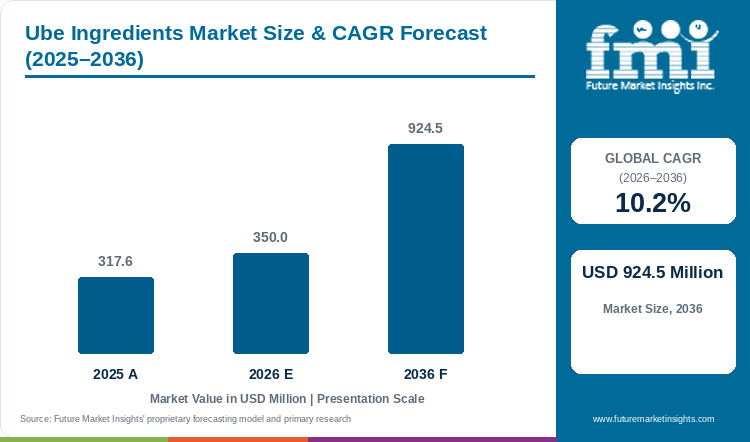
Table 1: Ube Ingredients Market Size and Forecast (USD million), 2025 to 2036
| Market size and forecast | Value |
|---|---|
| 2025 market size | USD 317.6 million |
| Estimated market size in 2026 | USD 350.0 million |
| Projected market size by 2036 | USD 924.5 million |
| CAGR (2026-2036) | 10.2% |
| Added revenue, 2026 to 2036 | USD 574.5 million |
Key Market Trends & Insights
- By Product Type: The Standard grade segment accounted for the largest share of the ube ingredients market in 2026, representing 43.0% of total market revenue.
- By Form: Powder / dry products held the leading market position with a share of 43.0% in 2026, as bakeries can control ube addition and recipe water separately.
- By Application: Bread & rolls remained the largest application segment, accounting for 42.0% of the market in 2026.
Regional Highlights
- Fastest-growing country: Saudi Arabia is expected to record the highest growth rate among the eight profiled countries, with a projected CAGR of 11.5% between 2026 and 2036.
- Growth across other countries: The UAE is projected to expand at a CAGR of 11.2%, followed by South Korea at 10.8% and the USA at 10.5%. Japan is expected to register comparatively slower growth, with a CAGR of 9.2% during the forecast period.
The availability of planting material remains the main constraint on ube supply. The United States Department of Agriculture (USDA) identified limited planting material, fragmented production and constrained processing capacity in its June 2026 assessment of the Philippine crop[3]. Policy has responded to these constraints. In September 2026, the Philippine Department of Agriculture suspended exports of raw ube to protect material needed for domestic propagation[1]. Its October clarification confirmed that the restriction applies to untreated roots that could be planted, and that processed products can still be exported[2]. The government also announced a target of a 1,000-hectare expansion of ube planting for exports[2]. This policy places greater commercial weight on processors that can turn the crop into a defined food ingredient.
Domestic supply has not yet kept pace with demand. The Philippines imported 54,065 kilograms of frozen ube in 2025, almost entirely from Vietnam, although this was 28.2% lower than the 75,300 kilograms imported in 2024[5]. A further 10,482 kilograms were imported in the first four months of 2026. Such imports indicate that processors are supplementing local roots to meet orders. For bakery buyers, ube contributes botanical identity and texture as well as purple colour, which distinguishes it from other natural food colors. A carrier or added sugar can change the usable purple yam content even when two powders look similar, so consistent drying and lot descriptions are essential.
Processed ube is already reaching overseas customers. The Philippine Information Agency reported that the Quirino Young Entrepreneurs Association shipped one ton of JaBes ube powder to the United States in August 2025, following earlier exports to Japan and France[4]. Total Philippine exports of ube and ube products reached about 1.7 million kilograms in 2025[5]. Such shipments support product trials, while sustained orders depend on matching shipment quantities with the bakery's production schedule. Powder that performs consistently in the agreed recipe reduces the need for repeated development work after each delivery.
Table 2: Supporting Industry Indicators for the Ube Ingredients Market, 2025 to 2026
| Indicator | Data point | Why it matters | Source |
|---|---|---|---|
| Production | Philippine ube production rose by 17.0% to 5,658 metric tons in the first half of 2026, from 4,838 metric tons a year earlier. | Domestic output determines the roots available for processing and export. | [6] |
| Exports | The Philippines exported about 1.7 million kilograms of ube and ube products in 2025, worth USD 3.2 million. | Export volume indicates the scale of processed ube reaching overseas buyers. | [5] |
| Imports | Frozen ube imports reached 54,065 kilograms in 2025, almost entirely from Vietnam, down 28.2% from 2024. | Imports show that local supply is being supplemented to meet demand. | [5] |
| Export restriction | The Philippines suspended raw ube exports in September 2026 to protect planting material. | The restriction directs exports towards processed products. | [1] |
| Processed exports | An October 2026 clarification confirmed that processed products can still be exported, alongside a 1,000-hectare expansion target. | Processors remain the main route for supplying overseas manufacturers. | [2] |
| Crop constraints | USDA identified limited planting material, fragmented production and constrained processing capacity in June 2026. | Agricultural conditions affect the consistency of ingredient supply. | [3] |
| Consumer interest | Online interest in ube surged globally from the end of February 2026, according to Google Trends. | Rising consumer interest supports new product launches in bakery. | [7] |
| Export shipment | JaBes shipped one ton of ube powder to the United States in 2025, after earlier exports to Japan and France. | The shipment documents an established route for processed ube. | [4] |
Demand Intensity Analysis
A comparison of FMI's market estimate with Philippine trade data provides an indication of where ube ingredient value is created. The Philippines exported ube and ube products worth USD 3.2 million in 2025[5]. FMI estimated the ube ingredients market at USD 317.6 million in 2025, which is approximately 99 times the value of Philippine exports. The difference partly reflects the scope of the two figures, as the FMI estimate covers the value of processed ingredients, flavour preparations and blends sold to bakeries worldwide, while the PSA figure measures exports at the point of shipment from the Philippines.
The average export value provides another reference point. Exports of 1.7 million kilograms worth USD 3.2 million correspond to approximately USD 1.9 per kilogram, or USD 1,880.0 per tonne[5]. Since the export volume includes fresh and processed products, the value added during later processing and blending is likely to be substantial.
A similar comparison can be made between projected market growth and agricultural supply. FMI expects the market to grow at a CAGR of 10.2% between 2026 and 2036. Philippine production increased by 17.0% in the first half of 2026[6], but this followed a period of decline, and planting material remains limited[3]. The market is projected to reach 2.6 times its 2026 value by 2036, which will require a sustained increase in processed supply, supported by the government's 1,000-hectare expansion target[2] and continued imports of frozen ube[5].
Segment values show where demand is concentrated. Powder / dry represented USD 150.5 million in 2026, while Bread & rolls accounted for USD 147.0 million within the separate Application breakdown. Direct supply to industrial bakeries represented USD 192.5 million, or 55.0% of Sales Channel revenue.
Table 3: Demand Intensity Metrics for the Ube Ingredients Market, 2025 Trade Data Against 2025 and 2026 Market Values
| Demand intensity metric | Value | Basis |
|---|---|---|
| FMI market value, 2025 | USD 317.6 million | FMI estimate of ube ingredient revenue. |
| Philippine ube exports, 2025 | USD 3.2 million | PSA data reported by The Philippine Star. |
| FMI value as a multiple of Philippine exports | 99 times | USD 317.6 million divided by USD 3.2 million. |
| Philippine export volume, 2025 | 1.7 million kilograms | Ube and ube products. |
| Average export value | USD 1.9 per kilogram | USD 3.2 million divided by 1.7 million kilograms. |
| Frozen ube imports, 2025 | 54,065 kilograms | Down 28.2% from 2024. |
| Production growth, first half of 2026 | 17.0% | 5,658 metric tons against 4,838 metric tons. |
| FMI value CAGR, 2026 to 2036 | 10.2% | FMI market forecast. |
| Powder / dry revenue, 2026 | USD 150.5 million | 43.0% of the market. |
| Direct industrial bakery revenue, 2026 | USD 192.5 million | 55.0% of the market. |
| Market expansion multiple | 2.6 times | Projected 2036 market value relative to 2026. |
Analyst Perspective
"Interest in ube is growing faster than the crop, so buyers who secure a consistent processed grade now will be better placed than those relying on spot purchases when demand peaks."
- Nandini Roy Choudhury, Principal Analyst at Future Market Insights
How is the ube ingredients market segmented?
The ube ingredients market is segmented by product type, form, application, claim and sales channel. Product Type comprises Standard grade, Premium / specialty grade, Organic certified and Clean label grade. Form comprises Powder / dry, Liquid, Paste / semi-solid and Granules / pieces. Application comprises Bread & rolls, Cakes & muffins, Biscuits & cookies, Viennoiserie & pastry and Other bakery & snacks. Claim comprises Conventional, Clean label, Organic and Non-GMO / identity preserved. Sales Channel comprises Direct to industrial bakeries, Ingredient distributors, Foodservice & artisan supply and Online B2B.
Why does Standard grade anchor Product Type purchasing?
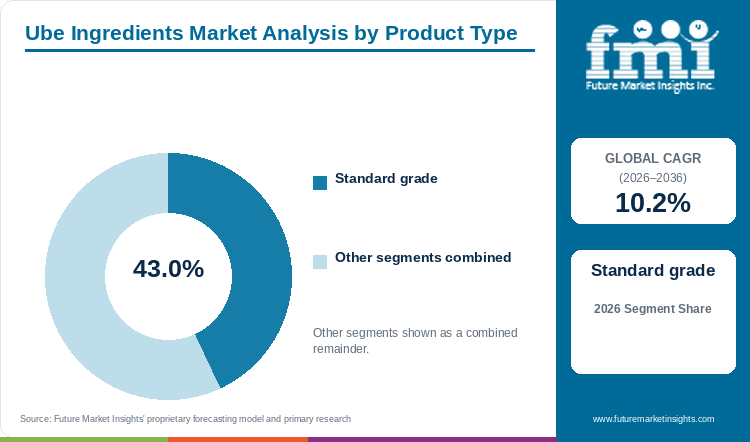
Standard grade holds 43.0% of Product Type in 2026.
Bakeries planning routine ube production need a defined starting point for moisture, colour and preparation, and Standard grade generated approximately USD 150.5 million in 2026 by meeting that need. The specification must also disclose any carrier or other component, as two powders with a similar appearance may deliver different amounts of purple yam and require different water additions. Specialty grades put more emphasis on cultivar or sensory intensity, while certified grades add separate sourcing requirements. With Philippine supply constrained[3], subsequent deliveries must remain within the range on which the bakery based its original formulation.
- Standard grade holds 43.0% of Product Type in 2026.
- The specification should disclose carriers and other components alongside the purple yam ingredient.
How does Powder / dry support the leading Form position?
Powder / dry represents 43.0% of Form in 2026.
Weighing ube powder into a mix allows the bakery to adjust the recipe water separately, which helps explain why Powder / dry formats generated approximately USD 150.5 million in 2026. Powder also travels well, which matters now that only processed ube can be exported from the Philippines[1][2]. That convenience relies on the material staying free flowing and behaving predictably when hydrated. Colour retention and particle behaviour need to be checked in the actual dough, and opened packs need protection from humidity, as caking makes repeat weighing more difficult. A paste or liquid may suit other preparation routes, especially where the ingredient is used in a filling.
- Powder / dry represents 43.0% of Form in 2026.
- Opened packs need moisture protection to preserve consistent weighing and hydration.
Why do Bread & rolls account for the largest Application position?
Bread & rolls contribute 42.0% of Application in 2026.
Ube rolls and breads have become a visible part of the ube trend, and Bread & rolls accounted for approximately USD 147.0 million of ingredient revenue in 2026. Adding yam solids to bread changes more than its appearance, as dough absorption and handling can shift as the inclusion rate rises. A bread trial should establish a workable range before the recipe moves into repeated production, with colour, fermentation and eating quality assessed together at the intended dose. Other applications may place the ingredient in a filling or topping, but bread brings it directly into the dough, which makes its effect on the crumb particularly important.
- Bread & rolls contribute 42.0% of Application in 2026.
- The inclusion range needs to preserve crumb texture as well as the intended purple appearance.
What keeps Conventional ahead within the Claim axis?
Conventional holds 54.0% of Claim in 2026.
Conventional products held 54.0% of the Claim segment in 2026, but the identity of the ingredient still needs to be clear when no additional claim is made. Records should identify purple yam and disclose any carrier, added sugar or colour, so that the finished recipe can be described accurately. Organic, clean label and identity-preserved positioning add their own sourcing and documentation questions, which need to be resolved for the actual ingredient and destination. Certification does not replace the formulation trial, as a claimed grade must still deliver the required preparation behaviour.
- Conventional holds 54.0% of Claim in 2026.
- Any additional certification should be supported by records for the ingredient actually supplied.
Why do direct industrial bakery relationships lead Sales Channel?
Direct to industrial bakeries accounts for 55.0% of Sales Channel in 2026.
Colour variation can cause disagreement if the processor and bakery assess the ingredient under different conditions. Direct technical work allows them to agree a method and an acceptable range before larger orders begin, which is why direct supply to industrial bakeries generated approximately USD 192.5 million in 2026. The same discussion can cover microbial criteria and compatibility with the production process. When a lot behaves differently, both parties then have a common reference for investigating whether the cause lies in the raw material, mixing or baking. Distributors and artisan suppliers serve smaller volumes and initial trials.
- Direct to industrial bakeries accounts for 55.0% of Sales Channel in 2026.
- A shared preparation method makes agreed colour tolerances easier to apply to incoming lots.
What are the drivers, restraints and opportunities in the ube ingredients market?
Global consumer interest drives new ube product development, but limited planting material restrains supply growth, creating an opening for value-added suppliers through processed exports.
Global consumer interest drives new ube product development
The rapid rise in consumer interest is the main driver of ube ingredient demand. According to FoodNavigator, online interest in ube surged globally from the end of February 2026, with Mintel noting that Filipino farmers are struggling to keep up with demand[7]. For bakeries, a continuing ube range creates recurring demand for ingredients with consistent composition and preparation behaviour. Powder and paste reduce preparation work if their moisture is controlled, which is particularly useful in bakery mixes used at several locations. Documented overseas shipments of Quirino powder[4] and total exports of 1.7 million kilograms in 2025[5] show that processed supply routes are already in place.
Limited planting material restrains supply growth
A processor cannot provide consistent ube ingredients without a workable supply of roots. USDA's 2026 assessment identified limited planting material, fragmented production and insufficient processing capacity as constraints in the Philippine crop[3], and the suspension of raw ube exports in September 2026 reflects the need to protect domestic planting material[1]. Although first-half 2026 production rose by 17.0%[6], the Philippines still imported 54,065 kilograms of frozen ube in 2025[5]. For an overseas bakery, these conditions matter when the next delivery differs from the sample used to develop a recipe. Planning a larger roll-out therefore involves the processor's available output as well as the buyer's sales targets.
Processed exports create an opening for value-added suppliers
The Philippine Department of Agriculture's October 2026 clarification separates processed ube exports from untreated raw material that can be planted[2]. Powder production and other processing routes remain the main connection between growers and overseas food manufacturers. The government's target of a 1,000-hectare expansion for exports[2] could increase the raw material available to processors over the forecast period. Useful export support includes samples of the commercial grade, a clear composition record and realistic shipment quantities. Ube may attract a formulator comparing distinctive food flavors, but the purchasing relationship depends on how the ingredient works in the recipe.
Which country CAGRs are profiled in the ube ingredients market?
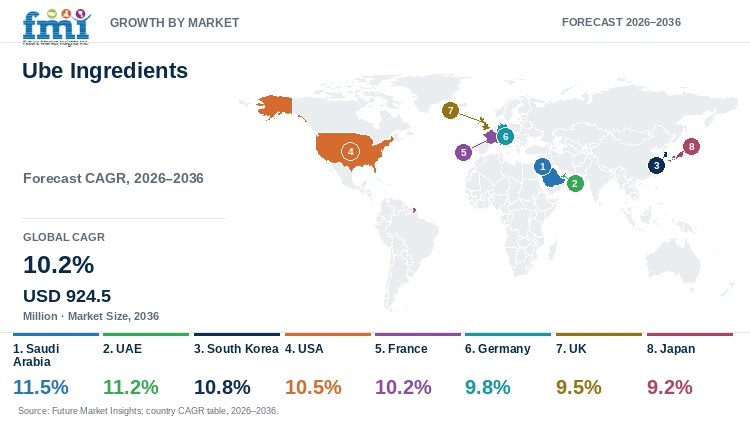
Table 4: Country growth outlook for the ube ingredients market
| Country | CAGR |
|---|---|
| Saudi Arabia | 11.5% |
| UAE | 11.2% |
| South Korea | 10.8% |
| USA | 10.5% |
| France | 10.2% |
| Germany | 9.8% |
| UK | 9.5% |
| Japan | 9.2% |
Saudi Arabia
- Saudi Arabia is the fastest-growing market among the profiled countries, with a forecast CAGR of 11.5% for 2026 to 2036. Ube preparation in the country depends on whether purple yam enters the dough as powder or a filling as paste, as each format has different hydration and handling requirements. A controlled launch can establish the recipe while keeping imported quantities manageable. Composition and storage information should travel with the material, so that the kitchen can reproduce its trial when another shipment arrives.
UAE
- Professional kitchens and central bakeries in the UAE use ube at different production scales, so batch volume and the time needed to use an opened container influence the appropriate pack and preparation method. For powder, the practical test is rehydration and colour after the actual bake cycle. The UAE is projected to grow at a CAGR of 11.2% over 2026 to 2036. A distributor can make smaller orders practical by maintaining the same source and explaining its preparation requirements.
South Korea
- With a forecast CAGR of 10.8% from 2026 to 2036, South Korea ranks third among the profiled countries. The purple appearance of a South Korean pastry needs to be considered together with its flavour and texture. A highly coloured powder may contain a different proportion of carrier, sugar or moisture from another offer, which changes the amount needed in the recipe. Testing the commercial grade in the bakery's own dough makes those differences visible. After that, keeping the composition and shipment schedule stable allows the bakery to assess demand without repeated reformulation.
USA
- The United States is the most visible market for the global ube trend. A one-ton shipment of JaBes powder from Quirino to the United States was reported by the Philippine Information Agency in August 2025[4], and consumer interest surged further in 2026[7]. The USA market is forecast to grow at a CAGR of 10.5% for 2026 to 2036. Qualification still takes place in the customer's recipe, where moisture, particle behaviour and baked colour need to be assessed. Disclosure of botanical identity and any carrier makes offers easier to compare on usable content.
France
- France was among the first export destinations for Quirino ube powder, according to the Philippine Information Agency[4]. French pastry buyers can evaluate ube powder in doughs, creams and baked centres, but each preparation asks something different of the ingredient. France's ube ingredients market is forecast to grow at a CAGR of 10.2% over 2026 to 2036. Small orders provide a way to establish a suitable dose before expanding a recipe, while consistent processing and a disclosed composition make later deliveries easier to use without new development work.
Germany
- In a German bakery mix, ube powder becomes part of a system with an established water addition and mixing procedure. Germany is projected to grow at a CAGR of 9.8% during 2026 to 2036. Qualification needs to examine how the system changes at the proposed dose, including the texture after baking. Whether the powder is pure purple yam or contains a carrier affects usable content and recipe cost, so appearance alone cannot settle the purchasing comparison. A specialty line can expand more smoothly when the delivered ingredient and its documentation stay consistent.
UK
- Smaller packs allow UK bakeries to trial ube in cakes, cheesecakes and buns without committing to a large initial shipment. The UK market is forecast to grow at a CAGR of 9.5% from 2026 to 2036. The preparation needs to achieve the desired colour without making the product too dense or sweet, and clear composition information helps establish both the dose and its cost. If the recipe attracts continuing demand, availability of the same grade becomes more important than further changes to the powder.
Japan
- Japan is expected to register the slowest growth among the profiled countries, with a forecast CAGR of 9.2% over 2026 to 2036. The country is already an established destination for Quirino ube powder[4]. For a Japanese bakery, an established route is only a starting point, as the delivered material must still meet its sensory and handling requirements. A pilot batch can show how sweetness, texture and purple colour develop through the whole preparation cycle, and moderate quantities give the buyer time to settle the dose before expanding imports.
Who are the notable companies in the ube ingredients market?
Quirino Young Entrepreneurs Association; One Vizcaya Export Corporation; Astoria Culinary Expert Services; Philippine Ube; Giron Foods
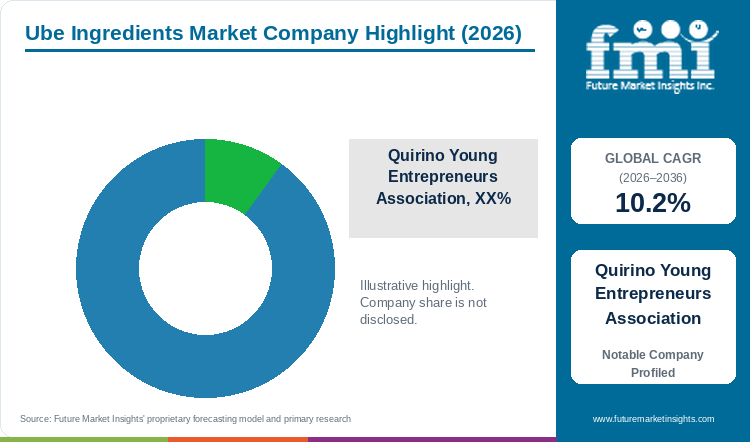
The supplier base consists mainly of Philippine processors. JaBes powder, produced by the Quirino Young Entrepreneurs Association, has documented export shipments to the United States, Japan and France[4]. Other identified powder suppliers include One Vizcaya Export Corporation and Astoria Culinary Expert Services. Philippine Ube offers several wholesale grades, while Giron Foods supplies a recognised ube powder brand. Total exports of ube and ube products reached about 1.7 million kilograms in 2025[5], so individual processors operate at a modest scale.
Turning roots into a usable bakery ingredient requires control over preparation behaviour and a clear product description. A bakery needs each commercial lot to resemble the sample it approved, and a processor's ability to maintain that consistency becomes more valuable as the buyer adds products.
Competitive Benchmarking: Ube Ingredients Market
Table 5: Company capabilities in the ube ingredients market
| Company | Relevant offering | Purchasing consideration |
|---|---|---|
| Quirino Young Entrepreneurs Association | JaBes ube powder | Agree commercial lot specifications |
| One Vizcaya Export Corporation | Ube powder production | Confirm preparation and packaging requirements |
| Astoria Culinary Expert Services | Astoria Philippine Ube Powder | Match hydration method to the bakery recipe |
| Philippine Ube | Wholesale purple-yam powder grades | Distinguish carrier-containing and single-ingredient grades |
| Giron Foods | Giron ube powder | Select the suitable commercial supply channel |
Key Developments in the Ube Ingredients Market
- In August 2025, the Philippine Information Agency reported JaBes powder's first shipment from Quirino to the United States, following earlier exports to Japan and France[4].
- In April 2026, FoodNavigator reported that online interest in ube had surged globally since the end of February, according to Google Trends[7].
- In June 2026, USDA identified limited planting material, fragmented production and constrained processing capacity as constraints in the Philippine ube crop[3].
- In June 2026, PSA data showed that the Philippines imported 54,065 kilograms of frozen ube in 2025 and exported about 1.7 million kilograms of ube and ube products[5].
- In September 2026, the Philippine Department of Agriculture suspended exports of raw ube and planting material to support domestic propagation[1].
- In September 2026, the PSA reported that ube production rose by 17.0% to 5,658 metric tons in the first half of the year[6].
- The department's October 2026 production-expansion announcement clarified that processed exports remain supported. It distinguished those products from untreated raw ube usable as planting material.[2]
Key Players in the Ube Ingredients Market
- Quirino Young Entrepreneurs Association
- One Vizcaya Export Corporation
- Astoria Culinary Expert Services
- Philippine Ube
- Giron Foods
Ube Ingredients Market - Report Scope
Table 6: Report scope for the ube ingredients market
| Coverage field | Report scope |
|---|---|
| Market breakdown | Product Type, Form, Application, Claim, Sales Channel |
| Quantitative Units | USD Million |
| Market Definition | Revenue earned from genuine ube-derived ingredients sold across the listed bakery-oriented product, form and channel categories. Excludes downstream finished baked goods, standalone non-ube mixes, purple sweet potato, taro, artificial ube-style flavors without ube content and unrelated toppings. For bundled preparations, only identifiable ube ingredient revenue belongs in scope. |
| Regions Covered | North America, Latin America, Western Europe, Eastern Europe, East Asia, South Asia and Pacific, Middle East and Africa |
| Countries Covered | Saudi Arabia; UAE; South Korea; USA; France; Germany; UK; Japan |
| Key Companies Profiled | Quirino Young Entrepreneurs Association; One Vizcaya Export Corporation; Astoria Culinary Expert Services; Philippine Ube; Giron Foods |
| Forecast Period | 2026 to 2036 |
| Approach | Market assessment supported by official technical and regulatory publications, company product information and country operating conditions. |
Ube Ingredients Market - Research Methodology
Table 7: Research approach for the ube ingredients market
| Method | Approach |
|---|---|
| Market definition | The assessment separates qualifying ingredient revenue from finished bakery products and unrelated formulation inputs. |
| Secondary evidence | Government publications, regulatory material, technical literature and first-party product documentation establish the operating context. |
| Commercial assessment | Product performance, supply continuity and customer qualification requirements are considered within each segment and country profile. |
| Comparability | Market values, segment shares and country forecasts use the stated revenue boundary, units and forecast period. |
Ube Ingredients Market by Segments
Product Type
- Standard grade
- Premium / specialty grade
- Organic certified
- Clean label grade
Form
- Powder / dry
- Liquid
- Paste / semi-solid
- Granules / pieces
Application
- Bread & rolls
- Cakes & muffins
- Biscuits & cookies
- Viennoiserie & pastry
- Other bakery & snacks
Claim
- Conventional
- Clean label
- Organic
- Non-GMO / identity preserved
Sales Channel
- Direct to industrial bakeries
- Ingredient distributors
- Foodservice & artisan supply
- Online B2B
Ube Ingredients Market by Region
- North America
- United States
- Canada
- Latin America
- Brazil
- Mexico
- Argentina
- Chile
- Western Europe
- Germany
- France
- United Kingdom
- Italy
- Spain
- Benelux
- Nordics
- Eastern Europe
- Poland
- Czech Republic
- Romania
- Hungary
- East Asia
- China
- Japan
- South Korea
- South Asia and Pacific
- India
- ASEAN
- Australia and New Zealand
- Middle East and Africa
- GCC Countries
- South Africa
- Türkiye
- Israel
Research Sources and Bibliography
- [1] Philippine Department of Agriculture. (2026, September 14). DA indefinitely suspends raw ube exports to secure planting materials.
- [2] Philippine Department of Agriculture. (2026, October 6). Government targets 1,000-hectare ube expansion for exports.
- [3] USDA Foreign Agricultural Service. (2026, June 26). Ube: Purple yam, a high-value specialty crop with growing domestic and export market potential.
- [4] Philippine Information Agency. (2025, August 21). Quirino province’s ube powder hits U.S. market.
- [5] Halili, A. K. (2026, June 29). The Philippine Star. Philippine turns to frozen ube imports to meet surging global demand.
- [6] Halili, A. K. (2026, September 16). The Philippine Star. Ube industry growth stalled by supply gaps.
- [7] Bambridge-Sutton, A. (2026, April 23). FoodNavigator. The next matcha? Ube surges in popularity.
Future Market Insights. (2026). Ube Ingredients Market: Global Industry Analysis and Opportunity Assessment 2036.
This Report Answers
- How large is the ube ingredients market in 2026 and what is forecast for 2036?
- Which production, flavor and supply pressures support purchases of ube ingredients?
- Why does Standard grade lead Product Type in 2026?
- Why is Powder / dry the leading Form for bakery buyers?
- How do the eight profiled country growth rates compare from 2026 to 2036?
- Which profiled companies provide bakery platforms or relevant preparation capabilities?
Frequently Asked Questions
How big is the ube ingredients market in 2026, and what is forecast for 2036?
The market is valued at USD 350.0 million in 2026 and is forecast to reach USD 924.5 million by 2036. These values refer to ingredient revenue rather than finished bakery products.
What is the projected CAGR for the ube ingredients market from 2026 to 2036?
The market is projected to grow at a CAGR of 10.2% from 2026 to 2036, although growth depends on processed supply keeping pace with demand.
Which Product Type segment leads the ube ingredients market?
Standard grade leads with a 43.0% share in 2026, as industrial buyers favour dependable specifications.
Which Form segment leads the ube ingredients market?
Powder / dry leads with a 43.0% share in 2026, as powder stores well and allows measured inclusion.
Which profiled countries have the highest forecast growth?
Saudi Arabia leads at 11.5%, followed by the UAE at 11.2% from 2026 to 2036. These are growth rates rather than rankings by sales value.
Which companies are profiled in the ube ingredients market?
The report profiles Quirino Young Entrepreneurs Association, One Vizcaya Export Corporation, Astoria Culinary Expert Services, Philippine Ube and Giron Foods.
Preview the report firsthand - request a free sample
Get SampleGet the brochure for pricing and purchase details.
Get PDFTable of Content
- Key Takeaways
- Market Size and CAGR
- Top Growth Driver
- Fastest Growing Segment
- Leading Region
- Key Companies
- Emerging Opportunities
- Executive Summary
- Global Market Outlook
- Demand-side Trends
- Supply-side Trends
- Technology Roadmap Analysis
- Analysis and Recommendations
- Analyst Perspective (What is happening? Why now? What should investors know?)
- Key Questions Answered
- How large is the market?
- What is the CAGR?
- What are key trends?
- Which region dominates?
- Who are the leaders?
- Market Overview
- Market Coverage / Taxonomy
- Market Definition / Scope / Limitations
- Research Methodology
- Chapter Orientation
- Analytical Lens and Working Hypotheses
- Market Structure, Signals, and Trend Drivers
- Benchmarking and Cross-market Comparability
- Market Sizing, Forecasting, and Opportunity Mapping
- Research Design and Evidence Framework
- Desk Research Programme (Secondary Evidence)
- Expert Input and Fieldwork (Primary Evidence)
- Tooling, Models, and Reference Databases
- Data Engineering and Model Build
- Quality Assurance and Audit Trail
- Market Background
- Market Dynamics (Drivers, Restraints, Opportunity, Trends)
- Scenario Forecast (Optimistic, Likely, Conservative)
- Impact Analysis
- AI Impact
- Sustainability Impact
- Regulatory Impact
- Technology Impact
- Consumer / Buyer Analysis
- Purchase Drivers
- Adoption Barriers
- Buyer Journey
- Opportunity Map Analysis
- Product Life Cycle Analysis
- Supply Chain Analysis
- Investment Feasibility Matrix
- Value Chain Analysis
- PESTLE and Porter's Analysis
- Regulatory Landscape
- Regional Parent Market Outlook
- Production and Consumption Statistics
- Import and Export Statistics
- Global Market Analysis and Forecast, 2021 to 2036
- Historical Market Size Value (USD Million) Analysis, 2021 to 2025
- Current and Future Market Size Value (USD Million) Projections, 2026 to 2036
- Y-o-Y Growth Trend Analysis
- Absolute $ Opportunity Analysis
- Global Market Pricing Analysis, 2021 to 2036
- Global Market Analysis and Forecast, By Product Type, 2021 to 2036
- Introduction / Key Findings
- Historical Market Size Value (USD Million) Analysis By Product Type, 2021 to 2025
- Current and Future Market Size Value (USD Million) Analysis and Forecast By Product Type, 2026 to 2036
- Standard grade
- Premium / specialty grade
- Organic certified
- Clean label grade
- Y-o-Y Growth Trend Analysis By Product Type, 2021 to 2025
- Absolute $ Opportunity Analysis By Product Type, 2026 to 2036
- Global Market Analysis and Forecast, By Form, 2021 to 2036
- Introduction / Key Findings
- Historical Market Size Value (USD Million) Analysis By Form, 2021 to 2025
- Current and Future Market Size Value (USD Million) Analysis and Forecast By Form, 2026 to 2036
- Powder / dry
- Liquid
- Paste / semi-solid
- Granules / pieces
- Y-o-Y Growth Trend Analysis By Form, 2021 to 2025
- Absolute $ Opportunity Analysis By Form, 2026 to 2036
- Global Market Analysis and Forecast, By Application, 2021 to 2036
- Introduction / Key Findings
- Historical Market Size Value (USD Million) Analysis By Application, 2021 to 2025
- Current and Future Market Size Value (USD Million) Analysis and Forecast By Application, 2026 to 2036
- Bread & rolls
- Cakes & muffins
- Biscuits & cookies
- Viennoiserie & pastry
- Other bakery & snacks
- Y-o-Y Growth Trend Analysis By Application, 2021 to 2025
- Absolute $ Opportunity Analysis By Application, 2026 to 2036
- Global Market Analysis and Forecast, By Claim, 2021 to 2036
- Introduction / Key Findings
- Historical Market Size Value (USD Million) Analysis By Claim, 2021 to 2025
- Current and Future Market Size Value (USD Million) Analysis and Forecast By Claim, 2026 to 2036
- Conventional
- Clean label
- Organic
- Non-GMO / identity preserved
- Y-o-Y Growth Trend Analysis By Claim, 2021 to 2025
- Absolute $ Opportunity Analysis By Claim, 2026 to 2036
- Global Market Analysis and Forecast, By Sales Channel, 2021 to 2036
- Introduction / Key Findings
- Historical Market Size Value (USD Million) Analysis By Sales Channel, 2021 to 2025
- Current and Future Market Size Value (USD Million) Analysis and Forecast By Sales Channel, 2026 to 2036
- Direct to industrial bakeries
- Ingredient distributors
- Foodservice & artisan supply
- Online B2B
- Y-o-Y Growth Trend Analysis By Sales Channel, 2021 to 2025
- Absolute $ Opportunity Analysis By Sales Channel, 2026 to 2036
- Global Market Analysis and Forecast, By Region, 2021 to 2036
- Introduction
- Historical Market Size Value (USD Million) Analysis By Region, 2021 to 2025
- Current Market Size Value (USD Million) Analysis and Forecast By Region, 2026 to 2036
- North America
- Latin America
- Western Europe
- Eastern Europe
- East Asia
- South Asia and Pacific
- Middle East and Africa
- Market Attractiveness Analysis By Region
- North America Market Analysis and Forecast, By Country, 2021 to 2036
- Historical Market Size Value (USD Million) Trend Analysis By Market Taxonomy, 2021 to 2025
- Market Size Value (USD Million) Forecast By Market Taxonomy, 2026 to 2036
- By Country
- United States
- Canada
- By Product Type
- By Form
- By Application
- By Claim
- By Sales Channel
- By Country
- Market Attractiveness Analysis
- By Country
- By Product Type
- By Form
- By Application
- By Claim
- By Sales Channel
- Key Takeaways
- Latin America Market Analysis and Forecast, By Country
- Historical Market Size Value (USD Million) Trend Analysis By Market Taxonomy, 2021 to 2025
- Market Size Value (USD Million) Forecast By Market Taxonomy, 2026 to 2036
- By Country
- Brazil
- Mexico
- Argentina
- Chile
- By Product Type
- By Form
- By Application
- By Claim
- By Sales Channel
- By Country
- Market Attractiveness Analysis
- By Country
- By Product Type
- By Form
- By Application
- By Claim
- By Sales Channel
- Key Takeaways
- Western Europe Market Analysis and Forecast, By Country
- Historical Market Size Value (USD Million) Trend Analysis By Market Taxonomy, 2021 to 2025
- Market Size Value (USD Million) Forecast By Market Taxonomy, 2026 to 2036
- By Country
- Germany
- France
- United Kingdom
- Italy
- Spain
- Benelux
- Nordics
- By Product Type
- By Form
- By Application
- By Claim
- By Sales Channel
- By Country
- Market Attractiveness Analysis
- By Country
- By Product Type
- By Form
- By Application
- By Claim
- By Sales Channel
- Key Takeaways
- Eastern Europe Market Analysis and Forecast, By Country
- Historical Market Size Value (USD Million) Trend Analysis By Market Taxonomy, 2021 to 2025
- Market Size Value (USD Million) Forecast By Market Taxonomy, 2026 to 2036
- By Country
- Poland
- Czech Republic
- Romania
- Hungary
- By Product Type
- By Form
- By Application
- By Claim
- By Sales Channel
- By Country
- Market Attractiveness Analysis
- By Country
- By Product Type
- By Form
- By Application
- By Claim
- By Sales Channel
- Key Takeaways
- East Asia Market Analysis and Forecast, By Country
- Historical Market Size Value (USD Million) Trend Analysis By Market Taxonomy, 2021 to 2025
- Market Size Value (USD Million) Forecast By Market Taxonomy, 2026 to 2036
- By Country
- China
- Japan
- South Korea
- By Product Type
- By Form
- By Application
- By Claim
- By Sales Channel
- By Country
- Market Attractiveness Analysis
- By Country
- By Product Type
- By Form
- By Application
- By Claim
- By Sales Channel
- Key Takeaways
- South Asia and Pacific Market Analysis and Forecast, By Country
- Historical Market Size Value (USD Million) Trend Analysis By Market Taxonomy, 2021 to 2025
- Market Size Value (USD Million) Forecast By Market Taxonomy, 2026 to 2036
- By Country
- India
- ASEAN
- Australia and New Zealand
- By Product Type
- By Form
- By Application
- By Claim
- By Sales Channel
- By Country
- Market Attractiveness Analysis
- By Country
- By Product Type
- By Form
- By Application
- By Claim
- By Sales Channel
- Key Takeaways
- Middle East and Africa Market Analysis and Forecast, By Country
- Historical Market Size Value (USD Million) Trend Analysis By Market Taxonomy, 2021 to 2025
- Market Size Value (USD Million) Forecast By Market Taxonomy, 2026 to 2036
- By Country
- GCC Countries
- South Africa
- Türkiye
- Israel
- By Product Type
- By Form
- By Application
- By Claim
- By Sales Channel
- By Country
- Market Attractiveness Analysis
- By Country
- By Product Type
- By Form
- By Application
- By Claim
- By Sales Channel
- Key Takeaways
- Key Countries Market Analysis
- United States
- Pricing Analysis
- Market Share Analysis, 2025
- By Product Type
- By Form
- By Application
- By Claim
- By Sales Channel
- Canada
- Pricing Analysis
- Market Share Analysis, 2025
- By Product Type
- By Form
- By Application
- By Claim
- By Sales Channel
- Mexico
- Pricing Analysis
- Market Share Analysis, 2025
- By Product Type
- By Form
- By Application
- By Claim
- By Sales Channel
- Brazil
- Pricing Analysis
- Market Share Analysis, 2025
- By Product Type
- By Form
- By Application
- By Claim
- By Sales Channel
- Chile
- Pricing Analysis
- Market Share Analysis, 2025
- By Product Type
- By Form
- By Application
- By Claim
- By Sales Channel
- Germany
- Pricing Analysis
- Market Share Analysis, 2025
- By Product Type
- By Form
- By Application
- By Claim
- By Sales Channel
- United Kingdom
- Pricing Analysis
- Market Share Analysis, 2025
- By Product Type
- By Form
- By Application
- By Claim
- By Sales Channel
- Italy
- Pricing Analysis
- Market Share Analysis, 2025
- By Product Type
- By Form
- By Application
- By Claim
- By Sales Channel
- Spain
- Pricing Analysis
- Market Share Analysis, 2025
- By Product Type
- By Form
- By Application
- By Claim
- By Sales Channel
- France
- Pricing Analysis
- Market Share Analysis, 2025
- By Product Type
- By Form
- By Application
- By Claim
- By Sales Channel
- India
- Pricing Analysis
- Market Share Analysis, 2025
- By Product Type
- By Form
- By Application
- By Claim
- By Sales Channel
- ASEAN
- Pricing Analysis
- Market Share Analysis, 2025
- By Product Type
- By Form
- By Application
- By Claim
- By Sales Channel
- Australia and New Zealand
- Pricing Analysis
- Market Share Analysis, 2025
- By Product Type
- By Form
- By Application
- By Claim
- By Sales Channel
- China
- Pricing Analysis
- Market Share Analysis, 2025
- By Product Type
- By Form
- By Application
- By Claim
- By Sales Channel
- Japan
- Pricing Analysis
- Market Share Analysis, 2025
- By Product Type
- By Form
- By Application
- By Claim
- By Sales Channel
- South Korea
- Pricing Analysis
- Market Share Analysis, 2025
- By Product Type
- By Form
- By Application
- By Claim
- By Sales Channel
- Poland
- Pricing Analysis
- Market Share Analysis, 2025
- By Product Type
- By Form
- By Application
- By Claim
- By Sales Channel
- Hungary
- Pricing Analysis
- Market Share Analysis, 2025
- By Product Type
- By Form
- By Application
- By Claim
- By Sales Channel
- Türkiye
- Pricing Analysis
- Market Share Analysis, 2025
- By Product Type
- By Form
- By Application
- By Claim
- By Sales Channel
- South Africa
- Pricing Analysis
- Market Share Analysis, 2025
- By Product Type
- By Form
- By Application
- By Claim
- By Sales Channel
- Saudi Arabia
- Pricing Analysis
- Market Share Analysis, 2025
- By Product Type
- By Form
- By Application
- By Claim
- By Sales Channel
- UAE
- Pricing Analysis
- Market Share Analysis, 2025
- By Product Type
- By Form
- By Application
- By Claim
- By Sales Channel
- United States
- Market Structure Analysis
- Competition Dashboard
- Competition Benchmarking
- Market Share Analysis of Top Players
- By Regional
- By Product Type
- By Form
- By Application
- By Claim
- By Sales Channel
- Emerging Startups
- Innovation Benchmarking
- Competition Analysis
- Competition Deep Dive
- Quirino Young Entrepreneurs Association
- Overview
- Product Portfolio
- Profitability by Market Segments
- Sales Footprint
- Strategy Overview
- Marketing Strategy
- Product Strategy
- Channel Strategy
- One Vizcaya Export Corporation
- Astoria Culinary Expert Services
- Philippine Ube
- Giron Foods
- Quirino Young Entrepreneurs Association
- Case Studies
- Success Stories
- Recent Developments
- Competition Deep Dive
- Assumptions & Acronyms Used


