

- Market Size (2026)
- USD 3.6 Bn
- Forecast (2036)
- USD 6.6 Bn
- CAGR (2026 to 2036)
- 6.2%
How big is Uterine Serous Carcinoma Market in 2026?
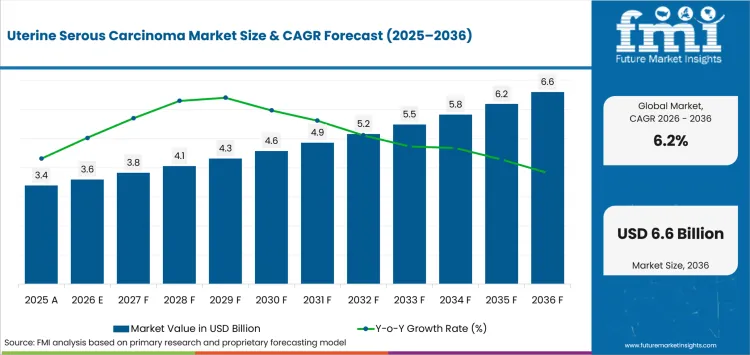
USD 3.6 billion in 2026 and USD 6.6 billion by 2036 at a 6.2% CAGR.
Demand for uterine serous carcinoma treatment is projected to expand at 6.2% CAGR between 2026 and 2036, increasing valuation from USD 3.6 billion in 2026 to USD 6.6 billion by 2036. The addressable pathway sits within uterine corpus cancer care and requires pathology to distinguish serous histology from more common endometrioid tumors. The National Cancer Institute estimated 69,120 new uterine corpus cancer cases in the United States during 2025. Specialist centers use that diagnostic base to identify uncommon serous disease and coordinate endometrial cancer treatment.
Commercial execution depends on hospitals that connect expert pathology with MMR and HER2 testing before the first systemic regimen is selected. Cancer diagnostics link tissue classification with surgical staging and infusion scheduling across repeated treatment cycles. Companion diagnostics then define regimen eligibility and reduce avoidable changes between induction and maintenance treatment.
Key Takeaways of Uterine Serous Carcinoma Market
- First-line checkpoint combinations increase institution-led treatment through chemotherapy induction and maintenance dosing for eligible advanced or recurrent disease.
- Immunotherapy is projected to account for 38.0% in 2026 owing to checkpoint use across induction and maintenance regimens.
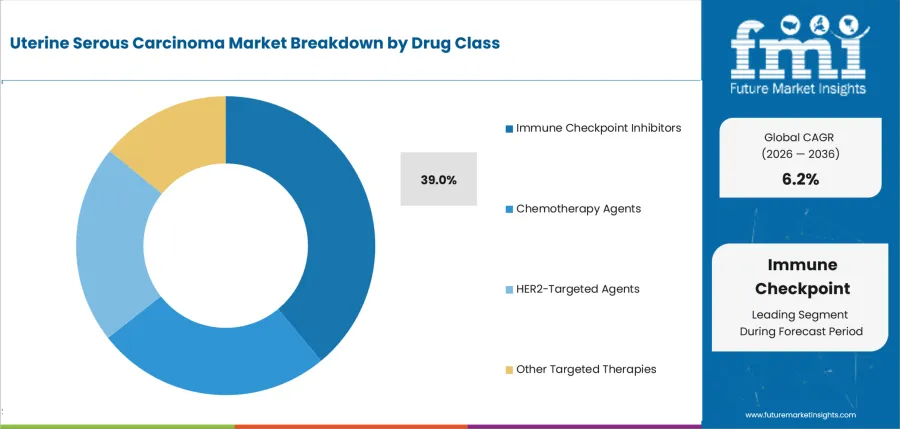
- Immune checkpoint inhibitors are estimated to represent 39.0% in 2026 due to established PD-1 and PD-L1 pathways.
- First-line therapy is forecast to capture 52.0% in 2026 as testing and infusion planning begin at treatment initiation.
- Rare histology and molecular variation slow disease-specific recruitment and complicate reimbursement evidence across national treatment systems.
- Merck & Co., Inc., GSK plc, AstraZeneca PLC, Daiichi Sankyo Co., Ltd., Eisai Co., Ltd., Roche Holding AG, Bristol Myers Squibb Company and Zentalis Pharmaceuticals, Inc. serve the market through approved or investigational treatment routes.
Analyst Perspective
"Treatment value in uterine serous carcinoma depends on how quickly pathology confirms serous histology and returns MMR plus HER2 results before the first systemic regimen is selected. Companies gain commercial advantage by aligning induction and maintenance supply with that biomarker decision across specialist hospitals."
- Anurag Sharma, Principal Consultant for Healthcare, Future Market Insights
How is the Uterine Serous Carcinoma Market segmented?
The uterine serous carcinoma industry is segmented by treatment modality, drug class, line of therapy, end user, distribution channel and region.
The uterine serous carcinoma market is segmented by treatment modality, drug class, line of therapy, end user, distribution channel, and region. Treatment modality covers immunotherapy, chemotherapy, surgery, and radiotherapy, while drug class separates checkpoint agents, cytotoxic medicines, HER2-directed agents, and other targeted therapies. Line of therapy distinguishes first-line, second-line, and later treatment through separate chemotherapy, immunotherapy, targeted, and investigational routes. End users and distribution channels cover hospitals, specialist clinics, research institutes, community settings, and hospital, specialty, retail, online, or direct-to-patient pharmacies.
How do treatment centers evaluate immune checkpoint inhibitors?
Immune checkpoint inhibitors connect PD-1 and PD-L1 inhibitors with biomarker-defined treatment across advanced or recurrent endometrial cancer. Their commercial role depends on label-specific MMR requirements and the chemotherapy backbone selected for initial induction treatment.
- The drug class is forecast to be led by immune checkpoint inhibitors at 39.0% share in 2026 due to established use across approved combination regimens.
- Gynecologic oncology teams select immune checkpoint inhibitors through laboratory-confirmed MMR status that determines regimen eligibility and maintenance planning. In June 2024, the FDA limited durvalumab with chemotherapy to dMMR disease and tied prescribing to verified tumor status.
What supports immunotherapy demand within the treatment modality category?
Checkpoint immunotherapies extend care beyond platinum-taxane induction through maintenance for eligible advanced or recurrent disease. Australian registration provides a current example through checkpoint-chemotherapy induction followed by scheduled hospital maintenance treatment. In April 2025, the TGA registered dostarlimab plus chemotherapy for adult advanced or recurrent endometrial cancer.
- Immunotherapy is set to lead the treatment modality with 38.0% share in 2026 due to checkpoint treatment that continues beyond chemotherapy induction within specialist centers.
- Gynecologic oncology centers use immunotherapy through labeled checkpoint regimens supported by verified MMR results and specialist toxicity management. Consistent monitoring protects treatment continuity through maintenance and reduces avoidable dose interruptions across hospital visits.
What makes first-line therapy central to the line-of-therapy category?
First-line therapy concentrates molecular testing and infusion planning at the initial systemic treatment decision for advanced or recurrent disease.
- By line of therapy, first-line therapy is estimated to hold 52.0% in 2026 owing to treatment initiation that combines chemotherapy with checkpoint maintenance. The FDA approved pembrolizumab with carboplatin and paclitaxel in June 2024 across dMMR and pMMR cohorts. Hospitals use clinical trial evidence to align biomarker review with maintenance planning at treatment initiation.
- Gynecologic oncology teams establish biomarker records and dosing calendars at diagnosis so chemotherapy induction can transition into maintenance without repeating eligibility review.
How do hospitals shape demand within the end user category?
Uterine serous carcinoma requires surgical staging and infused systemic treatment within one coordinated hospital pathway for aggressive disease. The National Cancer Institute identifies hysterectomy as standard early treatment and notes additional staging needs for serous histology within specialist gynecologic oncology services.
- Based on end user, the hospitals segment is projected to account for 51.0% in 2026 due to surgery and infused treatment requiring coordinated specialist infrastructure.
- Hospital pharmacies coordinate multi-cycle regimens and maintenance schedules across gynecologic oncology services that prepare and administer infused treatment. Tertiary centers also manage postoperative decisions and immune-related toxicity across repeated visits that community oncology centers cannot support consistently.
What are the drivers, restraints and opportunities in the Uterine Serous Carcinoma Market?
Driver: First-line checkpoint combinations extend induction and maintenance treatment. Restraint: Rare histology limits subgroup evidence. Opportunity: HER2 testing directs biomarker-selected care.
- Driver: Checkpoint combinations increase induction and maintenance administrations across eligible advanced or recurrent endometrial treatment pathways.
- Restraint: Small uterine serous carcinoma populations slow recruitment and leave treatment-sequencing questions unresolved across molecular groups.
- Opportunity: HER2 assessment identifies patients for monoclonal antibodies or antibody-drug conjugates with direct biomarker relevance.
First-line checkpoint combinations place the largest treatment decision at diagnosis and extend hospital activity into scheduled maintenance. Manufacturers must coordinate supply across both phases to prevent shortages from interrupting fixed dosing plans within a complex gynecologic oncology pathway.
Uterine serous carcinoma represents a small histologic population, so disease-specific trials recruit slowly and produce limited subgroup evidence. Reimbursement committees therefore examine biomarker definitions and treatment sequencing closely to align coverage with populations represented in clinical records.
HER2 testing separates a clinically distinct group that can receive monoclonal antibodies or antibody-drug conjugates under matched evidence. Randomized trastuzumab data support disease-specific planning through evidence that hospital programs can apply to HER2-positive treatment sequencing. Ongoing first-line studies increase demand for molecular cancer biomarkers and specialist infusion capacity during trial recruitment.
Which country CAGRs are profiled in the Uterine Serous Carcinoma Market?
| Country | CAGR |
|---|---|
| South Korea | 6.8% |
| Japan | 6.4% |
| Australia | 6.3% |
| Canada | 6.2% |
| USA | 6.1% |
How do country-level CAGRs compare in the Uterine Serous Carcinoma Market?
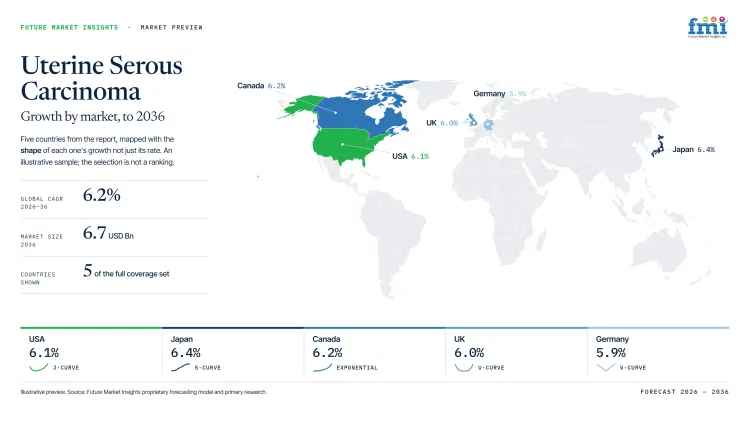
The profiled country CAGRs span a narrow 0.7 percentage point range across five healthcare systems, indicating differences in expected growth trajectories rather than current revenue generation or treatment capacity.
- South Korea’s CAGR outlook is supported by concentrated tertiary referral networks and integrated cancer-center pathways that facilitate the use of sophisticated biomarker-driven therapies.
- Japan’s growth pattern is shaped by qualified-institution requirements and rigorous monitoring practices that can increase operational demands for regional hospitals.
- Australia’s expansion prospects benefit from national medicine-listing mechanisms that link regulatory approvals with publicly funded oncology care pathways.
- Canada’s market trajectory is influenced by a sequential process involving national health technology assessment followed by province-specific reimbursement and implementation decisions.
- The USA’s anticipated growth is driven by broad regulatory approvals, although payer authorization requirements and uneven access to molecular testing continue to vary across healthcare networks.
Similar CAGR levels do not necessarily translate into equivalent commercial environments. Distinct regulatory frameworks, reimbursement structures, diagnostic capabilities, and funding processes create different market access conditions across healthcare systems. The full report provides country-level CAGR analysis across North America, Latin America, Europe, East Asia, South Asia & Pacific, and the Middle East & Africa.
Country-wise Analysis
- South Korea directs complex gynecologic oncology through tertiary hospitals that combine specialist pathology with surgical staging and multi-cycle systemic treatment across compact referral networks serving nationally coordinated cancer care with established multidisciplinary review procedures. The National Cancer Information Center reported 3,813 endometrial cancer cases for 2023 in February 2026 and gave regional hospitals a current base for service planning plus specialist referrals across the national cancer system. South Korea is estimated to post 6.8% CAGR over the forecast period, supported by concentrated cancer services although reimbursement timing and rural travel can delay pathology review plus repeated infusion visits nationwide.
- Japan restricts immuno-oncology prescribing to qualified institutions with trained physicians and documented monitoring procedures that raise the operating threshold for regional hospitals lacking dedicated gynecologic oncology support and reliable round-the-clock immune-toxicity support during treatment. Uterine serous carcinoma demand in Japan is forecast to rise at 6.4% CAGR over the forecast period, reinforced by nationally defined treatment guidance across established specialist hospital referral networks nationwide throughout the national system. The Ministry of Health issued uterine corpus cancer guidance for durvalumab in November 2024 and specified clinical training requirements, yet uneven pathology capacity can delay treatment outside major referral systems across Japan.
- Uterine serous carcinoma sales in Australia are forecast to expand at 6.3% CAGR by 2036, aided by national funding although long travel distances can complicate pathology review and repeated infusion visits outside metropolitan networks. Australia converts regulatory decisions into funded routes through national medicine listings that apply across public oncology services and support coordinated induction plus maintenance treatment under common prescribing conditions for eligible patients across Australia. The Australian Government expanded PBS coverage for durvalumab with platinum-based chemotherapy from August 2025 and estimated that around 60 Australians with dMMR endometrial cancer would benefit each year across public oncology services nationwide.
- Canada relies on national health technology assessment to guide provincial cancer agencies that establish formulary access across public hospital systems and translate recommendations into province-specific treatment rules for eligible hospital populations across each province. Canada’s uterine serous carcinoma outlook is anticipated to advance at 6.2% CAGR over the assessment period, shaped by coordinated evidence review and specialist treatment capacity across established national specialist oncology networks and public hospitals. Canada’s Drug Agency issued its final recommendation for dostarlimab with chemotherapy under defined clinical conditions on June 6, 2025 and separate provincial implementation dates can delay induction plus maintenance scheduling across provincial cancer systems.
- Adoption of uterine serous carcinoma treatment in the USA is estimated to expand at 6.1% CAGR through 2036, influenced by treatment routes and payer authorization delays for microsatellite instability diagnostics outside cancer centers. American hospital systems connect gynecologic oncology with pathology laboratories across state-based payer networks that support broad medicine distribution but leave diagnostic access uneven beyond academic cancer centers in many underserved communities across the country. The FDA approved the OncoMate MSI Dx Analysis System for endometrial carcinoma in November 2025 and identified microsatellite-stable patients considered for pembrolizumab with lenvatinib during specialist hospital treatment selection reviews across academic centers.
Who are the notable companies in the Uterine Serous Carcinoma Market?
Merck & Co., Inc., GSK plc, AstraZeneca PLC, Daiichi Sankyo Co., Ltd., Eisai Co., Ltd., Roche Holding AG, Bristol Myers Squibb Company and Zentalis Pharmaceuticals, Inc. are the notable companies serving this market.
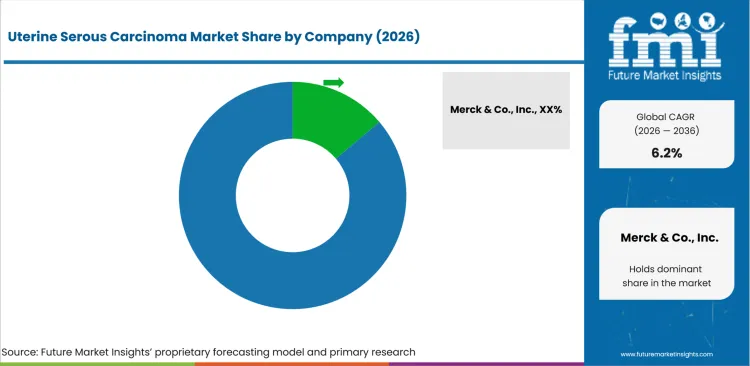
Competition is concentrated around companies with approved checkpoint combinations that support induction and maintenance treatment across major hospital systems. The wider field remains fragmented across MMR, HER2 and Cyclin E1 selection routes that require separate biomarker evidence. New entrants need biomarker-linked evidence and regulatory access before specialist hospitals consider routine treatment supply.
- Merck, GSK and AstraZeneca compete through first-line checkpoint combinations supported by regulator-defined induction and maintenance schedules.
- Daiichi Sankyo and Roche address HER2-directed care through antibody-drug conjugate development and randomized trastuzumab evidence, while Eisai contributes a post-platinum tyrosine kinase pathway.
- Bristol Myers Squibb supports an active investigator-led endometrial study, while Zentalis adds completed Phase II uterine serous carcinoma evidence whose further development depends on partnering or available capital.
Competitive Benchmarking: Uterine Serous Carcinoma Market
| Company | Approved Route Breadth | Biomarker Relevance | USC Evidence Depth | Geographic Reach |
|---|---|---|---|---|
| Merck & Co., Inc. | High | Medium | Low | North America; Europe; Asia-Pacific |
| GSK plc | High | Medium | Low | North America; Europe; Asia-Pacific |
| AstraZeneca PLC | High | High | Medium | North America; Europe; Asia-Pacific |
| Daiichi Sankyo Co., Ltd. | Medium | High | Medium | North America; Europe; Asia-Pacific |
| Eisai Co., Ltd. | Medium | Medium | Low | North America; Europe; Asia-Pacific |
| Roche Holding AG | Low | High | High | North America |
| Bristol Myers Squibb Company | Low | Low | Medium | North America |
| Zentalis Pharmaceuticals, Inc. | Low | High | High | North America |
Key Developments in the Uterine Serous Carcinoma Market
- In November 2025, Zentalis Pharmaceuticals reported completed TETON Phase II enrollment for Cyclin E1-positive advanced uterine serous carcinoma and limited further development to partnering or available capital.
- In June 2025, Daiichi Sankyo and AstraZeneca initiated DESTINY-Endometrial01 by dosing the first participant in a 600-participant Phase III study for HER2-expressing pMMR endometrial cancer.
- In January 2025, GSK received European Commission approval to extend dostarlimab plus chemotherapy to all adults with primary advanced or recurrent endometrial cancer.
Key Players in the Uterine Serous Carcinoma Market
Checkpoint and First-Line Immunotherapy Platforms
- Merck & Co., Inc.
- GSK plc
- AstraZeneca PLC
HER2 and Targeted Therapy Platforms
- Daiichi Sankyo Co., Ltd.
- Eisai Co., Ltd.
- Roche Holding AG
Investigational and Clinical Evidence Platforms
- Bristol Myers Squibb Company
- Zentalis Pharmaceuticals, Inc.
Uterine Serous Carcinoma Market - Report Scope
| Coverage field | Report scope |
|---|---|
| Market breakdown | By treatment modality, drug class, line of therapy, end user, distribution channel and region. |
| Quantitative Units | Revenue in USD billion and CAGR in %. |
| Market Definition | Therapies and commercial care pathways used to diagnose and treat uterine serous carcinoma across surgery, systemic treatment, radiotherapy and medicine distribution. |
| Regions Covered | North America, Latin America, Europe, East Asia, South Asia and Pacific, and Middle East and Africa. |
| Countries Covered | South Korea, Japan, Australia, Canada, USA and 20+ countries included in the full report. |
| Key Companies Profiled | Merck & Co., Inc., GSK plc, AstraZeneca PLC, Daiichi Sankyo Co., Ltd., Eisai Co., Ltd., Roche Holding AG, Bristol Myers Squibb Company and Zentalis Pharmaceuticals, Inc. |
| Forecast Period | 2026-2036. |
| Approach | Primary and secondary research with market triangulation. |
Uterine Serous Carcinoma Market - Research Methodology
| Method | Approach |
|---|---|
| Primary Research | FMI analysts gathered input from manufacturers, service providers, technology developers, distributors, end users, procurement teams, and subject-matter experts. Interviews examined purchasing decisions, product or service evaluation, adoption barriers, approval requirements, pricing considerations, and expectations for technical or commercial support. Respondents were also asked what evidence is required before a trial, pilot, or initial order develops into regular purchasing. |
| Desk Research | Desk research covered government statistics, regulatory publications, trade data, industry associations, technical literature, standards, company filings, product information, and official corporate announcements. Sources were reviewed for relevance, publication date, geographic coverage, and consistency with the defined market scope. Claims relating to performance, applications, approvals, capacity, investment, and commercial activity were retained only when supported by credible public evidence. |
| Market Sizing and Forecasting | The market model combined the baseline value with historical performance, segment structure, pricing and volume indicators, adoption levels, company participation, and country-level demand conditions. Forecast assumptions considered economic activity, investment trends, regulatory developments, technology adoption, purchasing cycles, supply availability, and barriers to wider market use. Segment and regional estimates were reconciled before the final market total was calculated. |
| Data Validation | Estimates were checked against multiple independent indicators, including public data, company activity, trade patterns, industry developments, and findings from primary interviews. Validation also tested whether products, services, applications, and company revenues fell within the defined market boundaries. Adjacent categories, unsupported claims, overlapping revenues, and activities without direct market relevance were excluded to reduce double counting and maintain consistency across segments and countries. |
Uterine Serous Carcinoma Market by Segments
Uterine Serous Carcinoma Market segmented by Treatment Modality:
- Immunotherapy
- Immune Checkpoint Inhibitors
- Immunotherapy Combinations
- Chemotherapy
- Platinum-Based Chemotherapy
- Taxane-Based Chemotherapy
- Surgery
- Total Hysterectomy
- Lymph Node Assessment
- Radiotherapy
- External Beam Radiation Therapy
- Vaginal Brachytherapy
Uterine Serous Carcinoma Market segmented by Drug Class:
- Immune Checkpoint Inhibitors
- PD-1 Inhibitors
- PD-L1 Inhibitors
- Chemotherapy Agents
- Platinum Compounds
- Taxanes
- HER2-Targeted Agents
- HER2 Monoclonal Antibodies
- HER2-Directed Antibody-Drug Conjugates
- Other Targeted Therapies
- Tyrosine Kinase Inhibitors
- Anti-Angiogenic Agents
Uterine Serous Carcinoma Market segmented by Line of Therapy:
- First-Line Therapy
- Chemotherapy-Based Regimens
- Immunotherapy-Based Regimens
- Second-Line Therapy
- Immune Checkpoint Inhibitors
- Targeted Therapy
- Third-Line & Later Therapy
- Combination Therapy
- Clinical Trial & Investigational Therapies
Uterine Serous Carcinoma Market segmented by End User:
- Hospitals
- Tertiary Care Hospitals
- Cancer Treatment Hospitals
- Specialty Oncology Clinics
- Gynecologic Oncology Clinics
- Outpatient Oncology Centers
- Academic & Research Institutes
- University Medical Centers
- Cancer Research Institutes
- Others
- Ambulatory Surgical Centers
- Community Healthcare Centers
Uterine Serous Carcinoma Market segmented by Distribution Channel:
- Hospital Pharmacies
- Inpatient Pharmacies
- Outpatient Hospital Pharmacies
- Specialty Pharmacies
- Oncology Specialty Pharmacies
- Specialty Drug Dispensing Centers
- Retail Pharmacies
- Chain Pharmacies
- Independent Pharmacies
- Online & Other Channels
- Online Pharmacies
- Direct-to-Patient Programs
Uterine Serous Carcinoma Market by Region:
- North America
- USA
- Canada
- Mexico
- Latin America
- Brazil
- Chile
- Rest of Latin America
- Western Europe
- Germany
- UK
- Italy
- Spain
- France
- Nordics
- Benelux
- Rest of Western Europe
- Eastern Europe
- Russia
- Poland
- Hungary
- Balkan and Baltic States
- Rest of Eastern Europe
- East Asia
- China
- Japan
- South Korea
- South Asia and Pacific
- India
- ASEAN
- Australia and New Zealand
- Rest of South Asia and Pacific
- Middle East and Africa
- Kingdom of Saudi Arabia
- Other GCC Countries
- Türkiye
- South Africa
- Other African Union Countries
- Rest of Middle East and Africa
Research Sources and Bibliography
- PDQ® Adult Treatment Editorial Board. (2025, May 14). Endometrial Cancer Treatment (PDQ®)-Health Professional Version.
- USA Food and Drug Administration. (2024, June 17). FDA approves pembrolizumab with chemotherapy for primary advanced or recurrent endometrial carcinoma.
- Daiichi Sankyo, Inc. (2025, June 9). DESTINY-Endometrial01 Phase 3 Trial of ENHERTU® Initiated as First-Line Therapy in Patients with HER2 Expressing Primary Advanced or Recurrent Endometrial Cancer.
- USA Food and Drug Administration. (2024, June 14). FDA approves durvalumab with chemotherapy for mismatch repair deficient primary advanced or recurrent endometrial cancer.
- USA Food and Drug Administration. (2024, April 5). FDA grants accelerated approval to fam-trastuzumab deruxtecan-nxki for unresectable or metastatic HER2-positive solid tumors.
- USA Food and Drug Administration. (2021, July 21). FDA grants regular approval to pembrolizumab and lenvatinib for advanced endometrial carcinoma.
- National Institute for Health and Care Excellence. (2025, August 27). Pembrolizumab with carboplatin and paclitaxel for untreated primary advanced or recurrent endometrial cancer.
- Therapeutic Goods Administration. (2025, April 17). JEMPERLI (GlaxoSmithKline Australia Pty Ltd).
- Australian Government Department of Health, Disability and Ageing. (2025, August 11). New and expanded PBS listings for endometrial cancer, neuroblastoma, Parkinson’s disease and melanoma.
- Canada’s Drug Agency. (2025, October 7). Jemperli.
- Ministry of Health, Labour and Welfare. (2024, November 22).
- National Cancer Information Center Korea. (2026, February 2). [Endometrial cancer].
- USA Food and Drug Administration. (2025, November 5). Premarket Approval (PMA).
- Fader, A. N., Roque, D. M., Siegel, E., Buza, N., Hui, P., Abdelghany, O., Chambers, S., Alvarez Secord, A., Havrilesky, L., O'Malley, D. M., Backes, F. J., Nevadunsky, N., Edraki, B., Pikaart, D., Lowery, W., ElSahwi, K., Celano, P., Bellone, S., Azodi, M., … Santin, A. D. (2020). Randomized Phase II Trial of Carboplatin-Paclitaxel Compared with Carboplatin-Paclitaxel-Trastuzumab in Advanced (Stage III-IV) or Recurrent Uterine Serous Carcinomas that Overexpress Her2/Neu (NCT01367002): Updated Overall Survival Analysis. Clinical Cancer Research, 26(15), 3928-3935.
- Zentalis Pharmaceuticals, Inc. (2025, November 10). Zentalis Pharmaceuticals Reports Third Quarter 2025 Financial Results and Operational Progress.
- ClinicalTrials.gov. (2026, June 23). DESTINY-Endometrial01: A Phase III Study of Trastuzumab Deruxtecan Plus Rilvegostomig or Pembrolizumab as First-Line Treatment of HER2-Expressing (IHC 3+/2+), Mismatch Repair Proficient (pMMR) Endometrial Cancer.
- GSK plc. (2025, January 20). European Commission expands Jemperli (dostarlimab) plus chemotherapy approval to all adult patients with primary advanced or recurrent endometrial cancer.
- ClinicalTrials.gov. (2025, October 14). Study of BMS-986205 and Nivolumab in Endometrial Cancer or Endometrial Carcinosarcoma That Has Not Responded to Treatment.
This bibliography is provided for reader reference and is not exhaustive. The full report contains the complete reference list and detailed citations.
This Report Answers
- How large is the uterine serous carcinoma market in 2026 and 2036?
- Which treatment modality accounts for the largest approved 2026 share?
- How do checkpoint inhibitors shape first-line treatment and maintenance demand?
- Why do hospitals retain the central role across end user demand?
- How do profiled country growth rates differ through 2036?
- Which biomarker requirements shape checkpoint and HER2-directed treatment?
- Which companies have documented regulatory or clinical market positions?
- What constraints limit treatment adoption across rare histologic populations?
Frequently Asked Questions
How big is the uterine serous carcinoma market in 2026?
In 2026, the uterine serous carcinoma market is valued at USD 3.7 billion across treatment and delivery pathways. Specialist pathology must connect serous histology with MMR and HER2 testing so hospitals can coordinate surgery, induction chemotherapy and maintenance immunotherapy without disrupting treatment schedules.
What is the CAGR of the uterine serous carcinoma market from 2026 to 2036?
The uterine serous carcinoma market is projected to expand at 6.2% CAGR between 2026 and 2036. Growth reflects wider first-line checkpoint use and longer maintenance treatment across specialist hospitals that support biomarker testing, infusion scheduling and specialist toxicity monitoring.
Which treatment modality is projected to account for 38.0% of the uterine serous carcinoma market?
Immunotherapy is projected to account for 38.0% of the uterine serous carcinoma market by treatment modality in 2026. Checkpoint combinations support that share through chemotherapy induction and maintenance dosing that requires biomarker review, repeated infusion visits and specialist toxicity management.
How much is the uterine serous carcinoma market expected to add between 2026 and 2036?
USD 3.1 billion is expected to be added to the uterine serous carcinoma market between 2026 and 2036. Incremental value depends on longer systemic treatment and broader access to biomarker-guided therapy across hospitals that coordinate diagnostics, infusion services and maintenance care.
Which companies are active in the uterine serous carcinoma market?
Companies active in the uterine serous carcinoma market include Merck, GSK, AstraZeneca, Daiichi Sankyo, Eisai, Roche, Bristol Myers Squibb and Zentalis. The group covers approved checkpoint pathways, HER2-directed development, targeted treatment and exact-market clinical programs with different evidence maturity.
Preview the report firsthand - request a free sample
Get SampleGet the brochure for pricing and purchase details.
Get PDFTable of Content
- Key Takeaways
- Market Size and CAGR
- Top Growth Driver
- Fastest Growing Segment
- Leading Region
- Key Companies
- Emerging Opportunities
- Executive Summary
- Global Market Outlook
- Demand-side Trends
- Supply-side Trends
- Technology Roadmap Analysis
- Analysis and Recommendations
- Analyst Perspective (What is happening? Why now? What should investors know?)
- Key Questions Answered
- How large is the market?
- What is the CAGR?
- What are key trends?
- Which region dominates?
- Who are the leaders?
- Market Overview
- Market Coverage / Taxonomy
- Market Definition / Scope / Limitations
- Research Methodology
- Chapter Orientation
- Analytical Lens and Working Hypotheses
- Market Structure, Signals, and Trend Drivers
- Benchmarking and Cross-market Comparability
- Market Sizing, Forecasting, and Opportunity Mapping
- Research Design and Evidence Framework
- Desk Research Programme (Secondary Evidence)
- Expert Input and Fieldwork (Primary Evidence)
- Tooling, Models, and Reference Databases
- Data Engineering and Model Build
- Quality Assurance and Audit Trail
- Market Background
- Market Dynamics (Drivers, Restraints, Opportunity, Trends)
- Scenario Forecast (Optimistic, Likely, Conservative)
- Impact Analysis
- AI Impact
- Sustainability Impact
- Regulatory Impact
- Technology Impact
- Consumer / Buyer Analysis
- Purchase Drivers
- Adoption Barriers
- Buyer Journey
- Opportunity Map Analysis
- Product Life Cycle Analysis
- Supply Chain Analysis
- Investment Feasibility Matrix
- Value Chain Analysis
- PESTLE and Porter's Analysis
- Regulatory Landscape
- Regional Parent Market Outlook
- Production and Consumption Statistics
- Import and Export Statistics
- Global Market Analysis and Forecast, 2021 to 2036
- Historical Market Size Value (USD Billion) Analysis, 2021 to 2025
- Current and Future Market Size Value (USD Billion) Projections, 2026 to 2036
- Y-o-Y Growth Trend Analysis
- Absolute $ Opportunity Analysis
- Global Market Pricing Analysis, 2021 to 2036
- Global Market Analysis and Forecast, By Treatment Modality, 2021 to 2036
- Introduction / Key Findings
- Historical Market Size Value (USD Billion) Analysis By Treatment Modality, 2021 to 2025
- Current and Future Market Size Value (USD Billion) Analysis and Forecast By Treatment Modality, 2026 to 2036
- Immunotherapy
- Immune Checkpoint Inhibitors
- Immunotherapy Combinations
- Chemotherapy
- Platinum-Based Chemotherapy
- Taxane-Based Chemotherapy
- Surgery
- Total Hysterectomy
- Lymph Node Assessment
- Radiotherapy
- External Beam Radiation Therapy
- Vaginal Brachytherapy
- Immunotherapy
- Y-o-Y Growth Trend Analysis By Treatment Modality, 2021 to 2025
- Absolute $ Opportunity Analysis By Treatment Modality, 2026 to 2036
- Global Market Analysis and Forecast, By Drug Class, 2021 to 2036
- Introduction / Key Findings
- Historical Market Size Value (USD Billion) Analysis By Drug Class, 2021 to 2025
- Current and Future Market Size Value (USD Billion) Analysis and Forecast By Drug Class, 2026 to 2036
- Immune Checkpoint Inhibitors
- PD-1 Inhibitors
- PD-L1 Inhibitors
- Chemotherapy Agents
- Platinum Compounds
- Taxanes
- HER2-Targeted Agents
- HER2 Monoclonal Antibodies
- HER2-Directed Antibody-Drug Conjugates
- Other Targeted Therapies
- Tyrosine Kinase Inhibitors
- Anti-Angiogenic Agents
- Immune Checkpoint Inhibitors
- Y-o-Y Growth Trend Analysis By Drug Class, 2021 to 2025
- Absolute $ Opportunity Analysis By Drug Class, 2026 to 2036
- Global Market Analysis and Forecast, By Line of Therapy, 2021 to 2036
- Introduction / Key Findings
- Historical Market Size Value (USD Billion) Analysis By Line of Therapy, 2021 to 2025
- Current and Future Market Size Value (USD Billion) Analysis and Forecast By Line of Therapy, 2026 to 2036
- First-Line Therapy
- Chemotherapy-Based Regimens
- Immunotherapy-Based Regimens
- Second-Line Therapy
- Immune Checkpoint Inhibitors
- Targeted Therapy
- Third-Line & Later Therapy
- Combination Therapy
- Clinical Trial & Investigational Therapies
- First-Line Therapy
- Y-o-Y Growth Trend Analysis By Line of Therapy, 2021 to 2025
- Absolute $ Opportunity Analysis By Line of Therapy, 2026 to 2036
- Global Market Analysis and Forecast, By End User, 2021 to 2036
- Introduction / Key Findings
- Historical Market Size Value (USD Billion) Analysis By End User, 2021 to 2025
- Current and Future Market Size Value (USD Billion) Analysis and Forecast By End User, 2026 to 2036
- Hospitals
- Tertiary Care Hospitals
- Cancer Treatment Hospitals
- Specialty Oncology Clinics
- Gynecologic Oncology Clinics
- Outpatient Oncology Centers
- Academic & Research Institutes
- University Medical Centers
- Cancer Research Institutes
- Others
- Ambulatory Surgical Centers
- Community Healthcare Centers
- Hospitals
- Y-o-Y Growth Trend Analysis By End User, 2021 to 2025
- Absolute $ Opportunity Analysis By End User, 2026 to 2036
- Global Market Analysis and Forecast, By Distribution Channel, 2021 to 2036
- Introduction / Key Findings
- Historical Market Size Value (USD Billion) Analysis By Distribution Channel, 2021 to 2025
- Current and Future Market Size Value (USD Billion) Analysis and Forecast By Distribution Channel, 2026 to 2036
- Hospital Pharmacies
- Inpatient Pharmacies
- Outpatient Hospital Pharmacies
- Specialty Pharmacies
- Oncology Specialty Pharmacies
- Specialty Drug Dispensing Centers
- Retail Pharmacies
- Chain Pharmacies
- Independent Pharmacies
- Online & Other Channels
- Online Pharmacies
- Direct-to-Patient Programs
- Hospital Pharmacies
- Y-o-Y Growth Trend Analysis By Distribution Channel, 2021 to 2025
- Absolute $ Opportunity Analysis By Distribution Channel, 2026 to 2036
- Global Market Analysis and Forecast, By Region, 2021 to 2036
- Introduction
- Historical Market Size Value (USD Billion) Analysis By Region, 2021 to 2025
- Current Market Size Value (USD Billion) Analysis and Forecast By Region, 2026 to 2036
- North America
- Latin America
- Western Europe
- Eastern Europe
- East Asia
- South Asia and Pacific
- Middle East & Africa
- Market Attractiveness Analysis By Region
- North America Market Analysis and Forecast, By Country, 2021 to 2036
- Historical Market Size Value (USD Billion) Trend Analysis By Market Taxonomy, 2021 to 2025
- Market Size Value (USD Billion) Forecast By Market Taxonomy, 2026 to 2036
- By Country
- USA
- Canada
- By Treatment Modality
- By Drug Class
- By Line of Therapy
- By End User
- By Distribution Channel
- By Country
- Market Attractiveness Analysis
- By Country
- By Treatment Modality
- By Drug Class
- By Line of Therapy
- By End User
- By Distribution Channel
- Key Takeaways
- Latin America Market Analysis and Forecast, By Country
- Historical Market Size Value (USD Billion) Trend Analysis By Market Taxonomy, 2021 to 2025
- Market Size Value (USD Billion) Forecast By Market Taxonomy, 2026 to 2036
- By Country
- Brazil
- Mexico
- Chile
- Rest of Latin America
- By Treatment Modality
- By Drug Class
- By Line of Therapy
- By End User
- By Distribution Channel
- By Country
- Market Attractiveness Analysis
- By Country
- By Treatment Modality
- By Drug Class
- By Line of Therapy
- By End User
- By Distribution Channel
- Key Takeaways
- Western Europe Market Analysis and Forecast, By Country
- Historical Market Size Value (USD Billion) Trend Analysis By Market Taxonomy, 2021 to 2025
- Market Size Value (USD Billion) Forecast By Market Taxonomy, 2026 to 2036
- By Country
- Germany
- UK
- Italy
- Spain
- France
- Nordic
- BENELUX
- Rest of Western Europe
- By Treatment Modality
- By Drug Class
- By Line of Therapy
- By End User
- By Distribution Channel
- By Country
- Market Attractiveness Analysis
- By Country
- By Treatment Modality
- By Drug Class
- By Line of Therapy
- By End User
- By Distribution Channel
- Key Takeaways
- Eastern Europe Market Analysis and Forecast, By Country
- Historical Market Size Value (USD Billion) Trend Analysis By Market Taxonomy, 2021 to 2025
- Market Size Value (USD Billion) Forecast By Market Taxonomy, 2026 to 2036
- By Country
- Russia
- Poland
- Hungary
- Balkan & Baltic
- Rest of Eastern Europe
- By Treatment Modality
- By Drug Class
- By Line of Therapy
- By End User
- By Distribution Channel
- By Country
- Market Attractiveness Analysis
- By Country
- By Treatment Modality
- By Drug Class
- By Line of Therapy
- By End User
- By Distribution Channel
- Key Takeaways
- East Asia Market Analysis and Forecast, By Country
- Historical Market Size Value (USD Billion) Trend Analysis By Market Taxonomy, 2021 to 2025
- Market Size Value (USD Billion) Forecast By Market Taxonomy, 2026 to 2036
- By Country
- China
- Japan
- South Korea
- By Treatment Modality
- By Drug Class
- By Line of Therapy
- By End User
- By Distribution Channel
- By Country
- Market Attractiveness Analysis
- By Country
- By Treatment Modality
- By Drug Class
- By Line of Therapy
- By End User
- By Distribution Channel
- Key Takeaways
- South Asia and Pacific Market Analysis and Forecast, By Country
- Historical Market Size Value (USD Billion) Trend Analysis By Market Taxonomy, 2021 to 2025
- Market Size Value (USD Billion) Forecast By Market Taxonomy, 2026 to 2036
- By Country
- India
- ASEAN
- Australia & New Zealand
- Rest of South Asia and Pacific
- By Treatment Modality
- By Drug Class
- By Line of Therapy
- By End User
- By Distribution Channel
- By Country
- Market Attractiveness Analysis
- By Country
- By Treatment Modality
- By Drug Class
- By Line of Therapy
- By End User
- By Distribution Channel
- Key Takeaways
- Middle East & Africa Market Analysis and Forecast, By Country
- Historical Market Size Value (USD Billion) Trend Analysis By Market Taxonomy, 2021 to 2025
- Market Size Value (USD Billion) Forecast By Market Taxonomy, 2026 to 2036
- By Country
- Kingdom of Saudi Arabia
- Other GCC Countries
- Türkiye
- South Africa
- Other African Union
- Rest of Middle East & Africa
- By Treatment Modality
- By Drug Class
- By Line of Therapy
- By End User
- By Distribution Channel
- By Country
- Market Attractiveness Analysis
- By Country
- By Treatment Modality
- By Drug Class
- By Line of Therapy
- By End User
- By Distribution Channel
- Key Takeaways
- Key Countries Market Analysis
- USA
- Pricing Analysis
- Market Share Analysis, 2025
- By Treatment Modality
- By Drug Class
- By Line of Therapy
- By End User
- By Distribution Channel
- Canada
- Pricing Analysis
- Market Share Analysis, 2025
- By Treatment Modality
- By Drug Class
- By Line of Therapy
- By End User
- By Distribution Channel
- Mexico
- Pricing Analysis
- Market Share Analysis, 2025
- By Treatment Modality
- By Drug Class
- By Line of Therapy
- By End User
- By Distribution Channel
- Brazil
- Pricing Analysis
- Market Share Analysis, 2025
- By Treatment Modality
- By Drug Class
- By Line of Therapy
- By End User
- By Distribution Channel
- Chile
- Pricing Analysis
- Market Share Analysis, 2025
- By Treatment Modality
- By Drug Class
- By Line of Therapy
- By End User
- By Distribution Channel
- Germany
- Pricing Analysis
- Market Share Analysis, 2025
- By Treatment Modality
- By Drug Class
- By Line of Therapy
- By End User
- By Distribution Channel
- UK
- Pricing Analysis
- Market Share Analysis, 2025
- By Treatment Modality
- By Drug Class
- By Line of Therapy
- By End User
- By Distribution Channel
- Italy
- Pricing Analysis
- Market Share Analysis, 2025
- By Treatment Modality
- By Drug Class
- By Line of Therapy
- By End User
- By Distribution Channel
- Spain
- Pricing Analysis
- Market Share Analysis, 2025
- By Treatment Modality
- By Drug Class
- By Line of Therapy
- By End User
- By Distribution Channel
- France
- Pricing Analysis
- Market Share Analysis, 2025
- By Treatment Modality
- By Drug Class
- By Line of Therapy
- By End User
- By Distribution Channel
- India
- Pricing Analysis
- Market Share Analysis, 2025
- By Treatment Modality
- By Drug Class
- By Line of Therapy
- By End User
- By Distribution Channel
- ASEAN
- Pricing Analysis
- Market Share Analysis, 2025
- By Treatment Modality
- By Drug Class
- By Line of Therapy
- By End User
- By Distribution Channel
- Australia & New Zealand
- Pricing Analysis
- Market Share Analysis, 2025
- By Treatment Modality
- By Drug Class
- By Line of Therapy
- By End User
- By Distribution Channel
- China
- Pricing Analysis
- Market Share Analysis, 2025
- By Treatment Modality
- By Drug Class
- By Line of Therapy
- By End User
- By Distribution Channel
- Japan
- Pricing Analysis
- Market Share Analysis, 2025
- By Treatment Modality
- By Drug Class
- By Line of Therapy
- By End User
- By Distribution Channel
- South Korea
- Pricing Analysis
- Market Share Analysis, 2025
- By Treatment Modality
- By Drug Class
- By Line of Therapy
- By End User
- By Distribution Channel
- Russia
- Pricing Analysis
- Market Share Analysis, 2025
- By Treatment Modality
- By Drug Class
- By Line of Therapy
- By End User
- By Distribution Channel
- Poland
- Pricing Analysis
- Market Share Analysis, 2025
- By Treatment Modality
- By Drug Class
- By Line of Therapy
- By End User
- By Distribution Channel
- Hungary
- Pricing Analysis
- Market Share Analysis, 2025
- By Treatment Modality
- By Drug Class
- By Line of Therapy
- By End User
- By Distribution Channel
- Kingdom of Saudi Arabia
- Pricing Analysis
- Market Share Analysis, 2025
- By Treatment Modality
- By Drug Class
- By Line of Therapy
- By End User
- By Distribution Channel
- Türkiye
- Pricing Analysis
- Market Share Analysis, 2025
- By Treatment Modality
- By Drug Class
- By Line of Therapy
- By End User
- By Distribution Channel
- South Africa
- Pricing Analysis
- Market Share Analysis, 2025
- By Treatment Modality
- By Drug Class
- By Line of Therapy
- By End User
- By Distribution Channel
- USA
- Market Structure Analysis
- Competition Dashboard
- Competition Benchmarking
- Market Share Analysis of Top Players
- By Regional
- By Treatment Modality
- By Drug Class
- By Line of Therapy
- By End User
- By Distribution Channel
- Emerging Startups
- Innovation Benchmarking
- Competition Analysis
- Competition Deep Dive
- Merck & Co., Inc.
- Overview
- Product Portfolio
- Profitability by Market Segments
- Sales Footprint
- Strategy Overview
- Marketing Strategy
- Product Strategy
- Channel Strategy
- GlaxoSmithKline plc
- Eisai Co., Ltd.
- Daiichi Sankyo Company, Limited
- AstraZeneca PLC
- Bristol Myers Squibb Company
- Roche Holding AG
- Novartis AG
- Pfizer Inc.
- AbbVie Inc.
- Others
- Merck & Co., Inc.
- Case Studies
- Success Stories
- Recent Developments
- Competition Deep Dive
- Assumptions & Acronyms Used


