

- Industry Size (2025)
- USD 3706.1 Mn
- Forecast (2035)
- USD 7497.5 Mn
- CAGR (2025 to 2035)
- 7.3%
Ammonium Sulphate Supply Market Outlook 2025 to 2035
The global ammonium sulphate supply market is expected to register steady growth during the forecast period owing to the growing demand for fertilizers, increasing uptake of industrial chemicals and increasing strain on agriculture worldwide to increase the crop yields without overstressing the limited resources available.
Ammonium sulphate, a nitrogenous fertilizer that also contains sulphur is essential to maintaining nutrients balance in soil, particularly in sulphur deficient areas as well as for enhancing quality and productivity of crops.
Favorable government measures for food security and increasing investment in the caprolactam and water treatment industries are fueling Global supply) patterns. Ammonium sulphate is playing a dual role, as both fertilizer and industrial raw material that contributes to supply chain resilience.
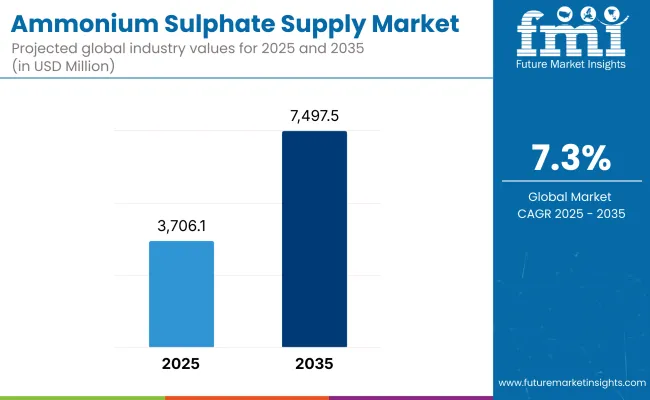
In the global ammonium sulphate supply industry, the market was valued at USD 3,706.1 Million in 2025 and is projected to reach a value of USD 7,497.5 Million by 2035, by expanding at a CAGR of 7.3% from 2025 to 2035.
| Metric | Value |
|---|---|
| Market Size in 2025 | USD 3,706.1 Million |
| Projected Market Size in 2035 | USD 7,497.5 Million |
| CAGR (2025 to 2035) | 7.3% |
Segmentation Outlook - Ammonium Sulphate Supply Market
Caprolactam-based production drives market demand through high-volume chemical synthesis, fertilizer integration, and circular manufacturing adoption
The demand for ammonium sulphate supply is still on the rise as the global agricultural, chemical, and polymer sector require more and more dependable nitrogen-bearing compounds for fertilizer mixing as well as for intermediate purposes. Ammonium sulphate (AS) is a type of crystalline salt, mainly used as nitrogen fertilizer, and it is now produced and obtained through chemical byproduct recovery processes.
Ammonium sulphate, based on caprolactam, accounts for highest global market share among production processes owing to the incorporation of this process in nylon-6 production method, the cost-benefit of the process as well as a continuing supply in developed as well as developing regions. This segment plays a significant role in nitrogen supply chains, and helps you achieve industrial circularity, converting caprolactam waste into a valuable agronomic input.
Ammonium sulphate is produced as a by-product of caprolactam plants, used to make nylon intermediates, and increases output could be felt in East Asia and Europe, where demand from their downstream textile and plastic sectors remains healthy. This production route augments supply security at the regional level and mitigates environmental burdens from disposal.
Caprolactam-based process gains traction due to industrial integration, steady co-product generation, and lower marginal cost
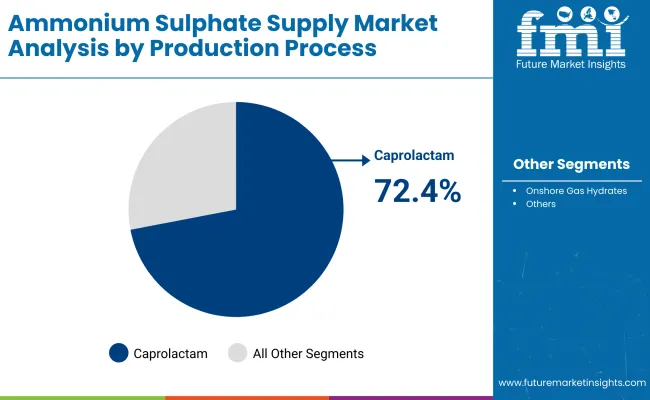
| Production Process | Market Share (2025) |
|---|---|
| Ammonium Sulphate for Caprolactam | 72.4% |
As a result, caprolactam-based production dominates the ammonium sulphate supply market, because ammonium sulphate is produced continuously and can be tailor made to match the solid feed composition going directly into nylon-6 polymer production. Generating about 2.5 to 3 tons of ammonium sulphate per metric ton of caprolactam produced, this route has become a key pillar in nitrogen fertilizer markets.
Chinese, German and South Korean manufacturers extensively utilize this method with integrated production balancing the industrial chemical and fertilizer markets. The dual-product adds more profitability while being sustainable and taking care of chemical effluents from the process.
Its crystalline structure allows it to dissolve easily and be stored, blended, transported in bulk, leading to its popularity in neutralize and acidic dryland soils.
Coke oven gas and gypsum-based methods cater to regional markets or are limited by raw material availability; meanwhile, caprolactam-based AS has a stronghold due to industrial-scale capacity, steady supply, and synergy with synthetic polymer ecosystems.
Challenges and Opportunities
Challenges
Supply dependence on byproduct routes and trade volatility limits consistency.
We find that we can only solve a few primary problems with the ammonium sulphate supply chain, primarily involving its reliance on the production of byproduct from the processing of caprolactam and coke oven gas instead of dedicated production. This exposes supply volumes to volatility in upstream sectors like nylon and steel. As a consequence, changes in caprolactam production on a global scale affect the availability of the fertilizer in agricultural plant regions.
Geopolitical tensions and export bans in critical supplier countries have also set off volatility in global prices and availability. They face challenges such as the lack of proliferation of standalone production units and discrepancies in set standard quality levels across suppliers hindering seamless integration in global markets. Supply shortages are particularly damaging in developing countries at critical planting seasons.
Opportunities
Standalone production, green ammonia integration, and precision farming create growth momentum.
To improve reliability, many countries are now targeting dedicated ammonium sulphate production from synthetic ammonia and sulfuric acid, and decoupling supply from caprolactam cycles. Now, this shift opens investment opportunities in emerging economies that are heavily import-dependent.
In addition, the emergence of green ammonia made from renewable hydrogen is likely to profoondly affect nitrogen fertilizer markets over the next ten years. Low-carbon ammonium sulphate, for example, may be a component of sustainability fertilizer systems. The rising adoption of precision agriculture and integrated nutrient management plans also boosts the consumption of sulfur-based fertilizers for localized soil treatment, which in turn supports steadily growing demand.
Country-Wise Outlook
United States
In the USA, ammonium sulphate supply market continues to expand due to its usage in crop fertilization, particularly where soil sulfur range is lower, especially in the Midwest and Southeast regions. The fertilizer is also a major contributor to yield maximization of corn, wheat, and soybeans.
Ammonium sulphate is being promoted as a dual nutrient nitrogen and sulfur sources due to the increasing emphasis on sustainable agriculture. The USA Environmental Protection Agency advocates the proper amount of fertilizer application to reduce nitrate runoff while ameliorating groundwater In addition, support for domestic production comes from byproduct recovery from the caprolactam and coke industries.
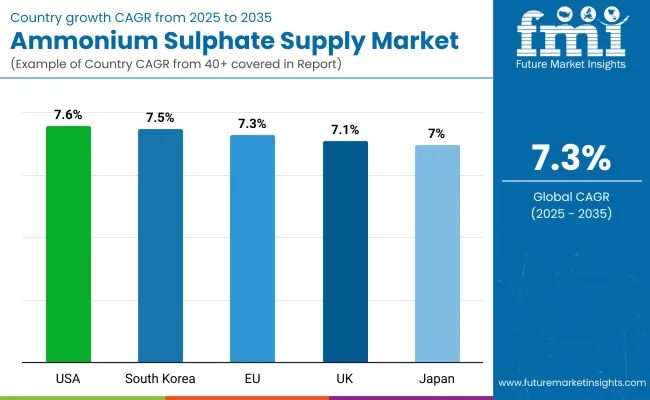
| Country | CAGR (2025 to 2035) |
|---|---|
| United States | 7.6% |
United Kingdom
In the UK, ammonium sulphate is used extensively in the fertilization of cereals, rapeseed, and grassland. The prestigious increase in interest for sulfur-based fertilizers is due to the declining sulfur deposit in the atmosphere and the growing role of sulfur lacking in effective agricultural farming system.
To help guide crop protein content and limit environmental impact, the agricultural sector is now moving towards a more balanced fertilization strategy. Nutrient management plans as supported by UK regulations that are aligned with the Environment Act 2021 promote the use of ammonium sulphate. Granular and blended formulations are also being promoted for precision application in fertilizer distribution.
| Country | CAGR (2025 to 2035) |
|---|---|
| United Kingdom | 7.1% |
European Union
The demanding nutrient efficiency regulations in the Common Agricultural Policy (CAP) and the Farm to Fork Strategy are driving the expansion of the EU ammonium sulphate market. Countries such as Germany, France, and Poland are applying ammonium sulphate to combat sulfur shortages in cereal and oilseed crops.
EU funds production of circular fertilizer from industrial byproducts This shift of emphasis toward sustainable intensification of agriculture has a positive impact on the interest of the industry for the incorporation of ammonium sulphate within multi-nutrient fertilizer programs. And manufacturers are improving granulation and coating of products for uniform application and less volatilization.
| Country | CAGR (2025 to 2035) |
|---|---|
| European Union | 7.3% |
Japan
Demand from rice farming, horticulture and greenhouse cultivation fuels Japan’s ammonium sulphate market. The fertilizer is favored for its chloride-free profile, making it available for salt-sensitive crops. Policies encouraging self-sufficiency in food supply have led to the development of balanced nutrient management practices.
Formulations have been smoothed out (for use in precision agriculture and fertigation systems) by domestic suppliers. Research institutes are also working to introduce their ammonium sulphate into carbon-neutral farming techniques and designing processes to incorporate the ammonium sulphate into organics and slow-release fertilizers.
| Country | CAGR (2025 to 2035) |
|---|---|
| Japan | 7.0% |
South Korea
Strong demand from rice cultivation and protected agriculture sectors in South Korea is driving the ammonium sulphate supply market in the country. It is used in large quantities in nitrogen-sulfur synergy urea blends and compound fertilizers. In line with the Korean New Deal, the government encourages balanced fertilization under sustainable agriculture programs.
Domestic chemical manufacturers are ramping production from industrial byproducts and improving granulation to suit drip irrigation. Agricultural cooperative educational programs are clear examples of helping smallholder farmers understand sulfur management concepts.
| Country | CAGR (2025 to 2035) |
|---|---|
| South Korea | 7.5% |
Competitive Outlook
Strong growth in the ammonium sulphate supply market is driven primarily due to its common use in nitrogenous fertilizers, as well as in industrial chemicals, water treatment, and pharmaceutical applications. With agriculture still taking the lead in global demand, growing population and expanding food security programs are driving fertilizer & agrochemicals use across Asia, Latin America and Africa.
Non-durable industrial uses in flame retardants, leather processing and feed additives also are supportive of supply diversification. Producers are also investing in coupled production from caprolactam byproducts, flue gas desulfurization, and coke oven gas streams to meet circular economy and emission-reduction mandates.
Key Market Insights
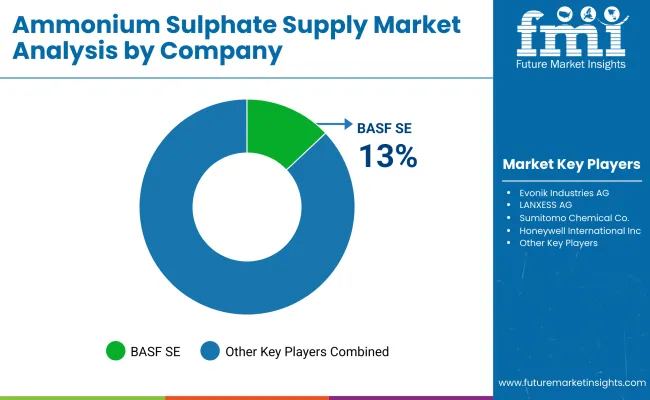
BASF SE (13-16%)
BASF remains a global leader in ammonium sulphate supply through its integration with caprolactam production lines. In 2024, it ramped up output in its European plants, delivering high-purity ammonium sulphate for agriculture and industrial formulations. In 2025, BASF launched granular fertilizer versions suitable for mechanized spreading, targeting large-scale farming operations in Europe and South America. Its alignment with EU soil nutrient efficiency regulations supports sustainable fertilizer use.
Evonik Industries AG (11-14%)
Evonik is advancing circular nitrogen solutions through its emissions-to-fertilizer innovations. In 2024, it optimized ammonium sulphate generation from sulfur recovery and byproduct treatment, reducing waste and emissions. By 2025, it expanded its export logistics in Southeast Asia via specialized shipping terminals. Evonik’s fertilizer-grade ammonium sulphate supports food production in rice-growing economies and aligns with regional soil enrichment goals.
LANXESS AG (9-12%)
LANXESS serves both industrial and agricultural sectors with technical and fertilizer-grade ammonium sulphate. In 2024, it focused on the leather and textile industries, supplying ammonium sulphate for pH control and protein coagulation. In 2025, LANXESS developed dust-suppressed formulations suited for use in arid regions such as the Middle East and North Africa. These solutions support industrial sustainability and regional climate adaptation strategies.
Sumitomo Chemical Co. (7-10%)
Sumitomo Chemical operates vertically integrated production units in Asia, focusing on high-grade fertilizers. In 2024, it modernized its ammonium sulphate production lines in Japan to include tailored nutrient blends for precision farming. In 2025, it introduced anti-caking variants ideal for tropical and monsoon climates. Sumitomo’s products cater to rice, fruit, and vegetable cultivators in high-humidity regions, reinforcing Asia’s agricultural resilience.
Honeywell International Inc. (6-9%)
Honeywell is leveraging its expertise in emission recovery to supply ammonium sulphate from flue gas streams. In 2024, it expanded its USA-based recovery systems linked to power and chemical facilities. In 2025, it began supplying municipal and regional water treatment agencies with ammonium sulphate for chlorination and coagulation processes. Honeywell’s model contributes to closed-loop chemical usage and resource recovery in water management.
Other Key Players (38-45% Combined)
Several regional and state-owned producers are meeting local and export demand with cost-effective ammonium sulphate solutions. These include:
- China Petrochemical Corporation (Sinopec) - Large-scale ammonium sulphate from coal and petrochemical byproduct streams.
- Uralchem JSC - Ammonium sulphate-nitrate blends for Russian and Eastern European markets.• OCI Nitrogen - Dutch supplier of ammonium sulphate fertilizers for European grain and root crop production.• GSFC (Gujarat State Fertilizers & Chemicals) - Indian government-backed supplier with granular variants for smallholder farms.
- Capro Corporation - USA manufacturer linked to nylon and fiber production with co-generated ammonium sulphate.
Segments
By Production Process:
- Caprolactam
- Coke Oven Gas
- Gypsum
- Neutralization & Others
By Region:
- North America
- Latin America
- Western Europe
- Eastern Europe
- East Asia
- South Asia Pacific
- Middle East and Africa
Frequently Asked Questions
What was the overall size of the ammonium sulphate supply market in 2025?
The overall market size for the ammonium sulphate supply market was USD 3,706.1 Million in 2025.
How big is the ammonium sulphate supply market expected to be in 2035?
The ammonium sulphate supply market is expected to reach USD 7,497.5 Million in 2035.
What will drive the demand for the ammonium sulphate supply market during the forecast period?
The demand for ammonium sulphate is rising due to its widespread use as a nitrogen fertilizer, particularly in alkaline soils, and increasing agricultural productivity requirements. Caprolactam-based production remains a key source, supporting both fertilizer demand and the expansion of synthetic fiber manufacturing.
List the top 5 countries contributing to the ammonium sulphate supply market.
The top 5 countries driving the development of the ammonium sulphate supply market are China, the USA, India, Russia, and Brazil.
Which segment in the production method is expected to lead in the ammonium sulphate supply market?
Caprolactam-based production is expected to command a significant share over the assessment period.
Preview the report firsthand - request a free sample
Get SampleGet the brochure for pricing and purchase details.
Get PDFTable of Content
- Executive Summary
- Industry Introduction, including Taxonomy and Market Definition
- Ammonium Sulphate Market Trends and Success Factors, including Macro-economic Factors, Market Dynamics, and Recent Industry Developments
- Global Market Demand Analysis 2020 to 2024 and Forecast 2025 to 2035, including Historical Analysis and Future Projections
- Pricing Analysis
- Global Market Analysis 2020 to 2024 and Forecast 2025 to 2035
- By Production Process
- By Region
- Global Market Analysis 2020 to 2024 and Forecast 2025 to 2035, By Production Process
- Ammonium Sulphate for Caprolactam
- Ammonium Sulphate for Coke Oven Gas
- Ammonium Sulphate for Gypsum
- Ammonium Sulphate for Neutralization & Others
- Global Market Analysis 2020 to 2024 and Forecast 2025 to 2035, By Region
- North America
- Latin America
- Western Europe
- Eastern Europe
- East Asia
- South Asia Pacific
- Middle East and Africa
- North America Sales Analysis 2020 to 2024 and Forecast 2025 to 2035, by Key Segments and Countries
- Latin America Sales Analysis 2020 to 2024 and Forecast 2025 to 2035, by Key Segments and Countries
- Western Europe Sales Analysis 2020 to 2024 and Forecast 2025 to 2035, by Key Segments and Countries
- Eastern Europe Sales Analysis 2020 to 2024 and Forecast 2025 to 2035, by Key Segments and Countries
- East Asia Sales Analysis 2020 to 2024 and Forecast 2025 to 2035, by Key Segments and Countries
- South Asia Pacific Sales Analysis 2020 to 2024 and Forecast 2025 to 2035, by Key Segments and Countries
- Middle East and Africa Sales Analysis 2020 to 2024 and Forecast 2025 to 2035, by Key Segments and Countries
- Competition Outlook, including Market Structure Analysis, Company Share Analysis by Key Players, and Competition Dashboard
- Company Profile
- Koninklijke DSM N.V
- JSC KuibyshevAzot
- UBE Industries Ltd.
- Toray Industries Inc.
- China Petrochemical Development Corporation
- China Petroleum & Chemical Corporation (Sinopec Corp.)
- JSC Grodno Azot
- Grupa Azoty
- Domo Chemicals
- Gujarat State Fertilizers & Chemicals Ltd.


