

- Industry Size (2025)
- USD 370 Bn
- Forecast (2035)
- USD 520 Bn
- CAGR (2025 to 2035)
- 5.2%
Winter Wear Market Size, Market Forecast and Outlook By FMI
Winter wear market is expected to expand from USD 370 billion in 2025 to USD 520 billion by 2035. The market is anticipated to register a 5.2% CAGR during the forecast period. Sustainable and eco-friendly winter wear is likely to grow faster at 6.1% CAGR, while jackets and coats remain central to seasonal apparel spending.
Summary of the Winter Wear Market
- Demand and Growth Drivers
- Winter apparel demand is rising as consumers seek warmth with everyday style.
- Outdoor recreation is increasing the need for insulated and weather-resistant clothing.
- Sustainable fabrics are gaining attention as shoppers assess material sourcing.
- Smart textiles are creating new demand for adaptive thermal comfort.
- Product and Segment View
- Jackets and coats remain the core product area in cold-weather wardrobes.
- Thermal wear supports layering demand across commuting and travel use.
- Wool and fleece continue to hold relevance in mid-range winter clothing.
- Smart heated garments are gaining attention among urban and outdoor consumers.
- Geography and Competitive Outlook
- North America benefits from severe winters and strong outdoor apparel spending.
- Europe shows demand for durable products with stronger sustainability claims.
- Asia Pacific gains from urban fashion trends and wider online availability.
- Competition centers on insulation quality, fabric innovation, and brand trust.
- Analyst Opinion
- Rahul Pandita of FMI opines that winter wear demand will depend on comfort, climate suitability, and material credibility. Brands that combine warmth with lighter designs and responsible sourcing will gain stronger consumer preference across premium and mass channels.
- Winter Wear Market Value Analysis
- Winter wear is moving from seasonal utility into functional lifestyle apparel.
- Demand is likely to rise as consumers prefer lighter insulated products.
- Smart fabrics should support premium buying across colder urban markets.
- Spending is expected to strengthen through online channels and sustainable collections.
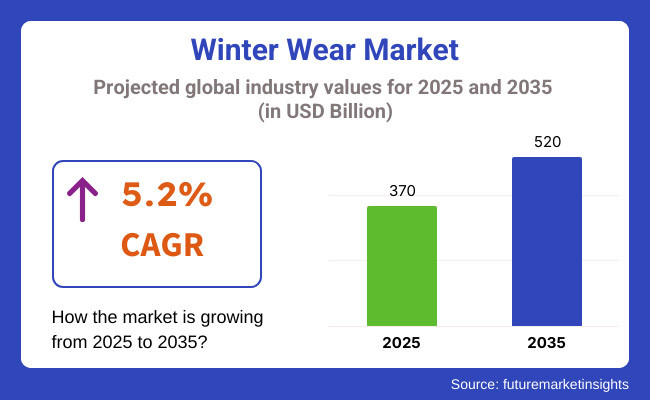
Key Takeaways, Market Size, and Forecast
- Winter wear market was valued at USD 370 billion in 2025.
- The market is forecast to attain USD 520 billion by 2035.
- Demand is anticipated to expand at a 5.2% CAGR during 2025 to 2035.
- Sustainable and eco-friendly winter wear is likely to record the strongest category growth at 6.1% CAGR.
- Canada shows high per capita spending at USD 198.60, supported by severe winter conditions.
- China is projected to grow at 7.3% CAGR through 2035.
- India is likely to advance at 7.0% CAGR, helped by rising urban fashion demand.
- Canada Goose, Columbia Sportswear, The North Face, Patagonia, and Moncler remain major suppliers.
Regional Market Trends
North America
North America is one of the largest markets for winter wear and tear, driven by harsh winter conditions, high disposable inflows, and a strong preference for out-of-door and winter sports vesture. The U.S. and Canada lead in demand for decoration and specialized winter apparel, including down jackets, thermals, and waterproof insulated outerwear.
The added fashionability of skiing, snowboarding, and winter trekking has led to a swell in demand for performance-driven winter gear. Also, sustainability trends are pushing brands to introduce with recycled polyester, atrocity-free sequestration, and factory-grounded fabrics. Major retailers like Patagonia, The North Face, and Canada Goose are expanding their eco-conscious collections, impacting broader market trends.
The rise of e-commerce and direct-to-consumer ( DTC) models is also transubstantiating purchasing habits, with consumers concluding for customized, smart winter wear and tear equipped with thermal regulation and tone-heating technology.
Europe
Europe represents a mature but evolving market for winter wear and tear, particularly in countries with prolonged cold seasons, similar as Germany, the UK, France, and the Nordic regions. The region is witnessing a shift toward high- quality, sustainably sourced winter vesture, as consumers prioritize continuity, ethical product, and indirect fashion practices.
Luxury brands like Monocle and Burberry are staking on the demand for decoration winter fashion, while presto-fashion retailers similar to Zara and H&M are expanding their immolations in affordable yet eco-friendly winter collections. The rise of alternate-hand and resale platforms for high-quality winter wear and tear is also gaining traction, buttressing the market’s move toward sustainable consumption.
Europe’s strong focus on regulations against synthetic filaments, micro plastics, and unethical sourcing is pushing brands to borrow hair preferences, biodegradable sequestration, and carbon-neutral product styles. The market is further supported by increased government enterprise promoting sustainable fabrics and advancements in smart fabrics, similar as heat- actuated and humidity- wicking fabrics.
Asia-Pacific
Asia- Pacific is anticipated to be the swift-growing market for winter wear and tear, driven by rising urbanization, changing fashion preferences, and the growing influence of Western winter fashion trends. Countries like China, Japan, South Korea, and India are witnessing strong demand for fashion-forward, affordable, and performance-acquainted winter apparel.
China, in particular, is a major manufacturing mecca for winter vesture and is seeing high demand for thermal wear and tear, insulated jackets, and coat-grounded outerwear. The influence of K- fashion ( Korean fashion) is also driving demand for large fleeces, padded jackets, and concentrated winter styles.
With the rise of out-of-door sports and winter tourism in countries like Japan and South Korea, demand for specialized winter gear is on the rise. Also, the adding preference for sustainable and ethical brands is pushing domestic and transnational fashion players to concentrate on eco-conscious winter collections.
E-commerce titans like Alibaba, Amazon, and Flipkart are making winter fashion more accessible, with affordable and ultra-expensive brands expanding their presence across online platforms.
Challenges and Opportunities
Challenge
The winter wear and tear assiduity faces growing scrutiny over its environmental footmark, particularly due to the use of synthetic accessories, water- ferocious product processes, and beast- deduced sequestration like hair and down feathers.
Consumers and nonsupervisory bodies are demanding further sustainable results, pushing brands to invest in eco-friendly accoutrements like bio-based synthetic filaments, reclaimed down, and biodegradable outerwear. The challenge for brands is to balance functionality, warmth, and sustainability without compromising on performance and continuity.
Also, fast fashion's part in overproduction and waste is raising enterprises. Companies will need to embrace indirect frugality principles, similar as recyclable accessories, alternate- hand apparel markets, and take- back programs, to minimize waste and environmental impact.
Opportunity
The rise of smart fabrics and wearable technology presents major growth openings for winter wear and tear brands. Tone- heating jackets, humidity- wicking thermals, and AI- driven temperature regulation apparel are gaining traction among consumers looking for functional and adaptive winter vesture.
Brands investing in nanotechnology, phase- change accoutrements , and intelligent layering systems will gain a competitive edge in decoration winter fashion and performance outerwear parts.
Also, collaborations with tech companies for integrated wearables, similar as GPS- enabled heated gloves or solar- powered winter fleeces, will drive invention in the market.
also, the shift toward substantiated and made- to- measure winter wear results - enabled by 3D body scanning and AI- powered customizations - will allow brands to feed to different body types and preferences, further enhancing consumer satisfaction.
Winter Wear Market - Country-Wise Per Capita Spending
| Country | United States |
|---|---|
| Population (Million) | USD 345.4 Million |
| Estimated Per Capita Spending (USD) | 125.40 |
| Country | Canada |
|---|---|
| Population (Million) | USD 39.0 Million |
| Estimated Per Capita Spending (USD) | 198.60 |
| Country | Germany |
|---|---|
| Population (Million) | USD 84.1 Million |
| Estimated Per Capita Spending (USD) | 145.20 |
| Country | Russia |
|---|---|
| Population (Million) | USD 143.4 Million |
| Estimated Per Capita Spending (USD) | 102.80 |
| Country | Japan |
|---|---|
| Population (Million) | USD 123.3 Million |
| Estimated Per Capita Spending (USD) | 110.50 |
Country-Wise Interpretation
United States
The USA winter wear market thrives due to different climate conditions and high consumer spending on ultra-expensive brands. Out-of-door suckers and fashion-conscious buyers drive demand for insulated jackets, thermal wear and tear, and waterproof outerwear. Brands like The North Face, Columbia, and Patagonia subsidize sustainable and high-performance winter vesture. E-commerce and DTC (direct-to-consumer) brands substantiation strong deals during seasonal abatements and vacation shopping.
Canada
Canada’s winter wear market benefits from dragged layoffs and a strong preference for high-performance outerwear. Premium brands like Canada Goose and Arc'teryx dominate the luxury member, offering ultra-insulated jackets and parkas. The demand for ethical and sustainable winter apparel is rising, with consumers seeking responsibly sourced down and eco-friendly fabrics. Layering rudiments like thermal base layers and hair accessories remain popular among out-of-door comers and commuters.
Germany
Germany’s winter wear and tear market is fueled by its cold layoffs and strong consumer preference for durable, swish outerwear. German brands like Jack Wolf skin and Adidas develop innovative accessories for windproof and waterproof winter gear. Sustainability remains a crucial trend, with brands shifting towards recycled accessories and ethical hair. The country’s adding e-commerce penetration supports the growth of online winter vesture deals.
Russia
Russia’s winter wear and tear market thrives due to its extreme winter climate and artistic preference for high- quality, long-lasting outerwear. Fur-lined fleeces, heavy-duty parkas, and thermal accessories are stapled purchases. Domestic brands like Bosco and foreign luxury players similar as Monocle see harmonious demand. Profitable oscillations impact spending habits, with both luxury and budget parts growing contemporaneously.
Japan
Japan’s winter wear and tear market balances functional and fashionable winter apparel. Lightweight yet separating jackets, heat- retaining innerwear ( similar as Uniqlo’s HEATTECH), and high- tech fabric inventions define consumer choices.
Sustainable and minimalist winter wear and tear styles are gaining traction, aligning with Japan’s focus on high- quality, protean fashion. The demand for smart and heated winter wear and tear is rising, particularly in civic areas.
Winter Wear Market Survey Analysis
The winter apparel market is in high demand, with cold-climate functionality, fashionable seasonal style, and eco-friendliness on consumers' minds fueling the trend. Statistics from a survey of 300 North American, European, and Asian consumers identify drivers of purchase and evolving industry trends.
Insulation and thermal performance continue to be of utmost importance, with 68% of consumers appreciating high-performance materials like down, fleece, and synthetic thermal insulation. Canadians (70%) and Northern Europeans (65%) are the most ardent supporters of requiring warmth and weather protection in winter apparel.
Brand quality and reputation do make a difference in purchasing, as 58% of the respondents like established brands like The North Face, Patagonia, and Columbia. In Asia, particularly Japan and South Korea, 55% of the respondents are keen on high-end and designer winter clothing that delivers both functionality and fashion.
Sustainability is on the rise, with 48% of consumers opting for sustainable materials like recycled polyester, organic wool, and plant-based insulation. Consumers in Europe are at the forefront, with 60% opting for brands that employ ethical sourcing and green manufacturing practices.
Trendy and functional designs rule demand, with 42% of the respondents seeking winter clothing that can easily move between outdoor and everyday wear. Urban American consumers (50%) and Chinese consumers (48%) prefer trendy, light winter coats that are warm and fashionable.
Online shopping is the leading sales channel, with 55% of consumers buying winter apparel online, specifically in North America (58%) and Europe (52%). With online shopping, customers have greater access to more styles, promotions, and sizes, and thus more choose online.
With the winter apparel market continually evolving, businesses can continue to innovate with sustainable material, performance-based textiles, and fashionable yet practical designs to stay abreast of increased customer expectations within global markets.
Trends, Growth, and Opportunity Analysis of the Winter Wear Market
| Market shift | 2020 to 2024 |
|---|---|
| Technology & innovation | Growth of smart heated jackets and self-regulating thermal wear. Increased use of lightweight, high-performance insulation materials such as graphene and aerogel. Waterproof and windproof membranes improved breathability and warmth. |
| Sustainability & circular economy | Brands adopted recycled materials, vegan down alternatives, and eco-friendly dyes. Growth of second-hand and rental winter wear markets to promote sustainability. |
| Connectivity & smart features | Iot-enabled winter wear featured temperature control via mobile apps. Rise of wearable tech integration, including built-in gps, biometric tracking, and bluetooth connectivity. |
| Market expansion & consumer adoption | Increased demand for urban functional winter fashion and high-performance outdoor gear. Rise in direct-to-consumer (dtc) and e-commerce brands. Growth in sustainable and ethical winter apparel choices. |
| Regulatory & compliance standards | Stricter environmental regulations on synthetic insulation and chemical treatments. Increased demand for fair trade and eco-certified winter wear. |
| Customization & personalization | Brands introduced modular winter wear with detachable layers for versatility. Ai-assisted virtual stylists recommended personalized winter fashion. |
| Influencer & social media marketing | Growth of instagram, tiktok, and youtube influencers showcasing winter fashion trends. Brands leveraged interactive social commerce for real-time product engagement. |
| Consumer trends & behavior | Consumers prioritized sustainable, functional, and multi-purpose winter apparel. Demand increased for packable, lightweight, yet high-performance outerwear. |
| Market shift | 2025 to 2035 |
|---|---|
| Technology & innovation | Ai-powered adaptive winter wear adjusts insulation levels based on body temperature and external climate. Self-healing nanotech fabrics repair minor wear and tear. Biodegradable and lab-grown insulating materials replace synthetic fibers. |
| Sustainability & circular economy | Zero-waste winter clothing production becomes industry standard. Ai-optimized textile recycling enhances circular fashion. Blockchain-backed supply chain tracking ensures ethical material sourcing. |
| Connectivity & smart features | Ai-driven real-time climate adaptation in winter wear. Metaverse-based virtual fittings optimize sizing and reduce returns. Augmented reality (ar) shopping experiences enhance online purchasing decisions. |
| Market expansion & consumer adoption | Hyper-personalized winter fashion recommendations based on climate and lifestyle. Subscription-based winter wardrobe services for rotating seasonal apparel. Ai-driven consumer analytics refine product designs for optimal insulation and comfort. |
| Regulatory & compliance standards | Governments enforce biodegradable textile mandates. Ai-powered compliance tracking ensures sustainable production practices. Global carbon-neutral certifications become a requirement for winter apparel brands. |
| Customization & personalization | 3d-printed, custom-fit winter clothing enhances insulation and comfort. On-demand, climate-adaptive outerwear tailors fabric composition to regional weather patterns. |
| Influencer & social media marketing | Ai-generated virtual influencers promote sustainable winter fashion. Metaverse-based winter fashion shows allow digital-first launches. Augmented reality (ar) try-on experiences redefine online shopping. |
| Consumer trends & behavior | Biohacking-inspired thermal regulation clothing integrates ai for real-time temperature control. Consumers embrace multi-seasonal, ai-personalized wardrobe solutions. |
Winter Wear Market - Global Country-Wise Outlook
United States
The USA winter wear market is witnessing strong growth, driven by adding consumer demand for high-performance and swish winter vesture, advancements in thermal sequestration technology, and the rise of sustainable fashion trends. Major players include The North Face, Columbia Sportswear, and Patagonia.
Market Growth Factors
- Growing Popularity of Eco-Friendly and Recycled Winter Wear Fabrics: Consumers seek sustainable alternatives.
- Increase in Demand for High-Performance Thermal and Waterproof Clothing: Outdoor and adventure trends fuel demand.
- Expansion of Online Retail and Direct-to-Consumer Winter Fashion Brands: E-commerce enhances accessibility.
| Country | CAGR (2025 to 2035) |
|---|---|
| United States | 6.8% |
United Kingdom
The UK winter wear market is expanding due to rising demand for functional yet fashionable cold-rainfall vesture, growing interest in layering trends, and adding relinquishment of rainfall-resistant outerwear. Leading brands include Barbour, Burberry, and Jack Wolfskin.
Market Growth Factors
- Rise in Demand for Insulated and Water-Resistant Winter Jackets: Unpredictable weather patterns influence buying decisions.
- Increasing Popularity of Luxury and Designer Winter Fashion: Premium brands see rising consumer interest.
- Growth in Sustainable Wool and Organic Cotton-Based Winter Wear: Ethical sourcing trends shape market growth.
| Country | CAGR (2025 to 2035) |
|---|---|
| United Kingdom | 6.5% |
Germany
Germany’s winter wear and tear market is growing, with consumers favoring high-quality, durable, and functionally advanced apparel for extreme cold conditions. Crucial players include Adidas, Bogner, and Mammut.
Market Growth Factors
- Strong Demand for Technical and Performance-Based Winter Wear: Outdoor enthusiasts drive market innovation.
- Expansion of Sustainable and Vegan-Friendly Insulation Materials: Eco-conscious consumers influence product development.
- Growth in Winter Sports and Athleisure-Inspired Winter Wear: Fashion and functionality merge in product designs.
| Country | CAGR (2025 to 2035) |
|---|---|
| Germany | 6.7% |
India
India’s winter wear and tear market is witnessing rapid-fire growth, fuelled by adding disposable inflows, rising trip trends to colder destinations, and expanding civic consumer interest in layering and thermal fashion. Major brands include Monte Carlo, Woodland, and Decathlon.
Market Growth Factors
- Growing Preference for Affordable and Locally Manufactured Winter Apparel: Domestic brands expand accessibility.
- Increase in Demand for Lightweight and Insulated Winter Clothing for Mild Winters: Weather-adaptive clothing gains traction.
- Expansion of E-Commerce and Direct-to-Consumer Winter Wear Brands: Platforms like Myntra and Amazon boost sales.
| Country | CAGR (2025 to 2035) |
|---|---|
| India | 7.0% |
China
China’s winter wear market is expanding significantly, driven by increasing disposable incomes, rising demand for high-tech winter apparel, and the strong influence of global fashion trends. Key players include Bosideng, Canada Goose, and Uniqlo.
Market Growth Factors
- High Demand for Heat-Retaining and Smart Temperature-Control Winter Wear: Innovation drives consumer interest.
- Expansion of Cross-Border E-Commerce and International Winter Fashion Brands: Global styles shape local demand.
- Rising Influence of Social Media and Online Fashion Marketplaces: Digital marketing accelerates product adoption.
| Country | CAGR (2025 to 2035) |
|---|---|
| China | 7.3% |
Segment-Wise Analysis of the Winter Wear Market
Growing Demand for Thermal and Insulated Clothing Drives Market Expansion
Consumers increasingly invest in high-performance thermal and insulated apparel to combat harsh winter conditions. Advancements in fabric technology, including humidity-wicking, heat-retention, and featherlight sequestration accouterments like down and synthetic filaments, enhance comfort and warmth. Brands concentrate on incorporating functionality with fashion, offering a swish yet practical winter vesture.
Premium and Luxury Winter Wear Gains Traction Among Affluent Consumers
The demand for luxury winter wear and tear, including developer fleeces, cashmere sweaters, and high-end leather gloves, is rising among rich consumers. Luxury brands integrate sustainable accoutrements, similar as immorally sourced hair and recycled fabrics, to appeal to environmentally conscious buyers. The decoration winter wear and tear member benefits from high disposable income and brand-conscious shoppers seeking exclusivity and quality.
Sustainable and Eco-Friendly Winter Clothing Attracts Conscious Consumers
Sustainability is a crucial trend shaping the winter wear and tear market, with growing consumer preference for eco-friendly accoutrements similar as organic hair, recycled polyester, and factory-grounded sequestration. Brands emphasize ethical sourcing, atrocity-free products, and carbon-neutral manufacturing, aligning with the shift toward sustainable fashion choices.
E-Commerce and Direct-to-Consumer Brands Expand Market Reach
Online retail channels and direct- to- consumer( DTC) brands play a pivotal part in driving winter wear and tear deals. Consumers prefer the convenience of shopping online, with AI-driven size recommendations and virtual pass- on enhancing the experience. Influencer marketing, seasonal abatements, and exclusive online collections contribute to the growing relinquishment of winter wear through digital platforms.
Competition Outlook: Winter Wear Market
The winter wear and tear market is driven by seasonal demand, fashion trends, and inventions in thermal sequestration. Consumers seek warmth, comfort, and style, leading to a rise in decoration outerwear, sustainable accoutrements , and smart fabrics.
The market benefits from e-commerce growth, athleisure influence, and adding demand for eco-friendly winter vesture. Crucial players concentrate on functional and swish winter gear, using advanced fabric technology and rainfall- resistant accoutrements .
Market Share Analysis by Company
| Company Name | Estimated Market Share (%), 2024 |
|---|---|
| Canada Goose Holdings Inc. | 12-16% |
| Columbia Sportswear Company | 10-14% |
| The North Face (VF Corporation) | 10-14% |
| Patagonia, Inc. | 8-12% |
| Moncler S.p.A. | 6-10% |
| Other Companies (combined) | 35-45% |
Key Company Offerings and Activities
| Company Name | Key Offerings/Activities |
|---|---|
| Canada Goose | Premium luxury winter outerwear, focusing on high-end insulated parkas, down jackets, and sustainable fur alternatives. |
| Columbia Sportswear | Innovates with Omni-Heat™ technology, offering affordable, high-performance winter gear for outdoor and urban wear. |
| The North Face | Expanding thermoball™ and FUTURELIGHT™ technology, strengthening technical winter gear for extreme weather. |
| Patagonia | Leader in eco-friendly winter wear, emphasizing recycled materials, fair-trade practices, and sustainable insulated jackets. |
| Moncler | Luxury winter fashion brand, integrating high-fashion aesthetics with advanced cold-weather protection. |
Strategic Outlook of Key Companies
Canada Goose (12-16%)
Strengthening its luxury positioning with high-end, cold-rainfall vesture, fastening on sustainable druthers to fur and down. Expanding direct-to-consumer ( DTC) channels and transnational markets.
Columbia Sportswear (10-14%)
Investing in thermal insulation technology with Omni-Heat™ Infinity and moisture-wicking fabrics. Targeting affordable winter gear for mainstream consumers.
The North Face (10-14%)
Leading in specialized outerwear, fastening on featherlight, high-performance winter jackets. Expanding athleisure and streetwear collaborations to attract youngish demographics.
Patagonia (8-12%)
Dominating sustainable winter wear, expanding its Fair Trade Certified™ collections and focusing on recycled synthetic insulation materials. Strengthening brand loyalty through ethical practices.
Moncler (6-10%)
Expanding luxury winter fashion, emphasizing designer collaborations and limited-edition collections. Strengthening digital presence and exclusive brand experiences.
Other Key Players (35-45% Combined)
- Arc’teryx
- Marmot Eddie
- Bauer technology
- Helly Hansen
Market Segmentation - Winter Wear Market
By Product Type:
Jackets & Coats, Sweaters & Cardigans, Thermal Wear, Scarves & Gloves, Hoodies & Sweatshirts, and Others.
By Material Type:
Wool, Fleece, Down & Synthetic Insulation, Cotton, and Others.
By Sales Channel:
Supermarkets/Hypermarkets, Specialty Stores, Online, Departmental Stores, and Others.
By Region:
North America, Latin America, Europe, South Asia, East Asia, Oceania, and the Middle East & Africa (MEA).
Frequently Asked Questions
What is the future of the Winter Wear industry?
The Winter Wear industry is projected to witness a CAGR of 5.2% between 2025 and 2035.
What was the worth of the Winter Wear industry in 2024?
The Winter Wear industry stood at USD 345 billion in 2024.
What will be the worth of the Winter Wear industry by 2035 end?
The Winter Wear industry is anticipated to reach USD 520 billion by 2035 end.
Which segment is expected to showcase the highest CAGR during the forecast period?
Sustainable and eco-friendly winter wear is set to record the highest CAGR of 6.1%, driven by increasing demand for ethical and recycled materials.
Who are the key providers of the Winter Wear industry?
The key players operating in the Winter Wear industry include Patagonia, Columbia Sportswear, The North Face, Canada Goose, Arc’teryx, and Moncler.
Preview the report firsthand - request a free sample
Get SampleGet the brochure for pricing and purchase details.
Get PDFTable of Content
- Executive Summary
- Industry Introduction, Including Taxonomy and Market Definition
- Key Trends & Dynamics
- Brand Mapping Analysis
- Global Market Demand Analysis 2020 to 2024 and Forecast, 2025 to 2035
- Pricing Analysis
- Global Market Demand (in Value or Size in USD Billion) Analysis and Forecast 2025 to 2035
- Market Background
- Global Market Analysis 2020 to 2024 and Forecast 2025 to 2035, by Product Type
- Jackets & Coats
- Sweaters & Cardigans
- Hoodies & Sweatshirts
- Others
- Global Market Analysis 2020 to 2024 and Forecast 2025 to 2035, by Material Type
- Wool
- Fleece
- Cotton
- Others
- Global Market Analysis 2020 to 2024 and Forecast 2025 to 2035, By Sales Channel
- Supermarkets/Hypermarkets
- Specialty Stores
- Online
- Others
- Global Market Analysis 2020 to 2024 and Forecast 2025 to 2035, By Region
- North America
- Latin America
- Europe
- South Asia
- East Asia
- Oceania
- MEA
- North America Region Sales Analysis 2020 to 2024 and Forecast 2025 to 2035, by Key Segments
- Latin America Region Sales Analysis 2020 to 2024 and Forecast 2025 to 2035, by Key Segments
- Europe Region Sales Analysis 2020 to 2024 and Forecast 2025 to 2035, by Key Segments
- South Asia Region Sales Analysis 2020 to 2024 and Forecast 2025 to 2035, by Key Segments
- East Asia Region Sales Analysis 2020 to 2024 and Forecast 2025 to 2035, by Key Segments
- Oceania Region Sales Analysis 2020 to 2024 and Forecast 2025 to 2035, by Key Segments
- MEA Region Sales Analysis 2020 to 2024 and Forecast 2025 to 2035, by Key Segments
- Competition Outlook
- Company Profile
- Gap Inc.
- VF Corporation
- Columbia Sportswear Company
- The North Face, Inc.
- Patagonia, Inc.
- Zara SA
- Arc'teryx Equipment, Inc.
- Recreational Equipment, Inc. (REI)
- Wintergreen Northern Wear
- J.Crew
- Adidas AG


