

- Industry Size (2026)
- USD 322.0 Mn
- Forecast (2036)
- USD 982.4 Mn
- CAGR (2026 to 2036)
- 11.8%
Sportswear Rental and Rotation Market Size, Market Forecast and Outlook By FMI
In 2025, the sportswear rental and rotation market crossed a valuation of USD 288.0 million with industry revenue poised to accomplish USD 322.0 million in 2026 at a CAGR of 11.8% during the forecast period. Cumulative investment takes the sportswear rental and rotation demand to USD 982.4 million through 2036 as high-performance apparel lifecycles shift from ownership to utility-based access, driven by the narrowing gap between professional-grade gear costs and circular fashion rental adoption rates.
People in charge of buying gear for big gym chains are under a kind of pressure they have never felt before. It is no longer just about buying clothes as it is about the fact that expensive workout gear loses its value fast while people constantly want new looks. This forces them to stop just buying and start managing a rotation, as waiting too long means getting stuck with piles of old, unsold clothes that no one wants anymore. These rental platforms, interestingly, are not just for going green; they represent a safe laboratory where big brands can test out expensive new fabrics without having to risk making thousands of them for stores.
Summary of Sportswear Rental and Rotation Market
- Market Snapshot
- The sportswear rental and rotation market was valued at USD 288.0 million in 2025 and is on track to hit USD 982.4 million by 2036.
- Between 2026 and 2036, the sector is set to expand at a CAGR of 11.8%, which opens up a massive USD 660.4 million in new business opportunities.
- This industry works as a specialized part of the online clothing rental world, where success depends on how often clothes are used, cheap cleaning, and keeping subscribers coming back.
- Major players are already seeing real money, with Nuuly dominating the sales alongwith Rent the Runway.
- Demand and Growth Drivers
- People want more variety in their gym and outdoor gear, especially for things like skiing or tennis, without the burden of actually owning it all.
- Subscription plans are becoming the go-to choice because they make demand steady; in fact, FMI finds that nearly 48% of the broader rental market now relies on these recurring models.
- New environmental rules in Europe are also giving the industry a boost by encouraging companies to reuse and repair clothes instead of throwing them away.
- Growth is happening globally, led by India at 11.6%, followed by the UK at 10.3%, Germany at 9.8%, South Korea at 9.7%, the US at 9.4%, Australia at 8.9%, and Japan at 7.8%.
- High shipping costs, the need for deep cleaning, and the struggle to stay profitable are still some of the main hurdles for these platforms.
- Product and Segment View
- The industry constitutes of everything from rented gym tops and leggings to shorts and heavy jackets used for travel, sports, or just daily life.
- Subscription services own 51.0% of the market as it is much easier for people to swap their workout gear regularly than to rent for a single event.
- Athleisure is the top activity category with a 42.0% share, mostly because these clothes work just as well for a grocery run as they do for a workout.
- Upper-body pieces like tops lead the pack with a 31.0% share since they are the most versatile items for layering and commuting.
- Most of the business, about 72.0%, comes from individual shoppers looking to refresh their own closets rather than companies renting uniforms.
- Around 58.0% of sales happen directly through a brand's own website or app, where it’s easier to manage sizes and swaps.
- The service covers renting, cleaning, and swapping clothes, but it doesn't include selling old clothes, renting shoes, or just providing laundry services.
- Geography and Competitive Outlook
- While India, the UK, and Germany are growing the fastest, the US is still the most important home base since the biggest rental companies are located there.
- Success in this competitive space is all about keeping subscribers happy and having a great logistics system, with brands like Nuuly, Rent the Runway, and HURR leading the charge.
- The market is still split among many small players, but Nuuly stands out as the biggest and most successful operator in this specific niche.
- The next big changes will likely come from better sizing technology, easier person-to-person renting, and official brand programs that make renting high-end gear a monthly habit.
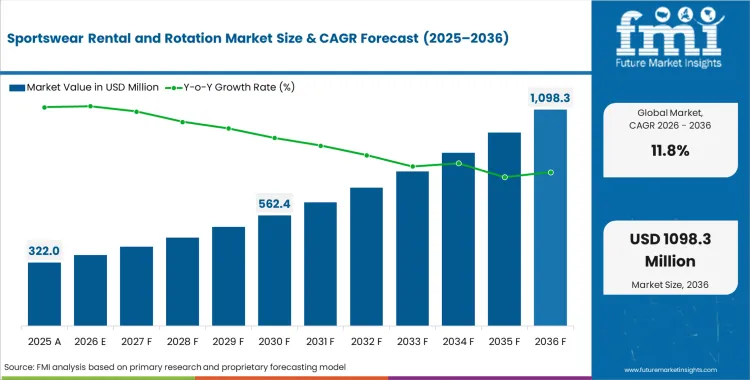
The real turning point happens when cleaning experts figure out how to deep-clean these items for the same price as a regular wash. Experts believe the big breakthrough will come when we can use machines to prove that a high-tech fabric is still in perfect shape even after being washed dozens of times. Once specialized cleaning companies make this a standard, the factor of wearing used and dirty gym clothes disappears. This will finally allow rental services to grow even more, moving into personal items like tight compression gear that people used to be nervous about sharing.
India is expected to lead the sportswear rental and rotation market, with demand rising at a CAGR of 11.6% through 2036 as a growing base of boutique fitness studios supports recurring apparel rotation demand. The United Kingdom follows with 10.3% CAGR, supported by a well-established peer-to-peer sharing ecosystem. Germany is projected to record 9.8% CAGR during the forecast period, while South Korea is likely to expand at 9.7%. The sportswear rental and rotation market in the United States is anticipated to grow at a CAGR of 9.4%, reflecting steady consumer uptake and platform-based rental models. Australia is forecast to witness 8.9% CAGR through 2036, while Japan is expected to post 7.8% growth over the same period. Differences across these countries are shaped less by consumer interest alone and more by the local availability of reverse logistics infrastructure needed to support collection, cleaning, and recirculation.
Segmental Analysis
Sportswear Rental and Rotation Market Analysis by Rental Model
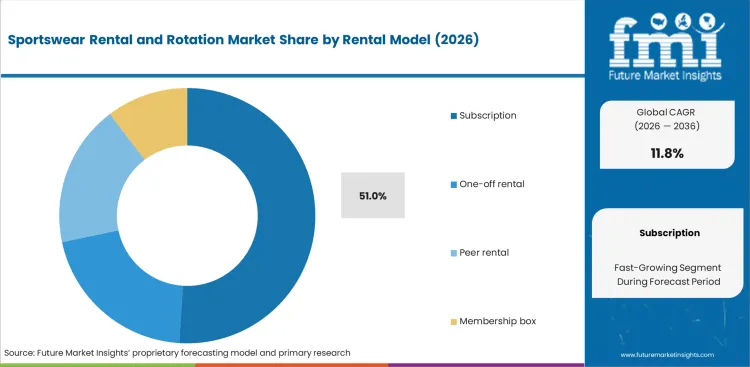
Subscription architecture wins procurement evaluations because recurring revenue models allow platforms to amortize the high cost of premium technical gear over several months. Subscription is set to lead the with 51.0% share, this stability allows operators to negotiate exclusive supply contracts with elite performance brands. The aspect that acquisition managers at these platforms often overlook is that the rotation fatigue of users usually peaks at month four, requiring a high degree of algorithmic curation to maintain engagement. When a fitness enthusiast commits to a monthly outdoor apparel and accessories box, the operational reality shifts from a retail sale to a service relationship, demanding a 24-hour turnaround on size exchanges. Failure to manage this turnaround time results in immediate churn, as the user’s workout schedule does not pause for logistics delays.
- Algorithmic Curation Accuracy: Machine learning models predict user size and style preferences based on historical seamless apparel performance data. Subscription managers use these insights to reduce the return rate of non-fitting items, which can otherwise consume 20% of the operational margin.
- Tiered Access Flexibility: Membership levels allow users to scale their rotation frequency based on seasonal activity shifts like marathon training. Procurement directors at Tier-1 platforms use these tiers to manage inventory pressure during peak gym months.
- Retention-based Refresh Cycles: High-frequency users trigger automatic inventory refreshes once a garment exceeds a specific wash-count threshold. Quality control officers must ensure that technical properties like moisture-wicking remain intact to avoid user dissatisfaction.
Sportswear Rental and Rotation Market Analysis by Activity Type
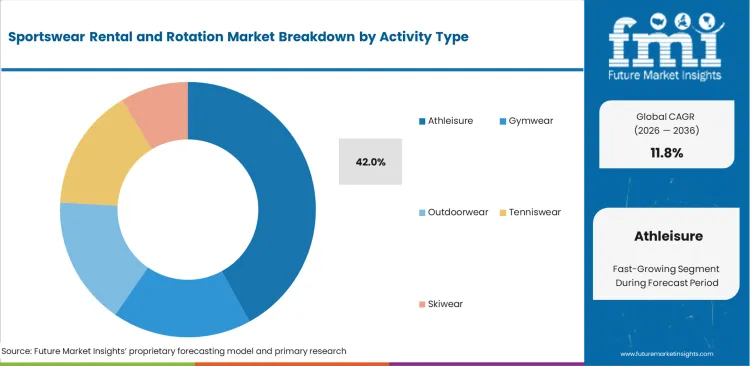
The athleisure rental market leads the activity segment with 42.0% share because the versatile nature of these garments allows for a higher utilization-per-day compared to specialized ski or tennis gear. Cosmetic chemists and textile engineers at sweat resistant apparel labels are now prioritizing anti-pilling and odor-resistance to ensure longevity in the rotation pool. A significant practitioner reality is that athleisure rental acts as a gateway category; once a user trusts the hygiene of a rental legging, they are much more likely to rent high-stakes technical gear like alpine shells. The brands that ignore the rental apparel experience a loss of visibility in the try-before-you-buy funnel, as younger consumers increasingly treat rental as their primary discovery tool.
- Versatility-driven Rotation: Garments designed for both gym use and casual wear achieve 40% higher rotation frequencies than specialized competitive gear. Category managers prioritize these dual-use items to maximize the return on capital for each SKU.
- Peak Season Scalability: Rental platforms scale their South Korea online clothing rental inventory for niche sports like skiing during winter months to capture high-margin one-off rentals. Operations directors use seasonal historical data to prevent overstocking of low-velocity specialized items.
- Performance-integrity Verification: Specialized testing ensures that compression and thermal properties are not compromised by the cleaning processes inherent in the Japan online clothing rental. R&D directors at rental platforms use these benchmarks to qualify or disqualify specific brand partners.
Sportswear Rental and Rotation Market Analysis by Garment Type
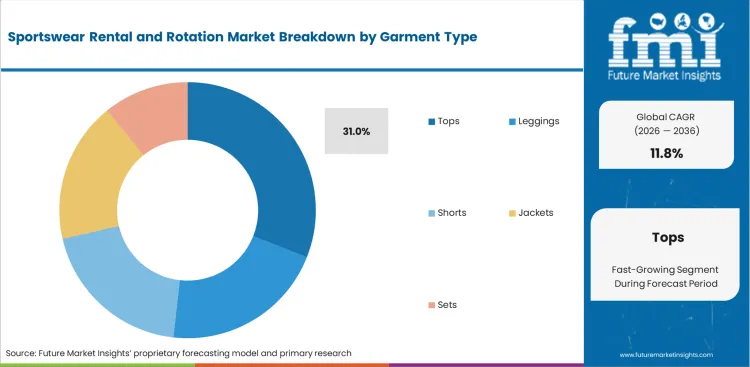
Tops represent the most frequent point of entry for those exploring the activewear rental market, primarily because they suffer the highest rate of aesthetic turnover in a typical workout wardrobe. Leggings and high-compression bottoms follow closely, as textile engineers at seamless apparel brands prioritize shape retention through dozens of industrial rotation cycles. In reality, the garment set, matching tops and bottoms, experiencing a 31% share by showcasing higher rental velocity than individual pieces, as users prioritize the complete look for social media fitness content. The commercial outcome for brands that fail to offer matching sets is a lower basket value and reduced user engagement within the rotation pool.
- Aesthetic-led Rotation: Garments designed with bold patterns and seasonal colors achieve much higher rotation frequencies than basic black staples. Category managers at sweat resistant apparel platforms prioritize these high-visibility items to keep the digital catalog feeling fresh and trend-aligned.
- Technical Outerwear Scaling: High-ticket items like jackets and specialized outdoor apparel and accessories layers are rented for specific climates or seasonal trips. Procurement directors use seasonal data to ensure these expensive SKUs are fully utilized during peak winter months.
- Compression Integrity Verification: Specialized testing confirms that leggings and tops maintain their medical-grade compression after multiple sanitization cycles. R&D directors at rental platforms use these benchmarks to ensure that "performance-readiness" is never sacrificed for hygiene.
Sportswear Rental and Rotation Market Analysis by Channel
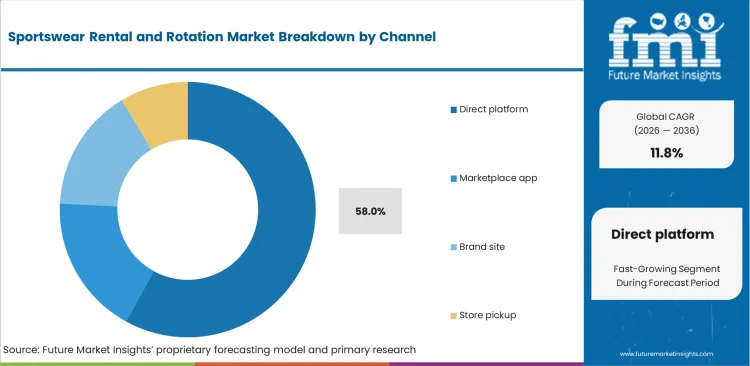
Direct platforms currently dominate the landscape, accounting for 58.0% of the distribution as brands seek to own the entire user relationship and data stream. Marketplace apps are the fastest-growing sub-segment, producing variations for users who want to rotate through multiple elite labels under a single subscription. What brand managers often miss is that the store pickup option is becoming a critical last-mile solution, allowing urban professionals to swap gear during their lunch break. The shift toward mobile-first apps is not just about convenience; it is about the gamification of the wardrobe, where users can track their carbon savings alongside their workout stats.
- Data-driven Personalization: Direct-to-consumer platforms use AI to analyze workout frequency and suggest the next workout clothes rotation before the user even requests it. Digital officers use this predictive modeling to lower churn rates and increase the lifetime value of the subscriber.
- Omnichannel Swap Points: Retailers are turning physical stores into "rotation hubs" where users can drop off dirty gear and pick up fresh sets. Operations managers use these physical nodes to reduce shipping costs and improve the speed of the reverse-logistics cycle.
- Marketplace Brand Discovery: Third-party apps serve as a powerful discovery tool for sports inspired clothing brands looking to reach a younger, ownership-averse demographic. Marketing heads treat these channels as a high-conversion sampling funnel for their premium retail lines.
Sportswear Rental and Rotation Market Analysis by User Type
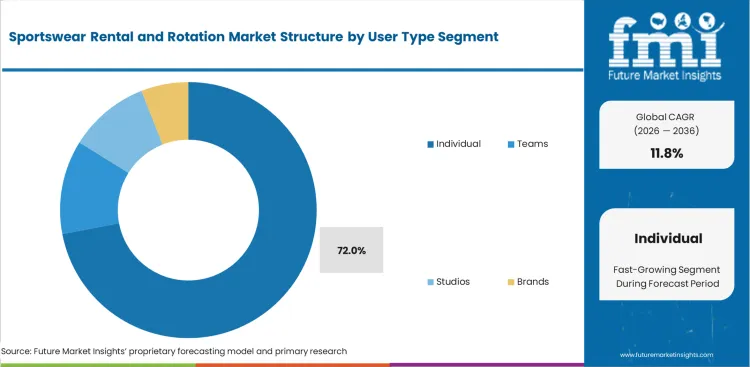
Individual consumers currently hold 72.0% of the market share, fueled by the rising cost-per-wear consciousness of Gen Z athletes. A significant change is however occurring as professional studios and corporate wellness programs begin to adopt the locker-rental models for their members. One non-obvious observation is that amateur sports teams are increasingly renting high-end competitive kits for single-season use to avoid the massive upfront costs of custom purchasing. The commercial outcome for platforms that target institutional users is a more stable, bulk-logistics revenue stream compared to the higher-churn individual subscriber base.
- Institutional Uniform Rotation: Gyms and yoga studios are partnering with activewear subscription rental services to provide high-quality uniforms for their instructors. Studio directors use this to ensure brand consistency without the administrative burden of laundry and inventory management.
- Prosumer Performance Needs: Serious marathon runners and triathletes rent elite-level gear for race day that they would not necessarily need for daily training. Category managers curate race-day bundles to capture this high-intent, performance-focused user segment.
- Corporate Wellness Integration: Companies are adding athleisure rental subscriptions to their employee benefit packages to encourage active lifestyles. Human resource directors view this as a low-friction way to improve employee health while aligning with corporate sustainability goals.
Sportswear Rental and Rotation Market Drivers, Restraints, and Opportunities
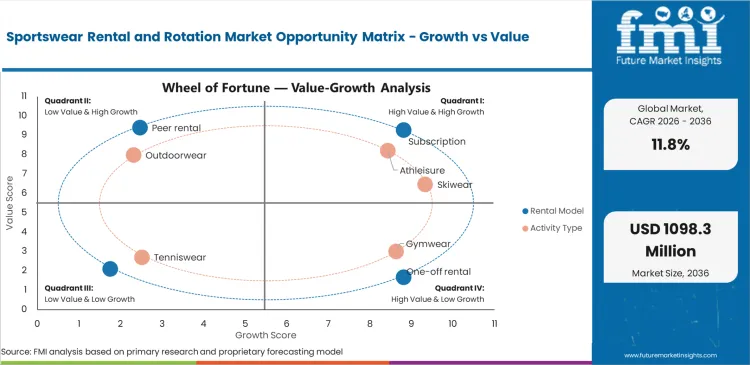
Bloated personal closets and the cost-per-wear crisis among Gen Z consumers are forcing a move toward utility-based consumption. When analysts compare sportswear rental with general clothing rental, it becomes clear that athletic gear suffers faster aesthetic turnover, making ownership less appealing. R&D directors at major sportswear labels are mid-decision, realizing that if they do not provide a rental option, they will lose an entire generation of athletes who refuse to own underutilized assets. The stakes of delay for these brands are a permanent loss of market share to digital-native peer-to-peer platforms.
The fundamental problem of slowing adoption is the lack of standardized sanitization certificates for technical fabrics that cannot be subjected to high-temperature laundering. This obstacle persists because traditional dry-cleaning methods can damage the delicate membranes in high-end second hand fashion shells. A partial solution is emerging through ozone-based cleaning systems, but the current limitation is the high capital expenditure required for small-scale platforms to install such systems. This creates a bottleneck where only the largest, most well-capitalized players can guarantee the level of hygiene required to win over skeptical new users.
- B2B Studio Integration: Partnering with luxury gym chains to offer a studio workout outfit rental service allows members to arrive without bags and wear fresh gear.
- Technical Refurbishment Services: Establishing specialized repair hubs for rental inventory extends the lifecycle of high-margin items like waterproof jackets and competitive footwear.
- Logistics-as-a-Service: Developing proprietary reusable apparel e-commerce mailers and return systems creates a secondary revenue stream for platforms with mature reverse-logistics capabilities.
Regional Analysis
Regional dynamics within the rotation economy are defined by how local infrastructure and cultural attitudes toward hygiene shape the way 40 plus countries manage athletic garment lifecycles. From the rapid studio expansions in urban Asia to the regulatory-driven circularity of Europe, the geographic landscape is a patchwork of varying logistics maturity and buyer urgency.
.webp "Top Country Growth Comparison Sportswear Rental And Rotation Market Cagr (2026 2036)")
| Country | CAGR (2026 to 2036) |
|---|---|
| India | 11.6% |
| United Kingdom | 10.3% |
| Germany | 9.8% |
| South Korea | 9.7% |
| United States | 9.4% |
| Australia | 8.9% |
| Japan | 7.8% |
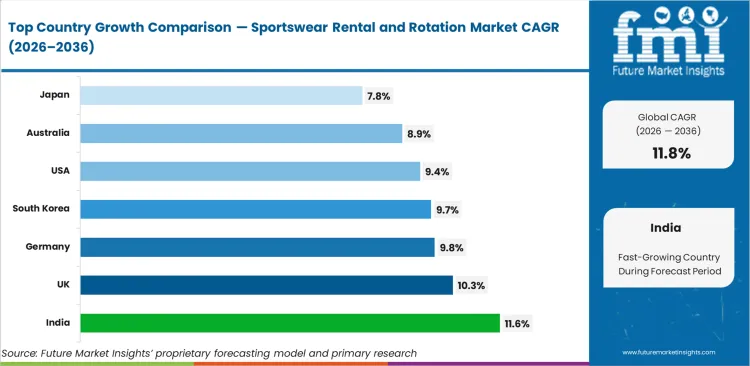
Source: Future Market Insights (FMI) analysis, based on proprietary forecasting model and primary research
North America Sportswear Rental and Rotation Market Analysis
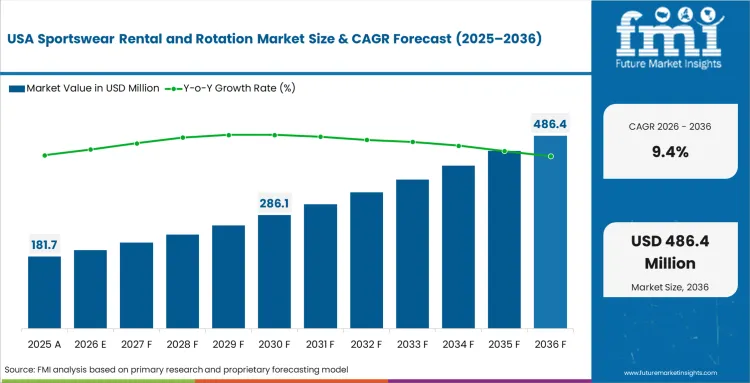
High-income urban centers across this region serve as the primary testing grounds for centralized logistics hubs that make high-frequency gear rotation possible. Increasing demand here is being pulled forward by a major integration of rental services into traditional retail storefronts, changing how brands think about their physical space.
- United States: Brands are fighting retail saturation by launching the rotation-as-a-service programs, helping them move inventory without any brand-killing effects of constant discounting. By integrating a CAGR of 9.4% into their long-term strategies, these companies find a competitive edge over standard e-commerce rivals who only offer one-way sales. Procurement directors use these rental channels to keep foot traffic high, turning a traditional store into a dynamic service point for the local fitness community.
FMI’s report includes additional countries like Canada, where the rise of cold-weather sports creates a unique seasonal demand for high-ticket outerwear rotation. This region's trajectory is defined by the heavy investment in automated cleaning facilities that can handle the sheer volume of a continental market.
Europe Sportswear Rental and Rotation Market Analysis
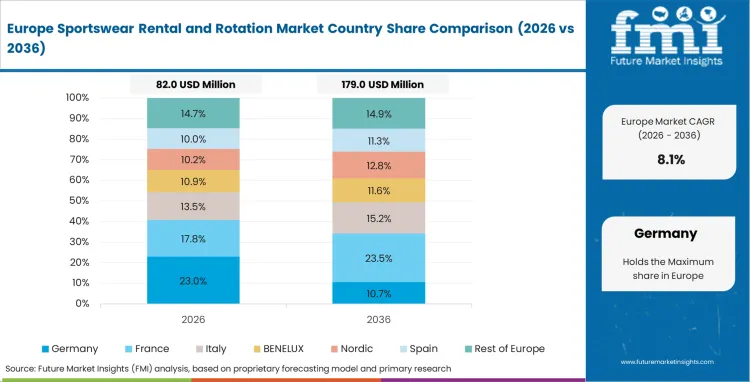
Circularity in Europe is no longer just a suggestion but a core business requirement as the European Commission tightens the belt on textile waste. This transition from optional “green” initiatives to mandatory requirements is forcing even the oldest sports brands to adopt rental channels to stay compliant.
- United Kingdom: The local landscape has moved past the early-adopter stage as peer-to-peer sharing apps become a common way for people to monetize their own high-end gym collections. This democratic approach to supply means the country is set to dominate by 10.3% annually, a figure that arguably understates how many individual garments are actually changing hands every day. It creates a reality where the community, rather than a warehouse, holds the most valuable inventory.
- Germany: Outdoor enthusiasts here are increasingly choosing to rent their seasonal gear, driven by a national culture that prizes both high-performance and strict environmental standards. Shaping the local industry with a CAGR of 9.8%, operations directors are building closed-loop systems that ensure every returned item is accounted for. The result is a highly efficient supply chain that mirrors the country's broader commitment to a zero-waste future.
FMI’s assessment includes additional markets like France and Scandinavia, where legislative pressure is creating a gold standard for textile transparency. The structural shift in Europe favors platforms that can integrate directly into a brand’s existing sustainability reporting.
Asia Pacific & ASEAN Sportswear Rental and Rotation Market Analysis
The influencer economy in this region is the main engine for growth, as social media demand for constant aesthetic variety makes owning a wardrobe practically impossible. Urban fitness centers are becoming the physical backbone of the market, acting as convenient drop-off and collection points for a digital-native generation.
- India: A massive commercial opportunity is opening up as boutique fitness franchises bake rental gear directly into their membership perks. The industry is expected to witness a 11.6% rise in demand, creating a unique path where the gym is the primary place where people interact with new apparel. This structural shift is turning fitness hubs into essential nodes for the broader rotation economy.
- South Korea: Millennials in this market view luxury golf and tennis gear as essential social currency, but they prefer rotating the latest styles rather than storing them. Brands are finding that rental is the most effective way to reach young consumers who value variety over possession, thereby leading an impressive 9.7% CAGR through the decade. This behavior allows users to stay on-trend without the clutter of a permanent collection.
- Japan: Premium standards and a cultural obsession with meticulous care are driving the adoption of high-end activewear rental among urban professionals. As the region’s landscape is set to advance at 7.8% each year, with providers winning loyalty by proving their sanitization processes are second to none. For these buyers, the peace of mind regarding hygiene is just as important as the quality of the fabric itself.
- Australia: A deep-rooted outdoor culture is merging with a growing awareness of fashion waste, making rental an easy choice for weekend adventurers. With an anticipated CAGR of 8.9% helping to redefine local retail, consumers are moving away from buying "one-off" items for specific trips. This shift supports a more sustainable way to enjoy the country's diverse climate without a heavy environmental footprint.
FMI's report also looks at emerging hubs in ASEAN, including Singapore and Thailand, where mobile-first platforms are quickly scaling among young urbanites. The competitive battleground in Asia Pacific will be won by those who can master the last-mile delivery in overly congested cities.
Competitive Aligners for Market Players
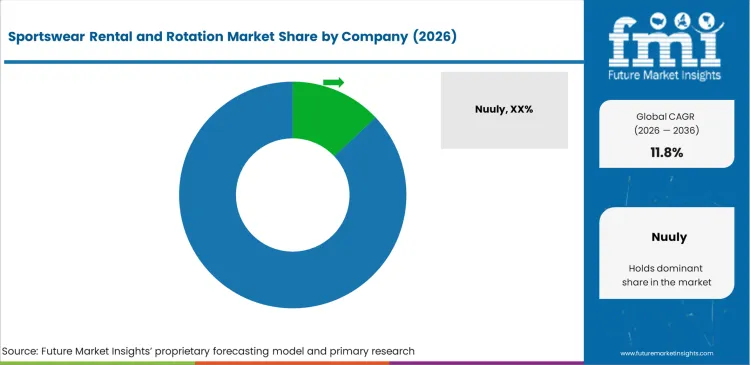
Competition in this space isn't just about who has the most famous name; it is about who can actually keep high-tech clothes in peak condition. While big names like Nuuly and Rent the Runway were first to the party with everyday fashion, specialized sportswear rental platforms are winning by focusing on the tricky science of cleaning performance fabrics. Athletes aren't just looking for a huge selection; they care most about hygiene and whether the gear still works like it should. Any company that can prove their cleaning process won't ruin the sweat-wicking or stretch of a garment will win over serious gym-goers who are usually nervous about moving away from owning their own gear.
The established leaders have a massive head start because they own years of secret data on how garments hold up. Knowing exactly how many times a specific Nike or Lululemon shirt can be washed before it starts to fall apart is incredibly valuable information that a new company cannot just recreate overnight. Newer apps like HURR and By Rotation are trying to get around this by leveraging circular fashion rental models, which moves the work of cleaning and storage back to the actual owners. The catch is that these peer-to-peer apps have to be great at settling arguments when gear inevitably gets worn out or damaged during a tough workout.
Big clients, like major fitness chains, are playing it smart by working with several different rental apps at once so they aren't stuck with just one provider. This lets them offer their members a huge variety of brands without having to take on the risk of buying and storing all that clothing themselves. Looking toward 2036, the battle will move beyond just having items in stock to something called predictive rotation. This is where platforms use AI to learn your workout routine and ship you the right gear before you even realize you need it. In the end, the winners will be the companies that understand the users' data, not just the ones with the biggest warehouses.
Key Players in Sportswear Rental and Rotation Market
- Nuuly
- Rent the Runway
- Armoire
- HURR
- By Rotation
- BNTO
Scope of the Report
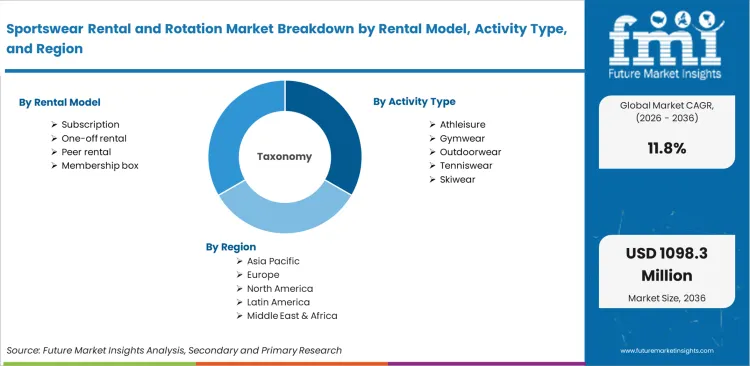
| Metric | Value |
|---|---|
| Quantitative Units | USD 322.0 million to USD 982.4 million, at a CAGR of 11.8% |
| Market Definition | Functional transfer of high-performance technical apparel through B2C subscription, one-off, and peer-to-peer models, enabling high-frequency rotation of athletic gear. |
| Segmentation | Rental model, Activity type, Garment type, User type, Channel, and Region. |
| Regions Covered | North America, Europe, Asia Pacific, Rest of World. |
| Countries Covered | United States, United Kingdom, Germany, India, South Korea, Japan, Australia. |
| Key Companies Profiled | Nuuly, Rent the Runway, Armoire, HURR, By Rotation, BNTO. |
| Forecast Period | 2026 to 2036 |
| Approach | Bottom-up assessment anchored by subscriber churn, logistics throughput, and active rental transaction volumes. |
Source: Future Market Insights (FMI) analysis, based on proprietary forecasting model and primary research
Segments
Rental Model
- Subscription
- One-off rental
- Peer rental
- Membership box
Activity Type
- Athleisure
- Gymwear
- Outdoorwear
- Tenniswear
- Skiwear
Garment Type
- Tops
- Leggings
- Shorts
- Jackets
- Sets
User Type
- Individual
- Teams
- Studios
- Brands
Channel
- Direct platform
- Marketplace app
- Brand site
- Store pickup
Regions:
- North America
- United States
- Asia Pacific & ASEAN
- China
- Japan
- South Korea
- India
- Singapore
- Australia
- Europe
- Germany
- United Kingdom
- Middle-East
- United Arab Emirates
Bibliography
- European Commission. (2025). Revised Waste Framework Directive enters into force to boost circularity of textile sector and slash food waste.
- European Environment Agency. (2024). Management of used and waste textiles in Europe’s circular economy.
- Government Accountability Office. (2024). Textile waste: Federal entities should collaborate on reduction and recycling efforts (GAO-25-107165).
- WRAP. (2025). Textiles Extended Producer Responsibility (EPR): Frequently asked questions.
- Amasawa, E., Kimita, K., Yoshida, T., & Hirao, M. (2025). Exploring different product-service combinations for sustainable clothing rental service based on consumer preferences and climate change impacts. Scientific Reports, 15(1), 10555.
This bibliography is provided for reader reference. The full FMI report contains the complete reference list with primary source documentation.
This Report Addresses
- The structural shift from performance garment ownership to utility-based rotation.
- The impact of algorithmic curation on subscriber retention for fitness rental platforms.
- Logistics barriers related to technical-grade sanitization for high-end athletic apparel.
- Regional growth disparities fueled by reverse-logistics infrastructure maturity in India and UK.
- Competitive dynamics between first-mover general rental giants and specialized sportswear start-ups.
- The role of "influencer aesthetics" in driving high-frequency athleisure rotation cycles.
- Strategic implications for sportswear R&D directors focusing on durability-as-a-service.
- Market valuation and CAGR projections through 2036 across five core segments.
Frequently Asked Questions
What is the sportswear rental market size?
The valuation is USD 322.0 million in 2026, reflecting the growing consumer shift toward access-over-ownership in high-performance athletic categories.
How fast is sportswear rental growing?
Revenue is set to expand at a CAGR of 11.8%, as the logistics layer for technical textile rotation matures in major urban hubs.
Which rental model currently leads the market?
Subscription models lead with a 51.0% share because they offer a predictable rotation cycle for daily gym-goers and fitness professionals.
Why is athleisure the dominant activity type?
Athleisure accounts for 42.0% of activity because its versatility allows for higher daily utilization rates compared to specialized seasonal sports gear.
Which countries are leading sportswear rental adoption?
India is growing at 11.6%, followed by the UK and Germany, due to rapid urbanization and the expansion of organisé fitness infrastructure.
Why do consumers rent activewear instead of buying?
Rising gear costs and the social media-driven need for frequent aesthetic variety force consumers to seek temporary access over expensive ownership.
What is the main structural restraint in this market?
The lack of standardized sanitization certifications for delicate technical fabrics persists as a bottleneck for mass-market consumer trust.
How do peer-to-peer platforms differ from B2C models?
Peer-to-peer models like By Rotation democratize supply by allowing individual owners to monetize their personal high-end sportswear collections.
What operational challenges do logistics providers face?
Providers must balance aggressive sanitization with the need to preserve the moisture-wicking and compression properties of elite performance fabrics.
What is the significance of the "Individual" user type segment?
Individuals account for 72.0% of the market, as the initial wave of rotation adoption is driven by B2C subscription platforms.
How does India compare to the United Kingdom in growth?
India’s 11.6% growth is driven by new infrastructure, while the UK’s 10.3% growth stems from mature peer-to-peer sharing ecosystems.
What role does ESG legislation play in this market?
Circular economy mandates in Europe are forcing legacy brands to adopt rental channels to meet legal textile waste reduction targets.
What is "rotation fatigue" in subscription models?
Rotation fatigue occurs when curated boxes no longer feel novel to the user, necessitating advanced algorithms to maintain subscriber engagement.
Why are boutique gym chains entering the rental space?
Studios offer gear rental to enhance member convenience and create a "no-bag" workout experience for busy urban professionals.
What technical properties are most at risk in the rental pool?
Compression, elasticity, and waterproof membranes are the properties most likely to degrade over 50+ industrial cleaning cycles.
How do rental platforms manage inventory depreciation?
Operators use wash-count tracking to automatically rotate out degraded items before they impact the user experience.
Who are the key players in sportswear rental?
Nuuly, Rent the Runway, and specialized startups like BNTO are the primary companies shaping the competitive landscape.
How does the "Influencer Economy" impact this sector?
The demand for a constant stream of new "fitness looks" for social content makes the cost of ownership prohibitive for most creators.
What are the "Locker-Rental" services?
These services allow gym members to rent and return fresh performance gear directly at the fitness center, eliminating the need to carry personal gear.
Which garment type holds the largest share?
Tops hold 31.0% of the garment segment as they are the most frequently rotated item in a typical athlete’s wardrobe.
Estimate the size of the sportswear rental market in 2036.
The total valuation is expected to reach USD 982.4 million as specialized rotation services become standard across the wellness ecosystem.
What is the "gateway" effect in sportswear rental?
Trusting the hygiene of a rental athleisure item is the primary trigger for users to eventually rent high-ticket items like ski shells.
How is the Australian market performing?
Australia tracks at 8.9% growth, supported by a strong outdoor culture and increasing awareness of circular fashion principles.
Is activewear rental profitable for operators?
Profitability hinges on optimizing reverse logistics and maintaining garment integrity over a high number of rental cycles.
Preview the report firsthand - request a free sample
Get SampleGet the brochure for pricing and purchase details.
Get PDFTable of Content
- Executive Summary
- Global Market Outlook
- Demand-side Trends
- Supply-side Trends
- Technology Roadmap Analysis
- Analysis and Recommendations
- Market Overview
- Market Coverage / Taxonomy
- Market Definition / Scope / Limitations
- Research Methodology
- Chapter Orientation
- Analytical Lens and Working Hypotheses
- Market Structure, Signals, and Trend Drivers
- Benchmarking and Cross-market Comparability
- Market Sizing, Forecasting, and Opportunity Mapping
- Research Design and Evidence Framework
- Desk Research Programme (Secondary Evidence)
- Company Annual and Sustainability Reports
- Peer-reviewed Journals and Academic Literature
- Corporate Websites, Product Literature, and Technical Notes
- Earnings Decks and Investor Briefings
- Statutory Filings and Regulatory Disclosures
- Technical White Papers and Standards Notes
- Trade Journals, Industry Magazines, and Analyst Briefs
- Conference Proceedings, Webinars, and Seminar Materials
- Government Statistics Portals and Public Data Releases
- Press Releases and Reputable Media Coverage
- Specialist Newsletters and Curated Briefings
- Sector Databases and Reference Repositories
- FMI Internal Proprietary Databases and Historical Market Datasets
- Subscription Datasets and Paid Sources
- Social Channels, Communities, and Digital Listening Inputs
- Additional Desk Sources
- Expert Input and Fieldwork (Primary Evidence)
- Primary Modes
- Qualitative Interviews and Expert Elicitation
- Quantitative Surveys and Structured Data Capture
- Blended Approach
- Why Primary Evidence is Used
- Field Techniques
- Interviews
- Surveys
- Focus Groups
- Observational and In-context Research
- Social and Community Interactions
- Stakeholder Universe Engaged
- C-suite Leaders
- Board Members
- Presidents and Vice Presidents
- R&D and Innovation Heads
- Technical Specialists
- Domain Subject-matter Experts
- Scientists
- Physicians and Other Healthcare Professionals
- Governance, Ethics, and Data Stewardship
- Research Ethics
- Data Integrity and Handling
- Primary Modes
- Tooling, Models, and Reference Databases
- Desk Research Programme (Secondary Evidence)
- Data Engineering and Model Build
- Data Acquisition and Ingestion
- Cleaning, Normalisation, and Verification
- Synthesis, Triangulation, and Analysis
- Quality Assurance and Audit Trail
- Market Background
- Market Dynamics
- Drivers
- Restraints
- Opportunity
- Trends
- Scenario Forecast
- Demand in Optimistic Scenario
- Demand in Likely Scenario
- Demand in Conservative Scenario
- Opportunity Map Analysis
- Product Life Cycle Analysis
- Supply Chain Analysis
- Investment Feasibility Matrix
- Value Chain Analysis
- PESTLE and Porter’s Analysis
- Regulatory Landscape
- Regional Parent Market Outlook
- Production and Consumption Statistics
- Import and Export Statistics
- Market Dynamics
- Global Market Analysis 2021 to 2025 and Forecast, 2026 to 2036
- Historical Market Size Value (USD Million) Analysis, 2021 to 2025
- Current and Future Market Size Value (USD Million) Projections, 2026 to 2036
- Y-o-Y Growth Trend Analysis
- Absolute $ Opportunity Analysis
- Global Market Pricing Analysis 2021 to 2025 and Forecast 2026 to 2036
- Global Market Analysis 2021 to 2025 and Forecast 2026 to 2036, By Rental Model
- Introduction / Key Findings
- Historical Market Size Value (USD Million) Analysis By Rental Model , 2021 to 2025
- Current and Future Market Size Value (USD Million) Analysis and Forecast By Rental Model , 2026 to 2036
- Subscription
- One-off rental
- Peer rental
- Membership box
- Subscription
- Y-o-Y Growth Trend Analysis By Rental Model , 2021 to 2025
- Absolute $ Opportunity Analysis By Rental Model , 2026 to 2036
- Global Market Analysis 2021 to 2025 and Forecast 2026 to 2036, By Activity Type
- Introduction / Key Findings
- Historical Market Size Value (USD Million) Analysis By Activity Type, 2021 to 2025
- Current and Future Market Size Value (USD Million) Analysis and Forecast By Activity Type, 2026 to 2036
- Athleisure
- Gymwear
- Outdoorwear
- Tenniswear
- Skiwear
- Athleisure
- Y-o-Y Growth Trend Analysis By Activity Type, 2021 to 2025
- Absolute $ Opportunity Analysis By Activity Type, 2026 to 2036
- Global Market Analysis 2021 to 2025 and Forecast 2026 to 2036, By Garment Type
- Introduction / Key Findings
- Historical Market Size Value (USD Million) Analysis By Garment Type, 2021 to 2025
- Current and Future Market Size Value (USD Million) Analysis and Forecast By Garment Type, 2026 to 2036
- Tops
- Leggings
- Shorts
- Jackets
- Sets
- Tops
- Y-o-Y Growth Trend Analysis By Garment Type, 2021 to 2025
- Absolute $ Opportunity Analysis By Garment Type, 2026 to 2036
- Global Market Analysis 2021 to 2025 and Forecast 2026 to 2036, By Channel
- Introduction / Key Findings
- Historical Market Size Value (USD Million) Analysis By Channel, 2021 to 2025
- Current and Future Market Size Value (USD Million) Analysis and Forecast By Channel, 2026 to 2036
- Direct platform
- Marketplace app
- Brand site
- Store pickup
- Direct platform
- Y-o-Y Growth Trend Analysis By Channel, 2021 to 2025
- Absolute $ Opportunity Analysis By Channel, 2026 to 2036
- Global Market Analysis 2021 to 2025 and Forecast 2026 to 2036, By User Type
- Introduction / Key Findings
- Historical Market Size Value (USD Million) Analysis By User Type, 2021 to 2025
- Current and Future Market Size Value (USD Million) Analysis and Forecast By User Type, 2026 to 2036
- Individual
- Teams
- Studios
- Brands
- Individual
- Y-o-Y Growth Trend Analysis By User Type, 2021 to 2025
- Absolute $ Opportunity Analysis By User Type, 2026 to 2036
- Global Market Analysis 2021 to 2025 and Forecast 2026 to 2036, By Region
- Introduction
- Historical Market Size Value (USD Million) Analysis By Region, 2021 to 2025
- Current Market Size Value (USD Million) Analysis and Forecast By Region, 2026 to 2036
- North America
- Latin America
- Western Europe
- Eastern Europe
- East Asia
- South Asia and Pacific
- Middle East & Africa
- Market Attractiveness Analysis By Region
- North America Market Analysis 2021 to 2025 and Forecast 2026 to 2036, By Country
- Historical Market Size Value (USD Million) Trend Analysis By Market Taxonomy, 2021 to 2025
- Market Size Value (USD Million) Forecast By Market Taxonomy, 2026 to 2036
- By Country
- USA
- Canada
- Mexico
- By Rental Model
- By Activity Type
- By Garment Type
- By Channel
- By User Type
- By Country
- Market Attractiveness Analysis
- By Country
- By Rental Model
- By Activity Type
- By Garment Type
- By Channel
- By User Type
- Key Takeaways
- Latin America Market Analysis 2021 to 2025 and Forecast 2026 to 2036, By Country
- Historical Market Size Value (USD Million) Trend Analysis By Market Taxonomy, 2021 to 2025
- Market Size Value (USD Million) Forecast By Market Taxonomy, 2026 to 2036
- By Country
- Brazil
- Chile
- Rest of Latin America
- By Rental Model
- By Activity Type
- By Garment Type
- By Channel
- By User Type
- By Country
- Market Attractiveness Analysis
- By Country
- By Rental Model
- By Activity Type
- By Garment Type
- By Channel
- By User Type
- Key Takeaways
- Western Europe Market Analysis 2021 to 2025 and Forecast 2026 to 2036, By Country
- Historical Market Size Value (USD Million) Trend Analysis By Market Taxonomy, 2021 to 2025
- Market Size Value (USD Million) Forecast By Market Taxonomy, 2026 to 2036
- By Country
- Germany
- UK
- Italy
- Spain
- France
- Nordic
- BENELUX
- Rest of Western Europe
- By Rental Model
- By Activity Type
- By Garment Type
- By Channel
- By User Type
- By Country
- Market Attractiveness Analysis
- By Country
- By Rental Model
- By Activity Type
- By Garment Type
- By Channel
- By User Type
- Key Takeaways
- Eastern Europe Market Analysis 2021 to 2025 and Forecast 2026 to 2036, By Country
- Historical Market Size Value (USD Million) Trend Analysis By Market Taxonomy, 2021 to 2025
- Market Size Value (USD Million) Forecast By Market Taxonomy, 2026 to 2036
- By Country
- Russia
- Poland
- Hungary
- Balkan & Baltic
- Rest of Eastern Europe
- By Rental Model
- By Activity Type
- By Garment Type
- By Channel
- By User Type
- By Country
- Market Attractiveness Analysis
- By Country
- By Rental Model
- By Activity Type
- By Garment Type
- By Channel
- By User Type
- Key Takeaways
- East Asia Market Analysis 2021 to 2025 and Forecast 2026 to 2036, By Country
- Historical Market Size Value (USD Million) Trend Analysis By Market Taxonomy, 2021 to 2025
- Market Size Value (USD Million) Forecast By Market Taxonomy, 2026 to 2036
- By Country
- China
- Japan
- South Korea
- By Rental Model
- By Activity Type
- By Garment Type
- By Channel
- By User Type
- By Country
- Market Attractiveness Analysis
- By Country
- By Rental Model
- By Activity Type
- By Garment Type
- By Channel
- By User Type
- Key Takeaways
- South Asia and Pacific Market Analysis 2021 to 2025 and Forecast 2026 to 2036, By Country
- Historical Market Size Value (USD Million) Trend Analysis By Market Taxonomy, 2021 to 2025
- Market Size Value (USD Million) Forecast By Market Taxonomy, 2026 to 2036
- By Country
- India
- ASEAN
- Australia & New Zealand
- Rest of South Asia and Pacific
- By Rental Model
- By Activity Type
- By Garment Type
- By Channel
- By User Type
- By Country
- Market Attractiveness Analysis
- By Country
- By Rental Model
- By Activity Type
- By Garment Type
- By Channel
- By User Type
- Key Takeaways
- Middle East & Africa Market Analysis 2021 to 2025 and Forecast 2026 to 2036, By Country
- Historical Market Size Value (USD Million) Trend Analysis By Market Taxonomy, 2021 to 2025
- Market Size Value (USD Million) Forecast By Market Taxonomy, 2026 to 2036
- By Country
- Kingdom of Saudi Arabia
- Other GCC Countries
- Turkiye
- South Africa
- Other African Union
- Rest of Middle East & Africa
- By Rental Model
- By Activity Type
- By Garment Type
- By Channel
- By User Type
- By Country
- Market Attractiveness Analysis
- By Country
- By Rental Model
- By Activity Type
- By Garment Type
- By Channel
- By User Type
- Key Takeaways
- Key Countries Market Analysis
- USA
- Pricing Analysis
- Market Share Analysis, 2025
- By Rental Model
- By Activity Type
- By Garment Type
- By Channel
- By User Type
- Canada
- Pricing Analysis
- Market Share Analysis, 2025
- By Rental Model
- By Activity Type
- By Garment Type
- By Channel
- By User Type
- Mexico
- Pricing Analysis
- Market Share Analysis, 2025
- By Rental Model
- By Activity Type
- By Garment Type
- By Channel
- By User Type
- Brazil
- Pricing Analysis
- Market Share Analysis, 2025
- By Rental Model
- By Activity Type
- By Garment Type
- By Channel
- By User Type
- Chile
- Pricing Analysis
- Market Share Analysis, 2025
- By Rental Model
- By Activity Type
- By Garment Type
- By Channel
- By User Type
- Germany
- Pricing Analysis
- Market Share Analysis, 2025
- By Rental Model
- By Activity Type
- By Garment Type
- By Channel
- By User Type
- UK
- Pricing Analysis
- Market Share Analysis, 2025
- By Rental Model
- By Activity Type
- By Garment Type
- By Channel
- By User Type
- Italy
- Pricing Analysis
- Market Share Analysis, 2025
- By Rental Model
- By Activity Type
- By Garment Type
- By Channel
- By User Type
- Spain
- Pricing Analysis
- Market Share Analysis, 2025
- By Rental Model
- By Activity Type
- By Garment Type
- By Channel
- By User Type
- France
- Pricing Analysis
- Market Share Analysis, 2025
- By Rental Model
- By Activity Type
- By Garment Type
- By Channel
- By User Type
- India
- Pricing Analysis
- Market Share Analysis, 2025
- By Rental Model
- By Activity Type
- By Garment Type
- By Channel
- By User Type
- ASEAN
- Pricing Analysis
- Market Share Analysis, 2025
- By Rental Model
- By Activity Type
- By Garment Type
- By Channel
- By User Type
- Australia & New Zealand
- Pricing Analysis
- Market Share Analysis, 2025
- By Rental Model
- By Activity Type
- By Garment Type
- By Channel
- By User Type
- China
- Pricing Analysis
- Market Share Analysis, 2025
- By Rental Model
- By Activity Type
- By Garment Type
- By Channel
- By User Type
- Japan
- Pricing Analysis
- Market Share Analysis, 2025
- By Rental Model
- By Activity Type
- By Garment Type
- By Channel
- By User Type
- South Korea
- Pricing Analysis
- Market Share Analysis, 2025
- By Rental Model
- By Activity Type
- By Garment Type
- By Channel
- By User Type
- Russia
- Pricing Analysis
- Market Share Analysis, 2025
- By Rental Model
- By Activity Type
- By Garment Type
- By Channel
- By User Type
- Poland
- Pricing Analysis
- Market Share Analysis, 2025
- By Rental Model
- By Activity Type
- By Garment Type
- By Channel
- By User Type
- Hungary
- Pricing Analysis
- Market Share Analysis, 2025
- By Rental Model
- By Activity Type
- By Garment Type
- By Channel
- By User Type
- Kingdom of Saudi Arabia
- Pricing Analysis
- Market Share Analysis, 2025
- By Rental Model
- By Activity Type
- By Garment Type
- By Channel
- By User Type
- Turkiye
- Pricing Analysis
- Market Share Analysis, 2025
- By Rental Model
- By Activity Type
- By Garment Type
- By Channel
- By User Type
- South Africa
- Pricing Analysis
- Market Share Analysis, 2025
- By Rental Model
- By Activity Type
- By Garment Type
- By Channel
- By User Type
- USA
- Market Structure Analysis
- Competition Dashboard
- Competition Benchmarking
- Market Share Analysis of Top Players
- By Regional
- By Rental Model
- By Activity Type
- By Garment Type
- By Channel
- By User Type
- Competition Analysis
- Competition Deep Dive
- Nuuly
- Overview
- Product Portfolio
- Profitability by Market Segments (Product/Age /Sales Channel/Region)
- Sales Footprint
- Strategy Overview
- Marketing Strategy
- Product Strategy
- Channel Strategy
- Rent the Runway
- Armoire
- HURR
- By Rotation
- BNTO
- Nuuly
- Competition Deep Dive
- Assumptions & Acronyms Used


