

- Industry Size (2026)
- USD 390 Mn
- Forecast (2036)
- USD 1111 Mn
- CAGR
- 11.8% 2026 to 2036)
Yeast-Derived Postbiotics for Pets Market Size, Market Forecast and Outlook By FMI
In 2025, the yeast-derived Postbiotics for pets market stood at USD 349 million. Projections indicate a rise to USD 390 million in 2026 and USD 1,111 million by 2036, returning an 11.8% CAGR, with momentum tied to clinical substantiation requirements in premium veterinary nutrition. Installed-base replacement math propels adoption as standard kibble formats fail to deliver stable functional health benefits post-extrusion. A 2025 clinical evaluation demonstrated that puppies given purified yeast beta-glucans at 65 mg/kg per day exhibited measurable, sustained immune improvements across a 120-day cycle. [1]
Regulatory adoption curves recast minimum capabilities for animal wellness formulations while procurement teams concentrate spend on stable, heat-resistant ingredients. Formulators increasingly mandate microbial strains capable of surviving complex supply chains without losing functional utility. As noted by Jorge Martínez, President of Pet Nutrition at ADM, 'As individuals prioritize healthy lifestyles, there's a growing trend among pet owners to extend this same care to their beloved companion animals.' [2] According to FMI's estimates, successful product launches require microbial strains proven to withstand harsh manufacturing environments, shifting capital allocation from basic maintenance diets to specialized therapeutic adjacencies.
Summary of Yeast-Derived Postbiotics for Pets Market
- Yeast-Derived Postbiotics for Pets Market Definition
- Non-viable yeast fermentation ingredients utilized in companion animal diets deliver stable functional health benefits without cold-chain requirements.
- Demand Drivers in the Market
- Extrusion-friendly properties bypass viability challenges characteristic of traditional live cultures.
- Rising insurance penetration incentivizes preventive digestive care spending among owners.
- High ownership rates fuel premium functional treat adoption across diverse retail channels.
- Key Segments Analyzed in the FMI Report
- Product Type: Dominant powder formats (45% share in 2026) versus liquid additives and functional chews.
- Application: Digestive health applications (40% of total volume) versus immune support and other wellness adjacencies.
- Geography: High-growth Asia-Pacific (China 14.6%, India 13.5%) versus regulatory-intensive mature North American and European markets.
- Analyst Opinion at FMI
- Nandini Roy Choudhury, Principal Consultant for Food & Beverage at Future Market Insights, opines, “Our recent findings indicate that postbiotics are emerging as formulation-friendly alternatives to traditional probiotics in pet nutrition. Unlike live cultures, yeast-derived postbiotics maintain efficacy across extrusion and high-temperature kibble processing. This stability reduces manufacturing losses and simplifies global distribution. Companies integrating EpiCor into dry pet food and treats can enhance functional positioning without compromising production efficiency.”
- Strategic Implications/Executive Takeaways
- Transition from viability claims to metabolite concentration guarantees builds consumer trust.
- Formulate multi-benefit complexes to maximize retail shelf impact against legacy competitors.
- Localize supply chains to mitigate volatile agricultural feedstock pricing disruptions effectively.
- Methodology
- Validated through first-hand corporate production and capacity data.
- Zero reliance on speculative third-party market research reports.
- Based on verifiable industrial benchmarks and verified sources.
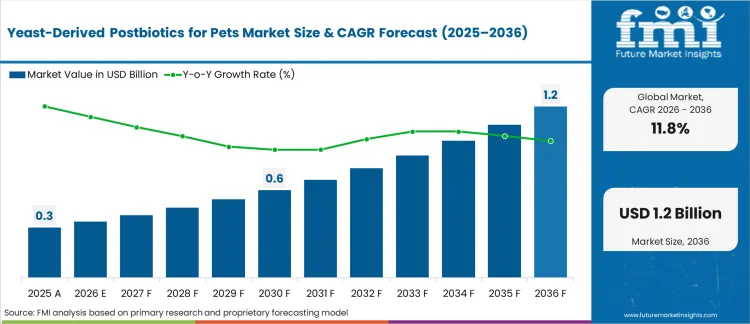
Country dispersion skews toward high-income corridors where pet insurance penetration supports premium spending habits. Growth concentrates where functional formats align with consumer convenience preferences and verifiable clinical outcomes. The American Pet Products Association reported 94 million households in the United States own a companion animal in 2025, creating a massive addressable base for targeted digestive interventions. [3] Suppliers capturing these early adopters secure long-term loyalty through visible dermatological and gastrointestinal improvements, insulating revenues against standard commodity pricing pressures.
Yeast-Derived Postbiotics for Pets Market Key Takeaways
| Metric | Details |
|---|---|
| Industry Size (2026) | USD 390 million |
| Industry Value (2036) | USD 1,111 million |
| CAGR (2026-2036) | 11.8% |
Yeast-Derived Postbiotics for Pets Market Definition
Sector tracking involves commercialization and integration of non-viable Saccharomyces cerevisiae fermentation products specifically engineered for companion animal applications. Formulations deliver stable metabolites, beta-glucans, and functional proteins without relying on live colony-forming units. Veterinary nutritionists specify functional non-viable postbiotic supplements to enhance host immune responses and modulate gut microbiota effectively. Stakeholders encompass specialized ingredient manufacturers, premium treat brands, and specialized veterinary diet producers.
Yeast-Derived Postbiotics for Pets Market Inclusions
Powdered fermentation profiles formulated for companion animals constitute primary inclusions within measured valuations. Liquid additives utilized in wet food processing fall within scope. Functional chews incorporating standardized yeast metabolites are measured explicitly. Supply chain inputs targeting canine and feline digestive health metrics contribute directly to total revenue calculations.
Yeast-Derived Postbiotics for Pets Market Exclusions
Live probiotic cultures requiring refrigeration or specific handling fall outside current parameters. Human-grade dietary supplements lacking specific veterinary dosage guidelines are omitted. Raw agricultural yeast by-products not optimized for specialized functional outcomes remain excluded. Standard kibble revenues lacking explicit postbiotic claims do not enter final market sizing calculations.
Yeast-Derived Postbiotics for Pets Market Research Methodology
- Primary Research: Analysts conducted structured interviews with formulators and supply chain directors across leading animal nutrition firms to verify adoption rates.
- Desk Research: Custom import datasets and veterinary association publications established baseline product availability across key geographies.
- Market-Sizing and Forecasting: Bottom-up calculations utilized premium retail volumes and extrapolated standard dosage inclusion rates.
- Data Validation and Update Cycle: Triangulation against corporate earnings disclosures ensured projection accuracy before final publication.
Segmental Analysis
Yeast-Derived Postbiotics for Pets Market Analysis by Product Type
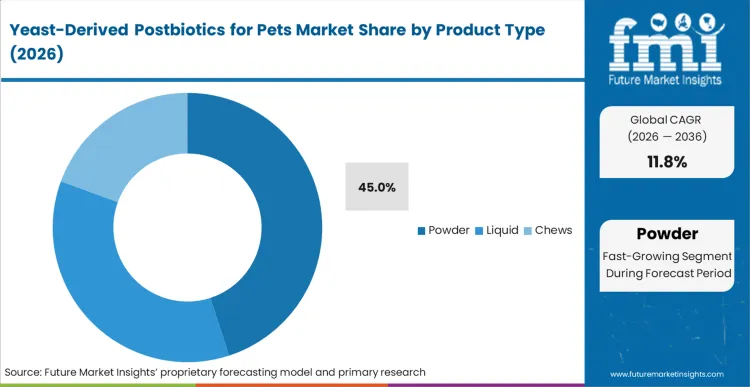
A structural shift in capital allocation toward shelf-stable, low-friction manufacturing inputs is strengthening the position of powder formats, which command 45% of market volume in 2026. Manufacturers are increasingly prioritizing inactivated fermentation networks over live-culture processing lines to simplify production systems and improve scale efficiency, especially in pet nutrition applications. This transition addresses core operational constraints because powder-based yeast metabolites are better suited to high-temperature kibble extrusion, where live cultures face thermal degradation risk, and they remove dependence on cold-chain logistics, lowering handling complexity and distribution overhead. By standardizing on dry postbiotic ingredients, suppliers can decouple efficacy from ambient transit conditions and improve consistency across global shipping environments. The July 2023 acquisition of Adare Biome by dsm-firmenich for specialized manufacturing infrastructure further supports this strategic realignment toward stable powder platforms. [4]
- Procurement realignment mandates heat-stable inputs to guarantee functional claims survive rigorous extrusion processes. European facilities deploy turnkey powder additive portfolios to lock in continuous, climate-resilient production runs. Cost structures improve drastically when brands eliminate specialized packaging required for live biotics.
- Margin optimization occurs as transitioning away from temperature-sensitive live cultures systematically removes expedited freight requirements. Broad portfolio standardization on stable yeast fractions improves operational margins for global distributors managing variable transit routes. Lower overhead unlocks capital for targeted clinical trials and advanced veterinary marketing campaigns.
- Formulation versatility allows product developers to utilize flowable non-viable properties to consolidate multiple functional wellness elements into unified base diets. Scaling bulk dry additives across entire product lines maximizes manufacturing throughput and reduces raw material fragmentation. Consistent bulk density translates directly into precise nutritional guarantees on final consumer packaging.
Yeast-Derived Postbiotics for Pets Market Analysis by Pet Type
Canine applications command 50% of the category volume in 2026. This dominance stems from aggressive portfolio expansions and strategic partnership realignments among top-tier brands. Companies prioritize canine research due to the higher daily caloric intake and corresponding active ingredient consumption rates of large dog breeds. This structural reality makes dog-specific formulations the primary revenue engine for functional ingredient manufacturers. The November 2025 partnership between Zesty Paws and Native Microbials to commercialize novel canine gastrointestinal solutions signals a deliberate industry strategy to capture this high-volume demographic through targeted microbiome interventions. [5] Corporate capital flows disproportionately into canine clinical trials, generating the foundational efficacy data required to validate premium pricing models. Securing early adoption across veterinary networks ensures brand loyalty before adapting these platforms for feline markets. Large-scale canine feeding trials establish the safety profiles necessary for subsequent cross-species product development.
- Volume scaling dictates prioritizing canine products because larger animal masses consume exponentially more active metabolites per serving. Ingredient suppliers structure tiered pricing models based on anticipated canine consumption rates. Scale economies benefit formulators designing bulk additive packages for large dog demographics.
- Partnership execution forces brands to form exclusive supply alliances to monopolize clinically validated microbial strains for canine digestive care. Strategic resource pooling limits competitor access to novel dog intestinal health pet dietary supplement technologies and solidifies market share in the premium supplement tier.
- Diagnostic integration involves veterinary networks deploying advanced microbiome testing to prescribe specific nutritional interventions for complex canine dermatological cases. Documented efficacy in clinical settings accelerates broader commercial adoption across specialized pet pharmacies. Formulators leverage these diagnostics to design precise postbiotic recovery regimens.
Yeast-Derived Postbiotics for Pets Market Analysis by Application
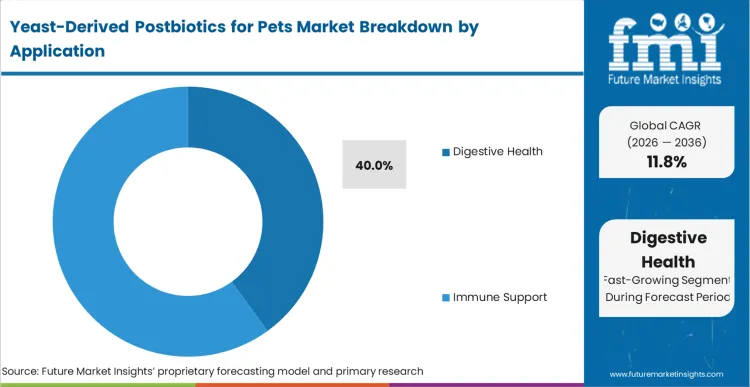
Digestive health formulations account for 40% of the market in 2026, reflecting a clear shift from broad wellness messaging toward targeted, clinically supported microbiome-focused solutions. Pet nutrition companies are reallocating marketing and R&D investment to digestive health because gut function is increasingly positioned as a central driver of overall immunity and preventive care outcomes. This strategy places the digestive tract at the core of product architecture rather than treating it as a secondary benefit. Large players are also using acquisitions to accelerate participation in the segment by securing established functional nutrition brands and their customer bases, as illustrated by Agrolimen’s acquisition of Ollie in February 2026. [6] By building product claims around measurable digestive outcomes, brands strengthen recurring subscription demand among pet owners managing chronic sensitivities and ongoing gut-health concerns. This clinical positioning shifts consumption from occasional therapeutic purchases to everyday nutritional use, which deepens retention and raises entry barriers for generic competitors with less substantiated claims.
- Clinical positioning utilizes rigorous safety dossiers and proven efficacy metrics to secure coveted endorsements from clinical practitioners. Standardizing protocols around stable fermentation products accelerates the transition from niche veterinary applications to mass-market premium channels. Preventive care strategies emphasize gut microbiome stabilization to reduce long-term veterinary expenditures.
- Platform expansion uses established digestive efficacy data to justify expansion into adjacent functional categories. Introducing oral health chews illustrates how baseline digestive technologies enable rapid cross-category product innovation. Formulators combine yeast metabolites with recognized prebiotics to create synergistic functional complexes.
- Acquisition logic dictates that legacy ingredient suppliers control premium intestinal health pet dietary supplement channels utilizing advanced microbial additives. Owning established consumer-facing brands provides immediate distribution networks for newly developed non-viable fermentation fractions. Integrated entities leverage global supply chains to reduce unit costs effectively.
Yeast-Derived Postbiotics for Pets Market Drivers, Restraints, and Opportunities
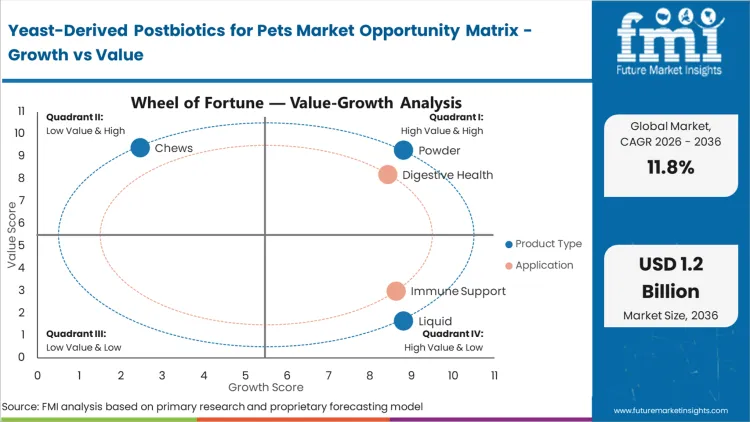
Regulatory adoption curves dictate ingredient integration pacing across global companion animal nutrition networks. Agencies demand rigorous safety profiles and stability data before approving novel functional additives. Suppliers investing in comprehensive dossiers secure approvals faster, establishing formidable barriers to entry for unverified competitors. European households owning at least one companion animal reached 139 million in 2025, creating massive baseline demand for verified preventive wellness solutions. [7] FMI analysts opine that brands leveraging approved, heat-stable specialty yeast derivatives capture early category dominance by bypassing viability concerns associated with live probiotics. Formulators specify these stable fractions to ensure functional claims remain valid post-processing, insulating product lines from costly recall events linked to degraded active ingredients.
Cost barriers and formulation complexities slow widespread adoption within mass-market pet food tiers. Extracting and standardizing specific yeast metabolites requires specialized fermentation equipment and precise quality control infrastructure. Capital expenditure constraints limit smaller regional manufacturers from matching functional claims advanced by multinational conglomerates. The launch of Plenibiotic in February 2024 demonstrates the significant R&D investment required to bring dual-purpose postbiotics to commercial scale, effectively locking out undercapitalized formulators. [8] Procurement teams mitigate premium pet dietary supplements ingredient costs by blending non-viable cultures into targeted high-margin treats rather than base kibble. This tiered strategy protects overall margin profiles while still capturing health-conscious consumer segments.
- Dental application: Formulators utilize oral microbiome science to pioneer new delivery formats outside traditional digestive chews. Spot & Tango released PupGum dental chews featuring a patent-pending postbiotic in June 2025, commanding distinct premium price points in crowded retail environments. [9]
- Veterinary integration: Specialized diagnostic firms incorporate postbiotics into targeted recovery protocols following comprehensive microbiome testing. AnimalBiome reported completing 12,500 patient tests by year-end 2024, highlighting immense scale regarding personalized nutritional interventions based on individual animal profiles. [10]
- Specialized formulations: Innovative delivery systems differentiate brands and accelerate category penetration among discerning pet owners. Fera Pets released wellness supplements in August 2024, demonstrating how multi-benefit complexes maximize retail shelf impact against legacy competitors relying on single-ingredient claims. [11]
Regional Analysis
Based on the regional analysis, the Yeast-Derived Postbiotics for Pets market is segmented into North America, Latin America, Europe, East Asia, South Asia, Oceania and Middle East & Africa across 40+ countries. The full report also offers market attractiveness analysis based on regional trends.
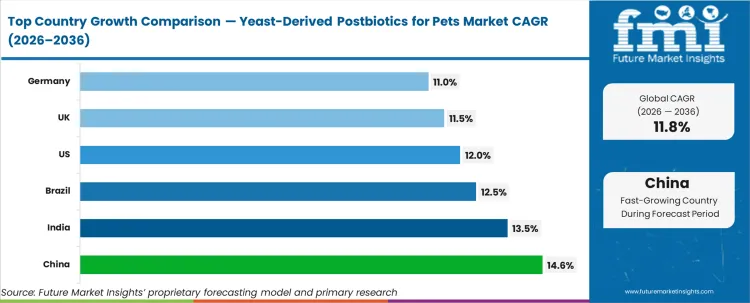
.webp "Top Country Growth Comparison Yeast Derived Postbiotics For Pets Market Cagr (2026 2036)")
| Country | CAGR (2026 to 2036) |
|---|---|
| USA | 12.0% |
| UK | 11.5% |
| Germany | 11.0% |
| China | 14.6% |
| Brazil | 12.5% |
| India | 13.5% |
Source: Future Market Insights (FMI) analysis, based on proprietary forecasting model and primary research
North America Yeast-Derived Postbiotics for Pets Analysis
Advanced regulatory frameworks and high disposable incomes fuel early adoption regarding premium functional ingredients. Owners view companion animals as family members, matching their own wellness routines with sophisticated veterinary nutrition. Strong insurance penetration mitigates routine care costs, freeing capital for advanced united states pet dietary supplement ranges. The US pet insurance industry surpassed 6.4 million insured companion animals by year-end 2024, expanding the addressable market for therapeutic nutrition. [12] As per FMI's projection, regional formulators will continue leading global innovation regarding novel delivery systems like functional liquid toppers and specialized dental chews.
- USA: Demand for Yeast-Derived Postbiotics for Pets in USA is set to grow at 12.0% CAGR through 2036, supported by robust baseline spending before procurement cycles translate into higher deployment volumes. General Mills agreed to acquire Whitebridge Pet Brands in November 2024, signaling rapid consolidation to capture premium wellness portfolios. [13] Brands targeting massive demographic pools prioritize clinically substantiated ingredients to satisfy discerning consumers.
FMI's report includes detailed growth analysis and country-wise assessment across diverse regulatory landscapes. Canada and Mexico represent emerging frontiers where rising urban density propels indoor ownership patterns. Supply chain managers should monitor changing import regulations in adjacent markets to ensure uninterrupted raw material flow. Sustained regional growth depends on educating retail partners about postbiotic stability advantages compared to legacy live cultures.
Europe Yeast-Derived Postbiotics for Pets Analysis
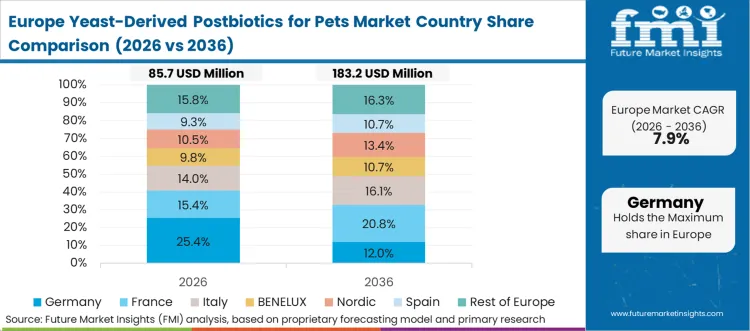
Stringent European Union feed regulations elevate verifiable safety dossiers and transparent ingredient sourcing. Manufacturers navigate complex approval pathways, favoring ingredients with established historical use and extensive clinical backing. High population density supports diverse functional product offerings across multiple retail channels. Lehvoss Nutrition published a pet supplement spotlight positioning EpiCor for immune and microbiome health in June 2024, accelerating regional channel activity. [14] According to FMI's estimates, regional brands excel at incorporating sustainable fermentation by-products into eco-conscious packaging formats.
- UK: Yeast-Derived Postbiotics for Pets sales in UK are projected to rise at 11.5% CAGR from 2026 to 2036 as premiumization trends accelerate, creating a clearer pathway from spending intent to purchase orders. Total national pet populations hit 36 million in 2024. [15] Extensive canine demographics fuel demand for targeted digestive and immune support supplements.
- Germany: The Germany Yeast-Derived Postbiotics for Pets sector is poised to expand at 11.0% CAGR during 2026 to 2036 because evidence-based purchasing behavior dominates, which lifts utilization rates and justifies technology refresh decisions. Canine demographics reached 5.8 million in 2025. [16] Buyers require rigorous clinical documentation before switching away from traditional live probiotics.
FMI's report includes comprehensive evaluation across multiple mature jurisdictions. France and Italy demonstrate high affinity for specialized veterinary channel distribution models. Ingredient suppliers must align regulatory documentation with local agency requirements to secure stable distribution contracts. Clear communication regarding shelf stability remains a critical success factor across diverse operational environments.
Asia Pacific Yeast-Derived Postbiotics for Pets Analysis
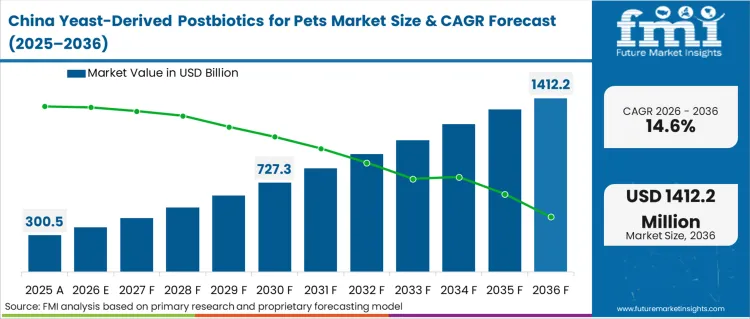
Rapid urbanization and changing demographic patterns accelerate ownership across major metropolitan centers. Disposable income growth allows newer owners to bypass basic nutrition tiers and immediately adopt premium functional diets. Domestic manufacturing capabilities expand rapidly to serve internal demand and reduce reliance on expensive imported brands. China's urban pet consumption market value hit USD 39.09 billion in 2023, anchoring the APAC demand case. [17] As per FMI's projection, local brands will increasingly utilize proprietary fermentation technologies to build unique competitive advantages against international conglomerates.
- China: China is expected to record 14.6% CAGR in Yeast-Derived Postbiotics for Pets demand over 2026 to 2036 as domestic production scales, tightening the link between operational constraints and adoption-led investment. Projected pet consumption approaches USD 50.6 billion by 2026. [18] E-commerce dominance favors stable powder formats that withstand variable logistics networks.
- India: In India, Yeast-Derived Postbiotics for Pets market is forecast to advance at 13.5% CAGR through 2036, with growth anchored in rising disposable incomes that converts into measurable budget allocation. Packaged pet food sector size reached USD 2.4 billion in 2024. [19] Early adoption centers on palatable functional treats endorsed by local veterinary professionals.
FMI's report includes extensive coverage regarding evolving regional dynamics. Japan and South Korea lead advanced formulations tailored specifically for aging demographics. Innovators prioritize cognitive and joint support combinations alongside digestive health additives. Capturing dominant share requires deep integration with regional e-commerce platforms and veterinary networks.
Latin America Yeast-Derived Postbiotics for Pets Analysis
Expanding middle-class demographics propel structural transitions from table scraps to commercial packaged nutrition. Price sensitivity remains critical, pushing manufacturers to develop cost-effective multi-benefit additive packages. Local ingredient sourcing becomes essential to shield formulations from currency fluctuations and import tariffs. According to FMI's estimates, successful regional strategies hinge on balancing functional efficacy with highly accessible retail price points.
- Brazil: Yeast-Derived Postbiotics for Pets uptake in Brazil is anticipated to climb at 12.5% CAGR over the forecast period as premium tier penetration deepens, helping suppliers align positioning with local buying triggers. USDA analysis described Brazil's industry growth context as a paw-sitive outlook in June 2024. [20] Formulators emphasize digestive health to address common local companion animal sensitivities.
FMI's report includes detailed analysis regarding developing continental markets. Mexico and Argentina show increased traction in specialized retail channels despite macroeconomic volatility. Brands navigating diverse territories must secure strong local distribution partnerships to maintain consistent product availability. Agility in pricing and format sizing determines long-term commercial viability.
Competitive Aligners for Market Players
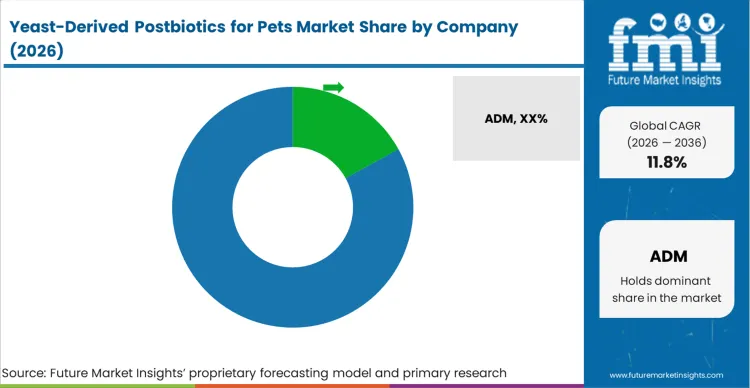
Strategic acquisitions redefine manufacturing scale and distribution capabilities across functional ingredient landscapes. Large chemical and nutrition conglomerates absorb specialized biotechnology firms to bypass years of proprietary strain research. Integrated entities utilize global supply chains to reduce unit costs and dominate negotiations with major pet postbiotics supplement manufacturers.
Clinical substantiation investments separate premium ingredient suppliers from commodity yeast vendors. Generating strong peer-reviewed data requires significant capital but secures lucrative approvals and veterinary endorsements. Ingredients backed by specific clinical trials command higher margins and secure exclusive long-term formulation contracts. Formulators increasingly rely on these branded fractions to differentiate product lines.
Distribution partnerships accelerate market penetration by pairing novel ingredients with established consumer bases. Ingredient manufacturers collaborate with consumer-facing brands to co-market functional benefits directly to end users. Strategic alliances reduce go-to-market risks and ensure rapid retail placement for advanced pet probiotics supplements replacements. Building robust veterinary advocacy programs further entrenches these ingredients within clinical settings.
Recent Developments
The report includes full coverage of key trends from competitive benchmarking. Some of the recent developments covered in the reports:
- In April 2025, Cloud Star launched a liquid gut health supplement formulated with EpiCor postbiotic for dogs and cats. [21]
- In February 2026, Agrolimen acquired fresh dog food brand Ollie, signaling continued premiumization in functional nutrition. [22]
Key Players in Yeast-Derived Postbiotics for Pets
- ADM
- Cargill (EpiCor)
- Kerry Group
- dsm-firmenich
- Lallemand
- Phileo by Lesaffre
- Biorigin
- Lehvoss Nutrition
Scope of the Report
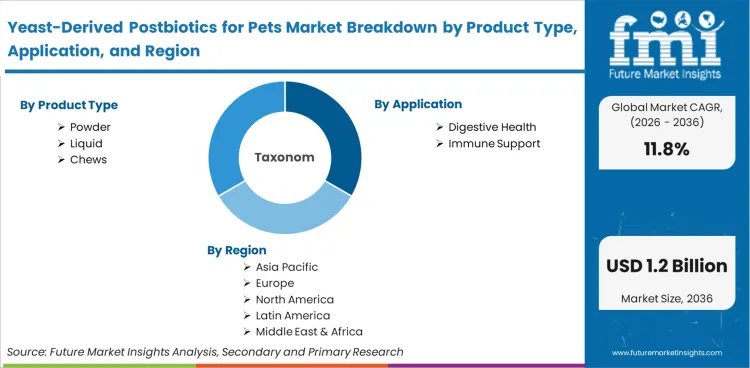
| Metric | Value |
|---|---|
| Quantitative Units | USD 390 million (2026) to USD 1,111 million (2036), at a CAGR of 11.8% |
| Market Definition | Sector tracking involves commercialization and integration of non-viable Saccharomyces cerevisiae fermentation products specifically engineered for companion animal applications. |
| Product Type Segmentation | Powder, Liquid, Chews |
| Pet Type Segmentation | Dogs, Cats, Others |
| Application Coverage | Digestive Health, Immune Support, Others |
| Regions Covered | North America, Latin America, Europe, East Asia, South Asia, Oceania, Middle East and Africa |
| Countries Covered | USA, UK, Germany, China, Brazil, India and 40 plus countries |
| Key Companies Profiled | ADM, Cargill (EpiCor), Kerry Group, dsm-firmenich, Lallemand, Phileo by Lesaffre, Biorigin, Lehvoss Nutrition |
| Forecast Period | 2026 to 2036 |
| Approach | Bottom-up calculations utilized premium retail volumes and extrapolated standard dosage inclusion rates validated through primary interviews. |
Yeast-Derived Postbiotics for Pets Market Analysis by Segments
Product Type:
- Powder
- Liquid
- Chews
Pet Type:
- Dogs
- Cats
- Others
Application:
- Digestive Health
- Immune Support
- Others
Region:
- Asia Pacific
- India
- China
- Japan
- South Korea
- Indonesia
- Australia & New Zealand
- ASEAN
- Rest of Asia Pacific
- Europe
- Germany
- Italy
- France
- United Kingdom
- Spain
- Benelux
- Nordics
- Central & Eastern Europe
- Rest of Europe
- North America
- United States
- Canada
- Mexico
- Latin America
- Brazil
- Argentina
- Chile
- Rest of Latin America
- Middle East & Africa
- Kingdom of Saudi Arabia
- United Arab Emirates
- South Africa
- Turkey
- Rest of Middle East & Africa
Bibliography
- [1] PLOS ONE. (2025). Puppies given purified yeast beta-1,3/1,6-glucans.
- [2] ADM. (2024). ADM unveils innovative B2B pet wellness solutions in EMEA.
- [3] American Pet Products Association. (2025). Industry trends and stats.
- [4] dsm-firmenich. (2023). dsm-firmenich completes acquisition of Adare Biome.
- [5] Zesty Paws. (2025). Canine supplements to feature novel canine gut microbial species.
- [6] Reuters. (2026). Dog food maker Ollie acquired by Spain's Agrolimen.
- [7] European Pet Food. (2025). European households owning pets.
- [8] Kerry Group. (2024). Kerry launches its first postbiotic ingredient for gut and skin health in both humans and pets.
- [9] Spot & Tango. (2025). Spot & Tango launches PupGum dental chew.
- [10] AnimalBiome. (2024). Nutritional insights and dermatology cases.
- [11] Fera Pets. (2024). Wellness supplements release.
- [12] AVMA. (2025). USA pet insurance industry surpasses $4B in 2024.
- [13] Reuters. (2024). General Mills to acquire Whitebridge Pet Brands.
- [14] Lehvoss Nutrition. (2024). Pets supplements highlight immune microbiome.
- [15] UK Pet Food. (2024). UK households owning pets.
- [16] FEDIAF. (2025). Germany dog population.
- [17] Trade.gov. (2025). China urban pet consumption market value.
- [18] Trade.gov. (2025). China projected pet consumption market.
- [19] MOFPI. (2024). India pet food market size.
- [20] USDA FAS. (2024). Paw-sitive Outlook for the Pet Food Industry in Brazil.
- [21] Cloud Star. (2024). Grizzly unveils liquid gut health supplement with EpiCor® postbiotic.
- [22] Reuters. (2026, February 6). Dog food maker Ollie acquired by Spain’s Agrolimen.
This bibliography is provided for reader reference and is not exhaustive. The full report contains the complete reference list and detailed citations.
This Report Addresses
- Market intelligence to enable structured strategic decision making across mature and emerging yeast derivative economies.
- Market size estimation and 10 year revenue forecasts from 2026 to 2036, supported by validated capacity benchmarks.
- Growth opportunity mapping across powder, liquid, and chew forms with emphasis on heat-stable transitions.
- Segment and regional revenue forecasts covering digestive health and immune support applications.
- Competition strategy assessment including integration models, clinical investments, and distribution capability benchmarking.
- Product reformulation and compliance tracking including AAFCO aligned non-viable cultures.
- Regulatory impact analysis covering ingredient safety mandates and transparent sourcing requirements.
- Market report delivery in PDF, Excel, PPT, and interactive dashboard formats for executive and operational use.
Frequently Asked Questions
How large is the demand for yeast-derived Postbiotics for pets in the global market in 2026?
Demand for yeast-derived Postbiotics for pets in global markets is estimated to be valued at USD 390 million in 2026.
What will be the market size of yeast-derived Postbiotics for pets in the global market by 2036?
Market size for yeast-derived Postbiotics for pets is projected to reach USD 1,111 million by 2036.
What is the expected demand growth for yeast-derived Postbiotics for pets in the global market between 2026 and 2036?
Demand for yeast-derived Postbiotics for pets is expected to grow at a CAGR of 11.8% between 2026 and 2036.
Which product type is poised to lead global sales by 2026?
Powder is expected to be the dominant form, capturing approximately 45% of global market share in 2026 due to superior shelf stability.
How significant is the role of dogs in driving yeast-derived Postbiotics for pets adoption in 2026?
Canine applications represent a critical segment, projected to hold a substantial 50% share of total volume in 2026 as larger breed requirements drive bulk purchasing.
What is driving demand in China?
Rapid urbanization and rising disposable incomes trigger premium functional nutrition adoption among newer owners.
What compliance standards or regulations are referenced for China?
Official agricultural and import regulations dictate verifiable metabolite sourcing protocols.
What is the China growth outlook in this report?
China is projected to grow at a CAGR of 14.6% during 2026 to 2036.
Why is Europe described as a priority region in this report?
Growth is sustained by immense companion animal populations combined with stringent safety regulations favoring established yeast formulations.
What type of demand dominates in Europe?
Evidence-driven replacement demand for clinically validated, heat-stable functional ingredients dominates regional consumption.
What is USA growth outlook in this report?
The USA is projected to expand at a CAGR of 12.0% during 2026 to 2036.
Does the report cover India in its regional analysis?
Yes, India is included within South Asia under the regional scope of analysis.
What are the sources referred to for analyzing India?
Official statistics published by the Ministry of Food Processing Industries covering sector profiles are cited as primary reference sources.
What is the main demand theme linked to India in its region coverage?
Early adoption of palatable functional treats endorsed by local veterinary professionals drives volume.
Does the report cover Brazil in its regional analysis?
Yes, Brazil is included within Latin America under the regional coverage framework.
What is the main Brazil related demand theme in its region coverage?
Balancing functional efficacy with accessible retail price points determines successful market penetration.
Which product formats or configurations are strategically important for North America supply chains?
Innovative delivery systems like functional liquid toppers and specialized dental chews are prioritized.
What is yeast-derived Postbiotics for pets and what is it mainly used for?
It involves non-viable Saccharomyces cerevisiae fermentation products used to enhance immune responses and modulate gut microbiota.
What does yeast-derived Postbiotics for pets mean in this report?
It refers to global production, trade, and industrial consumption of stable yeast metabolites in functional companion animal nutrition.
What is included in the scope of this yeast-derived Postbiotics for pets report?
Scope covers powdered fermentation profiles, liquid additives, and functional chews containing standardized yeast metabolites.
What is excluded from the scope of this report?
Live probiotic cultures requiring refrigeration and human-grade dietary supplements lacking veterinary dosage guidelines are excluded.
What does market forecast mean on this page?
Market forecast represents a model-based projection built on defined assumptions for strategic planning purposes.
How does FMI build and validate the yeast-derived Postbiotics for pets forecast?
Forecast is developed using bottom-up calculations utilized from premium retail volumes and validated through primary interviews.
What does zero reliance on speculative third party market research mean here?
Primary interviews and verifiable corporate earnings disclosures are used instead of unverified syndicated market estimates.
Preview the report firsthand - request a free sample
Get SampleGet the brochure for pricing and purchase details.
Get PDFTable of Content
- Executive Summary
- Global Market Outlook
- Demand-side Trends
- Supply-side Trends
- Technology Roadmap Analysis
- Analysis and Recommendations
- Market Overview
- Market Coverage / Taxonomy
- Market Definition / Scope / Limitations
- Research Methodology
- Chapter Orientation
- Analytical Lens and Working Hypotheses
- Market Structure, Signals, and Trend Drivers
- Benchmarking and Cross-market Comparability
- Market Sizing, Forecasting, and Opportunity Mapping
- Research Design and Evidence Framework
- Desk Research Programme (Secondary Evidence)
- Company Annual and Sustainability Reports
- Peer-reviewed Journals and Academic Literature
- Corporate Websites, Product Literature, and Technical Notes
- Earnings Decks and Investor Briefings
- Statutory Filings and Regulatory Disclosures
- Technical White Papers and Standards Notes
- Trade Journals, Industry Magazines, and Analyst Briefs
- Conference Proceedings, Webinars, and Seminar Materials
- Government Statistics Portals and Public Data Releases
- Press Releases and Reputable Media Coverage
- Specialist Newsletters and Curated Briefings
- Sector Databases and Reference Repositories
- FMI Internal Proprietary Databases and Historical Market Datasets
- Subscription Datasets and Paid Sources
- Social Channels, Communities, and Digital Listening Inputs
- Additional Desk Sources
- Expert Input and Fieldwork (Primary Evidence)
- Primary Modes
- Qualitative Interviews and Expert Elicitation
- Quantitative Surveys and Structured Data Capture
- Blended Approach
- Why Primary Evidence is Used
- Field Techniques
- Interviews
- Surveys
- Focus Groups
- Observational and In-context Research
- Social and Community Interactions
- Stakeholder Universe Engaged
- C-suite Leaders
- Board Members
- Presidents and Vice Presidents
- R&D and Innovation Heads
- Technical Specialists
- Domain Subject-matter Experts
- Scientists
- Physicians and Other Healthcare Professionals
- Governance, Ethics, and Data Stewardship
- Research Ethics
- Data Integrity and Handling
- Primary Modes
- Tooling, Models, and Reference Databases
- Desk Research Programme (Secondary Evidence)
- Data Engineering and Model Build
- Data Acquisition and Ingestion
- Cleaning, Normalisation, and Verification
- Synthesis, Triangulation, and Analysis
- Quality Assurance and Audit Trail
- Market Background
- Market Dynamics
- Drivers
- Restraints
- Opportunity
- Trends
- Scenario Forecast
- Demand in Optimistic Scenario
- Demand in Likely Scenario
- Demand in Conservative Scenario
- Opportunity Map Analysis
- Product Life Cycle Analysis
- Supply Chain Analysis
- Investment Feasibility Matrix
- Value Chain Analysis
- PESTLE and Porter’s Analysis
- Regulatory Landscape
- Regional Parent Market Outlook
- Production and Consumption Statistics
- Import and Export Statistics
- Market Dynamics
- Global Market Analysis 2021 to 2025 and Forecast, 2026 to 2036
- Historical Market Size Value (USD Million) Analysis, 2021 to 2025
- Current and Future Market Size Value (USD Million) Projections, 2026 to 2036
- Y-o-Y Growth Trend Analysis
- Absolute $ Opportunity Analysis
- Global Market Pricing Analysis 2021 to 2025 and Forecast 2026 to 2036
- Global Market Analysis 2021 to 2025 and Forecast 2026 to 2036, By Product Type
- Introduction / Key Findings
- Historical Market Size Value (USD Million) Analysis By Product Type , 2021 to 2025
- Current and Future Market Size Value (USD Million) Analysis and Forecast By Product Type , 2026 to 2036
- Powder
- Liquid
- Chews
- Powder
- Y-o-Y Growth Trend Analysis By Product Type , 2021 to 2025
- Absolute $ Opportunity Analysis By Product Type , 2026 to 2036
- Global Market Analysis 2021 to 2025 and Forecast 2026 to 2036, By Application
- Introduction / Key Findings
- Historical Market Size Value (USD Million) Analysis By Application, 2021 to 2025
- Current and Future Market Size Value (USD Million) Analysis and Forecast By Application, 2026 to 2036
- Digestive Health
- Immune Support
- Digestive Health
- Y-o-Y Growth Trend Analysis By Application, 2021 to 2025
- Absolute $ Opportunity Analysis By Application, 2026 to 2036
- Global Market Analysis 2021 to 2025 and Forecast 2026 to 2036, By Region
- Introduction
- Historical Market Size Value (USD Million) Analysis By Region, 2021 to 2025
- Current Market Size Value (USD Million) Analysis and Forecast By Region, 2026 to 2036
- North America
- Latin America
- Western Europe
- Eastern Europe
- East Asia
- South Asia and Pacific
- Middle East & Africa
- Market Attractiveness Analysis By Region
- North America Market Analysis 2021 to 2025 and Forecast 2026 to 2036, By Country
- Historical Market Size Value (USD Million) Trend Analysis By Market Taxonomy, 2021 to 2025
- Market Size Value (USD Million) Forecast By Market Taxonomy, 2026 to 2036
- By Country
- USA
- Canada
- Mexico
- By Product Type
- By Application
- By Country
- Market Attractiveness Analysis
- By Country
- By Product Type
- By Application
- Key Takeaways
- Latin America Market Analysis 2021 to 2025 and Forecast 2026 to 2036, By Country
- Historical Market Size Value (USD Million) Trend Analysis By Market Taxonomy, 2021 to 2025
- Market Size Value (USD Million) Forecast By Market Taxonomy, 2026 to 2036
- By Country
- Brazil
- Chile
- Rest of Latin America
- By Product Type
- By Application
- By Country
- Market Attractiveness Analysis
- By Country
- By Product Type
- By Application
- Key Takeaways
- Western Europe Market Analysis 2021 to 2025 and Forecast 2026 to 2036, By Country
- Historical Market Size Value (USD Million) Trend Analysis By Market Taxonomy, 2021 to 2025
- Market Size Value (USD Million) Forecast By Market Taxonomy, 2026 to 2036
- By Country
- Germany
- UK
- Italy
- Spain
- France
- Nordic
- BENELUX
- Rest of Western Europe
- By Product Type
- By Application
- By Country
- Market Attractiveness Analysis
- By Country
- By Product Type
- By Application
- Key Takeaways
- Eastern Europe Market Analysis 2021 to 2025 and Forecast 2026 to 2036, By Country
- Historical Market Size Value (USD Million) Trend Analysis By Market Taxonomy, 2021 to 2025
- Market Size Value (USD Million) Forecast By Market Taxonomy, 2026 to 2036
- By Country
- Russia
- Poland
- Hungary
- Balkan & Baltic
- Rest of Eastern Europe
- By Product Type
- By Application
- By Country
- Market Attractiveness Analysis
- By Country
- By Product Type
- By Application
- Key Takeaways
- East Asia Market Analysis 2021 to 2025 and Forecast 2026 to 2036, By Country
- Historical Market Size Value (USD Million) Trend Analysis By Market Taxonomy, 2021 to 2025
- Market Size Value (USD Million) Forecast By Market Taxonomy, 2026 to 2036
- By Country
- China
- Japan
- South Korea
- By Product Type
- By Application
- By Country
- Market Attractiveness Analysis
- By Country
- By Product Type
- By Application
- Key Takeaways
- South Asia and Pacific Market Analysis 2021 to 2025 and Forecast 2026 to 2036, By Country
- Historical Market Size Value (USD Million) Trend Analysis By Market Taxonomy, 2021 to 2025
- Market Size Value (USD Million) Forecast By Market Taxonomy, 2026 to 2036
- By Country
- India
- ASEAN
- Australia & New Zealand
- Rest of South Asia and Pacific
- By Product Type
- By Application
- By Country
- Market Attractiveness Analysis
- By Country
- By Product Type
- By Application
- Key Takeaways
- Middle East & Africa Market Analysis 2021 to 2025 and Forecast 2026 to 2036, By Country
- Historical Market Size Value (USD Million) Trend Analysis By Market Taxonomy, 2021 to 2025
- Market Size Value (USD Million) Forecast By Market Taxonomy, 2026 to 2036
- By Country
- Kingdom of Saudi Arabia
- Other GCC Countries
- Turkiye
- South Africa
- Other African Union
- Rest of Middle East & Africa
- By Product Type
- By Application
- By Country
- Market Attractiveness Analysis
- By Country
- By Product Type
- By Application
- Key Takeaways
- Key Countries Market Analysis
- USA
- Pricing Analysis
- Market Share Analysis, 2025
- By Product Type
- By Application
- Canada
- Pricing Analysis
- Market Share Analysis, 2025
- By Product Type
- By Application
- Mexico
- Pricing Analysis
- Market Share Analysis, 2025
- By Product Type
- By Application
- Brazil
- Pricing Analysis
- Market Share Analysis, 2025
- By Product Type
- By Application
- Chile
- Pricing Analysis
- Market Share Analysis, 2025
- By Product Type
- By Application
- Germany
- Pricing Analysis
- Market Share Analysis, 2025
- By Product Type
- By Application
- UK
- Pricing Analysis
- Market Share Analysis, 2025
- By Product Type
- By Application
- Italy
- Pricing Analysis
- Market Share Analysis, 2025
- By Product Type
- By Application
- Spain
- Pricing Analysis
- Market Share Analysis, 2025
- By Product Type
- By Application
- France
- Pricing Analysis
- Market Share Analysis, 2025
- By Product Type
- By Application
- India
- Pricing Analysis
- Market Share Analysis, 2025
- By Product Type
- By Application
- ASEAN
- Pricing Analysis
- Market Share Analysis, 2025
- By Product Type
- By Application
- Australia & New Zealand
- Pricing Analysis
- Market Share Analysis, 2025
- By Product Type
- By Application
- China
- Pricing Analysis
- Market Share Analysis, 2025
- By Product Type
- By Application
- Japan
- Pricing Analysis
- Market Share Analysis, 2025
- By Product Type
- By Application
- South Korea
- Pricing Analysis
- Market Share Analysis, 2025
- By Product Type
- By Application
- Russia
- Pricing Analysis
- Market Share Analysis, 2025
- By Product Type
- By Application
- Poland
- Pricing Analysis
- Market Share Analysis, 2025
- By Product Type
- By Application
- Hungary
- Pricing Analysis
- Market Share Analysis, 2025
- By Product Type
- By Application
- Kingdom of Saudi Arabia
- Pricing Analysis
- Market Share Analysis, 2025
- By Product Type
- By Application
- Turkiye
- Pricing Analysis
- Market Share Analysis, 2025
- By Product Type
- By Application
- South Africa
- Pricing Analysis
- Market Share Analysis, 2025
- By Product Type
- By Application
- USA
- Market Structure Analysis
- Competition Dashboard
- Competition Benchmarking
- Market Share Analysis of Top Players
- By Regional
- By Product Type
- By Application
- Competition Analysis
- Competition Deep Dive
- ADM
- Overview
- Product Portfolio
- Profitability by Market Segments (Product/Age /Sales Channel/Region)
- Sales Footprint
- Strategy Overview
- Marketing Strategy
- Product Strategy
- Channel Strategy
- Cargill (EpiCor)
- Kerry Group
- dsm-firmenich
- Lallemand
- Phileo by Lesaffre
- Biorigin
- Lehvoss Nutrition
- ADM
- Competition Deep Dive
- Assumptions & Acronyms Used


