


- Citrus ingredients can support clean-label premium positioning because they deliver recognizable taste, acidity, aroma, fiber, texture, and gelling functionality from a familiar fruit source.
- The clean-label opportunity is not limited to citrus flavor. It also includes citrus oils, citrus fiber, citrus pectin, peel-derived ingredients, and food-grade functionality.
- Citrus flavors remain important because food and beverage brands need natural, fresh, bright, and widely accepted taste profiles across drinks, confectionery, bakery, dairy, sauces, and snacks.
- Citrus fiber is gaining relevance because it helps replace synthetic stabilizers, improve texture, bind water, and support clean-label reformulation in bakery, plant-based, sauces, and processed foods.
- Citrus pectin remains important because it offers gelling and stabilization functionality in jams, jellies, confectionery, beverages, fruit preparations, and dairy systems.
- The biggest misconception is that citrus ingredients win only because consumers like citrus taste. In practice, they win because they combine natural sensory appeal with technical food functionality.
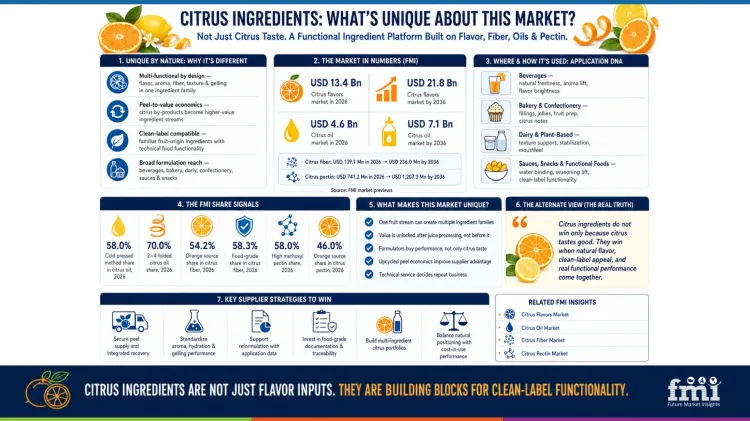
Citrus is one of the most powerful clean-label platforms within Food & Beverage, since its functionality extends beyond simply imparting taste. Citrus can contribute aromatics, acidity, freshness, bitterness management, mouthfeel, texture, gelling and stabilizing, fiber enhancement, and label friendliness. These attributes make citrus a desirable platform in beverages, baked goods, dairy, confectionery, sauces, dressings, snacks, functional foods, nutritional products, and alternative proteins.
FMI’s Citrus Flavors Market shows that citrus flavor demand remains a major ingredient opportunity. Citrus flavors are valued because they fit both mainstream and premium products. Orange, lemon, lime, grapefruit, mandarin, yuzu, and other citrus notes are easy for consumers to understand. They can signal freshness, energy, refreshment, naturalness, and brightness without requiring complex education.
The clean-label value becomes stronger when citrus is used beyond flavor. The Citrus Fiber Market is directly relevant because citrus fiber is moving from a by-product stream into a functional food ingredient. It can help with water binding, texture improvement, moisture retention, and stabilization. This allows food manufacturers to reduce reliance on synthetic emulsifiers, stabilizers, or texture agents while still protecting product quality.
This matters because clean label does not mean lack of functionality. An example here would be that when a bakery brand gets rid of its synthetic stabilizer, it still requires its moisture-retention ability. Plant-based meat will require juiciness and bite. Sauce requires viscosity and suspension. Beverages need mouthfeel and stability. With citrus fiber, a company can achieve these functionalities naturally and with credibility.
The Citrus Pectin Market adds another layer of functionality. Citrus pectin supports gelling, thickening, and stabilization in jams, jellies, confectionery, beverages, dairy fruit preparations, and bakery fillings. High methoxyl pectin is especially important because it works well in traditional high-sugar fruit systems and many established applications. Citrus pectin gives brands a familiar ingredient with strong technical credibility.
The citrus oil has a significant part to play in clean-label sensory systems too. This is evident in the Citrus Oil Market, which highlights the importance of using the peel as a means of delivering the aroma inputs in a commercial setting. The citrus oil is used to give aroma and flavor intensities in a range of products including drinks, confectionery, bakery, desserts, sauces, and more.
This clean-label premium is more effective if the citrus ingredient is addressing an important formulating challenge. A natural lemon flavor with fresh and stable taste profile for beverages may contribute to positioning the product as premium. An orange fiber that offers improved texture and helps reduce the reliance on synthetic stabilizers can offer functional benefit. A citrus pectin with clean gelling performance in fruit applications can bring both quality and label benefits.
This premium becomes less powerful when citrus is simply a marketing signal. For an ingredient that claims to have citrus but fails in flavor, aroma, texture, or functionality, there won’t be any justification for its premium price point. Food and beverage manufacturers buy effectiveness and not labels.
Citrus products can be used in upcycling and by-product valorization programs. Juice production creates peel, pulp, and other by-products which can be transformed into various oils, fibers, pectins, and functional ingredients. Sustainability is a great value proposition for the industry, but it is not the only one. The ingredient needs to deliver results.
The clean-label opportunity is most compelling in beverages, fruits, confectionery, bakery fillers, yogurts, dairy alternatives, plant-based products, sauces, dressings, snack seasonings, and nutrition products. These categories require both consumer-facing labeling solutions as well as formulating expertise.
The myth to dispel is that citrus flavors succeed simply because they're popular. Indeed, taste is important; however, there is a much bigger picture here. Citrus flavors succeed because they enable brands to reformulate using naturality while maintaining sensory attributes, stability, and performance.
Bottom line: Citrus ingredients can command clean-label value because they combine familiar fruit-based appeal with practical food functionality. The strongest opportunities sit where citrus flavor, oil, fiber, and pectin help brands replace synthetic systems while keeping taste and performance intact.
FMI Related Links
- Citrus Flavors Market: Primary link for natural citrus taste, beverage use, and flavor demand
- Citrus Oil Market: Use when discussing peel-derived aroma and natural citrus oil inputs
- Citrus Fiber Market: Use when discussing clean-label texture, water binding, and stabilizer replacement
- Citrus Pectin Market: Use when discussing gelling, fruit preparations, jams, confectionery, and stabilization
- Natural Food Flavors Market: Use when discussing natural flavor demand and reformulation
- Clean Label Ingredients Market: Use when discussing broader clean-label ingredient substitution

