


- Clean-label claims can support premium pricing in frozen ready meals, but only when the meal already delivers taste, texture, portion value, and heating performance.
- Consumers are more receptive to high-protein, low-sodium, no artificial additives, organic, plant-based, gluten-free, and whole-ingredient frozen meals, but not at the cost of satisfaction.
- The strongest premium opportunity sits in single-serve bowls, protein-led meals, global cuisine entrées, plant-based meals, and diet-specific formats.
- The premium weakens in family trays, economy packs, basic pasta, rice dishes, and value entrées where shoppers compare price more directly.
- Clean label is technically harder in frozen meals because sauces, proteins, grains, vegetables, and dairy or plant-based components must survive freezing and reheating.
- The biggest misconception is that healthier frozen meals automatically justify higher prices. In this category, clean label defends premium only when the meal experience is credible.
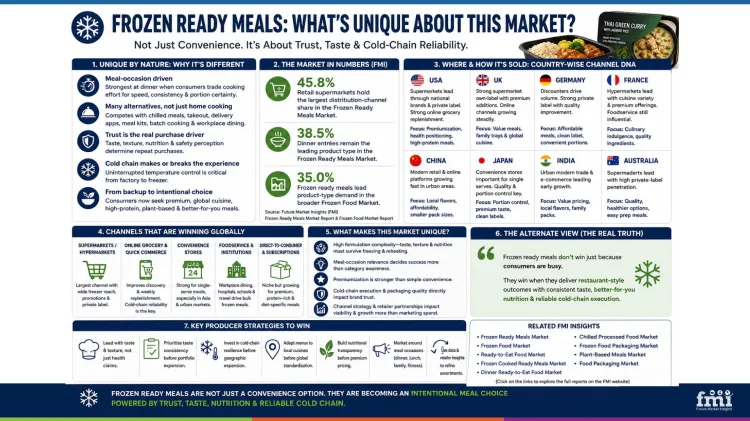
Clean label is becoming a stronger premium lever in the Frozen Ready Meals Market, but it is often misunderstood. Many brands assume that claims such as low sodium, high protein, no artificial preservatives, organic, plant-based, natural ingredients, or gluten-free will automatically justify a higher price. That is not how the category behaves.
Frozen ready meals already carry a perception burden. Many consumers still associate the category with high sodium, heavy sauces, preservatives, weak texture, and lower nutritional quality. Product quality has improved, but perception changes slowly. Clean label can help reduce hesitation, but it cannot replace the basic requirements of a good meal. The product still has to taste good, heat evenly, look appetizing, and feel satisfying.
FMI’s Frozen Ready Meals Market indicates that dinner entrées remain the leading product type. That is important because dinner is a high-expectation occasion. Consumers may accept convenience, but they do not want dinner to feel like compromise. A clean-label dinner entrée that tastes bland, has watery sauce, or feels too small will not build repeat demand even if the front-of-pack claims are attractive.
The clean-label premium is strongest in formats where consumers are already willing to pay more. Premium single-serve bowls, protein-focused meals, plant-based entrées, cuisine-specific recipes, organic meals, and specialty diet products are better positioned because shoppers expect a higher-quality product and are more open to paying for it. A high-protein chicken bowl, lentil curry, Mediterranean grain bowl, plant-based pasta, gluten-free entrée, or Korean-style rice bowl can justify a higher price when the ingredient story is supported by taste, texture, portion size, and overall eating satisfaction.
The premium is harder to defend in basic formats. Family trays, economy packs, standard pasta meals, simple rice dishes, lasagna, macaroni dishes, and value entrées are more exposed to price comparison. In these formats, consumers may appreciate cleaner ingredients, but they usually judge the product more on portion size, family value, familiar taste, and promotional pricing. A cleaner label can support the product proposition, but it may not be enough to justify a large price gap.
This also varies by geography. In mature frozen food markets, consumers may be more willing to pay for clean-label, organic, plant-based, or high-protein frozen meals. In emerging markets, clean label can still be attractive, but value, affordability, local taste preferences, freezer access, and product availability remain more important purchase drivers.
Clean label is also more difficult in frozen ready meals than in many other packaged food categories. A frozen meal is rarely built around one simple ingredient system. It usually combines sauce, protein, starch, vegetables, seasoning, fats, texture management, and packaging performance. Rice and pasta need to avoid becoming mushy. Vegetables need to hold their texture. Proteins should not dry out. Sauces should not split. Cheese and plant-based sauces also need to survive freezing and reheating without losing quality. This is why the Frozen Cooked Ready Meals Market is an important related reference for understanding the technical challenge behind cooked entrée formats.
Sodium reduction is a good example of where clean-label and health-led positioning need to be handled carefully. Lower sodium is appealing because frozen meals often face criticism for being too salty or overly processed. However, sodium also plays an important role in flavor and overall satisfaction. If a low-sodium meal tastes flat, consumers may try it once but are unlikely to buy it again. Stronger brands do not simply reduce salt; they rebuild flavor through herbs, spices, acidity, roasted notes, umami-rich ingredients, and cuisine-specific seasoning.
High protein is another strong premium route, but it also needs proper execution. A high-protein frozen meal can appeal to consumers looking for satiety, fitness support, weight management, or a healthier meal replacement. But the protein claim alone is not enough to create a premium. Consumers still expect visible ingredients, balanced portions, good texture, and believable nutrition. If the meal feels dry, too small, or overly processed, the high-protein claim quickly loses its value.
Plant-based frozen ready meals follow the same rule. The Plant-Based Meals Market is relevant because plant-based positioning can support health, sustainability, and lifestyle appeal, but repeat demand still depends on taste and familiarity. The strongest plant-based frozen meals usually fit recognizable cuisine systems: curry, pasta, burrito bowls, noodles, stir-fry, grain bowls, and comfort-food formats. A product that leads only with "plant-based" but fails on sauce, seasoning, and texture will not defend premium pricing.
Channel choice also shapes how clean-label and premium claims are understood. In supermarkets, shoppers can compare frozen ready meals directly by price, portion size, claims, and brand. Online, the pack image and short product description do much more of the selling. Claims such as high protein, low sodium, no artificial preservatives, gluten-free, organic, or plant-based need to be clear, simple, and easy to spot. If the product carries too many claims at once, it can start to feel confusing or less credible rather than more premium.
Packaging supports the clean-label promise because the pack is where the claim is seen, judged, and compared. The Frozen Food Packaging Market is useful here because frozen ready meal packaging must do more than protect the product. It must communicate ingredient quality, preparation simplicity, portion expectations, and freezer durability.
The practical pricing lesson is clear. Clean label should be used to defend premium positioning, not create it from nothing. The meal must first win on taste, texture, portion value, and trust. Then clean label can explain why the product deserves a higher price.
The most defensible clean-label opportunities are premium bowls, high-protein entrées, plant-based meals, organic single-serve meals, low-sodium but flavor-rich products, gluten-free formats, and global cuisine meals with recognizable ingredients. The weakest opportunities are generic economy meals, basic family trays, simple pasta dishes, and low-differentiation value packs where the claim feels stronger than the meal.
The misconception to avoid is that consumers reward healthier frozen meals automatically. They do not. They reward frozen meals that make health feel easy without making dinner feel like compromise.
Bottom line: clean label can lift frozen ready meal pricing, but only when the product protects taste, texture, portion value, and heating performance. In frozen ready meals, "better-for-you" must still behave like a complete meal.
Related FMI Reports
- Frozen Ready Meals Market
- Frozen Food Market
- Ready-to-Eat Food Market
- Frozen Cooked Ready Meals Market
- Plant-Based Meals Market
- Frozen Food Packaging Market
- Food Packaging Market

