


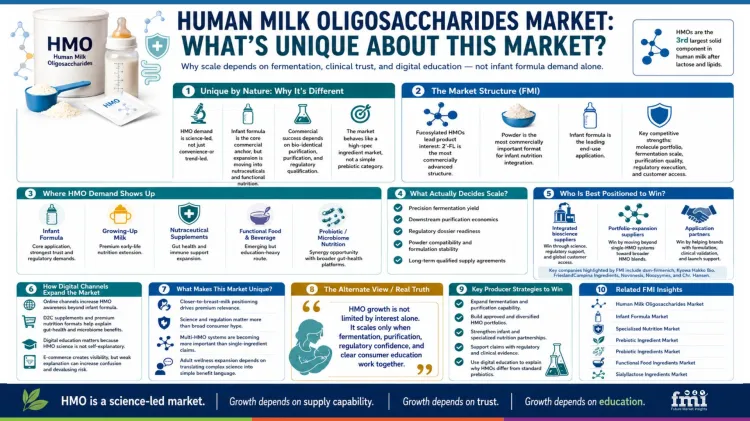
- E-commerce is not the main procurement channel for HMOs, but it is becoming important for consumer education, supplement discovery, and awareness beyond infant formula.
- Infant formula remains the core HMO application, but online channels are helping HMOs move into adult gut health, immunity, women’s health, and microbiome-led nutrition discussions.
- The strongest digital opportunity sits in HMO supplements, synbiotic products, functional powders, sachets, premium pediatric nutrition, and health-professional-led online education.
- E-commerce weakens when HMO claims are too technical, poorly explained, or disconnected from clear consumer benefits.
- Digital platforms can make HMOs more visible, but they also increase the risk of overclaiming, misinformation, and confusion between HMOs, prebiotics, probiotics, and postbiotics.
- The biggest misconception is that online availability alone will accelerate HMO demand. Digital channels create awareness, but trust, evidence, formulation quality, and regulatory discipline decide repeat adoption.
HMOs are heading towards a digital nutrition space. The awareness of Human Milk Oligosaccharides in the past years has been limited to infants' formulas and pediatric nutrition among others. This remains the core market of HMOs. However, the online nutrition platforms are shifting how the consumer interacts with the ingredient.
The concept of e-commerce does not apply to HMO supplies. HMO products continue to be developed, licensed, and distributed mainly through ingredient business-to-business sales, formula collaborations, and nutritional brand supply arrangements. But it is in the consumer-driven segment where digital channels gain prominence. They affect parent formula comparisons, adult discovery of gut health products, microbial health communication from brands, and premium nutrition claims evaluation.
FMI’s Human Milk Oligosaccharides Market identifies infant formula as the core end-use pathway while also including nutraceutical supplements and functional food and beverage applications. This matters because the more HMOs move beyond infant formula, the more important education becomes. A parent may understand HMO because a formula brand explains it. An adult gut-health consumer may not.
Online channels can help bridge that education gap. Information on websites for brand companies, pediatric nutrition, supplements marketplaces, D2C wellness platforms, social media, article-driven search, webinars, blogs by practitioners, and information about products all can be utilized to discuss the benefits of HMOs, their differences from regular prebiotics, and how they affect gut and immune systems.
The first major e-commerce opportunity is adult gut-health supplements. FMI’s Prebiotic Ingredient Market and Probiotic Ingredients Market show the wider gut-health context in which HMOs must compete. Consumers already see many gut-health terms online: probiotics, prebiotics, synbiotics, postbiotics, fibers, fermented foods, microbiome support, digestive comfort, and immunity. HMOs can benefit from this ecosystem, but only if brands clearly explain the difference.
"Human Milk Oligosaccharides" is an intimidating term that is related specifically to infants or is unclear to adult customers. Customers may think that HMOs are used exclusively by infants. Or they may wonder why adults should use a product with such an ingredient, since they associate HMOs with mother’s milk. Thus, the process of educating people through the Internet is absolutely critical here.
Secondly, there is an opportunity of premium pediatric nutrition. The increasing trend among parents of researching formula, growing up milk, baby foods, and supplements prior to purchasing online gives room for e-commerce platforms to promote HMO claims. It also brings expectations. Parents will consider HMO claims on the basis of HMO type, structures, other nutritional elements, certifications, safety claims, and brand credibility. This makes a poorly articulated HMO claim unappealing.
Thirdly, there is the chance to position as synbiotic and microbiome. HMOs can be aligned in theory with probiotics and other prebiotics. Digital marketing channels are helpful to explain the synergy between the products because digital marketing allows more room compared to traditional labeling. One can articulate how HMOs facilitate good bacteria, the function of probiotics in the system, and why their combination makes the product different from regular digestive health products.
FMI’s Functional Food Ingredients Market is relevant because HMOs are part of the wider shift toward ingredients with targeted health benefits. Functional foods and beverages depend heavily on consumer understanding. A product with an expensive ingredient but unclear benefit may struggle online, where shoppers compare reviews, claims, prices, and alternatives quickly.
E-commerce can also accelerate supplier visibility. Ingredient companies and formulation partners increasingly use digital content to reach supplement brands, formula developers, and functional nutrition innovators. White papers, technical pages, webinars, formulation guides, and scientific summaries can help establish credibility before direct commercial conversations begin. For HMO suppliers, digital visibility supports B2B lead generation, not just consumer awareness.
Nevertheless, there are also dangers with regards to E-commerce. The first one involves overpromise. Although HMOs are known to be linked to the health of the immune system and digestive systems, companies cannot link their products to disease treatment or suggest that they are similar to infant formulas. The second one is related to consumers' misunderstandings of what HMOs really are. For example, people may perceive these substances as prebiotics, sugar in milk, lactose, probiotics, or even postbiotics. The last one involves pricing problems.
The fourth risk is evidence dilution. If too many online brands use vague microbiome language, the HMO story can lose credibility. The ingredient is strongest when positioned with scientific discipline. It becomes weaker when reduced to another trendy gut-health buzzword. Digital channels can build trust, but they can also dilute trust if the message is careless.
This means that digital platforms will be most effective for educational purposes, rather than promotional ones. Successful HMO products will educate about the composition, purpose, rationale for formulating HMOs, and their benefits. They will associate HMOs with gut health, immunity, infant nutrition, or adult well-being, without making any baseless claims. Furthermore, successful digital marketing campaigns will help people understand why HMOs differ from conventional prebiotics.
It should be avoided because the idea that online selling will bring success to HMOs is false. While it is possible to increase consumer awareness and educate about HMOs via an online store, repeat purchases depend on efficacy, regulation, brands, and proper formulation.
Bottom line: Digital nutrition channels are helping HMOs move beyond infant formula awareness, especially in gut health and functional nutrition. But online visibility is only useful when the science is explained clearly, the claims are credible, and the product delivers a reason to repurchase.
Reference
- Human Milk Oligosaccharides Market
- Infant Formula Market
- Prebiotic Ingredient Market
- Probiotic Ingredients Market
- Functional Food Ingredients Market
- Functional Foods Market
- Sialyllactose Ingredients Market

