

- Market Size (2026)
- USD 1.9 Bn
- Forecast (2036)
- USD 6.0 Bn
- CAGR (2026 to 2036)
- 12.3%
How big is Cardiometabolic RNAi Therapeutics Market size?
USD 1.9 billion in 2026 and USD 6.0 billion by 2036 at a 12.3% CAGR.
Sales for cardiometabolic RNAi therapeutics is projected to expand at 12.3% CAGR between 2026 and 2036, increasing valuation from USD 1.9 billion in 2026 to USD 6.0 billion by 2036. Cardiovascular and metabolic disease burden supports sustained clinical interest in gene-silencing medicines designed for durable target reduction. Therapy selection is estimated to favor programs pairing measurable biomarker change with practical dosing schedules and outcome evidence.
United States and Germany treatment systems are projected to favor outcomes evidence, payer acceptance, and specialist-led initiation. South Korea and Japan care networks are anticipated to emphasize tertiary-center access, local trial participation, and structured patient monitoring. World Health Organization data published in September 2025 estimated 1.4 billion adults aged 30 to 79 years had hypertension during 2024, reinforcing demand for therapies addressing persistent cardiometabolic risk through targeted biological pathways.
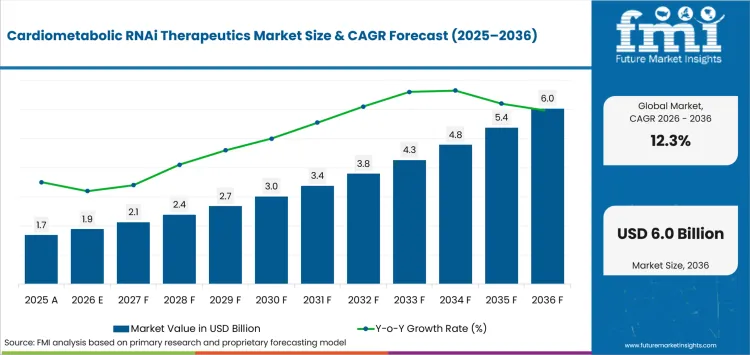
Key Takeaways of Cardiometabolic RNAi Therapeutics Market
- Demand for cardiometabolic RNAi therapeutics is driven by durable suppression of validated cardiovascular and metabolic targets, with specialist confidence developing through measurable outcomes and manageable dosing schedules.
- By molecule type, small interfering RNA holds the leading share at 43.4% in 2026, backed by commercial validation and extensive clinical development.
- PCSK9 is the dominant target segment, holding 40.6% share in 2026, owing to established LDL-lowering evidence and durable dosing schedules.
- Hypercholesterolemia leads indication demand at 30.7% share in 2026, guided by diagnosed patient pools and standardized lipid testing.
- Hospitals account for 34.3% end-user share in 2026, influenced by specialist initiation and structured laboratory monitoring across multidisciplinary care.
- South Korea, Germany, and Japan record CAGRs of 14.9%, 12.0%, and 11.0% respectively through 2036, shaped by tertiary-care concentration, structured evidence assessment, and ageing-related cardiometabolic needs.
- Competition centers on Arrowhead Pharmaceuticals, Novartis, Alnylam Pharmaceuticals, Roche, Eli Lilly, and Silence Therapeutics, with vendors differentiating through approved triglyceride/cholesterol RNAi medicines, cardiomyopathy and hypertension programs, and Lp(a)-directed candidates.
Analyst Perspective
PCSK9's lead rests on outcomes data beyond LDL numbers alone, as vutrisiran's mortality and cardiovascular-event reduction shows RNAi's commercial case increasingly depends on hard clinical endpoints, not biomarker response, pushing pipeline programs toward trials that can demonstrate similar outcome-level differentiation.
- Anurag Sharma, Principal Consultant for Healthcare at Future Market Insights
Source: Future Market Insights analysis, 2026.
How is Cardiometabolic RNAi Therapeutics Market segmented?
The cardiometabolic RNAi therapeutics sector is segmented by target, indication, molecule type, end user, and region.
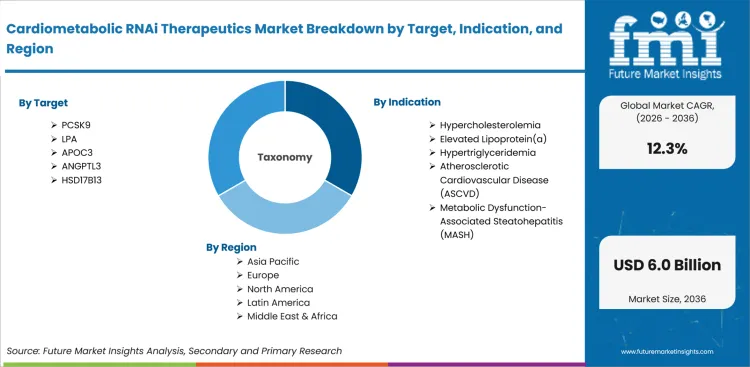
The cardiometabolic RNAi therapeutics market is segmented by target, indication, molecule type, end user, and region. Target coverage includes PCSK9, LPA, APOC3, ANGPTL3, and HSD17B13. Indication coverage includes hypercholesterolemia, elevated lipoprotein(a), hypertriglyceridemia, atherosclerotic cardiovascular disease (ASCVD), and metabolic dysfunction-associated steatohepatitis (MASH). Molecule type coverage includes small interfering RNA, GalNAc-conjugated RNAi, and lipid nanoparticle (LNP)-based RNAi. End-user coverage includes hospitals, specialty cardiology clinics, academic and research institutes, and specialty pharmacies.
Why does PCSK9 shape target selection?
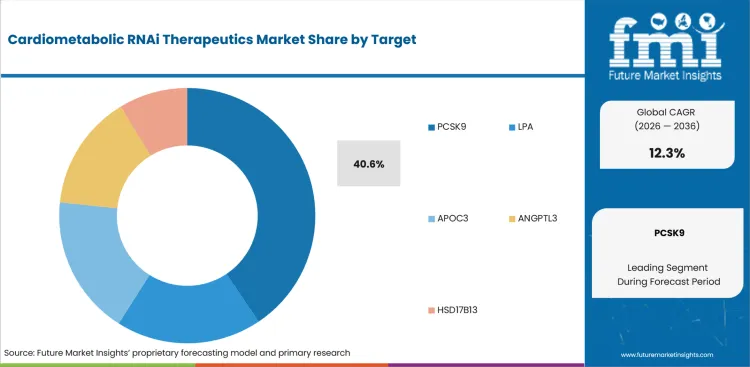
PCSK9 has established clinical recognition as a validated target for lowering low-density lipoprotein cholesterol. Novartis reported in April 2024 for early inclisiran initiation reducing LDL cholesterol by 60%, compared with 7% under clinician-selected usual care, sustaining continued specialist attention toward RNAi-based PCSK9 suppression. Durable dosing and healthcare-provider administration strengthen treatment continuity across patients requiring additional LDL control.
- PCSK9 is forecast to represent 40.6% share of target in 2026, backed by commercial availability and extensive cardiovascular evidence. Cardiology teams assess LDL response and residual risk during treatment selection.
- LPA and HSD17B13 extend target coverage into inherited lipoprotein risk and metabolic liver disease. Pipeline diversity creates distinct evidence requirements across biomarker response and long-term clinical outcomes.
Why does hypercholesterolemia shape indication demand?
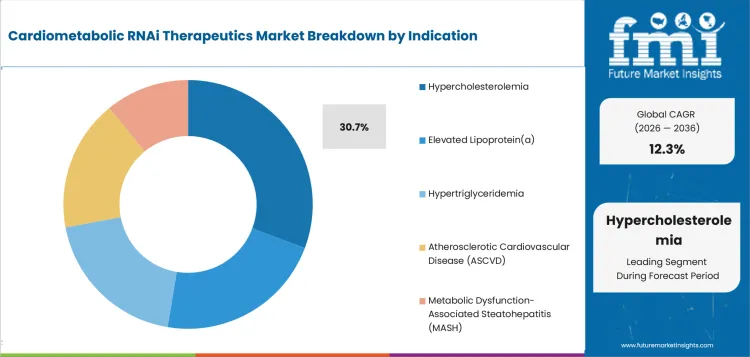
Hypercholesterolemia provides a defined clinical setting for RNAi therapy through measurable LDL targets and established treatment pathways. Ballantyne and colleagues reported in May 2024 stating plozasiran involved 353 participants in a controlled mixed-hyperlipidemia study, reflecting growing RNAi evaluation across lipid disorders requiring persistent risk reduction. Specialist review links laboratory response with treatment durability and cardiovascular risk classification.
- Hypercholesterolemia is anticipated to secure 30.7% share in 2026, guided by diagnosed patient pools and standardized lipid testing. Care teams compare RNAi therapy with monoclonal antibodies and other lipid-lowering medicines according to treatment history.
- Elevated lipoprotein(a) and metabolic dysfunction-associated steatohepatitis (MASH) support separate development paths. Patient identification and organ-specific outcomes determine clinical positioning across each indication.
Why does small interfering RNA account for molecule type leadership?
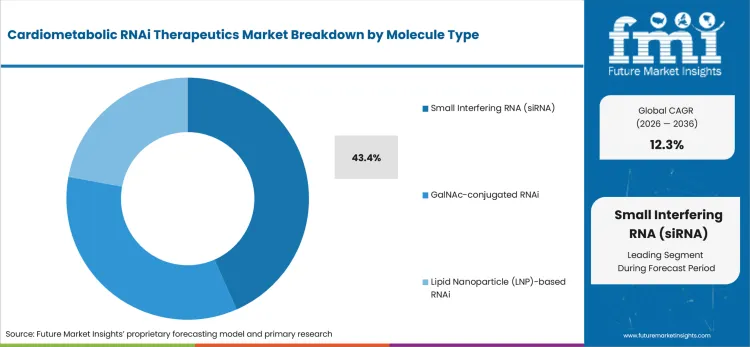
Small interfering RNA directs sequence-specific messenger RNA degradation and enables sustained suppression of selected hepatic proteins. Alnylam reported in August 2024 noting vutrisiran reduced a composite of all-cause mortality and recurrent cardiovascular events by 28% in HELIOS-B, strengthening confidence in clinically meaningful RNAi outcomes beyond laboratory markers. GalNAc conjugation supports liver-directed delivery across many cardiometabolic programs.
- Based on molecule type, small interfering RNA is projected to hold 43.4% share in 2026 as it reflects commercial validation and extensive clinical development. Developers assess sequence design and manufacturability across candidate selection.
- GalNAc-conjugated RNAi and lipid nanoparticle (LNP)-based RNAi address different delivery needs within lipid nanoparticles and hepatic gene silencing. Nanoparticle approaches support payload protection and alternative tissue-delivery research.
Why do hospitals lead end-user demand?
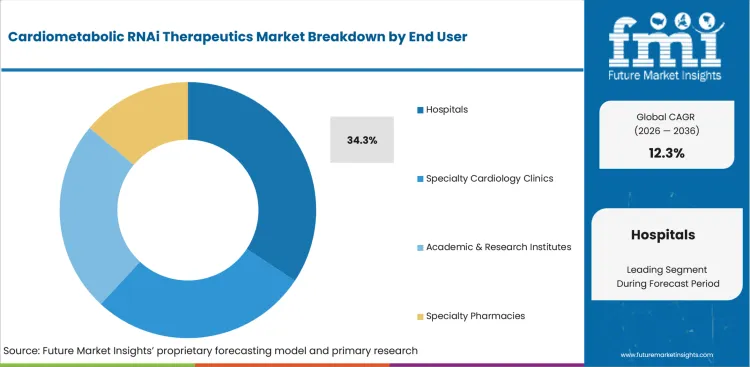
Novartis stated in August 2024 highlighting its VictORION program enrolled more than 60,000 patients across over 50 countries, illustrating hospital and trial-site importance for generating RNAi cardiovascular evidence. Academic centers further support complex patient selection and protocol-led follow-up. Hospitals combine laboratory monitoring and adverse-event management within coordinated treatment services.
- By end-user, hospitals are estimated to account for 34.3% share in 2026, influenced by specialist initiation and multidisciplinary cardiometabolic care. Formulary committees examine clinical evidence and patient-support requirements prior to adoption.
- Specialty cardiology clinics and specialty pharmacies extend access beyond hospital departments. Clinic-based monitoring supports chronic lipid management, and specialty pharmacies coordinate dispensing and adherence services.
What are drivers, restraints, and opportunities in Cardiometabolic RNAi Therapeutics Market?
Cardiometabolic disease burden and validated gene targets support RNAi development across lipid disorders and metabolic liver disease. Access barriers emerge from long follow-up periods and manufacturing complexity.
- Driver: Specialists seek durable suppression of validated proteins associated with persistent cardiovascular and metabolic risk. Longer dosing intervals support treatment continuity across chronic care pathways requiring sustained biomarker control.
- Restraint: High therapy costs and demanding evidence requirements may delay reimbursement across health systems using strict comparative-effectiveness review. Long safety follow-up and specialized manufacturing add complexity during development and commercialization.
- Opportunity: New targets may extend RNAi therapy beyond cholesterol management into lipoprotein(a) and metabolic liver disease. Biomarker-led patient selection could improve clinical study efficiency and clarify treatment response.
Global diabetes burden creates a substantial clinical base for cardiometabolic innovation. International Diabetes Federation research published in April 2025 estimated 589 million adults lived with diabetes during 2024, intensifying demand for therapies addressing cardiovascular complications and associated metabolic disorders. RNAi developers are projected to pursue targets offering measurable biological change across well-defined high-risk populations.
Access limitations may restrict uptake despite persuasive biological evidence. World Health Organization findings released in September 2025 indicated only 28% of low-income countries reported general availability of every recommended hypertension medicine, demonstrating persistent medicine-access gaps across foundational cardiometabolic care. High-priced RNAi products may face additional reimbursement and distribution hurdles without differentiated outcomes and structured support.
Lipoprotein(a) presents a development opportunity for durable gene silencing among patients carrying inherited cardiovascular risk. Nissen and colleagues reported in March 2025 a 93.9 percentage-point placebo-adjusted reduction in lipoprotein(a) following the evaluated high-dose lepodisiran regimen, supporting continued outcomes research for LPA-directed siRNA. Commercial value is anticipated to rise if late-stage programs translate sustained biomarker reduction into fewer cardiovascular events.
How are country CAGRs aligned in Cardiometabolic RNAi Therapeutics Market?
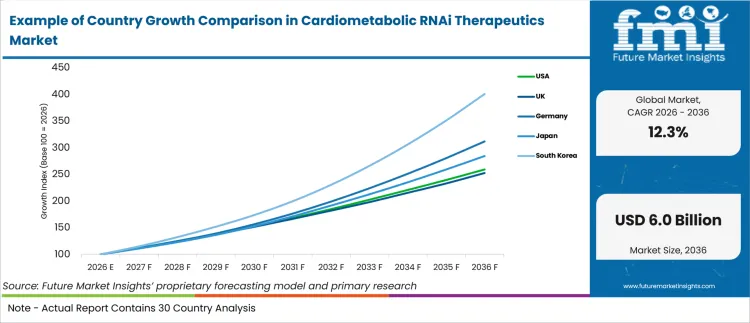
| Country | CAGR |
|---|---|
| South Korea | 14.9% |
| Germany | 12.0% |
| Japan | 11.0% |
| USA | 10.0% |
| UK | 9.7% |
Source: Future Market Insights analysis, 2026.
How do country-level CAGRs compare in Cardiometabolic RNAi Therapeutics Market?
Country comparison shows a gradual step-down in growth across the markets covered. South Korea occupies the upper end of the range. Germany and Japan form a closely grouped second tier. The United States and United Kingdom follow with slightly lower growth. The 5.2 percentage-point spread shows all five markets retain positive expansion prospects, even as their relative positions indicate different development speeds.
- South Korea leads the comparison and establishes East Asia as the principal growth cluster among the markets shown.
- Germany and Japan follow in the next growth band, indicating a measured gap from South Korea.
- The United States and the United Kingdom form the lower growth tier and maintain a relatively small difference from each other.
- The United Kingdom records the slowest growth among the listed markets, though its forecast retains a positive outlook within the wider market context.
- The pattern resembles a gradual downward slope instead of a sharp separation between faster-growing and slower-growing markets.
Markets with broadly similar CAGRs may present different entry conditions due to reimbursement structures and clinical adoption readiness. The full report provides country-level analysis across North America, Latin America, Europe, East Asia, South Asia, Oceania, and the Middle East and Africa.
Country-wise Analysis
- Cardiometabolic RNAi therapeutic industry in South Korea is likely to expand at 14.9% CAGR during the assessment period, backed by domestic biotechnology activity and concentrated specialist access. Statistics Korea reported in March 2025 stating residents aged 65 years or older represented 19.2% of population during 2024, increasing clinical attention toward chronic cardiovascular and metabolic risk. Specialist centers offer practical settings for biomarker screening and long-duration monitoring.
- Germany combines established lipid clinics with structured payer review across innovative medicines. Federal Statistical Office findings released in December 2025 indicated people aged 67 years or older represented 20% of population during 2024, supporting sustained demand for therapies addressing age-associated cardiovascular risk. Cardiometabolic RNAi therapeutic sales in Germany are projected to rise at 12.0% CAGR from 2026 to 2036, guided by evidence-based adoption and specialist-led treatment pathways.
- Sector in Japan is estimated to record 11.0% CAGR during the study period as academic hospitals and specialist clinics evaluate durable RNAi treatment under disciplined reimbursement processes. Population estimates released by Japan's Statistics Bureau in April 2025 counted 36.243 million residents aged 65 years or older during 2024, reinforcing need for sustained lipid and cardiovascular risk management. Local evidence and clear administration protocols shape movement from clinical review into regular care.
- United States clinical development benefits from extensive specialist networks and commercial experience across PCSK9 inhibitor therapies. Cardiometabolic RNAi therapeutics market in the United States is anticipated to scale at 10.0% CAGR between 2026 and 2036, reflecting regulatory progress and expanded target coverage. USA Census Bureau data published in June 2025 counted 61.2 million residents aged 65 years or older during 2024, maintaining continued demand for chronic cardiovascular risk reduction.
- United Kingdom adoption is shaped by centralized health-technology assessment and defined specialist eligibility. Office for National Statistics findings released in October 2025 recorded 54,097 deaths from ischaemic heart diseases during 2024, sustaining policy attention toward prevention and durable risk reduction. Demand in the United Kingdom is set to increase at 9.7% CAGR by 2036, helped by targeted use within evidence-defined patient groups.
Who are notable companies in Cardiometabolic RNAi Therapeutics Market?
Arrowhead Pharmaceuticals, Alnylam Pharmaceuticals, Novartis, and Eli Lilly are the prominent companies shaping this market.
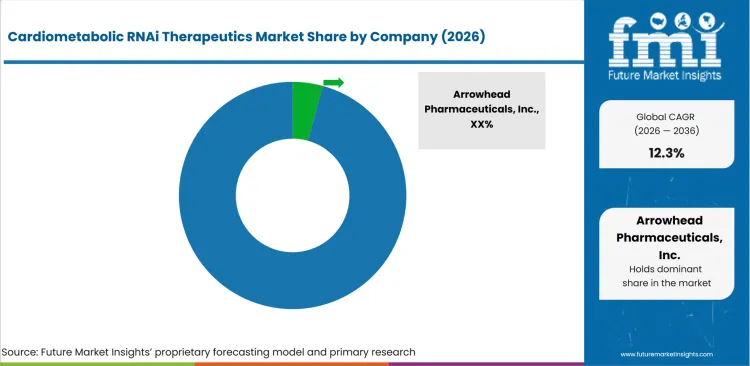
Competition in cardiometabolic RNAi therapeutics is anticipated to center on target specificity and late-stage clinical evidence. Company review is expected to consider dosing durability and safety reporting. Manufacturing consistency and specialist support are projected to influence commercial confidence across chronic treatment programs.
- Arrowhead Pharmaceuticals and Alnylam Pharmaceuticals receive attention based on established RNAi experience. Clinical teams compare target coverage and evidence quality across specialist treatment pathways.
- Novartis retains commercial review due to its PCSK9-directed RNAi position. Hospital services assess dosing continuity and cardiovascular evidence during formulary evaluation.
- Eli Lilly and Amgen compete led by Lp(a)-directed development programs. Outcome studies determine specialist confidence across inherited cardiovascular risk populations.
- Silence Therapeutics and Roche support further competition depending on cardiovascular RNAi programs. Clinical progress influences partnership interest and future specialist evaluation.
Competitive Benchmarking: Cardiometabolic RNAi Therapeutics Market
| Company | Portfolio Depth | Clinical Match | Service Support | Service Reach |
|---|---|---|---|---|
| Arrowhead Pharmaceuticals, Inc. | High | High | Medium | United States and selected global markets |
| Alnylam Pharmaceuticals, Inc. | High | High | High | United States and established international markets |
| Novartis AG | High | High | High | Global commercial reach |
| Eli Lilly and Company | Medium | High | High | Global clinical development reach |
Source: Future Market Insights competitive analysis, 2026.
Key Developments in Cardiometabolic RNAi Therapeutics Market
- In March 2025, Alnylam Pharmaceuticals announced United States approval of AMVUTTRA for adults with transthyretin amyloidosis with cardiomyopathy. Approval expanded RNAi treatment into cardiovascular outcomes-based care and increased hospital familiarity with quarterly gene-silencing therapy.
- In July 2025, Novartis announced United States approval of an expanded Leqvio indication for monotherapy with diet and exercise. Updated labeling supports earlier PCSK9-directed RNAi consideration among adults requiring additional LDL cholesterol reduction.
- In November 2025, the USA Food and Drug Administration approved Arrowhead Pharmaceuticals' REDEMPLO for triglyceride reduction among adults with familial chylomicronemia syndrome. Approval established an APOC3-directed siRNA treatment for specialist management of a severe inherited lipid disorder.
Key Players in Cardiometabolic RNAi Therapeutics Market
Commercial RNAi cardiometabolic companies
- Arrowhead Pharmaceuticals, Inc.
- Alnylam Pharmaceuticals, Inc.
- Novartis AG
Late-stage cardiometabolic RNAi developers
- Eli Lilly and Company
- Silence Therapeutics plc
- Amgen Inc.
Collaborative and platform participants
- F. Hoffmann-La Roche Ltd
- Novo Nordisk A/S
Cardiometabolic RNAi Therapeutics Market Report Scope
| Coverage Field | Report Scope |
|---|---|
| Market Breakdown | Cardiometabolic RNAi therapeutics breakdown by target, indication, molecule type, end user, and region |
| Quantitative Units | Revenue in USD Billion, CAGR in %. |
| Market Definition | Cardiometabolic RNAi therapeutics include medicines applying RNA interference to suppress genes associated with cardiovascular or metabolic disease pathways. |
| Regions Covered | North America, Latin America, Western Europe, Eastern Europe, East Asia, South Asia and Pacific, and Middle East and Africa |
| Countries Covered | USA, UK, Germany, Japan, and South Korea, with additional country coverage across listed regions |
| Key Companies Profiled | Arrowhead Pharmaceuticals, Alnylam Pharmaceuticals, Novartis, Eli Lilly, Silence Therapeutics, Amgen, Roche, and Novo Nordisk |
| Forecast Period | 2026 to 2036 |
| Approach | Hybrid bottom-up and top-down methodology using segment shares, country CAGRs, clinical evidence, regulatory progress, company participation, and treatment-pathway assessment |
Source: Future Market Insights analysis, 2026.
Cardiometabolic RNAi Therapeutics Market - Research Methodology
| Method | Approach |
|---|---|
| Primary Research | FMI analysts gathered input from manufacturers, service providers, technology developers, distributors, end users, procurement teams, and subject-matter experts. Interviews examined purchasing decisions, product or service evaluation, adoption barriers, approval requirements, pricing considerations, and expectations for technical or commercial support. Respondents were also asked what evidence is required before a trial, pilot, or initial order develops into regular purchasing. |
| Desk Research | Desk research covered government statistics, regulatory publications, trade data, industry associations, technical literature, standards, company filings, product information, and official corporate announcements. Sources were reviewed for relevance, publication date, geographic coverage, and consistency with the defined market scope. Claims relating to performance, applications, approvals, capacity, investment, and commercial activity were retained only when supported by credible public evidence. |
| Market Sizing and Forecasting | The market model combined the baseline value with historical performance, segment structure, pricing and volume indicators, adoption levels, company participation, and country-level demand conditions. Forecast assumptions considered economic activity, investment trends, regulatory developments, technology adoption, purchasing cycles, supply availability, and barriers to wider market use. Segment and regional estimates were reconciled before the final market total was calculated. |
| Data Validation | Estimates were checked against multiple independent indicators, including public data, company activity, trade patterns, industry developments, and findings from primary interviews. Validation also tested whether products, services, applications, and company revenues fell within the defined market boundaries. Adjacent categories, unsupported claims, overlapping revenues, and activities without direct market relevance were excluded to reduce double counting and maintain consistency across segments and countries. |
Source: Future Market Insights analysis, 2026.
Cardiometabolic RNAi Therapeutics Market by Segments
Cardiometabolic RNAi therapeutics segmented by target:
- PCSK9
- LPA
- APOC3
- ANGPTL3
- HSD17B13
Cardiometabolic RNAi therapeutics segmented by indication:
- Hypercholesterolemia
- Elevated Lipoprotein(a)
- Hypertriglyceridemia
- Atherosclerotic Cardiovascular Disease (ASCVD)
- Metabolic Dysfunction-Associated Steatohepatitis (MASH)
Cardiometabolic RNAi therapeutics segmented by molecule type:
- Small Interfering RNA (siRNA)
- GalNAc-conjugated RNAi
- Lipid Nanoparticle (LNP)-based RNAi
Cardiometabolic RNAi therapeutics segmented by end user:
- Hospitals
- Specialty Cardiology Clinics
- Academic and Research Institutes
- Specialty Pharmacies
Cardiometabolic RNAi therapeutics segmented by region:
- North America
- United States
- Canada
- Latin America
- Brazil
- Mexico
- Argentina
- Chile
- Western Europe
- Germany
- France
- United Kingdom
- Italy
- Spain
- Benelux
- Nordics
- Eastern Europe
- Poland
- Czech Republic
- Romania
- Hungary
- East Asia
- China
- Japan
- South Korea
- South Asia and Pacific
- India
- ASEAN
- Australia and New Zealand
- Middle East and Africa
- GCC Countries
- South Africa
- Türkiye
- Israel
Research Sources and Bibliography
- Alnylam Pharmaceuticals, Inc. (2024, August 30). Alnylam presents detailed results from the positive HELIOS-B Phase 3 study of vutrisiran in patients with ATTR amyloidosis with cardiomyopathy at the European Society of Cardiology Congress.
- Alnylam Pharmaceuticals, Inc. (2025, March 20). Alnylam announces FDA approval of AMVUTTRA for adults with ATTR amyloidosis with cardiomyopathy.
- Ballantyne, C. M., Vasas, S., Azizad, M., Clifton, P., Rosenson, R. S., Chang, T., Melquist, S., Zhou, R., Muhsin, M., Leeper, N. J., Hellawell, J., and Gaudet, D. (2024, May 28). Plozasiran, an RNA interference agent targeting APOC3, for mixed hyperlipidemia. New England Journal of Medicine, 391(10), 899-912.
- Federal Statistical Office of Germany. (2025, December 11). By 2035, one quarter of Germany's population will be aged 67 or over.
- International Diabetes Federation. (2025, April 7). Over 250 million people worldwide unaware they have diabetes, according to new IDF research.
- Nissen, S. E., Ni, W., Shen, X., Wang, Q., Navar, A. M., Nicholls, S. J., Wolski, K., Michael, L., Haupt, A., and Krege, J. H. (2025, March 30). Lepodisiran - A long-duration small interfering RNA targeting lipoprotein(a). New England Journal of Medicine, 392(17), 1673-1683.
- Novartis AG. (2024, April 6). New Novartis data show early addition of twice-yearly Leqvio following maximally tolerated statin therapy significantly reduces LDL-C in ASCVD patients in real-world setting.
- Novartis AG. (2024, August 28). Novartis twice-yearly Leqvio demonstrated clinically meaningful, statistically significant LDL-C lowering as a monotherapy in patients at low or moderate ASCVD risk.
- Novartis AG. (2025, July 31). Novartis twice-yearly Leqvio receives FDA approval for new indication enabling first-line use.
- Office for National Statistics. (2025, October 9). Deaths registered in England and Wales: 2024.
- Statistics Bureau of Japan. (2025, April 14). Current population estimates as of October 1, 2024.
- Statistics Korea. (2025, March 25). Social indicators in 2024.
- USA Census Bureau. (2025, June 26). Older adults outnumber children in 11 states and nearly half of USA counties.
- USA Food and Drug Administration. (2025, November 18). Drug trials snapshots: REDEMPLO.
- World Health Organization. (2025, September 23). Uncontrolled high blood pressure puts over a billion people at risk.
- World Health Organization. (2025, September 25). Hypertension.
This bibliography is provided for reader reference and is not exhaustive. The full report contains the complete reference list and detailed citations.
This Report Answers
- How do target and indication choices influence cardiometabolic RNAi therapeutic development?
- How do molecule type and delivery design affect clinical positioning?
- Why do hospitals retain an important role in treatment initiation and monitoring?
- How do country adoption conditions differ across disclosed geographic profiles?
- Which companies compete through commercial products and cardiometabolic pipelines?
- How do target validation and clinical outcomes affect development decisions?
- Which access barriers may slow reimbursement and routine treatment use?
- How do durable dosing schedules influence specialist and patient acceptance?
- How are forecasts validated through clinical and public-health evidence?
- Which company capabilities support sustained confidence across long-duration RNAi care?
Frequently Asked Questions
How big is the Cardiometabolic RNAi Therapeutics Market in 2026?
The cardiometabolic RNAi therapeutics market is valued at USD 1.9 billion in 2026 and is forecast to reach USD 6.0 billion by 2036. Growth reflects cardiovascular and metabolic disease burden supporting sustained clinical interest in gene-silencing medicines designed for durable target reduction.
What is the CAGR of the Cardiometabolic RNAi Therapeutics Market from 2026 to 2036?
The cardiometabolic RNAi therapeutics market grows at a CAGR of 12.3% between 2026 and 2036, supported by specialists seeking durable suppression of validated proteins associated with persistent cardiovascular and metabolic risk across chronic care pathways.
Which target leads the Cardiometabolic RNAi Therapeutics Market?
PCSK9 accounts for 40.6% of the cardiometabolic RNAi therapeutics market by target in 2026, backed by commercial availability and extensive cardiovascular evidence that cardiology teams assess through LDL response and residual risk during treatment selection.
How much will the Cardiometabolic RNAi Therapeutics Market add between 2026 and 2036?
The cardiometabolic RNAi therapeutics market is set to add USD 4.1 billion between 2026 and 2036, growing from USD 1.9 billion to USD 6.0 billion as durable gene-silencing therapies extend across a widening base of specialist cardiology and metabolic treatment pathways.
Who are the leading companies in the Cardiometabolic RNAi Therapeutics Market?
Four companies lead the cardiometabolic RNAi therapeutics market, including Arrowhead Pharmaceuticals, Alnylam Pharmaceuticals, Novartis, and Eli Lilly, competing through approved RNAi medicines addressing triglyceride and cholesterol disorders, cardiomyopathy programs, and Lp(a)-directed candidates.
Preview the report firsthand - request a free sample
Get SampleGet the brochure for pricing and purchase details.
Get PDFTable of Content
- Key Takeaways
- Market Size and CAGR
- Top Growth Driver
- Fastest Growing Segment
- Leading Region
- Key Companies
- Emerging Opportunities
- Executive Summary
- Global Market Outlook
- Demand-side Trends
- Supply-side Trends
- Technology Roadmap Analysis
- Analysis and Recommendations
- Analyst Perspective (What is happening? Why now? What should investors know?)
- Key Questions Answered
- How large is the market?
- What is the CAGR?
- What are key trends?
- Which region dominates?
- Who are the leaders?
- Market Overview
- Market Coverage / Taxonomy
- Market Definition / Scope / Limitations
- Research Methodology
- Chapter Orientation
- Analytical Lens and Working Hypotheses
- Market Structure, Signals, and Trend Drivers
- Benchmarking and Cross-market Comparability
- Market Sizing, Forecasting, and Opportunity Mapping
- Research Design and Evidence Framework
- Desk Research Programme (Secondary Evidence)
- Expert Input and Fieldwork (Primary Evidence)
- Tooling, Models, and Reference Databases
- Data Engineering and Model Build
- Quality Assurance and Audit Trail
- Market Background
- Market Dynamics (Drivers, Restraints, Opportunity, Trends)
- Scenario Forecast (Optimistic, Likely, Conservative)
- Impact Analysis
- AI Impact
- Sustainability Impact
- Regulatory Impact
- Technology Impact
- Consumer / Buyer Analysis
- Purchase Drivers
- Adoption Barriers
- Buyer Journey
- Opportunity Map Analysis
- Product Life Cycle Analysis
- Supply Chain Analysis
- Investment Feasibility Matrix
- Value Chain Analysis
- PESTLE and Porter's Analysis
- Regulatory Landscape
- Regional Parent Market Outlook
- Production and Consumption Statistics
- Import and Export Statistics
- Global Market Analysis and Forecast, 2021 to 2036
- Historical Market Size Value (USD Billion) Analysis, 2021 to 2025
- Current and Future Market Size Value (USD Billion) Projections, 2026 to 2036
- Y-o-Y Growth Trend Analysis
- Absolute $ Opportunity Analysis
- Global Market Pricing Analysis, 2021 to 2036
- Global Market Analysis and Forecast, By Target, 2021 to 2036
- Introduction / Key Findings
- Historical Market Size Value (USD Billion) Analysis By Target, 2021 to 2025
- Current and Future Market Size Value (USD Billion) Analysis and Forecast By Target, 2026 to 2036
- PCSK9
- LPA
- APOC3
- ANGPTL3
- HSD17B13
- PCSK9
- Y-o-Y Growth Trend Analysis By Target, 2021 to 2025
- Absolute $ Opportunity Analysis By Target, 2026 to 2036
- Global Market Analysis and Forecast, By Indication, 2021 to 2036
- Introduction / Key Findings
- Historical Market Size Value (USD Billion) Analysis By Indication, 2021 to 2025
- Current and Future Market Size Value (USD Billion) Analysis and Forecast By Indication, 2026 to 2036
- Hypercholesterolemia
- Elevated Lipoprotein(a)
- Hypertriglyceridemia
- Atherosclerotic Cardiovascular Disease (ASCVD)
- Metabolic Dysfunction-Associated Steatohepatitis (MASH)
- Hypercholesterolemia
- Y-o-Y Growth Trend Analysis By Indication, 2021 to 2025
- Absolute $ Opportunity Analysis By Indication, 2026 to 2036
- Global Market Analysis and Forecast, By Molecule Type, 2021 to 2036
- Introduction / Key Findings
- Historical Market Size Value (USD Billion) Analysis By Molecule Type, 2021 to 2025
- Current and Future Market Size Value (USD Billion) Analysis and Forecast By Molecule Type, 2026 to 2036
- Small Interfering RNA (siRNA)
- GalNAc-conjugated RNAi
- Lipid Nanoparticle (LNP)-based RNAi
- Small Interfering RNA (siRNA)
- Y-o-Y Growth Trend Analysis By Molecule Type, 2021 to 2025
- Absolute $ Opportunity Analysis By Molecule Type, 2026 to 2036
- Global Market Analysis and Forecast, By End User, 2021 to 2036
- Introduction / Key Findings
- Historical Market Size Value (USD Billion) Analysis By End User, 2021 to 2025
- Current and Future Market Size Value (USD Billion) Analysis and Forecast By End User, 2026 to 2036
- Hospitals
- Specialty Cardiology Clinics
- Academic & Research Institutes
- Specialty Pharmacies
- Hospitals
- Y-o-Y Growth Trend Analysis By End User, 2021 to 2025
- Absolute $ Opportunity Analysis By End User, 2026 to 2036
- Global Market Analysis and Forecast, By Region, 2021 to 2036
- Introduction
- Historical Market Size Value (USD Billion) Analysis By Region, 2021 to 2025
- Current Market Size Value (USD Billion) Analysis and Forecast By Region, 2026 to 2036
- North America
- Latin America
- Western Europe
- Eastern Europe
- East Asia
- South Asia and Pacific
- Middle East & Africa
- Market Attractiveness Analysis By Region
- North America Market Analysis and Forecast, By Country, 2021 to 2036
- Historical Market Size Value (USD Billion) Trend Analysis By Market Taxonomy, 2021 to 2025
- Market Size Value (USD Billion) Forecast By Market Taxonomy, 2026 to 2036
- By Country
- USA
- Canada
- By Target
- By Indication
- By Molecule Type
- By End User
- By Country
- Market Attractiveness Analysis
- By Country
- By Target
- By Indication
- By Molecule Type
- By End User
- Key Takeaways
- Latin America Market Analysis and Forecast, By Country
- Historical Market Size Value (USD Billion) Trend Analysis By Market Taxonomy, 2021 to 2025
- Market Size Value (USD Billion) Forecast By Market Taxonomy, 2026 to 2036
- By Country
- Brazil
- Mexico
- Chile
- Rest of Latin America
- By Target
- By Indication
- By Molecule Type
- By End User
- By Country
- Market Attractiveness Analysis
- By Country
- By Target
- By Indication
- By Molecule Type
- By End User
- Key Takeaways
- Western Europe Market Analysis and Forecast, By Country
- Historical Market Size Value (USD Billion) Trend Analysis By Market Taxonomy, 2021 to 2025
- Market Size Value (USD Billion) Forecast By Market Taxonomy, 2026 to 2036
- By Country
- Germany
- UK
- Italy
- Spain
- France
- Nordic
- BENELUX
- Rest of Western Europe
- By Target
- By Indication
- By Molecule Type
- By End User
- By Country
- Market Attractiveness Analysis
- By Country
- By Target
- By Indication
- By Molecule Type
- By End User
- Key Takeaways
- Eastern Europe Market Analysis and Forecast, By Country
- Historical Market Size Value (USD Billion) Trend Analysis By Market Taxonomy, 2021 to 2025
- Market Size Value (USD Billion) Forecast By Market Taxonomy, 2026 to 2036
- By Country
- Russia
- Poland
- Hungary
- Balkan & Baltic
- Rest of Eastern Europe
- By Target
- By Indication
- By Molecule Type
- By End User
- By Country
- Market Attractiveness Analysis
- By Country
- By Target
- By Indication
- By Molecule Type
- By End User
- Key Takeaways
- East Asia Market Analysis and Forecast, By Country
- Historical Market Size Value (USD Billion) Trend Analysis By Market Taxonomy, 2021 to 2025
- Market Size Value (USD Billion) Forecast By Market Taxonomy, 2026 to 2036
- By Country
- China
- Japan
- South Korea
- By Target
- By Indication
- By Molecule Type
- By End User
- By Country
- Market Attractiveness Analysis
- By Country
- By Target
- By Indication
- By Molecule Type
- By End User
- Key Takeaways
- South Asia and Pacific Market Analysis and Forecast, By Country
- Historical Market Size Value (USD Billion) Trend Analysis By Market Taxonomy, 2021 to 2025
- Market Size Value (USD Billion) Forecast By Market Taxonomy, 2026 to 2036
- By Country
- India
- ASEAN
- Australia & New Zealand
- Rest of South Asia and Pacific
- By Target
- By Indication
- By Molecule Type
- By End User
- By Country
- Market Attractiveness Analysis
- By Country
- By Target
- By Indication
- By Molecule Type
- By End User
- Key Takeaways
- Middle East & Africa Market Analysis and Forecast, By Country
- Historical Market Size Value (USD Billion) Trend Analysis By Market Taxonomy, 2021 to 2025
- Market Size Value (USD Billion) Forecast By Market Taxonomy, 2026 to 2036
- By Country
- Kingdom of Saudi Arabia
- Other GCC Countries
- Türkiye
- South Africa
- Other African Union
- Rest of Middle East & Africa
- By Target
- By Indication
- By Molecule Type
- By End User
- By Country
- Market Attractiveness Analysis
- By Country
- By Target
- By Indication
- By Molecule Type
- By End User
- Key Takeaways
- Key Countries Market Analysis
- USA
- Pricing Analysis
- Market Share Analysis, 2025
- By Target
- By Indication
- By Molecule Type
- By End User
- Canada
- Pricing Analysis
- Market Share Analysis, 2025
- By Target
- By Indication
- By Molecule Type
- By End User
- Mexico
- Pricing Analysis
- Market Share Analysis, 2025
- By Target
- By Indication
- By Molecule Type
- By End User
- Brazil
- Pricing Analysis
- Market Share Analysis, 2025
- By Target
- By Indication
- By Molecule Type
- By End User
- Chile
- Pricing Analysis
- Market Share Analysis, 2025
- By Target
- By Indication
- By Molecule Type
- By End User
- Germany
- Pricing Analysis
- Market Share Analysis, 2025
- By Target
- By Indication
- By Molecule Type
- By End User
- UK
- Pricing Analysis
- Market Share Analysis, 2025
- By Target
- By Indication
- By Molecule Type
- By End User
- Italy
- Pricing Analysis
- Market Share Analysis, 2025
- By Target
- By Indication
- By Molecule Type
- By End User
- Spain
- Pricing Analysis
- Market Share Analysis, 2025
- By Target
- By Indication
- By Molecule Type
- By End User
- France
- Pricing Analysis
- Market Share Analysis, 2025
- By Target
- By Indication
- By Molecule Type
- By End User
- India
- Pricing Analysis
- Market Share Analysis, 2025
- By Target
- By Indication
- By Molecule Type
- By End User
- ASEAN
- Pricing Analysis
- Market Share Analysis, 2025
- By Target
- By Indication
- By Molecule Type
- By End User
- Australia & New Zealand
- Pricing Analysis
- Market Share Analysis, 2025
- By Target
- By Indication
- By Molecule Type
- By End User
- China
- Pricing Analysis
- Market Share Analysis, 2025
- By Target
- By Indication
- By Molecule Type
- By End User
- Japan
- Pricing Analysis
- Market Share Analysis, 2025
- By Target
- By Indication
- By Molecule Type
- By End User
- South Korea
- Pricing Analysis
- Market Share Analysis, 2025
- By Target
- By Indication
- By Molecule Type
- By End User
- Russia
- Pricing Analysis
- Market Share Analysis, 2025
- By Target
- By Indication
- By Molecule Type
- By End User
- Poland
- Pricing Analysis
- Market Share Analysis, 2025
- By Target
- By Indication
- By Molecule Type
- By End User
- Hungary
- Pricing Analysis
- Market Share Analysis, 2025
- By Target
- By Indication
- By Molecule Type
- By End User
- Kingdom of Saudi Arabia
- Pricing Analysis
- Market Share Analysis, 2025
- By Target
- By Indication
- By Molecule Type
- By End User
- Türkiye
- Pricing Analysis
- Market Share Analysis, 2025
- By Target
- By Indication
- By Molecule Type
- By End User
- South Africa
- Pricing Analysis
- Market Share Analysis, 2025
- By Target
- By Indication
- By Molecule Type
- By End User
- USA
- Market Structure Analysis
- Competition Dashboard
- Competition Benchmarking
- Market Share Analysis of Top Players
- By Regional
- By Target
- By Indication
- By Molecule Type
- By End User
- Emerging Startups
- Innovation Benchmarking
- Competition Analysis
- Competition Deep Dive
- Arrowhead Pharmaceuticals, Inc.
- Overview
- Product Portfolio
- Profitability by Market Segments
- Sales Footprint
- Strategy Overview
- Marketing Strategy
- Product Strategy
- Channel Strategy
- Alnylam Pharmaceuticals, Inc.
- Novartis AG
- Eli Lilly and Company
- Silence Therapeutics plc
- Regeneron Pharmaceuticals, Inc.
- Amgen Inc.
- AstraZeneca PLC
- Dicerna Pharmaceuticals, Inc.
- OliX Pharmaceuticals, Inc.
- Arrowhead Pharmaceuticals, Inc.
- Case Studies
- Success Stories
- Recent Developments
- Competition Deep Dive
- Assumptions & Acronyms Used


