

- Industry Size (2026)
- USD 18.6 Bn
- Forecast (2036)
- USD 32.1 Bn
- CAGR (2026 to 2036)
- 5.60%
Gastrointestinal Therapeutics Market Forecast and Outlook 2026 to 2036
The gastrointestinal therapeutics market is likely to be valued at USD 18.6 billion in 2026 and is projected to reach USD 32.1 billion by 2036, expanding at a CAGR of 5.6% over the forecast period. Capital allocation in this market is shaped by long development cycles, high clinical trial costs, and selective risk appetite among large pharmaceutical investors. Investment is increasingly concentrated in assets that address chronic, high-burden conditions such as IBD and refractory IBS, where pricing durability and longer treatment duration support attractive lifetime value. Returns are less driven by volume expansion and more by differentiation, reimbursement strength, and lifecycle extension strategies.
Large players prioritize late-stage pipelines, bolt-on acquisitions, and platform-based biologics where probability-adjusted returns are clearer, while early-stage innovation is often funded through partnerships rather than balance-sheet exposure. Generic-heavy segments attract limited new capital due to compressed margins. Between 2026 and 2036, expansion is guided by disciplined capital deployment, with funding favoring therapies that demonstrate durable efficacy, payer acceptance, and predictable long-term revenue streams.
Quick Stats for Gastrointestinal Therapeutics Market
- Gastrointestinal Therapeutics Market Value (2026): USD 18.6 Billion
- Gastrointestinal Therapeutics Market Forecast Value (2036): USD 32.1 Billion
- Gastrointestinal Therapeutics Market Forecast CAGR 2026 to 2036: 5.60%
- Leading Therapy Class in Gastrointestinal Therapeutics Market: Acid Suppressants (PPIs & H2 Blockers)
- Leading Route of Administration in Gastrointestinal Therapeutics Market: Oral
- Key Growth Regions in Gastrointestinal Therapeutics Market: Asia Pacific, Latin America, Middle East & Africa, North America
- Top Key Players in Gastrointestinal Therapeutics Market: AbbVie, Takeda, Pfizer, Johnson & Johnson, AstraZeneca, Sanofi, GSK, Bristol Myers Squibb, Roche, Novartis
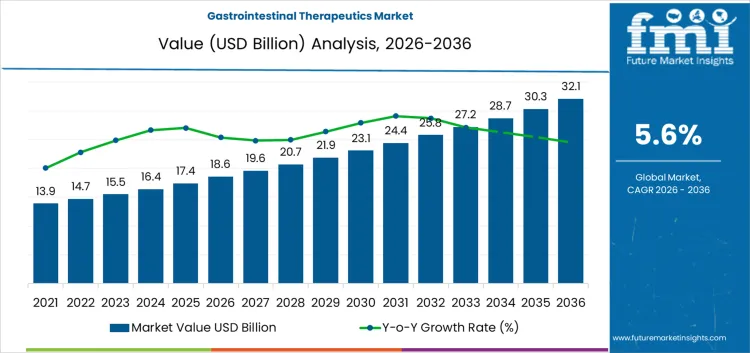
Gastrointestinal Therapeutics Market Key Takeaways
| Metric | Value |
|---|---|
| Industry Value (2026) | USD 18.6 Billion |
| Forecast Value (2036) | USD 32.1 Billion |
| Forecast CAGR 2026 to 2036 | 5.60% |
How Is the Global Gastrointestinal Therapeutics Market Advancing?
The global gastrointestinal therapeutics market is advancing steadily, driven by the rising prevalence of digestive disorders and increasing demand for long-term treatment options. Gastrointestinal therapeutics are widely used to manage conditions such as acid reflux, inflammatory bowel disease, irritable bowel syndrome, peptic ulcers, and functional gastrointestinal disorders. These therapies are prescribed across hospitals, specialty clinics, and home care settings, supporting both acute and chronic disease management.
A key driver supporting market growth is the growing incidence of lifestyle-related gastrointestinal conditions linked to dietary habits, stress, and aging populations. As diagnosis rates increase, healthcare providers are emphasizing early intervention and sustained treatment regimens to manage symptoms and prevent disease progression. This has led to increased utilization of prescription drugs, over-the-counter medications, and combination therapies targeting multiple gastrointestinal pathways.
Advancements in drug development and treatment approaches are further strengthening market expansion. Innovations in biologics, targeted small molecules, and microbiome-based therapies are improving treatment outcomes for complex gastrointestinal conditions. In parallel, improved diagnostic capabilities and patient awareness are supporting timely therapy initiation. As healthcare systems continue to focus on improving digestive health outcomes and treatment adherence, the gastrointestinal therapeutics market is expected to maintain consistent growth over the forecast period.
What Is the Segment-Wise Overview of the Gastrointestinal Therapeutics Market?
The gastrointestinal therapeutics market is driven by high treatment volumes for acid-related disorders and strong preference for convenient drug delivery. Acid suppressants, including PPIs and H2 blockers, lead with a 32% share, reflecting their widespread use in managing GERD, ulcers, and related conditions across outpatient settings. These therapies benefit from established efficacy, broad physician acceptance, and availability of cost-effective generics. By route of administration, oral delivery dominates with a 66% share, supported by ease of use, high patient adherence, and suitability for long-term treatment. Together, these segments highlight a market centered on chronic disease management, standardized treatment protocols, and patient-friendly administration.
Why Do Acid Suppressants Lead the Gastrointestinal Therapeutics Market?
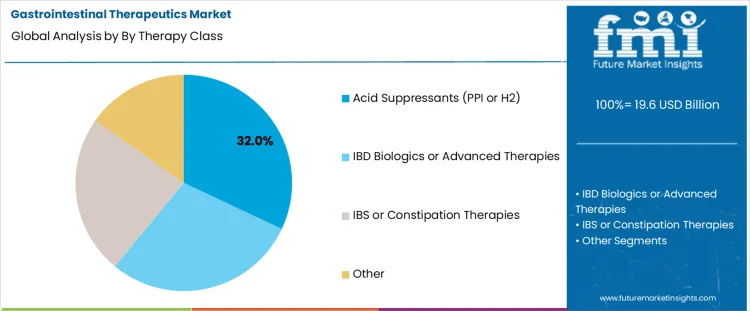
Acid suppressants, including proton pump inhibitors and H2 receptor antagonists, hold a 32% share of the gastrointestinal therapeutics market due to their central role in treating acid-related disorders. These therapies are widely prescribed for gastroesophageal reflux disease, peptic ulcers, and functional dyspepsia, making them first-line options across primary and specialty care. Their ability to provide effective symptom relief and promote mucosal healing supports both short- and long-term use. Acid suppressants also benefit from extensive clinical familiarity, clear treatment guidelines, and availability in both branded and generic forms. Multiple dosage options and formulations improve patient accessibility and adherence. As acid-related conditions remain highly prevalent globally, acid suppressants continue to dominate therapeutic demand within gastrointestinal care.
Why Does Oral Administration Dominate the Gastrointestinal Therapeutics Market?
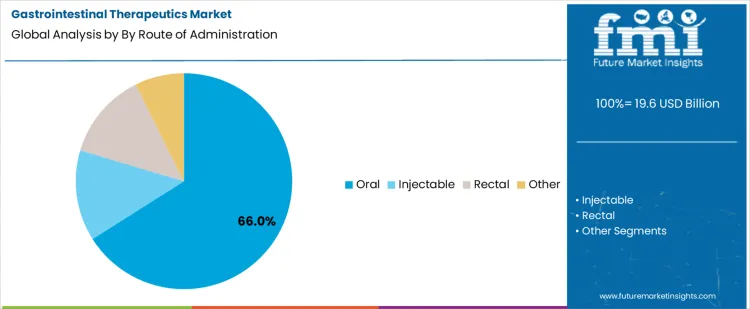
Oral administration accounts for 66% of total route-of-administration demand, making it the dominant delivery method in the gastrointestinal therapeutics market. Oral formulations are preferred due to ease of use, patient convenience, and suitability for chronic disease management. Most acid suppressants, IBS therapies, and constipation treatments are designed for oral dosing, allowing patients to manage conditions at home without clinical supervision. Oral delivery supports flexible dosing schedules and improves treatment adherence compared to injectable or rectal options. Lower administration costs, broad availability, and familiarity among patients and healthcare providers further reinforce preference for oral therapies. As gastrointestinal disorders are commonly managed in outpatient settings, oral administration remains the most practical and widely adopted route.
What Are the Key Dynamics for the Gastrointestinal Therapeutics Market?
The gastrointestinal therapeutics market is driven by the rising prevalence of gastrointestinal (GI) disorders such as irritable bowel syndrome (IBS), gastroesophageal reflux disease (GERD), inflammatory bowel disease (IBD), and peptic ulcers. These conditions affect a broad demographic span, contributing to sustained demand for therapeutic agents that manage symptoms, reduce inflammation, and improve intestinal function. Key market dynamics include an aging population with heightened GI disease risk, increased diagnostic screening, and expanded access to healthcare services. Technological advancements in drug delivery systems and targeted formulations also support market growth by improving patient outcomes and tolerability. Physicians are increasingly focusing on personalized treatment regimens based on disease severity, which is encouraging adoption of newer therapeutics over older, less-specific options.
Why Is the Gastrointestinal Therapeutics Market Growing?
The gastrointestinal therapeutics market is growing as the global incidence of GI disorders continues to increase due to lifestyle factors, dietary changes, stress, and genetic predisposition. Enhanced awareness of GI health issues among patients and clinicians is prompting earlier diagnosis and proactive treatment. Introduction of innovative therapies, including biologics and small-molecule agents that target specific disease pathways, is expanding treatment options beyond traditional antacids and proton pump inhibitors. Growing investment in clinical research and regulatory approvals for novel drugs contribute to the expanding therapeutic portfolio. Broader reimbursement coverage for GI treatments and rising healthcare expenditures in emerging regions further support market growth as more patients gain access to prescription therapies.
How Are the Key Drivers Shaping the Gastrointestinal Therapeutics Market?
Key drivers shaping the gastrointestinal therapeutics market include the increasing global burden of chronic GI diseases and rising patient demand for effective, tolerable treatment options. Scientific advances in understanding the mechanisms of GI pathologies are enabling development of next-generation therapeutics that address underlying causes rather than just symptoms. Expanded use of combination therapies and multi-targeted approaches is improving treatment outcomes and patient quality of life. Growing adoption of diagnostic tools that enable early disease detection and monitoring is also enhancing therapeutic uptake. In addition, strategic collaborations between biopharmaceutical companies and specialty GI research institutes are accelerating product development, clinical trial execution, and market introduction of innovative treatments tailored to specific GI conditions.
What Is the Growth Outlook for the Gastrointestinal Therapeutics Market by Country?
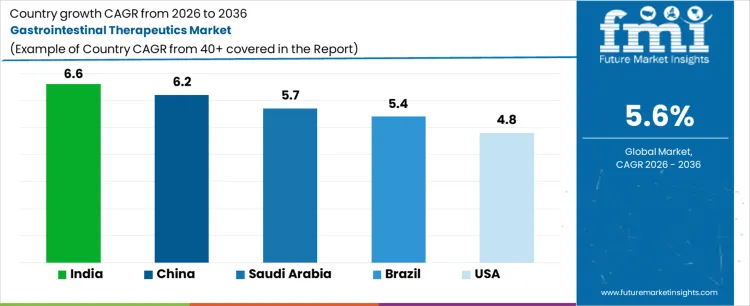
| Country | CAGR (%) |
|---|---|
| India | 6.6% |
| China | 6.2% |
| Saudi Arabia | 5.7% |
| Brazil | 5.4% |
| USA | 4.8% |
The gastrointestinal therapeutics market is expanding steadily as digestive disorders remain highly prevalent worldwide. India leads with a 6.6% CAGR, driven by rising disease incidence, generic drug availability, and expanding healthcare access. China follows at 6.2%, supported by healthcare modernization and growing chronic GI disease burden. Saudi Arabia grows at 5.7%, benefiting from high healthcare spending and lifestyle-related disease prevalence. Brazil expands at 5.4%, driven by improving public healthcare coverage and diagnostic access. The USA grows at 4.8%, reflecting a mature market supported by advanced therapies and long-term disease management needs.
What Is Driving the Growth of the Gastrointestinal Therapeutics Market in India?
The gastrointestinal therapeutics market in India is growing at a CAGR of 6.6%, driven by high prevalence of digestive disorders such as acid reflux, irritable bowel syndrome, gastritis, and infectious diarrheal diseases. Changing dietary habits, rising consumption of processed foods, and increasing stress levels are contributing to gastrointestinal health issues across both urban and semi-urban populations. Expanding access to healthcare services and growing prescription volumes from gastroenterologists are supporting steady demand for GI therapeutics. Increased availability of affordable generic drugs is improving treatment accessibility across income groups. Government health programs and improved diagnosis at primary and secondary care levels are further strengthening market growth. Rising awareness of gut health and growing use of maintenance therapies for chronic conditions are supporting long-term demand. As healthcare penetration continues to expand, India’s gastrointestinal therapeutics market is expected to grow steadily.
How Is the Gastrointestinal Therapeutics Market Expanding in China?
The gastrointestinal therapeutics market in China is expanding at a CAGR of 6.2%, supported by rising incidence of chronic gastrointestinal conditions and growing healthcare utilization. Urbanization and lifestyle changes are increasing prevalence of acid-related disorders, functional bowel diseases, and liver-related GI complications. China’s expanding hospital infrastructure and increased access to specialist care are improving diagnosis and treatment rates. Government healthcare reforms and broader insurance coverage are also enhancing patient access to prescription therapies. Domestic pharmaceutical manufacturers play a key role by supplying cost-effective GI drugs across hospitals and retail pharmacies. Growing awareness of long-term disease management and preventive treatment is increasing therapy adherence. As China continues to modernize its healthcare system and manage chronic disease burden, demand for gastrointestinal therapeutics is expected to rise consistently.
What Is Supporting Growth of the Gastrointestinal Therapeutics Market in Saudi Arabia?
The gastrointestinal therapeutics market in Saudi Arabia is growing at a CAGR of 5.7%, driven by rising prevalence of lifestyle-related digestive disorders and expanding healthcare infrastructure. Dietary changes, sedentary lifestyles, and increasing obesity rates are contributing to higher incidence of acid reflux, ulcers, and liver-related GI conditions. Strong government investment in hospitals and specialty care centers is improving access to advanced gastrointestinal treatments. High healthcare spending and widespread insurance coverage support adoption of branded and specialty therapeutics. Increasing focus on early diagnosis and specialist consultations is further driving prescription volumes. Growing awareness of digestive health among patients is encouraging timely treatment. As Saudi Arabia continues to strengthen healthcare delivery and manage chronic lifestyle diseases, demand for gastrointestinal therapeutics is expected to grow steadily.
How Is the Gastrointestinal Therapeutics Market Developing in Brazil?
The gastrointestinal therapeutics market in Brazil is expanding at a CAGR of 5.4%, supported by increasing burden of digestive disorders and improving healthcare access. High prevalence of acid-related diseases, parasitic infections, and inflammatory bowel conditions is driving steady demand for GI medications. Expansion of public healthcare services and improved availability of prescription drugs through government programs are strengthening market penetration. Growth of private hospitals and clinics is also supporting access to specialist gastroenterology care. Rising awareness of gastrointestinal health and improved diagnostic capabilities are contributing to earlier treatment initiation. Availability of generic therapeutics supports affordability and sustained usage. As Brazil continues to enhance healthcare delivery and manage chronic digestive conditions, demand for gastrointestinal therapeutics is expected to grow at a stable pace.
How Is the Gastrointestinal Therapeutics Market Expanding in the USA?
The gastrointestinal therapeutics market in the USA is growing at a CAGR of 4.8%, reflecting a mature but stable market driven by high diagnosis rates and ongoing treatment of chronic GI disorders. Conditions such as GERD, Crohn’s disease, ulcerative colitis, and irritable bowel syndrome drive long-term demand for maintenance therapies. Strong clinical awareness and early diagnosis support consistent prescription volumes. The market benefits from availability of advanced biologics, proton pump inhibitors, and targeted therapies. High healthcare spending and insurance coverage support access to both branded and specialty treatments. Market maturity and pricing pressures moderate growth rates. As focus remains on long-term disease management and improving patient outcomes, the USA gastrointestinal therapeutics market is expected to maintain steady expansion.
How Are Companies Competing in the Gastrointestinal Therapeutics Market?
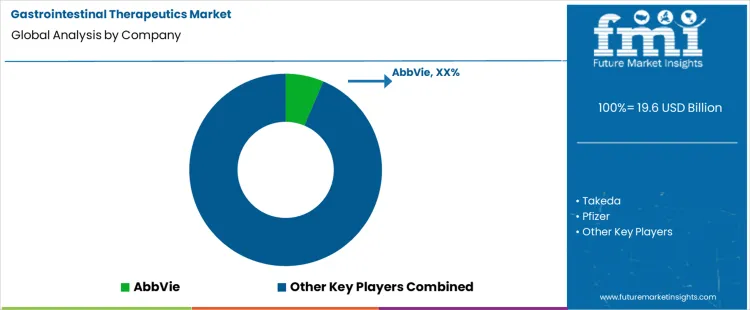
Competition in the gastrointestinal (GI) therapeutics market is driven by clinical efficacy, disease-modifying potential, safety in long-term use, and differentiation across chronic and complex GI disorders. Conditions such as inflammatory bowel disease (IBD), irritable bowel syndrome (IBS), gastroesophageal reflux disease (GERD), and liver-related GI complications require therapies that balance symptom control with durable remission and patient quality of life. Companies increasingly compete on advanced biologics, targeted small molecules, and precision-driven treatment approaches that address underlying disease mechanisms rather than symptomatic relief alone.
AbbVie, Johnson & Johnson, Takeda, and Pfizer lead competition through strong portfolios in IBD and immune-mediated GI diseases. AbbVie differentiates with biologics and next-generation agents focused on long-term disease control and reduced immunogenicity. Johnson & Johnson leverages its immunology expertise to deliver therapies with broad indications across GI inflammation. Takeda maintains a strong GI-focused identity, emphasizing deep clinical specialization, global reach, and lifecycle management of GI therapies. Pfizer competes through targeted small molecules and biologics that aim to improve oral administration convenience and treatment adherence for chronic GI conditions.
AstraZeneca, Sanofi, GSK, Bristol Myers Squibb, Roche, and Novartis compete through pipeline depth, novel mechanisms, and precision medicine strategies. AstraZeneca and Sanofi focus on immune modulation and biologic innovation to address unmet needs in inflammatory and autoimmune-driven GI disorders. GSK and Bristol Myers Squibb emphasize targeted immunotherapies and small molecules designed to improve safety and durability. Roche and Novartis differentiate through biomarker-driven approaches, advanced biologics, and strong clinical development capabilities. Across the market, competitive advantage is defined by therapeutic differentiation, long-term safety, patient-centric delivery formats, and the ability to address both inflammation control and disease progression in diverse gastrointestinal conditions.
Key Players in Gastrointestinal Therapeutics Market
- AbbVie
- Takeda
- Pfizer
- Johnson & Johnson
- AstraZeneca
- Sanofi
- GSK
- Bristol Myers Squibb
- Roche
- Novartis
Scope of Report
| Attributes | Description |
|---|---|
| Quantitative Unit (2026) | USD Billion |
| Therapy Class | Acid Suppressants (PPI or H2), IBD Biologics or Advanced Therapies, IBS or Constipation Therapies, Other |
| Route of Administration | Oral, Injectable, Rectal, Other |
| Regions Covered | Asia Pacific, Europe, North America, Latin America, Middle East & Africa |
| Countries Covered | China, Japan, South Korea, India, Australia & New Zealand, ASEAN, Rest of Asia Pacific, Germany, United Kingdom, France, Italy, Spain, Nordic, BENELUX, Rest of Europe, United States, Canada, Mexico, Brazil, Chile, Rest of Latin America, Kingdom of Saudi Arabia, Other GCC Countries, Turkiye, South Africa, Other African Union, Rest of Middle East & Africa |
| Key Companies Profiled | AbbVie, Takeda, Pfizer, Johnson & Johnson, AstraZeneca, Sanofi, GSK, Bristol Myers Squibb, Roche, Novartis |
| Additional Attributes | Dollar sales by therapy class and route of administration; regional market size and forecast analysis; growth outlook across major regions; adoption trends for advanced and conventional gastrointestinal therapies; assessment of prescribing patterns, biologic uptake, and demand dynamics across oral, injectable, and rectal treatment modalities. |
Gastrointestinal Therapeutics Market by Key Segments
By Therapy Class
- Acid Suppressants (PPI or H2)
- IBD Biologics or Advanced Therapies
- IBS or Constipation Therapies
- Other
By Route of Administration
- Oral
- Injectable
- Rectal
- Other
Region
- Asia Pacific
- China
- Japan
- South Korea
- India
- Australia & New Zealand
- ASEAN
- Rest of Asia Pacific
- Europe
- Germany
- United Kingdom
- France
- Italy
- Spain
- Nordic
- BENELUX
- Rest of Europe
- North America
- United States
- Canada
- Mexico
- Latin America
- Brazil
- Chile
- Rest of Latin America
- Middle East & Africa
- Kingdom of Saudi Arabia
- Other GCC Countries
- Turkiye
- South Africa
- Other African Union
- Rest of Middle East & Africa
Bibliography
- Singh, S., Loftus, E. V. Jr., Limketkai, B. N., Haydek, J. P., Agrawal, M., Scott, F. I., & Ananthakrishnan, A. N. (2024). AGA living clinical practice guideline on pharmacological management of moderate-to-severe ulcerative colitis. Gastroenterology.
- Gordon, H., Minozzi, S., Kopylov, U., Verstockt, B., Chaparro, M., Buskens, C., & Sandborn, W. J. (2024). ECCO guidelines on therapeutics in Crohn’s disease: Medical treatment. Journal of Crohn’s and Colitis, 18(10), 1531–1555.*
- Torres, J., Bonovas, S., Doherty, G., Kucharzik, T., Gisbert, J. P., Raine, T., & Adamina, M. (2024). ECCO consensus on medical treatment of Crohn’s disease: Evidence-based recommendations. Journal of Crohn’s and Colitis, 18(10), 1531–1555.*
- Sandborn, W. J., Feagan, B. G., & Hanauer, S. B. (2024). Clinical outcomes and therapeutic approaches in ulcerative colitis: Evidence synthesis and future directions. Journal of Gastroenterology and Hepatology.
- Rubin, D. T., Ananthakrishnan, A. N., & Siegel, C. A. (2025). Inflammatory bowel disease: Current therapeutic strategies and future therapies. Gastroenterology Clinics of North America.
Frequently Asked Questions
How big is the gastrointestinal therapeutics market in 2026?
The global gastrointestinal therapeutics market is estimated to be valued at USD 18.6 billion in 2026.
What will be the size of gastrointestinal therapeutics market in 2036?
The market size for the gastrointestinal therapeutics market is projected to reach USD 32.1 billion by 2036.
How much will be the gastrointestinal therapeutics market growth between 2026 and 2036?
The gastrointestinal therapeutics market is expected to grow at a 5.6% CAGR between 2026 and 2036.
What are the key product types in the gastrointestinal therapeutics market?
The key product types in gastrointestinal therapeutics market are acid suppressants (ppi or h2), ibd biologics or advanced therapies, ibs or constipation therapies and other.
Which by route of administration segment to contribute significant share in the gastrointestinal therapeutics market in 2026?
In terms of by route of administration, oral segment to command 66.0% share in the gastrointestinal therapeutics market in 2026.
Preview the report firsthand - request a free sample
Get SampleGet the brochure for pricing and purchase details.
Get PDFTable of Content
- Executive Summary
- Global Market Outlook
- Demand-side Trends
- Supply-side Trends
- Technology Roadmap Analysis
- Analysis and Recommendations
- Market Overview
- Market Coverage / Taxonomy
- Market Definition / Scope / Limitations
- Market Background
- Market Dynamics
- Drivers
- Restraints
- Opportunity
- Trends
- Scenario Forecast
- Demand in Optimistic Scenario
- Demand in Likely Scenario
- Demand in Conservative Scenario
- Opportunity Map Analysis
- Product Life Cycle Analysis
- Supply Chain Analysis
- Investment Feasibility Matrix
- Value Chain Analysis
- PESTLE and Porter’s Analysis
- Regulatory Landscape
- Regional Parent Market Outlook
- Production and Consumption Statistics
- Import and Export Statistics
- Market Dynamics
- Global Market Analysis 2021 to 2025 and Forecast, 2026 to 2036
- Historical Market Size Value (USD Million) Analysis, 2021 to 2025
- Current and Future Market Size Value (USD Million) Projections, 2026 to 2036
- Y-o-Y Growth Trend Analysis
- Absolute $ Opportunity Analysis
- Global Market Pricing Analysis 2021 to 2025 and Forecast 2026 to 2036
- Global Market Analysis 2021 to 2025 and Forecast 2026 to 2036, By By Therapy Class
- Introduction / Key Findings
- Historical Market Size Value (USD Million) Analysis By By Therapy Class , 2021 to 2025
- Current and Future Market Size Value (USD Million) Analysis and Forecast By By Therapy Class , 2026 to 2036
- Acid Suppressants (PPI or H2)
- IBD Biologics or Advanced Therapies
- IBS or Constipation Therapies
- Other
- Acid Suppressants (PPI or H2)
- Y-o-Y Growth Trend Analysis By By Therapy Class , 2021 to 2025
- Absolute $ Opportunity Analysis By By Therapy Class , 2026 to 2036
- Global Market Analysis 2021 to 2025 and Forecast 2026 to 2036, By By Route of Administration
- Introduction / Key Findings
- Historical Market Size Value (USD Million) Analysis By By Route of Administration, 2021 to 2025
- Current and Future Market Size Value (USD Million) Analysis and Forecast By By Route of Administration, 2026 to 2036
- Oral
- Injectable
- Rectal
- Other
- Oral
- Y-o-Y Growth Trend Analysis By By Route of Administration, 2021 to 2025
- Absolute $ Opportunity Analysis By By Route of Administration, 2026 to 2036
- Global Market Analysis 2021 to 2025 and Forecast 2026 to 2036, By Region
- Introduction
- Historical Market Size Value (USD Million) Analysis By Region, 2021 to 2025
- Current Market Size Value (USD Million) Analysis and Forecast By Region, 2026 to 2036
- North America
- Latin America
- Western Europe
- Eastern Europe
- East Asia
- South Asia and Pacific
- Middle East & Africa
- Market Attractiveness Analysis By Region
- North America Market Analysis 2021 to 2025 and Forecast 2026 to 2036, By Country
- Historical Market Size Value (USD Million) Trend Analysis By Market Taxonomy, 2021 to 2025
- Market Size Value (USD Million) Forecast By Market Taxonomy, 2026 to 2036
- By Country
- USA
- Canada
- Mexico
- By By Therapy Class
- By By Route of Administration
- By Country
- Market Attractiveness Analysis
- By Country
- By By Therapy Class
- By By Route of Administration
- Key Takeaways
- Latin America Market Analysis 2021 to 2025 and Forecast 2026 to 2036, By Country
- Historical Market Size Value (USD Million) Trend Analysis By Market Taxonomy, 2021 to 2025
- Market Size Value (USD Million) Forecast By Market Taxonomy, 2026 to 2036
- By Country
- Brazil
- Chile
- Rest of Latin America
- By By Therapy Class
- By By Route of Administration
- By Country
- Market Attractiveness Analysis
- By Country
- By By Therapy Class
- By By Route of Administration
- Key Takeaways
- Western Europe Market Analysis 2021 to 2025 and Forecast 2026 to 2036, By Country
- Historical Market Size Value (USD Million) Trend Analysis By Market Taxonomy, 2021 to 2025
- Market Size Value (USD Million) Forecast By Market Taxonomy, 2026 to 2036
- By Country
- Germany
- UK
- Italy
- Spain
- France
- Nordic
- BENELUX
- Rest of Western Europe
- By By Therapy Class
- By By Route of Administration
- By Country
- Market Attractiveness Analysis
- By Country
- By By Therapy Class
- By By Route of Administration
- Key Takeaways
- Eastern Europe Market Analysis 2021 to 2025 and Forecast 2026 to 2036, By Country
- Historical Market Size Value (USD Million) Trend Analysis By Market Taxonomy, 2021 to 2025
- Market Size Value (USD Million) Forecast By Market Taxonomy, 2026 to 2036
- By Country
- Russia
- Poland
- Hungary
- Balkan & Baltic
- Rest of Eastern Europe
- By By Therapy Class
- By By Route of Administration
- By Country
- Market Attractiveness Analysis
- By Country
- By By Therapy Class
- By By Route of Administration
- Key Takeaways
- East Asia Market Analysis 2021 to 2025 and Forecast 2026 to 2036, By Country
- Historical Market Size Value (USD Million) Trend Analysis By Market Taxonomy, 2021 to 2025
- Market Size Value (USD Million) Forecast By Market Taxonomy, 2026 to 2036
- By Country
- China
- Japan
- South Korea
- By By Therapy Class
- By By Route of Administration
- By Country
- Market Attractiveness Analysis
- By Country
- By By Therapy Class
- By By Route of Administration
- Key Takeaways
- South Asia and Pacific Market Analysis 2021 to 2025 and Forecast 2026 to 2036, By Country
- Historical Market Size Value (USD Million) Trend Analysis By Market Taxonomy, 2021 to 2025
- Market Size Value (USD Million) Forecast By Market Taxonomy, 2026 to 2036
- By Country
- India
- ASEAN
- Australia & New Zealand
- Rest of South Asia and Pacific
- By By Therapy Class
- By By Route of Administration
- By Country
- Market Attractiveness Analysis
- By Country
- By By Therapy Class
- By By Route of Administration
- Key Takeaways
- Middle East & Africa Market Analysis 2021 to 2025 and Forecast 2026 to 2036, By Country
- Historical Market Size Value (USD Million) Trend Analysis By Market Taxonomy, 2021 to 2025
- Market Size Value (USD Million) Forecast By Market Taxonomy, 2026 to 2036
- By Country
- Kingdom of Saudi Arabia
- Other GCC Countries
- Turkiye
- South Africa
- Other African Union
- Rest of Middle East & Africa
- By By Therapy Class
- By By Route of Administration
- By Country
- Market Attractiveness Analysis
- By Country
- By By Therapy Class
- By By Route of Administration
- Key Takeaways
- Key Countries Market Analysis
- USA
- Pricing Analysis
- Market Share Analysis, 2025
- By By Therapy Class
- By By Route of Administration
- Canada
- Pricing Analysis
- Market Share Analysis, 2025
- By By Therapy Class
- By By Route of Administration
- Mexico
- Pricing Analysis
- Market Share Analysis, 2025
- By By Therapy Class
- By By Route of Administration
- Brazil
- Pricing Analysis
- Market Share Analysis, 2025
- By By Therapy Class
- By By Route of Administration
- Chile
- Pricing Analysis
- Market Share Analysis, 2025
- By By Therapy Class
- By By Route of Administration
- Germany
- Pricing Analysis
- Market Share Analysis, 2025
- By By Therapy Class
- By By Route of Administration
- UK
- Pricing Analysis
- Market Share Analysis, 2025
- By By Therapy Class
- By By Route of Administration
- Italy
- Pricing Analysis
- Market Share Analysis, 2025
- By By Therapy Class
- By By Route of Administration
- Spain
- Pricing Analysis
- Market Share Analysis, 2025
- By By Therapy Class
- By By Route of Administration
- France
- Pricing Analysis
- Market Share Analysis, 2025
- By By Therapy Class
- By By Route of Administration
- India
- Pricing Analysis
- Market Share Analysis, 2025
- By By Therapy Class
- By By Route of Administration
- ASEAN
- Pricing Analysis
- Market Share Analysis, 2025
- By By Therapy Class
- By By Route of Administration
- Australia & New Zealand
- Pricing Analysis
- Market Share Analysis, 2025
- By By Therapy Class
- By By Route of Administration
- China
- Pricing Analysis
- Market Share Analysis, 2025
- By By Therapy Class
- By By Route of Administration
- Japan
- Pricing Analysis
- Market Share Analysis, 2025
- By By Therapy Class
- By By Route of Administration
- South Korea
- Pricing Analysis
- Market Share Analysis, 2025
- By By Therapy Class
- By By Route of Administration
- Russia
- Pricing Analysis
- Market Share Analysis, 2025
- By By Therapy Class
- By By Route of Administration
- Poland
- Pricing Analysis
- Market Share Analysis, 2025
- By By Therapy Class
- By By Route of Administration
- Hungary
- Pricing Analysis
- Market Share Analysis, 2025
- By By Therapy Class
- By By Route of Administration
- Kingdom of Saudi Arabia
- Pricing Analysis
- Market Share Analysis, 2025
- By By Therapy Class
- By By Route of Administration
- Turkiye
- Pricing Analysis
- Market Share Analysis, 2025
- By By Therapy Class
- By By Route of Administration
- South Africa
- Pricing Analysis
- Market Share Analysis, 2025
- By By Therapy Class
- By By Route of Administration
- USA
- Market Structure Analysis
- Competition Dashboard
- Competition Benchmarking
- Market Share Analysis of Top Players
- By Regional
- By By Therapy Class
- By By Route of Administration
- Competition Analysis
- Competition Deep Dive
- AbbVie
- Overview
- Product Portfolio
- Profitability by Market Segments (Product/Age /Sales Channel/Region)
- Sales Footprint
- Strategy Overview
- Marketing Strategy
- Product Strategy
- Channel Strategy
- Takeda
- Pfizer
- Johnson & Johnson
- AstraZeneca
- Sanofi
- GSK
- Bristol Myers Squibb
- Roche
- Novartis
- AbbVie
- Competition Deep Dive
- Assumptions & Acronyms Used
- Research Methodology


