

- Industry Size (2026)
- USD 1.6 Bn
- Forecast (2036)
- USD 2.8 Bn
- CAGR (2026 to 2036)
- 5.7%
Detachable Embolization Coils Market Size, Market Forecast and Outlook By FMI
The Detachable Embolization Coils Market surpassed a value of USD 1.5 billion in 2025. The industry is set to cross USD 1.6 billion in 2026 at a CAGR of 5.7% during the forecast period. Demand outlook propels the valuation to USD 2.8 billion through 2036 as minimally invasive endovascular coiling displaces high-risk surgical clipping in progressively smaller and more anatomically complex neurovascular structures.
Hospital procurement departments are currently being forced to consolidate their neurovascular device portfolios, shifting from fragmented vendor sourcing toward integrated access-and-delivery platforms. This is not a clinical mandate but an economic one, driven by the need to standardize deployment mechanics across expanding interventional radiology teams. Buyers who delay this standardization face higher inventory carrying costs and increased procedural friction as newer, bioactive coated coils require specific microcatheter compatibilities. The structural transition is further complicated by physician preference, where tactile familiarity often overrides procurement's push for vendor consolidation.
Summary of Detachable Embolization Coils Market
- Detachable Embolization Coils Market Definition:
- Detachable Embolization Coils encompass implantable endovascular devices designed to be precisely delivered and detached within targeted blood vessels or aneurysms to block blood flow, promote thrombosis, and support minimally invasive treatment of neurovascular and peripheral vascular abnormalities.
- Demand Drivers in the Market:
- Expanding screening protocols for unruptured intracranial aneurysms force neurointerventional departments to stock broader sizing matrixes to accommodate prophylactic treatments.
- The shift of peripheral vascular procedures toward outpatient settings compels ambulatory surgical center administrators to adopt reliable, rapid-deployment coil systems.
- Value-based care frameworks obligate hospital purchasing committees to favor coil portfolios that demonstrate lower retreatment rates.
- Key Segments Analyzed in the FMI Report:
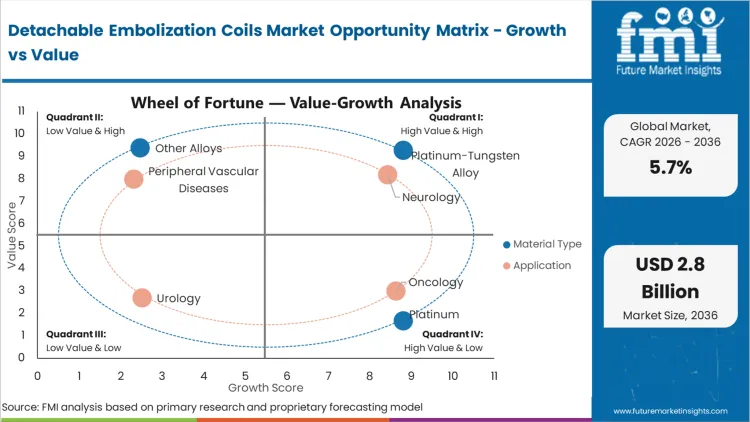
- Platinum-Tungsten Alloy: Platinum-Tungsten Alloy is estimated to garner 55.4% share in 2026, driven by its superior radial force and shape retention inside complex aneurysmal geometries compared to bare platinum.
- Neurology: Neurology is poised to record 62.1% share in 2026, as intracranial procedures mandate the highest precision in controlled detachment.
- Hospitals: Hospitals hold the dominant position with 74.3% share in 2026, reflecting the capital-intensive nature of biplane angiography suites required for complex coiling.
- India: 9.1% CAGR, driven by the rapid decentralization of stroke care infrastructure beyond tier-1 metropolitan hubs.
- Analyst Opinion at FMI:
- Sabyasachi Ghosh, Principal Analyst, Healthcare, at FMI, opines, "When observing the neurovascular space, the timing disconnect is evident. Procurement teams expect an immediate transition to newer bioactive coated coils based on clinical guidelines, yet the structural clock runs differently. Neuro-interventionalists hesitate to abandon the predictable deployment friction and tactile feedback of legacy alloy coils they have used for a decade. Adoption curves here are gated by physician physical familiarity, not just the raw superiority of the new material."
- Strategic Implications / Executive Takeaways:
- Product managers must integrate universal detachment controllers to eliminate the need for hospitals to stock proprietary generator boxes.
- Supply chain directors should negotiate volume-based consignment models to mitigate the inventory carrying costs of maintaining complete coil sizing matrixes.
- Regulatory affairs teams face tightening post-market surveillance requirements that mandate longitudinal tracking of coil compaction rates.
- Methodology:
- Primary Research: Interviews with neurointerventional, hospital procurement directors, and endovascular therapy coordinators.
- Desk Research: Analysis of global medical device registries, FDA 510(k) clearances, and clinical outcome publications.
- Market-Sizing and Forecasting: Anchored to annual endovascular procedural volumes and average selling prices across major healthcare systems.
- Data Validation and Update Cycle: Triangulated against manufacturer production capacities and regional healthcare expenditure data.
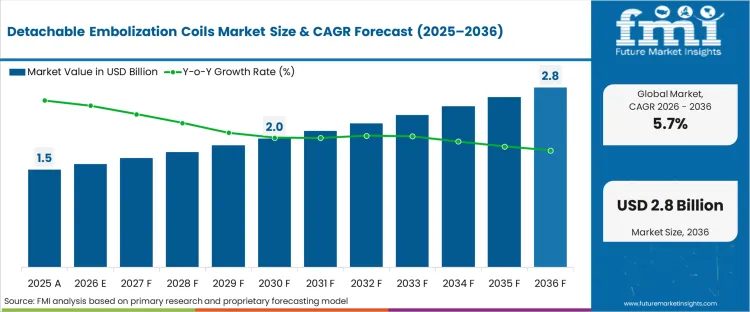
Before growth in complex peripheral applications becomes self-reinforcing, the industry must cross a specific operational gate: the widespread adoption of automated or pressure-regulated detachment systems. Once interventionalists no longer rely on manual thermal or mechanical break points, the consistency of deployment improves, making the procedure viable for lower-volume ambulatory surgical centers rather than just specialized tertiary hubs. The market stabilizes around predictable per-procedure costs once this threshold is passed.
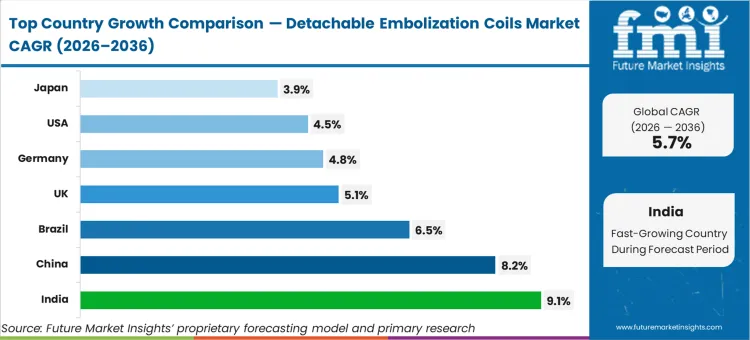
China is expected to advance at 8.2%, followed by India at 9.1%, Brazil at 6.5%, the United Kingdom at 5.1%, Germany at 4.8%, the United States at 4.5%, and Japan at 3.9%. This geographic divergence reflects where countries sit on the infrastructure curve; markets recording the highest rates are currently equipping newly established regional stroke centers, whereas slower-growth regions are primarily replacing legacy inventory within a mature installed base.
Detachable Embolization Coils Market Definition
The detachable embolization coils market encompasses implantable wire devices designed to be navigated through a microcatheter and intentionally released into a blood vessel or aneurysm to induce thrombosis and occlude blood flow. The functional boundary of this market specifically requires a controlled detachment mechanism, whether thermal, mechanical, or electrolytic, distinguishing these devices from pushable or free-flow embolic agents.
Detachable Embolization Coils Market Inclusions
Scope includes bare platinum coils, alloyed coils, hydrogel-coated variants, and bioactive modified coils utilized across neurovascular and peripheral interventions. The tracking covers the coil itself along with its integrated delivery pusher wire, provided they function as a single pre-packaged unit requiring a specific detachment controller. Embedded technologies such as electrolytic detachment systems are factored into the overall component valuation when sold alongside the primary coil inventory.
Detachable Embolization Coils Market Exclusions
The market excludes liquid embolics, particulate agents, microspheres, and flow diverter stents. Flow diverters are excluded because they reconstruct the parent artery rather than filling the aneurysmal sac, representing a fundamentally different therapeutic mechanism and procurement category. Pushable coils lacking a specific, user-controlled detachment interface are similarly excluded due to their divergent risk profile and pricing structure.
Detachable Embolization Coils Market Research Methodology
- Primary Research: Procurement directors at tertiary care hospitals, neurointerventional surgery department heads, and supply chain managers for interventional radiology networks.
- Desk Research: Device registry databases, FDA/EMA premarket approval filings, standardized hospital coding records, and clinical trial progression reports for next-generation endovascular devices.
- Market-Sizing and Forecasting: Baseline sizing anchors to recorded procedural volumes for cerebral aneurysm treatments and peripheral embolization across top-tier global hospital networks.
- Data Validation and Update Cycle: Forecasts are cross-validated against quarterly earnings reports of leading neurovascular device manufacturers and aggregated hospital capital expenditure budgets.
Segmental Analysis
Detachable Embolization Coils Market Analysis by Material Type
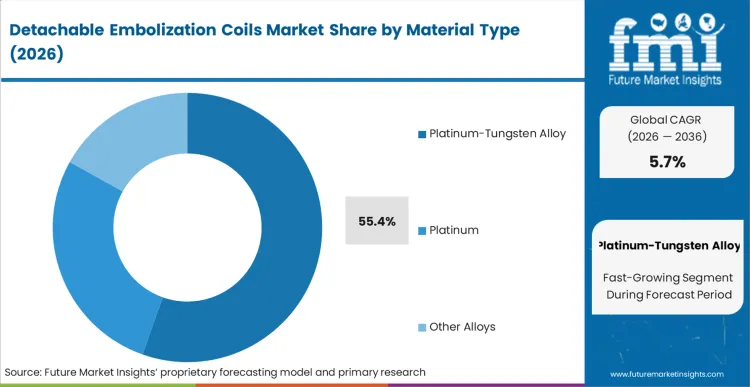
Legacy bare platinum configurations are currently failing to deliver the necessary volumetric packing density for wide-necked aneurysms, prompting the shift toward specialized alloys. Based on FMI's assessment, Platinum-Tungsten Alloy holds 55.4% share, addressing this exact mechanical deficit by providing the stiffness required to anchor the framing coil while maintaining radiopacity. Interventionalists initiating a coiling procedure must balance flexibility for navigation against the radial force needed for stabilization. The addition of tungsten fundamentally changes this operational calculation, allowing for a tighter packing matrix without the coil mass prolapsing into the parent vessel. Hospitals that continue to over-index on bare platinum for complex morphologies often face higher rates of late-stage coil compaction, forcing costly and risky retreatment procedures.
- Navigation Verification: The tungsten component enhances the tactile response transmitted through the microcatheter. Physicians use this feedback to confirm structural placement before initiating detachment.
- Compaction Resistance: The stiffer alloy resists the pulsatile force of blood flow once deployed. This prevents the embolic mass from shifting, reducing the likelihood of aneurysm recanalization.
- Inventory Consolidation: Hospitals specifying alloyed framing coils reduce the total number of units required to achieve dense occlusion. This translates directly into lower per-procedure material costs.
Detachable Embolization Coils Market Analysis by Application
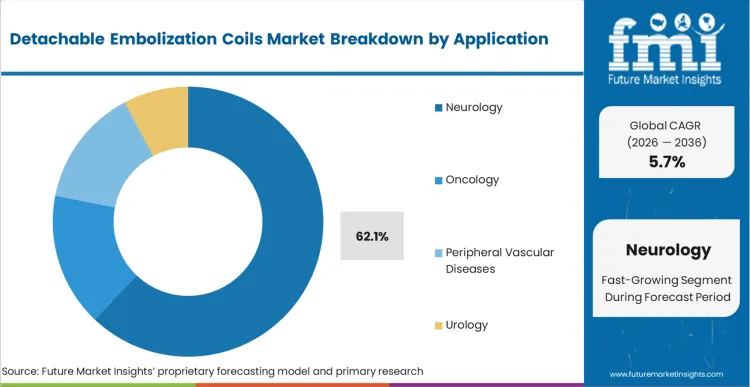
Neurointerventional surgery directors are currently facing a specific choice regarding how they equip their biplane suites for acute stroke and aneurysm management. Neurology holds 62.1% of the market share, driven entirely by the zero-tolerance threshold for off-target embolization in the cerebral vasculature. If a coil prematurely detaches or migrates during a peripheral tumor embolization, the consequence is localized ischemia; if it migrates during an intracranial procedure, the consequence is catastrophic neurological deficit. Therefore, the decision pattern in neurology strictly favors systems with instantaneous, predictable detachment mechanisms over those optimizing purely for cost. Facilities attempting to substitute less sophisticated, slow-detaching peripheral vascular devices into neuro-applications experience extended fluoroscopy times and elevated procedural risk profiles.
- Premature Detachment: Complex intracranial navigation puts immense strain on the coil-pusher junction. Systems engineered for neuro-applications reinforce this zone to prevent separation before the physician triggers release.
- Incomplete Occlusion: Aneurysms with irregular morphologies often reject uniform filling. Bioactive or complex-shaped coils in neuro-applications trigger a faster healing response to seal gaps.
- Catheter Entrapment: Friction during deployment can cause the system to lock within the microcatheter. Next-generation neuro-coils utilize advanced hydrophilic coatings to ensure smooth transit even through highly tortuous anatomy.
Detachable Embolization Coils Market Analysis by End User
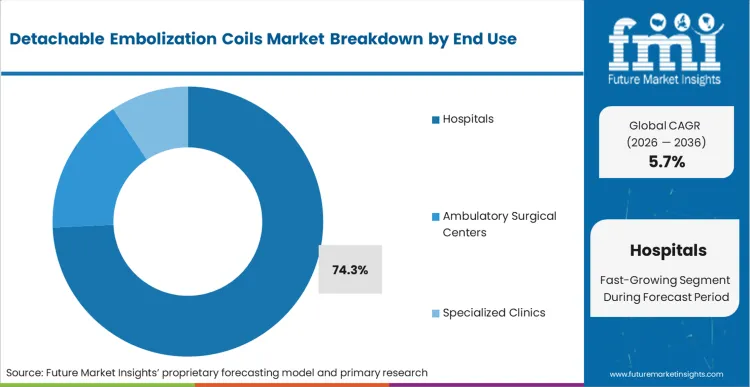
The reason Hospitals maintain a 74.3% share is tied directly to the capital infrastructure required to safely execute complex endovascular repairs. In FMI's view, the capacity to absorb the upfront cost of advanced biplane angiography systems and maintain a 24-hour on-call neurointerventional team restricts high-volume coiling to tertiary centers. Ambulatory surgical centers are beginning to absorb simpler peripheral embolizations, but they cannot economically justify the massive inventory of coil sizes, often hundreds of SKUs, required to be ready for unpredictable anatomical variations. Hospital procurement networks utilize their scale to negotiate consignment agreements, ensuring comprehensive sizing availability without tying up operational capital. Clinics attempting to manage this inventory on a direct-purchase basis find their margins entirely consumed by expired or unused niche coil sizes.
- Upfront Stocking: The initial procurement cycle requires outfitting the lab with every primary, filling, and finishing coil dimension. Hospitals offset this barrier by establishing consignment relationships with top-tier vendors.
- Procedural Waste: Coils that are prepped but not deployed due to sizing mismatches represent pure loss. Advanced 3D rotational angiography in hospitals minimizes this by enabling precise volumetric measurement prior to selection.
- Lifecycle Tracking: Value analysis committees review outcome data against device cost. Hospitals utilizing comprehensive tracking software isolate which proprietary coil systems actually lower the total episodic cost of care through reduced retreatment rates.
Detachable Embolization Coils Market Drivers, Restraints, and Opportunities
The necessity to shift complex vascular interventions from open surgical theaters to endovascular suites forces hospital administrators to upgrade their interventional radiology capabilities. This structural pressure requires procurement directors to establish dedicated endovascular inventory channels that prioritize high-reliability detachment systems. The commercial stakes are tied directly to patient throughput; biplane angiography suites represent one of the highest fixed-cost environments in a hospital. Any technology that reduces procedural time by ensuring predictable coil deployment directly increases the number of cases a facility can complete per day.
The primary structural friction in this market is the steep tactile learning curve associated with new deployment mechanisms. When a manufacturer introduces an upgraded electrolytic or mechanical detachment zone, it alters the physical feedback the physician feels through the pusher wire. This is not a temporary training issue; it is a structural barrier because highly experienced operators rely on muscle memory built over thousands of deployments to judge tension and prevent vessel rupture. While simulation training provides a partial solution, it cannot perfectly replicate the friction of tortuous in-vivo navigation, causing many senior interventionalists to resist migrating away from their established legacy systems.
Opportunities in the Detachable Embolization Coils Market
- Consignment Optimization: The requirement to stock expansive sizing matrixes ties up hospital capital. Vendors who deploy automated, RFID-tracked consignment cabinets capture exclusive departmental contracts by removing inventory management burdens from nursing staff.
- Ambulatory Peripheral Expansion: The migration of non-neurological procedures to outpatient settings requires simplified device footprints. Manufacturers targeting this space by bundling specific peripheral coils with universal, battery-operated detachment boxes secure early market share in the ASC sector.
- Bioactive Surface Adoption: The push for lower retreatment rates demands better vessel healing. Companies integrating hydrogel or polymer coatings that swell upon deployment capture premium pricing from value analysis committees focused on long-term outcomes.
Regional Analysis
Based on the regional analysis, the Detachable Embolization Coils Market is segmented into North America, Latin America, Europe, East Asia, South Asia, Oceania, and Middle East & Africa across 40 plus countries.
.webp "Top Country Growth Comparison Detachable Embolization Coils Market Cagr (2026 2036)")
| Country | CAGR (2026 to 2036) |
|---|---|
| India | 9.1% |
| China | 8.2% |
| Brazil | 6.5% |
| United Kingdom | 5.1% |
| Germany | 4.8% |
| United States | 4.5% |
| Japan | 3.9% |
Source: Future Market Insights (FMI) analysis, based on proprietary forecasting model and primary research
Europe Detachable Embolization Coils Market Analysis
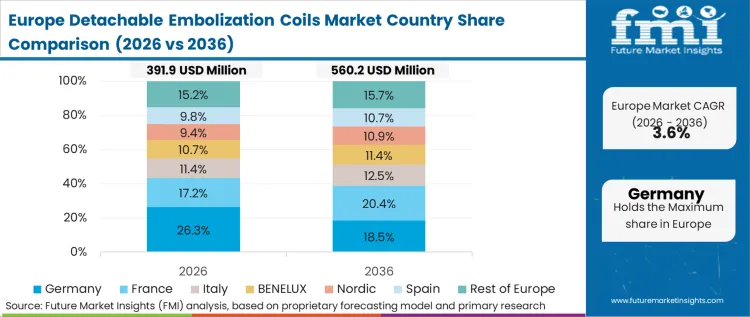
Vendors must prove that higher-priced bioactive or complex-alloy coils reduce downstream retreatment costs across a population level before gaining listing on approved national formularies, as per FMI's projection. Europe's trajectory is defined by its highly structured, centralized public procurement frameworks, fundamentally altering how vendors approach market access compared to fragmented private systems. Once approved, however, the adoption is rapid and uniform across the network. National health services do not evaluate coil technologies on an individual hospital basis, but rather conduct rigorous, multi-year health technology assessments to determine systemic cost-effectiveness.
- Germany: Advancing at a 4.8% CAGR between 2026 and 2036, the market in Germany benefits from a robust reimbursement framework for stroke interventions that enables rapid integration of premium endovascular technologies. Vendors positioned strongly here create a reference point for clinical efficacy that heavily influences procurement criteria across adjacent Central European markets. Neurology departments operate under DRG (Diagnosis-Related Group) codes that adequately cover the cost of advanced platinum-tungsten systems.
- United Kingdom: Hospitals achieving successful integration of new technologies clear angiography suite bottlenecks, thereby increasing their capacity to handle acute regional stroke referrals. Sales in the United Kingdom are projected to rise at a 5.1% CAGR, driven by supply chain managers mandating that manufacturers provide clinical evidence demonstrating reduced procedural times to offset unit costs. The NHS procurement structure forces a rigorous evaluation of total procedural cost rather than just component pricing.
FMI's report includes data on France, Italy, Spain, and the Nordics. The common structural pattern across these additional markets is the increasing reliance on pan-European clinical registries to validate post-market performance, dictating renewal contracts.
Asia Pacific Detachable Embolization Coils Market Analysis
FMI analysts opine that the expansion of catheterization labs into tier-2 cities is the primary growth engine, but these new labs require coils with highly forgiving deployment characteristics as the physician skill base matures. Vendors cannot simply export Western consignment models here; instead, they must adapt to localized distribution networks and varying levels of physician endovascular training. Infrastructure readiness shapes the adoption curve across Asia Pacific, creating a stark divide between heavily concentrated metropolitan stroke centers and the rapidly expanding regional hospital networks.
- India: The rapid establishment of private catheterization labs outside major metropolitan hubs defines the country's trajectory, demand in India is estimated to expand at a CAGR of 9.1%. Vendors must compete aggressively on initial portfolio placement rather than just fighting for replacement share, as current growth reflects the first-time outfitting of new infrastructure. Interventionalists in these new facilities operate under intense volume pressures and require highly reliable, mechanically simple detachment systems that minimize procedural complications.
- China: FMI estimates the market in China to expand at a CAGR of 8.2%, heavily influenced by volume-based procurement (VBP) mandates that force a radical recalibration of pricing strategies for both domestic and international vendors. The structural transition toward VBP fundamentally shifts the landscape from a physician-preference model to a strictly price-and-supply-chain driven environment over the next five years. To comply, hospital administrators must source a significant percentage of their neurovascular volume from the winners of these national tenders.
- Japan: Physicians in Japan prioritize extreme precision and long-term stability, favoring highly specialized ultra-soft finishing coils. A CAGR of 3.9% is expected over the forecast period as the aging demographic necessitates a high volume of unruptured aneurysm treatments, governed by very conservative clinical guidelines. Manufacturers who secure PMDA approval for next-generation bioactive coils here capture highly loyal, high-margin accounts that rarely switch vendors once a protocol is established.
FMI's report includes South Korea, Australia, and ASEAN nations. Across these territories, the development of localized clinical training fellowships is systematically lowering the barrier to entry for complex neurovascular procedures.
North America and Latin America Detachable Embolization Coils Market Analysis
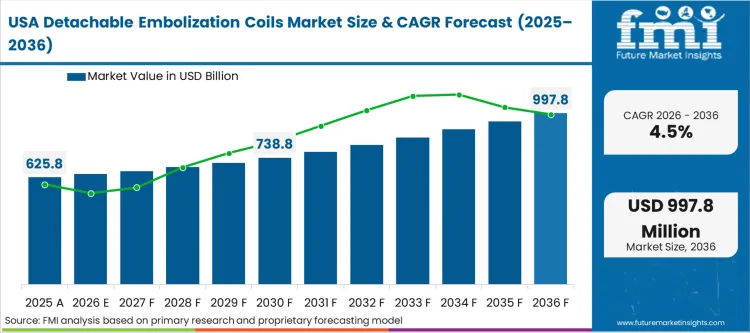
According to FMI's estimates, a manufacturer cannot succeed across the Americas with a single superior coil; they must offer a complete ecosystem of framing, filling, and finishing coils, alongside the proprietary microcatheters required to deliver them. These networks leverage their immense procedural volume to force vendors into portfolio-wide contracting, a trend spilling over into the privatized sectors of Latin America. The broader regional environment is driven by aggressive value analysis committee (VAC) oversight and the consolidation of independent hospitals into massive integrated delivery networks (IDNs).
- United States: Procurement directors utilize longitudinal data to justify the higher upfront costs of advanced hydrogel-coated or complex-alloy coils if they demonstrably reduce the need for secondary interventions. Vendors who successfully align their product portfolios with these hospital-level outcome metrics secure multi-year, multi-facility contracts that lock out single-product competitors. The shift toward value-based reimbursement forces US hospital networks to closely track aneurysm recanalization rates. The United States is poised to expand at a 4.5% CAGR, driven by these procurement shifts.
- Brazil: Registering a CAGR of 6.5% over the forecast period, Brazil's trajectory is defined by a dual-tiered healthcare system where private hospital consortiums lead the early adoption of premium neurovascular technologies. Supply chain managers in the private sector prioritize complete access-and-delivery portfolios to minimize procedural delays, while the public health system (SUS) relies on stringent state tenders that force vendors to unbundle their specialized coil systems to compete on pure unit cost. Companies that fail to navigate this bifurcated procurement landscape risk losing their foothold to domestic distributors offering aggressive bulk pricing.
FMI's report includes Canada and Mexico. The Canadian landscape mirrors the US in clinical sophistication but utilizes provincial tender processes that lengthen the procurement cycle and emphasize budget predictability over rapid technology turnover, a dynamic similarly observed in Latin America's heavily regulated public sectors.
Competitive Aligners for Market Players
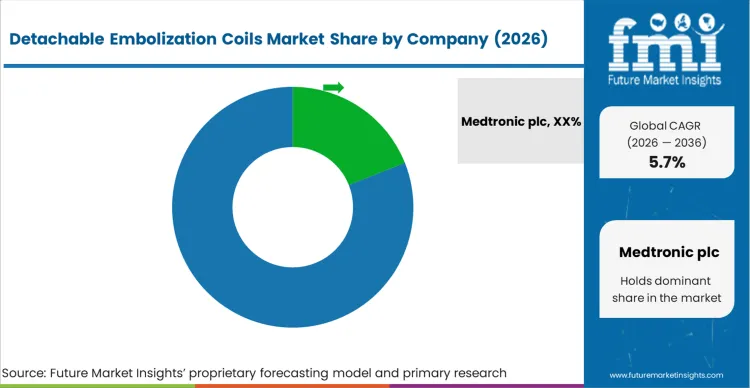
The detachable embolization coils market operates under severe structural concentration, dictated by the immense capital required to achieve precision alloy manufacturing and the zero-tolerance regulatory burden of neurovascular approvals. Procurement directors at major stroke centers do not evaluate vendors on isolated technical specifications; they distinguish qualified partners from secondary suppliers based entirely on the ability to provide an uninterrupted, comprehensive sizing matrix. Dominant entities like Medtronic plc, Stryker Corporation, and Johnson & Johnson MedTech (CERENOVUS) maintain their primary formulary positions through highly integrated supply chain operations rather than sheer device engineering. These tier-1 suppliers guarantee that a hospital's consignment cabinet never lacks a critical finishing coil during an acute intervention, a logistical threshold that effectively locks out smaller manufacturers attempting to compete on unit price alone.
The defining structural advantage for incumbents lies within their established proprietary detachment generators, which are heavily embedded into the workflow of thousands of angiography suites. Terumo Corporation, Boston Scientific Corporation, and Penumbra, Inc. benefit directly from this installed base because interventional departments fiercely resist introducing multiple, incompatible detachment boxes into a crowded sterile field. Challengers such as MicroPort Scientific Corporation and BALT attempting to disrupt this stronghold must engineer mechanically agnostic detachment interfaces that bypass dense intellectual property thickets while guaranteeing zero-fail deployment across various neurovascular embolization devices. Replicating the physical coil is no longer the primary barrier; the actual hurdle is designing a universal deployment capability that integrates flawlessly into a hospital's existing capital equipment footprint without requiring nurses to memorize new operational sequences.
Large integrated delivery networks actively resist proprietary lock-in by mandating that their interventional suites maintain at least two approved vendors on the active formulary, creating a deliberate buffer against supply chain disruptions. Hospital procurement committees are aggressively pushing for commoditization to control costs, directly opposing the dominant vendors who rely on closed ecosystems to maintain high margins. The concentration is slowly fragmenting at the edges as companies like Cook Medical LLC and Kaneka Corporation commercialize highly specialized peripheral and ultra-soft finishing coils that target specific anatomical niches the broader portfolios overlook. As buyers gain bargaining power through the availability of simplified, battery-operated mechanical detachment systems, they force legacy manufacturers into comprehensive bundled contracting, shifting the competitive focus from individual coil superiority to total departmental pricing agreements.
Key Players in Detachable Embolization Coils Market
- Medtronic plc
- Stryker Corporation
- Terumo Corporation
- Penumbra, Inc.
- Boston Scientific Corporation
- MicroPort Scientific Corporation
- Cook Medical LLC LLC
- Johnson & Johnson MedTech (CERENOVUS)
- BALT
- Kaneka Corporation
Scope of the Report
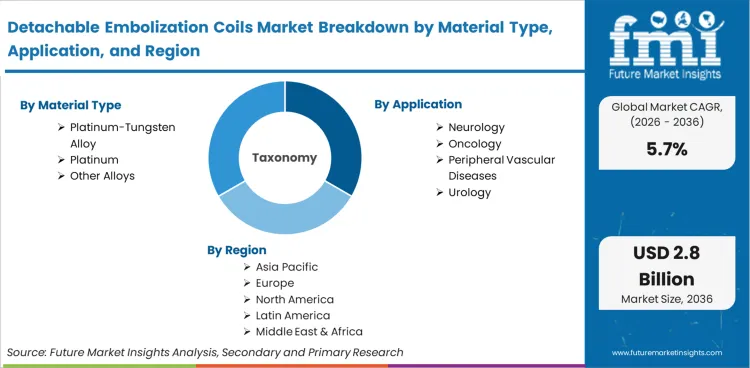
| Metric | Value |
|---|---|
| Quantitative Units | USD 1.6 billion to USD 2.8 billion, at a CAGR of 5.7% |
| Market Definition | Implantable wire devices requiring a controlled detachment mechanism, navigated via microcatheter to purposefully occlude vascular structures. |
| Material Type Segmentation | Platinum, Platinum-Tungsten Alloy, Other Alloys |
| Application Segmentation | Neurology, Oncology, Peripheral Vascular Diseases, Urology |
| End User Segmentation | Hospitals, Ambulatory Surgical Centers, Specialized Clinics |
| Regions Covered | North America, Latin America, Europe, East Asia, South Asia, Oceania, Middle East and Africa |
| Countries Covered | India, China, Brazil, United Kingdom, Germany, United States, Japan, and 40 plus countries |
| Key Companies Profiled | Medtronic plc, Stryker Corporation, Terumo Corporation, Penumbra, Inc., Boston Scientific Corporation, MicroPort Scientific Corporation, Cook Medical LLC, Johnson & Johnson MedTech (CERENOVUS) |
| Forecast Period | 2026 to 2036 |
| Approach | The baseline value derives from a bottom-up aggregation of detachable embolization coil procedure volumes, applying region-specific adoption curves across neurovascular and peripheral embolization interventions to project future market expansion |
Source: Future Market Insights (FMI) analysis, based on proprietary forecasting model and primary research
Detachable Embolization Coils Market by Segments
Material Type:
- Platinum
- Platinum-Tungsten Alloy
- Other Alloys
Application:
- Neurology
- Oncology
- Peripheral Vascular Diseases
- Urology
End User:
- Hospitals
- Ambulatory Surgical Centers
- Specialized Clinics
Regions:
- North America
- United States
- Canada
- Mexico
- Latin America
- Brazil
- Argentina
- Rest of Latin America
- Europe
- Germany
- United Kingdom
- France
- Italy
- Spain
- Nordic
- Rest of Europe
- Asia Pacific
- China
- Japan
- South Korea
- India
- ASEAN
- Oceania
- Rest of Asia & Pacific
- Middle East & Africa
- GCC
- South Africa
- North Africa
- Rest of Middle East & Africa
Bibliography
- USA Food and Drug Administration. (2024, August 29). 510(k) Summary: Target Detachable Coils (K242243). FDA.
- Medical Device Coordination Group. (2025, December). MDCG 2025-10: Guidance on post-market surveillance of medical devices and in vitro diagnostic medical devices. European Commission.
- Pharmaceuticals and Medical Devices Agency. (2025/2026). List of Approved Medical Devices: New & Improved Medical Devices, April 2004 to June 2025. PMDA.
- Mascitelli, J. R. (2024). Management of wide-neck aneurysms in 2024: How does one make the best treatment decision when there are so many good options? Journal of NeuroInterventional Surgery, 16(5), 433-434.
- Kim, W., Jee, T. K., Yeon, J. Y., Kim, K. H., Kim, J.-S., & Jeon, P. (2024). Endovascular embolization of intracranial aneurysms using Target tetra detachable coils: Angiographic and clinical results from a single center. Journal of Clinical Medicine, 13(16), 4940.
This bibliography is provided for reader reference. The full FMI report contains the complete reference list with primary source documentation.
This Report Addresses
- Market intelligence to support strategic decision making across bare platinum, platinum-tungsten alloy, and bioactive detachable coils.
- Market size estimation and 10-year revenue forecasts from 2026 to 2036, supported by endovascular procedural volume tracking.
- Growth opportunity mapping across specific clinical applications with emphasis on the transition to automated detachment systems.
- Segment and regional revenue forecasts covering framing, filling, and finishing coils across centralized public procurement frameworks in Europe.
- Competition strategy assessment including consignment network capabilities, proprietary generator footprints, and sizing matrix availability.
- Technology development tracking including advancements in electrolytic detachment, tungsten alloy stabilization, and hydrophilic microcatheter coatings.
- Market access analysis covering volume-based procurement (VBP) mandates in China and DRG reimbursement structures in Germany.
- Market report delivery in PDF, Excel, PPT, and interactive dashboard formats for executive strategy, hospital supply chain planning, and operational benchmarking use.
Frequently Asked Questions
How large is the Detachable Embolization Coils Market in 2026?How do proprietary generator boxes influence competition?
The market is expected to cross USD 1.6 billion in 2026. This valuation reflects the steady capital deployment by tertiary centers to maintain comprehensive neurovascular inventories, establishing a high revenue baseline even before accounting for procedural growth.
What will it be valued at by 2036?
The valuation reaches USD 2.8 billion by 2036. This cumulative buildup signals that complex endovascular coiling is firmly transitioning from an emergent, specialized intervention into standard prophylactic practice for unruptured aneurysms.
What CAGR is projected?
A CAGR of 5.7% is projected through the forecast period. This rate is heavily anchored by the physical limits of how quickly hospitals can train new interventional teams, serving as a realistic governor on otherwise rapidly expanding clinical demand.
Which Material Type segment leads?
Platinum-Tungsten Alloy holds 55.4% of the market share. The inclusion of tungsten provides the critical radial stiffness necessary to create a stable frame within irregular aneurysms, solving the compaction issues that historically plagued softer bare platinum configurations.
Which Application segment leads?
Neurology leads with 62.1% share. The absolute zero-tolerance for premature deployment in the cerebral vasculature forces procurement teams to invest heavily in the most precise, premium-priced detachment systems available, driving the bulk of category revenue.
Which End User segment leads?
Hospitals dominate with 74.3% share. The financial ability to host advanced biplane angiography systems and absorb the inventory carrying costs of massive coil sizing matrixes keeps complex interventions centralized in these high-acuity environments.
What drives rapid growth?
Expanding screening protocols identify unruptured aneurysms much earlier in the patient lifecycle. This forces neurointerventional departments to treat prophylactically, increasing overall procedural volumes and necessitating wider inventory stockpiles.
What is the primary restraint?
The steep tactile learning curve of new detachment systems slows adoption. Senior interventionalists resist migrating away from legacy coils because their muscle memory, critical for preventing vessel rupture, is tuned to the physical friction of their established platforms.
Which country grows fastest?
India advances at 9.1%, significantly faster than China's 8.2%. While China is restructuring its pricing through national tenders, India is actively building out first-time private catheterization infrastructure in tier-2 cities, creating massive initial outfitting volume.
How do European procurement frameworks impact vendors?
National health services in Europe rely on multi-year health technology assessments. Vendors must prove that premium bioactive coils reduce long-term retreatment rates before they can access the formulary, but once approved, adoption scales immediately across the network.
What changes when automated detachment systems become standard?
The reliance on manual physical breaks or complex electrolytic timing is removed. This operational shift lowers the deployment difficulty, allowing lower-volume ambulatory centers to safely adopt peripheral coiling procedures.
How do proprietary generator boxes influence competition?
Hospitals rarely want multiple, incompatible detachment generators cluttering the sterile field. Incumbents leverage this by locking facilities into their specific hardware ecosystems, making it highly difficult for challengers to introduce standalone coil lines.
Why is Volume-Based Procurement (VBP) critical in China?
VBP mandates shift the purchasing power entirely from physician preference to state-level administrative pricing. Vendors who win these tenders capture guaranteed massive volume but must survive on radically compressed unit margins.
What role do consignment models play in hospital purchasing?
Consignment shifts the financial burden of holding hundreds of coil SKUs from the hospital back to the vendor. Procurement directors favor manufacturers who utilize automated tracking cabinets, as it eliminates internal inventory management waste.
Why are flow diverters excluded from this analysis?
Flow diverters reconstruct the parent artery rather than filling the aneurysmal sac. They represent a distinct therapeutic approach with a different procurement cycle, regulatory pathway, and unit cost structure compared to intrasaccular coiling.
What makes the United Kingdom's NHS unique in this market?
NHS supply chain managers evaluate the total episodic cost of care rather than individual device pricing. They will approve higher-cost coil systems only if clinical data proves the devices reduce time spent in the angiography suite.
How does tactile feedback dictate physician preference?
Physicians use the friction transmitted through the pusher wire to confirm structural stability before detachment. Coils that lack the proper alloy stiffness fail to provide this necessary physical verification, leading to clinical rejection regardless of cost.
What causes premature detachment during navigation?
Tortuous vascular anatomy places extreme shear stress on the junction between the microcatheter and the coil. Systems without reinforced detachment zones risk breaking early, which is why neuro-specific coils command a massive premium over peripheral variants.
How is the shift to ambulatory surgical centers constrained?
ASCs operate on thinner margins and cannot afford to stock coils that expire unused. Until vendors develop highly consolidated, universal sizing kits, ASCs will struggle to economically support unpredictable endovascular interventions.
What is the strategic value of bioactive coatings?
Coils coated with hydrogels or specific polymers swell upon contact with blood, mechanically sealing microscopic gaps in the aneurysm neck. This accelerates the healing process and significantly reduces the statistical likelihood of requiring a second intervention.
How does Japan's regulatory environment shape adoption?
The PMDA enforces extremely conservative clinical validation protocols. This leads to a slower market entry for new coil technologies, but manufacturers who achieve approval benefit from intensely loyal hospital accounts that prioritize proven safety over price.
How do pricing structures differ between framing and finishing coils?
Framing coils require complex 3D shape retention and stiffer alloys to anchor the mass, commanding a premium. Finishing coils are ultra-soft and used purely for volumetric density, meaning hospitals often negotiate steeper volume discounts on these secondary units.
Preview the report firsthand - request a free sample
Get SampleGet the brochure for pricing and purchase details.
Get PDFTable of Content
- Executive Summary
- Global Market Outlook
- Demand-side Trends
- Supply-side Trends
- Technology Roadmap Analysis
- Analysis and Recommendations
- Market Overview
- Market Coverage / Taxonomy
- Market Definition / Scope / Limitations
- Research Methodology
- Chapter Orientation
- Analytical Lens and Working Hypotheses
- Market Structure, Signals, and Trend Drivers
- Benchmarking and Cross-market Comparability
- Market Sizing, Forecasting, and Opportunity Mapping
- Research Design and Evidence Framework
- Desk Research Programme (Secondary Evidence)
- Company Annual and Sustainability Reports
- Peer-reviewed Journals and Academic Literature
- Corporate Websites, Product Literature, and Technical Notes
- Earnings Decks and Investor Briefings
- Statutory Filings and Regulatory Disclosures
- Technical White Papers and Standards Notes
- Trade Journals, Industry Magazines, and Analyst Briefs
- Conference Proceedings, Webinars, and Seminar Materials
- Government Statistics Portals and Public Data Releases
- Press Releases and Reputable Media Coverage
- Specialist Newsletters and Curated Briefings
- Sector Databases and Reference Repositories
- FMI Internal Proprietary Databases and Historical Market Datasets
- Subscription Datasets and Paid Sources
- Social Channels, Communities, and Digital Listening Inputs
- Additional Desk Sources
- Expert Input and Fieldwork (Primary Evidence)
- Primary Modes
- Qualitative Interviews and Expert Elicitation
- Quantitative Surveys and Structured Data Capture
- Blended Approach
- Why Primary Evidence is Used
- Field Techniques
- Interviews
- Surveys
- Focus Groups
- Observational and In-context Research
- Social and Community Interactions
- Stakeholder Universe Engaged
- C-suite Leaders
- Board Members
- Presidents and Vice Presidents
- R&D and Innovation Heads
- Technical Specialists
- Domain Subject-matter Experts
- Scientists
- Physicians and Other Healthcare Professionals
- Governance, Ethics, and Data Stewardship
- Research Ethics
- Data Integrity and Handling
- Primary Modes
- Tooling, Models, and Reference Databases
- Desk Research Programme (Secondary Evidence)
- Data Engineering and Model Build
- Data Acquisition and Ingestion
- Cleaning, Normalisation, and Verification
- Synthesis, Triangulation, and Analysis
- Quality Assurance and Audit Trail
- Market Background
- Market Dynamics
- Drivers
- Restraints
- Opportunity
- Trends
- Scenario Forecast
- Demand in Optimistic Scenario
- Demand in Likely Scenario
- Demand in Conservative Scenario
- Opportunity Map Analysis
- Product Life Cycle Analysis
- Supply Chain Analysis
- Investment Feasibility Matrix
- Value Chain Analysis
- PESTLE and Porter’s Analysis
- Regulatory Landscape
- Regional Parent Market Outlook
- Production and Consumption Statistics
- Import and Export Statistics
- Market Dynamics
- Global Market Analysis 2021 to 2025 and Forecast, 2026 to 2036
- Historical Market Size Value (USD Million) Analysis, 2021 to 2025
- Current and Future Market Size Value (USD Million) Projections, 2026 to 2036
- Y-o-Y Growth Trend Analysis
- Absolute $ Opportunity Analysis
- Global Market Pricing Analysis 2021 to 2025 and Forecast 2026 to 2036
- Global Market Analysis 2021 to 2025 and Forecast 2026 to 2036, By Material Type
- Introduction / Key Findings
- Historical Market Size Value (USD Million) Analysis By Material Type , 2021 to 2025
- Current and Future Market Size Value (USD Million) Analysis and Forecast By Material Type , 2026 to 2036
- Platinum-Tungsten Alloy
- Platinum
- Other Alloys
- Platinum-Tungsten Alloy
- Y-o-Y Growth Trend Analysis By Material Type , 2021 to 2025
- Absolute $ Opportunity Analysis By Material Type , 2026 to 2036
- Global Market Analysis 2021 to 2025 and Forecast 2026 to 2036, By Application
- Introduction / Key Findings
- Historical Market Size Value (USD Million) Analysis By Application, 2021 to 2025
- Current and Future Market Size Value (USD Million) Analysis and Forecast By Application, 2026 to 2036
- Neurology
- Oncology
- Peripheral Vascular Diseases
- Urology
- Neurology
- Y-o-Y Growth Trend Analysis By Application, 2021 to 2025
- Absolute $ Opportunity Analysis By Application, 2026 to 2036
- Global Market Analysis 2021 to 2025 and Forecast 2026 to 2036, By End Use
- Introduction / Key Findings
- Historical Market Size Value (USD Million) Analysis By End Use, 2021 to 2025
- Current and Future Market Size Value (USD Million) Analysis and Forecast By End Use, 2026 to 2036
- Hospitals
- Ambulatory Surgical Centers
- Specialized Clinics
- Hospitals
- Y-o-Y Growth Trend Analysis By End Use, 2021 to 2025
- Absolute $ Opportunity Analysis By End Use, 2026 to 2036
- Global Market Analysis 2021 to 2025 and Forecast 2026 to 2036, By Region
- Introduction
- Historical Market Size Value (USD Million) Analysis By Region, 2021 to 2025
- Current Market Size Value (USD Million) Analysis and Forecast By Region, 2026 to 2036
- North America
- Latin America
- Western Europe
- Eastern Europe
- East Asia
- South Asia and Pacific
- Middle East & Africa
- Market Attractiveness Analysis By Region
- North America Market Analysis 2021 to 2025 and Forecast 2026 to 2036, By Country
- Historical Market Size Value (USD Million) Trend Analysis By Market Taxonomy, 2021 to 2025
- Market Size Value (USD Million) Forecast By Market Taxonomy, 2026 to 2036
- By Country
- USA
- Canada
- Mexico
- By Material Type
- By Application
- By End Use
- By Country
- Market Attractiveness Analysis
- By Country
- By Material Type
- By Application
- By End Use
- Key Takeaways
- Latin America Market Analysis 2021 to 2025 and Forecast 2026 to 2036, By Country
- Historical Market Size Value (USD Million) Trend Analysis By Market Taxonomy, 2021 to 2025
- Market Size Value (USD Million) Forecast By Market Taxonomy, 2026 to 2036
- By Country
- Brazil
- Chile
- Rest of Latin America
- By Material Type
- By Application
- By End Use
- By Country
- Market Attractiveness Analysis
- By Country
- By Material Type
- By Application
- By End Use
- Key Takeaways
- Western Europe Market Analysis 2021 to 2025 and Forecast 2026 to 2036, By Country
- Historical Market Size Value (USD Million) Trend Analysis By Market Taxonomy, 2021 to 2025
- Market Size Value (USD Million) Forecast By Market Taxonomy, 2026 to 2036
- By Country
- Germany
- UK
- Italy
- Spain
- France
- Nordic
- BENELUX
- Rest of Western Europe
- By Material Type
- By Application
- By End Use
- By Country
- Market Attractiveness Analysis
- By Country
- By Material Type
- By Application
- By End Use
- Key Takeaways
- Eastern Europe Market Analysis 2021 to 2025 and Forecast 2026 to 2036, By Country
- Historical Market Size Value (USD Million) Trend Analysis By Market Taxonomy, 2021 to 2025
- Market Size Value (USD Million) Forecast By Market Taxonomy, 2026 to 2036
- By Country
- Russia
- Poland
- Hungary
- Balkan & Baltic
- Rest of Eastern Europe
- By Material Type
- By Application
- By End Use
- By Country
- Market Attractiveness Analysis
- By Country
- By Material Type
- By Application
- By End Use
- Key Takeaways
- East Asia Market Analysis 2021 to 2025 and Forecast 2026 to 2036, By Country
- Historical Market Size Value (USD Million) Trend Analysis By Market Taxonomy, 2021 to 2025
- Market Size Value (USD Million) Forecast By Market Taxonomy, 2026 to 2036
- By Country
- China
- Japan
- South Korea
- By Material Type
- By Application
- By End Use
- By Country
- Market Attractiveness Analysis
- By Country
- By Material Type
- By Application
- By End Use
- Key Takeaways
- South Asia and Pacific Market Analysis 2021 to 2025 and Forecast 2026 to 2036, By Country
- Historical Market Size Value (USD Million) Trend Analysis By Market Taxonomy, 2021 to 2025
- Market Size Value (USD Million) Forecast By Market Taxonomy, 2026 to 2036
- By Country
- India
- ASEAN
- Australia & New Zealand
- Rest of South Asia and Pacific
- By Material Type
- By Application
- By End Use
- By Country
- Market Attractiveness Analysis
- By Country
- By Material Type
- By Application
- By End Use
- Key Takeaways
- Middle East & Africa Market Analysis 2021 to 2025 and Forecast 2026 to 2036, By Country
- Historical Market Size Value (USD Million) Trend Analysis By Market Taxonomy, 2021 to 2025
- Market Size Value (USD Million) Forecast By Market Taxonomy, 2026 to 2036
- By Country
- Kingdom of Saudi Arabia
- Other GCC Countries
- Turkiye
- South Africa
- Other African Union
- Rest of Middle East & Africa
- By Material Type
- By Application
- By End Use
- By Country
- Market Attractiveness Analysis
- By Country
- By Material Type
- By Application
- By End Use
- Key Takeaways
- Key Countries Market Analysis
- USA
- Pricing Analysis
- Market Share Analysis, 2025
- By Material Type
- By Application
- By End Use
- Canada
- Pricing Analysis
- Market Share Analysis, 2025
- By Material Type
- By Application
- By End Use
- Mexico
- Pricing Analysis
- Market Share Analysis, 2025
- By Material Type
- By Application
- By End Use
- Brazil
- Pricing Analysis
- Market Share Analysis, 2025
- By Material Type
- By Application
- By End Use
- Chile
- Pricing Analysis
- Market Share Analysis, 2025
- By Material Type
- By Application
- By End Use
- Germany
- Pricing Analysis
- Market Share Analysis, 2025
- By Material Type
- By Application
- By End Use
- UK
- Pricing Analysis
- Market Share Analysis, 2025
- By Material Type
- By Application
- By End Use
- Italy
- Pricing Analysis
- Market Share Analysis, 2025
- By Material Type
- By Application
- By End Use
- Spain
- Pricing Analysis
- Market Share Analysis, 2025
- By Material Type
- By Application
- By End Use
- France
- Pricing Analysis
- Market Share Analysis, 2025
- By Material Type
- By Application
- By End Use
- India
- Pricing Analysis
- Market Share Analysis, 2025
- By Material Type
- By Application
- By End Use
- ASEAN
- Pricing Analysis
- Market Share Analysis, 2025
- By Material Type
- By Application
- By End Use
- Australia & New Zealand
- Pricing Analysis
- Market Share Analysis, 2025
- By Material Type
- By Application
- By End Use
- China
- Pricing Analysis
- Market Share Analysis, 2025
- By Material Type
- By Application
- By End Use
- Japan
- Pricing Analysis
- Market Share Analysis, 2025
- By Material Type
- By Application
- By End Use
- South Korea
- Pricing Analysis
- Market Share Analysis, 2025
- By Material Type
- By Application
- By End Use
- Russia
- Pricing Analysis
- Market Share Analysis, 2025
- By Material Type
- By Application
- By End Use
- Poland
- Pricing Analysis
- Market Share Analysis, 2025
- By Material Type
- By Application
- By End Use
- Hungary
- Pricing Analysis
- Market Share Analysis, 2025
- By Material Type
- By Application
- By End Use
- Kingdom of Saudi Arabia
- Pricing Analysis
- Market Share Analysis, 2025
- By Material Type
- By Application
- By End Use
- Turkiye
- Pricing Analysis
- Market Share Analysis, 2025
- By Material Type
- By Application
- By End Use
- South Africa
- Pricing Analysis
- Market Share Analysis, 2025
- By Material Type
- By Application
- By End Use
- USA
- Market Structure Analysis
- Competition Dashboard
- Competition Benchmarking
- Market Share Analysis of Top Players
- By Regional
- By Material Type
- By Application
- By End Use
- Competition Analysis
- Competition Deep Dive
- Medtronic plc
- Overview
- Product Portfolio
- Profitability by Market Segments (Product/Age /Sales Channel/Region)
- Sales Footprint
- Strategy Overview
- Marketing Strategy
- Product Strategy
- Channel Strategy
- Stryker Corporation
- Terumo Corporation
- Penumbra, Inc.
- Boston Scientific Corporation
- MicroPort Scientific Corporation
- Cook Medical LLC LLC
- Johnson & Johnson MedTech (CERENOVUS)
- BALT
- Kaneka Corporation
- Medtronic plc
- Competition Deep Dive
- Assumptions & Acronyms Used


