

Egg Carton Market Share Analysis Outlook 2025 to 2035
The egg carton industry is expanding as sustainability, durability, and branding become top priorities for producers. With rising demand from poultry farms, retail stores, and e-commerce platforms, manufacturers are focusing on recyclable, compostable, and biodegradable materials. Companies are incorporating molded fiber, PET plastic, and foam alternatives to enhance egg protection while reducing environmental impact.
Manufacturers are adopting AI-driven quality control, automation in molding processes, and digital printing for custom branding. The industry is shifting toward lightweight, moisture-resistant cartons with tamper-proof features and smart tracking technologies to improve supply chain transparency.
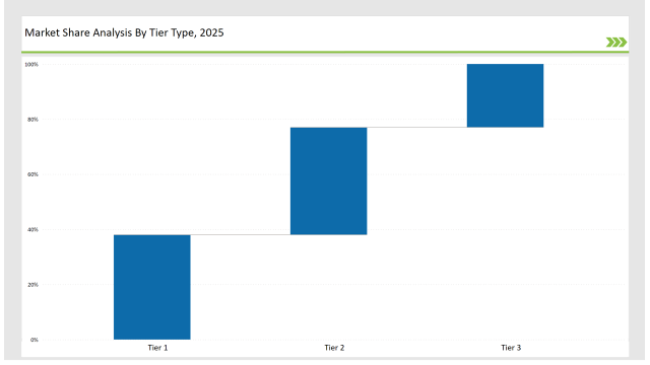
Tier 1 companies, such as Hartmann, Huhtamaki, and Cascades, control 38% of the market based on their superiority in molded fiber technology, large-scale production capabilities, and global distribution channels.
Tier 2 companies, such as Tekni-Plex, Pactiv Evergreen, and DFM Packaging, capture 39% of the market by offering cost-effective, high-strength, and customizable egg cartons for regional and mid-size producers.
Tier 3 represents regional and specialty players offering creative, compostable, and digitally printed egg cartons, controlling 23% of the market. These firms concentrate on local production, environmental-friendly designs, and industry-customized solutions.
Vendor Performance
Global Market Share by Key Players (2025)
| Category | Market Share(%) |
|---|---|
| Top 3 (Hartmann,Huhtamaki,Cascades) | 18% |
| Rest of Top 5 (Tekni-Plex,Pactiv Evergreen) | 12% |
| Next 5 of Top 10 (DFM Packaging,CDL Omnipac,Europack,Al Ghadeer Group,Primapack) | 8% |
Market Concentration (2025E)
Segment Analysis
Powering Success in Leading Industries
The egg carton industry caters to many industries wherein safety, sustainability, and branding become paramount. Companies are working towards developing innovative carton solutions to cater to industry requirements. They are incorporating advanced shock-absorption technology to avoid breakage during transport. Furthermore, manufacturers design stackable cartons with reinforced edges for better storage and handling. Businesses are also increasing visual aesthetics through high-resolution digital printing for custom branding and product information.
- Poultry Farms & Egg Producers: Providing shock-resistant, stackable molded fiber cartons.
- Retail & Supermarkets: Enhancing shelf appeal with custom-printed, brand-oriented packaging.
- E-Commerce & Home Delivery: Offering tamper-proof, impact-resistant packaging solutions.
- Sustainable Packaging Initiatives: Expanding biodegradable and recyclable carton options.
Vendor-Driven Product Categories
To optimize egg carton performance, manufacturers are employing moisture-resistant coatings, reinforcement at the edges, and smart tracking solutions. Antimicrobial coatings are also being applied to maximize hygiene and safety in food packaging. On the product side, tamper-evident closures are being developed to provide additional security while also preventing contamination. Finally, companies are applying AI techniques to detect defects and ensure uniform quality through a high-speed production line.
- Molded Fiber & Recyclable Paper Cartons: Reducing plastic usage and promoting sustainability.
- PET & RPET Plastic Egg Cartons: Offering lightweight and transparent packaging alternatives.
- Compostable & Biodegradable Egg Packaging: Supporting zero-waste initiatives.
- Custom Printed & RFID-Enabled Cartons: Enhancing branding and traceability.
Who Shaped the Year
Sustainability and automation are reshaping the egg carton industry. Companies are developing AI-driven defect detection, high-speed molding lines, and tamper-evident seals to enhance packaging security. Businesses are investing in water-based printing to improve recyclability while maintaining vibrant branding. Manufacturers are expanding their range of moisture-resistant fiber cartons to prevent carton deterioration in humid environments. Additionally, firms are integrating QR codes and RFID tracking to provide real-time supply chain monitoring.
Year-on-Year Leaders
- Hartmann: Launched fully recyclable, high-strength fiber egg cartons.
- Huhtamaki: Developed moisture-resistant molded fiber egg packaging.
- Cascades: Expanded compostable and biodegradable carton solutions.
- Tekni-Plex: Innovated clear PET and RPET plastic egg cartons.
- Pactiv Evergreen: Strengthened tamper-proof and impact-resistant packaging.
- DFM Packaging: Introduced digitally printed cartons for premium branding.
- CDL Omnipac: Pioneered smart tracking-enabled egg packaging.
Recommendations for Technology Suppliers
Technology suppliers should focus on automation, smart packaging, and sustainable materials to support the evolving egg carton market. Partnering with poultry farms, grocery retailers, and e-commerce brands will drive adoption.
- Sustainability Trends: Develop compostable fiber-based cartons and plant-derived coatings.
- Automation & Efficiency: Improve molding precision with AI-driven defect detection.
- Customization & Scalability: Offer digital printing and high-strength carton structures.
- Regional Growth Dynamics: North America and Europe lead in sustainability, while Asia-Pacific focuses on cost-effective production.
Tier-Wise Vendor Classification (2025)
| Tier Type | Example of Key Players |
|---|---|
| Tier 1 | Hartmann, Huhtamaki, Cascades |
| Tier 2 | Tekni-Plex, Pactiv Evergreen, DFM Packaging |
| Tier 3 | CDL Omnipac, Europack, Al Ghadeer Group, Primapack |
Key Company Initiatives
Egg carton technology now takes form with AI-driven molding, moisture proof coatings, and the most sustainable materials by leading manufacturers in the industry. High-strength carton structures are being developed to improve stacking efficiency and minimize breakage. In addition, companies also add more ventilation features to improve egg freshness and increase airflow. Further, plant-based coatings have been developed by manufacturers for replacing synthetic barriers, thus benefiting recyclability further.
| Manufacturer | Latest Developments |
|---|---|
| Hartmann | Launched fully recyclable molded fiber cartons in March 2024. |
| Huhtamaki | Developed moisture-resistant fiber packaging in April 2024. |
| Cascades | Expanded compostable egg carton solutions in May 2024. |
| Tekni-Plex | Released clear PET and RPET plastic egg cartons in June 2024. |
| Pactiv Evergreen | Strengthened tamper-proof and impact-resistant designs in July 2024. |
| DFM Packaging | Introduced digitally printed branding solutions in August 2024. |
| CDL Omnipac | Pioneered RFID-enabled smart tracking cartons in September 2024. |
Vendor Insights
Evolution of the egg carton market has been witnessed with companies investing into sustainable materials, AI-based production, and smart packaging solutions. They are designing lightweight and strong carton designs to reduce material use while giving the required protection. In addition, companies are adopting high-speed molding methods to enhance efficiency and reduce production costs. In addition, manufacturers are employing UV-resistant coatings to offer protection to the cartons in extreme storage conditions.
- Hartmann leads in recyclable molded fiber egg cartons.
- Huhtamaki pioneers moisture-resistant fiber packaging.
- Cascades specializes in compostable and biodegradable solutions.
- Tekni-Plex advances PET and RPET plastic egg cartons.
- Pactiv Evergreen strengthens impact-resistant and tamper-proof packaging.
- DFM Packaging develops digitally printed branding cartons.
- CDL Omnipac innovates RFID-enabled smart tracking solutions.
Future Roadmap
The industry will continue integrating AI-driven molding technology, sustainable coatings, and digital tracking features. Manufacturers will refine moisture-resistant cartons to prevent deterioration. Businesses will adopt smart labeling to enhance traceability and consumer engagement. Companies will invest in high-speed automation to improve production efficiency. Firms will expand their use of biodegradable and compostable materials to meet eco-conscious consumer demand. Additionally, enhanced carton reinforcement techniques will improve egg protection during transit and storage.
Frequently Asked Questions
Who are the key manufacturers in the egg carton market?
Leading players include Hartmann, Huhtamaki, Cascades, Tekni-Plex, Pactiv Evergreen, DFM Packaging, and CDL Omnipac.
What is the market share of the top 3 players?
The top 3 players collectively control 18% of the global market.
How is market concentration assessed for 2025?
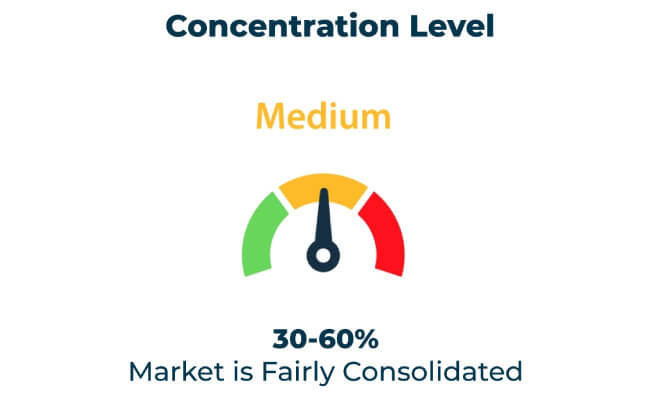
The market shows medium concentration, with top players holding 38%.
What factors drive innovation in this market?
Key drivers include sustainability, smart packaging, digital printing, and automation.
Preview the report firsthand - request a free sample
Get SampleGet the brochure for pricing and purchase details.
Get PDFTable of Content
- Executive Summary
- Market Overview
- Key Growth Drivers
- Company Performance
- Market Concentration
- Segment Analysis
- Key Highlights from the Forecast
- Tier-Wise Company Classification
- Key Company Initiatives
- Recommendations for Technology Suppliers
- Future Roadmap
- FAQs


