

- Market Size (2026)
- USD 8.2 Bn
- Forecast (2036)
- USD 18.5 Bn
- CAGR (2026 to 2036)
- 8.5%
How big is Egg Freezing Embryo Banking Market in 2026?
USD 8.2 billion in 2026 and USD 18.5 billion by 2036 at an 8.5% CAGR.
Demand for egg and embryo banking is estimated to rise at 8.5% CAGR through 2036, increasing valuation from USD 8.2 billion in 2026 to USD 18.5 billion by 2036. Growing acceptance of fertility preservation is increasing demand for specialized cryostorage services and long-term specimen management capabilities. The Human Fertilisation and Embryology Authority reported in July 2025 that egg freezing represented 7% of United Kingdom treatment and storage cycles during 2023. The reported share confirms a defined cryopreservation systems service category without treating preservation interest as evidence of future treatment or live-birth conversion. Clinics therefore need reliable identity controls and emergency capacity that protect each specimen throughout relationships that can continue for many years.
Funding rules and clinic capacity determine whether patients progress from consultation to retrieval and storage across national fertility systems. France recorded more than 20,700 first consultations for non-medical oocyte preservation in 2025 according to the Agence de la biomédecine in April 2026. The agency also reported 20 new centers and an average 11.7-month wait, showing that expanded supply has not removed access pressure. Providers need capacity plans that connect consultation slots with retrieval schedules and monitored storage across infertility treatment services. Transparent financing and reliable follow-up should accompany personalized fertility care, so patients understand total costs and realistic treatment timing ahead of stimulation.
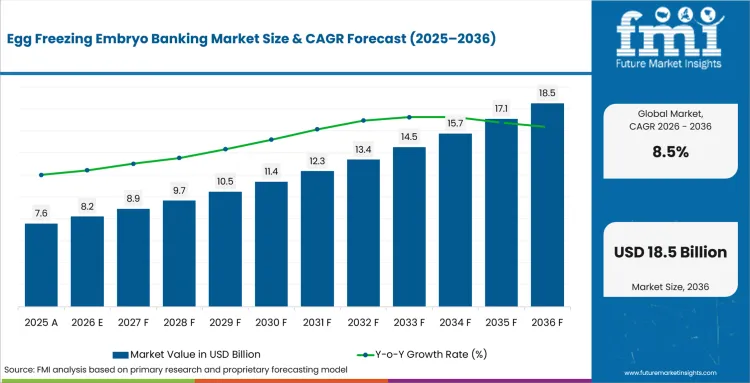
Key Takeaways of Egg Freezing Embryo Banking Market
- Demand develops through elective family planning and medical fertility preservation that require completed retrieval and documented long-term custody.
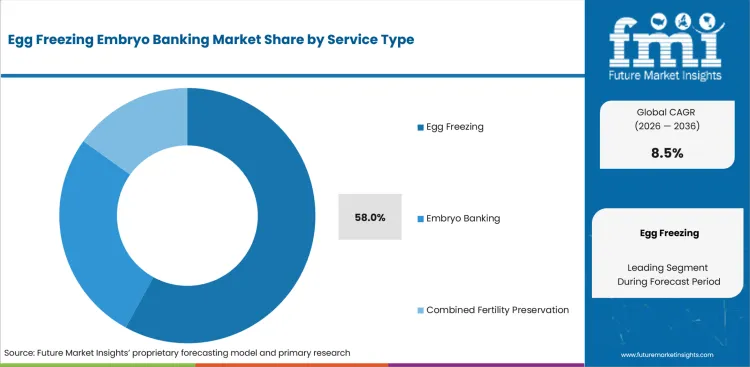
- By service type, egg freezing is estimated to capture 58.0% share in 2026 due to completed retrieval and recurring storage responsibility.
- Vitrification is projected to represent 72.0% share by technology in 2026 owing to its fit with routine oocyte and embryo preservation workflows.
- Fertility clinics are anticipated to hold 61.0% share of end user demand in 2026 driven by integrated consultation and laboratory services.
- High treatment costs and age-dependent outcomes reduce consultation conversion, while consent renewal and storage continuity increase long-term operating responsibility.
- CooperSurgical, Vitrolife AB, IVI RMA Global, The Prelude Network, Progyny, Virtus Health, Monash IVF Group, and Kindbody compete through laboratory systems and clinical or managed access services.
Analyst Perspective
"Egg and embryo banking succeeds commercially through long-term custody rather than a single retrieval procedure. Laboratories must protect specimen identity and storage continuity, while clinicians explain age-related outcomes without overstating future success. Providers that combine transparent pricing with dependable transfer rights can build patient trust and reduce operating risk across relationships that may continue for many years."
- Anurag Sharma, Principal Analyst, Future Market Insights
How is the Egg Freezing Embryo Banking Market segmented?
The Egg Freezing Embryo Banking Market is segmented by Service Type, Technology, End User, Application, Patient Age Group, and Region.
The segmentation separates preserved material, laboratory method, care setting, patient purpose, age profile, and regional access conditions. Service type divides egg freezing from embryo banking and combined programs that preserve both materials within one care plan. Technology distinguishes vitrification from slow freezing and monitored cryostorage systems used across long-term specimen custody. End user covers clinics, hospitals, and independent cryobanks, while application separates elective, medical, and donor preservation pathways. Patient age group compares people aged 30-35 years with younger and older patients whose counseling needs and outcomes differ. Region captures local rules, funding routes, clinic capacity, and storage oversight that shape service access across each country. The structure keeps egg and embryo banking distinct from broader fertility testing services that exclude retrieval and long-term custody.
How does egg freezing shape demand in the service type category?
Elective preservation converts a future family plan into a current cycle of stimulation and retrieval. The HFEA reported in July 2025 that the number of egg freezing patients increased 45% between 2022 and 2023. The regulator also warned that stored eggs do not guarantee a future baby, so clinics must pair access with realistic outcome counseling. Revenue comes from completed preservation cycles and documented storage rather than consultation interest that never reaches treatment. IVF banking services provide an operational comparison for consent renewal and custody responsibilities across long storage periods.
- Based on service type, egg freezing is projected to account for 58.0% share in 2026 due to its direct role across elective and medical preservation. Each completed retrieval creates a defined laboratory workflow and recurring storage responsibility for retained oocytes. The position reflects current patient action and documented custody rather than uncertain future use of every stored specimen.
- Clinics expand egg freezing access through counseling and financing, and laboratories must protect identity across collection and storage. Adoption weakens as treatment costs exceed household budgets or age-based outcome expectations remain unclear during counseling. Providers need survival reporting and transfer policies that remain understandable throughout a storage relationship lasting several years.
What keeps vitrification ahead within the technology category?
Vitrification limits ice crystal formation through rapid cooling and supports routine handling of oocytes and embryos. Technology selection affects laboratory labeling and warming procedures across IVF cryopreservation services that support later treatment. The HFEA reported in June 2025 that frozen embryo transfers represented approximately 44% of all IVF cycles during 2023. The transfer volume requires clinics to maintain repeatable thaw procedures and dependable storage controls throughout routine treatment. Clinical teams need consistent methods that remain reliable across trained staff and several monitored storage tanks.
- Vitrification is set to lead the technology category with 72.0% share in 2026 due to rapid cooling that fits routine oocyte and embryo preservation. Laboratories can process repeated cycles without extended controlled-rate schedules and maintain consistent warming procedures across trained teams. Its position depends on validated handling that protects identity and thaw performance throughout the clinical workflow.
- Fertility laboratories adopt vitrification through trained embryologists and standardized devices rather than isolated equipment purchases alone. Wider use requires validated warming protocols with alarmed storage systems and documented backup capacity for emergencies. A clinic can process more preservation cycles yet lose confidence if transport controls or thaw records remain inconsistent. Documented handoffs therefore support adoption across affiliated fertility clinics and external cryobanks with separate operating teams.
Which care pathway supports fertility clinics in the end user category?
Fertility clinics coordinate consultation and stimulation, then their laboratories complete retrieval and preservation within one care pathway. Integrated records connect patient identity with specimen handling from collection through documented storage and any later transfer. Clinics schedule oocyte retrieval needles and embryology teams around narrow procedure windows that cannot be shifted without clinical consequences. The HFEA reported in June 2025 that licensed United Kingdom clinics completed about 77,500 IVF cycles during 2023. Clinic capacity therefore places a practical limit on completed preservation cycles and long-term storage intake.
- In 2026, fertility clinics are expected to lead the end user category with 61.0% share because they control consultation and retrieval. Integrated laboratories connect patient records with specimen handling and recurring storage through one clinical relationship. Hospitals and independent cryobanks often rely on referral arrangements for substantial parts of this coordinated pathway.
- Clinic adoption rises through extended appointment capacity and trained embryology teams that manage elective and medical cases. Expansion remains difficult if consultation backlogs delay stimulation starts or long-term storage capacity lacks operational redundancy. Local maintenance routes and written tissue-transfer procedures remain essential as specimen custody continues beyond the initial treatment cycle.
What supports elective fertility preservation within the application category?
Elective fertility preservation serves patients who bank oocytes without an immediate infertility diagnosis or fertility-threatening treatment. Financing and realistic success communication determine whether an initial consultation progresses to stimulation and completed retrieval. The HFEA reported in July 2025 that the average age at egg freezing was 35 during 2023 and the average thawing age was 40. The five-year gap illustrates how storage responsibility can continue well in advance of a decision about preserved material. Counseling can include genetic testing options without treating testing as part of every preservation cycle.
- Elective fertility preservation is likely to capture 43.0% share in 2026 attributable to later family planning decisions that create immediate retrieval and storage demand. The segment generates present clinical revenue through retrieval and recurring storage even though future tissue use remains uncertain. Its position weakens as patients delay care after comparing treatment costs with age-dependent outcome expectations.
- Employers and financing partners can reduce the first payment barrier without replacing clinical eligibility review. Programs gain credibility through clear coverage limits and counseling that separates preservation from a guaranteed live birth. Clinics also need predictable storage fees and exit procedures for patients who relocate or change providers across changing personal circumstances.
Why does the 30-35 years segment lead the patient age group category?
Patients aged 30-35 combine rising preservation interest with a stronger biological window than older elective groups. The HFEA reported in July 2025 that egg freezing increased most among patients in their 30s since 2019, consistent with the demand profile of the 30-35 years segment and supports earlier counseling during a more favorable biological period. Later treatment may involve embryo transfer catheters, but present demand begins with retrieval and storage decisions. Private household budgets fund most elective treatment and recurring storage, making payment flexibility essential for this age group.
- The 30-35 years segment is projected to hold 46.0% share in 2026 owing to a comparatively favorable biological window and unresolved family timing. Many patients have established incomes yet retain several years to consider pregnancy plans and possible future treatment. The category combines stronger expected preservation outcomes with enough time to evaluate later family-building choices carefully.
- Conversion depends on rapid consultation access and a treatment schedule that fits work and personal commitments. Clinics must explain expected egg yield and possible future use without overstating individual success probabilities during counseling. Retention then depends on annual consent and payment processes that remain clear throughout long-term storage for each patient.
What are the drivers, restraints, and opportunities in the Egg Freezing Embryo Banking Market?
Later family formation and medical preservation support demand, while high treatment costs restrict completed cycles and transparent financing with secure storage expands access.
- Driver: Later family formation creates demand for completed retrieval and storage services several years ahead of a planned pregnancy.
- Restraint: High out-of-pocket expense and age-dependent outcomes reduce conversion from initial consultation to a completed preservation cycle.
- Opportunity: Transparent financing and secure custody services can broaden access and protect patient confidence across long storage periods.
Later family formation is expected to drive demand by placing preservation decisions several years ahead of a planned pregnancy. The HFEA reported in June 2025 that United Kingdom egg freezing cycles reached 6,932 during 2023. The increase expands the patient pool that needs completed retrieval and documented long-term storage services. Clinics require sufficient consultation and embryology capacity to complete cycles during a more favorable biological period. Revenue develops through treatment completion and annual storage rather than general interest that never reaches a procedure.
High out-of-pocket expense restricts elective preservation through combined consultation and medication charges with recurring annual storage fees. Age-dependent outcomes can increase the number of eggs or cycles discussed during clinical counseling and financial planning. The HFEA reported in June 2025 that NHS funding covered 27% of United Kingdom IVF cycles during 2023. Limited public funding leaves elective freezing sensitive to household budgets and voluntary workplace benefits across most regions. Clinics need clear package prices and realistic outcome information at the point patients commit to stimulation and retrieval.
Flexible financing creates a practical opening for patients who cannot absorb treatment and medication costs in one payment. Kindbody announced in March 2026 that Future Family financing would support eligible treatment through its clinics and partner network. Financing can improve access without replacing clinical eligibility review or careful age-based outcome counseling for every patient. Clinics need schedules that align payment approval with stimulation and retrieval across the same treatment cycle. Clear storage fees and transfer rights protect patients from later cost surprises across long custody periods.
Which country CAGRs are profiled in the Egg Freezing Embryo Banking Market?
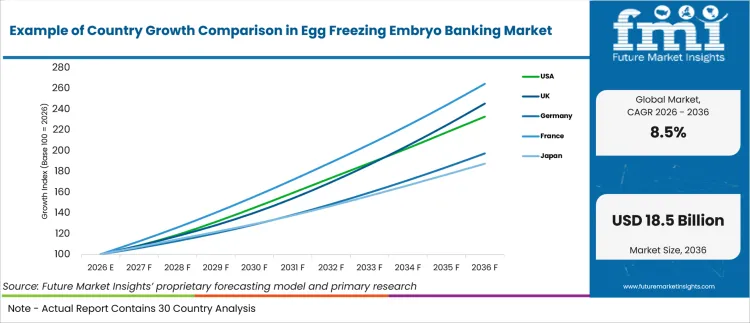
| Country | CAGR |
|---|---|
| Canada | 10.9% |
| France | 10.2% |
| UK | 9.4% |
| USA | 8.8% |
| Italy | 7.8% |
| Germany | 7.0% |
| Japan | 6.5% |
How do country-level CAGRs compare in the Egg Freezing Embryo Banking Market?
The country rates span 4.4 percentage points from Canada at 10.9% to Japan at 6.5%. Canada and France form an upper pair separated by 0.7 percentage points across their approved forecasts. The United Kingdom and USA create a second pair with a measured 0.6-percentage-point gap between approved rates. Italy and Germany remain 0.8 points apart, followed by a final 0.5-point step to Japan. Similar rates can produce different commercial conditions, clinic capacity and funding determine completed preservation cycles. Storage regulation and local service coverage also affect the long-term cost of supporting preserved tissue.
- Canada benefits from national registry participation that supports comparable clinic review, although long travel routes increase monitoring and retrieval burdens outside major cities.
- France combines authorized center expansion with concentrated metropolitan demand, which preserves regional waiting pressure despite a defined legal route for elective preservation.
- The United Kingdom links national licensing with public outcome reporting, yet uneven treatment funding leaves elective preservation sensitive to household budgets.
- The United States pairs broad clinic availability with employer-sponsored benefits, but fragmented insurance rules and storage protections complicate multistate patient support.
- Italy uses a national PMA registry and established frozen-treatment pathways, although regional access differences and older patient profiles can reduce elective conversion.
- Germany provides clearer reimbursement for medically necessary cryopreservation than elective services, leaving clinics to manage separate public and private payment routes.
- Japan supports disciplined laboratory practice through structured ART reporting, but local language requirements and detailed data procedures increase entry costs for foreign partners.
Comparable CAGRs can produce different entry conditions across fertility clinic networks and public funding systems. Consultation capacity and storage infrastructure shape patient conversion alongside financing rules across each national care pathway. The full report provides country-level CAGR analysis across North America, Latin America, Europe, East Asia, South Asia, Oceania and the Middle East and Africa.
Country-wise Analysis
- Canada coordinates fertility care through a national ART registry that compares activity and outcomes across a geographically dispersed clinic network. In Canada, egg freezing and embryo banking demand is predicted to advance at 10.9% CAGR through 2036 due to registry-based review and elective preservation interest. BORN Ontario reported in October 2025 that CARTR Plus met medical directors from all 37 Canadian fertility clinics. National participation gives clinic groups a shared basis for reviewing outcomes and laboratory practice across several provinces. Central laboratory protocols and remote counseling can support patients beyond major cities, although long travel routes increase monitoring burdens. Providers therefore need regional referral coverage and dependable tissue transport that protects specimens during transfers across long distances.
- France limits non-medical oocyte preservation to authorized centers, and demand remains concentrated around major metropolitan regions. The Agence de la biomédecine reported in April 2026 that 54% of 2025 requests were concentrated in Île-de-France. Regional concentration extends travel and waiting burdens for patients who live outside the capital and nearby treatment corridors. France’s egg freezing and embryo banking market is estimated to post 10.2% CAGR over the forecast period owing to authorized center expansion and established oversight. Authorized centers provide a defined clinical route that supports consistent consent and laboratory review across participating facilities. Providers need local referral partnerships and realistic scheduling promises that convert demand without weakening patient confidence.
- The United Kingdom requires licensed clinics to follow national rules for treatment reporting and long-term specimen storage. Adoption of egg freezing and embryo banking in the United Kingdom is estimated to expand at 9.4% CAGR through 2036 due to clinic oversight and public outcome reporting. National licensing gives fertility operators a clear compliance framework that supports informed clinic comparison across local care systems. The HFEA reported in June 2025 that NHS-funded IVF cycles ranged from 24% in England to 54% in Scotland during 2023. National funding variation leaves elective freezing heavily dependent on household budgets and voluntary workplace fertility benefits. Commercial plans should separate clinical pricing from storage fees and explain transfer rights throughout the custody period.
- United States fertility care combines a large clinic network with annual federal reporting and state-specific coverage rules. The CDC stated in February 2025 that United States clinics report and verify ART cycles and outcomes every year. Age-specific clinic data supports informed care selection and gives patients a clearer basis for discussing expected outcomes. Egg freezing and embryo banking demand in the United States is forecast to rise at 8.8% CAGR over the forecast period due to clinic availability and expanding employer-sponsored benefits. Insurance coverage and long-term storage protections remain fragmented across employers and individual state healthcare systems. Providers need clear transfer procedures and multistate support that protect patients who relocate during long storage periods.
- Italy operates assisted reproduction through authorized centers that report treatment activity to a national PMA registry. The Italian egg freezing and embryo banking sector is projected to record 7.8% CAGR during the assessment period due to established frozen-treatment pathways and continuing fertility demand. The Istituto Superiore di Sanità reported in March 2025 that Italy completed 109,755 PMA cycles during 2022 and the average patient age reached 37. The registry includes procedures using cryopreserved embryos and oocytes, which confirms a defined operating route for banking services. Regional access differences and older patient profiles can reduce elective conversion despite established laboratory capability. Clinic expansion requires local referral coverage and counseling that reflects age-related treatment expectations across regional care pathways.
- Germany applies national insurance rules that distinguish eligible assisted reproduction from medically necessary fertility preservation. The Federal Ministry of Health stated in October 2025 that statutory insurance covers 50% of the first three eligible assisted reproduction attempts. The ministry also confirms coverage for medically necessary cryopreservation linked to treatments that can damage reproductive cells. Egg freezing and embryo banking services in Germany are forecast to expand at 7.0% CAGR through 2036 due to defined reimbursement and specialized clinic infrastructure. Age and marital eligibility rules leave elective preservation with a substantial private payment requirement across most cases. Providers need separate financial pathways that serve medical and elective patients across local clinic networks.
- Japan requires ART providers to submit structured case information through a national professional registry system. Structured case fields give clinics a common basis for protocol review and documented laboratory quality management. Japan’s egg freezing and embryo banking outlook is anticipated to advance at 6.5% CAGR over the assessment period due to documented care pathways and disciplined laboratory operations. The Japan Society of Obstetrics and Gynecology announced in December 2025 that revised registry fields would begin during January 2026. The revision addresses expanding PGT use and egg freezing alongside more varied embryo transfer practices. Local language support and detailed documentation can slow entry for foreign technology and storage partners. Market entry depends on local clinical relationships and data procedures aligned with Japanese registry requirements.
Who are the notable companies in the Egg Freezing Embryo Banking Market?
CooperSurgical, Vitrolife AB, IVI RMA Global, The Prelude Network, Progyny, Virtus Health, Monash IVF Group, and Kindbody are notable companies across laboratory technology, clinic networks, benefits, and integrated fertility care.
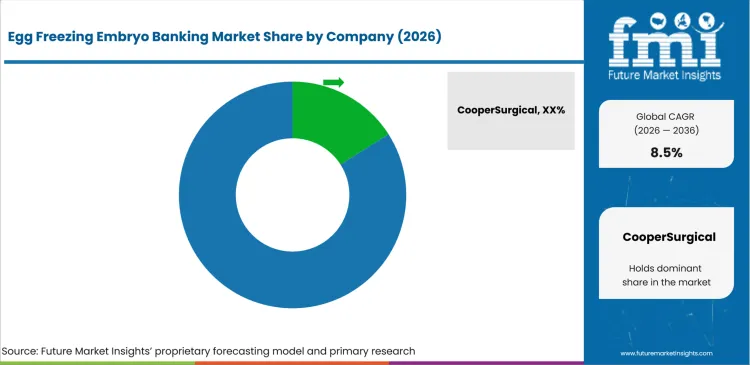
The competitive outlook combines laboratory technology groups with clinic networks and benefit platforms that influence preservation access through different care and payment routes. The Cooper Companies reported in December 2025 that CooperSurgical provides fertility products and services with cryopreservation and genomic support for clinics worldwide. Vitrolife Group stated in July 2026 that its reproductive-health portfolio reaches more than 125 countries, with its own presence in more than 25 countries. Clinic networks compete through consultation access and laboratory capacity, while benefit platforms reduce payment friction through managed coverage and financing. Company selection depends on proven storage controls and local clinical reach rather than broad corporate scale alone.
- CooperSurgical and Vitrolife provide laboratory products and cryopreservation systems used across fertility treatment and storage workflows. Their advantage depends on dependable technical support and integration with clinic procedures across monitored storage environments. Device breadth creates commercial value through reproducible handling and documented quality rather than direct patient acquisition.
- IVI RMA Global operates clinics in several countries, while The Prelude Network connects fertility practices across North America. Both groups combine consultation access with embryology laboratories and preserved-tissue workflows inside coordinated clinic systems. Virtus Health and Monash IVF Group add diagnostics and specialist services across regional platforms, increasing the need for consistent laboratory governance.
- Progyny influences preservation access through employer benefits and managed provider networks across United States workplace plans. Kindbody combines benefit administration with direct clinical delivery and long-term storage partnerships across its integrated care platform. Managed benefit and integrated clinic models reduce payment friction, but commercial value depends on clear coverage limits and reliable clinic capacity.
Competitive Benchmarking: Egg Freezing Embryo Banking Market
| Company | Laboratory and Storage Systems | Clinic Care Delivery | Benefits and Access Services | Geographic Reach |
|---|---|---|---|---|
| CooperSurgical | High | Low | Low | Global |
| Vitrolife AB | High | Low | Low | Global |
| IVI RMA Global | Medium | High | Low | Global |
| The Prelude Network | Medium | High | Low | North America |
| Progyny | Low | Low | High | United States |
| Virtus Health | Medium | High | Low | Multi-country |
| Monash IVF Group | Medium | High | Low | Australia and Southeast Asia |
| Kindbody | Medium | High | High | United States |
Key Developments in the Egg Freezing Embryo Banking Market
- In June 2026, Kindbody announced a partnership with New England Cryogenic Center for long-term reproductive tissue storage. The arrangement adds continuous monitoring and chain-of-custody controls with disaster recovery capability within a dedicated cryostorage environment. Kindbody stated that specialized storage would allow clinic laboratories to focus more resources on active treatment cycles. The development strengthens continuity planning for patients who may store eggs or embryos for many years.
- In April 2026, Progyny introduced Progyny Select as a fully insured supplemental fertility and family-building plan for small United States employers. The fixed-premium model includes managed provider access and member navigation with coverage for IVF and genetic testing. The plan targets smaller employers that previously lacked practical access to comprehensive managed fertility benefits.
- In July 2025, IVI RMA North America announced federal recognition for its reproductive medicine Patient Safety Organization. The Institute for Safety in Reproductive Medicine is designed to support system-wide learning and quality improvement across fertility care. The designation creates a formal operating structure for confidential safety analysis within a multi-clinic fertility network.
- In December 2025, Virtus Health announced a fertility health partnership with the Australian Netball Players’ Association. Professional players received access to fertility assessments that included pelvic ultrasound and Anti-Müllerian Hormone testing services. The program combined clinical checks with fertility education designed for women in their twenties and thirties.
Key Players in the Egg Freezing Embryo Banking Market
Laboratory Technology and Cryopreservation Providers
- CooperSurgical
- Vitrolife AB
Global and Regional Fertility Clinic Networks
- IVI RMA Global
- The Prelude Network
- Virtus Health
- Monash IVF Group
Benefits and Integrated Care Platforms
- Progyny
- Kindbody
Egg Freezing Embryo Banking Market - Report Scope
| Coverage field | Report scope |
|---|---|
| Market breakdown | Service Type, Technology, End User, Application, Patient Age Group, and Region. |
| Quantitative Units | Revenue in USD Million, CAGR in %. |
| Market Definition | Clinical and laboratory services with long-term storage used to freeze and bank human oocytes or embryos for future reproductive treatment. |
| Regions Covered | North America, Latin America, Western Europe, Eastern Europe, East Asia, South Asia and Pacific, and Middle East and Africa. |
| Countries Covered | Canada, France, UK, USA, Italy, Germany, and Japan with additional countries included across the regional model. |
| Key Companies Profiled | CooperSurgical, Vitrolife AB, IVI RMA Global, The Prelude Network, Progyny, Virtus Health, Monash IVF Group, and Kindbody. |
| Forecast Period | 2026 to 2036. |
| Approach | Hybrid bottom-up and top-down market sizing supported by primary interviews and official desk research. |
Egg Freezing Embryo Banking Market - Research Methodology
| Method | Approach |
|---|---|
| Primary Research | FMI analysts gathered input from manufacturers, service providers, technology developers, distributors, end users, procurement teams, and subject-matter experts. Interviews examined purchasing decisions, product or service evaluation, adoption barriers, approval requirements, pricing considerations, and expectations for technical or commercial support. Respondents were also asked what evidence is required before a trial, pilot, or initial order develops into regular purchasing. |
| Desk Research | Desk research covered government statistics, regulatory publications, trade data, industry associations, technical literature, standards, company filings, product information, and official corporate announcements. Sources were reviewed for relevance, publication date, geographic coverage, and consistency with the defined market scope. Claims relating to performance, applications, approvals, capacity, investment, and commercial activity were retained only when supported by credible public evidence. |
| Market Sizing and Forecasting | The market model combined the baseline value with historical performance, segment structure, pricing and volume indicators, adoption levels, company participation, and country-level demand conditions. Forecast assumptions considered economic activity, investment trends, regulatory developments, technology adoption, purchasing cycles, supply availability, and barriers to wider market use. Segment and regional estimates were reconciled before the final market total was calculated. |
| Data Validation | Estimates were checked against multiple independent indicators, including public data, company activity, trade patterns, industry developments, and findings from primary interviews. Validation also tested whether products, services, applications, and company revenues fell within the defined market boundaries. Adjacent categories, unsupported claims, overlapping revenues, and activities without direct market relevance were excluded to reduce double counting and maintain consistency across segments and countries. |
Egg Freezing Embryo Banking Market by Segments
Egg Freezing Embryo Banking Market segmented by Service Type:
- Egg Freezing
- Social Egg Freezing
- Medical Egg Freezing
- Donor Egg Freezing
- Embryo Banking
- Fresh Embryo Banking
- Frozen Embryo Banking
- Donor Embryo Banking
- Combined Fertility Preservation
- Oocyte and Embryo Preservation
- Oncology Fertility Preservation
- Genetic Disease Prevention
Egg Freezing Embryo Banking Market segmented by Technology:
- Vitrification
- Closed Vitrification Systems
- Open Vitrification Systems
- Automated Vitrification
- Slow Freezing
- Controlled-rate Freezing
- Programmable Freezing
- Conventional Cryopreservation
- Cryostorage Systems
- Liquid Nitrogen Storage
- Vapor-phase Storage
- Digital Monitoring Systems
Egg Freezing Embryo Banking Market segmented by End User:
- Fertility Clinics
- Private IVF Clinics
- Hospital-based IVF Centers
- Specialty Fertility Centers
- Hospitals
- Public Hospitals
- Private Hospitals
- Academic Medical Centers
- Cryobanks
- Independent Cryobanks
- Donor Banks
- Biological Storage Centers
Egg Freezing Embryo Banking Market segmented by Application:
- Elective Fertility Preservation
- Career Planning
- Delayed Parenthood
- Single Women
- Medical Fertility Preservation
- Cancer Treatment
- Autoimmune Disorders
- Gender Transition
- Donor Programs
- Egg Donation
- Embryo Donation
- Third-party Reproduction
Egg Freezing Embryo Banking Market segmented by Patient Age Group:
- 30-35 Years
- 30-32 Years
- 33-35 Years
- First-time Preservation
- Below 30 Years
- 20-25 Years
- 26-29 Years
- Elective Preservation
- Above 35 Years
- 36-40 Years
- Above 40 Years
- High-risk Fertility Cases
Egg Freezing Embryo Banking Market by Region:
- North America
- United States
- Canada
- Latin America
- Brazil
- Mexico
- Argentina
- Chile
- Western Europe
- Germany
- France
- United Kingdom
- Italy
- Spain
- Benelux
- Nordics
- Eastern Europe
- Poland
- Czech Republic
- Romania
- Hungary
- East Asia
- China
- Japan
- South Korea
- South Asia and Pacific
- India
- ASEAN
- Australia and New Zealand
- Middle East and Africa
- GCC Countries
- South Africa
- Türkiye
- Israel
Research Sources and Bibliography
- Human Fertilisation and Embryology Authority. (2025, July 31). Egg freezing: a factsheet.
- Human Fertilisation and Embryology Authority. (2025, June 26). Fertility treatment 2023: trends and figures.
- Agence de la biomédecine. (2026, April 14). Publication des derniers résultats d’activité nationale en AMP : un niveau toujours élevé en 2025.
- BORN Ontario. (2025, October 5). 71st Annual Meeting of the Canadian Fertility and Andrology Society.
- Centers for Disease Control and Prevention. (2025, February 7). ART success rates.
- Istituto Superiore di Sanità. (2025, March 13). Attuazione della legge sulla PMA: i dati per il 2022.
- Bundesministerium für Gesundheit. (2025, October 31). Empfängnisverhütung, künstliche Befruchtung, Kryokonservierung, Schwangerschaftsabbruch.
- Japan Society of Obstetrics and Gynecology. (2025, December 24).
- Kindbody. (2026, March 18). Future Family partners with Kindbody to expand access to fertility care.
- Kindbody. (2026, June 18). Protecting what matters most: strengthening long-term reproductive tissue storage through partnership with NECC.
- Progyny, Inc. (2026, April 16). Progyny Expands Access to Fertility and Women’s Health with Industry’s First Fully Insured Supplemental Plan.
- IVI RMA North America. (2025, July 25). IVI RMA North America is the First and Only in Reproductive Medicine to Receive National Patient Safety Organization Designation.
- Virtus Health. (2025, December 3). Australia’s Elite Netballers Score with Fertility Checks.
- The Cooper Companies, Inc. (2025, December 5). Form 10-K for the fiscal year ended October 31, 2025.
- Vitrolife Group. (2026, March 26). Annual and Sustainability Report for 2025.
- Vitrolife Group. (2026, July 16). Interim report Q2, 2026: Strong margins and high profitability in soft market conditions.
- The Prelude Network. (2026, March 27). North America’s Top Fertility Clinics in 2026.
- Monash IVF Group. (2025, October 20). 2025 Annual Report.
- Monash IVF Group. (2026, February 26). Results presentation for Half Year FY2026.
The bibliography provides selected sources for reader reference and the full report contains the complete reference list with detailed citations.
This Report Answers
- How large is the egg freezing embryo banking market in 2026 and 2036?
- Which patient and medical pathways support demand for egg and embryo preservation services?
- Why does Egg Freezing represent the largest Service Type share during 2026?
- How does Vitrification support routine laboratory preservation and later thaw workflows?
- Why do Fertility Clinics account for the largest End User share during 2026?
- How do country growth rates differ across Canada and Europe alongside the USA and Japan?
- Which companies provide laboratory systems and clinic networks or managed fertility access?
- What funding and outcome risks limit conversion from consultation to completed preservation?
- Which custody and storage controls support long-term confidence in egg and embryo banking?
Frequently Asked Questions
How big is the Egg Freezing Embryo Banking Market in 2026?
The egg freezing embryo banking market is valued at USD 8.2 billion in 2026 and is forecast to reach USD 18.5 billion by 2036. Growth is supported by growing acceptance of fertility preservation increasing demand for specialized cryostorage services and long-term specimen management across elective and medical preservation pathways worldwide.
What is the CAGR of the Egg Freezing Embryo Banking Market from 2026 to 2036?
The egg freezing embryo banking market grows at a CAGR of 8.5% between 2026 and 2036, supported by fertility clinics adopting vitrification and long-term storage systems once those systems demonstrate repeatable specimen identity controls and dependable thaw performance across elective and medical preservation workflows.
Which service type leads the Egg Freezing Embryo Banking Market?
Egg freezing accounts for 58.0% of the egg freezing embryo banking market by service type in 2026, driven by its direct role across elective and medical preservation pathways where each completed retrieval creates a defined laboratory workflow and recurring storage responsibility for retained oocytes throughout long custody periods.
How much will the Egg Freezing Embryo Banking Market add between 2026 and 2036?
The egg freezing embryo banking market is set to add USD 10.3 billion between 2026 and 2036, growing from USD 8.2 billion to USD 18.5 billion as vitrification-based preservation services and transparent financing programs enter funded clinical pathways across a widening base of elective and medical fertility preservation programs worldwide.
Who are the leading companies in the Egg Freezing Embryo Banking Market?
Five companies lead the egg freezing embryo banking market, including CooperSurgical, Vitrolife AB, IVI RMA Global, The Prelude Network, and Progyny, competing through cryopreservation laboratory systems, global and regional fertility clinic networks, managed employer benefit platforms, and integrated fertility care services across preservation and storage programs worldwide.
Preview the report firsthand - request a free sample
Get SampleGet the brochure for pricing and purchase details.
Get PDFTable of Content
- Key Takeaways
- Market Size and CAGR
- Top Growth Driver
- Fastest Growing Segment
- Leading Region
- Key Companies
- Emerging Opportunities
- Executive Summary
- Global Market Outlook
- Demand-side Trends
- Supply-side Trends
- Technology Roadmap Analysis
- Analysis and Recommendations
- Analyst Perspective (What is happening? Why now? What should investors know?)
- Key Questions Answered
- How large is the market?
- What is the CAGR?
- What are key trends?
- Which region dominates?
- Who are the leaders?
- Market Overview
- Market Coverage / Taxonomy
- Market Definition / Scope / Limitations
- Research Methodology
- Chapter Orientation
- Analytical Lens and Working Hypotheses
- Market Structure, Signals, and Trend Drivers
- Benchmarking and Cross-market Comparability
- Market Sizing, Forecasting, and Opportunity Mapping
- Research Design and Evidence Framework
- Desk Research Programme (Secondary Evidence)
- Expert Input and Fieldwork (Primary Evidence)
- Tooling, Models, and Reference Databases
- Data Engineering and Model Build
- Quality Assurance and Audit Trail
- Market Background
- Market Dynamics (Drivers, Restraints, Opportunity, Trends)
- Scenario Forecast (Optimistic, Likely, Conservative)
- Impact Analysis
- AI Impact
- Sustainability Impact
- Regulatory Impact
- Technology Impact
- Consumer / Buyer Analysis
- Purchase Drivers
- Adoption Barriers
- Buyer Journey
- Opportunity Map Analysis
- Product Life Cycle Analysis
- Supply Chain Analysis
- Investment Feasibility Matrix
- Value Chain Analysis
- PESTLE and Porter's Analysis
- Regulatory Landscape
- Regional Parent Market Outlook
- Production and Consumption Statistics
- Import and Export Statistics
- Global Market Analysis and Forecast, 2021 to 2036
- Historical Market Size Value (USD Billion) Analysis, 2021 to 2025
- Current and Future Market Size Value (USD Billion) Projections, 2026 to 2036
- Y-o-Y Growth Trend Analysis
- Absolute $ Opportunity Analysis
- Global Market Pricing Analysis, 2021 to 2036
- Global Market Analysis and Forecast, By Service Type, 2021 to 2036
- Introduction / Key Findings
- Historical Market Size Value (USD Billion) Analysis By Service Type, 2021 to 2025
- Current and Future Market Size Value (USD Billion) Analysis and Forecast By Service Type, 2026 to 2036
- Egg Freezing
- Social Egg Freezing
- Medical Egg Freezing
- Donor Egg Freezing
- Embryo Banking
- Fresh Embryo Banking
- Frozen Embryo Banking
- Donor Embryo Banking
- Combined Fertility Preservation
- Oocyte & Embryo Preservation
- Oncology Fertility Preservation
- Genetic Disease Prevention
- Egg Freezing
- Y-o-Y Growth Trend Analysis By Service Type, 2021 to 2025
- Absolute $ Opportunity Analysis By Service Type, 2026 to 2036
- Global Market Analysis and Forecast, By Technology, 2021 to 2036
- Introduction / Key Findings
- Historical Market Size Value (USD Billion) Analysis By Technology, 2021 to 2025
- Current and Future Market Size Value (USD Billion) Analysis and Forecast By Technology, 2026 to 2036
- Vitrification
- Closed Vitrification Systems
- Open Vitrification Systems
- Automated Vitrification
- Slow Freezing
- Controlled-rate Freezing
- Programmable Freezing
- Conventional Cryopreservation
- Cryostorage Systems
- Liquid Nitrogen Storage
- Vapor-phase Storage
- Digital Monitoring Systems
- Vitrification
- Y-o-Y Growth Trend Analysis By Technology, 2021 to 2025
- Absolute $ Opportunity Analysis By Technology, 2026 to 2036
- Global Market Analysis and Forecast, By End User, 2021 to 2036
- Introduction / Key Findings
- Historical Market Size Value (USD Billion) Analysis By End User, 2021 to 2025
- Current and Future Market Size Value (USD Billion) Analysis and Forecast By End User, 2026 to 2036
- Fertility Clinics
- Private IVF Clinics
- Hospital-based IVF Centers
- Specialty Fertility Centers
- Hospitals
- Public Hospitals
- Private Hospitals
- Academic Medical Centers
- Cryobanks
- Independent Cryobanks
- Donor Banks
- Biological Storage Centers
- Fertility Clinics
- Y-o-Y Growth Trend Analysis By End User, 2021 to 2025
- Absolute $ Opportunity Analysis By End User, 2026 to 2036
- Global Market Analysis and Forecast, By Application, 2021 to 2036
- Introduction / Key Findings
- Historical Market Size Value (USD Billion) Analysis By Application, 2021 to 2025
- Current and Future Market Size Value (USD Billion) Analysis and Forecast By Application, 2026 to 2036
- Elective Fertility Preservation
- Career Planning
- Delayed Parenthood
- Single Women
- Medical Fertility Preservation
- Cancer Treatment
- Autoimmune Disorders
- Gender Transition
- Donor Programs
- Egg Donation
- Embryo Donation
- Third-party Reproduction
- Elective Fertility Preservation
- Y-o-Y Growth Trend Analysis By Application, 2021 to 2025
- Absolute $ Opportunity Analysis By Application, 2026 to 2036
- Global Market Analysis and Forecast, By Patient Age Group, 2021 to 2036
- Introduction / Key Findings
- Historical Market Size Value (USD Billion) Analysis By Patient Age Group, 2021 to 2025
- Current and Future Market Size Value (USD Billion) Analysis and Forecast By Patient Age Group, 2026 to 2036
- 30-35 Years
- 30-32 Years
- 33-35 Years
- First-time Preservation
- Below 30 Years
- 20-25 Years
- 26-29 Years
- Elective Preservation
- Above 35 Years
- 36-40 Years
- Above 40 Years
- High-risk Fertility Cases
- 30-35 Years
- Y-o-Y Growth Trend Analysis By Patient Age Group, 2021 to 2025
- Absolute $ Opportunity Analysis By Patient Age Group, 2026 to 2036
- Global Market Analysis and Forecast, By Region, 2021 to 2036
- Introduction
- Historical Market Size Value (USD Billion) Analysis By Region, 2021 to 2025
- Current Market Size Value (USD Billion) Analysis and Forecast By Region, 2026 to 2036
- North America
- Latin America
- Western Europe
- Eastern Europe
- East Asia
- South Asia and Pacific
- Middle East & Africa
- Market Attractiveness Analysis By Region
- North America Market Analysis and Forecast, By Country, 2021 to 2036
- Historical Market Size Value (USD Billion) Trend Analysis By Market Taxonomy, 2021 to 2025
- Market Size Value (USD Billion) Forecast By Market Taxonomy, 2026 to 2036
- By Country
- USA
- Canada
- By Service Type
- By Technology
- By End User
- By Application
- By Patient Age Group
- By Country
- Market Attractiveness Analysis
- By Country
- By Service Type
- By Technology
- By End User
- By Application
- By Patient Age Group
- Key Takeaways
- Latin America Market Analysis and Forecast, By Country
- Historical Market Size Value (USD Billion) Trend Analysis By Market Taxonomy, 2021 to 2025
- Market Size Value (USD Billion) Forecast By Market Taxonomy, 2026 to 2036
- By Country
- Brazil
- Mexico
- Chile
- Rest of Latin America
- By Service Type
- By Technology
- By End User
- By Application
- By Patient Age Group
- By Country
- Market Attractiveness Analysis
- By Country
- By Service Type
- By Technology
- By End User
- By Application
- By Patient Age Group
- Key Takeaways
- Western Europe Market Analysis and Forecast, By Country
- Historical Market Size Value (USD Billion) Trend Analysis By Market Taxonomy, 2021 to 2025
- Market Size Value (USD Billion) Forecast By Market Taxonomy, 2026 to 2036
- By Country
- Germany
- UK
- Italy
- Spain
- France
- Nordic
- BENELUX
- Rest of Western Europe
- By Service Type
- By Technology
- By End User
- By Application
- By Patient Age Group
- By Country
- Market Attractiveness Analysis
- By Country
- By Service Type
- By Technology
- By End User
- By Application
- By Patient Age Group
- Key Takeaways
- Eastern Europe Market Analysis and Forecast, By Country
- Historical Market Size Value (USD Billion) Trend Analysis By Market Taxonomy, 2021 to 2025
- Market Size Value (USD Billion) Forecast By Market Taxonomy, 2026 to 2036
- By Country
- Russia
- Poland
- Hungary
- Balkan & Baltic
- Rest of Eastern Europe
- By Service Type
- By Technology
- By End User
- By Application
- By Patient Age Group
- By Country
- Market Attractiveness Analysis
- By Country
- By Service Type
- By Technology
- By End User
- By Application
- By Patient Age Group
- Key Takeaways
- East Asia Market Analysis and Forecast, By Country
- Historical Market Size Value (USD Billion) Trend Analysis By Market Taxonomy, 2021 to 2025
- Market Size Value (USD Billion) Forecast By Market Taxonomy, 2026 to 2036
- By Country
- China
- Japan
- South Korea
- By Service Type
- By Technology
- By End User
- By Application
- By Patient Age Group
- By Country
- Market Attractiveness Analysis
- By Country
- By Service Type
- By Technology
- By End User
- By Application
- By Patient Age Group
- Key Takeaways
- South Asia and Pacific Market Analysis and Forecast, By Country
- Historical Market Size Value (USD Billion) Trend Analysis By Market Taxonomy, 2021 to 2025
- Market Size Value (USD Billion) Forecast By Market Taxonomy, 2026 to 2036
- By Country
- India
- ASEAN
- Australia & New Zealand
- Rest of South Asia and Pacific
- By Service Type
- By Technology
- By End User
- By Application
- By Patient Age Group
- By Country
- Market Attractiveness Analysis
- By Country
- By Service Type
- By Technology
- By End User
- By Application
- By Patient Age Group
- Key Takeaways
- Middle East & Africa Market Analysis and Forecast, By Country
- Historical Market Size Value (USD Billion) Trend Analysis By Market Taxonomy, 2021 to 2025
- Market Size Value (USD Billion) Forecast By Market Taxonomy, 2026 to 2036
- By Country
- Kingdom of Saudi Arabia
- Other GCC Countries
- Türkiye
- South Africa
- Other African Union
- Rest of Middle East & Africa
- By Service Type
- By Technology
- By End User
- By Application
- By Patient Age Group
- By Country
- Market Attractiveness Analysis
- By Country
- By Service Type
- By Technology
- By End User
- By Application
- By Patient Age Group
- Key Takeaways
- Key Countries Market Analysis
- USA
- Pricing Analysis
- Market Share Analysis, 2025
- By Service Type
- By Technology
- By End User
- By Application
- By Patient Age Group
- Canada
- Pricing Analysis
- Market Share Analysis, 2025
- By Service Type
- By Technology
- By End User
- By Application
- By Patient Age Group
- Mexico
- Pricing Analysis
- Market Share Analysis, 2025
- By Service Type
- By Technology
- By End User
- By Application
- By Patient Age Group
- Brazil
- Pricing Analysis
- Market Share Analysis, 2025
- By Service Type
- By Technology
- By End User
- By Application
- By Patient Age Group
- Chile
- Pricing Analysis
- Market Share Analysis, 2025
- By Service Type
- By Technology
- By End User
- By Application
- By Patient Age Group
- Germany
- Pricing Analysis
- Market Share Analysis, 2025
- By Service Type
- By Technology
- By End User
- By Application
- By Patient Age Group
- UK
- Pricing Analysis
- Market Share Analysis, 2025
- By Service Type
- By Technology
- By End User
- By Application
- By Patient Age Group
- Italy
- Pricing Analysis
- Market Share Analysis, 2025
- By Service Type
- By Technology
- By End User
- By Application
- By Patient Age Group
- Spain
- Pricing Analysis
- Market Share Analysis, 2025
- By Service Type
- By Technology
- By End User
- By Application
- By Patient Age Group
- France
- Pricing Analysis
- Market Share Analysis, 2025
- By Service Type
- By Technology
- By End User
- By Application
- By Patient Age Group
- India
- Pricing Analysis
- Market Share Analysis, 2025
- By Service Type
- By Technology
- By End User
- By Application
- By Patient Age Group
- ASEAN
- Pricing Analysis
- Market Share Analysis, 2025
- By Service Type
- By Technology
- By End User
- By Application
- By Patient Age Group
- Australia & New Zealand
- Pricing Analysis
- Market Share Analysis, 2025
- By Service Type
- By Technology
- By End User
- By Application
- By Patient Age Group
- China
- Pricing Analysis
- Market Share Analysis, 2025
- By Service Type
- By Technology
- By End User
- By Application
- By Patient Age Group
- Japan
- Pricing Analysis
- Market Share Analysis, 2025
- By Service Type
- By Technology
- By End User
- By Application
- By Patient Age Group
- South Korea
- Pricing Analysis
- Market Share Analysis, 2025
- By Service Type
- By Technology
- By End User
- By Application
- By Patient Age Group
- Russia
- Pricing Analysis
- Market Share Analysis, 2025
- By Service Type
- By Technology
- By End User
- By Application
- By Patient Age Group
- Poland
- Pricing Analysis
- Market Share Analysis, 2025
- By Service Type
- By Technology
- By End User
- By Application
- By Patient Age Group
- Hungary
- Pricing Analysis
- Market Share Analysis, 2025
- By Service Type
- By Technology
- By End User
- By Application
- By Patient Age Group
- Kingdom of Saudi Arabia
- Pricing Analysis
- Market Share Analysis, 2025
- By Service Type
- By Technology
- By End User
- By Application
- By Patient Age Group
- Türkiye
- Pricing Analysis
- Market Share Analysis, 2025
- By Service Type
- By Technology
- By End User
- By Application
- By Patient Age Group
- South Africa
- Pricing Analysis
- Market Share Analysis, 2025
- By Service Type
- By Technology
- By End User
- By Application
- By Patient Age Group
- USA
- Market Structure Analysis
- Competition Dashboard
- Competition Benchmarking
- Market Share Analysis of Top Players
- By Regional
- By Service Type
- By Technology
- By End User
- By Application
- By Patient Age Group
- Emerging Startups
- Innovation Benchmarking
- Competition Analysis
- Competition Deep Dive
- CooperSurgical
- Overview
- Product Portfolio
- Profitability by Market Segments
- Sales Footprint
- Strategy Overview
- Marketing Strategy
- Product Strategy
- Channel Strategy
- Vitrolife AB
- IVIRMA Global
- Prelude Fertility
- Progyny
- Virtus Health
- Monash IVF Group
- Kindbody
- Genea Fertility
- Boston IVF
- CooperSurgical
- Case Studies
- Success Stories
- Recent Developments
- Competition Deep Dive
- Assumptions & Acronyms Used


