

- Market Size (2026)
- USD 661.3 Mn
- Forecast (2036)
- USD 1300.9 Mn
- CAGR (2026 to 2036)
- 7.0%
How big is Fiber-Based Fresh Food Wraps Market in 2026?
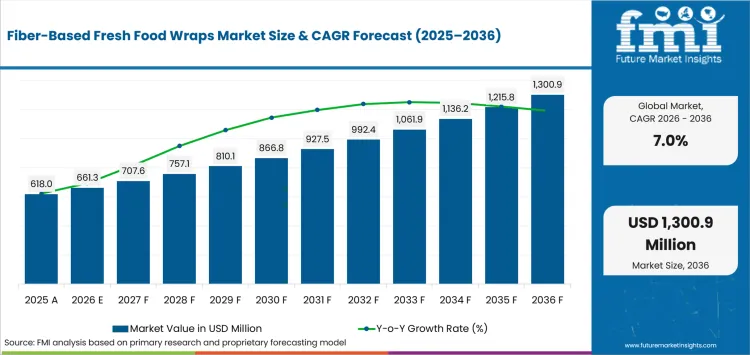
USD 661.3 million in 2026 and USD 1300.9 million by 2036 at a 7.0% CAGR.
Demand for fiber-based fresh food wraps is projected to expand at a 7.0% CAGR between 2026 and 2036. Market value is projected to rise from USD 661.3 million in 2026 to USD 1300.9 million by 2036. Fresh food packaging specifications for direct contact now place greater weight on grease control without fluorinated treatments. The USA Food and Drug Administration confirmed in February 2024 that PFAS grease-proofing substances were no longer sold for food-contact use. Grocery and foodservice operators therefore requalify paper chemistry together with release performance and wet strength across normal dispensing routines.
Germany provides a stronger recovery route than markets with less consistent collection, although composite coatings remain difficult to classify. The German Environment Agency reported in January 2026 that dual systems recycled about 5.5 million tonnes of packaging during 2024. Paper and cardboard met statutory targets during 2024, but composite packaging continued to miss them across the national recovery system. The difference favors simple fiber constructions but does not remove contamination risks from meat juices, dairy fats or prepared-food residues during disposal.
Key Takeaways of Fiber-Based Fresh Food Wraps Market
- Food-contact changes are increasing qualification work for wraps that preserve grease control, wet strength and rapid counter handling.
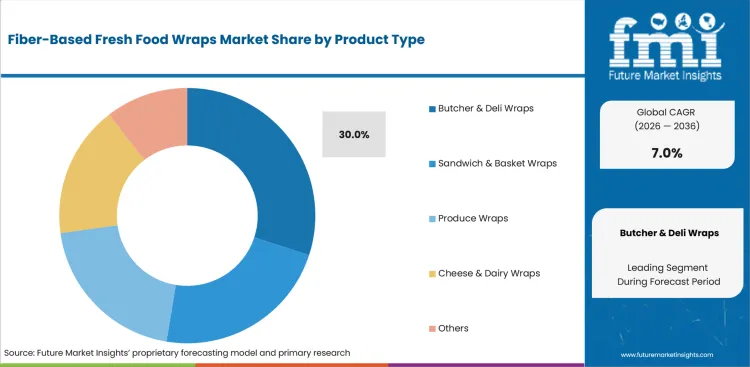
- In 2026, Butcher & Deli Wraps are projected to account for a 30.0% share owing to recurring use across meat preparation and service counters.
- Virgin Kraft Fiber is estimated to capture a 36.0% share in 2026 due to predictable strength and direct-food-contact consistency.
- Sheets & Interleaves are forecast to represent a 40.0% share in 2026 owing to shorter preparation and dispensing steps with pre-sized formats.
- Moisture exposure and uncertain end-of-life classification can delay approval for coated papers used with oily or wet foods.
- Novolex, McNairn Packaging, Oren International, Seaman Paper, Ahlstrom, Nordic Paper, Twin Rivers Paper and Pudumjee Paper Products serve the market.
Analyst Perspective
"A broad fiber claim does not establish usable barrier performance, so fresh-food wrap selection should begin with the exact food condition and dispensing routine. Commercial value is earned by papers that pass contact tests and arrive with documentation that national accounts can apply across recurring orders."
- Nandini Roy Choudhury, Principal Consultant, Future Market Insights
How is the Fiber-Based Fresh Food Wraps Market segmented?
The market is segmented by Product Type, Material, Format, Application, End Use and Sales Channel.
Product Type includes Butcher & Deli Wraps, Sandwich & Basket Wraps, Produce Wraps, Cheese & Dairy Wraps and Others. Material covers Virgin Kraft Fiber, Recycled Fiber, Bagasse - Agri-Fiber, Bamboo Fiber and Others. Format includes Sheets & Interleaves, Rolls, Pre-Cut Wraps and Others. Application covers Meat & Seafood, Bakery & Sandwiches, Fresh Produce, Cheese & Dairy and Others. End Use includes Foodservice & QSR, Grocery & Supermarkets, Food Processing and Others. Sales Channel covers Packaging Distributors, Direct - OEM Supply, Online - E-commerce and Others.
What makes butcher & deli wraps central to the product type category?
Butcher and deli papers separate portions and protect fresh surfaces during handling at grocery and foodservice counters. The grade must resist meat juices without becoming too stiff for rapid folding, labeling or visible case presentation.
- Based on product type, butcher & deli wraps are projected to account for 30.0% in 2026 due to recurring use across meat preparation and service counters.
- Grocery departments test wet strength and strike-through against specific cuts during regular commercial inventory approval. Consistent performance reduces rework during busy shifts and supports dependable case replenishment from fresh food packaging distributors serving multiple store formats.
How does virgin kraft fiber influence selection within the material category?
Virgin kraft fiber gives paper mills a controlled base for odor neutrality, print quality and direct food contact. Ahlstrom inaugurated a new parchmentizer at its Saint-Séverin plant in France in May 2025, adding parchment production capacity and flexibility for food-packaging applications.
- By material, virgin kraft fiber is estimated to hold 36.0% in 2026 owing to predictable strength and consistent treatment during converting.
- Packaging engineers compare barrier application and fold behavior on intended equipment during approval of lower-basis-weight kraft papers. Recycled and agricultural fibers remain relevant, although variable furnish adds further qualification work for moist or oily foods during routine converting trials.
How do food counters evaluate sheets & interleaves within the format category?
Sheets and interleaves turn wrapping paper into a repeatable unit that staff can lift without cutting. McNairn Packaging maintains SQF and FSC chain-of-custody certification across its foodservice packaging operation during routine production.
- In 2026, sheets & interleaves are expected to lead format with 40.0% share because faster preparation and controlled dispensing reduce counter handling steps.
- Pre-sized sheets also simplify case packing and stock planning for distributors serving mixed regional grocery and foodservice accounts. Rolls retain value for variable portions, although counter teams accept converted-sheet cost once labor savings and material control remain visible during high-volume service periods.
What drives foodservice & QSR within the end use category?
Foodservice operations consume wraps with each prepared-food transaction, so order volume follows meals served instead of equipment replacement. USDA reported in June 2026 that food-away-from-home spending reached USD 1.41 trillion during 2025.
- By end use, foodservice & QSR is forecast to represent 38.0% in 2026 driven by frequent serving and preparation tasks.
- National chains standardize common sizes across menus and locations to reduce inventory variation during routine service. Independent restaurants often order wraps beside foodservice paper bags from regional distributors, so assortment depth and manageable case quantities influence dependable weekly replenishment across smaller accounts.
What are the drivers, restraints and opportunities in the Fiber-Based Fresh Food Wraps Market?
PFAS-free requalification supports demand while coating and recovery uncertainty delays switching and certified barrier papers provide the clearest route to repeat orders.
- Driver: Food-contact rules require fresh-food operations to replace familiar treatments with documented food-grade packaging that preserves grease control.
- Restraint: Coating chemistry and food contamination complicate recovery claims for barrier coated papers, which extends testing for wet or oily applications.
- Opportunity: Paper mills and converters can pair application-specific performance with verified biodegradable food packaging evidence for recurring foodservice programs.
Fresh-food operations must replace familiar grease-resistant papers without adding extra handling across recurring counter and preparation programs. Meat counters compare wet strength and strike-through as sandwich programs examine release and fold retention across their menus. Orders expand once a paper passes the existing workflow and carries food-contact records that quality teams can reuse across locations.
End-of-life claims remain difficult for wraps that combine fiber with inseparable coatings or heavy food residue. The United Kingdom set a 77% recycling target for paper, board and fiber-based composite packaging during 2026. Producers therefore need accurate material classification and reporting records for national account approval across repeated purchasing cycles.
Certified barrier platforms provide a clearer commercial route for foods that require grease resistance and cannot enter ordinary paper recovery. Ahlstrom received Australian and New Zealand home-compostability certification for Sulpack in April 2025 across greasy fresh-food applications. Converters can use that evidence within compostable foodservice packaging programs provided the finished wrap also passes application testing.
Which country CAGRs are profiled in the Fiber-Based Fresh Food Wraps Market?
| Country | CAGR |
|---|---|
| Brazil | 7.4% |
| United Kingdom | 6.9% |
| Germany | 6.8% |
| United States | 6.4% |
| Japan | 5.6% |
How do country-level CAGRs compare in the Fiber-Based Fresh Food Wraps Market?
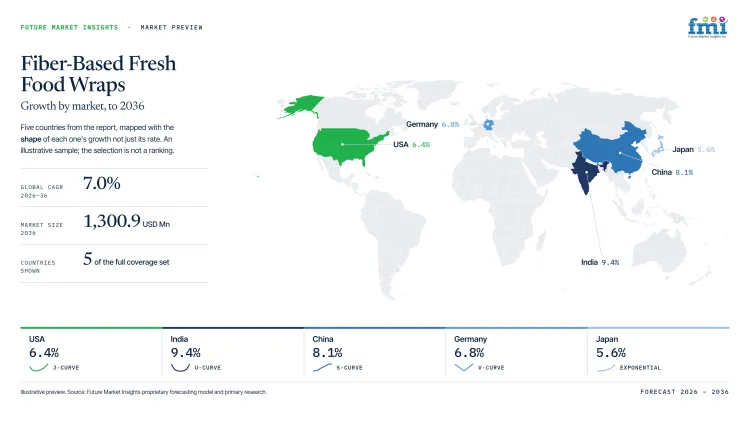
The profiled CAGRs span 1.8 percentage points from Brazil at 7.4% to Japan at 5.6%. Forecast pace does not measure current market size as each country starts with different channel density and qualification requirements.
- Brazil reflects grocery expansion and regional converting demand, although distribution distance and recovery access influence order conversion.
- The United Kingdom links packaging reporting with recyclability obligations, which favors clearly classified fiber constructions and defensible disposal guidance.
- Germany combines established collection with strict sorting expectations, so composite treatments receive closer review across paper packaging specifications.
- The United States has a broad foodservice base, yet PFAS-free papers must satisfy varied state rules and national account tests.
- Japan rewards precise sheets and consistent hygiene records, although municipal paper-packaging collection remains uneven across the national system.
Comparable CAGRs can still produce different market-entry conditions across countries covered in the full report, which spans North America, Latin America, Europe, East Asia, South Asia and Pacific, and the Middle East and Africa.
Country-wise Analysis
- Brazilian grocery and foodservice accounts rely on regional converters for stock availability across long distribution routes, making local inventory depth and case planning essential for repeat orders from smaller cities and seasonal operators. Fiber-based fresh food wraps sales in Brazil are forecast to expand at 7.4% CAGR by 2036, supported by recurring fresh-food handling and broader formal retail activity across metropolitan and secondary commercial centers. IBGE reported in February 2026 that sales in the hypermarkets, supermarkets, food products, beverages and tobacco category increased 0.8% during 2025, although ANVISA documentation and uneven recovery access can extend application trials beyond major urban markets for local distributors.
- United Kingdom packaging producers must report material composition and tonnage across national programs as precise classification and verified coating weights shape retailer approval plus fee planning and routine annual reporting for fresh-food wraps. The United Kingdom’s fiber-based fresh food wraps outlook is anticipated to advance at 6.9% CAGR over the assessment period, reinforced by formal recycling targets and centralized purchasing across grocery and prepared-food accounts. Government guidance updated in April 2026 set a 77% recycling target for paper and board plus fiber-based composites, while polymer layers can shift wraps into composite reporting and prolong specification reviews across fresh-food programs.
- German retailers operate within a mature collection system that rewards simple fiber structures, yet food residue and inseparable coatings make recovery claims harder to defend during national account qualification and recurring menu approvals. The German fiber-based fresh food wraps sector is projected to record 6.8% CAGR during the assessment period, shaped by strong sorting infrastructure and closer review of composite treatments across retail and catering specifications. The German Environment Agency reported in January 2025 that dual systems recovered more than 5.5 million tonnes of packaging during 2023, so greaseproof paper sheets need documented barrier chemistry and disposal guidance.
- United States restaurant and grocery networks purchase wraps across many locations, making centralized food-contact records and distributor service consistency essential for coordinated rollouts across varied state requirements and national menu programs during implementation. Fiber-based fresh food wraps demand in the United States is forecast to rise at 6.4% CAGR over the forecast period, supported by recurring counter consumption and PFAS-free requalification across established foodservice channels. USDA reported in February 2025 that inflation-adjusted food-away-from-home spending increased 0.4% during 2024, although customer-specific wet-strength tests and differing state rules can extend approval schedules across multi-state accounts and regional distributor networks nationally.
- Japanese grocery and foodservice operators favor exact sheet dimensions and stable hygiene records, so distributors need dependable local stock and responsive technical support during tightly controlled counter routines across regional accounts and menu programs. Adoption of fiber-based fresh food wraps in Japan is estimated to expand at 5.6% CAGR through 2036, aided by organized resource-circulation policy and disciplined operating specifications across grocery, prepared-food and distributor programs. The Ministry of the Environment reported in March 2026 that 904 municipalities planned paper-packaging collection for fiscal 2026, while separate paper-packaging collection was planned in 904 municipalities, representing 51.9% of municipalities, for fiscal 2026.
Who are the notable companies in the Fiber-Based Fresh Food Wraps Market?
Novolex, McNairn Packaging, Oren International, Seaman Paper, Ahlstrom, Nordic Paper, Twin Rivers Paper and Pudumjee Paper Products are the notable companies serving this market.
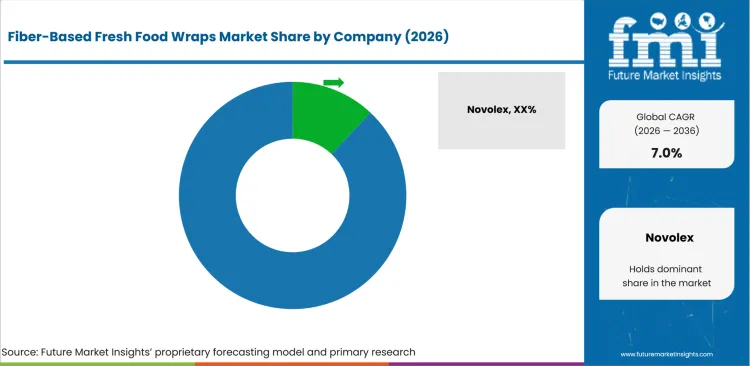
The competitive field remains fragmented across finished-wrap converters, food-grade paper producers and specialty barrier-paper mills. Account access depends on stocked sizes and regional replenishment while technical entry depends on direct-contact records and application testing. No single company controls every substrate, converting and distribution step, so foodservice programs often qualify a paper source and a finished-format partner separately.
- Novolex, McNairn Packaging and Oren International compete through converted sheets, rolls, printing and foodservice account support.
- Seaman Paper and Pudumjee Paper Products combine wrapping or food-grade paper production with international customer coverage.
- Ahlstrom, Nordic Paper and Twin Rivers Paper focus on parchment, natural greaseproof and PFAS-free barrier-paper routes.
Competitive Benchmarking: Fiber-Based Fresh Food Wraps Market
| Company | Finished Format Breadth | Barrier & Food-Contact Depth | Qualification & End-of-Life Evidence | Geographic Reach |
|---|---|---|---|---|
| Novolex | High | Medium | Medium | North America and Europe |
| McNairn Packaging | High | High | High | United States and Canada |
| Oren International | High | Medium | Medium | United States with international distributor sales |
| Seaman Paper | Medium | Medium | Medium | North America, Europe and Asia |
| Ahlstrom | Medium | High | High | Europe, Americas and Asia-Pacific |
| Nordic Paper | Medium | High | Medium | Europe and North America with global sales |
| Twin Rivers Paper | Medium | High | High | United States and Canada |
| Pudumjee Paper Products | Medium | High | High | India and export markets |
Key Developments in the Fiber-Based Fresh Food Wraps Market
- In June 2026, Ahlstrom renewed CMA-W compostability certification for its Genuine Vegetable Parchment food-grade portfolio. The approval covers Unibake, Sulpack, Grillon and UniDough papers under windrow composting conditions, giving North American converters current third-party evidence for applications that cannot use conventional paper recovery.
- In April 2025, Nordic Paper approved environmental investments of up to SEK 450 million at its Bäckhammar mill. The new production permit allows kraft-paper production to increase by about 10% over time, with the investments scheduled for 2025–2027.
- In April 2025, Novolex completed its combination with Pactiv Evergreen and made the acquired company a wholly owned subsidiary. The transaction consolidates foodservice packaging relationships under one platform, although broader account access does not establish immediate adoption for any individual fresh-food wrap.
Key Players in the Fiber-Based Fresh Food Wraps Market
Converted Wrap and Foodservice Format Specialists
- Novolex
- McNairn Packaging
- Oren International
Global Wrapping and Food-Grade Paper Producers
- Seaman Paper
- Pudumjee Paper Products
Specialty Barrier-Paper Developers
- Ahlstrom
- Nordic Paper
- Twin Rivers Paper
Fiber-Based Fresh Food Wraps Market - Report Scope
| Coverage field | Report scope |
|---|---|
| Market breakdown | By product type, material, format, application, end use, sales channel and region. |
| Quantitative Units | Revenue in USD million and CAGR in %. |
| Market Definition | Commercial fiber-based wraps sold for direct fresh-food contact across grocery, foodservice and processing uses. The market excludes downstream food revenue, plastic film, foil, rigid containers, standalone bags and pouches. |
| Regions Covered | North America, Latin America, Western Europe, Eastern Europe, East Asia, South Asia and Pacific, and Middle East and Africa. |
| Countries Covered | Brazil, United Kingdom, Germany, United States, Japan, and 20+ countries included in the full report. |
| Key Companies Profiled | Novolex, McNairn Packaging, Oren International, Seaman Paper, Ahlstrom, Nordic Paper, Twin Rivers Paper and Pudumjee Paper Products. |
| Forecast Period | 2026 to 2036. |
| Approach | Primary and secondary research with market triangulation. |
Fiber-Based Fresh Food Wraps Market - Research Methodology
| Method | Approach |
|---|---|
| Primary Research | FMI analysts gathered input from manufacturers, service providers, technology developers, distributors, end users, procurement teams, and subject-matter experts. Interviews examined purchasing decisions, product or service evaluation, adoption barriers, approval requirements, pricing considerations, and expectations for technical or commercial support. Respondents were also asked what evidence is required before a trial, pilot, or initial order develops into regular purchasing. |
| Desk Research | Desk research covered government statistics, regulatory publications, trade data, industry associations, technical literature, standards, company filings, product information, and official corporate announcements. Sources were reviewed for relevance, publication date, geographic coverage, and consistency with the defined market scope. Claims relating to performance, applications, approvals, capacity, investment, and commercial activity were retained only when supported by credible public evidence. |
| Market Sizing and Forecasting | The market model combined the baseline value with historical performance, segment structure, pricing and volume indicators, adoption levels, company participation, and country-level demand conditions. Forecast assumptions considered economic activity, investment trends, regulatory developments, technology adoption, purchasing cycles, supply availability, and barriers to wider market use. Segment and regional estimates were reconciled before the final market total was calculated. |
| Data Validation | Estimates were checked against multiple independent indicators, including public data, company activity, trade patterns, industry developments, and findings from primary interviews. Validation also tested whether products, services, applications, and company revenues fell within the defined market boundaries. Adjacent categories, unsupported claims, overlapping revenues, and activities without direct market relevance were excluded to reduce double counting and maintain consistency across segments and countries. |
Fiber-Based Fresh Food Wraps Market by Segments
Fiber-Based Fresh Food Wraps Market segmented by Product Type:
- Butcher & Deli Wraps
- Sandwich & Basket Wraps
- Produce Wraps
- Cheese & Dairy Wraps
- Others
Fiber-Based Fresh Food Wraps Market segmented by Material:
- Virgin Kraft Fiber
- Recycled Fiber
- Bagasse - Agri-Fiber
- Bamboo Fiber
- Others
Fiber-Based Fresh Food Wraps Market segmented by Format:
- Sheets & Interleaves
- Rolls
- Pre-Cut Wraps
- Others
Fiber-Based Fresh Food Wraps Market segmented by Application:
- Meat & Seafood
- Bakery & Sandwiches
- Fresh Produce
- Cheese & Dairy
- Others
Fiber-Based Fresh Food Wraps Market segmented by End Use:
- Foodservice & QSR
- Grocery & Supermarkets
- Food Processing
- Others
Fiber-Based Fresh Food Wraps Market segmented by Sales Channel:
- Packaging Distributors
- Direct - OEM Supply
- Online - E-commerce
- Others
Fiber-Based Fresh Food Wraps Market by Region:
- North America
- United States
- Canada
- Latin America
- Brazil
- Mexico
- Chile
- Rest of Latin America
- Western Europe
- Germany
- United Kingdom
- Italy
- Spain
- France
- Nordics
- Benelux
- Rest of Western Europe
- Eastern Europe
- Russia
- Poland
- Hungary
- Balkan and Baltic States
- Rest of Eastern Europe
- East Asia
- China
- Japan
- South Korea
- South Asia and Pacific
- India
- ASEAN
- Australia and New Zealand
- Rest of South Asia and Pacific
- Middle East and Africa
- Kingdom of Saudi Arabia
- Other GCC Countries
- Türkiye
- South Africa
- Other African Union Countries
- Rest of Middle East and Africa
Research Sources and Bibliography
- USA Food and Drug Administration. (2024, February 28). FDA Announces PFAS Used in Grease-Proofing Agents for Food Packaging No Longer Being Sold in the USA
- German Environment Agency. (2026, January 27). Facts against myths: Packaging waste recycling in Germany is working.
- Ahlstrom. (2025, March 17). Ahlstrom expands LamiBak™ portfolio with a new base paper for flexible food packaging.
- McNairn Packaging. (2026). Certifications - McNairn Packaging. Retrieved August 7, 2026.
- USA Department of Agriculture Economic Research Service. (2026, June 11). Total USA food spending reached $2.51 trillion in 2025.
- Department for Environment, Food & Rural Affairs. (2026, April 7). Extended producer responsibility for packaging: Recycling obligations and waste disposal fees.
- Ahlstrom. (2025, April 7). Ahlstrom receives home compostable certification in Australia and New Zealand for Sulpack® Flexible packaging.
- Brazilian Institute of Geography and Statistics. (2026, February 13). Retail sales close 2025 with rise of 1.6%.
- German Environment Agency. (2025, January 21). Packaging recycling only works with correct waste separation.
- USA Department of Agriculture Economic Research Service. (2025, February 24). As food price inflation slowed in 2024, inflation-adjusted food spending rebounded.
- Ministry of the Environment, Government of Japan. (2026, March 31). 容器包装リサイクル法に基づく令和8年度以降の分別収集見込量の集計結果について.
- Novolex. (2026). Newsroom. Retrieved August 7, 2026.
- Oren International. (2025). Paper converting | Paper converting companies. Retrieved August 7, 2026.
- Seaman Paper. (2024). About Us | Seaman Paper. Retrieved August 7, 2026.
- Nordic Paper. (2025, March 21). Nordic Paper’s annual report and sustainability report 2024.
- Twin Rivers Paper Company. (2026). Twin Rivers Paper Sustainability. Retrieved August 7, 2026.
- Pudumjee Paper Products. (2026). Annual Reports - Pudumjee. Retrieved August 7, 2026.
- Ahlstrom. (2026, June 17). Ahlstrom renews CMA-W compostability certification for GVP food-grade portfolio.
- Nordic Paper. (2025, April 28). Nordic Paper approves environmental investments for Bäckhammar of up to SEK 450 million.
- Pactiv Evergreen Inc. (2025, April 1). Current Report on Form 8-K.
- Ahlstrom. (2025, May 28). Ahlstrom completes acquisition of Stevens Point operation.
- Ahlstrom. (2025, May 21). Ahlstrom inaugurates new parchmentizer at the Saint-Séverin plant, strengthening customer partnerships and local commitment.
- Seaman Paper. (2025, September 18). Seaman Paper Launches Heat-Sealable Paper Packaging: A Scalable, Recyclable Alternative to Single-Use Plastics.
- Seaman Paper. (n.d.). Specialized Converting - a Seaman Paper Facility. Retrieved August 7, 2026.
This bibliography is provided for reader reference and is not exhaustive. The full report contains the complete reference list and detailed citations
This Report Answers
- How large is the Fiber-Based Fresh Food Wraps Market in 2026 and 2036?
- Which food-contact and recovery conditions influence fiber-wrap qualification through 2036?
- Why do Butcher & Deli Wraps account for 30.0% of product type demand in 2026?
- How does Virgin Kraft Fiber affect direct-food-contact performance and converting consistency?
- Why do Sheets & Interleaves represent 40.0% of format demand in 2026?
- How do country growth routes differ across Brazil, the United Kingdom, Germany, the United States and Japan?
- Which companies provide converted wraps and which concentrate on specialty barrier papers?
- What operating frictions can delay repeat orders for fresh-food wraps?
Frequently Asked Questions
How big is the fiber-based fresh food wraps market in 2026?
The fiber-based fresh food wraps market is valued at USD 661.3 million in 2026 and is projected to reach USD 1300.9 million by 2036. Growth is driven by increasing adoption of PFAS-free paper wraps across meat, dairy, and prepared food packaging applications.
What is the CAGR of the fiber-based fresh food wraps market from 2026 to 2036?
The fiber-based fresh food wraps market is projected to grow at a CAGR of 7.0% between 2026 and 2036. Expansion is supported by evolving food-contact regulations and rising demand for grease-resistant, fiber-based packaging solutions.
Which format segment is projected to account for 40.0% of the fiber-based fresh food wraps market?
Sheets & interleaves are projected to account for 40.0% of the market in 2026. Their leading share is supported by ease of dispensing, reduced material waste, and suitability for high-volume foodservice and retail operations.
How much will the fiber-based fresh food wraps market add between 2026 and 2036?
The fiber-based fresh food wraps market is expected to add USD 639.6 million in value between 2026 and 2036. Growth reflects increasing use of qualified paper wraps that combine food-contact compliance with grease and moisture resistance.
Which companies are active in the fiber-based fresh food wraps market?
Key companies operating in the market include Novolex, McNairn Packaging, Oren International, Seaman Paper, Ahlstrom, Nordic Paper, Twin Rivers Paper, and Pudumjee Paper Products.These companies compete through specialty paper technologies, converting capabilities, and food packaging expertise.
Preview the report firsthand - request a free sample
Get SampleGet the brochure for pricing and purchase details.
Get PDFTable of Content
- Key Takeaways
- Market Size and CAGR
- Top Growth Driver
- Fastest Growing Segment
- Leading Region
- Key Companies
- Emerging Opportunities
- Executive Summary
- Global Market Outlook
- Demand-side Trends
- Supply-side Trends
- Technology Roadmap Analysis
- Analysis and Recommendations
- Analyst Perspective (What is happening? Why now? What should investors know?)
- Key Questions Answered
- How large is the market?
- What is the CAGR?
- What are key trends?
- Which region dominates?
- Who are the leaders?
- Market Overview
- Market Coverage / Taxonomy
- Market Definition / Scope / Limitations
- Research Methodology
- Chapter Orientation
- Analytical Lens and Working Hypotheses
- Market Structure, Signals, and Trend Drivers
- Benchmarking and Cross-market Comparability
- Market Sizing, Forecasting, and Opportunity Mapping
- Research Design and Evidence Framework
- Desk Research Programme (Secondary Evidence)
- Expert Input and Fieldwork (Primary Evidence)
- Tooling, Models, and Reference Databases
- Data Engineering and Model Build
- Quality Assurance and Audit Trail
- Market Background
- Market Dynamics (Drivers, Restraints, Opportunity, Trends)
- Scenario Forecast (Optimistic, Likely, Conservative)
- Impact Analysis
- AI Impact
- Sustainability Impact
- Regulatory Impact
- Technology Impact
- Consumer / Buyer Analysis
- Purchase Drivers
- Adoption Barriers
- Buyer Journey
- Opportunity Map Analysis
- Product Life Cycle Analysis
- Supply Chain Analysis
- Investment Feasibility Matrix
- Value Chain Analysis
- PESTLE and Porter's Analysis
- Regulatory Landscape
- Regional Parent Market Outlook
- Production and Consumption Statistics
- Import and Export Statistics
- Global Market Analysis and Forecast, 2021 to 2036
- Historical Market Size Value (USD Million) Analysis, 2021 to 2025
- Current and Future Market Size Value (USD Million) Projections, 2026 to 2036
- Y-o-Y Growth Trend Analysis
- Absolute $ Opportunity Analysis
- Global Market Pricing Analysis, 2021 to 2036
- Global Market Analysis and Forecast, By Product Type, 2021 to 2036
- Introduction / Key Findings
- Historical Market Size Value (USD Million) Analysis By Product Type, 2021 to 2025
- Current and Future Market Size Value (USD Million) Analysis and Forecast By Product Type, 2026 to 2036
- Butcher & Deli Wraps
- Sandwich & Basket Wraps
- Produce Wraps
- Cheese & Dairy Wraps
- Others
- Butcher & Deli Wraps
- Y-o-Y Growth Trend Analysis By Product Type, 2021 to 2025
- Absolute $ Opportunity Analysis By Product Type, 2026 to 2036
- Global Market Analysis and Forecast, By Material, 2021 to 2036
- Introduction / Key Findings
- Historical Market Size Value (USD Million) Analysis By Material, 2021 to 2025
- Current and Future Market Size Value (USD Million) Analysis and Forecast By Material, 2026 to 2036
- Virgin Kraft Fiber
- Recycled Fiber
- Bagasse - Agri-Fiber
- Bamboo Fiber
- Others
- Virgin Kraft Fiber
- Y-o-Y Growth Trend Analysis By Material, 2021 to 2025
- Absolute $ Opportunity Analysis By Material, 2026 to 2036
- Global Market Analysis and Forecast, By Format, 2021 to 2036
- Introduction / Key Findings
- Historical Market Size Value (USD Million) Analysis By Format, 2021 to 2025
- Current and Future Market Size Value (USD Million) Analysis and Forecast By Format, 2026 to 2036
- Sheets & Interleaves
- Rolls
- Pre-Cut Wraps
- Others
- Sheets & Interleaves
- Y-o-Y Growth Trend Analysis By Format, 2021 to 2025
- Absolute $ Opportunity Analysis By Format, 2026 to 2036
- Global Market Analysis and Forecast, By Application, 2021 to 2036
- Introduction / Key Findings
- Historical Market Size Value (USD Million) Analysis By Application, 2021 to 2025
- Current and Future Market Size Value (USD Million) Analysis and Forecast By Application, 2026 to 2036
- Meat & Seafood
- Bakery & Sandwiches
- Fresh Produce
- Cheese & Dairy
- Others
- Meat & Seafood
- Y-o-Y Growth Trend Analysis By Application, 2021 to 2025
- Absolute $ Opportunity Analysis By Application, 2026 to 2036
- Global Market Analysis and Forecast, By End Use, 2021 to 2036
- Introduction / Key Findings
- Historical Market Size Value (USD Million) Analysis By End Use, 2021 to 2025
- Current and Future Market Size Value (USD Million) Analysis and Forecast By End Use, 2026 to 2036
- Foodservice & QSR
- Grocery & Supermarkets
- Food Processing
- Others
- Foodservice & QSR
- Y-o-Y Growth Trend Analysis By End Use, 2021 to 2025
- Absolute $ Opportunity Analysis By End Use, 2026 to 2036
- Global Market Analysis and Forecast, By Sales Channel
- Introduction / Key Findings
- Historical Market Size Value (USD Million) Analysis By Sales Channel, 2021 to 2025
- Current and Future Market Size Value (USD Million) Analysis and Forecast By Sales Channel, 2026 to 2036
- Packaging Distributors
- Direct - OEM Supply
- Online - E-commerce
- Others
- Packaging Distributors
- Y-o-Y Growth Trend Analysis By Sales Channel, 2021 to 2025
- Absolute $ Opportunity Analysis By Sales Channel, 2026 to 2036
- Global Market Analysis and Forecast, By Region, 2021 to 2036
- Introduction
- Historical Market Size Value (USD Million) Analysis By Region, 2021 to 2025
- Current Market Size Value (USD Million) Analysis and Forecast By Region, 2026 to 2036
- North America
- Latin America
- Western Europe
- Eastern Europe
- East Asia
- South Asia and Pacific
- Middle East & Africa
- Market Attractiveness Analysis By Region
- North America Market Analysis and Forecast, By Country, 2021 to 2036
- Historical Market Size Value (USD Million) Trend Analysis By Market Taxonomy, 2021 to 2025
- Market Size Value (USD Million) Forecast By Market Taxonomy, 2026 to 2036
- By Country
- USA
- Canada
- By Product Type
- By Material
- By Format
- By Application
- By End Use
- By Sales Channel
- By Country
- Market Attractiveness Analysis
- By Country
- By Product Type
- By Material
- By Format
- By Application
- By End Use
- By Sales Channel
- Key Takeaways
- Latin America Market Analysis and Forecast, By Country
- Historical Market Size Value (USD Million) Trend Analysis By Market Taxonomy, 2021 to 2025
- Market Size Value (USD Million) Forecast By Market Taxonomy, 2026 to 2036
- By Country
- Brazil
- Mexico
- Chile
- Rest of Latin America
- By Product Type
- By Material
- By Format
- By Application
- By End Use
- By Sales Channel
- By Country
- Market Attractiveness Analysis
- By Country
- By Product Type
- By Material
- By Format
- By Application
- By End Use
- By Sales Channel
- Key Takeaways
- Western Europe Market Analysis and Forecast, By Country
- Historical Market Size Value (USD Million) Trend Analysis By Market Taxonomy, 2021 to 2025
- Market Size Value (USD Million) Forecast By Market Taxonomy, 2026 to 2036
- By Country
- Germany
- UK
- Italy
- Spain
- France
- Nordic
- BENELUX
- Rest of Western Europe
- By Product Type
- By Material
- By Format
- By Application
- By End Use
- By Sales Channel
- By Country
- Market Attractiveness Analysis
- By Country
- By Product Type
- By Material
- By Format
- By Application
- By End Use
- By Sales Channel
- Key Takeaways
- Eastern Europe Market Analysis and Forecast, By Country
- Historical Market Size Value (USD Million) Trend Analysis By Market Taxonomy, 2021 to 2025
- Market Size Value (USD Million) Forecast By Market Taxonomy, 2026 to 2036
- By Country
- Russia
- Poland
- Hungary
- Balkan & Baltic
- Rest of Eastern Europe
- By Product Type
- By Material
- By Format
- By Application
- By End Use
- By Sales Channel
- By Country
- Market Attractiveness Analysis
- By Country
- By Product Type
- By Material
- By Format
- By Application
- By End Use
- By Sales Channel
- Key Takeaways
- East Asia Market Analysis and Forecast, By Country
- Historical Market Size Value (USD Million) Trend Analysis By Market Taxonomy, 2021 to 2025
- Market Size Value (USD Million) Forecast By Market Taxonomy, 2026 to 2036
- By Country
- China
- Japan
- South Korea
- By Product Type
- By Material
- By Format
- By Application
- By End Use
- By Sales Channel
- By Country
- Market Attractiveness Analysis
- By Country
- By Product Type
- By Material
- By Format
- By Application
- By End Use
- By Sales Channel
- Key Takeaways
- South Asia and Pacific Market Analysis and Forecast, By Country
- Historical Market Size Value (USD Million) Trend Analysis By Market Taxonomy, 2021 to 2025
- Market Size Value (USD Million) Forecast By Market Taxonomy, 2026 to 2036
- By Country
- India
- ASEAN
- Australia & New Zealand
- Rest of South Asia and Pacific
- By Product Type
- By Material
- By Format
- By Application
- By End Use
- By Sales Channel
- By Country
- Market Attractiveness Analysis
- By Country
- By Product Type
- By Material
- By Format
- By Application
- By End Use
- By Sales Channel
- Key Takeaways
- Middle East & Africa Market Analysis and Forecast, By Country
- Historical Market Size Value (USD Million) Trend Analysis By Market Taxonomy, 2021 to 2025
- Market Size Value (USD Million) Forecast By Market Taxonomy, 2026 to 2036
- By Country
- Kingdom of Saudi Arabia
- Other GCC Countries
- Türkiye
- South Africa
- Other African Union
- Rest of Middle East & Africa
- By Product Type
- By Material
- By Format
- By Application
- By End Use
- By Sales Channel
- By Country
- Market Attractiveness Analysis
- By Country
- By Product Type
- By Material
- By Format
- By Application
- By End Use
- By Sales Channel
- Key Takeaways
- Key Countries Market Analysis
- USA
- Pricing Analysis
- Market Share Analysis, 2025
- By Product Type
- By Material
- By Format
- By Application
- By End Use
- By Sales Channel
- Canada
- Pricing Analysis
- Market Share Analysis, 2025
- By Product Type
- By Material
- By Format
- By Application
- By End Use
- By Sales Channel
- Mexico
- Pricing Analysis
- Market Share Analysis, 2025
- By Product Type
- By Material
- By Format
- By Application
- By End Use
- By Sales Channel
- Brazil
- Pricing Analysis
- Market Share Analysis, 2025
- By Product Type
- By Material
- By Format
- By Application
- By End Use
- By Sales Channel
- Chile
- Pricing Analysis
- Market Share Analysis, 2025
- By Product Type
- By Material
- By Format
- By Application
- By End Use
- By Sales Channel
- Germany
- Pricing Analysis
- Market Share Analysis, 2025
- By Product Type
- By Material
- By Format
- By Application
- By End Use
- By Sales Channel
- UK
- Pricing Analysis
- Market Share Analysis, 2025
- By Product Type
- By Material
- By Format
- By Application
- By End Use
- By Sales Channel
- Italy
- Pricing Analysis
- Market Share Analysis, 2025
- By Product Type
- By Material
- By Format
- By Application
- By End Use
- By Sales Channel
- Spain
- Pricing Analysis
- Market Share Analysis, 2025
- By Product Type
- By Material
- By Format
- By Application
- By End Use
- By Sales Channel
- France
- Pricing Analysis
- Market Share Analysis, 2025
- By Product Type
- By Material
- By Format
- By Application
- By End Use
- By Sales Channel
- India
- Pricing Analysis
- Market Share Analysis, 2025
- By Product Type
- By Material
- By Format
- By Application
- By End Use
- By Sales Channel
- ASEAN
- Pricing Analysis
- Market Share Analysis, 2025
- By Product Type
- By Material
- By Format
- By Application
- By End Use
- By Sales Channel
- Australia & New Zealand
- Pricing Analysis
- Market Share Analysis, 2025
- By Product Type
- By Material
- By Format
- By Application
- By End Use
- By Sales Channel
- China
- Pricing Analysis
- Market Share Analysis, 2025
- By Product Type
- By Material
- By Format
- By Application
- By End Use
- By Sales Channel
- Japan
- Pricing Analysis
- Market Share Analysis, 2025
- By Product Type
- By Material
- By Format
- By Application
- By End Use
- By Sales Channel
- South Korea
- Pricing Analysis
- Market Share Analysis, 2025
- By Product Type
- By Material
- By Format
- By Application
- By End Use
- By Sales Channel
- Russia
- Pricing Analysis
- Market Share Analysis, 2025
- By Product Type
- By Material
- By Format
- By Application
- By End Use
- By Sales Channel
- Poland
- Pricing Analysis
- Market Share Analysis, 2025
- By Product Type
- By Material
- By Format
- By Application
- By End Use
- By Sales Channel
- Hungary
- Pricing Analysis
- Market Share Analysis, 2025
- By Product Type
- By Material
- By Format
- By Application
- By End Use
- By Sales Channel
- Kingdom of Saudi Arabia
- Pricing Analysis
- Market Share Analysis, 2025
- By Product Type
- By Material
- By Format
- By Application
- By End Use
- By Sales Channel
- Türkiye
- Pricing Analysis
- Market Share Analysis, 2025
- By Product Type
- By Material
- By Format
- By Application
- By End Use
- By Sales Channel
- South Africa
- Pricing Analysis
- Market Share Analysis, 2025
- By Product Type
- By Material
- By Format
- By Application
- By End Use
- By Sales Channel
- USA
- Market Structure Analysis
- Competition Dashboard
- Competition Benchmarking
- Market Share Analysis of Top Players
- By Regional
- By Product Type
- By Material
- By Format
- By Application
- By End Use
- By Sales Channel
- Emerging Startups
- Innovation Benchmarking
- Competition Analysis
- Competition Deep Dive
- Novolex
- Overview
- Product Portfolio
- Profitability by Market Segments
- Sales Footprint
- Strategy Overview
- Marketing Strategy
- Product Strategy
- Channel Strategy
- McNairn Packaging
- Handy Wacks
- Georgia-Pacific
- Seaman Paper
- Oren International
- Ahlstrom
- Nordic Paper
- Twin Rivers Paper
- Pudumjee Paper Products
- Novolex
- Case Studies
- Success Stories
- Recent Developments
- Competition Deep Dive
- Assumptions & Acronyms Used


