

- Market Size (2026)
- USD 1.4 Bn
- Forecast (2036)
- USD 2.2 Bn
- CAGR (2026 to 2036)
- 4.6%
Heavy-Duty Extended-Life Coolants for Truck Fleets Market Size, Market Forecast and Outlook By FMI
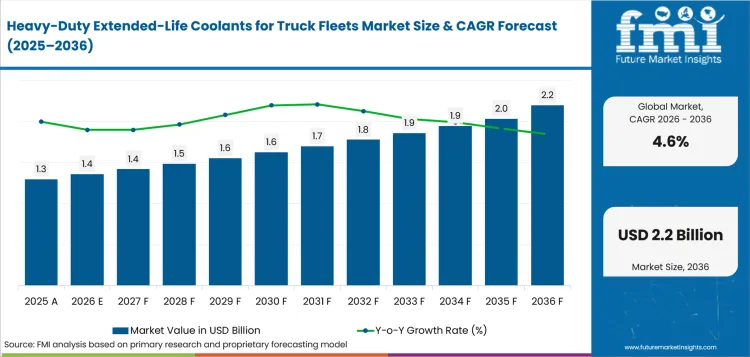
The heavy-duty extended-life coolants for truck fleets market was valued at USD 1.3 billion in 2025. Industry revenue is forecast to surpass USD 1.4 billion in 2026 and rise to USD 2.2 billion by 2036 at 4.6% CAGR. By base fluid, ethylene glycol coolants are likely to secure 72.4% share in 2026. By product form, premix coolants are set to represent 58.3% share in 2026.
Key Takeaways, Market Size, and Forecast
- The heavy-duty extended-life coolants for truck fleets market size stood at USD 1.3 billion in 2025.
- Industry value is anticipated to reach USD 2.2 billion by 2036 as fleet maintenance cycles favor longer coolant change intervals.
- From 2026 to 2036, the sector is forecast to expand at 4.6% CAGR.
- Industry revenue is expected to create an incremental opportunity of USD 0.8 billion during the forecast period.
- Ethylene glycol coolants are projected to account for 72.4% share in 2026 as diesel truck fleets keep using proven freezing and boiling protection.
- Premix coolants are estimated to hold 58.3% share in 2026 as fleet workshops prefer ready-fill products that reduce mixing errors.
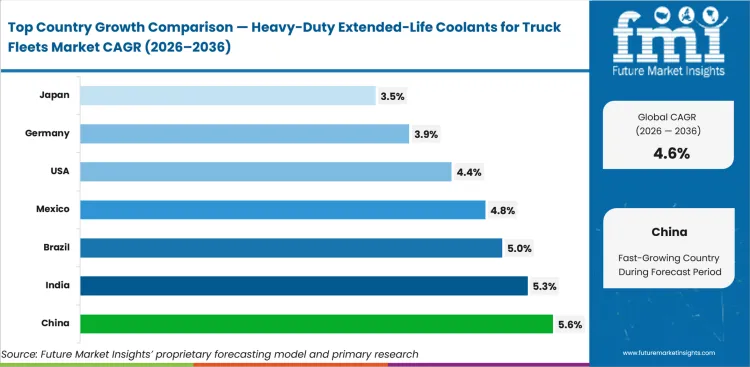
- China leads the country set with an expected 5.6% CAGR, followed by India at 5.3% CAGR by 2036.
Summary of Heavy-Duty Extended-Life Coolants for Truck Fleets Market
- Demand and Growth Drivers
- Long haul mileage keeps repeat coolant use active due to fleets protecting diesel engines from overheating and liner wear.
- Service shops favor premix products as controlled dilution lowers field error during scheduled maintenance.
- Mixed truck fleets prefer extended-life coolant families working across diesel and vocational units.
- Product and Segment View
- Ethylene glycol coolants are estimated to hold 72.4% share in 2026, influenced by established freeze protection in heavy trucks.
- Premix coolants are projected to secure 58.3% share in 2026 as fleets reduce shop-level water quality risk.
- Organic acid technology is expected to represent 42.6% share in 2026 as long-life corrosion control gains fleet preference.
- Geography and Competitive Outlook
- China is forecast to record 5.6% CAGR by 2036, backed by large commercial vehicle production and fleet replacement activity.
- India is expected to expand at 5.3% CAGR by 2036, led by commercial vehicle sales and growing organized service networks.
- Chevron Corporation and Shell plc compete through heavy-duty coolant portfolios and fleet lubricant channels.
- Valvoline Global Operations and Old World Industries compete through extended-life coolant brands and retail distributor reach.
- Analyst Opinion
- Nikhil Kaitwade, Principal Consultant for Industrial Automation at FMI, opines, “Fleet coolant buying is shifting from color matching toward proof of service life. I expect large truck fleets to compare coolant chemistry and maintenance error risk before selecting suppliers. Extended-life coolant suppliers with clear fleet service guidance should protect repeat orders.”
- Heavy-Duty Extended-Life Coolants for Truck Fleets Market Value Analysis
- Market value is tied to coolant life and service interval savings before packaging size affects price.
- Supplier pricing reflects additive chemistry and original equipment approval depth before distributor margin affects shelf rates.
- Revenue improves as fleets move from conventional coolant toward extended-life organic acid products.
- Fleet trust rises as coolant test guidance and bulk handling support reduce avoidable engine downtime.
Fleet coolant selection is now focused on longer service life and safer refilling with the right chemistry for truck engines. In February 2024, Daimler Truck North America said Alliance OAT Extended Life Coolant can protect engines for 1,000,000 miles or 20,000 hours. Long service life helps fleets focus less on upfront product price and more on reducing coolant service events.
In September 2024, Cummins said Fleetguard ES Compleat EG Premix has a 107°C boiling point and a 121°C flash point. Depot teams need clear storage rules and safe handling practices before they use bulk premix across several truck bays. In October 2025, BASF SE and BASF China published patent WO2025201199A1 for coolant compositions using freezing point-lowering liquids and corrosion inhibitors. Coolant suppliers are expected to focus more on corrosion protection and chemistry compatibility for mixed truck fleets.
Heavy-Duty Extended-Life Coolants for Truck Fleets Market Definition
Heavy-duty extended-life coolants for truck fleets cover antifreeze and coolant products formulated for medium and heavy truck cooling systems. Scope includes organic acid technology, nitrited organic acid technology, hybrid organic acid technology, fully formulated, premix, concentrate, bulk, drum, and tote products sold for fleet use. Passenger car coolant sold without heavy-duty truck use is outside scope.
Heavy-Duty Extended-Life Coolants for Truck Fleets Market Inclusions
Scope includes coolants used in long haul trucks, regional haul trucks, vocational fleets, buses, and rental fleets. Direct fleet supply, distributor sales, service center refill, original equipment aftermarket sales, and online retail sales are included. Related automotive coolant additives are counted only when sold inside finished coolant systems.
Heavy-Duty Extended-Life Coolants for Truck Fleets Market Exclusions
Scope excludes light passenger car coolant sold without commercial truck use. Battery thermal fluids for electric vehicles are excluded unless positioned for heavy-duty truck cooling systems. Engine oils, greases, and industrial lubricants are excluded unless bundled with coolant service contracts.
Heavy-Duty Extended-Life Coolants for Truck Fleets Market Research Methodology
- Primary Research: FMI analysts reviewed fleet service needs across lubricant distributors, truck workshops, and commercial vehicle service networks.
- Desk Research: Official transport data, vehicle production data, and standards documents supported scope mapping and demand checks.
- Market Sizing and Forecasting: Forecast values used truck fleet exposure, coolant change cycles, product mix, and regional service channel checks.
- Data Validation: Checks compared 2026 value with 2036 value and tested CAGR consistency across seven country rates.
Why is the Heavy-Duty Extended-Life Coolants for Truck Fleets Market Growing?
- Fleet workshops are shifting toward longer coolant intervals as maintenance planning becomes more cost focused.
- Heavy-duty engine platforms need stable cooling protection as trucks operate across longer routes and higher duty cycles.
- Premix and bulk formats are gaining attention as service networks try to reduce dilution mistakes during refill work.
Growth is becoming clearer as fleet cost pressure moves coolant from a low-cost consumable to a maintenance control item. American Transportation Research Institute reported in July 2025, surveyed motor carriers operated 178,091 combination truck-tractors with 2024 operating cost at USD 2.26 per mile. Federal Highway Administration forecasts released in October 2025 project combination truck vehicle miles traveled to increase by 1.0% annually over a 20-year period. Longer fleet use raises coolant replacement volume and favors products with longer drain claims. Coolant control is now expected to be seen as part of a wider fleet management discipline.
Market Segmentation Analysis
- Organic acid technology is likely to capture 42.6% share in 2026 due to fleets looking for longer corrosion protection with fewer additives.
- Premix coolants are expected to represent 58.3% share in 2026, as service shops reduce onsite water quality and mixing error.
- Ethylene glycol coolants are projected to account for 72.4% share in 2026, backed by long use in freezing and high-heat truck operations.
- Long haul fleets are anticipated to hold 46.7% share in 2026 since high-mileage routes make cooling system uptime more valuable.
- Distributor sales are estimated to secure 39.5% share in 2026, led by truck workshops relying on local stock and quick replenishment.
Segmentation is divided into five parent groups built around how fleet coolants are specified and supplied. Coolant technology defines inhibitor chemistry. Product form shows refill practice and packaging. Base fluid explains thermal protection. Fleet type tracks use intensity. Sales channel separates fleet contracts from workshop-led service orders.
Insights into Heavy-Duty Extended-Life Coolants for Truck Fleets Market by Coolant Technology
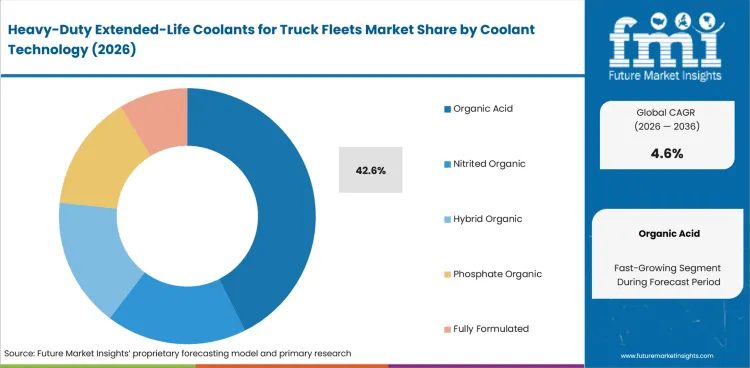
- Organic acid technology is projected to account for 42.6% share in 2026, led by longer corrosion protection reducing repeated additive checks for fleets.
- Nitrited organic products retain value among wet-sleeve diesel fleets needing cavitation control across older and mixed truck engines.
Insights into Heavy-Duty Extended-Life Coolants for Truck Fleets Market by Product Form
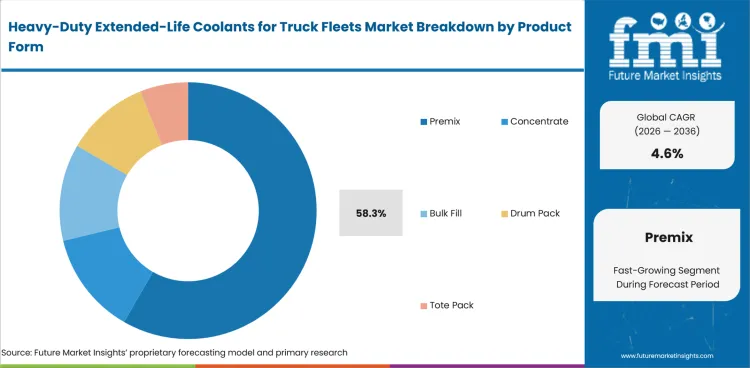
- Premix coolants are estimated to represent 58.3% share in 2026 since ready-fill use cuts water quality errors in busy service bays.
- Concentrate products protect bulk fleet accounts as large operators manage storage and seasonal protection needs with tighter cost control.
Insights into Heavy-Duty Extended-Life Coolants for Truck Fleets Market by Base Fluid
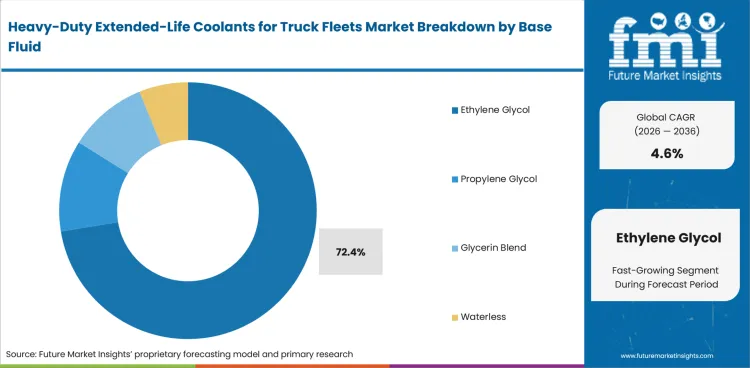
- Ethylene glycol coolants are forecast to hold 72.4% share in 2026, influenced by fleets trusting established freeze and boil protection.
- Propylene glycol products gain selective use in fleets preferring lower toxicity handling for yard equipment and special service zones.
Insights into Heavy-Duty Extended-Life Coolants for Truck Fleets Market by Fleet Type
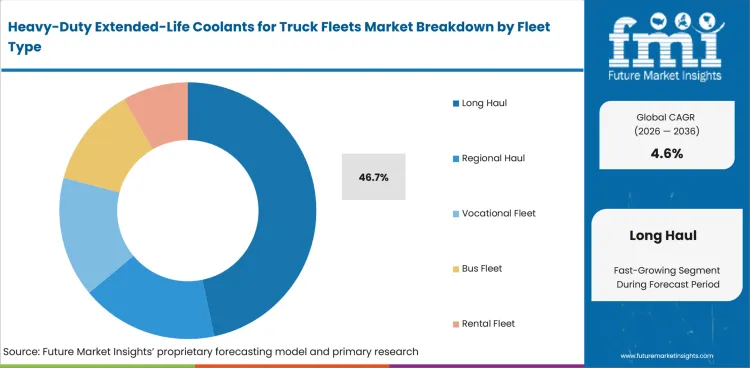
- Long haul fleets are anticipated to account for 46.7% share in 2026 due to high annual mileage increases value from longer service intervals.
- Vocational fleet use expands through refuse and utility trucks that face idle time and repeated thermal stress.
Insights into Heavy-Duty Extended-Life Coolants for Truck Fleets Market by Sales Channel
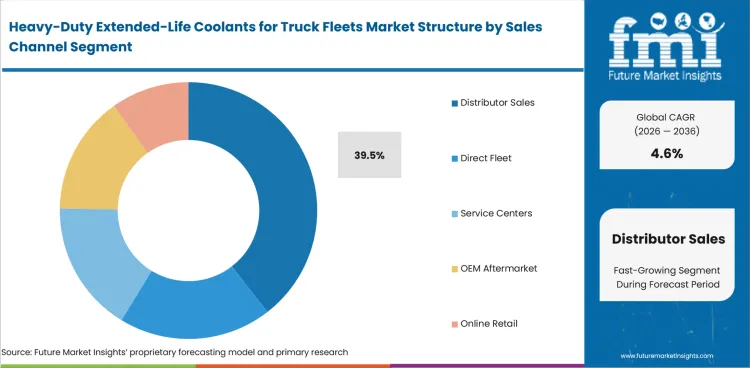
- Distributor sales are projected to account for 39.5% share in 2026 as service shops need reliable stock for urgent fleet maintenance.
- Direct fleet supply gains value as larger operators align coolant and testing kits under planned service programs.
Heavy-Duty Extended-Life Coolants for Truck Fleets Market Drivers, Restraints and Opportunities
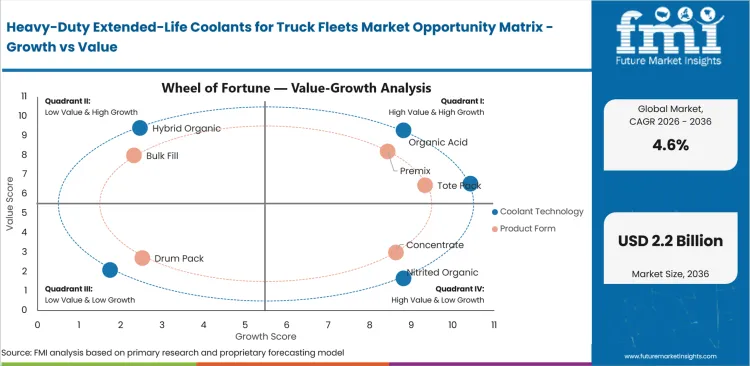
- Driver: Longer truck use cycles are pushing fleets toward coolants with extended protection and fewer service interruptions.
- Restraint: Coolant mixing errors can limit performance if workshops top off systems with the wrong chemistry.
- Opportunity: Bulk fill programs can expand as large fleets standardize coolants across vehicle types and service depots.
Regulated product quality and cost-focused fleet maintenance are shaping buying choices. ASTM D6210-25 was published in October 2025 for fully formulated glycol base coolants for heavy-duty engines. Chevron’s 2025 Delo ELC Advanced material positions a next-generation extended-life coolant for heat transfer and corrosion protection. Shell updated its coolants content in 2026 and warned against poor-quality coolants creating heat transfer problems and corrosion. Such evidence is likely to favor suppliers with technical support and clear refill guidance.
Technology Adoption and Automation Penetration Analysis
Fleet coolant planning is moving closer to AI-backed maintenance as large operators track vehicle health at the unit and hub level. Penske Truck Leasing stated in May 2025, its Catalyst AI platform uses 100 billion-plus data points and 300-plus simultaneous models to support real-time fleet diagnostics and benchmarking. Penske also reported that 44% of fleet leaders ranked maintenance cost visibility as a critical data need. Coolant suppliers can use this shift to position extended-life coolant as part of planned maintenance. Products with clear service intervals and refill rules will gain stronger acceptance as fleets automate maintenance decisions.
Application-wise Equipment Deployment Analysis
Equipment deployment is shifting from basic service checks toward diagnostic tools connecting trucks and service bays through standardized data protocols. Noregon’s 2025 JPRO On-Highway Coverage document states that heavy-duty coverage supports Class 3 to Class 8 vehicles. It also supports SAE J1587/J1708, J1939, ISO 15765, and KWP2000 messages for heavy-duty diagnostics. Such coverage is directly useful for fleet coolant service since workshops can link coolant-related faults with engine data before approving refill or repair work. Service centers using diagnostic tools can separate coolant chemistry problems from sensor or communication faults.
Analysis of Heavy-Duty Extended-Life Coolants for Truck Fleets Market by Key Countries
.webp "Top Country Growth Comparison Heavy Duty Extended Life Coolants For Truck Fleets Market Cagr (2026 2036)")
| Country | CAGR |
|---|---|
| China | 5.6% |
| India | 5.3% |
| Brazil | 5.0% |
| Mexico | 4.8% |
| United States | 4.4% |
| Germany | 3.9% |
| Japan | 3.5% |
Source: Future Market Insights, 2026.
Sales Analysis of Heavy-Duty Extended-Life Coolants for Truck Fleets Market in China
Fastest-growing country market · 2026 to 2036
China Market Outlook
China leads country growth by 2036, supported by commercial vehicle production scale and deep lubricant distribution. Local truck makers and service networks are creating steady pull for premix and organic acid coolants. Demand for automotive coolant products is rising as fleet operators reduce refill errors and protect cooling systems across long-haul and vocational vehicles.
Key Growth Drivers
- China’s State Council Information Office reported in August 2025, commercial vehicle production reached 2.4 million units from January to July 2025. High vehicle output raises first-fill and refill demand for heavy-duty coolant products.
- China Association of Automobile Manufacturers data cited in January 2026 showed vehicle production exceeded 34.0 million units in 2025. Large automotive scale improves supply access for glycol coolants and inhibitor packages.
- Commercial vehicle sales reached 2.43 million units from January to July 2025 as reported through China’s industry data channel in August 2025. Active sales keep truck service workshops supplied with extended-life coolant.
Key Restraints
- China’s large domestic blending network keeps price competition high for imported extended-life coolant brands. Fleet operators often compare upfront pail cost before service-life value.
- Independent workshops still create coolant mixing risk across older trucks. Mixed chemistry can weaken corrosion protection and reduce confidence in premium claims.
What makes China unique?
China combines truck production scale with a strong domestic coolant blending network. Such depth makes price and distributor reach central to supplier selection.
Key Companies
- Great Wall Lubricants
- Kunlun Lubricants
- Shell China
- Chevron China
- TotalEnergies China
- Valvoline China
- BASF China
- Lopal Tech
Sales & Marketing Channels
- National lubricant distributors
- Truck service workshops
- Fleet maintenance chains
- OEM service outlets
- Online business stores
- Regional lubricant wholesalers
Market Taxonomy & Sub-Regions Covered
| Segment | Sub-Segments |
|---|---|
| By Coolant Technology | Organic Acid · Nitrited Organic · Hybrid Organic · Phosphate Organic · Fully Formulated |
| By Product Form | Premix · Concentrate · Bulk Fill · Drum Pack · Tote Pack |
| By Base Fluid | Ethylene Glycol · Propylene Glycol · Glycerin Blend · Waterless |
| By Fleet Type | Long Haul · Regional Haul · Vocational Fleet · Bus Fleet · Rental Fleet |
| By Sales Channel | Distributor Sales · Direct Fleet · Service Centers · OEM Aftermarket · Online Retail |
| Key Sub-Regions Covered - Provinces / Municipalities | Guangdong, Jiangsu, Zhejiang, Shandong, Beijing, Shanghai, Sichuan, Hubei |
Frequently Asked Questions
How fast is China’s heavy-duty extended-life coolants for truck fleets market growing?
China is the fastest-growing country industry at 5.6% CAGR from 2026 to 2036.
Who leads China’s heavy-duty extended-life coolants for truck fleets market?
Great Wall, Kunlun, Shell, Chevron, TotalEnergies, Valvoline, BASF, and Lopal compete across fleet and service channels.
What is driving demand in China?
Demand is led by commercial vehicle output and broader use of premix coolant formats.
Sales Analysis of Heavy-Duty Extended-Life Coolants for Truck Fleets Market in India
High-growth fleet service market · 2026 to 2036
India Market Outlook
Industry in India records one of the faster country rates by 2036, supported by commercial vehicle sales and highway service expansion. Fleet workshops are shifting toward branded coolants as diesel truck operators reduce overheating risk and service delays. Interest in demand for antifreeze products is also increasing as fleets compare freeze protection and corrosion control in one maintenance decision.
Key Growth Drivers
- Society of Indian Automobile Manufacturers reported in April 2025, commercial vehicle sales reached 956,671 units in April 2024 to March 2025. Such volume supports steady coolant refill activity across freight and passenger transport fleets.
- Society of Indian Automobile Manufacturers reported in October 2025, commercial vehicle sales reached 463,502 units in April to September 2025. Half-year movement keeps coolant demand active across dealer workshops and fleet depots.
- India’s organized lubricant retail channel is expanding across highway corridors. Better channel access improves acceptance of premix and long-life coolant products.
Key Restraints
- Smaller repair shops may keep using water-heavy coolant mixtures to reduce service cost. Such practice weakens premium conversion for extended-life products.
- Coolant testing remains uneven across independent workshops. Poor checks can reduce trust in longer drain interval claims.
What makes India unique?
India’s opportunity comes from fleet formalization and first-time conversion to branded coolant service. Highway workshop education and pack-size access carry more weight than brand image alone.
Key Companies
- Indian Oil Servo
- HP Lubricants
- Bharat Petroleum Mak
- Gulf Oil Lubricants India
- Castrol India
- Shell India
- Valvoline Cummins
- Veedol India
Sales & Marketing Channels
- Highway lubricant dealers
- Fleet workshops
- Authorized truck service centers
- Fuel station lubricant outlets
- Industrial distributors
- Online auto parts platforms
Market Taxonomy & Sub-Regions Covered
| Segment | Sub-Segments |
|---|---|
| By Coolant Technology | Organic Acid · Nitrited Organic · Hybrid Organic · Phosphate Organic · Fully Formulated |
| By Product Form | Premix · Concentrate · Bulk Fill · Drum Pack · Tote Pack |
| By Base Fluid | Ethylene Glycol · Propylene Glycol · Glycerin Blend · Waterless |
| By Fleet Type | Long Haul · Regional Haul · Vocational Fleet · Bus Fleet · Rental Fleet |
| By Sales Channel | Distributor Sales · Direct Fleet · Service Centers · OEM Aftermarket · Online Retail |
| Key Sub-Regions Covered - States / Union Territories | Maharashtra, Delhi NCR, Karnataka, Tamil Nadu, Gujarat, Telangana, Uttar Pradesh, Rajasthan |
Frequently Asked Questions
How fast is India’s heavy-duty extended-life coolants for truck fleets market growing?
India is projected to grow at 5.3% CAGR from 2026 to 2036.
Who leads India’s heavy-duty extended-life coolants for truck fleets market?
Indian Oil, HP Lubricants, Bharat Petroleum, Gulf Oil, Castrol, Shell, Valvoline Cummins, and Veedol compete across fleet channels.
What is driving demand in India?
Demand is led by commercial vehicle sales and growing interest in branded coolant refill practices.
Sales Analysis of Heavy-Duty Extended-Life Coolants for Truck Fleets Market in Brazil
Freight and agriculture-linked market · 2026 to 2036
Brazil Market Outlook
The sector in Brazil expands by 2036 through long-distance freight and heat-heavy operating cycles. Truck fleets serving inland routes need stable coolant protection as vehicles face long hauls and repeated idle time. Growth in commercial truck use across farming and port corridors supports wider use of drum packs and bulk refill formats.
Key Growth Drivers
- Agência Brasil reported in January 2026, Brazilian vehicle production grew 3.5% in 2025 to 2.64 million units. Higher production supports aftermarket refill demand and wider coolant availability.
- Agriculture-linked freight corridors in Mato Grosso and Goiás keep heavy trucks in long operating cycles. Such use supports extended-life coolant for overheating control.
- Port-linked freight in São Paulo and Paraná supports fleet coolant demand through regular service visits and distributor-led maintenance supply.
Key Restraints
- High borrowing costs can delay truck replacement and fluid upgrades among smaller carriers. Coolant suppliers may face slower premium conversion outside larger fleets.
- Regional service variation can create incorrect coolant top-off practice. Poor refill control reduces field confidence in extended-life chemistry.
What makes Brazil unique?
Brazil combines high heat exposure with long freight routes and farming logistics. Extended-life coolant gains value as fleets try to avoid roadside failures away from main workshops.
Key Companies
- Petrobras Lubrax
- Ipiranga
- Shell Brasil
- Chevron Brasil
- TotalEnergies Brasil
- Valvoline Brasil
- Radiex
- Tirreno
Sales & Marketing Channels
- Fuel station lubricant outlets
- Truck service centers
- Agricultural equipment dealers
- Industrial lubricant distributors
- Fleet maintenance depots
- Regional wholesalers
Market Taxonomy & Sub-Regions Covered
| Segment | Sub-Segments |
|---|---|
| By Coolant Technology | Organic Acid · Nitrited Organic · Hybrid Organic · Phosphate Organic · Fully Formulated |
| By Product Form | Premix · Concentrate · Bulk Fill · Drum Pack · Tote Pack |
| By Base Fluid | Ethylene Glycol · Propylene Glycol · Glycerin Blend · Waterless |
| By Fleet Type | Long Haul · Regional Haul · Vocational Fleet · Bus Fleet · Rental Fleet |
| By Sales Channel | Distributor Sales · Direct Fleet · Service Centers · OEM Aftermarket · Online Retail |
| Key Sub-Regions Covered - States / Regions | São Paulo, Minas Gerais, Paraná, Rio Grande do Sul, Bahia, Goiás, Mato Grosso, Santa Catarina |
Frequently Asked Questions
How fast is Brazil’s heavy-duty extended-life coolants for truck fleets market growing?
The sector in Brazil is anticipated to expand at 5.0% CAGR from 2026 to 2036.
Who leads Brazil’s heavy-duty extended-life coolants for truck fleets market?
Petrobras Lubrax, Ipiranga, Shell, Chevron, TotalEnergies, Valvoline, Radiex, and Tirreno compete across fleet service channels.
What is driving demand in Brazil?
Demand is led by agricultural freight and coolant service needs across high-heat routes.
Sales Analysis of Heavy-Duty Extended-Life Coolants for Truck Fleets Market in Mexico
Truck assembly and cross-border freight market · 2026 to 2036
Mexico Market Outlook
Mexico grows faster than several mature truck service countries by 2036, supported by heavy-duty vehicle assembly and cross-border freight. Fleet operators serving United States routes need coolant products withstanding long highway use and varied service quality. Demand also connects with fleet telematics control units and tracking devices as maintenance planning becomes more data-led across larger fleets.
Key Growth Drivers
- United States International Trade Administration reported in February 2026, Mexico’s heavy-duty vehicle sector had 14 manufacturers and assemblers. Such manufacturing depth supports coolant demand across original fill and service channels.
- United States International Trade Administration reported in February 2026, Mexico had 12 heavy-duty vehicle manufacturing plants. Plant-linked service networks improve access for branded coolant suppliers.
- Mexico’s heavy-duty vehicle exports reached about USD 52.9 billion in 2024 according to the same industry guide. Export depth supports service demand across tractor-truck fleets and repair depots.
Key Restraints
- Exchange-rate movement can pressure imported glycol and additive costs. Price-sensitive fleet operators may delay premium coolant conversion.
- Cross-border freight exposure can create uneven service records between depots. Inconsistent top-off practice limits extended-life performance claims.
What makes Mexico unique?
Mexico combines heavy-duty truck assembly with export-led freight service. Coolant suppliers gain by serving plant-linked channels and fleets operating across northern industrial corridors.
Key Companies
- Roshfrans
- Bardahl Mexico
- Quaker State Mexico
- Shell Mexico
- Chevron Mexico
- ExxonMobil Mexico
- Valvoline Mexico
- TotalEnergies Mexico
Sales & Marketing Channels
- Heavy-duty parts distributors
- Fleet repair depots
- Authorized truck service points
- Industrial lubricant dealers
- Border logistics workshops
- National auto parts chains
Market Taxonomy & Sub-Regions Covered
| Segment | Sub-Segments |
|---|---|
| By Coolant Technology | Organic Acid · Nitrited Organic · Hybrid Organic · Phosphate Organic · Fully Formulated |
| By Product Form | Premix · Concentrate · Bulk Fill · Drum Pack · Tote Pack |
| By Base Fluid | Ethylene Glycol · Propylene Glycol · Glycerin Blend · Waterless |
| By Fleet Type | Long Haul · Regional Haul · Vocational Fleet · Bus Fleet · Rental Fleet |
| By Sales Channel | Distributor Sales · Direct Fleet · Service Centers · OEM Aftermarket · Online Retail |
| Key Sub-Regions Covered - States / Industrial Corridors | Nuevo León, Coahuila, Estado de México, Guanajuato, Querétaro, Jalisco, Chihuahua, Baja California |
Frequently Asked Questions
How fast is Mexico’s heavy-duty extended-life coolants for truck fleets market growing?
Mexico is forecast to grow at 4.8% CAGR from 2026 to 2036.
Who leads Mexico’s heavy-duty extended-life coolants for truck fleets market?
Roshfrans, Bardahl, Quaker State, Shell, Chevron, ExxonMobil, Valvoline, and TotalEnergies compete in truck service channels.
What is driving demand in Mexico?
Demand is influenced by heavy-duty assembly and depot-level coolant standardization.
Sales Analysis of Heavy-Duty Extended-Life Coolants for Truck Fleets Market in the United States
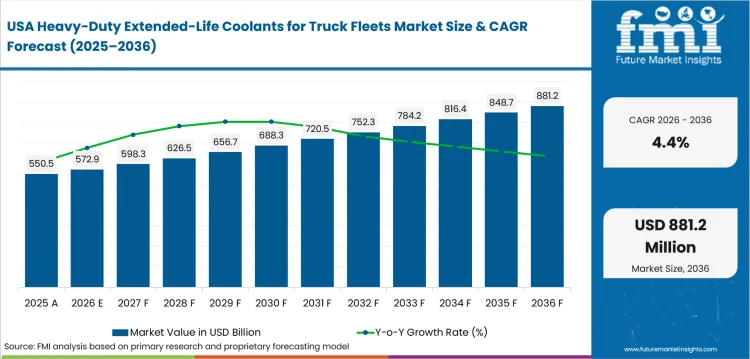
High-value fleet maintenance market · 2026 to 2036
United States Market Outlook
United States demand remains high-value by 2036, shaped by national freight scale and disciplined maintenance planning. Large carriers assess coolants through drain interval, engine protection, and shop error reduction. Fleet maintenance also links with smart fleet management as service data helps operators plan coolant replacement before failure.
Key Growth Drivers
- American Transportation Research Institute reported in July 2025, surveyed carriers operated 178,091 combination truck-tractors. Large fleet exposure creates repeat coolant demand across direct and distributor channels.
- Average motor carrier operating cost reached USD 2.26 per mile in 2024 according to the same July 2025 study. Cost pressure supports coolants with longer service intervals.
- Federal Highway Administration forecasts released in October 2025 expect combination truck vehicle miles traveled to rise 1.0% annually over 20 years. More mileage supports ongoing coolant replacement.
Key Restraints
- Freight softness can delay fluid upgrades among smaller carriers. Cost-focused shops may choose lower-price coolant despite service-life claims.
- Mixed coolant contamination remains a repair risk in independent service channels. Wrong top-off fluid can weaken additive performance.
What makes the United States unique?
United States demand links heavy freight mileage with high preventive maintenance discipline. Bulk contracts and branded coolant programs carry stronger value across larger fleets.
Key Companies
- Chevron Corporation
- Shell plc
- Valvoline Global Operations
- Old World Industries
- Prestone Products Corporation
- Exxon Mobil Corporation
- Recochem
- Fleetguard
Sales & Marketing Channels
- Truck stop service networks
- Heavy-duty parts distributors
- Direct fleet programs
- Dealer service centers
- Independent repair shops
- Online maintenance suppliers
Market Taxonomy & Sub-Regions Covered
| Segment | Sub-Segments |
|---|---|
| By Coolant Technology | Organic Acid · Nitrited Organic · Hybrid Organic · Phosphate Organic · Fully Formulated |
| By Product Form | Premix · Concentrate · Bulk Fill · Drum Pack · Tote Pack |
| By Base Fluid | Ethylene Glycol · Propylene Glycol · Glycerin Blend · Waterless |
| By Fleet Type | Long Haul · Regional Haul · Vocational Fleet · Bus Fleet · Rental Fleet |
| By Sales Channel | Distributor Sales · Direct Fleet · Service Centers · OEM Aftermarket · Online Retail |
| Key Sub-Regions Covered - States / Regions | Texas, California, Illinois, Ohio, Pennsylvania, Georgia, Florida, Tennessee |
Frequently Asked Questions
How fast is the United States heavy-duty extended-life coolants for truck fleets market growing?
United States demand is projected at 4.4% CAGR from 2026 to 2036.
Who leads the United States heavy-duty extended-life coolants for truck fleets market?
Chevron, Shell, Valvoline, Old World Industries, Prestone, ExxonMobil, Recochem, and Fleetguard compete across fleet service channels.
What is driving demand in the United States?
Demand is led by truck mileage and distributor access across national freight corridors.
Sales Analysis of Heavy-Duty Extended-Life Coolants for Truck Fleets Market in Germany
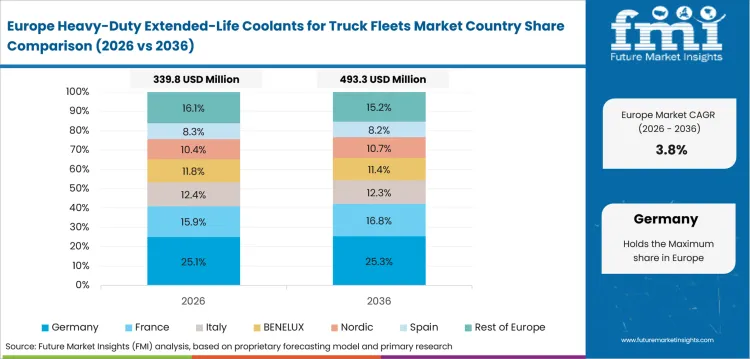
Standards-led service market · 2026 to 2036
Germany Market Outlook
Germany progresses at a measured rate by 2036, supported by workshop discipline and original equipment approval checks. Fleet operators prefer coolants with clear specification fit and service guidance. Demand for automotive coolant aftermarket products is supported by older trucks and repair networks following strict fluid compatibility rules.
Key Growth Drivers
- Verband der Automobilindustrie data showed truck ownership transfers rose to 439,869 in 2025 from 424,537 in 2024. Vehicle movement supports coolant refill checks during resale and service work.
- European Automobile Manufacturers’ Association reported in January 2026, 6.2 million trucks were operating on European roads. Germany’s service network benefits from this large regional truck pool.
- European Automobile Manufacturers’ Association reported in January 2026, European trucks averaged 14.0 years of age. Older trucks raise the need for corrosion control and cooling system discipline.
Key Restraints
- Established fleet service habits can slow switching from approved legacy coolant products. Suppliers need documentation before fleets change fluid families.
- High workshop labor cost makes failed coolant trials costly. Fleet managers therefore prefer proven chemistry and approved products.
What makes Germany unique?
Germany stands out for specification-led service culture. Coolant suppliers need original equipment approval and workshop training to gain repeat use.
Key Companies
- BASF Glysantin
- Fuchs SE
- Liqui Moly
- Shell Germany
- TotalEnergies Germany
- Chevron Germany
- Valvoline Germany
- Febi Bilstein
Sales & Marketing Channels
- Truck dealer workshops
- Industrial lubricant distributors
- Authorized service centers
- Parts wholesalers
- Fleet maintenance depots
- Technical fluid specialists
Market Taxonomy & Sub-Regions Covered
| Segment | Sub-Segments |
|---|---|
| By Coolant Technology | Organic Acid · Nitrited Organic · Hybrid Organic · Phosphate Organic · Fully Formulated |
| By Product Form | Premix · Concentrate · Bulk Fill · Drum Pack · Tote Pack |
| By Base Fluid | Ethylene Glycol · Propylene Glycol · Glycerin Blend · Waterless |
| By Fleet Type | Long Haul · Regional Haul · Vocational Fleet · Bus Fleet · Rental Fleet |
| By Sales Channel | Distributor Sales · Direct Fleet · Service Centers · OEM Aftermarket · Online Retail |
| Key Sub-Regions Covered - Federal States / Cities | North Rhine-Westphalia, Bavaria, Baden-Württemberg, Lower Saxony, Hesse, Hamburg, Bremen, Saxony |
Frequently Asked Questions
How fast is Germany’s heavy-duty extended-life coolants for truck fleets market growing?
Germany is forecast to grow at 3.9% CAGR from 2026 to 2036.
Who leads Germany’s heavy-duty extended-life coolants for truck fleets market?
BASF, Fuchs, Liqui Moly, Shell, TotalEnergies, Chevron, Valvoline, and Febi Bilstein compete across truck service channels.
What is driving demand in Germany?
Demand is influenced by workshop standards and preference for approved coolant specifications.
Sales Analysis of Heavy-Duty Extended-Life Coolants for Truck Fleets Market in Japan
Quality-led replacement market · 2026 to 2036
Japan Market Outlook
Japan grows by 2036 through careful service practice and aging vehicle use. Fleet workshops prefer coolants with compatibility guidance for Japanese truck engines and mixed-duty use. Growth in demand for trucks service stays selective, with value tied to long operating life and maintenance accuracy.
Key Growth Drivers
- Japan Automobile Manufacturers Association reported in September 2025, used motor vehicle sales reached 6.5 million units in 2024. Aging vehicle movement supports coolant inspection during resale and service visits.
- Japan Automobile Manufacturers Association reported in September 2025, used vehicle sales increased 1.0% from the previous year. Gradual replacement activity keeps coolant service tied to maintenance along with fleet expansion.
- Used imported truck sales fell 2.4% in 2024 according to Japan Automobile Manufacturers Association. Lower imported truck movement keeps domestic service channels important for coolant selection.
Key Restraints
- Slow fleet expansion limits volume growth compared with faster Asian countries. Suppliers gain mainly through replacement and service quality.
- Conservative workshop behavior can slow switching from original equipment coolant. New suppliers need clear approval and compatibility proof.
What makes Japan unique?
Japan values service accuracy and brand trust. Coolant suppliers need strong documentation and workshop education before gaining repeat fleet use.
Key Companies
- ENEOS
- Idemitsu Kosan
- Toyota Genuine Fluids
- Shell Japan
- ExxonMobil Japan
- Valvoline Japan
- BASF Japan
- TotalEnergies Japan
Sales & Marketing Channels
- Truck dealer workshops
- Parts wholesalers
- Fleet maintenance shops
- Industrial lubricant distributors
- OEM service outlets
- Online parts retailers
Market Taxonomy & Sub-Regions Covered
| Segment | Sub-Segments |
|---|---|
| By Coolant Technology | Organic Acid · Nitrited Organic · Hybrid Organic · Phosphate Organic · Fully Formulated |
| By Product Form | Premix · Concentrate · Bulk Fill · Drum Pack · Tote Pack |
| By Base Fluid | Ethylene Glycol · Propylene Glycol · Glycerin Blend · Waterless |
| By Fleet Type | Long Haul · Regional Haul · Vocational Fleet · Bus Fleet · Rental Fleet |
| By Sales Channel | Distributor Sales · Direct Fleet · Service Centers · OEM Aftermarket · Online Retail |
| Key Sub-Regions Covered - Prefectures / Metro Areas | Tokyo, Aichi, Osaka, Kanagawa, Saitama, Hyogo, Fukuoka, Hokkaido |
Frequently Asked Questions
How fast is Japan’s heavy-duty extended-life coolants for truck fleets market growing?
Japan is expected to grow at 3.5% CAGR from 2026 to 2036.
Who leads Japan’s heavy-duty extended-life coolants for truck fleets market?
ENEOS, Idemitsu, Toyota Genuine Fluids, Shell, ExxonMobil, Valvoline, BASF, and TotalEnergies compete across service channels.
What is driving demand in Japan?
Demand is led by aging vehicle use and preference for approved coolant chemistry.
Competitive Landscape and Strategic Positioning
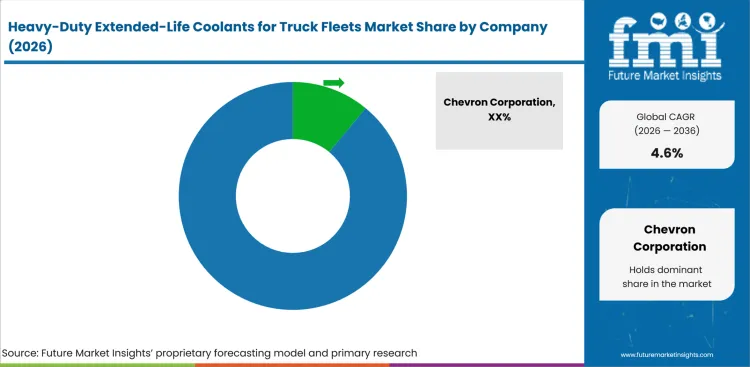
- Global lubricant suppliers hold an advantage through heavy-duty coolant lines and fleet service programs.
- Coolant specialists gain orders by linking longer service life with engine cooling protection.
- Antifreeze brands strengthen repeat sales as workshops stock premix and drum formats for fleet refills.
- Filtration and service brands support coolant care through testing guidance and cooling system maintenance support.
Competitive structure is led by global lubricant suppliers, coolant specialists, and fleet service brands. Chevron Corporation and Shell plc hold strong positions through heavy-duty coolant portfolios and fleet lubricant channels. Valvoline Global Operations and Old World Industries compete across extended-life coolant brands and distributor networks. Prestone Products Corporation and Recochem Inc. support antifreeze demand through retail and service channels. BASF SE, TotalEnergies SE, Exxon Mobil Corporation, and Atmus Filtration Technologies Inc. add technical depth across coolant chemistry and cooling system care.
Supplier selection starts with coolant chemistry proof before price is reviewed. Fleet operators ask for service interval claims and mixing guidance that service teams can follow. Workshop buyers compare pack size and refill error risk in the same buying step. Suppliers with coolant portfolios and service support are expected to gain stronger repeat sales.
Key Companies in the Heavy-Duty Extended-Life Coolants for Truck Fleets Market
Competitive structure is differentiated by global lubricant suppliers, coolant specialists, and fleet service brands. Extended-life chemistry proof shapes premium positioning.
- Global Lubricant Suppliers: Chevron Corporation, Shell plc, Exxon Mobil Corporation, and TotalEnergies SE compete based on heavy-duty coolant portfolios and fleet maintenance channels.
- Coolant Specialists: Old World Industries, Prestone Products Corporation, Recochem Inc., and BASF SE compete depending on antifreeze brands and extended-life formats.
- Fleet Service Brands: Valvoline Global Operations and Atmus Filtration Technologies Inc. compete through service guidance and cooling system care.
Competitive Benchmarking: Heavy-Duty Extended-Life Coolants for Truck Fleets Market
| Company | Extended-Life Coolant Depth | OEM Approval Depth | Fleet Pack Reach | Technical Service Depth | Geographic Footprint |
|---|---|---|---|---|---|
| Chevron Corporation | Very Strong | Strong | Very Strong | Strong | Global |
| Shell plc | Very Strong | Strong | Strong | Strong | Global |
| Valvoline Global Operations | Strong | Strong | Strong | Moderate | Global |
| Old World Industries | Strong | Moderate | Very Strong | Moderate | North America and global |
| Prestone Products Corporation | Strong | Moderate | Strong | Moderate | North America and global |
| Exxon Mobil Corporation | Strong | Strong | Strong | Strong | Global |
| BASF SE | Strong | Very Strong | Moderate | Strong | Global |
| TotalEnergies SE | Strong | Strong | Strong | Strong | Global |
| Recochem Inc. | Strong | Moderate | Strong | Moderate | North America and Europe |
| Atmus Filtration Technologies Inc. | Moderate | Strong | Moderate | Strong | Global |
Source: Future Market Insights competitive analysis, 2026.
Key Developments in Heavy-Duty Extended-Life Coolants for Truck Fleets Market
- In May 2024, Volvo Trucks North America specified Genuine VCS2 Coolant in the All-New VNL Body Builder Instructions.
- In October 2024, Kenworth Parts and Service listed TRP ELC Nitrate Free 50/50 coolant in 55-gallon drum and jug formats for heavy-duty truck service.
- In August 2025, Mack Trucks updated its Heavy-Duty Body Builder Instructions with Extended Life Coolant service guidance.
Key Players in the Heavy-Duty Extended-Life Coolants for Truck Fleets Market
- Chevron Corporation
- Shell plc
- Valvoline Global Operations
- Old World Industries
- Prestone Products Corporation
- Exxon Mobil Corporation
- BASF SE
- TotalEnergies SE
- Recochem Inc.
- Atmus Filtration Technologies Inc.
Market Report Scope
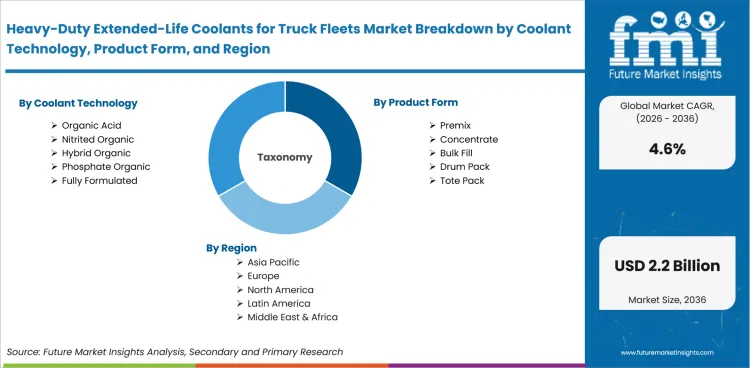
| Parameter | Details |
|---|---|
| Quantitative units | USD 1.4 billion to USD 2.2 billion at 4.6% CAGR |
| Market definition | Extended-life coolant products formulated for medium and heavy truck fleet cooling systems |
| By coolant technology | Organic acid, nitrited organic, hybrid organic, phosphate organic, fully formulated |
| By product form | Premix, concentrate, bulk fill, drum pack, tote pack |
| By base fluid | Ethylene glycol, propylene glycol, glycerin blend, waterless |
| By fleet type | Long haul, regional haul, vocational fleet, bus fleet, rental fleet |
| By sales channel | Distributor sales, direct fleet, service centers, OEM aftermarket, online retail |
| Regions covered | North America, Latin America, Europe, East Asia, South Asia and Pacific, Middle East and Africa |
| Countries covered | China, India, Brazil, Mexico, United States, Germany, Japan |
| Key companies profiled | Chevron Corporation, Shell plc, Valvoline Global Operations, Old World Industries, Prestone Products Corporation, Exxon Mobil Corporation, BASF SE, TotalEnergies SE, Recochem Inc., Atmus Filtration Technologies Inc. |
| Forecast period | 2026 to 2036 |
| Approach | Hybrid top-down and bottom-up sizing with truck fleet exposure, coolant replacement cycles, product mix, and channel checks |
Source: Future Market Insights competitive analysis, 2026.
Heavy-Duty Extended-Life Coolants for Truck Fleets Market Breakdown by Coolant Technology, Product Form, Base Fluid, Fleet Type, Sales Channel, and Region
By Coolant Technology
- Organic Acid
- Nitrited Organic
- Hybrid Organic
- Phosphate Organic
- Fully Formulated
By Product Form
- Premix
- Concentrate
- Bulk Fill
- Drum Pack
- Tote Pack
By Base Fluid
- Ethylene Glycol
- Propylene Glycol
- Glycerin Blend
- Waterless
By Fleet Type
- Long Haul
- Regional Haul
- Vocational Fleet
- Bus Fleet
- Rental Fleet
By Sales Channel
- Distributor Sales
- Direct Fleet
- Service Centers
- OEM Aftermarket
- Online Retail
By Region
- North America
- Latin America
- Europe
- East Asia
- South Asia and Pacific
- Middle East and Africa
Research Sources and Bibliography
- American Transportation Research Institute. (2025, July). An analysis of the operational costs of trucking: 2025 update. American Transportation Research Institute.
- Federal Highway Administration. (2025, October 10). 2025 FHWA forecasts of vehicle miles traveled (VMT). USA Department of Transportation.
- Society of Indian Automobile Manufacturers. (2025, April 15). Performance of auto industry in March 2025 and April 2024 to March 2025. Society of Indian Automobile Manufacturers.
- International Trade Administration. (2026, February 11). Mexico: Automotive industry. USA Department of Commerce.
- Cruz, E. P. (2026, January 15). Brazilian vehicle production grows 3.5% in 2025. Agência Brasil.
- Japan Automobile Manufacturers Association. (2025, September 26). The motor industry of Japan 2025. Japan Automobile Manufacturers Association.
- European Automobile Manufacturers’ Association. (2026, January 15). Vehicles on European roads 2026. European Automobile Manufacturers’ Association.
- ASTM International. (2025, October 27). ASTM D6210-25: Standard specification for fully-formulated glycol base engine coolant for heavy-duty engines. ASTM International.
- Chevron Lubricants. (2025). Delo ELC Advanced antifreeze/coolant product profile. Chevron Lubricants.
- Old World Industries. (2024, November 4). PEAK announces new products added to its family of antifreeze and coolant products. Old World Industries.
- Shell plc. (2026). Shell antifreeze/coolants. Shell plc.
- Penske Truck Leasing. (2025, May 12). Penske’s Catalyst AI powers innovative new era of fleet intelligence. Penske Truck Leasing.
- Noregon Systems, LLC. (2025). JPRO on-highway coverage: 2025 v2. Noregon Systems, LLC.
- Volvo Trucks North America. (2024, May). All-new Volvo VNL body builder instructions: Section 1, oil and filters. Volvo Trucks North America.
- Mack Trucks. (2025, August). Mack body builder instructions: PI / CHU, AN / CXU, GR / GU, TD, LR, TE / MRU, oil and filters. Mack Trucks.
- Kenworth Parts and Service. (2024, October). For the life of your truck. Kenworth Parts and Service.
Bibliography uses official public body, industry association, standards, and company sources.
This Report Answers
- What is the current and forecast value of the heavy-duty extended-life coolants for truck fleets market from 2026 to 2036?
- Which base fluid is expected to hold the leading 2026 share in the market?
- How do ethylene glycol and propylene glycol coolants shape fleet coolant selection?
- How do long-haul mileage and cooling system protection shape extended-life coolant demand?
- Which seven countries show the most important commercial movement for suppliers and investors?
- How do key market companies compete across coolant chemistry and distributor reach?
- Which developments changed heavy-duty extended-life coolant positioning in OEM service and truck maintenance channels?
- How should suppliers position premix and organic acid coolant products for truck fleets?
Frequently Asked Questions
What is the heavy-duty extended-life coolants for truck fleets market size in 2026?
The heavy-duty extended-life coolants for truck fleets market value is expected to cross USD 1.4 billion in 2026 and USD 2.2 billion by 2036.
What is the forecast CAGR for heavy-duty extended-life coolants for truck fleets market?
The heavy-duty extended-life coolants for truck fleets sector is forecast to expand at 4.6% CAGR from 2026 to 2036 globally.
Which base fluid leads heavy-duty extended-life coolants for truck fleets market?
Ethylene glycol is anticipated to lead with 72.4% share in 2026 due to truck fleets rely on proven thermal protection.
Which product form leads heavy-duty extended-life coolants for truck fleets market?
Premix coolants are projected to hold 58.3% share in 2026 since workshops reduce water quality and mixing errors.
Which country grows fastest in heavy-duty extended-life coolants for truck fleets market?
China is expected to record 5.6% CAGR by 2036 as commercial vehicle production and service demand stay high.
Who are key companies in heavy-duty extended-life coolants for truck fleets market?
Chevron, Shell, Valvoline, Old World Industries, Prestone, ExxonMobil, BASF, TotalEnergies, Recochem, and Cummins Filtration are key companies.
Preview the report firsthand - request a free sample
Get SampleGet the brochure for pricing and purchase details.
Get PDFTable of Content
- Key Takeaways
- Market Size and CAGR
- Top Growth Driver
- Fastest Growing Segment
- Leading Region
- Key Companies
- Emerging Opportunities
- Executive Summary
- Global Market Outlook
- Demand-side Trends
- Supply-side Trends
- Technology Roadmap Analysis
- Analysis and Recommendations
- Analyst Perspective (What is happening? Why now? What should investors know?)
- Key Questions Answered
- How large is the market?
- What is the CAGR?
- What are key trends?
- Which region dominates?
- Who are the leaders?
- Market Overview
- Market Coverage / Taxonomy
- Market Definition / Scope / Limitations
- Research Methodology
- Chapter Orientation
- Analytical Lens and Working Hypotheses
- Market Structure, Signals, and Trend Drivers
- Benchmarking and Cross-market Comparability
- Market Sizing, Forecasting, and Opportunity Mapping
- Research Design and Evidence Framework
- Desk Research Programme (Secondary Evidence)
- Expert Input and Fieldwork (Primary Evidence)
- Tooling, Models, and Reference Databases
- Data Engineering and Model Build
- Quality Assurance and Audit Trail
- Market Background
- Market Dynamics (Drivers, Restraints, Opportunity, Trends)
- Scenario Forecast (Optimistic, Likely, Conservative)
- Impact Analysis
- AI Impact
- Sustainability Impact
- Regulatory Impact
- Technology Impact
- Consumer / Buyer Analysis
- Purchase Drivers
- Adoption Barriers
- Buyer Journey
- Opportunity Map Analysis
- Product Life Cycle Analysis
- Supply Chain Analysis
- Investment Feasibility Matrix
- Value Chain Analysis
- PESTLE and Porter's Analysis
- Regulatory Landscape
- Regional Parent Market Outlook
- Production and Consumption Statistics
- Import and Export Statistics
- Global Market Analysis and Forecast, 2021 to 2036
- Historical Market Size Value (USD Billion) & Volume (Unit) Analysis, 2021 to 2025
- Current and Future Market Size Value (USD Billion) & Volume (Unit) Projections, 2026 to 2036
- Y-o-Y Growth Trend Analysis
- Absolute $ Opportunity Analysis
- Global Market Pricing Analysis, 2021 to 2036
- Global Market Analysis and Forecast, By Coolant Technology, 2021 to 2036
- Introduction / Key Findings
- Historical Market Size Value (USD Billion) & Volume (Unit) Analysis By Coolant Technology, 2021 to 2025
- Current and Future Market Size Value (USD Billion) & Volume (Unit) Analysis and Forecast By Coolant Technology, 2026 to 2036
- Organic Acid
- Nitrited Organic
- Hybrid Organic
- Phosphate Organic
- Fully Formulated
- Organic Acid
- Y-o-Y Growth Trend Analysis By Coolant Technology, 2021 to 2025
- Absolute $ Opportunity Analysis By Coolant Technology, 2026 to 2036
- Global Market Analysis and Forecast, By Product Form, 2021 to 2036
- Introduction / Key Findings
- Historical Market Size Value (USD Billion) & Volume (Unit) Analysis By Product Form, 2021 to 2025
- Current and Future Market Size Value (USD Billion) & Volume (Unit) Analysis and Forecast By Product Form, 2026 to 2036
- Premix
- Concentrate
- Bulk Fill
- Drum Pack
- Tote Pack
- Premix
- Y-o-Y Growth Trend Analysis By Product Form, 2021 to 2025
- Absolute $ Opportunity Analysis By Product Form, 2026 to 2036
- Global Market Analysis and Forecast, By Base Fluid, 2021 to 2036
- Introduction / Key Findings
- Historical Market Size Value (USD Billion) & Volume (Unit) Analysis By Base Fluid, 2021 to 2025
- Current and Future Market Size Value (USD Billion) & Volume (Unit) Analysis and Forecast By Base Fluid, 2026 to 2036
- Ethylene Glycol
- Propylene Glycol
- Glycerin Blend
- Waterless
- Ethylene Glycol
- Y-o-Y Growth Trend Analysis By Base Fluid, 2021 to 2025
- Absolute $ Opportunity Analysis By Base Fluid, 2026 to 2036
- Global Market Analysis and Forecast, By Fleet Type, 2021 to 2036
- Introduction / Key Findings
- Historical Market Size Value (USD Billion) & Volume (Unit) Analysis By Fleet Type, 2021 to 2025
- Current and Future Market Size Value (USD Billion) & Volume (Unit) Analysis and Forecast By Fleet Type, 2026 to 2036
- Long Haul
- Regional Haul
- Vocational Fleet
- Bus Fleet
- Rental Fleet
- Long Haul
- Y-o-Y Growth Trend Analysis By Fleet Type, 2021 to 2025
- Absolute $ Opportunity Analysis By Fleet Type, 2026 to 2036
- Global Market Analysis and Forecast, By Sales Channel, 2021 to 2036
- Introduction / Key Findings
- Historical Market Size Value (USD Billion) & Volume (Unit) Analysis By Sales Channel, 2021 to 2025
- Current and Future Market Size Value (USD Billion) & Volume (Unit) Analysis and Forecast By Sales Channel, 2026 to 2036
- Distributor Sales
- Direct Fleet
- Service Centers
- OEM Aftermarket
- Online Retail
- Distributor Sales
- Y-o-Y Growth Trend Analysis By Sales Channel, 2021 to 2025
- Absolute $ Opportunity Analysis By Sales Channel, 2026 to 2036
- Global Market Analysis and Forecast, By Region, 2021 to 2036
- Introduction
- Historical Market Size Value (USD Billion) & Volume (Unit) Analysis By Region, 2021 to 2025
- Current Market Size Value (USD Billion) & Volume (Unit) Analysis and Forecast By Region, 2026 to 2036
- North America
- Latin America
- Western Europe
- Eastern Europe
- East Asia
- South Asia and Pacific
- Middle East & Africa
- Market Attractiveness Analysis By Region
- North America Market Analysis and Forecast, By Country, 2021 to 2036
- Historical Market Size Value (USD Billion) & Volume (Unit) Trend Analysis By Market Taxonomy, 2021 to 2025
- Market Size Value (USD Billion) & Volume (Unit) Forecast By Market Taxonomy, 2026 to 2036
- By Country
- USA
- Canada
- Mexico
- By Coolant Technology
- By Product Form
- By Base Fluid
- By Fleet Type
- By Sales Channel
- By Country
- Market Attractiveness Analysis
- By Country
- By Coolant Technology
- By Product Form
- By Base Fluid
- By Fleet Type
- By Sales Channel
- Key Takeaways
- Latin America Market Analysis and Forecast, By Country
- Historical Market Size Value (USD Billion) & Volume (Unit) Trend Analysis By Market Taxonomy, 2021 to 2025
- Market Size Value (USD Billion) & Volume (Unit) Forecast By Market Taxonomy, 2026 to 2036
- By Country
- Brazil
- Chile
- Rest of Latin America
- By Coolant Technology
- By Product Form
- By Base Fluid
- By Fleet Type
- By Sales Channel
- By Country
- Market Attractiveness Analysis
- By Country
- By Coolant Technology
- By Product Form
- By Base Fluid
- By Fleet Type
- By Sales Channel
- Key Takeaways
- Western Europe Market Analysis and Forecast, By Country
- Historical Market Size Value (USD Billion) & Volume (Unit) Trend Analysis By Market Taxonomy, 2021 to 2025
- Market Size Value (USD Billion) & Volume (Unit) Forecast By Market Taxonomy, 2026 to 2036
- By Country
- Germany
- UK
- Italy
- Spain
- France
- Nordic
- BENELUX
- Rest of Western Europe
- By Coolant Technology
- By Product Form
- By Base Fluid
- By Fleet Type
- By Sales Channel
- By Country
- Market Attractiveness Analysis
- By Country
- By Coolant Technology
- By Product Form
- By Base Fluid
- By Fleet Type
- By Sales Channel
- Key Takeaways
- Eastern Europe Market Analysis and Forecast, By Country
- Historical Market Size Value (USD Billion) & Volume (Unit) Trend Analysis By Market Taxonomy, 2021 to 2025
- Market Size Value (USD Billion) & Volume (Unit) Forecast By Market Taxonomy, 2026 to 2036
- By Country
- Russia
- Poland
- Hungary
- Balkan & Baltic
- Rest of Eastern Europe
- By Coolant Technology
- By Product Form
- By Base Fluid
- By Fleet Type
- By Sales Channel
- By Country
- Market Attractiveness Analysis
- By Country
- By Coolant Technology
- By Product Form
- By Base Fluid
- By Fleet Type
- By Sales Channel
- Key Takeaways
- East Asia Market Analysis and Forecast, By Country
- Historical Market Size Value (USD Billion) & Volume (Unit) Trend Analysis By Market Taxonomy, 2021 to 2025
- Market Size Value (USD Billion) & Volume (Unit) Forecast By Market Taxonomy, 2026 to 2036
- By Country
- China
- Japan
- South Korea
- By Coolant Technology
- By Product Form
- By Base Fluid
- By Fleet Type
- By Sales Channel
- By Country
- Market Attractiveness Analysis
- By Country
- By Coolant Technology
- By Product Form
- By Base Fluid
- By Fleet Type
- By Sales Channel
- Key Takeaways
- South Asia and Pacific Market Analysis and Forecast, By Country
- Historical Market Size Value (USD Billion) & Volume (Unit) Trend Analysis By Market Taxonomy, 2021 to 2025
- Market Size Value (USD Billion) & Volume (Unit) Forecast By Market Taxonomy, 2026 to 2036
- By Country
- India
- ASEAN
- Australia & New Zealand
- Rest of South Asia and Pacific
- By Coolant Technology
- By Product Form
- By Base Fluid
- By Fleet Type
- By Sales Channel
- By Country
- Market Attractiveness Analysis
- By Country
- By Coolant Technology
- By Product Form
- By Base Fluid
- By Fleet Type
- By Sales Channel
- Key Takeaways
- Middle East & Africa Market Analysis and Forecast, By Country
- Historical Market Size Value (USD Billion) & Volume (Unit) Trend Analysis By Market Taxonomy, 2021 to 2025
- Market Size Value (USD Billion) & Volume (Unit) Forecast By Market Taxonomy, 2026 to 2036
- By Country
- Kingdom of Saudi Arabia
- Other GCC Countries
- Türkiye
- South Africa
- Other African Union
- Rest of Middle East & Africa
- By Coolant Technology
- By Product Form
- By Base Fluid
- By Fleet Type
- By Sales Channel
- By Country
- Market Attractiveness Analysis
- By Country
- By Coolant Technology
- By Product Form
- By Base Fluid
- By Fleet Type
- By Sales Channel
- Key Takeaways
- Key Countries Market Analysis
- USA
- Pricing Analysis
- Market Share Analysis, 2025
- By Coolant Technology
- By Product Form
- By Base Fluid
- By Fleet Type
- By Sales Channel
- Canada
- Pricing Analysis
- Market Share Analysis, 2025
- By Coolant Technology
- By Product Form
- By Base Fluid
- By Fleet Type
- By Sales Channel
- Mexico
- Pricing Analysis
- Market Share Analysis, 2025
- By Coolant Technology
- By Product Form
- By Base Fluid
- By Fleet Type
- By Sales Channel
- Brazil
- Pricing Analysis
- Market Share Analysis, 2025
- By Coolant Technology
- By Product Form
- By Base Fluid
- By Fleet Type
- By Sales Channel
- Chile
- Pricing Analysis
- Market Share Analysis, 2025
- By Coolant Technology
- By Product Form
- By Base Fluid
- By Fleet Type
- By Sales Channel
- Germany
- Pricing Analysis
- Market Share Analysis, 2025
- By Coolant Technology
- By Product Form
- By Base Fluid
- By Fleet Type
- By Sales Channel
- UK
- Pricing Analysis
- Market Share Analysis, 2025
- By Coolant Technology
- By Product Form
- By Base Fluid
- By Fleet Type
- By Sales Channel
- Italy
- Pricing Analysis
- Market Share Analysis, 2025
- By Coolant Technology
- By Product Form
- By Base Fluid
- By Fleet Type
- By Sales Channel
- Spain
- Pricing Analysis
- Market Share Analysis, 2025
- By Coolant Technology
- By Product Form
- By Base Fluid
- By Fleet Type
- By Sales Channel
- France
- Pricing Analysis
- Market Share Analysis, 2025
- By Coolant Technology
- By Product Form
- By Base Fluid
- By Fleet Type
- By Sales Channel
- India
- Pricing Analysis
- Market Share Analysis, 2025
- By Coolant Technology
- By Product Form
- By Base Fluid
- By Fleet Type
- By Sales Channel
- ASEAN
- Pricing Analysis
- Market Share Analysis, 2025
- By Coolant Technology
- By Product Form
- By Base Fluid
- By Fleet Type
- By Sales Channel
- Australia & New Zealand
- Pricing Analysis
- Market Share Analysis, 2025
- By Coolant Technology
- By Product Form
- By Base Fluid
- By Fleet Type
- By Sales Channel
- China
- Pricing Analysis
- Market Share Analysis, 2025
- By Coolant Technology
- By Product Form
- By Base Fluid
- By Fleet Type
- By Sales Channel
- Japan
- Pricing Analysis
- Market Share Analysis, 2025
- By Coolant Technology
- By Product Form
- By Base Fluid
- By Fleet Type
- By Sales Channel
- South Korea
- Pricing Analysis
- Market Share Analysis, 2025
- By Coolant Technology
- By Product Form
- By Base Fluid
- By Fleet Type
- By Sales Channel
- Russia
- Pricing Analysis
- Market Share Analysis, 2025
- By Coolant Technology
- By Product Form
- By Base Fluid
- By Fleet Type
- By Sales Channel
- Poland
- Pricing Analysis
- Market Share Analysis, 2025
- By Coolant Technology
- By Product Form
- By Base Fluid
- By Fleet Type
- By Sales Channel
- Hungary
- Pricing Analysis
- Market Share Analysis, 2025
- By Coolant Technology
- By Product Form
- By Base Fluid
- By Fleet Type
- By Sales Channel
- Kingdom of Saudi Arabia
- Pricing Analysis
- Market Share Analysis, 2025
- By Coolant Technology
- By Product Form
- By Base Fluid
- By Fleet Type
- By Sales Channel
- Türkiye
- Pricing Analysis
- Market Share Analysis, 2025
- By Coolant Technology
- By Product Form
- By Base Fluid
- By Fleet Type
- By Sales Channel
- South Africa
- Pricing Analysis
- Market Share Analysis, 2025
- By Coolant Technology
- By Product Form
- By Base Fluid
- By Fleet Type
- By Sales Channel
- USA
- Market Structure Analysis
- Competition Dashboard
- Competition Benchmarking
- Market Share Analysis of Top Players
- By Regional
- By Coolant Technology
- By Product Form
- By Base Fluid
- By Fleet Type
- By Sales Channel
- Emerging Startups
- Innovation Benchmarking
- Competition Analysis
- Competition Deep Dive
- Chevron Corporation
- Overview
- Product Portfolio
- Profitability by Market Segments (Product/Region/Sales Channel)
- Sales Footprint
- Strategy Overview
- Marketing Strategy
- Product Strategy
- Channel Strategy
- Shell plc
- Valvoline Global Operations
- Old World Industries
- Prestone Products Corporation
- Exxon Mobil Corporation
- BASF SE
- TotalEnergies SE
- Recochem Inc.
- Atmus Filtration Technologies Inc.
- Chevron Corporation
- Case Studies
- Success Stories
- Recent Developments
- Competition Deep Dive
- Assumptions & Acronyms Used


