

- Industry Size (2025)
- USD 18.5 Bn
- Forecast (2035)
- USD 63.9 Bn
- CAGR (2025 to 2035)
- 13.2%
Hyperlocal Services Market Size and Share Forecast Outlook 2025 to 2035
The Hyperlocal Services Market is estimated to be valued at USD 18.5 billion in 2025 and is projected to reach USD 63.9 billion by 2035, registering a compound annual growth rate (CAGR) of 13.2% over the forecast period.
The hyperlocal services market is experiencing rapid expansion driven by increasing digital adoption, widespread smartphone penetration, and growing consumer preference for convenience-based solutions. The current scenario reflects strong traction in urban areas where time-sensitive delivery and on-demand service models have become integral to daily consumption patterns. Technological advancements in mobile applications, real-time tracking, and digital payments have significantly improved operational efficiency and consumer engagement.
The future outlook indicates continued market acceleration as logistics optimization, last-mile delivery innovation, and integration of AI-based demand forecasting enhance scalability and service reliability. Growth rationale is supported by evolving consumer behavior favoring instant accessibility and localized services, coupled with strategic partnerships between service providers and small enterprises that strengthen ecosystem integration.
Expanding disposable income levels and increasing internet penetration in emerging economies are also expected to fuel adoption Collectively, these factors are positioning the hyperlocal services market for consistent growth, broader service diversification, and deeper market penetration across both developed and developing regions.
Quick Stats for Hyperlocal Services Market
- Hyperlocal Services Market Industry Value (2025): USD 18.5 billion
- Hyperlocal Services Market Forecast Value (2035): USD 63.9 billion
- Hyperlocal Services Market Forecast CAGR: 13.2%
- Leading Segment in Hyperlocal Services Market in 2025: Food Ordering Services (39.4%)
- Key Growth Region in Hyperlocal Services Market: North America, Asia-Pacific, Europe
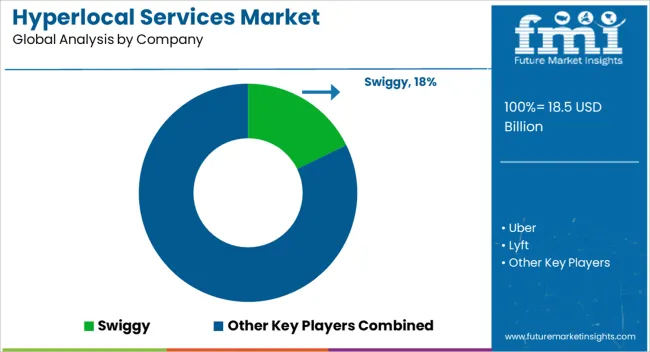
- Top Key Players in Hyperlocal Services Market: Swiggy, Uber, Lyft, DoorDash, Grubhub, Instacart, Postmates, Deliveroo, Glovo, Zomato, Gojek, Just Eat, Seamless, Uber Eats, TaskRabbit, Thumbtack, Rappi, Dunzo, UrbanClap, Grab
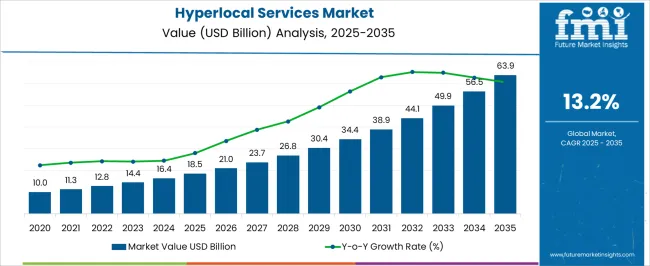
| Metric | Value |
|---|---|
| Hyperlocal Services Market Estimated Value in (2025 E) | USD 18.5 billion |
| Hyperlocal Services Market Forecast Value in (2035 F) | USD 63.9 billion |
| Forecast CAGR (2025 to 2035) | 13.2% |
Segmental Analysis
The market is segmented by Service Type and End-User and region. By Service Type, the market is divided into Food Ordering Services, Grocery Ordering Services, Home Utility Services, Logistics Services, and Others. In terms of End-User, the market is classified into Residential and Corporates. Regionally, the market is classified into North America, Latin America, Western Europe, Eastern Europe, Balkan & Baltic Countries, Russia & Belarus, Central Asia, East Asia, South Asia & Pacific, and the Middle East & Africa.
Insights into the Service Type Segment
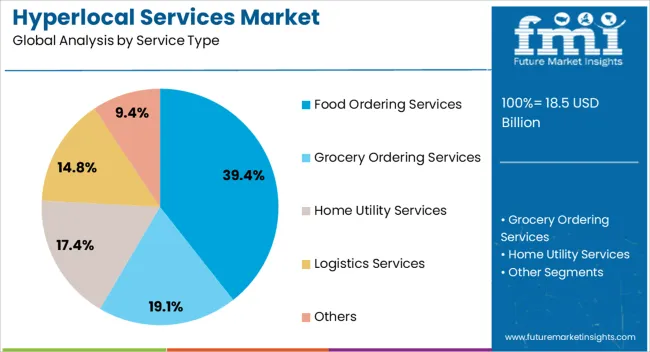
The food ordering services segment, accounting for 39.40% of the service type category, has been leading due to its deep integration within daily consumption habits and continuous expansion of restaurant aggregators and delivery platforms. Its dominance is reinforced by the convenience-driven consumer shift toward online meal ordering and the widespread availability of mobile-based applications offering personalized recommendations and discounts.
Partnerships with local restaurants and cloud kitchens have improved delivery efficiency, reducing turnaround time and enhancing user experience. Continuous improvements in order tracking, digital payment solutions, and customer engagement models have further strengthened market penetration.
Competitive pricing strategies and subscription-based loyalty programs have also contributed to sustained user retention With evolving dining preferences and increasing urban population density, the food ordering services segment is expected to maintain its leadership and drive a substantial portion of the overall hyperlocal services market growth.
Insights into the End-User Segment
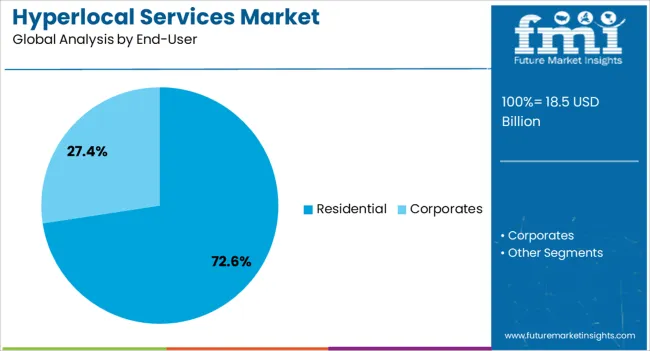
The residential segment, representing 72.60% of the end-user category, has maintained its dominant position due to high adoption of home-based delivery and personal convenience services. Growth has been driven by the rising working-class population, increased digital literacy, and preference for doorstep service fulfillment.
The segment benefits from the rapid expansion of e-commerce, on-demand grocery delivery, and household utility services that cater directly to residential needs. Service providers have focused on optimizing delivery logistics, improving customer support, and enhancing app-based interfaces to ensure seamless experiences.
Subscription models and bundled offerings have increased repeat usage among households, while efficient last-mile networks have enabled faster delivery timelines With expanding urban infrastructure and increased reliance on digital convenience, the residential segment is expected to sustain its market leadership and continue contributing significantly to overall hyperlocal service adoption globally.
Historical Performance and Future Growth of the Hyperlocal Services Market
The hyperlocal service industry has experienced a positive trend over the past five years, with a promising historical CAGR of 10.3%, and is projected to continue growing at an impressive CAGR of 13.2% until 2035.
| Attributes | Details |
|---|---|
| Hyperlocal Services Market Historical CAGR for | 10.3% |
The global hyperlocal services market faces regulatory hurdles, supply chain disruptions, fierce competition, consumer privacy concerns, and cybersecurity threats, hindering its growth potential and posing significant challenges.
Crucial factors that are anticipated to influence the demand for hyperlocal services through 2035.
- To meet the varied demands of its customers, market competitors are expected to broaden their service offerings beyond conventional categories (such as grocery delivery and meal delivery) and incorporate new verticals, including healthcare, beauty, home services, and pet care.
- Enterprises operating in the hyperlocal services sector seek to penetrate burgeoning markets or neglected areas with a fast increase in the need for hyperlocal services.
- Startups in the hyperlocal services sector are anticipated to use blockchain, AI, and machine learning to improve client experiences, increase efficiency, and expand service offerings.
- Form strategic alliances with local businesses, delivery companies, and technology suppliers to broaden service reach, improve capabilities, and capitalize on synergies, developing a new consumer base for hyperlocal services.
Industry participants are going to desire to be wise and flexible over the anticipated period since these difficult attributes position the industry for success in subsequent decades.
Key Trends Influencing the Hyperlocal Services Market
High Prevalence of Digitalization and Smartphone Usage Fuels Growth in Demand of Hyperlocal Services
The hyperlocal services market is experiencing rapid growth due to the widespread use of smartphones and advanced digital technologies. Smartphones have revolutionized consumer interactions with local businesses, allowing easy access to food delivery, grocery shopping, home services, and transportation. This convenience-driven approach aligns with modern consumers' on-demand lifestyle, rapidly expanding the demand for hyperlocal services.
Digitalization has improved consumer-business connectivity, enabling efficient communication, transactions, and feedback. Hyperlocal service providers use digital platforms to engage with customers, showcase offerings, and gather insights. Utilizing data analytics and artificial intelligence, they can personalize recommendations, optimize service delivery, and enhance customer experiences.
Digital payment solutions, such as contactless methods and mobile wallets, have transformed transactions, enhancing trust, security, and financial transparency. Smartphones and digitalization are expanding the hyperlocal services market in the coming decade.
Focus on Contactless Delivery Drives Global Demand for Hyperlocal Services
The hyperlocal services sector has moved toward contactless delivery and better sanitary practices due to the global COVID-19 epidemic.
Security health measures aim to reduce physical interactions and viral transmission risks, with delivery personnel trained to maintain social distancing and hygiene protocols, increasing demand for contactless delivery in hyperlocal services. Implementing transparent communication channels has increased the demand for hyperlocal solutions by providing customers with updates on order status and safety measures.
Hyperlocal services are gaining popularity due to innovative solutions like QR code menus, virtual consultations, and drone deliveries, enhancing safety and efficiency in various industries. Hyperlocal service providers are gaining trust and navigating challenges by prioritizing customer safety and transparency, with contactless delivery services increasing global demand for hyperlocal services.
Hyperlocal Service Industry Matures Millennial and Gen-Z Consumer base
Millennials and Gen Z consumers drive the hyperlocal services market due to their tech-savvy lifestyles and preference for convenience. Gen-Z consumers rely heavily on smartphones and digital platforms for daily activities, making hyperlocal services ideal for their on-the-go lifestyles. Millennials value authenticity, sustainability, and supporting local businesses, which aligns with their values, propelling millennial consumers' demand for hyperlocal services.
Hyperlocal services allow consumers to engage with neighborhood vendors, discover hidden gems, and contribute to their communities' economies. Platforms like Hyperlocal use data analytics and AI-driven algorithms to deliver personalized experiences and optimize service delivery; therefore, the demand for hyperlocal services is high among the consumer base of millennials and Gen-Z. This trend drives the hyperlocal services market's growth and reshapes local commerce.
Category-wise Insights
This section offers in-depth analyses of particular hyperlocal services market sectors. The two main topics of the research are the segment with the food ordering services as a service type and the residential segment as end user. Through a comprehensive examination, this section attempts to provide a fuller knowledge of these segments and their relevance in the larger context of the hyperlocal service industry.
Food Ordering Services Packs Up to 38% of the Hyperlocal Service Industry
| Attributes | Details |
|---|---|
| Top Service Type | Food Ordering Services |
| Market share in 2025 | 38% |
Consumers' requirements drive the demand for food ordering. Registering a significant market share of 38% in 2025, the following drives displays the growth of the demand for food ordering services:
- Hyperlocal food delivery platforms provide various cuisine options, catering to diverse tastes and preferences, including local specialties and international flavors.
- Mobile apps enable real-time order tracking, reducing delivery uncertainty and increasing demand for online food ordering due to transparency and reduced uncertainty.
- Hyperlocal food delivery platforms offer promotions, discounts, and loyalty rewards to encourage repeat orders and customer retention, increasing the demand for food ordering services.
- Customers are able to customize their orders, specify dietary preferences, and add special instructions, boosting demand for customized food ordering in the hyperlocal service market.
- Hyperlocal food delivery platforms frequently integrate with social media, enabling users to share their dining experiences, photos, and reviews, boosting the hyperlocal service's popularity.
Demand for Hyperlocal Services Develops in the Residential Users, Acquiring Market Share Of 64%
| Attributes | Details |
|---|---|
| Top End User | Residential |
| Market share in 2025 | 64.0% |
The high utilization of hyperlocal services in the residential consumer base, acquiring a prominent 64.0% market share in 2025. The development of demand for hyperlocal services in residential areas from the following drivers:
- Residential consumers are increasingly seeking convenient solutions like food delivery, grocery shopping, and home services, leading to a surge in demand for hyperlocal services.
- By allowing customers to order products and services straight from their smartphones, hyperlocal services save time by removing the need for customers to visit actual retailers or service providers and developing a consumer base in residential areas.
- Hyperlocal service providers offer personalized experiences to residential customers, boosting service demand due to their tailored recommendations, promotions, and user-friendly interfaces.
- The COVID-19 pandemic has heightened safety and hygiene concerns among residential shoppers, leading to hyperlocal services focusing on contactless delivery, strict hygiene measures, and transparent communication.
Country-wise Insights
The United States, China, Japan, Germany, Australia, and New Zealand are some of the most predominant regions on the global stage, and this section anticipates looking at their hyperlocal service industry. A thorough investigation examines the several aspects influencing these provinces' need for, acceptance of, and interactions with hyperlocal services.
| Countries | CAGR from 2025 to 2035 |
|---|---|
| United States | 10.1% |
| Germany | 3.7% |
| Japan | 6.0% |
| China | 13.7% |
| ANZ region | 16.7% |
United States Service Industry Demand for Rapid Hyperlocal Service Delivery
The United States service industry is developing the demand for hyperlocal solutions with a promising CAGR of 10.1% from 2025 to 2035. Here are a few of the major trends:
- The fast-paced lifestyles of urban dwellers in the United States create a demand for rapid hyperlocal services that accommodate their busy schedules and provide convenience.
- American consumers demand instant gratification and quick access to goods and services, and rapid hyperlocal services meet this expectation by offering speedy delivery and on-demand solutions.
- The United States' high smartphone penetration and digital literacy rates enable consumers to easily access hyperlocal services through mobile apps and online platforms, facilitating rapid service delivery.
Chinese Hyperlocal Service Industry Demands for Technological Development
The demand for hyperlocal services in China is expected to develop at a rapid CAGR of 13.7%. The following factors are propelling the hyperlocal industry's expanding demand for technological development:
- China's vast population and diverse geography necessitate technological solutions for hyperlocal service providers to manage large-scale operations and address the complexities of serving different regions and demographics.
- The need for cutting-edge mobile technologies with smooth user experiences and quick loading times has increased due to Chinese customers' heavy reliance on mobile applications for hyperlocal services.
- Chinese hyperlocal service providers to improve service offerings and customer satisfaction by understanding consumer behavior using data analytics and artificial intelligence use personalized marketing techniques and predictive analytics technologies.
- China's hyperlocal service providers leverage emerging technologies like drone delivery, robotics, and smart city infrastructure to innovate and drive industry growth.
German Hyperlocal Service Providers Emphasizes On Sustainability
The hyperlocal service industry in Germany demands sustainability in its operation, and the demand for hyperlocal services is predicted to extend at a sluggish CAGR of 3.7% between 2025 and 2035. Some of the primary trends in the industry are:
- To minimize carbon emissions and their influence on last-mile logistics, German hyperlocal service providers encourage eco-friendly delivery options such as electric cars, bicycles, and foot messengers.
- Germany's hyperlocal service providers use reusable containers, eco-friendly packing materials, and simple designs to reduce waste and encourage recycling.
- German hyperlocal service providers are introducing energy-efficient technology such as smart heating and cooling systems, LED lighting, and appliances to reduce energy usage and carbon impact.
Japanese Hyperlocal Services Market Witnesses Elevated Demand from Urban Areas
The demand for hyperlocal services in Japan is expected to register a CAGR of 6.0% from 2025 to 2035. Some of the primary trends are:
- Japanese consumers value convenience, efficiency, and attention to detail in business interactions, leading to increased demand for hyperlocal services offering personalized experiences, high-quality products, and prompt delivery.
- Japan's densely populated urban areas demand hyperlocal services due to their convenience and accessibility to residents near businesses and service providers.
- With most of its population in cities, Japan's urbanization trend drives the need for hyperlocal services that offer quick, convenient, and on-demand solutions.
Hyperlocal Service Start-Ups in the Australia and New Zealand Cultivates Rigid Consumer Base
The hyperlocal service industry in Australia and New Zealand is expected to register a staggering CAGR of 16.7% by 2035. Among the primary drivers are:
- Startups in Australia and New Zealand offer tailored services that cater to local tastes, cultural norms, and lifestyle preferences, catering to specific consumer needs.
- Firms in the ANZ region are fostering a sense of belonging and loyalty among consumers by actively engaging with local communities through partnerships, events, and grassroots marketing initiatives.
- Hyperlocal service startups in Australia and New Zealand offer high-quality products, services, and experiences, earning consumer trust and loyalty through reliability and consistency in business interactions.
- In the ANZ region, organizations use data analytics and consumer insights to understand consumer behavior, preferences, and trends, enabling them to effectively tailor their offerings, marketing strategies, and service delivery.
Market players Shaping the Outlook of the Global Hyperlocal Services Industry
Market participants influence the global hyperlocal services industry's future through new tactics, technical breakthroughs, and strategic collaborations. These companies, which range from quick-starting startups to well-established tech behemoths, are using new consumer patterns and preferences to propel the development of hyperlocal services.
Market participants are creating innovative technologies like drone delivery services, AI-driven recommendation engines, and blockchain-based solutions to improve client experiences, streamline operations, and expand service offerings through research and development investments.
Furthermore, by forming strategic alliances with regional companies, logistics service providers, and online retailers, industry participants may broaden their customer base, enter new markets, and take advantage of economies of scale to get a competitive advantage.
In addition, industry participants are actively tackling sustainability issues by implementing eco-friendly procedures, encouraging ethical sourcing, and lowering carbon footprints to meet the increasing demand from customers for ecologically friendly products. The combined efforts of market players influence the hyperlocal services industry's direction, generating innovation and fuelling its global expansion in the forthcoming decade.
Recent Developments in the Hyperlocal Services Industry
- In February 2025, Cox Media Group launched Neighborhood TV, a streaming service serving hyperlocal markets in areas owned by local television or radio stations, with each "zone" featuring a cluster of zip codes within six to eight miles.
- In October 2025, Zomato launched Xtreme, a hyperlocal delivery service targeting small and large merchants, using Shadowfax, Porter, and Loadshare services for intracity package delivery.
- In August 2025, Yulu, a shared electric two-wheeler mobility provider, partnered with e-grocery service provider Zepto to deploy 20,000 next-generation shared DeX EVs for hyperlocal deliveries in key cities like Bengaluru, Mumbai, Navi Mumbai, Delhi, and Gurugram.
- In July 2025, Dusminute, a hyperlocal grocery store and managed services company, raised USD 1.56 million in a bridge round led by Inflection Point Ventures, with participation from existing investors and veteran angel investors syndicated by Bandana Kankani.
- In June 2025, Celcius Logistics, India's fastest-growing cold chain startup, plans to launch hyperlocal temperature-controlled delivery services for food and pharma orders in Hyderabad as part of its last-mile solution, following its Series A funding of USD 13.61 million, led by IvyCap Ventures.
Key Companies in the Hyperlocal Services Market
- Uber
- Lyft
- DoorDash
- Grubhub
- Instacart
- Postmates
- Deliveroo
- Glovo
- Swiggy
- Zomato
- Gojek
- Just Eat
- Seamless
- Uber Eats
- TaskRabbit
- Thumbtack
- Rappi
- Dunzo
- UrbanClap
- Grab
Key Coverage in the Hyperlocal Services Market Report
- Comparative analysis between Hyperlocal Food Delivery Market, Hyperlocal Delivery Apps Market, and Hyperlocal Grocery Delivery Market
- Growth Opportunity for the Hyperlocal Services Market in the United States
- Top 10 Proximity-based Hyperlocal Services
- Sales Assessment of On-demand services of Neighborhood businesses
- Price Analysis of the Convenience Economy Forecast Value in United States
- Development of Instant Gratification in Neighborhood Services
Key Segments
By Service Type:
- Grocery Ordering Services
- Food Ordering Services
- Home Utility Services
- Logistics Services
- Others
By End-User:
- Residential
- Corporates
By Region:
- North America
- Latin America
- Europe
- East Asia
- South Asia
- Oceania
- Middle East and Africa
Frequently Asked Questions
How big is the hyperlocal services market in 2025?
The global hyperlocal services market is estimated to be valued at USD 18.5 billion in 2025.
What will be the size of hyperlocal services market in 2035?
The market size for the hyperlocal services market is projected to reach USD 63.9 billion by 2035.
How much will be the hyperlocal services market growth between 2025 and 2035?
The hyperlocal services market is expected to grow at a 13.2% CAGR between 2025 and 2035.
What are the key product types in the hyperlocal services market?
The key product types in hyperlocal services market are food ordering services, grocery ordering services, home utility services, logistics services and others.
Which end-user segment to contribute significant share in the hyperlocal services market in 2025?
In terms of end-user, residential segment to command 72.6% share in the hyperlocal services market in 2025.
Preview the report firsthand - request a free sample
Get SampleGet the brochure for pricing and purchase details.
Get PDFTable of Content
- Executive Summary
- Global Market Outlook
- Demand-side Trends
- Supply-side Trends
- Technology Roadmap Analysis
- Analysis and Recommendations
- Market Overview
- Market Coverage / Taxonomy
- Market Definition / Scope / Limitations
- Market Background
- Market Dynamics
- Drivers
- Restraints
- Opportunity
- Trends
- Scenario Forecast
- Demand in Optimistic Scenario
- Demand in Likely Scenario
- Demand in Conservative Scenario
- Opportunity Map Analysis
- Product Life Cycle Analysis
- Supply Chain Analysis
- Investment Feasibility Matrix
- Value Chain Analysis
- PESTLE and Porter’s Analysis
- Regulatory Landscape
- Regional Parent Market Outlook
- Production and Consumption Statistics
- Import and Export Statistics
- Market Dynamics
- Global Market Analysis 2020 to 2024 and Forecast, 2025 to 2035
- Historical Market Size Value (USD Million) Analysis, 2020 to 2024
- Current and Future Market Size Value (USD Million) Projections, 2025 to 2035
- Y-o-Y Growth Trend Analysis
- Absolute $ Opportunity Analysis
- Global Market Pricing Analysis 2020 to 2024 and Forecast 2025 to 2035
- Global Market Analysis 2020 to 2024 and Forecast 2025 to 2035, By Service Type
- Introduction / Key Findings
- Historical Market Size Value (USD Million) Analysis By Service Type , 2020 to 2024
- Current and Future Market Size Value (USD Million) Analysis and Forecast By Service Type , 2025 to 2035
- Food Ordering Services
- Grocery Ordering Services
- Home Utility Services
- Logistics Services
- Others
- Y-o-Y Growth Trend Analysis By Service Type , 2020 to 2024
- Absolute $ Opportunity Analysis By Service Type , 2025 to 2035
- Global Market Analysis 2020 to 2024 and Forecast 2025 to 2035, By End-User
- Introduction / Key Findings
- Historical Market Size Value (USD Million) Analysis By End-User, 2020 to 2024
- Current and Future Market Size Value (USD Million) Analysis and Forecast By End-User, 2025 to 2035
- Residential
- Corporates
- Y-o-Y Growth Trend Analysis By End-User, 2020 to 2024
- Absolute $ Opportunity Analysis By End-User, 2025 to 2035
- Global Market Analysis 2020 to 2024 and Forecast 2025 to 2035, By Region
- Introduction
- Historical Market Size Value (USD Million) Analysis By Region, 2020 to 2024
- Current Market Size Value (USD Million) Analysis and Forecast By Region, 2025 to 2035
- North America
- Latin America
- Western Europe
- Eastern Europe
- East Asia
- South Asia and Pacific
- Middle East & Africa
- Market Attractiveness Analysis By Region
- North America Market Analysis 2020 to 2024 and Forecast 2025 to 2035, By Country
- Historical Market Size Value (USD Million) Trend Analysis By Market Taxonomy, 2020 to 2024
- Market Size Value (USD Million) Forecast By Market Taxonomy, 2025 to 2035
- By Country
- USA
- Canada
- Mexico
- By Service Type
- By End-User
- By Country
- Market Attractiveness Analysis
- By Country
- By Service Type
- By End-User
- Key Takeaways
- Latin America Market Analysis 2020 to 2024 and Forecast 2025 to 2035, By Country
- Historical Market Size Value (USD Million) Trend Analysis By Market Taxonomy, 2020 to 2024
- Market Size Value (USD Million) Forecast By Market Taxonomy, 2025 to 2035
- By Country
- Brazil
- Chile
- Rest of Latin America
- By Service Type
- By End-User
- By Country
- Market Attractiveness Analysis
- By Country
- By Service Type
- By End-User
- Key Takeaways
- Western Europe Market Analysis 2020 to 2024 and Forecast 2025 to 2035, By Country
- Historical Market Size Value (USD Million) Trend Analysis By Market Taxonomy, 2020 to 2024
- Market Size Value (USD Million) Forecast By Market Taxonomy, 2025 to 2035
- By Country
- Germany
- UK
- Italy
- Spain
- France
- Nordic
- BENELUX
- Rest of Western Europe
- By Service Type
- By End-User
- By Country
- Market Attractiveness Analysis
- By Country
- By Service Type
- By End-User
- Key Takeaways
- Eastern Europe Market Analysis 2020 to 2024 and Forecast 2025 to 2035, By Country
- Historical Market Size Value (USD Million) Trend Analysis By Market Taxonomy, 2020 to 2024
- Market Size Value (USD Million) Forecast By Market Taxonomy, 2025 to 2035
- By Country
- Russia
- Poland
- Hungary
- Balkan & Baltic
- Rest of Eastern Europe
- By Service Type
- By End-User
- By Country
- Market Attractiveness Analysis
- By Country
- By Service Type
- By End-User
- Key Takeaways
- East Asia Market Analysis 2020 to 2024 and Forecast 2025 to 2035, By Country
- Historical Market Size Value (USD Million) Trend Analysis By Market Taxonomy, 2020 to 2024
- Market Size Value (USD Million) Forecast By Market Taxonomy, 2025 to 2035
- By Country
- China
- Japan
- South Korea
- By Service Type
- By End-User
- By Country
- Market Attractiveness Analysis
- By Country
- By Service Type
- By End-User
- Key Takeaways
- South Asia and Pacific Market Analysis 2020 to 2024 and Forecast 2025 to 2035, By Country
- Historical Market Size Value (USD Million) Trend Analysis By Market Taxonomy, 2020 to 2024
- Market Size Value (USD Million) Forecast By Market Taxonomy, 2025 to 2035
- By Country
- India
- ASEAN
- Australia & New Zealand
- Rest of South Asia and Pacific
- By Service Type
- By End-User
- By Country
- Market Attractiveness Analysis
- By Country
- By Service Type
- By End-User
- Key Takeaways
- Middle East & Africa Market Analysis 2020 to 2024 and Forecast 2025 to 2035, By Country
- Historical Market Size Value (USD Million) Trend Analysis By Market Taxonomy, 2020 to 2024
- Market Size Value (USD Million) Forecast By Market Taxonomy, 2025 to 2035
- By Country
- Kingdom of Saudi Arabia
- Other GCC Countries
- Turkiye
- South Africa
- Other African Union
- Rest of Middle East & Africa
- By Service Type
- By End-User
- By Country
- Market Attractiveness Analysis
- By Country
- By Service Type
- By End-User
- Key Takeaways
- Key Countries Market Analysis
- USA
- Pricing Analysis
- Market Share Analysis, 2024
- By Service Type
- By End-User
- Canada
- Pricing Analysis
- Market Share Analysis, 2024
- By Service Type
- By End-User
- Mexico
- Pricing Analysis
- Market Share Analysis, 2024
- By Service Type
- By End-User
- Brazil
- Pricing Analysis
- Market Share Analysis, 2024
- By Service Type
- By End-User
- Chile
- Pricing Analysis
- Market Share Analysis, 2024
- By Service Type
- By End-User
- Germany
- Pricing Analysis
- Market Share Analysis, 2024
- By Service Type
- By End-User
- UK
- Pricing Analysis
- Market Share Analysis, 2024
- By Service Type
- By End-User
- Italy
- Pricing Analysis
- Market Share Analysis, 2024
- By Service Type
- By End-User
- Spain
- Pricing Analysis
- Market Share Analysis, 2024
- By Service Type
- By End-User
- France
- Pricing Analysis
- Market Share Analysis, 2024
- By Service Type
- By End-User
- India
- Pricing Analysis
- Market Share Analysis, 2024
- By Service Type
- By End-User
- ASEAN
- Pricing Analysis
- Market Share Analysis, 2024
- By Service Type
- By End-User
- Australia & New Zealand
- Pricing Analysis
- Market Share Analysis, 2024
- By Service Type
- By End-User
- China
- Pricing Analysis
- Market Share Analysis, 2024
- By Service Type
- By End-User
- Japan
- Pricing Analysis
- Market Share Analysis, 2024
- By Service Type
- By End-User
- South Korea
- Pricing Analysis
- Market Share Analysis, 2024
- By Service Type
- By End-User
- Russia
- Pricing Analysis
- Market Share Analysis, 2024
- By Service Type
- By End-User
- Poland
- Pricing Analysis
- Market Share Analysis, 2024
- By Service Type
- By End-User
- Hungary
- Pricing Analysis
- Market Share Analysis, 2024
- By Service Type
- By End-User
- Kingdom of Saudi Arabia
- Pricing Analysis
- Market Share Analysis, 2024
- By Service Type
- By End-User
- Turkiye
- Pricing Analysis
- Market Share Analysis, 2024
- By Service Type
- By End-User
- South Africa
- Pricing Analysis
- Market Share Analysis, 2024
- By Service Type
- By End-User
- USA
- Market Structure Analysis
- Competition Dashboard
- Competition Benchmarking
- Market Share Analysis of Top Players
- By Regional
- By Service Type
- By End-User
- Competition Analysis
- Competition Deep Dive
- Swiggy
- Overview
- Product Portfolio
- Profitability by Market Segments (Product/Age /Sales Channel/Region)
- Sales Footprint
- Strategy Overview
- Marketing Strategy
- Product Strategy
- Channel Strategy
- Uber
- Lyft
- DoorDash
- Grubhub
- Instacart
- Postmates
- Deliveroo
- Glovo
- Zomato
- Gojek
- Just Eat
- Seamless
- Uber Eats
- TaskRabbit
- Thumbtack
- Rappi
- Dunzo
- UrbanClap
- Grab
- Swiggy
- Competition Deep Dive
- Assumptions & Acronyms Used
- Research Methodology


