

- Industry Size (2026)
- USD 1.3 Bn
- Forecast (2036)
- USD 2.6 Bn
- CAGR (2026 to 2036)
- 7.0%
Implantable Neurostimulator Electrode Market Forecast and Outlook 2026 to 2036
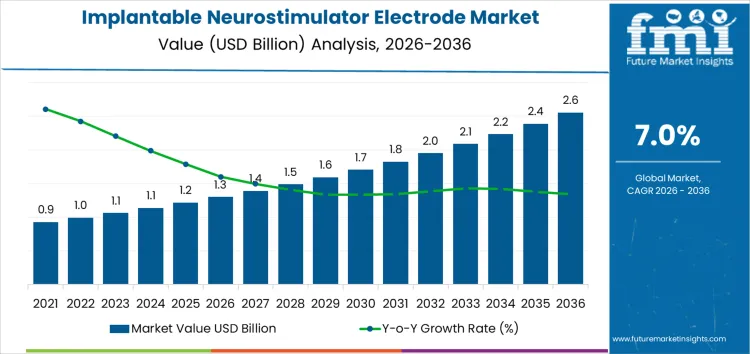
The implantable neurostimulator electrode market is estimated at USD 1.3 billion in 2026 and is projected to reach USD 2.6 billion by 2036, growing at a CAGR of 7.0%. Directional leads hold 40% of the product segment, with applications dominated by deep brain stimulation (DBS) at 40%. Hospitals represent the primary end users at 65%, while outpatient clinics and distributors support additional adoption. Key players include Medtronic, Abbott, Boston Scientific, Nevro, and LivaNova.
Market growth is driven by increasing prevalence of neurological disorders, rising demand for targeted neuromodulation, and technological improvements in electrode design. Directional and cylindrical leads are expanding adoption due to precision stimulation and reduced side effects. Continuous innovation in percutaneous systems, minimally invasive delivery methods, and integrated accessory support enhances procedural efficiency. Strategic partnerships with healthcare providers and distribution networks further enable widespread market penetration across developed and emerging regions over the forecast period.
Quick Stats for Implantable Neurostimulator Electrode Market
- Implantable Neurostimulator Electrode Market Value (2026): USD 1.3 billion
- Implantable Neurostimulator Electrode Market Forecast Value (2036): USD 2.6 billion
- Implantable Neurostimulator Electrode Market Forecast CAGR: 7.0%
- Leading Type in Implantable Neurostimulator Electrode Market: Directional Leads
- Key Growth Regions in Implantable Neurostimulator Electrode Market: North America, Europe, and Asia Pacific
- Top Players in Implantable Neurostimulator Electrode Market: Medtronic, Abbott, Boston Scientific, Nevro, LivaNova
What is the Growth Forecast for the Implantable Neurostimulator Electrode Market through 2036?
From 2026 to 2031, the implantable neurostimulator electrode market grows from USD 1.3 billion to approximately USD 1.7 billion, representing the early adoption phase. Annual increments increase from USD 0.1 billion to USD 0.14 billion during this period. Growth is driven by adoption in neuromodulation therapies for chronic pain, Parkinson’s disease, and other neurological disorders. North America and Europe account for roughly 65% of early market value, with uptake concentrated in advanced hospital systems and specialty clinics. Early adoption is influenced by clinical validation, regulatory approvals, and integration with established neurostimulation devices.
Between 2031 and 2036, the market expands from roughly USD 1.7 billion to USD 2.6 billion, illustrating the late-stage adoption and breakpoint where demand begins shifting from selective high-value deployments to broader portfolio-wide integration. Annual increments increase to USD 0.16–0.18 billion, driven by expansion in emerging markets, repeat implant procedures, and scaling across multi-site hospital networks. Growth is reinforced by technological improvements in electrode design, longevity, and compatibility with next-generation neurostimulators. Early growth relied on pilot clinical programs, whereas later expansion reflects structural adoption across global neuromodulation treatment centers.
Implantable Neurostimulator Electrode Market Key Takeaways
| Metric | Value |
|---|---|
| Market Value (2026) | USD 1.3 billion |
| Forecast Value (2036) | USD 2.6 billion |
| Forecast CAGR (2026-2036) | 7.0% |
What Is Shaping Demand for Implantable Neurostimulator Electrodes?
Demand for implantable neurostimulator electrodes developed from clinical limitations in pharmacological treatment of chronic neurological conditions. Patients with Parkinson’s disease, epilepsy, chronic pain, and movement disorders often experienced diminishing drug efficacy or intolerable side effects over time. Neurostimulation offered an alternative by directly modulating neural circuits, but early electrode designs faced challenges with signal precision, tissue response, and long term stability. Clinicians and device developers refined electrode geometry, materials, and placement strategies to improve targeting and reduce inflammatory response. Historical demand was driven by clinical need in severe cases, guided by specialist centres rather than broad neurological practice.
Future demand reflects changes in therapeutic strategy and device expectations rather than expanded diagnosis alone. Neurostimulation is increasingly considered earlier in treatment pathways, supported by improved imaging, patient selection, and outcome data. Electrodes are being designed for higher channel counts, directional stimulation, and compatibility with closed loop systems that adjust output based on neural feedback. Reliability over extended implant lifetimes is now a core requirement, not a secondary consideration. Demand growth will follow clinical protocol updates, reimbursement acceptance, and evidence supporting broader use across neurological and psychiatric indications.
What Factors Are Affecting the Demand for Implantable Neurostimulator Electrode Market in Terms of Product Type and Application?
The implantable neurostimulator electrode market is shaped by advances in neuromodulation therapy, expanding clinical indications, and demand for precise neural targeting. Growth is concentrated in electrode technologies that improve stimulation control, reduce side effects, and support long term therapy effectiveness. Clinical adoption is driven by outcomes in movement disorders and chronic pain management, where electrode performance directly influences patient response. Market leadership reflects therapeutic precision, clinician familiarity, and compatibility with established implantable neurostimulation systems rather than procedural volume growth alone.
What Is Driving Leadership by Product Type in the Implantable Neurostimulator Electrode Market?
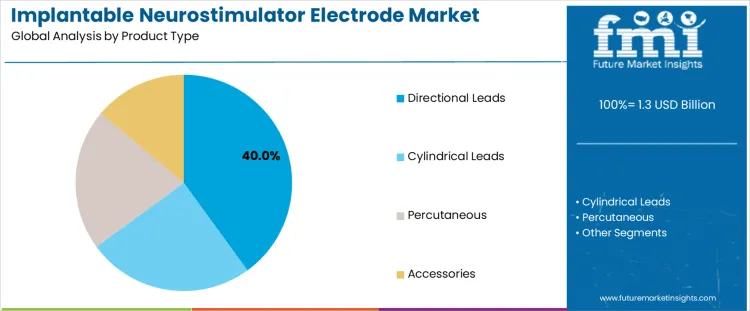
Directional leads account for about 40% of demand because they allow targeted stimulation of specific neural pathways while minimizing off target effects. These leads enable clinicians to shape electric fields, improving symptom control and reducing adverse effects such as speech or balance disturbances. Their use is strongest in complex neurological conditions where precision is critical. Cylindrical leads remain widely used due to familiarity, ease of implantation, and compatibility with existing systems. Percutaneous leads support less invasive procedures but offer limited directional control. Accessories support implantation and maintenance but do not influence therapeutic outcomes directly.
Other product types contribute to market breadth but do not displace directional leads. Cylindrical leads continue to be selected for standard cases with predictable anatomy. Percutaneous options are favored in temporary or trial settings. Accessories support system reliability and replacement cycles rather than driving primary demand. Product type leadership therefore reflects clinical demand for controllable stimulation and improved patient outcomes rather than cost minimization or procedural simplicity alone.
What Is Driving Leadership by Application in the Implantable Neurostimulator Electrode Market?
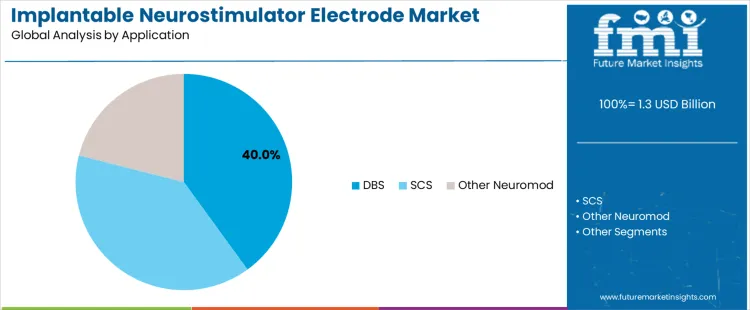
Deep brain stimulation accounts for about 40% of demand because it is an established therapy for movement disorders such as Parkinson’s disease and essential tremor. DBS requires precise electrode placement and stimulation control, making it closely aligned with advanced electrode technologies. Clinical evidence supporting long term symptom improvement sustains adoption. Spinal cord stimulation represents a significant application for chronic pain management but relies on broader stimulation fields. Other neuromodulation applications remain smaller due to limited indications and patient populations.
DBS maintains leadership due to strong clinical outcomes, reimbursement support, and specialist expertise. SCS adoption grows steadily but emphasizes pain coverage rather than precision targeting. Other neuromodulation uses remain selective and indication specific. Application leadership therefore reflects maturity of clinical evidence and dependence on electrode precision rather than expansion of experimental neuromodulation therapies.
How Is the Implantable Neurostimulator Electrode Market Being Applied Across Neuromodulation Therapies?
Use appears in medical treatments where targeted electrical stimulation of neural tissue addresses chronic pain, movement disorders, or neurological conditions. Hospitals and specialized clinics implant electrodes in the spinal cord, peripheral nerves, or brain to modulate neural activity in conditions such as Parkinson’s disease, epilepsy, or chronic back pain. Manufacturers integrate electrodes with pulse generators and programming systems to allow personalized therapy adjustments. These applications reflect operational and clinical priorities rather than aesthetic considerations, with adoption driven by treatment efficacy, precision targeting, and patient outcomes.
What Operational and Material Conditions Support Adoption of Implantable Neurostimulator Electrodes?
Selection aligns with biocompatible, corrosion-resistant materials capable of long-term implantation. Electrodes are optimized for electrical conductivity, flexibility, and durability under physiological conditions. Surgical teams rely on precise placement and imaging guidance to ensure efficacy and minimize tissue damage. Device manufacturers integrate electrodes with pulse generators, telemetry systems, and programming software to provide adjustable stimulation. These conditions emerge from operational reliability, patient safety, and therapeutic effectiveness priorities in structured neuromodulation workflows.
Which Practical Considerations Limit Wider Use of Implantable Neurostimulator Electrodes?
High device and procedural costs can restrict adoption to specialized centers. Surgical implantation requires trained neurosurgeons and advanced imaging support. Patient selection and preoperative planning are critical for efficacy. Regulatory approvals for each electrode design and application vary by region. Device longevity and potential need for replacement or revision influence long-term adoption. These factors lead to selective deployment where clinical benefits, precision therapy, and patient outcomes justify incremental cost and operational complexity.
What is the Demand for Implantable Neurostimulator Electrodes by Country?
| Country | CAGR (%) |
|---|---|
| USA | 8.0% |
| Brazil | 8.5% |
| China | 9.0% |
| India | 9.2% |
| Germany | 6.2% |
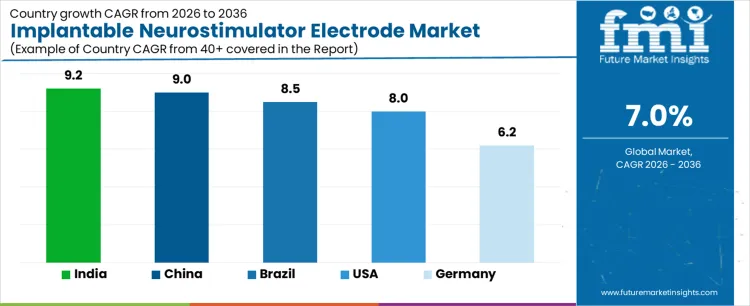
The demand for implantable neurostimulator electrodes varies across countries, driven by neurological disorder prevalence, advanced healthcare infrastructure, and adoption of neurostimulation therapies. India leads with a 9.2% CAGR, supported by increasing cases of neurological disorders, growing awareness of implantable neurostimulation solutions, and expansion of healthcare facilities. China follows at 9.0%, driven by rising adoption of neurostimulation devices and investment in advanced medical technologies. Brazil records 8.5%, shaped by improving healthcare access and adoption of minimally invasive neuro therapies. The USA grows at 8.0%, reflecting established healthcare infrastructure and consistent adoption of neurostimulation devices. Germany posts 6.2%, supported by mature healthcare systems and steady device utilization.
How Is Implantable Neurostimulator Electrode Adoption Growing in the United States?
In the United States, revenue from the implantable neurostimulator electrode market is expanding at a CAGR of 8% through 2036, driven by rising adoption of neuromodulation therapies for chronic pain, movement disorders, and neurological conditions. Hospitals, specialized clinics, and research institutions are integrating implantable electrodes with advanced stimulation systems to improve treatment precision and patient outcomes. Demand is concentrated in neurology centers, pain management clinics, and academic hospitals. Domestic suppliers are providing high-performance, biocompatible electrodes compatible with various neurostimulator platforms. Increasing prevalence of neurological disorders, recurring device implantation, and regulatory approvals are sustaining predictable adoption nationwide.
- Neurology centers, pain management clinics, and academic hospitals drive adoption
- Electrodes enhance treatment precision and patient outcomes
- Domestic suppliers provide biocompatible, high-performance electrodes
- Recurring device implantation sustains predictable adoption
How Are Neurostimulation Therapies Supporting Growth in Brazil?
In Brazil, the market is growing at a CAGR of 8.5% through 2036, supported by expanding neurology and pain management services. Manufacturers are integrating implantable electrodes to deliver precise neurostimulation for chronic pain, Parkinson’s disease, and other neurological disorders. Demand is concentrated in hospitals, specialized clinics, and rehabilitation centers. Local suppliers provide high-quality, biocompatible electrodes suitable for implantable neurostimulators. Rising awareness of neuromodulation therapies, expanding healthcare access, and recurring device usage are sustaining adoption nationwide.
- Hospitals, specialized clinics, and rehabilitation centers drive adoption
- Electrodes deliver precise neurostimulation for chronic pain and neurological disorders
- Local suppliers provide high-quality, biocompatible electrodes
- Recurring device usage sustains adoption
How Is Neuromodulation Infrastructure Accelerating Adoption in China?
China is witnessing growth at a CAGR of 9% through 2036, driven by rapid expansion of neurology clinics, hospitals, and research centers adopting implantable neurostimulator electrodes. Manufacturers are integrating electrodes with advanced stimulation devices to improve clinical outcomes and treatment efficiency. Demand is concentrated in urban hospitals, specialized neurology centers, and rehabilitation facilities. Domestic suppliers are scaling production of high-performance, biocompatible electrodes compatible with multiple neurostimulator platforms. Increasing prevalence of neurological disorders, infrastructure expansion, and recurring therapy cycles are sustaining rapid adoption nationwide.
- Urban hospitals, neurology centers, and rehabilitation facilities drive adoption
- Electrodes improve clinical outcomes and treatment efficiency
- Domestic suppliers scale high-performance, biocompatible electrodes
- Recurring therapy cycles sustain rapid adoption
How Is Neurostimulation Expansion Supporting Growth in India?
In India, revenue from the implantable neurostimulator electrode market is expanding at a CAGR of 9.2% through 2036, supported by increasing adoption of neuromodulation therapies in hospitals and specialty clinics. Manufacturers are integrating implantable electrodes for chronic pain management, movement disorder treatment, and neurological therapy enhancement. Demand is concentrated in neurology centers, pain clinics, and academic hospitals. Domestic suppliers provide high-performance, biocompatible electrodes suitable for various neurostimulator platforms. Rising awareness of neuromodulation, healthcare infrastructure development, and recurring device implantation are sustaining robust adoption nationwide.
- Neurology centers, pain clinics, and academic hospitals drive adoption
- Electrodes enhance treatment outcomes in chronic pain and neurological disorders
- Domestic suppliers provide high-performance, biocompatible electrodes
- Recurring device implantation sustains robust adoption
How Are Healthcare Standards and Neurostimulation Adoption Driving Growth in Germany?
Germany is witnessing growth at a CAGR of 6.2% through 2036, driven by adoption of implantable neurostimulator electrodes in hospitals and specialized clinics for neuromodulation therapies. Manufacturers are integrating electrodes to provide precise stimulation for chronic pain, Parkinson’s disease, and other neurological conditions. Demand is concentrated in academic hospitals, neurology centers, and specialized pain management clinics. Domestic suppliers provide high-quality, biocompatible electrodes compatible with advanced neurostimulator platforms. Compliance with healthcare standards, recurring device use, and clinical adoption are sustaining consistent procurement nationwide.
- Academic hospitals, neurology centers, and pain clinics anchor demand
- Electrodes provide precise stimulation for neurological conditions
- Domestic suppliers provide biocompatible, high-quality electrodes
- Recurring device use sustains consistent procurement
Which Strategies Are Key Players Using to Compete in The Implantable Neurostimulator Electrode Market?
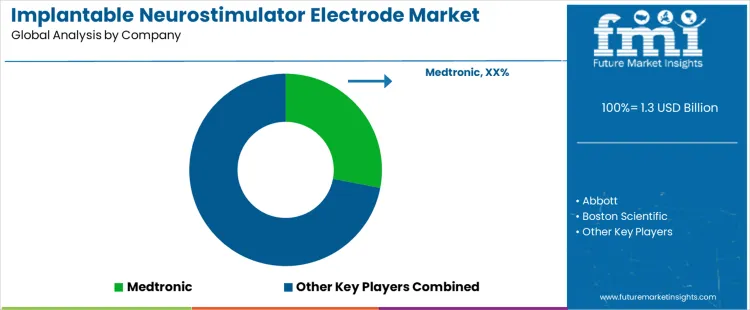
Leading companies in the implantable neurostimulator electrode market compete primarily through platform integration, clinical evidence generation, and long term physician alignment rather than frequent product redesign. Medtronic, Abbott, and Boston Scientific pursue strategies centered on maintaining closed system compatibility between electrodes, pulse generators, and programming software. This approach reduces switching risk for clinicians and reinforces procedural familiarity. These companies invest heavily in multiyear clinical studies to demonstrate durability, consistent stimulation coverage, and reduced lead migration. Incremental improvements in contact geometry, insulation materials, and lead flexibility are introduced cautiously to preserve backward compatibility with installed platforms. Commercial strategy emphasizes surgeon training, procedural support, and long term service relationships rather than aggressive price competition or rapid technology cycles.
Specialist players differentiate through indication specific strategies rather than scale. Nevro focuses on electrode designs optimized for high frequency stimulation, aligning product development tightly with proprietary therapy protocols rather than broad platform expansion. LivaNova emphasizes precision electrode placement and durability for epilepsy and psychiatric indications, where outcome consistency and safety drive adoption. Across the market, key strategies include reinforcing physician preference through training programs, supporting investigator led research, and prioritizing regulatory stability over rapid iteration. Competitive advantage is built through long approval cycles, clinical trust, and predictable performance over the full implant lifespan rather than short term technical differentiation.
Key Players in the Implantable Neurostimulator Electrode Market
- Medtronic
- Abbott
- Boston Scientific
- Nevro
- LivaNova
- Others
Scope of the Report
| Items | Values |
|---|---|
| Quantitative Units (2026) | USD billion |
| Product Type | Directional Leads, Cylindrical Leads, Percutaneous, Accessories |
| Application | DBS, SCS, Other Neuromodulation |
| End-Use Industry | Hospitals, Outpatient Clinics, Distributors, Others |
| Region | Asia Pacific (China, Japan, South Korea, India, Australia & New Zealand, ASEAN, Rest of Asia Pacific), Europe (Germany, United Kingdom, France, Italy, Spain, Nordic, BENELUX, Rest of Europe), North America (United States, Canada, Mexico), Latin America (Brazil, Chile, Rest of Latin America), Middle East & Africa (KSA, Other GCC Countries, Turkey, South Africa, Other African Union, Rest of Middle East & Africa) |
| Key Companies Profiled | Medtronic, Abbott, Boston Scientific, Nevro, LivaNova, Others |
| Additional Attributes | Dollar by sales by product type, Dollar by sales by application, Dollar by sales by end-user, Dollar by sales by region, Clinical efficacy and precision targeting, Electrode design and channel count, Compatibility with pulse generators, Closed-loop system support, Surgical workflow integration, Patient outcome improvements, Minimally invasive implantation adoption, Regulatory compliance and approval, Recurring device replacement cycles, Training and physician support programs, Emerging market penetration, Adoption in specialized neurology and pain clinics |
Implantable Neurostimulator Electrode Market Segmentation
Product Type:
- Directional Leads
- Cylindrical Leads
- Percutaneous
- Accessories
Application:
- DBS
- SCS
- Other Neuromodulation
End User:
- Hospitals
- Outpatient
- Distributors
- Others
Region:
- Asia Pacific
- China
- Japan
- South Korea
- India
- Australia & New Zealand
- ASEAN
- Rest of Asia Pacific
- Europe
- Germany
- United Kingdom
- France
- Italy
- Spain
- Nordic
- BENELUX
- Rest of Europe
- North America
- United States
- Canada
- Mexico
- Latin America
- Brazil
- Chile
- Rest of Latin America
- Middle East & Africa
- Kingdom of Saudi Arabia
- Other GCC Countries
- Turkey
- South Africa
- Other African Union
- Rest of Middle East & Africa
Frequently Asked Questions
How big is the implantable neurostimulator electrode market in 2026?
The global implantable neurostimulator electrode market is estimated to be valued at USD 1.3 billion in 2026.
What will be the size of implantable neurostimulator electrode market in 2036?
The market size for the implantable neurostimulator electrode market is projected to reach USD 2.6 billion by 2036.
How much will be the implantable neurostimulator electrode market growth between 2026 and 2036?
The implantable neurostimulator electrode market is expected to grow at a 7.0% CAGR between 2026 and 2036.
What are the key product types in the implantable neurostimulator electrode market?
The key product types in implantable neurostimulator electrode market are directional leads, cylindrical leads, percutaneous and accessories.
Which application segment to contribute significant share in the implantable neurostimulator electrode market in 2026?
In terms of application, dbs segment to command 40.0% share in the implantable neurostimulator electrode market in 2026.
Preview the report firsthand - request a free sample
Get SampleGet the brochure for pricing and purchase details.
Get PDFTable of Content
- Executive Summary
- Global Market Outlook
- Demand-side Trends
- Supply-side Trends
- Technology Roadmap Analysis
- Analysis and Recommendations
- Market Overview
- Market Coverage / Taxonomy
- Market Definition / Scope / Limitations
- Market Background
- Market Dynamics
- Drivers
- Restraints
- Opportunity
- Trends
- Scenario Forecast
- Demand in Optimistic Scenario
- Demand in Likely Scenario
- Demand in Conservative Scenario
- Opportunity Map Analysis
- Product Life Cycle Analysis
- Supply Chain Analysis
- Investment Feasibility Matrix
- Value Chain Analysis
- PESTLE and Porter’s Analysis
- Regulatory Landscape
- Regional Parent Market Outlook
- Production and Consumption Statistics
- Import and Export Statistics
- Market Dynamics
- Global Market Analysis 2021 to 2025 and Forecast, 2026 to 2036
- Historical Market Size Value (USD Million) Analysis, 2021 to 2025
- Current and Future Market Size Value (USD Million) Projections, 2026 to 2036
- Y-o-Y Growth Trend Analysis
- Absolute $ Opportunity Analysis
- Global Market Pricing Analysis 2021 to 2025 and Forecast 2026 to 2036
- Global Market Analysis 2021 to 2025 and Forecast 2026 to 2036, By Product Type
- Introduction / Key Findings
- Historical Market Size Value (USD Million) Analysis By Product Type , 2021 to 2025
- Current and Future Market Size Value (USD Million) Analysis and Forecast By Product Type , 2026 to 2036
- Directional Leads
- Cylindrical Leads
- Percutaneous
- Accessories
- Directional Leads
- Y-o-Y Growth Trend Analysis By Product Type , 2021 to 2025
- Absolute $ Opportunity Analysis By Product Type , 2026 to 2036
- Global Market Analysis 2021 to 2025 and Forecast 2026 to 2036, By Application
- Introduction / Key Findings
- Historical Market Size Value (USD Million) Analysis By Application, 2021 to 2025
- Current and Future Market Size Value (USD Million) Analysis and Forecast By Application, 2026 to 2036
- DBS
- SCS
- Other Neuromod
- DBS
- Y-o-Y Growth Trend Analysis By Application, 2021 to 2025
- Absolute $ Opportunity Analysis By Application, 2026 to 2036
- Global Market Analysis 2021 to 2025 and Forecast 2026 to 2036, By End User
- Introduction / Key Findings
- Historical Market Size Value (USD Million) Analysis By End User, 2021 to 2025
- Current and Future Market Size Value (USD Million) Analysis and Forecast By End User, 2026 to 2036
- Hospitals
- Outpatient
- Distributors
- Others
- Hospitals
- Y-o-Y Growth Trend Analysis By End User, 2021 to 2025
- Absolute $ Opportunity Analysis By End User, 2026 to 2036
- Global Market Analysis 2021 to 2025 and Forecast 2026 to 2036, By Region
- Introduction
- Historical Market Size Value (USD Million) Analysis By Region, 2021 to 2025
- Current Market Size Value (USD Million) Analysis and Forecast By Region, 2026 to 2036
- North America
- Latin America
- Western Europe
- Eastern Europe
- East Asia
- South Asia and Pacific
- Middle East & Africa
- Market Attractiveness Analysis By Region
- North America Market Analysis 2021 to 2025 and Forecast 2026 to 2036, By Country
- Historical Market Size Value (USD Million) Trend Analysis By Market Taxonomy, 2021 to 2025
- Market Size Value (USD Million) Forecast By Market Taxonomy, 2026 to 2036
- By Country
- USA
- Canada
- Mexico
- By Product Type
- By Application
- By End User
- By Country
- Market Attractiveness Analysis
- By Country
- By Product Type
- By Application
- By End User
- Key Takeaways
- Latin America Market Analysis 2021 to 2025 and Forecast 2026 to 2036, By Country
- Historical Market Size Value (USD Million) Trend Analysis By Market Taxonomy, 2021 to 2025
- Market Size Value (USD Million) Forecast By Market Taxonomy, 2026 to 2036
- By Country
- Brazil
- Chile
- Rest of Latin America
- By Product Type
- By Application
- By End User
- By Country
- Market Attractiveness Analysis
- By Country
- By Product Type
- By Application
- By End User
- Key Takeaways
- Western Europe Market Analysis 2021 to 2025 and Forecast 2026 to 2036, By Country
- Historical Market Size Value (USD Million) Trend Analysis By Market Taxonomy, 2021 to 2025
- Market Size Value (USD Million) Forecast By Market Taxonomy, 2026 to 2036
- By Country
- Germany
- UK
- Italy
- Spain
- France
- Nordic
- BENELUX
- Rest of Western Europe
- By Product Type
- By Application
- By End User
- By Country
- Market Attractiveness Analysis
- By Country
- By Product Type
- By Application
- By End User
- Key Takeaways
- Eastern Europe Market Analysis 2021 to 2025 and Forecast 2026 to 2036, By Country
- Historical Market Size Value (USD Million) Trend Analysis By Market Taxonomy, 2021 to 2025
- Market Size Value (USD Million) Forecast By Market Taxonomy, 2026 to 2036
- By Country
- Russia
- Poland
- Hungary
- Balkan & Baltic
- Rest of Eastern Europe
- By Product Type
- By Application
- By End User
- By Country
- Market Attractiveness Analysis
- By Country
- By Product Type
- By Application
- By End User
- Key Takeaways
- East Asia Market Analysis 2021 to 2025 and Forecast 2026 to 2036, By Country
- Historical Market Size Value (USD Million) Trend Analysis By Market Taxonomy, 2021 to 2025
- Market Size Value (USD Million) Forecast By Market Taxonomy, 2026 to 2036
- By Country
- China
- Japan
- South Korea
- By Product Type
- By Application
- By End User
- By Country
- Market Attractiveness Analysis
- By Country
- By Product Type
- By Application
- By End User
- Key Takeaways
- South Asia and Pacific Market Analysis 2021 to 2025 and Forecast 2026 to 2036, By Country
- Historical Market Size Value (USD Million) Trend Analysis By Market Taxonomy, 2021 to 2025
- Market Size Value (USD Million) Forecast By Market Taxonomy, 2026 to 2036
- By Country
- India
- ASEAN
- Australia & New Zealand
- Rest of South Asia and Pacific
- By Product Type
- By Application
- By End User
- By Country
- Market Attractiveness Analysis
- By Country
- By Product Type
- By Application
- By End User
- Key Takeaways
- Middle East & Africa Market Analysis 2021 to 2025 and Forecast 2026 to 2036, By Country
- Historical Market Size Value (USD Million) Trend Analysis By Market Taxonomy, 2021 to 2025
- Market Size Value (USD Million) Forecast By Market Taxonomy, 2026 to 2036
- By Country
- Kingdom of Saudi Arabia
- Other GCC Countries
- Turkiye
- South Africa
- Other African Union
- Rest of Middle East & Africa
- By Product Type
- By Application
- By End User
- By Country
- Market Attractiveness Analysis
- By Country
- By Product Type
- By Application
- By End User
- Key Takeaways
- Key Countries Market Analysis
- USA
- Pricing Analysis
- Market Share Analysis, 2025
- By Product Type
- By Application
- By End User
- Canada
- Pricing Analysis
- Market Share Analysis, 2025
- By Product Type
- By Application
- By End User
- Mexico
- Pricing Analysis
- Market Share Analysis, 2025
- By Product Type
- By Application
- By End User
- Brazil
- Pricing Analysis
- Market Share Analysis, 2025
- By Product Type
- By Application
- By End User
- Chile
- Pricing Analysis
- Market Share Analysis, 2025
- By Product Type
- By Application
- By End User
- Germany
- Pricing Analysis
- Market Share Analysis, 2025
- By Product Type
- By Application
- By End User
- UK
- Pricing Analysis
- Market Share Analysis, 2025
- By Product Type
- By Application
- By End User
- Italy
- Pricing Analysis
- Market Share Analysis, 2025
- By Product Type
- By Application
- By End User
- Spain
- Pricing Analysis
- Market Share Analysis, 2025
- By Product Type
- By Application
- By End User
- France
- Pricing Analysis
- Market Share Analysis, 2025
- By Product Type
- By Application
- By End User
- India
- Pricing Analysis
- Market Share Analysis, 2025
- By Product Type
- By Application
- By End User
- ASEAN
- Pricing Analysis
- Market Share Analysis, 2025
- By Product Type
- By Application
- By End User
- Australia & New Zealand
- Pricing Analysis
- Market Share Analysis, 2025
- By Product Type
- By Application
- By End User
- China
- Pricing Analysis
- Market Share Analysis, 2025
- By Product Type
- By Application
- By End User
- Japan
- Pricing Analysis
- Market Share Analysis, 2025
- By Product Type
- By Application
- By End User
- South Korea
- Pricing Analysis
- Market Share Analysis, 2025
- By Product Type
- By Application
- By End User
- Russia
- Pricing Analysis
- Market Share Analysis, 2025
- By Product Type
- By Application
- By End User
- Poland
- Pricing Analysis
- Market Share Analysis, 2025
- By Product Type
- By Application
- By End User
- Hungary
- Pricing Analysis
- Market Share Analysis, 2025
- By Product Type
- By Application
- By End User
- Kingdom of Saudi Arabia
- Pricing Analysis
- Market Share Analysis, 2025
- By Product Type
- By Application
- By End User
- Turkiye
- Pricing Analysis
- Market Share Analysis, 2025
- By Product Type
- By Application
- By End User
- South Africa
- Pricing Analysis
- Market Share Analysis, 2025
- By Product Type
- By Application
- By End User
- USA
- Market Structure Analysis
- Competition Dashboard
- Competition Benchmarking
- Market Share Analysis of Top Players
- By Regional
- By Product Type
- By Application
- By End User
- Competition Analysis
- Competition Deep Dive
- Medtronic
- Overview
- Product Portfolio
- Profitability by Market Segments (Product/Age /Sales Channel/Region)
- Sales Footprint
- Strategy Overview
- Marketing Strategy
- Product Strategy
- Channel Strategy
- Abbott
- Boston Scientific
- Nevro
- LivaNova
- Others
- Medtronic
- Competition Deep Dive
- Assumptions & Acronyms Used
- Research Methodology


