

India Loyalty Program Market Size, Share, and Forecast Analysis Outlook From 2025 to 2035
The India loyalty program market is very rapidly growing as brands are investing in customer retention strategies to drive long-term engagement and revenue growth. With increasing digital adoption, spending by consumers, and competition across industries, companies are focusing on more sophisticated data-driven rewards programs to enhance customer relationships.
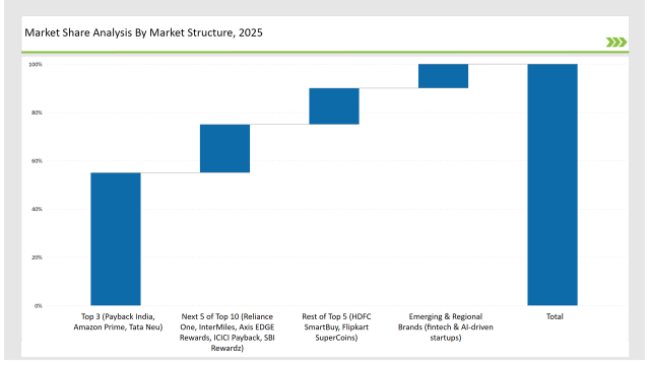
Advancements in AI, blockchain, and mobile-first solutions are further upscaling the sector. With major market share commanding brands including Payback India, Amazon Prime, and Tata Neu that have reached wider audiences and provide data-driven loyalty solutions, the market currently is held at 55%.
Regional brands and industry-specific programs account for 30%, while emerging fintech and AI-powered startups contribute the remaining 15%.
Leading Loyalty Program Providers by Market Share
| Market Segment | Industry Share (%) |
|---|---|
| Top 3 (Payback India, Amazon Prime, Tata Neu) | 55% |
| Rest of Top 5 (HDFC SmartBuy, Flipkart SuperCoins) | 15% |
| Next 5 of Top 10 (Reliance One, InterMiles, Axis EDGE Rewards, ICICI Payback, SBI Rewardz) | 20% |
| Emerging & Regional Brands (fintech & AI-driven startups) | 10% |
Market Concentration 2025
The India loyalty program market in 2025 is moderately concentrated, with the top players accounting for 50% to 60% of the total market share. Leading brands such as Payback India, Amazon Prime, and Tata Neu dominate the segment, while startup-driven digital loyalty platforms and retailer-specific programs add competitive diversity.
This market structure reflects strong brand influence while allowing space for data-driven personalization and innovative reward structures.
Segment Analysis
Sales Channels
The India loyalty program operates through a channel that involves digital platforms and mobile applications, which comprise 60% of the market. App-based rewards and e-commerce integrations attract consumers.
Retail and offline programs form 25%, which emphasize point-based incentives and deals with particular partners. Co-branded credit card programs remain at 10% with reward-based advantages in spending. Direct corporate loyalty programs form 5%, providing both employee retention and business-to-business (B2B) incentives.
Program Type
It has classified the loyalty program market in India into retail loyalty programs, travel and hospitality rewards, financial services loyalty, and subscription-based membership programs. Retail loyalty programs lead the market with 45% on account of wide-scale adoption in markets such as supermarkets, online marketplaces, and lifestyle brands.
Travel and hospitality rewards account for 25%, catering to frequent travelers and premium members. Financial services account for 20%, mainly through the use of reward-based credit cards and banking rewards. Subscription-based membership is at 10%, increasing with the growth of streaming services and premium shopping memberships.
Who Shaped the Year
2024 has been a transformative year for the India loyalty program market, which is marked by AI-driven personalization, digital rewards, and omnichannel engagement. Key players include:
- Payback India: Retail partnerships were also strengthened with cross-category rewards and deeper customer engagement analytics.
- Amazon Prime: Benefits of membership expanded to include exclusive content, faster delivery, and partner discounts.
- Tata Neu: Super-app integration allowed for earning and redemption of NeuCoins across Tata Group brands.
- HDFC SmartBuy: Its co-branded credit card loyalty program was improved with increased cashback rewards and premium customer benefits.
- Flipkart SuperCoins: Gamified loyalty experiences were launched to boost customer engagement and retention.
- Emerging Brands: Startups like Cred and Twid took off with AI-driven personalized rewards and seamless point conversions across various merchants.
Key Highlights from the Forecast
- AI & Predictive Analytics: The AI-based loyalty programs are giving rise to highly personalized rewards and predictive customer engagement.
- Blockchain & Security: Decentralized, fraud-resistant reward systems are gaining acceptance among financial and retail sectors.
- Omnichannel Loyalty: Businesses are combining online, in-store, and app-based rewards to give seamless customer experiences.
- Gamification & Engagement: Interactive loyalty challenges, digital badges, and tier-based programs have boosted increased participation.
- Sustainability & Ethical Rewards: Eco-friendly incentives such as carbon offset rewards and donation-based redemptions are being included into the loyalty program.
Tier-Wise Brand Classification 2025
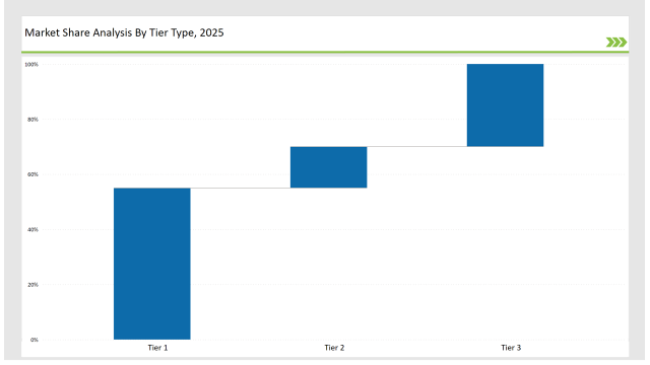
| Tier Type | Tier 1 |
|---|---|
| Example of Key Players | Payback India, Amazon Prime, Tata Neu |
| Market Share (%) | 55% |
| Tier Type | Tier 2 |
|---|---|
| Example of Key Players | HDFC SmartBuy, Flipkart SuperCoins |
| Market Share (%) | 15% |
| Tier Type | Tier 3 |
|---|---|
| Example of Key Players | Regional brands, fintech startups |
| Market Share (%) | 30% |
Key Brand Initiatives
| Brand | Key Focus Areas |
|---|---|
| Payback India | Cross-category rewards & retail partnerships |
| Amazon Prime | Subscription-based loyalty with exclusive benefits |
| Tata Neu | Super-app loyalty integration across Tata brands |
| HDFC SmartBuy | Co-branded credit card cashback & travel rewards |
| Flipkart SuperCoins | Gamified loyalty experiences & tier-based benefits |
| Emerging Brands | AI-driven rewards & seamless multi-merchant point conversions |
Recommendations for Brands
- Harnessing AI for Personalization: Use predictive analytics to create one-off customized loyalty experiences based on user preferences.
- Omnichannel integration: Integrate online, in-store, and mobile app-based loyalty rewards seamlessly.
- Gamification strategies: Engage customers through interactive challenges, achievement-based rewards, and digital collectibles.
- Enhancement of data security: Blockchain-based security measures to thwart fraud and ensure transparency.
- On the reward side, ensure sustainability by offering green incentives such as eco-friendly rewards, carbon offset points, and charitable donations.
Future Roadmap
India's loyalty program market will be one of sustained growth through data-driven personalization, fintech collaborations, and omnichannel customer engagement. Brands will focus on AI-powered predictive analytics, blockchain-backed reward security, and gamification to enhance customer retention. Consumer preferences are shifting, making loyalty programs more interactive, with immersive experiences and seamless digital integrations. Innovation, data-driven engagement, and ethical consumer incentives form the nucleus of India's future loyalty market.
India Loyalty Program Market by Category
By Program Type:
- Point-Based Loyalty Program
- Pre-Decided Loyalty Programs
- Combination of Point-Based and Pre-Decided Loyalty Programs
By End User:
- Small & Medium Enterprises
- Large Enterprises
By Consumer Orientation:
- Employee Rewards
- Sales Incentives
- Channel Incentives
By Vertical:
- Automobiles
- Cement
- Electronics & Electricals
- Laptops
- Luxury Brands
- Mobile Phones
- Paints
- Tyres
- Watches
- Others (Aviation, Hospitality, BFSI, Education, Healthcare, and IT & Telecom)
Frequently Asked Questions
Which companies hold the largest market share in the India loyalty program industry?
Leading players such as Payback India, Amazon Prime, and Tata Neu collectively hold around 55% of the market.
What is the market share of regional loyalty program providers in India?
Regional brands and industry-specific loyalty programs contribute approximately 30% of the market by offering customized rewards for local businesses.
How much market share do fintech and AI-driven loyalty startups hold?
Startups focusing on AI-based rewards, digital wallets, and blockchain-backed loyalty solutions hold about 10% of the market.
What percentage of the market is controlled by private labels in the India loyalty sector?
Private labels from retail and banking sectors hold around 5% of the market, focusing on co-branded credit card rewards and brand-specific incentives.
How is market concentration assessed in the India loyalty program industry for the year 2025?
High for companies controlling 55%+, medium for 40-55%, and low for those under 30%.
Preview the report firsthand - request a free sample
Get SampleGet the brochure for pricing and purchase details.
Get PDFTable of Content
- Executive Summary
- Market Overview
- Competitive Analysis Outlook for 2025
- Segment Analysis
- Who Shaped the Year
- Key Highlights from the Forecast
- Tier-Wise Brand Classification
- Key Brand Initiatives
- Recommendations for Brands
- Future Roadmap
- FAQs


