

- Industry Size (2026)
- USD 6.21 Bn
- Forecast (2036)
- USD 10.30 Bn
- CAGR (2026 to 2036)
- 5.2%
Demand for Breakfast Takeout in Japan Market Size, Market Forecast and Outlook By FMI
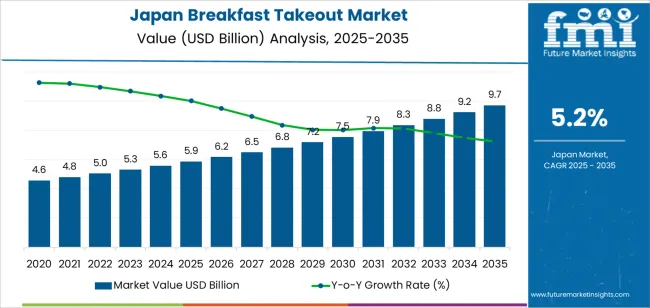
The breakfast takeout market in Japan was valued at USD 5.90 billion in 2025. Based on Future Market Insights' analysis, demand for breakfast takeout in Japan is estimated to reach USD 6.21 billion in 2026 and USD 10.30 billion by 2036. FMI projects a CAGR of 5.2% during the 2026 to 2036 forecast period. The absolute dollar opportunity of USD 4.09 billion over the forecast decade reflects a structural shift in Japanese morning meal consumption patterns, where commuter-driven convenience demand and digital food ordering platform penetration are converting traditional home-prepared breakfast routines into commercial takeout transactions.
Summary of Demand for Breakfast Takeout in Japan Market
- Market Snapshot
- The breakfast takeout market in Japan is valued at USD 5.90 billion in 2025 and is projected to reach USD 10.30 billion by 2036.
- The market is expected to grow at a 5.2% CAGR from 2026 to 2036, creating an incremental opportunity of USD 4.09 billion.
- The sector is a commuter-driven, digitally enabled foodservice market where morning daypart throughput, delivery platform penetration, and digital payment adoption define competitive positioning.
- Demand and Growth Drivers
- Demand is rising as Japan's commuter workforce shifts morning meal consumption from home preparation to commercially prepared takeout purchased during the 6:30 to 8:30 AM transit window.
- Digital food ordering platform integration with quick-service restaurant and convenience store breakfast menus is expanding the addressable consumer base beyond walk-in foot traffic.
- The transition from cash to digital wallet and credit card payment is reducing transaction friction and enabling faster service throughput during the compressed morning peak.
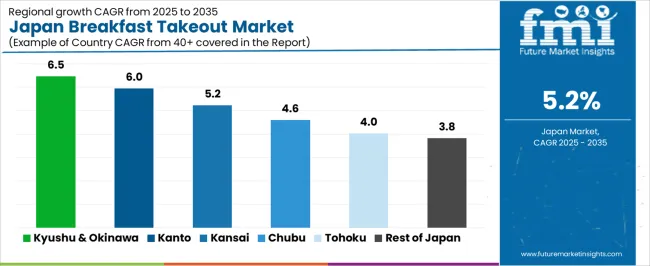
- Kyushu and Okinawa lead regionally at 6.5% CAGR, followed by Kanto at 6.0%, Kinki at 5.2%, Chubu at 4.6%, Tohoku at 4.0%, and Rest of Japan at 3.8%.
- Product and Segment View
- The market covers vegetarian, non-vegetarian, and vegan breakfast takeout across continental, American, English, Italian, and Indonesian breakfast formats.
- Vegetarian leads by Nature with 45.1% share in 2026, reflecting Japanese dietary preferences and the dominance of rice-based, soy-based, and vegetable-based morning meal compositions.
- Continental breakfast leads by Breakfast Type with 28.7% share in 2026, driven by bakery-and-coffee morning formats at chained QSR and convenience store outlets.
- Scope includes chained and independent foodservice, direct-to-consumer and platform-to-consumer models, excluding dine-in meals, vending machine sales, and institutional catering.
- Geography and Competitive Outlook
- Kyushu and Okinawa is the fastest-growing region at 6.5% CAGR due to expanding urban workforce density and rapid food delivery platform adoption.
- Kanto holds the largest market share anchored by the Tokyo-Yokohama commuter corridor and the densest quick-service breakfast outlet network in Japan.
- Competition is shaped by morning daypart throughput efficiency, delivery platform partnerships, and digital payment infrastructure, with key players including McDonald's Corporation, Starbucks Corporation, Dunkin' (Inspire Brands), Tim Hortons, and Subway.
- Analyst Opinion at FMI
- Nandini Roy Choudhury, Principal Consultant for Food & Beverages, opines: 'In my analysis, I have observed that Japan's breakfast takeout market is experiencing a structural conversion from home-prepared to commercial morning meals driven by commuter time economics. Quick-service operators that optimise morning daypart throughput by integrating mobile pre-ordering with dedicated breakfast pickup counters will capture disproportionate share of the pre-commute transaction window. Chains that treat breakfast as an extension of their lunch menu without dedicated morning operational formats will lose ground to competitors building purpose-built morning meal experiences.'
- Strategic Implications / Executive Takeaways
- Quick-service operators must deploy dedicated breakfast pickup counters and mobile pre-ordering systems to maximise throughput during the compressed 6:30 to 8:30 AM peak transaction window.
- Food delivery platforms should negotiate exclusive morning-window partnerships with major QSR chains and convenience store networks to capture pre-commute breakfast orders before walk-in traffic peaks.
- Payment infrastructure providers need to accelerate contactless and digital wallet terminal deployment at breakfast-focused outlets to eliminate the transaction friction that constrains morning peak throughput.
Demand for Breakfast Takeout in Japan Market Key Takeaways
| Metric | Details |
|---|---|
| Industry Size (2026) | USD 6.21 billion |
| Industry Value (2036) | USD 10.30 billion |
| CAGR (2026 to 2036) | 5.2% |
Source: Future Market Insights, 2026
Breakfast takeout consumption in Japan is being reshaped by workforce mobility patterns and the growing integration of food delivery platforms into daily routines. FMI analysts observe that Japan's extended commuter workforce, concentrated in the Kanto and Kinki metropolitan areas, is the primary demand driver. Convenience store chains and quick-service restaurant operators have expanded dedicated morning menu windows and partnered with delivery aggregators to capture pre-commute orders. The shift from cash to digital wallet and credit card payment at point-of-sale is reducing transaction friction and enabling faster service throughput during the compressed 6:30 to 8:30 AM peak breakfast window.
Regional demand patterns across Japan reflect workforce concentration and foodservice infrastructure maturity. Kyushu and Okinawa lead with a projected 6.5% CAGR through 2036, supported by growing urban workforce expansion and rapid platform-to-consumer delivery adoption. Kanto follows at 6.0%, anchored by the Tokyo-Yokohama commuter corridor with the densest quick-service breakfast outlet network in Japan. Kinki registers 5.2% growth driven by the Osaka-Kobe morning foodservice economy. Chubu tracks at 4.6%, Tohoku at 4.0%, and the Rest of Japan at 3.8%, reflecting more gradual adoption tied to smaller commuter population bases and lower delivery platform penetration.
Demand for Breakfast Takeout in Japan Market Definition
Breakfast takeout in Japan refers to commercially prepared morning meal products purchased for off-premise consumption through chained and independent foodservice operators, convenience stores, and digital food ordering platforms. The market encompasses vegetarian, non-vegetarian, and vegan breakfast offerings across continental, American, English, Italian, and Indonesian breakfast formats, distributed through direct-to-consumer and platform-to-consumer business models with cash, debit card, credit card, digital wallet, and electronic bank transfer payment options.
Demand for Breakfast Takeout in Japan Market Inclusions
Market scope covers revenue from commercially prepared breakfast meals sold for takeout consumption across Japan, including all meal types, dietary categories, and payment formats. Coverage extends to chained and independent foodservice operators and platform-based delivery services. The forecast period spans 2026 to 2036 with regional breakdowns across six Japanese regions.
Demand for Breakfast Takeout in Japan Market Exclusions
The scope excludes home-prepared breakfast meals, dine-in breakfast consumption at full-service restaurants, vending machine food sales, and pre-packaged convenience store snack items not classified as complete breakfast meals. It omits breakfast catering services for corporate and institutional clients.
Demand for Breakfast Takeout in Japan Market Research Methodology
- Primary Research: Analysts engaged with quick-service restaurant operations managers, convenience store morning category buyers, and food delivery platform commercial leads to map transaction volumes, average order values, and peak-hour throughput metrics for the breakfast daypart.
- Desk Research: Data collection aggregated Japan Foodservice Association revenue statistics, Japan Franchise Association outlet count data, and digital payment transaction records from major Japanese payment processors for the 6:00 to 9:00 AM transaction window.
- Market-Sizing and Forecasting: Baseline values derive from a bottom-up aggregation of breakfast daypart transaction volumes across chained QSR operators, convenience store morning meal categories, and platform-to-consumer delivery order records, applying regional workforce commuter density multipliers.
- Data Validation and Update Cycle: Projections are cross-checked against publicly reported morning daypart revenue disclosures from major Japanese QSR chains and verified through quarterly engagement with food delivery platform analytics teams.
What Is Driving the Demand for Breakfast Takeout in Japan?
Another factor contributing to growth is the expansion of digital ordering platforms and delivery services, which make grab and go breakfasts more accessible. Additionally, menu innovation such as breakfast bowls, on the go sandwiches and speciality coffee pairings meets consumer interest in variety and quality. At the same time, challenges such as labour shortages in the food service industry, rising food and operational costs and competition from home based breakfast options remain. Despite these constraints, the combination of urban lifestyle trends and convenient service models indicates that demand for breakfast takeout in Japan is positioned for steady expansion.
What Is the Current State of the Demand for Breakfast Takeout in Japan in Terms of Nature and Breakfast Type?
The demand for breakfast takeout in Japan is driven by nature and breakfast type. The leading nature is non-vegetarian, capturing 45% of the market share, while continental breakfast leads the breakfast type category, accounting for 28.7% of the demand. As convenience and variety continue to shape consumer preferences, breakfast takeout has become a popular choice, offering diverse and quick options for individuals on the go. This trend reflects a growing shift in dining habits, with consumers seeking satisfying, portable breakfast options.
How Is Non-Vegetarian Leading the Demand for Breakfast Takeout in Japan?
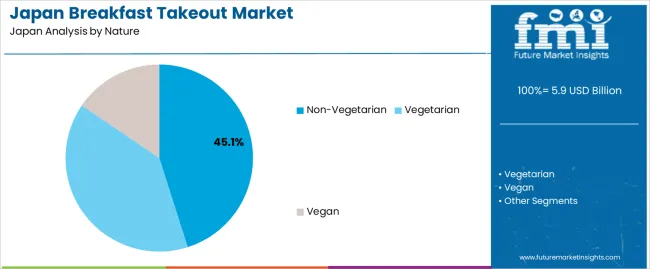
Non-vegetarian breakfast takeout leads the market in Japan, holding 45% of the demand. Non-vegetarian options, such as breakfast sandwiches with eggs, bacon, sausage, or chicken, and savory breakfast burritos, are commonly chosen by consumers looking for a protein-rich start to their day. These options offer a filling and energizing meal that is ideal for individuals with busy lifestyles, making them a staple in the breakfast takeout market.
The demand for non-vegetarian breakfast takeout is driven by traditional breakfast preferences, which often include meat as a key ingredient. As convenience and portability become more important to consumers, non-vegetarian breakfast options are well-suited for those who prefer a quick, satisfying meal that provides the energy needed to start the day. Additionally, the growing popularity of breakfast fast-food chains and delivery services is contributing to the continued strength of non-vegetarian offerings in the market.
How Is Continental Breakfast Leading the Demand for Breakfast Takeout in Japan?
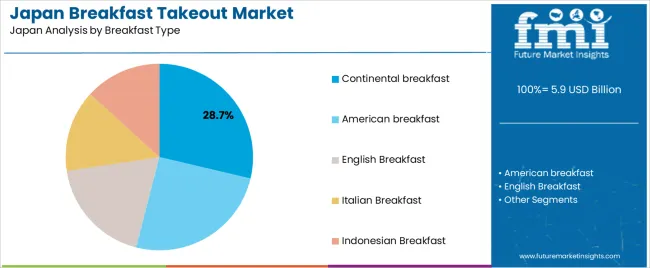
Continental breakfast is the leading breakfast type for takeout in Japan, capturing 28.7% of the demand. A continental breakfast typically consists of lighter fare, such as pastries, bread, yogurt, fruits, and coffee, offering a quick and convenient option for consumers who prefer a more balanced, less heavy start to the day. It is a particularly popular choice in urban areas, where individuals often seek easy, portable breakfast options that don’t require extensive preparation.
The growing demand for continental breakfasts in Japan is driven by the shift towards healthier, lighter meal options that cater to those looking for a quick breakfast without the heaviness of traditional cooked meals. As consumers become more health-conscious and busy, the popularity of continental breakfast takeout is expected to continue growing. This segment is favored for its versatility and ability to cater to a wide variety of dietary preferences, from fruit-based options to pastries and coffee, making it a staple in the breakfast takeout market.
What Are The Key Dynamics Influencing Demand for Breakfast Takeout in Japan?
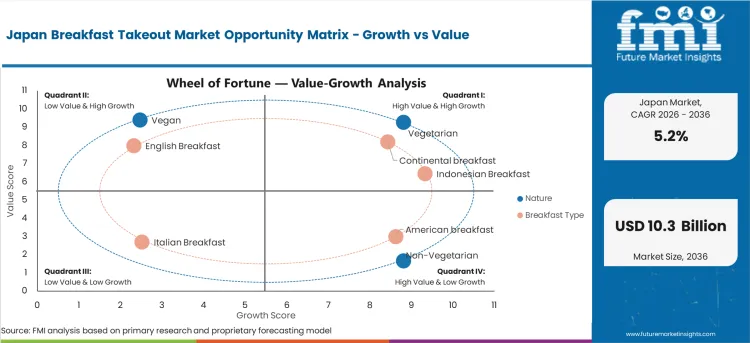
Demand for breakfast take out in Japan is shaped by faster paced urban lifestyles, increasing dual income households and the growth of on the go morning meals that require minimal preparation or waiting. Convenience stores, quick service restaurants and delivery platforms are expanding breakfast offering lines to serve time pressed commuters and remote workers. At the same time, cost pressures, nutritional expectations and established home meal habits moderate growth. These factors together define how the breakfast take out market is developing in Japan.
What Are the Primary Growth Drivers for Breakfast Takeout Demand in Japan?
Several factors support growth. First, the increase in morning commuting and workplace attendance creates demand for ready to eat breakfast menus at retail and food service outlets. Second, expansion of digital ordering, mobile apps and food delivery services makes breakfast take out more convenient and accessible across Japanese cities. Third, menu innovation such as protein rich bowls, western style sandwich meals and healthy smoothies broadens consumer appeal beyond traditional Japanese breakfast formats. Fourth, the rise of convenience store chains and vending solutions offering fresh breakfast items meets morning consumption occasions efficiently.
What Are the Key Restraints Affecting Breakfast Takeout Demand in Japan?
Despite favorable conditions, several constraints apply. High ingredient and labor costs affect margins for food service providers offering breakfast take out, which may limit promotional pricing or menu expansion. Some consumers continue to prefer home prepared breakfast for cost, tradition or dietary reasons, reducing shift toward take out. Nutritional and health considerations such as sugar content and portion size mean providers must adapt to strict consumer expectations, increasing complexity. Finally, delivery logistics for early morning hours can be less efficient and costlier, especially in regional or suburban Japanese markets.
What Are the Key Trends Shaping Breakfast Takeout Demand in Japan?
Key trends include increasing availability of healthy and functional breakfast take out options, such as whole grain sandwiches, low sugar yogurt bowls and plant based smoothie meals. There is also growth in morning focused digital ordering and contactless pickup designed for commuters such as express lanes in convenience stores or mobile app pre orders. Retailers are improving packaging for on the go convenience and food safety assurance in morning formats. Additionally, breakfast take out is increasingly being integrated into workplace catering and subscription breakfast service models that serve offices, thereby expanding channel reach and service scope.
What is the Regional Demand Outlook for Breakfast Takeout in Japan?
The demand for breakfast takeout in Japan shows steady growth across different regions, with Kyushu & Okinawa leading at a CAGR of 6.5%. Kanto follows closely with a 6.0% CAGR, driven by urbanization and a growing demand for convenient food options. The Kinki region exhibits a solid growth rate of 5.2%, while Chubu, Tohoku, and the Rest of Japan have more moderate growth, with respective CAGRs of 4.6%, 4.0%, and 3.8%. These regional differences reflect varying levels of consumer interest in convenience-based dining, regional economic activity, and the pace of lifestyle changes across Japan.
.webp "Top Country Growth Comparison Japan Breakfast Takeout Market Cagr (2026 2036)")
| Region | CAGR (2026-2036) |
|---|---|
| Kyushu & Okinawa | 6.5% |
| Kanto | 6% |
| Kinki | 5.2% |
| Chubu | 4.6% |
| Tohoku | 4% |
| Rest of Japan | 3.8% |
What factors are driving the demand for breakfast takeout in Kyushu & Okinawa?
The demand for breakfast takeout in Kyushu & Okinawa is projected to grow at a CAGR of 6.5%, supported by a combination of lifestyle changes and growing consumer demand for convenience. Kyushu & Okinawa, with their large urban and tourist populations, are increasingly adopting fast, on-the-go breakfast options. The rising popularity of healthier, quick breakfast choices, such as rice bowls, sandwiches, and wraps, is contributing to this trend.
The regions’ growing emphasis on tourism and hospitality, particularly in Okinawa, has created a greater need for food services catering to travelers and busy locals. Additionally, the relatively relaxed pace of life and emphasis on local, fresh food offerings also support the demand for breakfast takeout. As the region continues to develop its foodservice infrastructure, the convenience and accessibility of breakfast takeout are likely to become even more appealing to consumers.
Why is the demand for breakfast takeout increasing in Kanto?
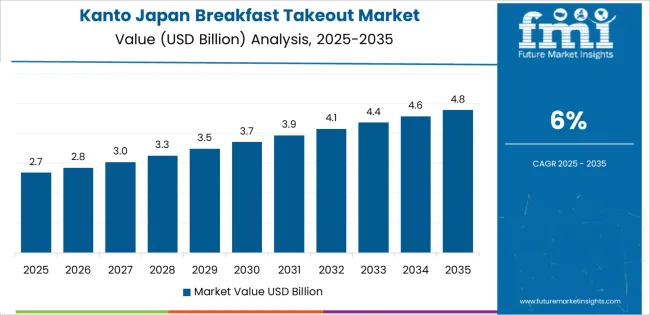
In Kanto, the demand for breakfast takeout is expected to grow at a CAGR of 6.0%, driven by the fast-paced lifestyle and high population density, particularly in Tokyo. As one of Japan's busiest and most urbanized regions, Kanto has a large number of professionals, commuters, and students who increasingly rely on quick, convenient breakfast options to fit into their busy routines. The region’s diverse food culture also influences the rising popularity of breakfast takeout, with many consumers seeking a variety of nutritious and portable meal choices.
Furthermore, the growing availability of mobile ordering and delivery platforms in urban areas facilitates easy access to breakfast options. As Kanto continues to be a hub for innovation and convenience-driven services, the demand for breakfast takeout will continue to rise, particularly among younger, more tech-savvy consumers who value convenience.
What influences the demand for breakfast takeout in Kinki?
The demand for breakfast takeout in the Kinki region is projected to grow at a CAGR of 5.2%, reflecting a moderate but steady increase. Kinki, which includes major cities such as Osaka and Kyoto, is known for its vibrant food culture, with both traditional and modern breakfast options gaining traction. The growing number of busy professionals and students in urban areas is contributing to the demand for quick, convenient meal options.
The rise in awareness of health-conscious eating habits also fuels the popularity of on-the-go breakfast choices, such as salads, smoothie bowls, and protein-packed wraps. Additionally, Kinki's tourism industry plays a role in driving demand for breakfast takeout, as travelers seek quick meals during their stay. As the demand for convenience-based dining continues to rise, Kinki’s dynamic urban landscape ensures steady growth in the breakfast takeout market.
How is the demand for breakfast takeout growing in Chubu?
The demand for breakfast takeout in Chubu is expected to grow at a CAGR of 4.6%, reflecting steady but slower adoption compared to other regions. Chubu, home to key industrial cities like Nagoya, has a large working population that increasingly relies on convenient meal options. However, the region tends to have a more traditional food culture, with many people still favoring sit-down breakfasts at home.
Despite this, the demand for breakfast takeout is gradually increasing, driven by the rise in working professionals, the younger population’s preference for convenience, and the increasing availability of foodservice outlets catering to busy consumers. Additionally, Chubu’s growing e-commerce and delivery services are making breakfast takeout more accessible to a broader range of consumers. The moderate growth rate reflects a balance between traditional meal patterns and the evolving demand for faster, on-the-go food options.
What factors are influencing the demand for breakfast takeout in Tohoku?
In Tohoku, the demand for breakfast takeout is projected to grow at a CAGR of 4.0%, reflecting a more gradual adoption of convenience-based dining options. Tohoku, known for its rural landscape and smaller urban centers, tends to have more traditional meal habits, with many consumers still opting for homemade or sit-down breakfasts. However, as younger generations and busy professionals become more prominent, there is a growing interest in breakfast takeout.
Additionally, the region’s tourism industry, particularly in cities like Sendai, is driving demand for convenient breakfast options for visitors. While the overall growth rate is slower compared to other regions, the increasing availability of mobile apps and delivery services in Tohoku is making breakfast takeout more accessible, and this is expected to drive gradual growth in demand in the coming years.
How is the demand for breakfast takeout evolving in the Rest of Japan?
In the Rest of Japan, the demand for breakfast takeout is expected to grow at a CAGR of 3.8%, reflecting more conservative trends in food consumption compared to urban areas. This region includes rural areas where traditional breakfast habits, such as home-cooked rice and miso soup, are more prevalent. However, as the Japanese population becomes more urbanized and younger consumers seek more convenient, time-saving options, breakfast takeout is slowly gaining popularity.
The Rest of Japan’s more gradual adoption of these trends is influenced by slower infrastructure development and a preference for traditional meals. Nevertheless, with the growing presence of convenience stores offering ready-to-eat breakfast items and the expansion of food delivery services, the market for breakfast takeout in these regions is expected to experience steady growth, although at a slower pace.
How Are Companies Competing in the Breakfast Takeout Industry in Japan
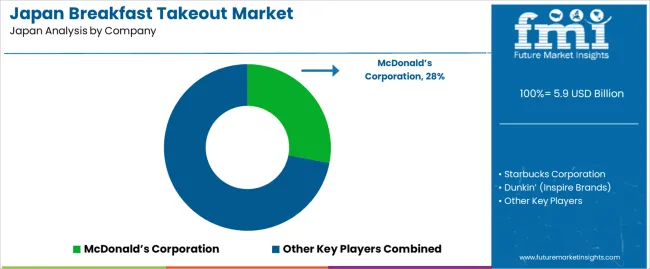
Demand for breakfast takeout in Japan is growing as more consumers adopt on the go eating habits and quick service restaurant chains expand their morning menus. Major companies in this space include McDonald’s Corporation (holding about 28.0% market share), Starbucks Corporation, Dunkin’ (Inspire Brands), Tim Hortons (Restaurant Brands International), and Subway. These chains widen availability of breakfast items such as sandwiches, bowls, coffees and breakfast sets, while using mobile ordering, early opening hours, and drive thru services to cater to busy commuters and breakfast time consumers.
Competition in the Japanese breakfast takeout market centres on menu innovation, speed of service, and localization of offerings. Companies develop breakfast menus that combine familiar global items with regional tastes to appeal to Japanese consumers. They prioritise easy to eat formats that suit morning routines, including coffee and toast sets or grab and go sandwiches. Another competitive factor is operational convenience: efficient store layout, mobile ordering apps, and loyalty programmes support frequent visits.
Pricing strategies and value menus also matter, given consumer sensitivity to cost. Marketing communications typically emphasise taste, convenience, menu variety and brand familiarity. By aligning their offerings with consumer demand for fast, familiar and accessible breakfast options, these companies aim to maintain and grow their presence in Japan’s breakfast takeout industry.
Key Players of the Breakfast Takeout Industry in Japan
- McDonald’s Corporation
- Starbucks Corporation
- Dunkin’ (Inspire Brands)
- Tim Hortons (Restaurant Brands International)
- Subway
Scope of the Report
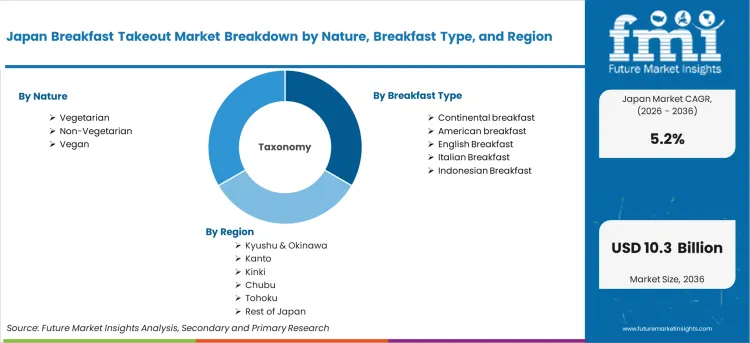
| Metric | Value |
|---|---|
| Quantitative Units | USD 6.21 billion to USD 10.30 billion, at a CAGR of 5.2% |
| Market Definition | Breakfast takeout in Japan refers to commercially prepared morning meal products purchased for off-premise consumption through chained and independent foodservice operators, convenience stores, and digital food ordering platforms. The market encompasses vegetarian, non-vegetarian, and vegan breakfast offerings across continental, American, English, Italian, and Indonesian breakfast formats, distributed through direct-to-consumer and platform-to-consumer business models with cash, debit card, credit card, digital wallet, and electronic bank transfer payment options. |
| Segmentation | Nature: Vegetarian, Non-Vegetarian, Vegan; Breakfast Type: Continental breakfast, American breakfast, English Breakfast, Italian Breakfast, Indonesian Breakfast; Purchase Model: Chained foodservice, Independent foodservice; Payment Type: Cash, Debit cards, Credit cards, Digital Wallets, Electronic bank transfers; Business Type: Direct-to-consumer, Platform-to-consumer |
| Regions Covered | Kyushu & Okinawa, Kanto, Kinki, Chubu, Tohoku, Rest of Japan |
| Key Companies Profiled | McDonald's Corporation, Starbucks Corporation, Dunkin' (Inspire Brands), Tim Hortons (Restaurant Brands International), Subway |
| Forecast Period | 2026 to 2036 |
| Approach | Bottom-up transaction volume modelling combining QSR morning daypart data, convenience store breakfast category records, and delivery platform order analytics across six Japanese regions. |
Key Segments of the Demand for Breakfast Takeout in Japan
Nature
- Vegetarian
- Non-Vegetarian
- Vegan
Breakfast Type
- Continental breakfast
- American breakfast
- English Breakfast
- Italian Breakfast
- Indonesian Breakfast
Purchase Model
- Chained foodservice
- Independent foodservice
Payment Type
- Cash
- Debit cards
- Credit cards
- Digital Wallets
- Electronic bank transfers
Business Type
- Direct-to-consumer
- Platform-to-consumer
Region
- Kyushu & Okinawa
- Kanto
- Kinki
- Chubu
- Tohoku
- Rest of Japan
Bibliography
- 1. Japan Foodservice Association. (2025). Annual Foodservice Industry Statistical Report. JFA.
- 2. Japan Franchise Association. (2025). Franchise Industry Outlet Count and Revenue Data. JFA.
- 3. Ministry of Internal Affairs and Communications, Japan. (2025). Labour Force Survey: Commuter Population Statistics. MIC.
- 4. Japan Payment Association. (2024). Digital Payment Transaction Volume Report. JPA.
- 5. World Health Organization. (2024). Nutrition and Meal Pattern Guidelines for Urban Populations. WHO.
This bibliography is provided for reader reference. The full Future Market Insights report contains the complete reference list with primary research documentation.
Frequently Asked Questions
How large is the demand for breakfast takeout in Japan in 2026?
Demand for breakfast takeout in Japan is estimated to be valued at USD 6.21 billion in 2026.
What will be the market size for breakfast takeout in Japan by 2036?
The breakfast takeout market in Japan is projected to reach USD 10.30 billion by 2036.
What is the expected demand growth for breakfast takeout in Japan between 2026 and 2036?
Demand for breakfast takeout in Japan is expected to grow at a CAGR of 5.2% between 2026 and 2036.
Which Nature segment is poised to lead in 2026?
Vegetarian accounts for 45.1% share in 2026, reflecting Japanese dietary preferences for rice-based and soy-based morning meal compositions.
Which Breakfast Type leads the market in 2026?
Continental breakfast holds 28.7% of segment share in 2026, driven by bakery-and-coffee morning formats at QSR and convenience store outlets.
Which region in Japan is projected to grow the fastest?
Kyushu and Okinawa is projected to grow at a CAGR of 6.5% during 2026 to 2036.
What does the market forecast represent in this report?
The market forecast represents a model-based projection built on breakfast daypart transaction volumes, delivery platform order data, and commuter density analysis for strategic planning purposes.
Preview the report firsthand - request a free sample
Get SampleGet the brochure for pricing and purchase details.
Get PDFTable of Content
- Executive Summary
- Japan Market Outlook
- Demand-side Trends
- Supply-side Trends
- Technology Roadmap Analysis
- Analysis and Recommendations
- Market Overview
- Market Coverage / Taxonomy
- Market Definition / Scope / Limitations
- Research Methodology
- Chapter Orientation
- Analytical Lens and Working Hypotheses
- Market Structure, Signals, and Trend Drivers
- Benchmarking and Cross-market Comparability
- Market Sizing, Forecasting, and Opportunity Mapping
- Research Design and Evidence Framework
- Desk Research Programme (Secondary Evidence)
- Company Annual and Sustainability Reports
- Peer-reviewed Journals and Academic Literature
- Corporate Websites, Product Literature, and Technical Notes
- Earnings Decks and Investor Briefings
- Statutory Filings and Regulatory Disclosures
- Technical White Papers and Standards Notes
- Trade Journals, Industry Magazines, and Analyst Briefs
- Conference Proceedings, Webinars, and Seminar Materials
- Government Statistics Portals and Public Data Releases
- Press Releases and Reputable Media Coverage
- Specialist Newsletters and Curated Briefings
- Sector Databases and Reference Repositories
- FMI Internal Proprietary Databases and Historical Market Datasets
- Subscription Datasets and Paid Sources
- Social Channels, Communities, and Digital Listening Inputs
- Additional Desk Sources
- Expert Input and Fieldwork (Primary Evidence)
- Primary Modes
- Qualitative Interviews and Expert Elicitation
- Quantitative Surveys and Structured Data Capture
- Blended Approach
- Why Primary Evidence is Used
- Field Techniques
- Interviews
- Surveys
- Focus Groups
- Observational and In-context Research
- Social and Community Interactions
- Stakeholder Universe Engaged
- C-suite Leaders
- Board Members
- Presidents and Vice Presidents
- R&D and Innovation Heads
- Technical Specialists
- Domain Subject-matter Experts
- Scientists
- Physicians and Other Healthcare Professionals
- Governance, Ethics, and Data Stewardship
- Research Ethics
- Data Integrity and Handling
- Primary Modes
- Tooling, Models, and Reference Databases
- Desk Research Programme (Secondary Evidence)
- Data Engineering and Model Build
- Data Acquisition and Ingestion
- Cleaning, Normalisation, and Verification
- Synthesis, Triangulation, and Analysis
- Quality Assurance and Audit Trail
- Market Background
- Market Dynamics
- Drivers
- Restraints
- Opportunity
- Trends
- Scenario Forecast
- Demand in Optimistic Scenario
- Demand in Likely Scenario
- Demand in Conservative Scenario
- Opportunity Map Analysis
- Product Life Cycle Analysis
- Supply Chain Analysis
- Investment Feasibility Matrix
- Value Chain Analysis
- PESTLE and Porter’s Analysis
- Regulatory Landscape
- Regional Parent Market Outlook
- Production and Consumption Statistics
- Import and Export Statistics
- Market Dynamics
- Japan Market Analysis 2021 to 2025 and Forecast, 2026 to 2036
- Historical Market Size Value (USD Million) Analysis, 2021 to 2025
- Current and Future Market Size Value (USD Million) Projections, 2026 to 2036
- Y-o-Y Growth Trend Analysis
- Absolute $ Opportunity Analysis
- Japan Market Pricing Analysis 2021 to 2025 and Forecast 2026 to 2036
- Japan Market Analysis 2021 to 2025 and Forecast 2026 to 2036, By Nature
- Introduction / Key Findings
- Historical Market Size Value (USD Million) Analysis By Nature , 2021 to 2025
- Current and Future Market Size Value (USD Million) Analysis and Forecast By Nature , 2026 to 2036
- Vegetarian
- Non-Vegetarian
- Vegan
- Vegetarian
- Y-o-Y Growth Trend Analysis By Nature , 2021 to 2025
- Absolute $ Opportunity Analysis By Nature , 2026 to 2036
- Japan Market Analysis 2021 to 2025 and Forecast 2026 to 2036, By Breakfast Type
- Introduction / Key Findings
- Historical Market Size Value (USD Million) Analysis By Breakfast Type, 2021 to 2025
- Current and Future Market Size Value (USD Million) Analysis and Forecast By Breakfast Type, 2026 to 2036
- Continental breakfast
- American breakfast
- English Breakfast
- Italian Breakfast
- Indonesian Breakfast
- Continental breakfast
- Y-o-Y Growth Trend Analysis By Breakfast Type, 2021 to 2025
- Absolute $ Opportunity Analysis By Breakfast Type, 2026 to 2036
- Japan Market Analysis 2021 to 2025 and Forecast 2026 to 2036, By Purchase Model
- Introduction / Key Findings
- Historical Market Size Value (USD Million) Analysis By Purchase Model, 2021 to 2025
- Current and Future Market Size Value (USD Million) Analysis and Forecast By Purchase Model, 2026 to 2036
- Chained foodservice
- Independent foodservice
- Chained foodservice
- Y-o-Y Growth Trend Analysis By Purchase Model, 2021 to 2025
- Absolute $ Opportunity Analysis By Purchase Model, 2026 to 2036
- Japan Market Analysis 2021 to 2025 and Forecast 2026 to 2036, By Payment Type
- Introduction / Key Findings
- Historical Market Size Value (USD Million) Analysis By Payment Type, 2021 to 2025
- Current and Future Market Size Value (USD Million) Analysis and Forecast By Payment Type, 2026 to 2036
- Cash
- Debit cards
- Credit cards
- Digital Wallets
- Electronic bank transfers
- Cash
- Y-o-Y Growth Trend Analysis By Payment Type, 2021 to 2025
- Absolute $ Opportunity Analysis By Payment Type, 2026 to 2036
- Japan Market Analysis 2021 to 2025 and Forecast 2026 to 2036, By Business Type
- Introduction / Key Findings
- Historical Market Size Value (USD Million) Analysis By Business Type, 2021 to 2025
- Current and Future Market Size Value (USD Million) Analysis and Forecast By Business Type, 2026 to 2036
- Direct-to-consumer
- Platform-to-consumer
- Direct-to-consumer
- Y-o-Y Growth Trend Analysis By Business Type, 2021 to 2025
- Absolute $ Opportunity Analysis By Business Type, 2026 to 2036
- Japan Market Analysis 2021 to 2025 and Forecast 2026 to 2036, By Region
- Introduction
- Historical Market Size Value (USD Million) Analysis By Region, 2021 to 2025
- Current Market Size Value (USD Million) Analysis and Forecast By Region, 2026 to 2036
- Kyushu & Okinawa
- Kanto
- Kinki
- Chubu
- Tohoku
- Rest of Japan
- Market Attractiveness Analysis By Region
- Kyushu & Okinawa Market Analysis 2021 to 2025 and Forecast 2026 to 2036, By Country
- Historical Market Size Value (USD Million) Trend Analysis By Market Taxonomy, 2021 to 2025
- Market Size Value (USD Million) Forecast By Market Taxonomy, 2026 to 2036
- By Country
- By Nature
- By Breakfast Type
- By Purchase Model
- By Payment Type
- By Business Type
- By Country
- Market Attractiveness Analysis
- By Country
- By Nature
- By Breakfast Type
- By Purchase Model
- By Payment Type
- By Business Type
- Key Takeaways
- Kanto Market Analysis 2021 to 2025 and Forecast 2026 to 2036, By Country
- Historical Market Size Value (USD Million) Trend Analysis By Market Taxonomy, 2021 to 2025
- Market Size Value (USD Million) Forecast By Market Taxonomy, 2026 to 2036
- By Country
- By Nature
- By Breakfast Type
- By Purchase Model
- By Payment Type
- By Business Type
- By Country
- Market Attractiveness Analysis
- By Country
- By Nature
- By Breakfast Type
- By Purchase Model
- By Payment Type
- By Business Type
- Key Takeaways
- Kinki Market Analysis 2021 to 2025 and Forecast 2026 to 2036, By Country
- Historical Market Size Value (USD Million) Trend Analysis By Market Taxonomy, 2021 to 2025
- Market Size Value (USD Million) Forecast By Market Taxonomy, 2026 to 2036
- By Country
- By Nature
- By Breakfast Type
- By Purchase Model
- By Payment Type
- By Business Type
- By Country
- Market Attractiveness Analysis
- By Country
- By Nature
- By Breakfast Type
- By Purchase Model
- By Payment Type
- By Business Type
- Key Takeaways
- Chubu Market Analysis 2021 to 2025 and Forecast 2026 to 2036, By Country
- Historical Market Size Value (USD Million) Trend Analysis By Market Taxonomy, 2021 to 2025
- Market Size Value (USD Million) Forecast By Market Taxonomy, 2026 to 2036
- By Country
- By Nature
- By Breakfast Type
- By Purchase Model
- By Payment Type
- By Business Type
- By Country
- Market Attractiveness Analysis
- By Country
- By Nature
- By Breakfast Type
- By Purchase Model
- By Payment Type
- By Business Type
- Key Takeaways
- Tohoku Market Analysis 2021 to 2025 and Forecast 2026 to 2036, By Country
- Historical Market Size Value (USD Million) Trend Analysis By Market Taxonomy, 2021 to 2025
- Market Size Value (USD Million) Forecast By Market Taxonomy, 2026 to 2036
- By Country
- By Nature
- By Breakfast Type
- By Purchase Model
- By Payment Type
- By Business Type
- By Country
- Market Attractiveness Analysis
- By Country
- By Nature
- By Breakfast Type
- By Purchase Model
- By Payment Type
- By Business Type
- Key Takeaways
- Rest of Japan Market Analysis 2021 to 2025 and Forecast 2026 to 2036, By Country
- Historical Market Size Value (USD Million) Trend Analysis By Market Taxonomy, 2021 to 2025
- Market Size Value (USD Million) Forecast By Market Taxonomy, 2026 to 2036
- By Country
- By Nature
- By Breakfast Type
- By Purchase Model
- By Payment Type
- By Business Type
- By Country
- Market Attractiveness Analysis
- By Country
- By Nature
- By Breakfast Type
- By Purchase Model
- By Payment Type
- By Business Type
- Key Takeaways
- Key Countries Market Analysis
- Kyushu & Okinawa
- Pricing Analysis
- Market Share Analysis, 2025
- By Nature
- By Breakfast Type
- By Purchase Model
- By Payment Type
- By Business Type
- Kanto
- Pricing Analysis
- Market Share Analysis, 2025
- By Nature
- By Breakfast Type
- By Purchase Model
- By Payment Type
- By Business Type
- Kinki
- Pricing Analysis
- Market Share Analysis, 2025
- By Nature
- By Breakfast Type
- By Purchase Model
- By Payment Type
- By Business Type
- Chubu
- Pricing Analysis
- Market Share Analysis, 2025
- By Nature
- By Breakfast Type
- By Purchase Model
- By Payment Type
- By Business Type
- Tohoku
- Pricing Analysis
- Market Share Analysis, 2025
- By Nature
- By Breakfast Type
- By Purchase Model
- By Payment Type
- By Business Type
- Rest of Japan
- Pricing Analysis
- Market Share Analysis, 2025
- By Nature
- By Breakfast Type
- By Purchase Model
- By Payment Type
- By Business Type
- Kyushu & Okinawa
- Market Structure Analysis
- Competition Dashboard
- Competition Benchmarking
- Market Share Analysis of Top Players
- By Regional
- By Nature
- By Breakfast Type
- By Purchase Model
- By Payment Type
- By Business Type
- Competition Analysis
- Competition Deep Dive
- McDonald’s Corporation
- Overview
- Product Portfolio
- Profitability by Market Segments (Product/Age /Sales Channel/Region)
- Sales Footprint
- Strategy Overview
- Marketing Strategy
- Product Strategy
- Channel Strategy
- Starbucks Corporation
- Dunkin’ (Inspire Brands)
- Tim Hortons (Restaurant Brands International)
- Subway
- McDonald’s Corporation
- Competition Deep Dive
- Assumptions & Acronyms Used


