

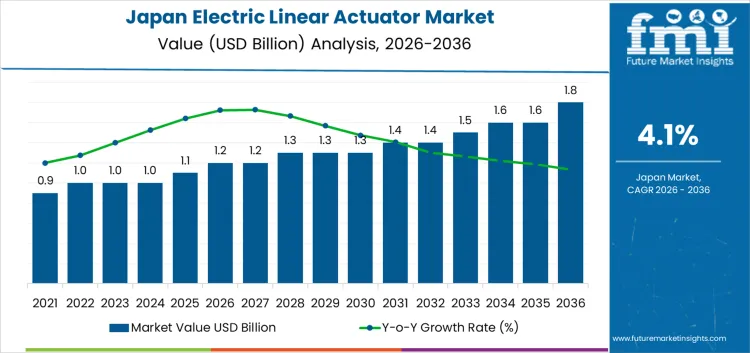
- Industry Size (2026)
- USD 1.1 Bn
- Forecast (2036)
- USD 1.8 Bn
- CAGR (2026 to 2036)
- 4.1%
Demand for Electric Linear Actuator in Japan Forecast and Outlook 2026 to 2036
The demand for electric linear actuators in Japan is projected to grow from USD 1.1 billion in 2026 to USD 1.8 billion by 2036, with a CAGR of 4.1%. By type, DC electric actuators dominate, accounting for 55% of the demand due to their efficiency, compact size, and precision in industrial applications. The industrial sector leads with 50% of the demand for these actuators, driven by automation in manufacturing, robotics, and material handling. The medical and commercial sectors contribute to the remaining demand, fueled by applications in healthcare devices and smart home technologies. Topical treatments and compact designs for small spaces are a key trend, with DC actuators supporting efficiency across various sectors, particularly where space constraints and energy savings are critical.
Quick Stats of the Demand for Electric Linear Actuator in Japan
- Demand for Electric Linear Actuator in Japan Value (2026): USD 1.1 billion
- Demand for Electric Linear Actuator in Japan Forecast Value (2036): USD 1.8 billion
- Demand for Electric Linear Actuator in Japan Forecast CAGR (2026-2036): 4.1%
- Demand for Electric Linear Actuator in Japan Leading Type: DC Electric Actuators
- Demand for Electric Linear Actuator in Japan Key Growth Regions: Kyushu & Okinawa, Kanto, Kansai, Chubu, Tohoku, Rest of Japan
- Demand for Electric Linear Actuator in Japan Top Players: SKF, Parker Hannifin, Linak, Moteck Electric, Tolomatic
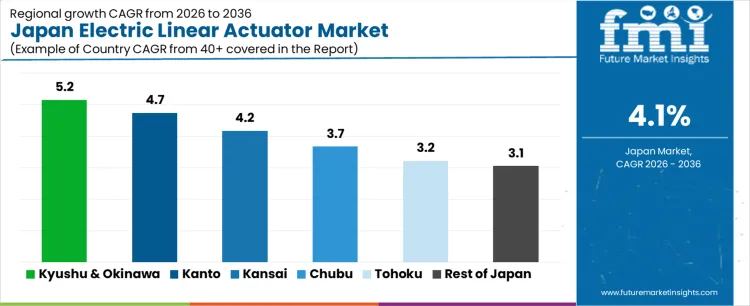
Kyushu & Okinawa leads with a 5.2% CAGR, driven by the growing adoption of automation in agriculture and industrial sectors. Kanto follows with a 4.7% CAGR, supported by its advanced technology and the large-scale manufacturing base, particularly in robotics and automotive industries. Kansai shows a 4.2% CAGR, fueled by its emphasis on energy-efficient automation and robotics in manufacturing. Chubu experiences steady growth at 3.7%, while Tohoku and the rest of Japan see moderate growth at 3.2% and 3.1%, respectively. As Japan continues to prioritize energy efficiency and automation, demand for electric linear actuators is expected to rise steadily across these regions, particularly in advanced manufacturing and robotics sectors.
Demand for Electric Linear Actuator in Japan Key Takeaways
| Metric | Value |
|---|---|
| Demand for Electric Linear Actuator in Japan Value (2026) | USD 1.1 billion |
| Demand for Electric Linear Actuator in Japan Forecast Value (2036) | USD 1.8 billion |
| Demand for Electric Linear Actuator in Japan Forecast CAGR (2026-2036) | 4.1% |
Why is the Demand for Electric Linear Actuator in Japan Growing?
The demand for electric linear actuators in Japan is growing due to the increasing adoption of automation across industries such as manufacturing, robotics, healthcare, and automotive. Electric linear actuators, which convert rotary motion into linear movement, are essential for a variety of applications, including in robotics, automated assembly lines, and medical devices. Their ability to provide precise and reliable motion control is driving demand, especially as industries increasingly focus on improving efficiency and reducing energy consumption.
Key drivers for this growth include Japan’s ongoing push towards automation in manufacturing, particularly in sectors like automotive production and robotics. The demand for electric linear actuators is further supported by the rising need for compact, energy-efficient solutions in the healthcare industry, such as in hospital beds, wheelchairs, and diagnostic equipment. Growing interest in smart home technologies and sustainable infrastructure is contributing to the demand for actuators in applications such as automated windows, solar panels, and climate control systems.
The increasing adoption of electric vehicles (EVs) and smart devices is also contributing to the demand for electric linear actuators, as these devices require advanced motion control systems for improved performance. Despite challenges such as the cost of advanced actuators and the complexity of system integration, the growing trend towards automation, energy efficiency, and technological innovation is expected to support steady growth in the demand for electric linear actuators in Japan through 2036.
What is the Segment-Wise Analysis of Demand for Electric Linear Actuators in Japan?
Demand for electric linear actuators in Japan is segmented by type, application, and region. By type, DC electric actuators lead with 55% of the demand, followed by AC electric actuators. In terms of application, the industrial sector accounts for 50% of the demand, with medical and commercial sectors contributing to the remainder. Regionally, demand is distributed across Kyushu & Okinawa, Kanto, Kansai, Chubu, Tohoku, and the rest of Japan.
Why Do DC Electric Actuators Lead the Demand for Electric Linear Actuators in Japan?
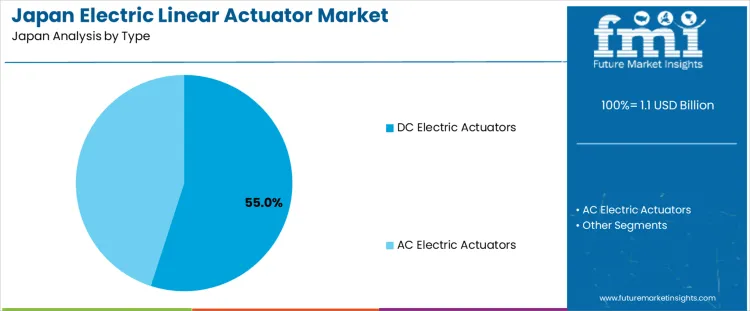
DC electric actuators account for 55% of the demand for electric linear actuators in Japan, driven by their compact size, precision, and ability to operate at low voltages. DC actuators are widely used in various applications, particularly in industrial settings, where they offer high efficiency and precise control for automation processes. Their versatility, ability to operate smoothly, and long service life contribute to their dominance in the industry. As Japan continues to prioritize automation and advanced technologies, the demand for DC electric actuators remains strong due to their compatibility with a wide range of applications.
How Does the Industrial Application Drive the Demand for Electric Linear Actuators in Japan?
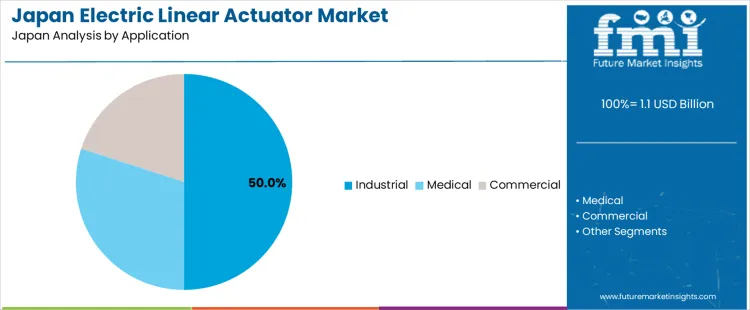
The industrial sector accounts for 50% of the demand for electric linear actuators in Japan, driven by the growing need for automation and efficient motion control in manufacturing processes. Electric actuators are essential in industries such as automotive, robotics, and material handling, where precise movement and control are critical for production efficiency. As Japan’s industrial sector continues to invest in automation and improve manufacturing processes, the demand for electric linear actuators increases. These actuators provide energy-efficient solutions, reducing operational costs while enhancing performance, making them a key component in modern industrial applications.
What are the Key Trends, Drivers and Restraints in Demand for Electric Linear Actuator in Japan?
Demand for electric linear actuators in Japan is growing as automation and precision motion control expand across manufacturing, robotics, automotive, electronics and healthcare sectors. Actuators provide controlled linear movement for tasks like positioning, lifting and adjustment. Trends include compact designs for space constrained environments and integration with smart factory systems. Drivers are Industry 4.0 adoption, labor shortages, quality improvement needs and energy efficiency.
Why is Demand for Electric Linear Actuator Growing in Japan?
Demand for electric linear actuators in Japan is increasing because manufacturers seek more precise, programmable motion control solutions that boost efficiency and consistency. As production lines become more automated, actuators help optimize tasks like assembly, packaging, inspection and material handling. The rise of robotics, factory digitization and zero defect manufacturing emphasizes components that deliver repeatability and controllability. In healthcare and consumer electronics, compact actuator designs support ergonomic and high precision applications. Growing awareness of long term operational savings, reduced maintenance and integration with digital control systems also contributes to rising actuator demand.
How are Technological and Industry Innovations Driving Electric Linear Actuator Demand in Japan?
Technological innovateons are accelerating electric linear actuator demand in Japan by improving performance, connectivity and flexibility. Advances in motor technologies enhance precision and energy efficiency, while integrated sensors enable real-time feedback and closed-loop control. Smart actuators with built-in diagnostics suit predictive maintenance and IoT platforms, aligning with smart factory initiatives. Compact and modular designs make installation easier in tight spaces, supporting robotics and high density manufacturing sectors. Software integration with programmable logic controllers and automation systems simplifies deployment. These improvements make actuators more reliable and adaptable, attracting wider use across sectors from automotive assembly to medical devices.
What is the Regional Demand Outlook for Electric Linear Actuators in Japan?
| Region | CAGR (%) |
|---|---|
| Kyushu & Okinawa | 5.2% |
| Kanto | 4.7% |
| Kansai | 4.2% |
| Chubu | 3.7% |
| Tohoku | 3.2% |
| Rest of Japan | 3.1% |
Demand for electric linear actuators in Japan is growing steadily, with Kyushu & Okinawa leading at a 5.2% CAGR, driven by the region’s industrial and agricultural automation sectors. Kanto follows with a 4.7% CAGR, supported by its technological innovation and strong presence in robotics and manufacturing. Kansai shows a 4.2% CAGR, fueled by the region’s advanced manufacturing base and focus on energy-efficient automation. Chubu experiences a 3.7% CAGR, with steady growth driven by its automotive industry and industrial automation. Tohoku and the rest of Japan see moderate growth at 3.2% and 3.1% CAGR, respectively.
How is Demand for Electric Linear Actuators Growing in Kyushu & Okinawa?
Kyushu & Okinawa leads the demand for electric linear actuators in Japan, growing at a 5.2% CAGR. The region’s expanding industrial sector, particularly in automation and manufacturing, is driving the increased adoption of electric linear actuators. Kyushu’s strong presence in sectors like robotics, agriculture, and renewable energy is contributing to the growing need for linear actuators in various applications, from robotic systems to agricultural machinery. Okinawa, with its emphasis on tourism and infrastructure development, is also seeing increased demand for electric linear actuators in automation systems for facilities and equipment. As the region continues to prioritize innovation and efficiency in industries, the demand for electric linear actuators will rise steadily, supporting both automation and industrial growth.
Why is Demand for Electric Linear Actuators Rising in Kanto?
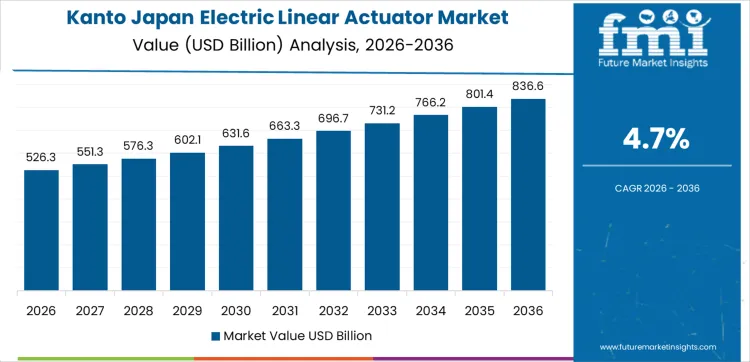
Kanto is experiencing steady demand for electric linear actuators, with a 4.7% CAGR. As Japan’s largest economic and industrial hub, Kanto, particularly Tokyo, is seeing significant growth in automation across various industries, from manufacturing to healthcare and logistics. The region’s focus on technological innovation, along with a growing demand for energy-efficient solutions, is driving the need for electric linear actuators. Kanto’s high-tech industries, including robotics and automotive, are particularly contributing to this rise. As more companies in Kanto embrace automation technologies for improved productivity and reduced energy consumption, the demand for electric linear actuators is expected to continue growing, with applications spanning industrial, commercial, and residential sectors.
How is Demand for Electric Linear Actuators Expanding in Kansai?
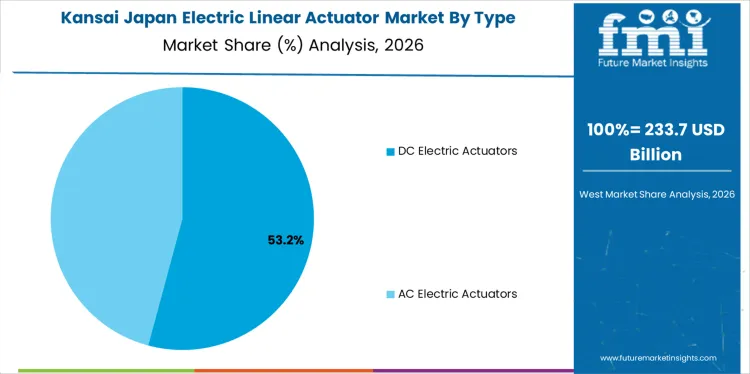
Kansai is seeing moderate demand for electric linear actuators, growing at a 4.2% CAGR. The region’s well-established manufacturing base, particularly in cities like Osaka, is contributing to the demand for electric linear actuators in automation and production processes. Kansai’s strong automotive and robotics sectors are increasingly adopting linear actuators for various applications, from assembly lines to precision machinery. The region’s emphasis on advanced manufacturing technologies and energy efficiency is driving the demand for electric linear actuators as a sustainable alternative to hydraulic systems. As the region continues to evolve its manufacturing capabilities and integrate automation, the need for electric linear actuators will continue to grow steadily, especially in sectors like robotics, automotive, and industrial automation.
How is Demand for Electric Linear Actuators Growing in Chubu?
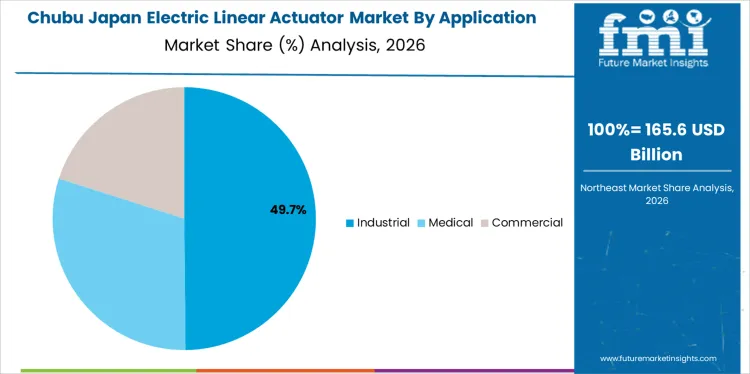
Chubu is experiencing moderate demand for electric linear actuators, with a 3.7% CAGR. The region’s focus on industrial automation and advanced manufacturing is driving the growing adoption of electric linear actuators, particularly in sectors like automotive, machinery, and electronics. Chubu, home to major automotive manufacturers like Toyota, is seeing increased integration of automation systems that require precise motion control, such as electric linear actuators. As the region continues to prioritize innovation and sustainability in manufacturing, the demand for electric linear actuators will grow, providing efficient and eco-friendly alternatives to traditional mechanical systems. With industries in Chubu embracing automation, the demand for electric linear actuators is expected to rise steadily over the next few years.
How is Demand for Electric Linear Actuators Growing in Tohoku?
Tohoku is seeing moderate demand for electric linear actuators, growing at a 3.2% CAGR. The region’s industrial growth, particularly in sectors like agriculture, robotics, and energy, is contributing to the increasing need for electric linear actuators. Tohoku’s focus on sustainable technologies and energy-efficient solutions is driving the demand for actuators, especially in sectors where automation and precise motion control are crucial. As industries in Tohoku continue to adopt electric systems in place of hydraulic or pneumatic alternatives, the demand for electric linear actuators will rise steadily. The region’s ongoing focus on improving industrial efficiency and embracing renewable energy solutions will further support the demand for linear actuators in Tohoku.
How is Demand for Electric Linear Actuators Growing in Rest of Japan?
The rest of Japan is experiencing moderate demand for electric linear actuators, growing at a 3.1% CAGR. Although the demand is not as concentrated in major urban areas, there is a steady rise in adoption across smaller cities and rural regions. With the increasing focus on automation in agriculture, manufacturing, and infrastructure, more businesses in these areas are integrating electric linear actuators into their systems. The shift toward energy-efficient and sustainable solutions is also contributing to the growth in demand, as electric linear actuators offer an environmentally friendly alternative to traditional mechanical systems. As industries outside major metropolitan areas continue to adopt automation technologies, the demand for electric linear actuators in the rest of Japan will grow steadily.
What is the Competitive Landscape of Electric Linear Actuator Demand in Japan?
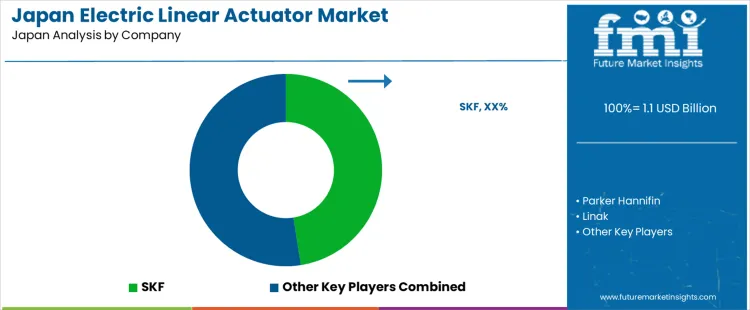
Demand for electric linear actuators in Japan is increasing as industries across automation, robotics, healthcare, and manufacturing seek efficient, precise motion control solutions. Electric linear actuators, known for their energy efficiency and precise movement capabilities, are widely used in applications ranging from robotics and medical devices to industrial equipment. As Japan’s focus on technological innovation and smart manufacturing intensifies, the need for reliable and advanced electric linear actuators is expected to grow.
SKF is a leading player in the electric linear actuator industry in Japan, offering high-performance products that cater to diverse industries. SKF’s strategy emphasizes providing energy-efficient, reliable solutions that improve automation processes and enhance system performance. The company’s strong engineering expertise and broad portfolio of motion control products position it as a dominant player in Japan’s competitive industry.
Parker Hannifin specializes in motion control products, offering a wide range of electric actuators for industrial and automation applications. Linak provides advanced electric linear actuators that cater to healthcare and industrial sectors, with a focus on precision and customization. Moteck Electric delivers cost-effective, versatile actuators designed for both industrial and commercial use. Tolomatic offers robust and high-speed linear actuators ideal for demanding environments.
Key Players in Japan Electric Linear Actuator Demand
- SKF
- Parker Hannifin
- Linak
- Moteck Electric
- Tolomatic
Scope of Report
| Items | Values |
|---|---|
| Quantitative Units (2026) | USD billion |
| Key Segments | DC Electric Actuators, AC Electric Actuators |
| Application | Industrial, Medical, Commercial |
| Key Country | Japan |
| Region | Kyushu & Okinawa, Kanto, Kansai, Chubu, Tohoku, Rest of Japan |
| Key Players Profiled | SKF, Parker Hannifin, Linak, Moteck Electric, Tolomatic |
| Additional Attributes | Dollar sales by type and application; regional CAGR and growth trends in electric linear actuator demand in Japan |
Japan Electric Linear Actuator Demand by Key Segments
Type:
- DC Electric Actuators
- AC Electric Actuators
Application:
- Industrial
- Medical
- Commercial
Region:
- Kyushu & Okinawa
- Kanto
- Kansai
- Chubu
- Tohoku
- Rest of Japan
Frequently Asked Questions
How big is the demand for electric linear actuator in Japan in 2026?
The demand for electric linear actuator in Japan is estimated to be valued at USD 1.1 billion in 2026.
What will be the size of electric linear actuator in Japan in 2036?
The market size for the electric linear actuator in Japan is projected to reach USD 1.8 billion by 2036.
How much will be the demand for electric linear actuator in Japan growth between 2026 and 2036?
The demand for electric linear actuator in Japan is expected to grow at a 4.1% CAGR between 2026 and 2036.
What are the key product types in the electric linear actuator in Japan?
The key product types in electric linear actuator in Japan are dc electric actuators and ac electric actuators.
Which application segment is expected to contribute significant share in the electric linear actuator in Japan in 2026?
In terms of application, industrial segment is expected to command 50.0% share in the electric linear actuator in Japan in 2026.
Preview the report firsthand - request a free sample
Get SampleGet the brochure for pricing and purchase details.
Get PDFTable of Content
- Executive Summary
- Japan Market Outlook
- Demand-side Trends
- Supply-side Trends
- Technology Roadmap Analysis
- Analysis and Recommendations
- Market Overview
- Market Coverage / Taxonomy
- Market Definition / Scope / Limitations
- Market Background
- Market Dynamics
- Drivers
- Restraints
- Opportunity
- Trends
- Scenario Forecast
- Demand in Optimistic Scenario
- Demand in Likely Scenario
- Demand in Conservative Scenario
- Opportunity Map Analysis
- Product Life Cycle Analysis
- Supply Chain Analysis
- Investment Feasibility Matrix
- Value Chain Analysis
- PESTLE and Porter’s Analysis
- Regulatory Landscape
- Regional Parent Market Outlook
- Production and Consumption Statistics
- Import and Export Statistics
- Market Dynamics
- Japan Market Analysis 2021 and 2026 and Forecast, 2026 to 2036
- Historical Market Size Value (USD Million) Analysis, 2021 and 2026
- Current and Future Market Size Value (USD Million) Projections, 2026 to 2036
- Y-o-Y Growth Trend Analysis
- Absolute $ Opportunity Analysis
- Japan Market Pricing Analysis 2021 and 2026 and Forecast 2026 to 2036
- Japan Market Analysis 2021 and 2026 and Forecast 2026 to 2036, By Type
- Introduction / Key Findings
- Historical Market Size Value (USD Million) Analysis By Type , 2021 and 2026
- Current and Future Market Size Value (USD Million) Analysis and Forecast By Type , 2026 to 2036
- Y-o-Y Growth Trend Analysis By Type , 2021 and 2026
- Absolute $ Opportunity Analysis By Type , 2026 to 2036
- Japan Market Analysis 2021 and 2026 and Forecast 2026 to 2036, By Application
- Introduction / Key Findings
- Historical Market Size Value (USD Million) Analysis By Application, 2021 and 2026
- Current and Future Market Size Value (USD Million) Analysis and Forecast By Application, 2026 to 2036
- Y-o-Y Growth Trend Analysis By Application, 2021 and 2026
- Absolute $ Opportunity Analysis By Application, 2026 to 2036
- Market Structure Analysis
- Competition Dashboard
- Competition Benchmarking
- Market Share Analysis of Top Players
- By Regional
- By Type
- By Application
- Competition Analysis
- Competition Deep Dive
- Assumptions & Acronyms Used
- Research Methodology


