

- Market Size (2026)
- USD 15.8 Mn
- Forecast (2036)
- USD 43.7 Mn
- CAGR (2026 to 2036)
- 10.7%
How big is Kefiran Edible Films Market in 2026?
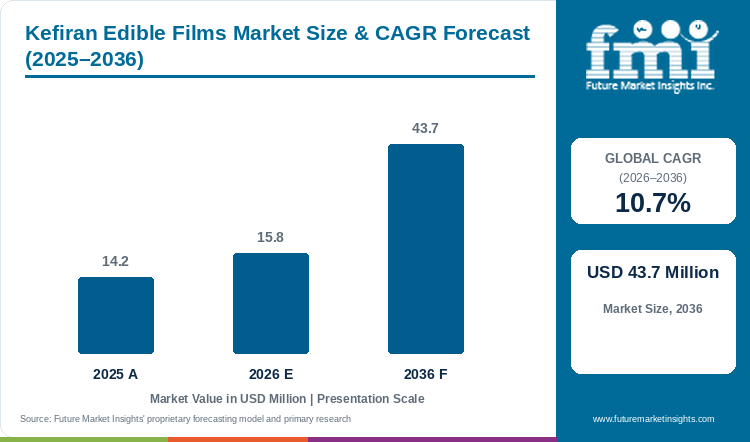
Starting from USD 14.2 million in 2025, the global kefiran edible films market valuation advanced to USD 15.8 million in 2026, with projections pointing toward USD 43.7 million by 2036 at a CAGR of 10.7%.
Supermarket chains across Europe and North America are penalizing non-recyclable polyvinylidene chloride cheese wraps while demanding longer refrigerated shelf life without synthetic natamycin sprays. Specialty creameries are consequently turning to bioactive dairy polysaccharide films that suppress surface pathogens directly on the cheese rind. For instance, a November 2025 study in Polymers demonstrated that 3% kefiran films enriched with 0.5 wt% grape pomace extract inhibited Listeria monocytogenes while improving UV barrier and tensile strength [1]. Through this dual barrier and antimicrobial performance, cheese packers can adopt edible films and coatings that protect sliced wedges without chemical preservatives on the ingredient label. Because reproducible hexasaccharide molecular weight is essential for continuous web casting, Lactobacillus kefiranofaciens Pure Culture Fermentation accounts for a projected 62.5% share of the microbial fermentation culture segment in 2026. Supported by these commercial dairy conversions, global kefiran edible films market value is estimated to rise from USD 14.2 million in 2025 to USD 15.8 million in 2026 and are forecast to reach USD 43.7 million by 2036, expanding at a 10.7% CAGR to generate USD 27.9 million in added annual market value. However, moisture absorption above 75% relative humidity swells uncrosslinked glucogalactan chains and restrains adoption across unconditioned tropical freight.
Key Market Trends & Insights
- By microbial fermentation culture: Lactobacillus kefiranofaciens Pure Culture Fermentation is projected to capture 62.5% in 2026 because monoculture dairy bioreactors eliminate yeast-driven viscosity drift.
- By plasticizer & crosslinking system: Glycerol / Sorbitol Plasticized Flexible Films are estimated to command 54.0% in 2026 owing to polyol hydrogen-bond spacing that lowers glass transition temperatures.
- By functional packaging role: Probiotic-Carrying Active Dairy & Cheese Wraps are expected to concentrate 49.2% in 2026 because immobilized bacteriocin-producing cultures delay rind spoilage.
- By packaged portion weight: 100 g - 500 g Retail Cheese & Deli Packs are anticipated to generate 54.6% in 2026 linked to rapid supermarket turnover of pre-sliced cheese wedges.
- By sales channel: Direct Flexible Packaging Converter Contracts are forecast to account for 76.4% in 2026 through custom slot-die viscosity and web-tension qualification.
Regional Highlights
- Top national expansion: Türkiye is projected to lead national growth at a 12.2% CAGR through 2036 under industrial kefir whey upcycling and brined white-cheese export wrapping.
- Broader country progression: Poland is expected to expand at a 12.0% CAGR ahead of Brazil at 11.5% and the USA at 10.4%, while Germany is forecast to advance at a 10.1% yearly pace.
Market Size & Forecast
Table 1: Market Size and Forecast for the Kefiran Edible Films Market (USD million and CAGR percentage), 2025 to 2036
| Metric | Value |
|---|---|
| 2025 Market Size | USD 14.2 million |
| Estimated Market Size in 2026 | USD 15.8 million |
| Projected Market Size by 2036 | USD 43.7 million |
| CAGR, 2026 to 2036 | 10.7% |
| Added Revenue, 2026 to 2036 | USD 27.9 million |
Commercial adoption of kefiran films was historically held back because artisanal kefir grains contain shifting ratios of yeasts and bacteria that cause wide tensile variations across cast webs. Dairy processors only commit to multi-year rollstock orders when probiotic survival and film elasticity remain stable across 60 days of chilled retail display. As a matter of fact, a May 2026 soft-cheese storage trial in Foods proved that probiotic dairy edible films carrying Lactobacillus acidophilus LA5 increased elongation at break from 4.87% to 68.23% while preserving 6.56 log CFU/g cell viability at 4 degrees Celsius and delaying yeast spoilage from day 28 to day 60 [2]. Because this 32-day shelf-life extension directly reduces supermarket spoilage chargebacks, cheese packers in Europe and North America are integrating purified monoculture kefiran webs into active packaging programs.
Fermentation Biomass and Cast-Film Output Sizing
Table 2: Fermentation Yield and Film Area Sizing for the Kefiran Edible Films Market (USD million and operational ranges), 2025 to 2036
| Metric | 2025 | 2026 | 2036 |
|---|---|---|---|
| Market size (USD million) | 14.2 | 15.8 | 43.7 |
| Purified kefiran resin output (metric tons) | 295 to 330 | 330 to 370 | 980 to 1,120 |
| Cast edible film surface area (million sq. meters) | 4.2 to 4.8 | 4.7 to 5.4 | 14.0 to 16.2 |
| Average resin price per kilogram (USD) | 43.0 to 48.0 | 42.5 to 47.5 | 39.0 to 44.5 |
Operational note: Film surface area benchmarks assume a dry coating weight of 65 to 75 grams per square meter at 60-micrometer film thickness across commercial solvent-casting lines.
Raw fermented whey broths contain residual milk lipids and cellular debris that cloud film transparency and weaken heat seals during tunnel drying. Bioreactor operators therefore pair tangential-flow ultrafiltration with cold ethanol precipitation to lift polysaccharide purity above 92%. High downstream purity allows resin suppliers to meet the optical clarity and tensile standards demanded by biodegradable films converters.
Converter Line & Dairy Packaging Unit Economics
Table 3: Converter Line Throughput and Unit Cost Indicators for the Kefiran Edible Films Market (USD and percentages), 2025 to 2036
| Metric | 2025 | 2026 | 2036 |
|---|---|---|---|
| Dairy & deli converter lines qualified (units) | 115 | 130 | 340 |
| Annual kefiran film spend per line (USD thousand) | 123.5 | 121.5 | 128.5 |
| Film material cost per 250 g cheese pack (USD) | 0.06 to 0.08 | 0.06 to 0.07 | 0.04 to 0.06 |
| Direct converter contract share (%) | 74.5% to 76.0% | 75.5% to 77.0% | 79.0% to 82.0% |
Table 4: Dairy Processing & Packaging Facility Indicators for the Kefiran Edible Films Market (USD and percentages), 2026
| Metric | Value | Institutional Reference Basis |
|---|---|---|
| Market size, 2026 | USD 15.8 million | 2026 global revenue baseline |
| Specialty cheese & fermented dairy lines | 1,420 facilities | Global commercial dairy packaging registry |
| Average film spend per facility | USD 11,126.8 | Annualized active edible wrap procurement |
| Active dairy & cheese wrap revenue, 2026 | USD 7.8 million | 49.2% functional packaging role allocation |
Even when a biopolymer film passes laboratory barrier checks, creameries will not approve a packaging switch if the web tears on high-speed horizontal flow-wrappers. Formulators address this mechanical bottleneck by blending deproteinized whey isolates with glycerol-plasticized kefiran to boost web modulus and lower unit resin cost. As a result, probiotic cheese producers can run bio-based wraps at commercial wrapping speeds while achieving 60-day mold-free retail shelf life.
Analyst Perspective
"Commercial transition of kefiran edible films from laboratory solvent casting to continuous roll-to-roll web lines requires decoupling exopolysaccharide biosynthesis from slow artisanal kefir grain propagation. Culture suppliers that pair high-yield Lactobacillus kefiranofaciens fermentation with hydrophobic nanocellulose crosslinking will capture multi-year converter contracts across Europe and North America."
- Nandini Roy Choudhury, Principal Consultant, Future Market Insights.
How is the kefiran edible films market segmented?
The kefiran edible films market is segmented by microbial fermentation culture, plasticizer & crosslinking system, functional packaging role, packaged portion weight, and sales channel. In 2026, Lactobacillus kefiranofaciens Pure Culture Fermentation is projected at 62.5%, Glycerol / Sorbitol Plasticized Flexible Films at 54.0%, Probiotic-Carrying Active Dairy & Cheese Wraps at 49.2%, 100 g - 500 g Retail Cheese & Deli Packs at 54.6%, and Direct Flexible Packaging Converter Contracts at 76.4%.
By microbial fermentation culture: Lactobacillus kefiranofaciens Pure Culture Fermentation, Traditional Dairy & Water Kefir Grain Extraction, Symbiotic Lactic-Yeast Co-Culture Fermentation, and others.
By plasticizer & crosslinking system: Glycerol / Sorbitol Plasticized Flexible Films, Whey-Protein & Nanocellulose Reinforced Kefiran Webs, Essential-Oil Loaded Active Antimicrobial Kefiran, and others.
By functional packaging role: Probiotic-Carrying Active Dairy & Cheese Wraps, Oxygen-Barrier Sliced Deli & Poultry Overwraps, Fast-Dissolving Oral Nutraceutical Strips, and others.
By packaged portion weight: 100 g - 500 g Retail Cheese & Deli Packs, <100 g Single-Serve Nutraceutical & Dairy Portions, 500 g - 3 kg Institutional Delicatessen Blocks, and others.
By sales channel: Direct Flexible Packaging Converter Contracts, Specialty Chemical Distributor Channels, Direct Dairy & Nutraceutical Processor Supply, and others.
Why does Lactobacillus kefiranofaciens Pure Culture Fermentation lead the microbial fermentation culture category?
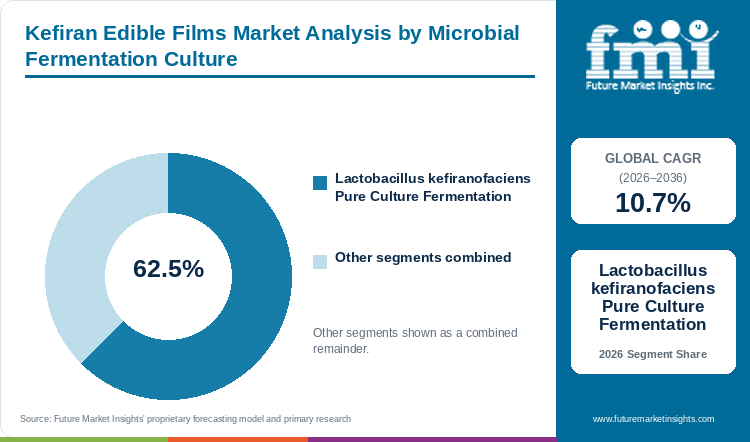
Lactobacillus kefiranofaciens Pure Culture Fermentation is projected to capture 62.5% of microbial fermentation culture demand in 2026, supported by uniform exopolysaccharide molecular weight in axenic bioreactors.
Table 5: Microbial Fermentation Culture Share for the Kefiran Edible Films Market (percentage share), 2026
| Microbial Fermentation Culture | Share (2026) |
|---|---|
| Lactobacillus kefiranofaciens Pure Culture Fermentation | 62.5% |
| Other Segments Combined | 37.5%* |
| Total | 100.0% |
*Calculated as the balance remaining after deducting the leading segment's reported share from 100.0%.
Table 6: Microbial Fermentation Culture Leadership and Market Growth for the Kefiran Edible Films Market (segment and CAGR percentage), 2026 to 2036
| Metric | Value |
|---|---|
| Global CAGR (2026 to 2036) | 10.7% |
| Leading Segment | Lactobacillus kefiranofaciens Pure Culture Fermentation |
Whole kefir grains harbor shifting ratios of Saccharomyces yeasts and acetic acid bacteria that alter broth viscosity from batch to batch. Monoculture cultivation of Lactobacillus kefiranofaciens in fed-batch whey permeate reactors eliminates this biological drift while supplying cheese packaging converters with consistent resin lots.
- Lactobacillus kefiranofaciens Pure Culture Fermentation is projected to secure 62.5% of microbial fermentation culture revenue in 2026 by guaranteeing narrow polydispersity and simplified membrane filtration.
- For instance, January 2026 structural characterization in the International Journal of Biological Macromolecules verified that purified kefiran fraction K1A consists of a glucose and galactose C4/C3 backbone with 2,6-galactose branching points that stabilize slot-die casting rheology [3].
Why do Glycerol / Sorbitol Plasticized Flexible Films define the largest plasticizer & crosslinking system segment?
Glycerol / Sorbitol Plasticized Flexible Films are estimated to secure 54.0% of the plasticizer & crosslinking system category in 2026, driven by polyol hydrogen-bond spacing between branched glucogalactan chains.
Without low-molecular-weight polyols, dense intra-chain hydrogen bonds across native kefiran form brittle sheets that crack when folded around chilled cheese wedges. Formulators add 20 to 30 wt% food-grade glycerol or D-sorbitol to expand intermolecular free volume and pair the matrix with biobased anti-blocking agents for flexible packaging films on high-speed rewinders.
- Within the plasticizer & crosslinking system category, Glycerol / Sorbitol Plasticized Flexible Films command an estimated 54.0% share in 2026 owing to direct food-contact safety and low cold-chain plasticizer migration.
- As a matter of fact, July 2025 density functional theory and ATR-FTIR spectroscopy in the International Journal of Biological Macromolecules mapped 386 vibrational modes and an 11.70 eV HOMO-LUMO energy gap across kefiran hydroxyl networks, explaining why polyol plasticizers bind without phase separation [4].
What keeps Probiotic-Carrying Active Dairy & Cheese Wraps ahead by functional packaging role?
Probiotic-Carrying Active Dairy & Cheese Wraps are expected to command 49.2% of functional packaging role volume in 2026, reflecting prebiotic cryoprotection that sustains live protective cultures on cheese rinds.
Supermarket chains across Europe are phasing out synthetic natamycin and potassium sorbate surface sprays on semi-hard and continental cheeses. Dairy packers integrate living kefiran wraps with antimicrobial packaging ingredients for food packaging to suppress Listeria and Penicillium growth during 45-day cold display.
- Probiotic-Carrying Active Dairy & Cheese Wraps hold an expected 49.2% share of functional packaging role sales in 2026 because branched kefiran acts as a protective prebiotic scaffold for immobilized lactobacilli.
- To capture this clean-label demand, dsm-firmenich launched four next-generation Dairy Safe all-in-one culture rotations in September 2025 after survey data showed 67% of consumers in Europe avoid unfamiliar label additives and 10% of cheese launches carry additive-free claims [5].
Why do 100 g - 500 g Retail Cheese & Deli Packs lead the packaged portion weight category?
100 g - 500 g Retail Cheese & Deli Packs are forecast to generate 54.6% of packaged portion weight revenue in 2026, owing to high cut-surface exposure in supermarket grab-and-go dairy cases.
Pre-cut 150-gram to 400-gram cheese wedges and sliced charcuterie portions lose moisture and oxidize rapidly under refrigerated LED cabinet lighting. Transparent kefiran film wraps around mid-sized retail portions prevent moisture loss and eliminate secondary plastic overwraps.
- In 2026, 100 g - 500 g Retail Cheese & Deli Packs represent a forecast 54.6% of packaged portion weight demand as private-label grocery programs replace multilayer thermoformed lidding films.
- Evidence of this retail protection came in a September 2025 Polymers review by FoodChemPack researchers at the University of Santiago de Compostela, which confirmed that Lactobacillus kefiranofaciens kefiran films provide controlled bioactive release and moisture barrier protection for portioned perishable foods [6].
What gives Direct Flexible Packaging Converter Contracts the leading position in sales channel?
Direct Flexible Packaging Converter Contracts are anticipated to account for 76.4% of sales channel turnover in 2026, reinforced by custom slot-die casting and co-extrusion qualification trials.
Slot-die casting of 50-micrometer edible webs requires tight control over aqueous dispersion solids and release-liner peel tension on converter lines. Because general chemical distributors lack in-house web-coating engineers to calibrate those parameters, biopolymer producers establish multi-year supply agreements directly with dairy film converters.
- Direct Flexible Packaging Converter Contracts capture an anticipated 76.4% of sales channel revenue in 2026 because converter lines require custom rheology matching and dedicated cold-chain resin delivery.
- On the commercial supply side, Novonesis reported 8% organic sales growth in August 2026 for the first half of 2026, led by 9% organic expansion in Food & Health Biosolutions through direct formulation partnerships with food and dairy processors [7].
What are the drivers, restraints, and opportunities in the kefiran edible films market?
In the kefiran edible films market, circular dairy whey valorization and clean-label biopreservation mandates expand commercial adoption whereas moisture sensitivity above 75% relative humidity restrains tropical distribution and electrospun probiotic oral strips unlock high-margin nutraceutical revenue.
- Driver: Circular upcycling of acid whey permeate into food-grade exopolysaccharide films lowers raw material costs while satisfying European and North America single-use plastic reduction targets.
- Restraint: Hydrophilic hydroxyl groups on branched kefiran chains absorb ambient moisture above 75% relative humidity, elevating oxygen transmission and causing film tackiness.
- Opportunity: Crosslinking kefiran with whey protein isolate nanofibers and essential-oil nanoemulsions creates water-resistant active wraps and fast-dissolving oral probiotic strips.
Growth Analysis and Future Potential: Acid-Whey Valorization and Rind Biopreservation
Steep municipal biological oxygen demand surcharges on acid-whey effluent are squeezing operating margins at cottage cheese and Greek yogurt plants across Europe and North America. Rather than paying wastewater treatment penalties, dairy processors feed deproteinized whey permeate into Lactobacillus kefiranofaciens bioreactors to convert a waste stream into edible film resin that competes with chitosan and carrageenan in clean-label food wraps. To validate the ingestion safety of these dairy-derived polymers, an August 2025 in vivo metabolic study in Nutrition & Diabetes confirmed that kefir exopolysaccharides safely modulate gut microbiota and protect cellular integrity without toxicity [8]. Cheese procurement directors use these safety dossiers to replace synthetic surface fungicides with edible kefiran rinds.
Risk Assessment of the Kefiran Edible Films Market: Condensation Swelling and Fermentation Costs
Purified kefiran resin trades between USD 42.5 and USD 47.5 per kilogram in 2026 because slow microaerophilic bacterial doubling times and 2:1 ethanol precipitation volumes elevate downstream recovery costs. Beyond raw resin pricing, temperature swings inside open supermarket chillers cause condensed water vapor to swell the hydrophilic glucogalactan network and weaken heat-seal seams. In addition to this moisture sensitivity, August 2025 physiological stress research on Lactobacillus kefiranofaciens K6 in the International Journal of Medical Sciences showed that maintaining live bacterial stability requires strict protection against oxidative and thermal stress during processing [9]. Because of these thermal and moisture risks, converter quality teams mandate 8-to-12-week humidity aging trials that lengthen commercial onboarding.
Commercial Opportunity Analysis: Biomaterial Ink Crosslinking and Oral Probiotic Strips
Commercial expansion into high-humidity deli wraps and high-margin oral delivery strips requires crosslinking kefiran's exposed hydroxyl groups without sacrificing biocompatibility. For instance, researchers at the National Institute of Research and Development for Biological Sciences in Bucharest demonstrated in Gels in March 2026 that composite kefiran hydrogels exhibit shear-thinning flow and over 70% cell viability [10]. Packaging formulators apply this crosslinking chemistry with cellulose nanocrystals and whey proteins to cut water vapor permeability by 40% in sliced deli wraps. Nutraceutical contract packagers also cast thin kefiran webs into fast-dissolving oral probiotic strips that capture premium unit margins within the water-soluble packaging ecosystem.
Kefiran Edible Films Market by Country (2026 to 2036)
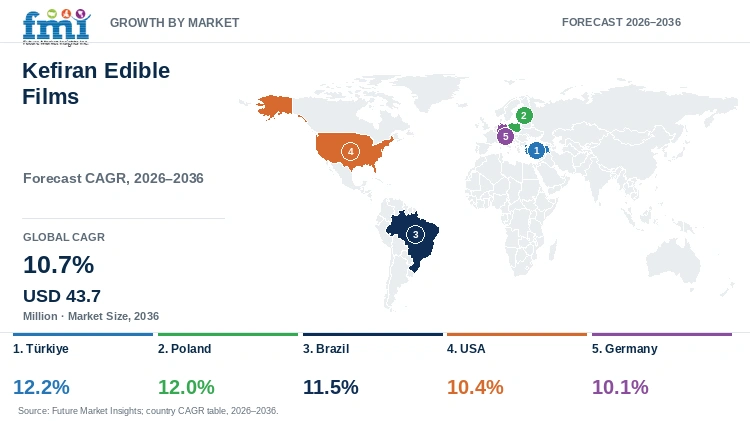
Türkiye is projected to lead kefiran edible films expansion across evaluated markets at a 12.2% CAGR from 2026 to 2036, followed closely by Poland at 12.0% and Brazil at 11.5%, while the USA at 10.4% and Germany at 10.1% anchor industrial pure-culture fermentation and converter machinery demand. Abundant fermented dairy whey streams in Anatolia and Eastern Europe accelerate local resin extraction, whereas statutory plastic-reduction rules govern converter contracts in Western Europe and North America.
Table 7: Country CAGR and Primary Growth Levers for the Kefiran Edible Films Market (CAGR percentage and operational drivers), 2026 to 2036
| Country | CAGR (2026 to 2036) | Primary Growth Lever |
|---|---|---|
| Türkiye | 12.2% | Industrial kefir whey valorization and active antimicrobial brined-cheese export wraps |
| Poland | 12.0% | Dairy cooperative acid-whey bioconversion and EU single-use plastic deli wrap substitution |
| Brazil | 11.5% | Minas artisanal cheese preservation and tropical antifungal edible coating adoption |
| USA | 10.4% | Commercial kefir fermentation scale and clean-label specialty cheese converter contracts |
| Germany | 10.1% | EU PPWR recyclable packaging compliance and bioreactor-grade exopolysaccharide casting |
Source: Future Market Insights analysis
Türkiye Kefiran Edible Films Market Outlook (2026 to 2036)
Demand for kefiran edible films in Türkiye is projected to expand at a leading 12.2% CAGR through 2036, driven by export-oriented beyaz peynir and kashar cheese packers replacing synthetic natamycin rinds. Unlike Western European converters that purchase purified hydrocolloid powders on the open market, dairy plants across Marmara and Central Anatolia generate vast captive streams of fermented kefir whey. To validate local active film conversion, food engineers at Istanbul Technical University reported in the Journal of Food Science in August 2025 that probiotic-loaded biopolymer nanofiber films achieved over 90% cell viability and 5.24 to 11.08 MPa tensile strength while extending chilled food shelf life [11]. Currency depreciation against imported petro-resins further pushes converters in Türkiye toward domestic kefiran dispersions, though high imported ethanol recovery costs still restrain smaller Anatolian creameries from building in-house precipitation units.
Key takeaway: In Türkiye, captive kefir whey supplies and antimicrobial brined-cheese export specifications are projected to sustain top national growth through 2036.
Poland Kefiran Edible Films Market Outlook (2026 to 2036)
Large dairy cooperatives in Podlaskie and Mazovia process massive volumes of quark and twarog curd, leaving behind concentrated acid whey that carries steep municipal disposal fees. Bioreactor valorization of that byproduct stream into packaging resin is expected to propel kefiran edible films sales in Poland at a 12.0% CAGR between 2026 and 2036, supported by discount supermarket tenders phasing out multilayer plastic cheese trays. As a matter of fact, an April 2026 study in Foods isolated Lactobacillus kefiranofaciens EG10 from Eurasian kefir grains and achieved 539.57 micrograms per milliliter exopolysaccharide yield across two molecular weight fractions that improved fermented dairy water-holding capacity [12]. Through these higher fermentation yields, film converters in Poland co-cast kefiran with domestic whey protein concentrates to meet tight retail price ceilings, even as winter energy costs for tunnel drying remain a margin headwind.
Key takeaway: In Poland, co-locating exopolysaccharide extraction inside dairy cooperatives is expected to cut raw resin costs for private-label supermarket cheese wraps.
Brazil Kefiran Edible Films Market Outlook (2026 to 2036)
Fresh high-moisture cheeses such as Minas Frescal and Prato suffer rapid surface mold and weight loss along warm distribution corridors between Minas Gerais and Sao Paulo. To address these tropical spoilage write-offs, scientists at Universidade Federal de Sao Carlos reported in the International Journal of Biological Macromolecules in July 2025 that purified kefiran eradicated 35.5% of Staphylococcus epidermidis ATCC 35984 biofilms at 512 mg/L and disrupted fungal hyphae on chilled rinds [4]. Kefiran edible film expenditure in Brazil is consequently forecast to grow at an 11.5% CAGR from 2026 to 2036 owing to ANVISA clean-label biopreservation clearances for fresh artisanal cheeses. However, high import duties on ultrafiltration membranes force processors in Brazil to rely on batch ethanol precipitation from cane-sugar and whey broths, which caps margin expansion on commodity cheese blocks.
Key takeaway: In Brazil, tropical antifungal protection for fresh artisanal cheeses and abundant domestic whey-sucrose substrates are forecast to sustain double-digit expansion.
USA Kefiran Edible Films Market Outlook (2026 to 2036)
Rapid growth in retail cultured dairy beverage consumption across the Midwest has created a large domestic surplus of spent kefir grain biomass in Illinois and Wisconsin. For example, Lifeway Foods reported its highest quarterly net sales in company history in August 2026 during the second quarter of 2026, extending record commercial kefir volume output across the USA [13]. State extended producer responsibility packaging fees in California and Washington simultaneously penalize non-recyclable plastic deli wraps, pushing specialty cheese converters and oral probiotic strip packagers to valorize domestic kefiran streams. Commercial turnover in the USA is therefore anticipated to rise at a 10.4% CAGR through 2036, enabled by direct converter qualification of pure-culture kefiran webs, though 9-to-15-month FDA food-contact migration audits still slow onboarding at national grocery chains.
Key takeaway: In the USA, commercial kefir fermentation expansion in the Midwest and state plastic-packaging fees are anticipated to drive steady converter adoption.
Germany Kefiran Edible Films Market Outlook (2026 to 2036)
Steep eco-modulated packaging fees under Germany's VerpackG law and European Union Packaging and Packaging Waste Regulation rules penalize multi-material plastic cheese wraps across Bavaria and Lower Saxony. Demand for kefiran edible films in Germany is predicted to record a 10.1% CAGR between 2026 and 2036, reinforced by organic dairy cooperatives transitioning sliceable cheeses to home-compostable rinds. To verify the pathogen barrier needed for preservative-free organic rinds, European food packaging researchers reported in Molecules in May 2025 that microbial polysaccharide coatings enriched with clove essential oil cut UV transmission by 34% and achieved over 99.9% bactericidal reduction against Listeria monocytogenes and Salmonella Enteritidis [14]. Because industrial electricity tariffs in Germany remain elevated, local film converters require high-solids slot-die coating dispersions rather than dilute solvent-cast slurries to keep drying costs competitive.
Key takeaway: In Germany, strict VerpackG fee modulation and precision downstream purification are predicted to favor high-solids kefiran coating lines across organic dairy packers.
Full report country CAGRs cover: North America; Latin America; Western Europe; Eastern Europe; East Asia; South Asia and Pacific; Middle East and Africa.
Who are the notable companies in the kefiran edible films market?
Novonesis (Chr. Hansen Starter Platforms), International Flavors & Fragrances Inc. (Danisco Cultures), Lifeway Foods, Inc., Biotiful Gut Health Ltd., Lallemand Inc., and dsm-firmenich AG are the notable companies in the kefiran edible films market.
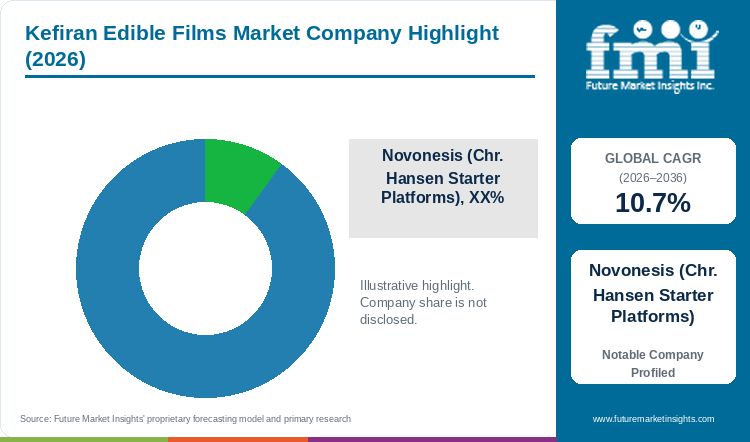
Supplier competition splits between multinational starter-culture biosolutions groups and vertically integrated kefir dairy processors. Upstream biosolutions houses engineer phage-resistant Lactobacillus kefiranofaciens starter banks and bioprotective cultures for dairy bioreactors, whereas commercial kefir producers valorize captive fermented dairy and grain exopolysaccharide streams into edible wraps.
- Microbial Exopolysaccharide & Starter Culture Platforms: Novonesis (Chr. Hansen Starter Platforms), International Flavors & Fragrances Inc. (Danisco Cultures), and dsm-firmenich AG supply axenic kefir cultures and bioprotective dairy hydrocolloids.
- Commercial Kefir Biomass & Dairy Valorization Specialists: Lifeway Foods, Inc. and Biotiful Gut Health Ltd. operate high-volume kefir fermentation plants that generate food-grade kefiran biomass.
- Specialty Probiotic & Fermentation Ingredient Producers: Lallemand Inc. supplies freeze-dried lactic acid bacteria and yeast co-cultures that stabilize active probiotic edible films.
Competitive Benchmarking: Kefiran Edible Films Market
Table 8: Competitive Benchmarking for the Kefiran Edible Films Market (qualitative capability ratings), 2026
| Company | Exopolysaccharide Strain Yield | Active Probiotic Film Stability | Converter & Dairy Access | Geographic Reach |
|---|---|---|---|---|
| Novonesis (Chr. Hansen Starter Platforms) | High | High | High | High |
| International Flavors & Fragrances Inc. (Danisco Cultures) | High | High | High | High |
| Lifeway Foods, Inc. | Medium | High | Medium | Medium |
| Biotiful Gut Health Ltd. | Medium | Medium | Medium | Medium |
| Lallemand Inc. | High | High | Medium | High |
| dsm-firmenich AG | High | High | High | High |
Scoring basis: Capability tiers evaluate documented Lactobacillus kefiranofaciens exopolysaccharide fermentation yields with probiotic survival across 60-day refrigerated storage. Ratings also reflect commercial supply agreements with dairy processors and film converters.
Key Developments in the Kefiran Edible Films Market
- In August 2026, Lifeway Foods delivered its highest quarterly net sales in company history in the second quarter of 2026, expanding commercial kefir fermentation output in the USA [13].
- In September 2025, dsm-firmenich launched four next-generation Dairy Safe all-in-one bioprotective culture rotations combining nisin-producing and nisin-immune Lactococcus lactis strains to replace lysozyme and nitrate preservatives in cheese [5].
- In October 2026, Lallemand Bio-Ingredients was selected as a finalist at the Fi Europe Innovation Awards 2026 for its fermentation-derived hybrid dairy and specialized nutrition formulation platform [15].
Key Players in the Kefiran Edible Films Market
Microbial Exopolysaccharide & Starter Culture Platforms
- Novonesis (Chr. Hansen Starter Platforms)
- International Flavors & Fragrances Inc. (Danisco Cultures)
- dsm-firmenich AG
Commercial Kefir Biomass & Dairy Valorization Specialists
- Lifeway Foods, Inc.
- Biotiful Gut Health Ltd.
Specialty Probiotic & Fermentation Ingredient Producers
- Lallemand Inc.
Kefiran Edible Films Market - Report Scope
Table 9: Report Scope for the Kefiran Edible Films Market (coverage fields and definitions), 2026 to 2036
| Coverage field | Report scope |
|---|---|
| Market breakdown | Microbial Fermentation Culture; Plasticizer & Crosslinking System; Functional Packaging Role; Packaged Portion Weight; Sales Channel |
| Quantitative Units | USD Million |
| Market Definition | Includes commercial supplier revenue from purified kefiran exopolysaccharide resins, plasticized cast edible films, and probiotic-carrying active kefiran wraps used in dairy, deli, and oral nutraceutical packaging. Category Scope Note: Excludes retail drinkable kefir beverages, unplasticized raw dairy whey sold for animal feed, and non-edible synthetic polymer laminates. |
| Regions Covered | North America; Latin America; Western Europe; Eastern Europe; East Asia; South Asia and Pacific; Middle East and Africa |
| Countries Covered | Türkiye, Poland, Brazil, USA, Germany, and additional countries in the full report |
| Key Companies Covered | Novonesis (Chr. Hansen Starter Platforms), International Flavors & Fragrances Inc. (Danisco Cultures), Lifeway Foods, Inc., Biotiful Gut Health Ltd., Lallemand Inc., dsm-firmenich AG |
| Forecast Period | 2026 to 2036 |
| Approach | Primary and secondary research with top-down and bottom-up market triangulation. |
Kefiran Edible Films Market - Research Methodology
Table 10: Research Methodology for the Kefiran Edible Films Market (research methods and approach), 2026 edition
| Method | Approach |
|---|---|
| Primary Research | Structured interviews with dairy starter culture fermentation directors, flexible packaging slot-die converters, specialty cheese quality managers, and nutraceutical oral-film formulators to validate resin pricing and web casting yields. |
| Secondary Research | Analysis of corporate biosolutions disclosures, PubMed and PMC peer-reviewed kefiran polymer studies, European Union PPWR packaging compliance texts, and FDA GRAS food-contact notifications. |
| Market Sizing and Forecasting | Top-down edible dairy packaging expenditure models reconciled against bottom-up bioreactor exopolysaccharide tonnage and square-meter film conversion capacity from 2026 to 2036. |
| Country Forecasting Model | Econometric national projections weight commercial kefir whey availability, specialty cheese production volumes, and statutory single-use plastic phase-out timelines across five core national markets. |
| Operational Benchmark Traceability | Biomass output and converter unit economics in Tables 2, 3, and 4 trace to Polymers and Foods experimental film trials, International Journal of Biological Macromolecules characterization data, and commercial dairy plant registries. |
| Data Triangulation and Validation | Revenue estimates are cross-checked against industrial starter culture shipments and converter film rollstock contracts without double counting liquid beverage kefir sales. |
Kefiran Edible Films Market by Segments
Kefiran Edible Films Market segmented by Microbial Fermentation Culture:
- Lactobacillus kefiranofaciens Pure Culture Fermentation
- Traditional Dairy & Water Kefir Grain Extraction
- Symbiotic Lactic-Yeast Co-Culture Fermentation
- Others
Kefiran Edible Films Market segmented by Plasticizer & Crosslinking System:
- Glycerol / Sorbitol Plasticized Flexible Films
- Whey-Protein & Nanocellulose Reinforced Kefiran Webs
- Essential-Oil Loaded Active Antimicrobial Kefiran
- Others
Kefiran Edible Films Market segmented by Functional Packaging Role:
- Probiotic-Carrying Active Dairy & Cheese Wraps
- Oxygen-Barrier Sliced Deli & Poultry Overwraps
- Fast-Dissolving Oral Nutraceutical Strips
- Others
Kefiran Edible Films Market segmented by Packaged Portion Weight:
- 100 g - 500 g Retail Cheese & Deli Packs
- <100 g Single-Serve Nutraceutical & Dairy Portions
- 500 g - 3 kg Institutional Delicatessen Blocks
- Others
Kefiran Edible Films Market segmented by Sales Channel:
- Direct Flexible Packaging Converter Contracts
- Specialty Chemical Distributor Channels
- Direct Dairy & Nutraceutical Processor Supply
- Others
Kefiran Edible Films Market by Region
- North America
- United States
- Canada
- Latin America
- Brazil
- Mexico
- Argentina
- Chile
- Western Europe
- Germany
- France
- United Kingdom
- Italy
- Spain
- Benelux
- Nordics
- Eastern Europe
- Poland
- Czech Republic
- Romania
- Hungary
- East Asia
- China
- Japan
- South Korea
- South Asia and Pacific
- India
- ASEAN
- Australia and New Zealand
- Middle East and Africa
- GCC Countries
- South Africa
- Türkiye
- Israel
Research Sources and Bibliography
- [1] Islas-Enríquez, R. P., Márquez-Reyes, J. M., Báez-González, J. G., Galindo-Rodríguez, S. A., Gallardo-Rivera, C. T., Viveros-Valdez, E., Amaya-Guerra, C. A., Bautista-Villarreal, M., & Treviño-Garza, M. Z. (2025, November 23). Novel Bioactive Kefiran-Based Films Enriched with Grape Pomace Extract. Polymers (Basel), 17(23), 3108 (PubMed PMID 41374795; PMCID PMC12694521; DOI 10.3390/polym17233108).
- [2] Tsanasidou, C., Giannouli, A., Bosnea, L. A., Terpou, A., & Kontogianni, V. G. (2026, May 2). Sustainable Probiotic Whey Protein Edible Films for Soft Cheese Quality and Shelf-Life Enhancement. Foods, 15(9), 1570 (PubMed PMID 42121513; PMCID PMC13163486; DOI 10.3390/foods15091570).
- [3] Cui, Y., Zhu, J., Xi, J., Ding, C., & Meng, J. (2026, January 8). Kefiran, a polysaccharide from kefir grain, modulates gut microbiota and hepatic metabolism to mitigate metabolic dysfunction-associated steatotic liver disease. International Journal of Biological Macromolecules, 341(Pt 1), 150147 (PubMed PMID 41519316; DOI 10.1016/j.ijbiomac.2026.150147).
- [4] Marques, G. N., Moraes, A. S., Argentin, M. N., Pedrino, I. C., Lacava, P. T., Carrea, D. A., Pereira, I. R. O., Pereira, E. C., Camargo, I. L. B. C., Fakhouri, F. M., Bernardi, M. I. B., Mascaro, L. H., & Velasco, J. I. (2025, July 16). Density Functional Theory Calculations, Antibiofilm Properties, and Edible Coating Application of Kefiran for Strawberry Shelf-Life Extension. International Journal of Biological Macromolecules, 320(Pt 4), 146111 (PubMed PMID 40680972; DOI 10.1016/j.ijbiomac.2025.146111).
- [5] dsm-firmenich AG. (2025, September 4). dsm-firmenich launches next generation of Dairy Safe™ all-in-one cultures for semi-hard, hard, and continental-style cheese varieties. dsm-firmenich Taste, Texture & Health Press Releases.
- [6] Mariño-Cortegoso, S., Lestido-Cardama, A., Sendón, R., Rodríguez Bernaldo de Quirós, A., & Barbosa-Pereira, L. (2025, September 12). The State of the Art and Innovations in Active and Edible Coatings and Films for Functional Food Applications. Polymers (Basel), 17(18), 2472 (PubMed PMID 41012238; PMCID PMC12473381; DOI 10.3390/polym17182472).
- [7] Novonesis Group. (2026, August 19). H1 2026: Novonesis delivered strong 8% organic sales growth and increases full-year outlook. Novonesis Official Press Releases.
- [8] Yen, C.-C., Tsai, C.-L., Chang, G. R.-L., Ko, C.-H., Tu, M.-Y., Lan, Y.-W., Chen, H.-L., & Chen, C.-M. (2025, August 19). Kefir-derived exopolysaccharide ameliorates hyperglycemic control and beta cell integrity in a rat model of type 2 diabetes mellitus. Nutrition & Diabetes, 15(1), 36 (PubMed PMID 40830335; PMCID PMC12365037; DOI 10.1038/s41387-025-00388-5).
- [9] Chen, C.-W., Wu, L.-T., Chiu, P.-H., Chen, Y.-P., & Huang, W.-C. (2025, August 11). The probiotic Lactobacillus kefiranofaciens K6 alleviates exercise and sleep deprivation-induced physiological dysregulation and neuropsychiatric disorders via modulation of inflammation, circadian rhythm, and stress response. International Journal of Medical Sciences, 22(14), 3722-3736 (PubMed PMID 40959574; PMCID PMC12434813; DOI 10.7150/ijms.115387).
- [10] National Institute of Research and Development for Biological Sciences (Bucharest). (2026, March 26). Kefiran as a Novel Biomaterial Ink Component: Preliminary Assessment of 3D Printing Feasibility and Biocompatibility. Gels, 12(4), 279 (PubMed PMID 42042117; PMCID PMC13116933; DOI 10.3390/gels12040279).
- [11] Dikmetas, D. N., Akturk, A., Erol-Taygun, M., & Karbancioglu-Güler, F. (2025, August 15). Active Packaging Nanofiber Films Based on Polyvinyl Alcohol-Pullulan With Probiotics to Improve the Shelf-Life of Chicken Fillets. Journal of Food Science, 90(8), e70463 (PubMed PMID 40836373; DOI 10.1111/1750-3841.70463).
- [12] Zhang, T., Li, Y., Leng, J., Ye, Z., Duan, Z., Huang, B., Zhang, C., Imran, M., Azam, M., Sun, B., & Yi, Y. (2026, April 10). Characterization of Mannose-Rich Exopolysaccharides from Kefir Lactic Acid Bacteria and Their Techno-Functional Potential in Fermented Milk. Foods, 15(8), 1322 (PubMed PMID 42073210; PMCID PMC13114613; DOI 10.3390/foods15081322).
- [13] Lifeway Foods, Inc. (2026, August 13). Lifeway Foods® Delivers Highest Quarterly Net Sales in Company History, Extending Record Growth in Second Quarter 2026. Lifeway Foods Official Press Releases.
- [14] Kraśniewska, K., & Gniewosz, M. (2025, May 10). Active Packaging Based on a PET/PP Food-Grade Film Coated with Pullulan and Clove Essential Oil: Physicochemical and Antimicrobial Properties. Molecules, 30(10), 2118 (PubMed PMID 40430291; PMCID PMC12114341; DOI 10.3390/molecules30102118).
- [15] Lallemand Bio-Ingredients. (2026, October 6). We are proud finalists at the Fi Europe Innovation Awards 2026. Lallemand Bio-Ingredients Official News Releases.
- [16] College of Food Science and Engineering, Harbin University. (2025, May 22). Lactobacillus kefiranofaciens and its enhancement effect on the anti-inflammatory function of CII/Gln in MIA-induced osteoarthritis by protecting the intestinal barrier and gut microecology. International Journal of Food Sciences and Nutrition, 76(5), 530-543 (PubMed PMID 40401730; DOI 10.1080/09637486.2025.2508173).
- [17] Novonesis Group. (2026, May 5). Novonesis delivered strong start to the year with 7% organic sales growth in Q1. Novonesis Official Press Releases.
- [18] dsm-firmenich AG. (2026, July 30). dsm-firmenich reports H1 2026 results. dsm-firmenich Official Press Releases.
- [19] International Flavors & Fragrances Inc. (2026, August 4). IFF Reports Second Quarter 2026 Results; Announces Use of Proceeds Plan for Food Ingredients Divestiture. IFF Investor Relations News Releases.
- [20] Muratbayev, A., Idyryshev, B., Kakimov, A., Bepeyeva, A., Jumazhanova, M., Tashybayeva, M., Zhumadilova, G., Muratzhankyzy, N., Imangaliyeva, Z., & Bazanova, A. (2025, August 19). Development of Alginate–Pullulan Capsules for Targeted Delivery of Herbal Dietary Supplements in Functional Fermented Milk Products. Foods, 14(16), 2878 (PubMed PMID 40870791; PMCID PMC12385854; DOI 10.3390/foods14162878).
- [21] dsm-firmenich AG. (2026, February 12). dsm-firmenich reports full year 2025 results. dsm-firmenich Official Press Releases.
- [22] Karimi Sani, I., Hassani, B., Rasul, N. H., Mansouri, E., Eghbaljoo, H., Kaveh, M., Hassani, D., Alizadeh Sani, M., Khezerlou, A., Gholizadeh, H., Salamat Mamakani, Z., & Jafari, S. M. (2025, October 10). Antioxidant packaging films: application for sustainable food protection. Current Research in Food Science, 11, 101222 (PubMed PMID 41140572; PMCID PMC12547824; DOI 10.1016/j.crfs.2025.101222).
- [23] Oliyaei, N., Awlqadr, F. H., Irajie, C., Yazdanpanah, S., Zomorodian, K., & Iraji, A. (2026, April 25). Preparation and Characterization of Emulsion‐Based Fucoidan‐Whey Protein Film Activated With Geranium Essential Oil for Food Applications. Food Science & Nutrition, 14(5), e71811 (PubMed PMID 42038430; PMCID PMC13109817; DOI 10.1002/fsn3.71811).
This bibliography is provided for reader reference and is not exhaustive. The full report contains the complete reference list and detailed citations.
This Report Answers
- How large is the kefiran edible films market in 2026 and what is forecast for 2036?
- Which dairy valorization and biopreservation pressures support demand for kefiran edible films?
- Why does Lactobacillus kefiranofaciens Pure Culture Fermentation lead the microbial fermentation culture category?
- Why do Glycerol / Sorbitol Plasticized Flexible Films lead the plasticizer & crosslinking system category globally?
- How do national growth rates compare across key country markets through 2036?
- Which leading companies supply relevant kefir exopolysaccharide and starter culture categories today?
- What limits adoption or supplier switching in the kefiran edible films market?
- What should buyers evaluate before purchasing a kefiran edible film?
Frequently Asked Questions
How big is the kefiran edible films market in 2026, and what is forecast for 2036?
Global kefiran edible films revenue is estimated at USD 15.8 million in 2026 from USD 14.2 million in 2025. Sales are forecast to reach USD 43.7 million by 2036 through specialty cheese packers adopting active probiotic wraps.
What is the CAGR for the kefiran edible films market from 2026 to 2036?
The global market is projected to expand at a 10.7% compound annual growth rate between 2026 and 2036, adding USD 27.9 million in annual revenue across dairy and nutraceutical packaging channels.
Which microbial fermentation culture segment leads the kefiran edible films market?
Lactobacillus kefiranofaciens Pure Culture Fermentation is projected to capture 62.5% of microbial fermentation culture demand in 2026 because monoculture bioreactor control guarantees uniform film-casting viscosity.
Which plasticizer & crosslinking system segment leads the kefiran edible films market?
Glycerol / Sorbitol Plasticized Flexible Films are estimated to secure 54.0% of the plasticizer & crosslinking system category in 2026 owing to food-grade polyol hydrogen bonding that prevents brittle web fracture during cold storage.
Which country has a notable growth outlook during the assessment period?
Türkiye is projected to lead national expansion at a 12.2% CAGR through 2036, supported by domestic kefir whey valorization and antimicrobial brined-cheese export wrapping.
Who are the key players in the market?
Novonesis and International Flavors & Fragrances Inc. lead commercial culture supply with dsm-firmenich AG and Lallemand Inc., while Lifeway Foods and Biotiful Gut Health anchor downstream kefir production.
Preview the report firsthand - request a free sample
Get SampleGet the brochure for pricing and purchase details.
Get PDFTable of Content
- Key Takeaways
- Market Size and CAGR
- Top Growth Driver
- Fastest Growing Segment
- Leading Region
- Key Companies
- Emerging Opportunities
- Executive Summary
- Global Market Outlook
- Demand-side Trends
- Supply-side Trends
- Technology Roadmap Analysis
- Analysis and Recommendations
- Analyst Perspective (What is happening? Why now? What should investors know?)
- Key Questions Answered
- How large is the market?
- What is the CAGR?
- What are key trends?
- Which region dominates?
- Who are the leaders?
- Market Overview
- Market Coverage / Taxonomy
- Market Definition / Scope / Limitations
- Research Methodology
- Chapter Orientation
- Analytical Lens and Working Hypotheses
- Market Structure, Signals, and Trend Drivers
- Benchmarking and Cross-market Comparability
- Market Sizing, Forecasting, and Opportunity Mapping
- Research Design and Evidence Framework
- Desk Research Programme (Secondary Evidence)
- Expert Input and Fieldwork (Primary Evidence)
- Tooling, Models, and Reference Databases
- Data Engineering and Model Build
- Quality Assurance and Audit Trail
- Market Background
- Market Dynamics (Drivers, Restraints, Opportunity, Trends)
- Scenario Forecast (Optimistic, Likely, Conservative)
- Impact Analysis
- AI Impact
- Sustainability Impact
- Regulatory Impact
- Technology Impact
- Consumer / Buyer Analysis
- Purchase Drivers
- Adoption Barriers
- Buyer Journey
- Opportunity Map Analysis
- Product Life Cycle Analysis
- Supply Chain Analysis
- Investment Feasibility Matrix
- Value Chain Analysis
- PESTLE and Porter's Analysis
- Regulatory Landscape
- Regional Parent Market Outlook
- Production and Consumption Statistics
- Import and Export Statistics
- Global Market Analysis and Forecast, 2021 to 2036
- Historical Market Size Value (USD Million) Analysis, 2021 to 2025
- Current and Future Market Size Value (USD Million) Projections, 2026 to 2036
- Y-o-Y Growth Trend Analysis
- Absolute $ Opportunity Analysis
- Global Market Pricing Analysis, 2021 to 2036
- Global Market Analysis and Forecast, By Microbial Fermentation Culture, 2021 to 2036
- Introduction / Key Findings
- Historical Market Size Value (USD Million) Analysis By Microbial Fermentation Culture, 2021 to 2025
- Current and Future Market Size Value (USD Million) Analysis and Forecast By Microbial Fermentation Culture, 2026 to 2036
- Lactobacillus kefiranofaciens Pure Culture Fermentation
- Traditional Dairy & Water Kefir Grain Extraction
- Symbiotic Lactic-Yeast Co-Culture Fermentation
- Others
- Y-o-Y Growth Trend Analysis By Microbial Fermentation Culture, 2021 to 2025
- Absolute $ Opportunity Analysis By Microbial Fermentation Culture, 2026 to 2036
- Global Market Analysis and Forecast, By Plasticizer & Crosslinking System, 2021 to 2036
- Introduction / Key Findings
- Historical Market Size Value (USD Million) Analysis By Plasticizer & Crosslinking System, 2021 to 2025
- Current and Future Market Size Value (USD Million) Analysis and Forecast By Plasticizer & Crosslinking System, 2026 to 2036
- Glycerol / Sorbitol Plasticized Flexible Films
- Whey-Protein & Nanocellulose Reinforced Kefiran Webs
- Essential-Oil Loaded Active Antimicrobial Kefiran
- Others
- Y-o-Y Growth Trend Analysis By Plasticizer & Crosslinking System, 2021 to 2025
- Absolute $ Opportunity Analysis By Plasticizer & Crosslinking System, 2026 to 2036
- Global Market Analysis and Forecast, By Functional Packaging Role, 2021 to 2036
- Introduction / Key Findings
- Historical Market Size Value (USD Million) Analysis By Functional Packaging Role, 2021 to 2025
- Current and Future Market Size Value (USD Million) Analysis and Forecast By Functional Packaging Role, 2026 to 2036
- Probiotic-Carrying Active Dairy & Cheese Wraps
- Oxygen-Barrier Sliced Deli & Poultry Overwraps
- Fast-Dissolving Oral Nutraceutical Strips
- Others
- Y-o-Y Growth Trend Analysis By Functional Packaging Role, 2021 to 2025
- Absolute $ Opportunity Analysis By Functional Packaging Role, 2026 to 2036
- Global Market Analysis and Forecast, By Packaged Portion Weight, 2021 to 2036
- Introduction / Key Findings
- Historical Market Size Value (USD Million) Analysis By Packaged Portion Weight, 2021 to 2025
- Current and Future Market Size Value (USD Million) Analysis and Forecast By Packaged Portion Weight, 2026 to 2036
- 100 g - 500 g Retail Cheese & Deli Packs
- <100 g Single-Serve Nutraceutical & Dairy Portions
- 500 g - 3 kg Institutional Delicatessen Blocks
- Others
- Y-o-Y Growth Trend Analysis By Packaged Portion Weight, 2021 to 2025
- Absolute $ Opportunity Analysis By Packaged Portion Weight, 2026 to 2036
- Global Market Analysis and Forecast, By Sales Channel, 2021 to 2036
- Introduction / Key Findings
- Historical Market Size Value (USD Million) Analysis By Sales Channel, 2021 to 2025
- Current and Future Market Size Value (USD Million) Analysis and Forecast By Sales Channel, 2026 to 2036
- Direct Flexible Packaging Converter Contracts
- Specialty Chemical Distributor Channels
- Direct Dairy & Nutraceutical Processor Supply
- Others
- Y-o-Y Growth Trend Analysis By Sales Channel, 2021 to 2025
- Absolute $ Opportunity Analysis By Sales Channel, 2026 to 2036
- Global Market Analysis and Forecast, By Region, 2021 to 2036
- Introduction
- Historical Market Size Value (USD Million) Analysis By Region, 2021 to 2025
- Current Market Size Value (USD Million) Analysis and Forecast By Region, 2026 to 2036
- North America
- Latin America
- Western Europe
- Eastern Europe
- East Asia
- South Asia and Pacific
- Middle East and Africa
- Market Attractiveness Analysis By Region
- North America Market Analysis and Forecast, By Country, 2021 to 2036
- Historical Market Size Value (USD Million) Trend Analysis By Market Taxonomy, 2021 to 2025
- Market Size Value (USD Million) Forecast By Market Taxonomy, 2026 to 2036
- By Country
- United States
- Canada
- By Microbial Fermentation Culture
- By Plasticizer & Crosslinking System
- By Functional Packaging Role
- By Packaged Portion Weight
- By Sales Channel
- By Country
- Market Attractiveness Analysis
- By Country
- By Microbial Fermentation Culture
- By Plasticizer & Crosslinking System
- By Functional Packaging Role
- By Packaged Portion Weight
- By Sales Channel
- Key Takeaways
- Latin America Market Analysis and Forecast, By Country
- Historical Market Size Value (USD Million) Trend Analysis By Market Taxonomy, 2021 to 2025
- Market Size Value (USD Million) Forecast By Market Taxonomy, 2026 to 2036
- By Country
- Brazil
- Mexico
- Argentina
- Chile
- By Microbial Fermentation Culture
- By Plasticizer & Crosslinking System
- By Functional Packaging Role
- By Packaged Portion Weight
- By Sales Channel
- By Country
- Market Attractiveness Analysis
- By Country
- By Microbial Fermentation Culture
- By Plasticizer & Crosslinking System
- By Functional Packaging Role
- By Packaged Portion Weight
- By Sales Channel
- Key Takeaways
- Western Europe Market Analysis and Forecast, By Country
- Historical Market Size Value (USD Million) Trend Analysis By Market Taxonomy, 2021 to 2025
- Market Size Value (USD Million) Forecast By Market Taxonomy, 2026 to 2036
- By Country
- Germany
- France
- United Kingdom
- Italy
- Spain
- Benelux
- Nordics
- By Microbial Fermentation Culture
- By Plasticizer & Crosslinking System
- By Functional Packaging Role
- By Packaged Portion Weight
- By Sales Channel
- By Country
- Market Attractiveness Analysis
- By Country
- By Microbial Fermentation Culture
- By Plasticizer & Crosslinking System
- By Functional Packaging Role
- By Packaged Portion Weight
- By Sales Channel
- Key Takeaways
- Eastern Europe Market Analysis and Forecast, By Country
- Historical Market Size Value (USD Million) Trend Analysis By Market Taxonomy, 2021 to 2025
- Market Size Value (USD Million) Forecast By Market Taxonomy, 2026 to 2036
- By Country
- Poland
- Czech Republic
- Romania
- Hungary
- By Microbial Fermentation Culture
- By Plasticizer & Crosslinking System
- By Functional Packaging Role
- By Packaged Portion Weight
- By Sales Channel
- By Country
- Market Attractiveness Analysis
- By Country
- By Microbial Fermentation Culture
- By Plasticizer & Crosslinking System
- By Functional Packaging Role
- By Packaged Portion Weight
- By Sales Channel
- Key Takeaways
- East Asia Market Analysis and Forecast, By Country
- Historical Market Size Value (USD Million) Trend Analysis By Market Taxonomy, 2021 to 2025
- Market Size Value (USD Million) Forecast By Market Taxonomy, 2026 to 2036
- By Country
- China
- Japan
- South Korea
- By Microbial Fermentation Culture
- By Plasticizer & Crosslinking System
- By Functional Packaging Role
- By Packaged Portion Weight
- By Sales Channel
- By Country
- Market Attractiveness Analysis
- By Country
- By Microbial Fermentation Culture
- By Plasticizer & Crosslinking System
- By Functional Packaging Role
- By Packaged Portion Weight
- By Sales Channel
- Key Takeaways
- South Asia and Pacific Market Analysis and Forecast, By Country
- Historical Market Size Value (USD Million) Trend Analysis By Market Taxonomy, 2021 to 2025
- Market Size Value (USD Million) Forecast By Market Taxonomy, 2026 to 2036
- By Country
- India
- ASEAN
- Australia and New Zealand
- By Microbial Fermentation Culture
- By Plasticizer & Crosslinking System
- By Functional Packaging Role
- By Packaged Portion Weight
- By Sales Channel
- By Country
- Market Attractiveness Analysis
- By Country
- By Microbial Fermentation Culture
- By Plasticizer & Crosslinking System
- By Functional Packaging Role
- By Packaged Portion Weight
- By Sales Channel
- Key Takeaways
- Middle East and Africa Market Analysis and Forecast, By Country
- Historical Market Size Value (USD Million) Trend Analysis By Market Taxonomy, 2021 to 2025
- Market Size Value (USD Million) Forecast By Market Taxonomy, 2026 to 2036
- By Country
- GCC Countries
- South Africa
- Türkiye
- Israel
- By Microbial Fermentation Culture
- By Plasticizer & Crosslinking System
- By Functional Packaging Role
- By Packaged Portion Weight
- By Sales Channel
- By Country
- Market Attractiveness Analysis
- By Country
- By Microbial Fermentation Culture
- By Plasticizer & Crosslinking System
- By Functional Packaging Role
- By Packaged Portion Weight
- By Sales Channel
- Key Takeaways
- Key Countries Market Analysis
- United States
- Pricing Analysis
- Market Share Analysis, 2025
- By Microbial Fermentation Culture
- By Plasticizer & Crosslinking System
- By Functional Packaging Role
- By Packaged Portion Weight
- By Sales Channel
- Canada
- Pricing Analysis
- Market Share Analysis, 2025
- By Microbial Fermentation Culture
- By Plasticizer & Crosslinking System
- By Functional Packaging Role
- By Packaged Portion Weight
- By Sales Channel
- Mexico
- Pricing Analysis
- Market Share Analysis, 2025
- By Microbial Fermentation Culture
- By Plasticizer & Crosslinking System
- By Functional Packaging Role
- By Packaged Portion Weight
- By Sales Channel
- Brazil
- Pricing Analysis
- Market Share Analysis, 2025
- By Microbial Fermentation Culture
- By Plasticizer & Crosslinking System
- By Functional Packaging Role
- By Packaged Portion Weight
- By Sales Channel
- Chile
- Pricing Analysis
- Market Share Analysis, 2025
- By Microbial Fermentation Culture
- By Plasticizer & Crosslinking System
- By Functional Packaging Role
- By Packaged Portion Weight
- By Sales Channel
- Germany
- Pricing Analysis
- Market Share Analysis, 2025
- By Microbial Fermentation Culture
- By Plasticizer & Crosslinking System
- By Functional Packaging Role
- By Packaged Portion Weight
- By Sales Channel
- United Kingdom
- Pricing Analysis
- Market Share Analysis, 2025
- By Microbial Fermentation Culture
- By Plasticizer & Crosslinking System
- By Functional Packaging Role
- By Packaged Portion Weight
- By Sales Channel
- Italy
- Pricing Analysis
- Market Share Analysis, 2025
- By Microbial Fermentation Culture
- By Plasticizer & Crosslinking System
- By Functional Packaging Role
- By Packaged Portion Weight
- By Sales Channel
- Spain
- Pricing Analysis
- Market Share Analysis, 2025
- By Microbial Fermentation Culture
- By Plasticizer & Crosslinking System
- By Functional Packaging Role
- By Packaged Portion Weight
- By Sales Channel
- France
- Pricing Analysis
- Market Share Analysis, 2025
- By Microbial Fermentation Culture
- By Plasticizer & Crosslinking System
- By Functional Packaging Role
- By Packaged Portion Weight
- By Sales Channel
- India
- Pricing Analysis
- Market Share Analysis, 2025
- By Microbial Fermentation Culture
- By Plasticizer & Crosslinking System
- By Functional Packaging Role
- By Packaged Portion Weight
- By Sales Channel
- ASEAN
- Pricing Analysis
- Market Share Analysis, 2025
- By Microbial Fermentation Culture
- By Plasticizer & Crosslinking System
- By Functional Packaging Role
- By Packaged Portion Weight
- By Sales Channel
- Australia and New Zealand
- Pricing Analysis
- Market Share Analysis, 2025
- By Microbial Fermentation Culture
- By Plasticizer & Crosslinking System
- By Functional Packaging Role
- By Packaged Portion Weight
- By Sales Channel
- China
- Pricing Analysis
- Market Share Analysis, 2025
- By Microbial Fermentation Culture
- By Plasticizer & Crosslinking System
- By Functional Packaging Role
- By Packaged Portion Weight
- By Sales Channel
- Japan
- Pricing Analysis
- Market Share Analysis, 2025
- By Microbial Fermentation Culture
- By Plasticizer & Crosslinking System
- By Functional Packaging Role
- By Packaged Portion Weight
- By Sales Channel
- South Korea
- Pricing Analysis
- Market Share Analysis, 2025
- By Microbial Fermentation Culture
- By Plasticizer & Crosslinking System
- By Functional Packaging Role
- By Packaged Portion Weight
- By Sales Channel
- Poland
- Pricing Analysis
- Market Share Analysis, 2025
- By Microbial Fermentation Culture
- By Plasticizer & Crosslinking System
- By Functional Packaging Role
- By Packaged Portion Weight
- By Sales Channel
- Hungary
- Pricing Analysis
- Market Share Analysis, 2025
- By Microbial Fermentation Culture
- By Plasticizer & Crosslinking System
- By Functional Packaging Role
- By Packaged Portion Weight
- By Sales Channel
- Türkiye
- Pricing Analysis
- Market Share Analysis, 2025
- By Microbial Fermentation Culture
- By Plasticizer & Crosslinking System
- By Functional Packaging Role
- By Packaged Portion Weight
- By Sales Channel
- South Africa
- Pricing Analysis
- Market Share Analysis, 2025
- By Microbial Fermentation Culture
- By Plasticizer & Crosslinking System
- By Functional Packaging Role
- By Packaged Portion Weight
- By Sales Channel
- United States
- Market Structure Analysis
- Competition Dashboard
- Competition Benchmarking
- Market Share Analysis of Top Players
- By Regional
- By Microbial Fermentation Culture
- By Plasticizer & Crosslinking System
- By Functional Packaging Role
- By Packaged Portion Weight
- By Sales Channel
- Emerging Startups
- Innovation Benchmarking
- Competition Analysis
- Competition Deep Dive
- Novonesis (Chr. Hansen Starter Platforms)
- Overview
- Product Portfolio
- Profitability by Market Segments
- Sales Footprint
- Strategy Overview
- Marketing Strategy
- Product Strategy
- Channel Strategy
- International Flavors & Fragrances Inc. (Danisco Cultures)
- Lifeway Foods, Inc.
- Biotiful Gut Health Ltd.
- Lallemand Inc.
- dsm-firmenich AG
- Novonesis (Chr. Hansen Starter Platforms)
- Case Studies
- Success Stories
- Recent Developments
- Competition Deep Dive
- Assumptions & Acronyms Used


