

- Industry Size (2025)
- USD 6.0 Bn
- Forecast (2035)
- USD 10.0 Bn
- CAGR (2025 to 2035)
- 5.2%
Marine Electronics Market Size, Market Forecast and Outlook By FMI
The marine electronics market stood at USD 6.0 billion in 2025 and is projected to reach USD 10.0 billion by 2035. The market is anticipated to register a 5.2% CAGR during the forecast period. Hardware was likely to lead component with a 63.7% share in 2025, while merchant marine electronics were expected to account for 45.0% share of application demand in 2025.
Summary of the Marine Electronics Market
- Demand and Growth Drivers
- Commercial shipping growth is expected to support wider use of navigation and monitoring electronics.
- Autonomous vessel development is likely to increase demand for sensors and advanced control systems.
- Safety compliance is anticipated to lift replacement demand for radar and communication equipment.
- Product and Segment View
- Hardware is expected to lead the component segment due to its role in navigation and vessel safety.
- Software is likely to gain use as vessels adopt remote monitoring and integrated bridge systems.
- Merchant marine electronics are anticipated to remain central as cargo fleets require route and fuel optimization.
- Geography and Competitive Outlook
- Australia & New Zealand are expected to lead country-level expansion due to marine biotechnology and remote monitoring needs.
- Japan is likely to record strong growth as autonomous ship programs and AR navigation advance.
- Companies with stronger radar systems and integrated vessel platforms are anticipated to improve their position.
- Analyst Opinion
- Sudip saha, Co-founder at Future Market Insights, suggests, “The marine electronics market is moving toward connected vessel operations and higher onboard automation. Suppliers with reliable hardware and software integration are likely to gain stronger traction across merchant fleets, autonomous vessels and naval applications.”
- Marine Electronics Market Value Analysis
- The marine electronics market is shifting from standalone navigation tools toward integrated digital vessel systems.
- Demand is likely to rise as commercial fleets upgrade communication and route optimization equipment.
- Adoption is expected to improve as hardware systems support safer vessel operations in harsh marine settings.
- Spending is anticipated to be supported by global trade growth and autonomous shipping development.
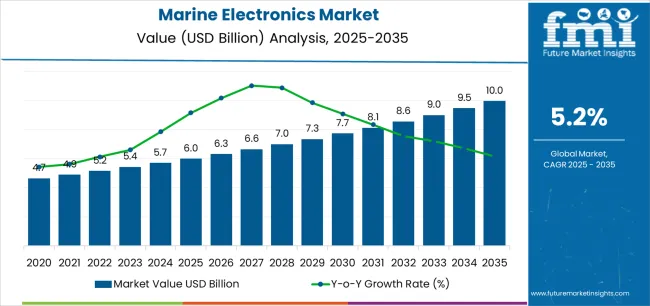
Key Takeaways, Market Size, and Forecast
- The marine electronics market was valued at USD 6.0 billion in 2025.
- By 2035, the marine electronics market is projected to reach USD 10.0 billion.
- From 2025 to 2035, the market is anticipated to expand at a 5.2% CAGR.
- Hardware was likely to account for 63.7% share of the component segment in 2025.
- Merchant marine electronics were expected to hold 45.0% share of the application segment in 2025.
- Australia & New Zealand are projected to record the fastest country-level expansion at 8.7% CAGR by 2035.
Segmental Analysis:
The market is segmented by Component and Application and region. By Component, the market is divided into Hardware and Software. In terms of Application, the market is classified into Merchant Marine Electronics, Fishing Vessel Electronics, Yacht/Recreation Boat Electronics, Military Naval Electronics, Autonomous Shipping Electronics, Smart Boat Electronics, and Underwater Drone Electronics. Regionally, the market is classified into North America, Latin America, Western Europe, Eastern Europe, Balkan & Baltic Countries, Russia & Belarus, Central Asia, East Asia, South Asia & Pacific, and the Middle East & Africa.
Insights into the Hardware Segment
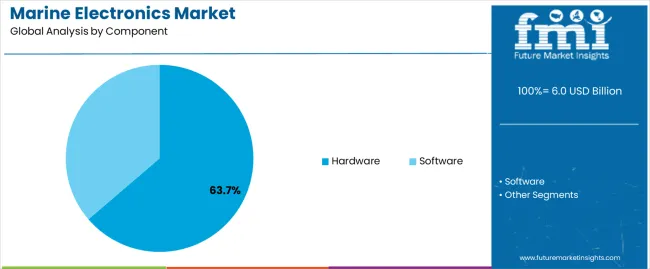
The hardware segment dominates the component category with approximately 63.7% share, reflecting its essential role in ensuring vessel operability, navigation, and safety. Key hardware elements such as sensors, transceivers, and display units form the backbone of onboard systems.
The segment benefits from rapid technological improvements that increase data accuracy and system durability under harsh marine conditions. Demand has been reinforced by the replacement of outdated analog equipment with integrated digital systems.
With growing vessel automation and rising safety compliance standards, hardware demand remains stable across merchant, defense, and recreational fleets. The segment is projected to maintain its lead as hardware innovations continue to enhance connectivity and performance reliability.
Insights into the Merchant Marine Electronics Segment
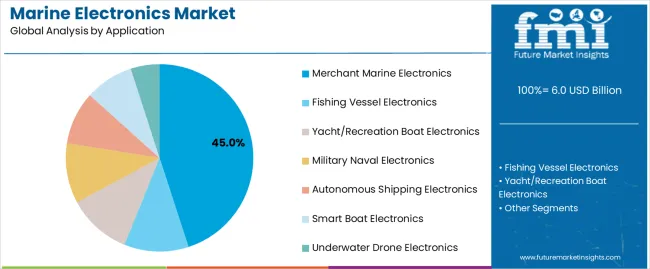
The merchant marine electronics segment leads the application category, accounting for approximately 45.0% share. This segment’s strength arises from global seaborne trade expansion and the need for advanced monitoring, navigation, and communication systems in cargo and transport vessels.
Fleet operators prioritize electronics that improve fuel efficiency, route optimization, and crew safety. Regulatory mandates related to emission control and digital reporting further stimulate equipment upgrades.
The segment benefits from growing adoption of integrated bridge systems and satellite-based communication. With the continuous modernization of merchant fleets and expansion of global shipping routes, the merchant marine electronics segment is expected to retain a dominant role in market development.
Key Market Highlights
Shift toward Autonomous and Unmanned Vessels Unlocks Opportunities for Market Players
Technology advancements in marine electronics and the quest for operational perfection have LED to the development of autonomous and unmanned vessels, representing an enormous leap in the marine sector. These vessels offer increased productivity, cost-effectiveness, and safety through sophisticated automation, artificial intelligence, and navigation systems.
Companies can reduce operational costs by removing the need for onboard workers while improving navigational precision and lowering environmental effects. Autonomous vessels also enable product differentiation and research collaboration, establishing early adopters as industry leaders and aiding global supply chain optimization.
Leveraging this trend, Dalian Maritime Institution launched a completely autonomous research and training vessel in December 2025 that can also be operated remotely, making it one of the world's firsts.
Demand for Electric and Hybrid Propulsion Systems Rises in the Market
The transition to hybrid and electric propulsion systems is a calculated shift in line with changing market conditions. Investing in cleaner propulsion technology helps organizations become leaders in sustainable marine operations and assures compliance with strict environmental requirements.
Companies in the marine electronics industry that adopt these propulsion trends stand to earn a competitive edge, as they appeal to stakeholders who care about the environment and get a tactical advantage in the changing maritime industry.
For instance, in January 2025, Team Resolute selected GE Vernova's Power Conversion division in the United Kingdom to provide cutting-edge hybrid propulsion technology for three Fleet Solid Support (FSS) vessels owned by the United Kingdom Ministry of Defence (MOD). This partnership demonstrated the United Kingdom's dedication to improving its naval operations' effectiveness and sustainability.
Green and Sustainable Technologies Emerge as a Cornerstone of Corporate Strategies
The marine sector is making green and sustainable technology a pillar of its corporate objectives. Businesses can deal with market demands and environmental requirements by using energy-efficient electronic systems, pollution monitoring technologies, and breakthroughs in electric propulsion.
Marine electronics manufacturers that proactively use these sustainable solutions fulfill the increasing need for environmentally responsible marine operations by lowering their environmental impact and improving their brand reputation.
Marine Electronics Market Trends Analysis
| Trends |
|
|---|---|
| Opportunities |
|
| Challenges |
|
Category-wise Insights
Hardware Dominates as the Top Component for Marine Electronics
| Segment | Hardware (Component) |
|---|---|
| Value Share (2025) | 42.8% |
Based on component, the hardware segment holds 42.8% of marine electronics market shares in 2025.
- Predictive maintenance and real-time monitoring are growing more prevalent aboard vessels. Hardware elements like sensors, monitoring devices, and condition monitoring systems are needed for this in order to collect information, identify anomalies, and enable proactive maintenance, which minimizes downtime and maximizes operational effectiveness.
- As international trade and transportation grow, there is a greater need for dependable and durable hardware components. Hardware for international commerce vessels must be resilient to various operational difficulties and climatic conditions to provide secure and uninterrupted navigation and communication.
Marine Merchant Continues to be the Leading Application for Marine Electronics
| Segment | Marine Merchant (Application) |
|---|---|
| Value Share (2025) | 25.7% |
Based on application, the marine merchant segment captured 25.7% of marine electronics market shares in 2025.
- The merchant marine sector is progressively adopting new technologies to improve operating efficiency. Modern maritime electronics are essential for route optimization, fuel economy, and safe and timely cargo delivery. These electronics include monitoring tools, communication systems, and navigation systems.
- Merchant vessels are rapidly implementing energy-efficient systems to lessen their influence on the environment and fuel consumption. By integrating systems like smart propulsion, tracking fuel efficiency, and implementing eco-friendly technology, maritime electronics help to manage energy onboard efficiently.
Country-wise Insights
| Countries | Value CAGR (2025 to 2035) |
|---|---|
| United States | 2.1% |
| Germany | 4.7% |
| China | 5.7% |
| Japan | 6.4% |
| Australia & New Zealand | 8.7% |
Growth of Offshore Wind Energy Projects Fuels Demand in the United States
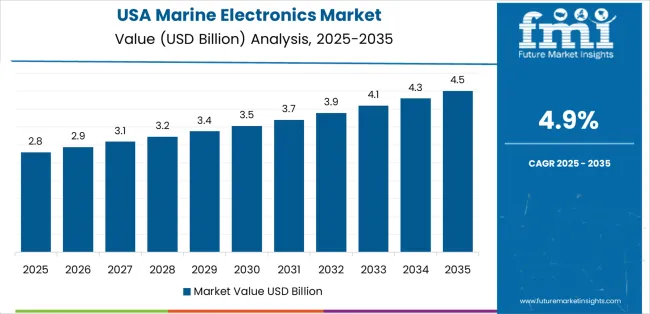
The demand for marine electronics in the United States is anticipated to rise at a 2.1% CAGR through 2035.
- The expansion of offshore wind energy projects around the United States coast is raising the demand for maritime electronics that are specifically designed to meet the requirements for offshore operations. Businesses that offer customized electronic solutions for communication, navigation, and monitoring in offshore wind farms are profiting from this new market niche.
- Ports and navigational channels are important examples of the marine infrastructure the United States government strategically focuses on improving. The demand for advanced marine electronics is boosted by increased investment in these sectors, establishing the United States as a center for cutting-edge maritime technology, supporting modernization programs, and economic competitiveness.
Digitalization in Shipbuilding Surges Market Growth in Germany
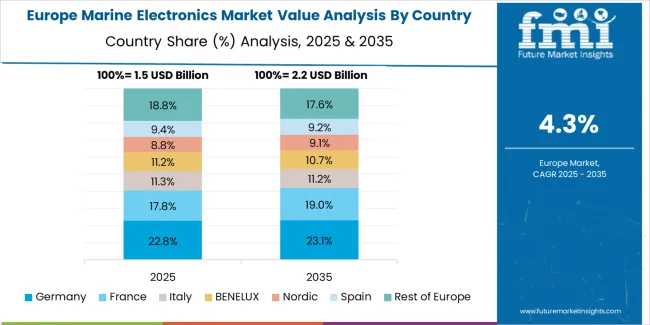
The sales of marine electronics in Germany are projected to amplify at a 4.7% CAGR through 2035.
- The shipbuilding sector in Germany is going through a digital revolution, with a particular emphasis on connectivity and digitization. Shipbuilders are driving the demand for marine electronics by incorporating cutting-edge electrical systems into their designs. The performance and usefulness of the vessel as a whole are improved via digital twin solutions, IoT-enabled parts, and smart ship technology.
- The marine industry in Germany is benefiting from the wider acceptance of Industry 4.0 concepts, which are promoting the integration of smart technology and data-driven solutions. This digitization movement supports the marine electronics industry, as companies match their products with Industry 4.0 concepts to improve competitiveness and operational efficiency.
Growing Dominance in Global Trade Fuels Demand in China
The growth of the marine electronics market in China is estimated at a 5.7% CAGR through 2035.
- The demand for advanced marine electronics is fueled by China's dominance in international trade as an essential importer and exporter. Being the most significant trading nation in the world, it depends on cutting-edge communication systems, monitoring systems, and navigation systems to enable the smooth transportation of commodities, which drives up demand for marine electronics.
- Market expansion is facilitated by China's proactive use of e-navigation technologies, which include real-time navigation updates, electronic charting, and vessel tracking. Modern marine electronic navigation systems, which improve safety, efficiency, and adherence to international maritime norms, are progressively being used by Chinese marine vessels.
Promotion of Maritime Autonomous Surface Ships (MASS) Stimulates Growth in Japan
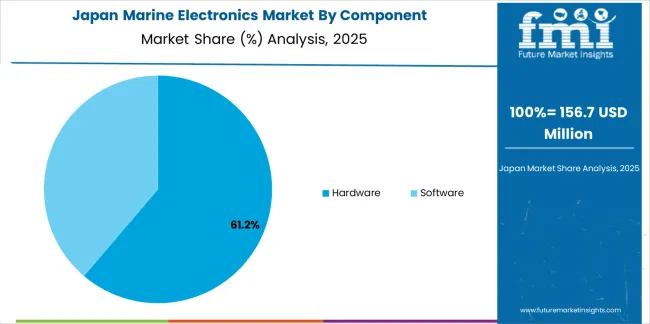
The demand for marine electronics in Japan is predicted to surge at a 6.4% CAGR through 2035.
- The development and use of Maritime Autonomous Surface Ships (MASS) are aggressively encouraged by Japan. Japanese businesses are driving the market boom by making investments in marine electronic systems that support MASS for activities like remote operations, autonomous navigation, and accident avoidance, establishing Japan as a leader in this changing sector.
- The investigation of augmented reality (AR) in marine navigation by Japan contributes to the expansion of the market. Japanese businesses are investing in electronic systems that use augmented reality (AR) technology for navigational displays. This improves situational awareness and helps to make marine operations safer and more effective.
Advent of Marine Biotechnology Fosters Sales in Australia & New Zealand
The sales of marine electronics in Australia and New Zealand are projected to escalate at an 8.7% CAGR through 2035.
- The development of marine biotechnology in the two countries has given rise to a distinct market niche. Market expansion is facilitated by electronic systems that enable maritime research, data gathering, and ecological monitoring. Demand for marine electronic solutions that support data-driven decision-making and scientific discovery is rising as the marine biotechnology industry grows.
- The demand for marine electronics that solve connection issues is fueled by Australia and New Zealand's extensive maritime domains, which include isolated island locations. Electronic solutions that offer dependable navigation, communication, and monitoring capabilities in places with inadequate infrastructure and enhance operating efficiency in remote marine environments have an impact on the market's evolution.
Competitive Landscape
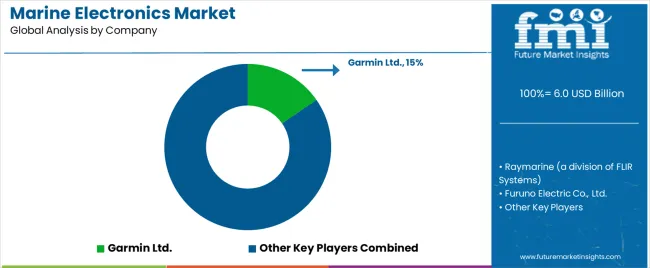
The marine electronics industry is highly competitive, with prominent companies such as Garmin, Raymarine, Furuno, and Kongsberg Maritime contending for market supremacy. Focusing on technical innovation, broad product portfolios, and strategic partnerships fosters intense competition.
Companies are aggressively investing in R&D, pursuing mergers and acquisitions, and forming alliances to deliver comprehensive solutions. Winning contracts from large shipbuilders and government agencies is critical, demonstrating the value of building a strong market presence.
Recent Developments
- In January 2025, Cambridge Pixel, located in the United Kingdom, released a new software package to help instructors and students learn how to use marine radars properly. SPx Radar Trainer is intended to make it easier for students to become acquainted with radar controls by giving a current simulation of a typical radar display accompanied by charts and 3D environment views.
- In November 2025, Simrad® Marine Electronics, a pioneer in marine electronics and navigation, launched its new HALO® 5000 solid-state radar for the commercial sector, designed to give commercial boats improved situational awareness, lower ownership costs, and flexible installation options.
Key Players in the Marine Electronics Market
- Garmin Ltd.
- Raymarine (a division of FLIR Systems)
- Furuno Electric Co., Ltd.
- Kongsberg Maritime AS
- Navico
- Wärtsilä Corporation
- Northrop Grumman Corporation
- SIMRAD (part of Kongsberg Maritime)
- Thales Group
- Tokyo Keiki Inc.
- B&G (Brookes & Gatehouse, a Navico brand)
- L3Harris Technologies, Inc.
- Japan Radio Co., Ltd.
- FLIR Systems, Inc.
- ATLAS ELEKTRONIK GmbH
Key Coverage in the Marine Electronics Market Report
- Adjacent Study on the Marine Electronics Device Market, Marine Electronics and Marine Navigation Market the Marine Electronics and Accessories Market
- Ranking of the Top 22 Companies in Marine Electronics
- Applications and Considerations for Marine Electronics
- Insights on Marine Electronics Supply and Installations
- Analysis of the Top 10 New Marine Electronics
Marine Electronics Market Segmentation
By Component:
- Hardware
- GPS & Radar Systems
- Multi-function Navigation
- Fish Finders/SONAR Modules
- Thermal & Visible Cameras
- Marine Electrical Screeners
- Marine VHF Communication Devices
- Audio/Video Equipment
- Marine Autopilots
- Autonomous Identification Systems
- Analogue & Digital Communication Displays
- Satellite TVs
- Software
By Application:
- Merchant Marine Electronics
- Fishing Vessel Electronics
- Yacht/Recreation Boat Electronics
- Military Naval Electronics
- Autonomous Shipping Electronics
- Smart Boat Electronics
- Underwater Drone Electronics
By Region:
- North America
- Latin America
- Western Europe
- Eastern Europe
- Asia Pacific (APAC)
- Middle East & Africa (MEA)
- Japan
Frequently Asked Questions
How big is the marine electronics market in 2025?
The global marine electronics market is estimated to be valued at USD 6.0 billion in 2025.
What will be the size of marine electronics market in 2035?
The market size for the marine electronics market is projected to reach USD 10.0 billion by 2035.
How much will be the marine electronics market growth between 2025 and 2035?
The marine electronics market is expected to grow at a 5.2% CAGR between 2025 and 2035.
What are the key product types in the marine electronics market?
The key product types in marine electronics market are hardware, gps & radar systems, multi-function navigation, fish finders/sonar modules, thermal & visible cameras, marine electrical screeners, marine vhf communication devices, audio/video equipment, marine autopilots, autonomous identification systems, analogue & digital communication displays, satellite tvs and software.
Which application segment to contribute significant share in the marine electronics market in 2025?
In terms of application, merchant marine electronics segment to command 45.0% share in the marine electronics market in 2025.
Preview the report firsthand - request a free sample
Get SampleGet the brochure for pricing and purchase details.
Get PDFTable of Content
- Executive Summary
- Global Market Outlook
- Demand-side Trends
- Supply-side Trends
- Technology Roadmap Analysis
- Analysis and Recommendations
- Market Overview
- Market Coverage / Taxonomy
- Market Definition / Scope / Limitations
- Market Background
- Market Dynamics
- Drivers
- Restraints
- Opportunity
- Trends
- Scenario Forecast
- Demand in Optimistic Scenario
- Demand in Likely Scenario
- Demand in Conservative Scenario
- Opportunity Map Analysis
- Product Life Cycle Analysis
- Supply Chain Analysis
- Investment Feasibility Matrix
- Value Chain Analysis
- PESTLE and Porter’s Analysis
- Regulatory Landscape
- Regional Parent Market Outlook
- Production and Consumption Statistics
- Import and Export Statistics
- Market Dynamics
- Global Market Analysis 2020 to 2025 and Forecast, 2025 to 2035
- Historical Market Size Value (USD Billion) Analysis, 2020 to 2025
- Current and Future Market Size Value (USD Billion) Projections, 2025 to 2035
- Y-o-Y Growth Trend Analysis
- Absolute $ Opportunity Analysis
- Global Market Pricing Analysis 2020 to 2025 and Forecast 2025 to 2035
- Global Market Analysis 2020 to 2025 and Forecast 2025 to 2035, By Component
- Introduction / Key Findings
- Historical Market Size Value (USD Billion) Analysis By Component , 2020 to 2025
- Current and Future Market Size Value (USD Billion) Analysis and Forecast By Component , 2025 to 2035
- Hardware
- GPS & Radar Systems
- Multi-Function Navigation
- Fish Finders/SONAR Modules
- Thermal & Visible Cameras
- Marine Electrical Screeners
- Marine VHF Communication Devices
- Audio/Video Equipment
- Marine Autopilots
- Autonomous Identification Systems
- Analogue & Digital Communication Displays
- Software
- Hardware
- Y-o-Y Growth Trend Analysis By Component , 2020 to 2025
- Absolute $ Opportunity Analysis By Component , 2025 to 2035
- Global Market Analysis 2020 to 2025 and Forecast 2025 to 2035, By Application
- Introduction / Key Findings
- Historical Market Size Value (USD Billion) Analysis By Application, 2020 to 2025
- Current and Future Market Size Value (USD Billion) Analysis and Forecast By Application, 2025 to 2035
- Merchant Marine Electronics
- Fishing Vessel Electronics
- Yacht/Recreation Boat Electronics
- Military Naval Electronics
- Autonomous Shipping Electronics
- Smart Boat Electronics
- Underwater Drone Electronics
- Y-o-Y Growth Trend Analysis By Application, 2020 to 2025
- Absolute $ Opportunity Analysis By Application, 2025 to 2035
- Global Market Analysis 2020 to 2025 and Forecast 2025 to 2035, By Region
- Introduction
- Historical Market Size Value (USD Billion) Analysis By Region, 2020 to 2025
- Current Market Size Value (USD Billion) Analysis and Forecast By Region, 2025 to 2035
- North America
- Latin America
- Western Europe
- Eastern Europe
- East Asia
- South Asia and Pacific
- Middle East & Africa
- Market Attractiveness Analysis By Region
- North America Market Analysis 2020 to 2025 and Forecast 2025 to 2035, By Country
- Historical Market Size Value (USD Billion) Trend Analysis By Market Taxonomy, 2020 to 2025
- Market Size Value (USD Billion) Forecast By Market Taxonomy, 2025 to 2035
- By Country
- USA
- Canada
- Mexico
- By Component
- By Application
- By Country
- Market Attractiveness Analysis
- By Country
- By Component
- By Application
- Key Takeaways
- Latin America Market Analysis 2020 to 2025 and Forecast 2025 to 2035, By Country
- Historical Market Size Value (USD Billion) Trend Analysis By Market Taxonomy, 2020 to 2025
- Market Size Value (USD Billion) Forecast By Market Taxonomy, 2025 to 2035
- By Country
- Brazil
- Chile
- Rest of Latin America
- By Component
- By Application
- By Country
- Market Attractiveness Analysis
- By Country
- By Component
- By Application
- Key Takeaways
- Western Europe Market Analysis 2020 to 2025 and Forecast 2025 to 2035, By Country
- Historical Market Size Value (USD Billion) Trend Analysis By Market Taxonomy, 2020 to 2025
- Market Size Value (USD Billion) Forecast By Market Taxonomy, 2025 to 2035
- By Country
- Germany
- UK
- Italy
- Spain
- France
- Nordic
- BENELUX
- Rest of Western Europe
- By Component
- By Application
- By Country
- Market Attractiveness Analysis
- By Country
- By Component
- By Application
- Key Takeaways
- Eastern Europe Market Analysis 2020 to 2025 and Forecast 2025 to 2035, By Country
- Historical Market Size Value (USD Billion) Trend Analysis By Market Taxonomy, 2020 to 2025
- Market Size Value (USD Billion) Forecast By Market Taxonomy, 2025 to 2035
- By Country
- Russia
- Poland
- Hungary
- Balkan & Baltic
- Rest of Eastern Europe
- By Component
- By Application
- By Country
- Market Attractiveness Analysis
- By Country
- By Component
- By Application
- Key Takeaways
- East Asia Market Analysis 2020 to 2025 and Forecast 2025 to 2035, By Country
- Historical Market Size Value (USD Billion) Trend Analysis By Market Taxonomy, 2020 to 2025
- Market Size Value (USD Billion) Forecast By Market Taxonomy, 2025 to 2035
- By Country
- China
- Japan
- South Korea
- By Component
- By Application
- By Country
- Market Attractiveness Analysis
- By Country
- By Component
- By Application
- Key Takeaways
- South Asia and Pacific Market Analysis 2020 to 2025 and Forecast 2025 to 2035, By Country
- Historical Market Size Value (USD Billion) Trend Analysis By Market Taxonomy, 2020 to 2025
- Market Size Value (USD Billion) Forecast By Market Taxonomy, 2025 to 2035
- By Country
- India
- ASEAN
- Australia & New Zealand
- Rest of South Asia and Pacific
- By Component
- By Application
- By Country
- Market Attractiveness Analysis
- By Country
- By Component
- By Application
- Key Takeaways
- Middle East & Africa Market Analysis 2020 to 2025 and Forecast 2025 to 2035, By Country
- Historical Market Size Value (USD Billion) Trend Analysis By Market Taxonomy, 2020 to 2025
- Market Size Value (USD Billion) Forecast By Market Taxonomy, 2025 to 2035
- By Country
- Kingdom of Saudi Arabia
- Other GCC Countries
- Turkiye
- South Africa
- Other African Union
- Rest of Middle East & Africa
- By Component
- By Application
- By Country
- Market Attractiveness Analysis
- By Country
- By Component
- By Application
- Key Takeaways
- Key Countries Market Analysis
- USA
- Pricing Analysis
- Market Share Analysis, 2025
- By Component
- By Application
- Canada
- Pricing Analysis
- Market Share Analysis, 2025
- By Component
- By Application
- Mexico
- Pricing Analysis
- Market Share Analysis, 2025
- By Component
- By Application
- Brazil
- Pricing Analysis
- Market Share Analysis, 2025
- By Component
- By Application
- Chile
- Pricing Analysis
- Market Share Analysis, 2025
- By Component
- By Application
- Germany
- Pricing Analysis
- Market Share Analysis, 2025
- By Component
- By Application
- UK
- Pricing Analysis
- Market Share Analysis, 2025
- By Component
- By Application
- Italy
- Pricing Analysis
- Market Share Analysis, 2025
- By Component
- By Application
- Spain
- Pricing Analysis
- Market Share Analysis, 2025
- By Component
- By Application
- France
- Pricing Analysis
- Market Share Analysis, 2025
- By Component
- By Application
- India
- Pricing Analysis
- Market Share Analysis, 2025
- By Component
- By Application
- ASEAN
- Pricing Analysis
- Market Share Analysis, 2025
- By Component
- By Application
- Australia & New Zealand
- Pricing Analysis
- Market Share Analysis, 2025
- By Component
- By Application
- China
- Pricing Analysis
- Market Share Analysis, 2025
- By Component
- By Application
- Japan
- Pricing Analysis
- Market Share Analysis, 2025
- By Component
- By Application
- South Korea
- Pricing Analysis
- Market Share Analysis, 2025
- By Component
- By Application
- Russia
- Pricing Analysis
- Market Share Analysis, 2025
- By Component
- By Application
- Poland
- Pricing Analysis
- Market Share Analysis, 2025
- By Component
- By Application
- Hungary
- Pricing Analysis
- Market Share Analysis, 2025
- By Component
- By Application
- Kingdom of Saudi Arabia
- Pricing Analysis
- Market Share Analysis, 2025
- By Component
- By Application
- Turkiye
- Pricing Analysis
- Market Share Analysis, 2025
- By Component
- By Application
- South Africa
- Pricing Analysis
- Market Share Analysis, 2025
- By Component
- By Application
- USA
- Market Structure Analysis
- Competition Dashboard
- Competition Benchmarking
- Market Share Analysis of Top Players
- By Regional
- By Component
- By Application
- Competition Analysis
- Competition Deep Dive
- Garmin Ltd.
- Overview
- Product Portfolio
- Profitability by Market Segments (Product/Age /Sales Channel/Region)
- Sales Footprint
- Strategy Overview
- Marketing Strategy
- Product Strategy
- Channel Strategy
- Raymarine (a division of FLIR Systems)
- Furuno Electric Co., Ltd.
- Kongsberg Maritime AS
- Navico
- Wärtsilä Corporation
- Northrop Grumman Corporation
- SIMRAD (part of Kongsberg Maritime)
- Thales Group
- Tokyo Keiki Inc.
- B&G (Brookes & Gatehouse, a Navico brand)
- L3Harris Technologies, Inc.
- Japan Radio Co., Ltd.
- FLIR Systems, Inc.
- ATLAS ELEKTRONIK GmbH
- Garmin Ltd.
- Competition Deep Dive
- Assumptions & Acronyms Used
- Research Methodology


