

Massage Therapy Service Market Size and Share Analysis Forecast Outlook 2035
The global massage therapy service market is experiencing a great change as wellness tops the priority list of every consumer. A swelling tide of consciousness in terms of stress management, mental well-being, and physical health is driving demand for massage therapy services, accelerating growth in the market. Consumers are no longer looking for relaxation alone but rather therapeutic and restorative benefits to enhance their overall quality of life.
This has compelled service providers to be much more innovative, providing very tailored treatments, AI-based service offerings, and even digitalized booking systems that reduce the hassle on the consumer experience.
At the same time, industry players are also increasingly looking at holistically healthy wellbeing through added services like assisted stretch, aromatherapy, alternative healing, among others. Leading players in this market are: Massage Envy, Hand & Stone, and Elements Massage, with market share of approximately 50%. Smaller boutique spas, wellness centers, and independent therapists account for 35%, while new digital-first wellness brands account for 15% of the market, hence showing a diversified competitive landscape.
Market Share by Key Players in the Massage Therapy Service Market
| Market Segment | Industry Share (%) |
|---|---|
| Top 3 (Massage Envy, Hand & Stone, Elements Massage) | 50% |
| Rest of Top 5 (The Now, Woodhouse Spa) | 15% |
| Next 5 of Top 10 (Massage Heights, Zeel, Soothe, Urban Nirvana, Spavia) | 20% |
| Emerging & Regional Brands (independent practitioners, boutique spas, digital startups) | 15% |
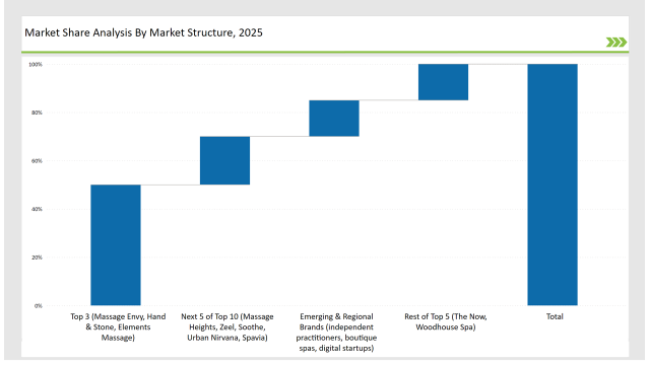
Market Concentration 2025
The massage therapy services market in 2025 is highly fragmented, with the top players accounting for 30% to 50% of the total market share. Leading chains such as Massage Envy, Hand & Stone, and Elements Massage dominate the segment, while independent therapists and wellness-focused clinics add competitive diversity. This market structure reflects strong brand influence while allowing space for specialized massage techniques and digital wellness integrations.
Segment Analysis
Sales Channels
The massage therapy market uses several channels of sales. The first are online and direct booking platform leaders. Altogether, online and app-based booking platforms make up 45% because they are convenient, available on the spot, and open to reviews of therapists. A segment of 30% is taken up by a franchise and chain spa sector, since members experience standardized experiences and loyalty customer programs. Boutique wellness centers take 15% of the market share, targeting niche consumers for unique, high-end experiences. The remaining 10% would be corporate and workplace wellness programs, which are becoming more and more part of business's employee wellness programs to boost productivity and minimize stress.
Service Type
Massage therapy services are very broad in terms of reaching various needs, touching on many fronts for a person's physical and mental well-being. The most often sought service is relaxation and Swedish massage, with 35% of the market targeting its customers with this therapy. The closest service is therapeutic and deep tissue massage at 30%, with many applying it for muscle recovery, tension relief, and in the field of sports therapy. Prenatal and medical massage holds 20% of the market share, giving unique and special treatments to expectant women or those with chronic pain cases. Lastly, 15% falls into luxury and specialty treatments like hot stone therapy, aromatherapy, and reflexology massages for customers who would love to enjoy the premium, holistic experience.
Who Shaped the Year
As customer preference evolved, market leaders as well as new comers in the business made strategic choices that transformed the massage therapy business:
- Massage Envy: Has added assisted stretching and improved its therapeutic technique to wellness services.
- Hand & Stone: Luxury spa-like services, such as longer aromatherapy and Himalayan salt stone massages, are at the top of this company's priority list.
- Elements Massage: Membership programs are being streamlined with subscription service.
- Zee & Soothe: Challenging the status quo of on-demand massage therapy booking through apps as well as by mobile therapist.
- Now & Boutique Spas: Places of luxury for wellness, places that are set up on style and holistic wellbeing.
Key Highlights from the Forecast
- Personalized & AI-Driven Recommendations: Digital would use AI-driven recommendations to send massage types and stress levels for health data.
- Mobile & On-Demand Massage Services: More customers will prefer to get massage therapy at home rather than going to spas.
- Subscription-Based Wellness Models: Membership programs will remain a major source of customer retention and recurring revenue.
- Corporate Wellness Boom: Companies will spend more on workplace massage therapy as part of employee mental health initiatives.
- Sustainability & Ethical Practices: More massage therapy businesses will focus on eco-friendly products and sustainable operations.
Tier-Wise Brand Classification 2025
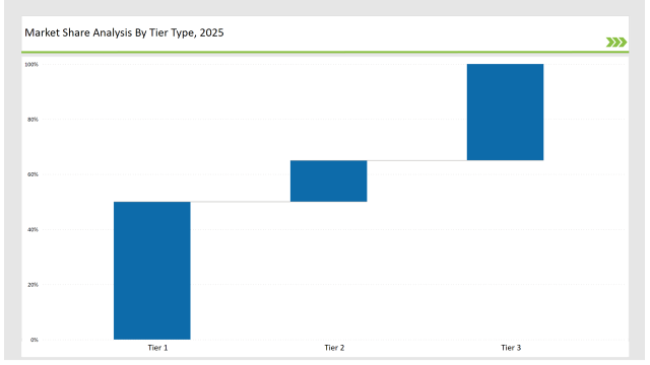
| Tier Type | Tier 1 |
|---|---|
| Example of Key Players | Massage Envy, Hand & Stone, Elements Massage |
| Market Share (%) | 50% |
| Tier Type | Tier 2 |
|---|---|
| Example of Key Players | The Now, Woodhouse Spa |
| Market Share (%) | 15% |
| Tier Type | Tier 3 |
|---|---|
| Example of Key Players | Massage Heights, Zeel, Soothe, Urban Nirvana, Spavia, Independent therapists, boutique spas, digital startups |
| Market Share (%) | 35% |
Key Brand Initiatives
| Brand | Key Focus Areas |
|---|---|
| Massage Envy | Integrated wellness services & assisted stretching |
| Hand & Stone | Luxury spa experiences & relaxation therapy |
| Elements Massage | Flexible membership models & deep tissue specialization |
| Zeel & Soothe | On-demand, mobile massage & subscription wellness |
| The Now | Premium boutique massage with holistic therapy |
| Emerging Brands | AI-driven, personalized wellness & corporate programs |
Recommendations for Brands
- Implement digital-first strategies with AI-based platforms that offer personalized recommendations and seamless booking.
- Expand business partnerships that have incorporated massage therapy as a piece of employee well-being initiatives
- Subscription membership is offered with various membership tiers that encourage retention and visitation frequency.
- Pay attention to sustainability: The use of organic massage oils, sustainable linens, and a generally eco-friendly spa environment.
- Customer Experience Enhancement: Specialized treatment services beyond mere massages, including holistic wellness practices.
Future Roadmap
Massage therapy service is likely to continue experiencing steady growth from wellness trends, digital innovation, and increased self-care focus among consumers. In the future, more people are likely to have more AI-driven solutions, health monitoring devices from wearables, and at-home wellness solutions.
Business success in the changing landscape of technology, sustainability, and customer-centric business approaches will dictate business success. The next wave of massage therapy services will be hyper-personalized, technology-driven, and wellness-focused, offering consumers unparalleled access to relaxation and healing.
Top Segments Studied in the Massage Therapy Service Market Outlook
By Sales Channels:
- Online & App-Based Booking Platforms
- Franchise & Chain Spas
- Boutique Wellness Centers
- Corporate & Workplace Wellness
By Service Types:
- Relaxation & Swedish Massage
- Therapeutic & Deep Tissue Massage
- Prenatal & Medical Massage
- Luxury & Specialty Treatments
Frequently Asked Questions
Which companies hold the largest market share in the massage therapy industry?
Leading players such as Massage Envy, Hand & Stone, and Elements Massage collectively hold around 50% of the market.
What is the market share of regional massage therapy service providers?
Regional brands and independent massage therapists contribute approximately 35% of the market by offering personalized and boutique wellness experiences.
How much market share do digital-first and on-demand massage services hold?
Startups specializing in AI-driven massage booking and on-demand wellness services hold about 15% of the market.
What percentage of the market is controlled by private-label massage service providers?
Private labels from wellness centers, fitness studios, and corporate wellness programs hold around 5% of the market.
How is market concentration assessed in the massage therapy industry for the year 2025?
High for companies controlling 50%+, medium for 35-50%, and low for those under 35%.
Preview the report firsthand - request a free sample
Get SampleGet the brochure for pricing and purchase details.
Get PDFTable of Content
- Executive Summary
- Market Overview
- Competitive Analysis Outlook for 2025
- Segment Analysis
- Who Shaped the Year
- Key Highlights from the Forecast
- Tier-Wise Brand Classification
- Key Brand Initiatives
- Recommendations for Brands
- Future Roadmap
- FAQs


