

- Market Size (2026)
- USD 7.2 Bn
- Forecast (2036)
- USD 20.8 Bn
- CAGR (2026 to 2036)
- 11.2%
How big is Menopause & Women's Health Ingredients Market in 2026?
USD 7.2 billion in 2026 and USD 20.8 billion by 2036 at an 11.2% CAGR.
Demand for menopause & women's health ingredients is projected to expand at 11.2% CAGR from 2026 to 2036. The valuation is expected to rise from USD 7.2 billion in 2026 to USD 20.8 billion by 2036. Growth is shaped by formulation programs that separate sleep and bone support from skin or emotional wellbeing rather than presenting one ingredient as a universal solution. The National Institute on Aging stated in June 2025 that menopause-related hormone changes raise the risk of cardiovascular disease and osteoporosis. The clinical distinction gives women's health supplements a defined reason to build bone-support formulations with separate evidence and daily-dose requirements. Revenue therefore depends on products that preserve the studied dose and explain the supported outcome without implying disease treatment.
United States launches require ingredient safety records and claim language that remains outside disease treatment. European launches add botanical safety review and country-level rules that vary with the preparation method. The European Food Safety Authority explained in June 2025 that food supplements include powders and liquids alongside capsules and tablets. The wider form range expands design choices across the collagen supplements market but also changes moisture and concentration controls across the finished product. Manufacturers secure repeat business through source records and stability data that remain valid under local labeling review. Country planning must separate legal access from forecast pace and match technical support with the chosen format.
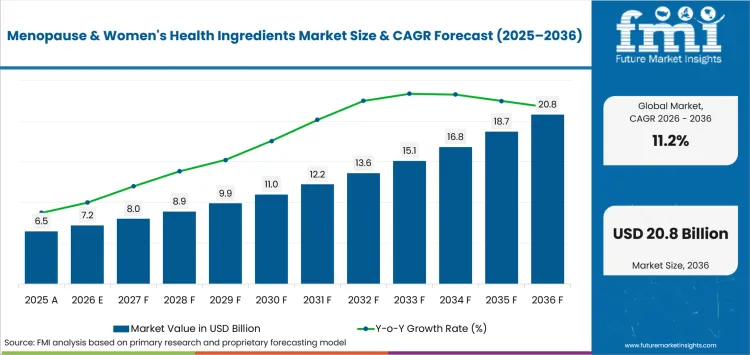
Key Takeaways of Menopause & Women's Health Ingredients Market
- Demand expands as formulators separate sleep and emotional wellbeing from bone or skin support through outcome-specific ingredient evidence.
- Collagen is expected to account for 40.2% share in 2026 owing to adaptable use across bone and skin formulations.
- Menopause is projected to capture 40.1% share in 2026, supported by nonhormonal products built around defined daily concerns.
- Powder is forecast to represent 48.4% share in 2026 due to larger serving capacity and flexible multi-ingredient blending.
- Botanical variability and country claim rules remain material constraints for formulations promoted across several women's health outcomes.
- Competition includes Bioiberica; Pharmactive Biotech Products; GELITA; Rousselot; Saanroo; Balchem Corporation; Lonza Capsules & Health Ingredients; and Nitta Gelatin across distinct ingredient and delivery roles.
Analyst Perspective
"Menopause formulations lose commercial credibility if one product promises sleep and mood support alongside bone or skin benefits without evidence for each outcome. The strongest programs define a narrow claim and preserve the clinically tested dose through a format that supports daily adherence. Commercial strength depends on reproducible finished-product performance and country-specific claim support rather than familiar ingredient names."
- Nandini Roy Choudhury, Principal Analyst, Future Market Insights
How is the Menopause & Women's Health Ingredients Market segmented?
The market is segmented by ingredient, application, form, and region.
The market is segmented by ingredient, application, form, and region. Ingredient analysis covers collagen, hyaluronic acid, enzymes, saffron, and soy isoflavones according to source consistency, dosage needs, and evidence requirements. Application analysis separates menopause, bone, and skin because each outcome requires different clinical endpoints and claim language. Form analysis compares powder, liquid, granules, and paste through serving capacity, taste, stability, and household use. Regional analysis examines ingredient authorization, health-claim rules, manufacturing support, and distribution routes across each country.
What supports collagen within the ingredient category?
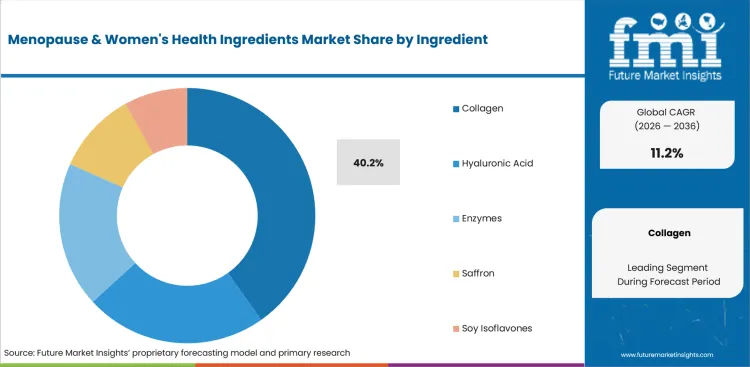
Collagen supports bone and skin formulations through peptide or native type II formats that require different doses and evidence. Darling Ingredients announced in December 2025 that its proposed Rousselot and PB Leiner combination would create about 200,000 metric tons of capacity across 22 facilities. The proposed combination increases the importance of specification continuity for collagen peptide formulations that depend on consistent source and processing controls. The transaction remained subject to regulatory approval as of July 2026 and left transition responsibilities unresolved for formulators.
- By ingredient, collagen is forecast to represent 40.2% in 2026 driven by established use across bone and skin support products. Established collagen hydrolysate supply supports powders and capsules across several practical daily serving sizes and formulation routes. The segment retains its position through batch consistency and evidence tied to the exact peptide source.
- Supplement developers adopt collagen through source identity and dose selection rather than ingredient familiarity or generic category recognition. Pilot production then tests dissolution and serving consistency under the intended household routine and selected package system. Adoption strengthens through reproducible finished-product data that preserves the studied exposure across commercial batches and normal storage conditions.
Why does menopause capture the largest application share?
Menopause applications address vasomotor discomfort and sleep disruption alongside emotional wellbeing through distinct support routes. Formulators need outcome-specific evidence prior to linking mood or sleep support with menopause treatment pathways in regulated retail channels. Pharmactive Biotech Products reported in June 2026 that a randomized placebo-controlled trial assessed standardized saffron among women aged 50 to 70 with low mood and poor sleep. The development supports targeted saffron extracts for defined wellbeing outcomes without proving relief across every menopause symptom.
- The application category is forecast to be led by menopause at 40.1% share in 2026 due to focused nonhormonal product development. The segment gains recurring revenue from nonhormonal products built around narrow use cases and clearly explained daily outcomes. Each clinical study must remain linked to its measured outcome rather than the complete life stage.
- Brands enter the menopause application through formulas that explain dosage and expected use without implying disease treatment. Botanical combinations require interaction screening and claim review together with sensory testing in the final format. Repeat purchasing improves through clear education that names the supported outcome and directs serious symptoms toward professional care.
What drives powder's position within the form category?
Powder formats accommodate collagen and botanical doses that may exceed practical capsule capacity in multi-ingredient formulations. Larger servings preserve dose flexibility but require stronger flavor and moisture control during household preparation. Liquid formats reduce mixing errors and offer measured servings for consumers who prefer ready-to-use products. Bioiberica and Lactalis Spain launched a milk beverage with native type II collagen in January 2026. The launch gives powder developers a clear reason to improve mixing and taste through formats that retain greater flexibility for collagen and hyaluronic acid supplements.
- Based on the form category, powder is projected to account for 48.4% in 2026 due to larger serving capacity and flexible blending. The format supports flavor adjustment and single-serve packaging for routines that use several active ingredients. Its position weakens through settling or moisture uptake that creates inconsistent household servings across repeated daily preparation.
- Contract manufacturers favor powders for formula adjustment across collagen and botanical combinations without changing capsule tooling. Pilot teams alter sweetness or serving size through controlled runs that preserve ingredient dispersion and taste. Adoption depends on validated blend uniformity and packaging that limits moisture exposure during storage and transport.
What are the drivers, restraints, and opportunities in the Menopause & Women's Health Ingredients Market?
Demand expands through outcome-specific formulation. Claim restrictions and ingredient variability raise qualification costs. Standardized evidence packages create clearer repeat purchasing routes.
- Driver: Distinct menopause concerns support focused formulas for sleep and emotional wellbeing alongside bone or skin applications.
- Restraint: Botanical variability and claim restrictions increase validation costs across countries with different ingredient and labeling routes.
- Opportunity: Standardized preparations create repeat purchasing routes through transparent daily doses and controlled ingredient specifications across commercial batches.
Menopause affects several daily functions rather than one isolated symptom and creates demand for more focused formulations. The FDA explained in February 2026 that menopause often involves night sweats and vaginal changes alongside sleep disruption and bone thinning. The varied symptoms support formulas that pair each ingredient with a defined outcome and a practical daily dose. Collagen may support bone or skin positioning under one evidence package whereas a standardized botanical requires another route for mood or sleep. Manufacturers gain repeat sales through clear product purposes and finished formats that preserve the tested exposure.
Claim substantiation materially slows commercial formulas promoted across several distinct women's health outcomes and country claim routes. The European Food Safety Authority reported in April 2025 that it had evaluated more than 2,300 health claim applications and rejected over 70% for insufficient evidence. The record shows why one study cannot support combined claims for sleep and bone alongside skin or emotional wellbeing. Formulators need separate human evidence and precise wording for every intended outcome within each country route. Retail acceptance weakens as marketing language extends beyond the ingredient dossier or the authorized claim.
Standardized botanical preparation creates an opening for brands that document species and plant part alongside extraction conditions. The European Food Safety Authority updated its botanical compendium in April 2025 and explained that preparation methods change the level of substances of concern. The distinction favors extracts with controlled composition over formulas identified by a plant name alone. Formulators combining soy isoflavones with saffron need specifications that connect identity and contaminants with the final daily dose. Documented specification changes give distributors a stronger basis for repeat purchasing across products that face close botanical review.
Which country CAGRs are profiled in the Menopause & Women's Health Ingredients Market?
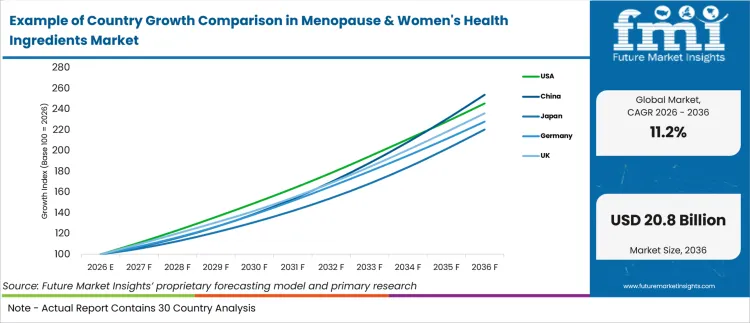
| Country | CAGR |
|---|---|
| USA | 9.4% |
| China | 9.8% |
| Japan | 8.2% |
| Germany | 8.6% |
| UK | 9.0% |
How do country-level CAGRs compare in the Menopause & Women's Health Ingredients Market?
The country forecasts show a gradual progression across the menopause & women's health ingredients market, with all five countries positioned within a relatively narrow growth range. China, the USA and the UK form a closely aligned upper group, reflecting strong interest in ingredients targeting hormonal health, healthy aging and women's wellness. Germany follows within a short distance of this cluster, indicating comparable market momentum. Japan represents a more measured outlook yet remains connected to the broader market pattern rather than forming a distinct lower tier. The overall structure suggests that demand for menopause and women's health ingredients is expanding across both mature and developing wellness markets. Differences between countries are shaped by supplement penetration, consumer awareness and the pace of innovation in condition-specific women's health products.
- China shows a notable position within the comparison as growing awareness of women's wellness and increasing demand for targeted nutrition solutions support ingredient adoption across supplements and functional products.
- The USA remains closely aligned with China as manufacturers continue to develop formulations containing botanical extracts, vitamins, minerals and other ingredients aimed at menopause support and healthy aging.
- The UK benefits from increasing consumer focus on women's health outcomes, encouraging the use of specialized ingredients in supplements and wellness-focused nutritional products.
- Germany reflects steady market development through demand for scientifically supported formulations and growing interest in preventive approaches to women's health management.
- Japan maintains a meaningful presence within the comparison as healthy aging trends and demand for functional nutrition products continue to support the use of menopause-focused ingredients.
Comparable CAGRs do not create identical market conditions across countries. Differences in healthcare practices, supplement usage patterns, product positioning and regulatory requirements can influence ingredient adoption and commercialization strategies. Similar growth forecasts may therefore reflect distinct consumer needs, distribution models and innovation priorities within the women's health sector. The full report provides country-level CAGR analysis across North America, Latin America, Europe, East Asia, South Asia, Oceania and the Middle East and Africa.
Country-wise Analysis
- United States supplement launches require ingredient-specific safety records and claim language that remains outside disease treatment. The FDA released NDIN educational materials in June 2025 to improve safety notifications for certain new dietary ingredients. Adoption of menopause and women's health ingredients in the USA is estimated to expand at 9.4% CAGR through 2036, supported by specialized distribution and established contract manufacturing. Bioiberica formed a distribution agreement with STAUBER in February 2025 for mobility and beauty-from-within ingredients. The agreement gives American formulators faster access to samples and local technical support across powder or capsule programs. NDIN timing and structure-function limits remain material frictions that often delay labels or require claim revisions. Launch plans should separate ingredient clearance from clinical positioning and confirm service coverage across each intended retail channel.
- China routes health foods through catalog-based filing or registration according to each ingredient and its claimed function. Menopause and women's health ingredient demand in China is forecast to rise at 9.8% CAGR over the forecast period, attributable to wider catalog coverage and established health-food filing channels. The State Administration for Market Regulation reported in June 2025 that 22,000 health-food filing certificates remained valid at the end of March. The same response listed 24 nutrients with 85 compounds and ten nonnutrient ingredients within the national catalog. Catalog status gives manufacturers a defined filing route for accepted materials and standardized technical requirements. Imported botanical formulas face registration duties and evidence expectations that differ from domestic catalog filings. Commercial programs need local dossier control and claim review prior to committing production capacity or national distribution.
- Japan's Foods with Function Claims route requires safety records and functionality evidence alongside production safeguards and adverse-event processes. Local partners translate those records into the notification structure used for the final supplement and its Japanese label. Japan's menopause and women's health ingredients market outlook is anticipated to advance at 8.2% CAGR over the assessment period, shaped by structured disclosure and careful evidence review. The Consumer Affairs Agency introduced new filing forms in April 2025 covering safety and functionality together with production controls and adverse-event collection. The route gives standardized saffron or collagen programs an organized disclosure process through experienced local partners. Imported dossiers face friction from Japanese-language evidence and production records that must match the final formulation. Brands should secure local regulatory support and adverse-event procedures rather than reuse claim wording prepared for another country.
- German supplement sellers operate under food law and align ingredient safety with national notification and European claim requirements. The German menopause and women's health ingredients sector is projected to record 8.6% CAGR during the assessment period, underpinned by pharmacy access and science-focused product review. The Federal Institute for Risk Assessment reported in June 2025 that more than three quarters of surveyed respondents had used supplements during the previous year. Almost half of those users reported taking supplements to address diseases or health complaints directly. Pharmacy access and detailed ingredient documentation support bone or skin formulas with clear dosage instructions. Disease-adjacent consumer expectations create material friction for menopause positioning under German food and health-claim rules. Manufacturers need narrow claim language and botanical safety records that remain consistent across German retail channels.
- Great Britain uses an online novel-food authorization register as the primary reference for permitted ingredients and defined conditions. The Food Standards Agency stated in April 2025 that register entries include specifications and maximum levels together with additional labeling requirements. Menopause and women's health ingredient sales in the United Kingdom are forecast to expand at 9.0% CAGR by 2036, influenced by established supplement channels and digital authorization records. The register gives formulators a practical screening route for unfamiliar botanicals and concentrates review on the final specification. Contract manufacturers and specialist retailers support small powder launches for targeted menopause or bone-support audiences. Separate Great Britain and European Union rules create friction for products sold across both regulatory systems. Commercial plans should map each ingredient route prior to fixing packaging or inventory for regional distribution.
Who are the notable companies in the Menopause & Women's Health Ingredients Market?
Bioiberica; Pharmactive Biotech Products; GELITA; Rousselot; Saanroo; Balchem Corporation; Lonza Capsules & Health Ingredients; and Nitta Gelatin.
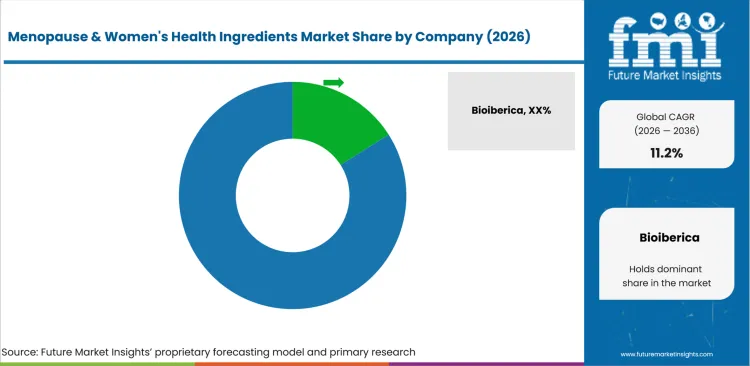
The competitive field combines collagen manufacturers with botanical specialists and dosage-form businesses across distinct women's health applications. Collagen companies compete through source control and clinically matched formats that preserve the studied dose across finished products. Botanical developers rely on standardized extracts with narrow outcome evidence and precise dosage guidance for finished formulations. Distribution agreements improve local sampling and technical support across regional formulation programs and commercial launches. Pending ownership changes create continuity risks for long-term supply across established regional product families and customer contracts.
- Bioiberica and GELITA support collagen or matrix ingredients for mobility and skin formulations across powder or capsule programs. Rousselot adds peptide and cartilage-based platforms for joint-focused products across several commercial supplement delivery formats. Nitta Gelatin expanded its Kerala production site in February 2025 to increase gelatin output for hard capsules and soft gels. The collagen specialists differentiate through specification control and formulation support tied to the chosen collagen format.
- Pharmactive Biotech Products and Saanroo develop standardized botanicals for emotional wellbeing and women's health formulations. Saanroo adopted its current name in October 2025 to separate nutraceutical activity from Gencor Pacific pharmaceutical operations. Their commercial position depends on clinical programs and formulation guidance for defined saffron or menopause applications.
- Balchem Corporation supports bone and skin formulas through ingredients positioned within broader women's health and healthy-aging programs. Lonza Capsules & Health Ingredients provides dosage-form support for botanical or powder formulations across bone and joint supplements. Lonza signed a divestment agreement in March 2026 and continued reporting the business as discontinued operations during July 2026. Its half-year release confirmed in July 2026 that closing remained expected during the second half of the year.
Competitive Benchmarking: Menopause & Women's Health Ingredients Market
| Company | Ingredient Portfolio Fit | Women's Health Application Support | Validation and Scale Support | Geographic Reach |
|---|---|---|---|---|
| Bioiberica | High | High | High | Global |
| Pharmactive Biotech Products | High | High | Medium | Global |
| GELITA | High | High | High | Global |
| Rousselot | High | Medium | High | Global |
| Saanroo | High | High | Medium | Global |
| Balchem Corporation | Medium | High | High | Global |
| Lonza Capsules & Health Ingredients | Medium | Medium | High | Global |
| Nitta Gelatin | High | Medium | High | Global |
Key Developments in the Menopause & Women's Health Ingredients Market
- In May 2025, Bioiberica became the first collagen manufacturer to receive NutraStrong Collagen Verification for its native type II collagen Collavant n2. The independent review covered source integrity and manufacturing quality alongside purity controls and claim substantiation requirements. Supplement manufacturers gain a sourcing reference for ingredient identity and documented safeguards without receiving approval for every finished-product claim.
- In September 2025, Rousselot received patents in Europe and Japan as well as China for its Colartix collagen peptide and chondroitin sulfate matrix. The patents cover an ingredient designed for powder and capsule or tablet formats across major supplement markets. Formulators gain a clearer intellectual-property route for joint-focused products that combine collagen peptides with a documented cartilage matrix.
- In April 2026, Balchem Corporation secured Thailand Food and Drug Administration approval for OptiMSM supplement use at a maximum daily intake of one gram. The approval expands legal formulation access across joint health and beauty-from-within products within the national supplement channel. Manufacturers need local dosage controls and distribution support from Rama Production for compliant national launches.
- In May 2026, Pharmactive Biotech Products appointed Pnfarma as the exclusive distributor of Liboost for the Brazilian pharmacy channel. The agreement creates a national commercialization route for a botanical ingredient addressing sexual wellness concerns that include post-menopause use. The partnership improves channel access although Brazilian formulation and claim requirements remain separate launch conditions for finished supplements.
Menopause & Women's Health Ingredients Market - Report Scope
| Coverage field | Report scope |
|---|---|
| Market breakdown | Ingredient; application; form; and region. |
| Quantitative Units | Revenue in USD Billion, CAGR in %. |
| Market Definition | The market covers ingredients formulated for menopause and broader women's health applications across bone and skin support. Included ingredients are collagen; hyaluronic acid; enzymes; saffron; and soy isoflavones. |
| Regions Covered | North America; Latin America; Western Europe; Eastern Europe; East Asia; South Asia and Pacific; and Middle East and Africa. |
| Countries Covered | USA; China; Japan; Germany; and UK. |
| Key Companies Profiled | Bioiberica; Pharmactive Biotech Products; GELITA; Rousselot; Saanroo; Balchem Corporation; Lonza Capsules & Health Ingredients; and Nitta Gelatin. |
| Forecast Period | 2026 to 2036. |
| Approach | Hybrid bottom-up and top-down market sizing supported by structured primary interviews and authoritative desk research. |
Menopause & Women's Health Ingredients Market - Research Methodology
| Method | Approach |
|---|---|
| Primary Research | FMI analysts gathered input from manufacturers, service providers, technology developers, distributors, end users, procurement teams, and subject-matter experts. Interviews examined purchasing decisions, product or service evaluation, adoption barriers, approval requirements, pricing considerations, and expectations for technical or commercial support. Respondents were also asked what evidence is required before a trial, pilot, or initial order develops into regular purchasing. |
| Desk Research | Desk research covered government statistics, regulatory publications, trade data, industry associations, technical literature, standards, company filings, product information, and official corporate announcements. Sources were reviewed for relevance, publication date, geographic coverage, and consistency with the defined market scope. Claims relating to performance, applications, approvals, capacity, investment, and commercial activity were retained only when supported by credible public evidence. |
| Market Sizing and Forecasting | The market model combined the baseline value with historical performance, segment structure, pricing and volume indicators, adoption levels, company participation, and country-level demand conditions. Forecast assumptions considered economic activity, investment trends, regulatory developments, technology adoption, purchasing cycles, supply availability, and barriers to wider market use. Segment and regional estimates were reconciled before the final market total was calculated. |
| Data Validation | Estimates were checked against multiple independent indicators, including public data, company activity, trade patterns, industry developments, and findings from primary interviews. Validation also tested whether products, services, applications, and company revenues fell within the defined market boundaries. Adjacent categories, unsupported claims, overlapping revenues, and activities without direct market relevance were excluded to reduce double counting and maintain consistency across segments and countries. |
Menopause & Women's Health Ingredients Market by Segments
Menopause & Women's Health Ingredients Market segmented by Ingredient:
- Collagen
- Hyaluronic Acid
- Enzymes
- Saffron
- Soy Isoflavones
Menopause & Women's Health Ingredients Market segmented by Application:
- Menopause
- Bone
- Skin
Menopause & Women's Health Ingredients Market segmented by Form:
- Powder
- Liquid
- Granules
- Paste
Menopause & Women's Health Ingredients Market by Region:
- North America
- United States
- Canada
- Latin America
- Brazil
- Mexico
- Argentina
- Chile
- Western Europe
- Germany
- France
- United Kingdom
- Italy
- Spain
- Benelux
- Nordics
- Eastern Europe
- Poland
- Czech Republic
- Romania
- Hungary
- East Asia
- China
- Japan
- South Korea
- South Asia and Pacific
- India
- ASEAN
- Australia and New Zealand
- Middle East and Africa
- GCC Countries
- South Africa
- Türkiye
- Israel
Research Sources and Bibliography
- National Institute on Aging. (2025, June 5). Infographic: Staying Healthy During and After Menopause.
- European Food Safety Authority. (2025, June 16). Food supplements.
- Darling Ingredients. (2025, December 10). Darling Ingredients and Tessenderlo Group sign a definitive agreement to form new company to accelerate growth in attractive collagen-based health, wellness and nutrition sector.
- Pharmactive Biotech Products. (2026, June 30). Natural Menopause Mood Support: Looking Beyond Hormonal Changes.
- Bioiberica. (2026, January 20). Bioiberica partners with Lactalis to launch industry-first functional milk beverage enriched with native type II collagen, Collavant® n2.
- USA Food and Drug Administration. (2026, February 13). Hormone Replacement Therapies Can Help Women with Bothersome Menopausal Symptoms.
- European Food Safety Authority. (2025, April 3). Health claims.
- European Food Safety Authority. (2025, April 30). Compendium of botanicals.
- USA Food and Drug Administration. (2025, June 11). FDA Releases Educational Materials on the New Dietary Ingredient Notification Process for Dietary Supplements.
- Bioiberica. (2025, February 11). Bioiberica announces strategic partnership with STAUBER to expand distribution of its branded ingredients for mobility & beauty-from-within to US nutraceuticals market.
- State Administration for Market Regulation. (2025, June 24). 对十四届全国人大三次会议第6218号建议的答复 [Response to Recommendation No. 6218 of the Third Session of the 14th National People’s Congress].
- Consumer Affairs Agency. (2025, April 1). 【食品関連事業者向け】機能性表示食品の届出について [For food-related businesses: Notifications for Foods with Function Claims].
- Federal Institute for Risk Assessment. (2025, June 17). Zwischen Hype und Halbwissen: Häufige Irrtümer rund um Nahrungsergänzungsmittel.
- Food Standards Agency. (2025, April 1). Guidance on using the Register of Novel Food Authorisations.
- Saanroo. (2025, October 29). We Rebrand as Saanroo®, Expanding Its Nutraceutical Vision.
- Nitta Gelatin. (2025, February 2). Nitta Gelatin India Announces Production Expansion.
- Lonza. (2026, March 6). Lonza Completes its Transformation to a Pure-Play CDMO with Agreement to Divest Capsules & Health Ingredients.
- Lonza. (2026, July 22). Lonza Delivered Strong H1 2026 Performance Across All Business Platforms and Upgrades Full-Year 2026 Margin Outlook.
- Bioiberica. (2025, May 29). Bioiberica sets industry benchmark with NutraStrong™ Collagen Verification for Collavant® n2.
- Pharmactive Biotech Products. (2026, May 26). Brazil Marks a New Milestone for Liboost®: Innovation, Sexual Wellness and a Strategic Partnership with Pnfarma.
- Balchem Corporation. (2026, April 16). Thailand FDA Approval of OptiMSM® Expands Innovation Opportunities.
- Rousselot. (2025, September 2). Rousselot receives European, Japanese and Chinese patents for Colartix®, a unique hydrolyzed cartilage matrix with science on joint discomfort relief.
This bibliography is provided for reader reference and is not exhaustive. The full report contains the complete reference list and detailed citations.
This Report Answers
- How large is the menopause & women's health ingredients market in 2026 and 2036?
- Which formulation needs support demand for menopause and broader women's health ingredients?
- Why does collagen account for the largest ingredient share in 2026?
- How does menopause influence application revenue across the forecast period?
- Why does powder account for the largest form share in 2026?
- How do country growth rates differ across the five profiled countries?
- Which companies provide collagen or botanical ingredients and dosage-form support?
- What limits claims and repeat purchasing across botanical or collagen formulations?
- How do official ingredient routes affect entry across the five profiled countries?
Frequently Asked Questions
How big is the Menopause & Women's Health Ingredients Market in 2026?
The menopause & women's health ingredients market is valued at USD 7.2 billion in 2026 and is forecast to reach USD 20.8 billion by 2036. Growth is supported by outcome-specific formulation programs separating sleep and emotional wellbeing from bone and skin support through distinct ingredient evidence and daily-dose requirements across supplements globally.
What is the CAGR of the Menopause & Women's Health Ingredients Market from 2026 to 2036?
The menopause & women's health ingredients market grows at a CAGR of 11.2% between 2026 and 2036, supported by focused nonhormonal product development, standardized botanical preparations, and collagen platforms that address defined menopause concerns through outcome-specific evidence and country-compliant claim language across commercial supplement channels worldwide.
Which ingredient leads the Menopause & Women's Health Ingredients Market?
Collagen accounts for 40.2% of the menopause & women's health ingredients market by ingredient in 2026, driven by established use across bone and skin support products through batch-consistent hydrolysate supply that preserves the studied peptide dose across powder, capsule, and multi-ingredient formulation formats globally.
How much will the Menopause & Women's Health Ingredients Market add between 2026 and 2036?How much will the Menopause & Women's Health Ingredients Market add between 2026 and 2036?
The menopause & women's health ingredients market is set to add USD 13.6 billion between 2026 and 2036, growing from USD 7.2 billion to USD 20.8 billion as standardized botanical preparations, collagen peptide platforms, and country-specific ingredient authorization routes expand recurring purchasing across menopause, bone, and skin supplement applications globally.
Who are the leading companies in the Menopause & Women's Health Ingredients Market?
Eight companies lead the menopause & women's health ingredients market, including Bioiberica, Pharmactive Biotech Products, GELITA, Rousselot, Saanroo, Balchem Corporation, Lonza Capsules & Health Ingredients, and Nitta Gelatin, competing through collagen source control, standardized botanical extracts, dosage-form support, and clinical validation across women's health supplement applications globally.
Preview the report firsthand - request a free sample
Get SampleGet the brochure for pricing and purchase details.
Get PDFTable of Content
- Key Takeaways
- Market Size and CAGR
- Top Growth Driver
- Fastest Growing Segment
- Leading Region
- Key Companies
- Emerging Opportunities
- Executive Summary
- Global Market Outlook
- Demand-side Trends
- Supply-side Trends
- Technology Roadmap Analysis
- Analysis and Recommendations
- Analyst Perspective (What is happening? Why now? What should investors know?)
- Key Questions Answered
- How large is the market?
- What is the CAGR?
- What are key trends?
- Which region dominates?
- Who are the leaders?
- Market Overview
- Market Coverage / Taxonomy
- Market Definition / Scope / Limitations
- Research Methodology
- Chapter Orientation
- Analytical Lens and Working Hypotheses
- Market Structure, Signals, and Trend Drivers
- Benchmarking and Cross-market Comparability
- Market Sizing, Forecasting, and Opportunity Mapping
- Research Design and Evidence Framework
- Desk Research Programme (Secondary Evidence)
- Expert Input and Fieldwork (Primary Evidence)
- Tooling, Models, and Reference Databases
- Data Engineering and Model Build
- Quality Assurance and Audit Trail
- Market Background
- Market Dynamics (Drivers, Restraints, Opportunity, Trends)
- Scenario Forecast (Optimistic, Likely, Conservative)
- Impact Analysis
- AI Impact
- Sustainability Impact
- Regulatory Impact
- Technology Impact
- Consumer / Buyer Analysis
- Purchase Drivers
- Adoption Barriers
- Buyer Journey
- Opportunity Map Analysis
- Product Life Cycle Analysis
- Supply Chain Analysis
- Investment Feasibility Matrix
- Value Chain Analysis
- PESTLE and Porter's Analysis
- Regulatory Landscape
- Regional Parent Market Outlook
- Production and Consumption Statistics
- Import and Export Statistics
- Global Market Analysis and Forecast, 2021 to 2036
- Historical Market Size Value (USD Billion) Analysis, 2021 to 2025
- Current and Future Market Size Value (USD Billion) Projections, 2026 to 2036
- Y-o-Y Growth Trend Analysis
- Absolute $ Opportunity Analysis
- Global Market Pricing Analysis, 2021 to 2036
- Global Market Analysis and Forecast, By Ingredient, 2021 to 2036
- Introduction / Key Findings
- Historical Market Size Value (USD Billion) Analysis By Ingredient, 2021 to 2025
- Current and Future Market Size Value (USD Billion) Analysis and Forecast By Ingredient, 2026 to 2036
- Collagen
- Hyaluronic Acid
- Enzymes
- Saffron
- Soy Isoflavones
- Collagen
- Y-o-Y Growth Trend Analysis By Ingredient, 2021 to 2025
- Absolute $ Opportunity Analysis By Ingredient, 2026 to 2036
- Global Market Analysis and Forecast, By Application, 2021 to 2036
- Introduction / Key Findings
- Historical Market Size Value (USD Billion) Analysis By Application, 2021 to 2025
- Current and Future Market Size Value (USD Billion) Analysis and Forecast By Application, 2026 to 2036
- Menopause
- Bone
- Skin
- Menopause
- Y-o-Y Growth Trend Analysis By Application, 2021 to 2025
- Absolute $ Opportunity Analysis By Application, 2026 to 2036
- Global Market Analysis and Forecast, By Form, 2021 to 2036
- Introduction / Key Findings
- Historical Market Size Value (USD Billion) Analysis By Form, 2021 to 2025
- Current and Future Market Size Value (USD Billion) Analysis and Forecast By Form, 2026 to 2036
- Powder
- Liquid
- Granules
- Paste
- Powder
- Y-o-Y Growth Trend Analysis By Form, 2021 to 2025
- Absolute $ Opportunity Analysis By Form, 2026 to 2036
- Global Market Analysis and Forecast, By Region, 2021 to 2036
- Introduction
- Historical Market Size Value (USD Billion) Analysis By Region, 2021 to 2025
- Current Market Size Value (USD Billion) Analysis and Forecast By Region, 2026 to 2036
- North America
- Latin America
- Western Europe
- Eastern Europe
- East Asia
- South Asia and Pacific
- Middle East & Africa
- Market Attractiveness Analysis By Region
- North America Market Analysis and Forecast, By Country, 2021 to 2036
- Historical Market Size Value (USD Billion) Trend Analysis By Market Taxonomy, 2021 to 2025
- Market Size Value (USD Billion) Forecast By Market Taxonomy, 2026 to 2036
- By Country
- USA
- Canada
- By Ingredient
- By Application
- By Form
- By Country
- Market Attractiveness Analysis
- By Country
- By Ingredient
- By Application
- By Form
- Key Takeaways
- Latin America Market Analysis and Forecast, By Country
- Historical Market Size Value (USD Billion) Trend Analysis By Market Taxonomy, 2021 to 2025
- Market Size Value (USD Billion) Forecast By Market Taxonomy, 2026 to 2036
- By Country
- Brazil
- Mexico
- Chile
- Rest of Latin America
- By Ingredient
- By Application
- By Form
- By Country
- Market Attractiveness Analysis
- By Country
- By Ingredient
- By Application
- By Form
- Key Takeaways
- Western Europe Market Analysis and Forecast, By Country
- Historical Market Size Value (USD Billion) Trend Analysis By Market Taxonomy, 2021 to 2025
- Market Size Value (USD Billion) Forecast By Market Taxonomy, 2026 to 2036
- By Country
- Germany
- UK
- Italy
- Spain
- France
- Nordic
- BENELUX
- Rest of Western Europe
- By Ingredient
- By Application
- By Form
- By Country
- Market Attractiveness Analysis
- By Country
- By Ingredient
- By Application
- By Form
- Key Takeaways
- Eastern Europe Market Analysis and Forecast, By Country
- Historical Market Size Value (USD Billion) Trend Analysis By Market Taxonomy, 2021 to 2025
- Market Size Value (USD Billion) Forecast By Market Taxonomy, 2026 to 2036
- By Country
- Russia
- Poland
- Hungary
- Balkan & Baltic
- Rest of Eastern Europe
- By Ingredient
- By Application
- By Form
- By Country
- Market Attractiveness Analysis
- By Country
- By Ingredient
- By Application
- By Form
- Key Takeaways
- East Asia Market Analysis and Forecast, By Country
- Historical Market Size Value (USD Billion) Trend Analysis By Market Taxonomy, 2021 to 2025
- Market Size Value (USD Billion) Forecast By Market Taxonomy, 2026 to 2036
- By Country
- China
- Japan
- South Korea
- By Ingredient
- By Application
- By Form
- By Country
- Market Attractiveness Analysis
- By Country
- By Ingredient
- By Application
- By Form
- Key Takeaways
- South Asia and Pacific Market Analysis and Forecast, By Country
- Historical Market Size Value (USD Billion) Trend Analysis By Market Taxonomy, 2021 to 2025
- Market Size Value (USD Billion) Forecast By Market Taxonomy, 2026 to 2036
- By Country
- India
- ASEAN
- Australia & New Zealand
- Rest of South Asia and Pacific
- By Ingredient
- By Application
- By Form
- By Country
- Market Attractiveness Analysis
- By Country
- By Ingredient
- By Application
- By Form
- Key Takeaways
- Middle East & Africa Market Analysis and Forecast, By Country
- Historical Market Size Value (USD Billion) Trend Analysis By Market Taxonomy, 2021 to 2025
- Market Size Value (USD Billion) Forecast By Market Taxonomy, 2026 to 2036
- By Country
- Kingdom of Saudi Arabia
- Other GCC Countries
- Türkiye
- South Africa
- Other African Union
- Rest of Middle East & Africa
- By Ingredient
- By Application
- By Form
- By Country
- Market Attractiveness Analysis
- By Country
- By Ingredient
- By Application
- By Form
- Key Takeaways
- Key Countries Market Analysis
- USA
- Pricing Analysis
- Market Share Analysis, 2025
- By Ingredient
- By Application
- By Form
- Canada
- Pricing Analysis
- Market Share Analysis, 2025
- By Ingredient
- By Application
- By Form
- Mexico
- Pricing Analysis
- Market Share Analysis, 2025
- By Ingredient
- By Application
- By Form
- Brazil
- Pricing Analysis
- Market Share Analysis, 2025
- By Ingredient
- By Application
- By Form
- Chile
- Pricing Analysis
- Market Share Analysis, 2025
- By Ingredient
- By Application
- By Form
- Germany
- Pricing Analysis
- Market Share Analysis, 2025
- By Ingredient
- By Application
- By Form
- UK
- Pricing Analysis
- Market Share Analysis, 2025
- By Ingredient
- By Application
- By Form
- Italy
- Pricing Analysis
- Market Share Analysis, 2025
- By Ingredient
- By Application
- By Form
- Spain
- Pricing Analysis
- Market Share Analysis, 2025
- By Ingredient
- By Application
- By Form
- France
- Pricing Analysis
- Market Share Analysis, 2025
- By Ingredient
- By Application
- By Form
- India
- Pricing Analysis
- Market Share Analysis, 2025
- By Ingredient
- By Application
- By Form
- ASEAN
- Pricing Analysis
- Market Share Analysis, 2025
- By Ingredient
- By Application
- By Form
- Australia & New Zealand
- Pricing Analysis
- Market Share Analysis, 2025
- By Ingredient
- By Application
- By Form
- China
- Pricing Analysis
- Market Share Analysis, 2025
- By Ingredient
- By Application
- By Form
- Japan
- Pricing Analysis
- Market Share Analysis, 2025
- By Ingredient
- By Application
- By Form
- South Korea
- Pricing Analysis
- Market Share Analysis, 2025
- By Ingredient
- By Application
- By Form
- Russia
- Pricing Analysis
- Market Share Analysis, 2025
- By Ingredient
- By Application
- By Form
- Poland
- Pricing Analysis
- Market Share Analysis, 2025
- By Ingredient
- By Application
- By Form
- Hungary
- Pricing Analysis
- Market Share Analysis, 2025
- By Ingredient
- By Application
- By Form
- Kingdom of Saudi Arabia
- Pricing Analysis
- Market Share Analysis, 2025
- By Ingredient
- By Application
- By Form
- Türkiye
- Pricing Analysis
- Market Share Analysis, 2025
- By Ingredient
- By Application
- By Form
- South Africa
- Pricing Analysis
- Market Share Analysis, 2025
- By Ingredient
- By Application
- By Form
- USA
- Market Structure Analysis
- Competition Dashboard
- Competition Benchmarking
- Market Share Analysis of Top Players
- By Regional
- By Ingredient
- By Application
- By Form
- Emerging Startups
- Innovation Benchmarking
- Competition Analysis
- Competition Deep Dive
- Bioiberica
- Overview
- Product Portfolio
- Profitability by Market Segments
- Sales Footprint
- Strategy Overview
- Marketing Strategy
- Product Strategy
- Channel Strategy
- Pharmactive
- Gelita
- Lonza
- Gencor
- BASF
- Kappa Bioscience
- Bioiberica
- Case Studies
- Success Stories
- Recent Developments
- Competition Deep Dive
- Assumptions & Acronyms Used


